


Dr. Mehmet Demircioglu’s Cerrahpasa Medical Education at Istanbul University
When a patient checks a hair transplant surgeon, the first things he usually sees are result photos, hairline examples, donor area comments, graft numbers, prices, and reviews. Those details matter, but they do not answer every question.
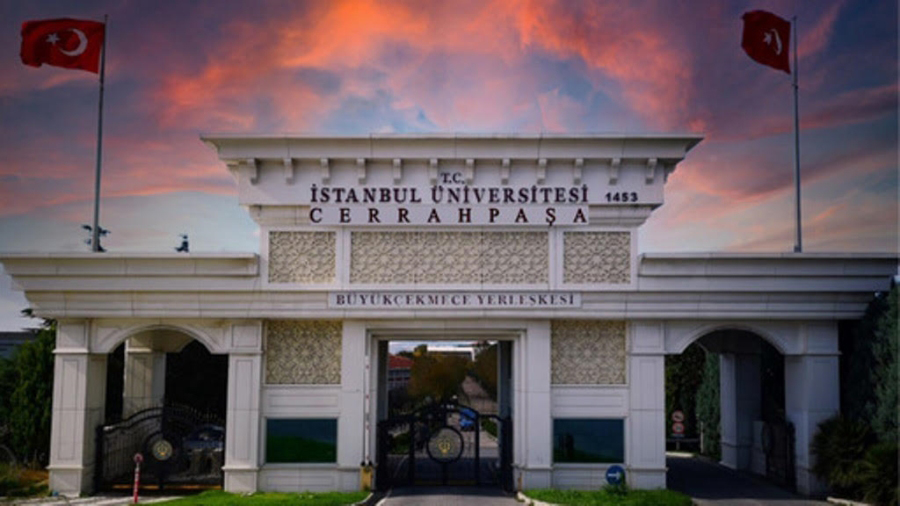
My medical education is part of the answer, not the whole answer. I graduated from Cerrahpasa Medical Faculty in 2011, when it was part of Istanbul University. That background helped shape how I think about anatomy, healing, risk, patient selection, and responsibility. It does not, by itself, prove that a hairline will look natural or that a donor plan will be safe.
I share that background openly, including its limits. A university name should support trust, but it should never replace a careful consultation, a clear surgical role, and a plan built for the patient in front of me.
Why am I sharing this background?
International patients often have to judge a clinic from another country. They may not know the local medical system, the university names, or the difference between a visible clinic brand and the person who is medically responsible for the operation.
A vague education line is not enough. Patients deserve to know who the doctor is, where the medical training began, and how that training affects the way surgery is planned.
A background at a respected medical faculty can tell you something about discipline and academic foundation. It still has to be connected to the actual work, including donor assessment, candidacy, hairline design, graft number planning, recipient area creation, aftercare, and long term follow up.
Cerrahpasa Medical Faculty and Istanbul University
I received my medical degree from Cerrahpasa Medical Faculty in 2011. At that time, Cerrahpasa Medical Faculty was part of Istanbul University.
Cerrahpasa has long been regarded as one of Turkey’s respected medical faculties. For patients outside Turkey, the institutional names can be confusing because the university structure changed later. Today, Cerrahpasa Medical Faculty continues under Istanbul University Cerrahpasa after the 2018 reorganization of Istanbul University’s faculties and units.
The important point for my own background is simple. My medical education was not a short course or a cosmetic training label. It was full medical training before I focused my career on hair transplantation.
A medical tradition with historical weight
Istanbul University has a long academic history, and its medical tradition was shaped by more than one period. During the university reform era in the 1930s, European academics who came to Turkey helped strengthen scientific teaching and modern medical education. Cerrahpasa later developed its own identity inside that broader tradition.
I do not mention this history to make the page sound impressive. I mention it because medical culture matters. A doctor is shaped not only by anatomy books and exams, but also by the habits of thought around him, including clinical discipline, respect for tissue, careful diagnosis, and the idea that a procedure should be justified before it is performed.
How medical education changes consultation?
A medical school should do more than give a diploma. It should train a doctor to think first about the body, not the sales promise.
In hair transplantation, this matters every day. A patient may ask for the lowest possible hairline, the highest graft number, or the fastest visible change. Before I think about the cosmetic wish, I have to think about the donor area, scalp condition, age, future hair loss, healing capacity, medical history, medication history, and whether the requested plan will still make sense years later.
Ability is only one part of the decision. The more important issue is what should be done for this patient, and what should be reduced, delayed, changed, or refused.
Limits of a medical degree
A medical degree is essential, but it is not the complete story in hair transplantation. Medical school teaches anatomy, physiology, pathology, wound healing, sterile technique, and clinical responsibility. These are necessary foundations.
It does not, on its own, teach hairline softness, facial balance, age appropriate design, temple and frontal framing, graft distribution, or the visual judgment needed to stop before a result becomes artificial. Those skills develop through focused hair restoration experience, careful review of results, and years of looking closely at what appears natural on real faces.
This distinction protects patients from another misunderstanding. A title can be real and still not tell you enough. Ask how the surgeon uses that training inside the plan.
Why does surgeon-led judgment matter?
Many patients compare clinics through social media images, package prices, and short videos, especially when researching hair transplant in Turkey from abroad. Those surfaces do not always show who is actually making the medical decisions.
In a proper surgeon-led model, the doctor does not simply appear briefly and disappear. The surgeon evaluates whether the patient is a good candidate for hair transplant, whether the plan is safe, whether the donor can tolerate the extraction, whether the expectations are realistic, and whether the long-term tradeoffs are acceptable.
The contrast with hair mill clinics becomes clear in the way the system is built. If it is built mainly around volume, the pressure is to keep the package moving. In that environment, medical caution can be replaced by commercial convenience.
Direct surgeon involvement matters most when the answer is not easy. A patient may need a lower graft goal, a more mature hairline, better medical preparation, stabilization first, or no surgery at that time. Saying no can be part of good medical care.
A simple example of why this matters
Imagine a patient with advanced hair loss, visible miniaturization in the donor area, poorly controlled diabetes, and a heavy smoking history. He wants a very low hairline and a very high graft count because he is focused on the immediate visual change.
A careful doctor should not see that case only as a booking. He should ask whether the patient is medically fit for elective surgery, whether healing risk is higher, whether the donor area is strong enough, and whether the requested design is realistic for the patient’s age, facial structure, and future hair loss pattern.
The right decision may be to postpone surgery, change the plan, reduce the graft number, improve the medical situation first, or refuse surgery. A clinic that says yes too quickly may look convenient at the beginning and create much harder problems later.
Science, design, and long-term planning
Hair transplantation needs medical science, but it also needs visual judgment. Recreating a lost hairline is not a mechanical act. It changes the frame of the face.
A technically clean operation can still look unnatural if the hairline is too low, too straight, too sharp, too dense in the wrong places, or disconnected from the patient’s age, facial proportions, hair characteristics, and likely future pattern of hair loss. For that reason, hairline design in hair transplant surgery cannot be separated from donor planning.
Strong results do not come from moving the maximum number of follicles. They come from placing grafts with judgment, creating soft transitions, protecting the donor reserve, and making the result look as if it belongs naturally to that person.
How should patients use this information?
Do not choose a surgeon only because of a university name. Also do not ignore medical education as if it means nothing. Use it as one part of the trust picture.
The practical question is who will examine you, design the plan, and make the decision if the case becomes less straightforward.
Ask who will examine you, who will design the hairline, who will create the recipient area, who decides whether surgery should go ahead, and who follows you after the operation. Ask how the surgeon explains limits, not only possibilities. These questions matter more than any isolated title.
In my own case, I see my background in two layers. The first is the medical foundation I received at Cerrahpasa Medical Faculty during my Istanbul University period. The second is the specialized hair restoration experience that came afterward, where medical science had to become patient selection, design judgment, and careful surgical planning.
A university name alone does not guarantee quality. But serious medical education, transparent communication, direct surgeon involvement, and developed aesthetic judgment together create a safer foundation for responsible hair transplantation.

Read this review excerpt
Absolutely everything regarding logistics was conveyed in a clear and timely manner via WhatsApp by Dr. Mehmet’s office.