



Hairline Design Needs Long Term Planning
Hairline design should be planned around the patient’s face, age, donor capacity, hair loss pattern, hair caliber, temple shape, and future hair loss risk. The best hairline is not the lowest line and it is not the straightest line. For patients who prefer a sharper lower outline, I explain the tradeoffs in low straight hairline planning. Forehead muscle movement can limit hairline lowering, and the line still has to look natural today and make sense years later. If the proposed line is the reason you feel uneasy before a booked date, second thoughts before hair transplant surgery should be reviewed before grafts are placed. The same future hair loss concern becomes central during a hair transplant in the 30s.
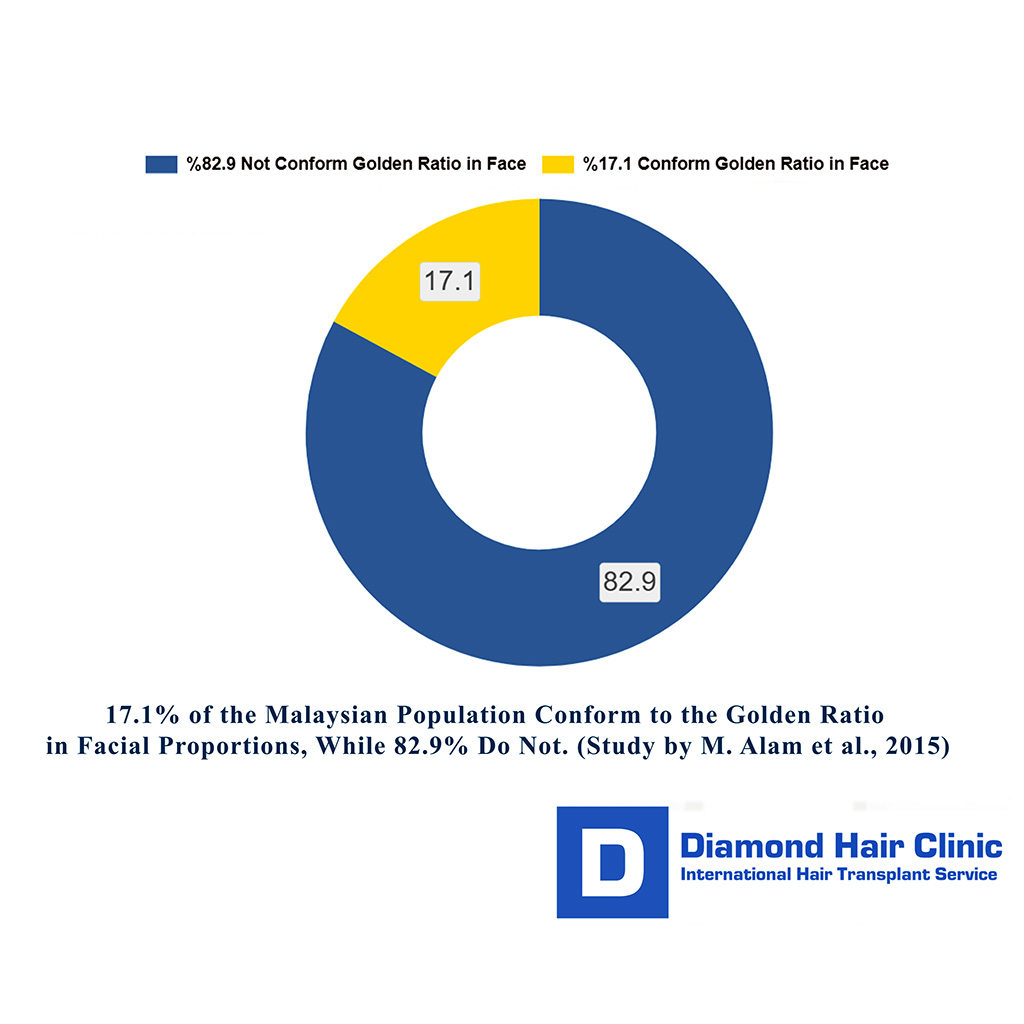
When I design a hairline, I do not begin with a fashionable shape or a fixed measurement. I begin with the question of what the patient can safely support with the donor hair available. A hairline can look attractive in a drawing and still be wrong if it spends too many grafts, ignores future thinning, or creates a front edge that is too sharp for the face.
Hairline design is a critical part of FUE planning, not a decorative line at the end of the consultation. The recipient area may heal well, the grafts may grow, and the density may look acceptable, but a front border that is too low, too flat, too dense, too regular, or placed at the wrong angle can still make the result look artificial. At month eight, the hairline check looks at edge shape, graft direction, and texture instead of judging growth alone. If the mistake has already happened, removing transplanted hair may be part of repair planning, but it should not be treated as a simple reversal.
Read this review excerpt
“Dr Mehmet then came to the theatre to draw on my new hairline, took around 45 mins to make sure it was what I wanted.”
Practical goal of hairline design
The practical goal is to rebuild the frame of the face without making the transplant visible. A natural hairline has a shape, but it also has softness. If one of these parts is wrong, adding density alone can make the edge stronger without making it more natural. It has small irregularities, finer hair at the leading edge, careful density behind that edge, and a direction that matches the patient’s natural growth pattern. A related planning detail is nape hair for hairline transplants, where fine hair can help softness only if the lower donor border is reliable.
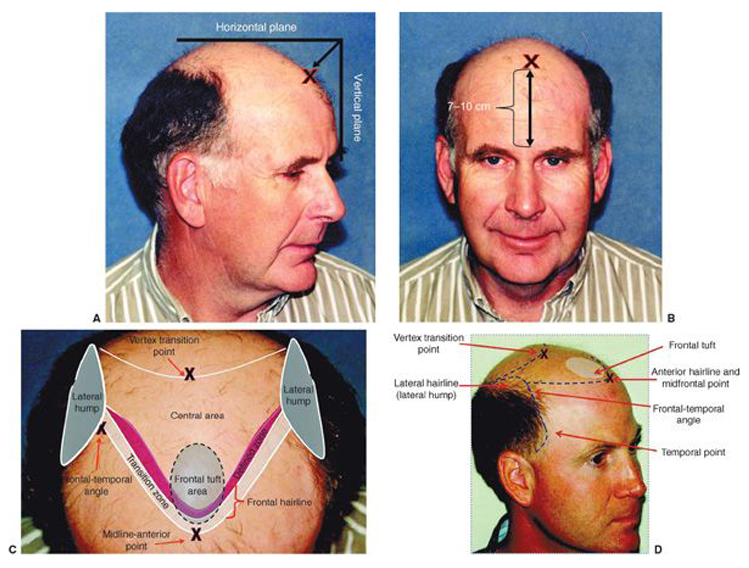
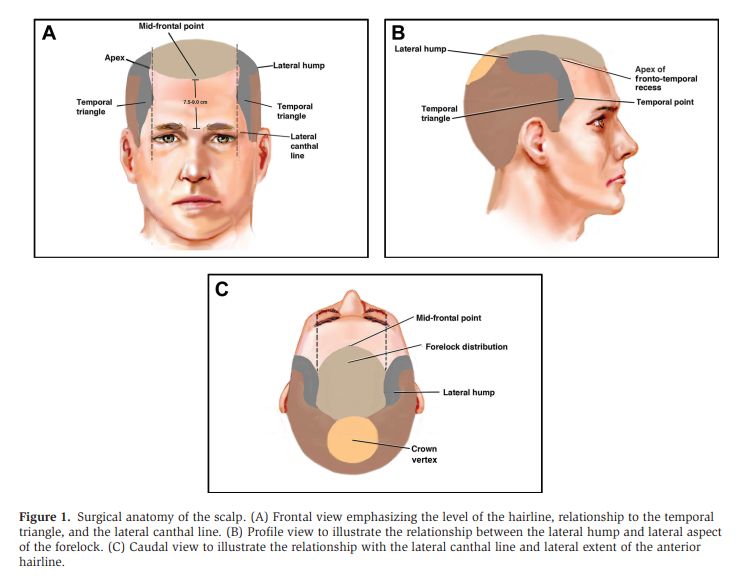
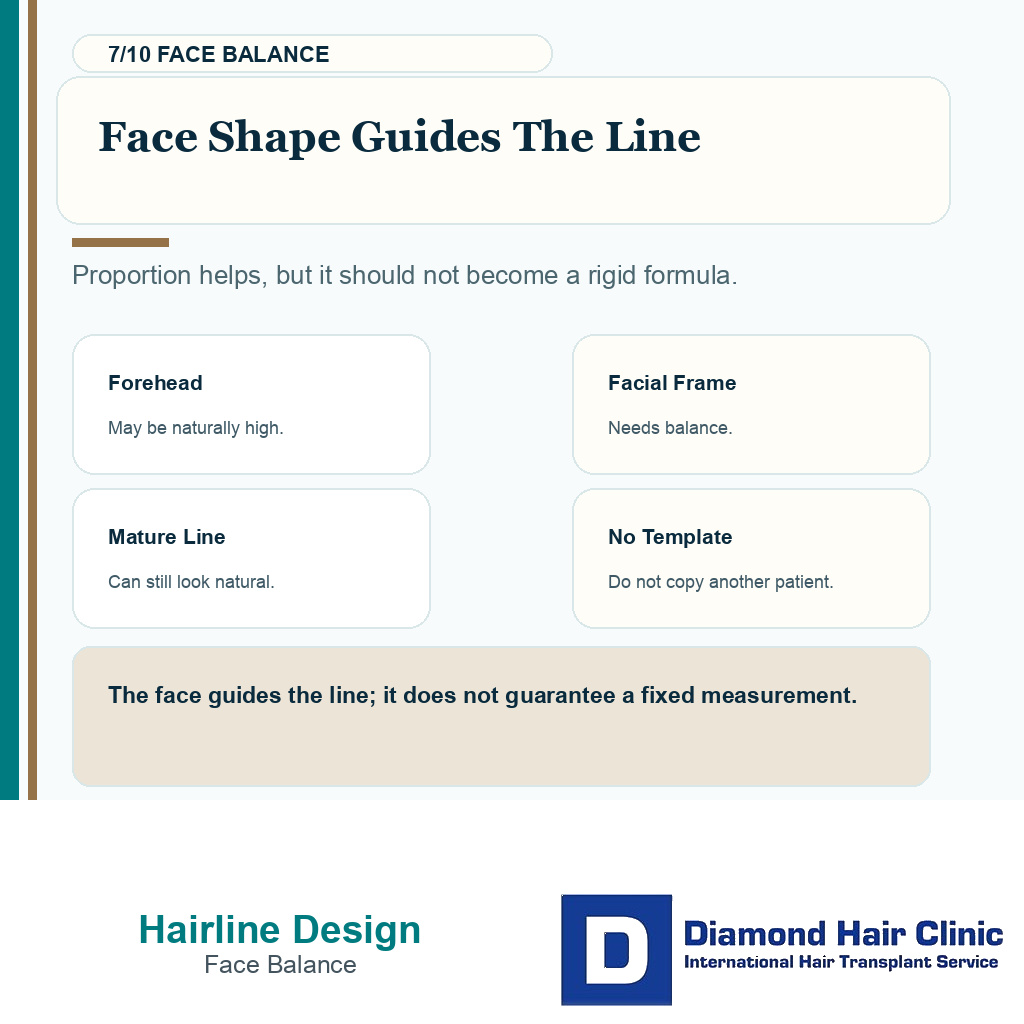
A good design should define the mid frontal position, how much temple recession to retain, whether the temple points need restoration, and how many frontal grafts the donor can spare without weakening future options. It should also consider how the design may look if the crown or mid scalp thins further. Those same checks become more concrete during Norwood 3 hairline planning, where corner closure can quickly become too aggressive. Before drawing the front edge, I also check whether the change is a mature hairline or receding hairline, because the answer changes how conservative the design should be. If eyebrow thinning, redness, or scarring clues appear with the front edge, I also review whether frontal fibrosing alopecia changes hairline transplant planning.
Ask to see the proposed hairline with the forehead relaxed and the hair combed away from the face. A marker line can look acceptable for a moment but still fail when expression, temples, and future thinning are considered together.
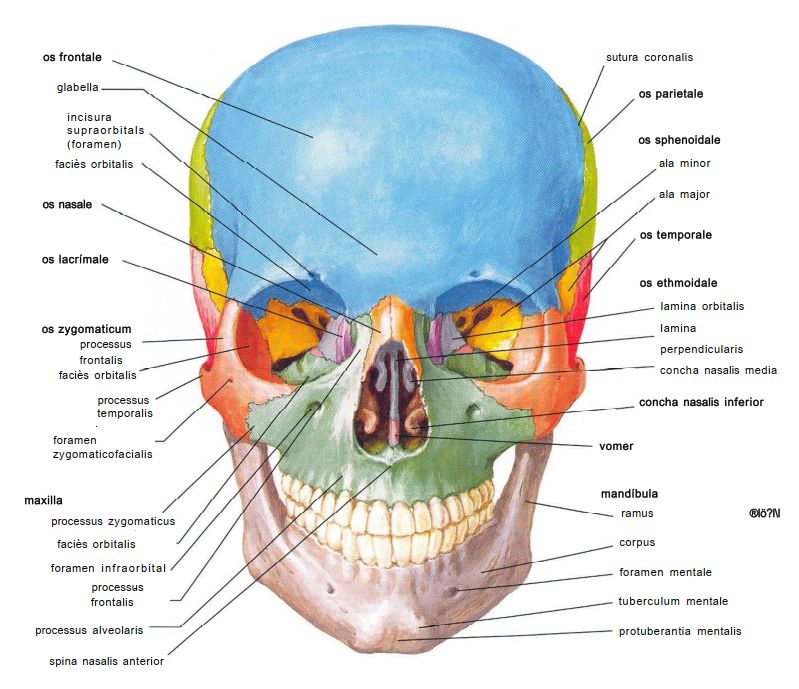
View the marker line from the side before you agree to it. A front view can hide whether the corners and temples are being asked to carry too much of the design.
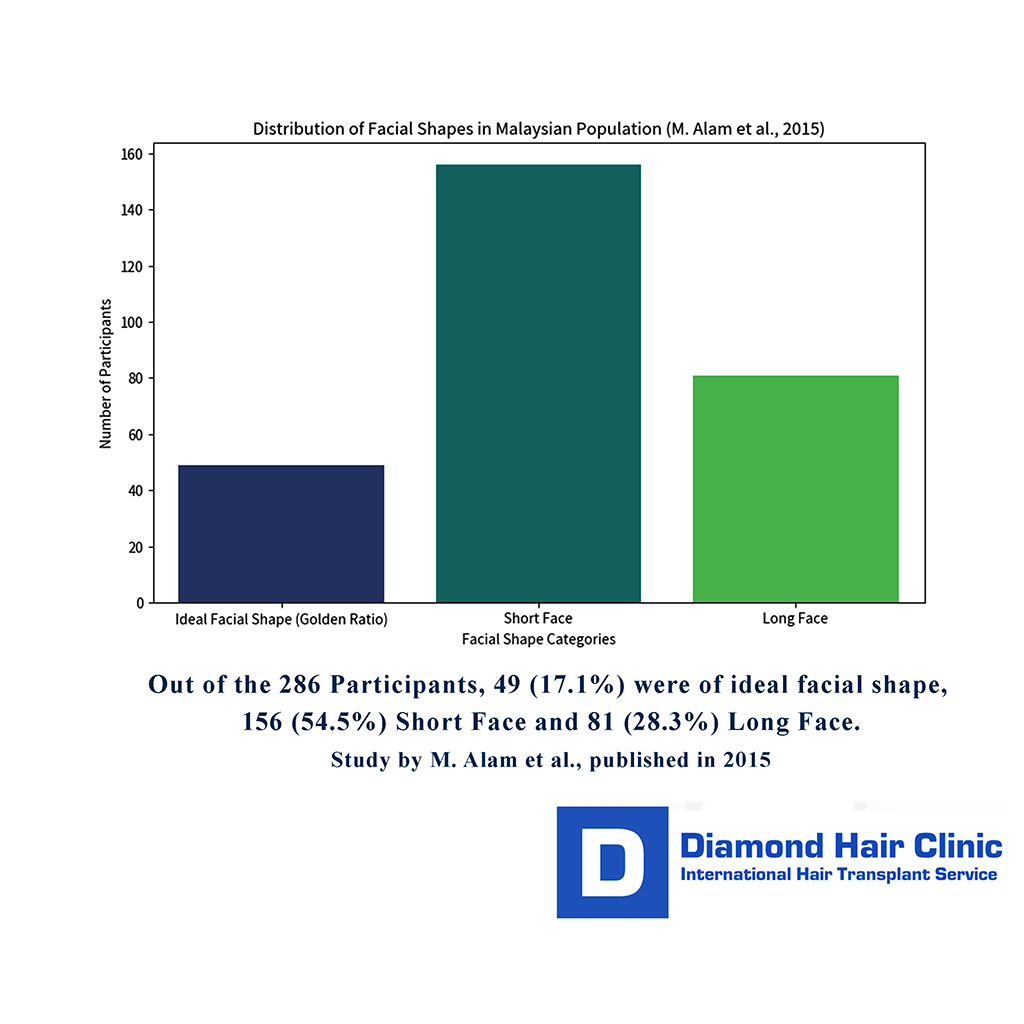
For photo review, a front and top view hairline comparison keeps face balance separate from curve and spread.
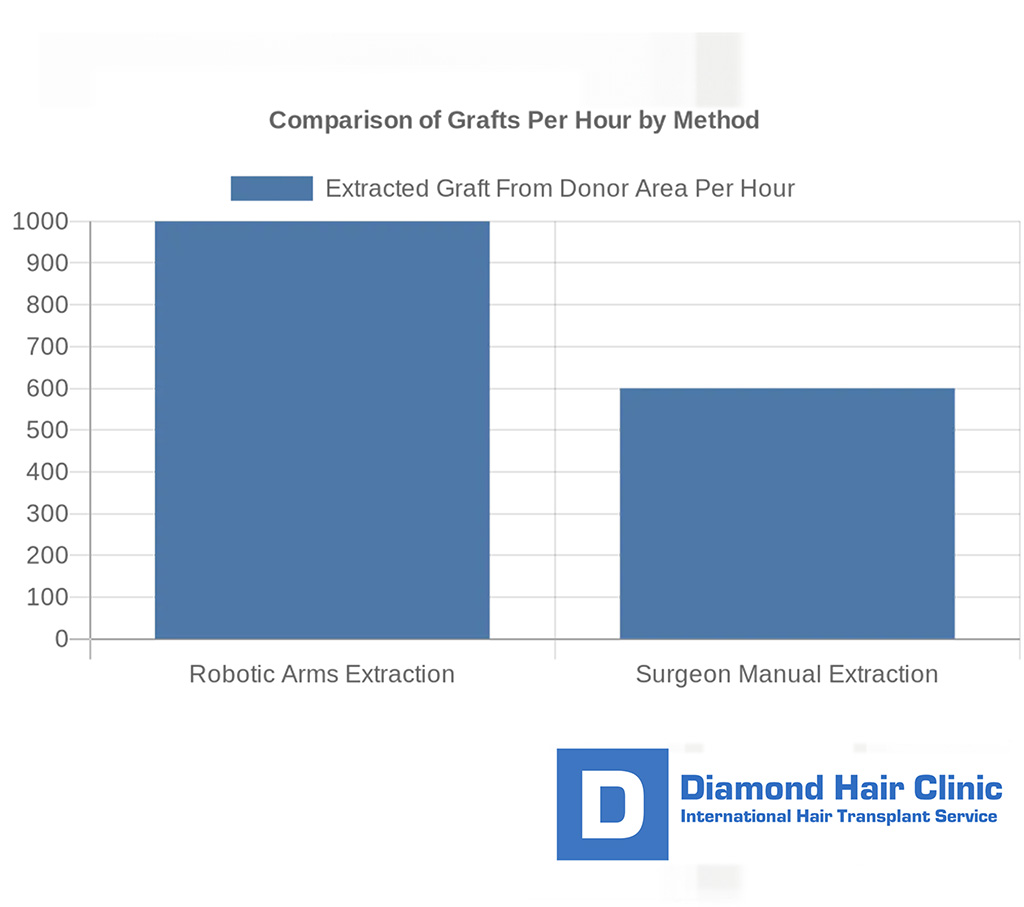
Those questions matter more than a dramatic mirror drawing. A hairline is not just a cosmetic outline. It is a long term surgical commitment. The same distinction applies to ARTAS hair transplant claims, because a robotic extraction device does not design the front border. They also matter more than AI hairline design advice, because a generated outline cannot spend donor grafts safely.
Future hair loss changes the design
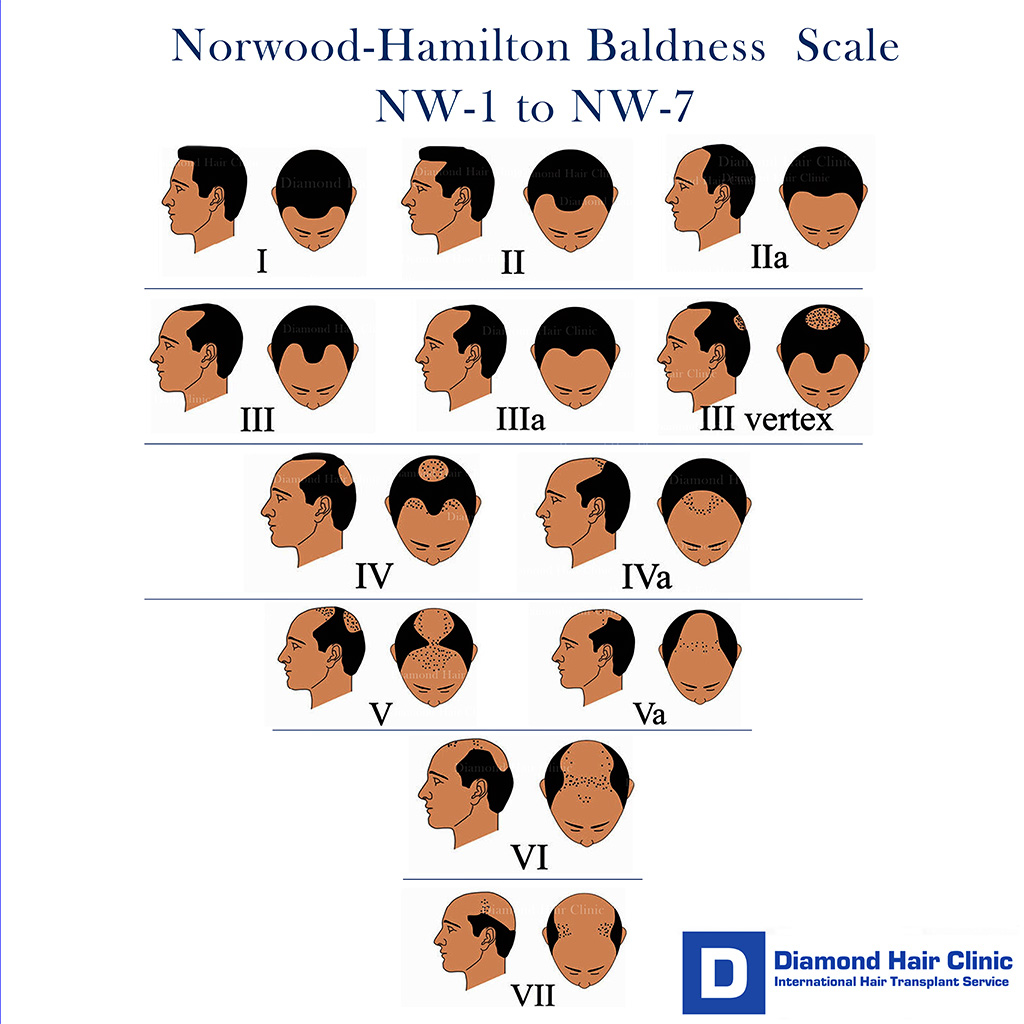
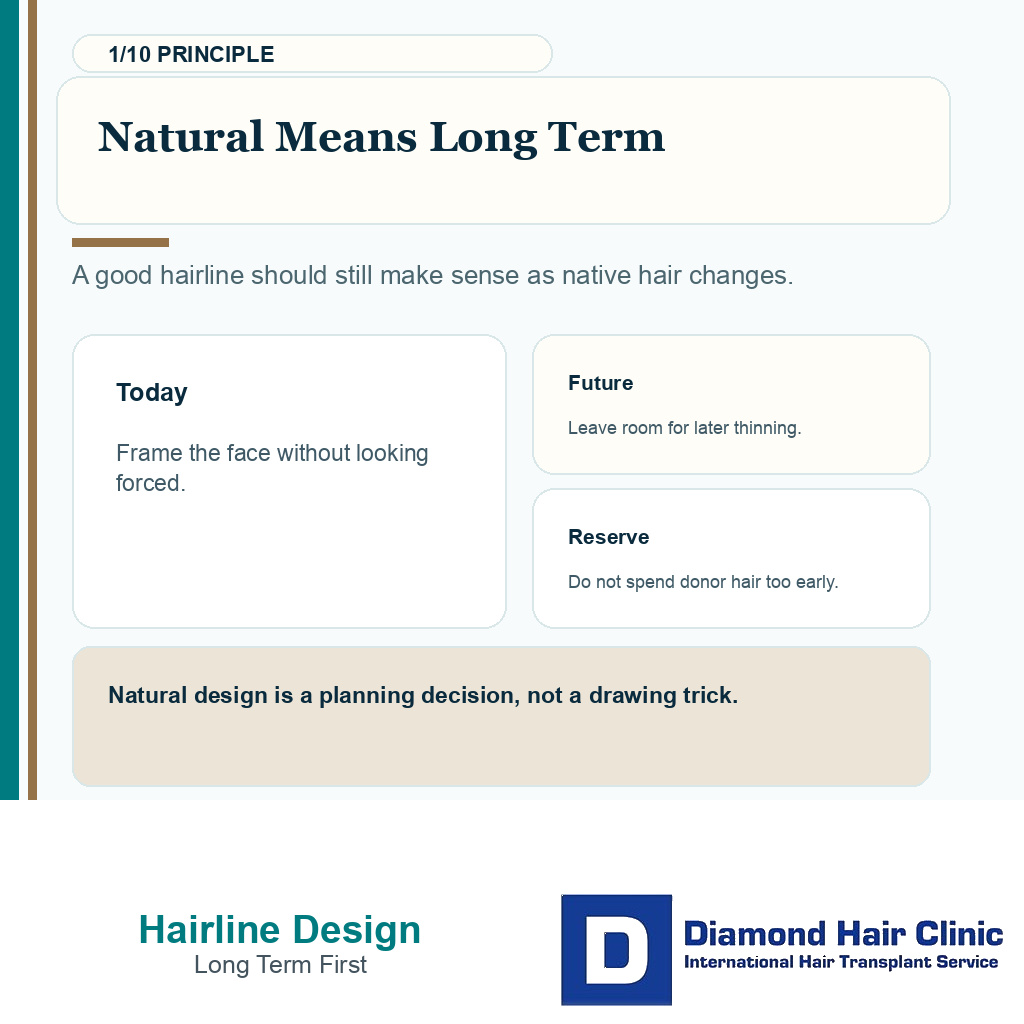
Hairline design should never be separated from the expected pattern of hair loss. Donor supply is limited, and the patient may later need coverage in the mid scalp, crown, or a repair area. A design that uses too many grafts at the front can make future planning weaker.
During consultation, I look at the patient’s current pattern, family history, age, miniaturization, medication plan, and donor area quality. This does not let anyone predict the future perfectly, but it helps avoid a design that only works in one photograph and fails as hair loss progresses. A separate family hair loss history check helps decide how conservative that front border needs to be.
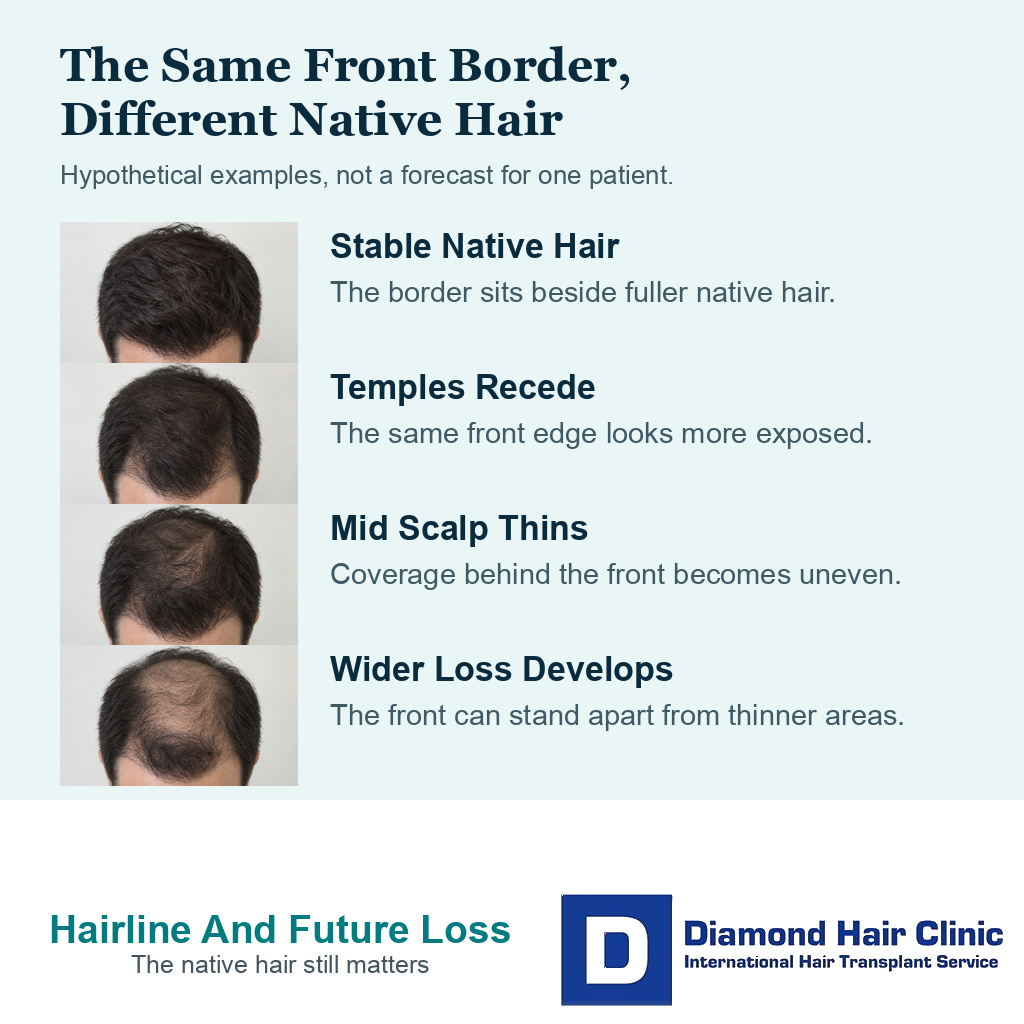
With advanced baldness risk, I may protect the donor budget by avoiding an aggressive low line. With stable limited recession and a strong donor area, the design can sometimes be more detailed. The difference is not artistic taste alone. It is medical planning.
Grafts committed to the front reduce the donor reserve available for the crown, mid scalp, or future repair. I connect hairline design with donor area planning from the beginning rather than treating the front as an isolated cosmetic zone.
Patients who are unsure whether surgery is appropriate should first read about hair transplant candidacy, because the right hairline cannot be chosen until the patient is a good candidate for surgery.
Saying no to a requested hairline
A requested line has to change when it would spend grafts the donor area cannot safely spare, sit too low for future hair loss, need density the donor cannot support, or create a shape that will look artificial as the face and hair loss pattern changes.
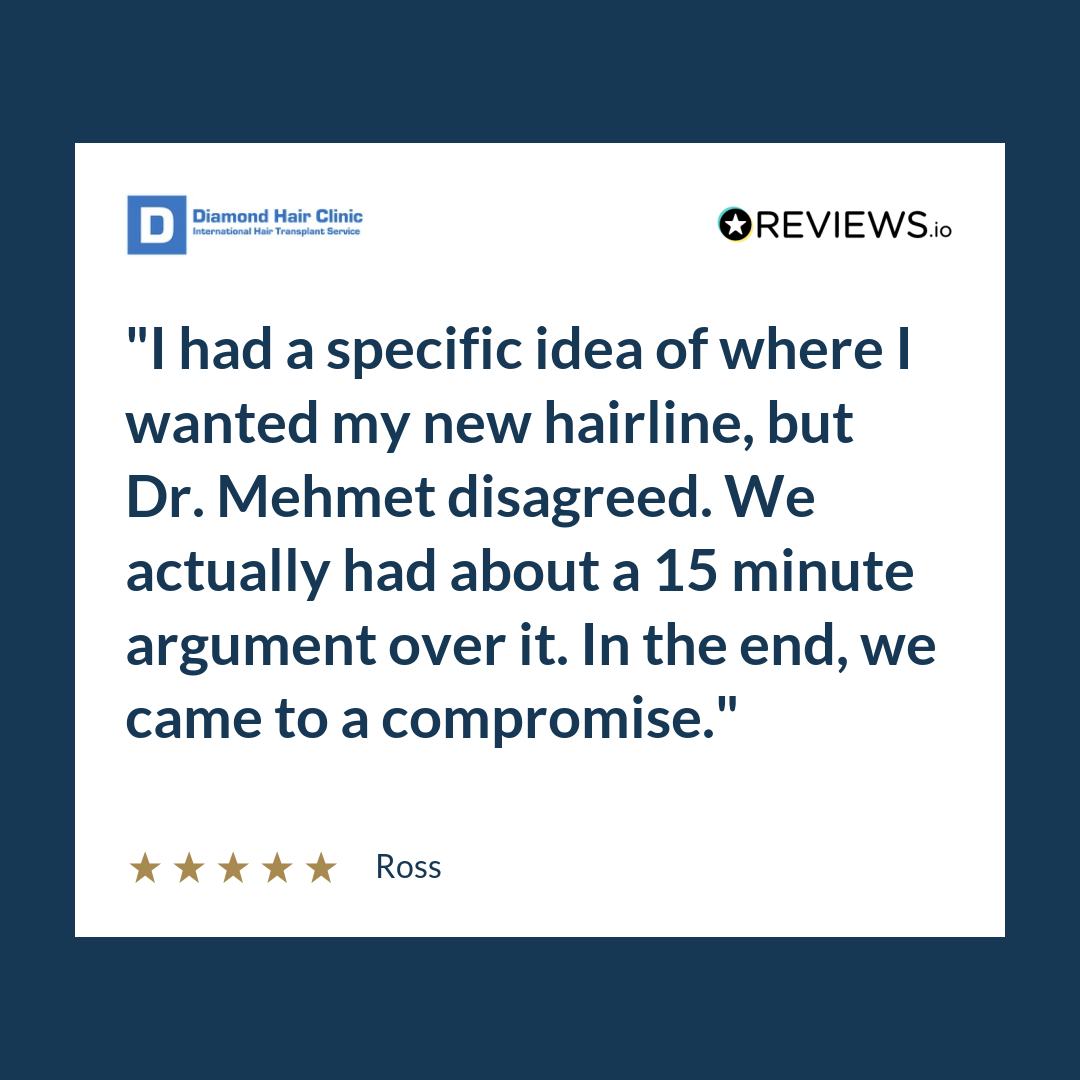
Read this review excerpt
I had a specific idea of where I wanted my new hairline, but Dr. Mehmet disagreed. We actually had about a 15 minute argument over it. In the end, we came to a compromise.
A hairline drawing is not separate from donor planning. The front line, temple support, density behind the line, and possible crown loss all compete for the same limited graft supply. If the design ignores that, the patient may get a strong first impression and a poor long term plan.
When I raise or soften a proposed line, the reason is not taste. It is usually donor protection, natural angle, age, temple balance, or the need to protect lifetime graft options.
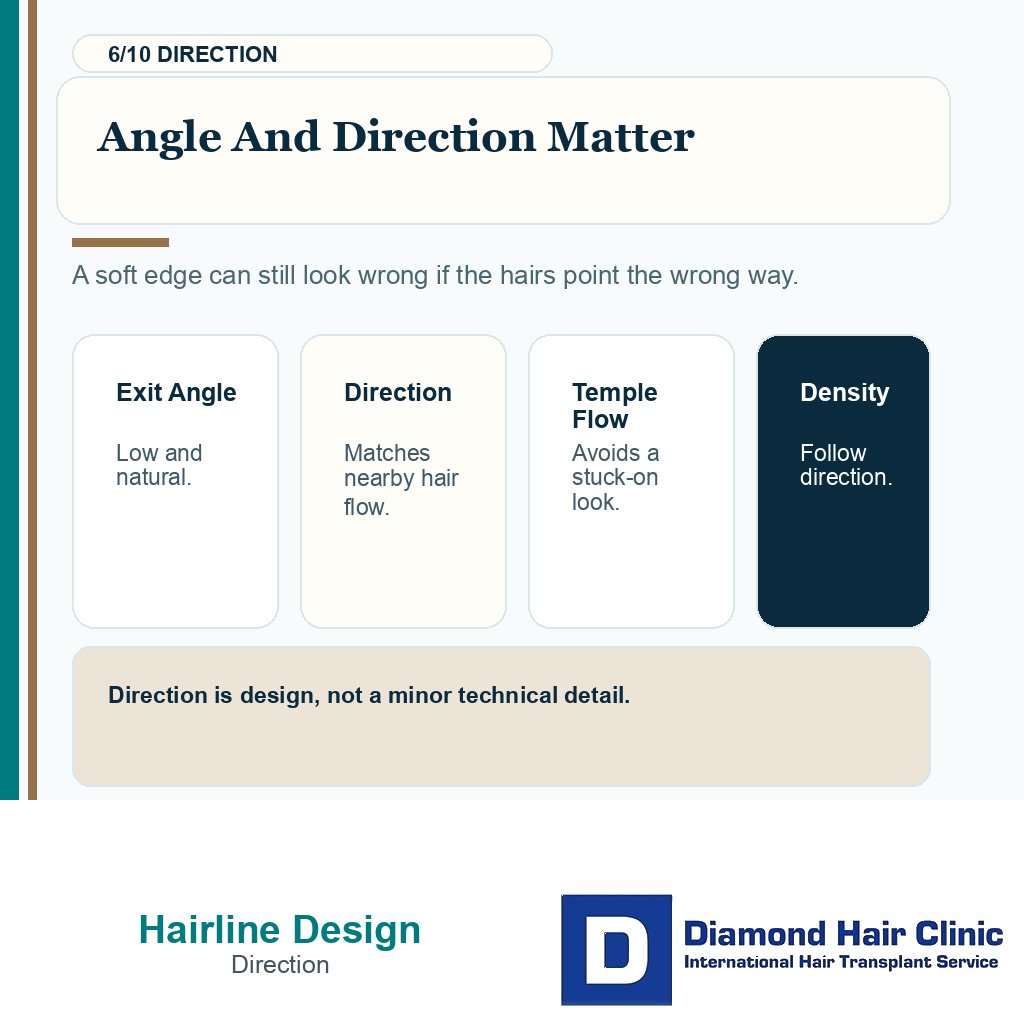
Angle and direction matter
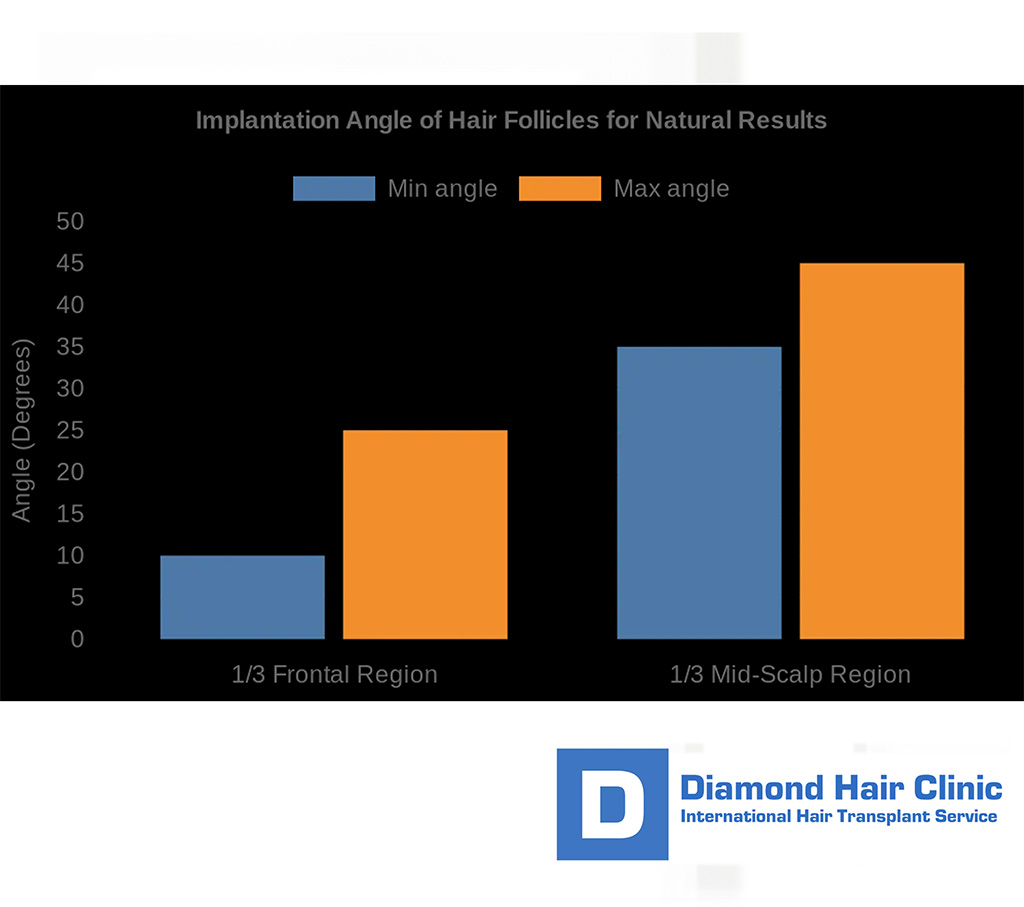
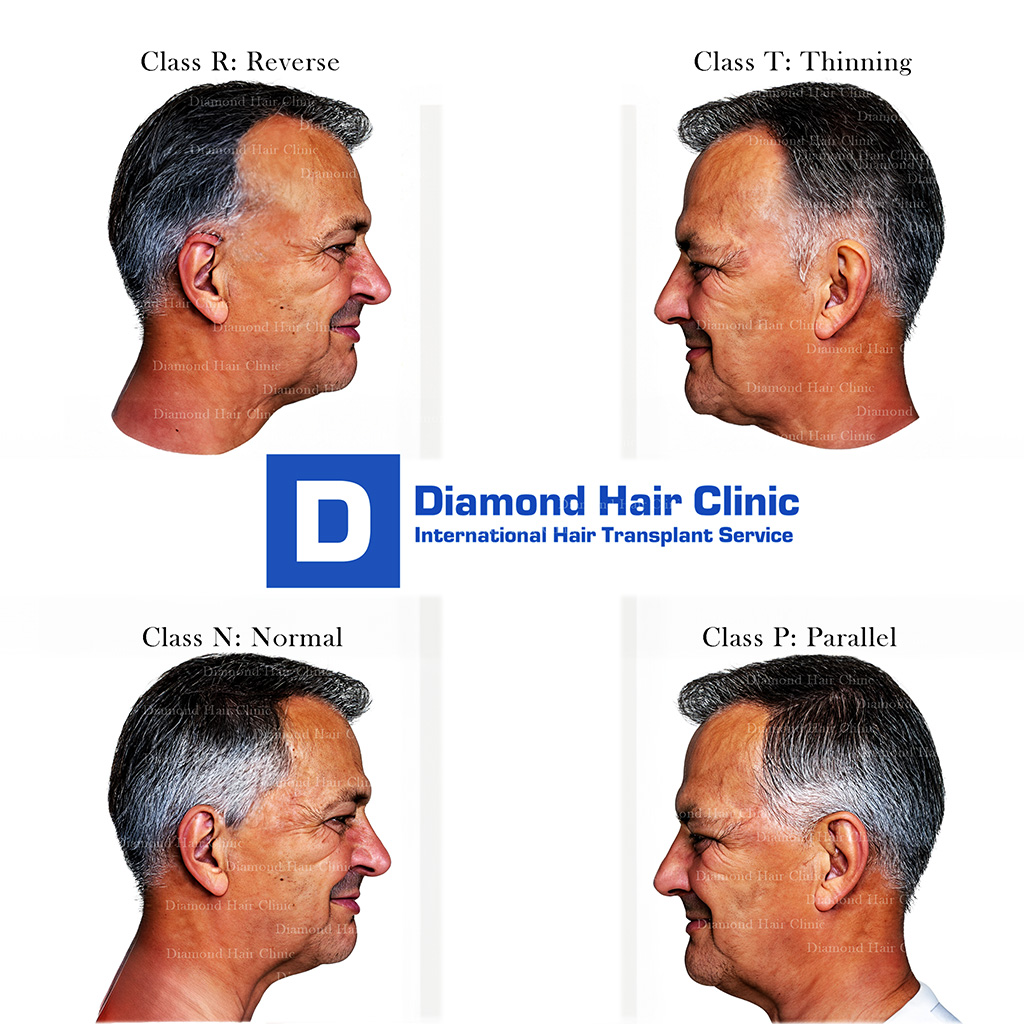
Every graft grows in the direction created during the recipient area incisions. If the angle is wrong, the hair may grow upright, forward in the wrong way, or against the natural flow of the surrounding hair. Density cannot hide this completely.
In the frontal hairline, the hairs usually need a low forward angle with subtle direction changes across the curve. In the temple area, the angle becomes even flatter and the direction often moves down and back toward the ear. Temple point restoration is difficult.
Wrong direction is not just a styling problem. It can make a result look unnatural even when the grafts survive. Patients often feel that something looks off without knowing the cause. Many times the issue is the angle, the direction, or the transition between the frontal hairline and temples.
For patients who already have this problem, I explain the repair decision separately in the article about wrong hair direction after hair transplant.
Single hair grafts at the front
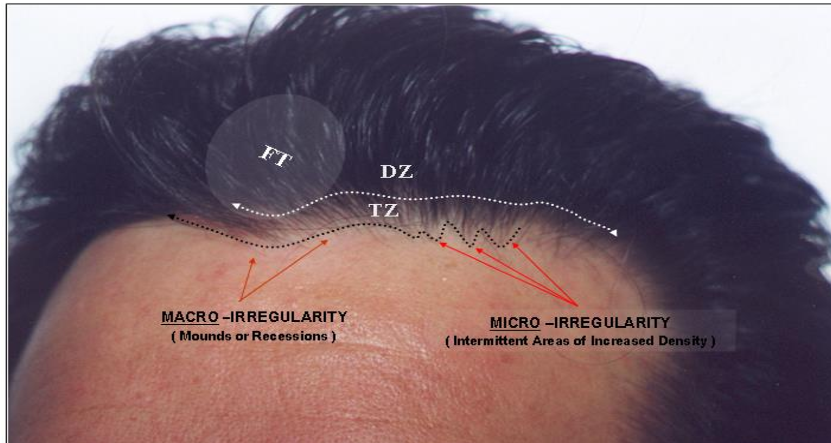
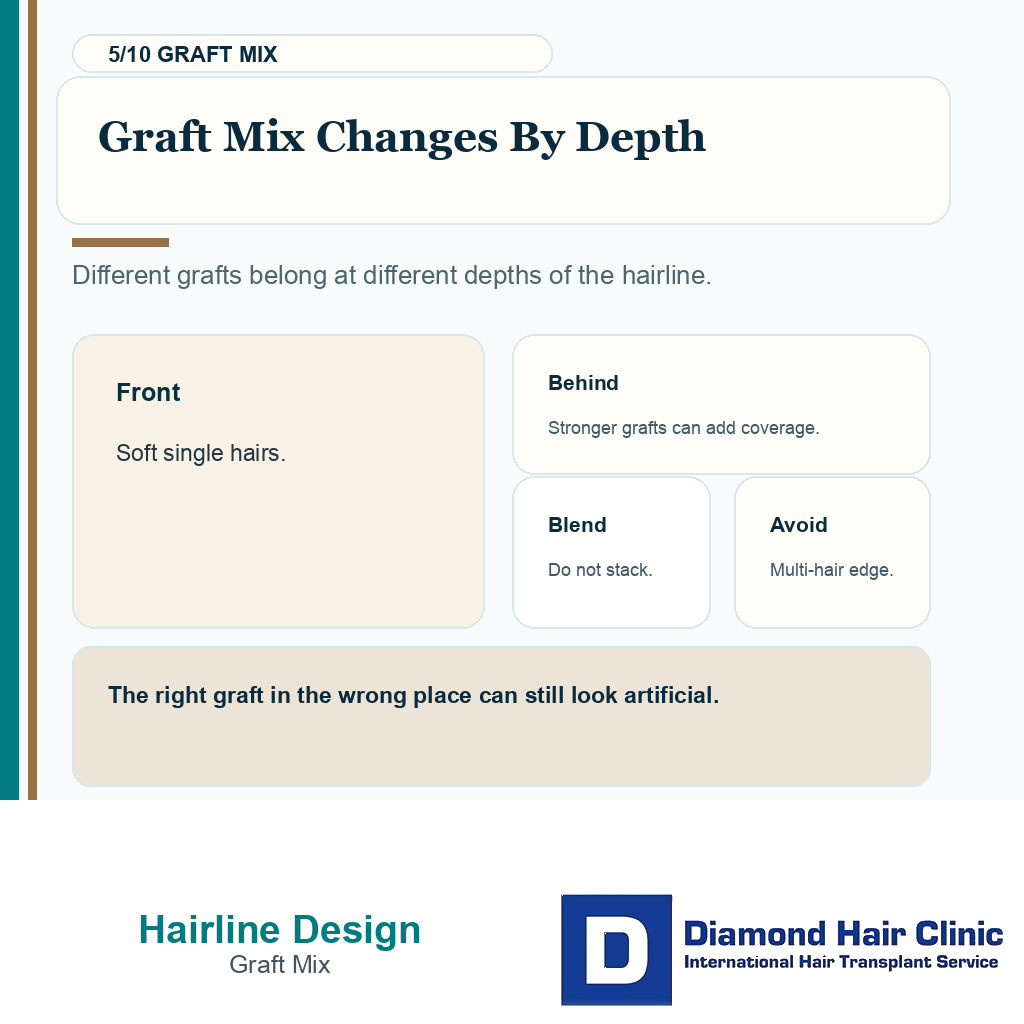
The leading edge of a natural hairline is not made of thick clusters. It is softer and more irregular. At the front, the first rows are usually created with single hair grafts, while grafts with two or three hairs are placed farther behind to create visual fullness. If one placed unit later seems to show another hair, that is a separate timing question from whether the front edge was planned with the right graft mix.
If thick grafts are placed at the very front, the line can look pluggy even when the surgery is technically clean. The patient may see growth, but the eye sees a border that is too heavy. This belongs among the reasons older or poorly planned results can look obvious.
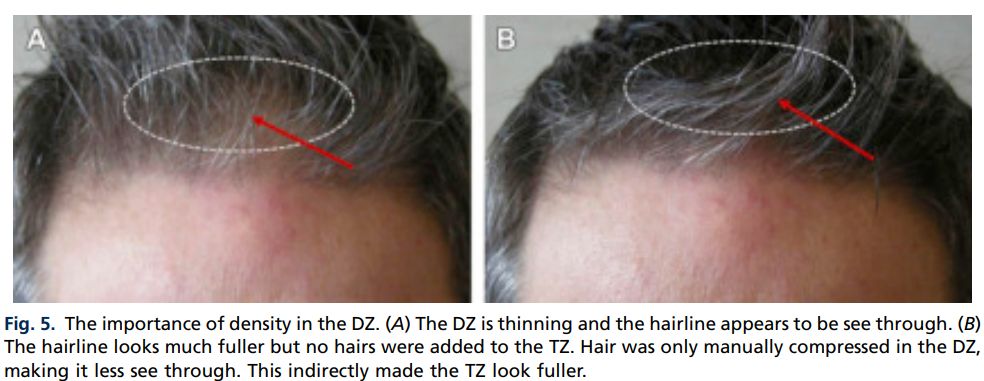
A natural transition is created by combining fine graft selection, small irregularities, correct spacing, and careful density behind the front. It is not created by randomly scattering grafts. There should be planning behind the irregularity.
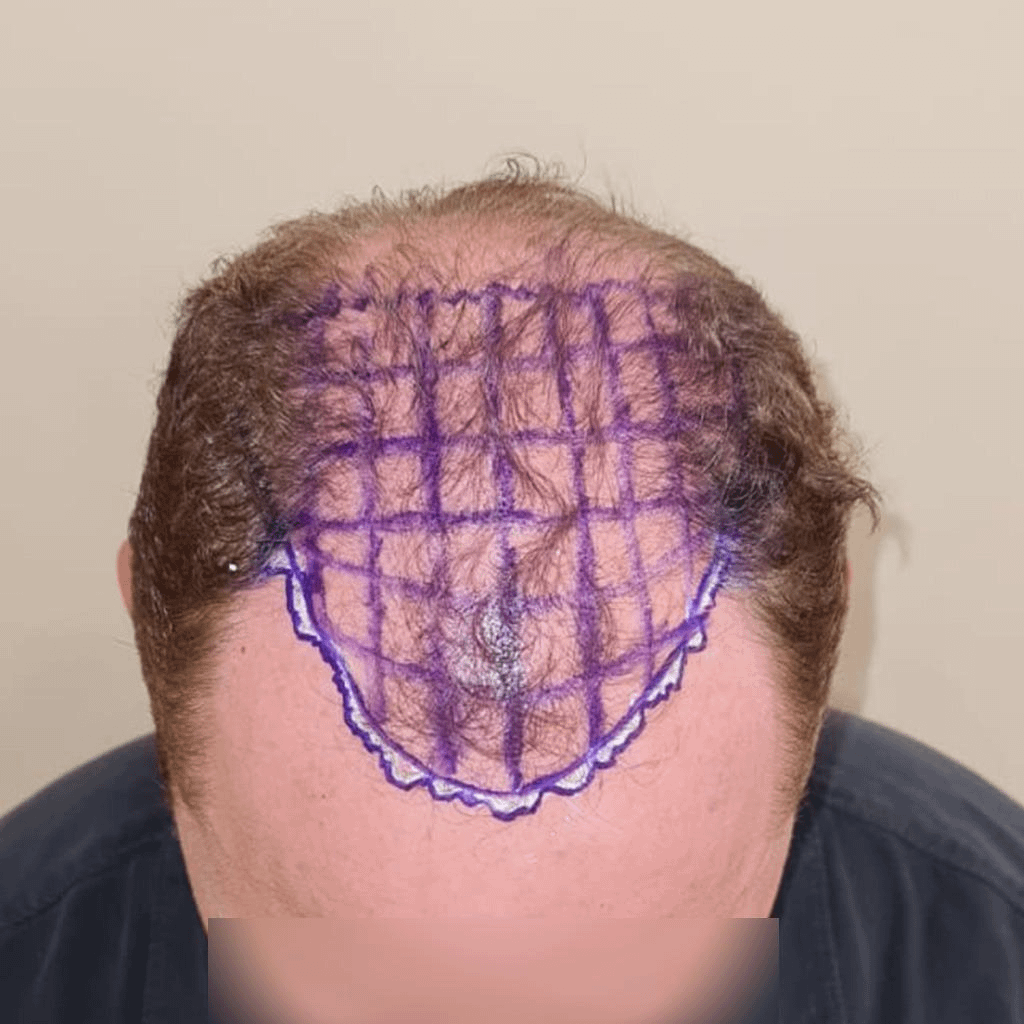
When the front edge has already been built with thick grafts, repair can be more complex. I discuss pluggy hairline repair separately.






Written hairline plan details
Before a patient accepts a hairline, the written plan has to show more than the drawn line or the strongest first photo. It needs to explain why that height was chosen, how many grafts are being spent in the front, whether temple support is included, and what donor reserve is being protected for future loss.
A reference photo or your own drawing can help explain your taste, but the surgeon still needs to translate it into the overall shape, the amount of temple recession, the softness of the first edge, and the degree of irregularity. That shared description is more useful than asking for a natural hairline while each person imagines something different.
The first photos also have limits. A hairline can look clean immediately after surgery because the outline is visible, but growth, angle, density, and softness need time. Early photos should not be judged like final result photos.
Aftercare matters because the front line is exposed and easy to touch, style, or judge too early. Clear washing instructions, swelling guidance, scab care, and follow up photos help protect the design while it heals.
Read this review excerpt
“After we got the results of the blood test Doctor Mehmet started drawing my hairline. He told me that we can draw and re-draw the hairline as many times as I want until I am satisfied with the results.”
Reading the hairline during follow up
A hairline is not judged only from the first front photo. I look at healing, angle, direction, single hair placement at the edge, density transition behind the line, redness, styling, lighting, and whether native hair behind the transplant is still changing.
If the patient worries early, I separate normal recovery from design problems. Swelling, short shaved hairs, scabs, redness, or harsh light can make the line look sharper than it will later. Wrong direction, pluggy grafts, rows, or a hairline that sits too low are different concerns.
The written design gives follow up a reference. It helps the patient and surgeon compare the result with the agreed height, shape, soft edge, donor use, and areas intentionally left lighter.
Questions before accepting a hairline design
Before accepting a design, ask why the line is placed at that height, how many grafts are being used in the front, whether the temple points are being treated, what type of grafts will be used at the leading edge, and how the plan changes if hair loss continues.
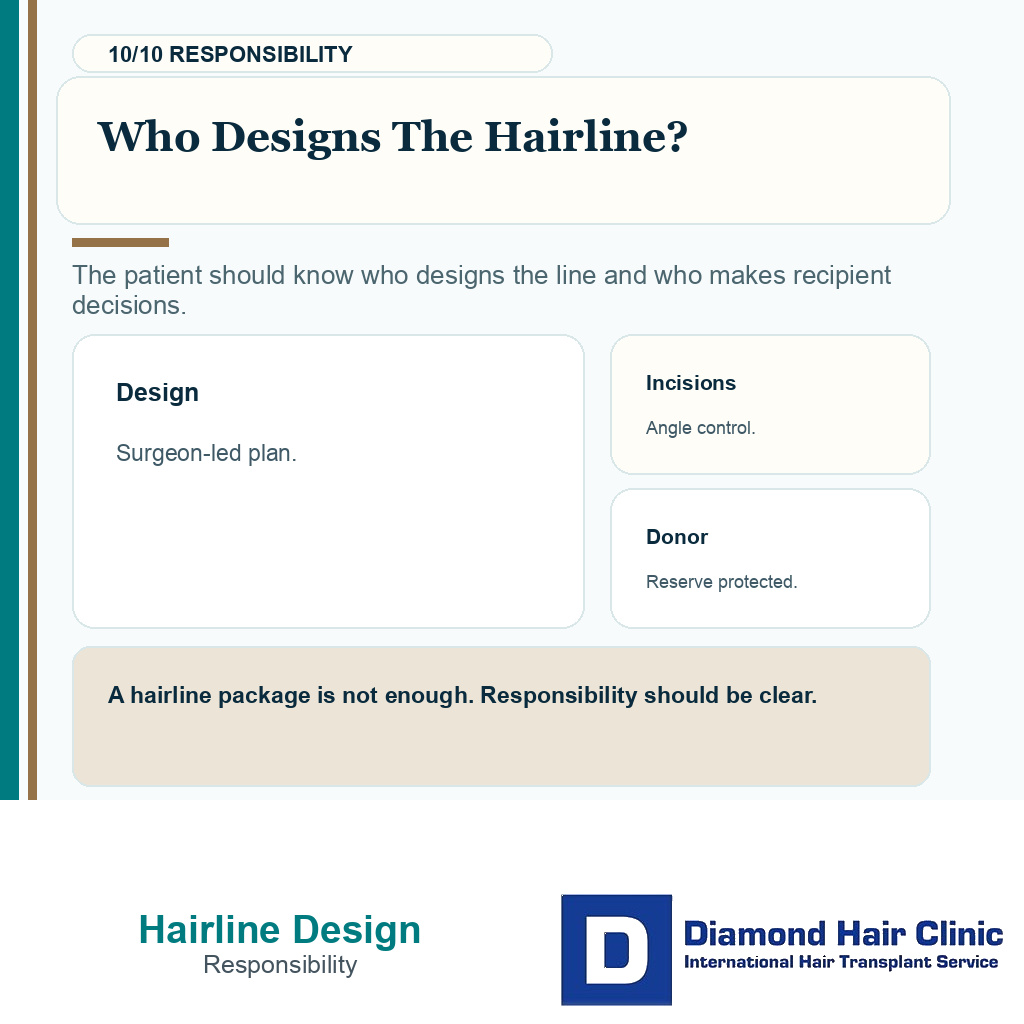
A safe design is based on the face, not a standard clinic template. The plan should name the surgeon creating the recipient sites, the backup if donor strength is lower than expected, and whether medication, staging, or a more conservative first session would be safer.
A serious consultation includes limits. When the answer is only that everything is possible, the patient has not received enough protection. The design should make clear where density will be prioritized, where grafts will be saved, and why the chosen line is safer than a more dramatic alternative.
No patient needs to feel pressured to accept a hairline just because it looks dramatic in a mirror. The design should be explained clearly enough that the patient understands both the benefit and the cost of that choice.
Judge a proposed hairline by how it will age, not only by how it looks before surgery. A natural hairline is planned with discipline, proportion, donor protection, and surgical judgment. When those parts work together, the transplant has a much better chance of looking like the patient’s own hair rather than a surgical outline.
For patients with straight dark hair or strong contrast between hair and skin, broad design rules need a closer reading. In Asian hair transplant planning, hair shaft, contrast, direction, temples, and donor reserve all become part of the consultation.