- Written by Dr.Mehmet Demircioglu
- Estimated Reading Time 23 Minutes
Did I Ruin My Hair Transplant by Smoking After Surgery?
Smoking after a hair transplant often comes with panic rather than a calm question. One cigarette on day 3. A few pulls from a vape on day 5. One joint at the end of week 2. Then the same thought arrives immediately. Did I just ruin everything?
I answer that question the same way every time. One mistake is not the same as a failed hair transplant. But I do not dismiss the issue either. Smoking, vaping, nicotine, and cannabis all need context. Timing matters. Frequency matters. Healing quality matters. And the advice patients read online is often so inconsistent that it creates more anxiety than clarity.
The first days after surgery are not the time to gamble with circulation and wound healing. If you already slipped, stop panicking, return to good aftercare, and look at the situation logically. If you are preparing for surgery, plan for cravings before they start controlling your decisions.
Why Do Patients Panic After One Cigarette or One Vape?
Because the question touches three sensitive points Still. First, the patient has already invested money, hope, time, and emotion into the procedure. Second, he knows smoking is discouraged, so guilt appears immediately. Third, he starts seeing completely different answers from different people. One person says five days is enough. Another says two weeks. Another says a month. Someone else says it never mattered at all. That kind of contradiction makes a small slip feel much bigger than it may actually be.
I consider many patients panic because they are looking for certainty in a situation where medicine does not work like simple mathematics. They want someone to tell them that one cigarette caused exactly this much damage, or that one night of vaping caused no damage at all. Real healing does not work that way. Hair transplant recovery is influenced by many details at once. Smoking is one of them, and it is an avoidable one, which is exactly why I take it seriously.
Did One Cigarette or One Vape Ruin the Grafts?
No, not necessarily. If a patient smokes once and then spends the next week watching the mirror in fear, I do not tell him his transplant is destroyed. That would be dramatic and unhelpful. A hair transplant does not fail from one isolated event alone in such a predictable way. Graft survival depends on surgical technique, graft handling, implantation quality, scalp care, bleeding control, sleeping position, infection risk, general health, and the patient’s own healing response.
But I also do not tell patients that it does not matter. Repeated smoking in the early healing period is a risk I would never call harmless. A single slip late in recovery is not the same as heavy smoking during the first critical days. A few pulls from a vape are not identical to regular cigarette smoking all day. And smoking while also drinking, sweating heavily, sleeping poorly, skipping washing instructions, or touching the scalp is obviously worse than smoking as a single isolated mistake. The right question is not whether you ruined everything in one moment. The right question is whether you are making healing easier or harder.
Why Is the First 7 to 14 Days So Important?
Because that is the period when the scalp is doing the most delicate work. The donor area and recipient area are both recovering from thousands of tiny surgical wounds. Crusts form, the skin settles, inflammation gradually calms, and the grafts become more secure. During this window, I want the environment around those grafts to be as clean and stable as possible.
The first one to two weeks deserve respect. It is not because every bad outcome happens in that exact window, and it is not because I think every smoker will fail. It is because this is the period when a careful patient can remove several unnecessary risks at once. When I ask a patient to protect those first days, I am protecting the most vulnerable part of the recovery.
Is Vaping Really Safer Than Smoking?
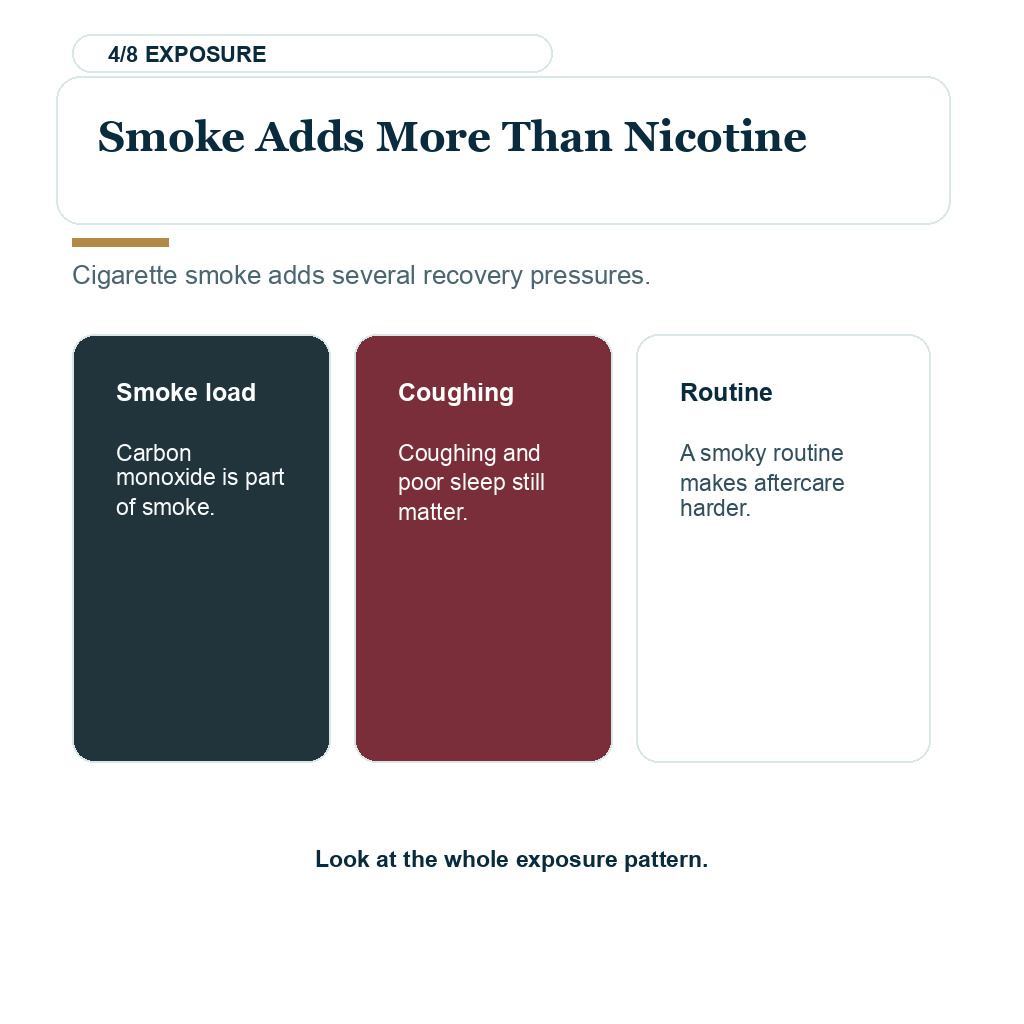
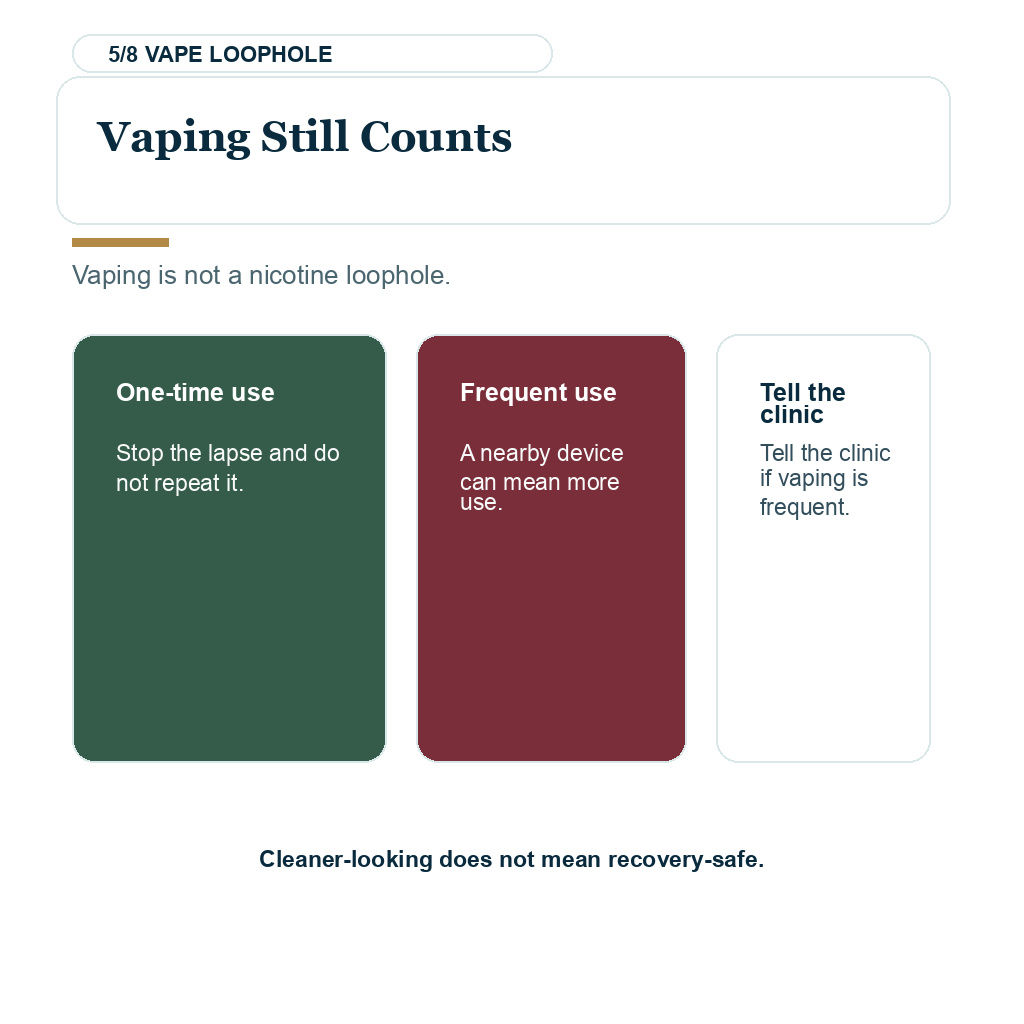
This is a common loopholes patients search for. They think the real problem is only cigarette smoke, so they hope vaping does not count. I do not look at it that way. Cigarettes bring nicotine, combustion products, carbon monoxide, and a broader burden on healing. Vaping may reduce some parts of that picture, but it does not suddenly become a recovery tool. If nicotine is still present, I still treat it with caution.
I consider vaping creates a false sense of permission because it feels cleaner and more controlled. In reality, some patients end up using high nicotine doses very frequently because the device is always near them. Vaping is not a free pass after surgery. It may be different from cigarettes in some ways, but it is not the kind of habit I want around a newly transplanted scalp.
What About Zyn, Nicotine Pouches, Gum, or Patches?
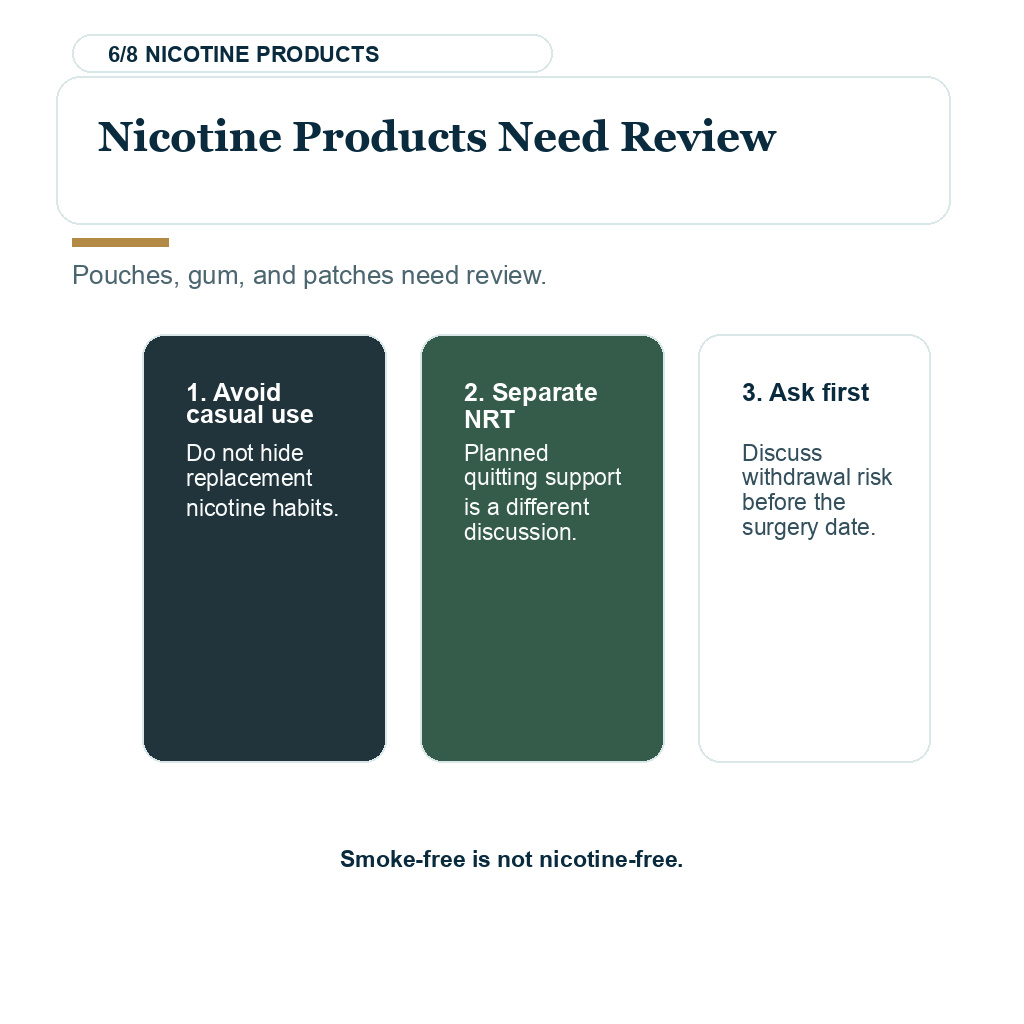
This is another loophole patients look for very often. They stop thinking about cigarettes and start thinking only about smoke. Then they ask whether nicotine pouches, nicotine gum, patches, or chewing tobacco are somehow outside the warning. I would say direct. If nicotine is still part of the picture, I still think carefully about it.
The reason is straightforward. My concern after a hair transplant is not only the smell of smoke or irritation from combustion. My concern is also blood flow, oxygen delivery, tissue calmness, and predictable healing. So even when a product avoids smoke, I do not necessarily treat it as irrelevant. My conclusion is not that every nicotine product carries the exact same burden as cigarettes. But it does mean I avoid patients using nicotine casually and then telling themselves they found a safe exception.
There is one practical distinction I make. Medical nicotine replacement used as part of a planned quitting strategy is different from casually using cigarettes, vapes, or pouches through the first healing window, because it avoids smoke and carbon monoxide. But it still keeps nicotine in the recovery picture, so it needs planning rather than used as a loophole.
If a patient genuinely needs help managing nicotine withdrawal, I would rather discuss that as part of a recovery plan than pretend nicotine no longer matters because the delivery method changed.
What About Weed, Cannabis, or Hookah?
I prefer patients not to oversimplify this subject. The issue is not only tobacco. The issue is what you are exposing your body to during healing. If something is smoked, I think about combustion, coughing, heat, reduced oxygen delivery, sleep disruption, appetite changes, dehydration, and how carefully the patient is actually following the rest of his instructions. Hookah is not a gentle exception. It is still smoke. Cannabis is not always harmless either just because it is not a cigarette.
There is another practical point that many patients ignore. If a patient smokes cannabis and then coughs repeatedly, sleeps badly, gets careless with washing, or combines it with pain medicine or other recovery medication without proper planning, the problem becomes larger than smoking alone. Medical cannabis, nicotine replacement, and other recovery related products belong in a proper medications after hair transplant plan, with the clinic aware of what the patient actually uses. I would much rather plan around a real habit than hear about it after surgery as a confession.
Does Secondhand Smoke or Passive Smoking Matter?
Heavy secondhand smoke comes up more often than many people expect. They may stop smoking themselves, but then they sit for hours with friends who smoke heavily, stay in smoky indoor spaces, or travel with someone who smokes constantly. I do not treat that as ideal. It is obviously not the same as being the one actively smoking, but I still prefer the recovery environment to be as clean as possible.
During the early healing period, I want fewer irritants, less exposure to smoke, better oxygenation, and a calmer routine overall. Heavy secondhand smoke is not something I would willingly add to the first days after a transplant. The cleaner the healing environment, the better.
How Long Do I Ask Patients to Stay Away from Smoking?
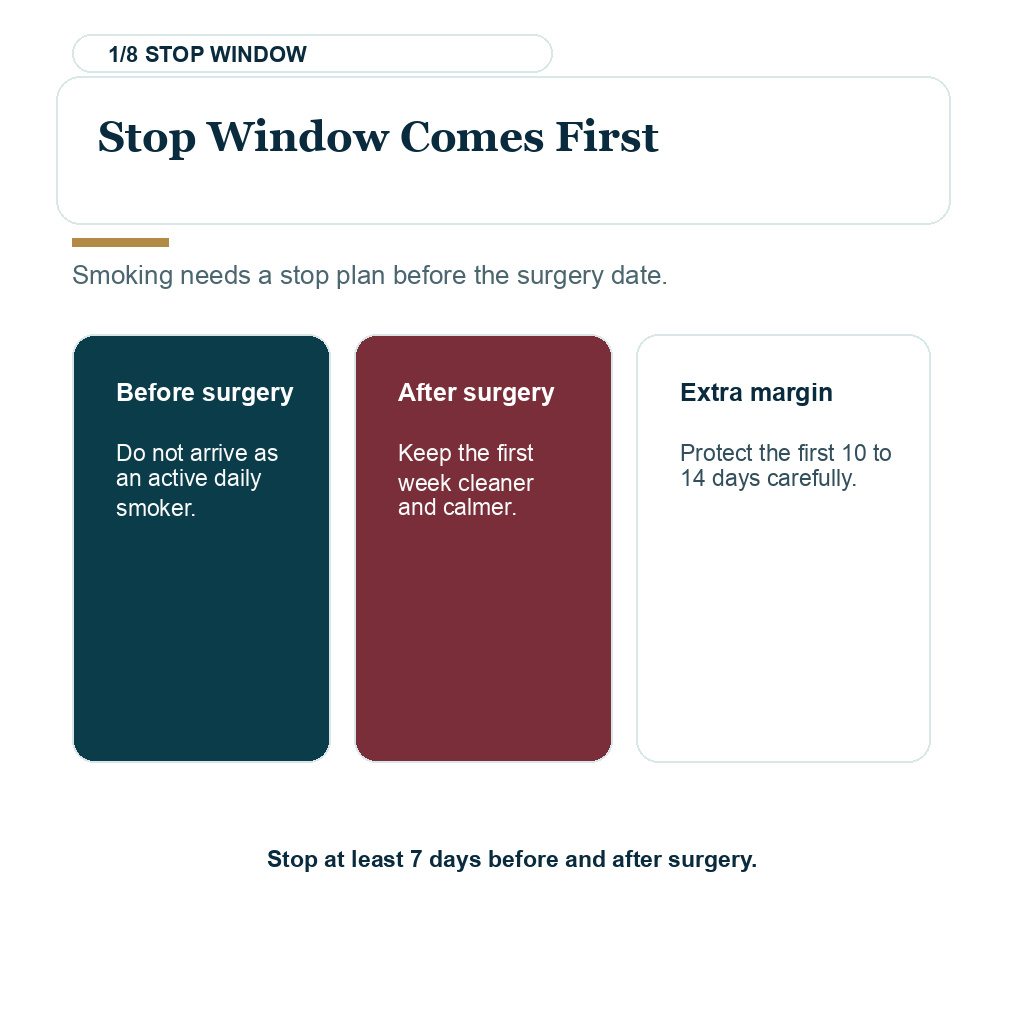
In my own practice, Patients should reduce or stop smoking before surgery and stay away from it especially during the early recovery period. The most important window is the initial 10 to 14 days. That is the period I try not to compromise. If a patient can stay away longer, even better. A longer smoke free period gives the body a cleaner healing environment and usually improves the patient’s overall recovery discipline as well.
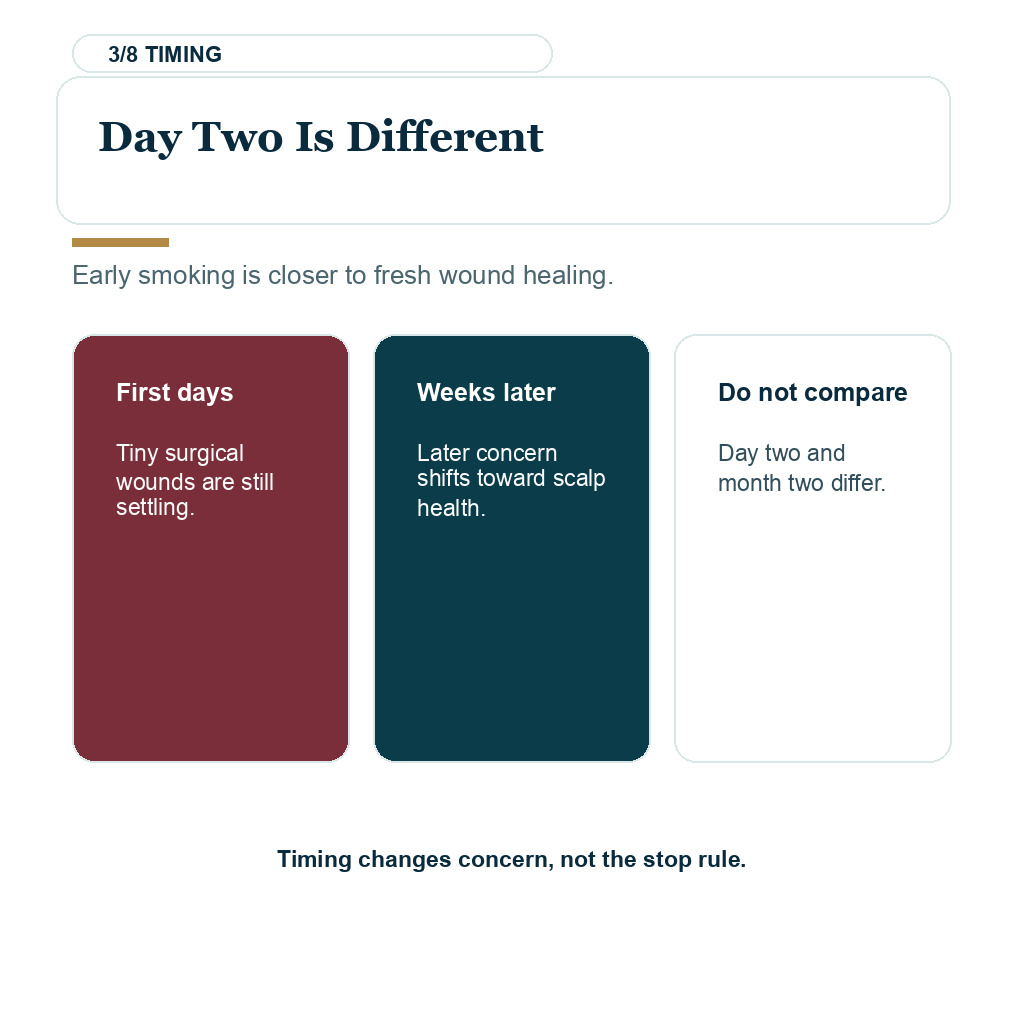
I consider it helps to understand how the question changes over time. In the first days, I am mostly thinking about healing, circulation, inflammation, crust removal, and wound stability. Later, the concern becomes broader. At that stage the question is no longer only whether the grafts are secure. It becomes a question of overall scalp health, long term hair quality, inflammation, and whether the patient is supporting or undermining the result he paid for. So yes, the earliest period matters most, but My conclusion is not that smoking becomes a smart habit later.
How Can Smoking Affect Donor Area Healing?
Many patients only think about the recipient area because that is where the new hairline or density change is visible. But I also care about the donor area very much. The donor zone has its own healing process, and a good result is not only about how the front looks. It is also about how respectfully the back and sides recover.
If healing is slower, more inflamed, or less clean than it should be, the donor area may stay red longer, feel more irritated, or look less settled than I want. My conclusion is not that smoking automatically ruins the donor. But it does mean I am strict about adding anything that may work against healthy recovery of a surgically treated area. Patients who worry about whether the donor looks normal later should also understand my discussion of whether the donor area looks normal after FUE hair transplant.
What Should You Do if You Already Smoked After Surgery?
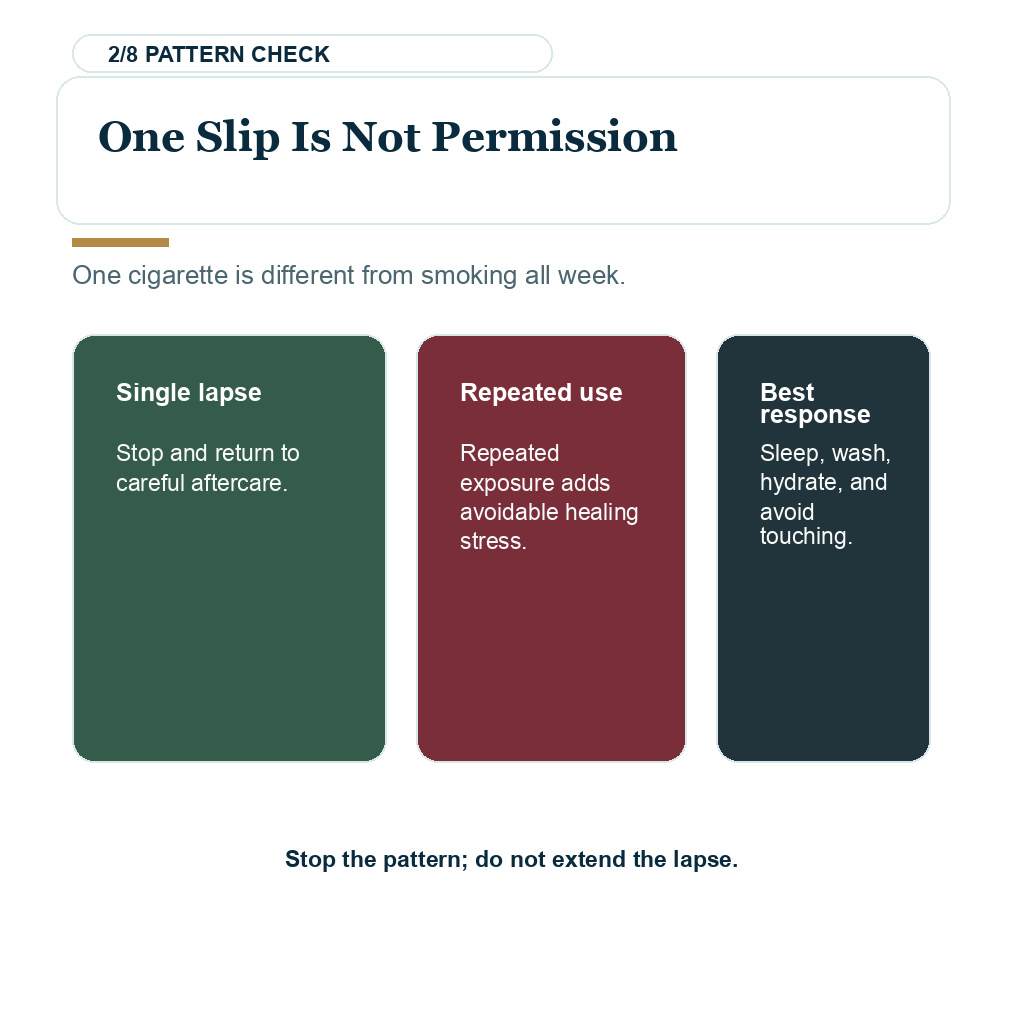
First, stop turning the mistake into a series. That is the biggest practical point. I have seen patients make one poor decision and then almost use that moment as permission to keep going. That is the wrong response. If you smoked once, the best next step is not more smoking. The best next step is to return to a clean recovery routine immediately.
That means keeping the scalp clean, avoiding unnecessary touching, staying well hydrated, sleeping properly, avoiding alcohol, avoiding hard sweating, and following the washing and recovery advice I explain in my detailed guide on hair transplant aftercare. If the smoking was repeated, heavy, or combined with other poor habits, I would also rather the patient be direct with the clinic than pretend nothing happened. a direct correction is always better than secret damage control.
How Should You Think About Timing if You Slipped?
I think This is part of the most practical sections I can give a patient, because panic usually comes with a date attached to it. Day 3. Day 7. Day 12. Week 3. Month 2. My advice changes with timing, but one principle stays the same. The earlier the lapse, the more seriously I take it.
If it happened in the first few days, The patient should stop immediately, tighten the recovery routine, hydrate well, rest properly, and watch the scalp carefully without obsessing over every normal change. If it happened around the end of week 1 or during week 2, I still want caution, because the healing process is not something I treat casually at that stage. If it happened much later, such as months after surgery, my concern shifts away from graft anchoring alone and more toward long term scalp health, ongoing native hair loss, and whether the patient is undermining the quality of the final cosmetic result.
The day of the mistake matters, because timing changes the level of concern. But at every stage, the right reaction is the same. Do not turn one lapse into a continuing habit just because you feel discouraged.
Which Signs Are Usually Normal and Which Are a Real Red Flag?
Here, anxiety becomes especially dangerous, because many patients look at the wrong signs. Temporary worry, mild tightness, ordinary crusting, and later shedding do not by itself mean smoking damaged the transplant. In fact, many patients panic during the normal recovery timeline and confuse expected change with failure. If you are frightened by early shedding, read my explanation of hair shedding or permanent graft loss before assuming the worst.
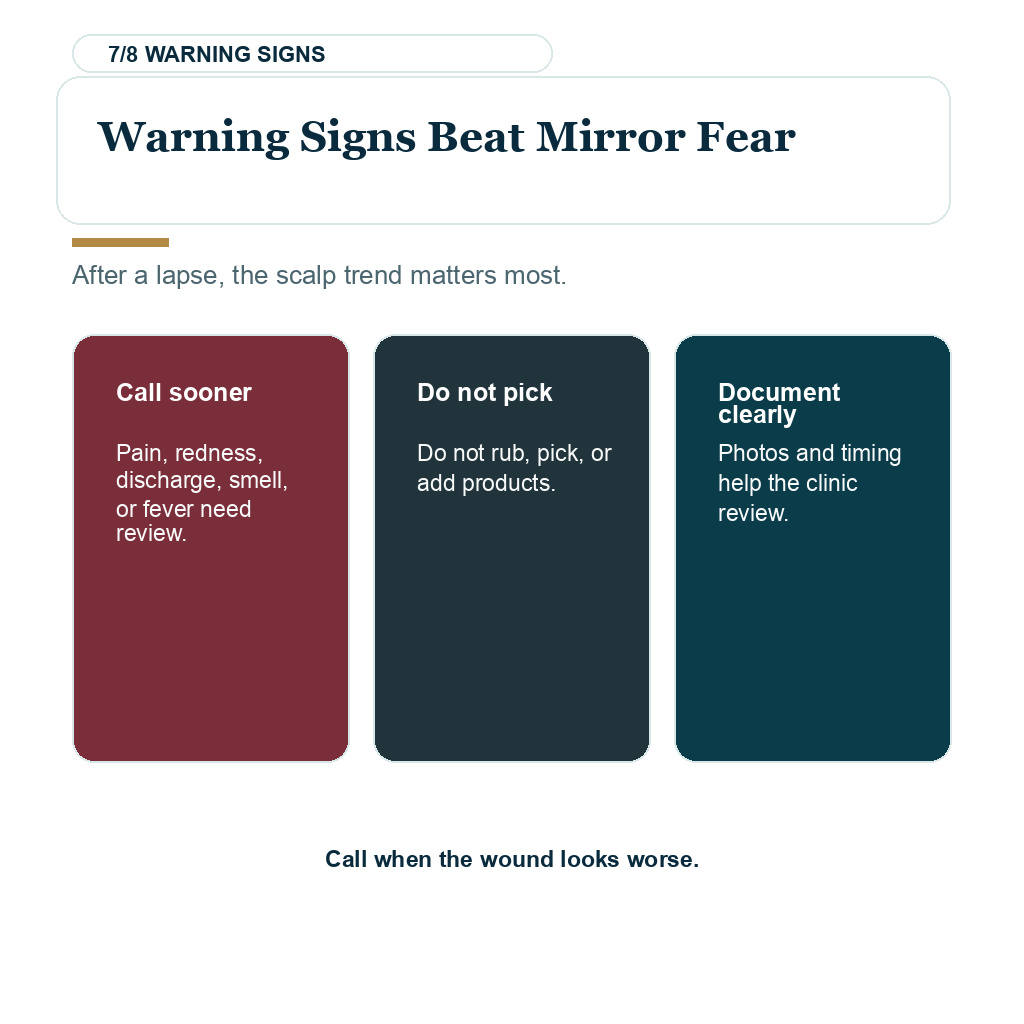
The signs that deserve real attention are different. I worry more about worsening pain, spreading redness, discharge, foul smell, persistent bleeding, fever, or an area that looks more inflamed instead of calmer. If a patient notices those changes, I avoid him arguing with strangers or searching for reassurance. I want him to contact the clinic and compare what he sees with the warning signs I describe in redness, scabs, and pimples after hair transplant. Panic over one cigarette is less important than missing a true sign of trouble.
What Is the Relationship Between Smoking and Necrosis After Hair Transplant?
This is part of the complications that frightens patients the most, and I understand why. Necrosis means tissue death caused by insufficient blood supply. In hair transplantation, scalp necrosis is uncommon, but when it happens, it is serious. It can delay healing, damage the skin, and in more severe cases lead to loss of grafts in that area.
So where does smoking enter the picture? Smoking matters because I never want to reduce blood flow to a scalp that has just gone through surgery. Nicotine can constrict blood vessels. Cigarette smoke can reduce oxygen delivery. When those effects are added to a freshly operated area, the tissue has less margin for error. My conclusion is not that every smoker will develop necrosis. Not at all. But it does mean smoking is the kind of habit that can push healing in the wrong direction, especially when it is combined with other risk factors.
Patients should not treat smoking advice as a minor rule. If a patient already has a compromised scalp environment, very dense packing, significant vascular sensitivity, uncontrolled medical issues, or poor aftercare, continuing to smoke is the opposite of what I want. I try not to create a situation where the scalp must fight harder for blood supply than it should.
I also have to keep this discussion clear and calm. Smoking does not mean necrosis is inevitable, and one isolated lapse does not mean a necrotic complication has already begun. But if a patient keeps smoking and then notices darkening skin, a grey or black patch, severe worsening pain, foul smell, delayed healing, or an area that looks sunken or clearly different from the surrounding scalp, I want that evaluated quickly by the clinic. Necrosis is rare, but it is not the kind of concern I ever want a patient to ignore or self diagnose casually.
If your main fear is whether black scabbing may be one of the real necrosis warning signs, I explain that question separately as well.
Does Smoking Before Surgery Matter Too?
Yes, absolutely. I am strict about the idea that a patient can prepare carelessly before surgery and then become disciplined only after the last graft is placed. Recovery starts before the operation. A patient who arrives sleep deprived, dehydrated, anxious, and still bargaining with cigarettes is already making the process harder than it needs to be. Patients should review my instructions before hair transplant and early, not the night before the flight.
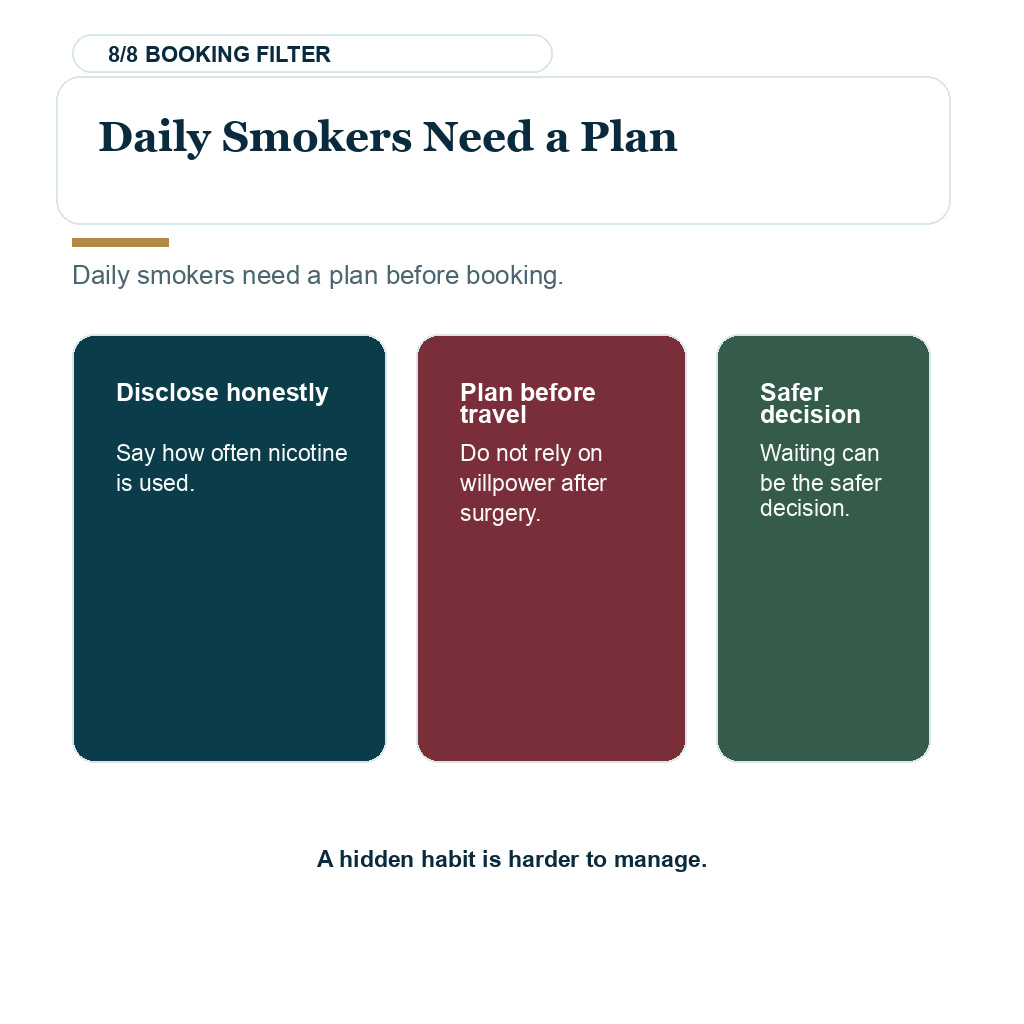
This is also the moment when patients should be realistic about cravings. If you know you smoke daily, do not tell yourself you will solve it with willpower after surgery while sitting in a hotel room, uncomfortable, restless, and unable to move freely. Plan for it in advance. Reduce earlier. Build a strategy earlier. Tell the clinic the truth earlier. What patients regret later is often not the craving itself. It is the lack of planning.
What Do I Think When a Clinic Says Smoking Does Not Matter?
I think patients should listen carefully to how the advice is given. Different surgeons may not choose the exact same timeline, and that alone does not alarm me. Reasonable doctors can disagree on whether the cautious window should be one week, two weeks, or longer. What concerns me more is when the issue is brushed off completely, as if healing quality does not matter or as if aftercare is only a sales detail.
If a clinic tells you smoking does not matter at all, I would ask a simple question. How seriously do they take the recovery process in general? A careful clinic should want complete information, clear planning, and realistic risk reduction. I care more about thoughtful judgment than casual reassurance. My philosophy in hair transplantation has always been quality over quantity, and that includes the way I think about healing, not only the way I place grafts.
How Can Continuing to Smoke Lead to a Less Than Ideal Result?
This is an important distinction, because many patients only think in extremes. They imagine either a perfect result or a total failure. Real life is often more subtle than that. A patient may still grow transplanted hair, but the overall result can look less than ideal if healing quality, scalp condition, inflammation, and long term hair health are not well supported.
What does that less than ideal result look like in practice? It may mean the result looks a little thinner than expected. It may mean the scalp stays more visible in strong light. It may mean the cosmetic improvement is still real, but not as refined, calm, or satisfying as it could have been. And sometimes the patient says the surgery “worked,” yet he still feels disappointed by the final look. I do not reduce this conversation to only one question about whether grafts survived. I also care about how well the whole result matures.
When I discuss visual outcomes with patients, I also tell them to read my article on why some hair transplant results look thin, because thin looking results are not always about graft numbers alone. Healing quality, native hair quality, scalp characteristics, and long term planning all matter.
Can Continuing to Smoke After a Hair Transplant Cause More Hair Loss?
It can contribute to a worse environment for the hair that was already there. This is another point patients often miss. A hair transplant does not replace every hair on the scalp. In most cases, I am working between existing hairs, around vulnerable zones, and inside an area where native hair may still be at risk. So even if transplanted grafts survive, the result can still look weaker over time if the patient keeps losing native hair in the surrounding area.
That is one reason why I am strict about casual thinking after surgery. A patient may focus only on the implanted grafts while ignoring the rest of the scalp. If he continues smoking heavily, sleeps poorly, manages stress badly, and does not support long term hair stability, the mirror may show ongoing thinning later. Then he may assume the transplant failed, when in reality part of the concern is that the surrounding native hair kept losing ground. A transplant can improve an area, but it does not make the rest of the scalp immune to bad habits.
Can Smoking Contribute to Miniaturization of Native Hair?
It can support the kind of scalp environment I avoid for hair that is already genetically vulnerable. When I talk about miniaturization, I mean the gradual weakening process in which hairs become finer, shorter, less pigmented, and less cosmetically useful over time. That process is primarily driven by androgenetic hair loss, but it is not something I want to combine with habits that may worsen circulation, inflammation, and general tissue health.
So I do not present smoking as the single magical cause of miniaturization. That would be too simplistic. But I do tell patients that if they already have hair prone to thinning, continuing to smoke is not the kind of background habit that helps me protect it. When hair is vulnerable, I want to remove pressure from the system, not add more. I also speak so often with patients about medical maintenance and realistic long term planning, especially when they are trying to preserve native hair without creating false confidence. Patients who are thinking about that broader picture should also read my discussion of hair transplant without finasteride.
Why Do Some Patients Think the Grafts Failed When Native Hair Actually Thinned?
Because most patients do not separate these two processes clearly when they are looking in the mirror. They see a thinner look months later and immediately blame the grafts. But sometimes the transplanted hairs are present and the real change happened around them. Native hairs may have continued to miniaturize, shed, or lose diameter, which changes the way density is perceived.
This misunderstanding matters a lot when patients keep smoking after surgery and then judge the outcome too simply. They may say the transplant did not hold, when the more accurate truth is that the final cosmetic picture became less impressive because the surrounding hair continued to weaken. That is one of the quiet ways a result can become less than ideal without turning into a dramatic disaster.
How Can Smoking Affect the Long Term Look of the Result?
Here, many patients underestimate the issue. They think only about the first two weeks, then stop thinking. But the final look of a hair transplant is not judged on day 10. It is judged months later, under normal life conditions, in daylight, at ordinary hair length, with the surrounding native hair also playing its role.
I care about the broader picture. If a patient keeps smoking, keeps inflaming the scalp environment, keeps weakening the quality of the surrounding hair, and keeps losing native support around the transplanted area, the result may still look more see through, less mature, less balanced, or simply less impressive than it could have looked. A transplant is not judged only by survival. It is judged by how convincingly it lives with the rest of the scalp.
Why Do Some Smokers Still Get Decent Results?
This is exactly why patients get confused online. They see someone say he smoked after surgery and still had a decent result. That absolutely can happen. Hair transplantation is not a simple punishment system where every bad habit produces immediate visible disaster. Some patients have better vascular reserve, lighter smoking habits, less demanding surgery, stronger healing biology, or simply enough good factors around them that the final result still looks acceptable.
But that does not make smoking safe. It only means the body sometimes tolerates behavior that I would still consider unnecessary risk. I do not guide my patients by asking what a lucky patient got away with. I guide them by asking what gives them the best chance of a calmer recovery and a stronger result. Good outcomes in careless patients do not turn careless habits into good advice.
Who Is at Higher Risk if They Keep Smoking?
Not every patient carries the same margin for error. I become more concerned when smoking is added to a situation that is already demanding. That includes heavy smokers, patients with diabetes or circulation problems, patients with poor general healing habits, patients with very dense packing, patients with vascularly compromised scalp tissue, and patients whose scalp has already been stressed by previous procedures or scarring.
In those situations, I want even more clarity and even less bravado. A patient should never assume his risk is average just because someone else online said he smoked and looked fine. The less margin a scalp has, the less tolerance I have for avoidable insults.
Can a Smoker Still Get a Good Hair Transplant Result?
Yes, a smoker can still get a good result. I have seen that myself. I have also seen patients with very imperfect habits heal better than anxious people expect. But that should never be twisted into bad logic. The fact that some smokers do well does not mean smoking is a good idea after surgery. It only means the human body is not a machine and outcomes are shaped by multiple factors together.
My job is not to gamble with your result just because someone else took the risk and still looked fine months later. My job is to guide you toward the best possible conditions for healing. That is the difference. If you ask me whether smoking automatically ruins every hair transplant, my answer is no. If you ask me whether I want it anywhere near the early recovery period, my answer is also no.
How Should a Heavy Smoker Plan Before Surgery?
A heavy smoker should not wait until the night before surgery to think about quitting. That usually ends badly. If you know cravings are strong, build the plan early. Reduce earlier. Clean up sleep earlier. Hydrate better earlier. be direct with the clinic earlier. I would much rather work with a realistic patient than a patient who hides a heavy smoking pattern and then struggles immediately after the operation.
For some patients, the smartest path is not pretending they will suddenly become perfect. It is deciding in advance how they will get through the days before surgery and the first recovery window without turning stress into repeated smoking. That may mean changing routine, limiting social triggers, avoiding alcohol, arranging support, or discussing nicotine dependence openly instead of hiding it behind confidence. Good preparation is often what prevents the guilty messages that come later.
So if you already slipped, calm down and recover properly from this moment forward. If you have not had surgery yet, plan better than the average patient does. And if a clinic tries to make this subject sound trivial, take that as a sign to ask deeper questions. A strong result is built not only by the surgery itself, but also by the quality of the healing that follows.