


Alcohol Bleeding Swelling and Medicine Risk
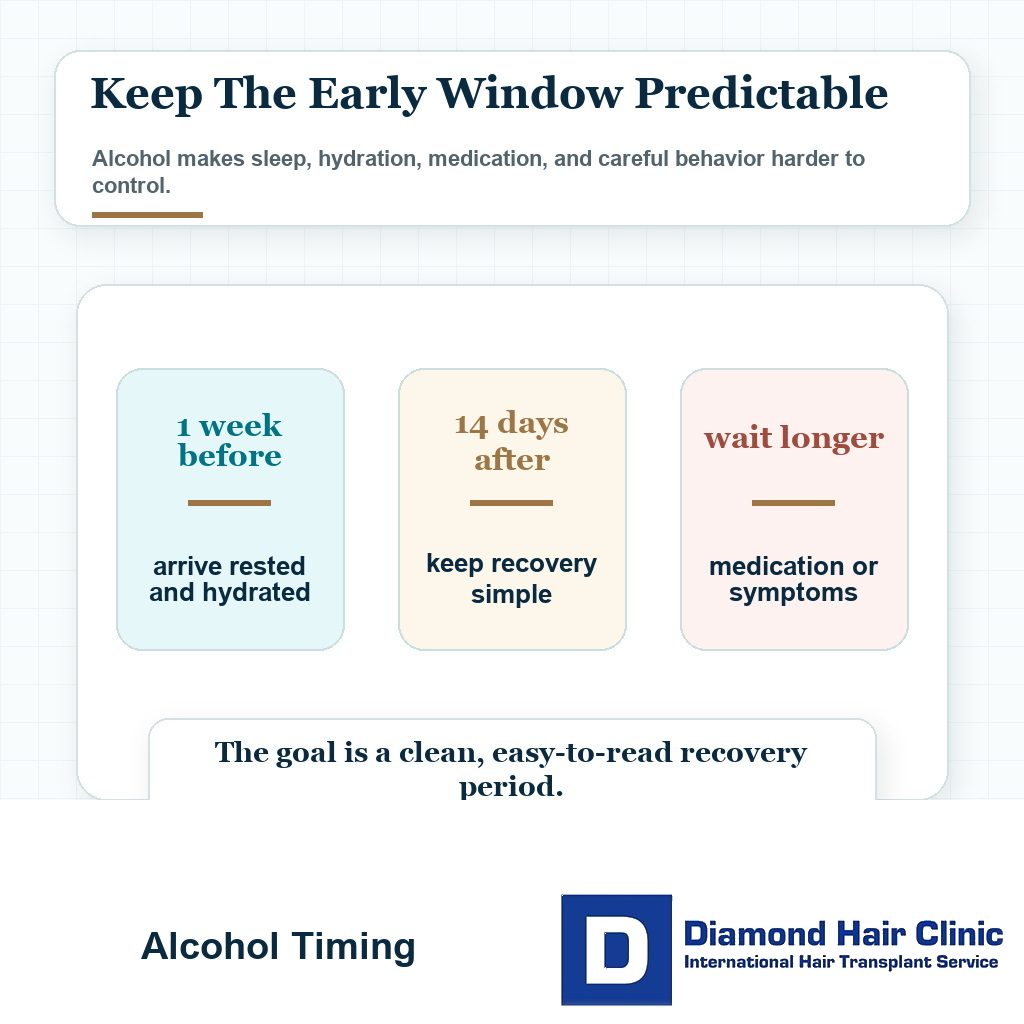
I advise avoiding alcohol for about one week before surgery and for at least the first 14 days after a hair transplant. If you are taking prescribed medication, especially a painkiller after a hair transplant, or you are still bleeding, very swollen, dizzy, dehydrated, or not sleeping well, wait longer.
One ordinary drink later in recovery is not the same as drinking on day 2, mixing alcohol with medication such as a sleep aid, or having a heavy night that leads to poor sleep, vomiting, smoking, sweating, or rubbing the grafts. Alcohol usually creates risk through the situation around it, including sleep, hydration, medication, judgment, vomiting, and scalp contact. If alcohol is mixed with cocaine, MDMA, speed, or another stimulant, body symptoms come before graft photo reassurance. The same safety logic applies to party drugs after FUE.
Alcohol is not a harmless reward after surgery. The first days are the wrong time to test the scalp, the donor area, the medications, or your judgment, especially if a patient is also considering Xanax or Valium before surgery.
My focus here is prevention rather than panic. A hair transplant result is built by surgery, but the first recovery window is protected by behavior afterward.
I do not want normal life to feel dangerous. In the early healing period, the scalp, the medication plan, and the aftercare routine need to stay quiet enough to read clearly.
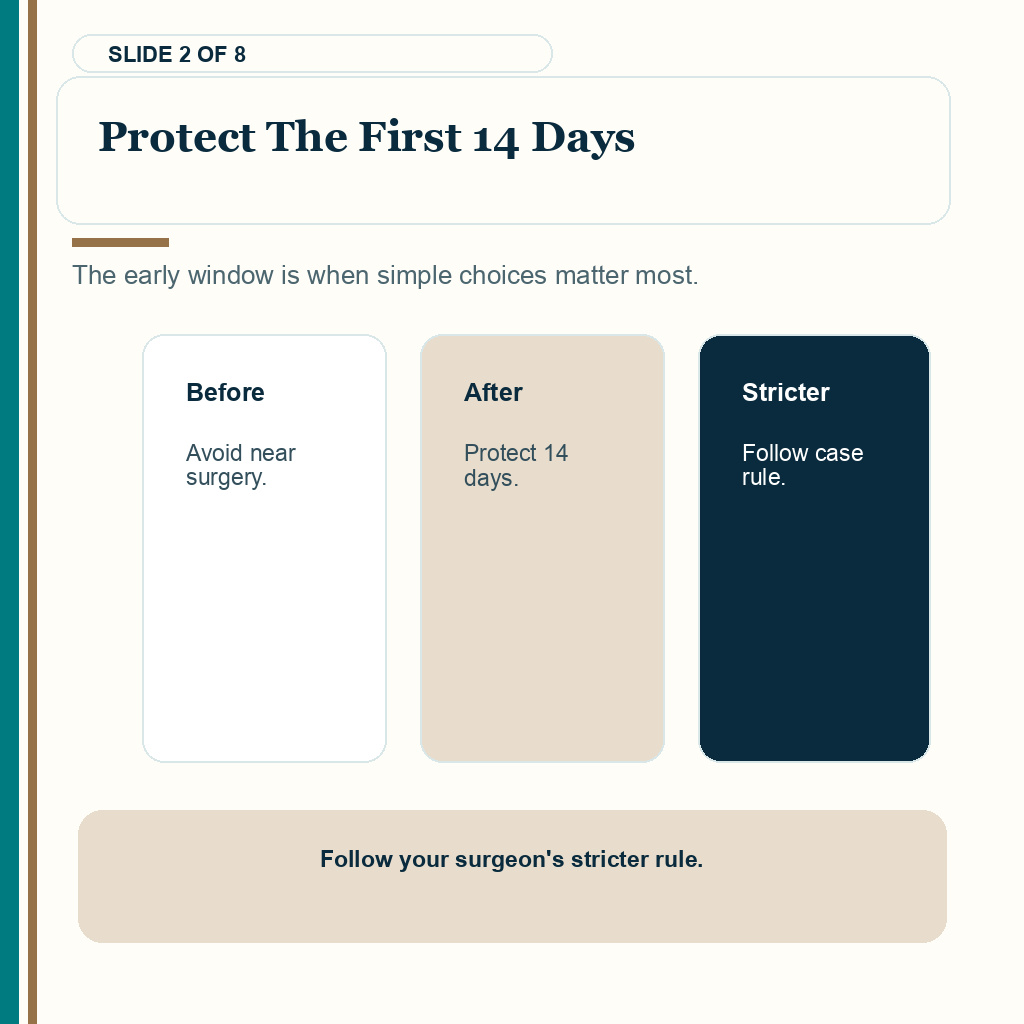
No alcohol in the first 14 days after surgery
After a hair transplant, I treat the 10 to 14 day window as the main protection period. The grafts are settling, the scalp is healing, the donor area may still be tender, and you are learning how to wash and sleep carefully.
Alcohol does not help any of those goals. If a patient already has high liver enzymes before surgery, the reason for the abnormal result should be clear before alcohol is added back into recovery. It can dehydrate you, disturb sleep, reduce caution, and make touching, scratching, bumping, or ignoring instructions more likely. I use similar caution with cannabis after a hair transplant when it affects sleep, alertness, or judgment.
My broader hair transplant aftercare guidance is built around predictable healing. Alcohol pushes recovery in the opposite direction, especially when it is combined with travel fatigue, social pressure, or poor sleep.
Alcohol does not usually harm grafts in that direct way. The more realistic concern is that alcohol creates a worse recovery environment and increases the chance of avoidable mistakes.
In the early period, small mistakes can matter. Rubbing the scalp, sleeping carelessly, forgetting medication, sweating heavily, or ignoring bleeding can become more likely after drinking.
I factor in the donor area. It may feel tight, tender, numb, or itchy in the early days. Alcohol can make scratching, rubbing, or sleeping pressure more likely, and that can turn a manageable recovery into a more uncomfortable one.
You may think drinking at night is separate from the scalp. But nighttime is exactly when sleep position, pillow contact, dehydration, and reduced judgment become relevant.
I also factor in the emotional side. Alcohol can make worry more impulsive. You may inspect the grafts too aggressively, compare photos late at night, or convince yourself something is wrong when the scalp simply needs rest.
The 14 day rule is not moral judgment. It keeps the early healing period clean, predictable, and easier to interpret.
Week before a hair transplant
Before surgery, avoid alcohol for about one week. This is consistent with the preparation advice I give in instructions before hair transplant. You should arrive for surgery rested, hydrated, and medically stable.
Alcohol before surgery can affect the quality of sleep, hydration, blood pressure, and bleeding tendency. It can also make the patient feel weaker or less settled on the day of the procedure.
A hair transplant is not a casual appointment. It is a surgical day that requires local anesthesia, careful positioning, donor extraction, recipient area creation, graft handling, and hours of medical focus.
Heavy drinking shortly before surgery concerns me. Excessive alcohol intake can make the procedure more difficult and can increase unnecessary risk. I want the body rested, hydrated, and stable before we begin.
The night before surgery deserves a quiet plan. A full night of sleep and good hydration help more than trying to relax with alcohol.
Patients sometimes think one week is too cautious. If you are investing in surgery, it is reasonable to protect that investment before the operation even begins.
The consultation and surgical day need a clear mind. If you arrive tired, dehydrated, or hungover, you cannot participate in the plan with the same attention. Hairline design and surgical consent deserve that clarity.
If you have a special event shortly before surgery, tell me early. Sometimes the better decision is to schedule the operation after the event instead of asking you to fight social pressure the night before surgery.
Good planning reaches beyond the operating room. The patient needs to arrive in the best condition possible and recover in an environment that is realistic, not chaotic.
One drink and the real risk
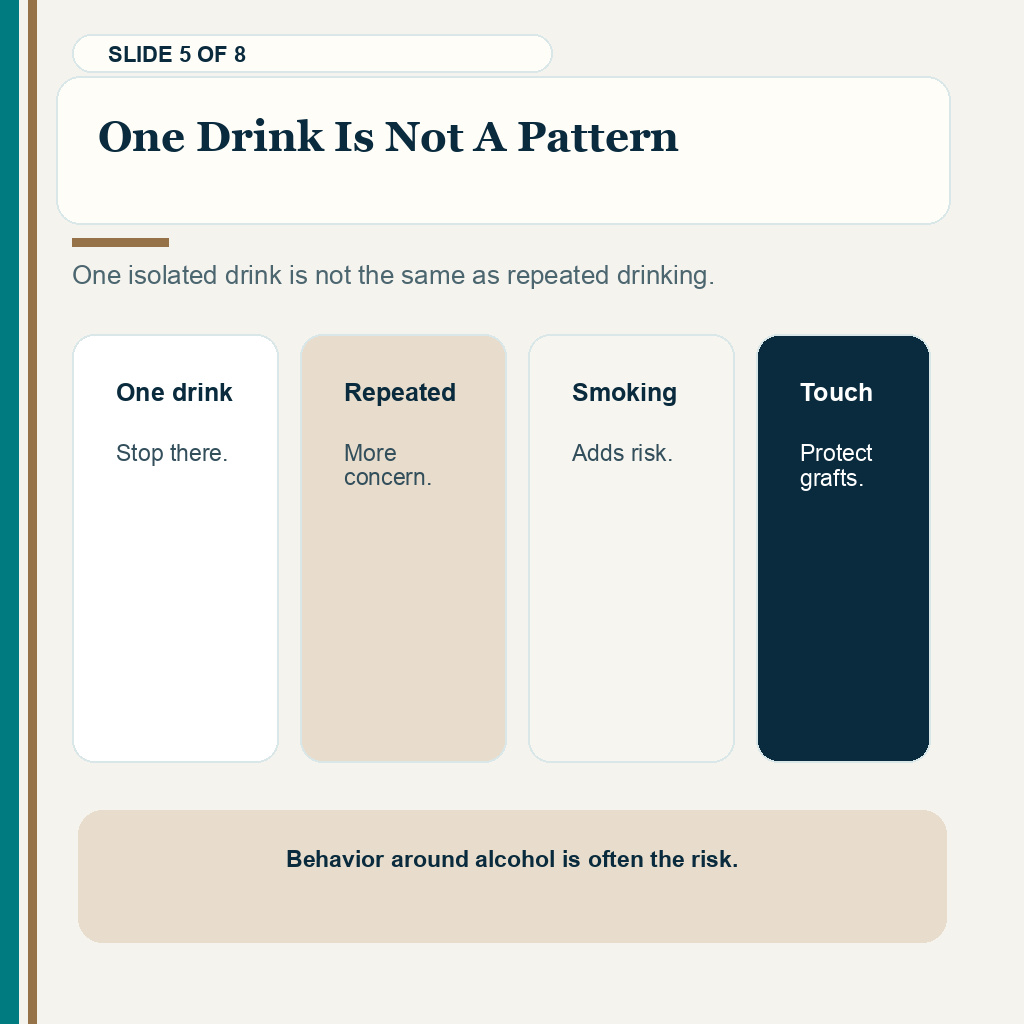
Usually, one drink does not simply ruin a hair transplant. Do not panic if you made one mistake. But do not use that reassurance as permission to drink during the early recovery period.
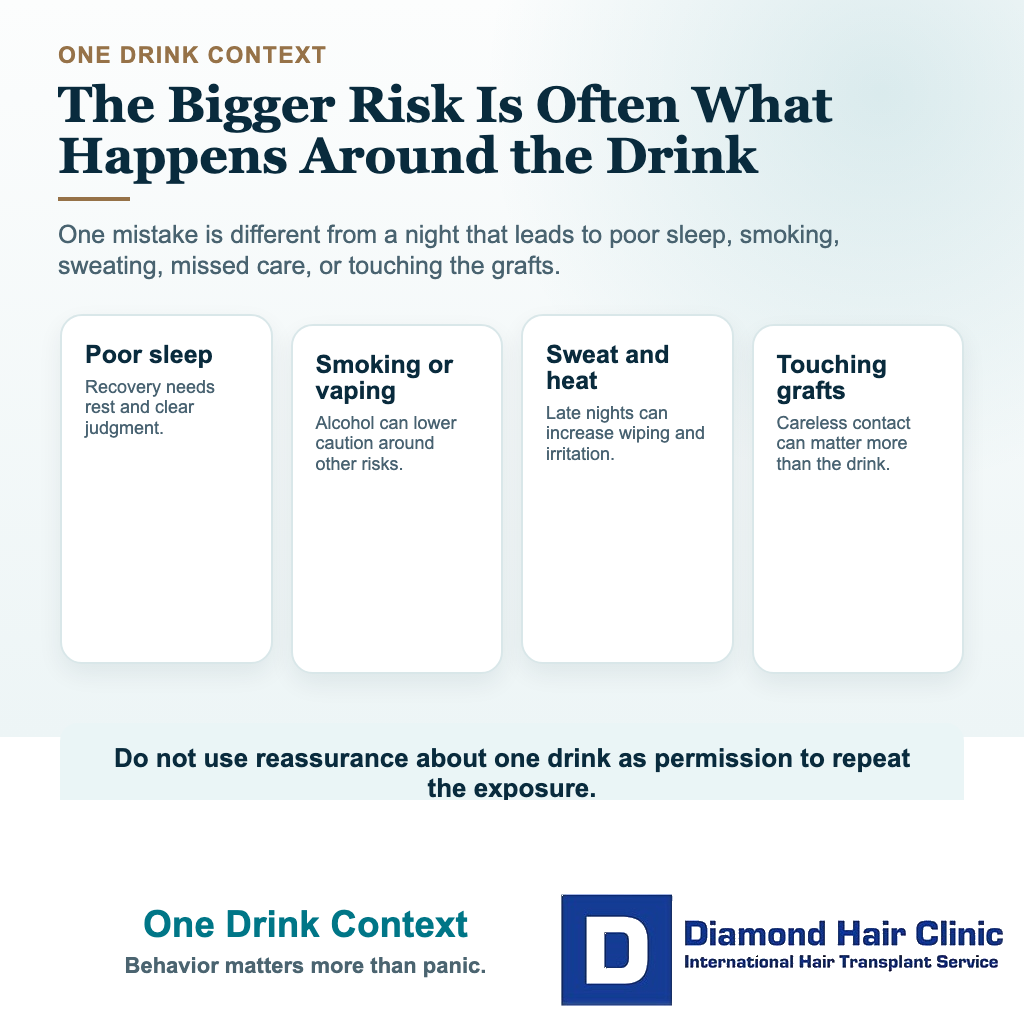
The whole evening around the drink matters, including sleep, smoking, sweating, graft touching, missed washing, and any medication taken the same day. The same practical judgment appears with coffee after a hair transplant, because caffeine can affect sleep, anxiety, and blood pressure in some patients. The whole situation matters more than one detail in isolation.
I apply similar practical logic when patients panic about smoking after a hair transplant. One isolated event is different from repeated behavior that works against healing.
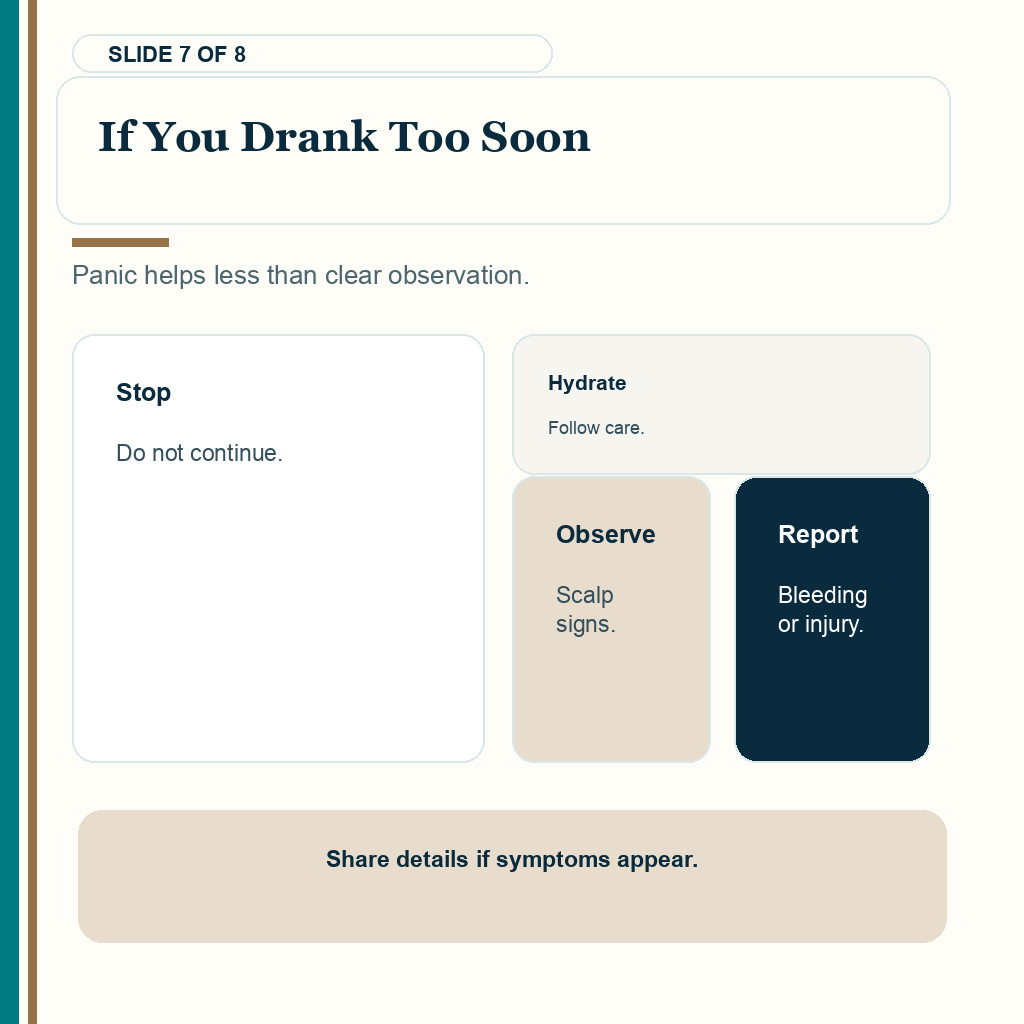
If you had one drink and nothing else happened, the practical advice is usually to stop drinking, hydrate, follow instructions, and observe the scalp. Panic helps nothing.
If drinking was combined with bleeding, vomiting, injury, rubbing, poor sleep, or missed medication, share that with the clinic. Those details change the level of concern.
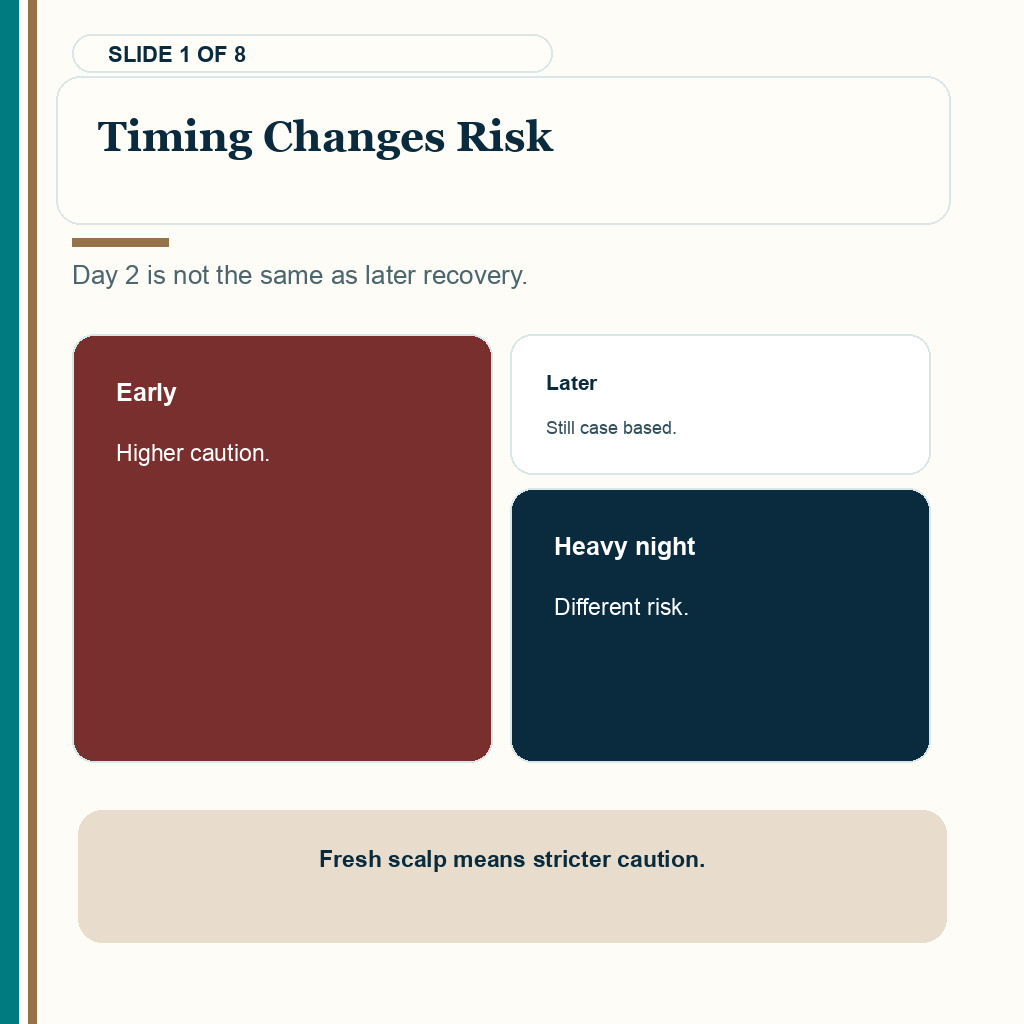
The timing also matters. A drink on day 2 is not the same as a drink after the early protection period has passed. I am much more cautious when the scalp is still fresh, tender, and in the most active healing phase.
Be clear about quantity. A small drink and heavy drinking are not the same medical story. The body responds differently, and the behavior around the drinking is usually different too.
If you drank because you felt anxious, the anxiety deserves attention too. Recovery is easier when you understand what is normal, what is not normal, and when to ask for help.
The unsafe part is rarely one sip. The unsafe part is the chain of careless behavior that often follows alcohol.
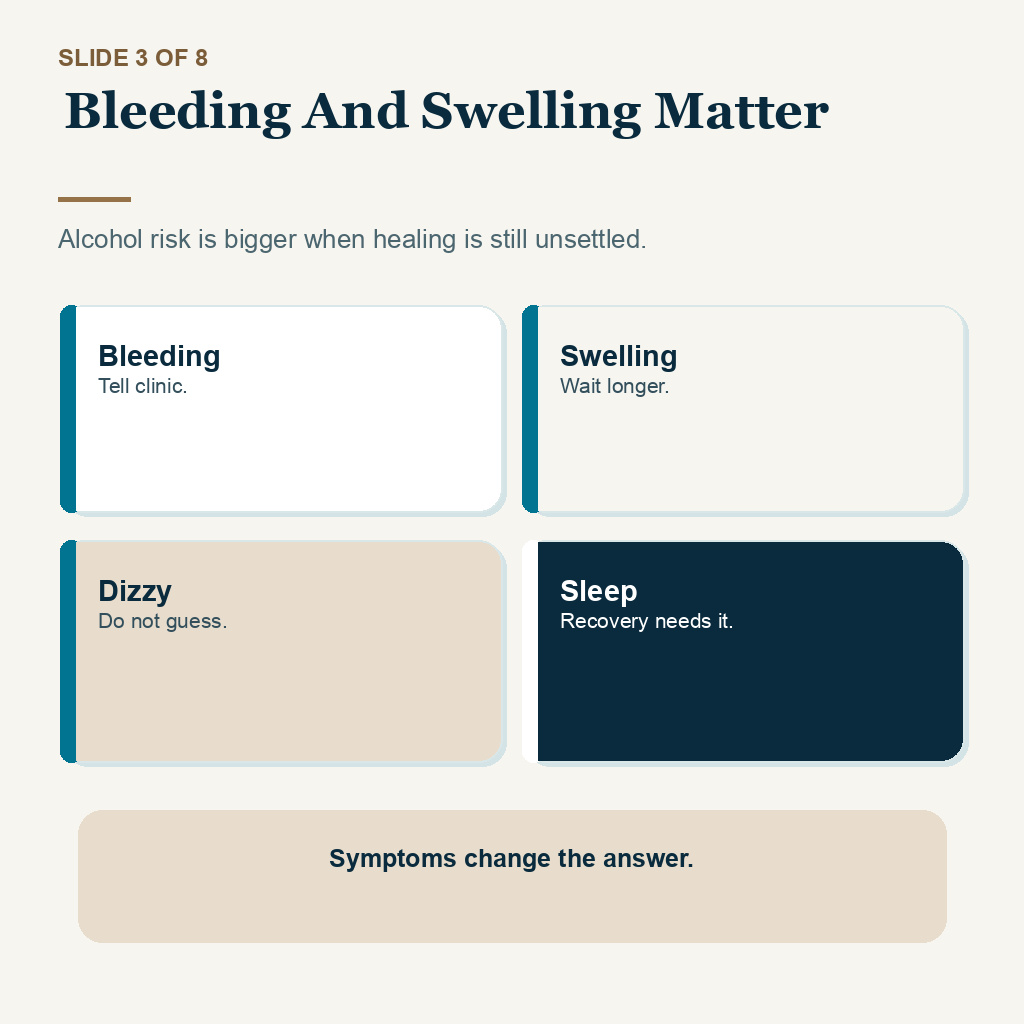
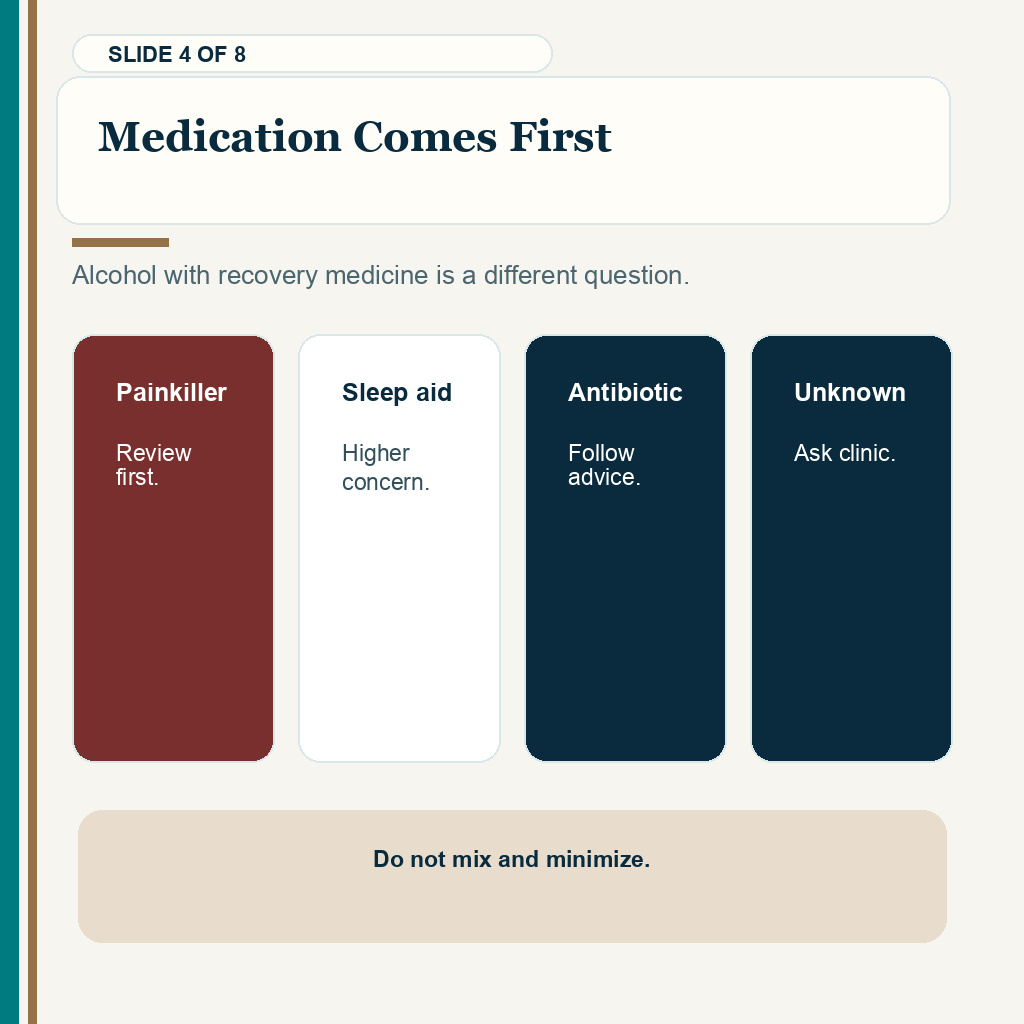
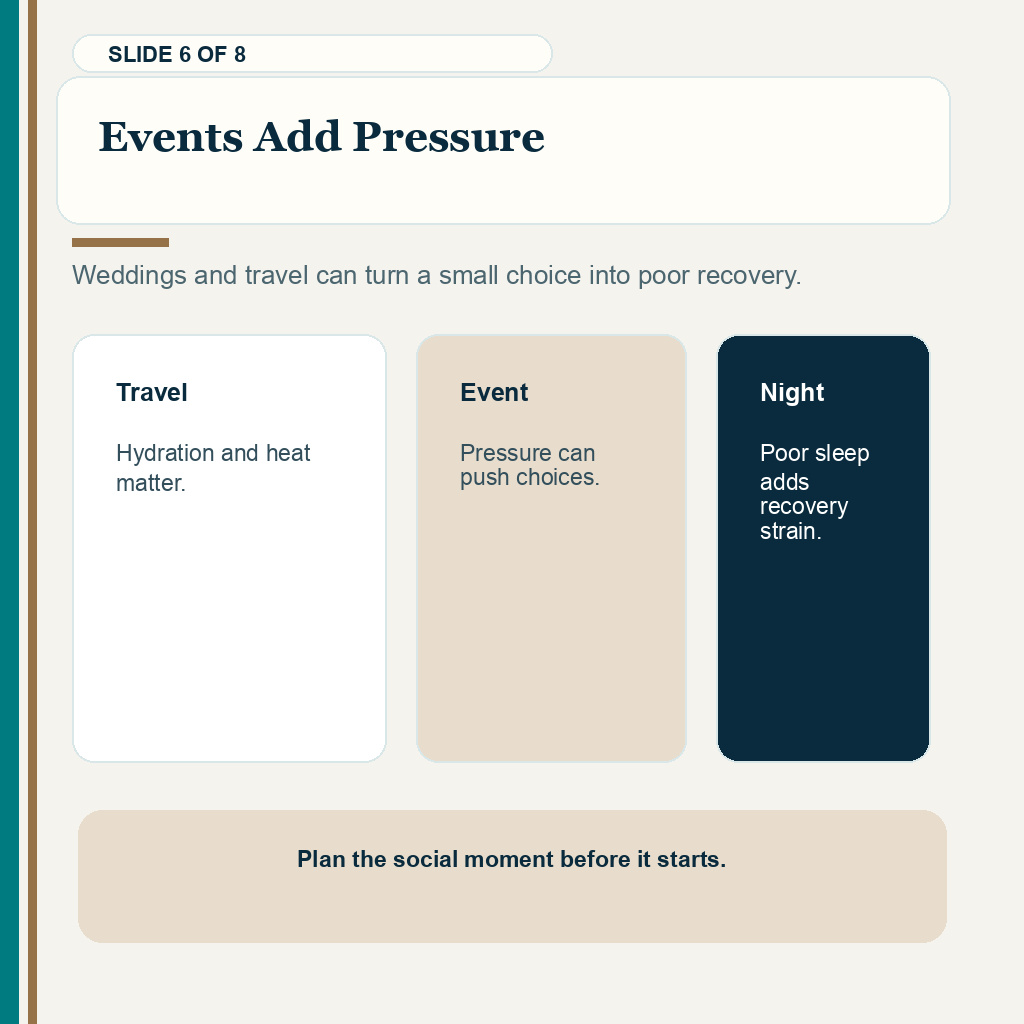
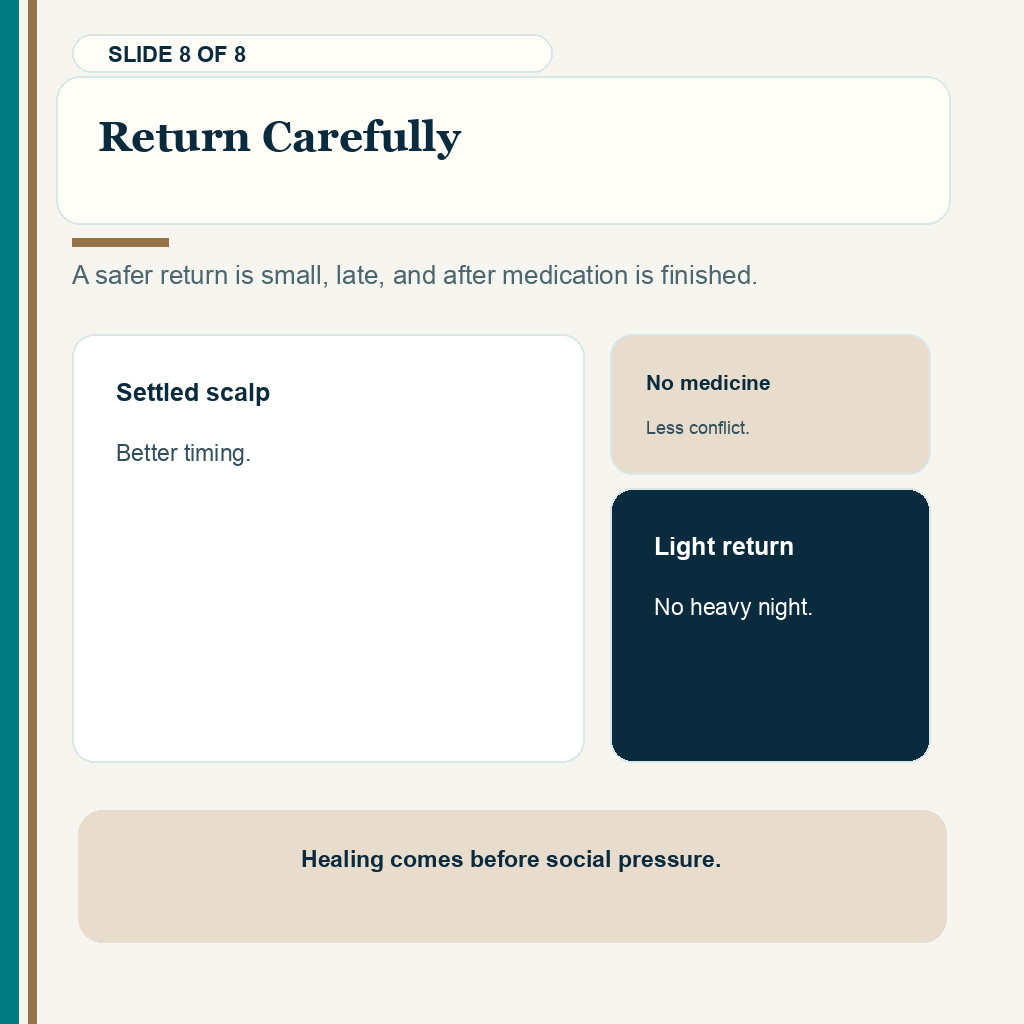
These 8 alcohol risk slides separate timing, the first 14 days, bleeding or swelling, recovery medication, one drink versus repeated drinking, travel or event pressure, what to do if you drank too soon, and how to return carefully. Swipe sideways, use the arrows one slide at a time, or choose a number below the image.
Different clinic timelines
Clinics give different timelines because they are trying to manage different levels of risk. One person may have a small procedure, no medication issues, no swelling, and smooth healing. Another may have a larger operation, more swelling, travel fatigue, pain medication, or a tendency to bleed more easily.
Another patient’s rule is not enough without the case behind it. Rules based on 3 days, 10 days, 14 days, or 1 month may all be trying to protect different patients in different situations.
For timing, I keep the recovery window conservative. Avoid alcohol for about one week before surgery and at least 14 days after surgery. Then, if the scalp is settled and medication is finished, return carefully rather than heavily.
If your own surgeon gives a stricter instruction because of your surgery size, medication, bleeding tendency, or healing pattern, follow that instruction. The strongest advice is the one matched to your actual case.
Bleeding, swelling, and alcohol
Alcohol can contribute to dehydration and can make swelling feel worse in some patients. It may also affect bleeding tendency, especially if the patient is already in the very early period or has taken medication that changes bleeding risk.

After a hair transplant, a small amount of blood tinged oozing from the donor area can happen early. That does not necessarily mean something is wrong. But I avoid alcohol added to that situation.
If you are already swollen, tired, or uncomfortable, alcohol is not the solution. It can disturb sleep, make the face feel heavier, and reduce your ability to follow careful instructions.
My concern is strongest during the first days because the scalp is fresh and the patient is still adjusting to washing, sleeping, medication, and movement limits.
I also tell patients to be careful with sleep after a hair transplant. Poor sleep and alcohol often go together, and neither helps the early healing period.
Increasing swelling, active bleeding, dizziness, or feeling unwell all mean alcohol should wait and the clinic should review the recovery picture.
Alcohol can also make symptoms easier to dismiss. A little throbbing, warmth, or bleeding may be ignored because you feel relaxed. I avoid early warning signs missed because alcohol made the situation feel less serious.
In the first days, clarity matters. You need to be able to notice how the scalp feels, take medication correctly, and follow the washing routine without confusion.
Alcohol can blur that clarity. You may not remember whether you touched the scalp, slept on one side, or took medication at the correct time. That uncertainty alone can create days of unnecessary fear.
Alcohol with recovery medication
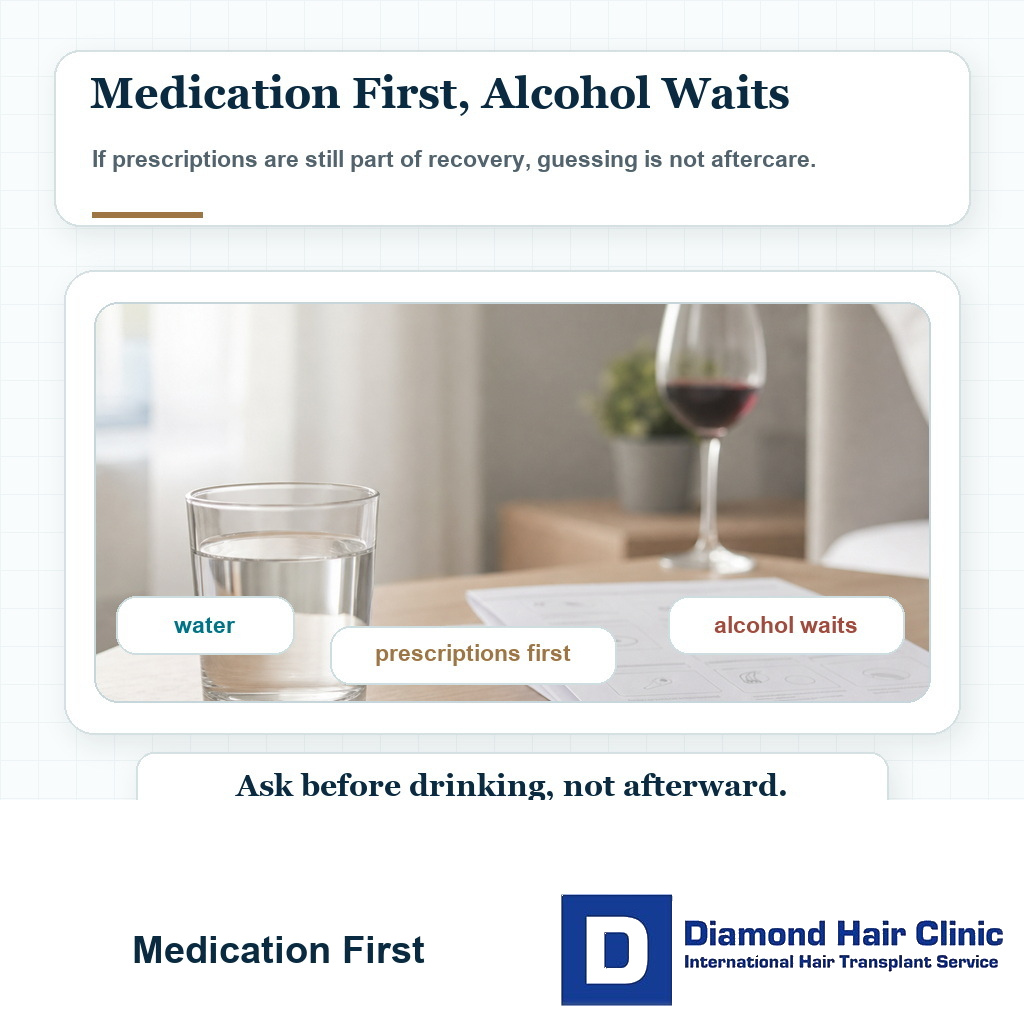
Alcohol should wait while prescribed early recovery medication is still being used, unless your surgeon or prescribing clinician specifically says it is safe. Antibiotics, pain medication, swelling medication, and other prescriptions should be taken seriously.
Some people see medication as a routine detail. It is not. Medication is part of the recovery plan, and alcohol can make side effects, dizziness, stomach irritation, poor sleep, and poor judgment more likely.
You need to understand medications after hair transplant clearly enough to know what you are taking, why you are taking it, and what to avoid while taking it.
Ask before drinking if a medication may interact with alcohol, not afterward. Guessing is not good aftercare.
Even if medication has finished, I still prefer waiting until the first 14 days have passed. The end of a medication course does not always mean the scalp is ready for social drinking.
Finish the early recovery period first. Then return to normal life gradually.
This matters especially with pain medication. Alcohol and pain medication are a poor combination for judgment, stomach comfort, and safety. Even if you feel strong, mixing them is not worth the risk.
Be just as careful if you have been given a sedative, sleep medication, nausea medicine, or any other drug that can make you drowsy. Alcohol can turn a manageable recovery into a safety problem, especially when you are traveling, tired, or sleeping in a hotel after surgery.
If you have liver disease, stomach problems, bleeding history, or regular medication for another condition, be even more cautious. This is especially true with aspirin, anticoagulants, or other blood thinners around a hair transplant. Hair transplant recovery does not happen separately from the rest of the body.
Alcohol during travel
Travel is one of the most common situations where alcohol becomes tempting. You may be at the airport, on a flight, in a hotel, or trying to relax after a stressful procedure. The temptation is understandable, but I still advise against it.
Alcohol during travel can worsen dehydration, poor sleep, and careless movement. It can also make you less careful with luggage, car doors, airplane seats, hats, and the recipient area.
For flying after a hair transplant, the airplane itself is usually not the main danger. The bigger issue is behavior during travel. Alcohol makes that behavior less predictable.
If you are tired, slightly swollen, and carrying luggage, do not add alcohol to the situation. The scalp needs careful movement and clear judgment.
Hydration helps more. Drink water, eat sensibly, sleep carefully, and keep the recovery plan simple.
Celebrate later. The first flight home needs to be uneventful and careful, not festive.
This also matters for hotel recovery. Some people feel that because the surgery is finished, the hardest part is over. In reality, the first hotel nights are when sleeping, washing, swelling, and movement habits begin to matter.
A quiet evening with water, food, and careful rest is far better than a celebratory dinner that ends with alcohol, late sleep, and a careless shower. The same quiet recovery principle applies to what to eat after a hair transplant.
Weddings and social events
If the event is within the first 14 days, my advice is no alcohol. I know that can feel socially awkward, especially at weddings, business dinners, or family gatherings. But early healing matters more than explaining why you are not drinking.
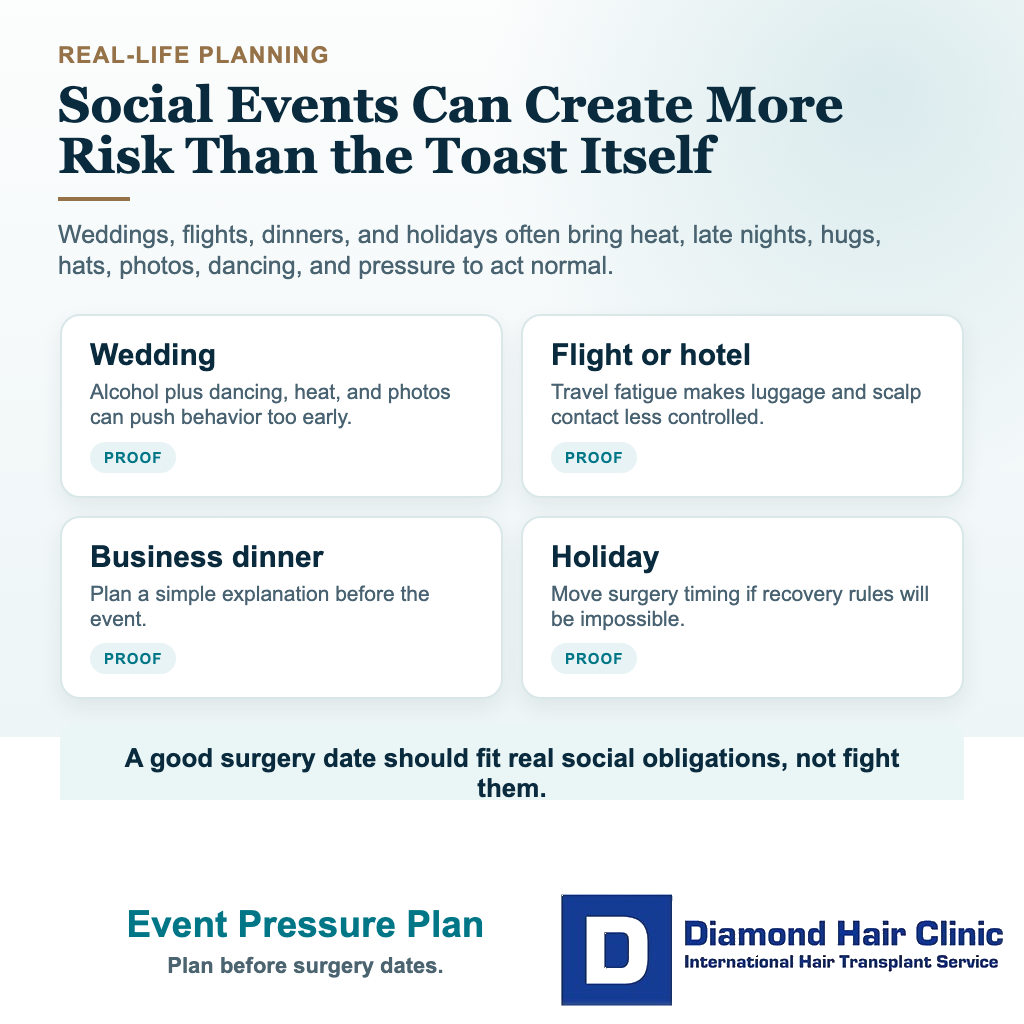
Social events also bring other risks. Heat, sweating, dancing, hugs, close conversations, photos, hats, and late nights can all create pressure to behave normally too early.
Plan social life before surgery. If a major event is coming soon, the surgery date may need adjustment. Moving the surgery is better than forcing a choice between social pressure and proper healing.
The same issue appears in my advice about sex after hair transplant. You may feel physically okay before the scalp is ready for exertion, heat, friction, and reduced caution.
If the event is after 14 days and the scalp is calm, a small amount may be less concerning. But I still prefer moderation, hydration, and no late night excess. One modest drink with food and water is a different recovery situation from dancing, smoking, sweating, sleeping late, and drinking heavily.
The first return to social life should not become a test of how much the scalp can tolerate.
Alcohol often appears together with other activities I also restrict early, such as heavy exercise after a hair transplant, sauna, swimming, and late nights. If your social event includes water or heat exposure, the guidance on swimming after a hair transplant also needs patience.
If you need a simple excuse at an event, use the truth. You had a medical procedure and are following recovery instructions. A short explanation is usually enough, and you do not owe everyone a detailed conversation.
Alcohol and later hair growth
Occasional moderate alcohol months after surgery is not the same issue as drinking during the early recovery period. By then, the grafts are not in the same vulnerable healing environment. But general health still matters.
Heavy repeated drinking can affect sleep, nutrition, inflammation, stress, and consistency with medical treatment. These factors may not erase a transplant overnight, but they do not support a healthy scalp or stable future plan.
Hair transplant progress depends on surgery quality, donor management, native hair stability, aftercare, and time. Lifestyle is not the whole story, but it can influence how smoothly recovery moves.
Work and social routines also affect recovery. I treat time off work after a hair transplant as recovery planning, not only as a question of how many days someone stays away from the office.
I am not asking patients to live like medical patients forever. I am asking them to respect the early healing period and avoid habits that repeatedly work against recovery.
After the initial period, normal moderation is different from heavy drinking. That distinction matters.
Some patients worry that a drink months later will suddenly stop graft growth. That is not how I think about it. By that stage, the bigger issue is whether the overall routine is healthy. If we are discussing medication support for growth, I separate that from the alcohol rule and review minoxidil after a hair transplant on its own timeline.
A hair transplant is planning for the future. Donor management, native hair stability, medical treatment when appropriate, sleep, nutrition, and realistic expectations matter more than obsessing over one distant social drink.
If you drank too soon
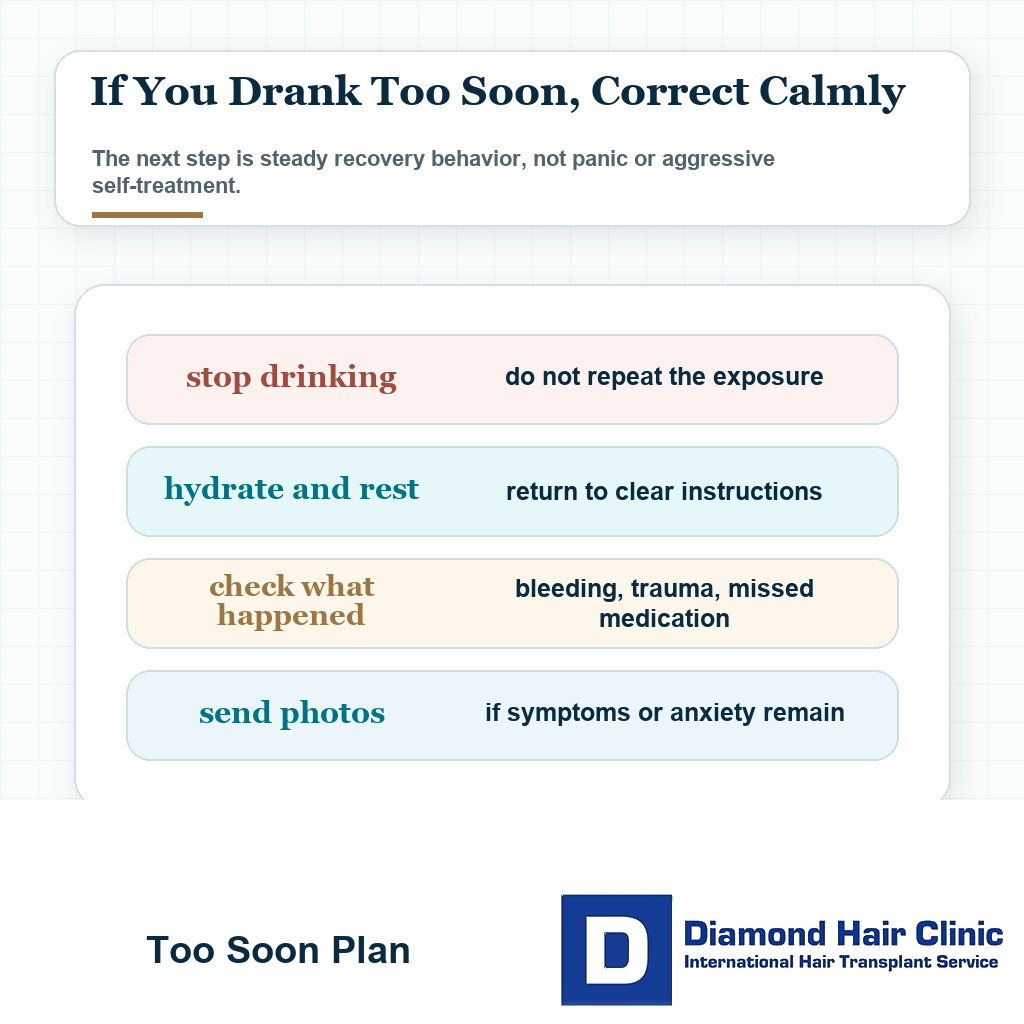
First, stop drinking. Do not turn one mistake into a weekend of repeated mistakes. Drink water, rest, and return to the instructions from your clinic.
Second, assess what happened in practical terms. Bleeding, swelling, vomiting, trauma, missed medication, rubbing, poor sleep, smoking, or bumping the recipient area all change how I assess the situation.
Symptoms need clinic review. If the scalp looks settled and nothing else happened, the correction may simply be to avoid alcohol again and continue aftercare properly.
Another patient’s easy recovery story is not clearance. What matters is your case, including how much alcohol, which medicines were involved, how you slept, and whether the scalp showed bleeding, swelling, or unusual redness.
Guilt after drinking should not lead to scrubbing, extra products, or overwashing. Recovery mistakes are best handled with steady correction, not aggressive treatment at home.
Send photos in steady light when the area does not look normal. The clinic can assess redness, donor area appearance, swelling, and any visible trauma much better than you can while anxious.
Also share that with the clinic exactly what you drank and when. Some people hide this detail because they feel guilty. I am not interested in blame. I am interested in understanding the situation accurately.
If medication was taken the same day, mention that too. The right advice depends on the full story, not only the word alcohol.
A mistake should lead to a slower plan, not panic.
Clearest alcohol rule after surgery
The clearest rule is to avoid alcohol for about one week before surgery and at least 14 days after surgery. Wait longer if you are taking medication, feeling unwell, bleeding, swollen, dehydrated, or unable to sleep properly.
After 14 days, if the scalp is settled and the medications are finished, occasional moderate alcohol is usually a different conversation. But the first return should be modest. Do not make it a heavy night.
If alcohol is part of an upcoming holiday, wedding, work event, or flight, discuss timing before committing to a hair transplant. A real surgery plan has to fit your schedule, not a fantasy recovery plan. Plan the surgery date around the event, not around a promise made under social pressure.
Careful planning continues after the operation. I focus on the surgery itself, but I also focus on the weeks that protect it.
You are not avoiding alcohol because one glass directly destroys every graft. You are avoiding it because the first days should stay clean, predictable, and easy to interpret.
That protected period is short compared with the full recovery and growth timeline. The visible result takes months. Avoiding alcohol for 14 days is a small decision compared with the time, donor hair, and emotional energy invested in the procedure.
If the rule feels difficult, I take that seriously too. It may tell us something about social pressure, travel plans, stress, or habits around alcohol, and those pressures need review before the operation.
There is no advantage in pretending recovery rules are easy for everyone. My job is to explain the reason clearly enough that the patient can follow the rule even when the social situation is inconvenient.
If you want the best chance of a smooth recovery, keep alcohol out of the first 14 days and let the scalp heal without unnecessary complications.
Read this review excerpt
First wash completed and visual instructions given to my daughter.