


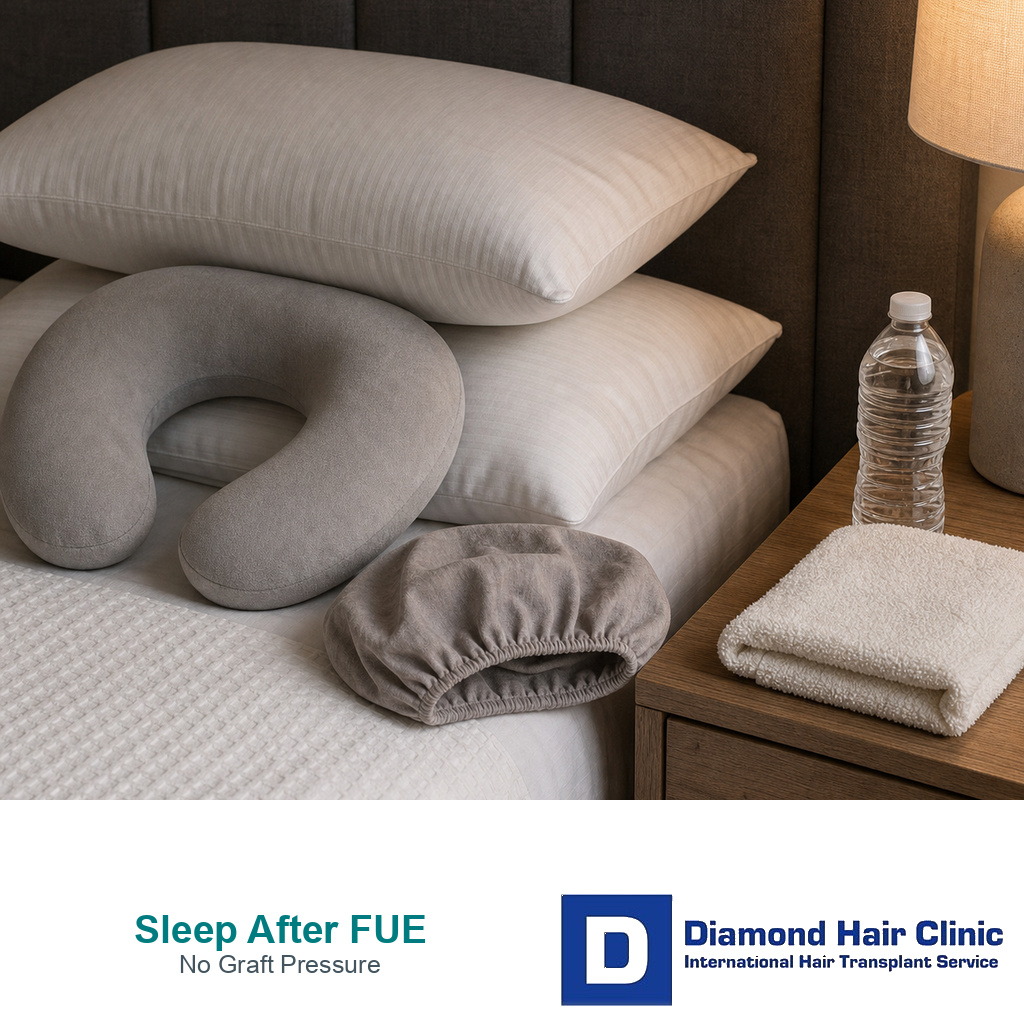
Sleep Position and Graft Safety During Recovery
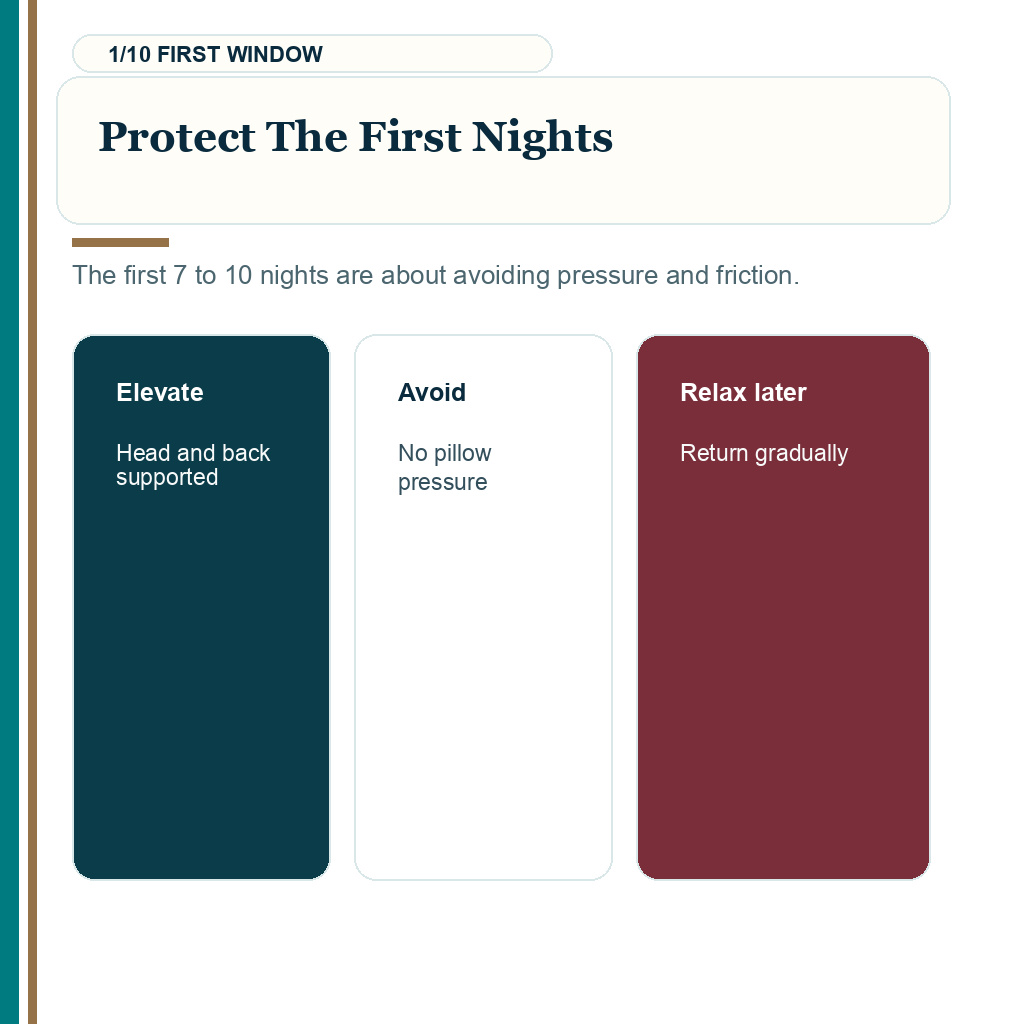
Protect your sleeping position for the first 7 to 10 nights. Many patients can sleep more normally after day 10 if the grafts are stable, the scabs are settling, and the recipient area is not rubbing against the pillow.
If morning eyelid swelling makes you want to adjust the forehead band, use the headband after hair transplant for eye swelling guide before making it tighter.
During the early nights, sleep on the back with the head elevated about 45 degrees. The purpose is to protect the grafts from pressure, friction, and careless contact while swelling is still active.
Small movements in bed should not become a reason to panic. The rules are there to make sleep safer, not to turn every night into a test. A light accidental touch is different from rubbing, pressing, scratching, or sleeping directly on the grafted area long enough to create pressure. If you wake up worried that you bumped the grafts while sleeping, judge the event by timing, bleeding, and whether the skin opened. The same calm check helps if you woke up after coughing or sneezing. If the real problem is barely sleeping despite following position rules, sleepless nights after FUE explains when poor rest is harmless and when it needs help.
Check the pillowcase before you judge the night. Clean fabric with no bleeding or new soreness is a calmer sign than crusts stuck to cloth or a rubbed patch of skin.
Sleep after hair transplant surgery is about more than whether a graft can be pulled out. Swelling, donor discomfort, pillow contact, neck support, and a practical first week setup all matter. If your sleep schedule is reversed by overnight work, plan the protected sleep block with night shift work after a hair transplant in mind before the shift is scheduled. If the question is specifically the first hotel night, use the first night after hair transplant plan alongside the broader sleep rules. Room comfort matters too. If you use a fan or air conditioning after hair transplant, keep the airflow indirect so dryness does not make you rub or scratch.
Sleeping position matters
Sleeping position matters for two reasons. Elevation helps limit swelling, especially after frontal work. Avoiding pressure and friction protects the recipient area while the grafts and surrounding skin are still settling. If you use ice after a hair transplant for swelling comfort, keep it away from the grafted area and do not sleep with it on the face.
Some people think only a dramatic accident can harm the grafts. In reality, repeated small friction can matter more than one tiny touch. A pillow, blanket, shirt collar, or restless hand can irritate the recipient area if you are careless while half asleep. If you already woke up worried, use the focused guide to sleeping on grafts after hair transplant before you start touching the area.
Sleeping elevated also helps with swelling after a hair transplant. After frontal hairline work, swelling can move downward toward the forehead and eyes. Elevation helps reduce that movement, especially in the first nights.
Sleep advice belongs inside good hair transplant aftercare, not as a separate ritual. It is part of protecting the surgical work while the scalp is still vulnerable.
Do not lie awake in fear. Arrange the bed in a way that makes the safe position easier before you are already tired. Good preparation is better than trying to control every movement after midnight.
Write the night plan before you lie down. Know where your hands will rest, what pillow setup stops rolling, and what sign would actually make you message the clinic instead of checking the scalp repeatedly.
Perfect stillness is not the goal. The practical distinction is between a light accidental touch and repeated rubbing, pressure, or scratching. Rubbing, pressure, and scratching are what sleep planning is trying to prevent. Sedating cannabis use after a hair transplant can matter if it makes sleep less controlled during those early nights.
Some people ask whether the donor area or the recipient area matters more during sleep. Both matter, but for different reasons. The recipient area is where the grafts need protection from friction, while the donor area may be tender and sensitive to pressure.
A safe sleeping setup respects both areas. It supports the head and neck, keeps the grafted area away from fabric, and avoids a position that makes donor soreness so uncomfortable that you keep turning.
First night sleep position
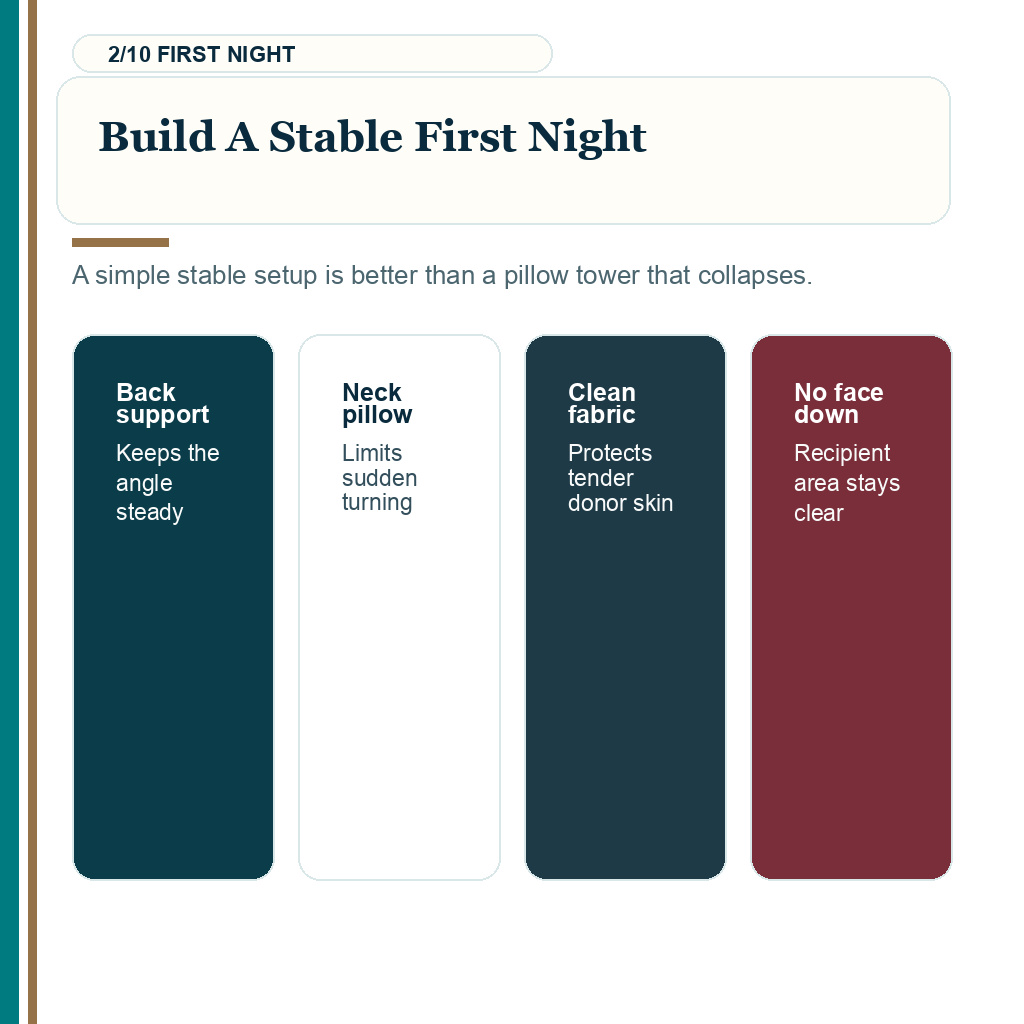
During the first night, sleep on the back with the head elevated about 45 degrees. A travel neck pillow can help keep the head stable and reduce accidental turning.
The 45 degree advice is a practical target, not a geometry test. If the exact angle makes the pillow stack unstable, build a simpler elevated setup that keeps the grafted area away from pressure and lets you rest. Protection works better when the position is repeatable after you are tired.
The first night is often the most awkward because you are tired, cautious, and aware of every sensation. Some donor tightness, mild discomfort, and fear of touching the grafts are common. Those sensations are not, by themselves, proof that something is wrong.
Prepare the bed before sleep. Keep the pillow arrangement simple. Avoid soft pillows that allow the head to sink and roll. Avoid sleeping face down or pressing the recipient area into the pillow.
If the transplant involved the hairline or frontal scalp, be especially careful not to let the front of the head touch bedding. If the crown was treated, the back of the scalp may also need protection from direct pressure.
I also advise against checking the scalp in the mirror all night. Anxiety after a hair transplant can make people touch, adjust, inspect, and move more. A prepared sleep setup protects the grafts better than constant checking.
If you wake up and find that your position changed slightly, do not panic immediately. Return to the safe position and examine the scalp only if there is bleeding, pain, or a clear sign of graft displacement.
Keep the first night boring. Do not experiment with new pillows, sleeping aids, or positions that you have never tried before. A simple arrangement that keeps you stable is better than a clever setup that becomes uncomfortable after one hour.
If someone is staying with you, explain the sleeping rules before bedtime. The helper does not need to watch you all night, but they need to understand that the recipient area must not be touched and that sudden adjustments can create unnecessary friction.
If sleeping on your back is difficult
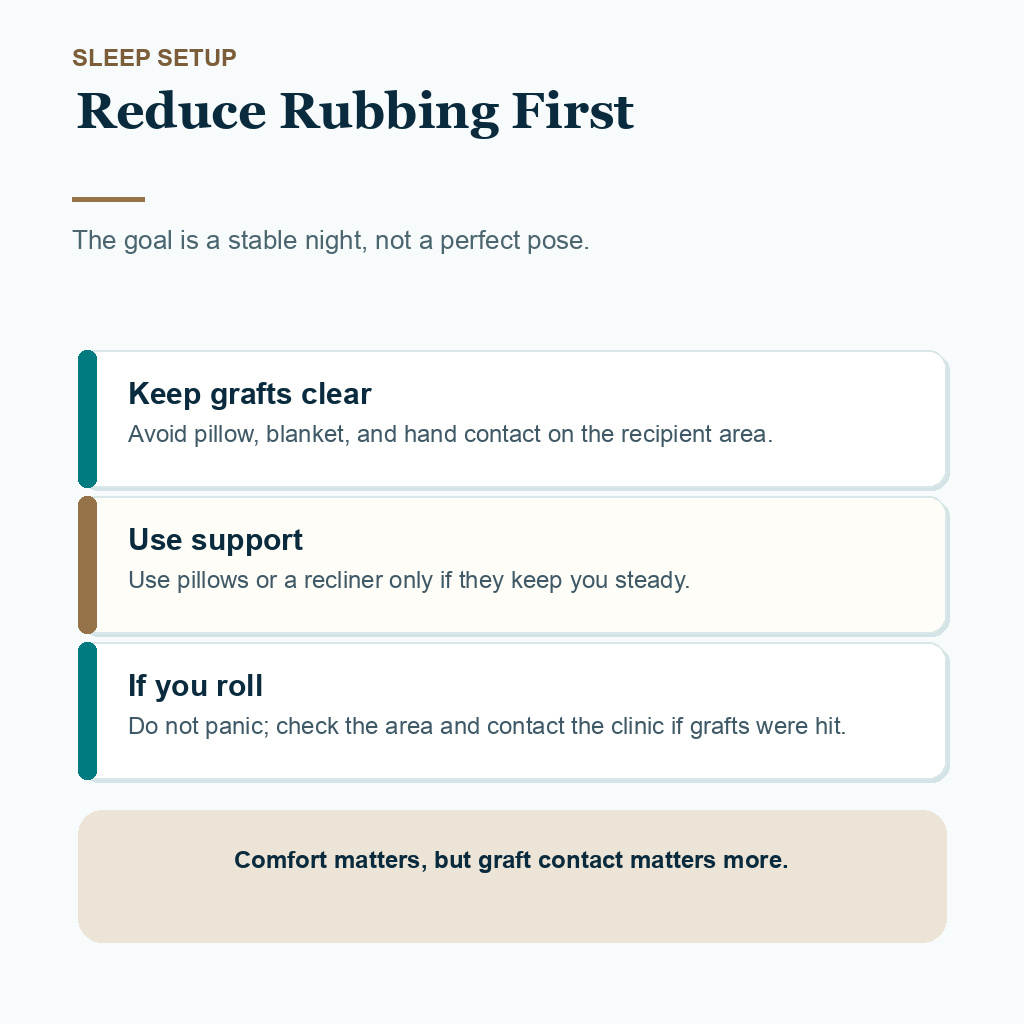
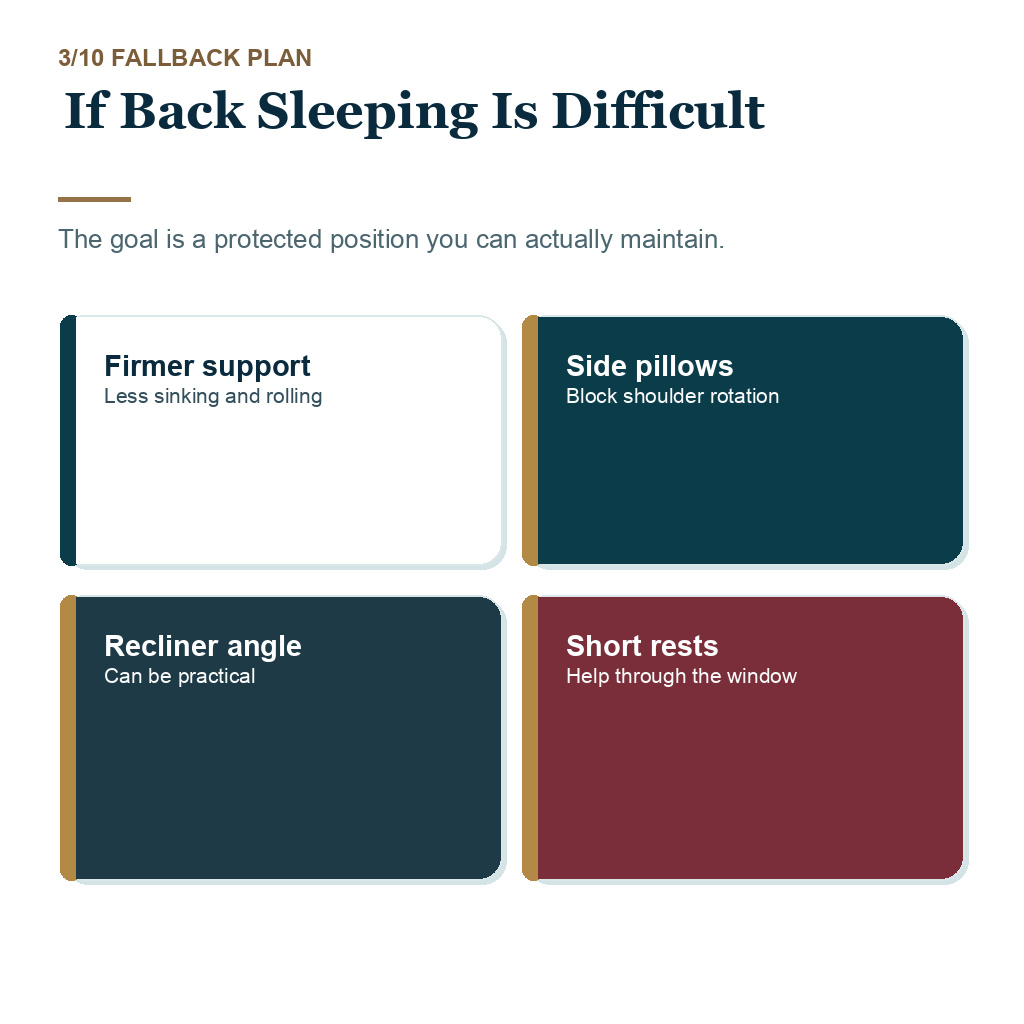
Some people simply do not sleep well on their back. That is understandable. But during the first 7 to 10 nights, the priority is not your favorite sleeping position. The priority is keeping the recipient area away from pressure and rubbing.
If back sleeping is difficult, make the setup more practical before the first night. Try your planned sleep setup before surgery, especially if you normally sleep on your side or face down. That gives you time to adjust the pillows or recliner before the first night after surgery. A firmer back support, a travel neck pillow, side pillows beside the shoulders, or a recliner style position can reduce the feeling that you may roll without control.
A slightly imperfect but stable protected position is better than an elaborate pillow tower that collapses after one hour. Stability matters more than trying to make the bed look medically perfect.
Short daytime rests can also help if the first nights are poor. Use them to get through the protected phase without repeated contact on the grafts, not to prove that sleep must feel normal immediately after surgery.
If you truly cannot maintain any safe position, share that with the clinic before surgery. Sleep habits are part of aftercare planning, especially for restless sleepers, people with neck problems, and anyone who already uses breathing support at night.
Graft safety while sleeping
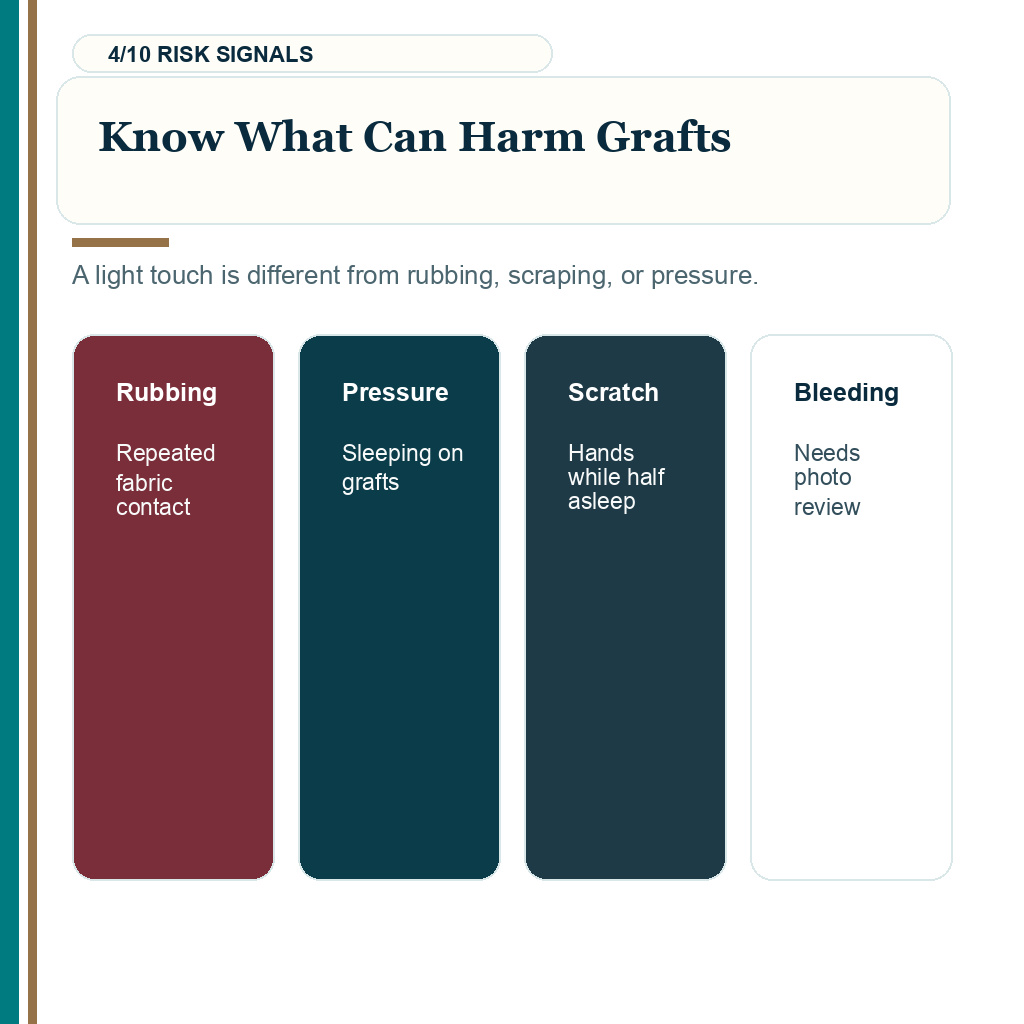
Grafts can be disturbed by strong rubbing, scraping, pressure, or direct trauma in the early days. But a light accidental touch does not always mean you have lost grafts.
The difference matters. A hair on the pillow can look frightening, but it is not always a destroyed graft. Very often, what you see is a hair shaft, dried crust, or normal early shedding, not a lost follicular unit.
A truly lost graft in the early period may be associated with bleeding or a small tissue like piece, not just a hair. Even then, a clear photo and clinic review are better than scratching, picking, or inspecting aggressively.
That distinction is part of lost grafts after hair transplant scabs. It matters because panic can make you do the exact thing you should avoid, which is touching the recipient area too much.
During sleep, the main risk is not a single hair on the pillow. The main risk is friction, pressure, or scratching during the period when the grafted area needs to be left alone.
Restless sleepers need physical prevention. A neck pillow, side pillows, and a slightly elevated position can reduce rolling. Do not rely only on willpower when you are asleep. A pillow that stops rolling is useful only if it does not create a new sore pressure point on the donor area.
If your hands move toward the scalp during sleep, do not tie your wrists or improvise restraints. Keep your nails short and deal with itch before bed using only the clinic’s approved aftercare. A clean pair of soft cotton gloves can blunt fingernail contact without restricting your movement, but it does not make rubbing safe. If you wake with a hand on the recipient area, stop touching and use bleeding, open skin, or visible displacement as the reason to contact the clinic.
After FUT, sleep has to protect two different areas. Keep the recipient grafts away from rubbing and avoid concentrated pressure or pulling across the strip closure at the back of the scalp. An elevated or recliner position may be easier for a side sleeper, but the exact support and return to normal sleep should follow the operating surgeon’s instructions for that closure.
Upright sleeping can usually stop once grafts are safer
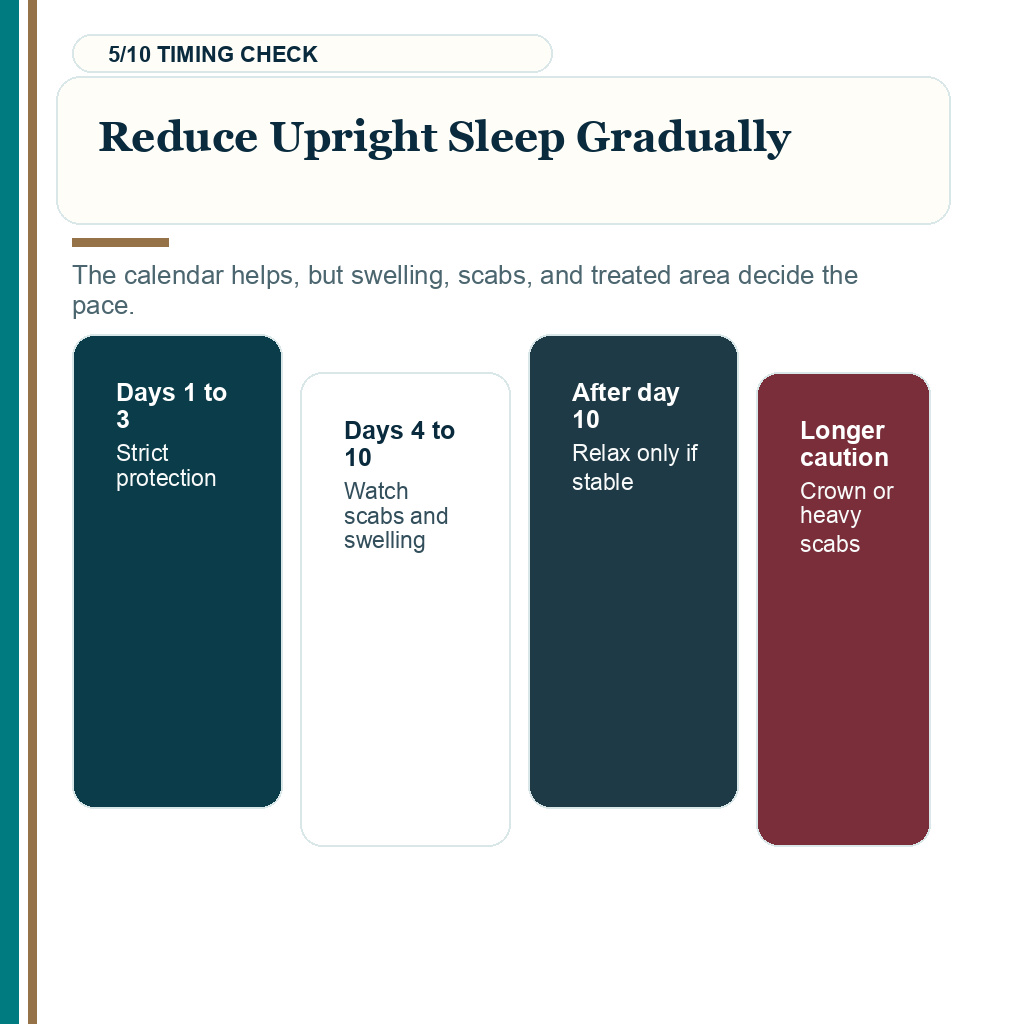
Many people can begin reducing strict upright sleeping after the first 7 to 10 nights if the scalp is healing well and their clinic has not given a different instruction. Do not make this decision only by calendar. Swelling, scabbing, tenderness, and the area treated all matter.
In this part of the decision, people often mix up two different ideas. A graft may become harder to dislodge before the scalp is ready for careless pillow pressure, repeated friction, or sleeping face down. Crusts and scabs also change the risk, because pulling on attached crust can be more dangerous than seeing a loose hair shaft.
If swelling has settled, scabs are stable, and the recipient area is not being rubbed, the sleeping position can become more relaxed. But relaxed does not mean careless. Still avoid direct pressure on the grafted area until healing is secure.
Some cases need longer. If the crown was treated, if there is unusual tenderness, if scabs are heavy, or if you move aggressively in sleep, staying cautious a little longer may be better.
Recovery planning for work has a similar purpose. Many people need a protected first phase before social life feels normal again, and planning time off work after hair transplant around the visible healing period often helps.
Sleep should become easier each night. If it becomes harder because pain, swelling, or anxiety is increasing, that deserves clinic review rather than silent struggle. The same is true if poor sleep comes with cold or flu symptoms after a hair transplant, because fever and scalp symptoms need judgment together.
The fastest return is not always the best return. Match the sleep position to your actual healing.
Use these 10 sleep recovery slides to review the first protected nights, stable sleeping on your back setup, fallback positions, graft friction risks, upright sleep timing, side sleeping decisions, accidental rolling, donor pain, night routine habits, and the gradual return to normal sleep. Swipe sideways, use the arrows one slide at a time, or choose a number below the image.
Side sleeping after FUE
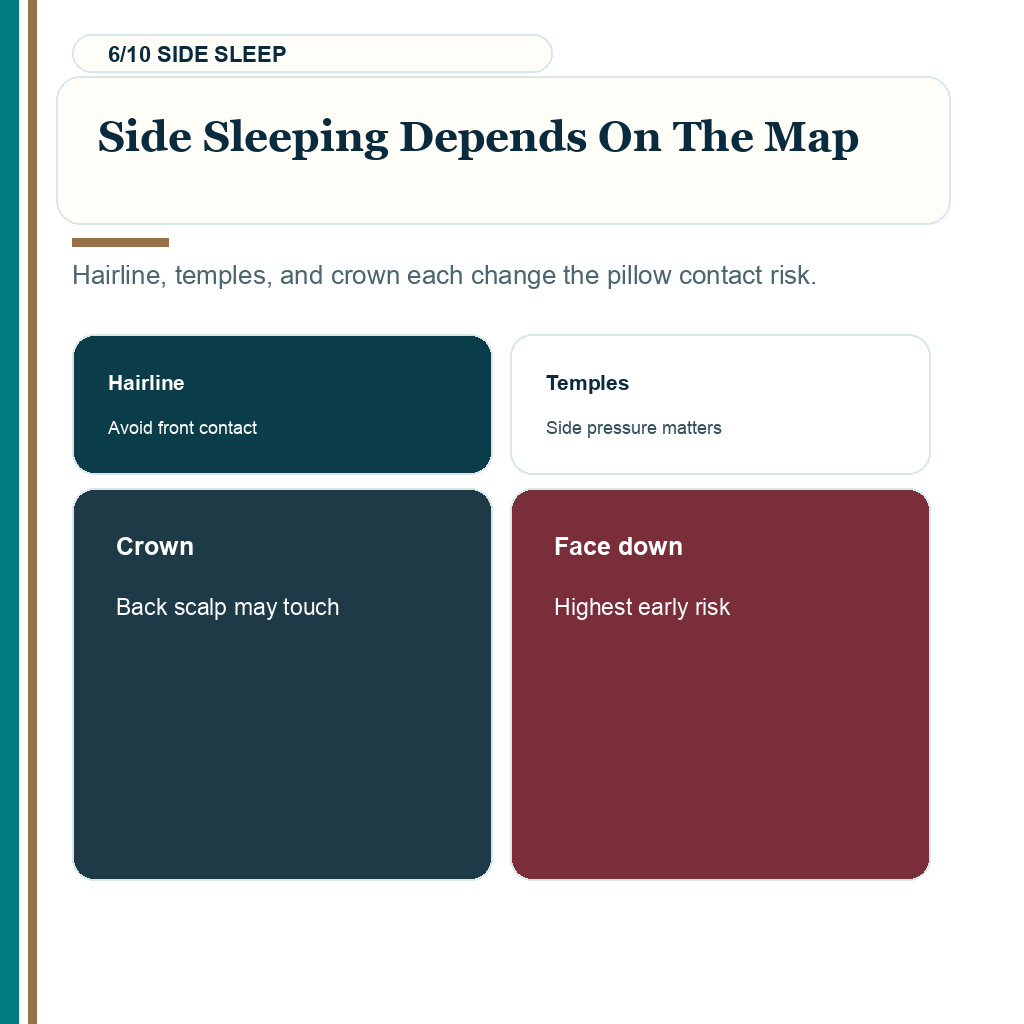
Side sleeping may be possible after the early protected phase, but it depends on which areas were treated and whether the recipient area touches the pillow. If the grafts are in the hairline, side sleeping may still be safer than face down sleeping, but the head can roll and create friction.
If the temples were treated, side sleeping can place the side recipient area near the pillow. If the crown was treated, the back of the head may be more vulnerable. The advice changes with the surgical map.
In the first 7 to 10 nights, avoid sleeping freely on the side unless your surgeon has specifically allowed it. After that, side sleeping can return gradually when the grafted area is not rubbing against the pillow.
A neck pillow can still help even when you are no longer fully upright. It can limit sudden rotation and keep the scalp from sliding against fabric.
Use the pressure and friction test from the hat after hair transplant guidance. Anything that touches the grafted area needs to be judged by how it presses or rubs. A pillow is not different in that sense.
If side sleeping causes scabs to catch, recipient redness to worsen, or discomfort to increase, return to a safer position and ask your clinic for guidance.
Some people ask whether they can sleep slightly turned without fully lying on the side. A small angle can sometimes work after the highest risk period, as long as the grafted area does not touch the pillow. Change gradually rather than making a sudden return to old sleeping habits.
If you normally sleep face down, you need to plan for that before surgery. Face down sleeping is one of the riskiest positions in the early period because it can combine pressure, rubbing, and heat on the recipient area.
If this is your normal habit, treat the first week as a temporary medical position, not your permanent way of sleeping. The rule becomes easier when you see it as a short protected phase.
If you accidentally roll onto grafts
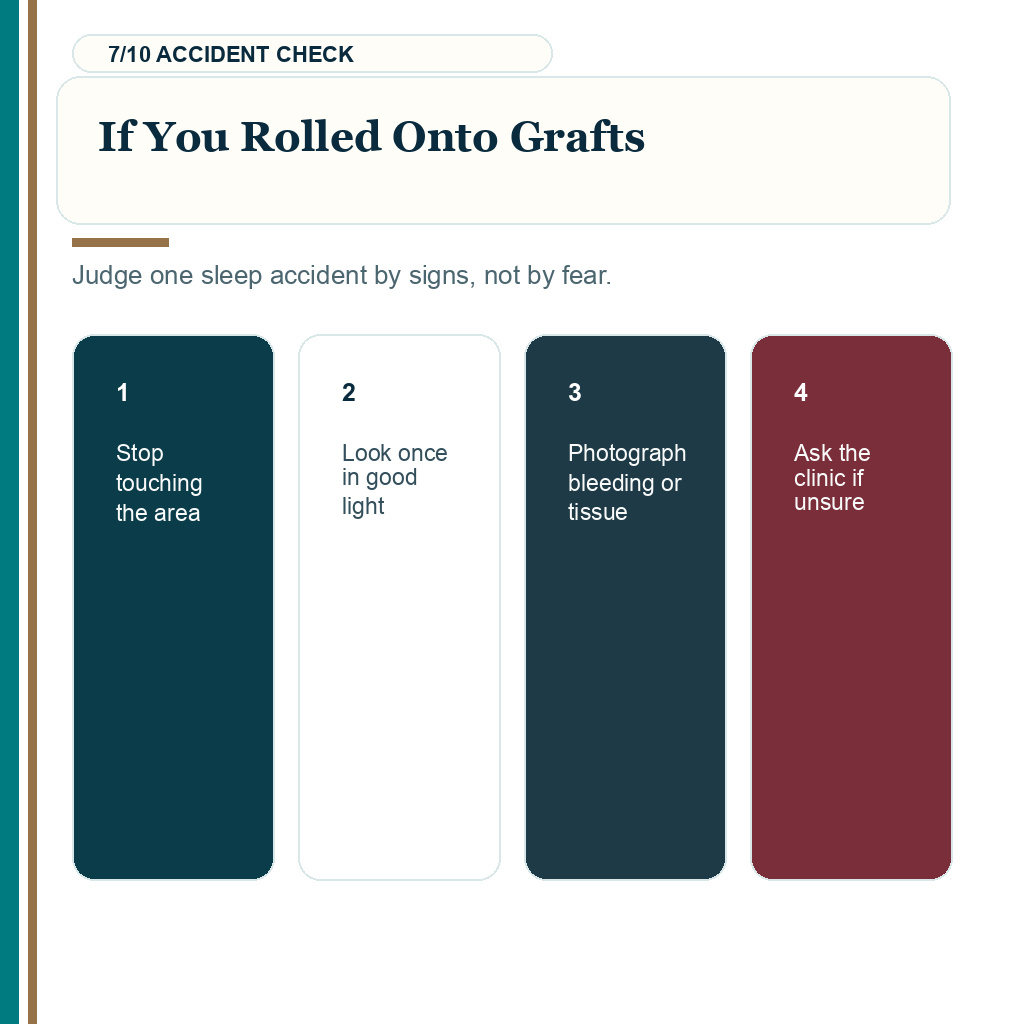
If you accidentally rolled onto your grafts, first stop and avoid checking with your fingers. Do not scratch, pick, or rub the area to check what happened. Sit up, look gently in good light, and ask the clinic to review it if you see bleeding, clear graft displacement, or unusual pain.
With no bleeding and no visible tissue displacement, a brief accidental contact may not cause harm. The scalp is delicate, but it is not made of glass. The real danger is repeated friction or a strong scrape.
Many people punish themselves emotionally after one sleeping mistake. That anxiety can become more harmful than the event because it leads to constant inspection. Report the concern clearly, then return to careful aftercare instead of checking the scalp again and again.
When a scab is stuck to the pillow, do not pull on the scalp. Let washing instructions and clinic guidance manage scab softening. Pulling is more dangerous than the scab itself.
Healing signs can look alarming without always meaning graft loss, especially when judging redness, scabs, and pimples after hair transplant.
One accidental moment needs judgment by signs, not fear. Bleeding, pain, and clear displacement matter more than imagination.
Remember that you may not know what you saw. A hair shaft can look dramatic on a pillow because it is dark against white fabric. That does not prove that the follicle was pulled out.
Take one clear photo and stop touching the area. The clinic can guide you better from one steady photo than from repeated rubbing, lifting scabs, or trying to inspect every tiny spot with your fingers.
Sleeping with donor area soreness
Donor area discomfort can make sleep difficult, especially after FUE when the back of the scalp feels tight or tender. The challenge is to protect the recipient area while also avoiding too much pressure on the donor.
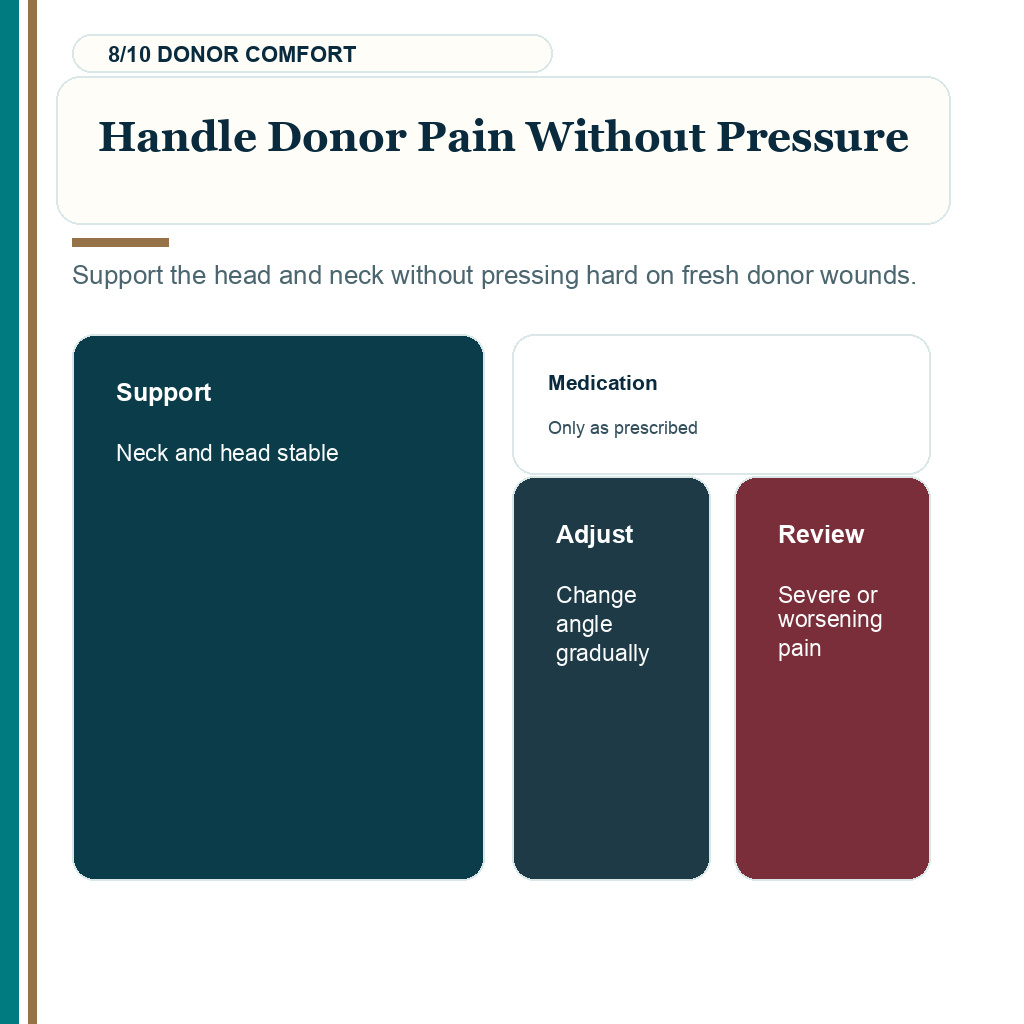
Elevation can help. A neck pillow can help. Taking prescribed medication exactly as instructed can also help. Do not add medications on your own without your clinic’s approval.
If donor pain is severe, worsening, on one side, burning, or associated with unusual swelling, the clinic should review it. Some discomfort is expected, but severe pain in the donor area after hair transplant belongs in a different category and should not be ignored.
For sleep, use support rather than pressure. A travel pillow or towel roll should support the neck and shoulders without scraping or pressing hard against fresh donor wounds. When that setup makes the donor area burn, cover the fabric with a clean soft layer, move the pressure lower on the neck, or use a wedge or recliner position instead of forcing it. Stronger pain that continues to build belongs with severe donor area pain after a hair transplant, not with ordinary pillow discomfort.
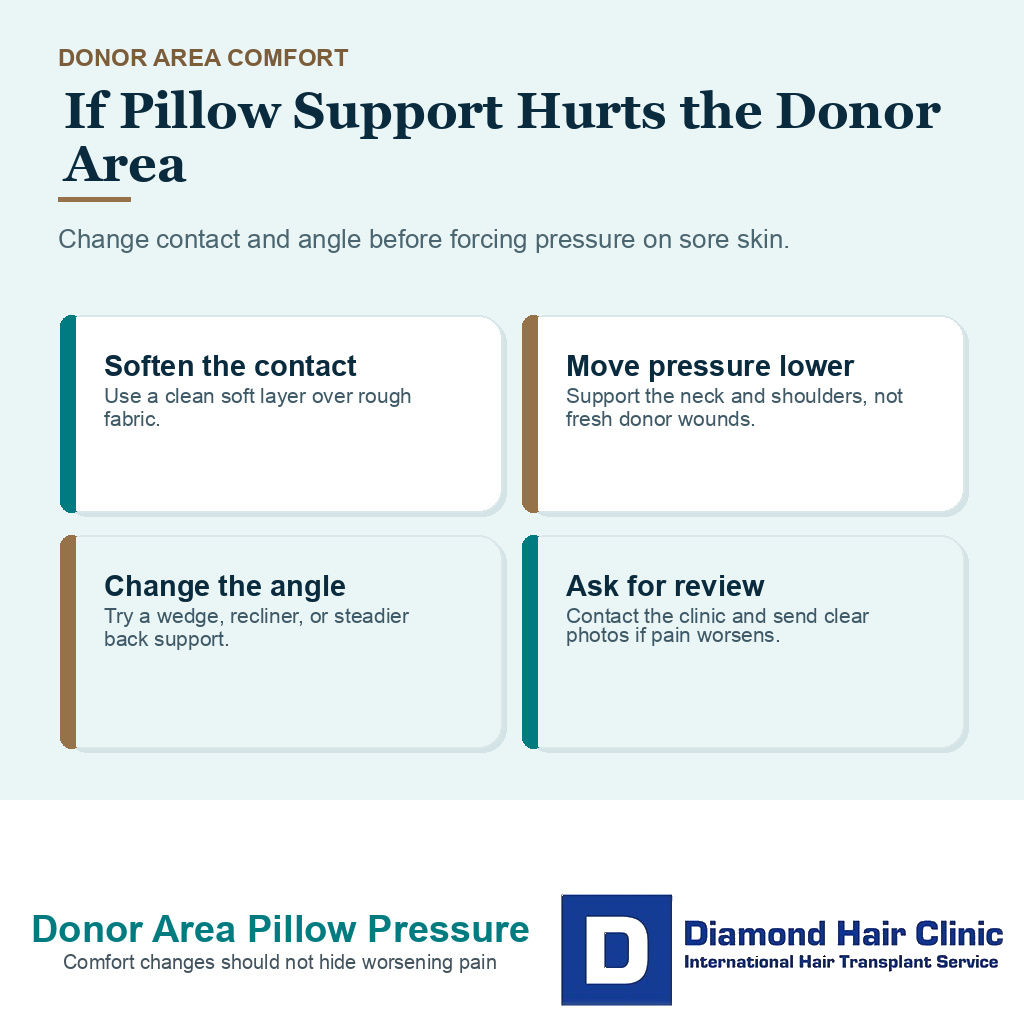
When sleeping upright causes neck strain, adjust the support gradually. The purpose is protected healing, not suffering through an impossible position.
Some people tolerate the first few nights better by changing support in small ways rather than abandoning the safe position completely. A slightly firmer neck pillow, a stable back pillow, or a cleaner angle can make a large difference.
Do not force yourself into severe discomfort and then sleep wildly from exhaustion. Recovery needs to be protective, but it also needs to be practical enough to follow. If you use CPAP or have sleep apnea, that practicality becomes part of the surgical plan before the first night.
Poor sleep and recovery
Poor sleep can make recovery feel harder. It can increase irritability, anxiety, pain sensitivity, and the urge to inspect the scalp repeatedly. It may not destroy grafts by itself, but it can make careful behavior harder.
Good sleep after surgery is not about luxury. It is part of practical recovery. When you sleep better, it is usually easier to follow instructions patiently and touch the scalp less.
Prepare the room before surgery if possible. Use clean pillow covers. Keep water nearby. Place the phone away from the bed if late night research makes anxiety worse. Make the safe position easy.
Avoid alcohol during early recovery if your clinic has advised against it, and do not use sleeping medication unless it has been approved. Being too sedated can increase careless movement or reduce awareness if you bump the scalp.
People often focus on products and forget behavior. In the first days, behavior matters. Controlled washing, careful sleep, avoiding friction, and not touching the recipient area are small but powerful parts of healing.
If poor sleep continues beyond the first week because of pain, swelling, or panic, share that with the clinic. Recovery should become progressively easier, not more chaotic.
Avoid anything before sleep that increases rubbing or pressure
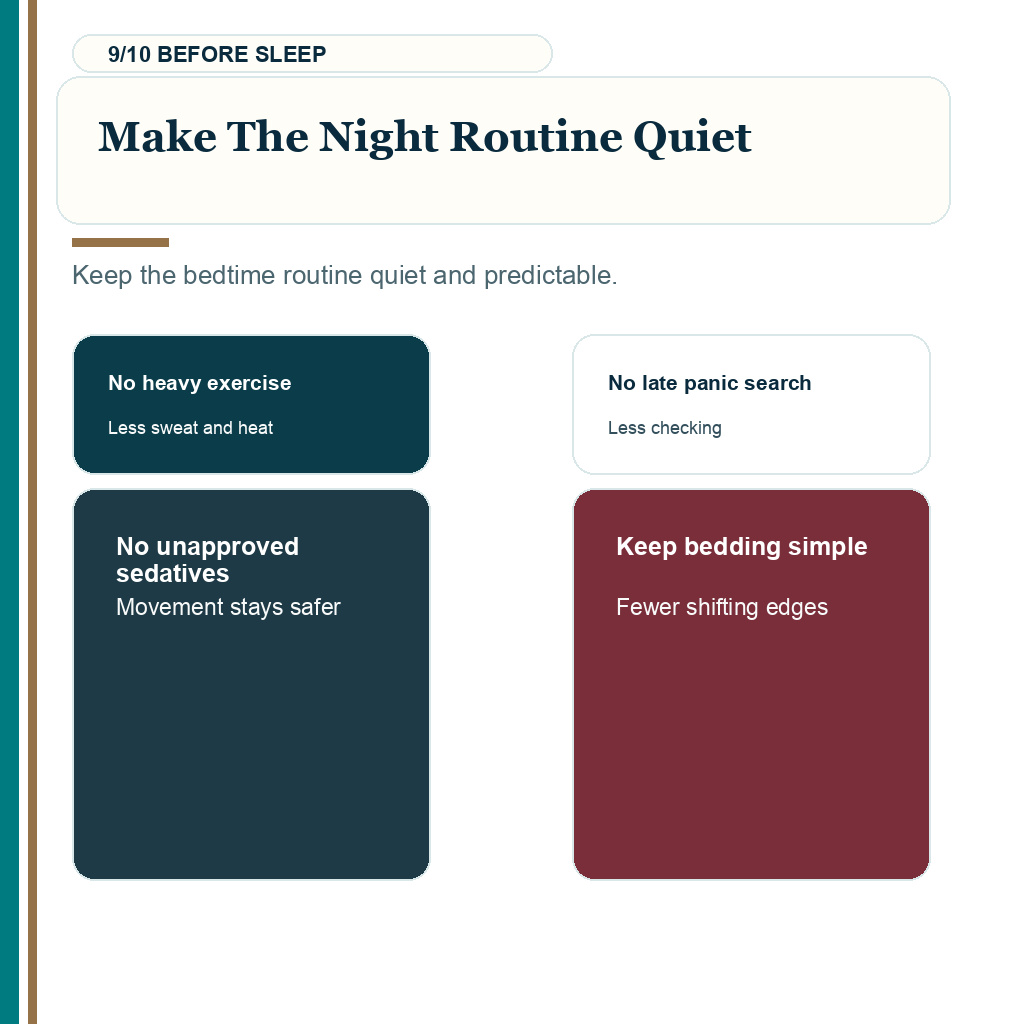
Before going to sleep, avoid anything that increases sweating, friction, bleeding risk, or careless movement. The night routine should be quiet and predictable. The more stimulated and uncomfortable you are, the harder it becomes to stay in a protected position.
Do not sleep in a cap or soft cover just to hide the transplant unless the clinic specifically told you to use it. Night movement can turn a loose item into rubbing, and a crust stuck to fabric is more likely when the scalp is warm or damp.
Avoid heavy exercise after a hair transplant before bed in the early recovery period. Exercise can increase sweating and make the scalp feel more irritated. If you are unsure when to return to training, use the exercise article for activity timing and follow the wider aftercare rules from your clinic.
Avoid turning the night into a stimulant problem. One ordinary coffee earlier in the day is different from late caffeine, several espresso shots, energy drinks, or pre workout products that make you restless. The broader timing question is covered on the page about coffee after a hair transplant.
Avoid sexual activity in the very early period if it creates sweating, pressure, or accidental contact with the scalp. This is not moral advice. I am trying to protect the recipient area from friction and heat, which follows the same pressure and friction rule that applies to sex after hair transplant.
Avoid hot rooms when possible. Heat can increase sweating, swelling, and discomfort. If the weather is very warm, plan the room carefully and keep the bedding light, because a sweaty pillow can tempt you to rub or adjust the scalp repeatedly.
Season also matters for recovery comfort. Heat, sweating, sun exposure, and travel plans can change the practical experience after surgery, especially when judging hair transplant in summer or winter.
Avoid sleeping with pets or small children near the head in the first nights if there is any chance of accidental contact. This is practical, not dramatic. The first week is not the time to test your reflexes. If a toddler normally climbs into bed or reaches for your hair, plan the home routine with the childcare after hair transplant recovery guide before surgery.
Avoid complicated pillow arrangements that collapse during the night. Two stable supports are usually better than five soft pillows that shift and make the neck uncomfortable.
Finally, avoid late night panic searching. The temptation is real, but it often makes you more anxious and less able to rest. If you have a real concern, take a clear photo in good light and ask the clinic to review the concern instead of reading frightening stories until morning.
Sleeping with less worry
Most people can sleep with much less worry after day 10, provided the recipient area is healing well, the scabs are controlled, and there has been no trauma. You should still avoid scratching, rubbing, or sleeping face down aggressively. The highest risk period has usually passed, but the grafted area still deserves care.
By this stage, you may feel more comfortable socially as well. The early swelling and fear begin to settle. The scalp still needs attention, but the recovery starts to feel more normal.
Caution can gradually soften as healing becomes stable. If you remain terrified every night after the first 10 days despite normal healing, speak with your clinic. Sometimes reassurance is part of good aftercare.
Do not confuse careful recovery with obsession. Obsession makes you inspect every hair and every scab. Careful recovery follows instructions and lets the body heal.
Later cosmetic products may help confidence, but timing still matters. Early product use and friction should be handled cautiously, especially when judging hair fibers after hair transplant.
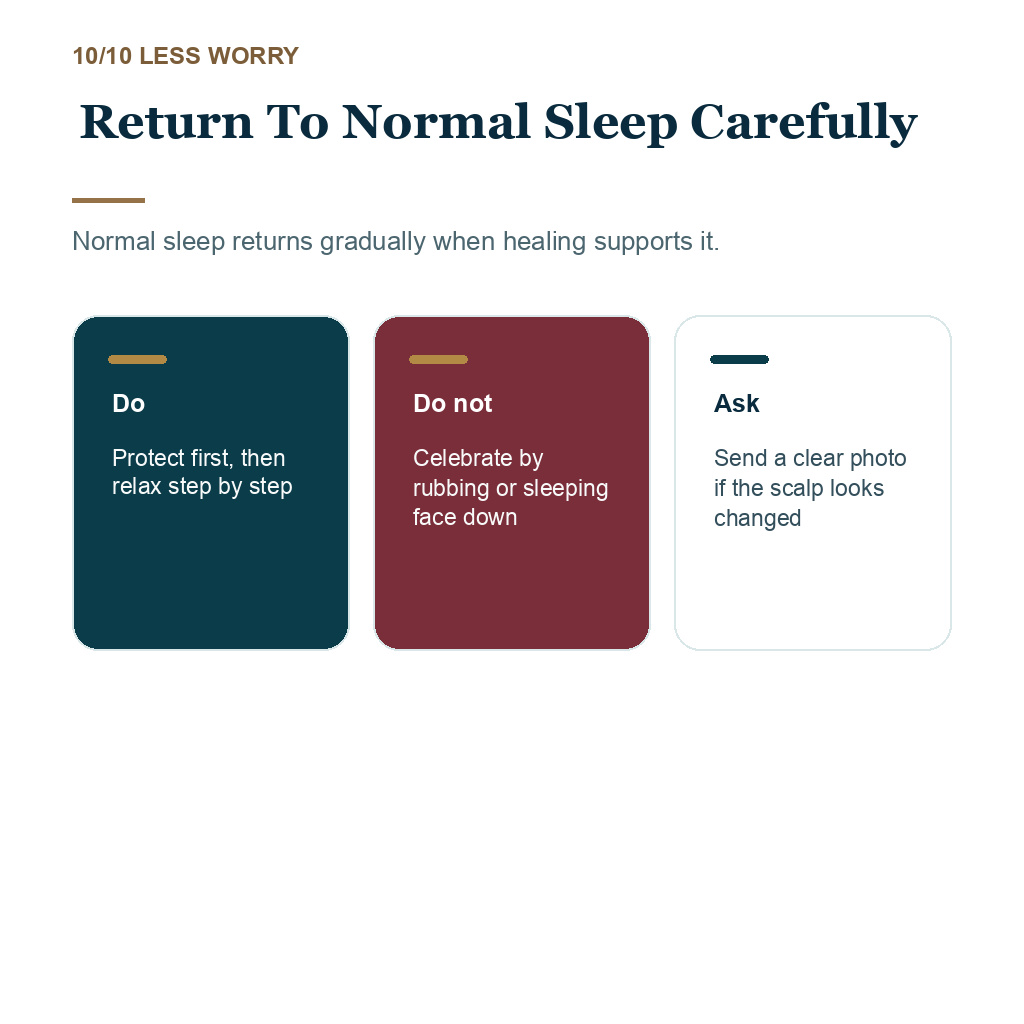
For most patients, the plan is clear. Protect your sleep position for the first 7 to 10 nights, avoid rubbing the recipient area, and return to normal sleep gradually when healing supports it.
After the first 10 days, still use common sense. If the scalp is irritated, if scabs remain unusually firm, or if the clinic has given specific instructions because of the case, follow those instructions instead of forcing the calendar.
Sleeping normally needs to feel like a gradual return, not a celebration that makes you careless. The best recovery is quiet. Nothing dramatic happens because you protect the scalp early and then slowly return to normal habits.
Ask your clinic with a clear photo rather than guessing. A clear question is always better than a nervous mistake made at midnight. Good sleep should support healing, not become another source of fear. That balance matters more than perfect stillness.
Read this review excerpt
First wash completed and visual instructions given to my daughter.