


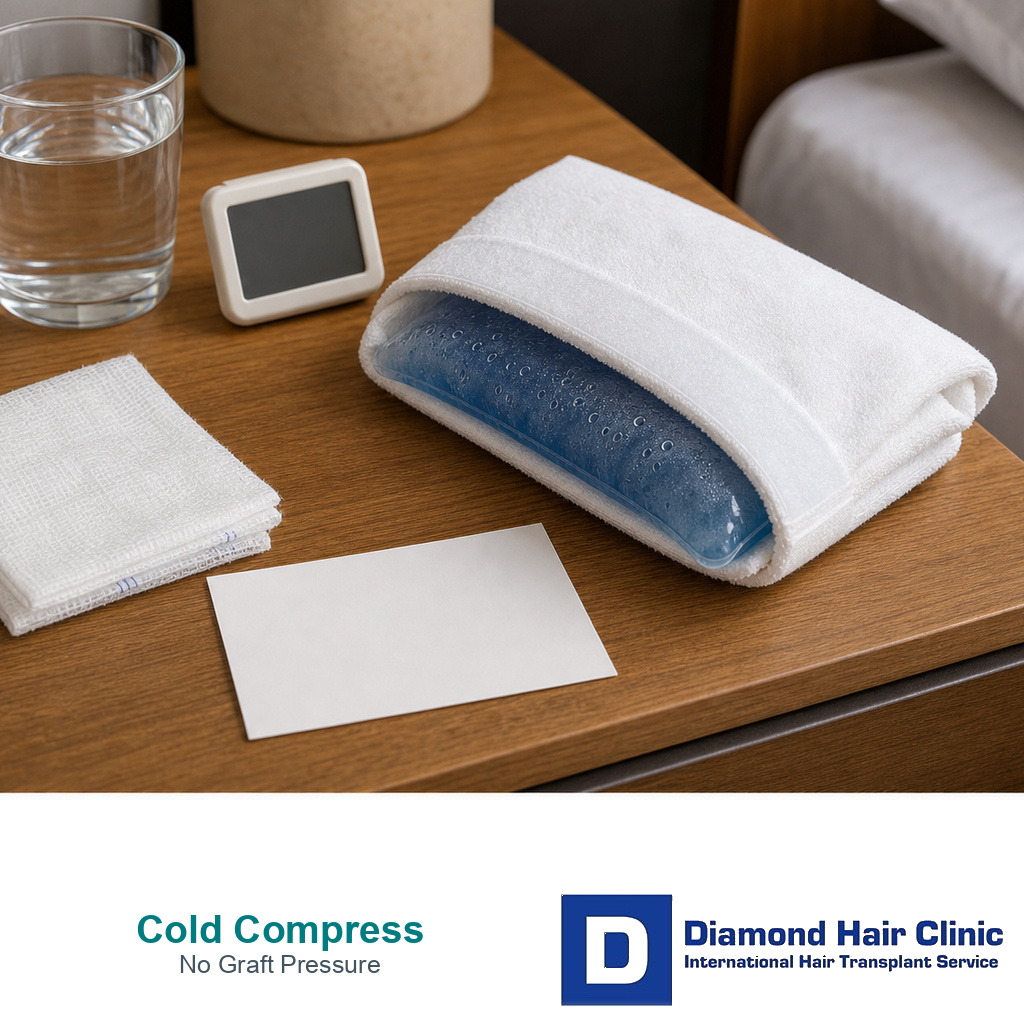
Use Cold Compresses Without Pressing Grafts
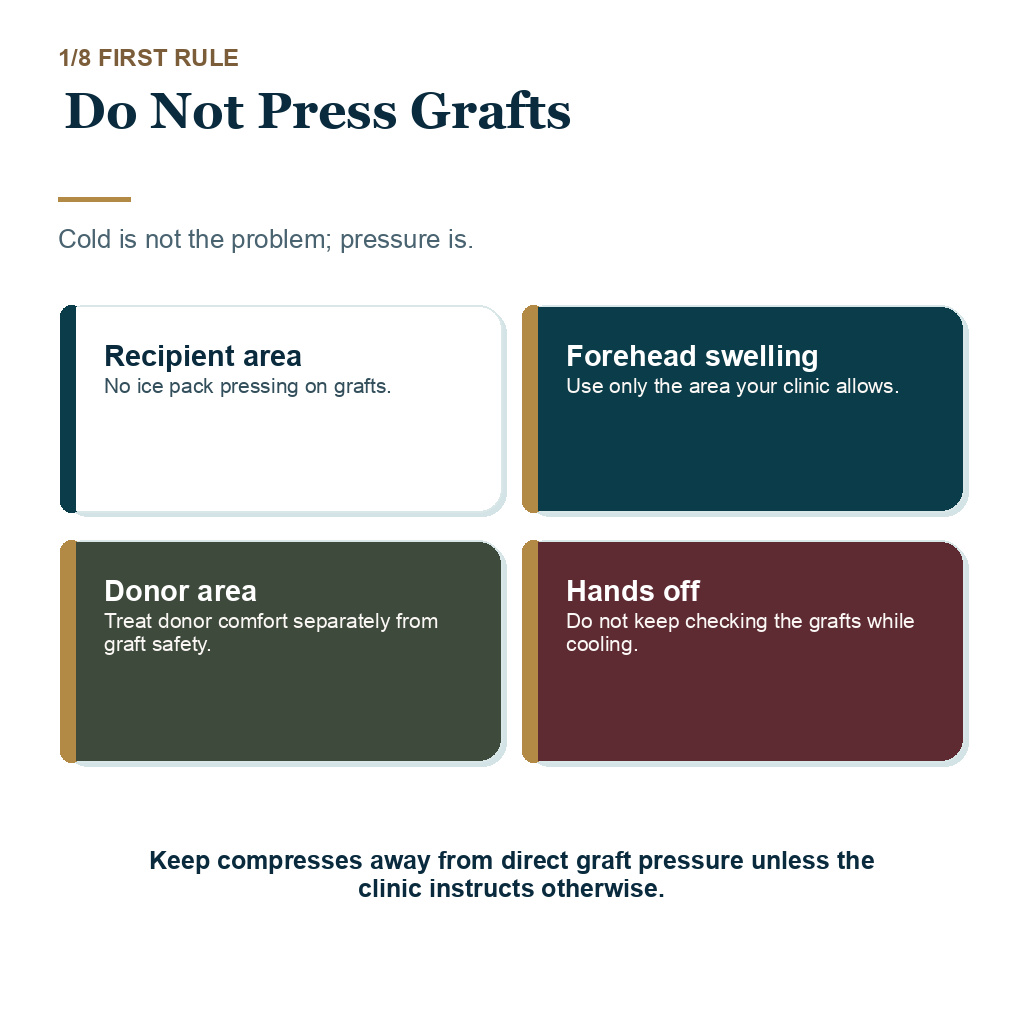
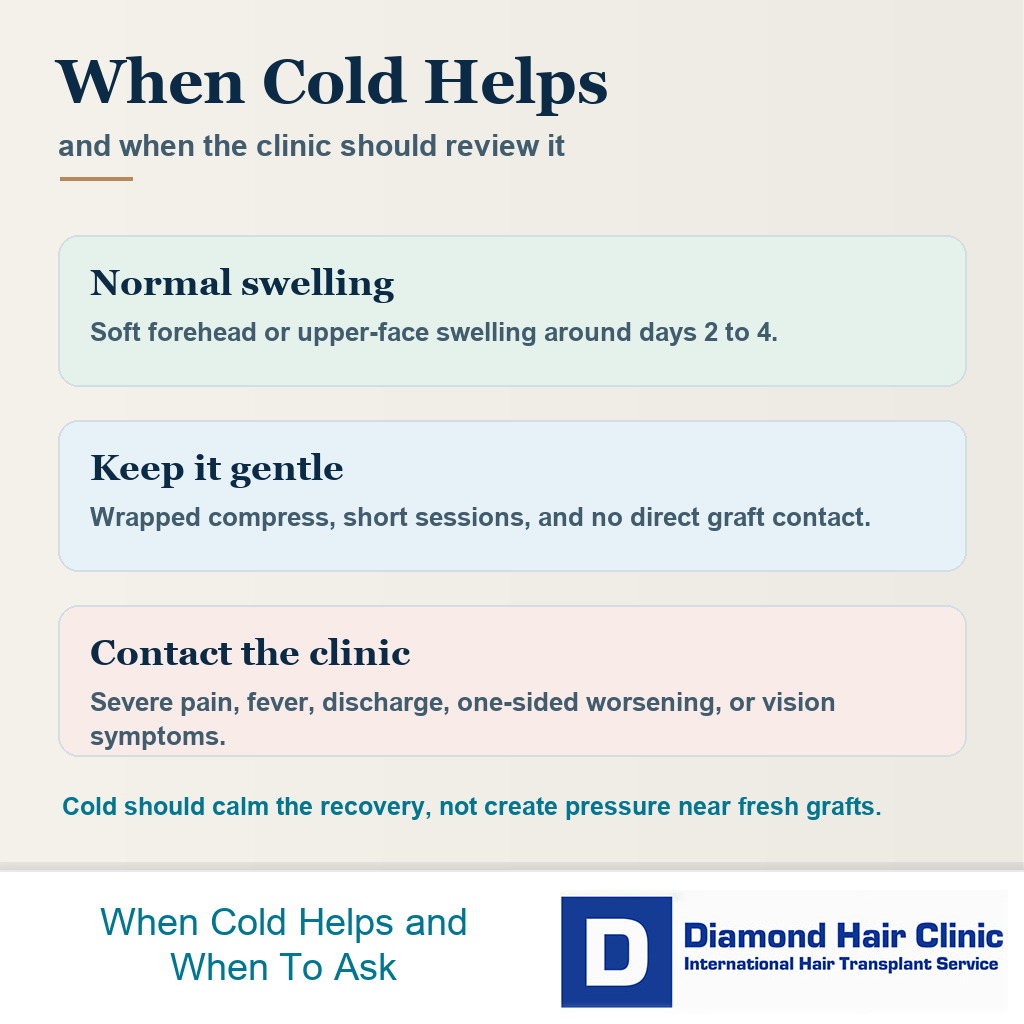
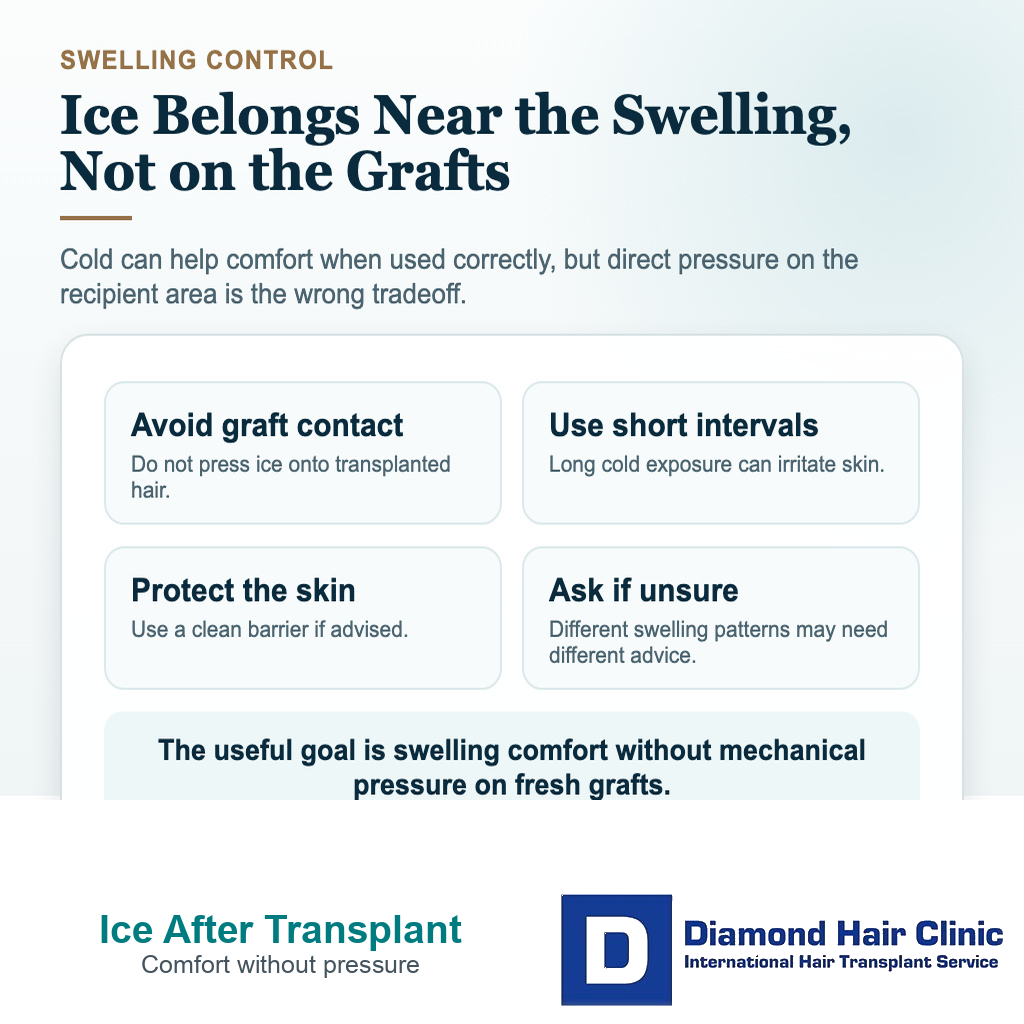
Cold can help swelling feel more comfortable, but it must not create pressure on fresh grafts. Cooling is useful only when it reduces swelling without turning into pressure, rubbing, or a reason to ignore worsening symptoms. If your clinic allows a cold compress, keep it wrapped, brief, and on the forehead or upper face rather than the grafted recipient area. Do not press ice directly on the grafted recipient area. The risk is not only temperature. It is also pressure, moisture, rubbing, and repeated movement on healing skin.
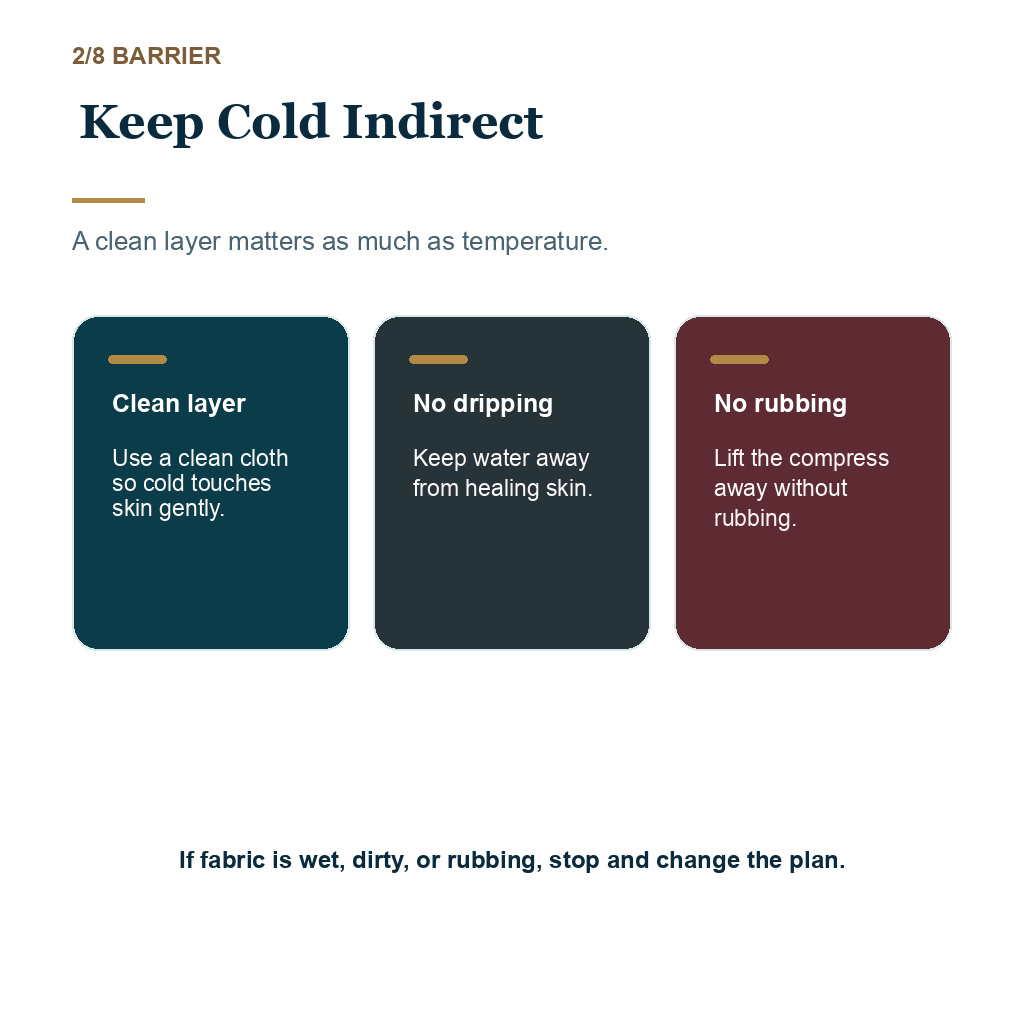
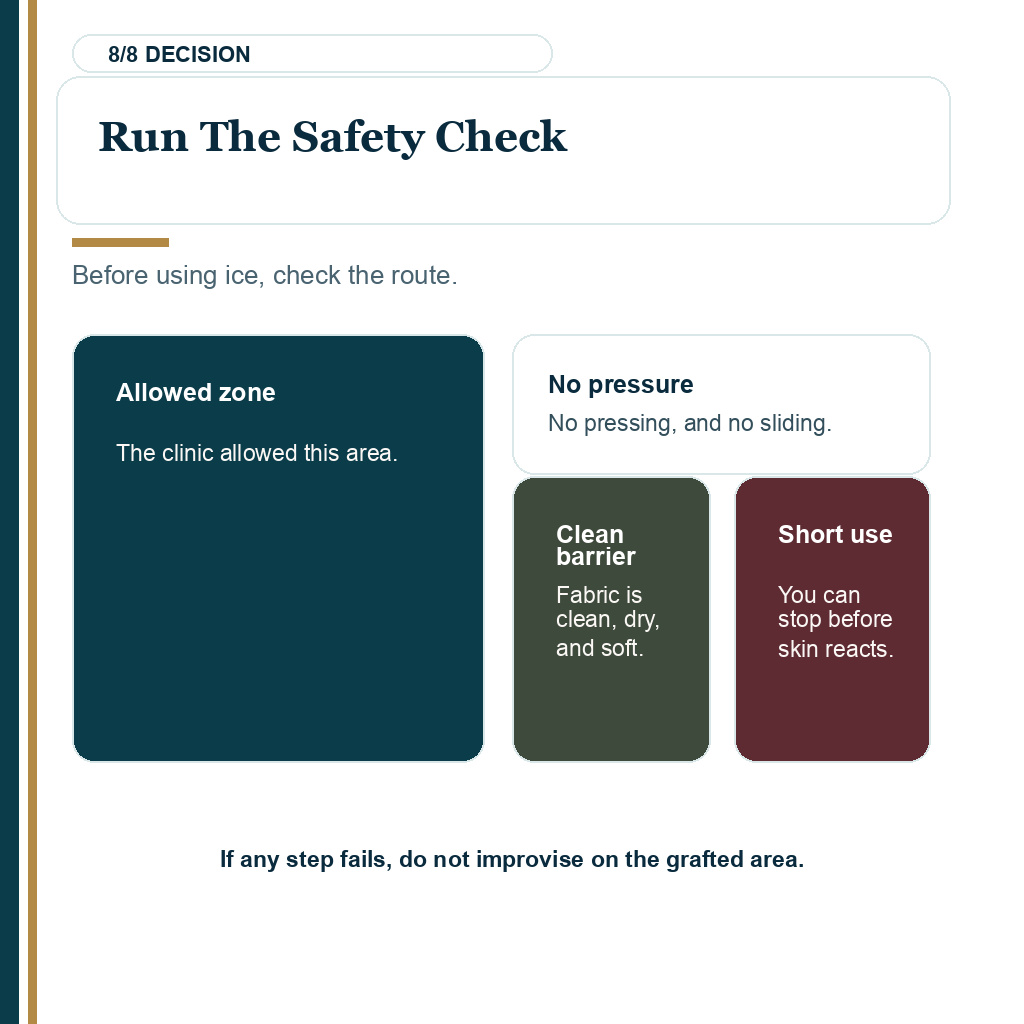
If I allow cold at all, I want it used while you are awake, wrapped in a clean cloth, cool rather than painfully cold, and light enough that it rests rather than presses. Keep it below the graft border. If you need to push it into place, slide it toward the hairline, or keep checking the grafts while using it, do not use it.
Do not chase every swelling change with another cold pack. A compress that leads to touching grafts, dripping water, or repeated checks of the recipient area has become part of the problem, not the solution.
When you are also wearing a forehead band, keep cold packs away from the grafts and use the headband after hair transplant for eye swelling guide before tightening anything.
I treat ice as a support tool, not the main recovery treatment. Head elevation, gentle walking, careful washing, and avoiding bending or pressure on grafts matter more. If swelling is painful, clearly one sided, hot, getting worse, or appears with fever, discharge, fresh bleeding, or severe headache, stop trying to solve it with ice and ask for direct review. When the question is a natural remedy instead of cold use, I separate food from active products in pineapple juice after FUE swelling.
Ice placement after a hair transplant
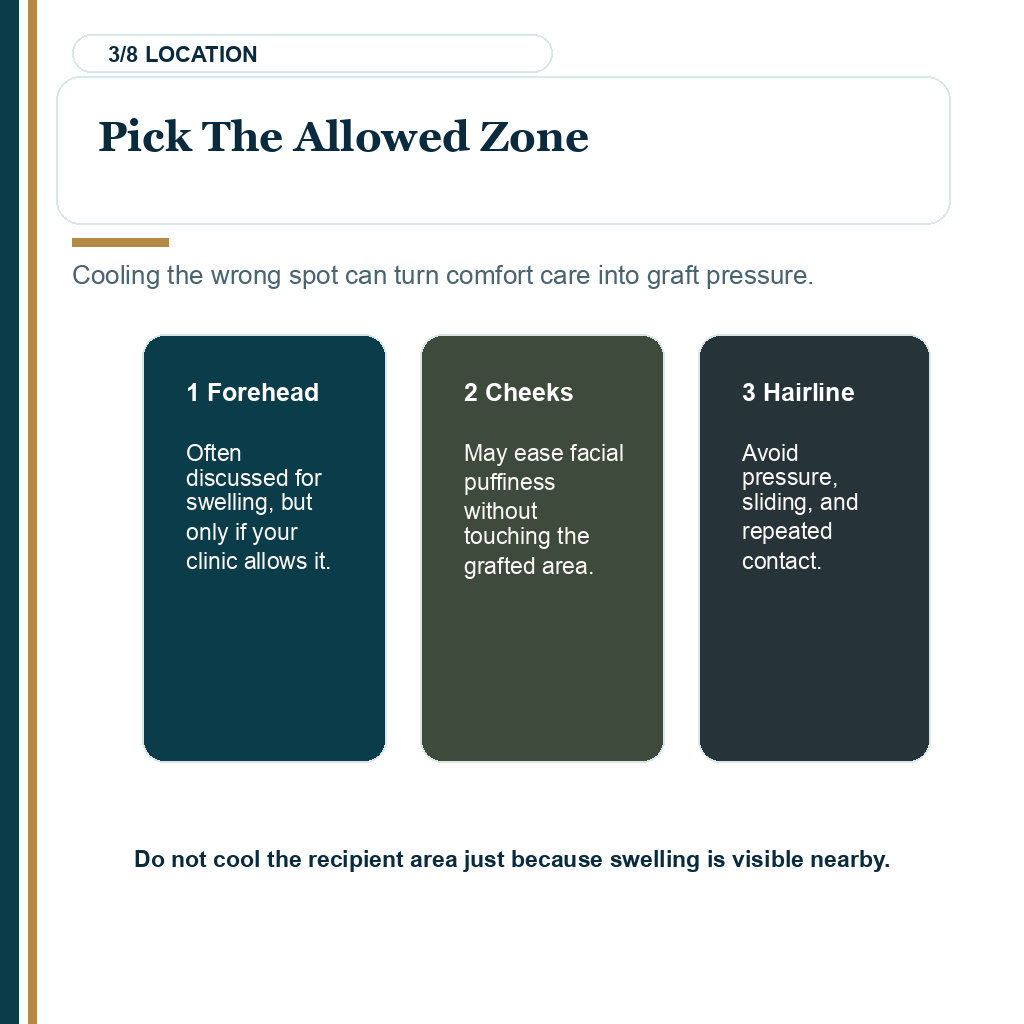
The best area for cold is usually the forehead or upper face, not the transplanted zone itself. If swelling has moved toward the eyebrows or around the eyes, a wrapped cold compress can sit gently on the upper face for comfort. It should not slide upward into the hairline, and it should not press on fresh grafts. If the concern is visible color rather than comfort, black eye bruising in hair transplant recovery needs symptom review instead of pressing colder packs near grafts.
After frontal hairline work, the recipient area may be very close to the forehead. That distance matters. You may think the ice is on the forehead while the edge of the pack is actually pushing into the new hairline. Use a mirror, keep the compress lower than the grafted border, and avoid any movement that drags across the scalp. If the pack creeps upward, lift it away and reset it lower instead of sliding it across the hairline.
Swelling after a hair transplant often becomes more visible around day 2 to day 4. That pattern is already explained in swelling after a hair transplant. Ice can make the face feel more comfortable, but the grafts still need protection from pressure and friction.
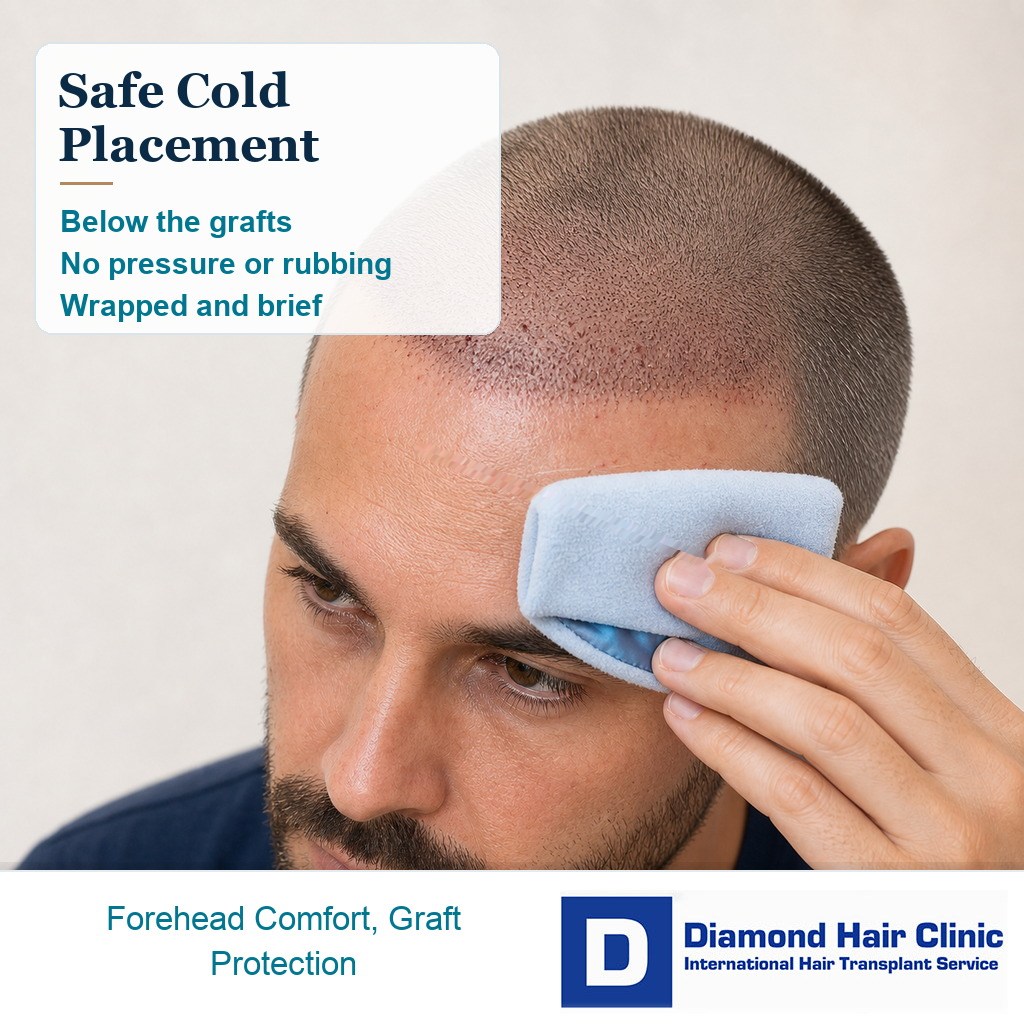
Ice should stay away from the grafted area
The grafted area is not normal skin in the first days. Tiny recipient openings are healing, scabs are forming, and you may already be checking the area too often. Direct ice adds cold, moisture, weight, and movement to skin that should be left quiet.
A cool compress resting on the upper face is different from an ice pack pressed into the hairline. The first can make swelling feel more comfortable. The second can create pressure and movement exactly where the grafts need to be left alone.
The cold itself is only one part of the risk. The bigger issue is the behavior around it. When someone is worried, they may press harder, move the pack up and down, or lift it repeatedly to check the scalp. A rough towel can also drag across crusts without being noticed.
For the recipient area, the 10 to 14 day window should stay protected. During that time, touching grafts after a hair transplant should stay limited and deliberate. If the cold pack makes you handle the grafts more, it is no longer helping.
Cold can be useful for swelling at the right time
Cold is most useful when the swelling is ordinary forehead or upper face swelling and the compress can be placed without disturbing the grafts. The aim is comfort and mild swelling control, not forcing the face back to normal immediately.
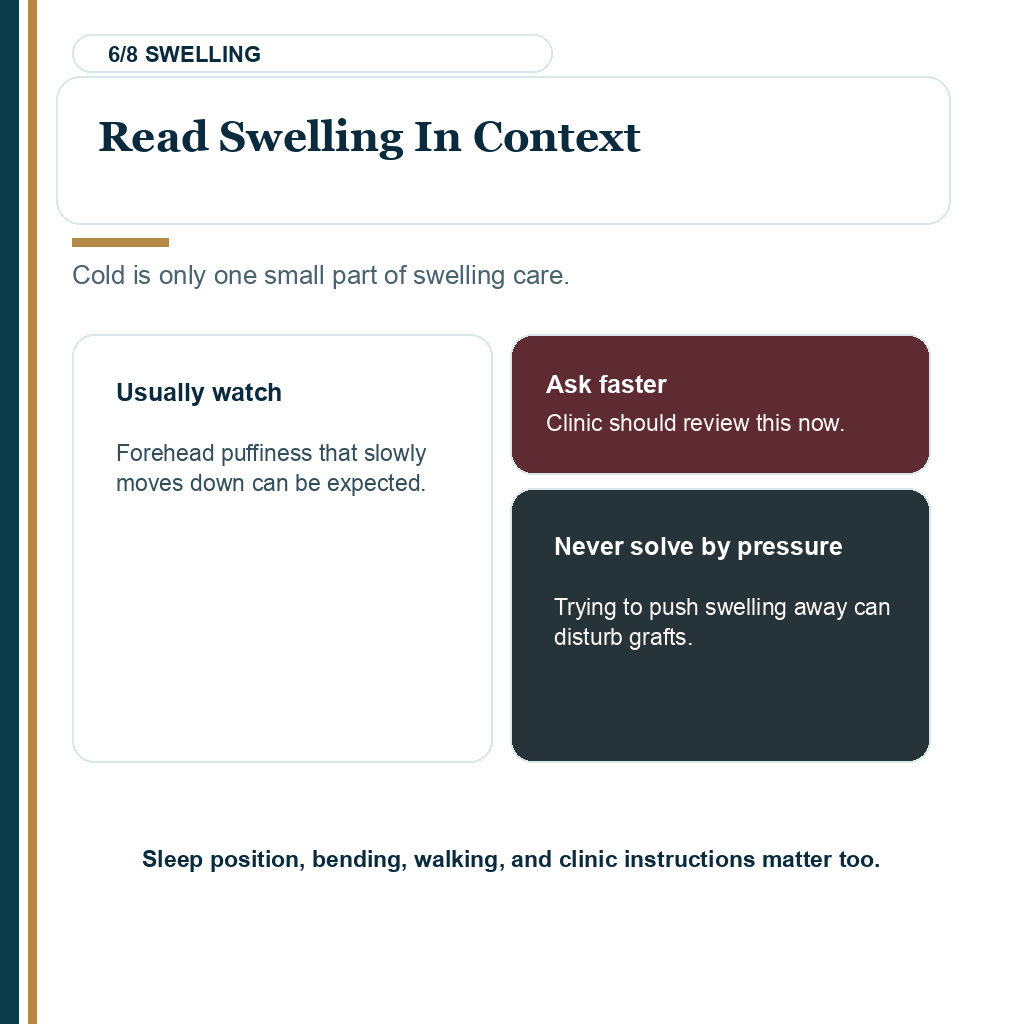
Swelling after surgery often travels downward because of gravity. You may wake up with a heavier forehead or puffy eyes and think something has gone wrong. In many uncomplicated recoveries, the swelling looks more dramatic for a few days and then improves. A quiet routine matters more than repeated intervention.
Cold is less useful if the real problem is behavior. Looking down at a phone for hours, bending forward repeatedly, sleeping flat, lifting bags, drinking alcohol too early, or touching the scalp can make swelling and worry worse. The broader hair transplant aftercare plan is what keeps the recovery controlled.
Clinic instructions still come first. If cold is allowed, follow the exact area, wrapping, time limit, and stopping rules you were given. If swelling has moved toward the eyes but the graft border is close, elevation and a calmer routine may be safer than trying to squeeze a cold pack into a small space.
Cold compress session length
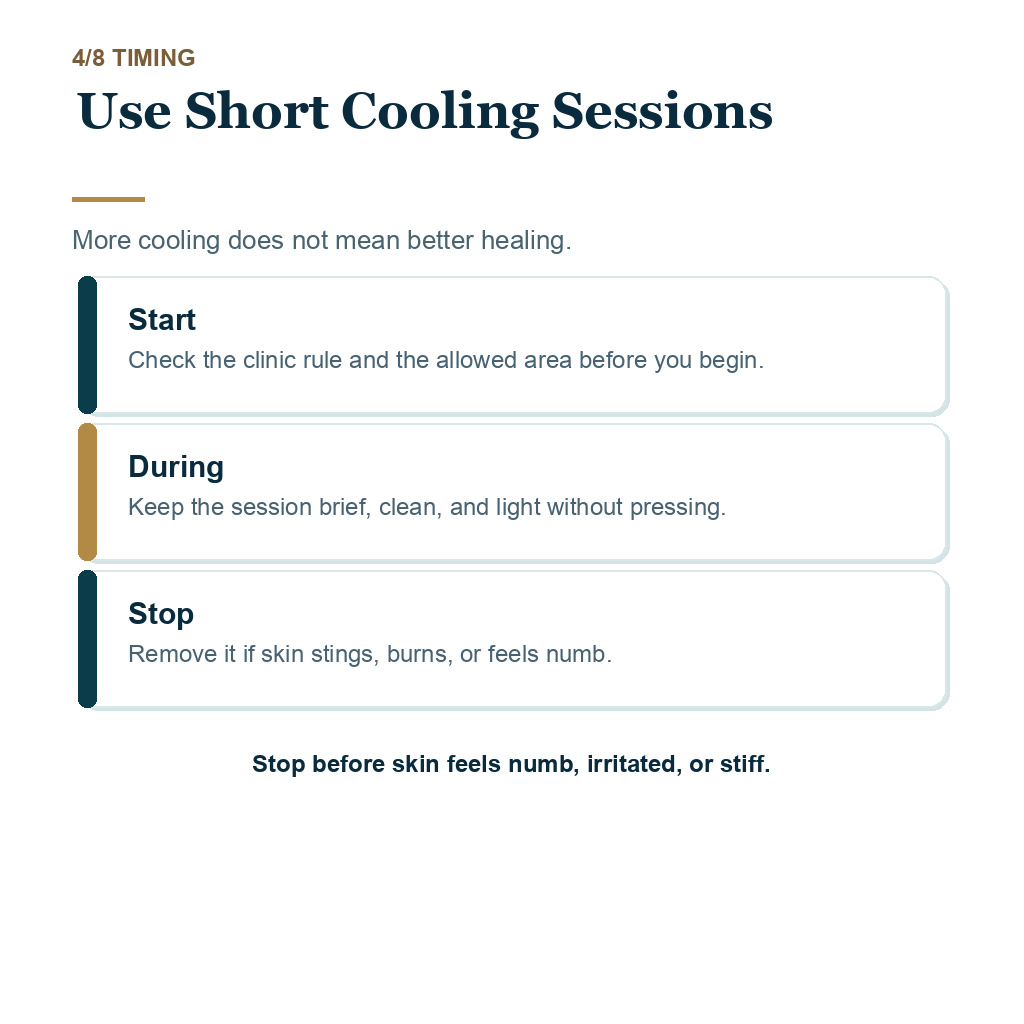
If a cold compress is allowed, keep each session short and gentle. 5 to 10 minutes is usually enough near a recent transplant, followed by a break. Set a timer before placing the compress, especially if the skin still feels numb. Do not keep cold on the face for longer than 15 minutes unless the clinic gave a different instruction for your exact surgery. The compress should be cool, wrapped, and comfortable. It should not make the skin painful, white, numb, or burning.
Do not sleep with ice on the face, hold a frozen pack in one place for a long time, or use ice directly from the freezer against the skin. You are already recovering from surgery, and sensation around the forehead or scalp may not be fully normal. Numbness can make overcooling harder to notice.
Numb skin makes time and skin color more reliable than sensation. If the skin cannot clearly tell you that the cold is too much, the clock and the mirror matter more. Remove the compress if the skin becomes pale, intensely red, itchy, prickly, or unusually numb.
Timing should also fit the day. If you are tired, anxious, or half asleep, do not keep adjusting an ice pack near the hairline. Simple recovery habits are safer when attention is low. A good plan can become unsafe if it is done carelessly at night.
When swelling is mild, elevation and rest may be enough. Cold should not become a ritual that makes you touch the face and scalp every hour. The recovery should feel steadier after using it, not more obsessive. If the cold pack makes you keep checking the hairline, the routine is creating contact risk.
Swelling around the eyes needs careful monitoring
Swelling around the eyes can look alarming, but it can happen after frontal recipient area work. The fluid often moves down from the forehead. If the swelling is soft, both sides are behaving in a similar way, and there is no fever, severe pain, vision problem, discharge, or rapidly worsening redness, it may still fit ordinary early recovery.
Keep the head elevated and avoid bending. When you can bend over after a hair transplant matters because repeated forward leaning can push swelling downward. It is easy to blame the surgery when the daily routine is actually making the face puffier.
If the swelling affects vision, becomes very painful, appears mainly on one side, or comes with a hot red area, the decision changes. That pattern needs photo review instead of more icing. Ice can reduce discomfort, but it should not delay review when swelling, pain, or redness is no longer ordinary.
Do not massage swollen eyelids or push fluid upward toward the grafts. The face can look strange for a few days, but aggressive handling is not the solution. Moving less, sleeping better, and keeping the area protected are safer than trying to force swelling away.
Ice on the donor area needs clinic guidance
Ice on the donor area needs more caution than many people expect. The donor area has extraction points, tenderness, and sometimes numbness. Direct cold or pressure can irritate the skin, and a rough towel can rub healing points behind the head.
If the donor area is sore, the safer first step is to follow the medication and washing plan given by the clinic. Pain relief should be planned rather than improvised, especially when judging painkillers after a hair transplant. Severe or worsening donor pain deserves review, not repeated icing.
A cool compress near the donor region may be allowed in some cases, but it should not be pressed hard or dragged across the skin. The donor area also touches pillows and collars, so adding another pressure source needs attention. If the area is bleeding, opening, unusually hot, or increasingly painful, stop managing it yourself and ask for review.
Donor discomfort is not judged only by the amount of pain. I also look at whether the pain is improving, whether swelling is spreading, whether discharge is present, and whether the skin looks more inflamed than expected. A short cold session cannot replace that assessment.
The visual summary below is a cold compress decision check, not permission to keep handling the scalp. It separates graft pressure, clean barriers, safe zones, timing, donor area comfort, swelling context, warning signs, and the final compress decision.


Can a headband replace ice after a hair transplant?
A headband and ice solve different problems. A headband may be used by some clinics to help guide swelling downward less aggressively, but it can also become risky if it sits too high, rolls into the grafts, becomes tight, or collects sweat. Ice gives temporary comfort but does not control recovery by itself.
I avoid invented pressure systems around the scalp. A tight band, a frozen pack, and anxious checking can create more trouble than the swelling would have caused. The plan should be clear enough that you can follow it without constantly adjusting the surgical area.
Sleeping position often matters more than either tool. If the head is flat all night, swelling may move more into the forehead and eyes. Sleep after a hair transplant explains why elevation and avoiding pressure are part of early graft protection.
If your clinic gave you a headband, use it as instructed. If no headband was given, do not buy one and tighten it around the transplant area because someone else used it. Different surgical plans need different instructions.
Icing mistakes that create risk
The first mistake is direct ice on grafts. The second is pressure. The third is repeated movement over the hairline. You may avoid direct ice but still push the edge of the pack into the grafted zone. That is not safe simply because the pack is wrapped.
If a cold pack briefly slides toward the hairline, stop and describe the contact, timing, pressure, and skin change instead of rubbing or repeatedly lifting the grafts to check.
Another mistake is using ice to answer anxiety after contact or impact. If you have bumped your head after a hair transplant, the useful details are timing, bleeding, visible tissue, pain, and whether the recipient area changed. Ice may comfort swelling, but it does not answer whether the grafted area was injured.
I also see icing become risky when it is combined with rubbing. A cold towel can feel gentle while it still drags across crusts. If crusts are dry or itchy, the answer is not to scrub, cool, scrub again, and keep checking. That cycle can irritate the recipient area more than the original swelling.
Ice should not become permission to do too much. Someone may bend, walk too long, travel, drink alcohol, or sleep poorly, then use a cold pack to manage the consequences. Recovery is safer when the source of swelling is reduced instead of treated again and again.
Do not improvise steroid tablets, diuretics, extra tablets for swelling or pain, tight bands, or supplement routines because swelling looks dramatic. If medication or a headband is part of the plan, it should come from the clinic instructions or direct review.
Swelling or pain that needs review instead of ice
Check swelling when it is severe, rapidly worsening, clearly one sided, very painful, fever after a hair transplant, or linked with spreading redness, pus, wet crusting, bad smell, heavy bleeding, or vision symptoms. With those signs, ice may distract from the real issue.
Ordinary swelling often feels soft and gradually changes position. Infection or a stronger inflammatory problem behaves differently. Use the guidance on how to know if a hair transplant is infected with this in mind because increasing pain, heat, discharge, and worsening redness need a different response from routine swelling.
Scabs, pimples, and redness also need context. Some changes are part of healing, while others need review. If the skin is becoming more irritated while you keep applying cold packs, compare the situation with the warning sign guidance in redness, scabs, or pimples after a hair transplant.
Take clear photos before adding more pressure or cold. One full view and one closer view are usually more useful than a series of blurry anxious photos. The clinic can judge the pattern better when the scalp has not been rubbed or altered repeatedly.
Judging different clinic instructions
Different clinics may give different instructions because their surgical method, dressing style, graft placement, swelling protocol, and medication plan are not identical. Do not mix one clinic’s ice advice with another clinic’s washing routine and a third clinic’s headband advice. That creates confusion at the exact time when the scalp needs consistency.
A weak instruction sounds too absolute. It says ice is fine or ice is forbidden without explaining where, when, how much pressure, and what signs change the plan. A better instruction tells you how to protect the recipient area while managing the face and forehead.
If you have travelled for surgery, this matters even more because travel can increase fatigue and swelling. If you are planning a flight soon after surgery, read the guidance about flying after a hair transplant together with the clinic’s swelling instructions. Ice in a hotel room is not a substitute for a travel day that is planned well.
Ask for photo review advice if the instruction feels unclear. The clinic should be able to tell you whether the compress is too close to the grafts, whether the swelling pattern looks ordinary, and whether the current routine should be changed.
Keep cold care simple in the first week
During the first week, keep the plan quiet. Sleep with the head elevated, avoid bending, avoid pressure on the recipient area, wash only as instructed, and use any cold compress only where your clinic allows it. If cold is used, keep it wrapped, short, gentle, and away from the grafts.
Do not chase a perfectly normal face immediately. Mild swelling, tightness, crusting, and temporary facial puffiness can be part of recovery. What matters is whether the pattern is improving and whether the grafted area is protected from pressure, rubbing, and scratching.
The best use of ice is modest. It can make the forehead or upper face feel more comfortable while the swelling settles. It should not become a reason to touch the grafts, press the hairline, ignore warning signs, or repair a routine that is already too active.
If you have to choose between reducing swelling faster and leaving grafts undisturbed, choose graft protection. Keep the compress away from the transplanted area and ask for review with clear photos. A few careful days are usually more valuable than trying to speed up swelling with pressure near grafts that need to be left alone.

Read this review excerpt
We also had a levelled conversation about my hairline and results I could expect based on my donor density area.