


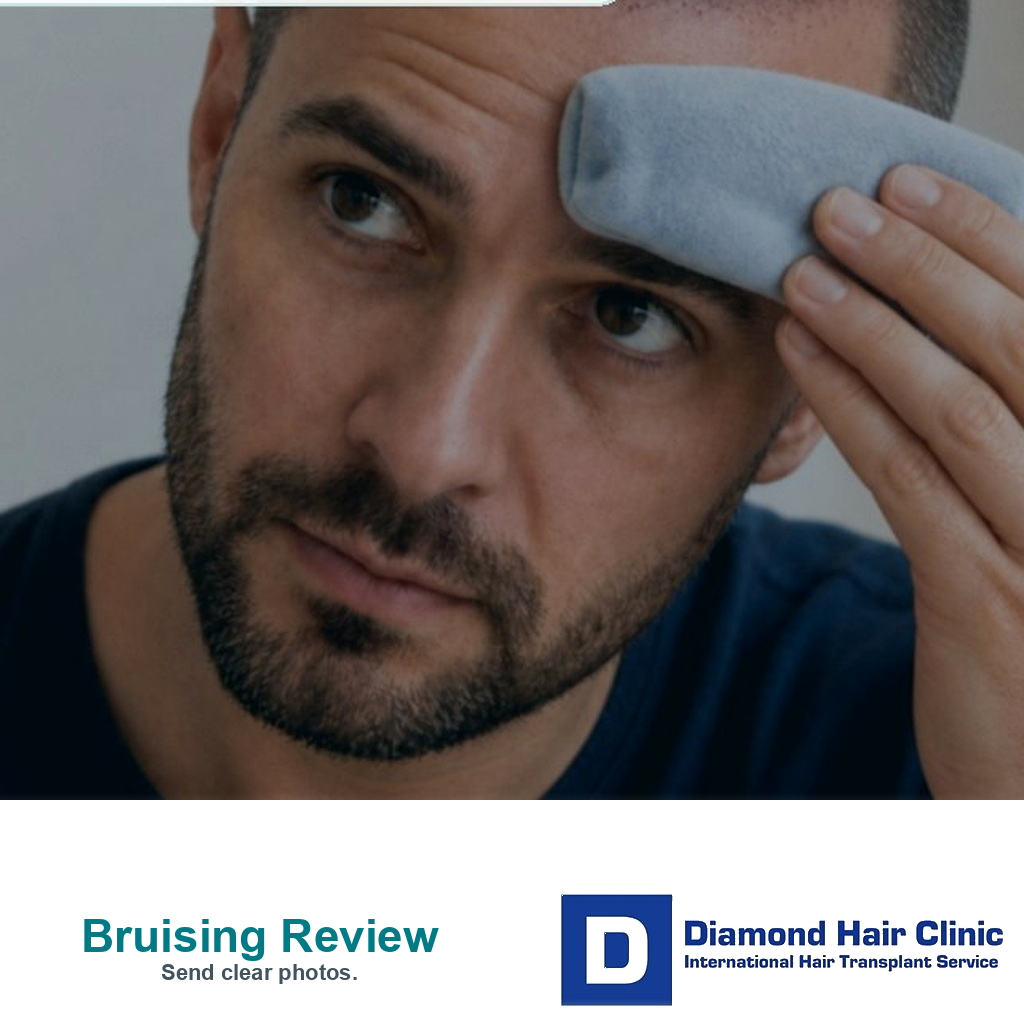
Black Eye Bruising Needs Careful Triage
Black eye bruising can happen after FUE, and it usually does not mean the grafts were damaged. It often appears between days 2 and 5, changes from purple or red to yellow or green, and fades over the next 1 to 2 weeks.
I separate skin bruising from eye symptoms. I look at timing, pain, vision, fever, discharge, active bleeding, swelling on one side, medicine use, and whether the pattern is improving. A fading bruise is different from swelling that is becoming tighter, more painful, or more uneven from one side to the other. The same careful separation helps when you see yellow fluid after a hair transplant and are unsure whether it is bruising, drainage, or infection.
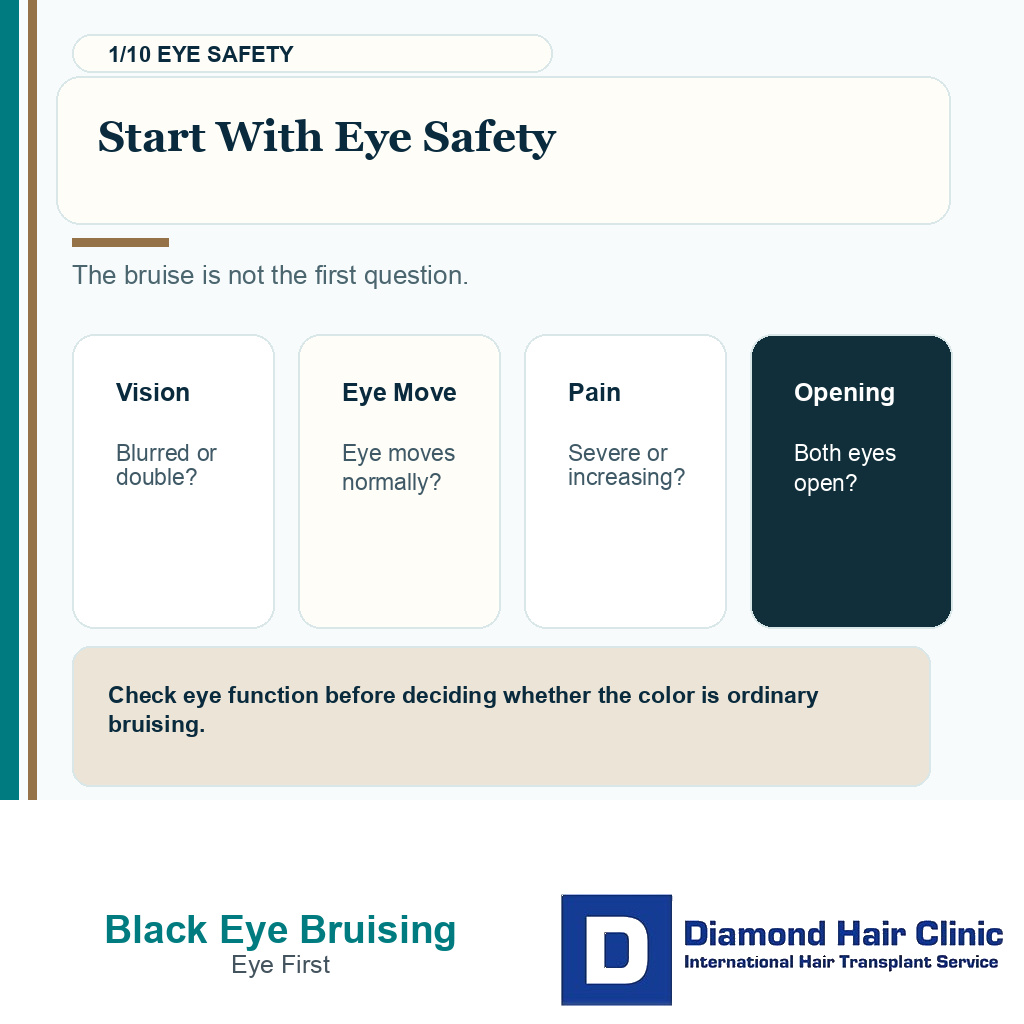
If you wake up after surgery and see color around the eyes, start with the pattern rather than the mirror shock. A dramatic photo can still be harmless. The first safety question is whether the eye itself is safe. Vision should be unchanged, eye movement should feel comfortable, there should be no blood inside the eye, no severe headache, and no trauma. Severe pain, vision change, fever, discharge, active bleeding, or swelling that is worsening on one side needs direct medical review. Do not force contact lenses during black eye bruising if the eyes are painful, red, blurry, or hard to open. Use glasses until the eye itself is comfortable and the clinic or eye doctor has cleared the situation.
Do not massage swelling toward the eyes to make the bruise clear faster. Pressure can irritate healing tissues, and the safer review is whether the color, tightness, and eye symptoms are improving.
Use one photo that shows both eyes in the same frame before adding close views. A tight crop can exaggerate the bruise and hide whether swelling is balanced or one sided.
Also send a normal face photo before the close view. It helps the clinic judge direction and swelling instead of reacting only to the darkest part of the bruise.
Bruising can reach the eyes after surgery
During a hair transplant, fluid is used under the skin to make the surgical field safer and easier to work in. Small blood vessels can also leak a little after local anesthesia, incisions, extraction, or implantation. Gravity then pulls fluid and blood pigment downward, so swelling that begins in the forehead can drift toward the eyelids. This is movement through the skin and soft tissue, not surgery on the eye.
You may not see much color on the first day, then notice puffy eyelids or a purple and yellow area a few days later. It can feel surprising because the bruising may be below the transplanted zone, not exactly where the grafts were placed.
The face has loose tissue around the eyelids, so even a modest amount of swelling can look larger there. That does not mean the eyes were operated on, and it does not mean the grafts have moved. It means fluid and blood pigment can travel through nearby soft tissue.
Typical timing for black eye bruising
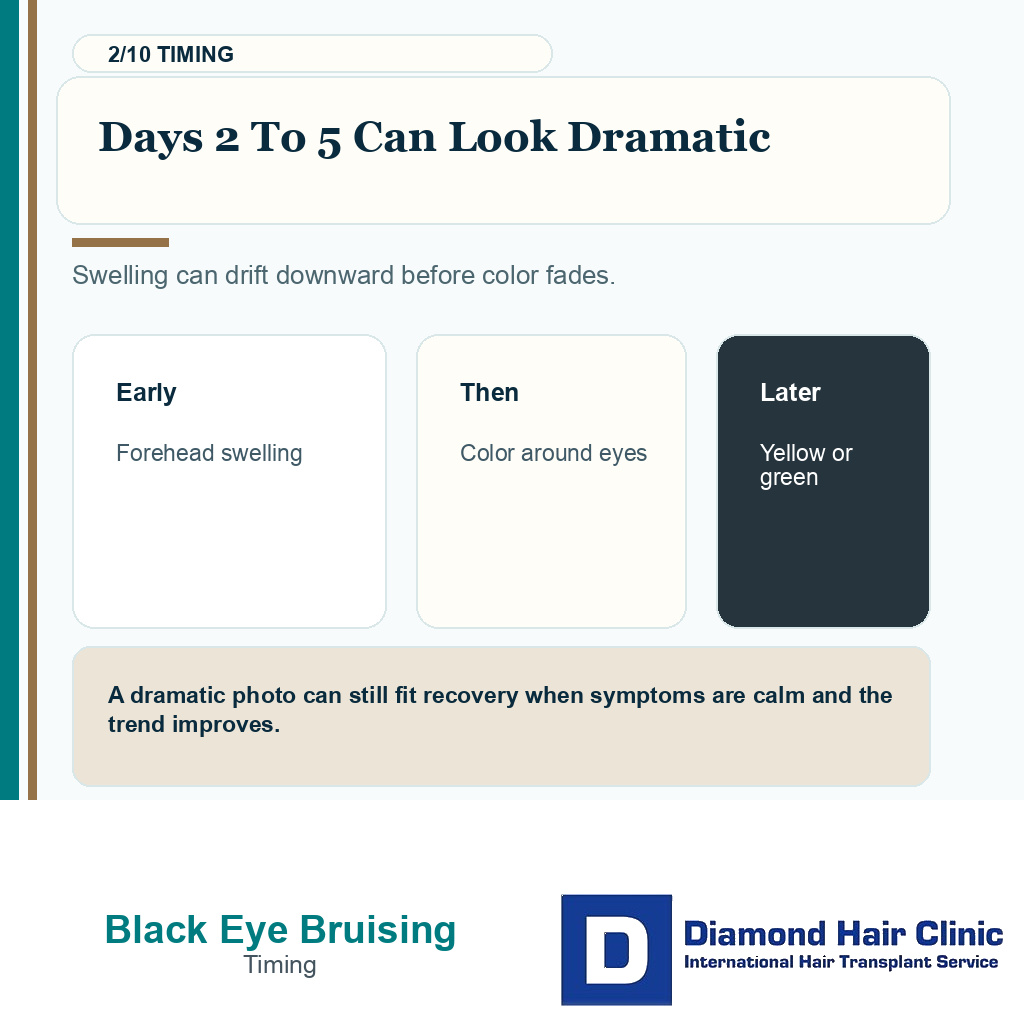
The pattern I expect is gradual. Forehead swelling often appears first. Eye puffiness or color may follow. The color may deepen, then shift from purple or red to yellow or green before it fades. The mirror can look worse before the body has actually become worse.
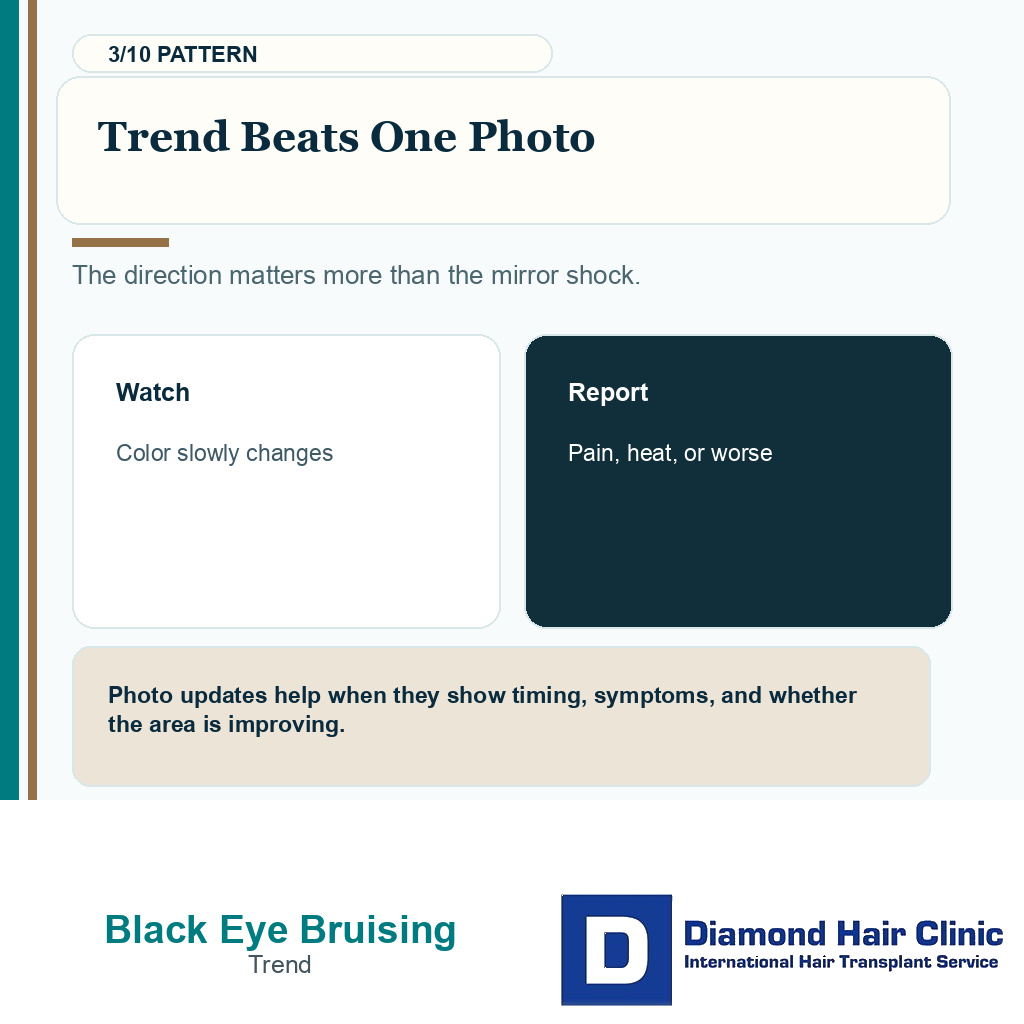
A reasonable recovery pattern is bruising that is not very painful, not hot, not linked with fever, and not spreading aggressively. You can open the eyes, vision is unchanged, and the color is slowly moving through the normal stages of a bruise. On darker skin tones, bruising may look brown, deep purple, or almost black rather than bright purple or yellow. The trend matters more than the single photo. A photo on day 4 can look alarming, while day 5 and day 6 may already show that the swelling is going down.
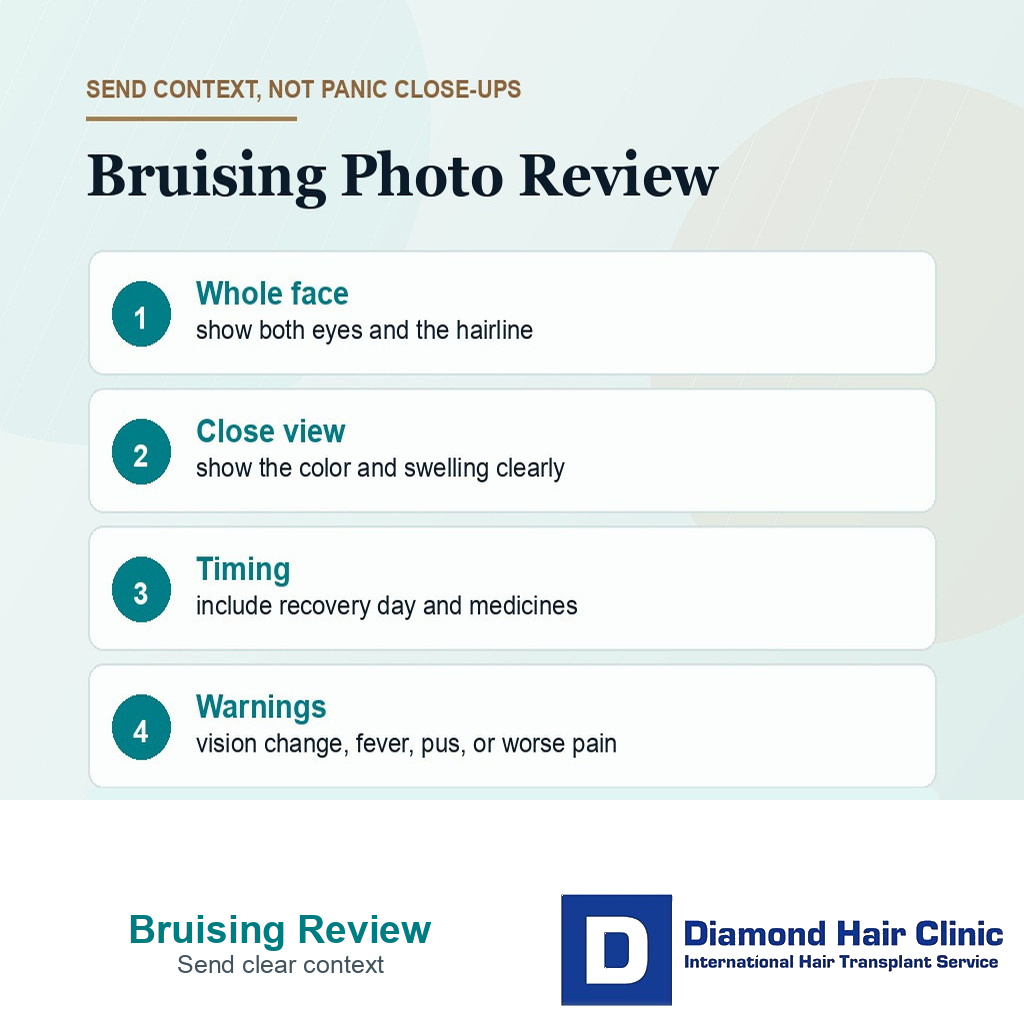
Bruising photo messages are safer when they include both eyes, timing, medicines, vision symptoms, and warning signs.
If bruising appears together with ordinary swelling after a hair transplant, I treat it as part of the same early recovery conversation. The color may remain visible after the swelling itself has started to settle. That can be socially uncomfortable, especially if you traveled for surgery and need to return home quickly, but cosmetic discomfort is not the same as graft damage.
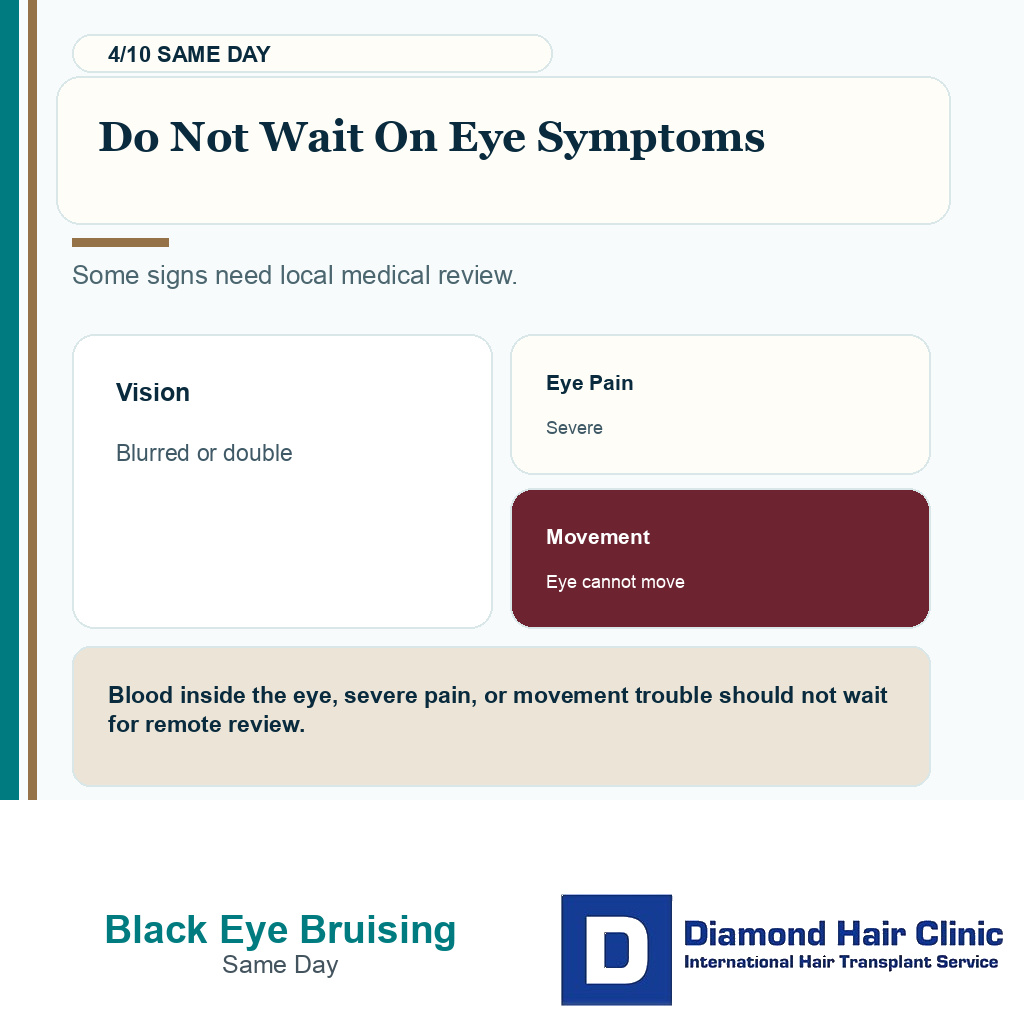
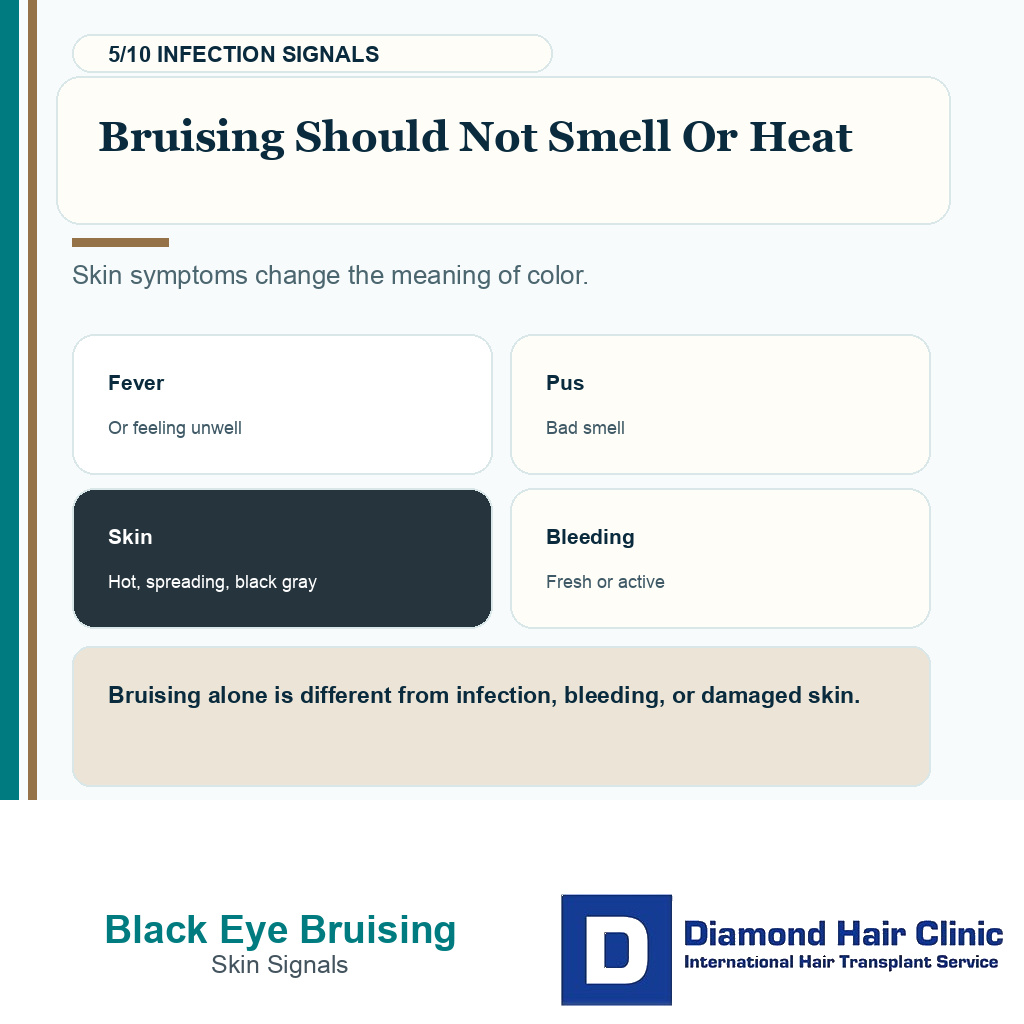
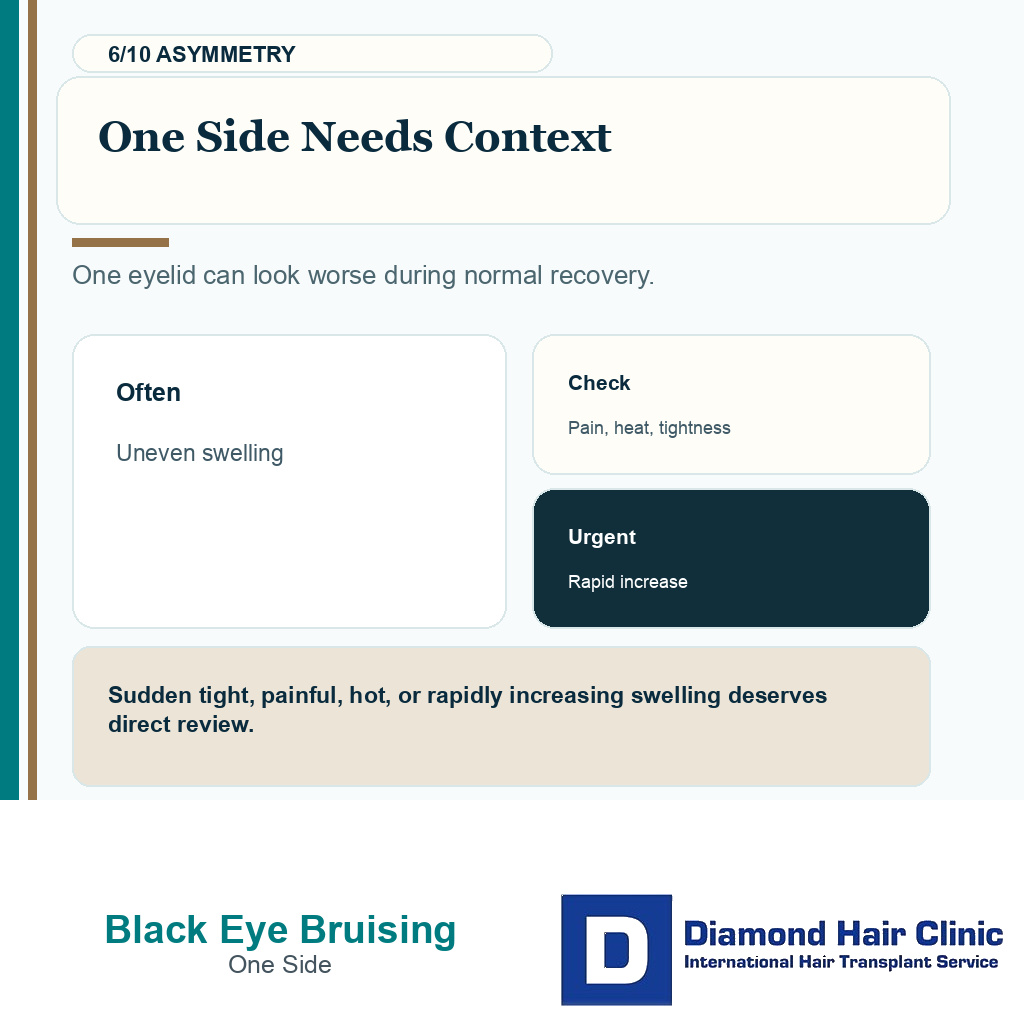
Use the 10 bruising slides below to separate expected swelling and color change from vision symptoms, trauma signs, medicine risk, infection signals, and review triggers that should happen the same day. Swipe the carousel, use the arrows for one step at a time, or choose a number below the image to jump to that point.



Check before worrying
Look once in steady light and then stop touching the area. Repeated checking, pressing, or rubbing only irritates the skin and makes anxiety worse. Check whether both eyes open normally, vision is unchanged, swelling is improving rather than worsening, pain is not severe, skin is not hot, and there is no pus, bad smell, fever, or fresh bleeding.
If none of those warning signs are present and the bruise is slowly changing color, the usual response is watchful observation and following the clinic’s recovery instructions. If you are taking aspirin, anticoagulants, ibuprofen, or supplements that affect bleeding, include that information in the message to the clinic because medicine changes the interpretation.
Photos help when they are useful. Take one photo from a normal face distance and one closer photo. A very close image alone can make mild discoloration look more dramatic than it is. Send the surgery date, the day of recovery, medicine taken, whether there was any bleeding, and whether vision or pain has changed.
One eye can look worse than the other
One eye can look more bruised or swollen than the other even when recovery is still following a normal pattern. Swelling does not always drain evenly. Sleeping position, the direction of fluid movement, and small differences in forehead swelling can make one eyelid look worse for a day or two.
Asymmetry matters more when the worse side is painful, tight, hot, rapidly increasing, or linked with vision change. Photo review may be enough when the eye opens normally, vision is unchanged, and the color is moving through the usual bruise stages. Direct medical review is safer when change on one side is sudden, severe, or getting worse instead of settling.
If the bruising is mainly on one side, photograph the whole face rather than only the darker eye. I need to compare both eyelids, the forehead, the hairline, and the transplanted area before deciding whether the pattern looks like normal drainage or a warning sign.
Bruising that needs same day medical review
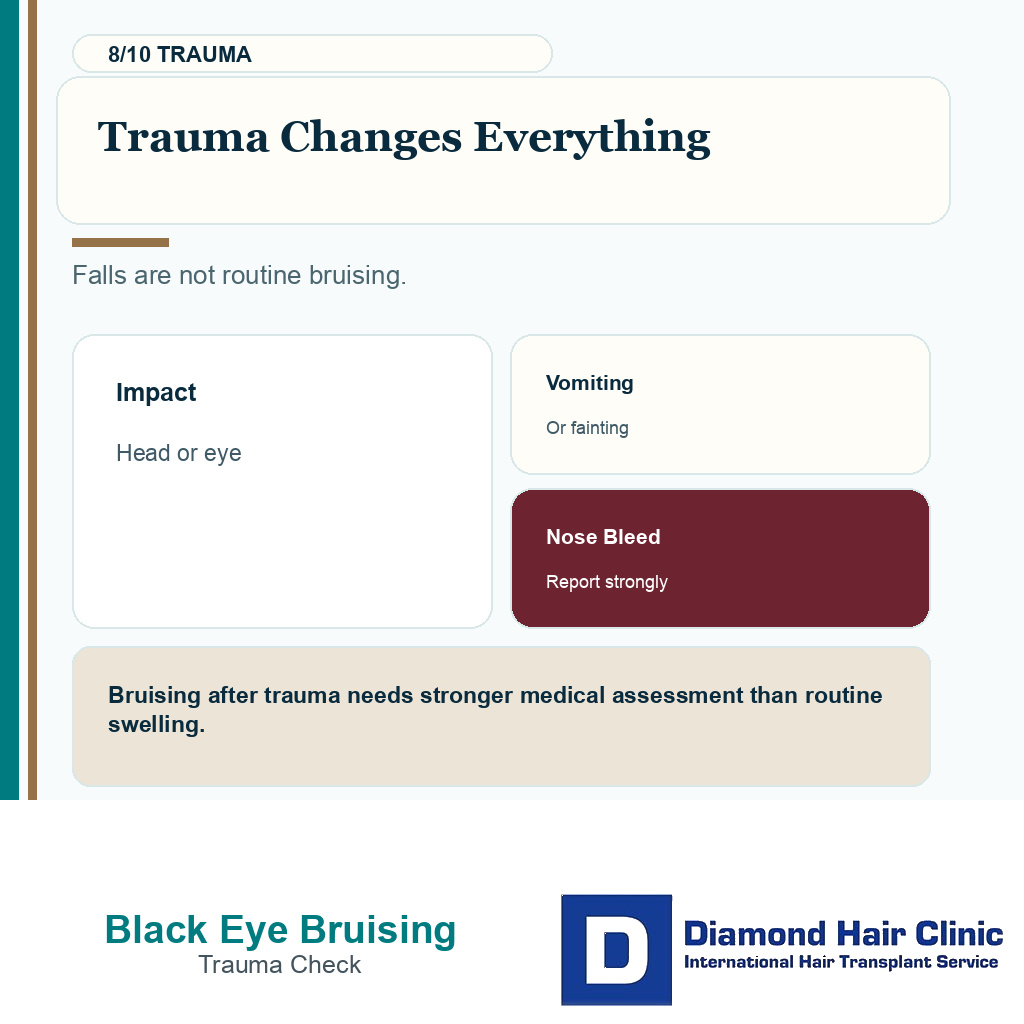
Same day medical review is needed if bruising is paired with blurred vision, double vision, blood visible inside the eye, an irregular pupil, bleeding from the nose, eye pain, trouble moving the eye, inability to open the eye, severe headache, fainting, vomiting after a head impact, fresh bleeding that does not stop with clinic instructions, fever, spreading hot redness, pus, bad smell, or skin that looks black or gray in a damaged way, especially if it is wet, open, painful, or worsening. The same is true for swelling that is strongly worse on one side and rapidly worsening, or bruising around both eyes after any fall, head impact, or facial trauma.
These signs can still have an explanation, but they move the problem out of the simple bruise category. Vision symptoms, fever, pus, severe pain, or black tissue should not be managed as routine bruising. If vision changes are present, local urgent assessment or eye specialist review comes before waiting for a remote clinic reply. A clinic may ask for urgent photos, direct examination, or local medical assessment depending on the symptom.
This distinction protects both sides of the problem. A purple mark alone should not create panic, but a changing pattern with warning signs needs a more serious answer than casual waiting.
Black eye bruising does not mean graft damage
Bruising around the eyes does not usually mean the grafts were damaged. The grafts sit in the recipient area. Eye bruising usually reflects fluid movement and small vessel leakage in the surrounding tissue, not graft displacement.
The graft risk question changes when there was direct trauma to the transplanted area, fresh bleeding from the recipient area, an open spot, or a piece of tissue coming out. Direct trauma belongs in the separate bumped head after a hair transplant discussion, where timing, force, bleeding, and visible tissue matter. A black eye without a hit to the grafted area is a different problem.
It is natural to connect every change after surgery to graft survival. I understand that fear. Still, graft survival is judged by surgical handling, blood supply, infection control, trauma, and time. A fading bruise under the eye is not the same thing as lost grafts, and repeatedly touching the scalp to check can create more risk than the bruise itself.
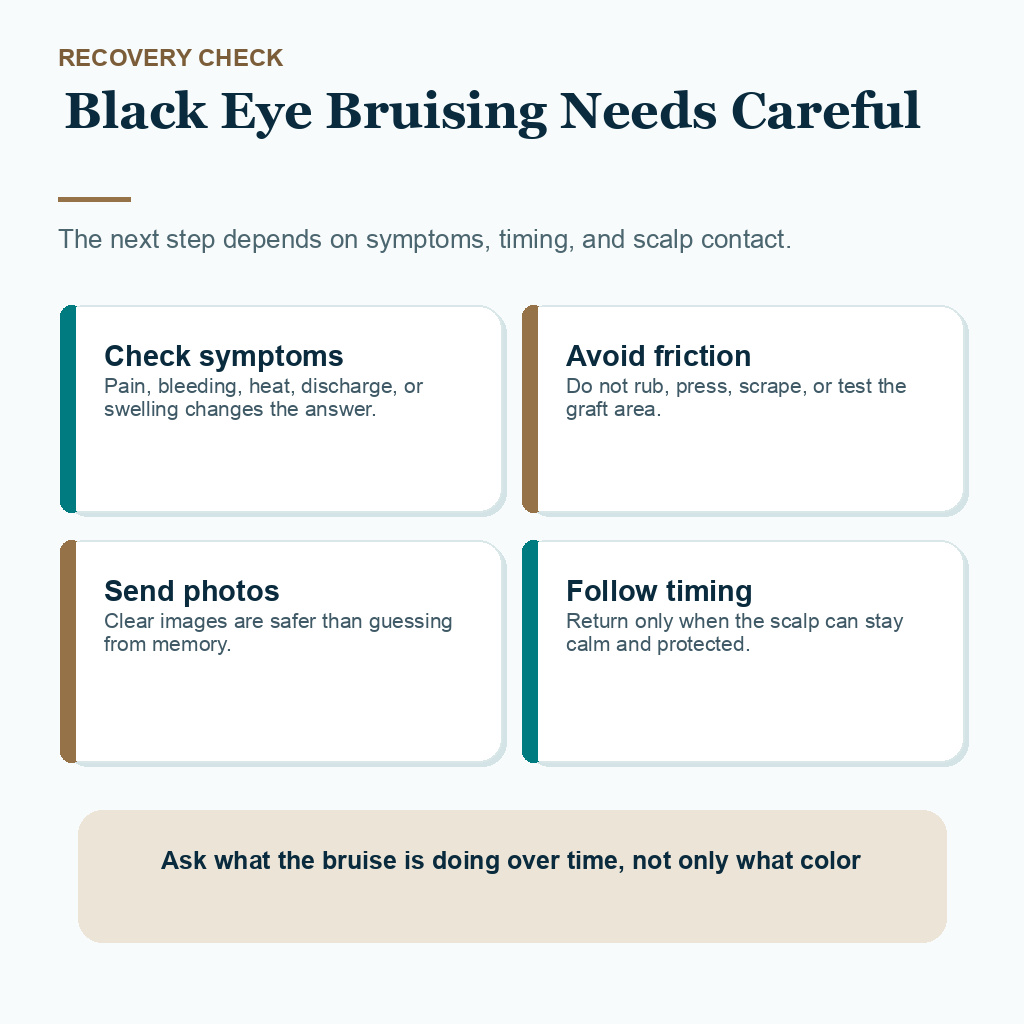
Black eye bruising is safer to assess by pattern and symptoms, not by color alone.
Medicines and bleeding risk change the answer
Bruising deserves more careful review when you have taken aspirin, ibuprofen, anticoagulants, high dose supplements, alcohol, or another medicine that can affect bleeding. Do not hide the medicine because the surgery is already finished. Tell the clinic exactly what was taken, when, and at what dose. Do not stop prescribed aspirin or anticoagulants on your own just because a bruise appeared. The doctor who prescribed them may need to be involved.
With prescribed aspirin and hair transplant surgery, heart and stroke history matter more than cosmetic convenience. Ibuprofen before hair transplant surgery raises a different medicine question, and painkillers after hair transplant need careful selection after surgery.
If bruising appears after medicine confusion, I need the full story. A small bruise may still be harmless, but the medical context changes the level of follow up.
Reduce swelling without touching the grafts
The first rule is to protect the recipient area. Do not press ice onto grafts. Do not massage the transplanted zone. Do not rub the forehead downward toward the grafts unless your own clinic gave a very specific instruction and showed you the safe area.
Head elevation, avoiding bending, staying hydrated, and following the washing schedule usually matter more than aggressive home tricks. If the clinic allows cold compresses, they belong on the forehead or upper face area, not directly on the grafts or the eyeball. Use a wrapped cold pack, keep pressure gentle, and stop if it increases eye pain or scalp discomfort. With ice after a hair transplant, comfort is useful only when cold does not create pressure on the healing scalp.
More treatment is not always better in the first week. A bruise is the body clearing blood pigment. Creams, alcohol, strong antiseptic, heat, rough massage, or random internet remedies can create irritation without making the bruise clear faster.
Travel can make bruising look worse
Travel can make bruising feel more stressful because you are tired, sleeping poorly, walking through airports, and looking at the face under harsh bathroom lighting. Long flights do not usually create a bruise by themselves, but early swelling after surgery can look more obvious when the body is exhausted.
If you are flying soon, focus on practical safety. Keep the scalp protected, avoid bumping the recipient area, follow medicine instructions, and do not hide symptoms because you want to board a flight. Flying after a hair transplant becomes more sensitive when swelling, timing, and travel overlap.
For international travel, this is also where follow up after surgery becomes important. After you leave Istanbul, the clinic needs a clear way to review photos. Bruising is often a photo review question, but the clinic needs enough detail to decide whether you can continue travel or need examination.
Bruising is different from bleeding, infection, or necrosis
Bruising is color under the skin. Bleeding is fresh blood coming out. Infection is suggested by worsening heat, pain, spreading redness, pus, bad smell, or fever. Necrosis is a much rarer concern where tissue looks dead, black, gray, wet, open, or structurally damaged.
Those problems can overlap when you are worried because they all look dramatic. Clinically, they are not the same. Bleeding after transplant needs pressure and clinic guidance. Redness, scabs, or pimples after a hair transplant need review based on symptoms. Black scabbing and necrosis warning signs deserve direct assessment when the skin looks damaged or poorly perfused.
A bruise that is flat, fading, and not painful is judged differently from wet black tissue, pus, or active bleeding. Color alone is not enough. The behavior of the area matters.
Photos to send to the clinic
The photos should answer the clinical question. Use daylight or steady indoor light. Include the whole face, both eyes, the hairline, and one closer view of the bruised area. If there is a scalp concern, include the donor and recipient area as well.
Write the day after surgery, the medicines used, whether there was fresh bleeding, whether pain is increasing, whether the eye opens normally, whether there is blood in the eye or nose, and whether vision has changed. Also mention contact lens use, recent LASIK or other eye surgery, a recent fall or head impact, and any blood thinning medication. If you are traveling, mention your flight time and current location. This lets the clinic decide whether remote guidance is enough or whether local review is safer.
Do not send ten nearly identical detailed photos with no timeline. The best photo message is short, clear, and specific. It makes the answer safer.
My surgical judgment on bruising
My view is careful rather than cosmetic. I do not judge bruising only by how dramatic it looks. I judge it by timing, direction, pain, eye symptoms, skin condition, medicines, bleeding history, and whether the pattern is improving. Mild purple and yellow eye color on day 4 may only need routine recovery instructions. Severe swelling on one side, fever, discharge, vision change, or black skin that looks damaged needs a different level of attention.
At Diamond Hair Clinic, an early clear photo is better than waiting in fear. Most bruising questions can be answered safely when the details are complete. Do not panic, but do not dismiss a changing pattern either. Watchful observation is appropriate only when the bruise is improving and no warning signs are present.
A hair transplant is a medical procedure, not only a cosmetic appointment. Bruising can be part of recovery, but changing symptoms need direct guidance rather than guesswork.

Read this review excerpt
Upon arriving home, I sent 4 photos (of each side of head) after every washing process to doctor for checking where I was given personal advice for how to take care of my healing head.