



Aspirin Needs Medication Review Before Surgery
If you took aspirin before a hair transplant, the first step is simple. Tell the clinic exactly what you took, why you took it, and when you took it. A single accidental dose for a headache is different from daily aspirin after a heart attack, stroke, stent, or vascular disease. Do not hide the dose, and do not stop prescribed aspirin on your own. The same review of dose and reason applies to supplements before hair transplant surgery. I also separate fish oil before hair transplant surgery from prescribed aspirin decisions, because the risk logic is not the same.
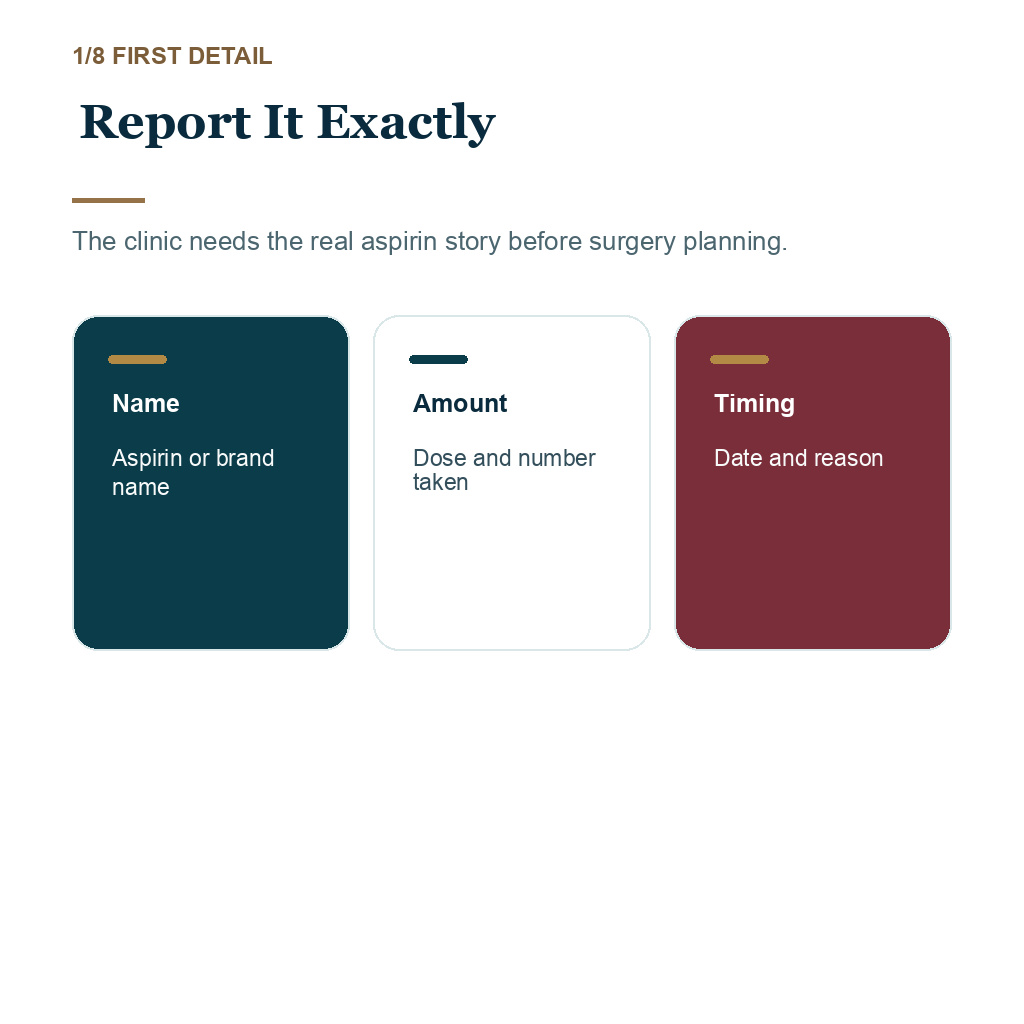
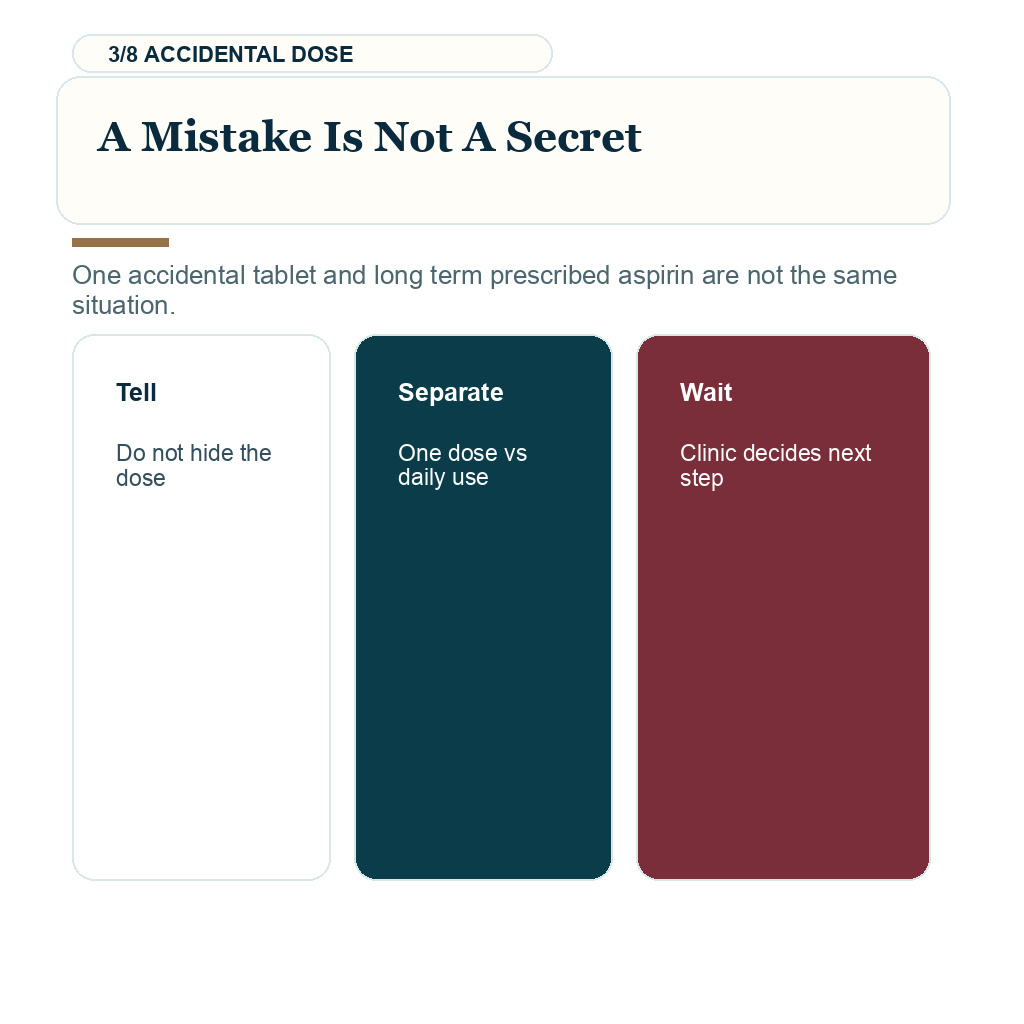
When aspirin was taken by accident, report it before the surgical plan starts, especially if it was hidden inside a headache tablet or combined cold medicine. The dose, reason, and last tablet time are the details that let the team decide whether the day is still suitable.
Tell the clinic why aspirin was used before asking how many days to stop. A headache tablet, daily heart protection, and a mixed painkiller with aspirin do not lead to the same FUE decision.
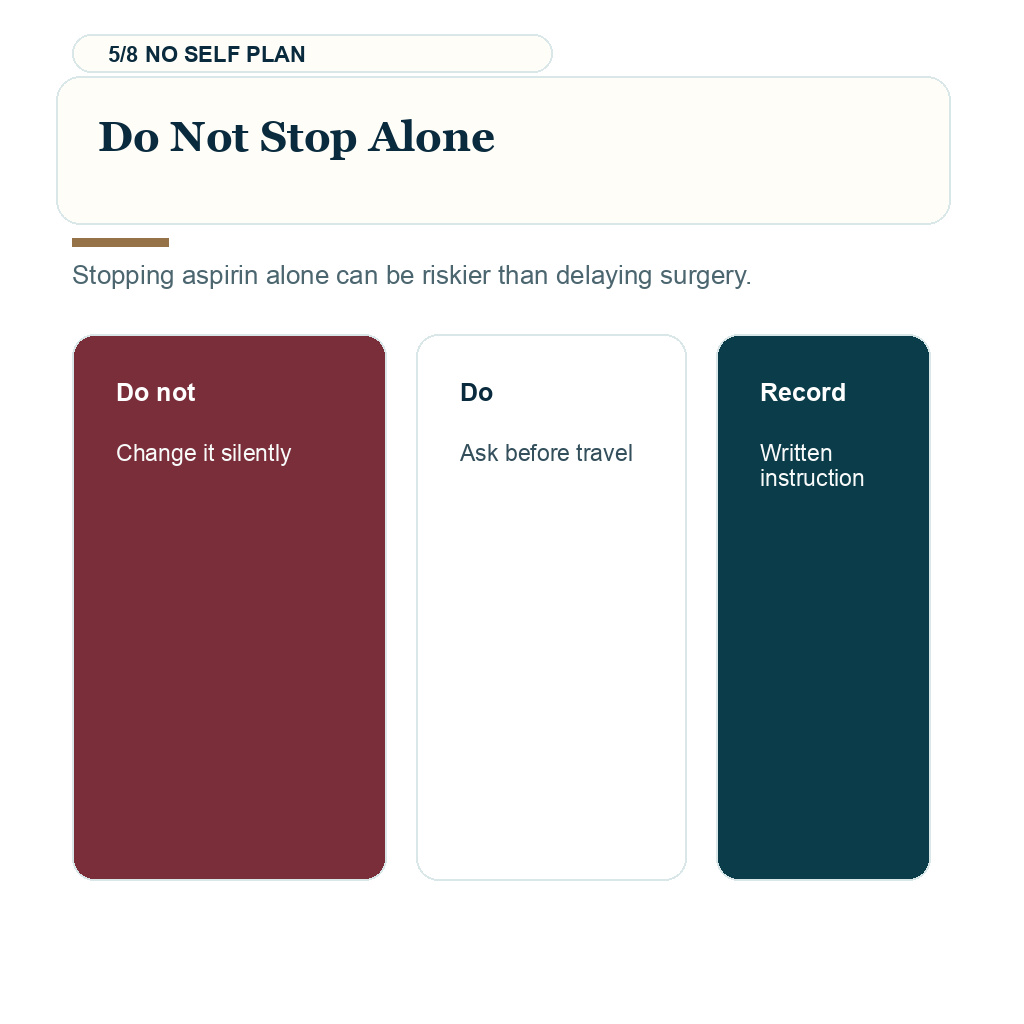
Aspirin can increase bleeding and oozing during surgery, but stopping medically prescribed aspirin can be more dangerous than the bleeding it may cause. If aspirin was prescribed by a cardiologist, neurologist, vascular doctor, or your regular doctor for heart or clotting protection, a standard “no aspirin” instruction is not permission to stop it alone. The safer decision comes from the operating doctor and the prescribing doctor agreeing on the plan when heart, stroke, stent, or clotting risk is involved. Conflicting aspirin instructions should be settled in writing by the transplant doctor and the doctor who prescribed it before the dose changes.
A fixed instruction sheet can be too blunt for aspirin. “No aspirin” for a set number of days may be useful when aspirin is occasional or avoidable, but prescribed aspirin needs medical review first. I separate occasional use, pharmacy products such as Excedrin, aspirin you started yourself for prevention, and aspirin prescribed for heart, stroke, stent, or blood vessel history.
Aspirin needs its own medication review
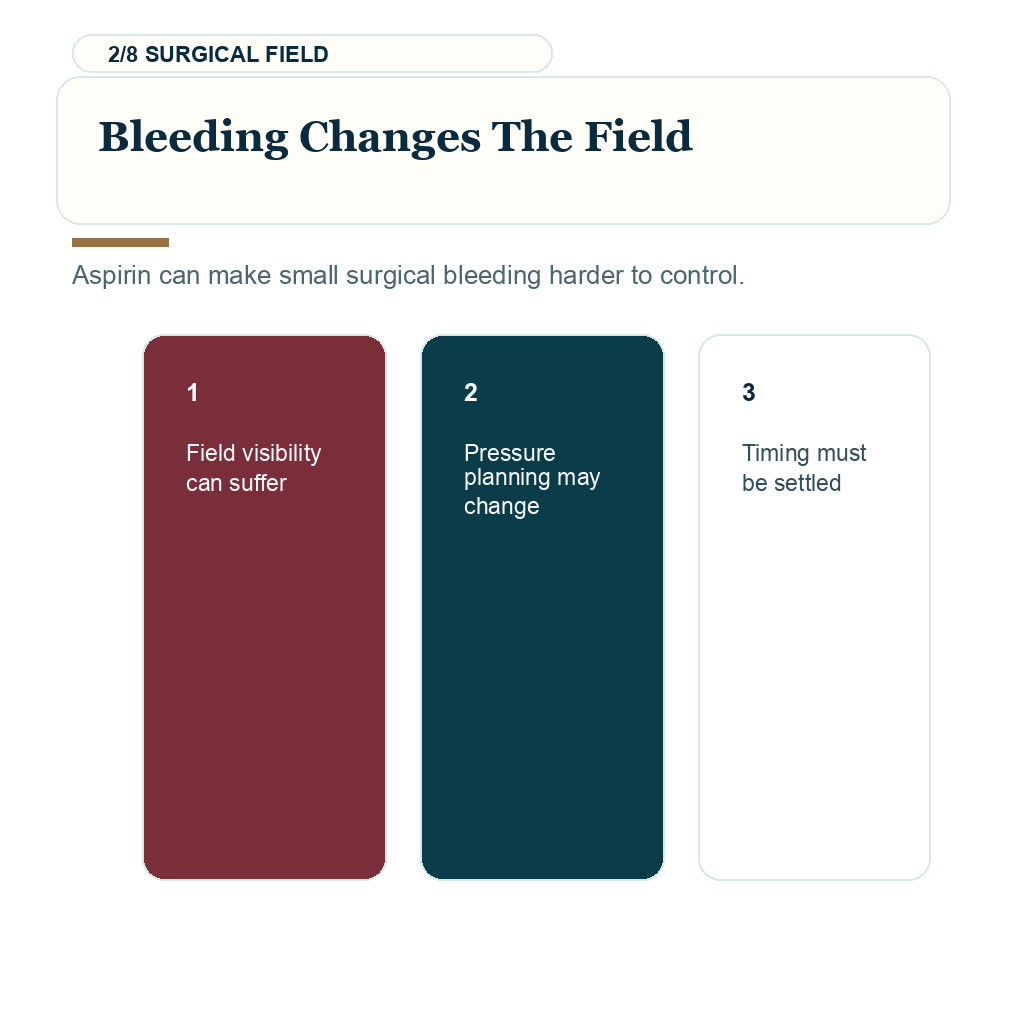
Aspirin affects platelet function, which is different from having a low platelet count. Both issues matter because platelets help bleeding stop. During FUE, the donor and recipient area contain many tiny vessels. If platelets are less active, the surgical field can ooze more, small wounds may take longer to seal, and the team may need more time controlling bleeding. If bruising appears after surgery, include the aspirin history when you send photos for black eye bruising in hair transplant recovery.
Aspirin use does not by itself make surgery unsafe. It still must be disclosed before the procedure. A surgeon can manage mild bleeding, but the team needs to know the risk before extraction, recipient area incision creation, local anesthesia, and graft placement begin.
Blood thinners and hair transplant surgery follow the broader principle. Aspirin belongs in that same risk family, but it deserves its own discussion because people may take it casually in headache medicine, cold medicine, or daily low dose tablets without thinking of it as a surgical medication.
Aspirin taken by mistake should be reported directly
If you took aspirin, Excedrin, or another medicine that contains aspirin by mistake, ask for clinic review before you travel or before you arrive for surgery. Send the exact medicine, dose, date, and time. Do not simply hope it is fine, and do not invent a safer history because you are afraid of losing the date.
The clinic may continue, postpone, adjust the plan, or ask for medical clearance depending on the dose, timing, your medical history, and the size of the planned session. A small accidental dose several days before surgery may not carry the same risk as daily aspirin, combined antiplatelet treatment, or anticoagulant medication.
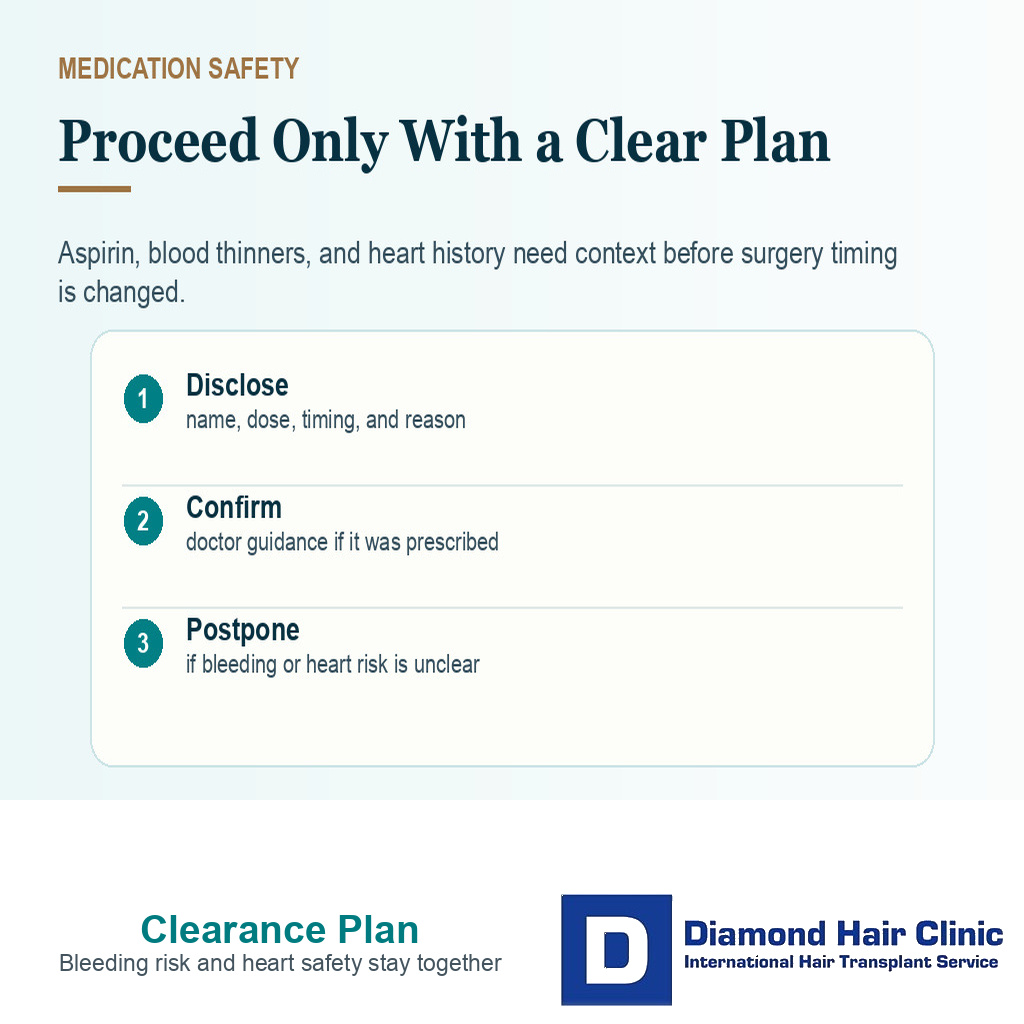
With aspirin, the unsafe choice is hiding the tablet to protect the surgery date instead of letting the surgeon decide whether the plan should change. It is silence about the tablet. Hair transplant surgery is easier to plan when the doctor knows the real medication history. Hiding aspirin can turn a manageable bleeding issue into an avoidable problem during surgery.
Heart and stent related aspirin needs the prescribing doctor
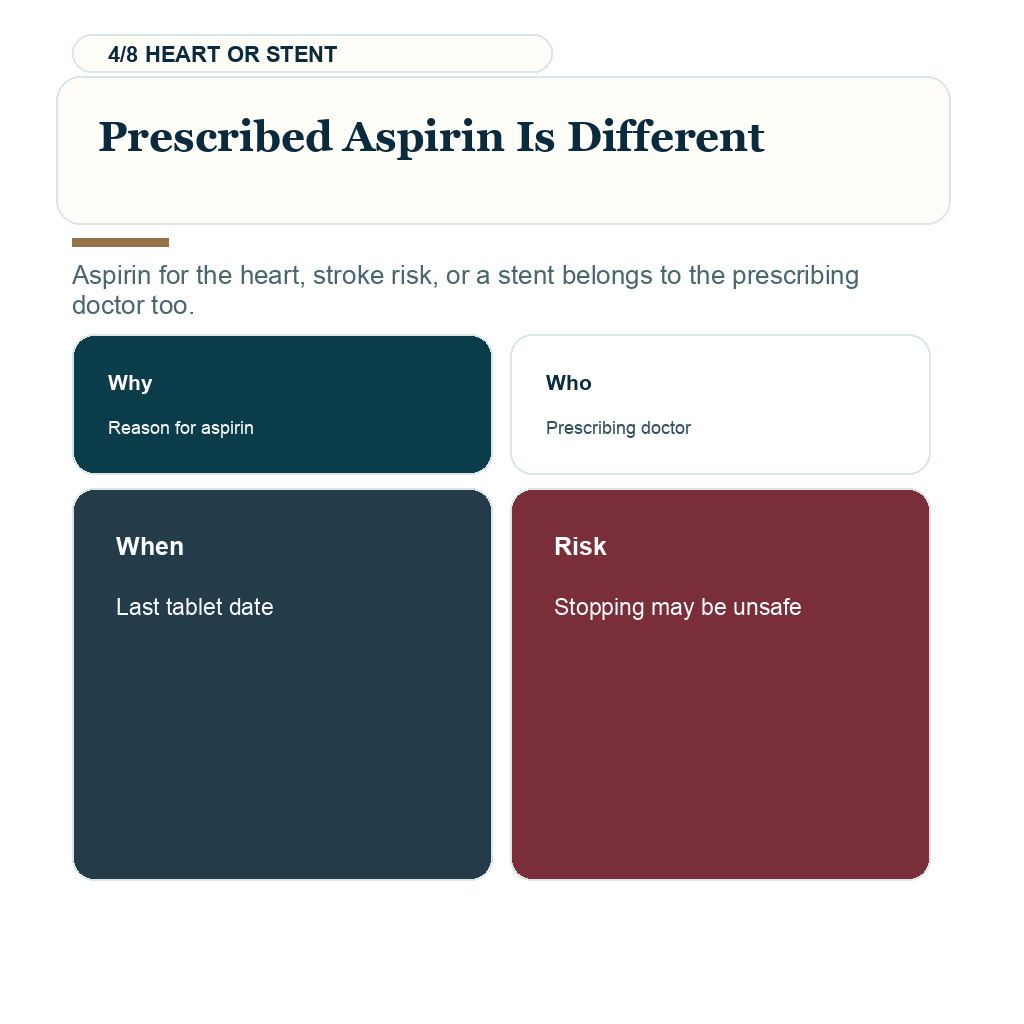
If aspirin was prescribed after a heart attack, stroke, stent, bypass operation, or vascular disease, the hair transplant clinic should not casually tell you to stop it. That decision belongs to the doctor responsible for your heart or clotting condition, with the hair transplant surgeon judging the surgical bleeding side.
If the history includes DVT, pulmonary embolism, or another serious clot rather than aspirin alone, the planning belongs in a broader blood clot history before hair transplant review.
The reason is medical, not cosmetic. Aspirin may be preventing a serious clot, even if the timing feels inconvenient. In some cases, stopping it can create more risk than continuing and managing extra bleeding. In others, temporary interruption may be possible when the prescribing doctor agrees. The decision depends on the reason for aspirin, the timing of the heart event or stent, other antiplatelet medication, and the planned surgical size.
If you have heart disease or a coronary stent, the warning in heart disease, stents, and hair transplant safety should be reviewed before aspirin is treated as a cosmetic surgery detail. Medical clearance comes before choosing the hair transplant date.
Stopping prescribed aspirin already also needs review
If aspirin was prescribed for a heart attack, stroke, coronary stent, bypass operation, vascular disease, or another clotting risk, tell both the transplant clinic and the prescribing doctor if you already stopped it. Do not restart or continue guessing without medical direction. The important details are why aspirin was prescribed, the dose, the last tablet date, the planned restart date if a pause was approved, whether another antiplatelet or blood thinner is also being used, and whether you have had chest pain, shortness of breath, weakness, speech difficulty, facial drooping, or other neurological symptoms.
The hair transplant date should not pressure the medical decision. The prescribing doctor may advise restarting, continuing the pause, changing timing, or postponing elective surgery. The transplant plan should follow that medical clearance. If chest pain, shortness of breath, weakness on one side, speech difficulty, fainting, or sudden severe symptoms appear after an unplanned aspirin pause, local urgent medical help comes before clinic messaging. A small increase in surgical bleeding is a different type of risk from a clot, stent problem, heart attack, or stroke.
Aspirin related bleeding can affect the surgical field
Hair transplant surgery depends on visibility and precision. During FUE extraction, the surgeon needs to see the follicular unit direction and surrounding skin clearly. During recipient area creation and graft placement, small bleeding points can obscure angles, increase cleaning, and slow the work.
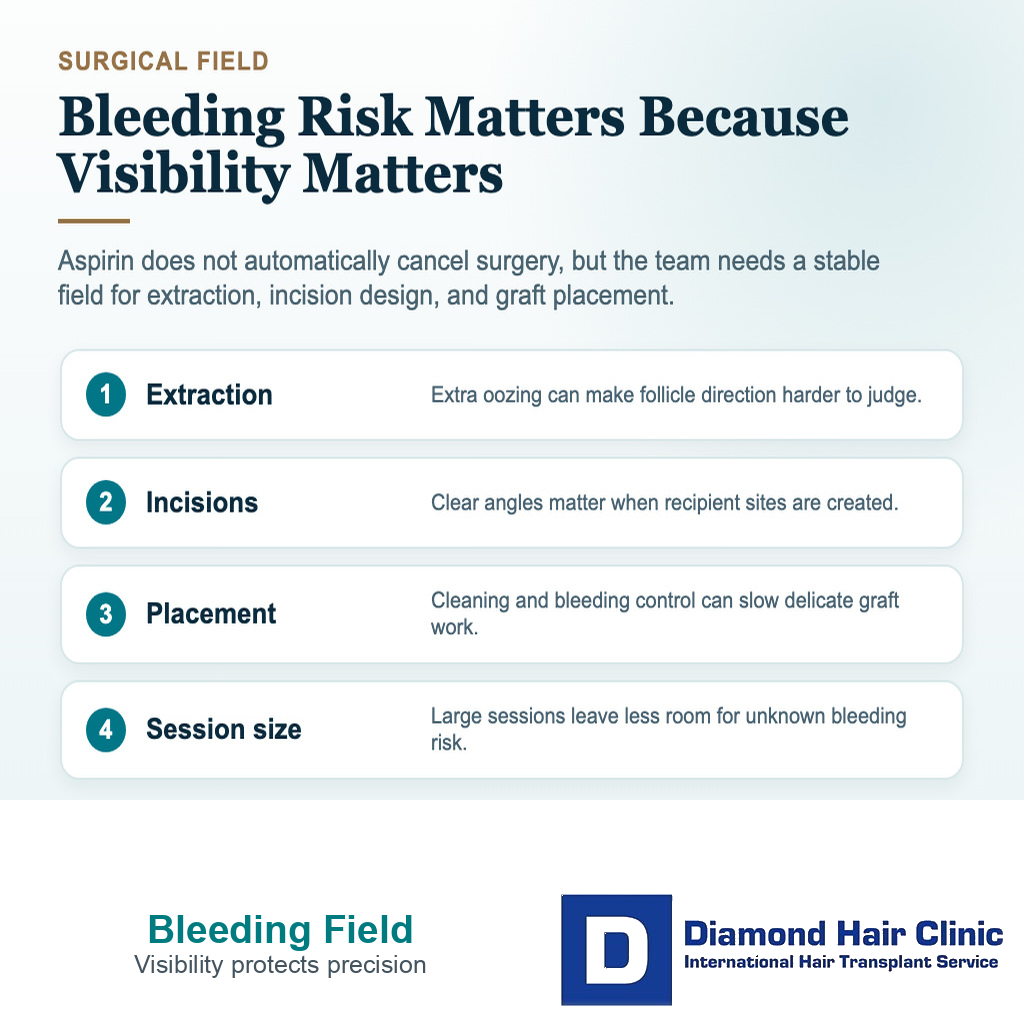
Mild bleeding does not by itself destroy grafts. Clinics are trained to control bleeding with pressure, local measures, careful anesthesia planning, and surgical pacing. The concern is a heavier bleeding tendency that makes the field less stable, especially in a large session or in someone with other risk factors.
If you already worry about bleeding, understand what matters after surgery as well. Bleeding after a hair transplant is judged by pattern and severity. Steady pressure may be enough in some cases, but fresh bleeding, worsening pain, discharge, spreading redness, or an open wound needs clinic contact.
Another patient’s aspirin stop date is not a plan
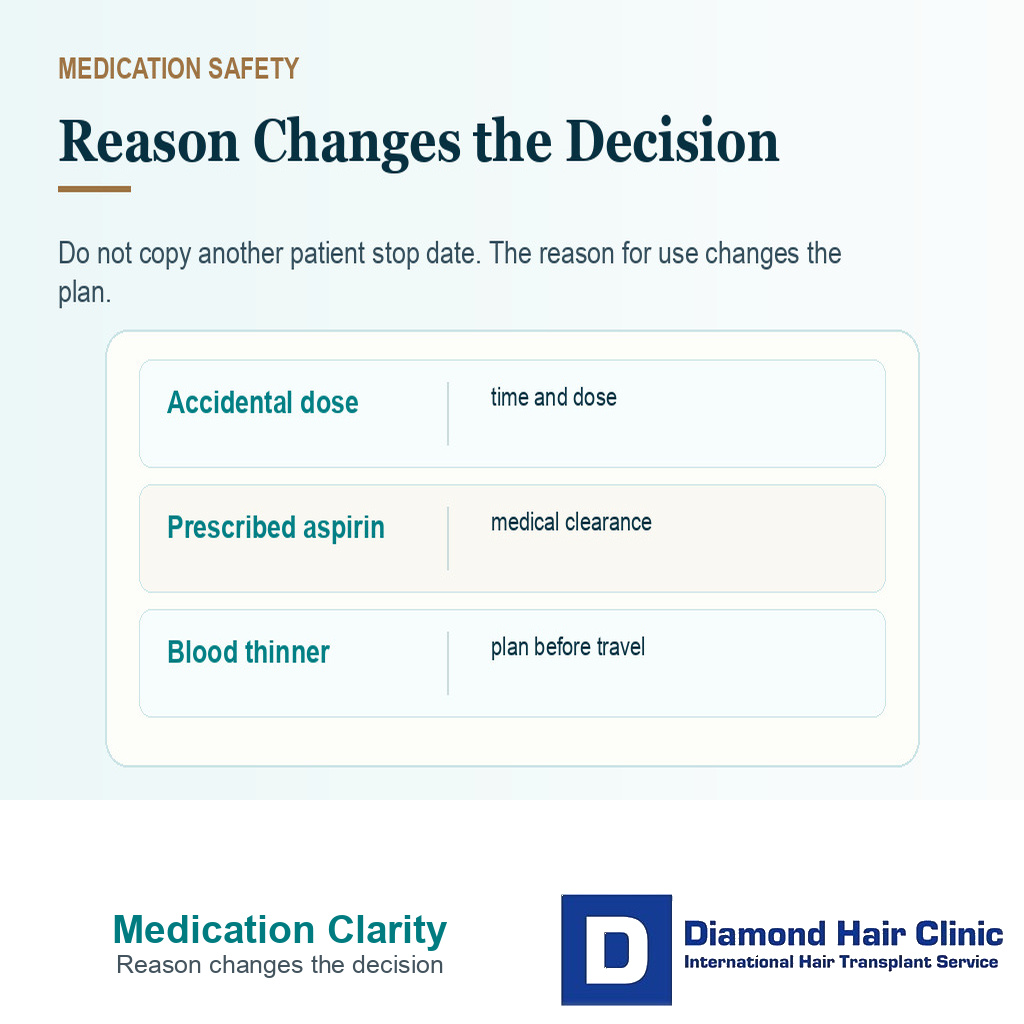
One clinic may say stop aspirin seven days before surgery. Another may say ten days. Another person may say a clinic allowed three days. These differences do not prove that one simple number fits everyone. They reflect different surgery sizes, different doctors, different bleeding control habits, and different medical risks.
For occasional aspirin used for pain, the clinic may prefer a clear gap before surgery. For prescribed aspirin, the same fixed gap may be medically unsafe without the prescribing doctor’s approval. If aspirin is combined with clopidogrel or another antiplatelet, or if an anticoagulant such as apixaban or warfarin is involved, the plan becomes more complex.
Do not borrow another person’s aspirin stop date. Give the clinic and your prescribing doctor the exact facts. The safe timing is not a copied number. It is a medication decision attached to your diagnosis, your clotting risk, and your planned procedure.
These 8 aspirin review slides separate what you took, why bleeding matters, accidental use, prescribed heart or stent related aspirin, why you should not stop it alone, hidden aspirin names, written planning before travel, and postponement when the plan is unclear. Swipe sideways, use the arrows one slide at a time, or choose a number below the image.
Aspirin, ibuprofen, and Excedrin need separate review
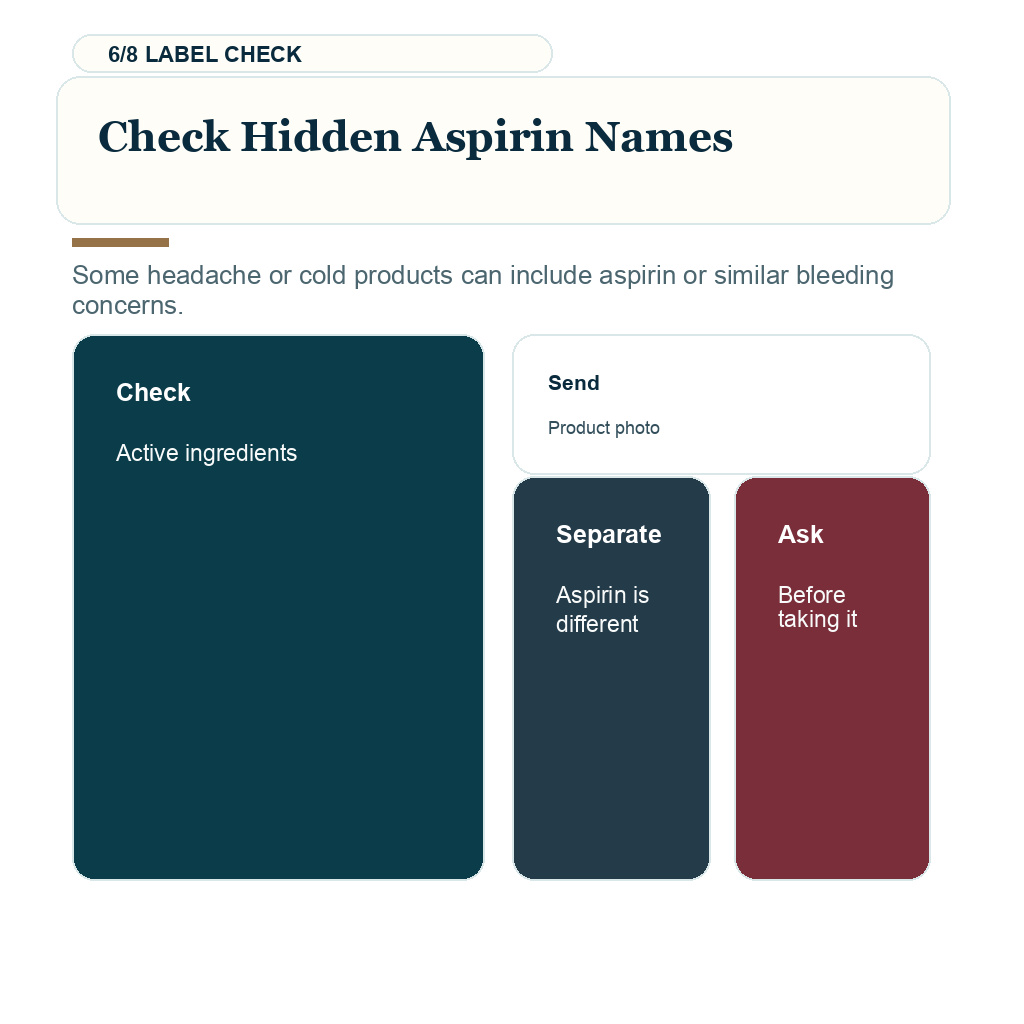
Aspirin, ibuprofen, and headache tablets can look similar because they are common medicines bought without a prescription. Before surgery, they need separate review. Aspirin has antiplatelet effects. Ibuprofen is an NSAID with bleeding and stomach considerations. Excedrin and similar products may combine aspirin with acetaminophen and caffeine, so you may take aspirin without realizing it.

Before surgery, bring or photograph every medication and supplement label, including headache tablets, cold medicine, fish oil, vitamin E, herbal products, and pain medicine. The clinic cannot review what it does not know. If the instruction sheet says no aspirin but you took ibuprofen, that still deserves a direct question.
Ibuprofen before hair transplant surgery is a separate medication question. Do not replace aspirin with ibuprofen, naproxen, or another pain tablet because you think it is safer for surgery. For pain control after surgery, painkillers after hair transplant should be chosen from the recovery plan, not from general internet advice.
Aspirin given after surgery still needs a reason
Some clinics prescribe aspirin or a blood thinning medicine after surgery. Other clinics avoid it. The difference can feel confusing because you may be told to avoid aspirin before surgery and then see it offered afterward.
Aspirin after surgery is not simply right or wrong. I first need to know why it is being prescribed for you. A clinic should be able to explain the reason, dose, duration, and warning signs. If aspirin is being used because of a personal medical condition, that should connect to your medical history. If it is being used as a routine addition without explanation, you have a fair reason to ask.
Medications after hair transplant need a clear purpose. Aspirin should not be treated as a growth booster, a substitute for minoxidil timing after hair transplant, or a casual recovery trick. It is a medication with bleeding and clotting implications. If prescribed aspirin was paused for surgery, the restart timing needs the same medical clarity as the stop timing.
Written medication instructions should come before surgery
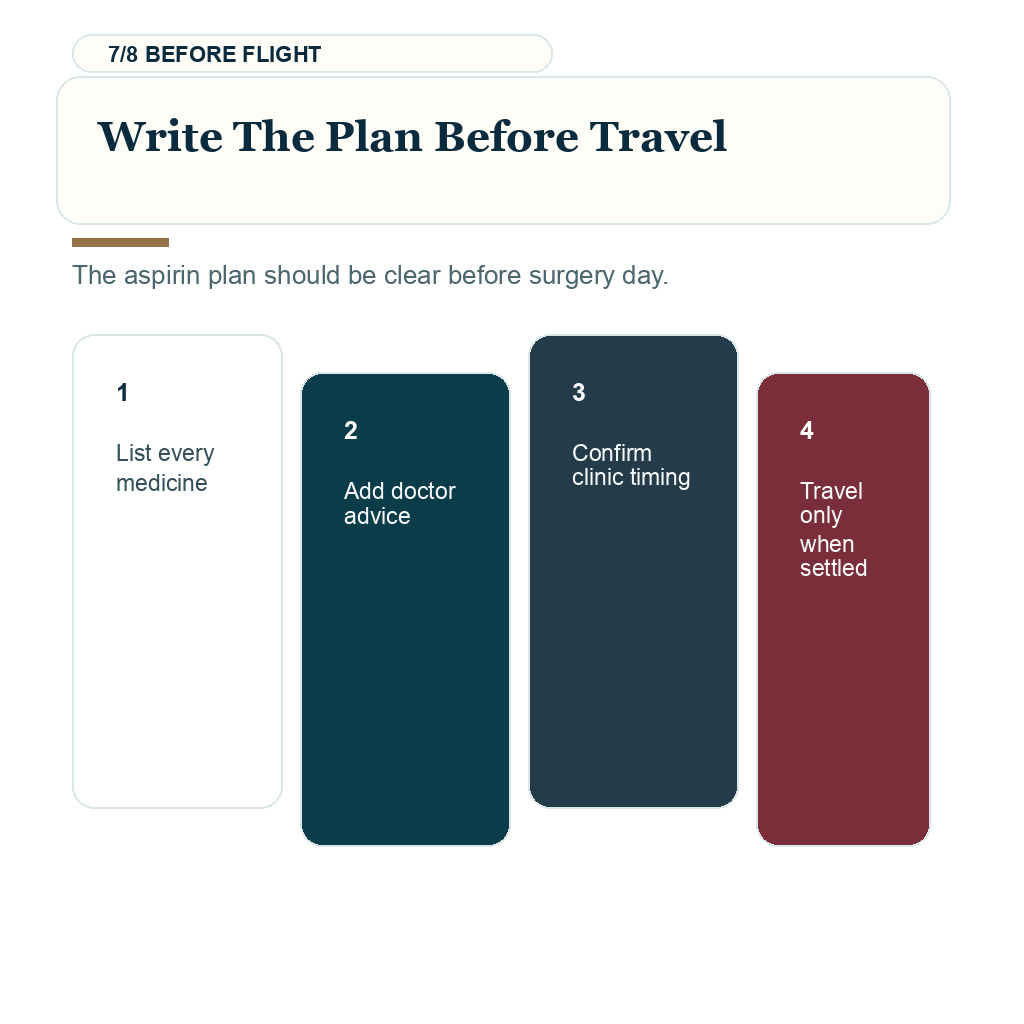
Before the surgery date, the medication plan should be written clearly. The record should state whether aspirin is prescribed or occasional, the dose, the reason for use, the last dose taken, the stop date if one is approved, the restart date, who gave clearance, how to contact that prescriber, and whether any other blood thinner, NSAID, supplement, or heart medication is involved. Aspirin planning is not complete until both stop and restart timing are clear. This belongs in the same medical review as any medication before hair transplant surgery, not as a last minute message on the morning of the operation. Restart timing belongs in the same written plan as stopping aspirin safely.
A careful clinic should also review blood pressure, heart history, diabetes, bleeding history, previous clotting problems, allergies, and recent illness. These checks are not bureaucracy. They protect you and the surgical team. Blood tests before hair transplant show why medical screening matters before a cosmetic plan becomes a surgical plan.
Local anesthesia planning also matters. Many hair transplant procedures use local anesthesia with adrenaline to reduce bleeding and prolong numbness. If blood pressure or heart concerns are part of the history, adrenaline in hair transplant anesthesia has to be planned together with medication history and monitoring.
Some aspirin situations should postpone surgery
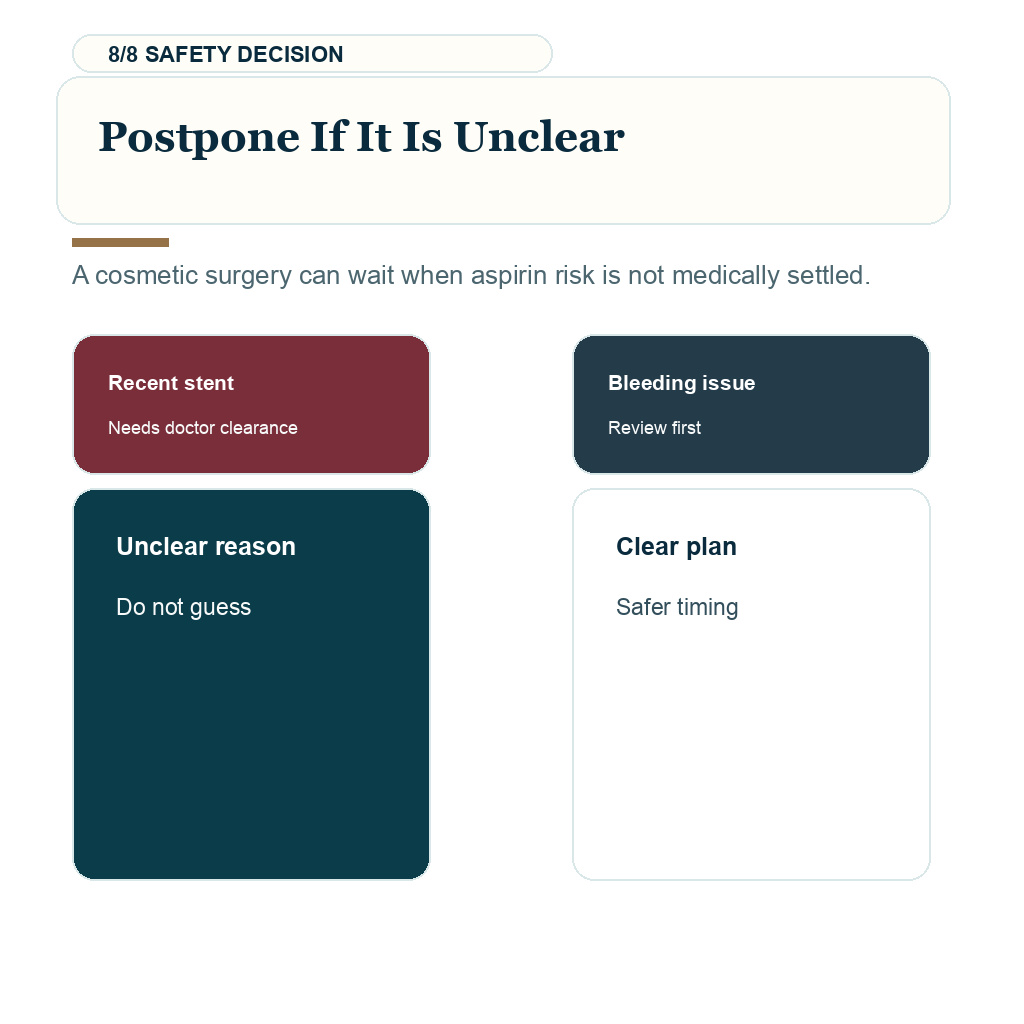
Postponement is reasonable when aspirin use cannot be clarified, when prescribed antiplatelet therapy is being taken without medical clearance, when another blood thinner is involved, when blood pressure is uncontrolled, or when the planned session is large and bleeding risk cannot be managed safely.
Postponement is not a failure. It is sometimes the correct surgical decision. A delayed operation is better than a rushed operation built on incomplete medication information. If a clinic treats your aspirin disclosure as an inconvenience instead of a medical detail, the process is already moving in the wrong direction.
Blood pressure is part of the same safety picture. If you take aspirin for heart or vascular risk, you may also need proper blood pressure control before local anesthesia and surgery. High blood pressure and hair transplant surgery should not proceed when the medical baseline is unstable.
Aspirin should be settled before the first graft
Before I make the decision, I separate aspirin use into three groups. Occasional or accidental aspirin needs disclosure and timing review. Aspirin prescribed for heart, stroke, stent, or vascular protection needs clearance from the prescribing doctor before any stop or continue plan. Aspirin combined with clopidogrel, apixaban, warfarin, or another blood thinner needs a coordinated plan before travel, payment, and surgery.
A hair transplant should never be planned as if the scalp is separate from the rest of the body. Medication history, heart safety, bleeding control, donor management, and recipient area work all belong to the same surgical judgment. If aspirin is part of your history, do not panic and do not stay silent. Get a clear written plan before the procedure begins.
If medication review shows that surgery should wait, wait. If the prescribing doctor clears a plan and the hair transplant surgeon can operate safely, proceed with the plan documented. Aspirin should not be a hidden detail, a casual tablet, or a reason to gamble with heart safety for a cosmetic date. It should be handled as a real medical decision before the first graft is removed.

Read this review excerpt
Every single one of my questions was answered and they made sure I had all the details I needed to make an informed decision.