



Fish Oil Timing Needs Medical Review Before Surgery
If you take fish oil or omega 3 before FUE, do not guess from mixed advice or quietly remove it from your history. Tell the clinic the product, dose, reason for use, and last capsule. The capsule number is not the dose. If the label separates EPA and DHA, send that panel too. If surgery is close, send those details now instead of choosing your own stop date.
In many patients, fish oil is a simple supplement pause. In others, it sits beside aspirin, anticoagulants, heart history, high cholesterol, bruising tendency, or prescription omega 3 for triglycerides. The timing review is there to keep the surgery day controlled, not to frighten you.
I do not describe fish oil as a dangerous blood thinner in every patient. That would be too simple. I also cannot give one stop or restart date that is safe for every patient without knowing the dose, reason, other medicines, and surgery timing. Ordinary use, high dose use, prescription omega 3, aspirin, anticoagulants, and a history of easy bleeding are not the same situation. Hair transplant surgery is a long procedure that depends on close visibility, and small avoidable bleeding variables can make graft placement, anesthesia comfort, and postoperative monitoring harder to judge. My practical rule is that the exact product, dose, reason, and last use matter more than the label on the bottle.
Fish oil review belongs in the FUE plan
Patients usually ask this after hearing two opposite messages. One clinic says to stop all supplements before surgery. Another person says fish oil is harmless and was continued without a problem. Both can be true inside their own context, but neither replaces review of dose, medicines, and surgery timing. A clinic instruction is not only about the biological effect of one capsule. It is also about reducing surprises on a day when the donor area is being opened, local anesthesia is used, grafts are handled, and thousands of tiny recipient area incisions may be made.
I review fish oil inside the wider supplements before hair transplant plan because the label alone is not enough. A supplement can be low risk and still worth disclosing. It can be natural and still affect a plan when combined with other products. It can be useful for general health and still be paused for a short surgical window. The review is not a judgment on whether omega 3 is good or bad. It is a planning step.
In a surgeon-led plan, the question is not whether another patient took it. I ask whether it is useful to have this product active during this patient’s FUE day. That answer changes when the patient also takes aspirin, has a bleeding history, uses a large dose of omega 3, takes multiple supplements with similar effects, or has a medical reason for the product.
The dose story matters more than the label
When a patient says, “I take fish oil,” I still do not know enough. One person takes a small over the counter capsule a few times per week because it feels healthy. Another takes several high strength capsules daily, or a prescription omega 3 product, under advice for triglycerides. Another takes omega 3 together with vitamin E, garlic, ginkgo, turmeric, or other products that may also be relevant around bleeding or bruising. The same phrase can mean very different surgical context.
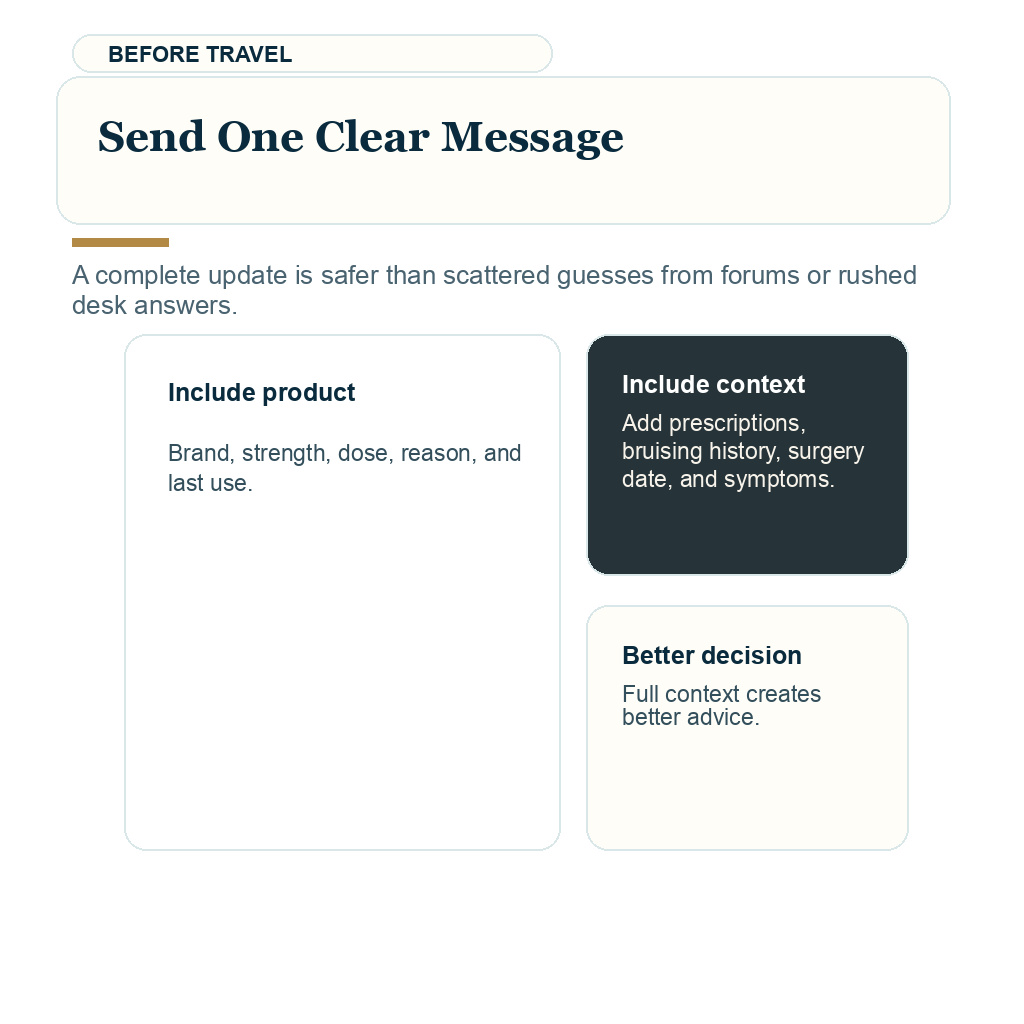
Before travel, a clear list is safer than an answer from memory at the clinic desk. Send the brand if possible, the number of capsules per day, the strength on the label, why you take it, when you last took it, and whether a doctor prescribed or specifically recommended it. If the product is part of a cholesterol or heart plan, it should be reviewed with more care. The reason for treatment matters more than the diagnosis label alone, especially in high cholesterol and hair transplant surgery planning.
Put every supplement that contains omega oils on the same list, not only the bottle named fish oil. Cod liver oil, combined heart formulas, and multivitamins can leave out part of the dose history if only one capsule is mentioned.
A useful pause plan also separates routine supplements from important medication. Some patients stop too much because they are afraid of being cancelled. Others hide the list because they are embarrassed that they forgot. Neither is helpful. A missed capsule is information, not a confession. It is safer for me to know the truth and make the timing decision from real details than to build a plan around a false clean history.
Fish oil is not the same decision as aspirin or a prescribed blood thinner
The most important safety distinction is between a supplement decision and a prescribed medicine decision. If you take aspirin, warfarin, clopidogrel, apixaban, rivaroxaban, or another medication because of a heart, vascular, clotting, stroke, stent, rhythm, or specialist prescribed reason, that is not a private hair transplant decision. Do not stop prescribed medicine on your own. The prescribing doctor and the surgical team must decide whether timing can be adjusted and whether surgery should proceed.
Fish oil belongs near the discussion on blood thinners before hair transplant surgery, but it is not the same category. The patient action can look similar, because both should be disclosed. The clinical consequence is different. A supplement may be paused simply to reduce avoidable variables. A prescribed anticoagulant may protect the patient from a serious medical event. Hair transplant convenience must not override that.
The same disclosure habit matters when patients ask about aspirin before hair transplant surgery. Aspirin can be casual in one patient and medically essential in another. Fish oil is usually not treated with the same urgency, but the habit of disclosure is the same. If you are not sure why you take something, that uncertainty itself is a reason to send the list early.
A forgotten capsule changes the conversation, not the whole surgery
Patients sometimes panic because they took fish oil one or two days before travel. The first useful step is not to search for the most frightening answer. It is to tell the clinic exactly what happened. A single forgotten supplement dose is not the same as continuing a high dose while also taking aspirin or another medication. It may lead to no change, a small timing adjustment, closer review on arrival, or a decision to pause if the total picture is not clean enough.
Hair transplant planning already includes blood pressure, medical history, medications, scalp condition, donor safety, and lab context when needed. If there are bruising concerns, abnormal clotting history, platelet issues, or unusual bleeding, the decision becomes more cautious. That is when blood tests before hair transplant and low platelets before hair transplant become part of the same review, because one small history detail can point to a larger pattern.
During FUE, clear visibility matters. I need the donor extraction and recipient placement field to stay readable. That does not mean every drop of blood is a problem. It means avoidable excess bleeding can make a long procedure less efficient and can complicate the interpretation of swelling, oozing, and early aftercare. Fish oil does not usually mean the platelet count is low. The question is dose, platelet activity, combined products, and the patient’s bleeding history. The goal is a controlled surgical day, not a dramatic warning.
Before surgery, use this timing review to prepare one clear supplement list.
The 9 timing slides below turn the same decision into smaller checks for product details, dose, reason, missed dose, bleeding history, and restart timing. Use the arrows one slide at a time.
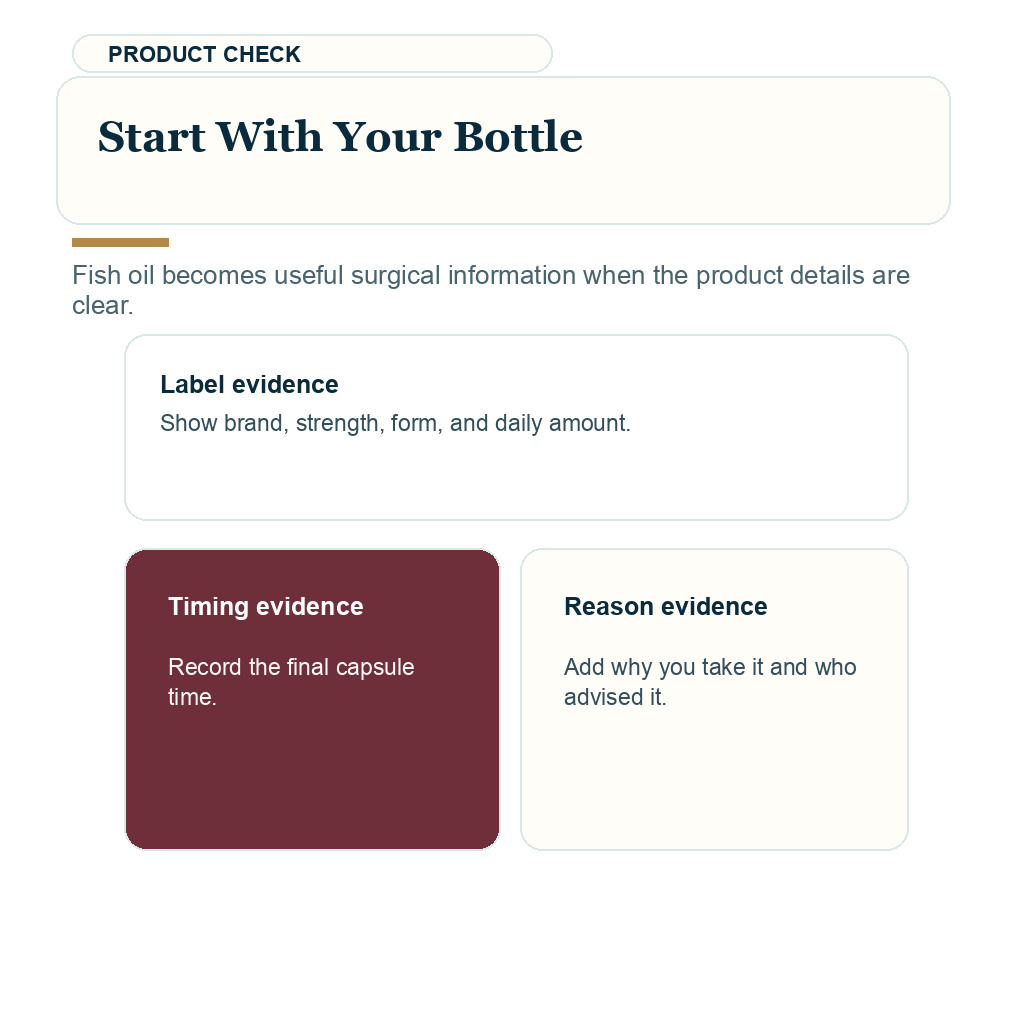
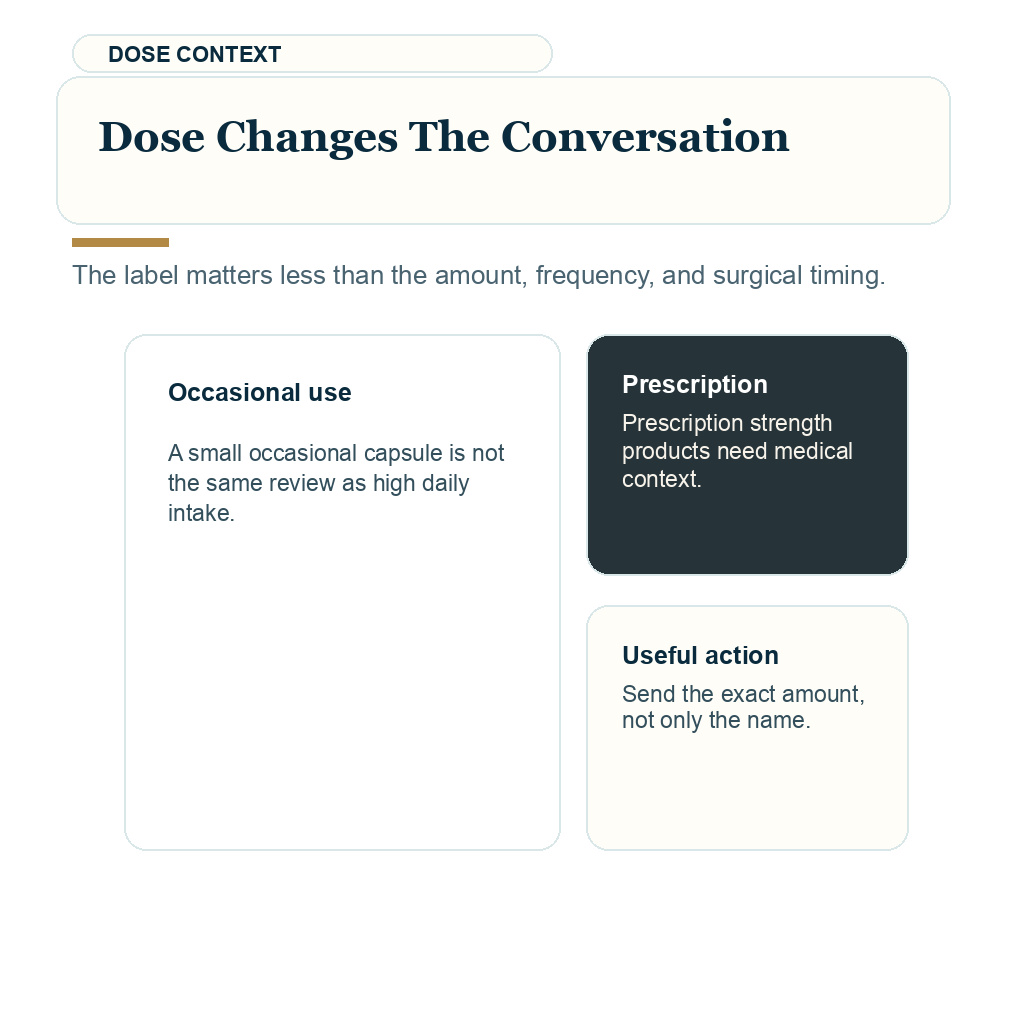
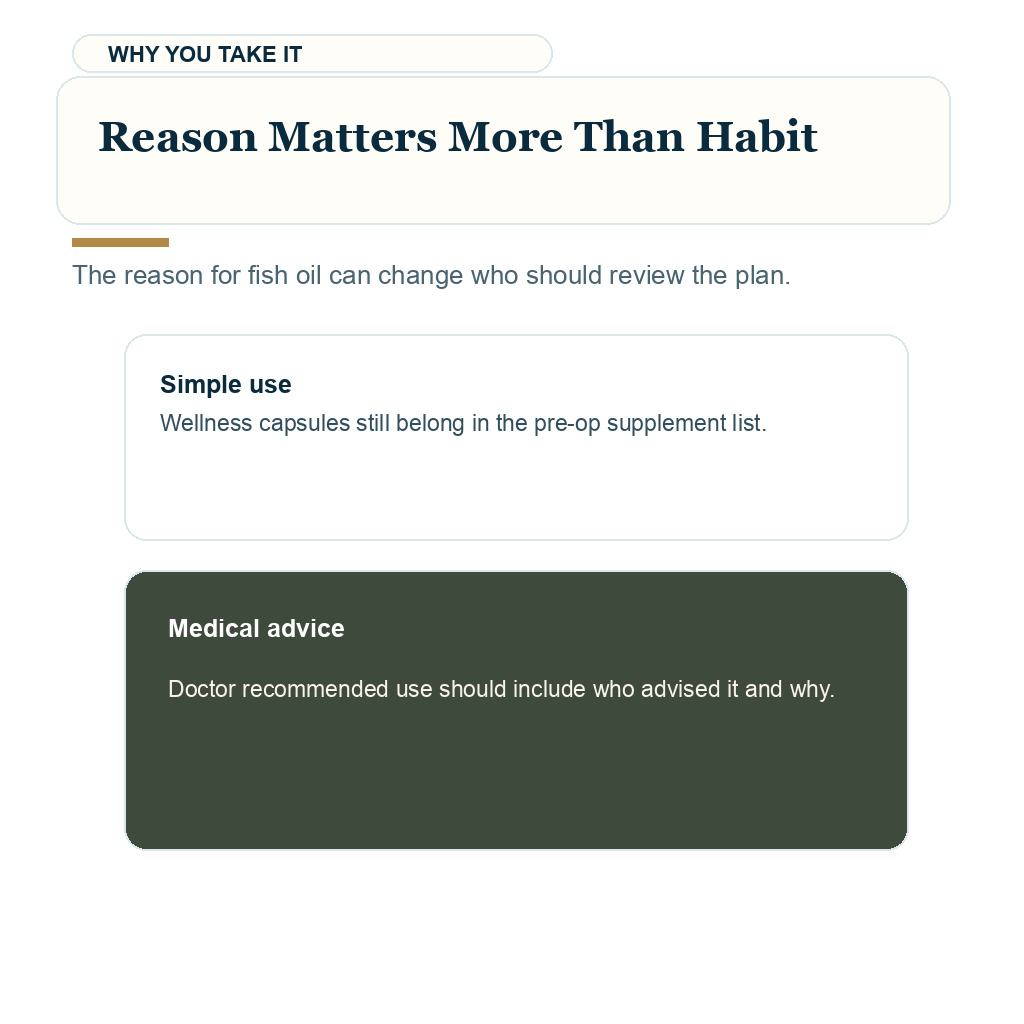
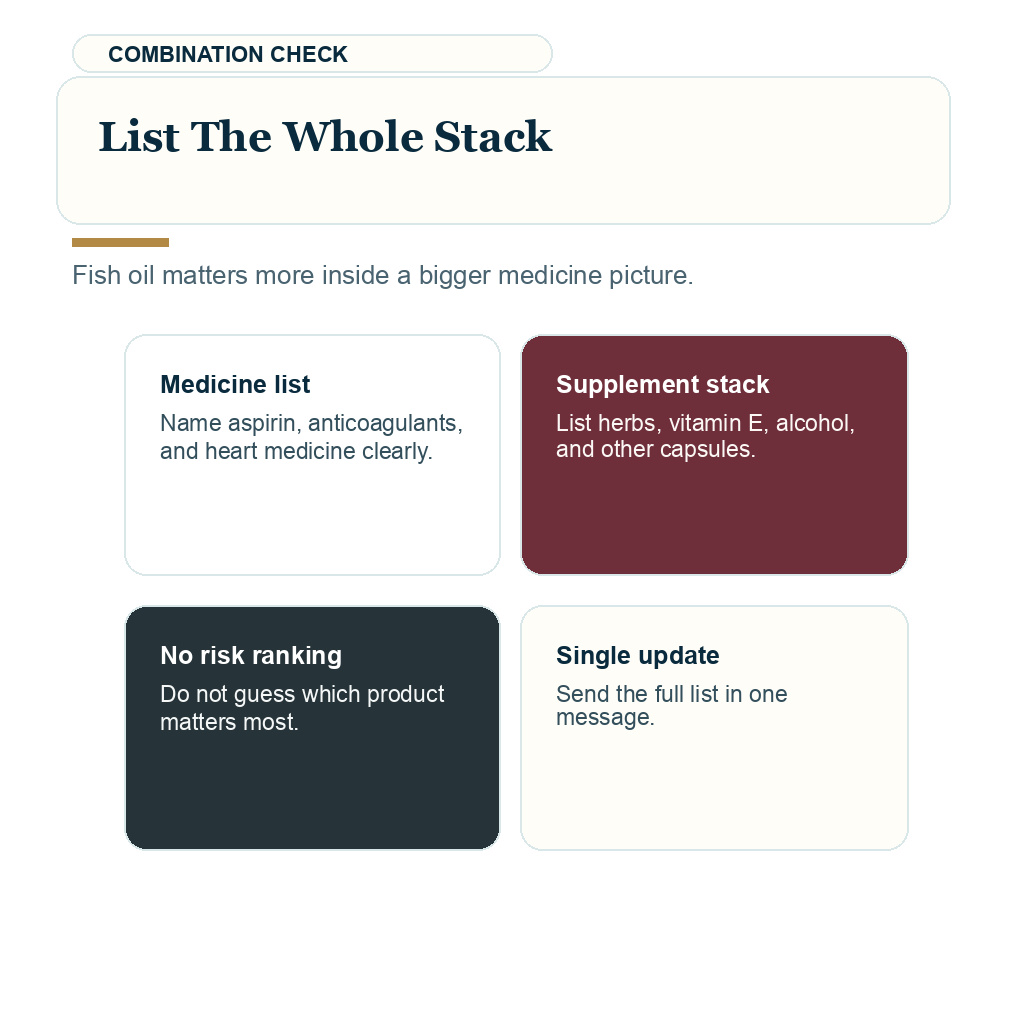
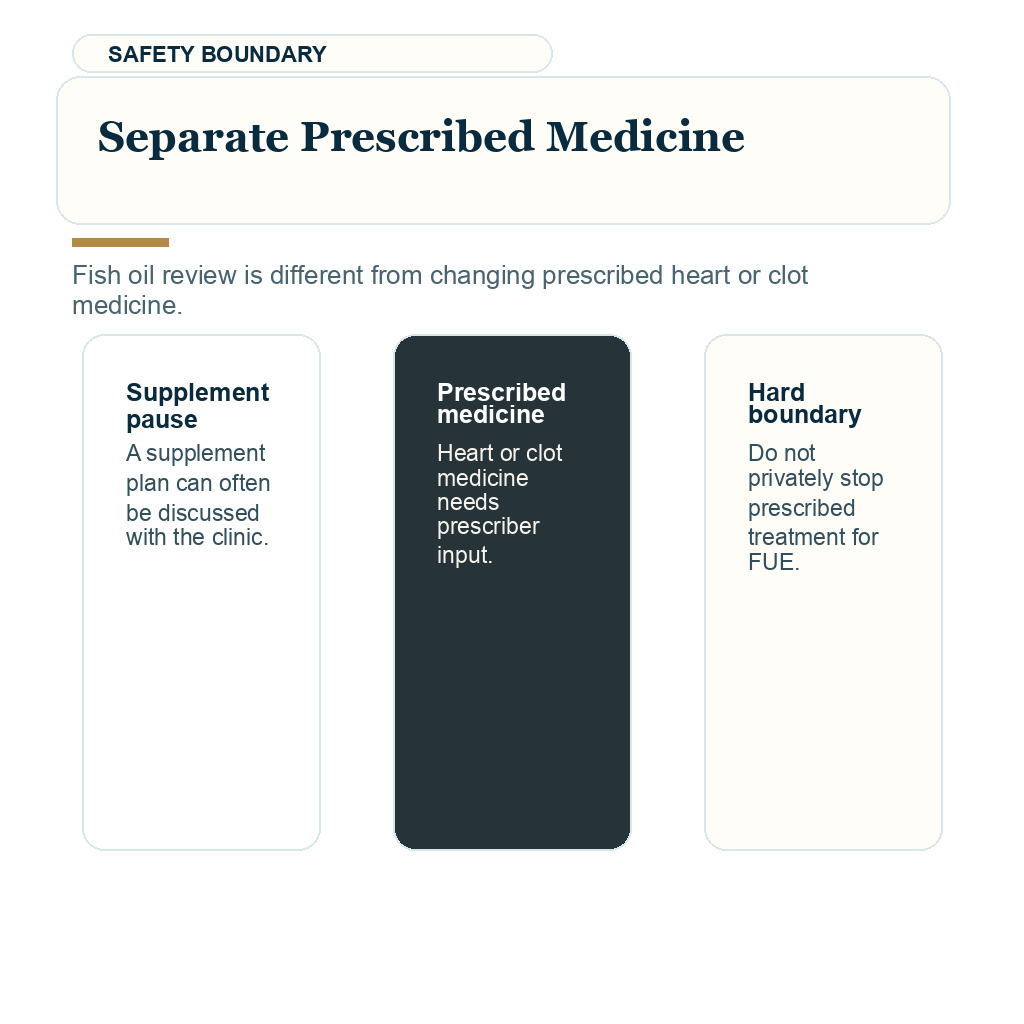
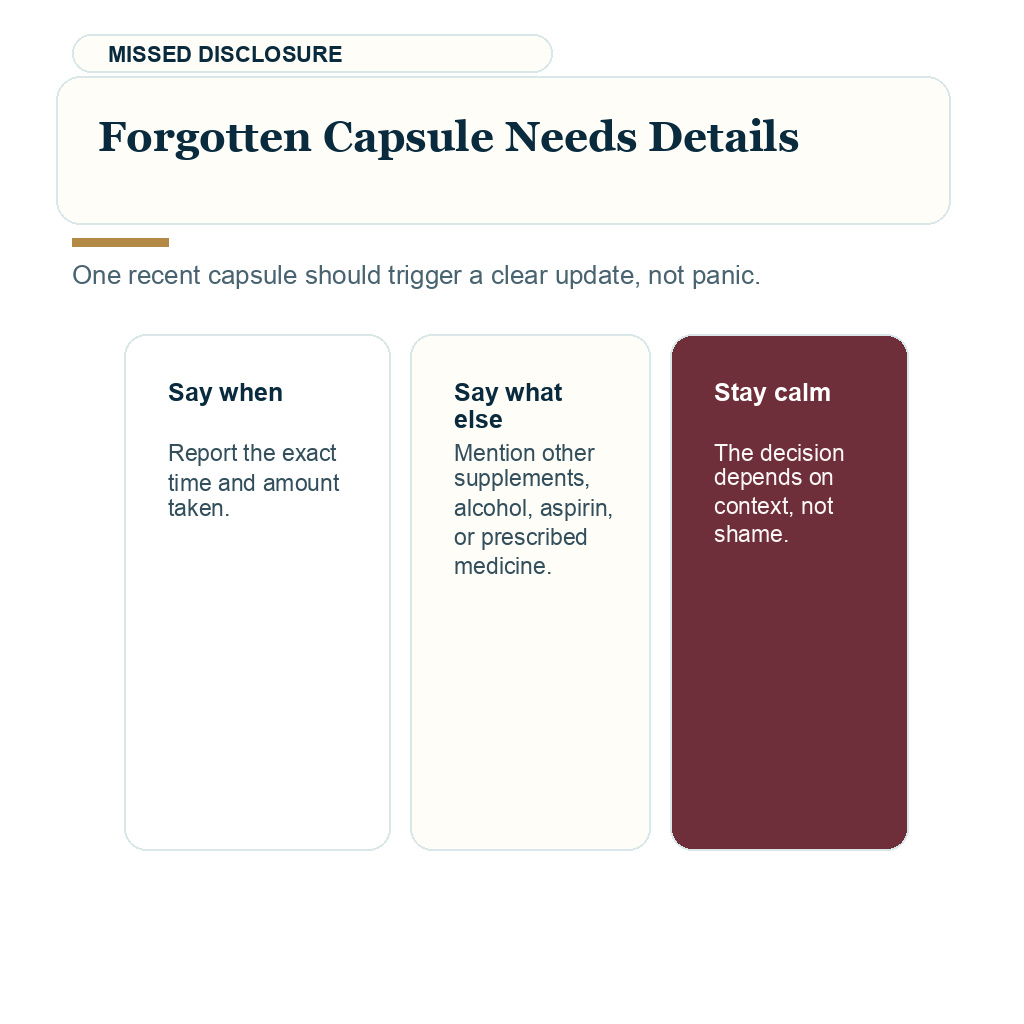
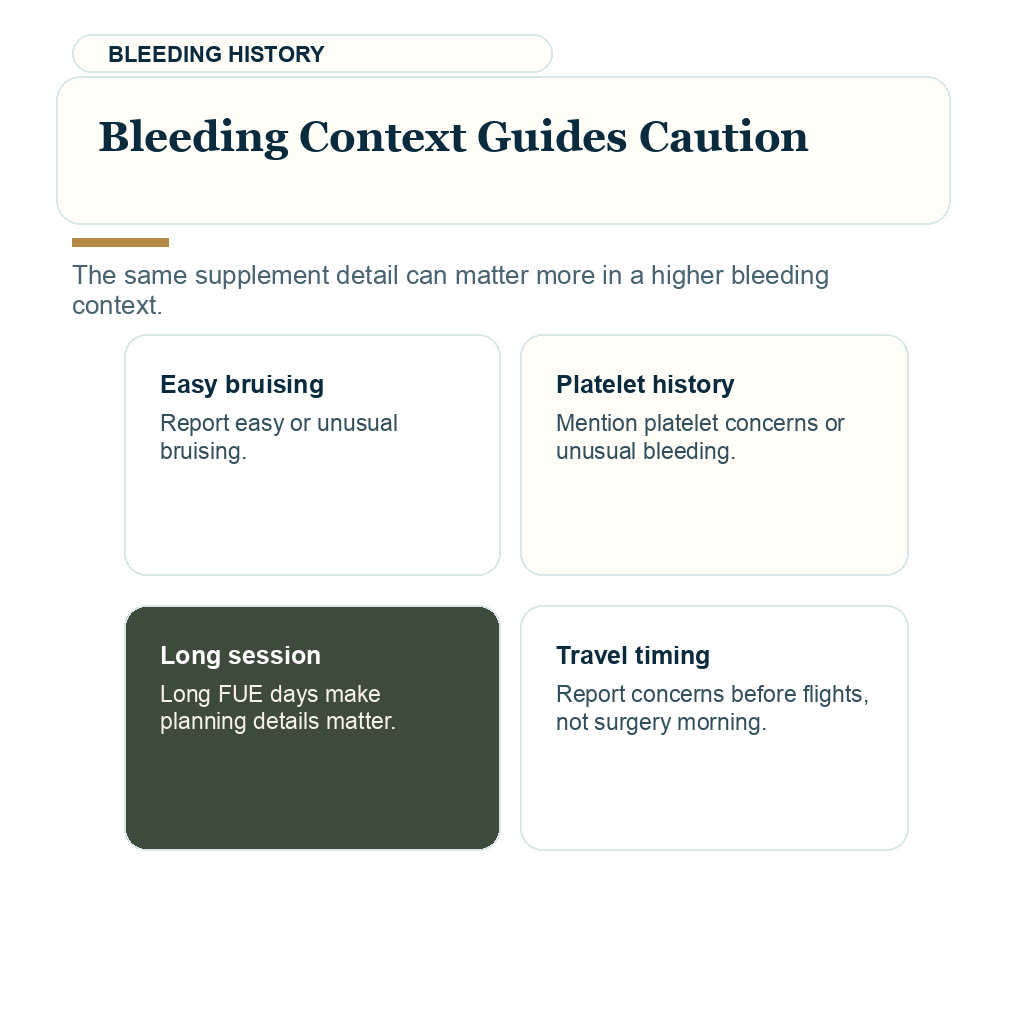
Use the sequence as a preparation check, not as permission to stop prescribed medicine or restart fish oil by yourself.
Fish oil timing gate
Which fish oil detail changes surgery instructions?
Fish oil questions depend on dose, timing, other products that can affect bleeding, and the clinic’s pre-op protocol. The supplement name alone is not enough.
Currently taking it
If fish oil is still being used before surgery, I need more than the supplement name. Dose, timing, formulation, and the operation date decide the instruction.
Send the exact product details early. If surgery is close and no one has reviewed the supplement list, do not guess.
Multiple products
Fish oil matters more when it sits beside vitamin E, aspirin, herbal products, or anything else that may affect bleeding.
Send the full medicine and supplement list together. Stopping or continuing several products by guesswork near surgery is the unsafe part.
Surgery is close
If the operation date is near and the patient is unsure, the answer has to come from the clinic protocol and the medical history.
Written instructions should come before the surgery day. Internet advice should not replace the surgical team’s decision.
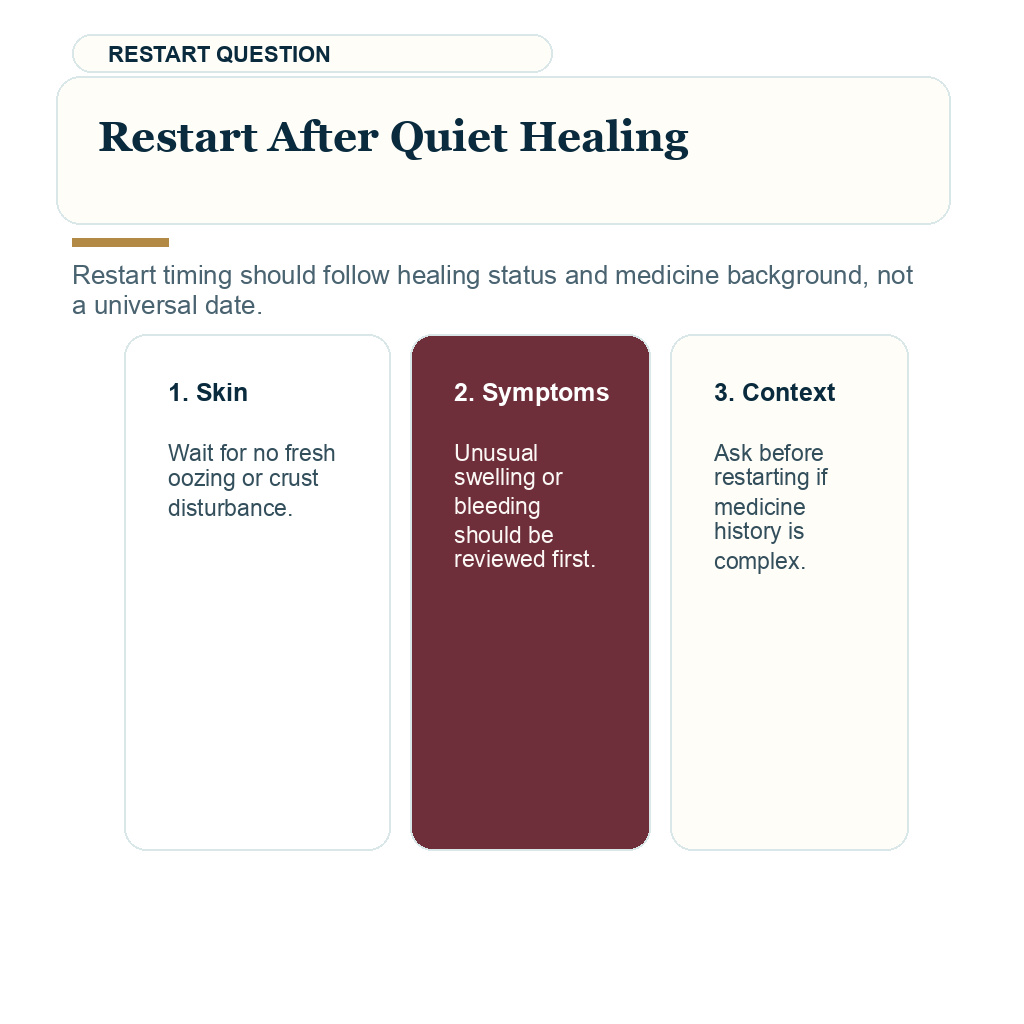
Restart question
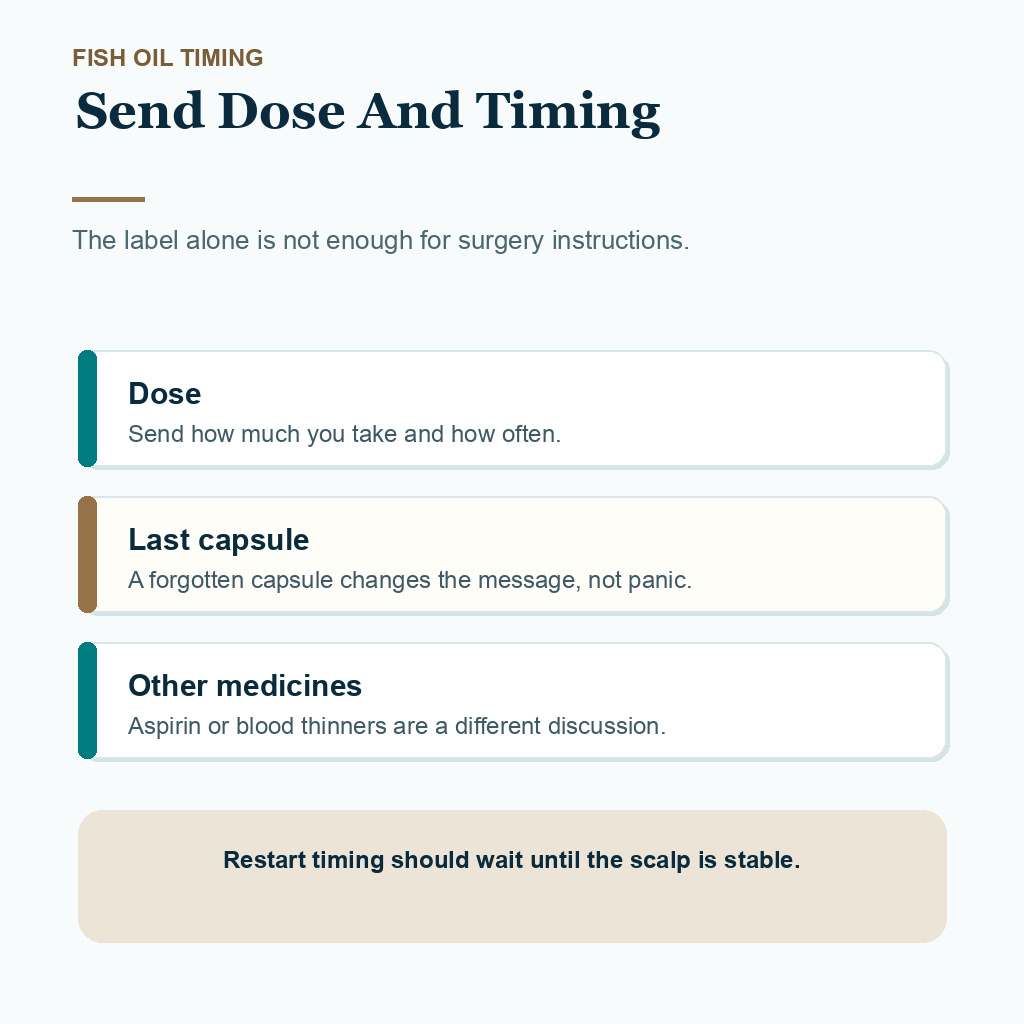
Restarting fish oil after surgery needs to wait until early healing is uncomplicated and the clinic clears it.
Ask when it fits your recovery. Fresh bleeding, worsening swelling, or delayed healing changes the timing.
Restart timing should wait until the scalp is stable
Restarting fish oil after FUE should not be treated as a race. Calendar days matter less than whether the donor and recipient areas are quiet. Many patients can return to normal supplements after the early bleeding and crusting risk has passed, but the exact timing should fit the operation and the aftercare instructions. A small recipient session, settled healing, and no unusual oozing is different from a long surgery with swelling, crust disturbance, or medication complexity.
I look more carefully before restart if the patient had easy bleeding during surgery, prolonged oozing afterward, other products that may affect bruising, or fish oil used for a medical reason that should be coordinated. In a clean case, restart timing is usually straightforward. By stable, I mean no active oozing, no unusual bruising or swelling, no crust disturbance, and no medication question still waiting for review. If the omega 3 was prescribed for triglycerides or another medical reason, restart or delay it through the prescriber and clinic plan, not a private guess. In a complicated case, restart timing is a healing decision, not a calendar habit.
If you are also asking about biotin, multivitamins, vitamin D, or other recovery products, keep that question separate from fish oil. Hair transplant vitamins are mainly about deficiency, routine diet, and avoiding unnecessary recovery stacks. The key is not to build recovery by adding everything that sounds healthy. The key is to protect grafts, keep the scalp clean, follow washing instructions, and avoid products that create uncertainty while the wounds are still settling.
Bleeding after surgery needs context, not panic
Some spotting after FUE can happen. That is different from bleeding that keeps soaking, repeats despite instructions, or appears together with dizziness, severe pain, expanding swelling, or a wound concern. A patient who restarted fish oil early and then notices unusual oozing should not try to solve it with unverified advice. They should contact the clinic with photos, timing, and the exact products taken.
With bleeding after a hair transplant, I use the same distinction. One small red spot is different from repeated soaking, dizziness, worsening pain, or swelling that does not fit the plan.
For most patients, the safer behavior is to keep the supplement list complete, follow the timing instruction, and ask before restarting if healing has not fully settled. That prevents both extremes. You do not ignore a relevant product, and you do not turn one capsule into a crisis.
The message to send before surgery
Before you travel for surgery, send one clear message rather than several partial updates. Include fish oil or omega 3, all other supplements, prescribed medicines, blood pressure medicine, cholesterol medicine, painkillers, and any history of easy bruising or bleeding. If you have clinic paperwork, follow it. If your list changed after the paperwork, update the clinic before the operation day.
A useful message might say, “I take fish oil, 1,000 mg once daily, for general health. My last capsule was Monday morning. I do not take aspirin or blood thinners. I also take vitamin D and finasteride.” A higher risk message might say, “I take prescription omega 3 because my doctor recommended it for triglycerides. My last dose was Monday night. I also take aspirin after a stent, and my cardiologist manages that plan.” These are very different surgical conversations.
If you are preparing from abroad, treat this list as part of your instructions before hair transplant. Travel, sleep, alcohol, nicotine, medicines, supplements, and arrival timing all work together. A clean plan before you fly is better than a rushed correction after you arrive. Send one clear message before travel.
Fish oil belongs in the medication story
Fish oil is not something to hide and not something to stop privately when it was prescribed for a medical reason. The useful details are the product, dose, reason, last use, other supplements, blood thinners, bleeding history, and who advised it.
When that record is clear, the clinic can separate a simple supplement pause from a medical issue that needs the prescribing doctor involved. The point is controlled surgery and clean healing, not proving fish oil harmless or dangerous for every patient.

Read this review excerpt
Every single one of my questions was answered and they made sure I had all the details I needed to make an informed decision.