



Supplements Before FUE Surgery
Send the clinic a complete list of every supplement before surgery. That includes vitamins, fish oil or omega 3, vitamin E, turmeric, garlic, ginkgo, ginseng, sleep products, bodybuilding products, weight loss products, hair formulas, and pharmacy tablets. Do not decide privately which ones matter and do not stop prescribed medicine on your own. I need the product name, dose, reason, and last use so bleeding, blood pressure, anesthesia monitoring, medication interaction, lab interpretation, and healing questions can be reviewed before the operation.
If saw palmetto is part of that list, I review saw palmetto before FUE as both a supplement disclosure issue and a native hair planning issue.
Many nonessential products can be paused when the formula adds avoidable uncertainty. A deficiency treatment, a product related to a prescription, or a supplement advised by another doctor needs coordination instead of guessing. The first useful step is full disclosure. A hidden supplement list creates more risk than a complete list that includes products you are embarrassed to mention.
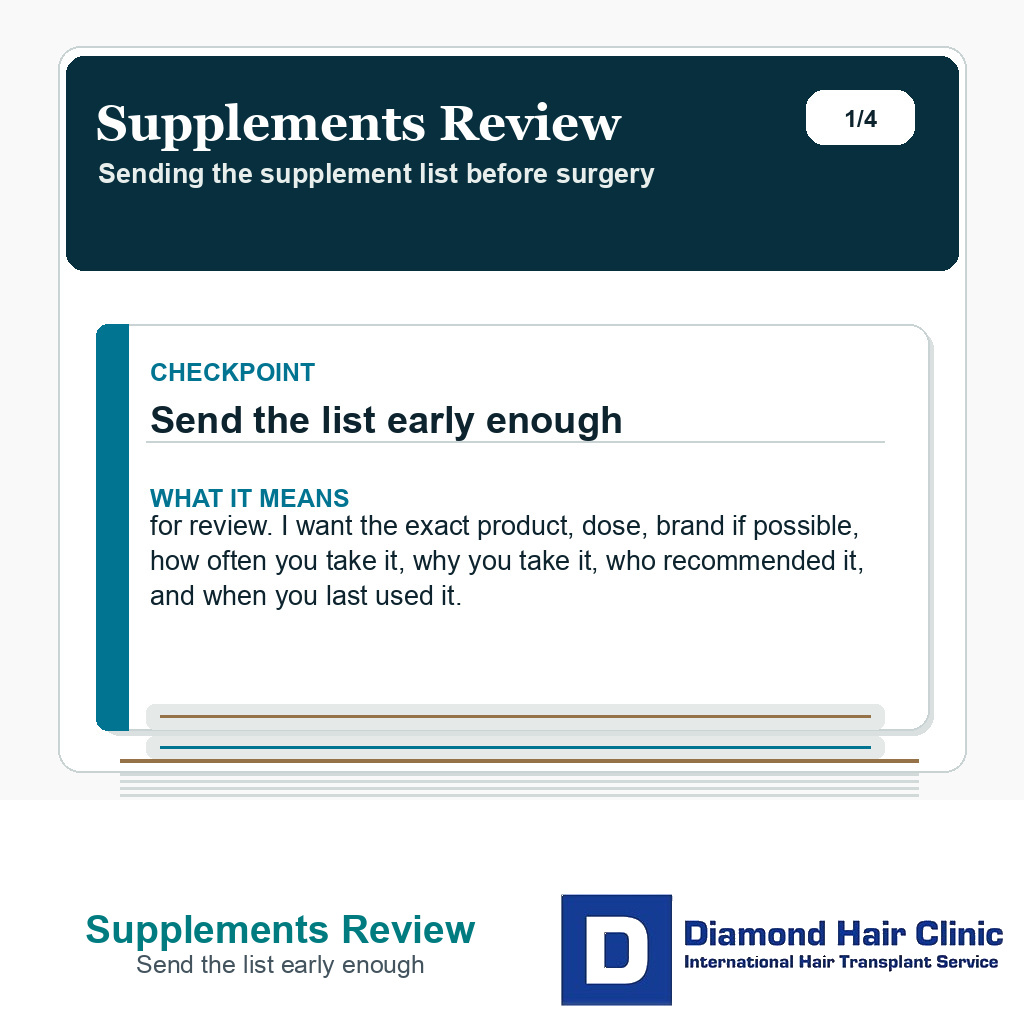
Sending the supplement list before surgery
Do not handle supplements as a private stop or continue decision. Send the list early enough for review. I want the exact product, dose, brand if possible, how often you take it, why you take it, who recommended it, and when you last used it.
The supplement drawer belongs in the medical history. Hair gummies, gym powders, sleep aids, teas, and imported blends all belong on the same list, even when the label sounds harmless.
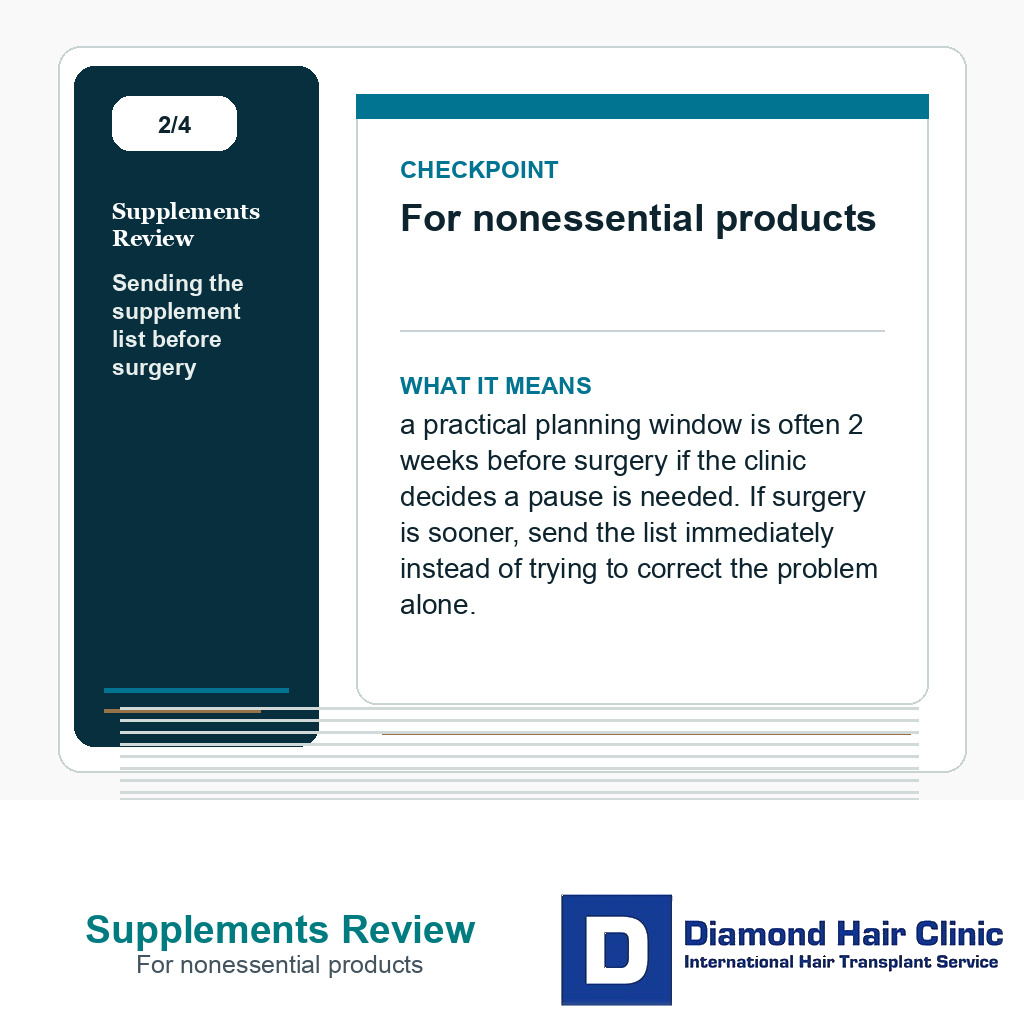
For nonessential products, a practical planning window is often 2 weeks before surgery if the clinic decides a pause is needed. If surgery is sooner, send the list immediately instead of trying to correct the problem alone. If you already took something after the planned pause, say exactly what it was, how much you took, and when you took it.
Late disclosure is still useful when it includes the product name, last dose, amount, and reason for use instead of a private decision to stop everything at once.
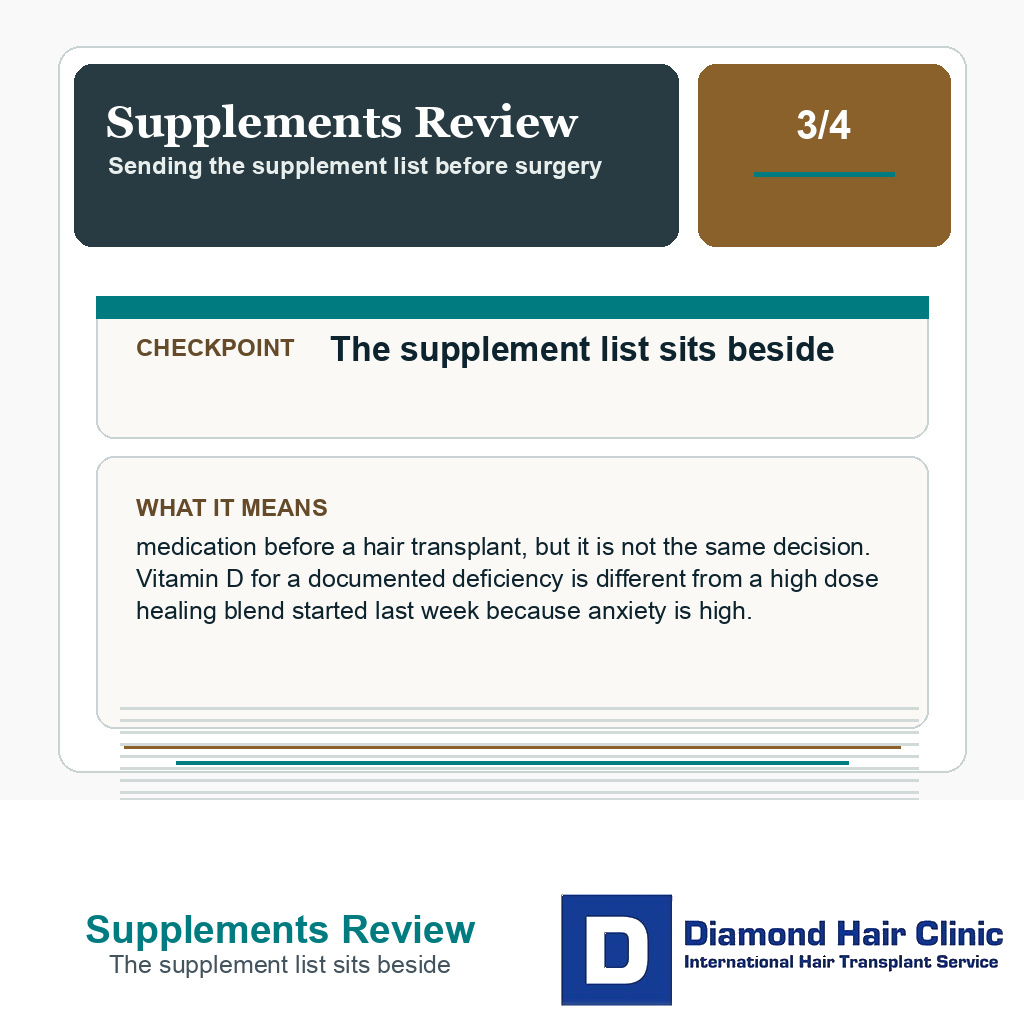
The supplement list sits beside medication before a hair transplant, but it is not the same decision. Vitamin D for a documented deficiency is different from a high dose healing blend started last week because anxiety is high. One fish oil capsule weeks earlier is different from several daily capsules combined with vitamin E, turmeric, alcohol, aspirin, or ibuprofen.
If you already take prescription anticoagulants or antiplatelet medicine, that decision must stay separate from the supplement discussion described in hair transplant and blood thinners. A prescribed blood thinner may protect against a clot, stroke, stent problem, or heart risk. A supplement pause is usually a different kind of decision.
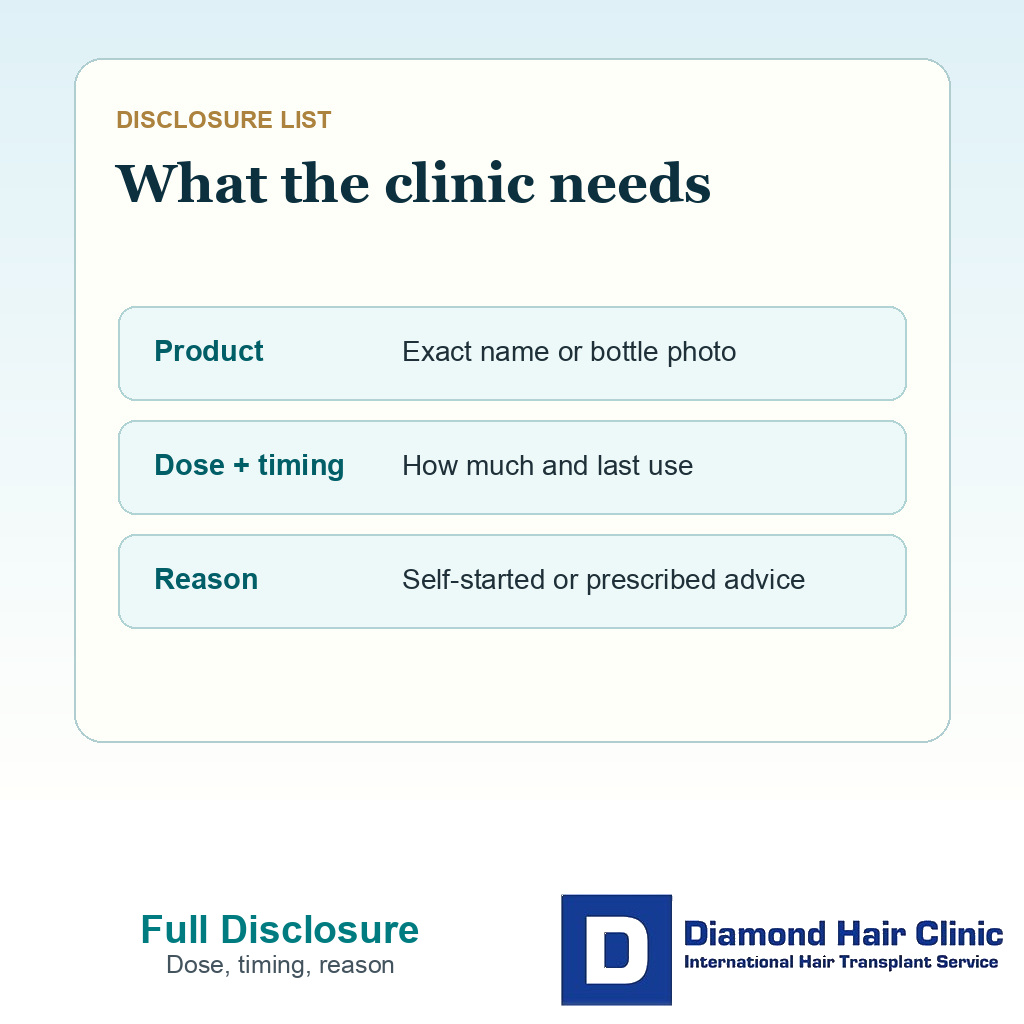
The useful list includes the product name, dose, reason, timing, and who advised it.
Supplements matter because they can affect bleeding, anesthesia, and lab review, and these 4 slides keep timing practical. Swipe sideways, use the arrows, or choose a number below the image.

Products bought without a prescription still matter
A hair transplant is not only about placing grafts. During surgery, I also think about bleeding control, local anesthesia, blood pressure, comfort, swelling, wound healing, and whether a hidden medical issue needs attention. A product bought without a prescription can still affect one of those areas.
Some products may affect platelet function, clotting, or bleeding tendency. Stimulant formulas can raise heart rate or blood pressure. Herbal products can interact with medicines. High dose vitamins can make lab interpretation or healing assumptions less clear. A natural label does not make a product irrelevant. Fat burners, appetite products, laxatives, and meal replacement stacks can also confuse dieting during hair transplant recovery. A plain whey or plant shake is a different discussion, so I review the label instead of treating every protein product like a stimulant formula.
This is also why I connect the supplement list with hair transplant anesthesia and adrenaline. Local anesthesia is controlled, but I still need to know what may affect monitoring, blood pressure, sleep, anxiety, and comfort on the day of surgery.
Products that raise bleeding questions
The most common bleeding questions involve fish oil or omega 3, vitamin E, garlic capsules, ginkgo, ginseng, turmeric or curcumin, high dose herbal blends, and mixed circulation products. The point is not that every person who uses one of these will bleed heavily. The point is that dose, timing, and combinations need to be known before surgery starts.
Bleeding risk is not judged from a supplement name alone. I look at whether you also use aspirin, ibuprofen, anticoagulants, alcohol, liver medicines, or several supplements together. I also ask whether you bruise easily, have a previous bleeding history, or had unusual bleeding after dental work or another procedure.
The same dose and timing logic applies to aspirin before hair transplant surgery and ibuprofen before a hair transplant. Do not hide occasional tablets because they seem minor. Several small details can become one larger surgery day problem.
Fish oil, omega 3, and vitamin E need extra review
Fish oil and omega 3 create confusion because advice is not always consistent. I do not want someone to panic because they took one capsule weeks before surgery. I also do not want someone taking high dose omega 3, vitamin E, turmeric, and other products together without telling the clinic. For a focused dose and restart discussion, read fish oil before hair transplant surgery.
One ordinary capsule taken well before surgery is not the same as daily high dose use near surgery, especially when it is combined with other products that may affect bleeding or blood pressure. Dose, timing, and reason decide how I treat it. Once I know those details, I can decide whether to continue, pause, or simply record the product.
Vitamin E also needs context. A normal amount inside a multivitamin is different from high dose vitamin E taken separately. If you are unsure, send a photo of the front label and the supplement facts panel. The label is often more useful than the sentence, “I take vitamins.”
Ordinary vitamins are not always a problem
A standard multivitamin, vitamin D for a documented deficiency, or B12 for a real need may be reasonable in the right person. The problem starts when vitamins are used to replace proper planning, or when high dose products are added close to surgery without review. If vitamin D is low, low vitamin D before hair transplant needs lab context rather than a rushed high dose guess.
After surgery, nutrition and deficiency support are discussed differently in hair transplant vitamins. Before surgery, the question is not which vitamin grows hair fastest. The question is whether anything you take could affect bleeding, anesthesia review, lab interpretation, medication decisions, or the early healing plan.
Biotin before FUE is a good example. It may be part of a hair supplement, but starting it right before surgery does not replace diagnosis, donor planning, or realistic expectations. High dose biotin can also interfere with some lab tests, so hair, nail, and skin formulas should be listed before blood work is interpreted.
Herbal blends need label review
Herbal products are easy to forget because they feel less medical than tablets. Turmeric or curcumin, garlic capsules, ginkgo, ginseng, saw palmetto, sleep blends, immune blends, detox products, and mixed herbal powders still need to be disclosed. One capsule can contain several active ingredients. A question about kratom before or after FUE belongs in the same disclosure habit, especially when timing, mixing, or withdrawal symptoms are part of the history.
I pay attention to these products for three reasons. Some are discussed in relation to bleeding. Some can interact with medicines or affect blood pressure, sedation, alertness, or sleep. Some vary widely between brands, especially when the product is bought online or sold as a proprietary blend.
Do not translate an herbal label into a medical decision by yourself. Send the name and label. If the product is nonessential, I may ask for a pause before surgery. If it was prescribed or strongly recommended for another medical reason, the decision needs coordination.

A product being natural does not make it neutral. It may still change bleeding, monitoring, or healing. That same disclosure logic applies after surgery when patients ask about bromelain or arnica for swelling.
Protein powder, creatine, and pre workout are different
Protein powder and creatine before FUE planning are usually discussed differently from fish oil or herbal products, but they still belong on the list. A clean simple product is different from a larger sports stack with caffeine, nitric oxide boosters, stimulants, fat burners, yohimbine, vasodilators, or herbal extracts.
Pre workout products matter because they may affect heart rate, sleep, blood pressure, anxiety, and how comfortable you feel during a long procedure. If you already worry about high blood pressure and hair transplant surgery, stimulant formulas are not a small detail.
The return to training supplements after surgery is covered separately in pre workout after a hair transplant. Before surgery, the formula may need to pause or be reviewed, especially when caffeine, stimulants, fat burners, or unclear proprietary blends are involved.
Caffeine from drinks also belongs in the planning conversation. The morning question around coffee on the morning of hair transplant surgery is not identical to a pre workout powder, but both need to be included in the conversation about stimulation, blood pressure, and comfort.
Iron, biotin, and healing vitamins need a real reason
Do not start iron, high dose zinc, biotin, or a healing stack right before surgery because fear is high. Iron can be useful when deficiency is present, but it can also cause stomach symptoms and should not be taken without a reason. Zinc can be useful in deficiency, but excess is not a planning strategy. Biotin can make someone feel that biology has been handled when the real issue may be diagnosis, donor quality, miniaturization, or long term hair loss control.
Do not turn supplement anxiety into a new supplement stack. If there is concern about anemia, clotting, liver markers, infection risk, or general surgical readiness, the better route is medical history plus appropriate testing. That is the purpose of blood tests before a hair transplant and preoperative review.
A supplement can support a real deficiency. It cannot repair poor hairline design, overharvesting, unrealistic density promises, or weak donor planning. A stronger surgical plan is more useful than products that make someone feel busy but do not solve the main decision.
Supplement details to send before travel
Send the list at least several days before surgery, earlier if you take many products. Include prescriptions, pharmacy medicines, vitamins, minerals, herbal capsules, powders, injections, hormones, sleep products, gym supplements, hair products taken by mouth, and anything used for weight loss, energy, mood, libido, or circulation.
For each item, write the product name, dose, frequency, reason, who advised it, and last planned dose before travel. A photo of the front label and supplement facts panel is useful, especially when the label says proprietary blend or performance formula. If the product is in another language, send the original label instead of guessing the ingredients. Keep the label photo available during travel in case the surgical team needs to check it on the day. A clear label photo prevents guesses with mixed powders or capsule stacks, especially when the product name stayed the same but the formula changed.
Do not let an online supplement list replace the label in your hand. Two products with the same front name can have different doses, herbs, stimulants, oils, or proprietary blends. Send the actual label and your reason for taking it, because the decision is made from the full formula, not the category name.
Alcohol and social routines should be disclosed too. The preoperative decision in alcohol before hair transplant surgery is separate from supplements, but both affect how clearly the clinic can judge bleeding, swelling, dehydration, sleep, and safe preparation.
Products that should not be stopped alone
Do not stop prescribed medicine, medically directed supplements, anticoagulants, antiplatelets, hormone therapy, diabetes medicine, blood pressure medicine, seizure medicine, psychiatric medicine, or treatment for a diagnosed deficiency without medical advice. A hair transplant is elective, but you are still a whole medical person.
Medicine changes need medical coordination. If a cardiologist, endocrinologist, hematologist, family physician, or another specialist advised a product, tell the transplant clinic and the prescribing doctor. The correct plan may be to continue, pause, adjust timing, or postpone surgery until the risk is clarified. If you cannot reach the prescribing doctor before travel, say that clearly instead of inventing a stop date yourself.
Recent antibiotic use needs clinical review, especially when someone is taking antibiotics for another infection. The decision belongs in the clinical review described in antibiotics before a hair transplant, not in a private guess the night before surgery.
Restarting supplements after surgery
Restart timing depends on what the product is, why you use it, how surgery went, and what the clinic saw during the procedure. A simple multivitamin may be handled differently from fish oil, turmeric, a stimulant formula, or a product that belongs to another doctor’s treatment plan.
Do not restart every paused product on the same day out of habit. If there is bleeding, swelling, stomach upset, medication use, or concern about healing, the restart plan may need more caution. Restarting one product at a time is easier to interpret than restarting a full stack at once. If there is no medical reason for a product, you may not need to restart it at all.
Restart slowly and with a reason. A clean medication and supplement timeline helps the clinic understand recovery if a symptom appears. When several products return at once, it becomes harder to know what changed.
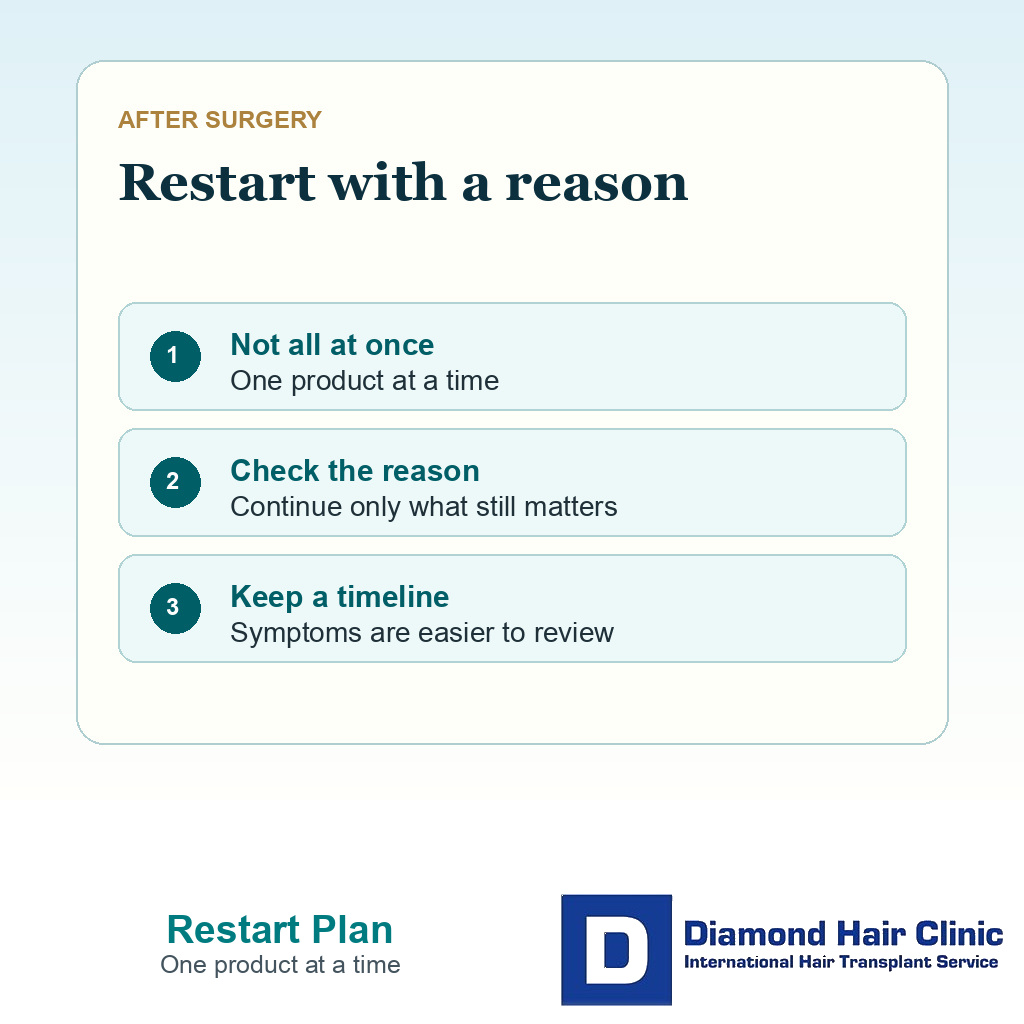
Restart paused supplements slowly and with a reason, especially if bleeding, swelling, stomach upset, or medication use is present.
Every capsule belongs on the list
My aim is not to make people fear every capsule. It is to stop hidden products from creating avoidable confusion on surgery day. I want a complete list. Then I separate prescribed medical treatment, documented deficiency support, ordinary low dose vitamins, nonessential supplements, herbal products, and stimulant or gym formulas.
From there, the decision becomes clearer. Some products can continue. Some can pause. Some require the prescribing doctor’s input. Some reveal a medical question that should be checked before surgery. The purpose is to enter surgery with fewer surprises, not to create a long forbidden list.
If you are preparing for FUE, send the list early, not the night before travel. Include products you take only occasionally. Include products that feel embarrassing, cosmetic, natural, or unrelated. A surgeon led plan depends on the details you provide before surgery, not on assumptions made after bleeding, blood pressure, or healing becomes harder to interpret.

Read this review excerpt
Every single one of my questions was answered and they made sure I had all the details I needed to make an informed decision.