



Weight Loss, Crash Diets, and FUE Recovery
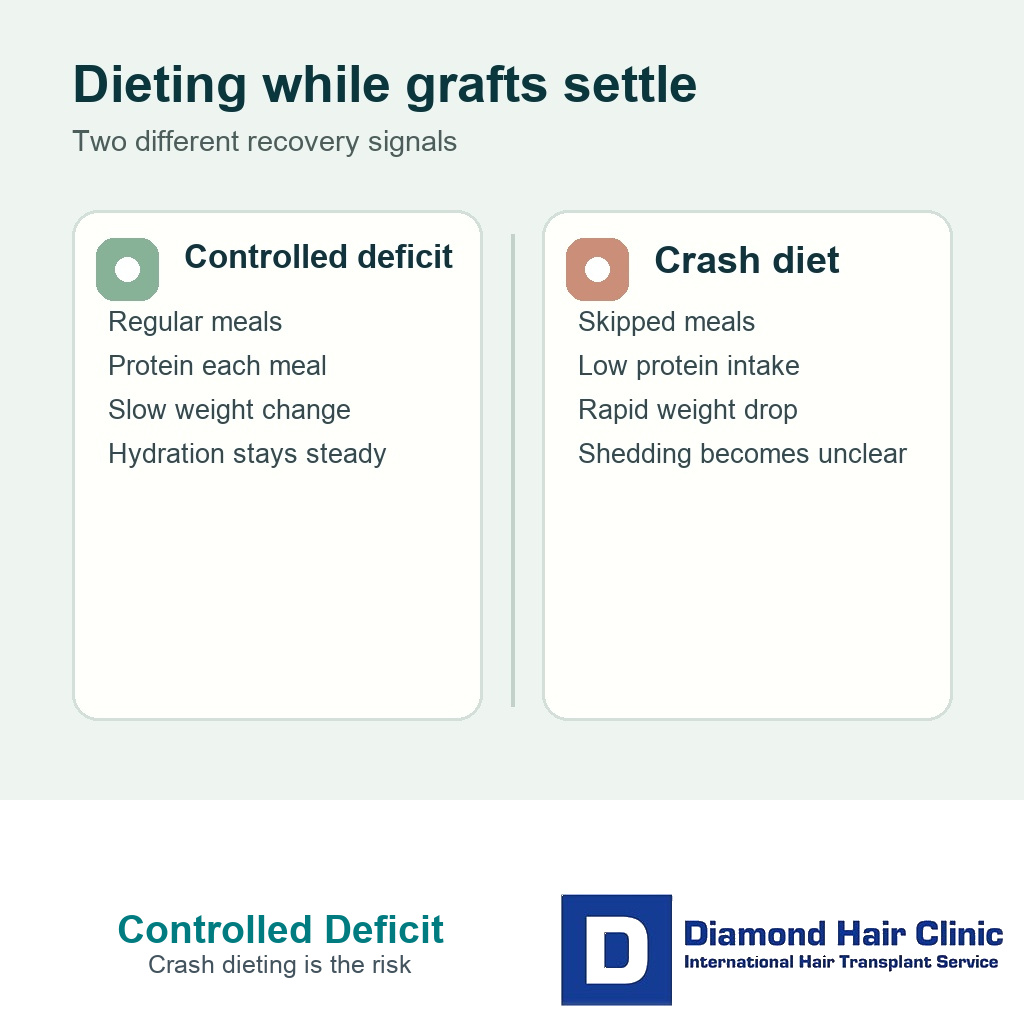
A slow, ordinary weight loss plan is not the same thing as a crash diet while the scalp is healing. You can sometimes keep a mild calorie deficit after early recovery is stable, but not by skipping meals, dehydrating yourself, eating too little while training hard, or pushing rapid weight loss in the first days after surgery.
In the early healing period, regular meals, protein, water, sleep, and clean scalp care matter more than proving discipline with a strict cut. If the plan is steady and you feel well, it may be reasonable later. If the plan creates dizziness, nausea, poor intake, heavy shedding, or hidden appetite suppressant use, weight loss should wait.
If poor appetite appears after surgery, do not turn it into a stricter cut. Treat it as a recovery signal and use smaller steady meals until eating feels normal again.
The important distinction is graft healing versus native hair shedding. Transplanted grafts need clean healing, blood supply, and time. Native hair can shed from stress, illness, surgery, low calories, low protein, iron deficiency, thyroid disturbance, or rapid weight change. If shedding starts while you are dieting, the transplant may not be the only explanation.
Crash dieting is the risk, not a sensible meal plan. The aim is not to overeat out of fear. The aim is to avoid turning recovery into a period of nutritional stress.
Timing weight loss during recovery
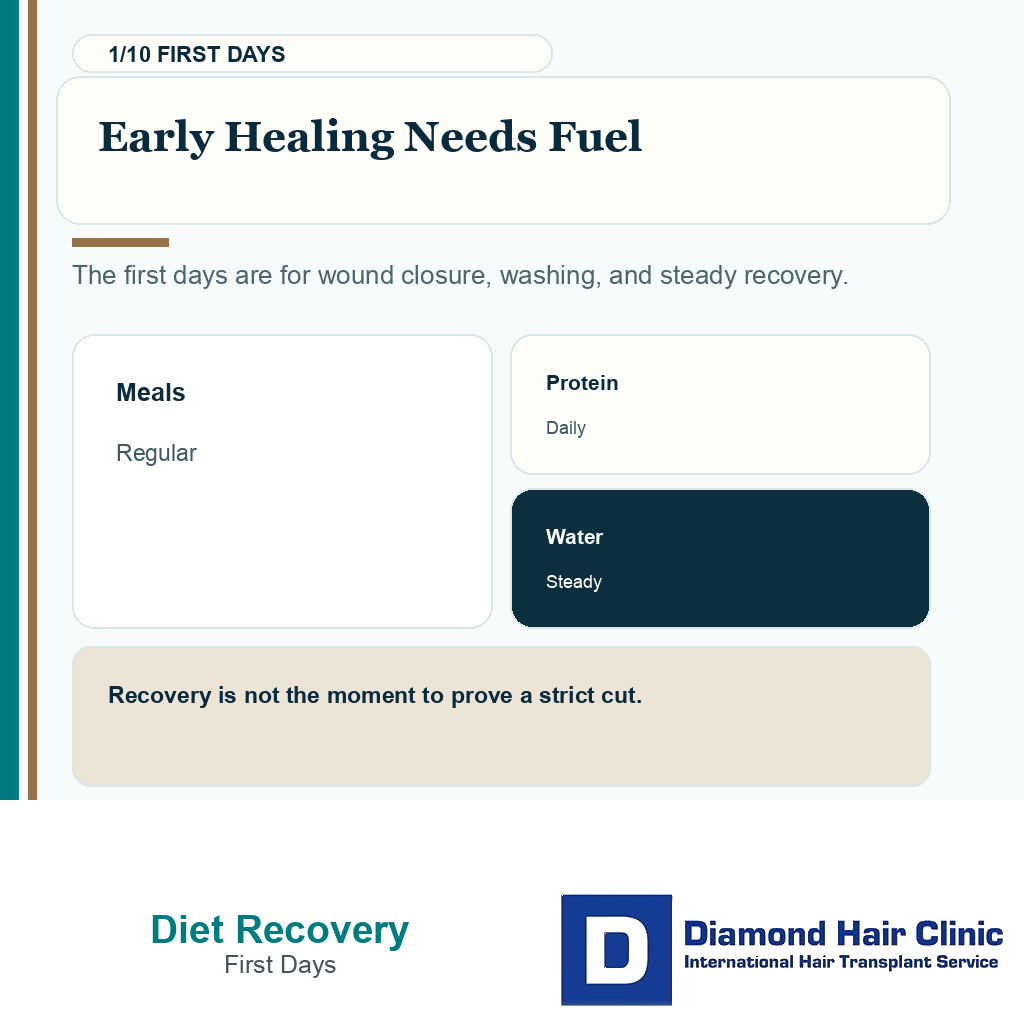
Weight loss can be possible during recovery, but timing and severity matter. The first days after surgery are not the time to test discipline with a strict cut. The scalp is closing, swelling is settling, washing has to be done correctly, and the body is dealing with a surgical wound. During those first days, water, sleep, protein, and steady meals are more useful than trying to prove discipline with aggressive weight goals. If appetite is low, choose smaller meals or snacks with protein instead of fasting until the end of the day.
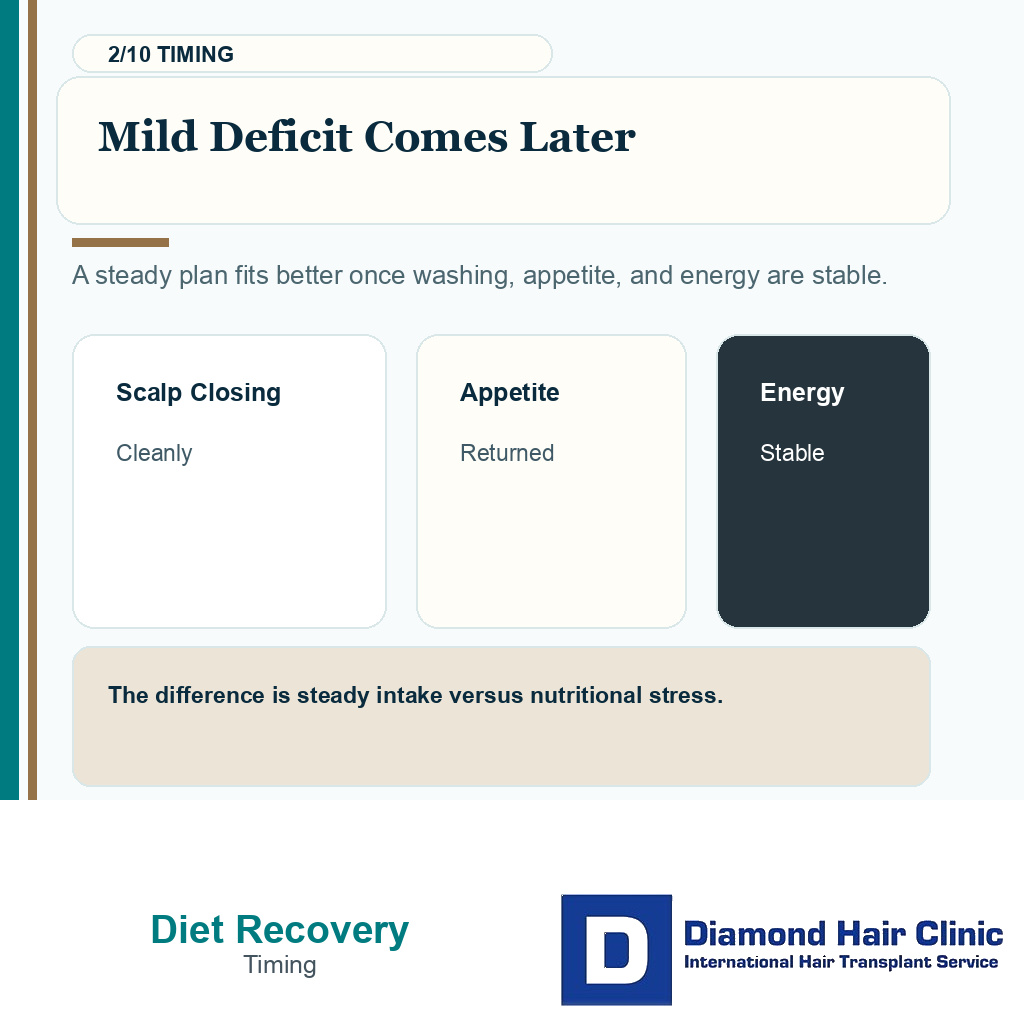
Once the scalp is closing cleanly, washing is going well, and steady eating has returned, a modest deficit can be discussed if there is no dizziness, vomiting, infection signs, bleeding, poor wound healing, or heavy shedding. The plan should be steady, not dramatic. Use regular meals, enough protein, fruits and vegetables, useful carbohydrates, healthy fats, and no hard restriction. If your weight is dropping fast without effort, that is a medical clue rather than a dieting success. Do not tighten calories just because swelling, travel, bowel changes, or water balance makes the scale confusing for a few days.
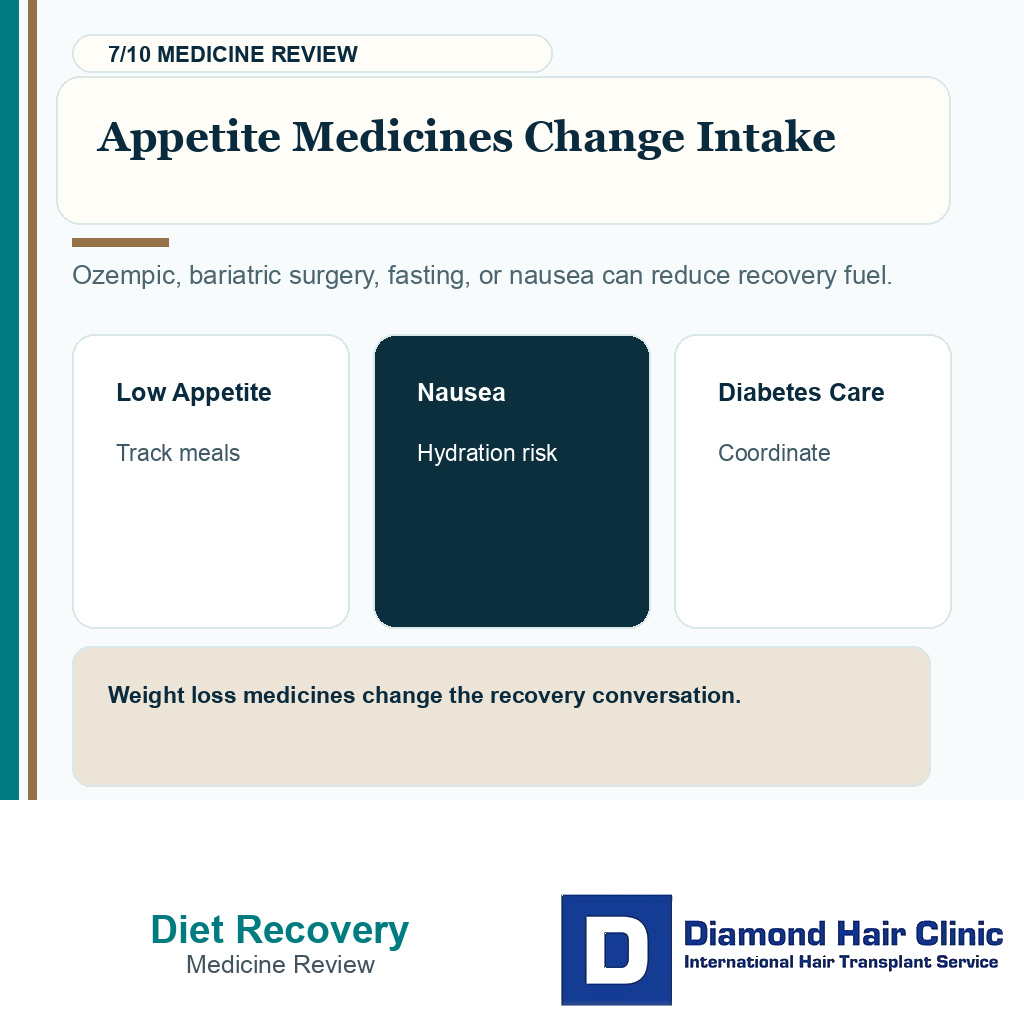
Someone who is still losing weight quickly after weight loss surgery needs a different timing review from someone trying to lose a few kilograms after returning home. Medication changes around Ozempic or similar weight loss medicine also deserve a coordinated medical plan, especially if nausea, low intake, diabetes, or dehydration is part of the history.
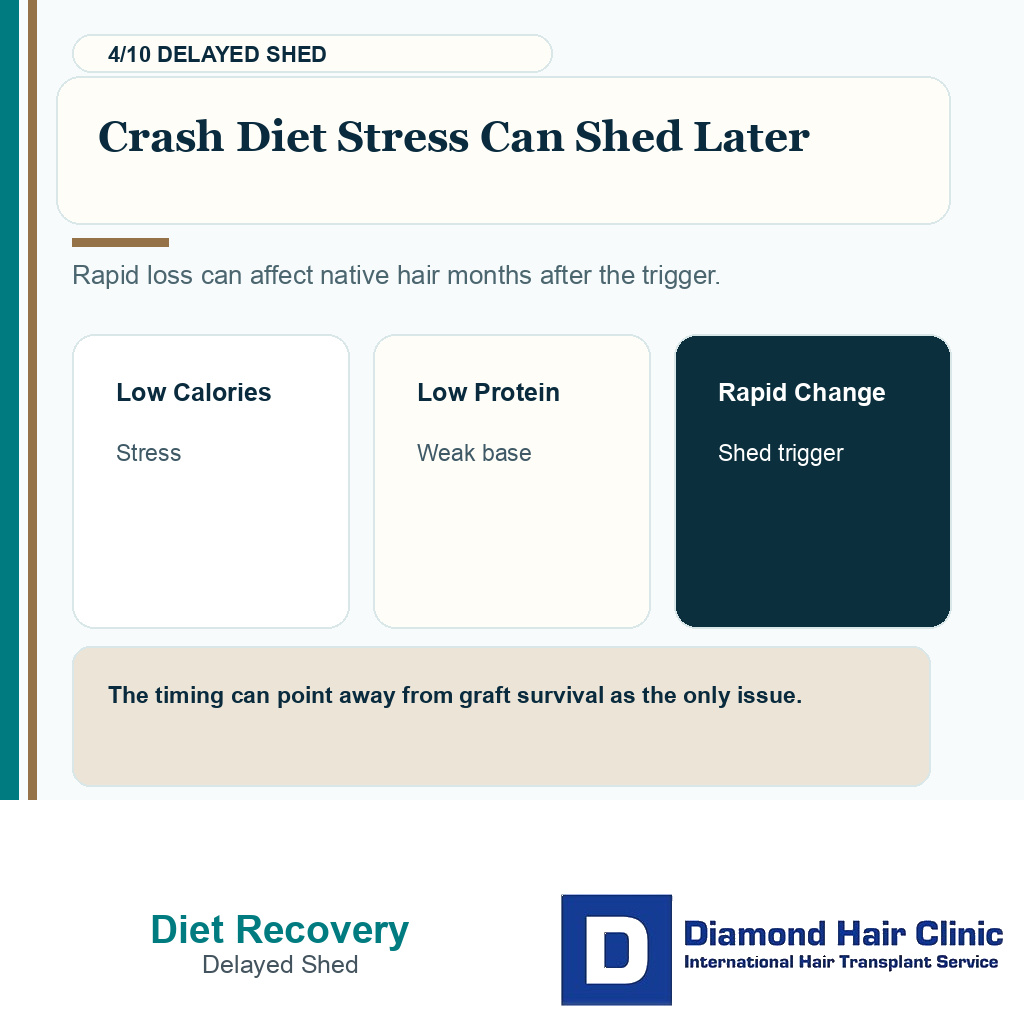
Crash dieting can cause shedding months later
Hair does not always shed at the same moment the trigger happens. A stressful illness, surgery, fever, emotional shock, medication change, restrictive diet, or rapid weight loss can push more hairs into the resting phase. The visible shedding may arrive weeks or months later, after you have already forgotten the trigger or started blaming the transplant.
That delay is clinically important. If heavy shedding begins two to four months after an intense diet, a rapid drop in weight, or a period of very low protein intake, the story may fit telogen shedding. That does not mean every hair problem is harmless. It means the diagnosis should separate temporary shedding from genetic progression, donor weakness, inflammation, or a true surgical problem. The diet timeline, weight change timeline, illness timeline, and surgery timeline all need to sit on the same page before the transplant is blamed.
Diet related shedding can imitate transplant anxiety. You may look at the mirror, see more hairs in the shower, and assume the new grafts are failing. The better clinical question is whether the transplanted zone, native surrounding hair, donor area, and general scalp are all shedding in the same pattern.
Mild calorie deficit and graft safety
A short, mild calorie deficit is not the same as starving the body. Once grafts are placed correctly and the early healing steps are protected, their growth is mostly a biological timeline. Diet cannot make them grow faster than that timeline, and a protein shake cannot rescue poor surgical planning. Nutrition supports the environment around healing. It is not a magic switch for growth.
The concern is restriction severe enough to stress recovery. Very low calories, dehydration, vomiting, poor sleep, heavy training, low protein, low iron, and supplement misuse can all make healing harder. They can also affect native hair and make the whole result harder to interpret. The transplant may be doing its slow biological work while the surrounding hair is reacting to nutritional stress. A diet that makes the result impossible to interpret is not a good recovery diet.
Mild dieting should still let you wash, sleep, and take medicine normally. Once a deficit disrupts those basics, it is no longer a simple recovery diet.
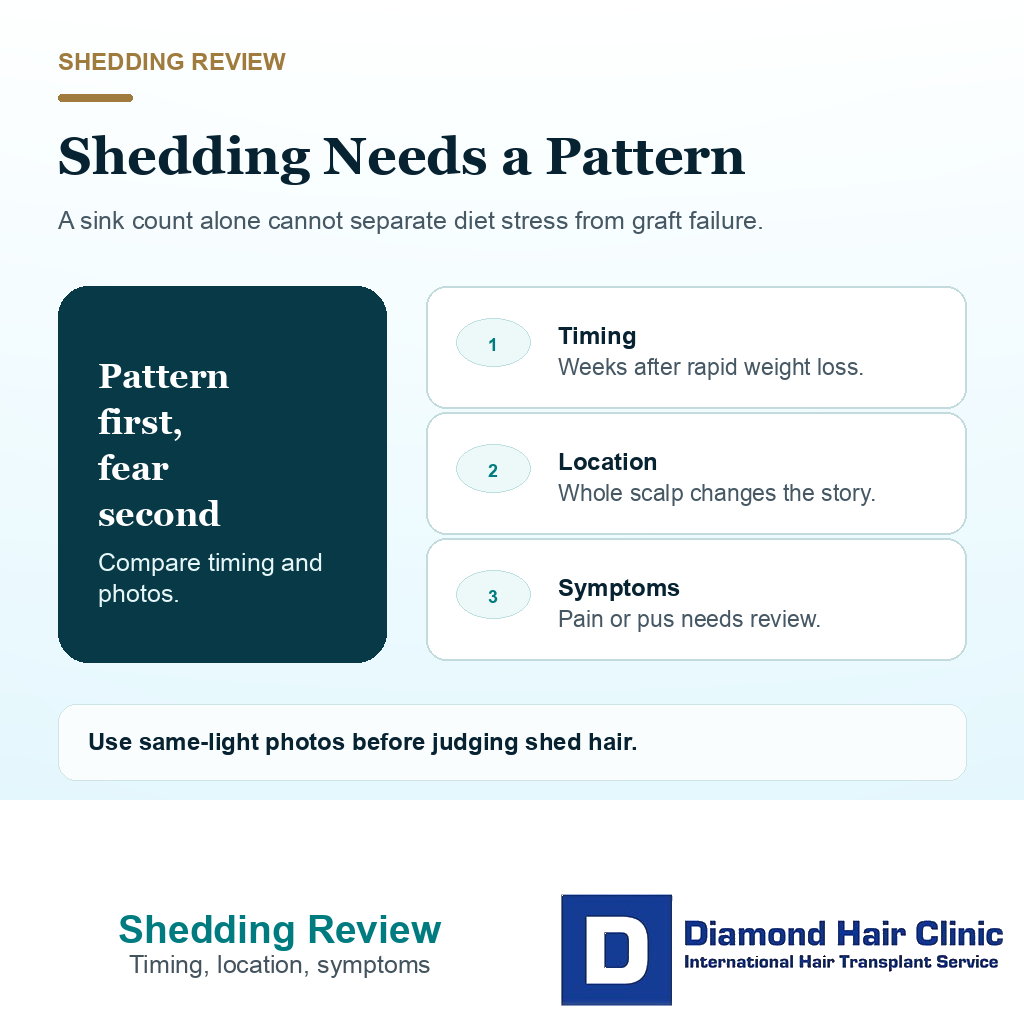
A bathroom sink hair count is not enough to judge transplanted grafts. I look at timing, scalp condition, distribution of shedding, donor appearance, medical history, and serial photos before calling a result poor.
Protein matters during recovery
Protein matters because surgery creates a healing demand. Skin has been punctured thousands of times. The donor area has to close. The recipient area has to settle. Protein, calories, zinc, iron, vitamins, hydration, and stable blood sugar all belong to the repair environment. Someone who is dieting but still eating protein at each meal is in a different position from someone living on coffee, salad, and stress.
Protein is recovery support, not a graft growth accelerator. More protein does not mean more grafts will survive if the operation was poorly planned. Too little protein, however, can make the body less resilient during a period when tissue repair is already active. Calories still matter too. A protein shake cannot fully compensate for a day built around very low intake. If appetite is low, smaller meals, yogurt, eggs, fish, chicken, lentils, beans, tofu, or a plain protein drink may work better than forcing large meals. Spread protein through the day when possible instead of relying on one large shake at night. In the early days, food after hair transplant surgery should support healing without turning recovery into a strict diet experiment.
Protein powders are not harmful just because they are powders. The product matters, the medical context matters, and the total diet matters. A basic whey, plant, or other protein supplement can be a convenient food tool for some people. A bodybuilding stack with stimulants, dehydration plan, or hidden product list is a different issue. If the label is unclear, the same recovery logic applies to protein powder during recovery.
Diet products that need label review
Protein powder by itself is usually less concerning than the pattern around it. If a shake helps someone meet normal protein needs because chewing is difficult, travel is tiring, or appetite is low, it can be reasonable. If the shake replaces too many meals, comes with very low calories, or is part of an aggressive cutting plan, the risk is the restriction, not the word protein.
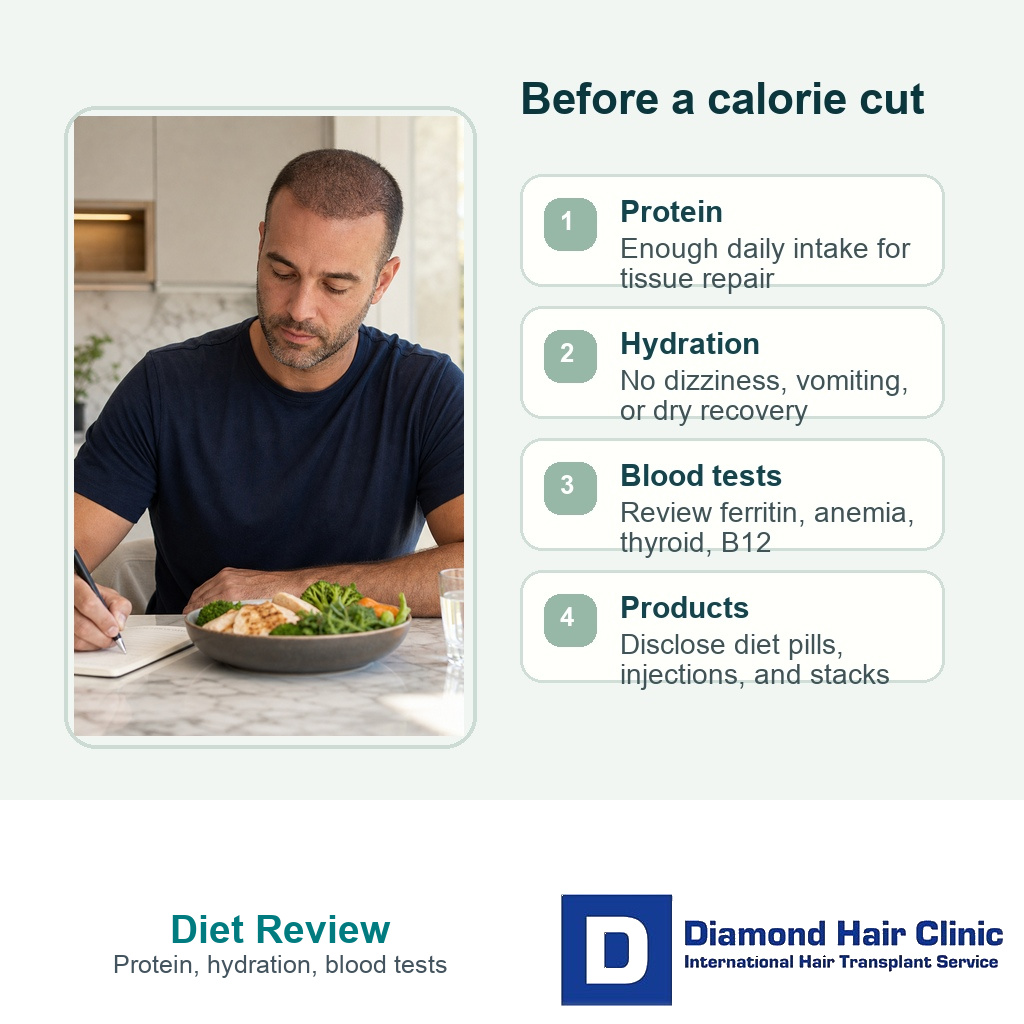
Meal replacements can be useful under medical or dietitian guidance, but they can become a problem when they hide a very low calorie diet. Diet pills, fat burners, high caffeine products, diuretics, laxatives, testosterone boosters, and herbal mixtures should be disclosed with the actual label, dose, start date, and reason for use. Some products can affect blood pressure, heart rhythm, bleeding risk, sleep, hydration, or medication interactions. If the label is built around stimulants, water loss, or rapid cutting, do not use it during early surgical recovery unless the clinic has reviewed it.
Do not hide diet pills, injections, or supplement stacks from the clinic. The same disclosure discipline used for a supplement list before surgery still matters during recovery, especially when something affects appetite, bleeding, or dehydration.
Signs that weight loss should wait
Weight loss should wait when recovery is unstable. Heavy swelling, infection signs, crusting problems, bleeding, dizziness, fainting, vomiting, diarrhea, fever, poor sleep, missed medication, dark urine, or poor wound closure are reasons to stop chasing weight loss and ask for clinic review. If you cannot drink enough water, keep meals down, or eat enough protein, you are not ready for a cut.
Weight loss should also wait when shedding is already active before surgery or soon after surgery. Active shedding clouds the picture. If native hair is shedding from stress, deficiency, thyroid disease, medication, or a recent crash diet, adding surgical decisions on top can waste donor grafts or create unrealistic expectations.
Strict religious or weight loss fasting has its own timing problem, so fasting during hair transplant recovery should be planned rather than improvised. If the fast means dehydration or missed medicine during the early healing period, the transplant recovery plan comes first.
Diet shedding is not the same as graft failure
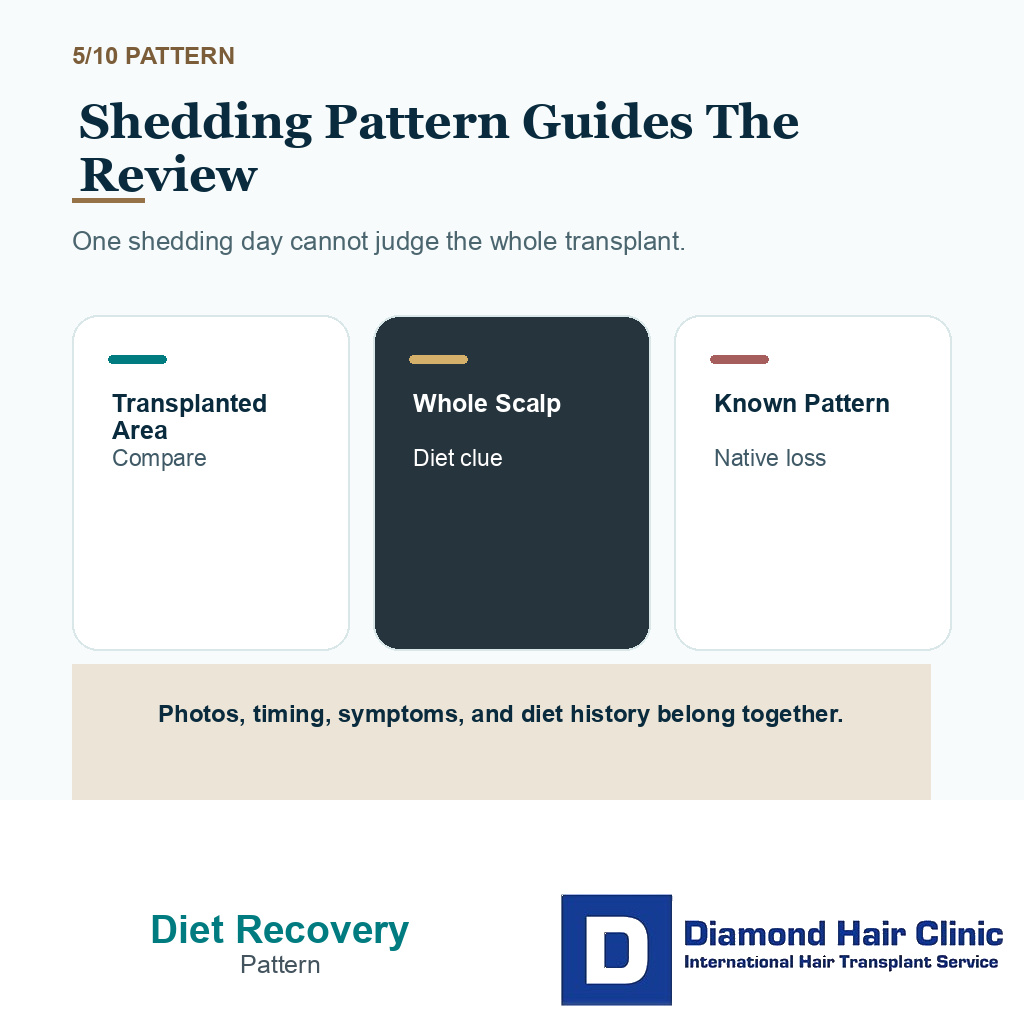
Do not judge the whole result from one shedding day. Normal transplanted hair shedding can happen during the early months. Diet related telogen shedding can also appear later, especially after rapid weight loss or very low intake. Genetic hair loss can progress at the same time. These patterns can overlap, so a single day of shedding cannot answer the question.
I separate the problem by timing, location, photos, scalp symptoms, and medical triggers. Shedding from across the whole scalp, including areas that were not transplanted, points away from graft survival as the only explanation. Redness, pus, pain, spreading crusts, or worsening tenderness points toward inflammation or infection and needs prompt review. Slow thinning in a known pattern may be ongoing androgenetic hair loss rather than a diet event.
New shedding during weight loss deserves diagnosis before another surgery decision. This is especially true with diffuse thinning and hair transplant planning, where donor quality and active shedding must be judged carefully before graft numbers are discussed.
Use the 10 dieting and recovery slides below to separate early healing, steady intake, crash dieting, shedding pattern, blood work, and safer weight loss timing. Swipe the carousel, use the arrows for one step at a time, or choose a number below the image to jump to that point.



Blood tests, deficiencies, and the plan
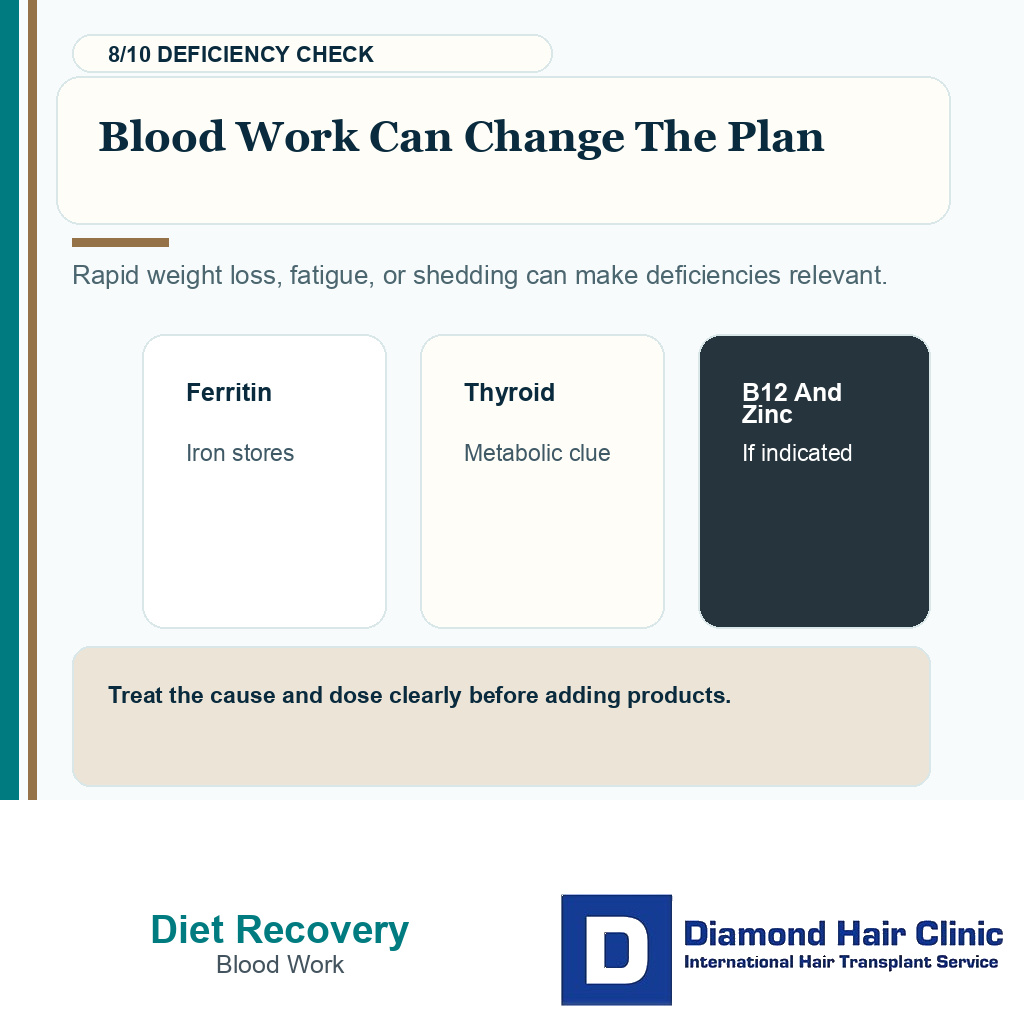
If you are dieting, shedding, tired, cold, dizzy, short of breath, or losing weight quickly, blood work may matter. Low ferritin, anemia, thyroid imbalance, vitamin D deficiency, low B12, low zinc, low albumin, diabetes control, and inflammation history can change the decision. Not every value needs to be checked in every person, but the story should guide the test list.
Low iron stores are a common example. Low ferritin or anemia may need diagnosis and treatment before the shedding pattern can be understood. Do not treat ferritin, thyroid, B12, or vitamin D results with high dose products before the cause and dose are clear. Basic blood tests before hair transplant surgery protect more than anesthesia safety. They can also reveal whether the scalp story is part of a wider medical problem.
Vitamins after hair transplant surgery can support recovery when a deficiency exists or intake has been poor. They cannot replace food, sleep, hydration, clean scalp hygiene, or a stable diagnosis.
Ozempic, bariatric surgery, or fasting need a different plan
These situations need more caution than ordinary dieting. If you use Ozempic, Mounjaro, or another GLP-1 medicine, the prescriber and transplant clinic should know whether the dose is stable and whether nausea, vomiting, poor intake, or dehydration is still occurring. Starting or increasing a dose during early recovery can make hydration and nutrition harder to judge. Bariatric surgery, prolonged fasting, and rapid calorie restriction need the same practical review. The transplant date should follow stable intake and a coordinated medical plan, not a target date on the calendar.
The common thread is stability. If weight, intake, blood results, and shedding are stable, planning becomes clearer. If the dose is changing, vomiting continues, ferritin is low, or hair is shedding heavily, the scalp is not giving a clean surgical signal. Surgery and weight loss are both stressors. Stacking them at the wrong time can make the result harder to predict.
A steadier diet plan in the first months
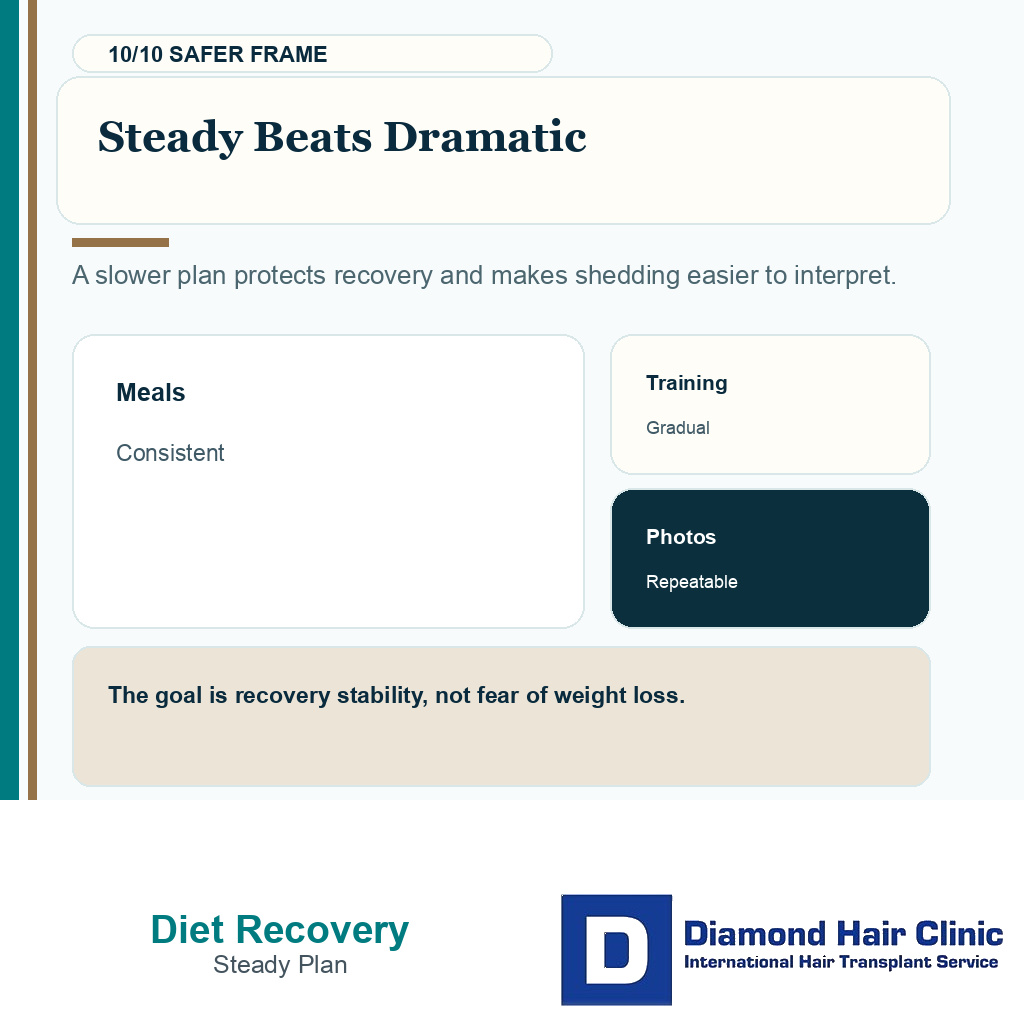
A controlled plan is steady and repeatable. Keep meals regular. Include protein with each meal. Drink water. Avoid heavy alcohol, heavy caffeine, and stimulant products during early recovery. Do not combine hard training with very low calories. Keep vegetables, fruit, whole grains or other useful carbohydrates, and healthy fats in the plan. Track weight slowly rather than reacting to daily scale noise. The weekly trend is more useful than one morning number after swelling, travel, constipation, or salty food.
Recovery does not require a perfect diet, but the body still needs enough to heal. A multivitamin or biotin tablet cannot compensate for too little protein, energy, or fluid. If you are overweight and need to improve health, weight loss can remain a good long term goal. Its timing should protect graft healing and native hair interpretation. Losing weight steadily is easier to judge than a dramatic cut followed by fear, shedding, and supplement panic.
The aim is steady recovery, not the fastest possible weight drop. If hunger, dizziness, sleep disruption, irritability, heavy shedding, or low energy increases, the diet may be too strict for the recovery phase.
Symptoms or shedding changes that need clinic review
Ask for clinic review promptly, not just at the next routine photo update, if dieting is accompanied by dizziness, fainting, vomiting, diarrhea, fever, bleeding, infection signs, rapid weight loss, poor wound healing, dark urine, inability to keep food down, or heavy shedding. Also ask for clinic review before starting appetite suppressants, injectable weight loss medicine, fat burners, diuretics, laxatives, testosterone products, or unfamiliar supplement stacks.
Send photos in steady lighting in the same light when possible. Include the surgery date, current weight change, diet style, protein intake, calorie restriction level if you know it, medications, supplements, symptoms, and the first day shedding increased. If you are using injections, meal replacements, fat burners, laxatives, diuretics, or high caffeine products, send the name and label rather than a general description. Those details make the review more useful than one close photo of hairs in a sink.
My approach to dieting during recovery
My approach is to separate a sensible health goal from a recovery stressor. If you are eating well, healing cleanly, and losing weight slowly, the plan can often continue with monitoring. If you are eating too little, shedding heavily, dehydrated, nauseated, or medically unstable, weight loss waits.
A hair transplant uses limited donor grafts. The job is to place grafts well and keep the recovery picture clear enough to judge the result. Dieting can be part of a healthy life, but recovery is a poor time for extreme restriction. Keep the plan steady, disclose products, correct deficiencies, and judge shedding by timing and pattern rather than fear.

Read this review excerpt
Upon arriving home, I sent 4 photos (of each side of head) after every washing process to doctor for checking where I was given personal advice for how to take care of my healing head.