



Low Vitamin D and Hair Transplant Planning
A low vitamin D result is worth taking seriously, but it does not decide the hair transplant plan by itself. It is a signal to look more closely at the diagnosis, the shedding pattern, the rest of the blood work, and whether correction is already being handled in a sensible medical way.
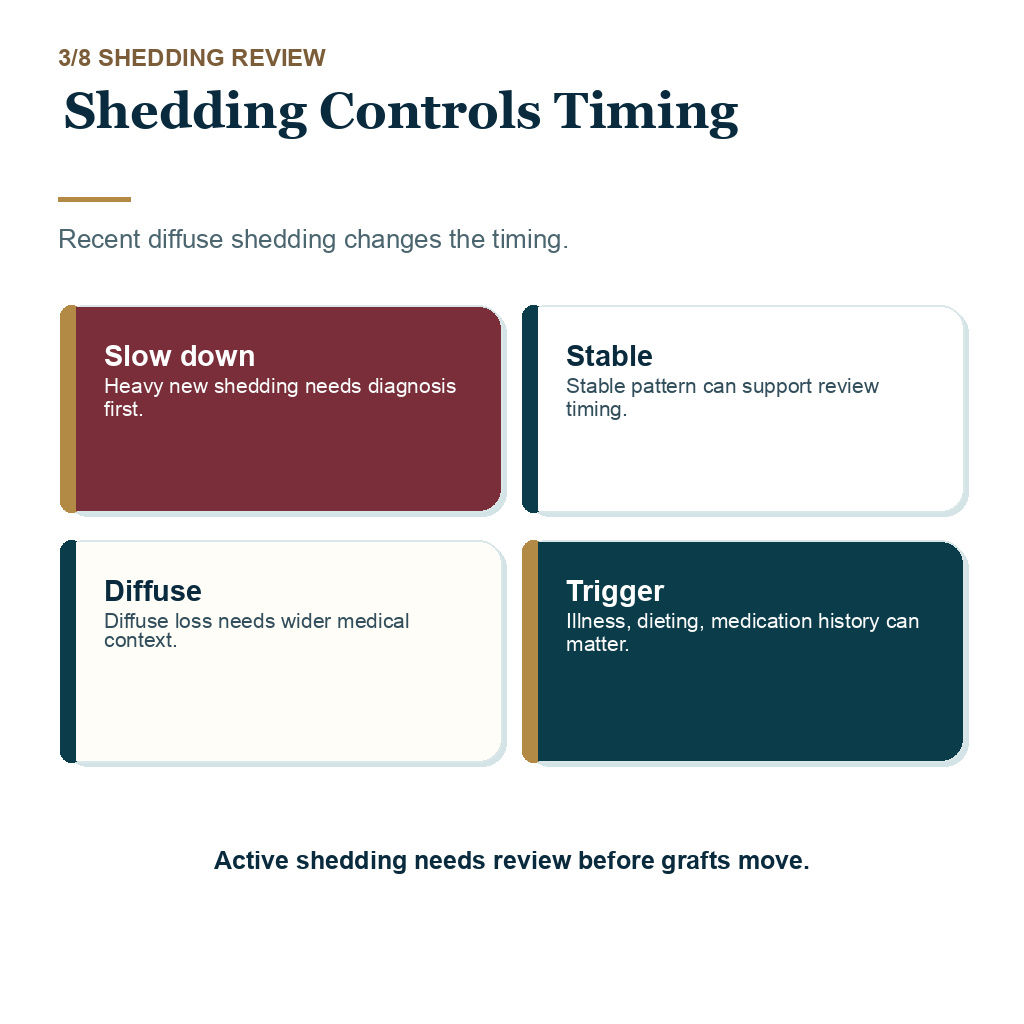
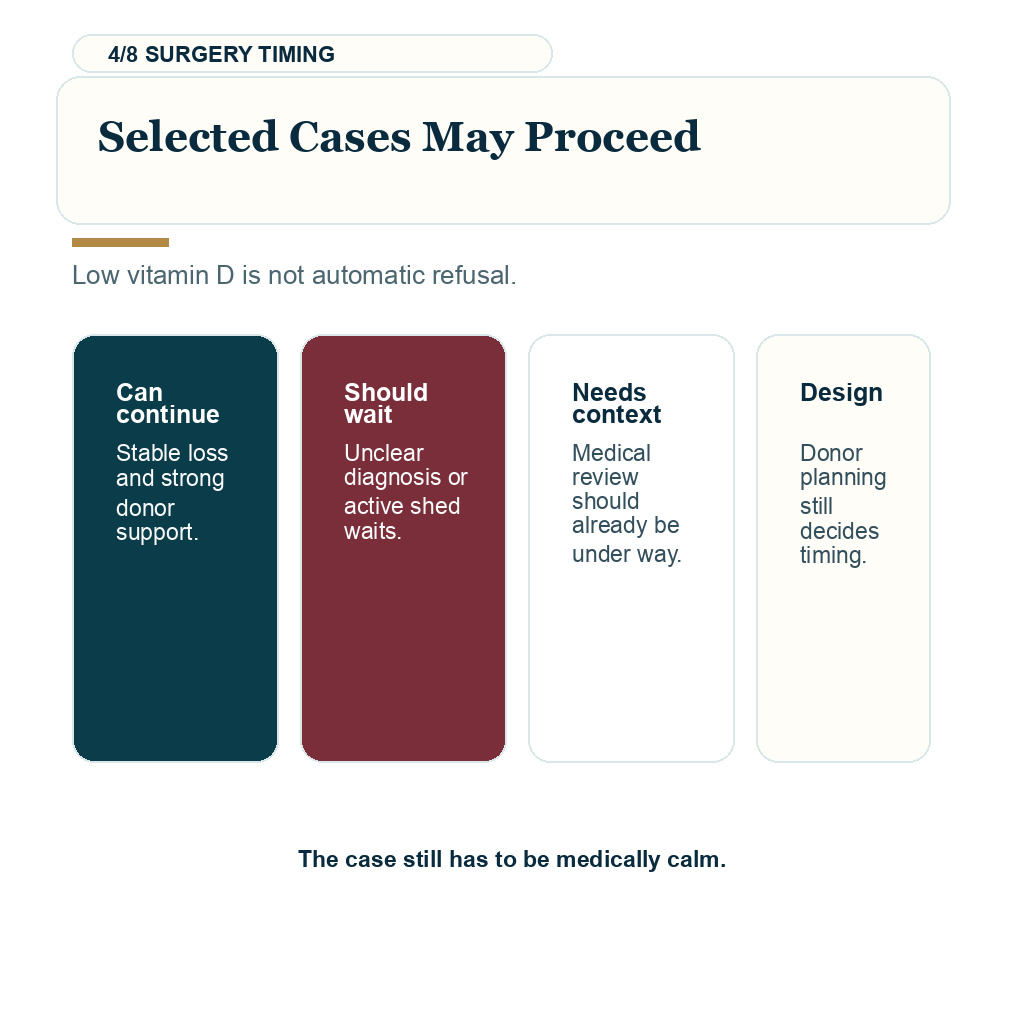
If the hair loss pattern is stable, the donor area is strong, and the deficiency is mild or already being treated, surgery may still be reasonable. If shedding is recent, heavy, diffuse, or medically unexplained, I slow the process down. A transplant moves donor follicles. It does not correct an active medical shedding trigger.
Deficiency correction and surgical planning are separate issues. Correcting a real deficiency may support general health and hair cycle stability. It does not create new donor supply, guarantee better graft growth, or make an unstable hair loss pattern ready for surgery.
Lab result sorter
Should the vitamin D result slow the surgery plan?
Use this before booking around a low vitamin D result.
Surgery may still be reasonable when the hair loss pattern is stable, the donor area is strong, and the medical correction is documented.
If one signal changes the timing, treat the lab as part of the planning question, not as a shortcut answer.
Low vitamin D can change the surgical plan
Yes, but usually by changing the medical conversation rather than the graft count. A low result makes me review why the test was done, what symptoms are present, and whether the visible hair loss behaves like stable pattern loss or active shedding. A last minute high dose plan is weaker than correction already followed by the doctor who ordered the test.
A mature pattern with strong donor hair and no sudden shedding is different from rapid shedding across the whole scalp for three months. Both can appear with low vitamin D, but they should not receive the same surgical decision.
The lab result is a clue, not the full diagnosis. A low number does not prove that vitamin D is the only reason for the shedding. I read it with scalp examination, history, photographs, medication review, and other blood tests. If the visible thinning is mainly medical shedding, the first job is to understand and treat the trigger before moving grafts.
Supplements should not come before diagnosis
Many people arrive with a supplement list before they have a diagnosis. Vitamin D, biotin, zinc, collagen, multivitamins, iron, saw palmetto, and hair formulas may all be taken together. That can make the picture less clear, especially before blood tests.
A supplement stack should not become the diagnosis. Share the lab result, dose, start date, and shedding pattern before deciding whether the case is medical first or surgical now.
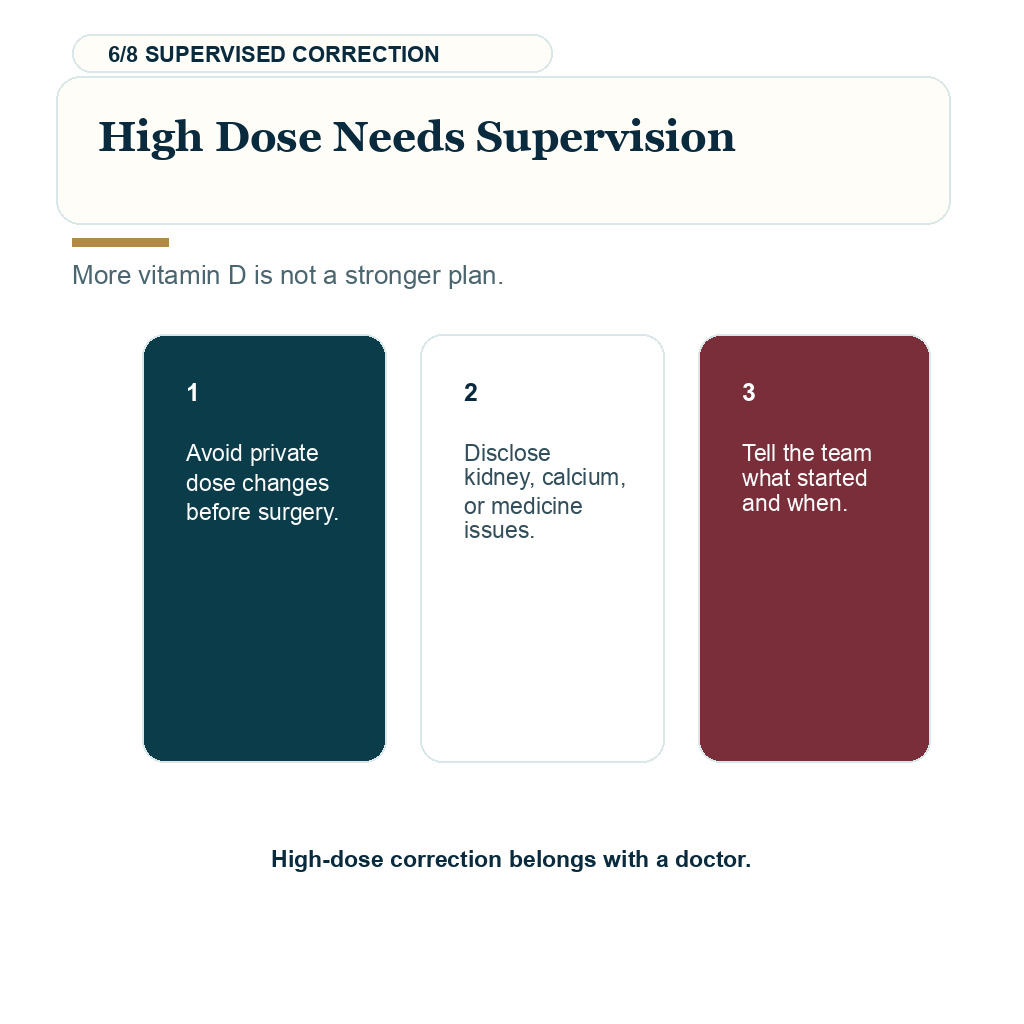
If vitamin D deficiency is confirmed, treatment should be documented. For surgery planning, the useful details are the result, the reference range, the dose, the form, who advised it, how long it has been taken, and whether repeat testing is planned. A dose copied from the internet is not a surgical plan.
I ask for supplement disclosure for the same reason explained in supplements before hair transplant. Some products can affect bleeding, lab interpretation, blood pressure, or anesthesia planning. Ordinary vitamin D is only one part of that list.
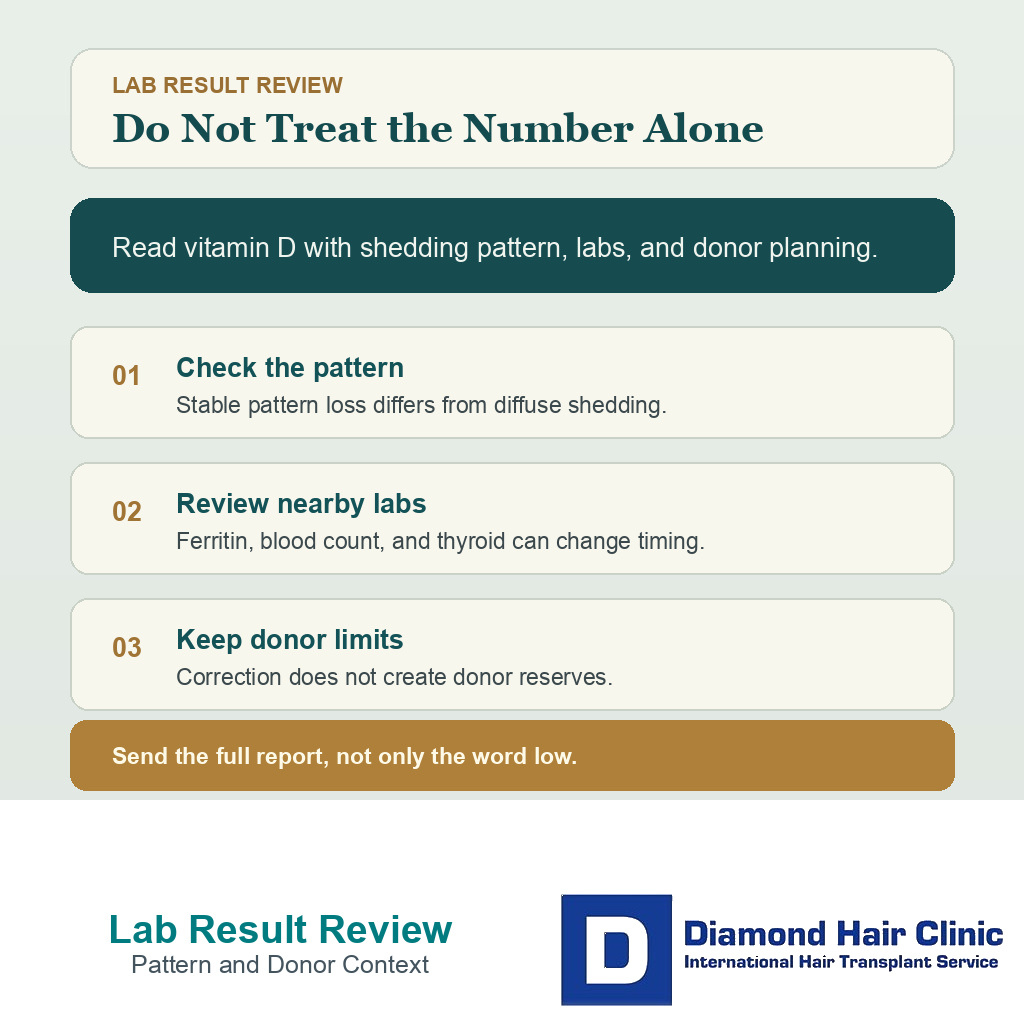
Some results should slow booking down
I slow down when shedding is recent, heavy, and diffuse. I also slow down when there is fatigue, recent illness, major dieting, unexplained weight change, menstrual change, thyroid symptoms, anemia symptoms, or a shed that does not match ordinary male or female pattern hair loss.
When shedding is recent and diffuse, low vitamin D may be only one part of a wider problem. I want the medical cause reviewed before grafts are moved into an unstable scalp. If the shed is still active, transplanting at the wrong moment can create disappointment even when the surgical work is technically good.
The logic is close to telogen effluvium and hair transplant timing. Active shedding needs a diagnosis first. It is also related to diffuse thinning and hair transplant surgery, because the area that looks thin may still contain many vulnerable native hairs. When dieting or rapid weight change is part of the story, crash dieting during recovery is another warning that nutrition stress can confuse the hair picture.
Surgery can still be reasonable in selected cases
There are cases where FUE can still be reasonable. Low vitamin D is not the same as being medically unfit for FUE. When the hair loss pattern is stable, the donor area is strong, the wider medical review is clear, and the deficiency is being handled properly, surgery can still be reasonable.
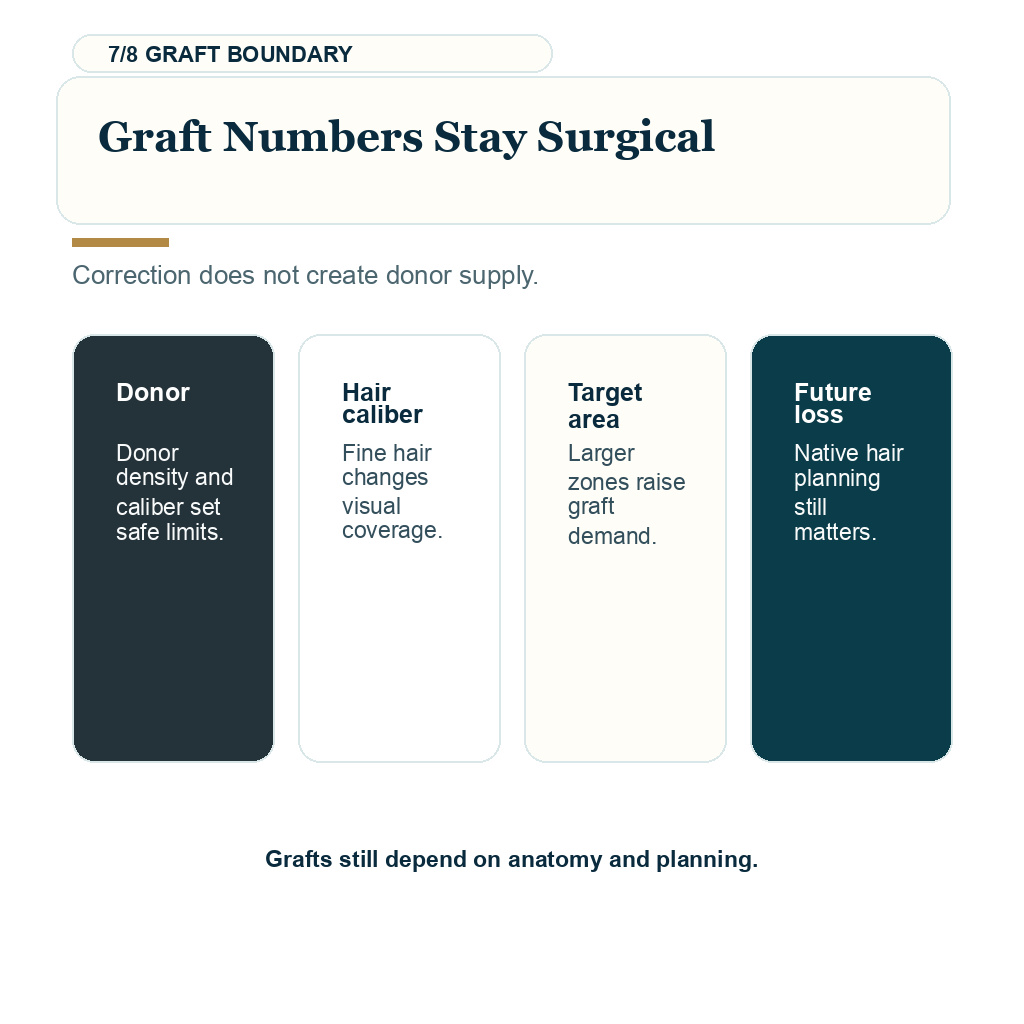
The key is not to pretend that supplementation changes donor supply. Correcting vitamin D may improve the general medical picture if deficiency is real. It does not replace hairline design, donor budgeting, density judgment, or long-term native hair planning.
I also separate a corrected deficiency from a stable surgical target. If shedding has stopped and photos show the same pattern over time, the conversation can return to design, density, and donor budgeting. If the pattern is still changing, the better use of time is medical follow-up and updated photos before the graft plan is locked.
Blood results should be read together
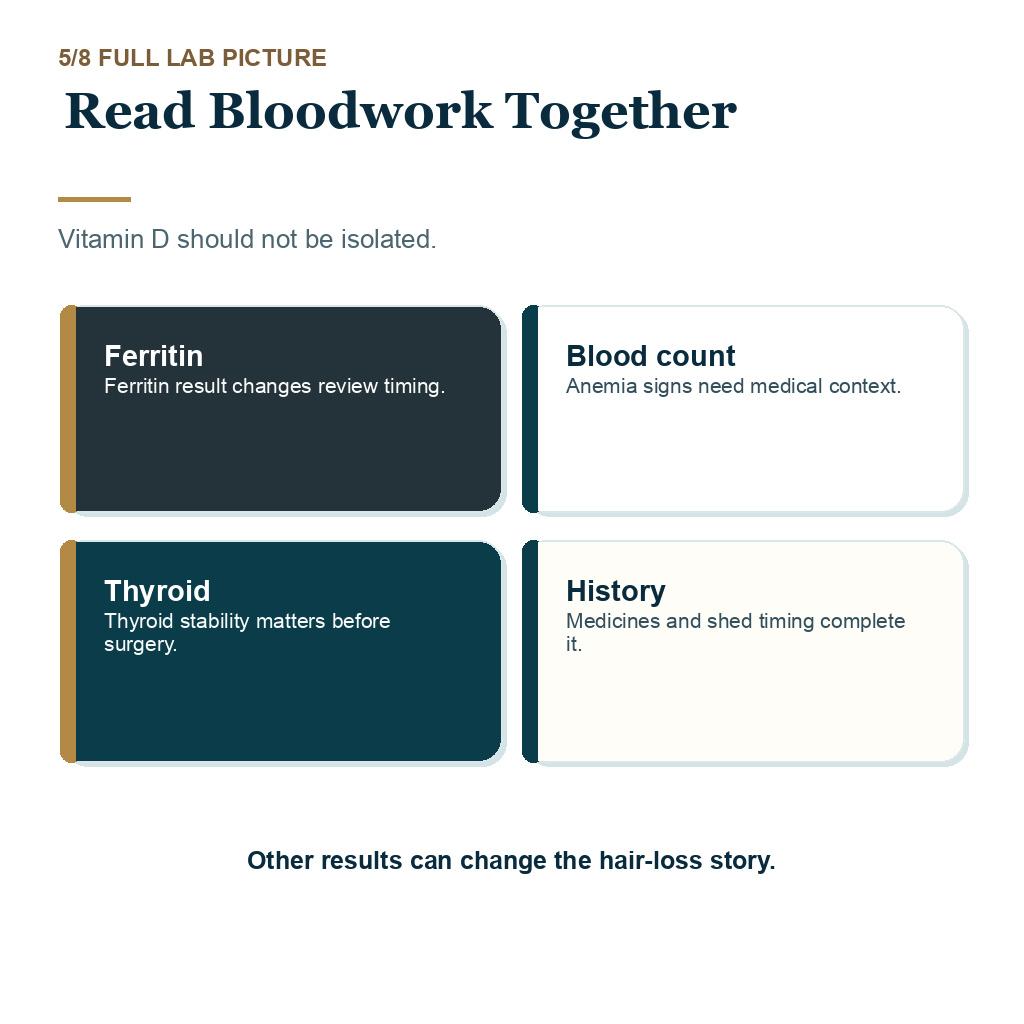
Vitamin D rarely sits alone in a serious hair loss workup. I often want to see ferritin, blood count, thyroid results, medication history, and the timing of the shed. Low vitamin D with low ferritin or anemia is a different picture from an isolated mild deficiency.
A low result found during a hair loss workup is one clue, not the end of the diagnosis. The shedding pattern, family history, miniaturization, iron status, thyroid history, medicines, and recent illness still need to fit the story. Treating the deficiency can be sensible, but the transplant plan still has to match the hair loss diagnosis.
Blood test review before surgery matters because blood work is not a cosmetic formality. It helps separate elective surgical planning from medical instability, active shedding, or a health issue that needs treatment first.
If ferritin or anemia is involved, low ferritin, anemia, and hair transplant surgery is the closer reference. If thyroid disease is involved, thyroid disease and hair transplant planning explains why stability matters before graft planning.
High dose vitamin D should be supervised
Because vitamins are sold without a prescription, it is easy to treat them as harmless. With vitamin D, I do not make that assumption. Vitamin D can be useful when deficiency is real, but high dose supplementation should be supervised, especially with kidney disease, high calcium, certain medicines, malabsorption, or a medical history that changes safety.
More vitamin D is not a stronger hair transplant strategy. I do not want people doubling doses privately before surgery, mixing several hair formulas, or hiding supplements because they seem natural. Tell me exactly what is being taken, the dose, and when it started, especially if several products overlap.
Biotin is a good example of why disclosure matters. It is not the same nutrient, but biotin before FUE and lab results shows how a hair supplement can still affect medical interpretation. The same practical disclosure applies to vitamin D products.
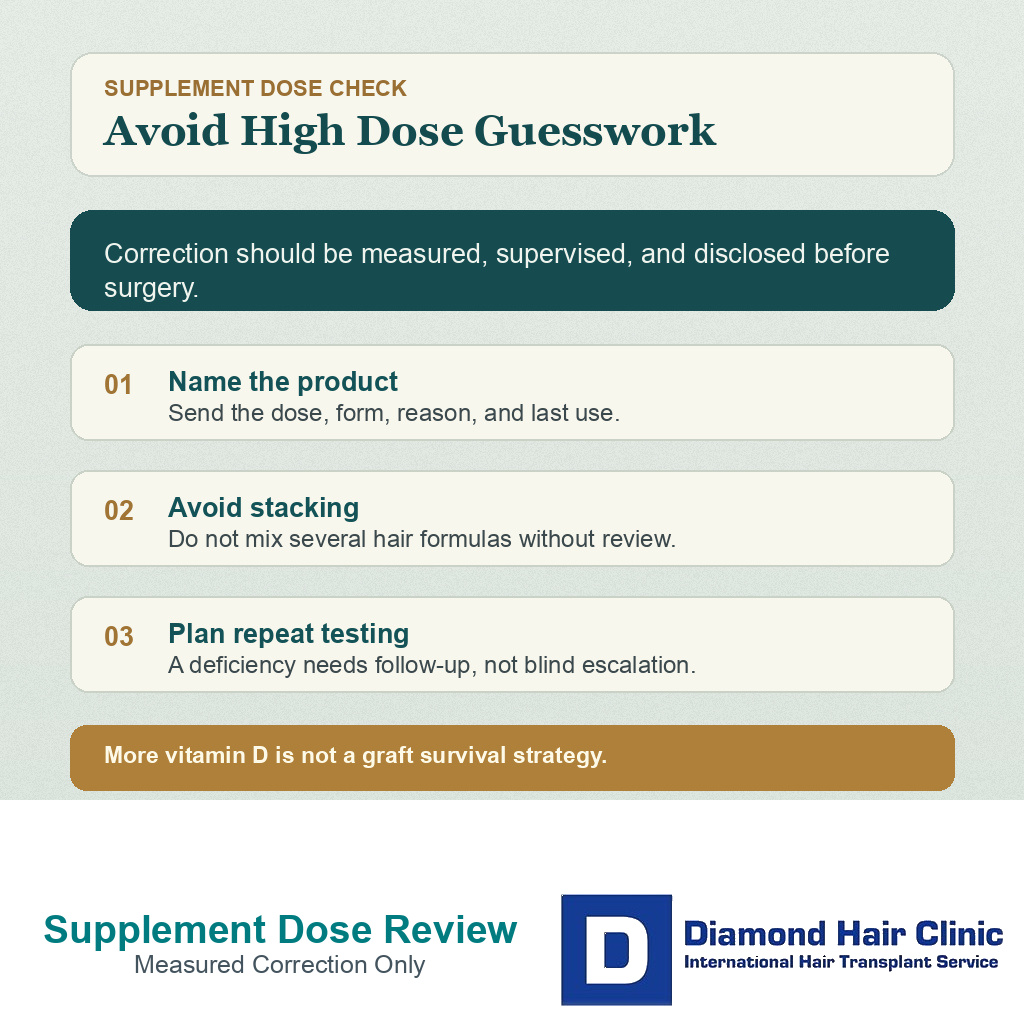
Correcting vitamin D does not by itself change graft numbers
A corrected vitamin D level does not create new donor reserves. It may improve the general medical picture if deficiency was real, but graft numbers still depend on donor density, miniaturization, hair caliber, scalp contrast, target area, age, family pattern, and long-term loss risk.
This matters for women as well. Diffuse loss and medical triggers must be separated from true surgical candidacy. Female hair transplant candidacy goes deeper into why diagnosis comes before graft numbers.
It also matters for men who want surgery without medication. Hair transplant without finasteride is a different topic, but the principle is similar. A supplement cannot do the work of a long-term native hair strategy.
Useful lab details should be sent before booking
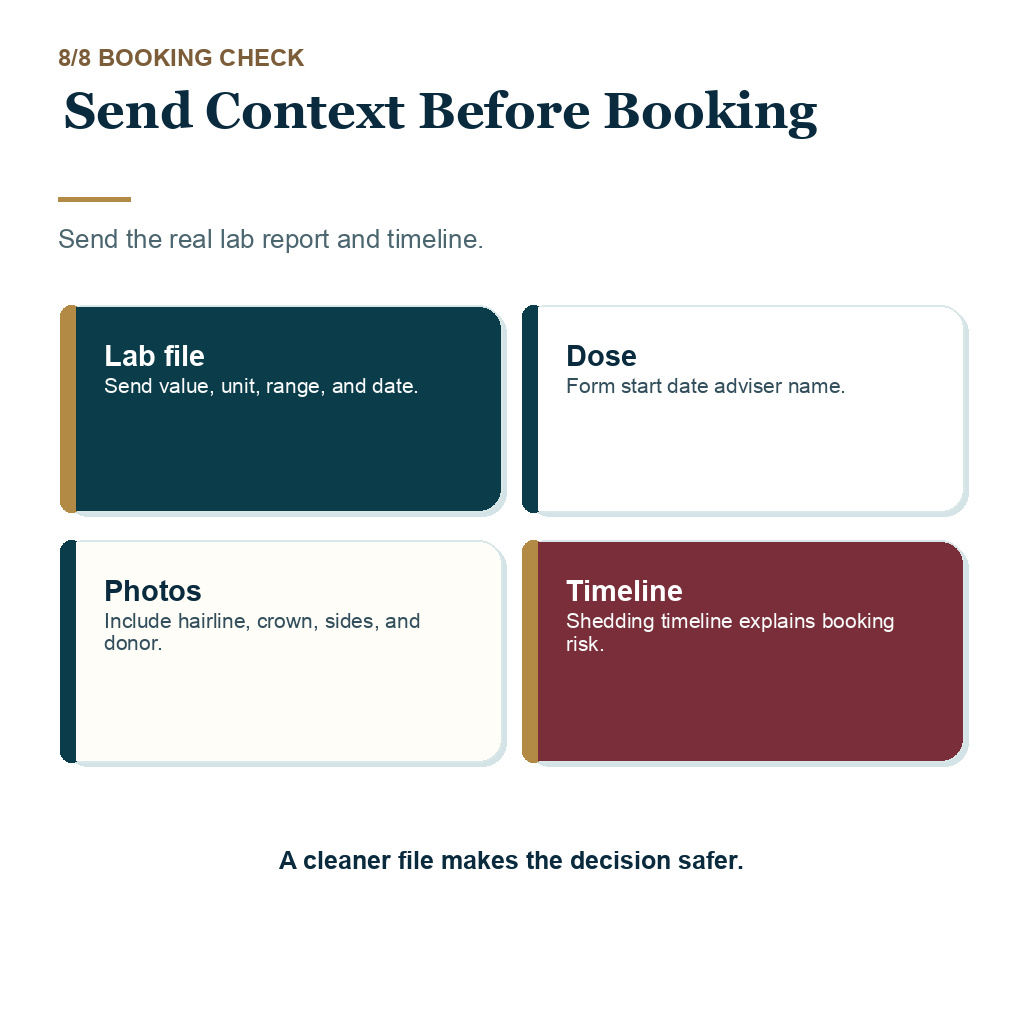
Send the actual lab report, not only a message saying vitamin D is low. I need the date of the test, the value and unit, the reference range, any treatment started, the dose, who recommended it, and whether repeat testing is planned.
Recent supplement changes belong beside the lab result. A dose increase, pause, or new prescription helps show whether the deficiency is being corrected or whether shedding still needs a broader review.
A screenshot of the number is not enough. The dose, start date, and related blood markers show whether the low result actually fits the shedding pattern.
Current scalp photos in natural light are also useful, including the hairline, temples, mid scalp, crown, both sides, and donor area. If shedding has changed, send the timeline, whether it is slowing, and whether there were triggers such as illness, weight loss, stress, new medication, postpartum change, or stopping a hair loss treatment.
Supplement timing should be clear. If a doctor started vitamin D after the test, write down when it began and whether side effects appeared. If no treatment has started, do not begin a high dose the night before travel and then hide it from the surgical team. A late private dose does not make the surgery safer.
If you already take a hair formula, send the full label. Vitamins after hair transplant explains the support role of vitamins after surgery, but the same idea applies before surgery. A supplement can support a corrected deficiency. It cannot replace diagnosis, donor planning, or graft protection.
Use the 8 low vitamin D planning slides below to separate the lab result, diagnosis, shedding stability, selected proceed cases, wider bloodwork, supervised correction, graft number limits, and the details to send before booking. Swipe the carousel, use the arrows one step at a time, or choose a number below the image to jump to that point.
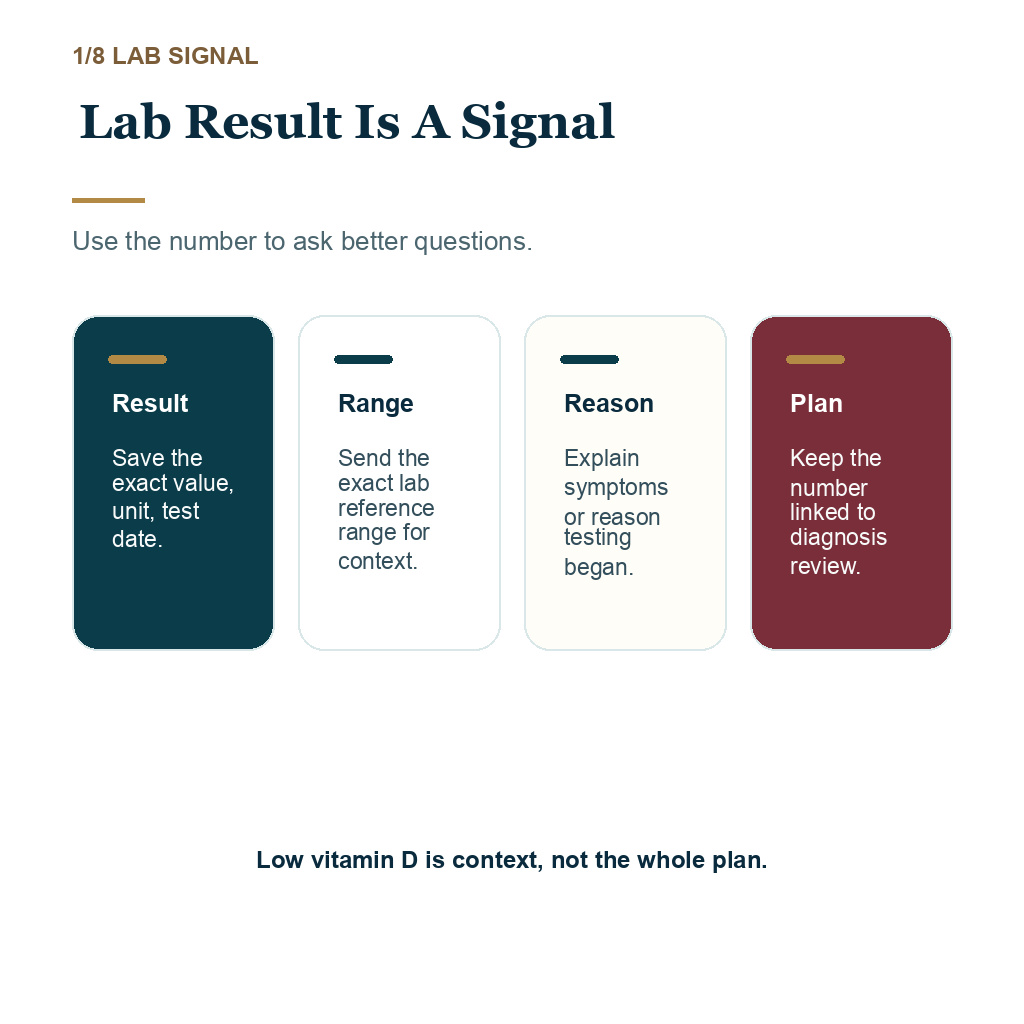
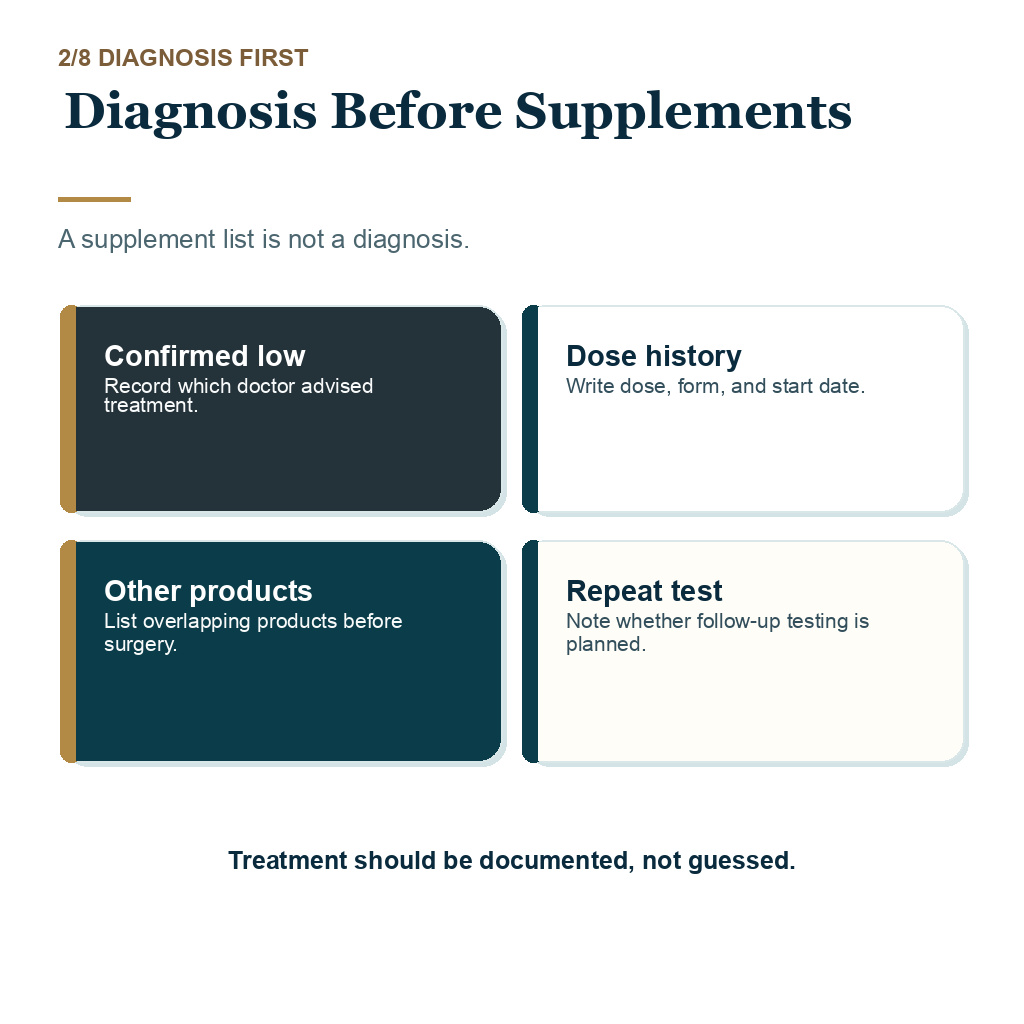
The lab result belongs beside the hair diagnosis
Low vitamin D should lead to a proper medical conversation, not a shortcut answer for surgery. Correct a real deficiency and document the treatment, but still examine the hair loss pattern.
If shedding is active or the diagnosis is unclear, the graft plan should wait for better information. If the pattern is stable and medical care is under control, FUE can be planned with the lab result in context.
A better vitamin level is useful. Donor planning, diagnosis, timing, and realistic coverage still decide whether surgery makes sense.

Read this review excerpt
Diamond Hair was the only clinic asking for medications, treatments I've done before, and other type of questions that make me feel confident on the professionalism that they practice with their clients.