


Hair Transplant Timing With Thyroid Disease
I only consider a hair transplant with thyroid disease when the thyroid problem is diagnosed, treated, and the hair pattern is stable enough to plan safely. If shedding is still sudden, diffuse, or unexplained, I slow the decision down before discussing graft numbers.
Surgery can move donor hair, but it cannot correct uncontrolled thyroid related shedding. I first decide whether the visible thinning is permanent pattern loss, temporary telogen shedding, or a mixture of both. A transplant may help the permanent part. It is not a reliable answer for hair that may recover once the medical side is controlled.
Bring the latest thyroid results and recent dose changes into the surgical discussion. A normal thyroid number months ago is less useful when shedding, symptoms, or dose changes are active now. If the dose changed recently, say when it changed before the hair pattern is judged.
Thyroid timing gate
Is this stable enough for graft planning?
Use this before a surgery date, graft number, or density promise. The decision moves from medical review to surgery only when the thyroid picture and hair pattern are readable.
Start with whether the diagnosis is treated and followed, then check the signals that should slow the plan.
Surgery can be discussed when the treating doctor is satisfied, symptoms are quiet, and the remaining thinning still looks like a stable surgical target.
If one line points to instability, treat the date as a medical timing question before treating it as a surgery booking question.
Thyroid disease changes the hair transplant decision
Thyroid disease can affect hair quality, shedding, skin texture, energy, and tolerance for surgery. Both underactive and overactive thyroid patterns can be associated with diffuse shedding. That kind of shedding can make the scalp look worse than the permanent hair loss really is.
A transplant is not a treatment for every type of hair loss. It redistributes stronger donor hair into an area where a lasting cosmetic improvement is realistic. If the visible thinning is mainly temporary shedding, the better first step is medical control and observation, not surgery.
I separate this from a standard diffuse thinning hair transplant discussion because thyroid related shedding can change after treatment becomes stable. Planning grafts while the picture is still moving can make the operation larger than necessary or aimed at the wrong areas.
The emotional part matters too. Hair in the shower, a wider part, or scalp visibility under light can make you feel that the window for surgery is closing. In thyroid related shedding, that feeling can push you toward a premature operation. My job is to separate urgency created by fear from urgency created by the scalp.
Surgery is reasonable when thyroid control is stable
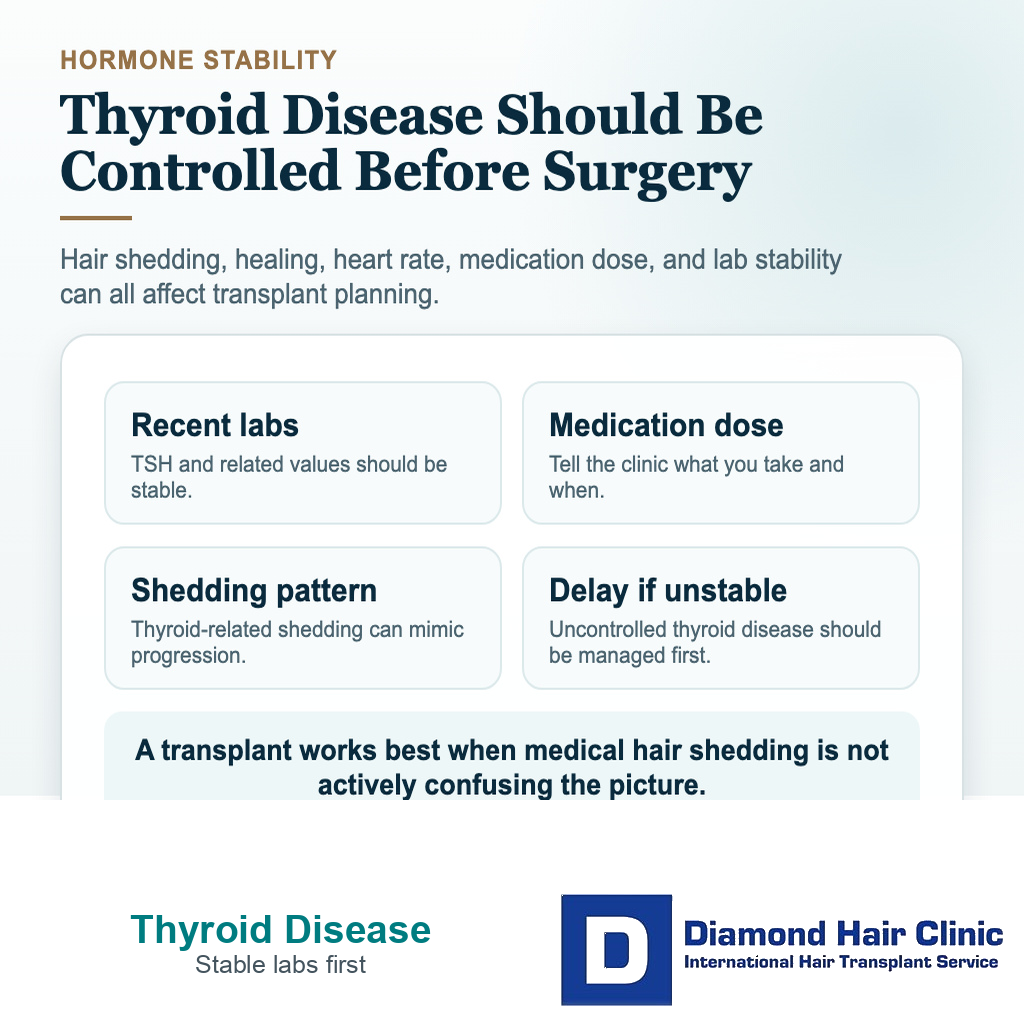
Surgery becomes more reasonable when thyroid levels have been treated, shedding has settled, and the remaining thinning pattern still shows an area that will not recover enough on its own. I do not plan surgery in the middle of a sudden heavy shed, a recent medication adjustment, or a new unexplained change in hair quality.
For some people, thyroid disease is part of the medical history but not the main reason for the transplant. Someone may have stable hypothyroidism and also clear male or female pattern hair loss. Then the question becomes whether the person is a good candidate for a hair transplant after the medical background has been respected.
A controlled blood test helps, but it does not prove the hair pattern is stable. I still need to examine hair caliber, miniaturization, donor strength, scalp contrast, age, family pattern, and the areas that bother you most.
When there is doubt, I protect donor capacity and operate only on a clear target. I do not use many grafts to chase a temporary shedding picture that may improve after thyroid treatment is balanced.
A waiting period after thyroid treatment changes protects the plan
One blood test alone does not settle timing. Hair shedding can lag behind the medical trigger, so the scalp may continue shedding for a period even after thyroid numbers start moving in the right direction.
If thyroid medication has just started, stopped, or changed dose, several months of steadier shedding is often more useful than rushing surgery as soon as one result looks better. A 3 to 6 month observation window is commonly more informative when the loss has been diffuse or sudden, but the timing still depends on the individual medical history.
An improved thyroid result and a stable hair cycle are not the same checkpoint. I need both medical control and a hair pattern stable enough that the transplant target is real.
Waiting should not feel like punishment. The purpose is to avoid designing surgery around a temporary shed. Once the medical picture and the hair pattern are more stable, the remaining thinning can be judged more fairly.
Surgery should be delayed during unstable thyroid control
I delay surgery when hair is falling rapidly, thyroid medication has just started or changed, lab results are not yet controlled, symptoms are still strong, or the diagnosis is uncertain. I also delay when surgery is being used mainly to relieve anxiety from a recent shed.
Timing matters because a transplant performed during active shedding can be judged unfairly later. Native hair may keep changing around the transplanted grafts, and you may think the operation failed when the real issue was unstable background hair loss. That is close to what I explain when someone worries they had a transplant too early while hair loss was still active.
Waiting is not wasted time if it prevents a poor surgical decision. During that period, you can clarify the medical cause, monitor photographs, review medication tolerance, and see whether density improves before donor grafts are used.
There is another reason to wait. A temporary shed can make the recipient area look larger than the permanent target. If surgery is planned at that moment, you may ask for more grafts than the long-term donor plan can safely justify.
Blood tests and diagnosis details matter before surgery
Blood tests do not design the hairline, but they can explain why hair is shedding. With known or suspected thyroid disease, I look for current medical follow-up, stable treatment, and a clear explanation for the hair loss pattern before treating the case as a simple transplant plan.
A surgical assessment still needs scalp examination, donor evaluation, family history, medication review, and hair caliber analysis. The lab result is one piece of the picture. It cannot tell me how many grafts are safe or whether crown treatment belongs in the plan, but it can tell me whether the timing is poor.
The broader page on blood tests before a hair transplant is useful here because the question is not only infection screening. It is also about avoiding elective surgery when a medical issue should be controlled first.
I also ask about iron, ferritin, anemia, recent illness, weight change, and supplements. Low ferritin or anemia before a hair transplant can confuse the same timing decision. Large dose hair supplements can also matter because biotin before FUE can interfere with bloodwork, including some thyroid related tests.
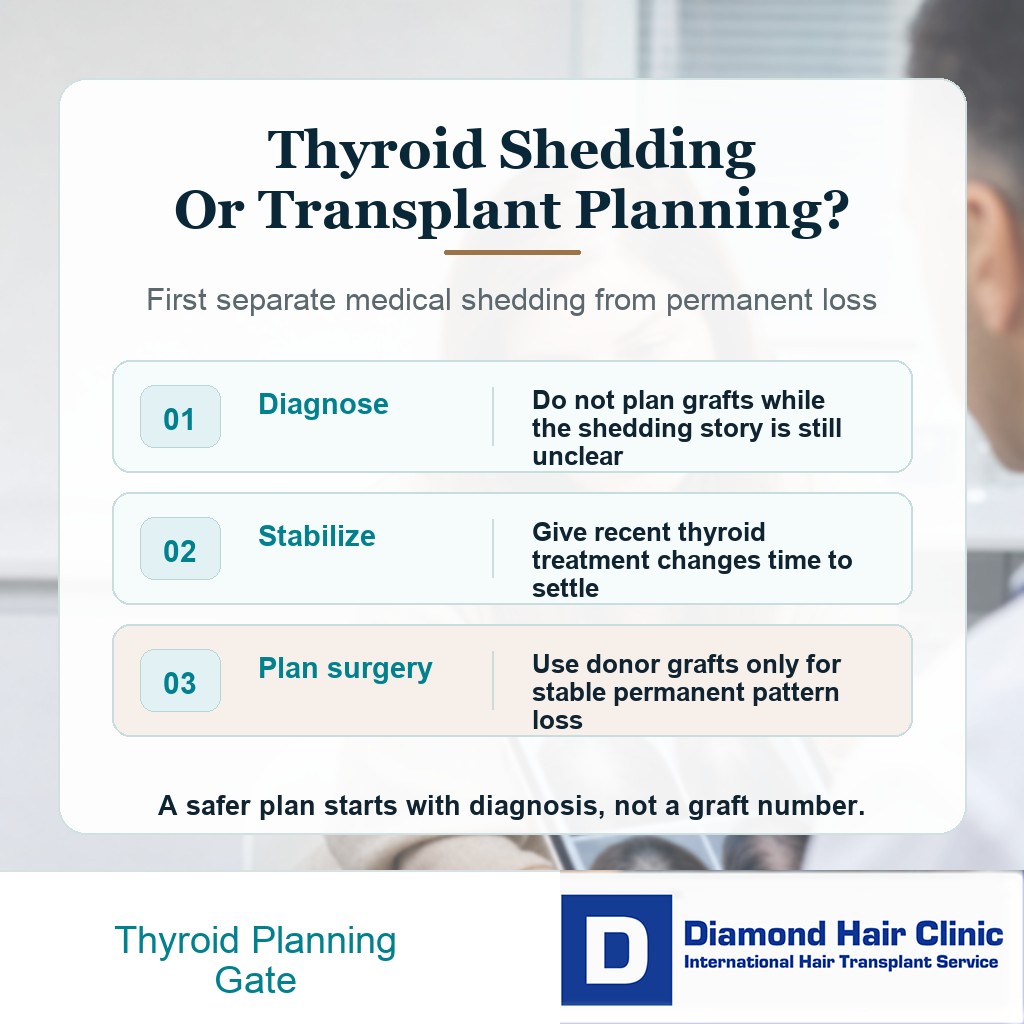
Thyroid related shedding must be separated from permanent pattern loss before graft planning becomes meaningful.
Thyroid shedding can overlap with genetic hair loss
Yes. This is a common source of confusion. Thyroid disease can create shedding, while genetic hair loss slowly miniaturizes follicles over years. The scalp can show both at the same time.
If recession, crown thinning, or a visible part line remains after thyroid control, surgery may still have a role. But I do not plan the transplant as if every thin area needs grafts. Some native hair may recover, some may need medical support, and some areas may be poor targets for dense implantation.
Donor management becomes important here. Mixed hair loss should not spend the donor supply aggressively just because the scalp looks thin during a thyroid related shed. The donor area must still be protected for the future.
The crown is a common example. A thyroid shed can make the crown look suddenly worse, but crown work can consume many grafts and still look thin if the surrounding hair keeps changing. Define the stable pattern first, then decide whether crown coverage belongs in the first plan, a later plan, or no surgical plan at all.
Thyroid medication does not always prevent a hair transplant
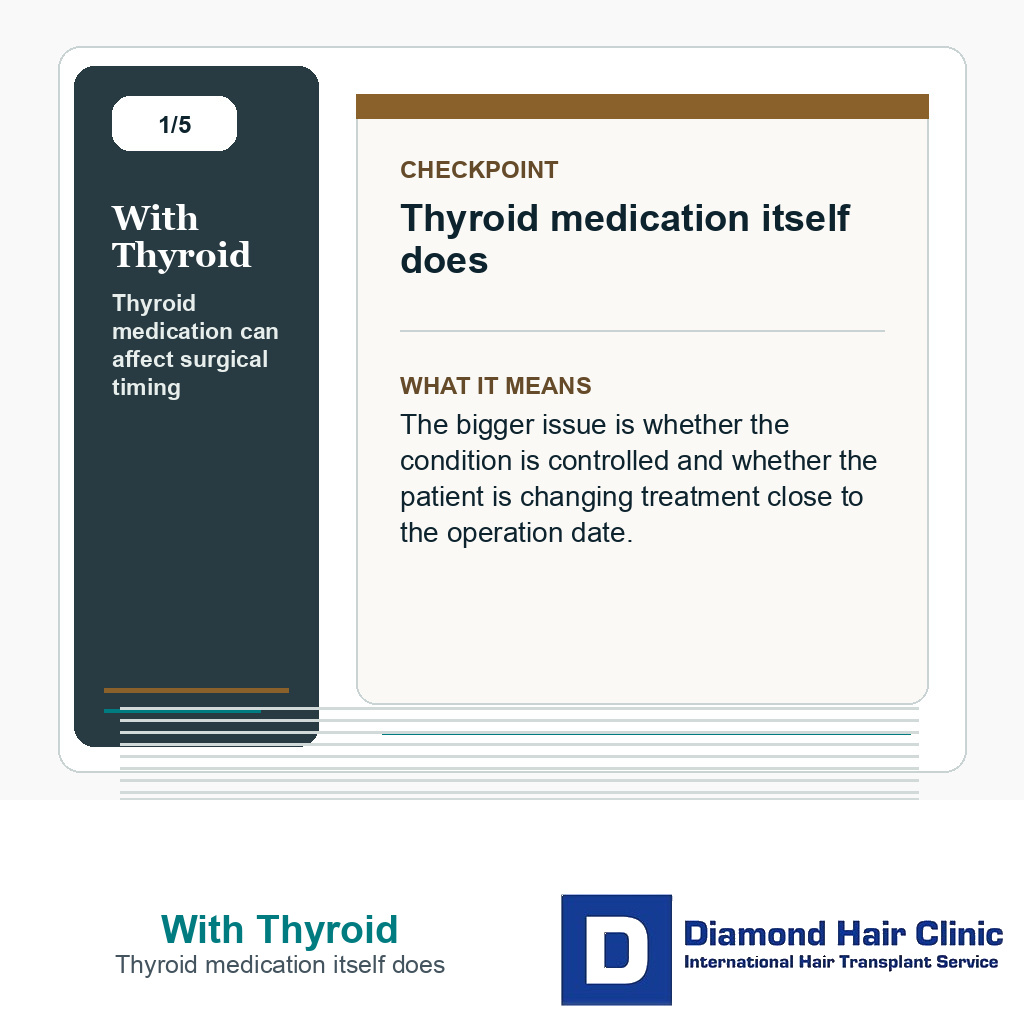
Thyroid medication itself is not the reason to refuse hair transplantation. The bigger issue is whether the condition is controlled and whether treatment is changing close to the operation date.
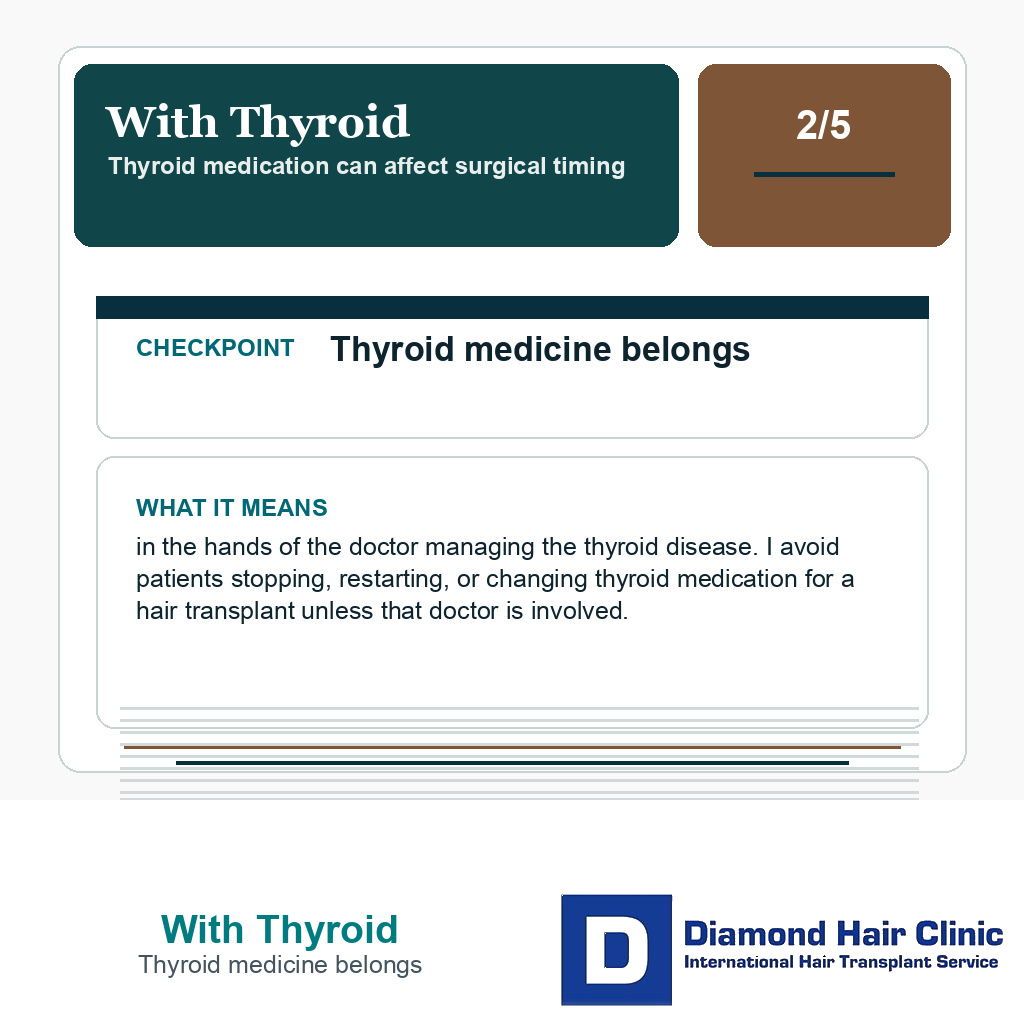
Thyroid medicine belongs with the doctor managing the thyroid disease. No one should stop, restart, or adjust thyroid medication for a hair transplant unless that doctor is involved.
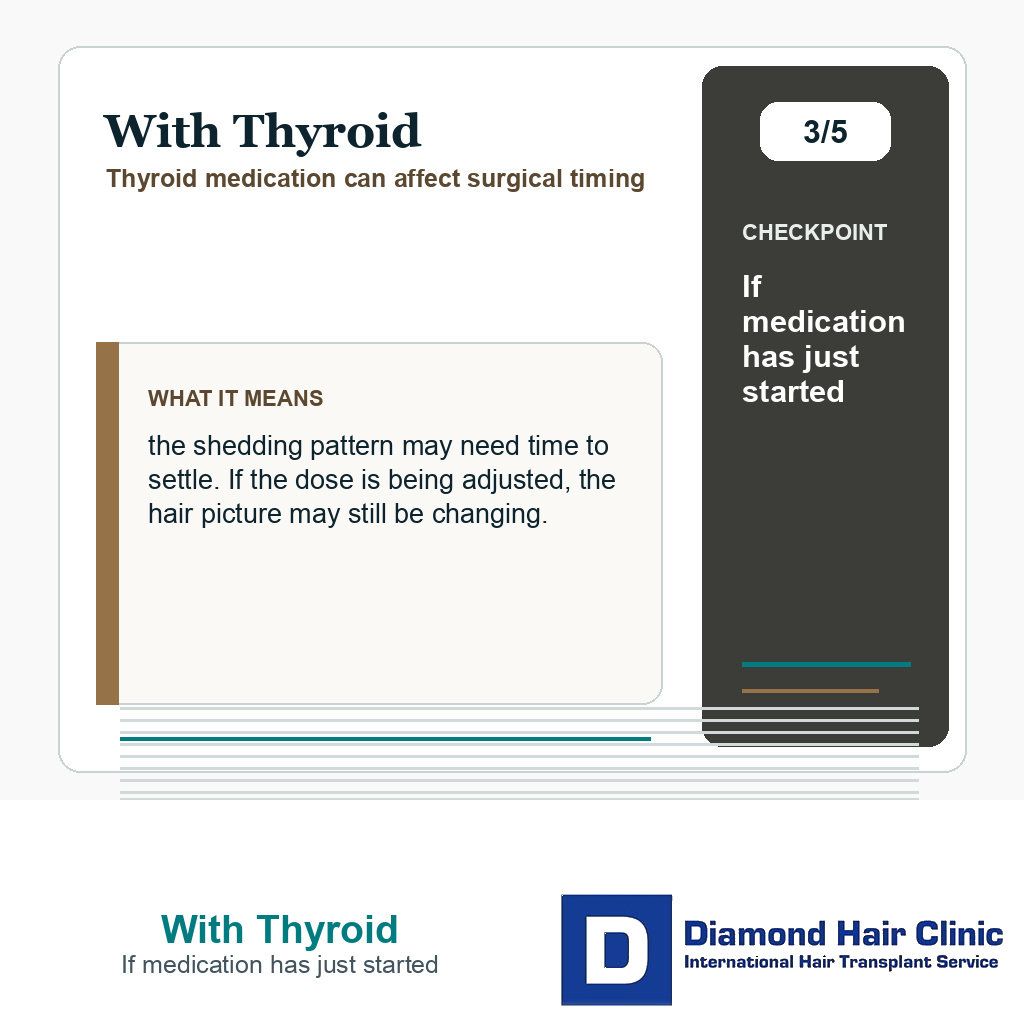
If medication has just started, the shedding pattern may need time to settle. If the dose is being adjusted, the hair picture may still be changing. If there are palpitations, uncontrolled symptoms, or a broader medical concern, elective surgery should wait for proper medical review.
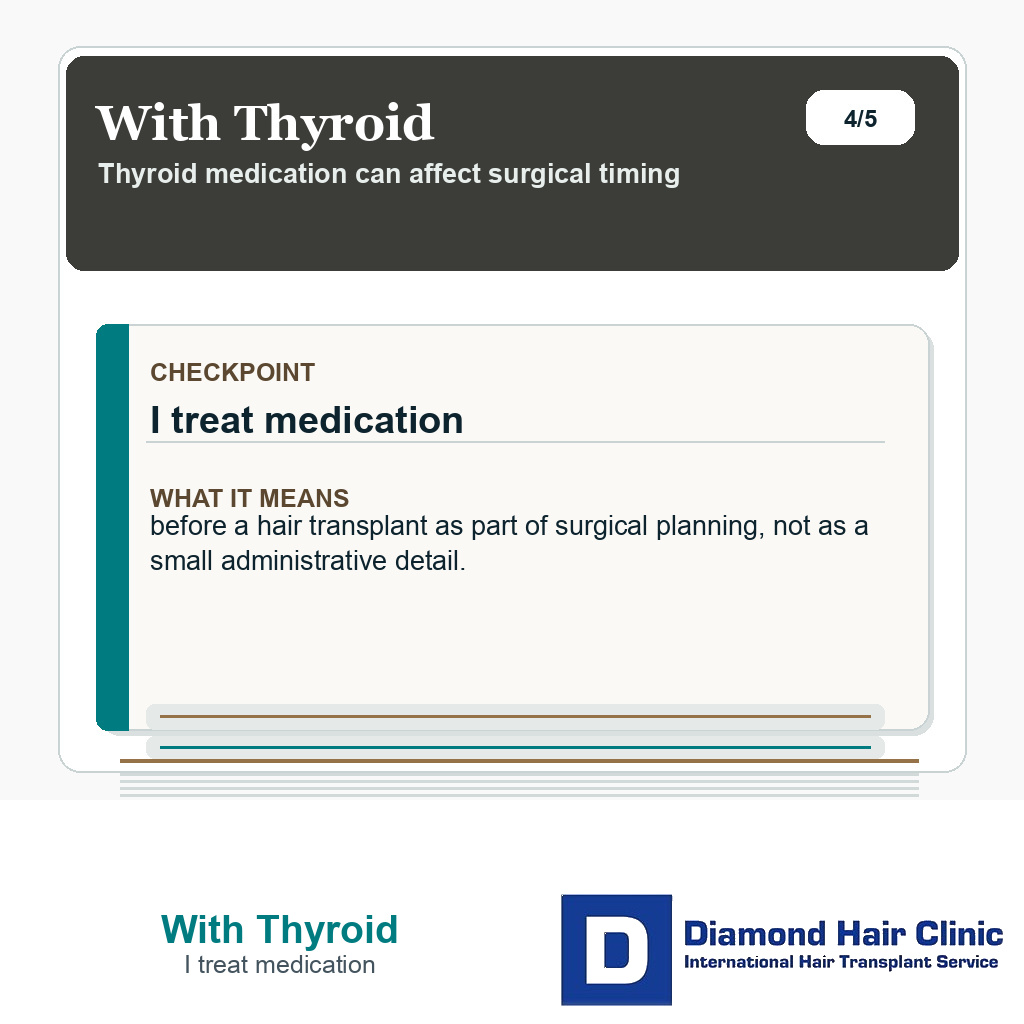
I treat medication before a hair transplant as part of surgical planning, not as a small administrative detail. Tell the clinic what you take, what changed recently, and whether the prescribing doctor considers the condition stable enough for an elective procedure.
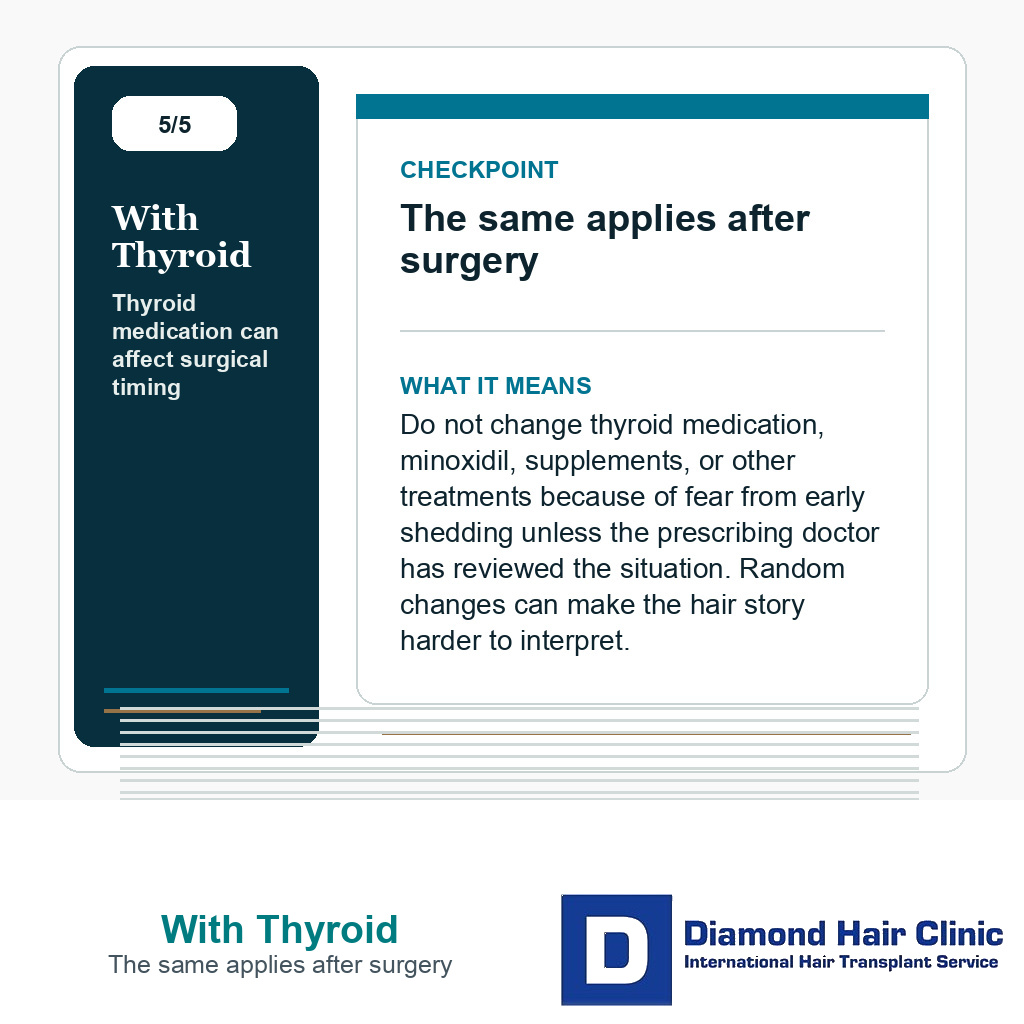
The same applies after surgery. Do not change thyroid medication, minoxidil, supplements, or other treatments because of fear from early shedding unless the prescribing doctor has reviewed the situation. Random changes can make the hair story harder to interpret.
With thyroid disease, these 5 slides keep the decision tied to stability, dose changes, shedding history, symptoms, and medicine decisions after surgery. Swipe sideways, use the arrows, or choose a number below the image.
PRP, minoxidil, and supplements cannot replace thyroid control
No supportive treatment should be used to avoid the real diagnosis. PRP, minoxidil, iron correction, vitamin correction, and scalp treatments may have a place in the right person, but they should not be sold as a way to bypass thyroid control or proper examination.
If minoxidil is suitable, it may support some native hair, especially when miniaturization is present. But if shedding is driven by a thyroid imbalance, minoxidil is not a substitute for medical treatment. My page about minoxidil after a hair transplant looks at this from the after surgery side. Medication can support a plan, but it does not make a weak plan strong.
PRP and exosomes after a hair transplant need case-by-case review. Supportive treatments should not be presented as a guarantee, and they should not distract from the reason the hair is shedding.
Supplements also need a medical reason. If a real deficiency exists, correcting it may help the broader hair situation. If there is no deficiency, buying more products does not solve the surgical question. The core question remains whether the hair loss is temporary, permanent, or mixed.
Clinic promises about thyroid related hair loss need closer review
A consultation is medically shallow when it gives a large graft number before understanding thyroid history, blood results, shedding timeline, and donor quality. A package that sounds confident may still miss the real problem if it treats every thinning scalp as the same condition.
I also slow down if a clinic says the transplant will fix thyroid hair loss, promises full density in one session, or ignores the possibility that some hair may recover after medical control. Those promises may sound reassuring at first, but they can lead to unnecessary graft use and disappointment later.
A better consultation should leave you clearer about limits. It should explain what surgery can improve, what medication or medical treatment may still be needed, and why donor grafts should not be used to chase temporary shedding.
The thyroid question deserves its own judgment because timing and diagnosis can change the entire plan. A readiness check helps avoid surgery while shedding is still active or unexplained.

Stable labs, a clear diagnosis, and quieter shedding should come before graft planning.
Donor area review matters during thyroid shedding
The donor area deserves extra caution when diffuse shedding or a medical condition may weaken hair quality. It is not enough to see hair at the back and sides. That hair has to be stable, strong, and safe to borrow.
If the donor looks weak, miniaturized, or globally thinner during an active shed, I do not treat the graft count as reliable. The issue is not only a thin result in the recipient area. It is also visible depletion in the donor area.
My separate discussion about a weak donor area explains the same donor protection principle. A medically complex case needs a stricter donor decision, not a more aggressive one.
I also avoid judging the donor from one flattering photo. Lighting, hair length, wet hair, styling, and camera angle can all hide weakness. With thyroid related shedding, repeated photos over time and a direct examination are stronger than one flattering image before trusting a high graft number.
Thyroid instability can change the timing
Thyroid history belongs in the consultation early. Medication changes, weight change, illness, stress, pregnancy, and postpartum hair loss triggers can all affect shedding and make the pattern harder to read.
The key distinction is temporary medical shedding versus stable pattern loss. A transplant can help a stable surgical pattern, but it cannot control a thyroid related shed that is still moving.
When the thyroid condition is stable and the diagnosis is clear, graft planning can be conservative and realistic. When the condition is unstable, waiting protects the donor area from being used before the real hair loss pattern is visible.

Read this review excerpt
Diamond Hair was the only clinic asking for medications, treatments I've done before, and other type of questions that make me feel confident on the professionalism that they practice with their clients.