


Pros and Cons of Hair Transplant in Turkey for Patients
A hair transplant in Turkey can be a good decision when the clinic model protects the medical plan. It becomes risky when low price, package convenience, social media results, or a high graft promise starts making the decision for you.
Treat the advantage and the risk as one decision. Lower travel cost helps only when follow up, surgical responsibility, donor reserve, and possible changes on the operation day are clear before you pay a deposit.
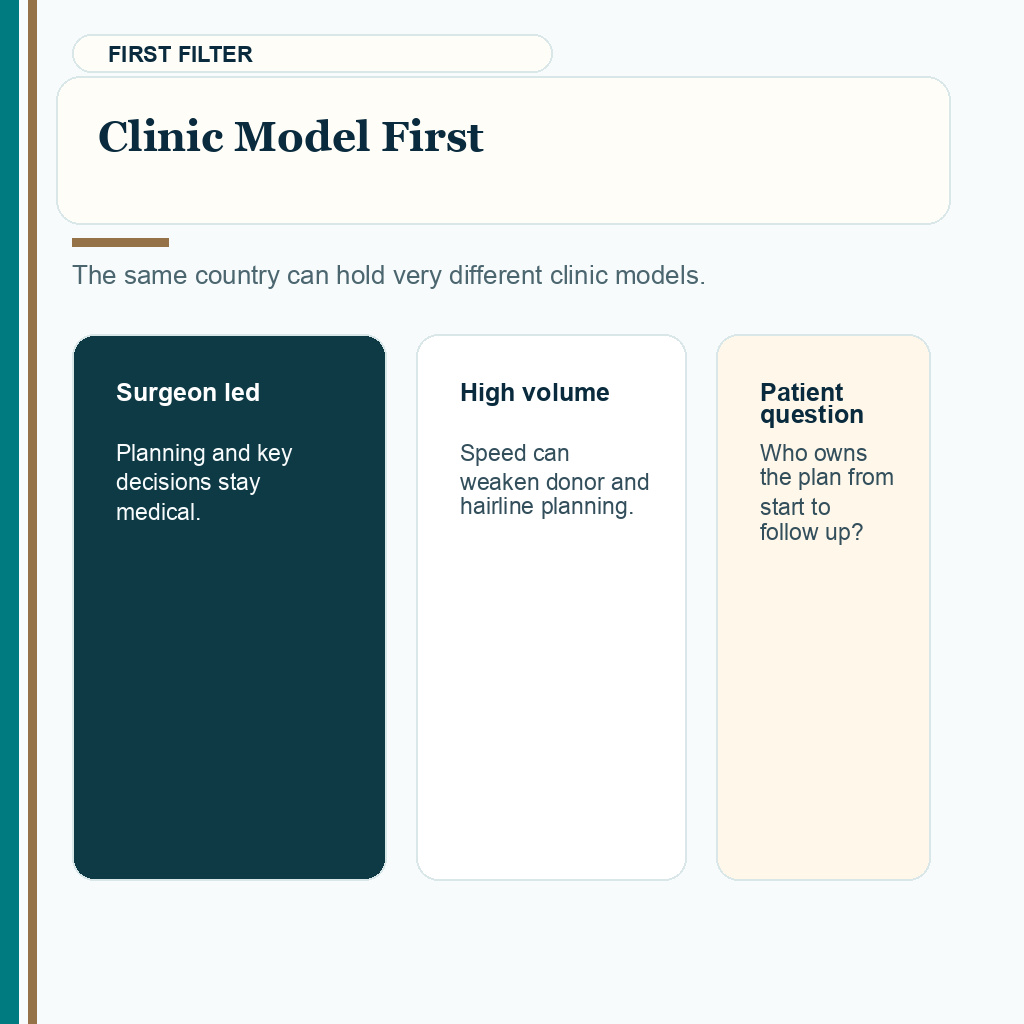
So I do not answer this as “Turkey is good” or “Turkey is bad.” Turkey has responsible surgeon-led clinics and high-volume hair mills. The clinic model matters more than the country. Look at who makes the surgical plan, who performs the important steps, how many people are treated in one day, whether consent is clearly understood, and whether donor reserve is protected for the future.
For cost planning, I use the same range I explain on the main hair transplant cost in Turkey page. A serious hair transplant in Turkey is usually around $5,000 to $10,000. In surgeon-led clinics in Istanbul with lower daily volume and complete travel support, a more realistic package is often closer to $7,000 to $10,000. Prices below this can exist, but a very low quote should make you ask what has been removed from the medical process to make that price possible.
The Clinic Model Decides the Real Answer
The main advantage of Turkey is value. You may be able to access experienced hair transplant teams, organized international care, and modern FUE surgery at a lower total cost than in many Western countries.
The main disadvantage is variation in clinic quality. Strong clinics and weak clinics can look very similar online. A polished website, hotel transfer, dramatic before and after photo, or fast WhatsApp quote does not prove that the operation will be medically responsible.
I judge Turkey through the clinic model. If the clinic explains your donor capacity, hairline design, graft number, aftercare, surgeon involvement, and complication route clearly, Turkey can be a strong choice. If those details stay hidden behind a package price, the risk becomes much higher.
This is also why I pay close attention to simple country comparisons. A weak clinic in an expensive country is still weak. A clinic in Turkey can still work with real medical responsibility. Look past the destination and judge whether the operation is being planned as surgery or sold as a travel product.
Country still matters for travel, regulation, language, and follow-up logistics. By itself, though, it is a weak filter for surgical quality. The stronger comparison is the clinic structure, including daily volume, surgeon authority, donor planning, consent, and the person who remains reachable after the patient leaves Turkey.
Before paying, you should know the named medical responsibility, who creates the recipient area incisions, what written plan you are accepting, how consent is explained, and who remains reachable if something looks abnormal after you return home. Those details are more protective than any country label. If a clinic will not name the responsible doctor before payment, the low price is not ready to guide the decision.
Real Advantages When the Clinic Model Is Right
Turkey has become a major center for hair restoration because many clinics treat international patients every day. This creates practical advantages when the clinical side is strong. Good international systems can make photo assessment, airport transfers, hotel organization, translators, early washing visits, and remote follow-up feel organized instead of improvised.
Turkey also has many surgeons and teams who work with FUE hair transplant, Sapphire FUE, and DHI implantation. Technique names alone do not guarantee a good result, but a mature surgical market can make access easier for the right case.
Another advantage is travel access. Istanbul has direct flights from many regions, and many people can arrange the trip without a complicated medical tourism agency. This can make the process more convenient, especially if you have already researched how to choose a hair transplant clinic in Turkey and know which questions matter.
There is also a practical advantage in familiarity with international concerns. Many people arrive with limited time, different languages, anxiety about travel after surgery, and many questions about washing, swelling, scabs, and the first flight home. A clinic that is genuinely experienced with international patients should be prepared for those ordinary concerns without rushing the medical conversation.
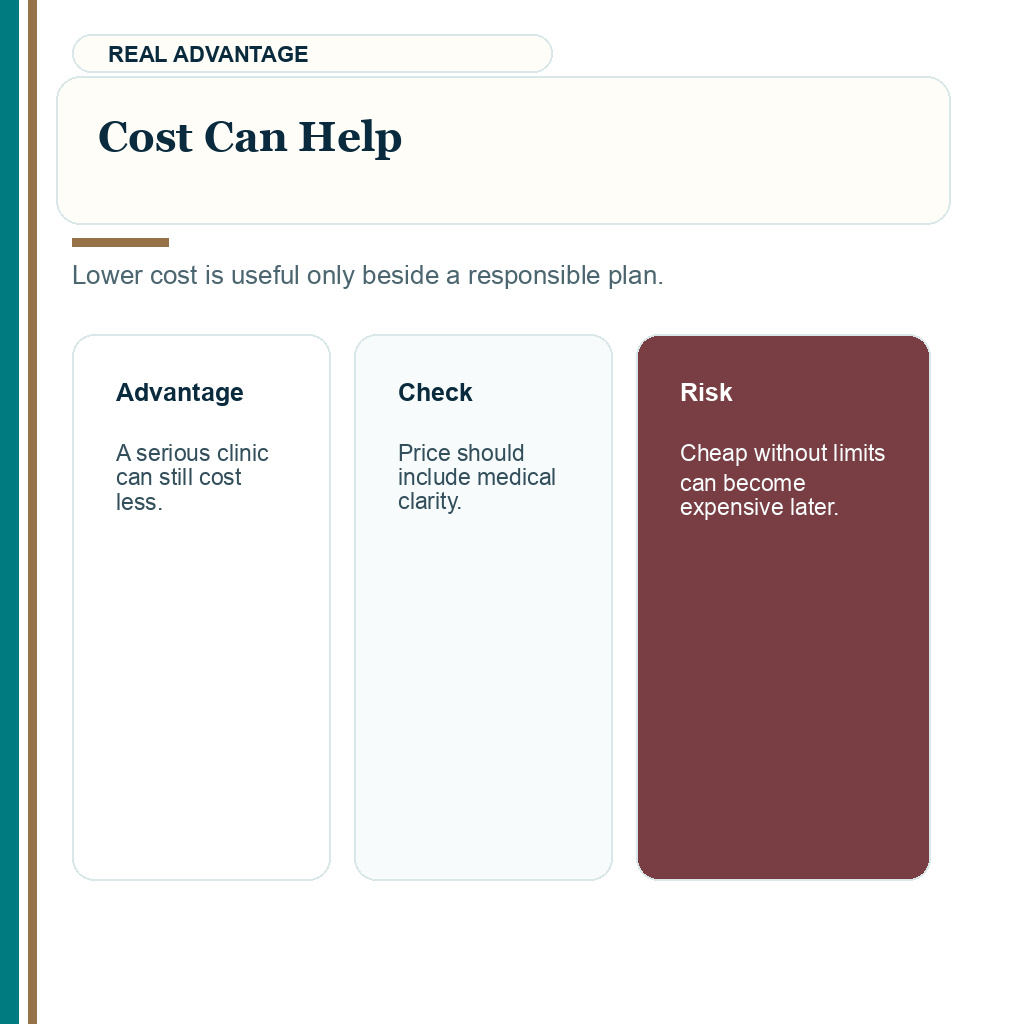
The real advantage is not tourism. It is the possibility of receiving serious surgery at a more reasonable total cost, if the clinic model is right.
Lower Cost Can Still Be Medically Reasonable
Lower cost in Turkey can be medically reasonable because clinic operating costs, staff costs, and travel arrangements are different from countries such as the United States, Canada, the United Kingdom, and much of Western Europe. A lower national cost base does not always mean poor surgery.
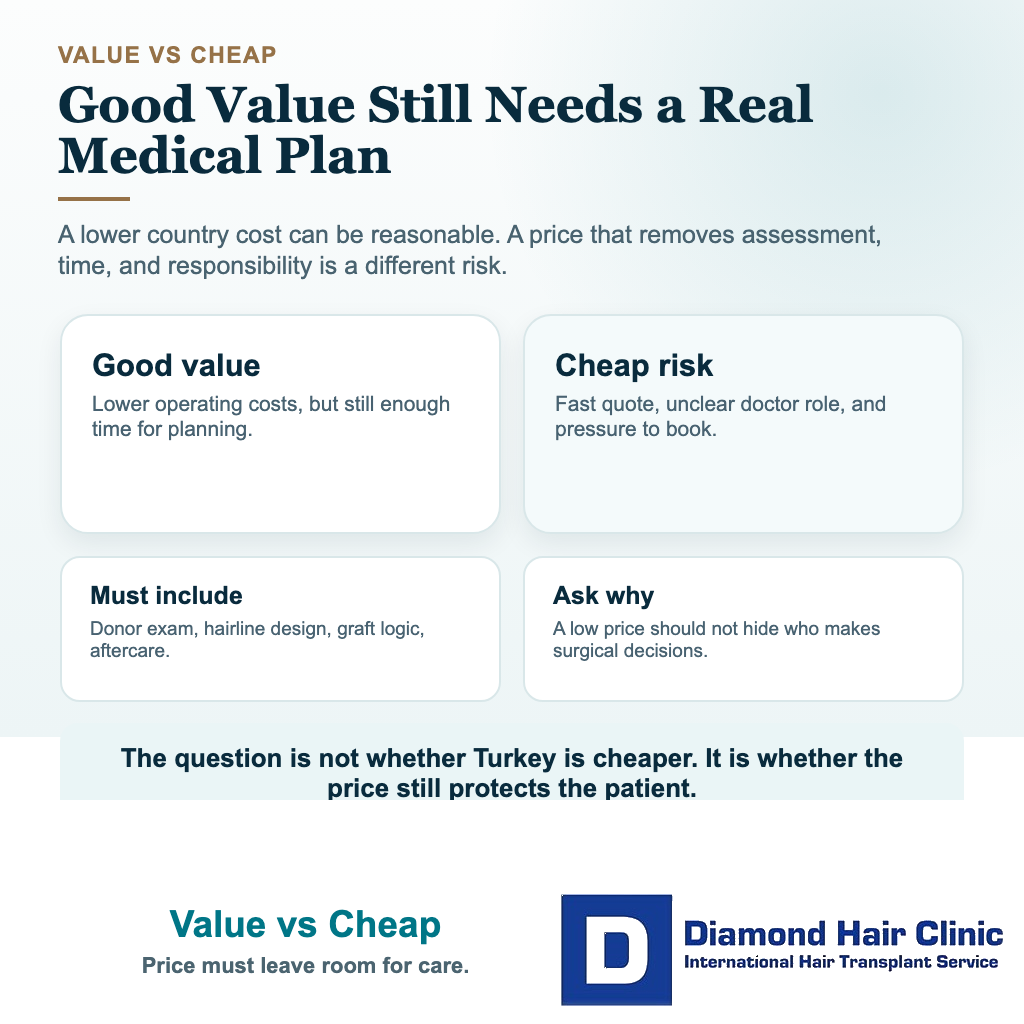
But cheap surgery and good value are not the same thing. Good value means the price still allows time for case assessment, donor area examination, natural hairline planning, recipient area incision design, graft handling, sterile conditions, aftercare, and direct medical responsibility.
If a clinic offers a very low price, slow down and ask what the price includes medically. Is the surgeon personally involved? How many people are treated that day? Who creates the recipient area incisions? What happens if the donor area looks weaker in person than it looked in photos?
A lower national cost base can explain part of the saving. It does not excuse unclear responsibility, poor records, weak sterile practice, or a plan that cannot change after examination.
A cheaper operation is only a saving if the first surgery is planned well. A poor first operation may later require hair transplant repair, donor camouflage, extra travel, and a much harder emotional recovery.
I would also separate the surgery price from the total decision cost. Flights, hotel timing, time away from work, a companion, aftercare products, possible local medical review, and extra nights can change the real budget. A clinic quote may look low, but if the plan is rushed or unclear, the financial risk is not low.
Complete Packages Help Only When the Medical Plan Comes First
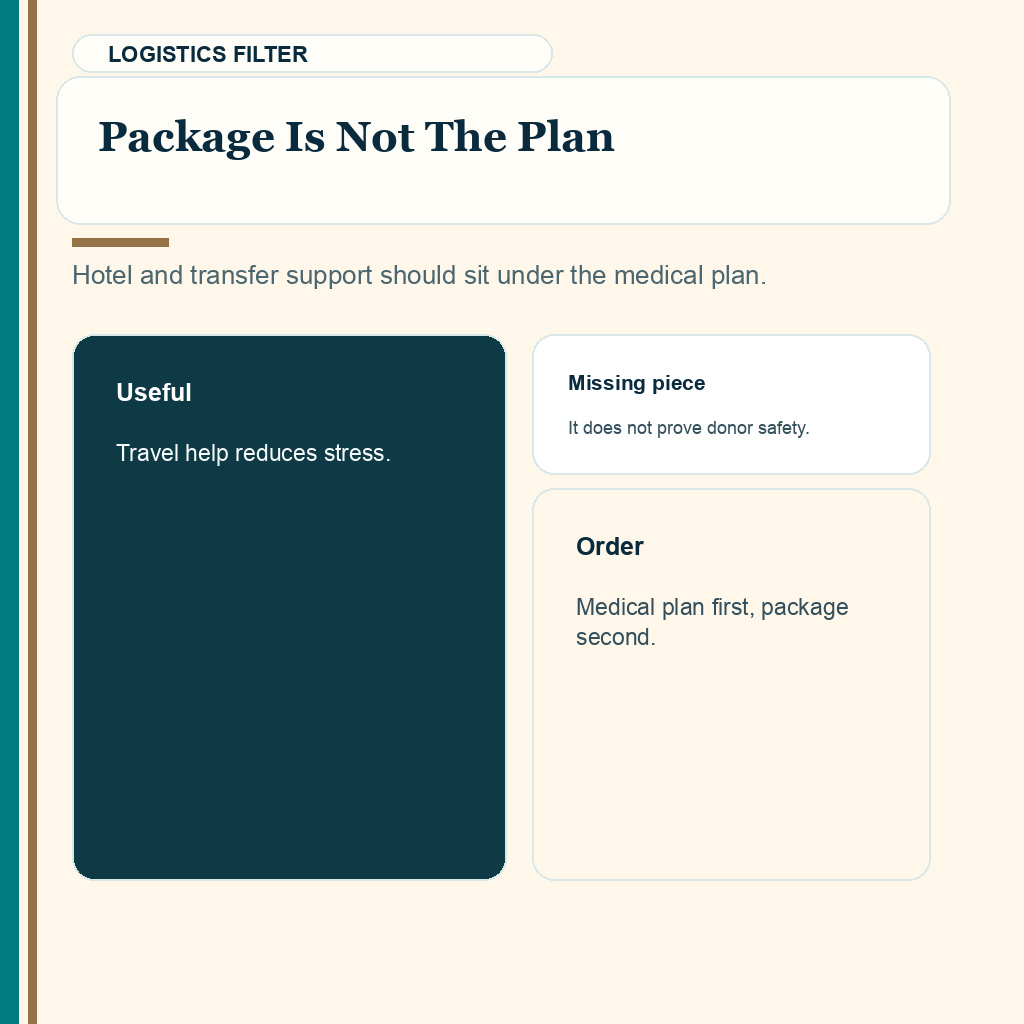
A complete package can help when it organizes travel around a serious medical plan. Hotel accommodation, airport transfer, clinic transfer, translator support, medication, aftercare products, first wash, and early control can make the trip easier when you are coming from another country.
The problem begins when the package becomes more important than the surgery. A comfortable hotel does not tell me whether donor reserve is strong. A private transfer does not tell me whether the hairline is age appropriate. A fixed graft number does not tell me whether the plan will still look natural in ten years.
This same principle matters in hair transplant packages in Turkey. A package should make the logistics clearer, not hide the medical responsibility. The travel side should support the operation. It should never replace the surgeon’s judgment.
A safe package should also be able to change. If the in person examination shows weaker donor capacity, a safer clinic should be willing to reduce the graft number, raise the hairline, stage the crown, delay surgery, or even advise against surgery. If the package only moves in one direction toward more grafts and faster payment, you are not being protected.
The 10 balanced decision slides below show where Turkey can help and where the same factor can become a risk. Swipe sideways, use the arrows one slide at a time, or choose a number below the image.

Read this review excerpt
Dr Mehmet greeted me and we spent a good hour discussing the procedure and drawing my new hairline. Nothing that I asked for was too much and I never felt rushed or pressured.
Read this review excerpt
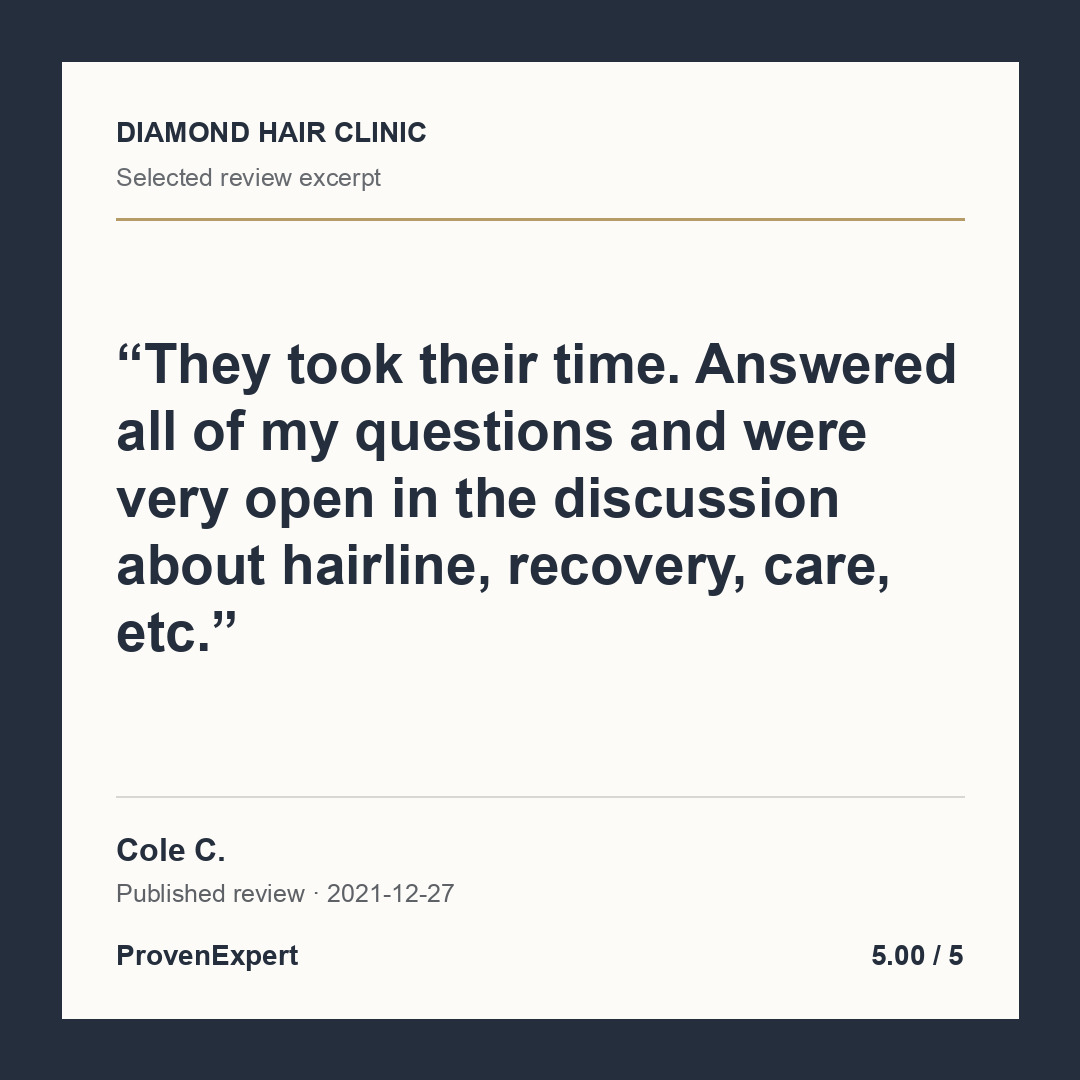
They took their time. Answered all of my questions and were very open in the discussion about hairline, recovery, care, etc.
Disadvantages That Need Real Planning
The main disadvantage is that clinic quality is not easy to judge from outside the country. Strong branding, heavy advertising, celebrity content, a large number of reviews, or many impressive results can make a clinic feel safer than it is. That assumption can be dangerous.
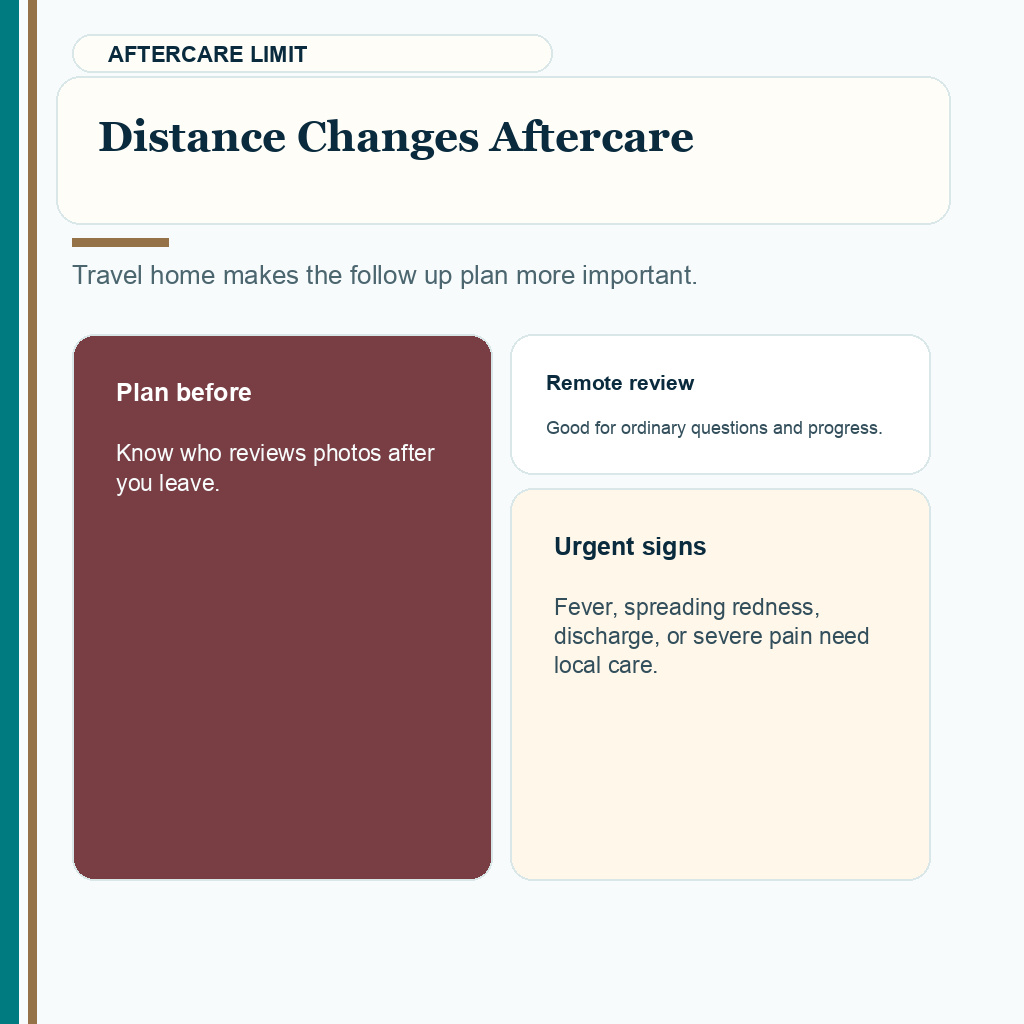
Another disadvantage is distance after surgery. If you develop swelling, infection concern, folliculitis, unusual pain, poor healing, or strong anxiety after returning home, an in person visit is not always simple. Remote photo review can help with ordinary questions, but it is not the same as urgent local medical care if there is fever, spreading redness, discharge, severe worsening pain, or an open wound.
Language also matters. A translator can help with logistics, but translation is not the same as clear medical consent. Hairline position, donor limits, crown priority, medication, risks, aftercare instructions, and who is responsible for each surgical step should not become vague because the conversation is moving too quickly.
The final disadvantage is pressure to decide quickly. Travel dates, flight prices, limited package slots, and deposit deadlines can make surgery feel urgent. Surgery should not be booked like a holiday discount.
There is also a legal and practical distance problem. If a result is poor or a complication is not handled well, solving the issue from another country is difficult. Before travel, you should know which doctor is responsible, which operative records you will receive, whether elective surgery complications are covered by insurance, and how the clinic will stay reachable after the early excitement has passed.
Consultation before travel matters more, not less. Ask difficult questions before paying a deposit, because after flights and hotel dates are arranged, many people feel psychologically committed even if the plan no longer feels right.
High Volume Hair Mills Create the Main Risk
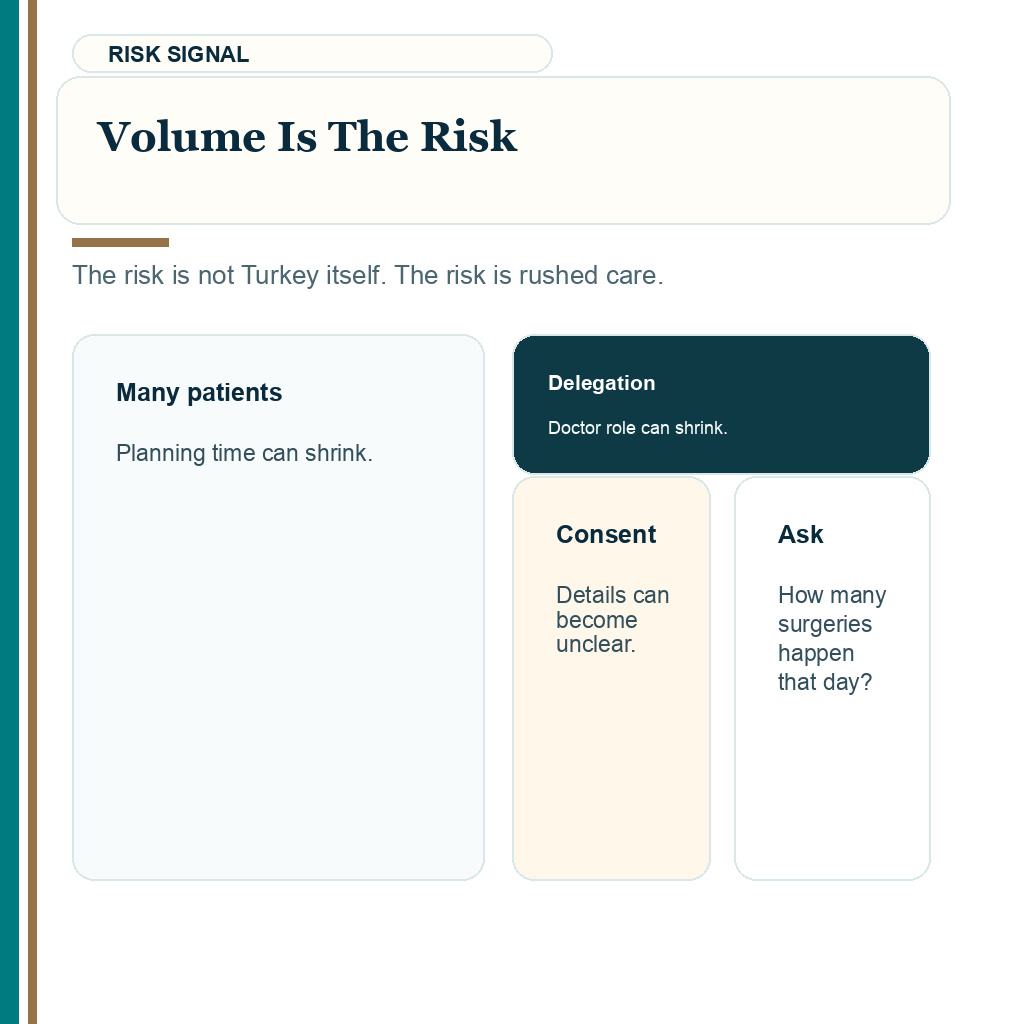
High volume hair mills are risky because the operation can become an assembly line. The consultation may be sales driven, the doctor’s role may be unclear, and the patient may be treated as one booking among many rather than as one surgical case with lifetime donor limits.
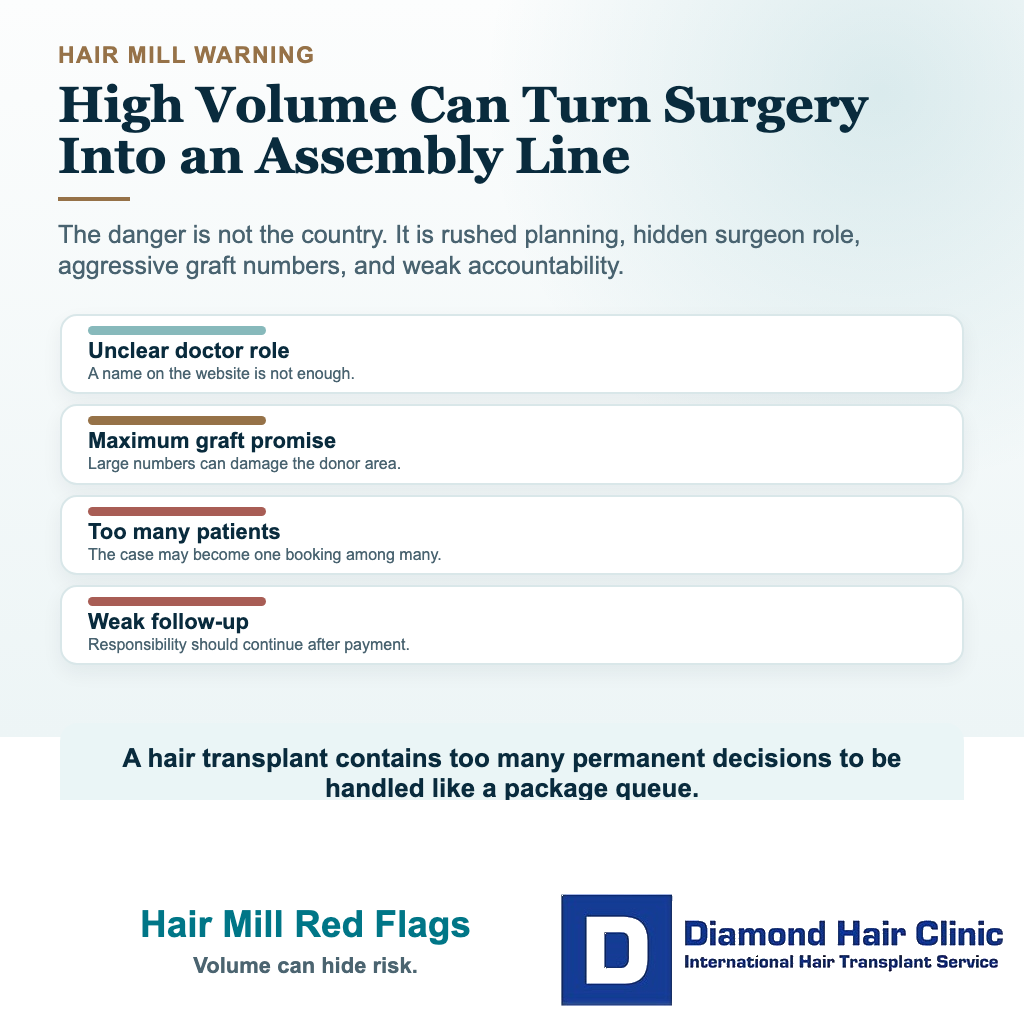
A hair transplant contains thousands of small decisions. Where to extract, how to spread extractions, which grafts belong in the hairline, how dense the recipient area can safely be, how the angles should follow native hair, and when to reduce the graft number are not minor details.
If these decisions are rushed or delegated without proper medical responsibility, the result can be unnatural. The donor area can become visibly thin. The hairline can look low or straight. Growth can be weak. In some patients, the damage is not fully repairable because the donor supply has already been spent.
In the recipient area, the danger is not only density. The openings need the right angle, direction, distribution, and depth. Hair does not grow in mechanical rows. If the incision pattern is repetitive, if multi grafts are placed too far forward, or if the angles fight the native direction, the result may look artificial even when many grafts survive.
I advise patients to read the warning signs on red flags of Turkish hair mills before comparing prices. A clinic that says yes too quickly may be more dangerous than a clinic that asks difficult questions.
Surgeon Involvement Matters More Than the Country
The country does not design the hairline. The country does not protect the donor area. The country does not decide whether a young patient needs to wait, whether the crown should be staged, or whether the graft number is too aggressive. Those are medical and artistic decisions.
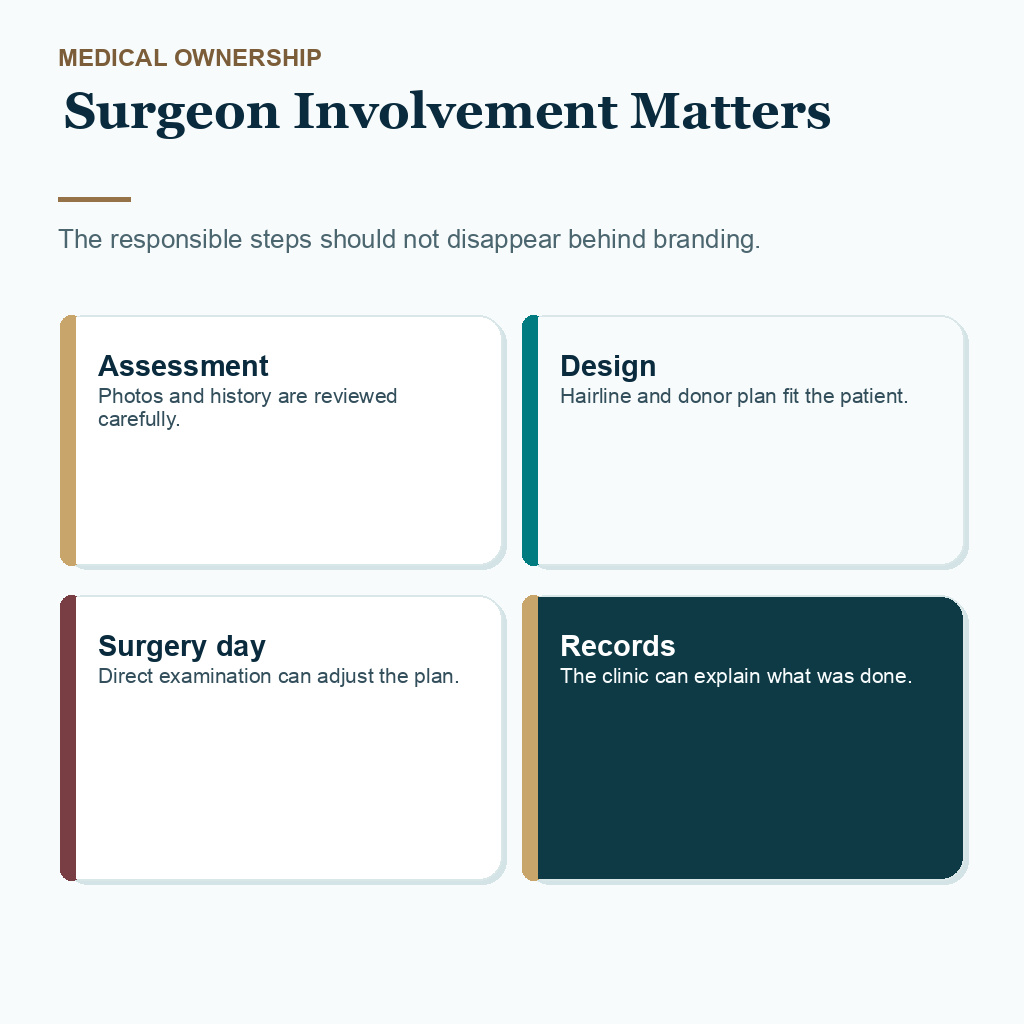
Before committing, know who performs the hair transplant surgery and who is responsible for each important step. It is not enough to see a doctor’s name on a website. You need to know whether that doctor evaluates the case, designs the hairline, creates the recipient area incisions, supervises extraction and implantation, and remains available after surgery.
Assistants can have an important role in hair transplantation. A skilled team matters. But a team should work under a clear medical plan, not replace the surgeon’s responsibility.
My model is a surgeon-led hair transplant because I do not see hair transplantation as a volume service. I see it as a permanent change to the patient’s face and donor area, so the plan needs time, attention, and accountability.
Surgeon involvement also matters on the day of surgery because the original online plan may need adjustment. Photos can underestimate thinning, scalp contrast, donor miniaturization, crown size, or previous scarring. If the person with medical responsibility is not present and empowered to change the plan, the patient may receive the package that was sold rather than the surgery that is safest.
High Graft Numbers Can Damage the Donor Area
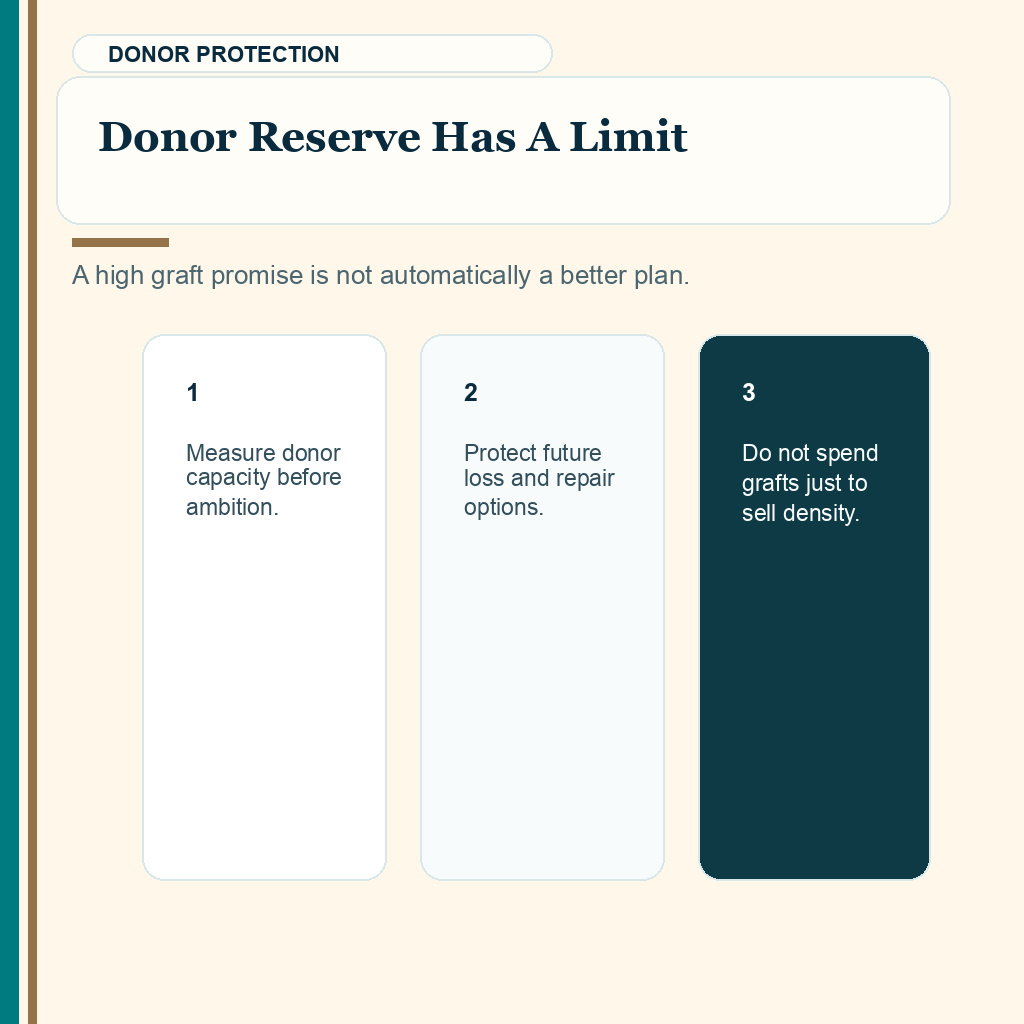
More grafts are not always better. Donor hair is a limited resource. Once grafts are removed, they do not grow back in the donor area. If too many grafts are taken, or if they are taken unevenly, the patient can develop patchy thinning, visible scarring, and fewer options for future hair loss.
This is one important disadvantage of choosing a clinic by graft number. A patient may compare 3000, 4500, or 5500 graft offers and assume the largest number is the best value. In reality, the correct number depends on donor density, hair caliber, scalp contrast, recipient area size, future hair loss, and the design of the hairline.
With donor area overharvesting, this mistake can be very difficult to correct. A clinic that promises maximum grafts without discussing donor management is not protecting the patient’s future.
The graft plan does not have to be the biggest session to be the right one. It may be a slightly higher hairline, a staged crown plan, medical stabilization, or waiting until the hair loss pattern is clearer. The best graft number is the number that fits the patient, not the number that sells the package.
Crown coverage is a good example. The crown can consume many grafts and still look less dense because of the spiral pattern and larger surface area. If the clinic spends too many grafts on the front and crown in one aggressive session, the patient may have little reserve left for future thinning. Donor planning has to think in years, not only in the first set of after photos or the first excited review.
Travel and Aftercare Problems Need Planning
Travel after a hair transplant needs planning because the first days are not ordinary holiday days. The scalp is healing, the grafts need protection, swelling may move around the forehead, and sleep position matters. Sightseeing, heavy walking, alcohol, sweating, and rushed flights can make recovery harder than patients expect.
Timing matters. That also affects how many days to stay in Turkey after a hair transplant. Some people can travel on a short schedule, but the plan should still allow early washing, swelling control, and enough rest before the flight.
Flying itself is usually possible when you are stable, but the itinerary should be sensible. My guide to flying after a hair transplant covers the practical side. A short flight after a quiet recovery day is different from a long route with several transfers, heavy bags, no sleep, and pressure to return to work immediately.
Travel insurance matters too. A normal policy may not cover elective surgery complications abroad, so travel insurance for a hair transplant abroad should be checked before booking, not after a problem appears.
After you return home, the clinic should still be reachable. Proper hair transplant aftercare is not only a printed instruction sheet. You need to know what is normal, what is not normal, when to send photos, and when a local doctor should be contacted.
Plan time off work realistically. Some people can return to desk work quickly, but swelling, redness, scabbing, social visibility, and sleep disruption can still affect the first week. If the only way the trip works is to fly home immediately and pretend nothing happened at work the next morning, the schedule may be too tight.
Marketing, Reviews, and Before and After Photos Need Careful Reading
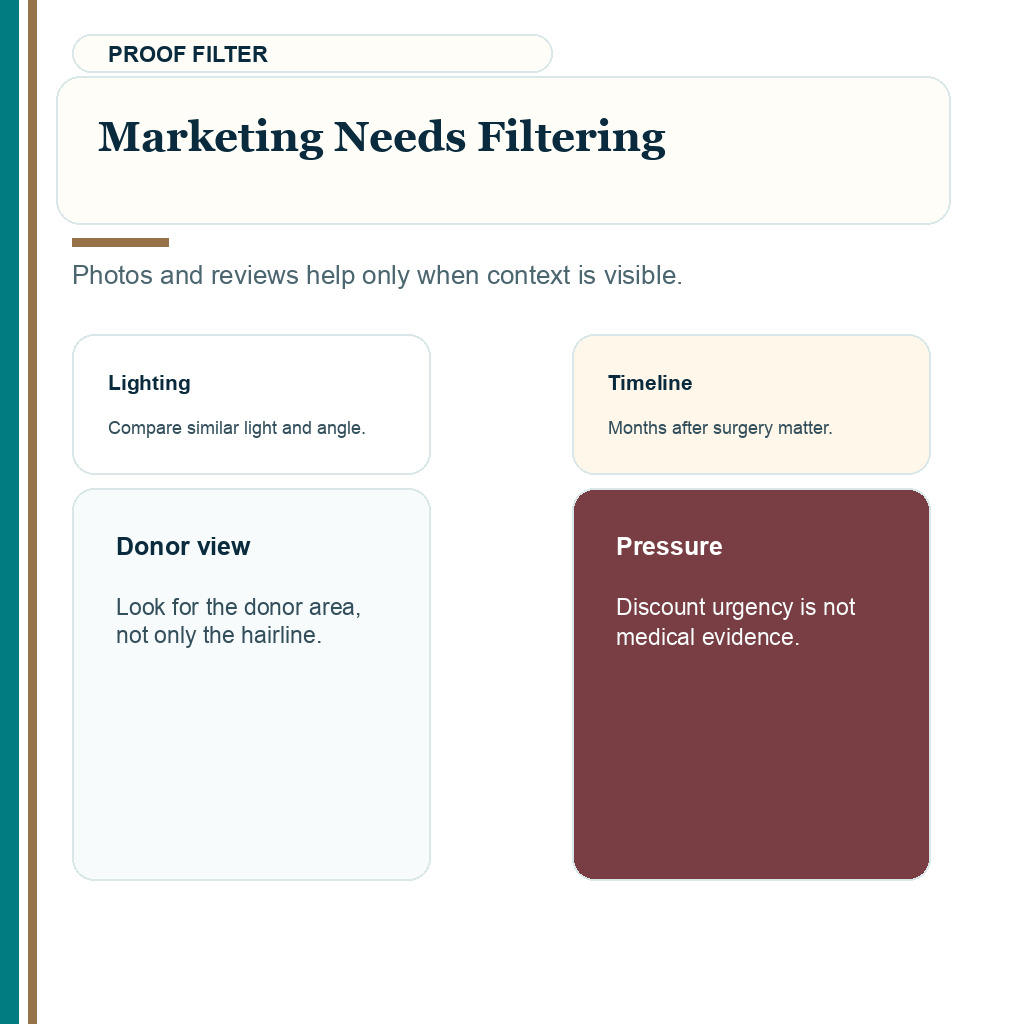
Marketing can help you discover clinics, but it should not make the medical decision for you. Paid advertisements, influencer videos, clinic rankings, and dramatic transformation photos can all make a clinic feel safer than it is.
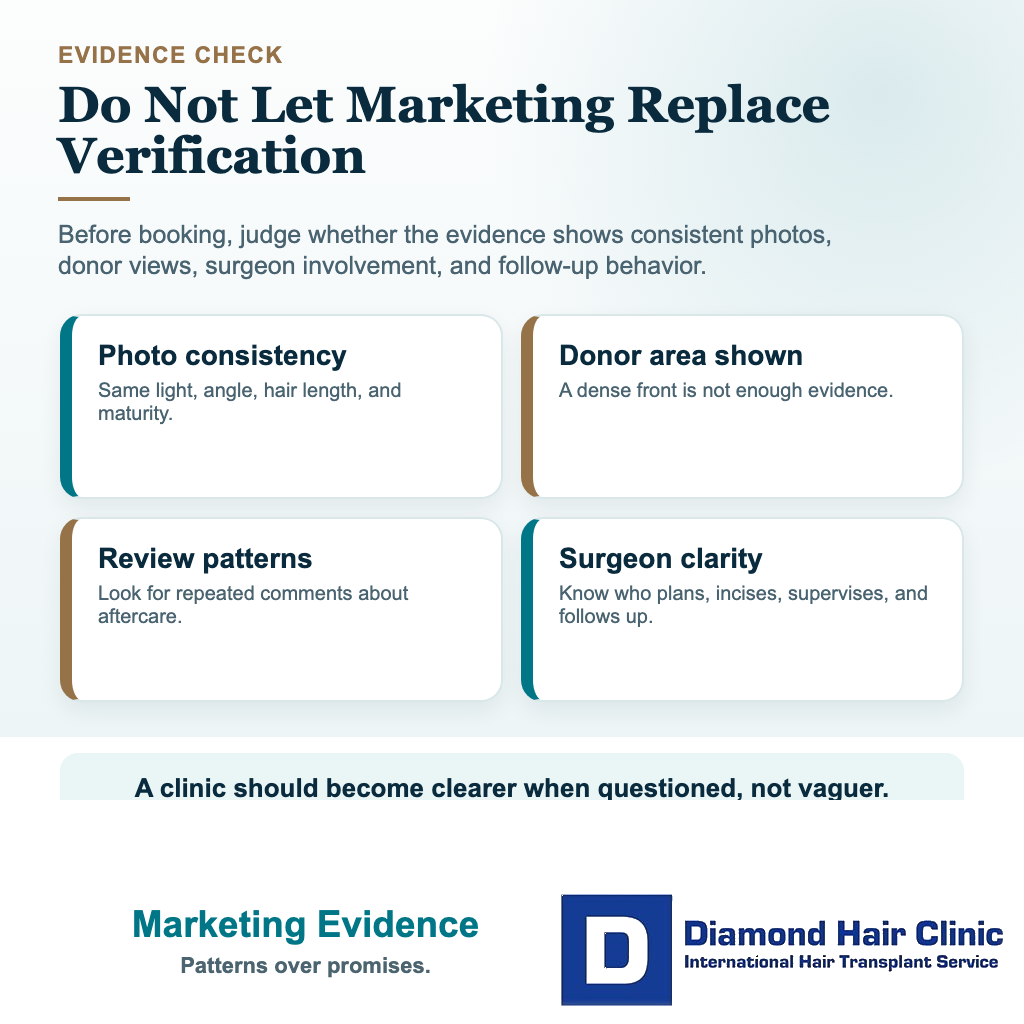
Judge before and after photos carefully. Look for similar lighting, similar angles, similar hair length, dry hair, wet hair when relevant, donor area views, and enough time after surgery to judge maturity. A result can look dense under one lighting condition and much thinner under another.
Hair transplant reviews in Turkey can be useful when they show repeated patterns. I pay attention to whether people describe surgeon communication, hairline planning, aftercare, donor area healing, and whether the clinic remained responsible after payment. One perfect review does not prove a clinic is excellent, and one angry review does not prove it is unsafe. Patterns matter more than isolated emotion.
Technique claims should also be judged calmly. DHI and FUE are often presented as if the method name alone decides the result. It does not. The method is only valuable when it is chosen for the right patient and performed with proper planning.
Marketing that avoids limits makes me cautious. If every patient is shown with maximum density, every consultation ends with a high graft number, and every result is described as perfect, the clinic may be selling certainty rather than explaining surgery. A useful consultation should make you clearer, not only more excited.
Turkey Is Not Right for Every Patient
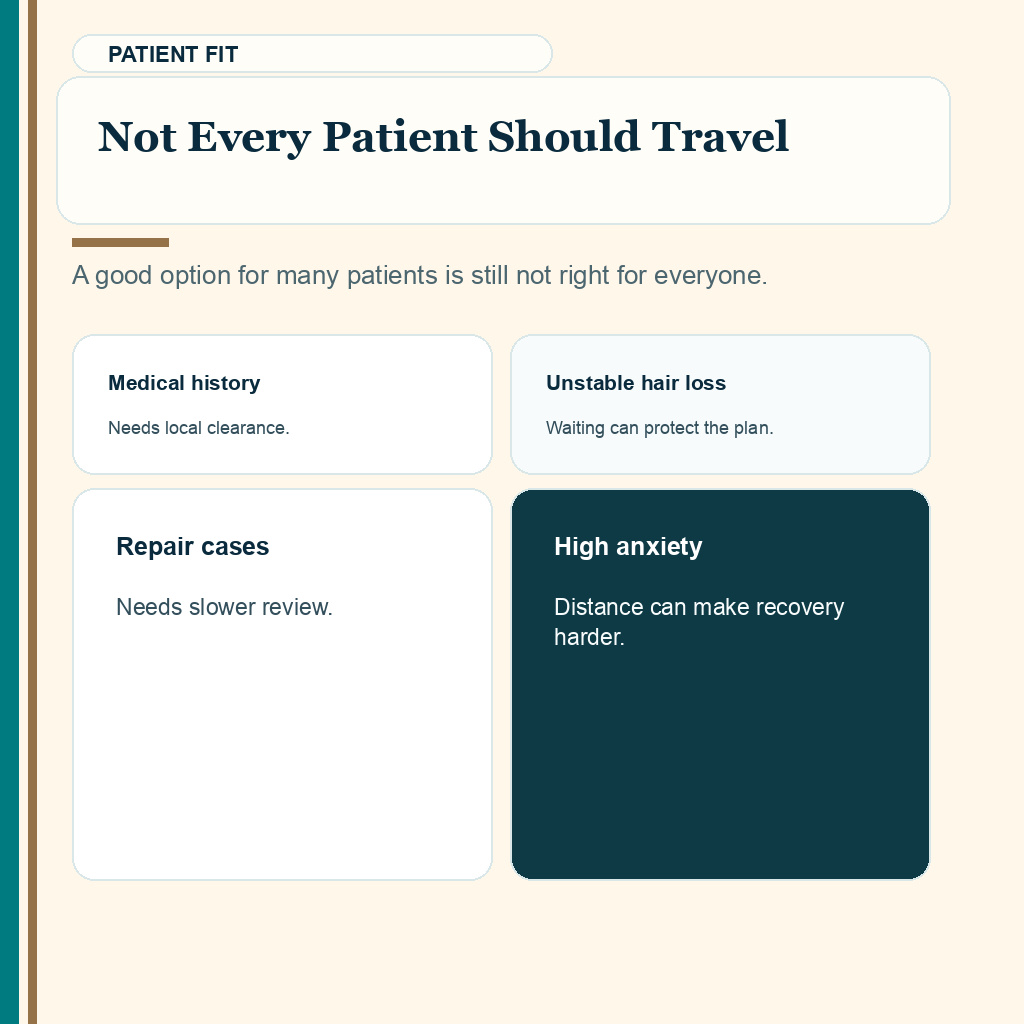
Turkey is not the right choice for every patient. Some patients need more medical evaluation before any surgery. Some are too young, actively thinning, medically unstable, unrealistic in their expectations, or asking for a hairline that would consume too many grafts too early.
Candidacy comes first. When a good candidate for a hair transplant review remains uncertain, traveling abroad for a package can make the pressure worse because money, flights, and dates begin to push you toward surgery.
Medical history also matters. A history of blood clots, heart disease, immune problems, poor healing, or medicines that affect bleeding can change whether travel is sensible and how surgery should be timed. Being allowed to fly is not the same as having an itinerary that is medically sensible for your case.
Turkey can be a very good choice for a patient with a suitable donor area, a realistic goal, enough recovery time, and a clinic that gives clear medical reasoning. It is a poor choice when the patient is mainly chasing the lowest price, fastest date, or largest graft number.
Think beyond the first year. Hair loss may continue. A natural hairline has to age well. The donor area may be needed later for the crown or for future thinning. For hairline design in hair transplant, a design that looks exciting today can become a problem later if it is too aggressive.
Younger patients need particular caution. If hair loss is still active, a transplant can create a strong front while the native hair behind it keeps thinning. That point should not be taken to mean surgery is never possible, but the design has to be more conservative and the medication discussion should be responsible. A clinic that ignores future hair loss is not giving the patient the full decision.
The medical risk has to fit the patient
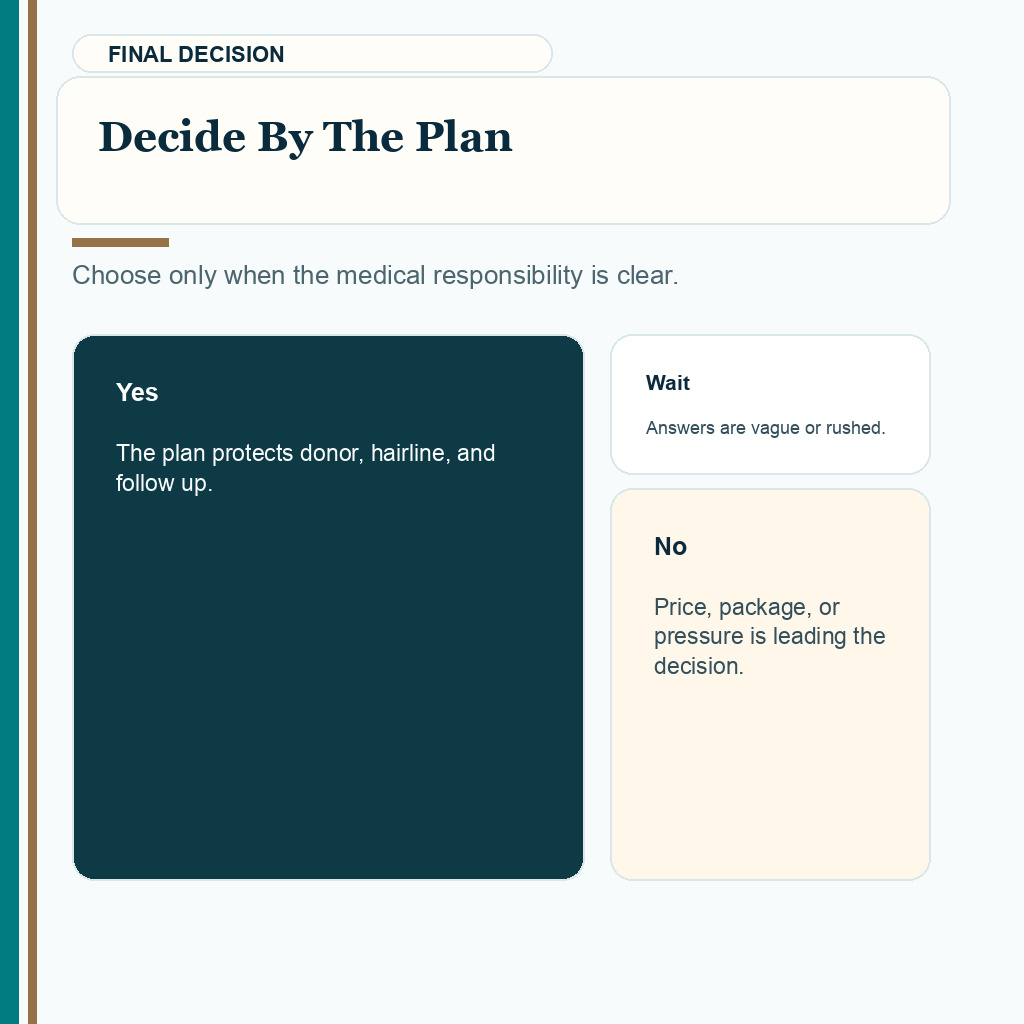
Do not decide by country, price, or package alone. Decide by the quality of the medical plan. Before you commit, the clinic has to explain your diagnosis, donor capacity, graft range, hairline design, technique choice, aftercare, follow-up, and the surgeon’s role.
Vague answers, easy yeses, very high graft promises, and hidden surgical responsibility are warning signs. A careful clinic can explain the donor limit, the surgical role, and the point where it would refuse an unsafe request.
Turkey can offer excellent hair transplant surgery when the clinic is chosen carefully. It can also create serious harm when surgery is sold like a travel package. Commit only when you understand both the benefit and the limit before a single graft is taken from your donor area.
I give the more careful answer when that protects your future. A natural result has to grow well at 12 months and still make sense as you age and as hair loss continues.
If Turkey gives you a clear surgeon, a clear donor plan, realistic density expectations, careful aftercare, and enough time to recover, the advantage can be real. If Turkey gives you mainly a cheap number and a quick date, the advantage may disappear the moment donor reserve is damaged.
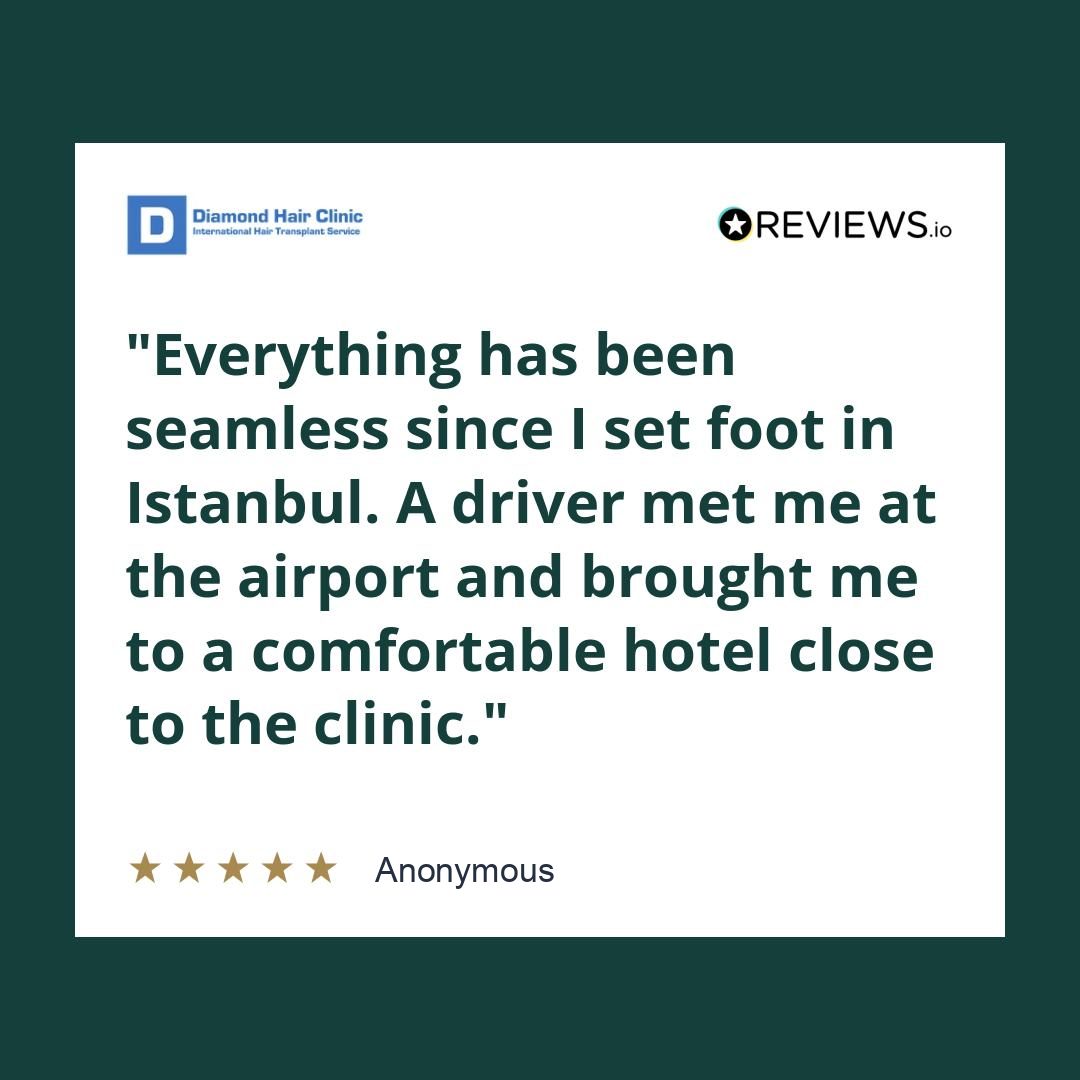
Read this review excerpt
Everything has been seamless since I set foot in Istanbul. A driver met me at the airport and brought me to a comfortable hotel close to the clinic.
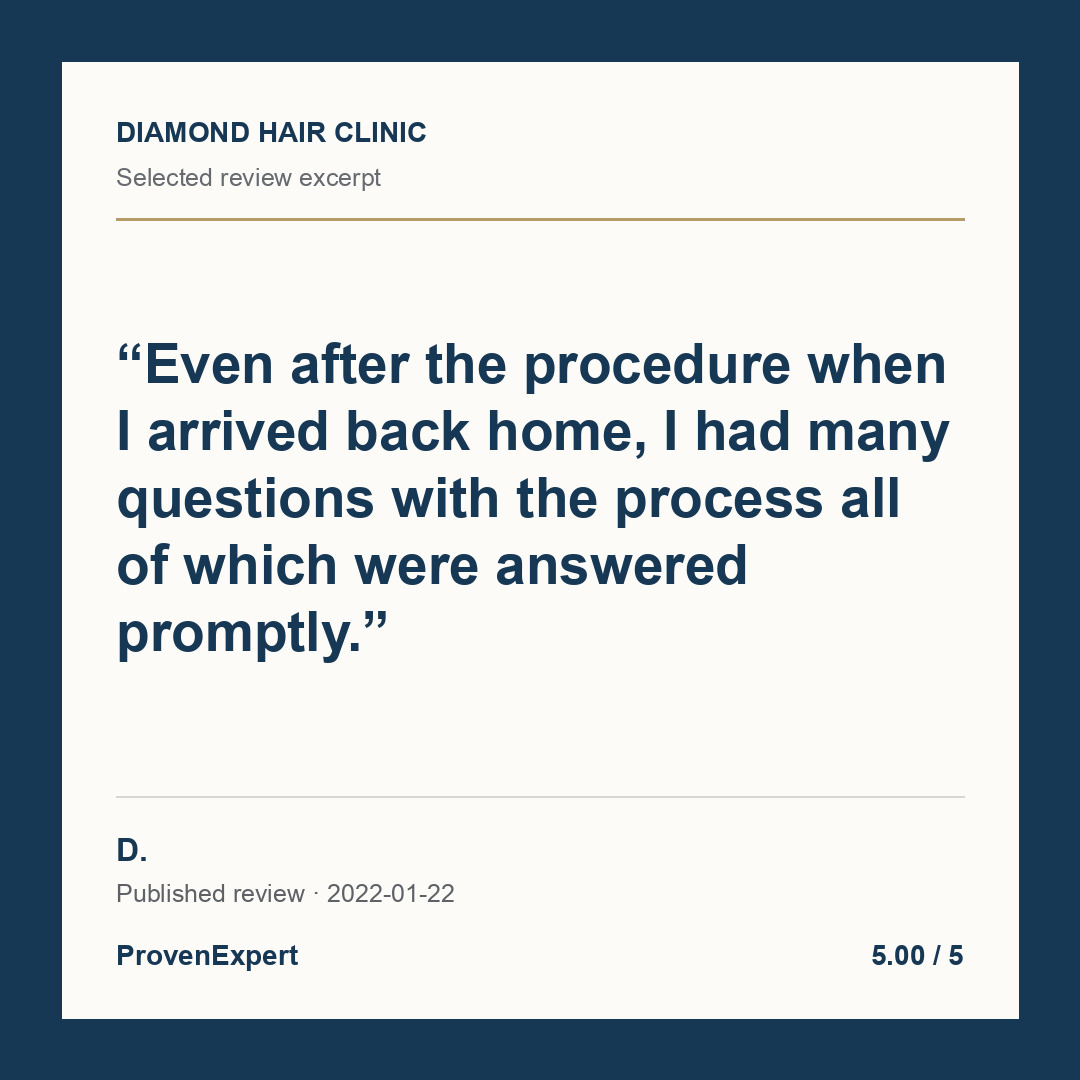
Read this review excerpt
Even after the procedure when I arrived back home, I had many questions with the process all of which were answered promptly.