


Turkey Stay Length for Hair Transplant Patients
For most international hair transplant trips, I plan at least 3 hotel nights and 4 calendar days in Turkey. A shorter two night trip can work in selected small, uncomplicated cases, but it leaves very little room for proper rest, a true recovery day, first wash, swelling, travel fatigue, and an unrushed final check before flying home.
If the session is large, the flight is long, you are travelling alone, or a medical condition needs closer observation, 4 to 5 nights is often more comfortable. The purpose is not tourism or early beach plans after surgery. The purpose is to leave Turkey with the grafts protected, the donor area checked, and the aftercare instructions understood. The case review before travel should come before this scheduling decision because extra nights cannot rescue an unclear surgical plan. I also separate recovery errands from going outside after a hair transplant, because the first days should protect the grafts before tourism.
Leaving earlier can be reasonable only when the first checks are not being squeezed out. A cheap flight is not worth much if it removes rest, wash review, swelling observation, clear instructions, or follow-up review.
Build one small buffer after the first wash when flights allow it. That extra space is often where patients ask the simple question they forgot while learning the washing, sleeping, and photo follow-up steps.
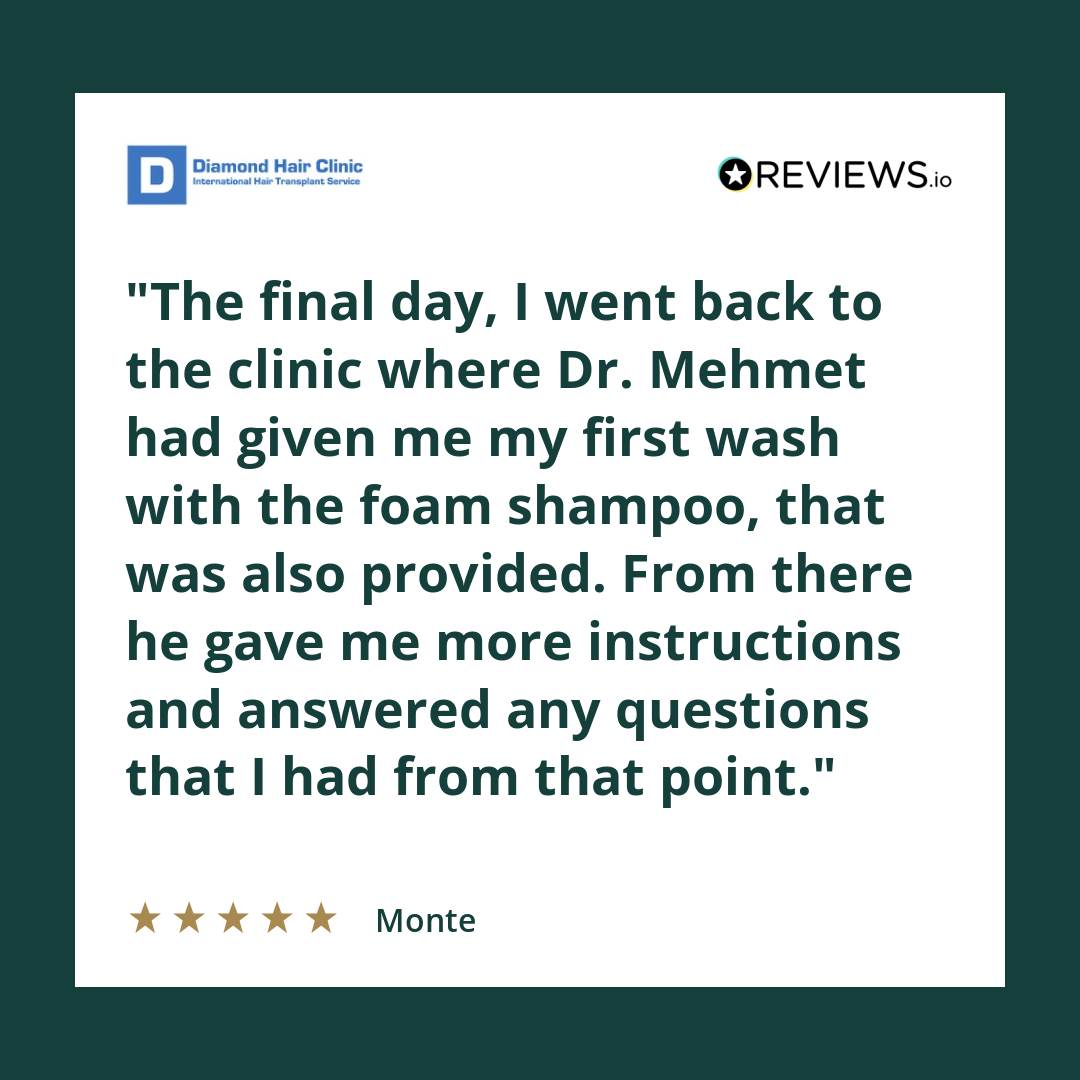
Read this review excerpt
The final day, I went back to the clinic where Dr. Mehmet had given me my first wash with the foam shampoo, that was also provided. From there he gave me more instructions and answered any questions that I had from that point.
Practical guide
Plan the trip around
the medical decision
The number of nights should support the medical checks, not only the flight price. Use the route that matches the timing question you need to settle before travel.
A practical Istanbul timeline before booking flights
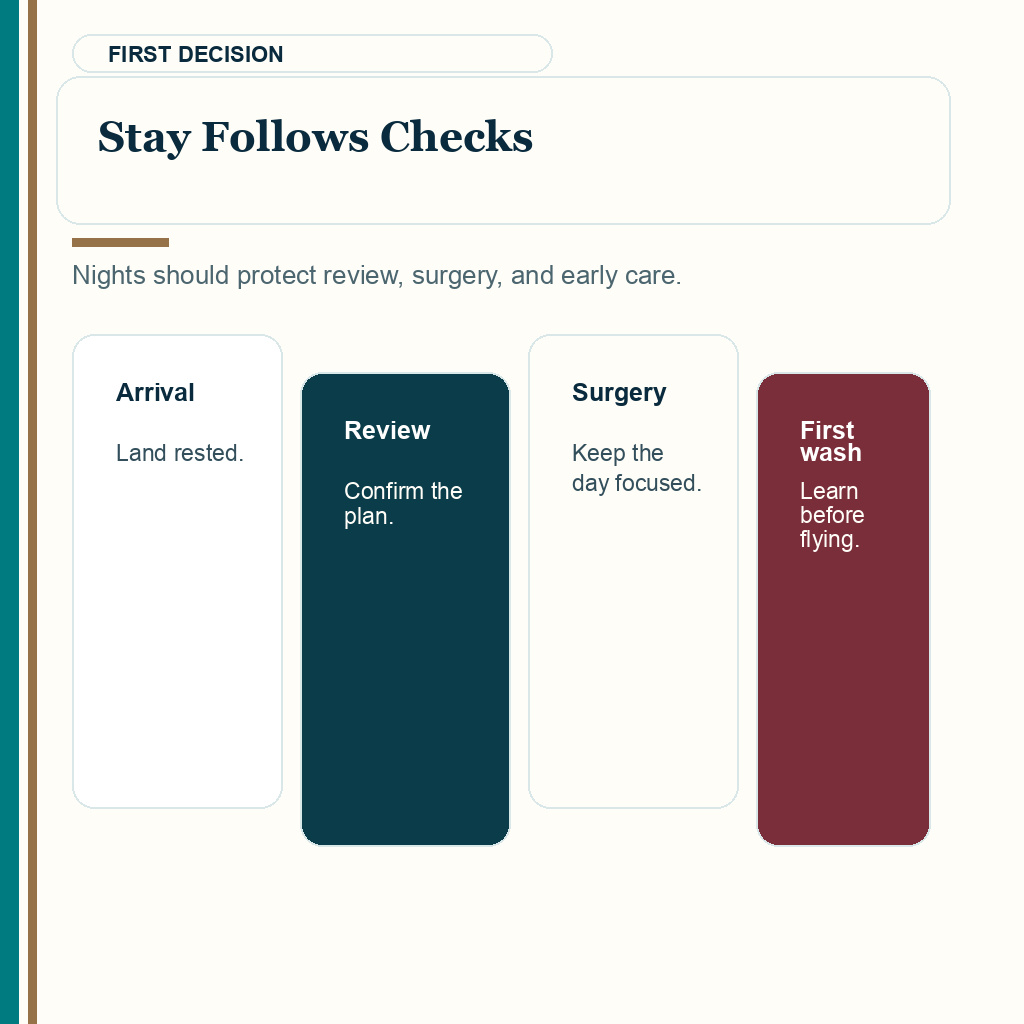
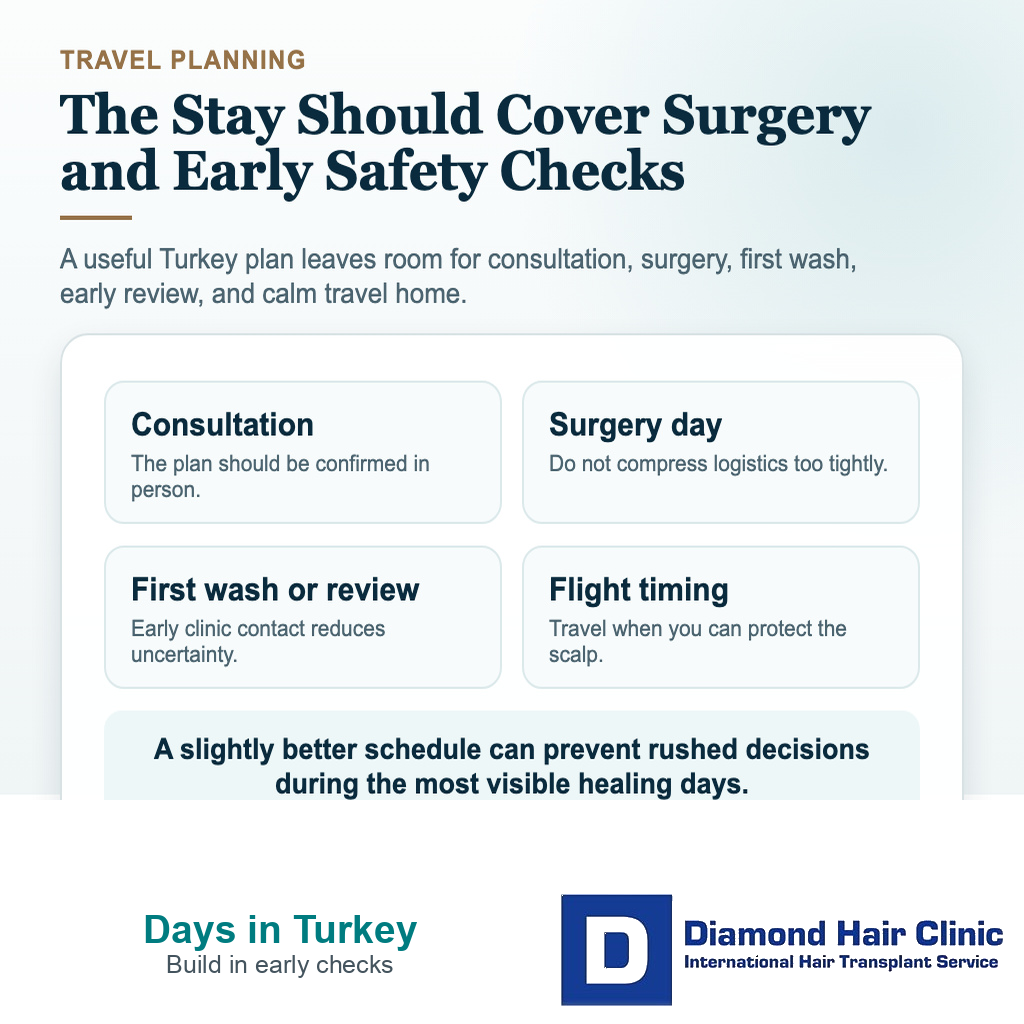
I like the travel plan to leave space for arrival and rest, final medical review, surgery, and early control before departure. These steps can sit close together, but they should not be treated as one rushed package.
- Arrival gives time to land, rest, keep the phone reachable, and avoid alcohol or heavy sightseeing.
- Final review confirms the donor area, hairline, graft plan, medical history, and patient understanding before surgery.
- Surgery day should stay focused on the operation, not on airport transfers or hotel confusion.
- First wash and control covers the grafts, donor area, washing method, sleeping, medicine, and travel precautions before departure.
- Return flight works better with clear contact instructions and a plan for photo follow-up from home.
If the flight is long, making the decision on the same day becomes weaker. Fatigue makes consultation harder and it also makes patients more likely to misunderstand washing, sleeping, medicine, and airport precautions. A rested patient gives clearer answers and remembers instructions better.
The travel plan should leave room to sleep, confirm the surgical plan, complete the first wash and donor area review before leaving, and then fly home with clear photo and contact instructions. The exact order can change with flight times, but the medical checks should not disappear to make the itinerary shorter.
Three nights and four calendar days are often safer
A hair transplant may be done under local anesthesia, but it is still surgery on the scalp. The first days are when you may be tired, swollen, sensitive, and more likely to make practical mistakes, including poor transport or driving decisions after a hair transplant. A 3 night plan often gives enough time for arrival, examination, surgery, one real hotel recovery day, dressing control when needed, first wash, and a proper explanation of the next steps.
A travel plan built only around the cheapest flight or the shortest hotel package puts the wrong detail first. The scalp needs quiet handling. You need sleep, food, hydration, and a clear routine, especially when fasting after a hair transplant is part of the trip. The clinic needs a chance to look at the donor area and recipient area before airport travel after a hair transplant. I also avoid adding dental work before or after a hair transplant to the same tight travel window unless there is a true dental need.
If you are comparing hair transplant in Turkey options, the number of nights should be part of the medical plan, not only part of the package. A clinic can make the trip look very easy, but you still have to live through the first recovery days.
The 3 night answer is not a universal rule. It is a practical baseline. The right plan can become shorter or longer depending on operation size, flight distance, health, anxiety level, and how much in person follow up the clinic provides before departure.
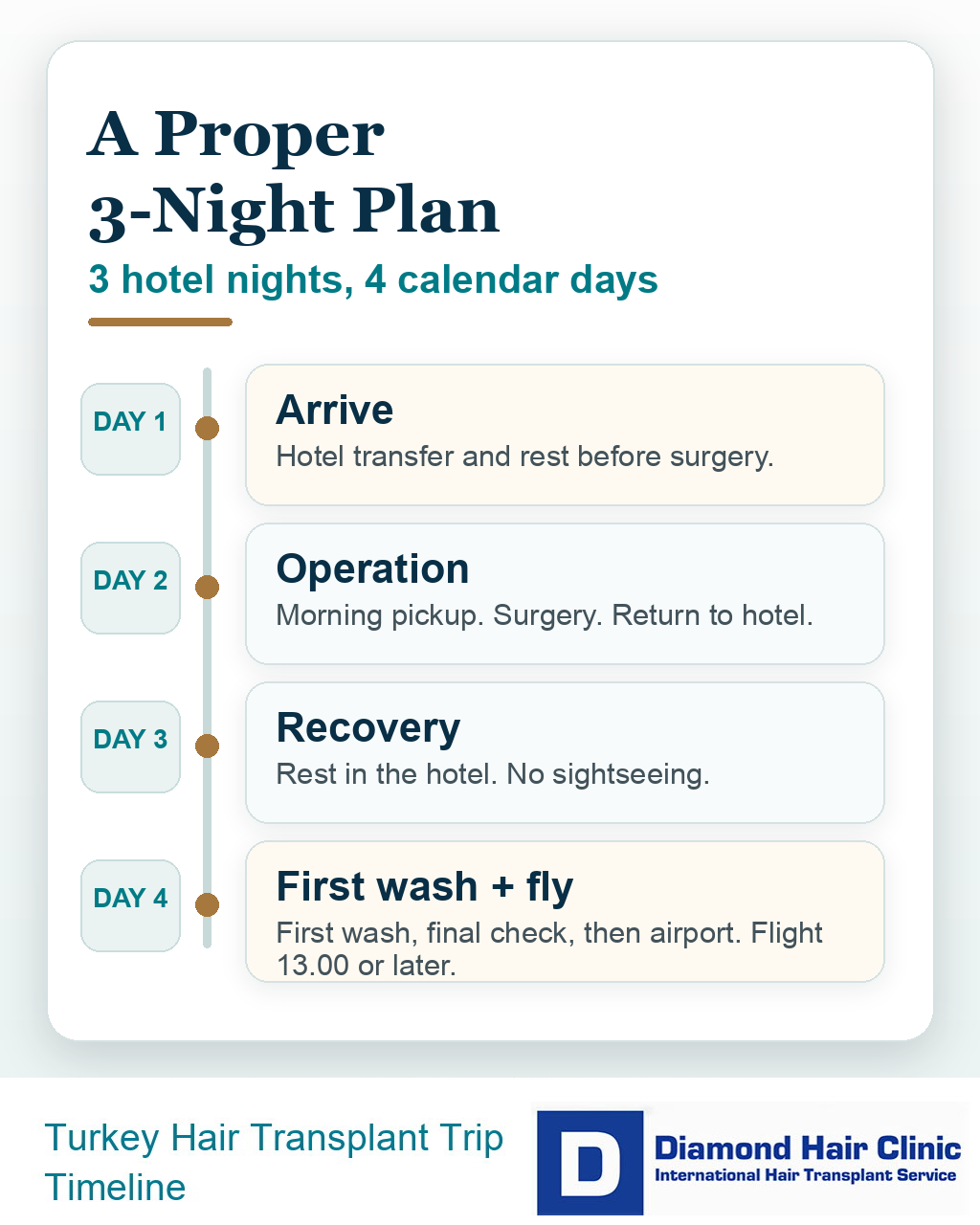
A 3 night, 4 calendar day plan gives room for arrival, surgery, one real hotel recovery day, first wash, control, and airport departure.
Two nights can feel too rushed
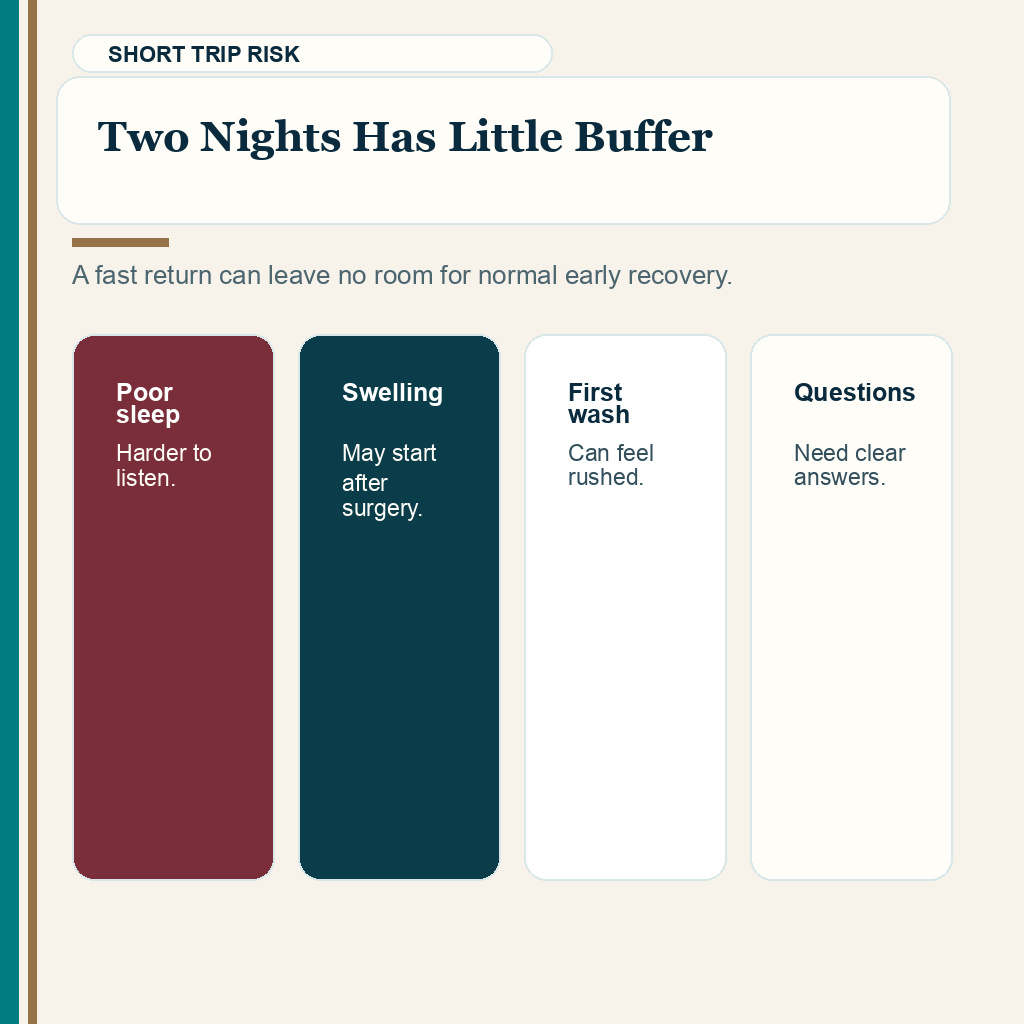
Two nights can feel attractive because it saves hotel time and annual leave. The risk is that you may leave just as swelling, tenderness, poor sleep, and aftercare confusion start to become real. Having surgery on one day and flying soon after the first wash may be technically possible, but that does not make the plan comfortable or wise.
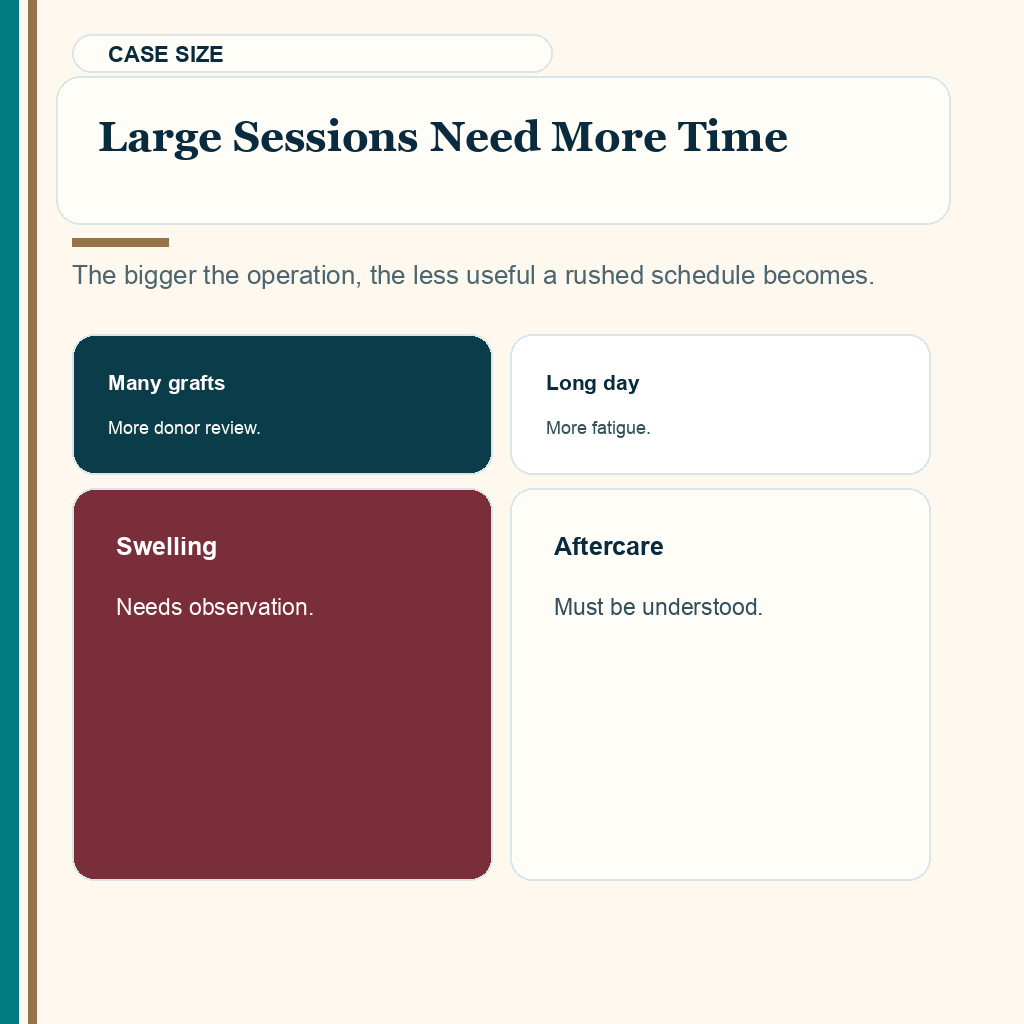
A 2 night trip concerns me more with a large graft session, crown work, difficult donor management, high anxiety, previous surgery, or a long flight with connections. The airport is not a good place to discover that your head feels tight, donor discomfort is worse than expected, or the instructions were not fully understood.
Some people can leave early and recover well. The decision should still come from the actual case rather than from a package promise. If you need a fast return, the operation should stay moderate and follow-up communication has to be very clear.
The better short trip is not the one with the fewest nights. It is the one where you have been examined properly, the operation is not overextended, the first wash is completed, and there is a direct way to ask for help after returning home. Before the flight, the route for follow up after hair transplant surgery needs to be clear for the first days at home.
I treat the day after surgery as a hotel recovery day, not as a sightseeing day. Resting in the room, keeping the scalp protected, eating properly, and avoiding unnecessary heat, walking, sweating, or crowds are part of the medical plan.
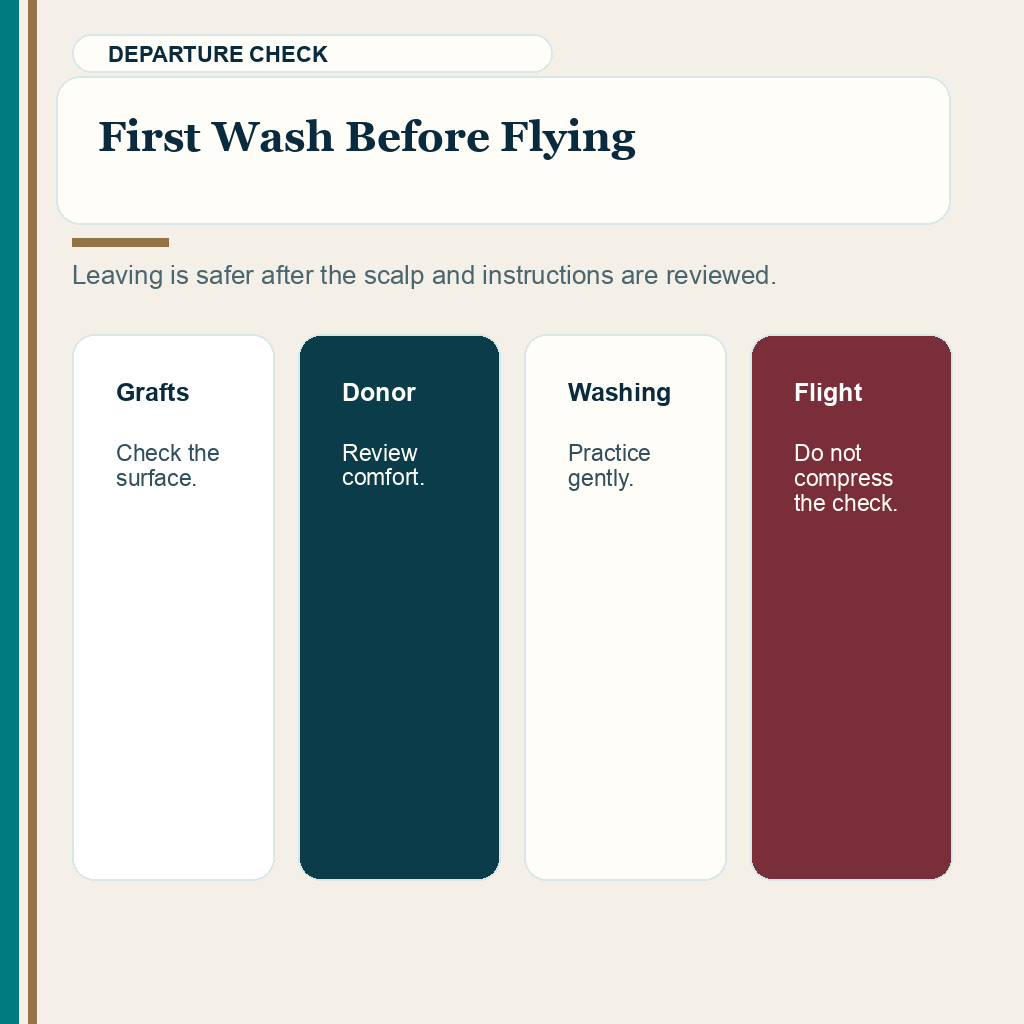
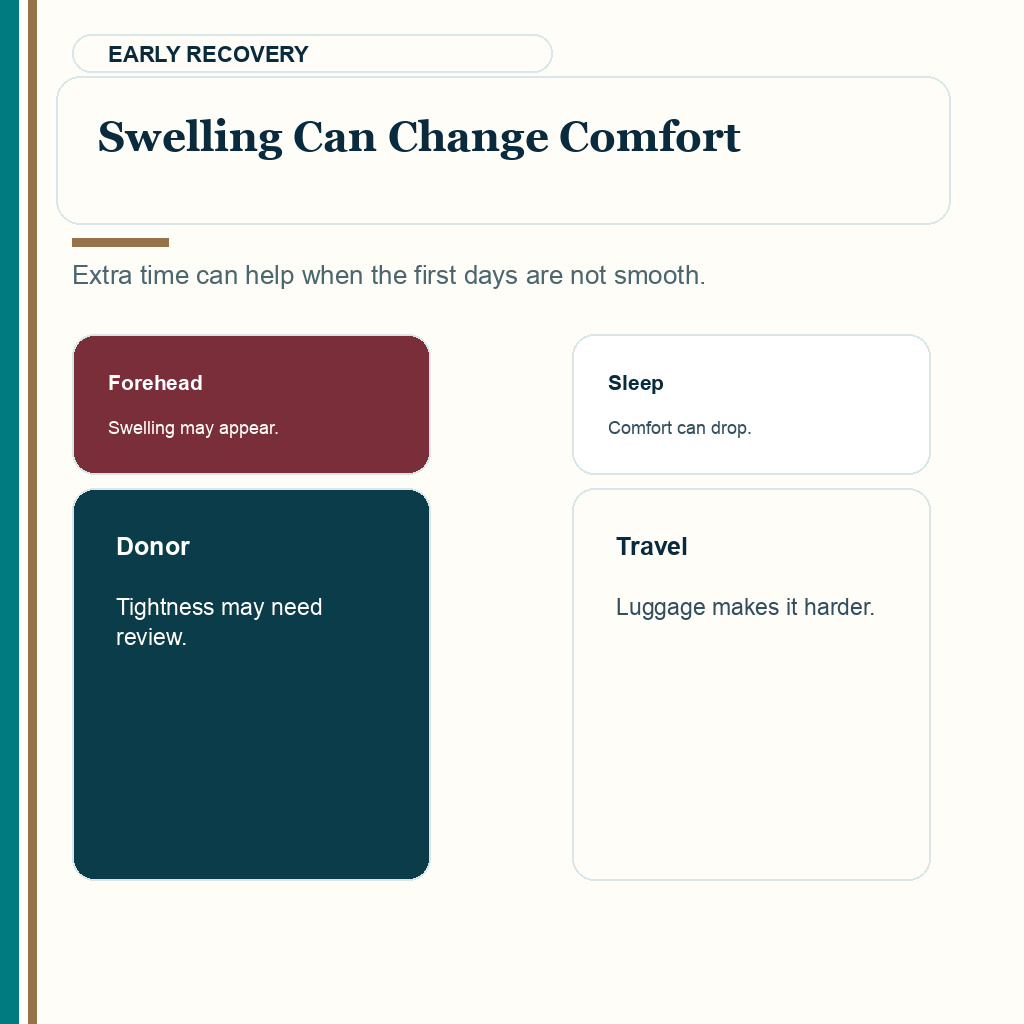
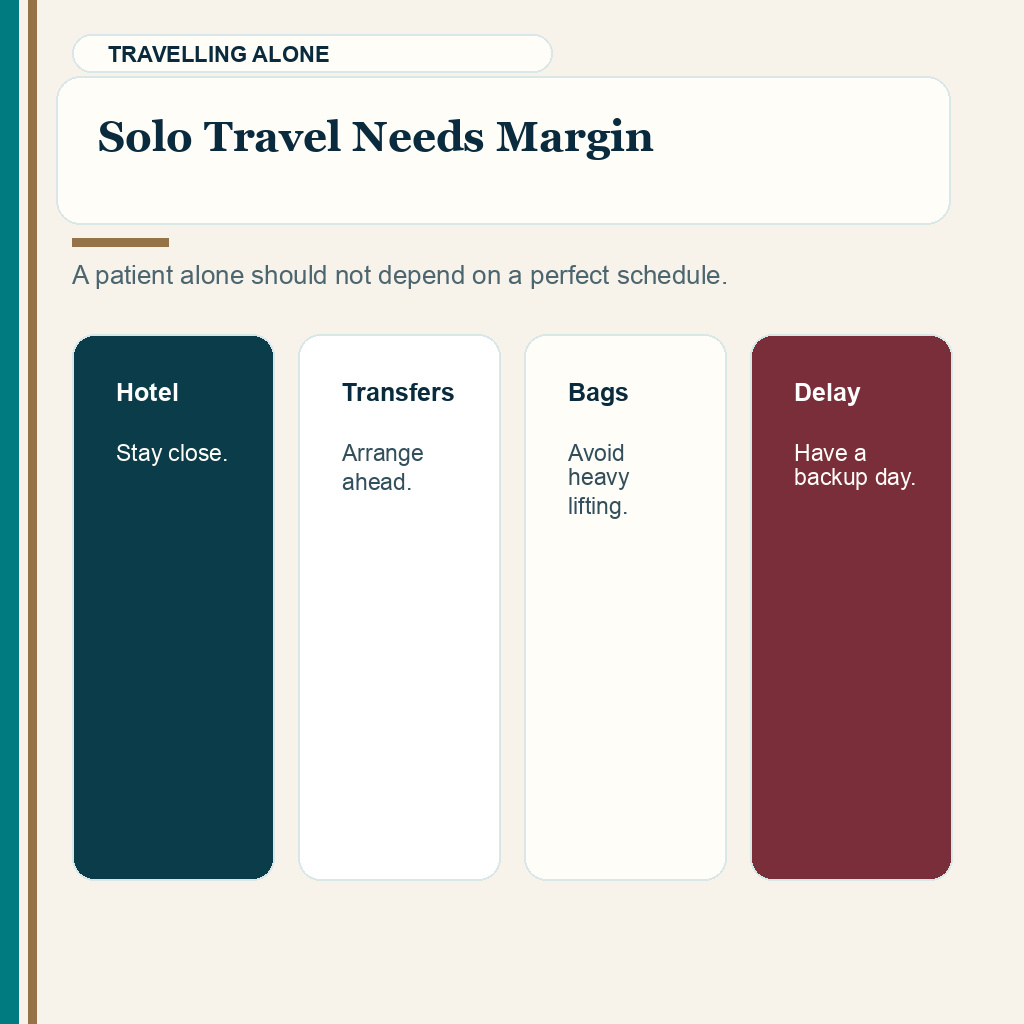
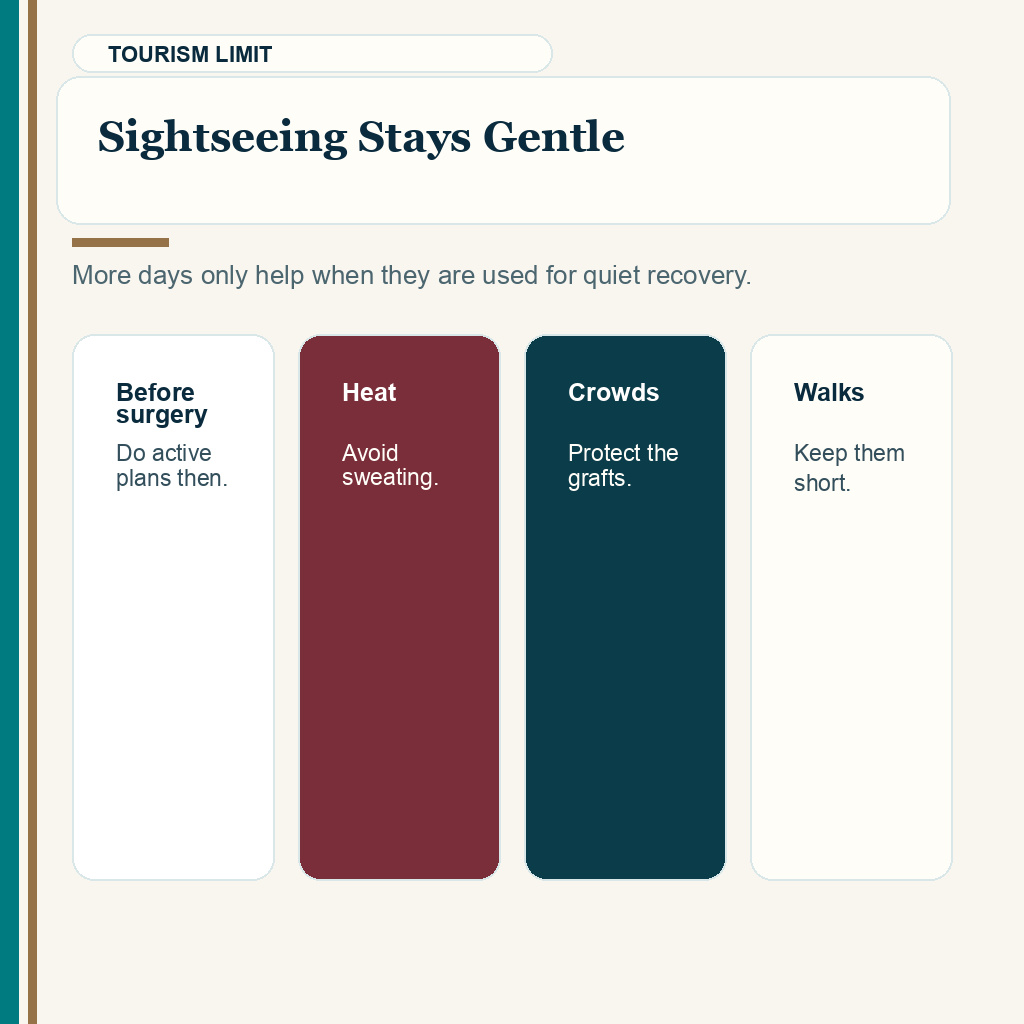
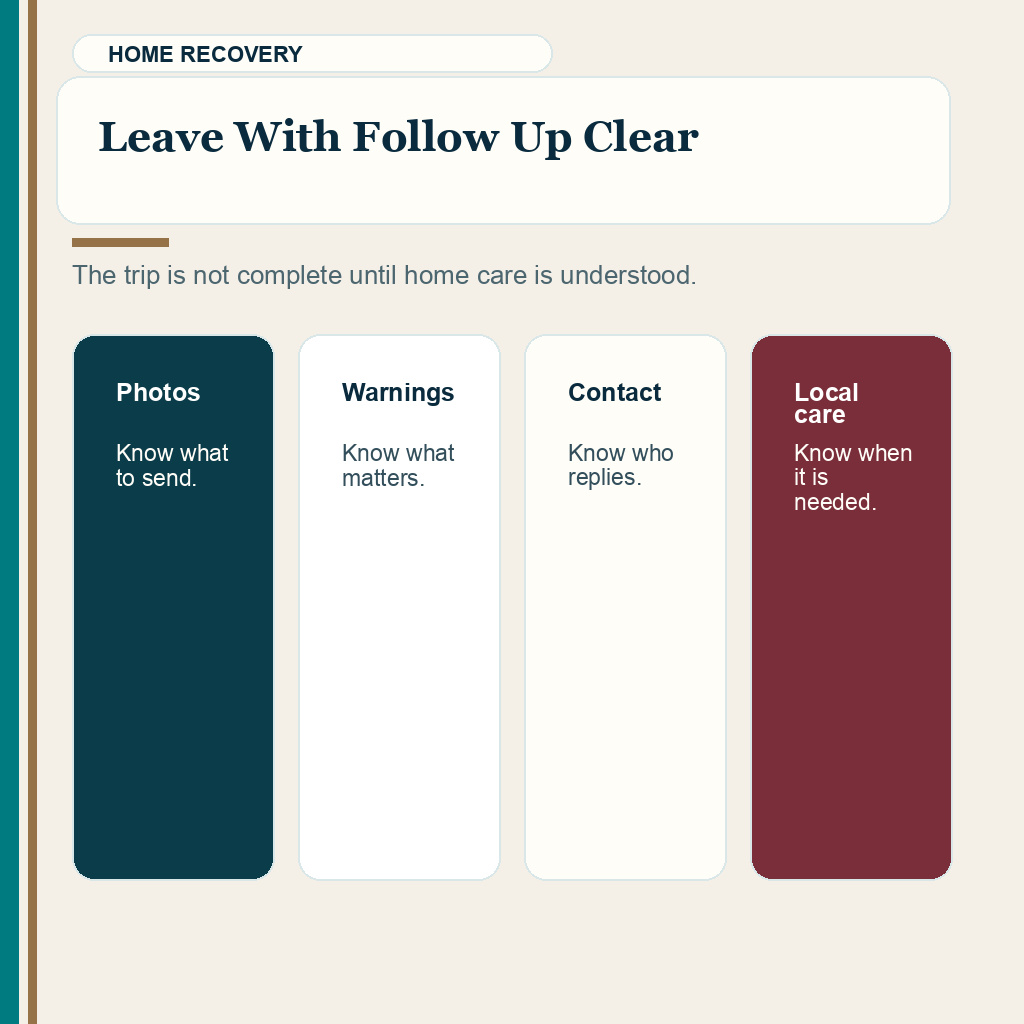
These 10 travel timing slides separate arrival, review, surgery day, hotel recovery, first wash, swelling, solo travel, sightseeing, flight timing, and follow-up before deciding how long to stay in Turkey. Swipe sideways, use the arrows, or choose a number below the image.


Situations where 4 to 5 nights or longer may be better
I consider 4 to 5 nights when the procedure is large, the donor area needs careful observation, the flight home is long, or the person will be alone without help at home. This extra time can reduce pressure. It allows hotel rest, practice with the washing routine, and departure after the early swelling pattern is clearer.
A longer stay also makes sense when medical history or recent COVID recovery affects travel or healing. High blood pressure, blood thinner history, diabetes, heart disease, sleep apnea, or a previous difficult recovery can change the travel decision. These issues do not simply prevent surgery, but they make a rushed plan less sensible.
If checks are needed before surgery, read about blood tests before a hair transplant. Blood tests do not decide the travel schedule by themselves, but they are part of making elective surgery safer before an international trip.
Staying longer is not always medically necessary. It can still be sensible if you would otherwise rush back to work, take multiple flights, carry luggage alone, or sleep poorly during the first nights. A less pressured recovery environment is not a luxury when you are trying to protect a surgical result.
Sightseeing after surgery should stay gentle even with a longer stay
If sightseeing matters to you, plan Istanbul sightseeing around a hair transplant before surgery, not during the first recovery days, and avoid any plan that gives you a sunburned scalp before surgery. After the operation, a longer stay should mainly mean quiet hotel recovery, short careful walks when appropriate, and enough time for the clinic to check the scalp before travel.
I am not worried about Istanbul itself. I am worried about heat, sun, sweat, dust, crowds, long walks, hats, photographs, and the small accidents that happen when a tired person tries to behave like a tourist too soon. Sun exposure creates that risk as well, because early recovery is not the right time to test the scalp.
Staying 4 to 5 nights does not help if those days are spent sweating, walking for hours, and touching the grafts. Three quiet, well managed nights can be safer than five active tourist days. More days only help when they are used well.
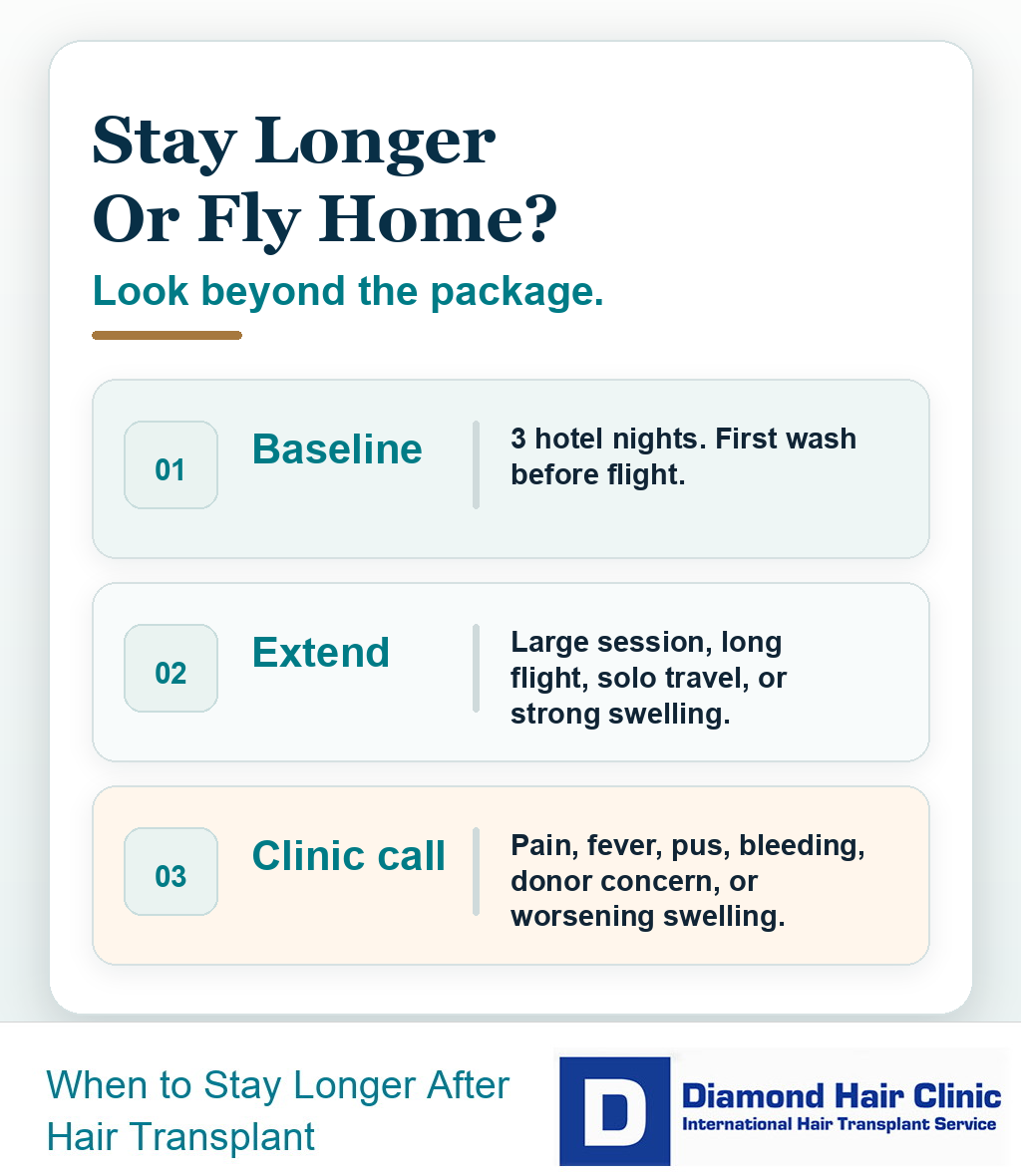
Long flights, large sessions, swelling, medical history, or solo travel can make a longer stay more sensible.
Flying home early does not usually damage grafts by itself
Flying itself does not normally damage grafts. The bigger risks around early travel are friction, pressure, dehydration, tiredness, sweating, bumping the scalp, heavy luggage, poor sleep, and not knowing what to do if swelling or bleeding worries you after flying home. The aircraft cabin is not the main issue. The whole travel day is the issue.
The first week after surgery is when the grafts and scalp must be treated gently. I ask you to avoid rubbing, scratching, tight hats, heavy exertion, and any unnecessary trauma. The travel schedule should still be judged around actual recovery. The flight question is part of flying after a hair transplant.
Long distance travel also matters because sitting still for many hours can increase blood clot risk in some people, especially when other risk factors are present. For a healthy low risk person this risk is generally small, but recent surgery, older age, obesity, hormone therapy, previous clots, heart or lung disease, and limited mobility need review before travel.
For long flights, movement matters more than panic. Gentle calf movements, short walks when it is safe, an aisle seat when possible, and medical advice for clot risk factors are more useful than simply worrying about cabin pressure.
If you must fly early, keep the trip straightforward. Direct flight if possible, light luggage, no tight headwear, careful hydration, clean hands, no alcohol, no heavy walking through the airport, and no panic washing in an unsuitable place.
When to extend the stay in Turkey
The travel calendar alone does not decide whether the plan is safe. If direct examination changes the hairline, the graft number, or the donor plan, that needs to be understood before the flight home becomes the next pressure point.
Extending the stay or slowing the schedule can be safer when swelling is strong, donor discomfort is more than expected, washing is not yet understood, the patient is travelling alone, or a medical concern needs local review. The extra day is not for comfort only. It protects the first decisions after surgery.
Checks before leaving Istanbul
Before travel, the recipient area, donor area, and instructions should be checked. The first wash matters because it shows how gentle the early routine should be. It also gives the clinic a chance to see whether the scalp looks as expected before travel.
In my usual plan, the control after surgery, first washing process, and donor area bandage removal are done before leaving for the airport. After that clinic visit, you can be taken directly to the airport, without needing to return to the hotel. A return flight from early afternoon onward is better than an early morning flight that compresses the final check.
A good departure check is not dramatic. During that check, I review bleeding that should not be there, unusual pain, donor area problems, excessive swelling, signs of infection, and whether you understand the washing and sleeping routine. I also confirm which photos to send and who will answer follow-up questions after returning home.
Knowing when to wash hair normally after a hair transplant matters because many travel problems are really washing problems. If you fly home without understanding washing, you may become anxious, rub too strongly, leave crusts too long, or keep touching the grafts to check them.
It helps to understand warning signs. If increasing redness, pus, fever, spreading warmth, worsening pain, or a donor area that is not settling appears, contact the clinic before travel. How to know if a hair transplant is infected matters, but travel should not become guesswork during early recovery.
Swelling can change the travel decision
Swelling is common after a hair transplant, especially around the forehead and eyes. It can look more dramatic than it feels, and it often becomes more visible after the operation rather than immediately during the first hours. That timing is one reason a very rushed trip can feel more stressful than expected.
Swelling does not normally mean the grafts are failing. It does change comfort, sleep, and the airport experience. If you are embarrassed, tired, and swollen, you may keep touching the forehead or adjusting a hat, and those small actions can create more risk than the swelling itself.
Read more about swelling after a hair transplant if this is a concern for you. For travel planning, the main needs are avoiding heavy activity, keeping the head protected, resting properly, and not judging the final result from how the face looks during the first days.
If swelling is severe, painful, one sided in an unusual way, or linked with fever or discharge, clinic review comes before travel. If it is ordinary swelling, the decision becomes practical. Can you rest, travel lightly, avoid pressure on the grafts, and reach the clinic if something changes?
Travelling alone may justify a longer stay
Travelling alone does not by itself make the operation unsafe, but it removes a layer of help during the most awkward days. A solo traveller has to manage luggage, transport, food, medication timing, sleep position, photographs, and early washing without another person noticing mistakes.
For solo travel, the plan should have more breathing room. The hotel should be close enough. Transfers should be arranged. Do not design the trip around carrying heavy bags through the airport alone. The aftercare plan needs to be written clearly, and the clinic should be reachable after departure.
Travelling alone to Turkey for a hair transplant has its own practical demands. Here, timing matters most. Solo travel may not require many extra days, but the trip should not be so tight that one delayed flight or poor night of sleep creates unnecessary stress.
If you are anxious, have never travelled internationally alone, or have a long trip home, one extra night can be very valuable. It is not because the grafts need sightseeing time. It is because you need enough steadiness to follow instructions properly.
Planning work and social life after returning home
Many people ask about the Turkey stay because they are really trying to hide the operation or return to work quickly. The first travel plan should not be built around hiding the scalp. It should be built around not damaging early recovery.
Remote work is often easier than in person work during the first days after returning home. Physical work after a hair transplant, heat, sweating, dust, helmets, and heavy lifting can make early recovery harder. If the job is demanding, the trip length and return date need planning together, not separately.
The page about time off work after a hair transplant gives a more detailed work timeline. For travel planning, flight length, jet lag, sleep quality, and visible scabs or redness should be part of the return to work decision.
Social events need the same judgment. A dinner is different from a crowded party. A short walk is different from carrying luggage in heat. If you leave Turkey quickly, keep the first days at home quiet rather than treating the flight as the end of recovery.
Quick travel promises that deserve caution
Question any clinic that makes the whole trip sound automatic before examination. A hair transplant package can be convenient, but the medical plan should still consider graft number, donor strength, procedure length, health, travel distance, and follow-up.
Be careful if the clinic sells a very short trip while also promising a very large session, full coverage, fast return to normal life, and no meaningful follow-up. The risk is not the short trip alone. The risk is speed becoming more important than surgical judgment.
Look beyond package details. Keep that in mind when choosing a hair transplant clinic in Turkey. The travel schedule should reveal how seriously the clinic takes examination, aftercare, and direct responsibility.
Price comparison also needs care. A lower package price can become less attractive if it creates rushed recovery, unclear follow-up, unclear surgeon involvement, or pressure to accept a plan that is too large. Cost matters, but a cautious plan is not only a hotel and transfer calculation.
Stay long enough for the first checks to matter
A sensible plan is to arrive before surgery with enough time for examination and rest, have the operation without rushing, spend the next day resting in the hotel, return for first wash and early check, and fly home only when you understand the aftercare routine. For many people, this means 3 hotel nights and 4 calendar days. For others, 4 to 5 nights is the better decision.
Before leaving Turkey, you need clean instructions, realistic expectations, and a direct follow-up route. The first week is not the time to improvise. The scalp should be protected from rubbing, pressure, sun exposure, heavy sweating, dust, and unnecessary touching.
The broader hair transplant aftercare page can help with the first recovery days. Still, the travel decision should be made before flights are booked. It is much easier to plan one extra quiet night than to change a flight after surgery because you feel unwell or unsure.
If your case is small, your flight is short, you have clear aftercare, and the clinic has checked you properly, a shorter stay may be acceptable. If the case is large, the trip is long, or you are worried about managing recovery alone, do not treat extra time in Istanbul as wasted time. A careful trip protects the operation and the first days of healing.