


Solo Travel to Turkey for Hair Transplant Planning
For many healthy adult patients, traveling alone for a hair transplant in Turkey can be reasonable when the clinic has a clear medical and travel support system around the operation. The most important period is the first 48 to 72 hours, because you need to protect the grafts, rest properly, attend the early check, and travel without confusion, unnecessary pressure, or avoidable physical strain. During that period, leaving the hotel after a hair transplant should stay short, useful, and low risk. Private travel after female hairline FUE has a similar hotel, transfer, and flight concern because the travel plan should reduce public stress without adding graft pressure.
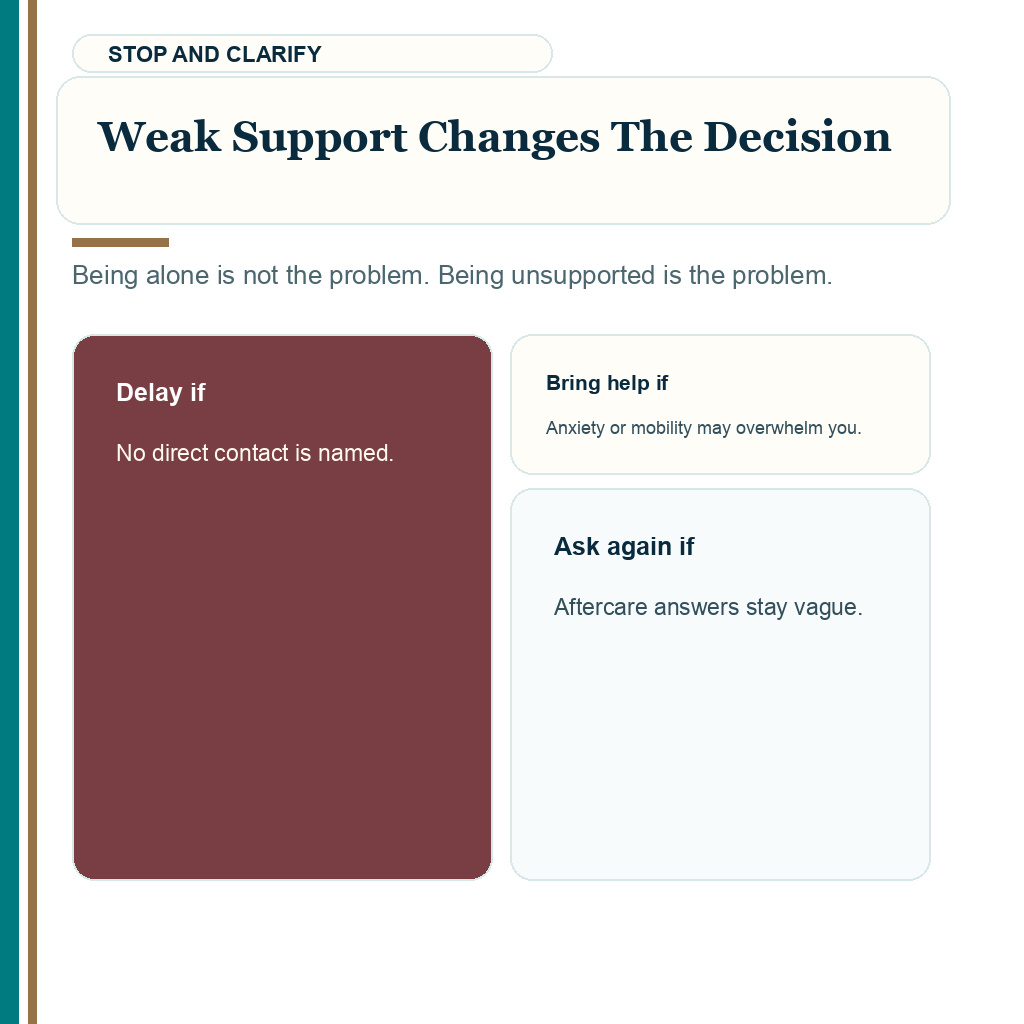
Being alone is not the main danger when the clinic support and first recovery plan are clear. The concern is being abroad after surgery with a weak plan, unclear surgeon involvement, poor communication, no reliable transfers, or no one checking you before you fly home. Those are the details that can turn a hair transplant into a dangerous travel problem. If they are not clear, delaying the trip is better than forcing surgery into a stressful journey abroad.
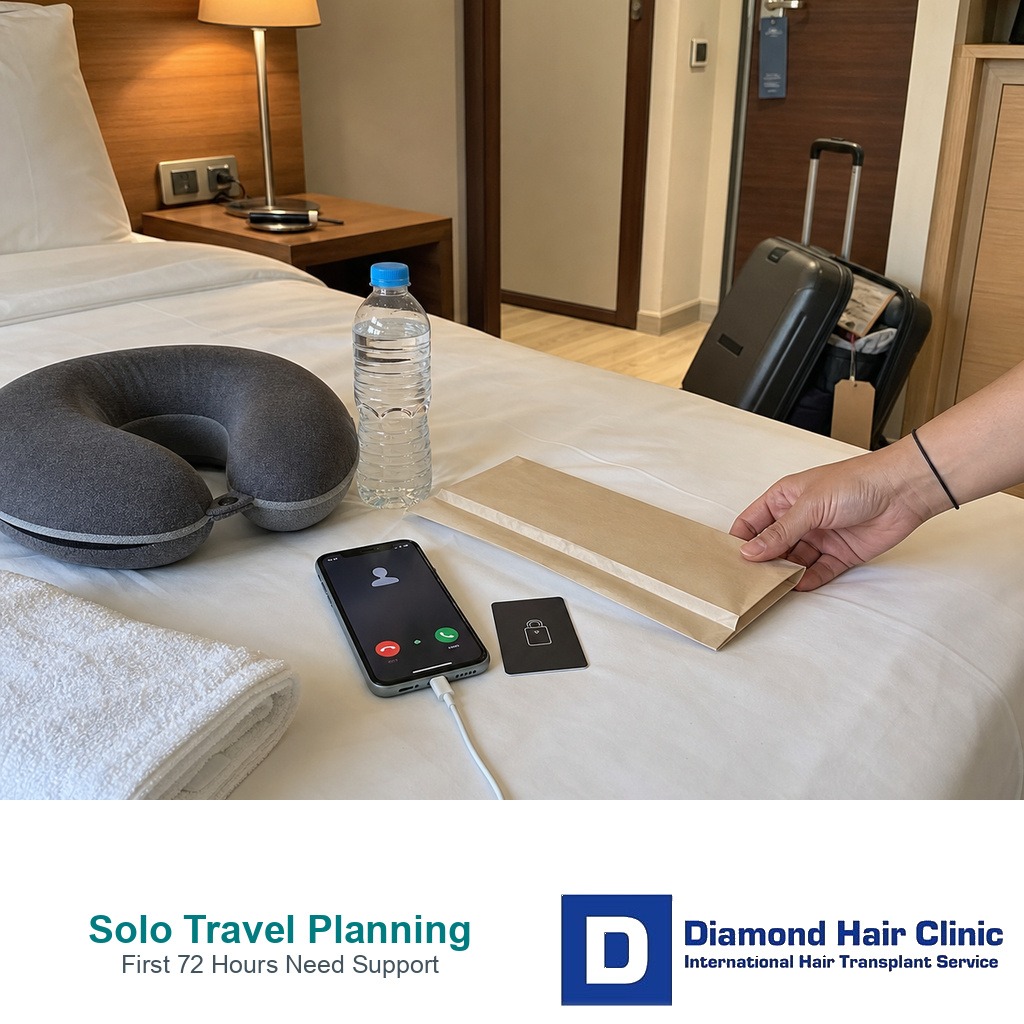
Make the first evening boring on purpose. Check in, luggage, water, food, medicines, charger, and the ride back to the hotel should already be arranged before you are tired from surgery.
Pack so you can move through the airport without lifting, dragging, or repacking heavy luggage after surgery. Clothing matters as well. Choose a shirt that opens at the front, and arrange help for transfers or overhead storage if you are alone. A small bag, easy hotel access, and a clear transfer plan become more important when nobody is there to carry things for you.
Details to clarify before you book
Before you book flights, you should know who will examine your donor area, who will design the hairline, who will create the recipient area, who will be available after surgery, and what happens if you have swelling, bleeding, strong pain, or anxiety during the first night.
When you travel alone, there is less room for vague answers. If you bring a companion, that person may help you notice problems, ask questions, carry luggage safely after surgery, and stay steady when you are tired. If you travel alone, the clinic system has to carry more of that responsibility.
The basic travel sequence also has to be clear, including the first hotel transfer after FUE. You should not arrive unsure about airport pickup, hotel location, surgery timing, first washing, after surgery check, medications, or return transfer. The broader hair transplant in Turkey process matters for every international patient, but the solo version needs even tighter planning.
If you are traveling alone, the after surgery documents should be clear before the operation starts. You should know what written instructions, medication schedule, graft information, clinic contact details, photo check plan, and emergency guidance you will have when you return home. This is not paperwork for its own sake. It is what keeps the surgery connected to proper follow up after the flight. If you are relying on a policy, read about travel insurance for hair transplant abroad before treating it as the follow up plan.
The written plan should be clear before you travel. If you develop a sunburned scalp before a hair transplant, send photos before the flight rather than waiting until surgery morning. Important details should not appear only after you land in Istanbul, when you are tired, committed, and less able to compare options clearly.
Solo travel can be reasonable with clear support
Traveling alone is more reasonable when you are medically stable, can communicate clearly with the clinic, understand the aftercare instructions, and can move through the trip without carrying heavy luggage or rushing between places.
It also depends on the clinic structure. If airport, hotel, clinic, washing, and return transfers are arranged properly, you are not truly managing the early recovery alone. There is still medical and logistical support around the operation.
Independence and isolation are different. You may travel without a friend or family member, but you should not be isolated from medical follow up. There should be a named contact, a clear after surgery schedule, and direct access to the team if something feels wrong. For that reason, after surgery follow up access matters even more for solo patients.
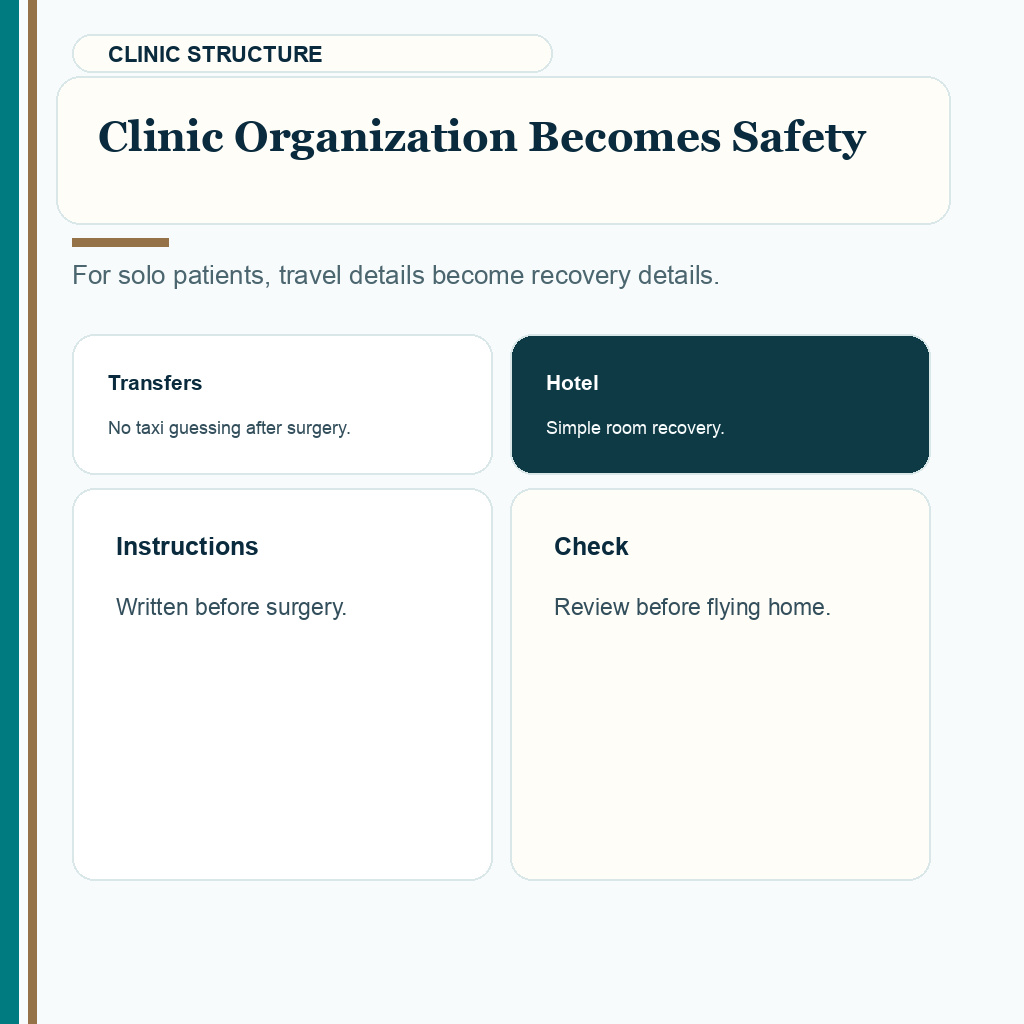
Here, choosing a hair transplant clinic in Turkey becomes more than comparing photos and prices. When you travel alone, clinic organization is part of safety.
Clinic arrangements before arrival
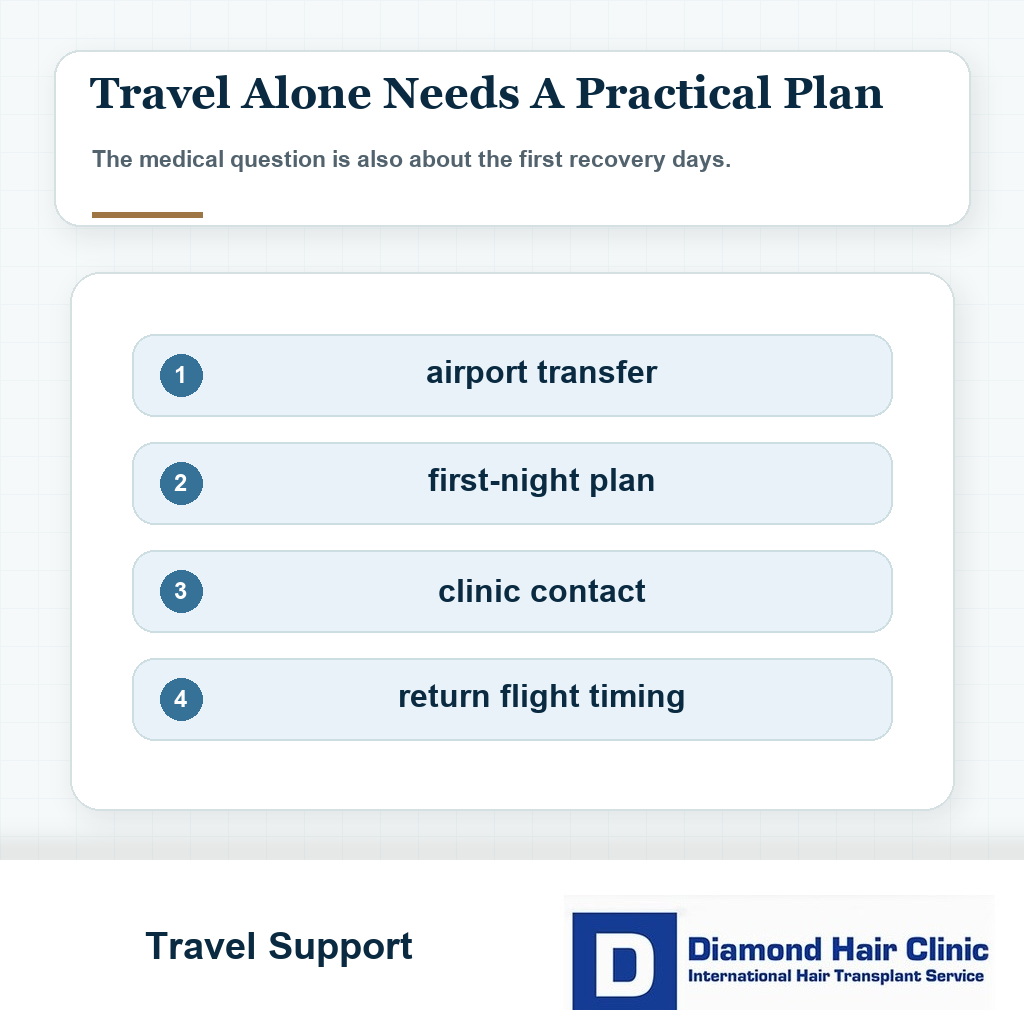
The clinic should make the arrival plan predictable. You should know the airport meeting point, driver details, hotel name, clinic schedule, surgery date, first check timing, washing timing, and departure plan before the flight.
The package structure includes airport, hotel, and clinic transfers, and the patient stays for the early recovery period before flying home. That flow is part of hotel accommodation. Solo patients should also understand planning enough days in Turkey after a hair transplant before setting the return flight.
These details may sound like travel service details, but after surgery they become medical details. A tired patient with new grafts should not need to negotiate taxis, carry heavy bags, search for instructions in a hotel lobby, or decide about driving after a hair transplant while still recovering.
If a clinic sells surgery but leaves the patient to organize everything alone, that structure creates avoidable pressure for an international patient. The operation is one day, but the safety of the first days depends on the whole pathway.

Read this review excerpt
I got off the plane, and I contacted with driver by WhatsApp (One day ago, they shared with me driver number, name, photo, car photo).
Read this review excerpt
After arriving, I met with Dr. Mehmet directly. He spoke fluent English and was easy to understand and talk to.
Preparation matters when no one travels with you
For a solo patient, the trip needs to stay physically simple before surgery day. Pack light enough that you do not need to lift a heavy bag over your head. Keep your passport, phone charger, clinic contact, hotel address, medication list, and return flight details in one easy place. If you do not speak Turkish, mobile data, translation access, and written clinic instructions become more important than they may sound before the operation. Language barriers during a hair transplant abroad become practical here, because consent, medication instructions, and urgent contact need more than casual translation.
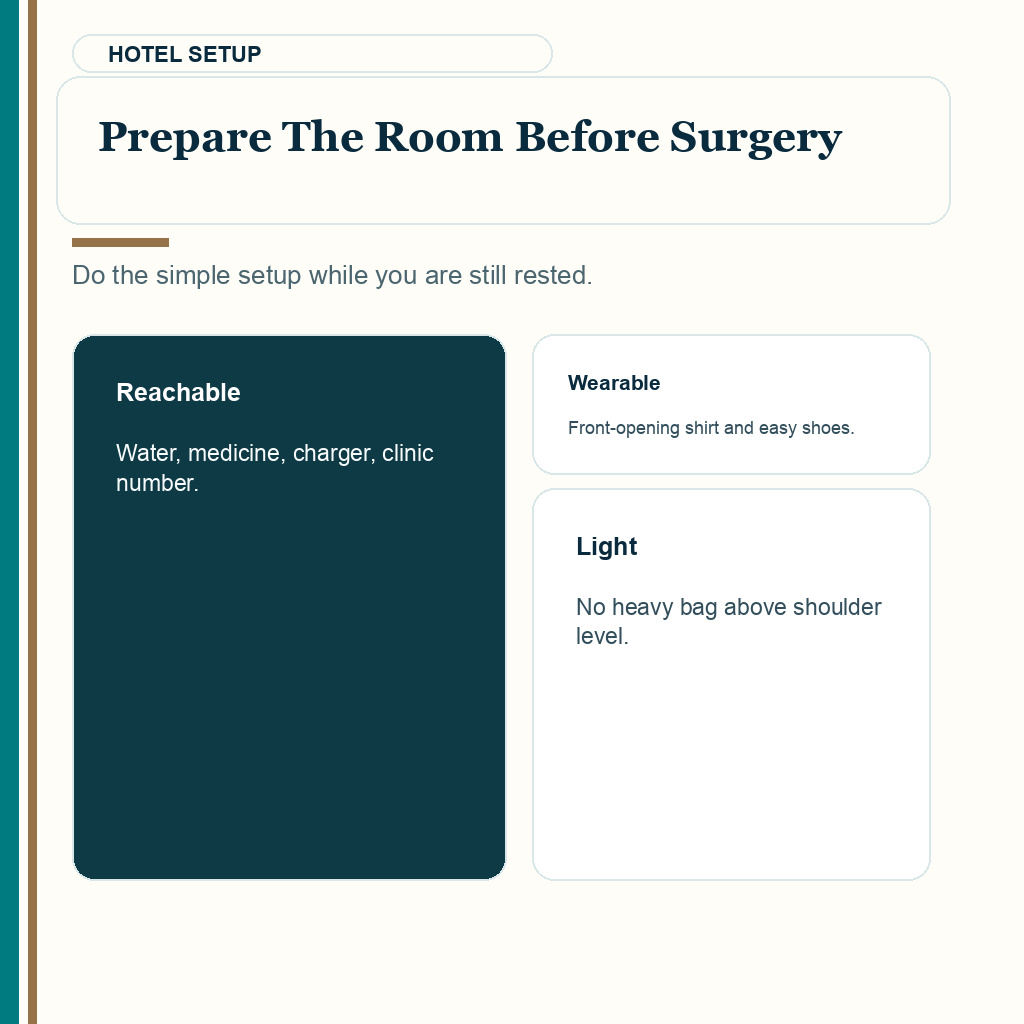
Clothing also matters. A shirt that opens from the front is safer than pulling a tight shirt over fresh grafts. Shoes that are easy to wear reduce bending. A small water bottle, simple snacks, prescribed medication, and clean clothing should be reachable in the hotel room before you leave for surgery, not searched for afterward when you are tired.
Privacy should be planned without putting pressure on the grafts. If you want to cover the scalp during the journey home, ask the clinic exactly when and how this is allowed. A loose hat may be reasonable at the right time, but a tight cap or careless contact can create risk. I explain the timing more closely in my guide to wearing a hat after a hair transplant.
Some patients are safer with a companion
Bringing someone with you is wiser if you have a medical condition, severe anxiety, poor sleep, limited English, poor mobility, a long multi stop journey, or a tendency to panic during recovery. It is also wiser if you know you will struggle to follow instructions when tired. Before deciding to come alone, patients with mobility limits should review whether they need a FUE surgery day mobility plan as well as hotel and travel support.
Having someone with you is also helpful when the surgery is large, the flight home is long, or you have a history of fainting, dizziness, blood pressure problems, or strong after surgery worry. The companion does not replace medical supervision, but he or she can make the first days easier to manage.
Some patients are physically fine but emotionally overloaded. Hair transplant travel can feel intense because the patient is in another country, has just had surgery, and is looking at every small change in the mirror. In those cases, a trusted companion can prevent unnecessary panic.
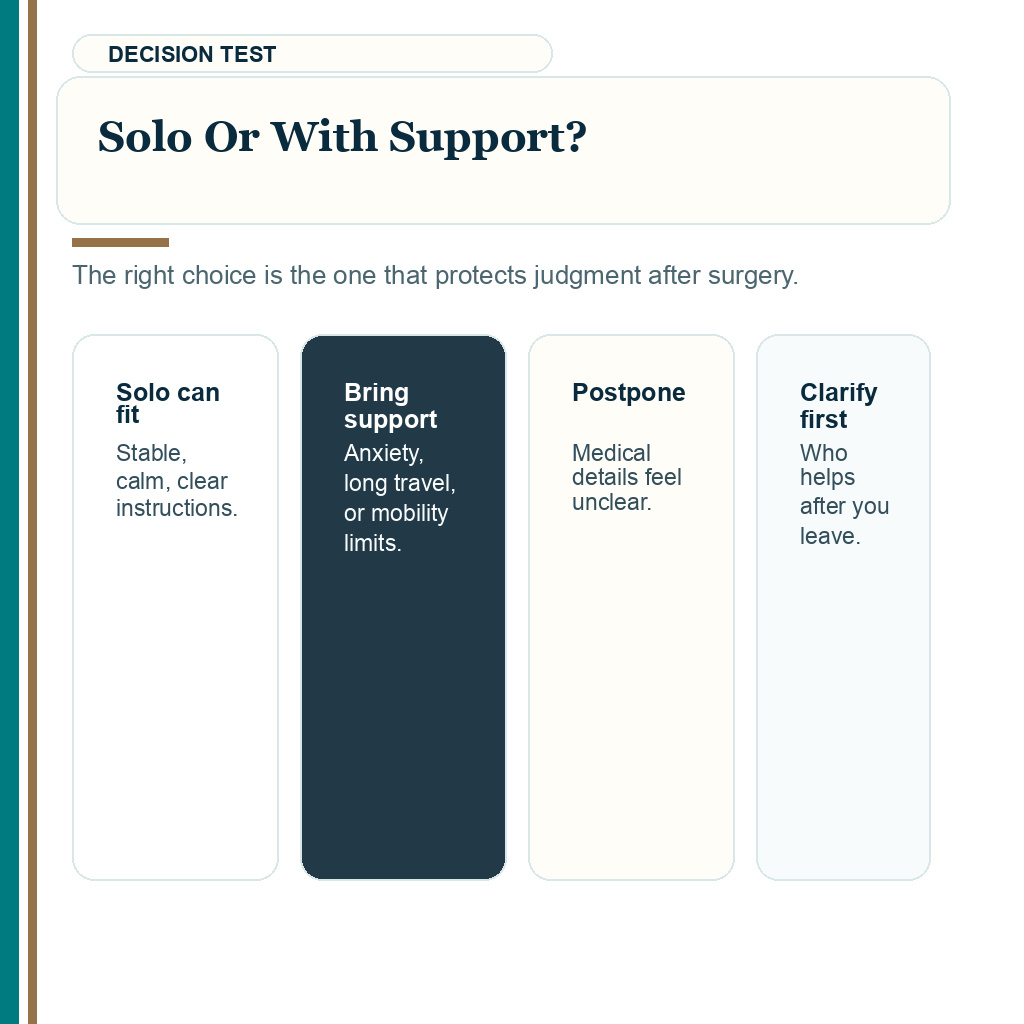
Needing support is not a weakness. The stronger decision is the one that protects your health, grafts, and judgment during the part of recovery when you are tired.
Family support can help, but it should not be the only factor. If going home means a very long return flight, more airport handling, and less direct clinic access, staying near the surgical team in Turkey may be safer for some medically suitable patients. If you are very young, still losing hair, or unsure whether surgery should happen now, decide candidacy before choosing the recovery location.
Should I recover with family far away or stay near the clinic in Turkey?
I compare the medical safety of the first days, not only comfort. Family far away helps if you need emotional support, language help, or someone to manage daily tasks, but a very long flight can add fatigue, luggage handling, airport crowds, and less immediate clinic access.
- Recover with family when the journey is manageable, the clinic has given clear instructions, and you will have calm help without pressure on the grafts.
- Stay near the clinic when the return trip is long, you need an early wash or review, or you would be safer with direct access to the surgical team for the first quiet days.
Before choosing either option, the candidacy decision comes first. If the case is still medically unclear, travel logistics should not push the operation forward.
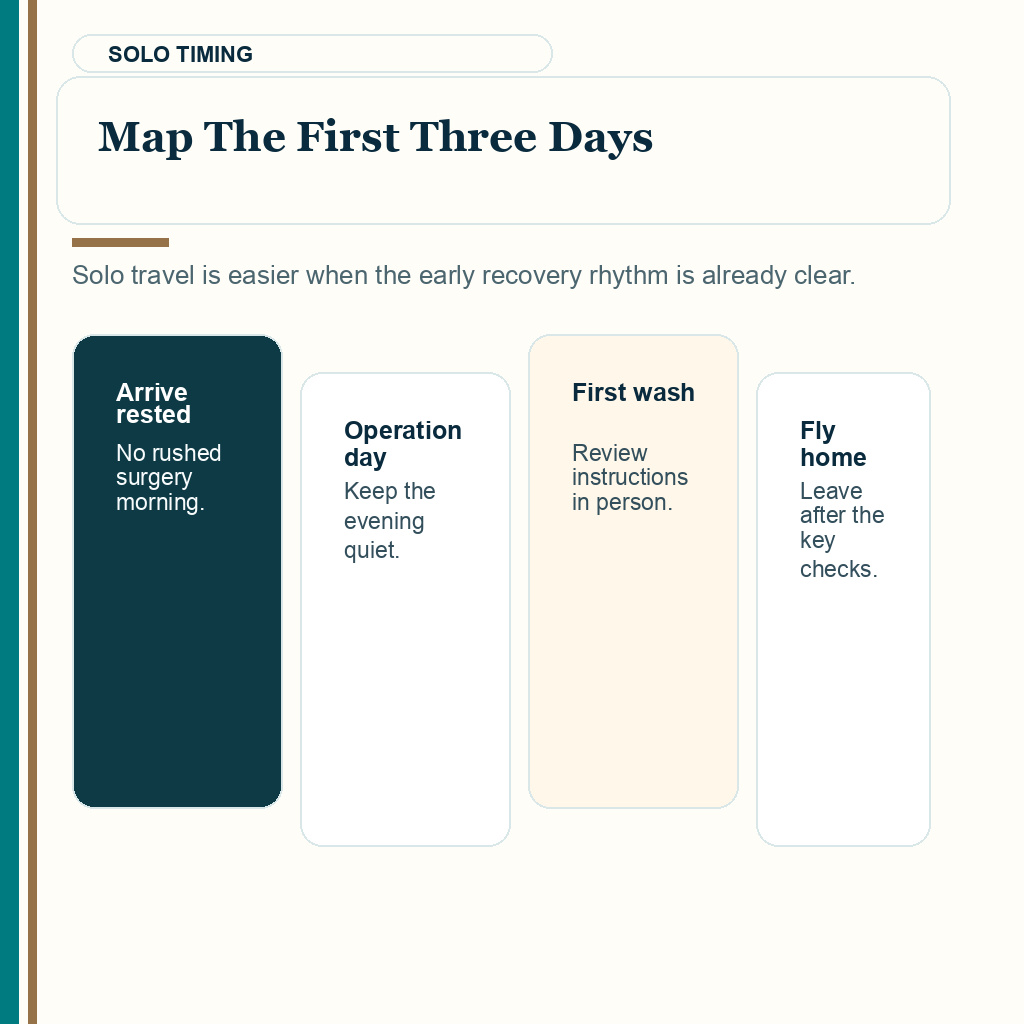
First 48 to 72 hours need a quiet plan
The first 48 to 72 hours should be quiet, structured, and physically easy. You should avoid rushing, bending too much, carrying heavy luggage, sweating heavily, bumping the head, rubbing the recipient area, or missing the early check, especially during airport security after a hair transplant.
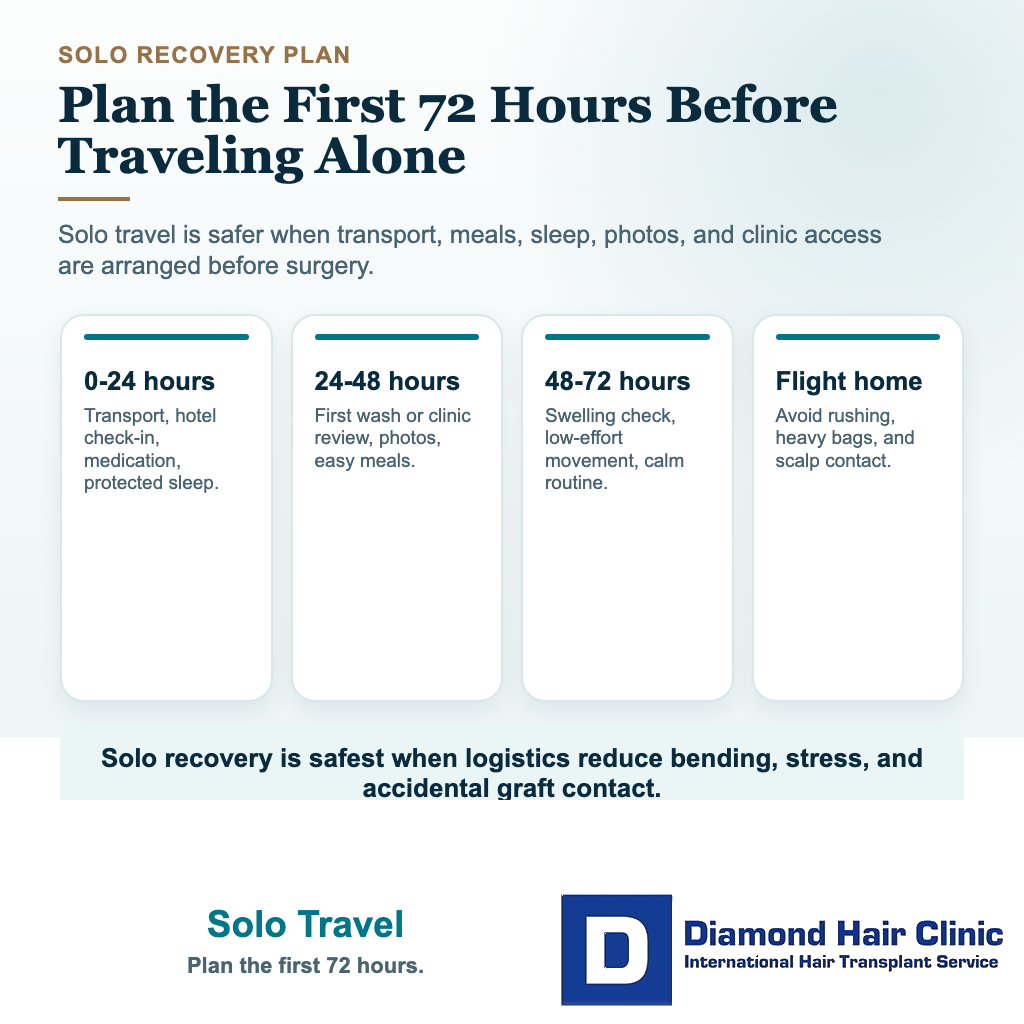
The clinic should explain how to sleep, how to use medication, when washing happens, what level of swelling is expected, and when to contact the team. Hair transplant aftercare covers the broader recovery logic, but solo travel adds another layer because the patient has to manage the environment more carefully.
Flying immediately after surgery is rarely ideal when it can be avoided. A short wait allows the scalp to be checked, the patient to rest, and the first instructions to be reinforced while the clinic can still see him in person.
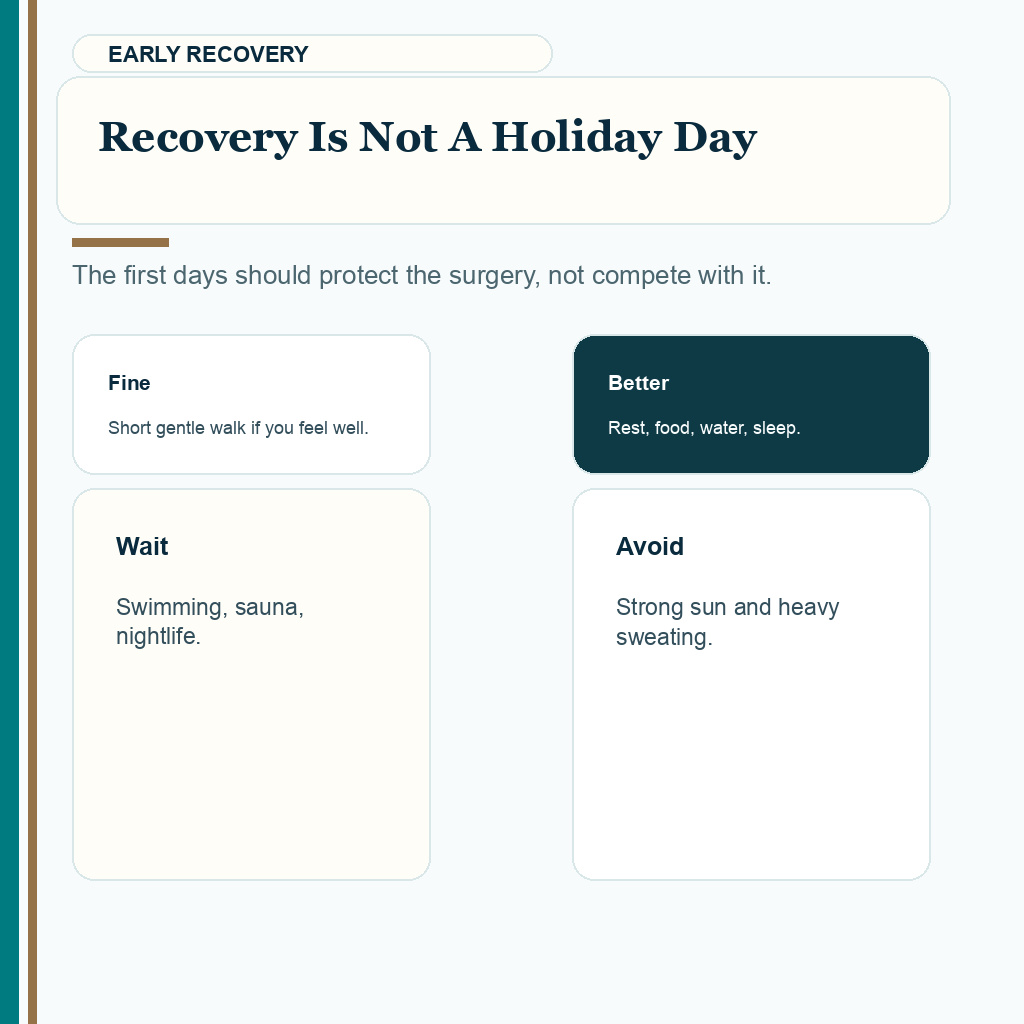
I also separate a medical trip from a holiday itinerary. A short, gentle walk near the hotel may be fine if you feel well, but sightseeing days, long walks, swimming, hammam, sauna, nightlife, alcohol, and strong sun do not belong in the first recovery window. When you are alone, fatigue can make you careless with doors, luggage, pillows, and repeated scalp checking.
The travel plan should protect the surgery, not compete with it. If the itinerary is too tight, even a good operation can become a stressful recovery.
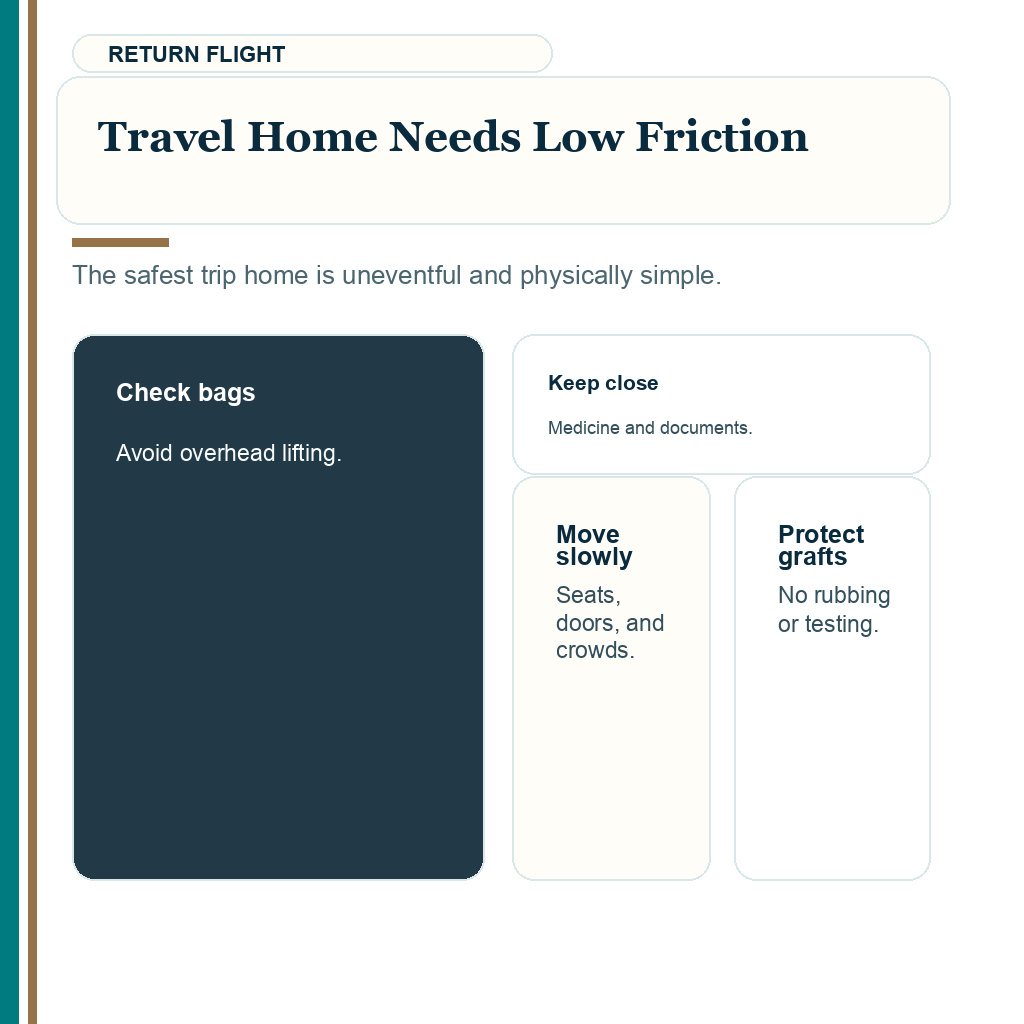
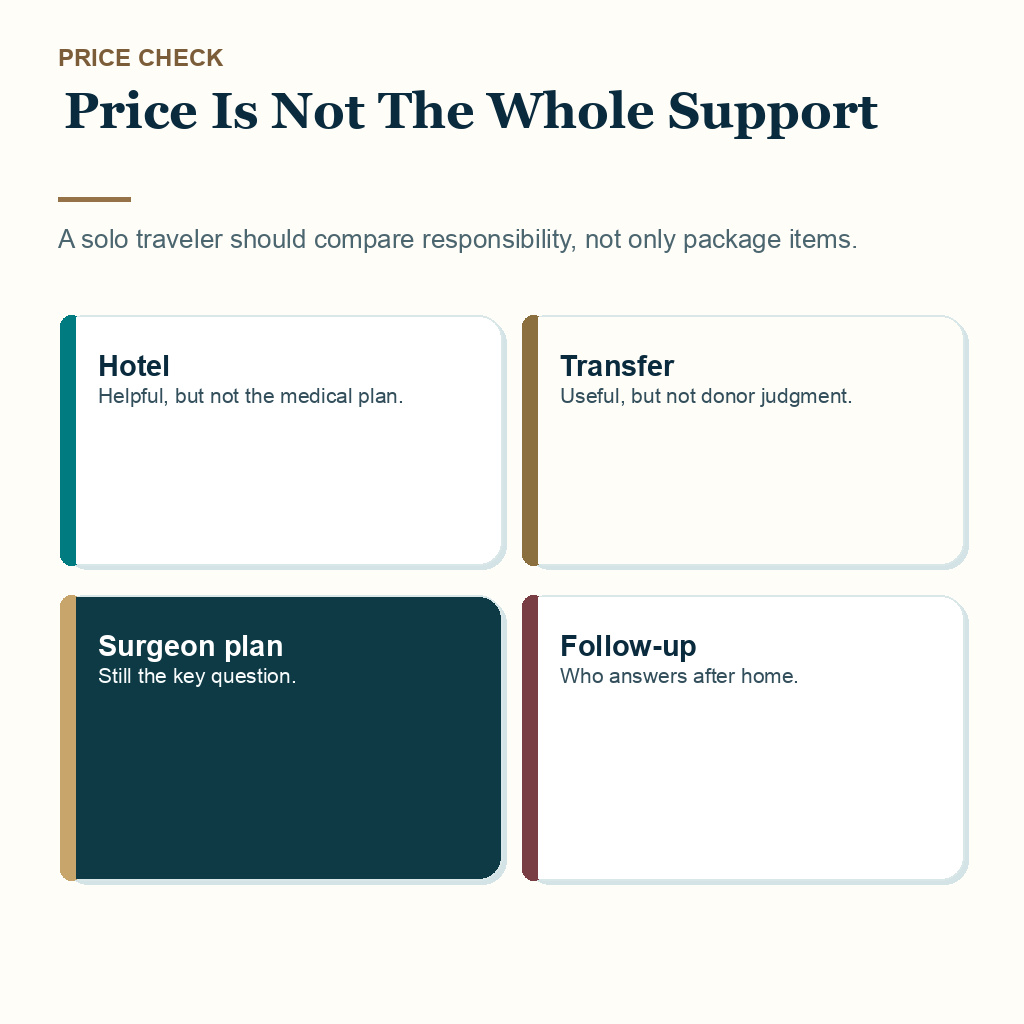
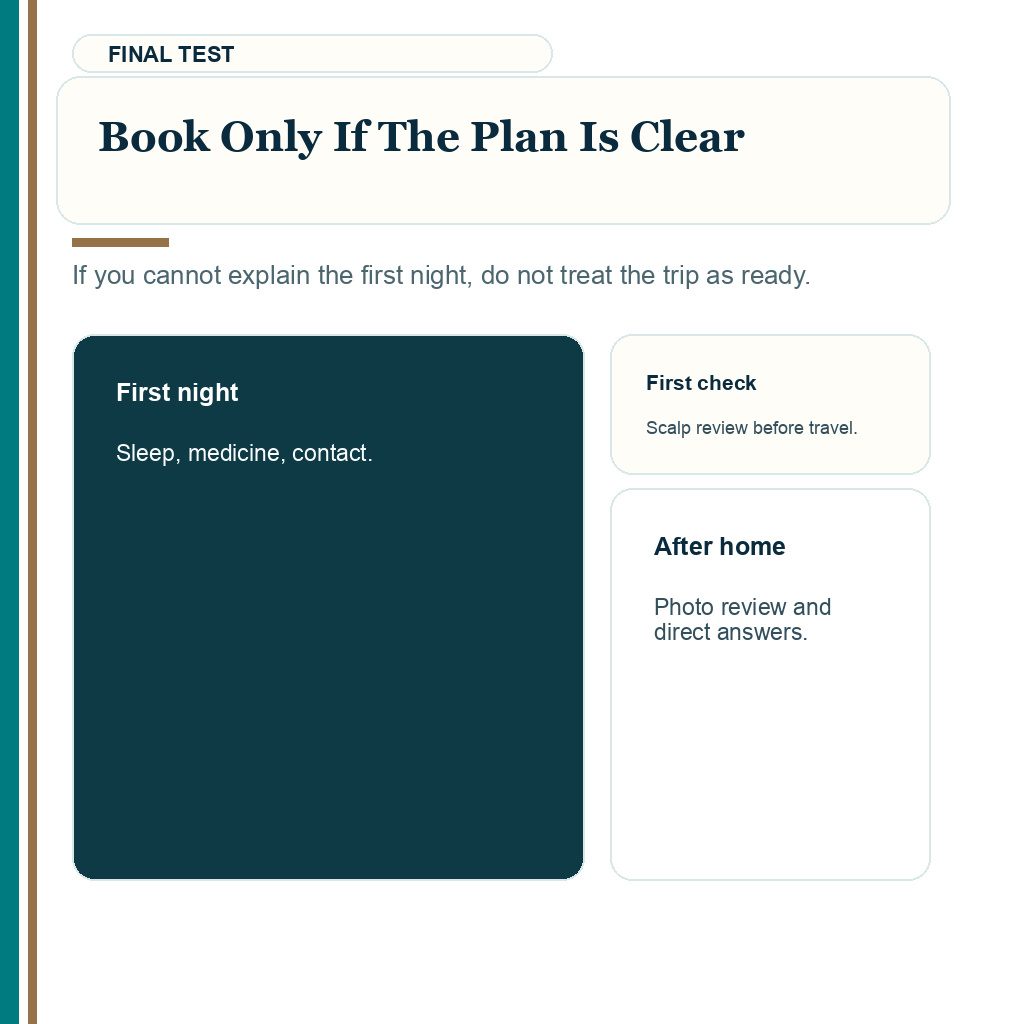
These 10 solo travel planning slides separate the first three days, weak support warnings, clinic organization, companion decisions, hotel room setup, first night contact, the flight home, early recovery limits, price versus support, and the final check before booking test. Swipe sideways, use the arrows one slide at a time, or choose a number below the image.

Enough Istanbul time protects solo patients
If you are alone, Istanbul should not be treated as a same day surgical stop. The safer rhythm is to arrive before surgery, sleep properly, have the operation without travel fatigue, stay through the early recovery period, and leave only after the important first checks are complete.
The exact number of days depends on the clinic protocol and the patient’s flight distance, but the principle is clear. You should not plan the return journey so tightly that a small delay, swelling, poor sleep, or medication question becomes a crisis.
Many international patients underestimate how tired they feel after the procedure. The operation itself can be long, and even when pain is controlled, the patient still needs to protect the recipient area, eat properly, sleep carefully, and avoid unnecessary movement.
If you are alone, the extra time is not only about comfort. It gives the clinic a chance to check the scalp, repeat the instructions, perform the early washing step if that is part of the protocol, and make sure you are ready to travel without rushing.
A short, organized stay is usually better than a compressed itinerary. Leaving one day later with clear instructions and a settled scalp is often wiser than flying home too quickly because the travel schedule was planned around convenience instead of healing.
Travel home needs graft protection
The main risks during travel are rubbing, pressure, accidental contact, dehydration, poor sleep, fatigue, and fasting after a hair transplant when travel already limits fluids and meals. The airplane cabin is rarely the biggest issue. The risky moments are usually around the flight, such as luggage, crowds, seat movement, car doors, pillows, and tired hands touching the scalp.
You need to be careful with overhead luggage, narrow airplane seats, car doors, hotel pillows, airport crowds, and anything that touches the recipient area. If you travel alone, pack lightly enough to avoid lifting heavy bags above shoulder level. If you travel alone and cannot rely on a companion, airport assistance before flying home can keep luggage, terminal walking, and boarding movement under control.
The best journey home is uneventful. Keep documents and medication easy to reach, avoid alcohol, drink water, protect the scalp from friction, and do not test the grafts by touching them repeatedly. If you are alone, checking heavy bags is usually safer than lifting them into an overhead compartment while you are tired.
The travel timing is part of flying after a hair transplant. For solo travel, one extra point matters. Choose a flight plan that leaves enough energy to protect your head and follow instructions when you arrive home.
Price should be compared with real support
Price matters, but a cheap package can become expensive if the medical structure is weak. If you are traveling alone, compare what the price includes, but also what the clinic personally takes responsibility for.
Hotel, transfer, translator, and package language can make a clinic look organized. Those details help, but they are not the surgical plan. Medical responsibility still needs to be clear. You should know who is responsible for your donor area, hairline, graft number, recipient area, and follow up.
Hair transplant cost in Turkey needs judgment together with surgeon involvement, clinic reputation, donor management, and long term planning. For a solo traveler, this matters even more because the patient may have fewer people nearby to challenge a weak plan.
Ask what happens if a medical question appears after you fly home. Do not assume ordinary travel insurance will cover a surgery related problem. You should understand what the clinic covers, what your own insurance excludes, and how urgent medical advice would be handled from your country.
If the clinic conversation is mostly about discount, graft number, hotel, transfer, and deposit, slow the decision down. You are buying surgery, not only a trip.

Red flags matter more when you travel alone
Some red flags become more serious when you travel alone. A clinic that avoids direct medical answers, refuses to clarify who performs each surgical step, pushes urgency, changes the graft number casually, or gives vague aftercare instructions is already creating risk.
You may also feel more pressure because you have already paid for flights and hotels. A weak clinic may use that emotional pressure. If the plan changes at the last moment, or if the consultation feels rushed, you need enough room to stop until the plan is clear.
Knowing who actually performs your hair transplant matters even more here. If you do not know who is doing the critical steps, traveling alone makes the uncertainty worse.
Review the red flags of Turkish hair transplant clinics before you travel. The point is not to be afraid of Turkey. The point is to separate a serious surgeon led hair transplant model from high volume sales systems.
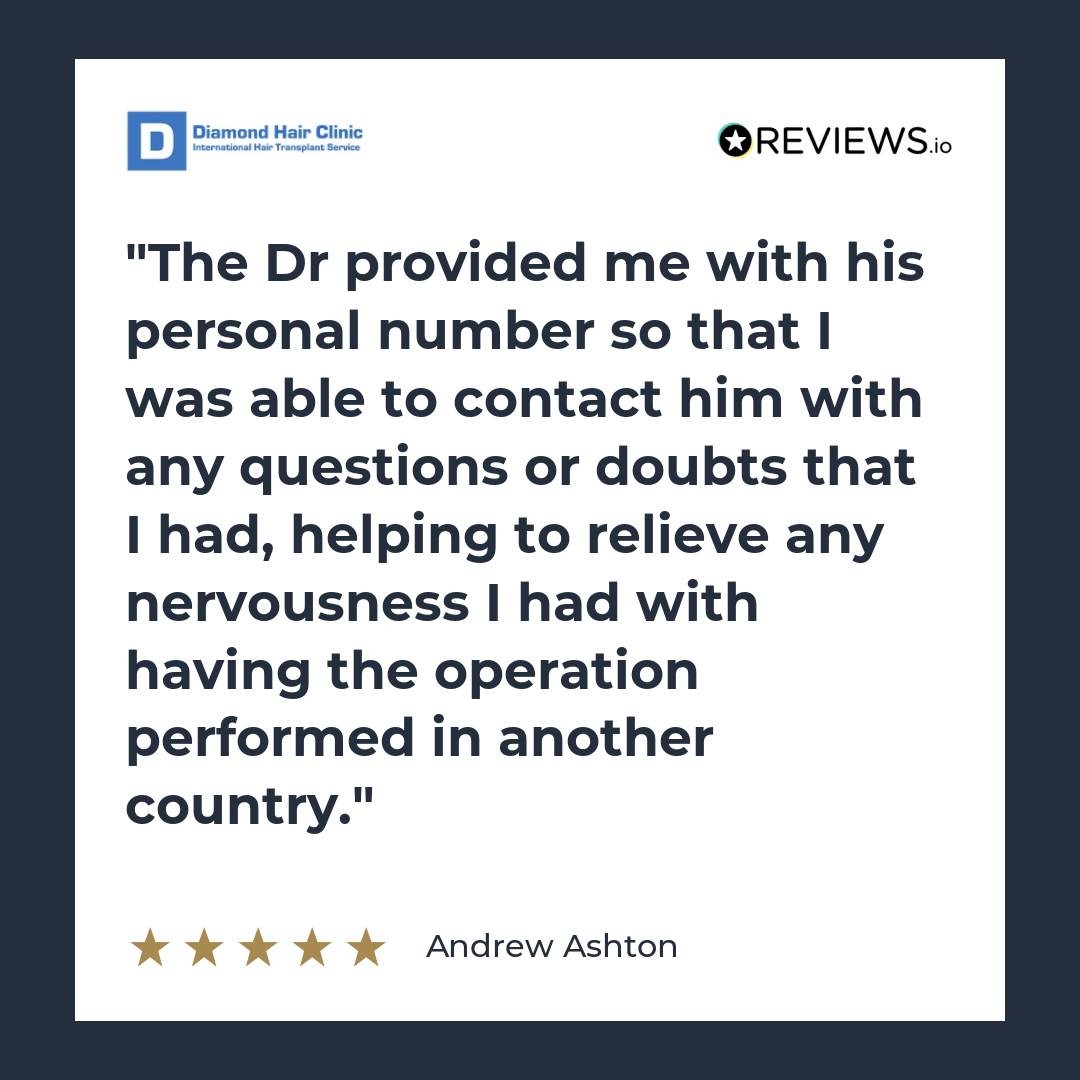
Read this review excerpt
The Dr provided me with his personal number so that I was able to contact him with any questions or doubts that I had, helping to relieve any nervousness I had with having the operation performed in another country.
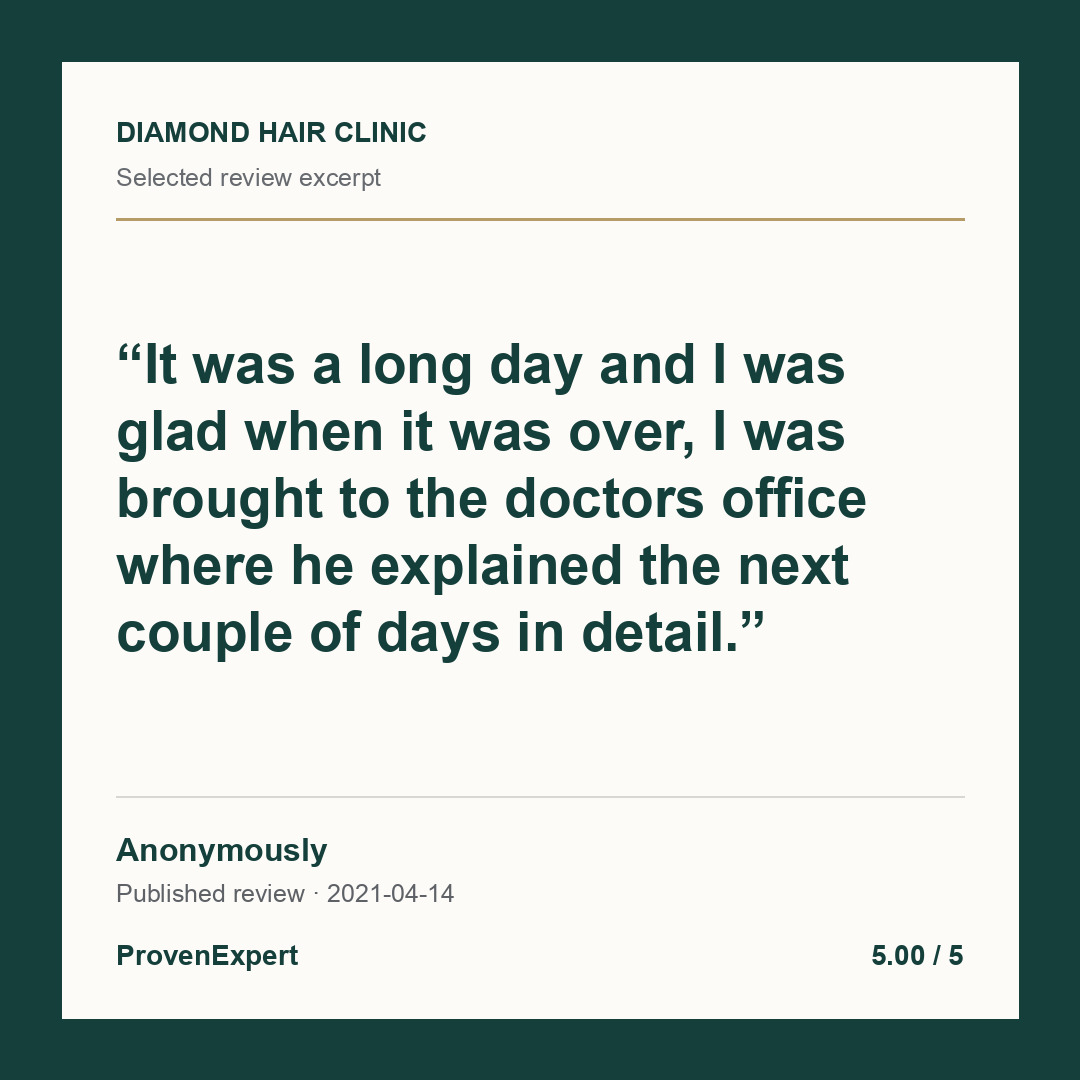
Read this review excerpt
It was a long day and I was glad when it was over, I was brought to the doctors office where he explained the next couple of days in detail.
Sleep and recovery need hotel room planning
Your first night needs planning before surgery starts. You should know the sleeping position, how many pillows to use, when medication is taken, what not to touch, and how to ask for clinic review if bleeding, dizziness, vomiting after a hair transplant, severe pain, or unusual swelling appears.
The hotel room should be easy to manage. Keep water, medication, phone charger, clinic contact details, and clean clothing within easy reach. Avoid unpacking in a way that forces you to bend, stretch, or search for things after the operation.
Sleeping is not only about comfort. Poor sleeping position can increase swelling or create accidental contact with the recipient area. This more closely belongs in sleep after a hair transplant.
You should not be expected to guess. The clinic should give clear written instructions and repeat the important points before you leave the clinic.
The solo plan still depends on the graft plan
Travelling alone is easier when the operation is straightforward. It becomes more demanding when the graft number is high, the donor work is wide, the crown is included, the patient has a long flight, or the plan may need a careful hairline review on arrival.
Before I accept a solo travel plan, both sides of the decision need to be understood. Logistics can be arranged by the clinic, but the body still has to go through surgery, washing, swelling, donor soreness, sleep adjustment, and the first quiet days without a companion.
Before flying, know the first night
Travelling alone for a transplant can be reasonable when the medical plan, surgeon role, donor strategy, hairline design, hotel, transfer, first night, and emergency contact are clear before the flight.
It becomes risky when confidence depends on hope after booking. Early recovery is easier when you already know who checks the grafts, who answers questions, and how you get help if symptoms change.
If you cannot explain the first night in plain language, the trip is not ready. Fix the uncertainty before travel, not after surgery.