


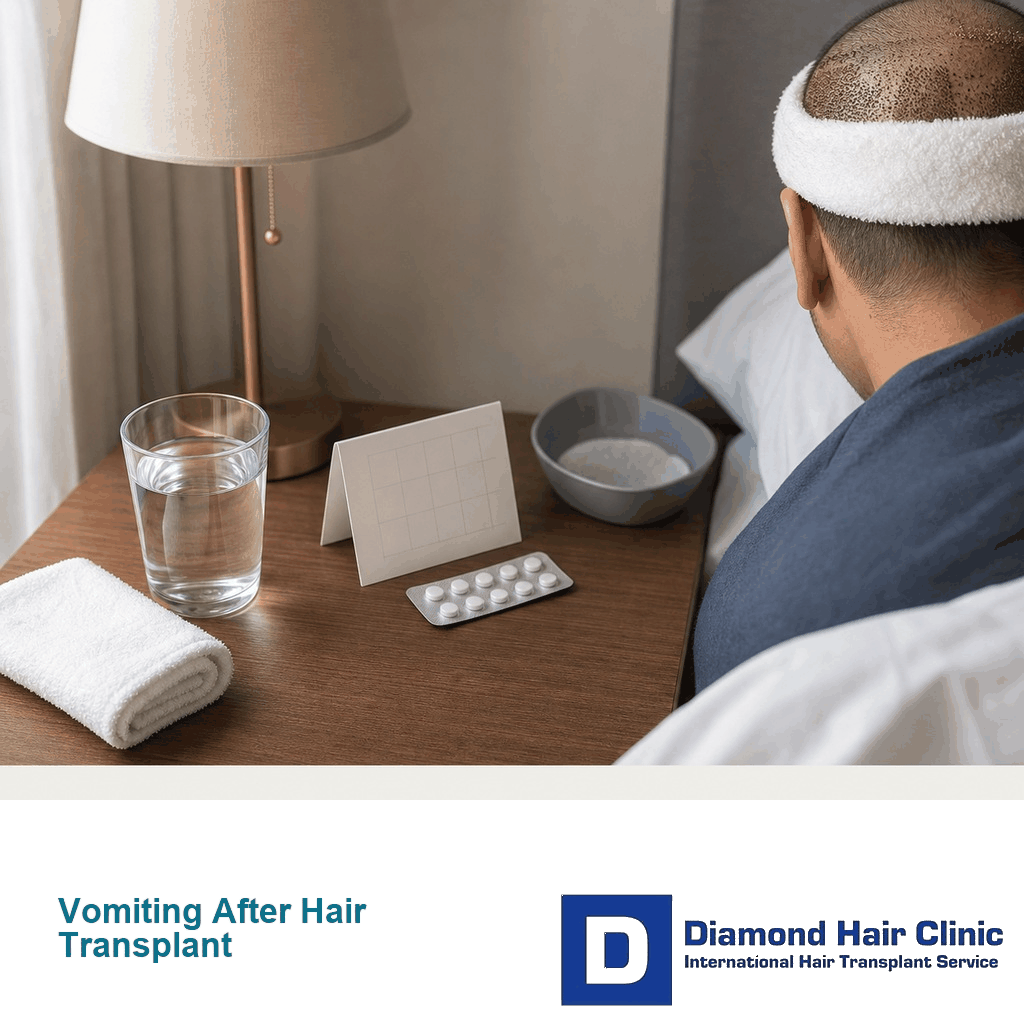
Vomiting Rarely Dislodges Grafts but Needs Review
One episode of vomiting does not mean the grafts are ruined by itself. I worry more about the surrounding events, such as fresh bleeding, an opened area, visible graft movement, a fall, repeated retching, dehydration or dizziness after a hair transplant, a medicine reaction, or rubbing the recipient area while you are panicking. Persistent hiccups after a hair transplant belong in the same review because they can point to medicine timing, reflux, or stomach irritation rather than graft loss.
Protect the scalp first, then protect your hydration and medicine plan. Sit upright, keep the recipient area away from towels, pillows, and your hands, and sip fluids slowly when you can. Continued vomiting, or any scalp area that looks disturbed, needs guidance. Do not stop antibiotics, pain medicine, or other prescribed medicine on your own, and mention it if vomiting is happening together with constipation after a hair transplant. The trigger matters too. Alcohol, food irritation, dehydration, and missed medicine do not change the grafts in the same way, so the recovery plan should separate the stomach problem from the scalp check.
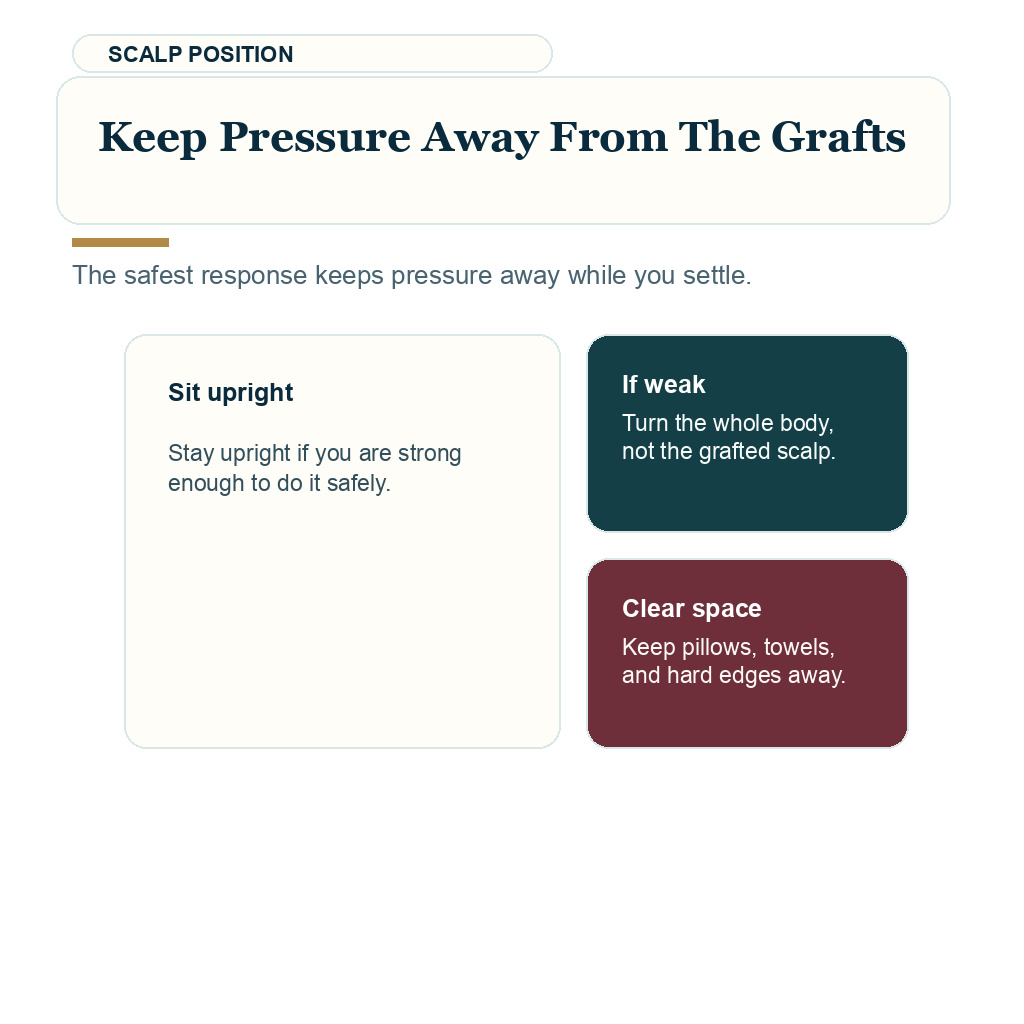
If vomiting begins while you are lying down, do not roll face first into the pillow to protect the grafts. Sit up if you can. If you are too weak or dizzy to sit safely, turn your whole body to the side with the grafted area clear of the pillow and get help. The practical aim is airway safety first, then keeping pressure away from the grafts.
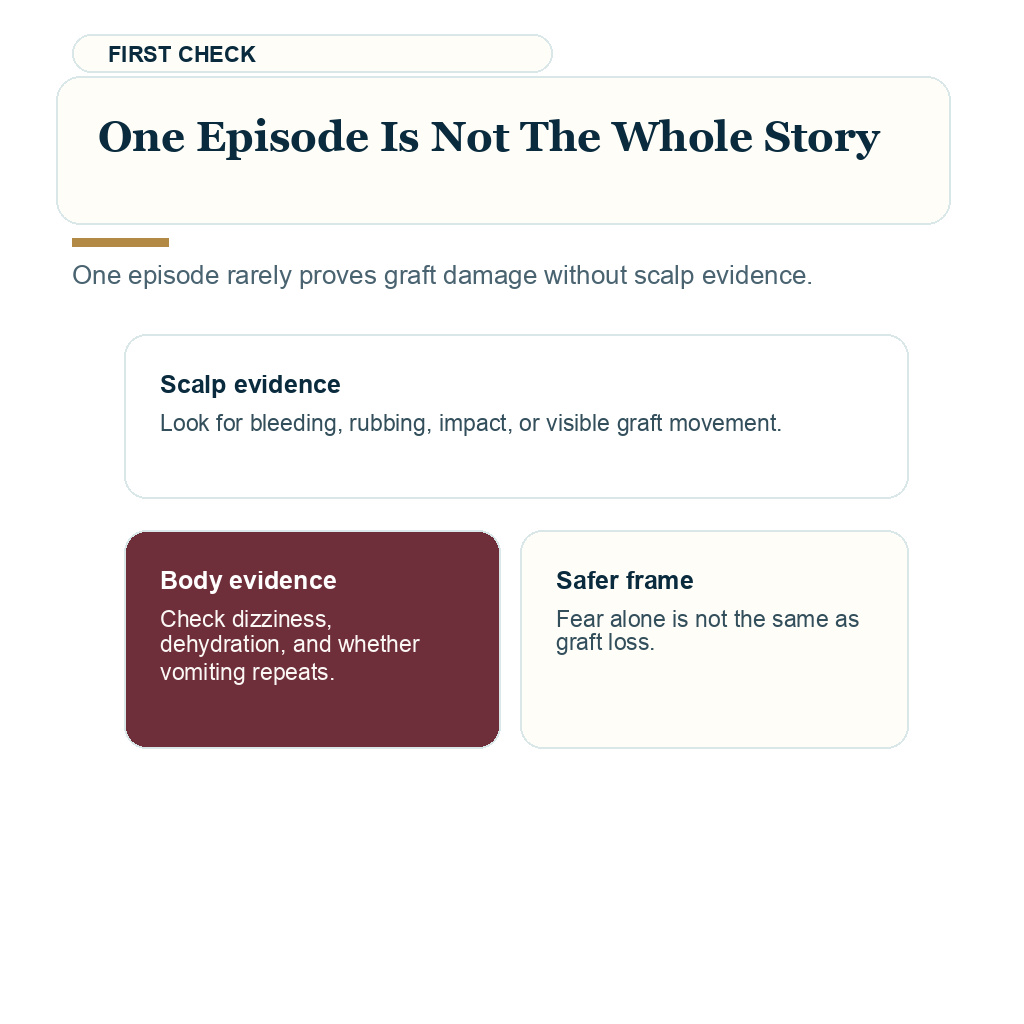
I judge what happened to the scalp and what is happening to your body. Fear alone is not the same as evidence, but repeated vomiting should not be ignored either.
After vomiting, the practical check is simple. Did the scalp hit anything, did bleeding start, and can you keep fluids and medicine down safely?
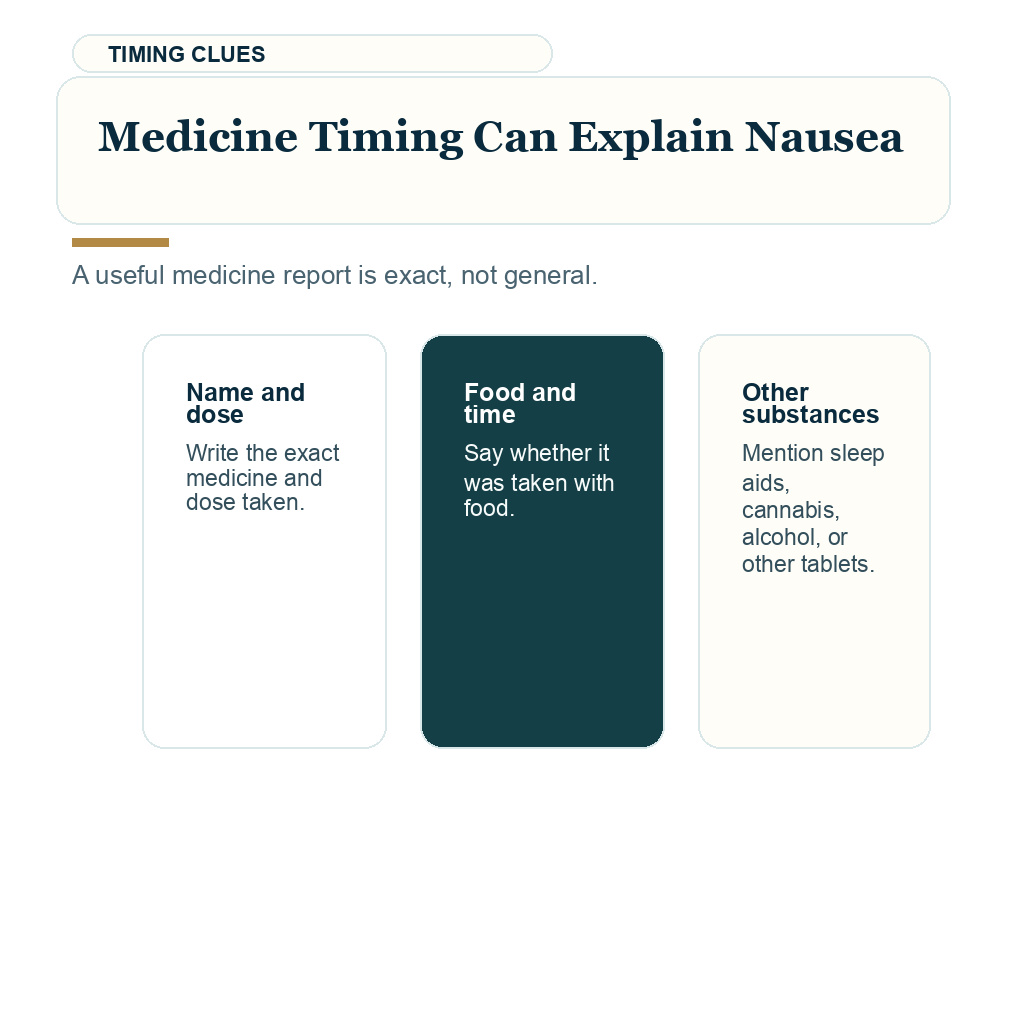
If you vomit after taking medicine, tell the clinic whether the tablets stayed down and when the dose was taken. The scalp check and the medicine plan are separate questions.
First steps after vomiting
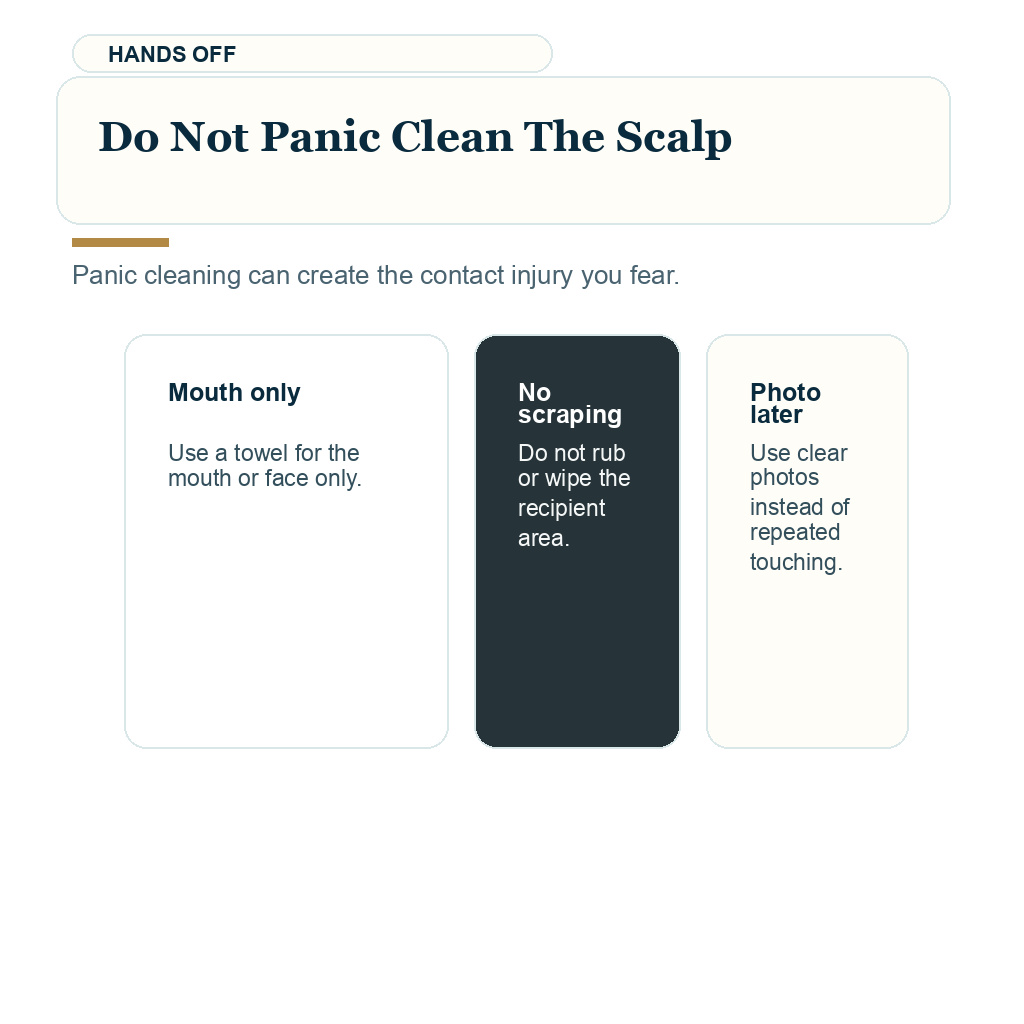
Protect the scalp before checking anything else. Sit upright or lean forward in a way that keeps the recipient area free. Do not press a towel, pillow, cap, or hand against the grafts. The same pressure rule applies if you notice blood on the pillow after a hair transplant. If you need to clean your mouth or face, move slowly and keep anything wet or rough away from the transplanted area.
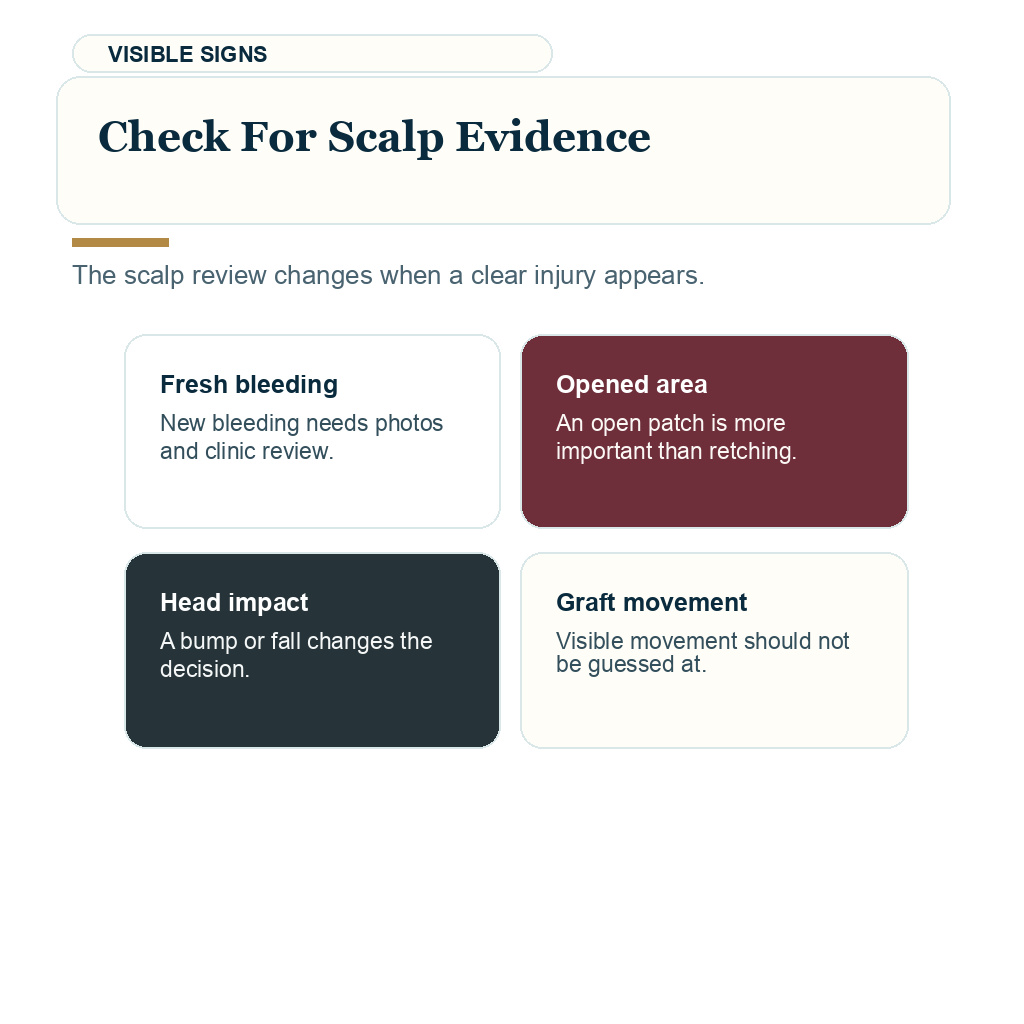
Look for scalp evidence next. A brief episode of vomiting without bleeding or visible graft movement is very different from vomiting followed by fresh bleeding, a clear hit to the head, or a patch that looks opened. For the wider first days recovery frame, use hair transplant aftercare.
Hydration and safety matter as much as graft anxiety. If you feel faint, sweaty, confused, very weak, or unable to keep fluids down, the issue is no longer only graft anxiety. It becomes a general recovery problem that needs attention. If loose stools, fever, poor fluid intake, or travel timing are part of the same episode, judge the broader food poisoning around a hair transplant picture as well as the dedicated guidance on diarrhea in early hair transplant recovery.
If you are alone in a hotel room after surgery, call the clinic earlier rather than waiting until you are exhausted. It is easier to correct the plan while you are still alert.
One episode usually does not mean lost grafts
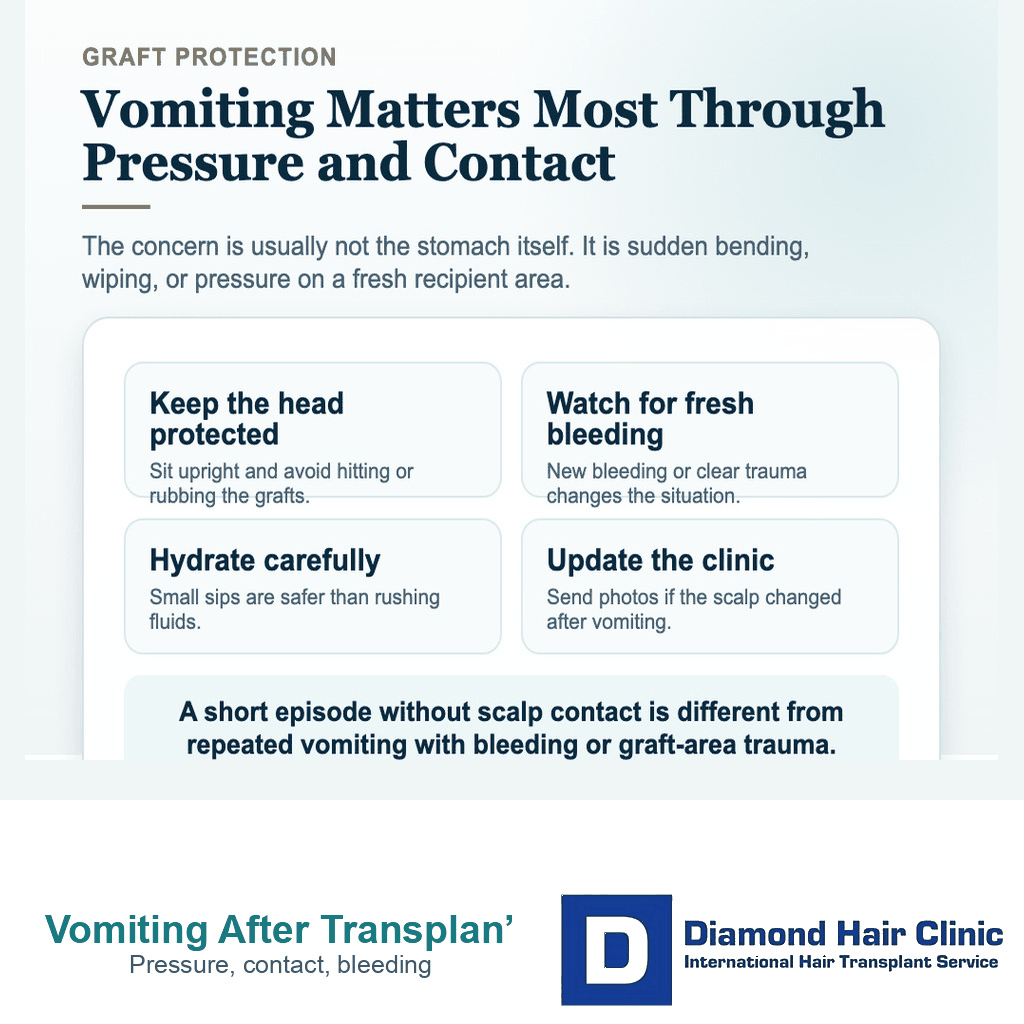
One episode does not mean grafts are lost. Grafts are not pushed out simply because the stomach contracts once. The concern is what happened around the vomiting, such as hard scalp rubbing, a fall, direct pressure, fresh bleeding, or repeated violent retching.
The timing matters. In the earliest days, grafts still deserve careful protection. The first period is treated with more discipline, especially when judging when hair transplant grafts are secure.
I do not reassure someone by saying nothing can ever happen. I ask for the details. Was there blood from the scalp? Did the head hit anything? Did a towel scrape the recipient area? Did you see a graft like piece with tissue, or only saliva, food, and normal scab material?
Most anxious people have no graft loss after one vomiting episode. The check still matters because panic can lead to more touching than the vomiting itself.
When Can Vomiting Become a Graft Problem?
Vomiting can become a graft problem when it leads to direct mechanical trauma. This can happen if you bend into a pillow, press the forehead into a surface, scratch during the episode, fall, bump the head, or wipe the scalp aggressively afterward.
Fresh bleeding from the recipient area matters more than the vomiting sound. An open area, strong new pain, or a visible change in graft placement also matters. If the episode includes a head impact, read the guidance on what to do if you bumped your head after a hair transplant and send photos for review.
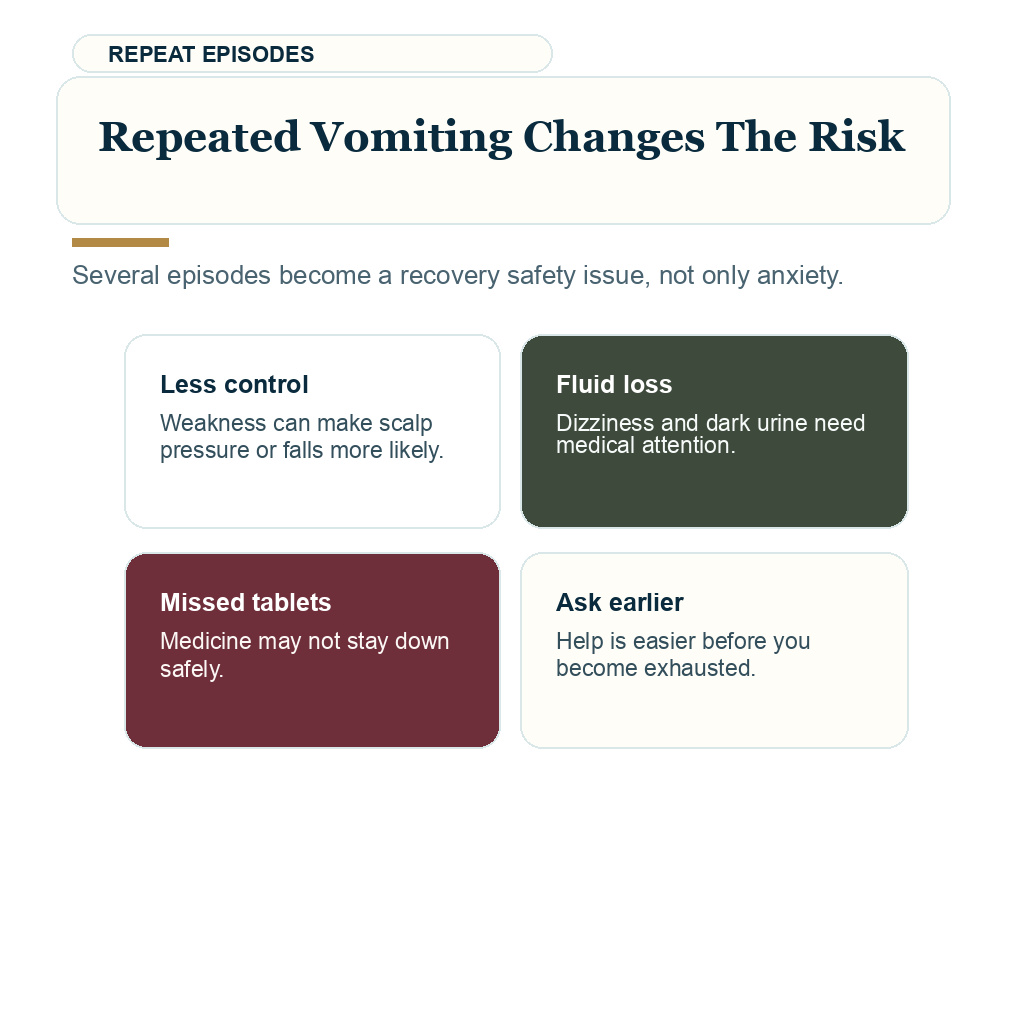
Repeated retching can also make you less careful. After several episodes, people become tired, dehydrated, and less coordinated. That is when they may lie in the wrong position, rub the scalp, skip instructions, or take extra tablets without thinking clearly.
The response should stay practical. Keep the scalp uncovered, photograph any questionable area in good light, and treat a scalp change as a reason for clinic review.
Why Can Nausea Happen After a Hair Transplant?
Nausea can happen for several reasons after a hair transplant. Stress, travel, low food intake, dehydration, a long procedure, blood pressure changes, pain medicine, migraine medicine, antibiotics, anxiety, motion sickness, or a stomach virus can all play a role. Before vomiting starts, nausea after FUE helps separate medicines, fluids, dizziness, and fever.
Some people also feel unwell after local anesthesia, adrenaline, or other medicines used around the operation. Hair transplantation is normally performed with local anesthesia, not the same general anesthesia used in many hospital operations, but the body can still react to stress, medicine, fasting, or fatigue.
The reason matters because the response changes. Nausea after taking a tablet on an empty stomach is different from vomiting with fever and severe abdominal pain. Someone who has not drunk water all day is different from someone who has swelling, discharge, and worsening scalp pain.
Vomiting before a scheduled operation changes the decision as well. Do not arrive dehydrated or unable to keep food, fluids, or prescribed medicine down and try to push through an elective procedure. Contact the clinic so the cause, recovery, travel, and whether surgery should be postponed can be reviewed.
The useful sequence is whether the vomiting started before surgery, during travel, after the first medicine dose, after food, or after pain increased. That often tells us what to correct.
Painkillers or antibiotics may be part of the pattern
They can be part of the story in some people. Pain medicine can upset the stomach, especially when taken with too little food or combined with other sedating medicine. Antibiotics may also cause nausea. Wait for clinic instruction before changing the plan.
If tablets seem to be part of the pattern, compare the timing with painkillers after a hair transplant and antibiotics after a hair transplant. The decision should fit your medical history and the exact medicine, not a general internet answer.
Vomiting that follows a specific tablet needs the exact medicine name, dose, timing, and whether it was taken with food. Do not take extra pain medicine to force comfort. Do not double a missed dose because you vomited. Do not mix nausea tablets, sleep aids, antihistamines, or alcohol without medical advice.
A better plan may be changing timing with food, adjusting the approved medicine plan, or checking whether another cause is present. That decision should be made with the medical team.
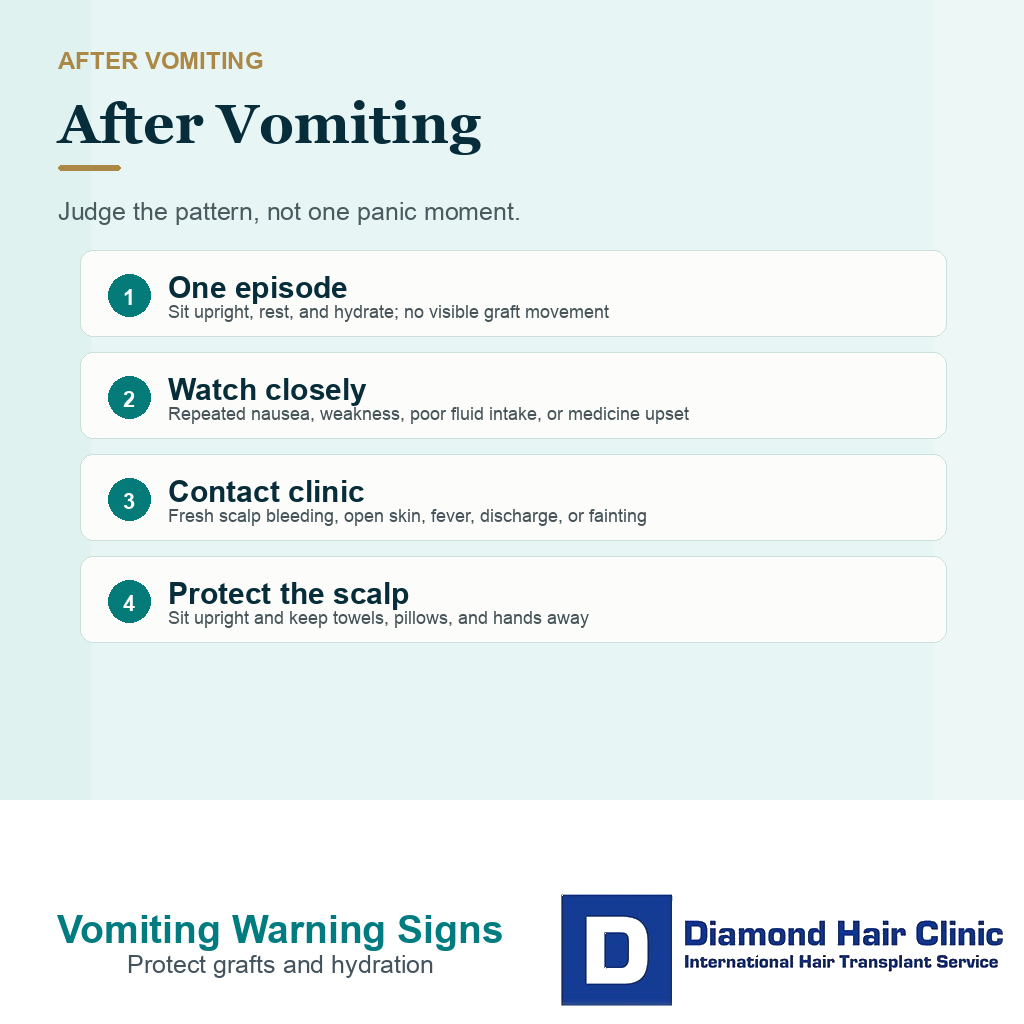
One episode and repeated vomiting are not the same recovery situation.
Nausea medicine after vomiting
Do not add a nausea tablet randomly after a hair transplant without telling the clinic or a doctor, especially if you are already taking antibiotics, pain medicine, sleeping pills, anxiety medication, or blood pressure medicine. The reason for vomiting matters before another medicine is added.
Some nausea medicines can cause drowsiness or interact with other tablets, so the exact name and dose matter. If nausea is mild and you can keep fluids down, the clinic may simply adjust timing, food, hydration, or the way tablets are taken.
If vomiting is repeated, comes with dizziness, faintness, severe headache, chest symptoms, fever, abdominal pain, or inability to keep fluids down, the priority becomes medical review rather than graft reassurance.
Urgent signs after vomiting
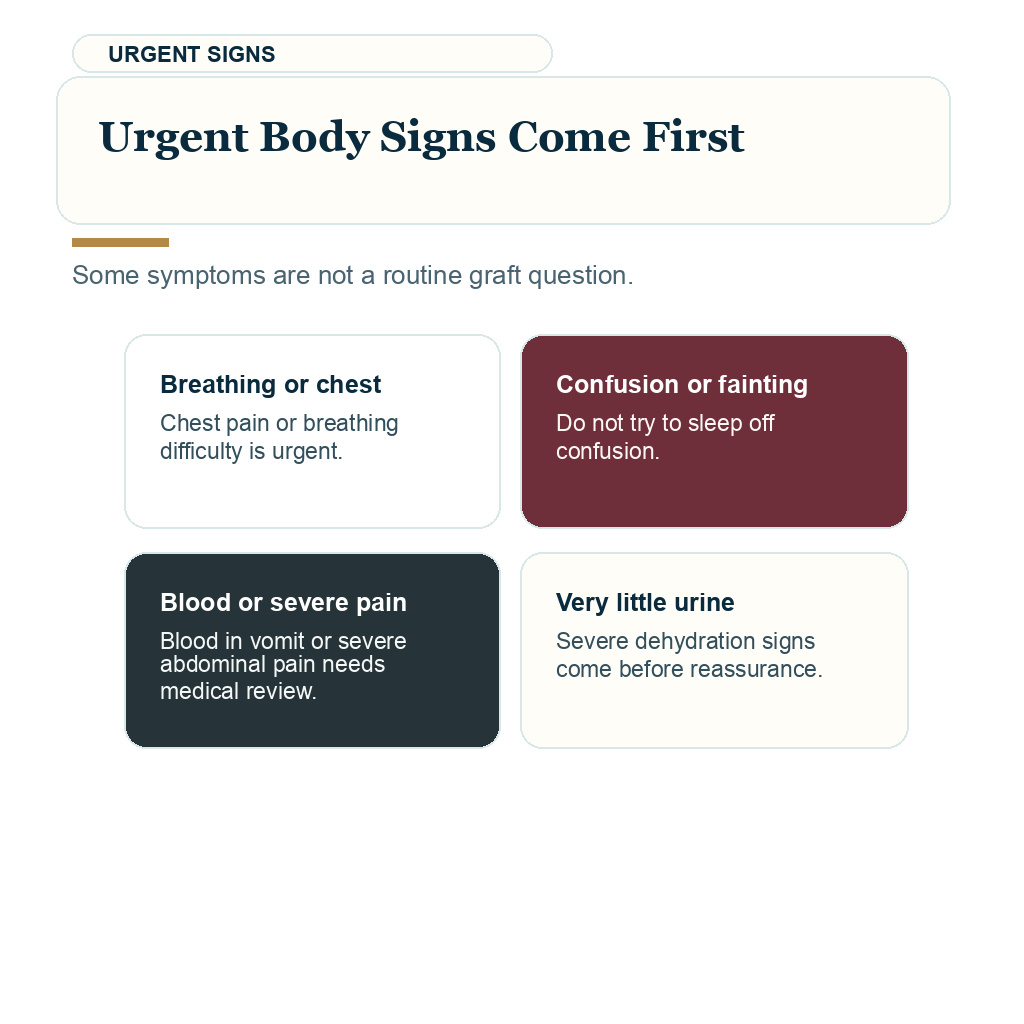
Contact the clinic urgently if vomiting is repeated, you cannot keep fluids down, your urine becomes very dark or very infrequent, you feel faint, or you have chest pain, breathing difficulty, confusion, fever, severe abdominal pain, or blood in the vomit.
From the scalp side, seek clinic review if there is fresh bleeding, an open wound, strong new pain, spreading redness, discharge, increasing swelling, blackening tissue, or a clear injury to the recipient area. If swelling is increasing, swelling after a hair transplant helps separate expected swelling from changes that need review.
Do not wait for the next scheduled follow up if the symptom is getting worse. A photo message can solve many doubts, but persistent vomiting and dehydration signs may need direct medical attention, not only a hair transplant answer.
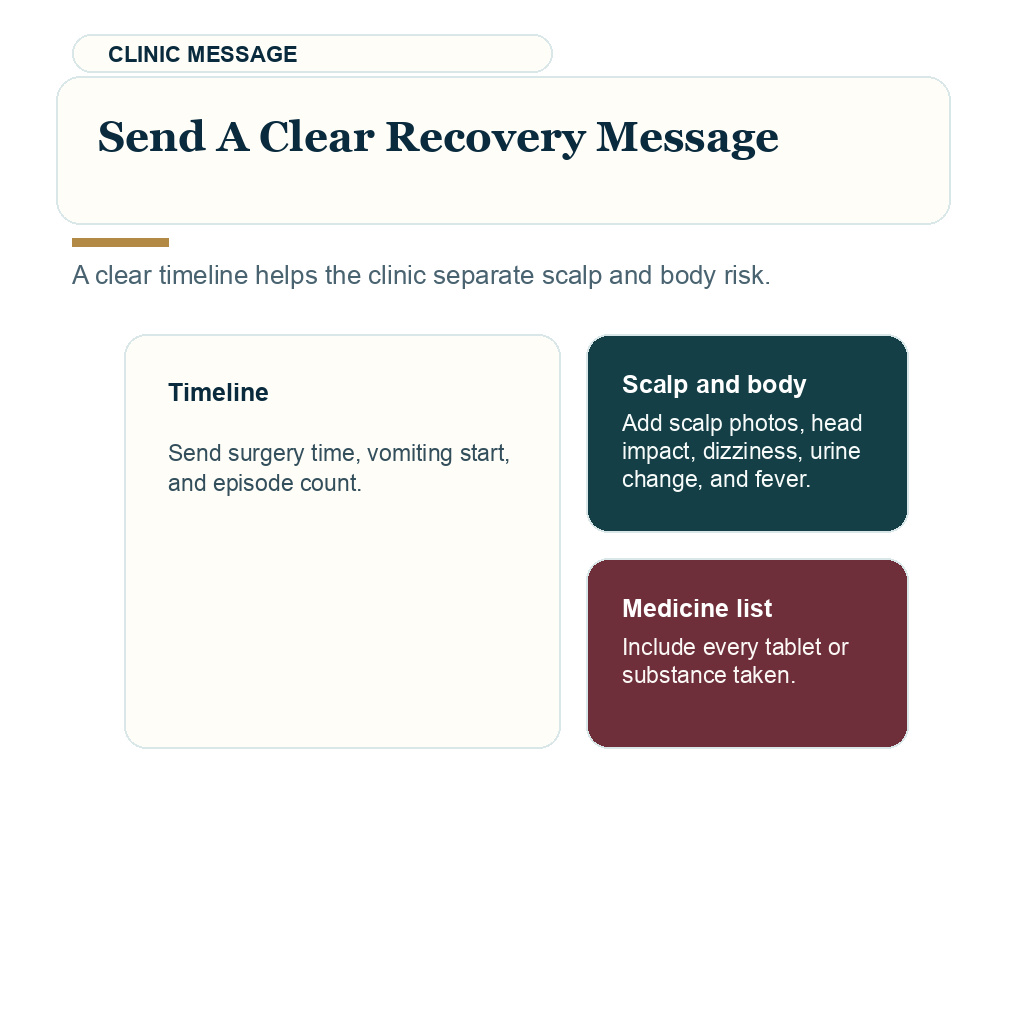
In the message, give a practical report. Say when surgery finished, when vomiting started, how many times it happened, what medicine you took, whether you hit the head, and what the recipient area looks like now.
These 10 safety slides separate a single vomiting episode, scalp protection, visible recipient area signs, repeated vomiting, hydration, medicine timing, urgent symptoms, and the details to send the clinic.

Protecting the scalp if vomiting may return
If you feel nausea rising again, prepare the position before the episode starts. Sit up, keep the head clear of walls and pillows, place a clean bowl or bag low enough that you do not need to bend sharply, and keep a towel for the mouth only, not for the scalp.
Ask someone nearby to help if possible. A helper should protect the space around you, not hold the grafted area. If you become dizzy, the risk of falling can be more important than the vomiting itself.
Avoid leaning over a toilet with the new hairline close to a hard rim or wall. A clean bowl or bag held below the chin is usually safer for the scalp because it lets you stay upright and controlled. If dizziness is present, the helper should focus on fall prevention first.
Do not keep checking the grafts with your fingers after every wave of nausea. Touching grafts after a hair transplant matters because repeated inspection can create the trauma you are trying to avoid.
After the episode, rinse the mouth, clean the face carefully, take a short rest upright, and then send photos only if the scalp appears changed. A planned sequence is safer than panic cleaning.
Retching, coughing, pressure, and grafts
Retching creates pressure, but pressure alone is not the usual reason grafts come out. Direct rubbing, scraping, bleeding, or a clear injury is more concerning. This is similar to the question of sneezing or coughing after a hair transplant, where a short body movement matters less than physical contact with the grafts.
If vomiting is violent and repeated, I become more careful because you may sweat, shake, bend forward, or lose balance. The risk becomes a combination of pressure, poor control, and aftercare mistakes.
Do not use this as a reason to press on the scalp. Some people think they should hold the grafts in place during retching. That is the wrong instinct. Keep pressure away from the recipient area.
With no bleeding, no scalp impact, and no visible graft movement, the episode can often be observed rather than treated as a lost graft event. If there is doubt, good photos are better than repeated touching.
Drinking and eating after vomiting
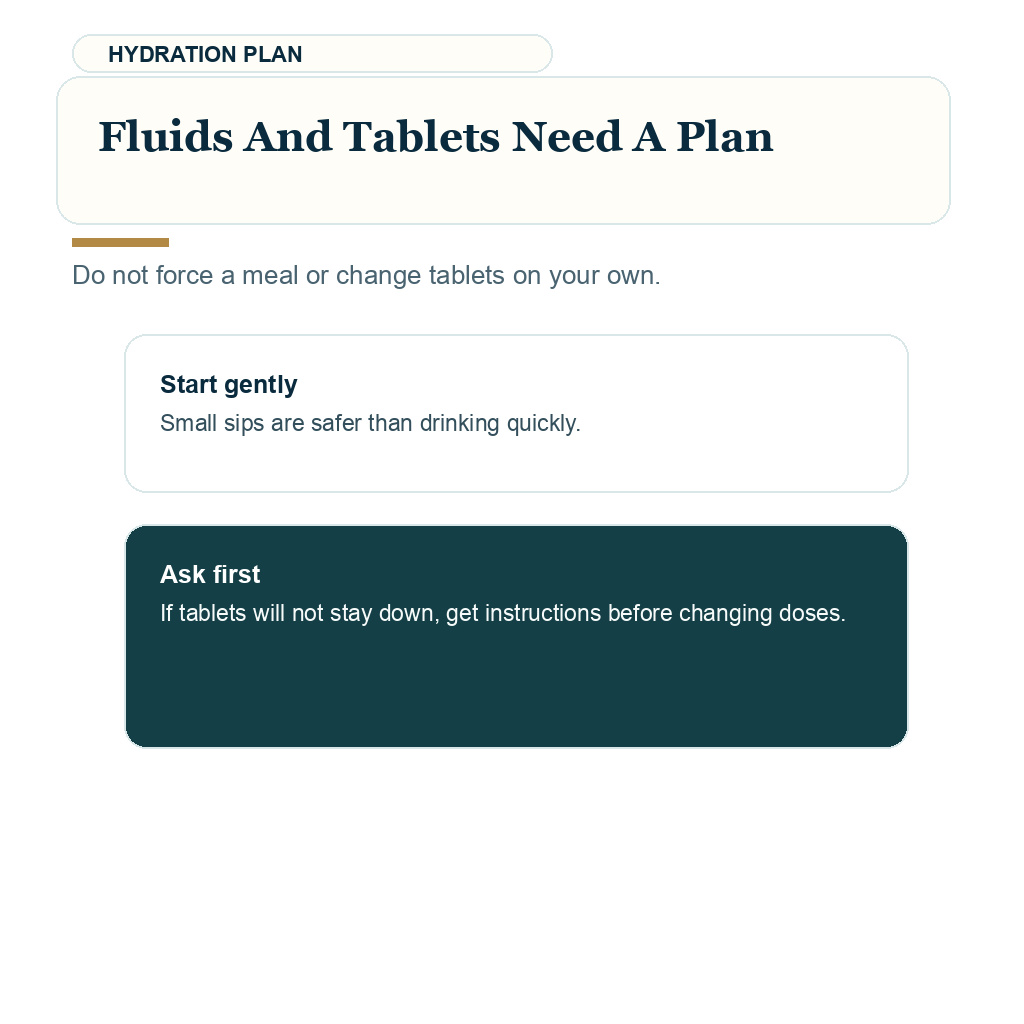
After vomiting, start gently. Small sips of water are safer than drinking a large amount quickly. If plain water makes nausea worse, ask the clinic or a doctor whether an oral rehydration drink is appropriate for you, especially if you have diabetes, kidney disease, heart disease, or blood pressure concerns.
When food is tolerated, choose simple food rather than a heavy meal. The aim is to settle the stomach and keep medicine timing safe. If you cannot keep fluids down, do not force a full meal just because you are worried about taking tablets.
Recovery food matters, but nausea changes the first priority. Detailed nutrition can wait until the stomach settles. During active vomiting, the first question is hydration and safety.
Avoid alcohol, heavy spicy meals, and unnecessary supplements while the stomach is unsettled. The body already has enough to handle during the first recovery night. The dedicated spicy food after FUE guidance separates one mild meal from a meal that triggers vomiting, sweating, or scalp contact.
If you cannot keep fluids or tablets down
Continued vomiting with fluids or prescribed tablets not staying down is no longer only graft anxiety. Dehydration, dizziness, missed medicine, repeated retching, and weakness can become more important than the transplant itself. Take small sips, stay upright, keep the scalp away from towels or pillows, and get medication instructions before changing the plan.
Seek urgent medical attention if vomiting is persistent, there is blood or material that looks like coffee grounds, you have severe abdominal or chest pain, confusion, fainting, very little urine, or signs of severe dehydration. In those situations, protecting your health comes first. Once you are stable, the scalp can be reviewed with photos and direct instructions.
Changing medicines after vomiting
Do not change prescribed medicines alone after vomiting. The right answer depends on which medicine was taken, whether it stayed down, why it was prescribed, and whether the symptom is repeating.
Vomiting soon after a tablet makes timing important. Do not simply repeat the dose. Do not stop antibiotics because one dose upset your stomach. Do not add nausea medicine from another prescription unless a doctor approves it.
Medicine plans need the patient’s details. The guidance on medications after a hair transplant gives the broader framework, but allergies, stomach history, blood pressure, liver or kidney issues, and other medicines can all change the answer.
If you also took a sleeping pill, antihistamine, strong painkiller, cannabis, or alcohol, say that clearly. The clinic cannot judge the night safely from only the word vomiting.
Vomiting while drowsy is different from vomiting while fully alert. If you are very sleepy, confused, difficult to wake, or vomiting after sedatives, strong painkillers, cannabis, or alcohol, do not try to sleep it off alone. Get medical help because breathing safety comes before graft checking.

A simple upright setup protects the scalp while the nausea settles.
Vomiting, sleep, and the first night
Vomiting can make the first night harder. You may feel weak, afraid to lie down, or worried about another episode. Sleep matters, but the scalp still needs space and the body still needs hydration.
After the stomach settles, the guidance on sleep after a hair transplant may help. Until then, stay slightly upright and keep the recipient area clear. Do not bury the head into a pillow because you are tired.
If nausea is linked to anxiety, slow the situation down. Good light, clear photos, a short clinic message, and a simple sleeping position can reduce the urge to keep touching the scalp.
If nausea is linked to medicine or a possible illness, sleep alone is not the solution. The cause should be reviewed, especially if vomiting returns.
Vomiting matters when symptoms keep escalating
Separate fear from evidence. One vomiting episode with no scalp trauma, no bleeding, no visible graft change, and no dehydration signs is watched carefully. Repeated vomiting, fainting, dehydration, fever, worsening pain, bleeding, discharge, or a head injury changes the decision.
Do not try to solve everything alone with extra tablets or constant graft checking. Protect the scalp, protect hydration, and give the clinic enough information to judge the risk.
After vomiting, keep the recovery plan clear and practical. Keep pressure away from the grafts. Avoid aggressive cleaning. Use only approved medicine changes. Repeated symptoms need early guidance.
This is safer than panicking, rubbing the recipient area, stopping medicine randomly, and spending the night searching for worst case answers.
Repeated vomiting is also a fluid balance question, not only a stomach symptom. The water and electrolytes after FUE guide explains when small sips, medicine review, and clinic contact become more important.

Read this review excerpt
We also had a levelled conversation about my hairline and results I could expect based on my donor density area.