



Antibiotics Need Medical Review After Surgery
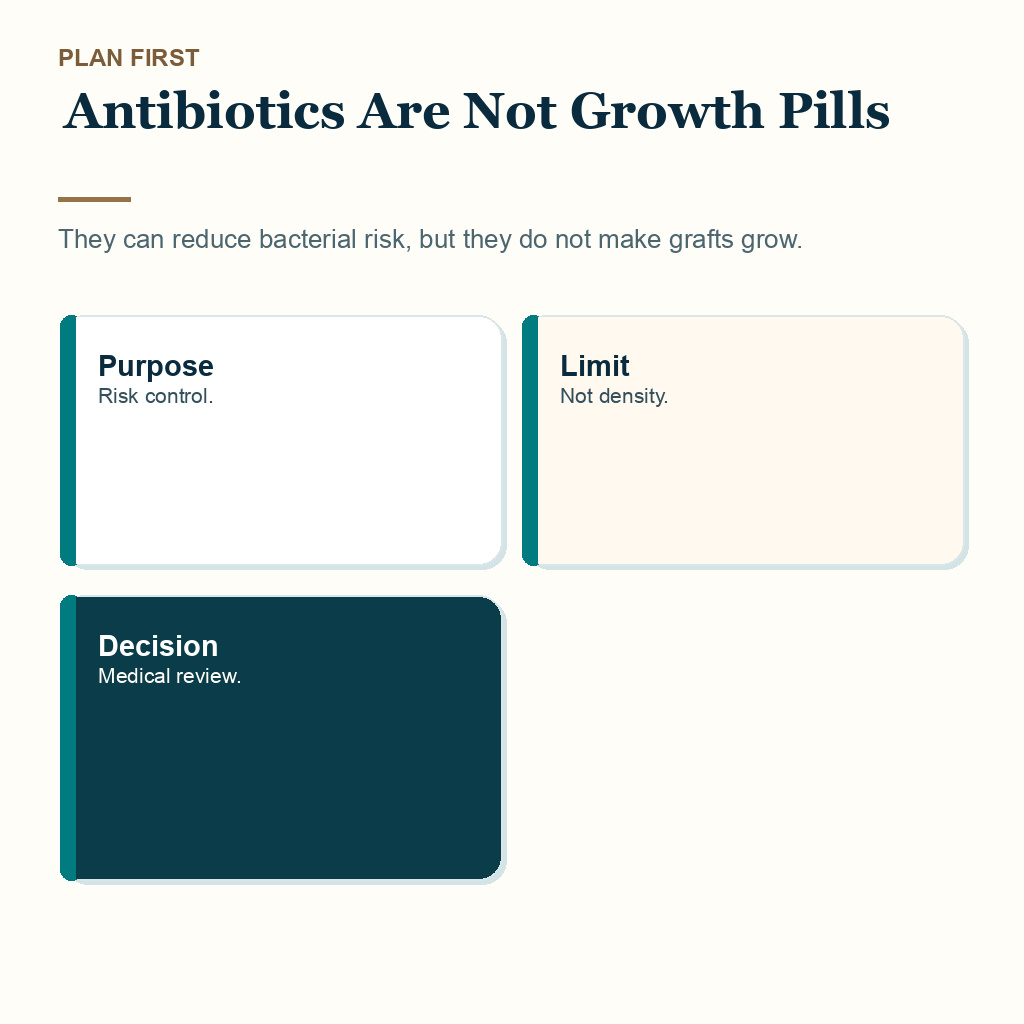
Antibiotics can be useful after a hair transplant, but they are not a universal rule and they are not a shortcut for graft growth. If your surgeon prescribes them, take them exactly as instructed unless a side effect, allergy concern, or another doctor changes the plan after medical review.
A leftover tablet or another clinic’s routine does not belong in your recovery plan. If the prescribed course creates a problem, contact the prescribing doctor instead of rebuilding the course from other patients’ instructions.
Redness, pimples, or itching should be shown to the clinic before you keep or restart antibiotics on your own.
The unsafe choices are guessing, copying another patient, using leftover tablets, doubling doses, or stopping a prescribed course without telling the clinic. Antibiotics are only one part of infection prevention, not a substitute for clean surgery and review. Clean surgery, sterile technique, careful graft handling, proper washing, and early follow-up matter just as much. Topical antibiotic ointment is a separate aftercare decision, not a substitute for clean surgery or proper review.
Different antibiotic protocols reflect different risk judgments
Hair transplantation is usually a clean surgical procedure on a scalp with a strong blood supply. Infection is uncommon when the operation is performed in a proper medical setting and aftercare is followed correctly. This is one reason different surgeons may give different instructions about routine antibiotics.
Some surgeons prefer a short protective course because thousands of tiny openings are created in the donor and recipient area. Others reserve antibiotics for situations with higher risk, such as visible inflammation, larger sessions, immune problems, diabetes, active scalp disease, or early signs of infection. Both approaches can be medically reasonable when the person has been assessed properly.
Different protocols are not the issue. The unsafe pattern is giving everyone the same instruction without checking allergy history, bowel history, active infection, scalp condition, and the full medication list. A clean scalp with no risk factors is different from active pustules, repeated folliculitis, uncontrolled diabetes, or a previous severe antibiotic reaction.
My page on the full medication plan after surgery should be read as a medical protocol, not permission to copy medication from another case.
Antibiotics matter most when infection risk is higher
Antibiotics matter most when the surgeon has prescribed them as part of a planned protective course or when there is a real infection concern. If you have been given a 5 day course, changing it to 2 days because the scalp looks fine is not a good decision. The skin barrier may still be healing even when the surface looks quiet.
They also matter when symptoms move in the wrong direction. Increasing pain, spreading redness, warmth, swelling, pus, a bad smell, fever, or tenderness that worsens instead of settling should be reviewed quickly. For the temperature side of that decision, use the post FUE fever guide rather than starting leftover antibiotics.
The first 7 to 10 days deserve special respect because the scalp is healing and you are still learning how to wash without rubbing. A small mistake in this period does not simply ruin the result, but repeated touching, dirty coverings, sweating too early, or ignoring a prescription can turn a simple recovery into a preventable problem.
If you are worried about infection after a hair transplant, send clear photos and symptoms to the clinic. A photo can help, but it cannot replace proper medical judgment when there is pain, drainage, fever, or rapid worsening.
Points to discuss before taking antibiotics
Tell the clinic before the surgery date if you have had an antibiotic allergy, hives, swelling, breathing difficulty, severe diarrhea, C. diff infection, tendon problems, heart rhythm concerns, kidney disease, liver disease, bowel disease, or serious nausea from antibiotics. Do not wait until the operation is finished and the tablets are already in your hand, especially if a previous antibiotic reaction would make travel recovery harder.
If you are already taking antibiotics before surgery, the reason for the prescription should be reviewed before the graft plan is treated as final. An improving dental infection, chest infection, urinary infection, skin infection, or acne treatment does not all mean the same thing.
This does not mean surgery is impossible. It means the plan needs medical review. The surgeon may choose a different antibiotic, avoid routine antibiotics, ask for clearance from your doctor, or decide that surgery should wait until the weaker point is understood better.
If you have a strong reaction history, you should never feel pushed into swallowing a tablet just because it is in a package. Refusing medication silently is also unsafe. The safer path is a clear plan before surgery, written instructions, and direct communication if side effects appear.






Diarrhea or side effects after antibiotics need medical advice
Do not quietly stop the medication, and do not simply push through a serious reaction. Mild stomach upset and severe antibiotic side effects are different situations. Tell the clinic what happened, how many doses were taken, whether there is rash or swelling, whether diarrhea is watery or bloody, and whether you have fever, weakness, or dehydration.
The focused guide to diarrhea during early hair transplant recovery explains when loose stools can be monitored and when hydration, fever, blood, or C. diff history changes the decision. One loose stool is different from repeated watery diarrhea while taking antibiotics.
If symptoms are mild, the answer may be taking the tablet with food, changing timing around fasting, protecting hydration, or using a different plan. If symptoms are severe, especially with facial swelling, breathing difficulty, widespread rash, blood in stool, faintness, severe tendon pain, or C. diff history, you need urgent medical advice rather than another online opinion.
Communication matters here. A side effect does not make you difficult. Hiding it makes the plan less safe.
Antibiotics do not change graft growth by themselves
Antibiotics used appropriately do not usually damage transplanted grafts. A medically chosen antibiotic is meant to reduce bacterial risk, not interfere with growth. If you need antibiotics for another infection after surgery, tell your hair transplant clinic and the doctor treating the infection so the medication plan is coordinated.
The bigger risk is confusion. Some people panic because they need antibiotics for a tooth infection, sinus infection, urinary infection, or skin problem after transplant. The antibiotic name is not usually the main issue. The reason you need it may matter more. Fever, poor general health, uncontrolled infection, dehydration, or severe inflammation can affect recovery more than the antibiotic name alone.
Another mistake is adding topical creams, antiseptics, alcohol, acne products, or random antibiotic ointments to the recipient area without instruction. The grafted skin is delicate in the early days. A product that seems harmless on normal skin can irritate healing tissue when thousands of tiny wounds are present.
A missed antibiotic dose needs calm clinic guidance
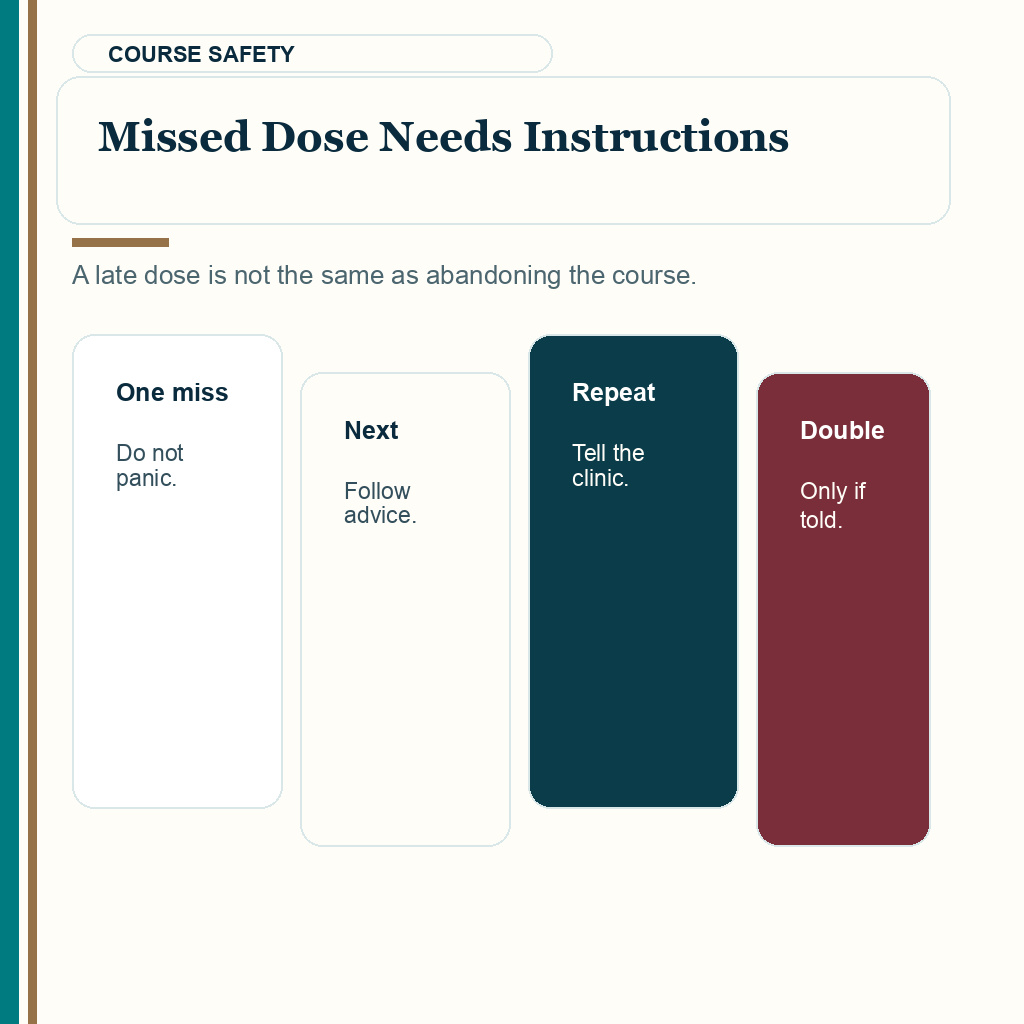
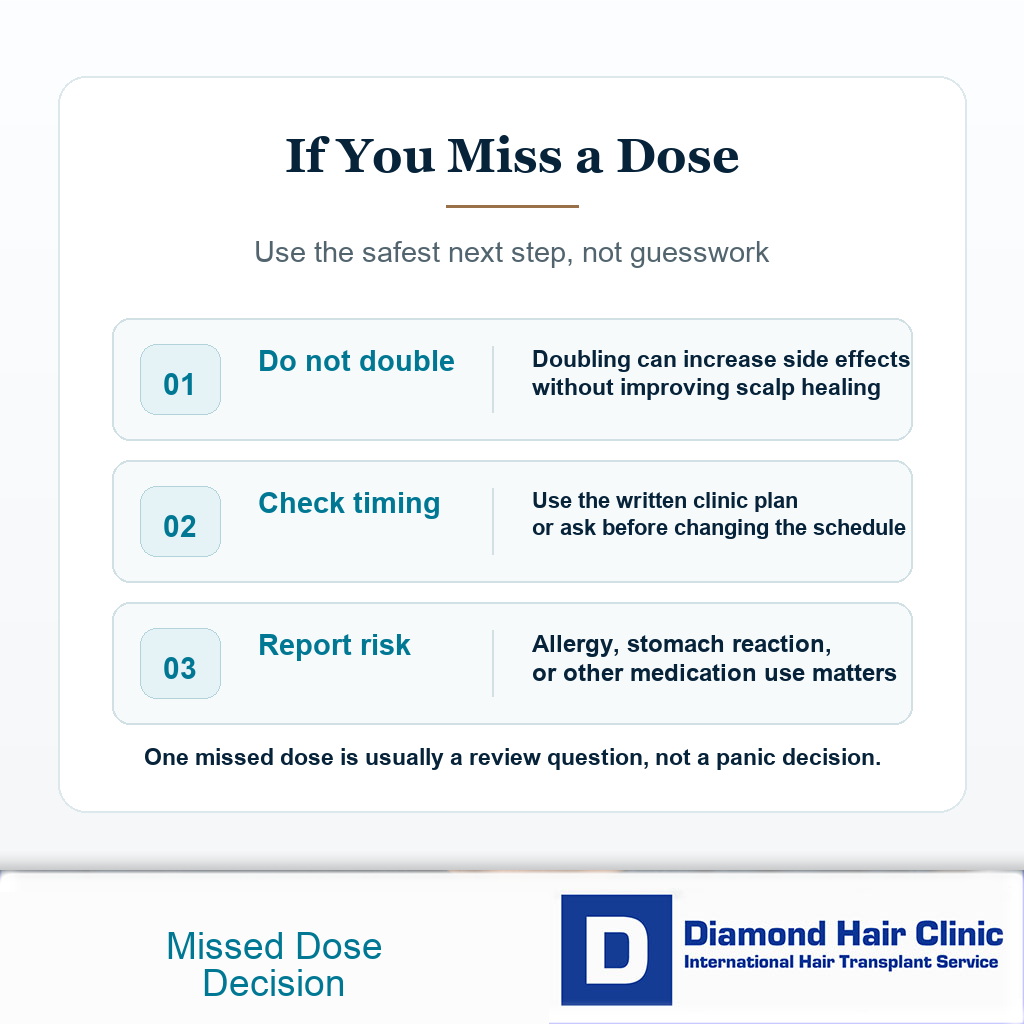
If you miss one dose, do not panic and do not double the next dose unless your doctor told you to do that. Contact the clinic or follow the written medication instruction. The answer depends on the antibiotic, the timing, your medical history, and how many doses were missed.
A single late dose is not the same as abandoning the course. Repeated missed doses are different. They can leave you without the protection the surgeon intended and can make side effects or resistance concerns more complicated.
Do not secretly stop, double, swap, or extend antibiotics. If there is nausea, diarrhea, rash, dizziness, tendon pain, palpitations, or another reaction, contact the medical team and say exactly what happened. The answer may be to continue, change, pause, or seek urgent medical attention, but that decision should be medical, not improvised.
When you contact the clinic about a dose problem, send the practical facts in one message. Include the antibiotic name, dose time, what happened, current symptoms, allergy history, and whether any infection signs are getting worse.
I also separate discomfort from warning signs. Mild stomach upset may be manageable in some cases. Watery diarrhea, blood in stool, facial swelling, breathing difficulty, widespread rash, faintness, severe tendon pain, or chest symptoms need much more serious attention.
Ways to reduce infection risk besides medication
The first protection is how the surgery is performed. Sterile instruments, clean operating conditions, careful handling of grafts, and controlled surgical trauma matter before any tablet can help. A rushed or poorly controlled operation cannot be made safe by a prescription alone.
The second protection is early aftercare. In the first days, I focus on clean hands, gentle washing, avoiding scratching, avoiding dirty hats or pillows, avoiding sweating too early, and protecting the grafts from rubbing. You need clear instructions for exactly how and when to clean the scalp.
The broader recovery routine is part of hair transplant aftercare. With washing after a hair transplant, cleaning must be gentle but not neglected. Too much rubbing is harmful. Avoiding cleaning completely can also create problems.

Scalp signs that need medical review
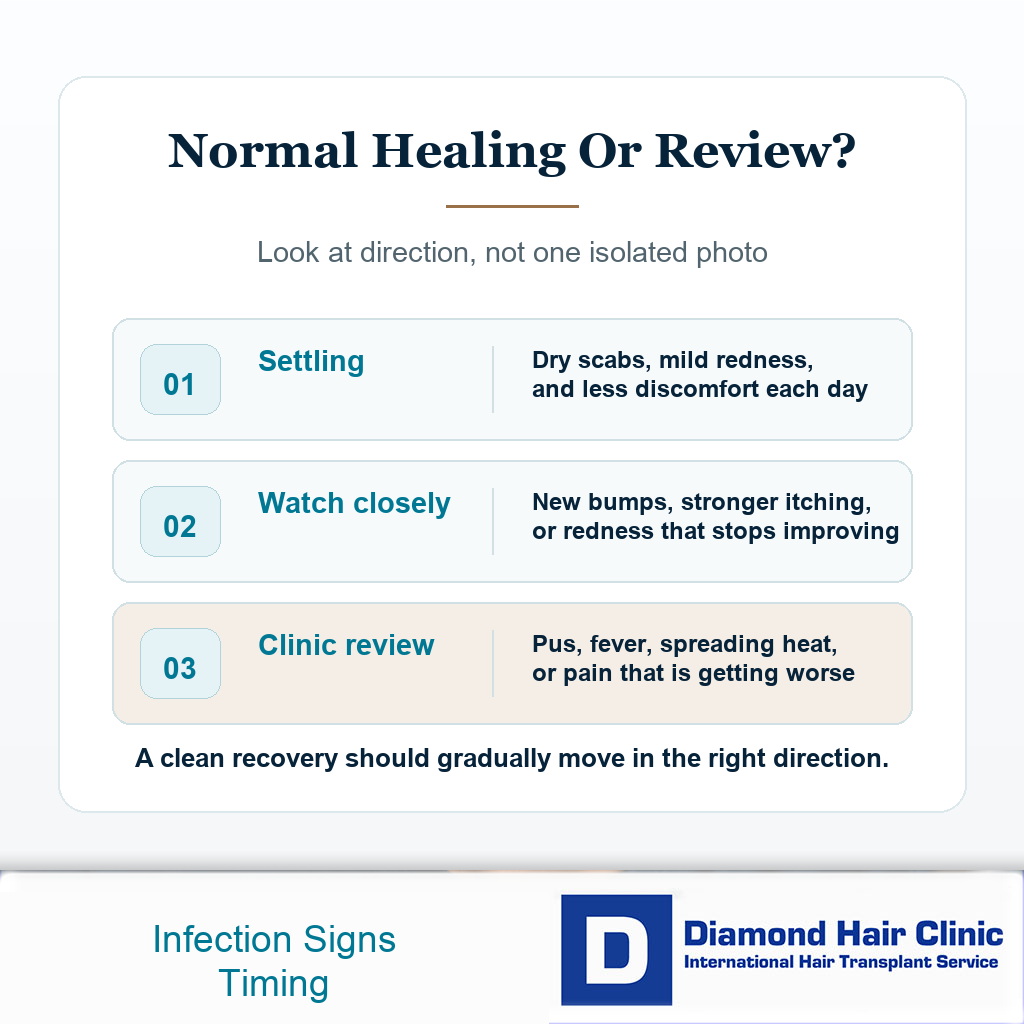
Normal healing can include redness, mild swelling, scabs, tightness, itching, and small pimples. These signs can be worrying, but they do not always mean infection. Timing, pain, spreading, warmth, drainage, odor, fever, and whether the scalp is improving or worsening change the meaning.
A single small pimple that appears later in recovery is not the same as spreading redness with increasing pain in the first week. I look at the pattern, timing, and direction of change before deciding whether this is ordinary healing, folliculitis, irritation, or something that needs faster medical treatment.
When you send a photo, I look beyond color. I check the day after surgery, whether pain is increasing, whether there is pus, whether crusts are becoming thick and stuck, whether you scratched, and whether there are general symptoms such as fever or fatigue.
Redness, scabs, or pimples after a hair transplant can help separate common healing from signs that need review. If repeated bumps are part of a broader inflammation pattern, folliculitis before surgery shows why the scalp should be stable before donor grafts are committed.
Scalp inflammation can change the antibiotic plan
Yes. Oily crusting, painful pustules, scratched skin, uncontrolled dandruff, or irritated seborrheic dermatitis and scalp inflammation may need treatment before surgery. Operating through an inflamed scalp can make aftercare harder and make every early bump more worrying.
Antibiotics are not always the answer to inflammation. Some scalp problems are fungal, inflammatory, irritant, autoimmune, or related to hygiene and scratching. Giving an antibiotic without understanding the cause can miss the real problem.
The scalp does not need to be perfect, but it should be quiet enough for clean surgery, predictable healing, and safe follow-up.
Antibiotics need to be checked against other medications
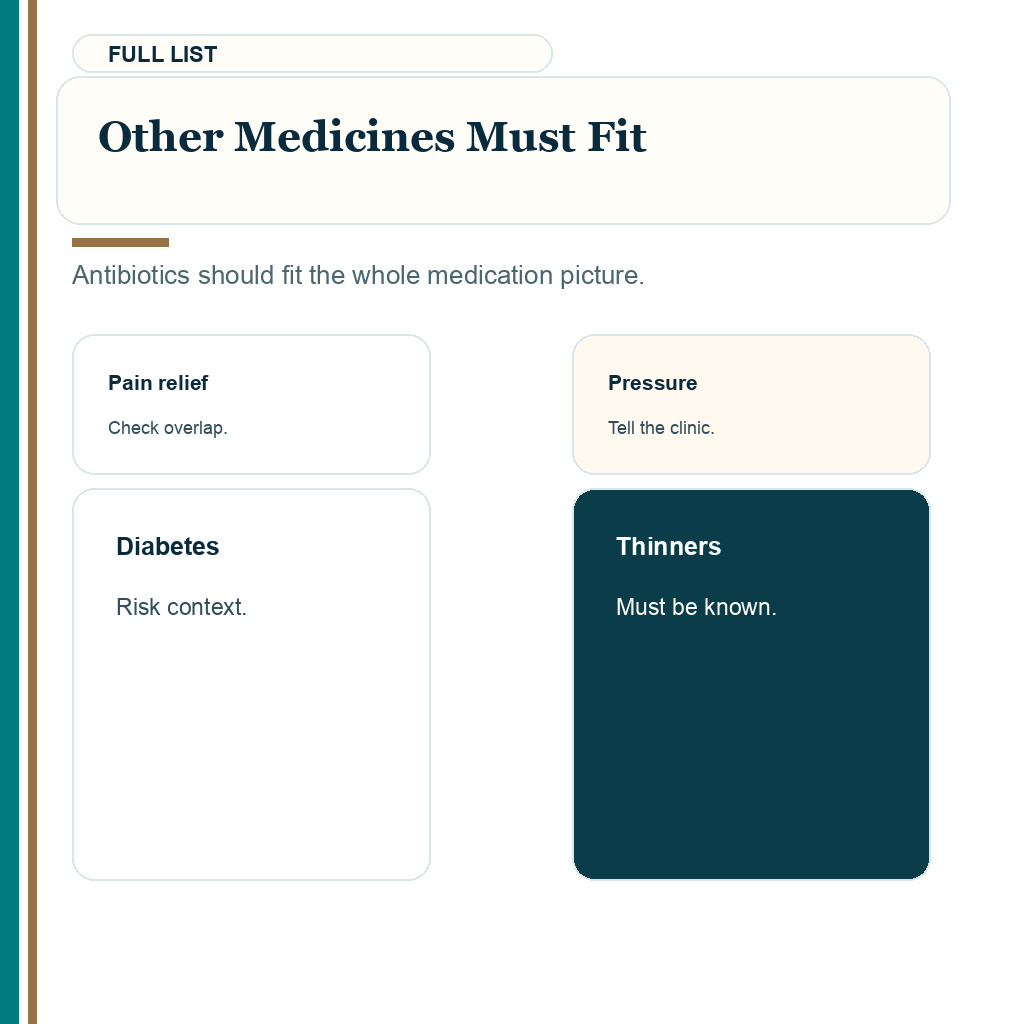
Antibiotics should fit into the full medication picture. Pain relief, swelling medication, stomach protection, finasteride, minoxidil, blood pressure treatment, diabetes medication, antidepressants, supplements, and blood thinners can all matter in different people.
The clinic should know what you already take and what another doctor has prescribed. Do not hide medication because it feels unrelated to hair. A tablet taken for infection, stomach disease, mood, heart rhythm, blood clotting, or epilepsy can still matter around surgery.
Before surgery screening is part of safe planning, especially when you have medical risk factors. With blood tests before a hair transplant, basic medical checks can protect you before the operation becomes a cosmetic decision.
Clinic promises about antibiotics need caution
Be careful with any clinic that makes infection prevention sound like a pill issue. If the clinic says antibiotics will protect everything but does not explain sterile technique, washing, follow-up, scalp condition, allergies, or what to do if symptoms worsen, the explanation is incomplete.
Also be careful if nobody asks about antibiotic reactions, bowel disease, current infection, recent dental treatment, immune suppression, diabetes, smoking, or existing scalp inflammation. These details may feel small, but they can change the medication plan and the timing of surgery.
A safe medication plan should make the next steps clearer because it is specific to your case. A weak plan makes everything sound automatic. Hair transplantation is still surgery, even when it is performed under local anesthesia and you walk out the same day.
Medication packages need a clear explanation. You should know what each drug is for, how long to take it, what side effects should be reported, and who will answer if a problem starts after you fly home. Medication without follow-up is not real aftercare.
Decisions to make before committing to surgery
Ask whether the clinic has reviewed your medical history, current medication, allergy history, previous antibiotic reactions, and scalp condition. If the answer is vague, do not treat the antibiotic package as a small afterthought. It is part of the safety plan.
If you have no special risk factors, a short antibiotic course may simply be one part of the surgeon’s protocol. If you have a serious reaction history, the plan needs more caution. If the scalp is inflamed, surgery may need to wait until the skin is settled.
Candidacy is not only about donor hair and bald area size. A good candidate for a hair transplant also has a scalp and medical background that allow surgery to be performed and followed safely.
If antibiotics are prescribed, take them as directed or contact the clinic before changing them. If antibiotics are risky for you, discuss that before surgery. The best plan is not the most aggressive antibiotic plan. It is the plan that protects the scalp, respects your medical history, and keeps healing under medical follow-up.

Read this review excerpt
Every single one of my questions was answered and they made sure I had all the details I needed to make an informed decision.