


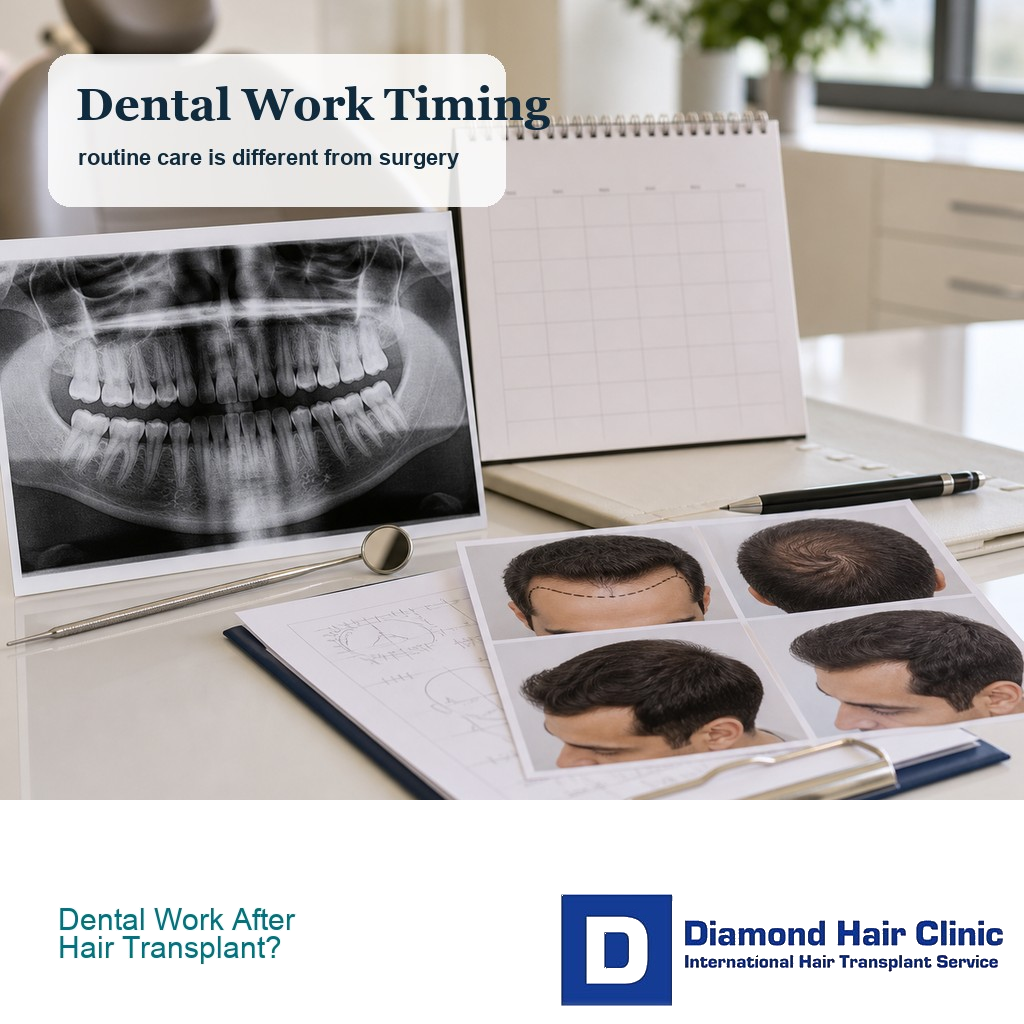
Dental Work Timing Around FUE Surgery
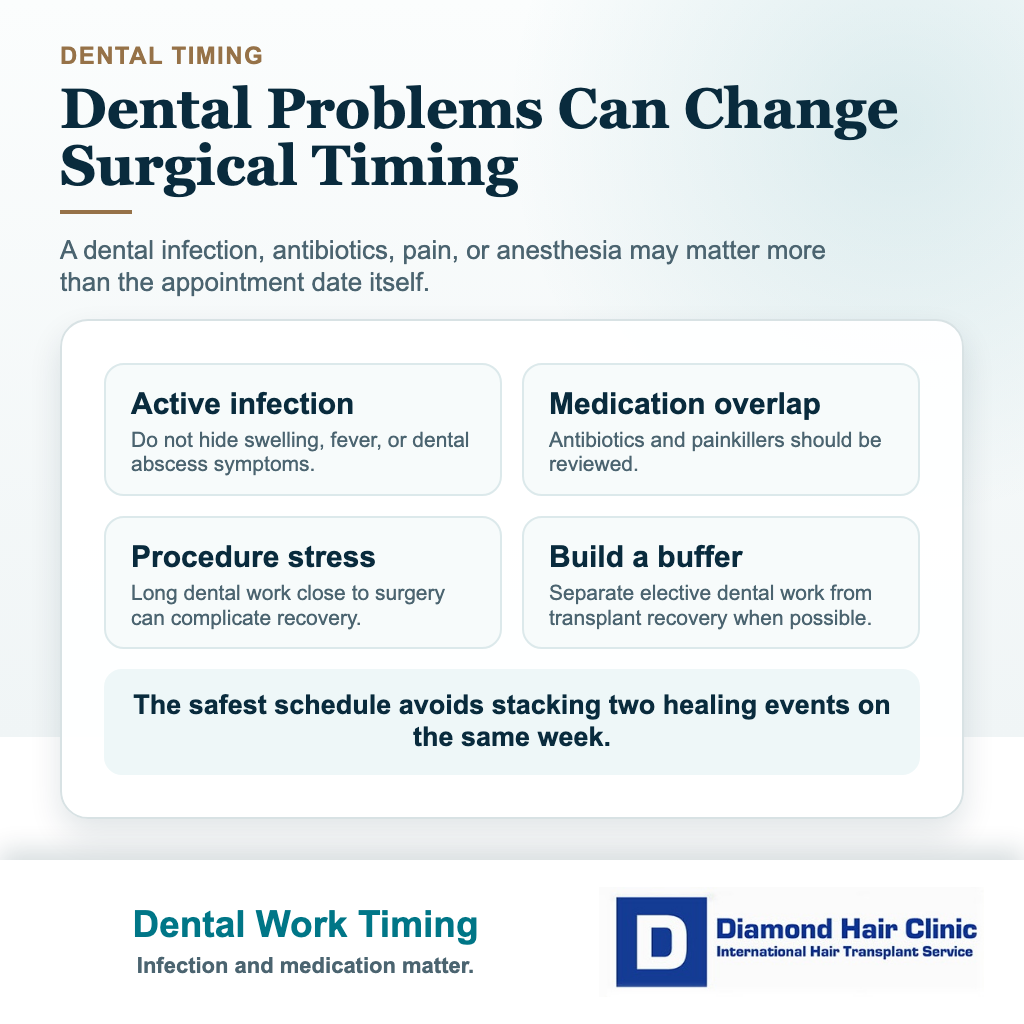
Most routine dental treatment does not damage transplanted grafts. A dental checkup, dental X ray, simple cleaning, or small filling is usually not the problem. The bigger concern is timing, infection, medicine, pressure, and whether two recoveries are being stacked. I avoid planning tooth extraction, dental implant surgery, wisdom tooth surgery, deep gum treatment, or sedation in the first 10 to 14 days after a hair transplant unless there is an urgent dental reason. Removable dentures, retainers, aligners, mouthguards, loose teeth, or dental jewelry need their own dental appliance plan before FUE surgery day, separate from the timing of dental treatment.
For elective dental work, separation is easier to manage. I usually prefer at least 2 weeks between the dental visit and the hair transplant, and often 3 to 4 weeks when the dental procedure is surgical or may involve antibiotics, strong painkillers, blood thinner decisions, swelling, or recovery time. Use the same spacing logic for Botox or fillers after a hair transplant, especially near the forehead or temples. If there is active dental infection, facial swelling, fever, drainage, severe tooth pain, or active cold sores near the mouth, treat that before an elective hair transplant.
Teeth and hair follicles are not directly connected. I am more concerned about whether your body is being asked to heal from two procedures at the same time, whether infection is present, whether medication plans conflict, and whether the dental visit will create pressure, bleeding risk, poor sleep, or unnecessary stress during the early graft protection period.
Dental timing gate
Which dental situation changes the transplant plan?
Choose the closest route before deciding whether to keep the date, move the dental visit, or ask both clinics to coordinate.
These usually do not threaten grafts by themselves. The safer question is timing, scalp pressure, and whether the visit stays simple.
This gate does not replace dental care. It shows which timing question should be settled before graft protection, medication, or infection risk becomes confusing.
Dental work and transplant planning
A hair transplant creates thousands of small surgical sites in the donor and recipient areas. The first days are about quiet healing, clean aftercare, gentle washing, and avoiding unnecessary pressure or friction. Dental work can disturb that plan when it is painful, infected, surgical, or medication heavy.
A simple dental visit may only require sitting in a chair. A tooth extraction or implant procedure is different. It can involve bleeding, swelling, mouth opening for a long time, local anesthetic, antibiotics, medicine for inflammation, painkillers, and several days of recovery. None of those automatically ruins a hair transplant, but adding them during the first vulnerable days makes recovery harder to manage.
In the dental chair, also think about the headrest and towels. Ask the dentist to keep anything that supports or wipes the head away from fresh grafts, because a routine appointment can still create avoidable scalp contact. Report a dental problem that appears after booking before you move antibiotics, painkillers, or the surgery date on your own.
For hair transplant aftercare, early recovery should be quiet and predictable. When two medical plans overlap, predictability becomes harder. Separating the treatments is cleaner than leaving you guessing which instruction belongs to which procedure.
Dental X ray safety after a hair transplant
A normal dental X ray does not touch the grafts and should not damage a hair transplant. If you need a dental X ray after surgery, the more practical questions are whether you can sit comfortably, whether the equipment or head position will press on the transplanted area, and whether you are still swollen or sensitive. The same practical distinction applies to an MRI or CT scan after a hair transplant, where the scan itself is usually less important than urgency, contrast, sedation, and scalp positioning.
If the X ray is part of urgent dental diagnosis, do not avoid it just because you had a hair transplant. Tell the dentist the date of your surgery and ask them to avoid pressure on the recipient area and donor area. If you are very early after surgery, bring the aftercare instructions with you so the dentist understands what must not be touched.
Before surgery, a dental X ray is usually not an obstacle. If the X ray reveals infection, a planned extraction, or dental surgery, then the timing discussion changes. The X ray is no longer the concern. The dental condition needs treatment first.
Having a cleaning, filling, or routine dental visit
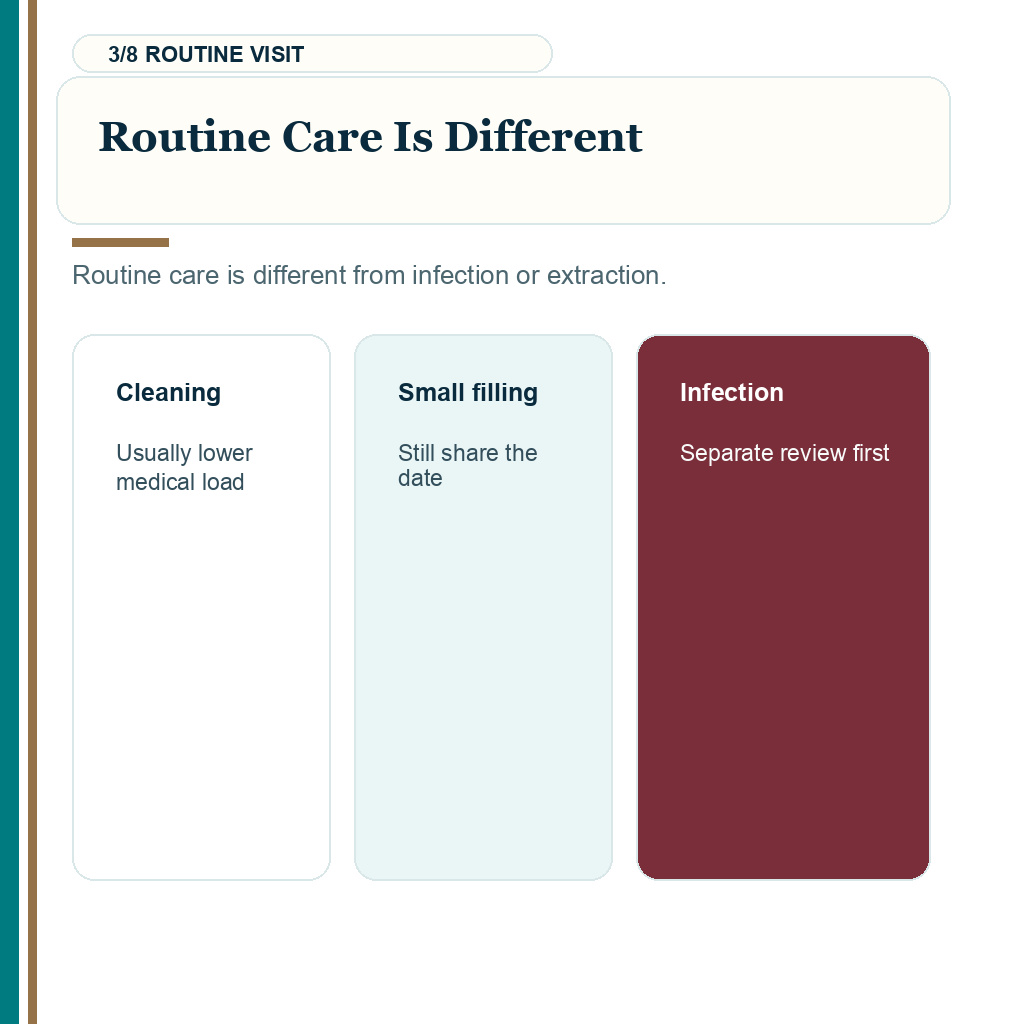
A routine cleaning or small filling is usually easier to schedule than dental surgery, but I still prefer not to place it in the first few days after a hair transplant. You may be tired, the scalp may be sensitive, and the clinic instructions are already demanding enough. If the appointment is not urgent, move it outside the first 10 to 14 days.
If the dental appointment is necessary, tell both clinics. Ask the dentist to avoid pressing on the scalp, avoid tight head positioning, and keep the visit as simple as possible. A short visit is very different from lying back for a long procedure while the donor area is tender and the recipient area still needs protection.
Before a hair transplant, routine dental work is usually acceptable if it does not create infection, bleeding, or medication issues close to surgery. If the dentist starts antibiotics, changes painkillers, or plans a surgical step, share that with the hair transplant clinic before the operation date. Many problems come from uncoordinated medication decisions rather than from the dental chair itself, especially when judging medications after a hair transplant.
Tooth extraction, dental implants, and wisdom tooth surgery
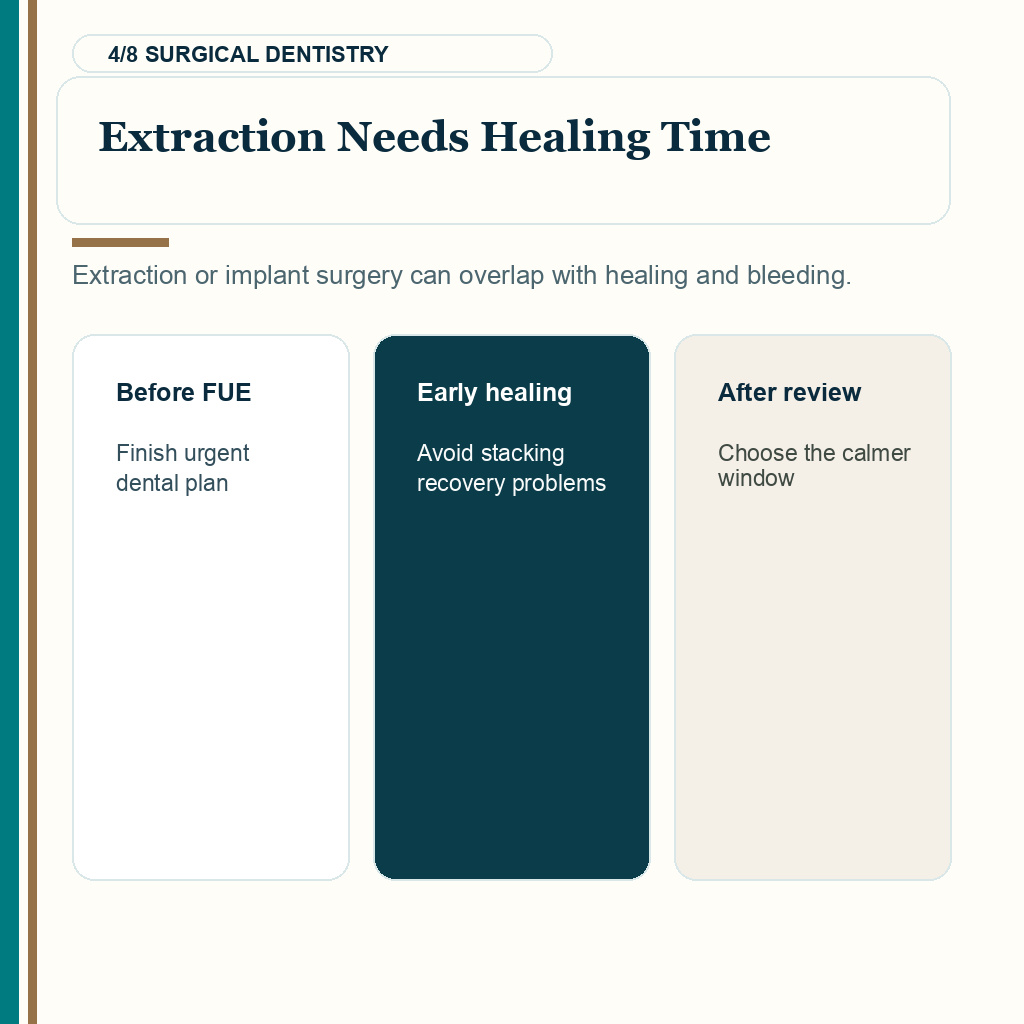
Tooth extraction, dental implant placement, wisdom tooth surgery, gum surgery, and other invasive dental procedures deserve more caution. These are not just appointments. They are surgical events. They may cause bleeding, swelling, jaw pain, poor sleep, diet changes, antibiotics, and painkiller use.
Elective dental treatment is usually cleaner when it is finished well before the hair transplant or postponed until the early scalp healing phase is over. A two week separation may be enough for a minor procedure that heals smoothly. For dental implant surgery, wisdom tooth surgery, difficult extraction, active infection, or sedation, 3 to 4 weeks or more may be wiser depending on the dentist and the hair transplant surgeon. Dental implant surgery this close to FUE is another healing event, not a normal checkup.
After a hair transplant, the first 10 to 14 days should not be filled with another procedure unless there is a true dental need. This is the same period when you are protecting grafts, washing carefully, sleeping cautiously, and watching for warning signs. Adding dental surgery during that window makes recovery more complicated than it needs to be.
If the dental work cannot wait, the decision should be coordinated. Tell the dentist the hair transplant date, graft location, donor tenderness, and current medication list. Tell the hair transplant clinic what dental procedure is planned, whether there will be antibiotics, whether bleeding is expected, and what painkillers the dentist wants to use.

Treat dental infection before a hair transplant
Treat an active dental infection before an elective hair transplant. A tooth abscess, facial swelling, fever, pus, spreading gum infection, or severe dental pain is not something to hide from the clinic. It may require urgent dental treatment, drainage, root canal treatment, extraction, or antibiotics, and it can make elective surgery a poor decision until the infection is controlled.
If swelling is spreading toward the eye, neck, or floor of the mouth, or if you have difficulty swallowing or breathing, this is urgent dental or medical help. Do not wait for hair transplant approval before seeking help.
A small cavity does not necessarily cancel surgery. Active infection and systemic symptoms change the risk calculation. If you have fever, facial swelling, worsening pain, difficulty opening your mouth, drainage, or a dentist who says the tooth is infected, review the hair transplant date again before proceeding.
Medical conditions that affect healing need direct coordination. Patients with diabetes, immune issues, heart disease, or blood thinner treatment need more careful planning. With hair transplant with diabetes, infection control and stable health matter before elective surgery.
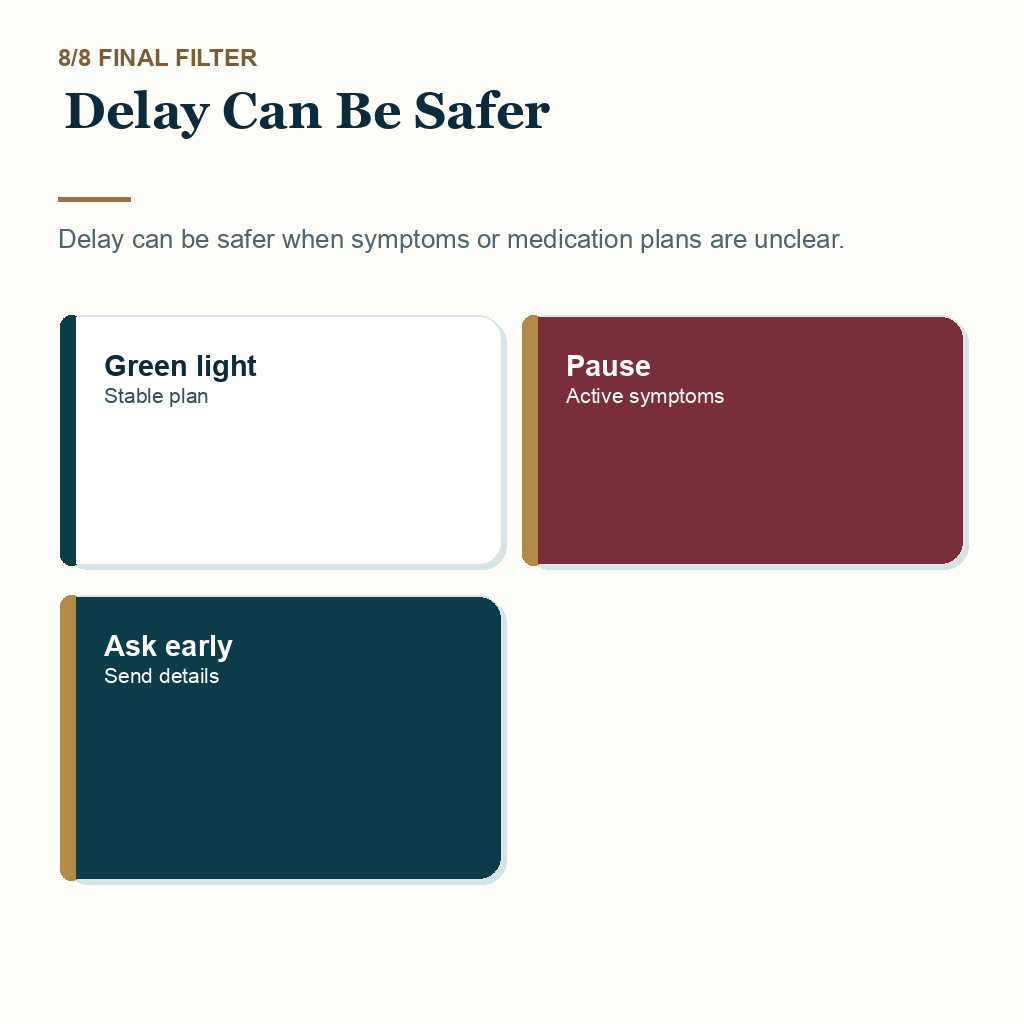
Delaying a hair transplant is better than operating while you are dealing with an untreated dental infection. Delay can be frustrating, but it is usually the cleaner medical decision. A hair transplant is elective. It should begin from a stable medical starting point, not during an active infection that still needs urgent dental care.
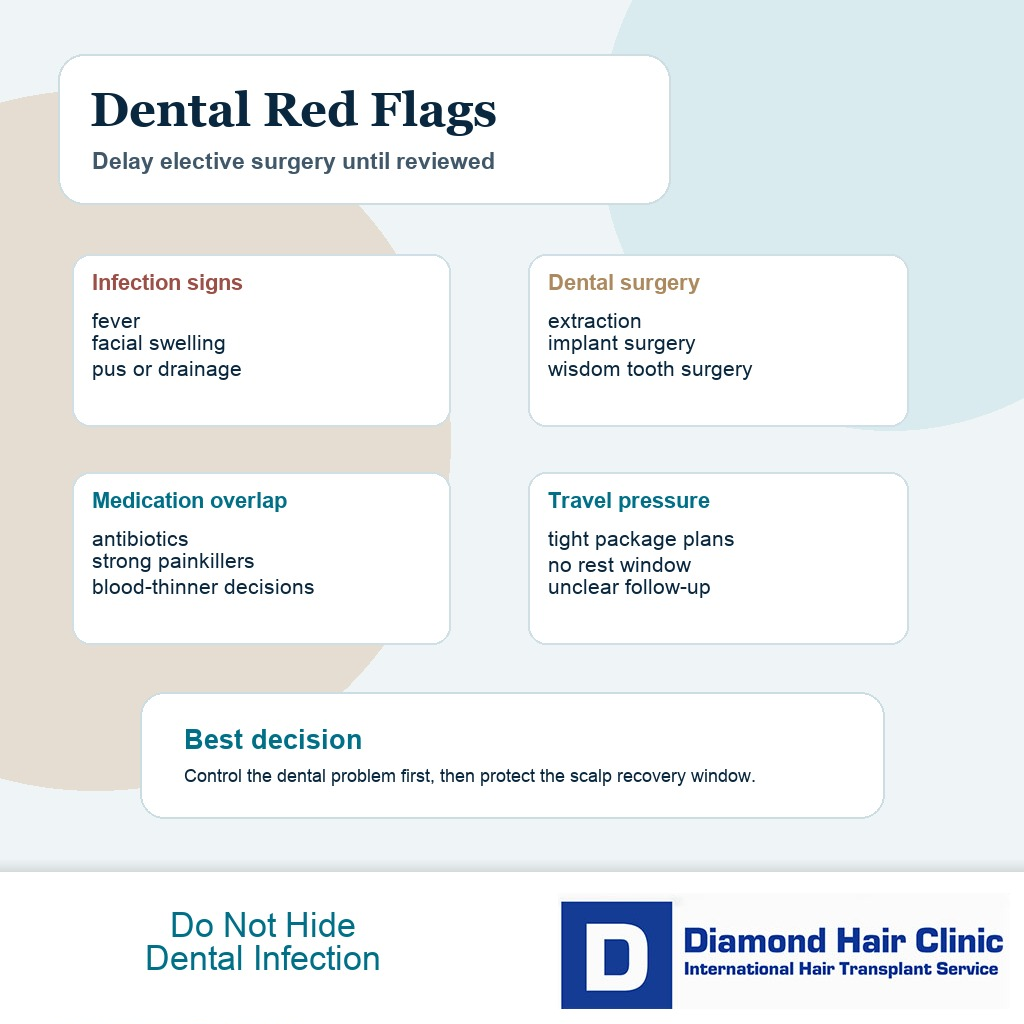
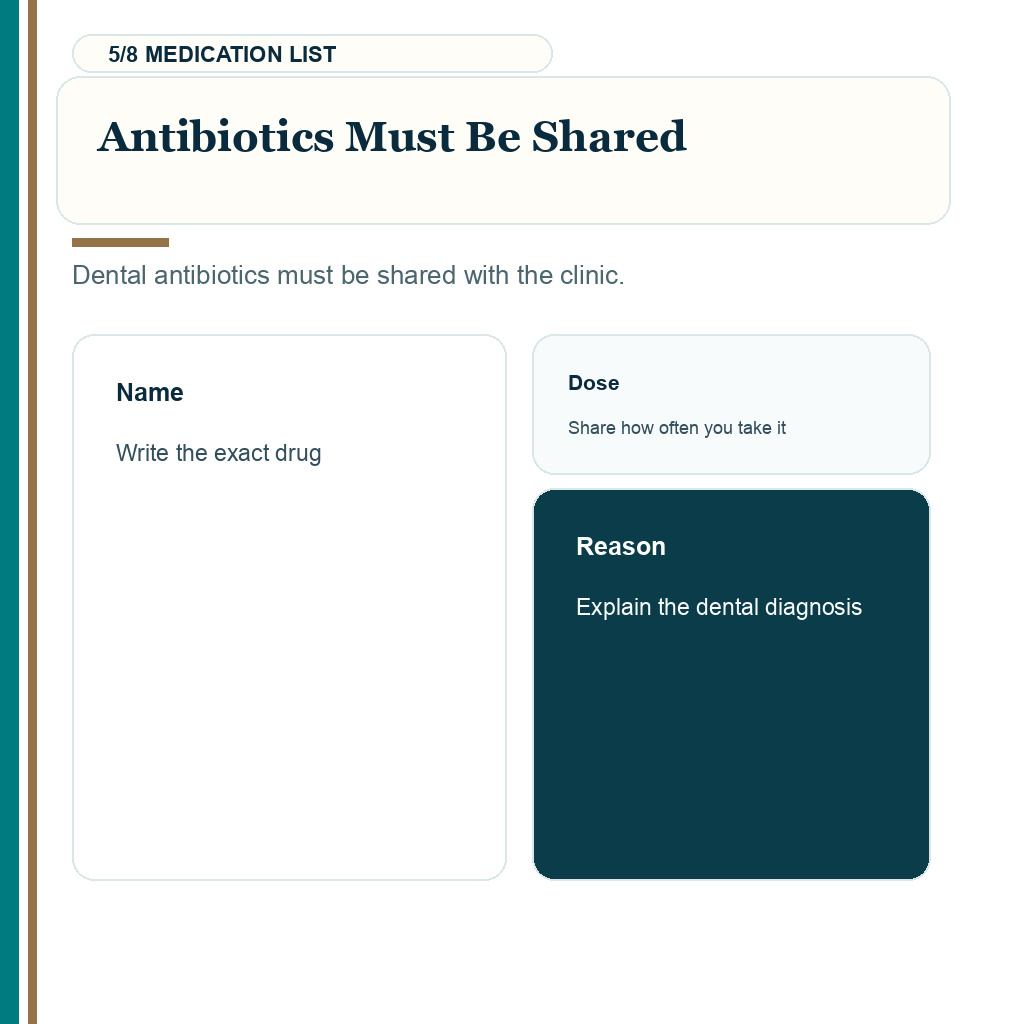
Use the 8 dental timing slides below to separate routine care, active infection, swelling, extraction healing, antibiotics, painkillers, clinic coordination, and when delaying surgery is safer. Swipe the carousel, use the arrows one step at a time, or choose a number below the image to jump to that point.




Dental antibiotics or painkillers can conflict with aftercare
They can. Dental antibiotics, medicine for inflammation, products that contain aspirin, and stronger painkillers may overlap with the medication plan after hair transplant surgery. Sometimes this is safe. Sometimes it creates confusion or avoidable risk.
Do not start, stop, double, or substitute antibiotics only because a dental appointment is nearby. If a dentist prescribes antibiotics before a hair transplant, share the medicine name, dose, duration, and reason with the clinic. Antibiotics should be used for a real dental or surgical reason, not as casual protection, especially when judging antibiotics after a hair transplant.
Painkiller choices also matter. Some medications can affect bleeding or interact with the patient’s medical history. If dental pain is expected near the hair transplant date, clarify which painkiller is allowed before the procedure and make sure painkillers after a hair transplant fit the same written medication plan instead of mixing advice from two clinics without checking.
Keep the medication plan written down. Share one list of all medicines and supplements with the dentist and the hair transplant clinic. Include antibiotics, painkillers, medicine for inflammation, blood thinners, heart medication, diabetes medication, and supplements that may affect bleeding.
Blood thinners or heart conditions
Dental and hair transplant planning can become more serious here. Some people take aspirin, anticoagulants, antiplatelet medication, or heart medication. Some have a stent, valve problem, previous endocarditis risk, or another condition that changes how dental procedures are planned.
Do not stop blood thinners because a dental appointment or hair transplant date is approaching unless the prescribing doctor gives clear instructions. The hair transplant clinic, dentist, and prescribing doctor may need to coordinate. With hair transplant while taking blood thinners, bleeding risk must be handled carefully rather than casually.
If you have heart disease, a stent, a valve problem, or previous endocarditis risk, do not treat dental antibiotics as a simple personal choice. Some dental procedures involve gum tissue or oral mucosa and may require special planning for a small group of cardiac patients at higher risk. That plan often depends on the cardiologist’s view, not only the hair transplant schedule. A patient planning hair transplant with heart disease or a stent needs cardiology input before dental and transplant dates are combined.
If the dental procedure is urgent, solve the urgent problem first and coordinate the hair transplant date afterward. If the hair transplant is elective, it should not force unsafe changes in heart medication or dental infection treatment.
Scheduling dental work when travelling to Turkey
Combining medical or dental treatments during one trip can look efficient on paper. In real recovery, it can become messy. A hair transplant already requires planning, aftercare, sleep positioning, washing, travel timing, and follow up. LASIK and hair transplant timing can have a similar scheduling problem, because two reasonable procedures can still create confusing aftercare when they are placed too close together.
If you are coming to Turkey for hair transplantation, do not build the trip around multiple procedures unless the doctors have coordinated the plan clearly. The first days should be used for medical recovery, not for squeezing in extra appointments, especially when judging how many days to stay in Turkey after a hair transplant.
Be cautious with bundled treatment offers. A package that combines surgery, dental work, tourism, and a tight flight schedule may look convenient, but it can weaken medical decision making. Convenience should not override surgeon involvement, aftercare quality, and realistic recovery planning, especially when judging hair transplant packages in Turkey.
If dental treatment is important, decide which procedure is medically urgent and which can wait. A painful infected tooth may need priority. Cosmetic dental work can usually be separated. The hair transplant should not be planned as if the scalp will be irrelevant the moment the surgery ends.
Blood tests or medical clearance before both procedures
Sometimes. For a healthy patient having a routine dental filling and an uncomplicated hair transplant, extra clearance may not be needed beyond the normal clinic process. For infection, diabetes, heart disease, blood thinner use, immune problems, anemia, or planned sedation, the threshold for medical review is lower.
Screening is not a formality. That also matters for blood tests before a hair transplant. It helps identify issues that can affect bleeding, infection risk, medication planning, and surgical safety. Dental infection or recent dental surgery should be part of that same discussion.
Do not hide dental treatment because you are worried the surgery will be delayed. If the issue is minor, the date may remain unchanged. If it is serious, delaying surgery is better than pretending the problem does not exist. A good plan protects both the scalp and the rest of the patient.
Delaying the transplant or calling the clinic
Call the clinic before surgery if you have a dental abscess, fever, facial swelling, pus, severe tooth pain, planned extraction, planned dental implant surgery, wisdom tooth surgery, gum surgery, new antibiotics, strong painkillers, sedation, or a dentist who says infection is active.
Call the clinic after surgery if dental treatment is needed during the first 10 to 14 days, especially if the dentist wants to prescribe medication or perform an invasive procedure. Also call if the dental chair position, headrest, mask, or equipment may press on the donor area or recipient area.
After any procedure, warning signs deserve attention. Worsening pain, spreading redness, discharge, cloudy fluid, fever, swelling that increases instead of settling, or a wound that looks open should not be ignored. These signs may not be caused by the dental work, but they need review.
A clear message with the exact timeline is usually enough to guide clinical advice. Include the hair transplant date, dental diagnosis, procedure name, medicines prescribed, and whether you have fever, swelling, bleeding, or discharge. Vague messages lead to vague advice.
If dental pain starts after flights are booked, tell both clinics before using leftover antibiotics or painkillers. The medicine plan and surgery timing need to make sense together.
Dental inflammation can wait for a clearer scalp
Separate routine dental treatment from dental surgery. Separate a dental X ray from a dental infection. Separate a simple filling from a wisdom tooth operation. Once you make those distinctions, the answer becomes much clearer.
If the dental issue is minor and the hair transplant is not in the first early days, it may be safe with sensible precautions. If the dental issue is infected, surgical, painful, medication heavy, or close to the operation date, coordinate before proceeding. A delayed hair transplant is not a failure. It is sometimes the correct medical decision.
Elective procedures should not compete with each other. A hair transplant deserves a clean recovery window. Dental treatment deserves proper attention when it is needed. The better plan is the one that allows the scalp to heal without avoidable pressure, the mouth infection to be controlled if present, and every doctor involved to know what the others are doing.

Read this review excerpt
Every single one of my questions was answered and they made sure I had all the details I needed to make an informed decision.