



Heart Disease, Stents, and Hair Transplant Safety
Some patients with stable heart disease or an old coronary stent can have a hair transplant, but only after the heart condition, medication plan, and anesthesia plan are clear. This includes deciding whether sedation during a hair transplant is unnecessary or medically inappropriate. Preoperative ECG and chest imaging review before FUE may also matter when the cardiac or lung history is unclear.
A recent heart attack, recent stent, unstable chest pain, uncontrolled blood pressure, unstable rhythm symptoms or heart racing, decompensated heart failure, unexplained high hematocrit, or a blood thinner plan that has not been reviewed can make surgery unsafe or simply too early.
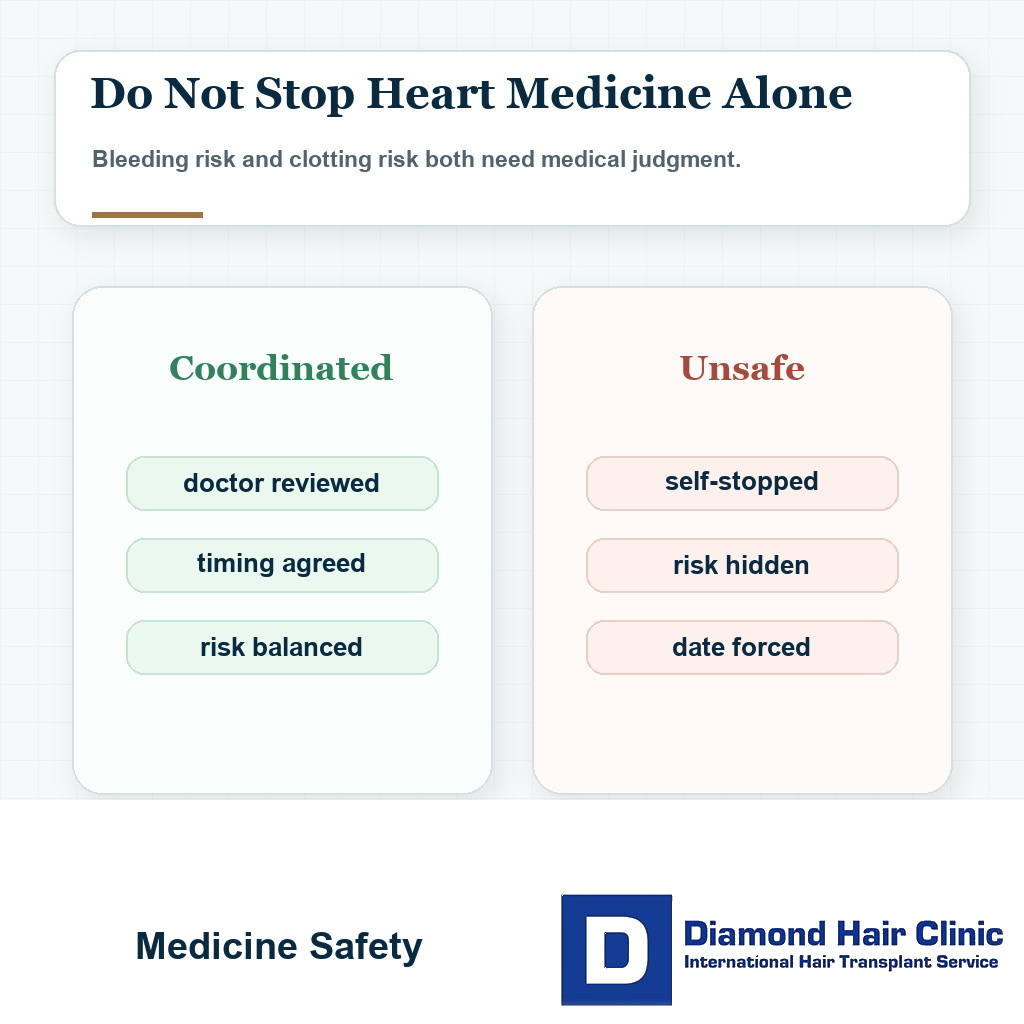
Do not stop aspirin, clopidogrel, ticagrelor, warfarin, apixaban, rivaroxaban, dabigatran, or similar medication by yourself to make a hair transplant easier. These medications are often used for serious reasons. Stopping them without the doctor who prescribed them may create a much bigger danger than surgical bleeding. I also coordinate dental work before or after a hair transplant when heart medication or antibiotic prophylaxis is part of the history. The same balance is explained from the medication side in aspirin and hair transplant surgery.
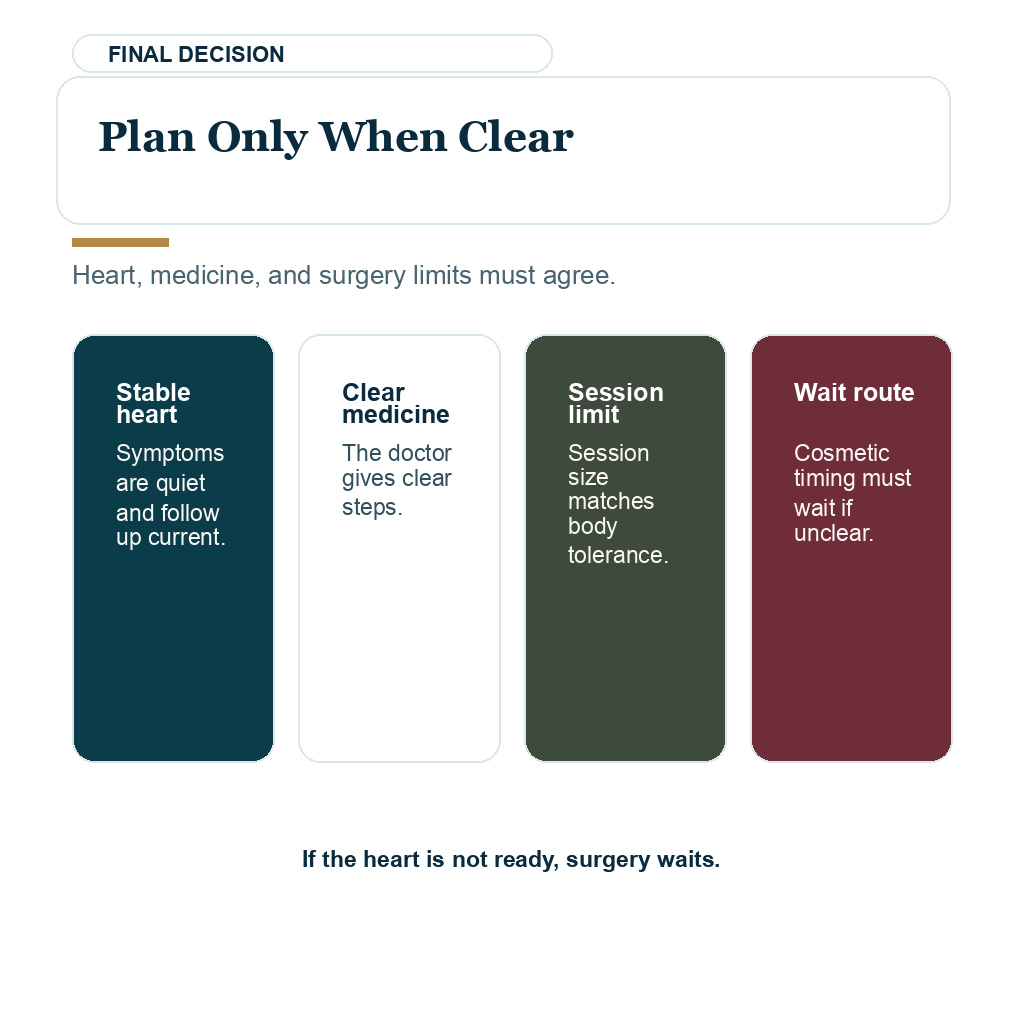
Stability changes the answer more than the diagnosis label. If the cardiologist says the heart condition is stable and the medication plan is safe, hair transplant surgery may be possible. If the heart condition is not stable, the correct decision is to wait.
Bring the cardiology note, not only a message that says cleared. The transplant team needs the activity limits, medicine instructions, and whether an elective cosmetic procedure is acceptable now. If a pacemaker or ICD is part of the heart history, bring the device card and recent cardiology or device follow-up before the transplant date is protected.
I know this answer can feel frustrating because hair transplant surgery is usually performed under local anesthesia. Many patients hear those words and assume the heart no longer matters.
That assumption is too simple. A hair transplant is still a long elective procedure. The patient may sit or lie for many hours, receive local anesthesia, feel anxiety, travel internationally, and follow a recovery plan after a tiring surgical day.
A hair transplant should improve appearance without asking the heart to accept an unreasonable risk. When the medical situation is stable, we can discuss hairline, density, donor capacity, and graft numbers. When it is unstable, the discussion must start with the heart, not the hair.
Medical safety before hairline design
In this consultation, the first question is medical, not cosmetic, because I am not treating only a scalp. I am treating a person who may have a history of coronary artery disease, heart attack, angioplasty, stent placement, rhythm problems, valve disease, heart failure, high blood pressure, or ongoing medication use.
Before hairline design, I first judge whether someone is a good candidate for a hair transplant. A beautiful design is not useful if surgery is not safe yet.
A patient with stable heart disease may still be a reasonable candidate. A patient with unstable symptoms may not be. The difference is not the label on the diagnosis.
The difference is whether the heart condition is controlled, whether the patient can tolerate a long procedure, and whether the medication plan protects the heart without creating unnecessary surgical bleeding risk.
If your cardiologist says a medicine must continue, I treat that as a boundary for the transplant plan. The operation has to fit the heart plan, not the other way around.
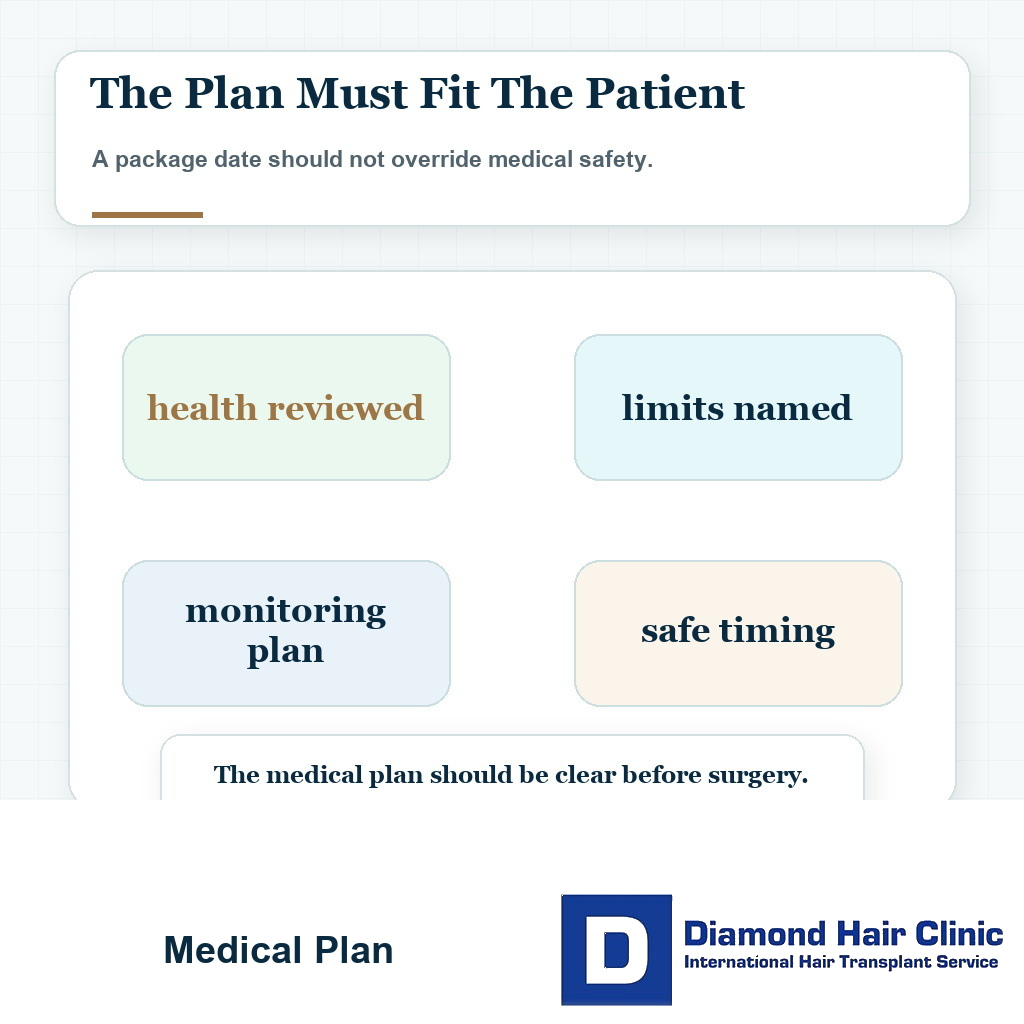
Package consultations worry me in these cases. If a clinic gives a graft number before asking about chest pain, stents, blood pressure, medication, exercise tolerance, and cardiology clearance, it is not doing a real medical assessment. If nitrates, chest pain medicine, or PDE5 tablets are part of the history, review sildenafil and tadalafil around FUE surgery before the transplant date is treated as fixed.
In a medically sensitive patient, the surgical plan should be built around safety first and appearance second. I still pay attention to naturalness, density distribution, and the hairline. I just cannot plan those details in a way that ignores the patient’s medical reality.
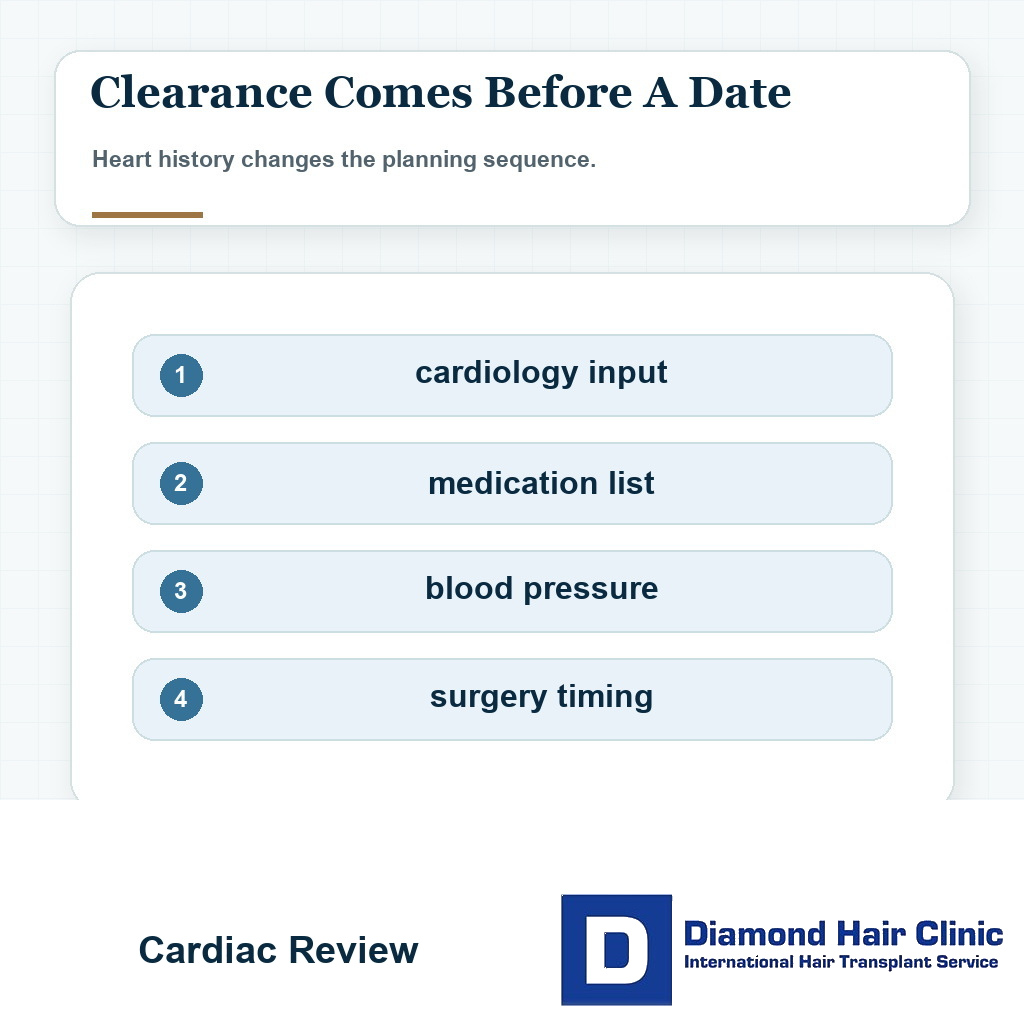
The heart readiness slides below separate cardiology clearance, stent timing, blood thinner instructions, anesthesia planning, session limits, warning symptoms, travel timing, and whether waiting is safer. Swipe sideways, use the arrows one slide at a time, or choose a number below the image.
Before the slide series, separate the cardiac label from the actual operating risk. A stable stent history, current medication, cardiology advice, and anesthesia plan can point in different directions.
That distinction keeps the hair plan realistic. The carousel is useful only after the medical limits are clear, because density or hairline goals should not outrun the heart history.
Heart conditions that make surgery wait
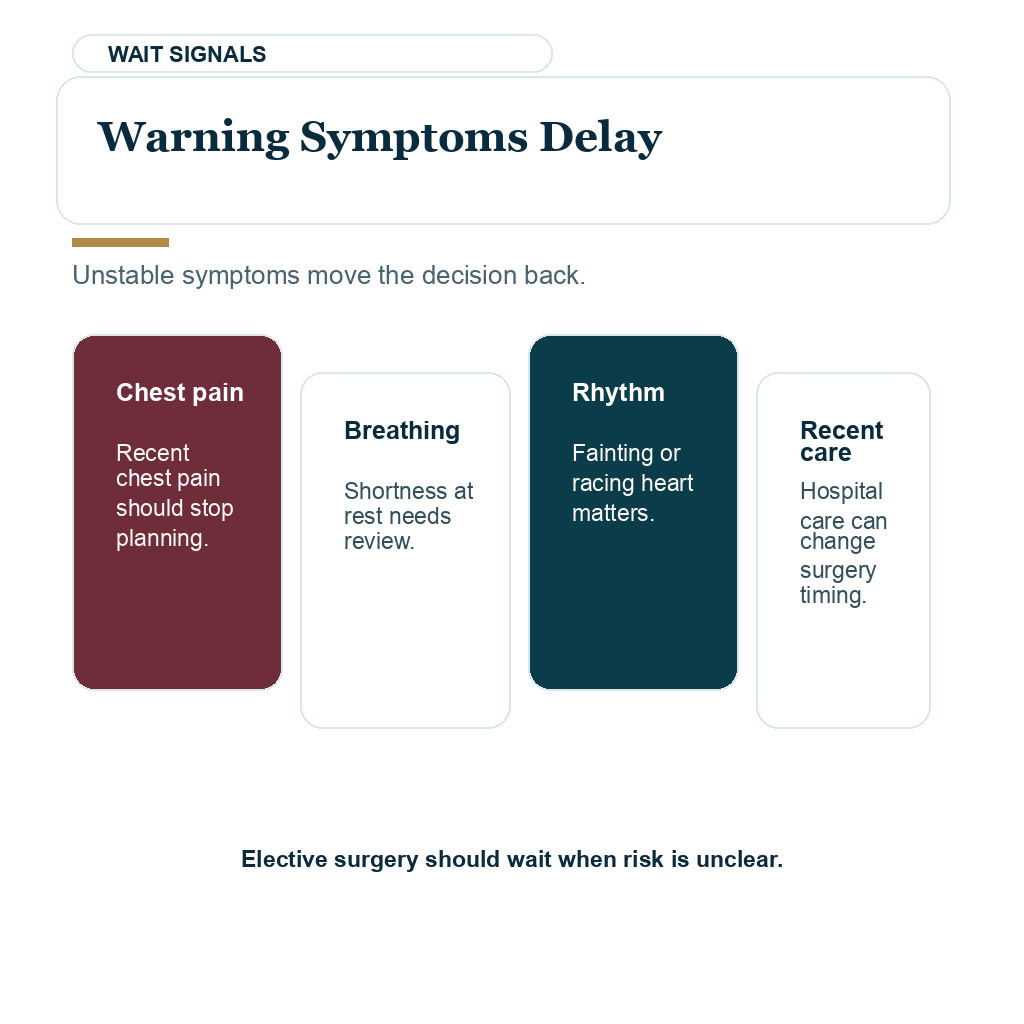
Some heart conditions make me stop the hair transplant plan until the patient is reviewed by a cardiologist. These include recent or worsening chest pain, recent heart attack, recent stent without clear cardiology approval, unstable rhythm symptoms, unexplained fainting, decompensated heart failure, shortness of breath at rest, uncontrolled blood pressure, recent hospital admission for a heart problem, or a recent medication change that has not settled yet.
I am not delaying surgery just to be cautious. A hair transplant is elective surgery. If the heart condition is unstable, the correct medical decision is to stabilize the heart first and discuss hair later.
Heart disease also becomes more sensitive when another condition is uncontrolled. For example, uncontrolled diabetes and hair transplant planning can affect healing and infection risk. Severe anemia, active infection, kidney disease, uncontrolled thyroid disease, or unexplained shortness of breath can also change the decision.
A long procedure is not a good place for medical instability simply because the surgery is performed under local anesthesia. Local anesthesia reduces some risks, but it does not erase the patient’s cardiac history or the wider question of whether a hair transplant can be life threatening.
Heart details the clinic needs before commitment
Before travel, tell the clinic if you have had a heart attack, bypass surgery, angioplasty, coronary stent, rhythm problem, valve disease, heart failure, chest pain, fainting episode, shortness of breath, leg swelling, pacemaker, defibrillator, or a cardiologist who follows you regularly.
Also share every medication before a hair transplant, including the name, dose, and timing. This includes aspirin, clopidogrel, ticagrelor, anticoagulants, blood pressure medicine, heart failure medicine, diabetes medicine, cholesterol medicine, sumatriptan or other migraine medicine, and any medicine prescribed after a heart procedure. This also includes Viagra, Cialis, and heart medication safety if nitrates, chest pain treatment, or blood pressure medicine are part of the picture.
I assess whether the condition is stable or recently changed. A patient who had a stent ten years ago and has no symptoms is very different from a patient who had a stent last month and is still adjusting medication. A patient with controlled rhythm problems is different from a patient who still has palpitations, dizziness, chest tightness, or fainting.
I also have to understand functional capacity in plain practical terms.
Can the patient walk normally, climb stairs, tolerate daily activity, and lie comfortably during a long procedure? If symptoms appear with mild activity, or if the patient has poor or unknown exercise tolerance, the cardiologist may need to decide whether further assessment is necessary before elective surgery.
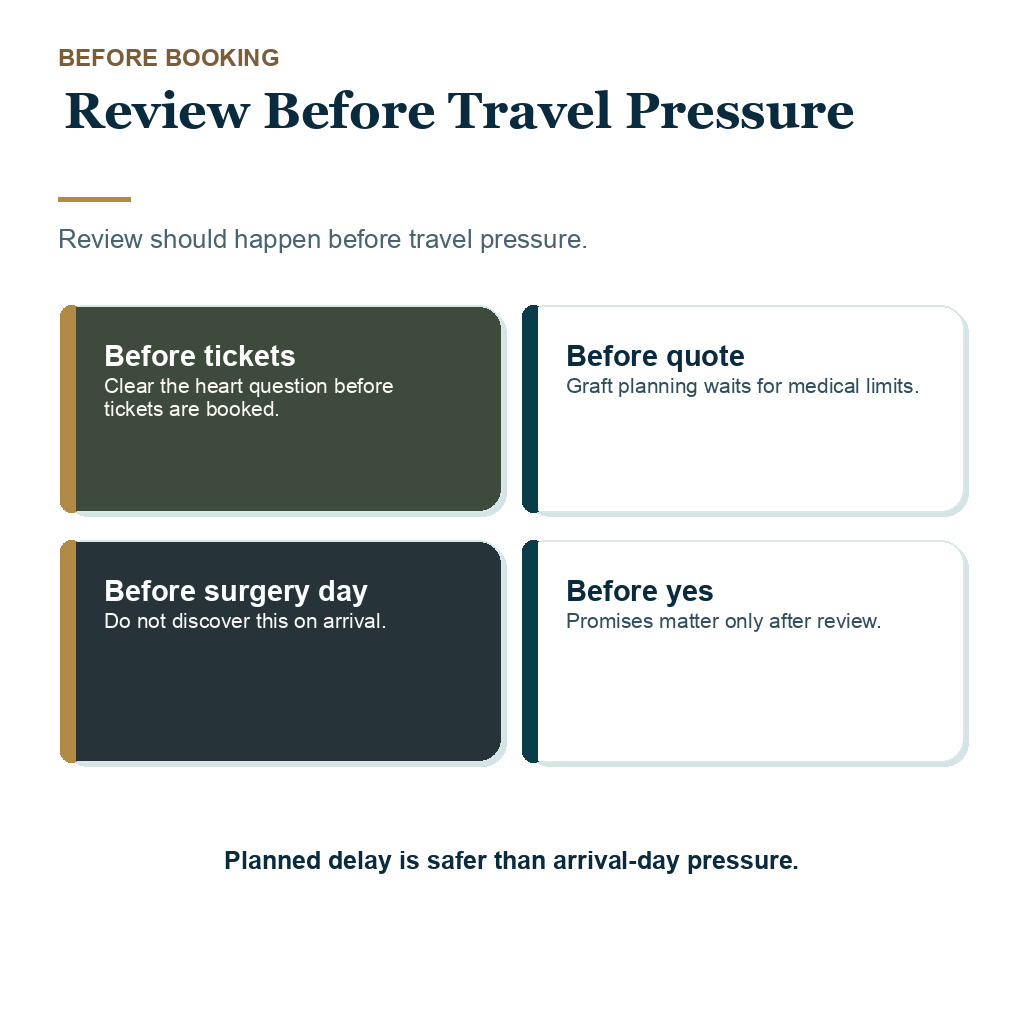
The medical discussion should happen before the patient pays for flights or reserves surgery. If surgery is medically reasonable, the trip can be planned with less pressure. If that answer is not yet, the patient avoids disappointment and an unsafe decision made after arrival.
The clinic should learn about the heart history before the surgery date, not on the morning of surgery, so the cardiologist and surgeon have time to agree on timing, medication, and procedure length.
A stent changes timing and medication planning
A stent is not by itself a permanent reason to avoid hair transplant surgery. Many patients with an old, stable stent can live normally and may be considered for elective procedures after proper review. I focus on timing, medication, and cardiac stability.
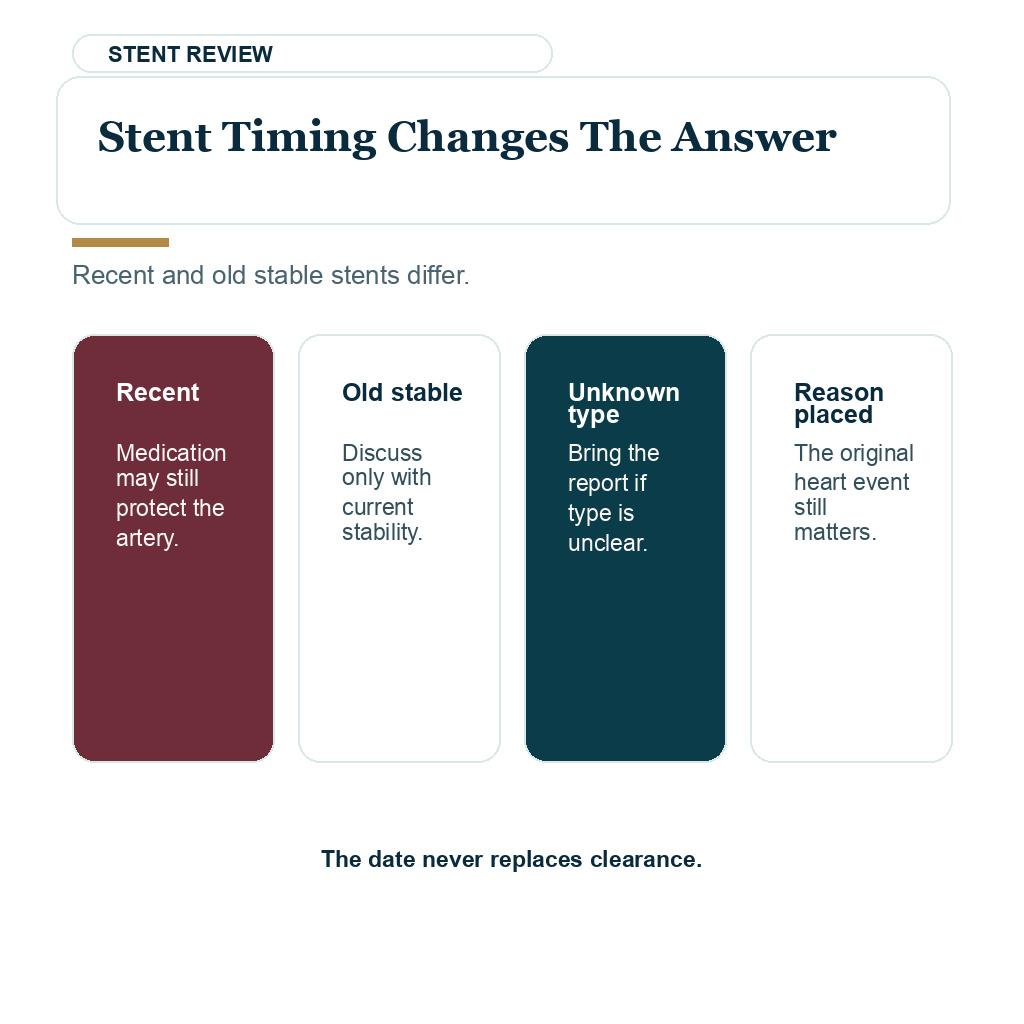
A recent stent is different from an old, stable stent. After a recent stent, medication may be protecting the artery. Stopping that medication too early can be dangerous. I do not treat stent history as a small detail.
In many perioperative discussions, the timing points I look at include at least 30 days after a bare metal stent, 6 months after a drug eluting stent placed for chronic coronary disease, and 12 months after a drug eluting stent placed after an acute coronary event. I do not use these numbers as permission by themselves. They are warning points that tell me cardiology clearance is essential.
The calendar is only one part of the decision. I also have to know why the stent was placed, whether there are current symptoms, whether dual antiplatelet therapy is still required, whether medication has recently changed, and whether the cardiologist is comfortable with an elective hair transplant. An old date with unclear medication instructions is not enough.
A patient may not even know which type of stent was placed. That is common. When that happens, I need the cardiology report, the date of the procedure, the reason the stent was placed, and the current medication plan.
A hair transplant is elective surgery. It is not cancer surgery, emergency surgery, or medically urgent surgery. This means I am very cautious with borderline timing arguments after a recent stent. If the cardiologist advises waiting, I wait. Hair can be planned later. A preventable stent thrombosis, heart attack, or major cardiac event is not an acceptable risk for cosmetic surgery.
Cardiologist confirmation before travel
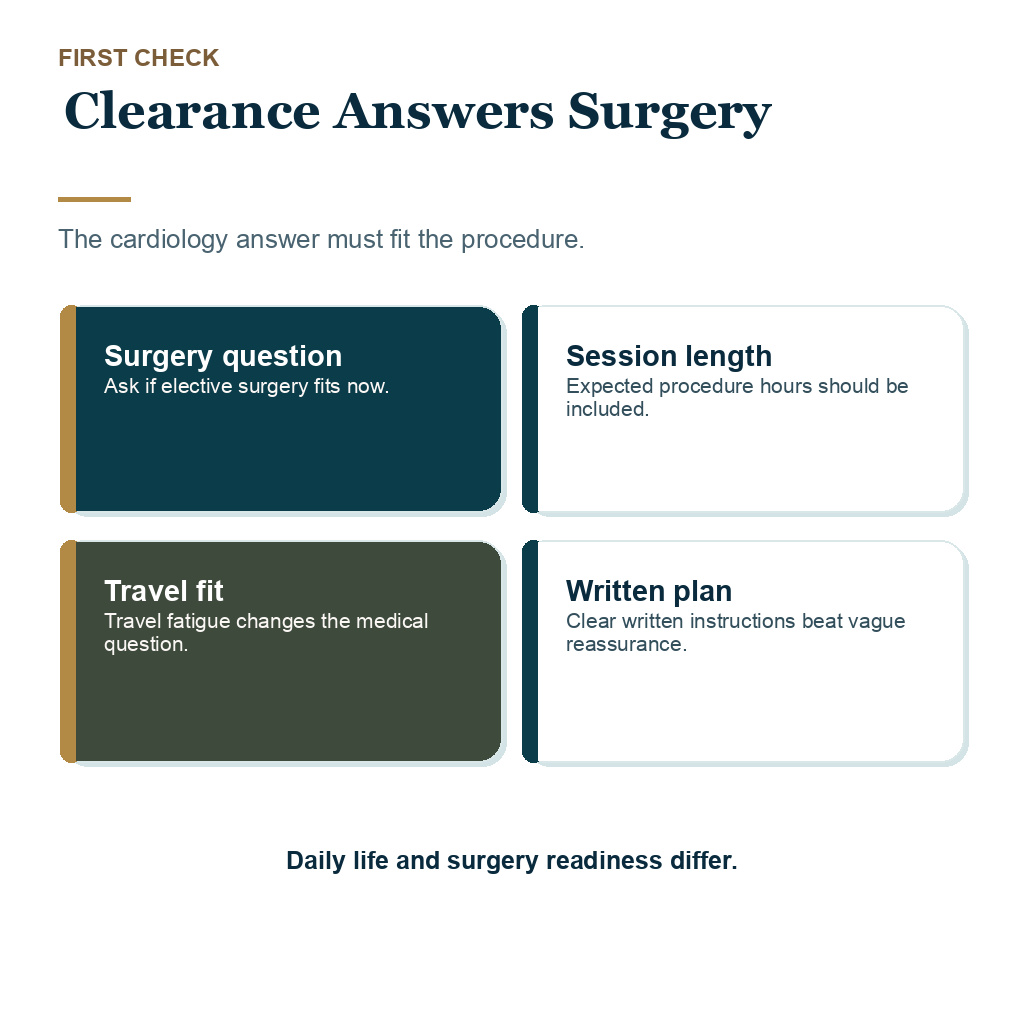
Before a patient with heart disease travels for surgery, the cardiologist should confirm more than a general feeling that the patient is probably fine. I need a practical answer about whether elective hair transplant surgery under local anesthesia is reasonable now, whether the planned session length is acceptable, and whether the patient can travel safely.
Patients often mix three questions together. Being stable in daily life, being safe to travel, and having a safe medication plan for a long elective procedure are not the same answer. I need the answer specific to surgery, not a casual message that everything is fine.
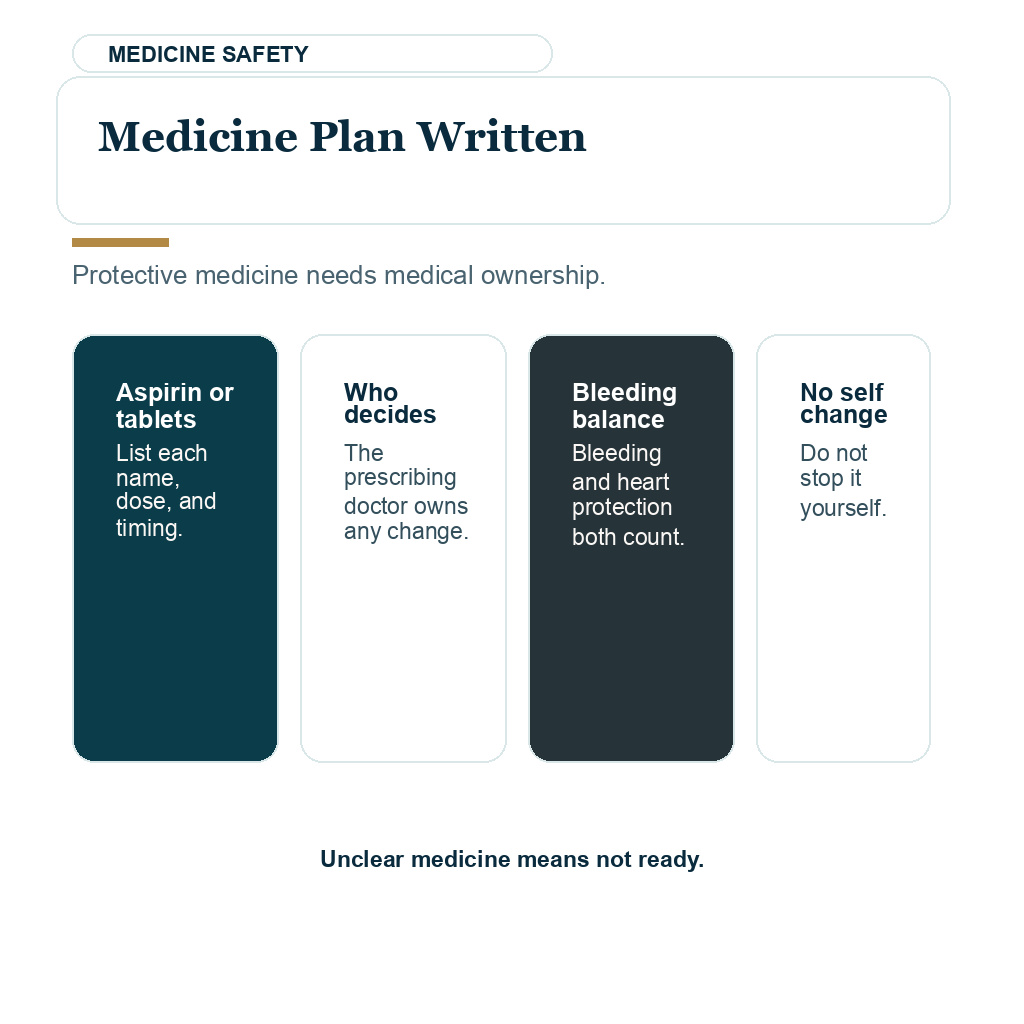
The medication plan should also be written clearly. If aspirin should continue, that should be clear. If clopidogrel, ticagrelor, prasugrel, warfarin, apixaban, rivaroxaban, dabigatran, or another medication needs a temporary change, that instruction should come from the responsible doctor, not from the patient, a coordinator, or a generic clinic message.
The cardiologist should also consider the reason for the medication. A patient taking a blood thinner for atrial fibrillation is different from a patient taking dual antiplatelet therapy soon after a stent. A patient with a mechanical valve is different again. These differences matter because the danger of stopping medication is not the same in every patient.
If the cardiologist cannot give a clear plan before travel, delaying surgery is safer than creating pressure on the surgery day. A planned delay is much safer than asking the patient to make a decision about the heart while already sitting in the clinic.
Blood thinners and aspirin need medical instructions
Medication changes need cardiology input. Aspirin, clopidogrel, ticagrelor, prasugrel, warfarin, apixaban, rivaroxaban, dabigatran, and similar medications can exist for serious reasons. Some patients take them because of a stent, previous clot, atrial fibrillation, stroke risk, valve problem, pulmonary embolism, or another heart condition.
The question of blood thinners before a hair transplant must be discussed medically, not treated as a routine preoperative instruction.
In surgical terms, these medications can affect bleeding, swelling, and visibility during recipient area work. From a heart and vascular point of view, stopping them may create a much bigger danger. The responsible plan is not to force the same instruction on every patient. It is to ask why the medication is used, who prescribed it, and who is responsible for changing it.
If the medication cannot be paused safely, sometimes surgery can still be considered with modified expectations. Sometimes it should be delayed. Sometimes it should not be done in that period. A smaller, safer plan is better than pretending that a medical condition disappears because the patient wants a certain graft number.
Some heart failure or diabetes medicines also matter. For example, patients may use medicines such as empagliflozin or dapagliflozin. In perioperative guidance these medicines are commonly stopped 3 to 4 days before planned surgery to reduce the risk of metabolic complications, but the instruction should still come from the prescribing doctor and fit the patient’s own medical situation.
Do not stop protective heart medication to make a cosmetic procedure easier. If the medication plan is not clear, the surgery plan is not ready.
Local anesthesia with adrenaline can matter for the heart
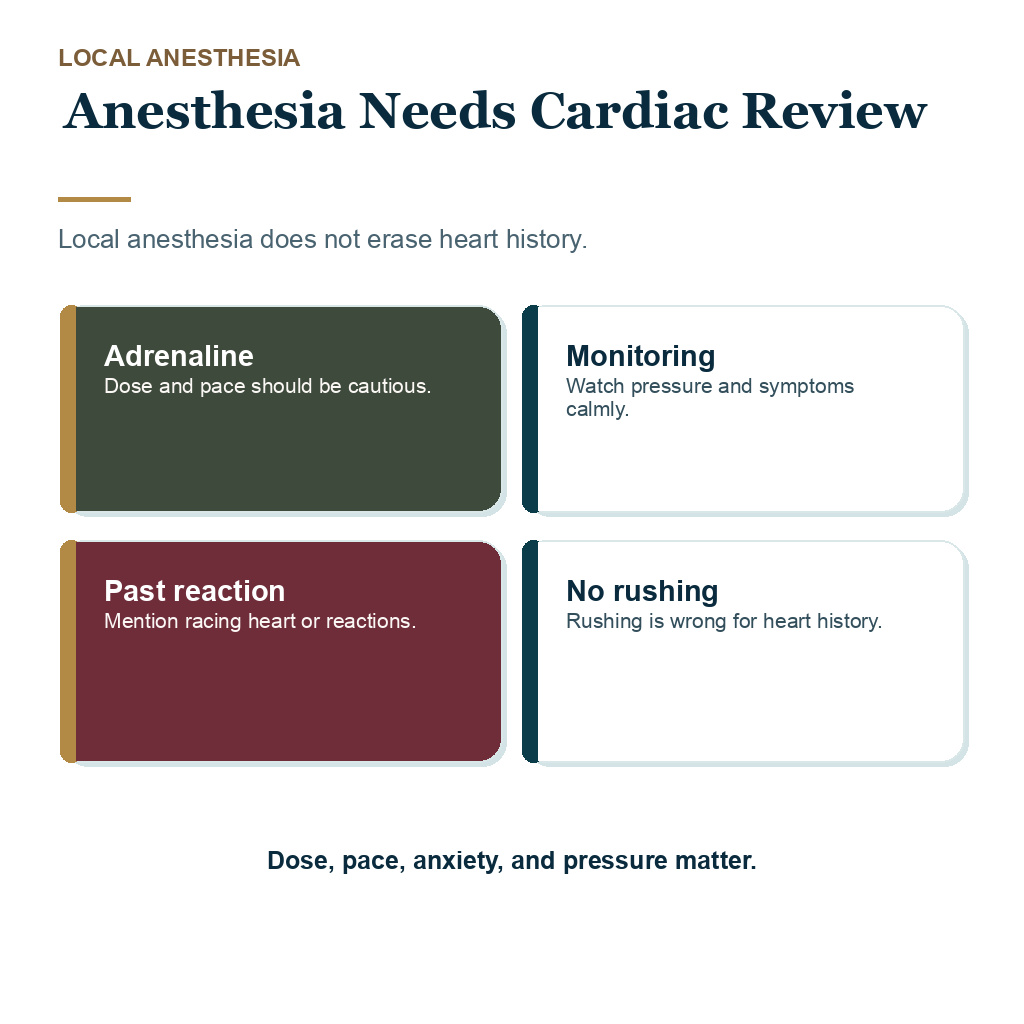
It can matter. Hair transplant surgery usually uses local anesthesia, and many local anesthetic mixtures include adrenaline to reduce bleeding and prolong the anesthetic effect. This is useful surgically, but a patient with arrhythmia, unstable blood pressure, severe anxiety, or significant heart disease should not be treated casually.
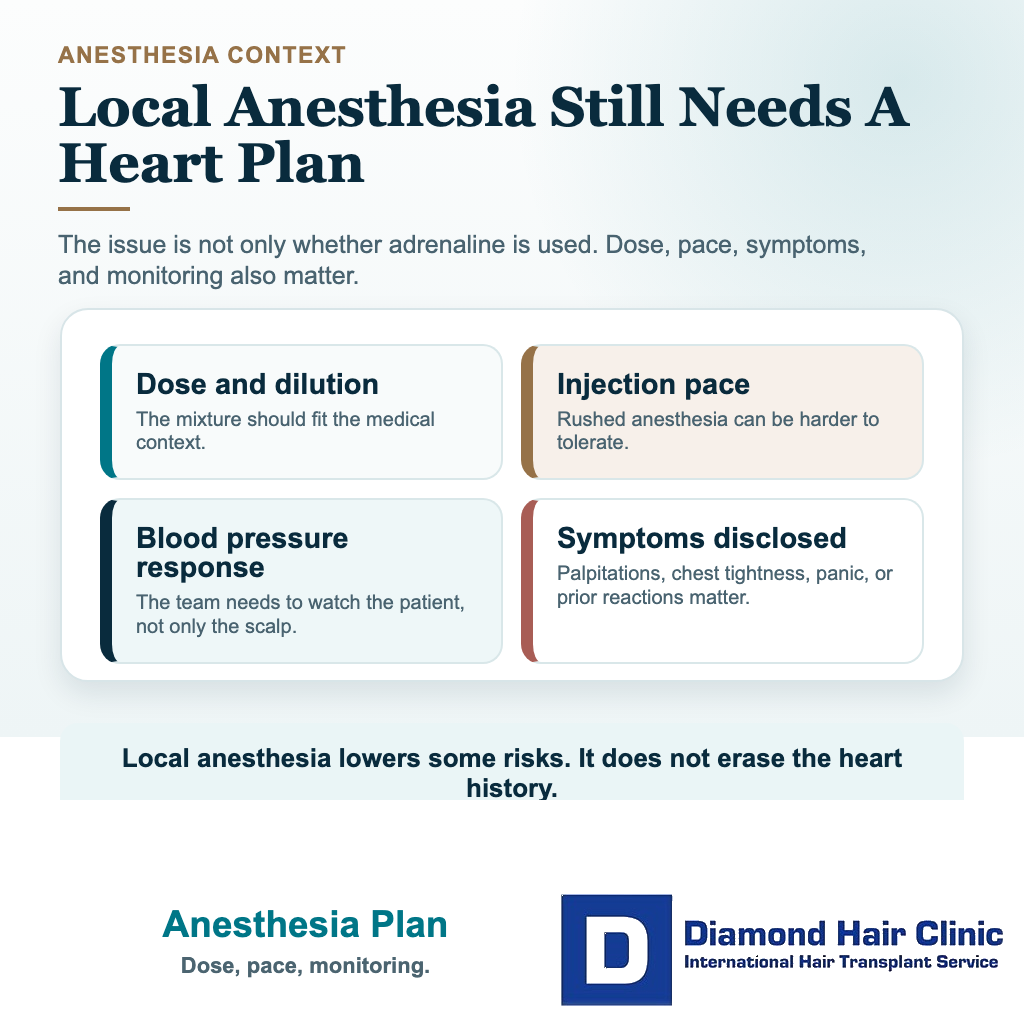
The broader explanation of adrenaline in hair transplant anesthesia matters even more for a heart disease patient. The issue is not only whether adrenaline is used. The issue is dose, dilution, speed of injection, injection technique, patient history, blood pressure response, anxiety level, and monitoring.
Adrenaline does not by itself make surgery unsafe. But aggressive injection, poor communication, rushed anesthesia, and ignoring symptoms are not acceptable in a patient with a cardiac history.
A patient who has reacted badly to dental injections, local anesthesia, palpitations, panic, chest tightness, or blood pressure spikes should tell the clinic before surgery day. These details may change the pace of anesthesia, the monitoring plan, and whether cardiology input is needed.
A consultation that separates the medical history from the surgeon’s plan is weak in a case like this. If the person making the recipient area plan does not understand the patient’s heart history, the plan is incomplete. The medical assessment and the surgical plan should meet each other before surgery begins.
A stable heart history still needs surgery day limits
If the heart history is stable and the medication plan is clear, the day should still be managed carefully. The day needs planning so the patient is rested, hydrated, fed according to clinic instructions, and not panicking because nobody explained what will happen.
Blood pressure should be checked. Symptoms should be taken seriously. The team should know the patient’s history before the first injection. This is similar to the planning I use for high blood pressure and hair transplant planning.
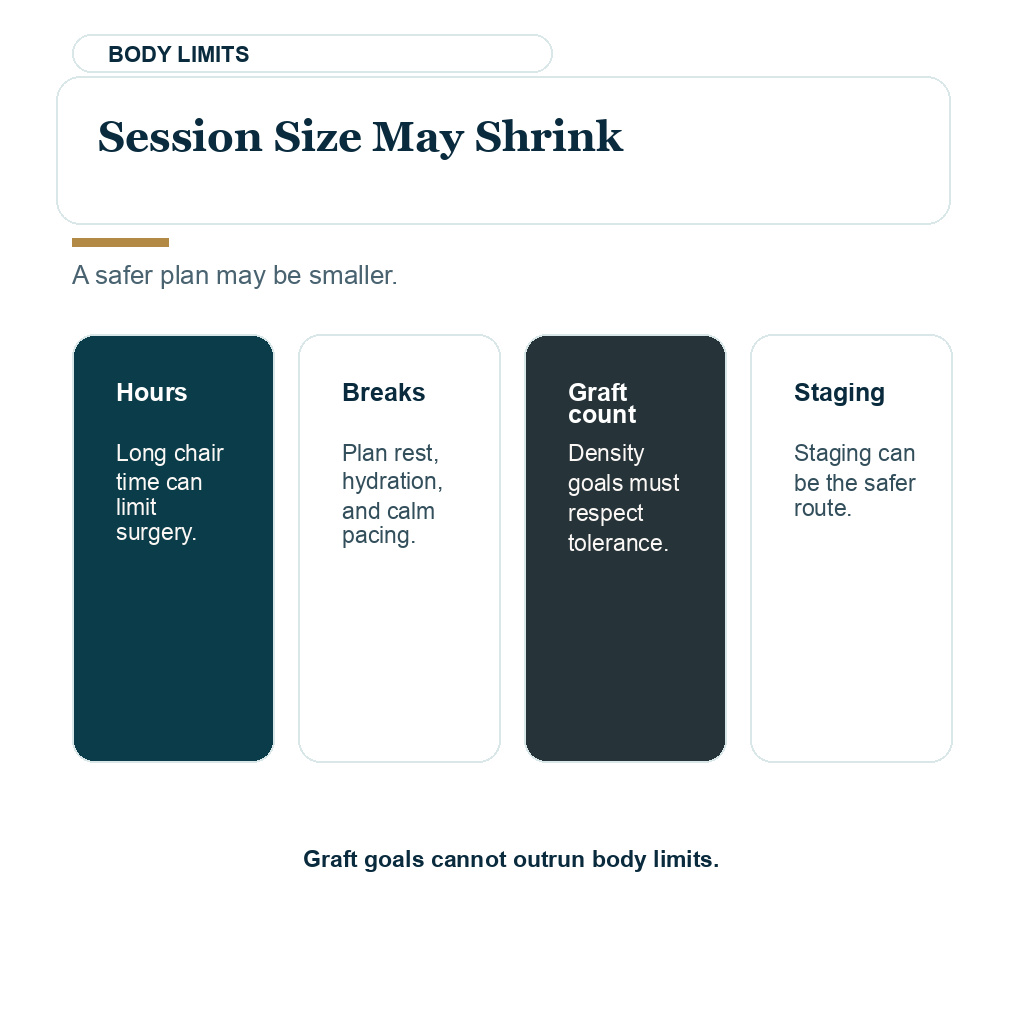
A stable patient is not the same as a patient with no medical history. The plan may need a slower pace, fewer unnecessary hours, or a more conservative graft target if a very long day is unwise.
The better operation is not always the one that extracts the largest number of grafts. It is the one the patient can tolerate safely and heal from properly.
Donor management and medical judgment meet here. If a patient with heart disease is pushed into an exhausting mega session only because a clinic wants to advertise a large number, the plan is already moving in the wrong direction. A carefully planned procedure should respect the body as much as the hair.
In medically sensitive cases, a smaller and better controlled plan may be safer than an ambitious session.
The timing can be too early
Waiting is safer if the patient has recent chest pain, recent heart attack, recent stent without cardiology clearance, unstable rhythm symptoms, uncontrolled blood pressure, unexplained fainting, shortness of breath at rest, decompensated heart failure, recent hospitalization for a heart condition, or a medication plan that cannot be safely understood.
I also say not yet if the patient is being asked to stop medication without the doctor who prescribed it. That is one reason I wrote about when medication can delay a hair transplant. A delay is not a failure. A delay can be the most responsible surgical decision.
Patients sometimes feel that waiting means they are losing time. I see it differently. Waiting until the body is stable can protect the patient, protect the donor area, and protect the final result.
A rushed hair transplant in the wrong medical window can create regret that was avoidable. The patient may be focused on hair loss, but the surgeon must stay focused on the whole person.
If the heart is not ready, the hair transplant is not ready.
Clinic promises need extra caution with heart disease
A clinic promise has value only after the medical history has actually been reviewed. If the clinic says yes before asking about stents, heart attack history, chest pain, blood pressure, medication, exercise tolerance, and cardiology clearance, that yes has little value.
Before committing to a hair transplant, this responsibility should already be clear. You should know who reviews the medical information, who decides whether cardiology clearance is needed, and who is responsible if the medication plan is unclear.
I also worry when the clinic makes the problem sound too easy. A rushed consultation may say that local anesthesia means there is no risk, that blood thinners only need to be stopped for a few days, or that a large graft number can be done regardless of medical history. That is not careful surgery.
A careful clinic should make the plan clearer by being specific. It should be clear who evaluates the medical history, who performs the critical surgical steps, what happens if blood pressure rises, what medication can continue, and when the clinic would refuse or postpone surgery.
This is not meant to frighten the patient. It is meant to remove false reassurance before it becomes a surgical risk.
A clinic that ignores heart disease is not being reassuring. It is being careless.
Steps before travelling to Turkey
Before traveling, ask your cardiologist whether elective hair transplant surgery under local anesthesia is acceptable for you. Share the expected length of the procedure and the medication plan requested by the clinic.
Bring recent medical reports if they are relevant, and complete any needed blood tests before a hair transplant before surgery is confirmed. If you have a stent, bring the date and type if you know it. If you take antiplatelet medication or anticoagulants, write down the exact names and doses.
If you have chest pain, shortness of breath, dizziness, swelling in the legs, recent hospitalization, fainting, palpitations, or a recent medication change, do not hide it because you fear being rejected. A safe no is better than a dangerous yes.
I also prefer the patient to arrive with enough time and not in a state of exhaustion. Medical tourism should not turn surgery into a race between the airport, hotel, procedure, and flight home. When the patient has heart disease, careful planning matters even more.
Careful clinic choice in Turkey includes this. Hotel and transfer planning is not the same as medical planning. The clinic should know when a medical history requires a slower and more serious decision.
A hair transplant can sometimes be modified for a heart patient
Sometimes the plan can be modified if the patient is stable but still needs a more conservative approach. This may mean a smaller session, a shorter surgical day, a more focused recipient area, more conservative graft use, or a staged plan instead of trying to solve everything in one operation.
For example, a safer plan may focus on the frontal frame rather than spreading grafts too widely into the crown if the patient’s medical condition makes a very long session unwise. This is not a lower standard. It is a staged plan that respects the body as well as the hair.
Large sessions can be physically tiring. They can involve many hours in the surgical chair, more anesthesia, more tissue work, more swelling, and more recovery demand. In a healthy young patient, this may still be manageable. In a medically sensitive patient, the logic changes.
A large number of grafts does not necessarily mean a better operation. For many patients, especially those with medical complexity, a controlled plan can be safer and more appropriate.
The useful plan is not always the largest plan. It is the plan the patient can go through safely and recover from properly.
Bypass surgery or a past heart attack needs context
A bypass surgery or heart attack years ago does not by itself exclude a patient from hair transplant surgery. The current condition matters more. Stability, chest pain, cardiology follow up, medication use, daily activity tolerance, and any recent change all matter more than the old event by itself.
A patient who had a heart attack many years ago, is stable, follows the medication plan, and has cardiology approval may be considered very differently from a patient who had chest pain last week or a hospital admission last month.
The timing and stability matter more than the history alone. One past event does not always mean rejection. But a heart history should not be minimized just because the hair transplant is performed under local anesthesia.
After bypass surgery, I look at the date, current symptoms, cardiology follow up, and the medicine plan. The important question is whether the heart is stable now, not only whether the operation was years ago.
An old heart history may be manageable. An unstable current heart condition is different.
Pacemaker or rhythm problems need current information
A pacemaker or rhythm problem needs individual review. Some patients with rhythm conditions are stable and live normally. Others have ongoing palpitations, fainting, dizziness, chest discomfort, or medication changes that make elective surgery less appropriate.
If a patient has atrial fibrillation, I assess whether the rhythm is controlled, whether anticoagulant medication is used, whether there has been a recent stroke or clot, and whether the cardiologist is comfortable with the surgical plan.
For a pacemaker or defibrillator, the useful details are the reason for the device, the latest device check, any restrictions, and any recent shocks or symptoms. A hair transplant is not the same as major surgery, but the device history still belongs in the plan.
Many rhythm patients also use anticoagulants. That brings the discussion back to medication safety. If the blood thinner plan is unclear, surgery should wait until the responsible doctor gives proper guidance.
Rhythm history is not only a line on a medical form. It can change how safely the patient tolerates a long procedure.
Heart disease affects safety more than graft biology
Heart disease itself does not mean grafts will not grow. Many patients with stable cardiac histories can heal normally. But uncontrolled medical problems can affect the surgical environment, bleeding, blood pressure, tissue oxygenation, medication safety, and recovery behavior.
The bigger concern is often not direct graft growth, but the overall safety and quality of the procedure. If bleeding is excessive, if blood pressure is unstable, if the patient becomes anxious or unwell, or if the surgery must be rushed or interrupted, the quality of the procedure can suffer.
Good graft growth needs more than follicles. It needs careful handling, proper recipient area creation, stable tissue conditions, good aftercare, and a patient who can recover safely. Heart disease planning connects with hair transplant aftercare, not only with the surgery day.
A patient with a stable heart condition and a carefully planned operation may do well. A patient with unstable symptoms or a poorly managed medication plan should not be pushed into surgery just because the scalp design looks possible.
The heart condition may not directly decide the hair result, but it can decide whether the surgery should happen now.
Heart history needs cardiology alignment
I treat the hair transplant as elective surgery that must fit the patient’s medical reality. First, the heart condition should be stable. Second, the medication plan should be approved by the responsible doctor. Third, the clinic should be able to explain how local anesthesia, adrenaline, blood pressure, bleeding risk, session length, and aftercare will be handled.
If these points are clear, surgery may be possible. If they are vague, I do not rush. Travelling with the hope that everything will be solved on the day of surgery is not safe. The responsible decision is made before the patient is emotionally and financially trapped by the booking.
The decision is practical. A hair transplant can improve appearance and quality of life, but it should never ask the heart to accept an unreasonable risk. When the heart history is stable and the plan is responsible, we can discuss hairline, density, donor capacity, and graft numbers. When the heart history is unstable, waiting is the better surgical decision.
When those medical facts are clear, surgery becomes a medical decision first and an aesthetic decision second.

Read this review excerpt
Diamond Hair was the only clinic asking for medications, treatments I've done before, and other type of questions that make me feel confident on the professionalism that they practice with their clients.