

Adrenaline in Hair Transplant Anesthesia
The safety of adrenaline depends on dose, monitoring, medical history, and how the anesthesia is given. It is not something to fear by default, but it is also not something to ignore if you have heart rhythm problems, heart racing around hair transplant surgery, unstable blood pressure, beta blocker use before surgery, stimulant sensitivity, triptan medicine for migraine, panic attacks, or a cardiologist who has warned you about adrenaline. Recent alcohol use before hair transplant surgery should also be disclosed before anesthesia decisions are made.
Adrenaline is not simply good or bad by itself. The decision is whether it fits this patient’s medical history, blood pressure, medication, anxiety level, operation length, and any approved plan for Xanax or Valium before a hair transplant. Adrenaline can be useful, but the plan must match the patient. Delaying is better than pushing a nervous or medically complex patient through a long operation without understanding the real risk. For a patient asking about hair transplant with epilepsy, seizure control and medication timing belong in that same anesthesia discussion. I also separate adrenaline in local anesthesia from sedation during a hair transplant, because sedation adds a different medical risk layer. Past tremor, panic, chest symptoms, or fainting should be described before the anesthetic plan is chosen.
Most patients who feel a short racing heart after local anesthesia are experiencing a temporary adrenaline effect, not a disaster. But careful clinics do not rely on reassurance alone. They assess whether the patient is a good candidate for a hair transplant, monitor the patient, inject slowly, and adjust the plan when the patient history requires it. If a tablet or injection is mentioned during the day, it is reasonable to ask what each medicine is for before the name and purpose are forgotten.
Adrenaline helps control bleeding during anesthesia
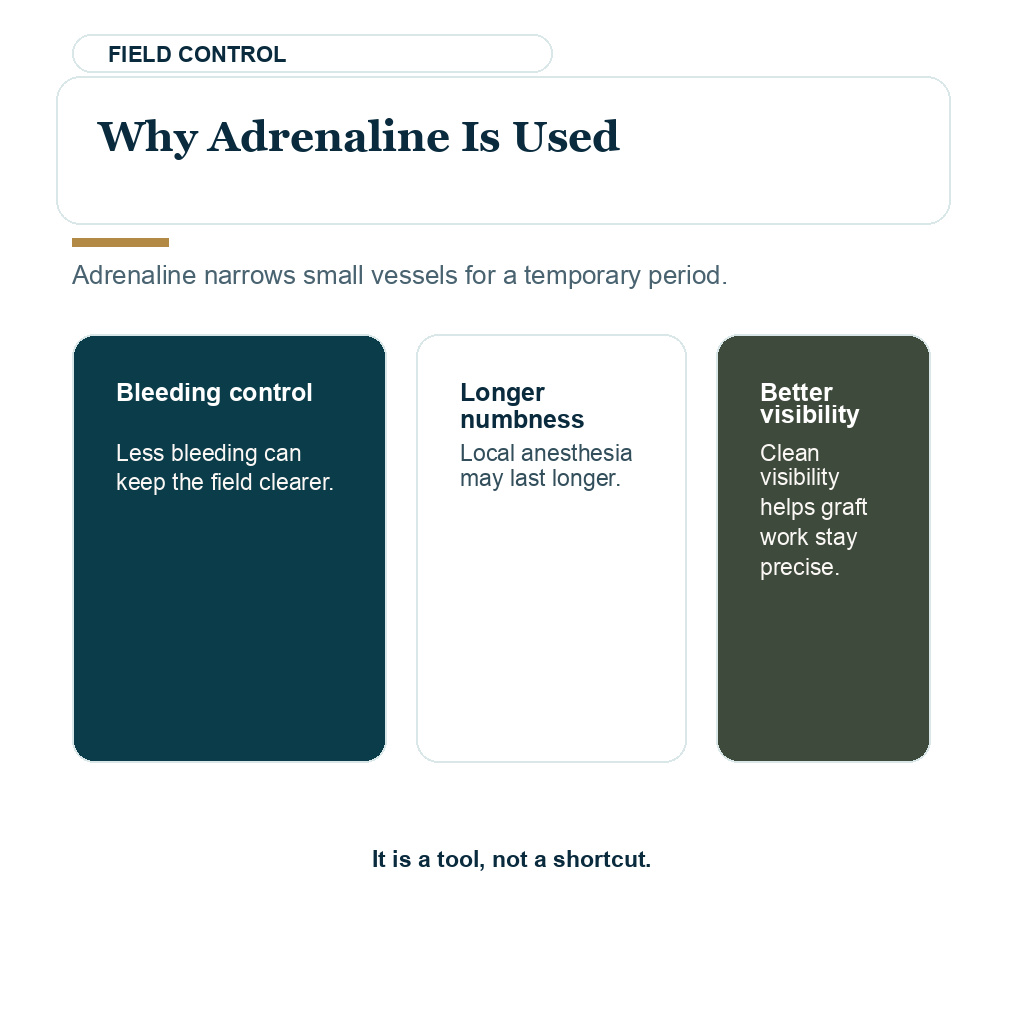
Adrenaline, also called epinephrine, is often mixed with local anesthesia because it narrows small blood vessels for a temporary period. In a hair transplant, that can reduce bleeding, keep the surgical field clearer, and help the anesthetic last longer.
It matters because hair transplantation is delicate work. In the donor area, grafts must be removed cleanly. In the recipient area, small incisions must be made with careful angle, direction, and density planning. Excessive bleeding can make the work slower, less visible, and more stressful for the tissue.
Adrenaline is not a shortcut. It is one tool inside a controlled medical plan. Risk rises when the clinic treats it as routine for every patient without asking enough about the person sitting in the chair.
I also explain that local anesthesia injections during hair transplant may cause stinging, pressure, or a brief burning feeling at the beginning. That discomfort is different from the adrenaline effect, although anxiety can make both feel stronger.
A racing heart is not always dangerous
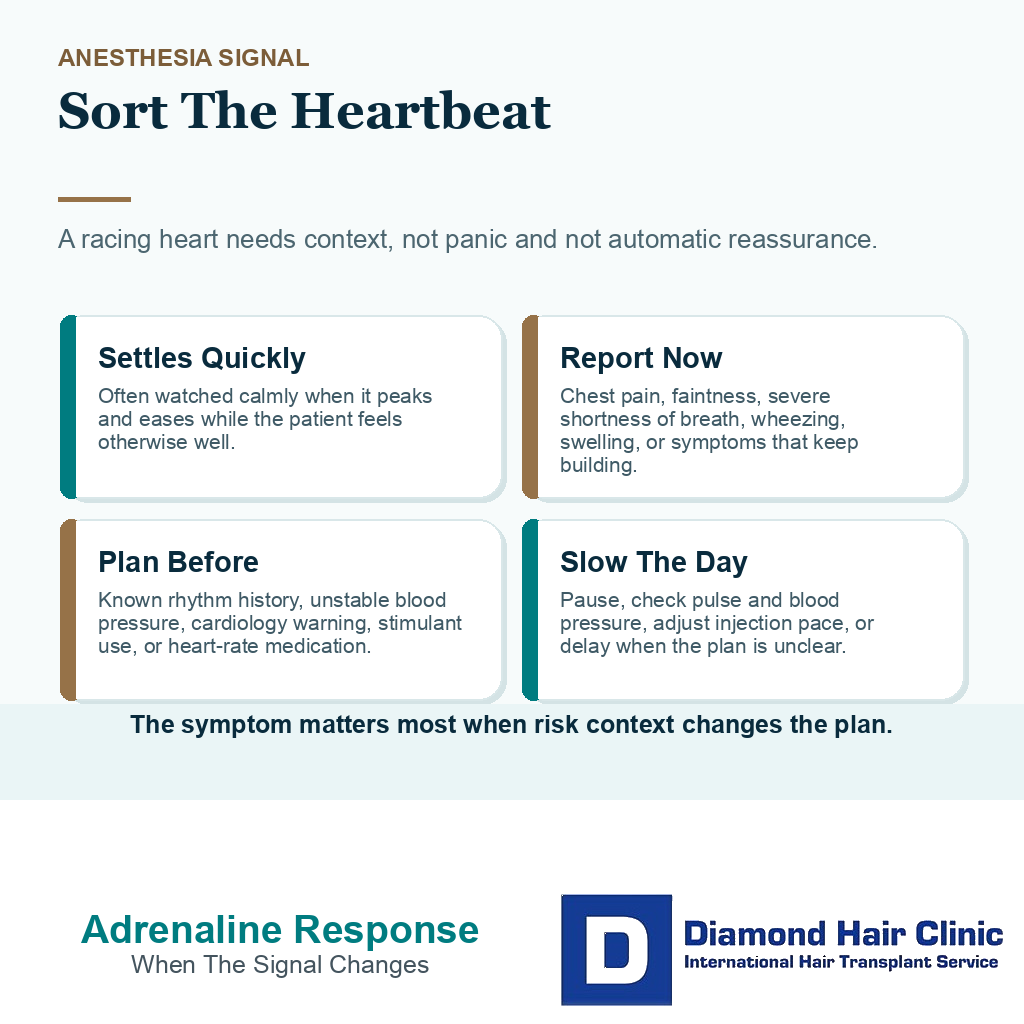
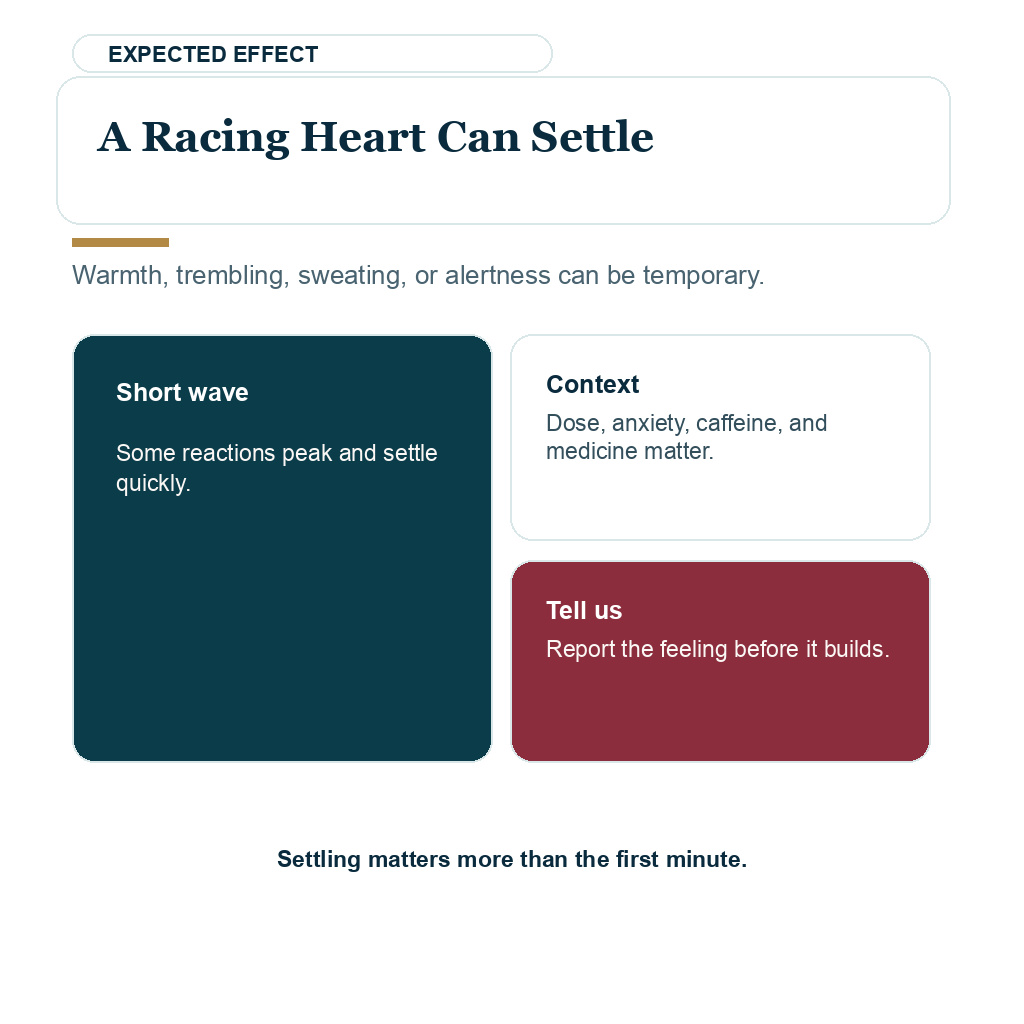
A racing heart during or shortly after local anesthesia is not always dangerous. For many patients, it is short, expected, and settles as the body processes the adrenaline. Some patients feel warmth, trembling, sweating, or a sudden wave of alertness.
In many ordinary cases, this sensation peaks within about 5 to 10 minutes. I do not use that number as a promise, because the response can change with dose, injection speed, anxiety, caffeine, medication, and medical history.
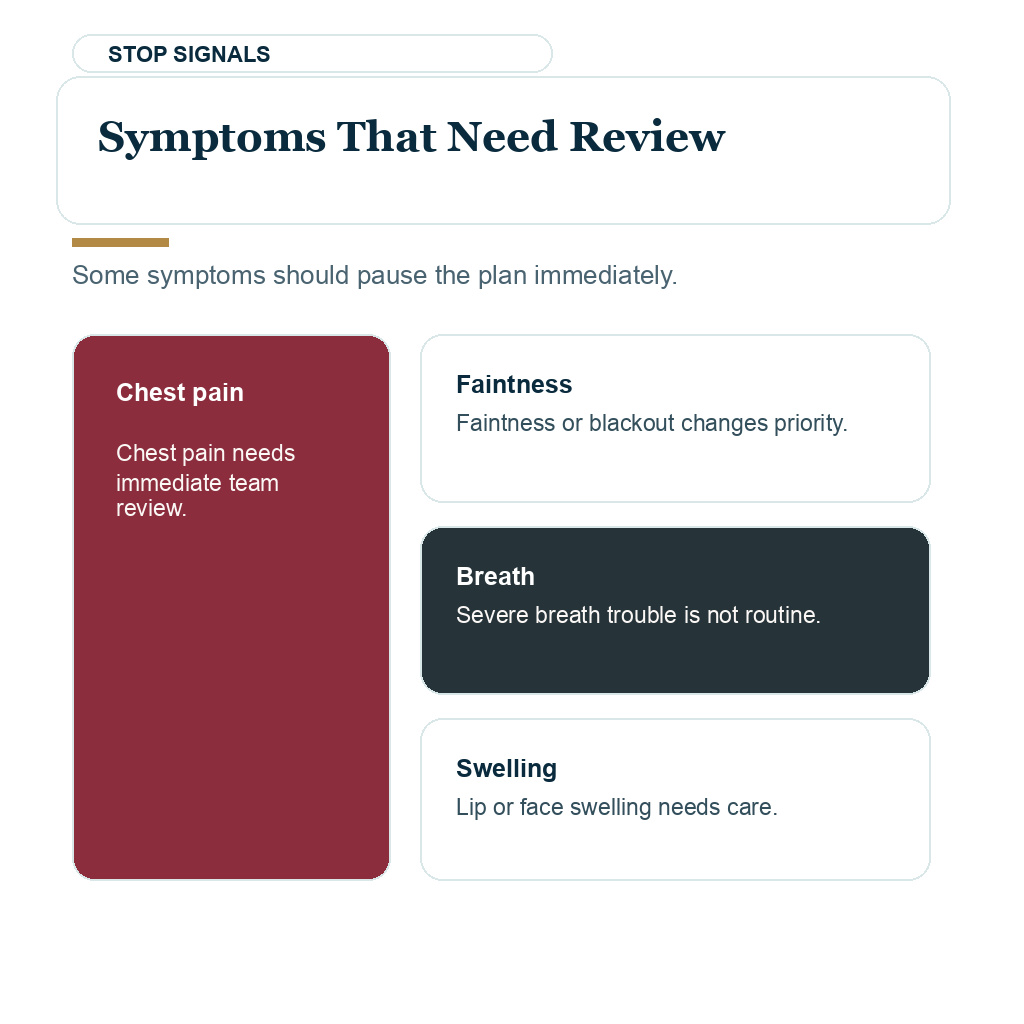
I also separate a short, settling reaction from a symptom that is becoming unsafe. If the heartbeat speeds up for a few minutes and then settles while the patient feels otherwise well, that is different from chest pain, faintness, severe shortness of breath, wheezing, swelling of the lips or face, or palpitations that keep building. Do not try to be brave through those symptoms. Tell the team immediately.
A faster heartbeat is only one part of the picture. Chest pain, faintness, severe shortness of breath, known arrhythmia, unstable blood pressure, or a history that makes adrenaline more serious changes the decision.
There is also a psychological layer. A patient who already fears the procedure may interpret every heartbeat as danger. That fear is real and should be taken seriously, but it still needs medical judgment. The plan should not be controlled by panic, and it should not dismiss panic as if it is nothing.
Injection speed can change the reaction
Pain during local anesthesia should be spoken about early in the chair. Comfort can often be adjusted only while the team still has time to respond.
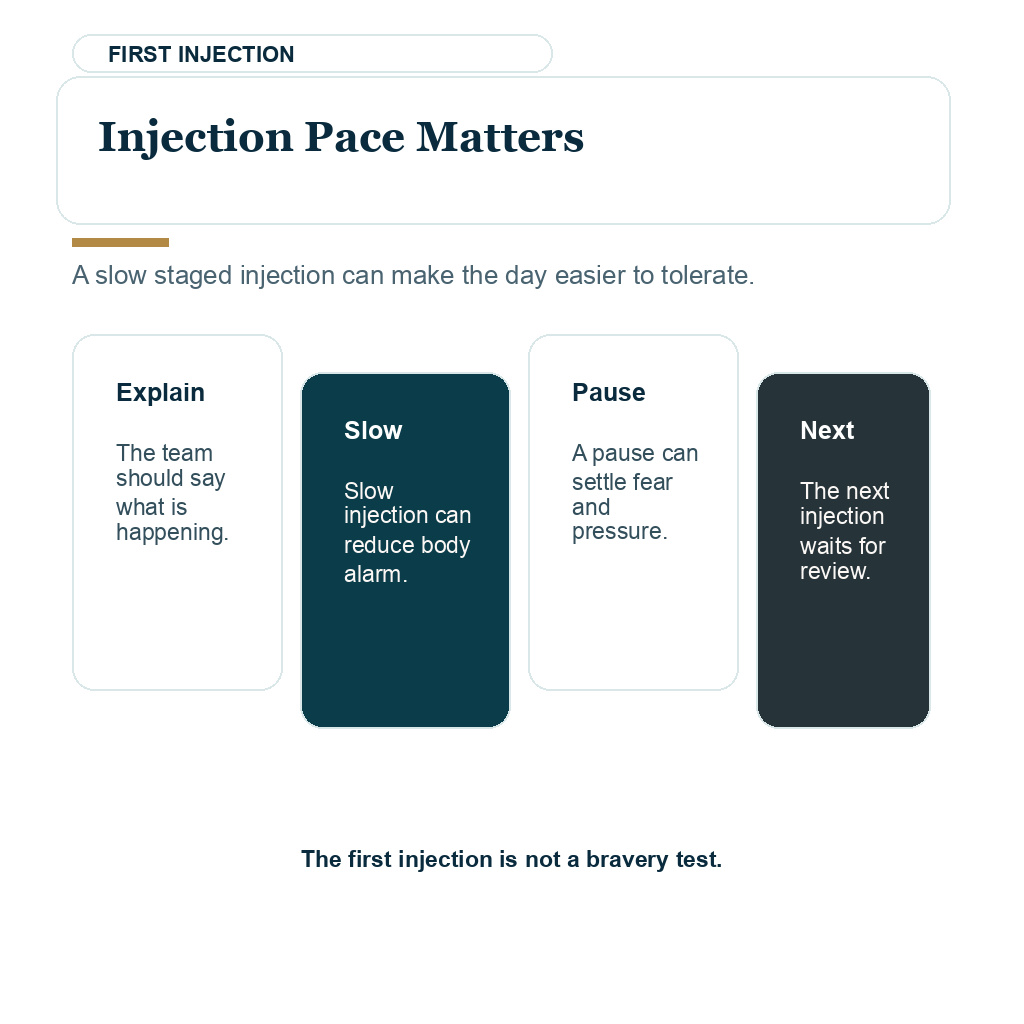
Slow injection helps, but I still watch the whole patient. Dose, dilution, anxiety, caffeine on the surgery morning, current medication, blood pressure, and heart history can all change the reaction. A careful anesthesia plan means I can slow down, talk to the patient, monitor the response, and decide whether the next injection should continue. This is similar to long hair transplant session planning, where comfort and graft workflow have to be managed through one surgical day.
The first injection should not become a test of bravery or a reason to stay silent about symptoms. If the patient is frightened, the team should explain what is happening and give the patient a moment to settle. A rushed injection in a frightened patient can create a stronger body reaction than necessary.
A racing heart is not the same as allergy
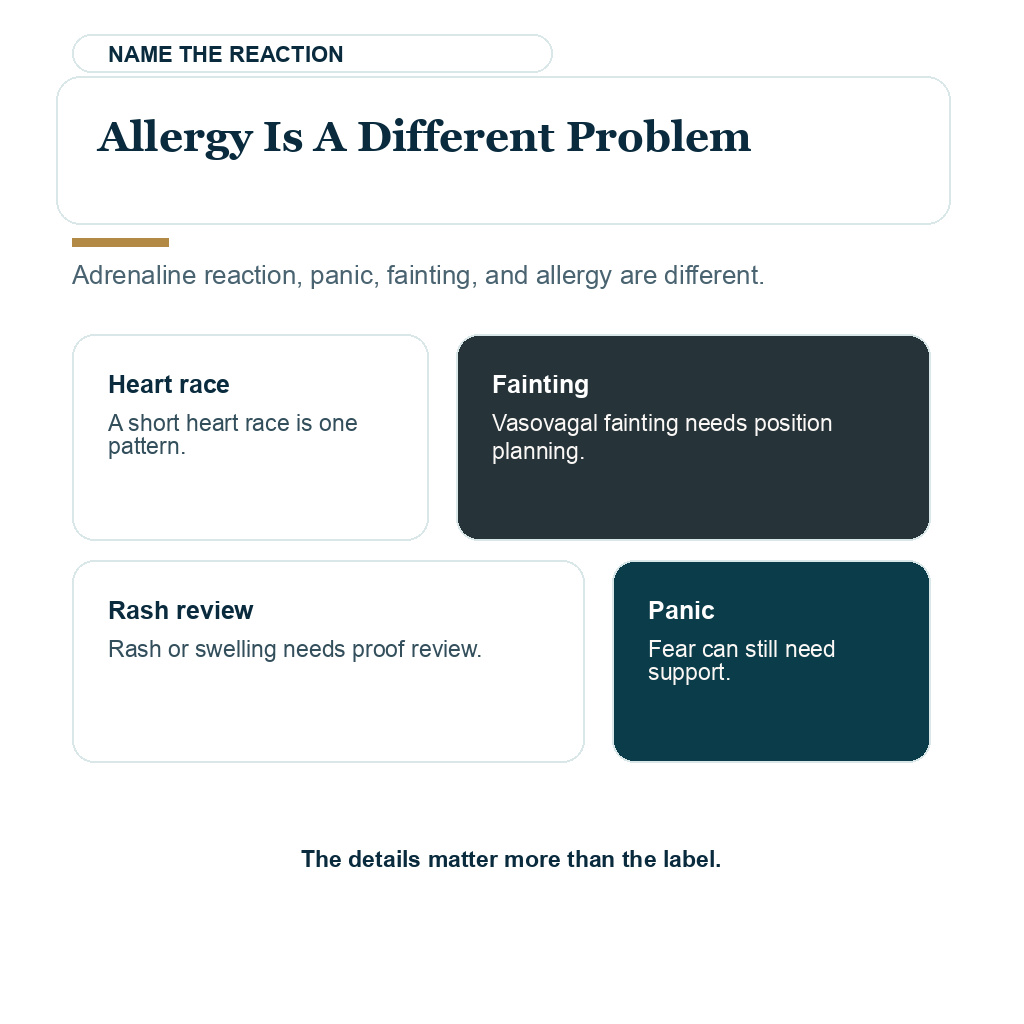
A racing heart, trembling, sweating, warmth, lightheadedness, or panic after local anesthesia is not usually the same as an allergy. Many patients use the word allergy because the experience was frightening, but allergy, adrenaline reaction, vasovagal fainting, panic, and medication sensitivity are different problems. If the concern is a documented drug reaction rather than a short adrenaline feeling, local anesthetic allergy before hair transplant needs its own proof and review before surgery day.
Each one changes the plan differently. A true allergy or suspected reaction to an ingredient in the anesthetic may require specialist review and a different medication strategy. A previous fainting episode may require positioning, hydration, slower pace, and monitoring. A short adrenaline sensation may require dose awareness, careful injection, and reassurance. Panic may require better preparation and sometimes medical anxiety support.
Describe what actually happened in the past. Did the heart race for a few minutes, did you faint, did breathing become difficult, did a rash appear, did the lips swell, or did you simply feel terrified? The details are much more useful than the label. Do not take extra anxiety medicine, stimulants, or pain tablets to get through the injection unless the clinic and prescribing doctor have cleared it. Also explain whether the team simply reassured you, slowed the injection pace, monitored you longer, or had to stop the session.
When is extra caution needed before surgery?
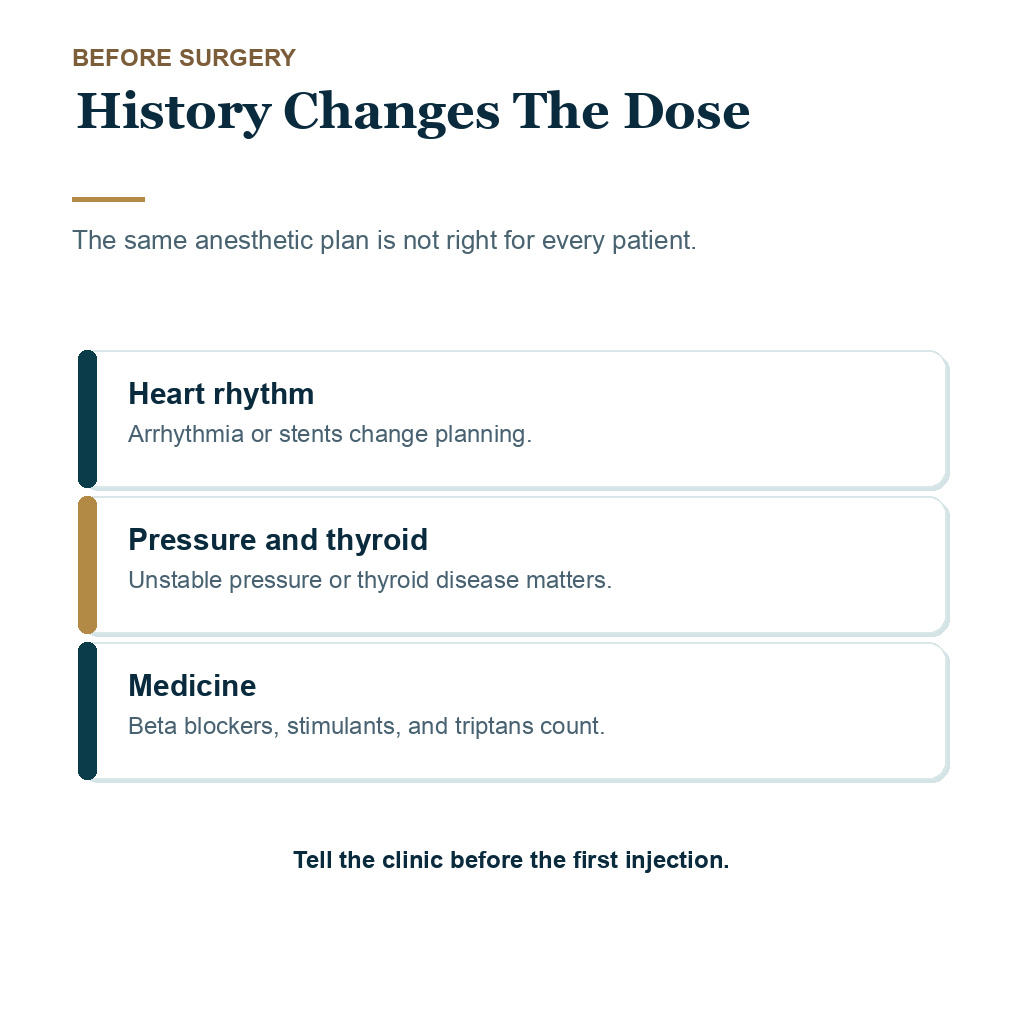
Extra caution is needed when a patient has a history of arrhythmia, heart valve disease, previous heart attack, stent placement, fainting with injections, panic attacks that feel physical, uncontrolled thyroid disease, uncontrolled diabetes, sleep apnea or CPAP use, asthma or breathing disease, or unstable blood pressure.
Extra caution is also needed when the patient takes medication that affects bleeding, clotting, heart rhythm, blood pressure, or anxiety. A hair transplant is usually performed under local anesthesia, but it is still surgery, and a long procedure can test the body more than the patient expects. That is also the context for discussing life threatening hair transplant risk without panic or false reassurance.
If a patient has high blood pressure readings before surgery, a booking answer is not enough. The case needs a medical answer. With high blood pressure and hair transplant planning, adrenaline, stress, and a long day in the chair can all affect the decision.
Blood thinner use before hair transplant needs its own medical context. The issue is not only bleeding. It is why the patient takes the medication, whether stopping it is risky, and whether the prescribing doctor agrees with the plan.

Surgery without adrenaline may be possible in selected cases
Sometimes a hair transplant can be planned with less adrenaline, slower injection, staged anesthesia, or a modified approach. In selected cases, the surgeon may consider alternatives. But the answer should be individualized, not promised casually before examination.
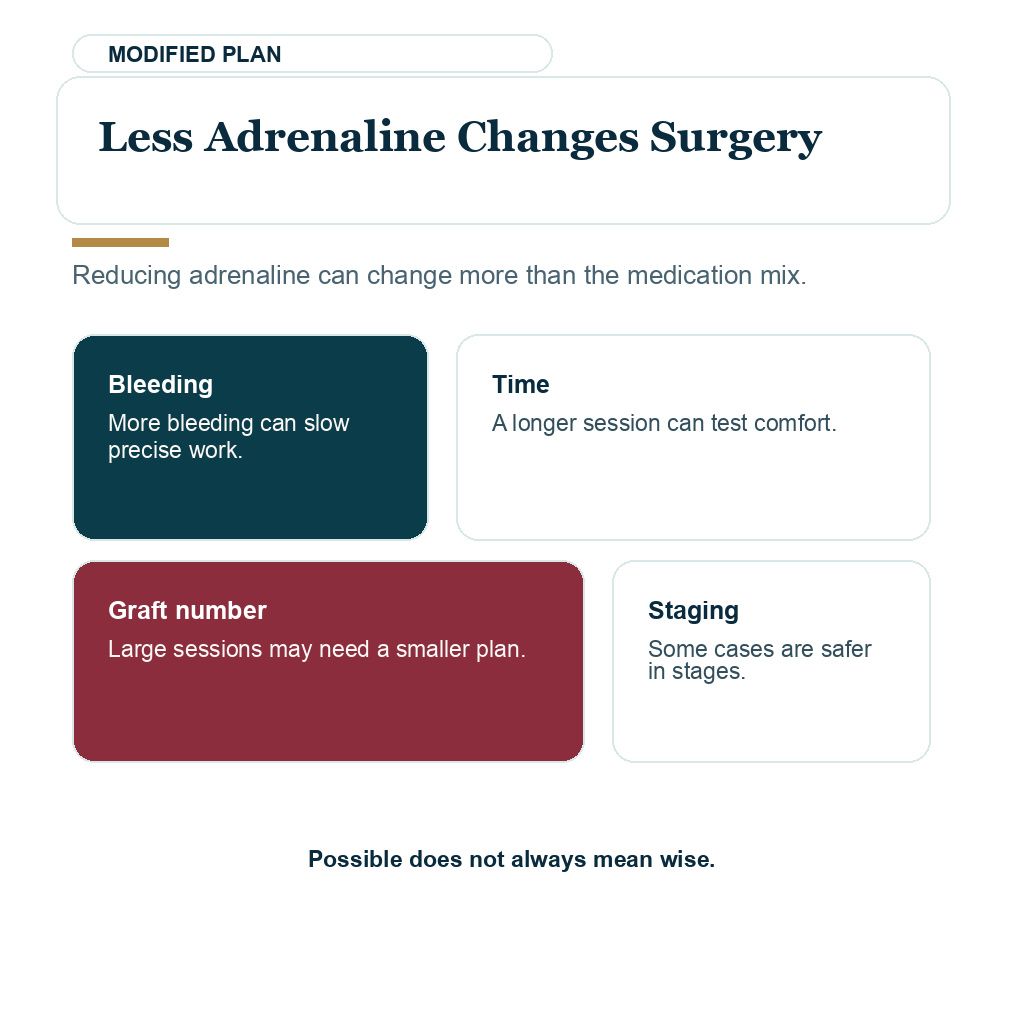
Less adrenaline and no adrenaline are not the same decision. Without adrenaline, bleeding can increase. That can make extraction, incision work, and placement harder. The clinic may need more time, more meticulous control of the field, and a smaller or more conservative session. For some patients, that may be acceptable. For others, it may weaken the safety or quality of the operation.
Possible does not always mean wise. A procedure may be technically possible without the usual anesthetic plan, but still not wise if the patient needs a large number of grafts, has medical risk, or cannot tolerate a longer operation.
Removing adrenaline while keeping the same large session, speed, and dense plan needs a slower decision. A safer modified anesthetic plan may also mean a smaller session, more pauses, slower work, or delaying part of the restoration. Safety changes the surgical plan, not only the medication mix.
In a standard FUE hair transplant, both the donor area and recipient area need reliable anesthesia. If the plan changes because of adrenaline sensitivity, the graft number, surgical duration, and patient monitoring should be reconsidered together.
Safe clinic preparation for anesthesia
The clinic should know the patient before the first injection. That means medical history, regular medication, allergy history, previous reactions to anesthesia, blood pressure behavior, and any cardiology advice should be reviewed before the surgery day.
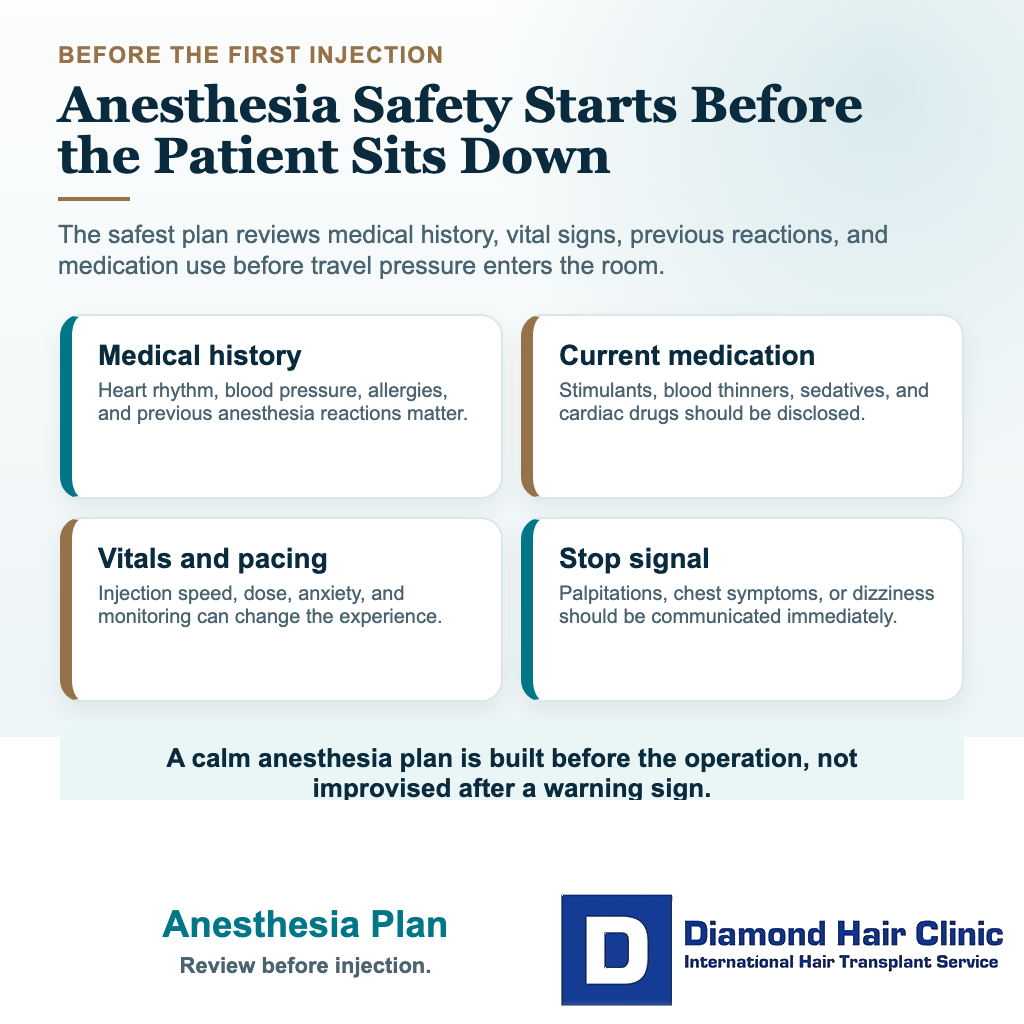
The risky situation is when the patient arrives from another country, sits in the chair, and only then mentions a heart rhythm issue. By that time, emotions, travel, payment, and pressure can make it harder to make a calm decision.
Current blood tests before hair transplant and complete medical disclosure matter here. Blood work and preoperative ECG or chest X ray review do not answer every anesthesia question, but they can reveal issues that should be reviewed before an elective operation.
Monitoring needs to be part of the plan. Blood pressure, pulse, patient comfort, anxiety, hydration, and communication all matter. A settled patient is easier to treat safely than a patient who is frightened but pretending to be fine.
Rest makes the first pulse reading easier to interpret. A sleepless night with energy drinks, nicotine, or cold medicine can make a normal anesthesia discussion harder.
Rushed surgery days make those misses more likely. When the schedule is crowded, subtle medical details are easier to miss. In a surgeon led model, the patient is not simply moved from one step to another. The plan can be slowed, adjusted, or stopped if the body is not responding in a safe way.
Use the 5 slides here to separate normal adrenaline effects from medical details that need review. Swipe sideways, use the arrows, or choose a number below the image.
What should you tell the surgeon before the operation?
Tell the surgeon about every heart diagnosis, rhythm problem, previous fainting episode, panic attack pattern, high blood pressure reading, blood thinner, stimulant medication, antidepressant use, thyroid medication, diabetes medication, allergy, and previous reaction to dental or surgical anesthesia.
Do not decide that something is irrelevant because it does not involve hair. The scalp is the surgical area, but the whole patient is in the chair. If something changes heart rate, bleeding, healing, or anxiety, I need this clear before the plan is finalized.
Follow instructions before hair transplant carefully. Alcohol, supplements, painkiller choices, missed medication, poor sleep, travel stress, and driving after a hair transplant can all make the procedure day less predictable.
If the cardiologist has given specific advice, bring it clearly. Do not translate it into your own shortened version. If your cardiologist has warned that adrenaline is risky for you, tell me exactly that. It carries much more weight than a vague comment about being sensitive.
Previous dental work or minor surgery can give useful clues. Some patients say they are allergic to anesthesia when what they actually had was a short adrenaline reaction, panic, or fainting. These are different situations, and each one changes the plan in a different way.
Anxiety can change the experience
Anxiety can make a normal sensation feel dangerous. A brief heartbeat change can feel like a crisis when the patient is lying face down, hearing instruments, feeling pressure, and waiting for pain. I take this seriously because fear can make the body react more strongly.
Some patients need slower explanation, pauses, or a smaller first injection area so they can feel that the plan is controlled. Some need medication for anxiety, but that must be decided medically, not by the patient taking a tablet on their own.
Pain fear also changes how the day feels. I explain why pain can change with graft number because a longer operation and a larger treated area can require more anesthesia points, more time, and more patience from the patient.
The patient is usually more settled when the truth is explained before surgery. A short difficult moment is easier to tolerate when it has been described clearly. It becomes harder when the clinic pretends everything will be effortless and the first sensation surprises the patient.
Anesthesia promises that need caution
Be careful with a clinic that says the procedure is completely painless, medically minor, suitable for everyone, or that no doctor needs to discuss anesthesia with the patient. That is not how responsible surgery works.
A clinic that focuses only on graft number and price is also missing the medical side of the operation. The person planning anesthesia, recipient area incisions, donor extraction, and complication response matters more than a package description. Patients should know who performs the critical parts of surgery before they commit.
If a clinic cannot explain how it handles high blood pressure, heart rhythm history, fainting, blood thinners, anxiety, or previous anesthesia reactions, that is not a small detail. These questions belong in the consultation, not in a rushed message on the morning of surgery.
Technique names can also distract patients. Sapphire FUE planning can help with careful recipient area work, but no instrument removes the need for good anesthesia judgment, patient selection, and surgical responsibility.
If palpitations happen during the procedure
Tell the team immediately. Do not stay silent because you are embarrassed. A good surgical team would rather hear about a symptom early than discover later that the patient was frightened for an hour.
If palpitations happen, I want the patient to say it immediately. The team can pause, check blood pressure and pulse, and see whether the feeling settles. A short break may be enough. If the reaction keeps building, the injection pace or the plan should change, and stopping to reassess is the safer decision. Mention the change before the next injection rather than waiting silently for the team to notice.
A patient needs to not feel that speaking up will disappoint the clinic. A quiet patient is not necessarily a safe patient. If I see a patient sweating, shaking, becoming pale, breathing rapidly, or becoming unusually silent, I expect the team to pay attention even before the patient finds the words.
Do not self diagnose during the operation. A racing heart may be anxiety, adrenaline, pain, dehydration, low blood sugar, or a real medical issue. The reason must be judged carefully, not guessed.
Surgeon involvement matters in a practical way here. The person responsible for the medical plan should be close enough to hear the patient, read the monitor, and judge whether a small reaction is settling or becoming unsafe. I do not want a patient to feel that the surgery is moving too fast to speak up.
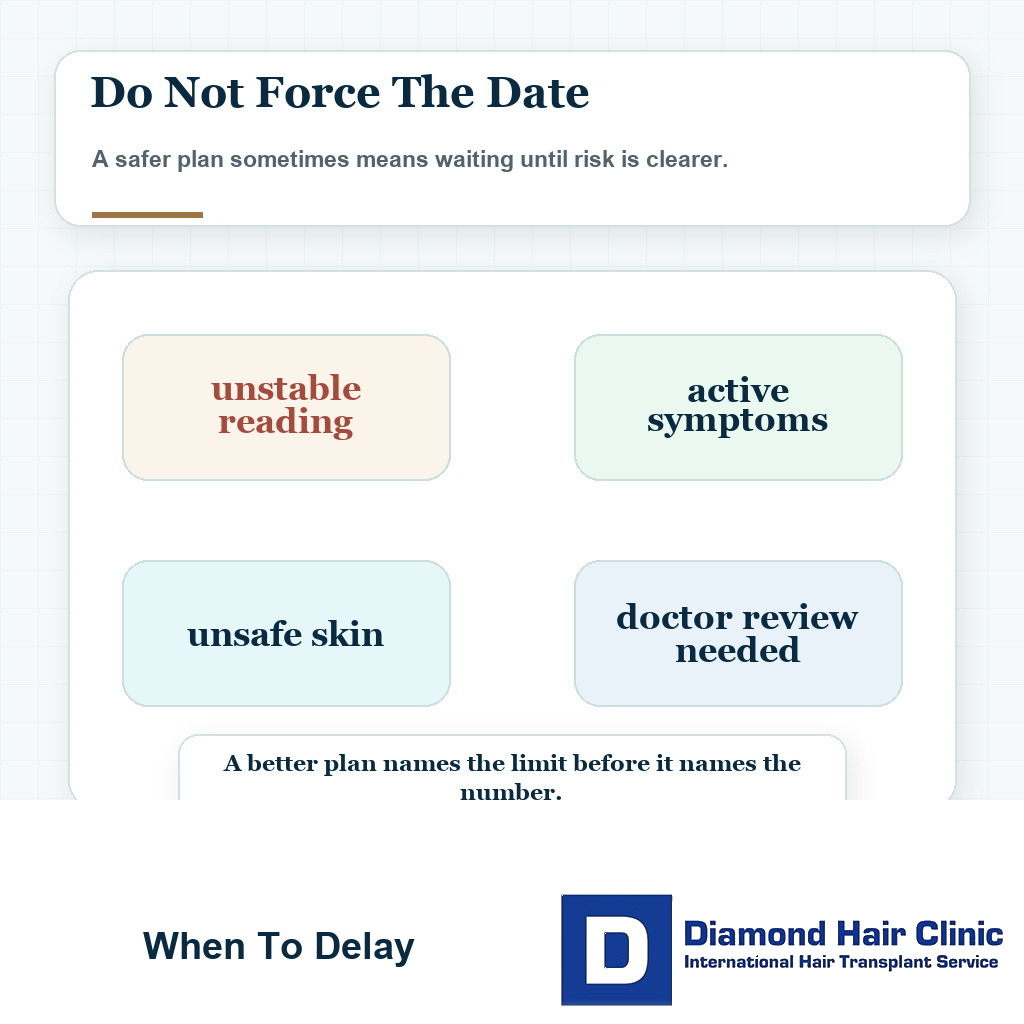
When is it wiser to delay surgery?
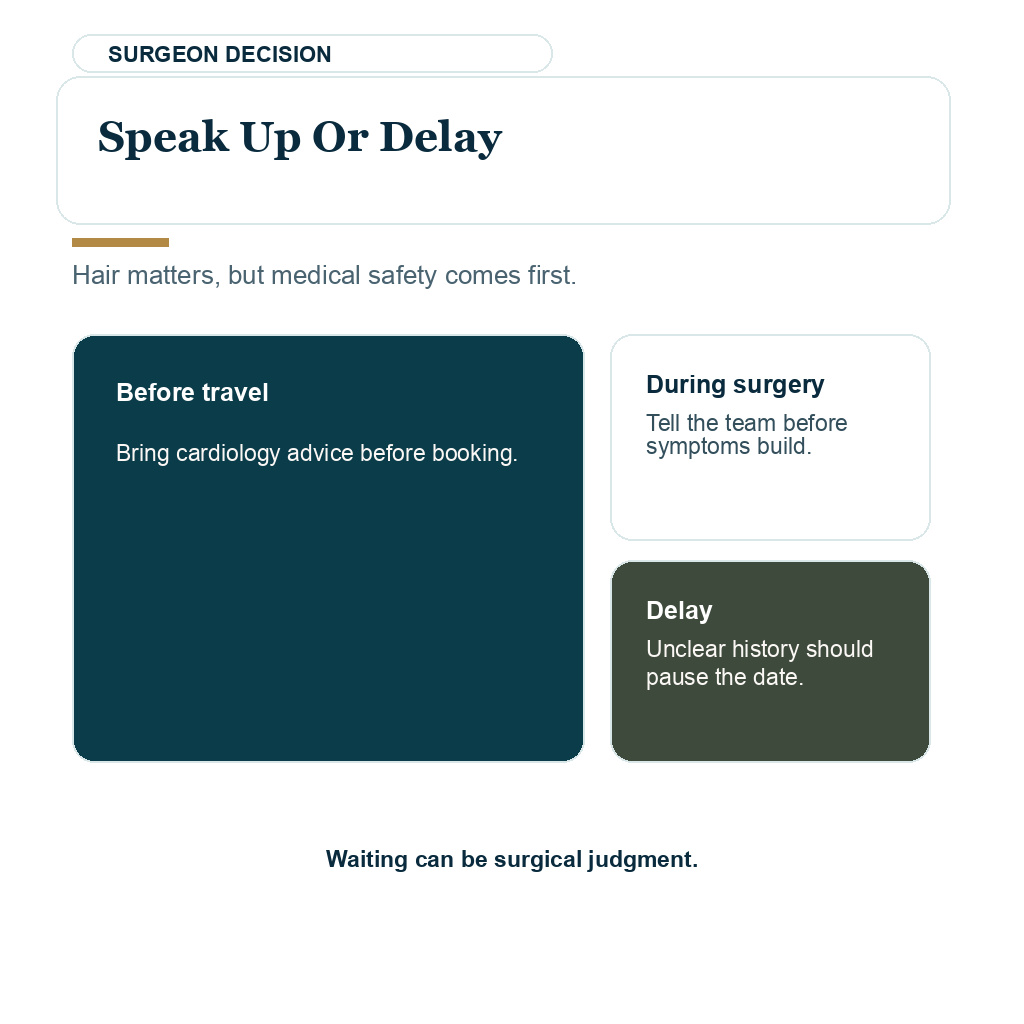
It is wiser to delay surgery when the medical history is unclear, the cardiologist has not cleared the patient, blood pressure is unstable, a heart rhythm problem is active, medication instructions conflict, or anxiety is so strong that the plan cannot be understood calmly.
It is also wiser to delay when the clinic cannot explain who will monitor the patient, how anesthesia will be given, what will happen if symptoms appear, and whether the graft number should be reduced for safety.
Before choosing a date, the patient needs to feel clear, not pushed. The questions to ask before committing to a hair transplant are relevant because the responsible decision is made before travel, payment pressure, and emotional urgency take over.
Hair matters, but medical safety comes first. If the plan is safe, the patient can proceed more calmly. If the plan is uncertain, waiting is not failure. It is surgical judgment.

Read this review excerpt
Overall, I underestimated how unpleasant the transplant would feel. But I am so grateful I chose Diamond and Dr. Mehmet and his team to guide me through the process.