


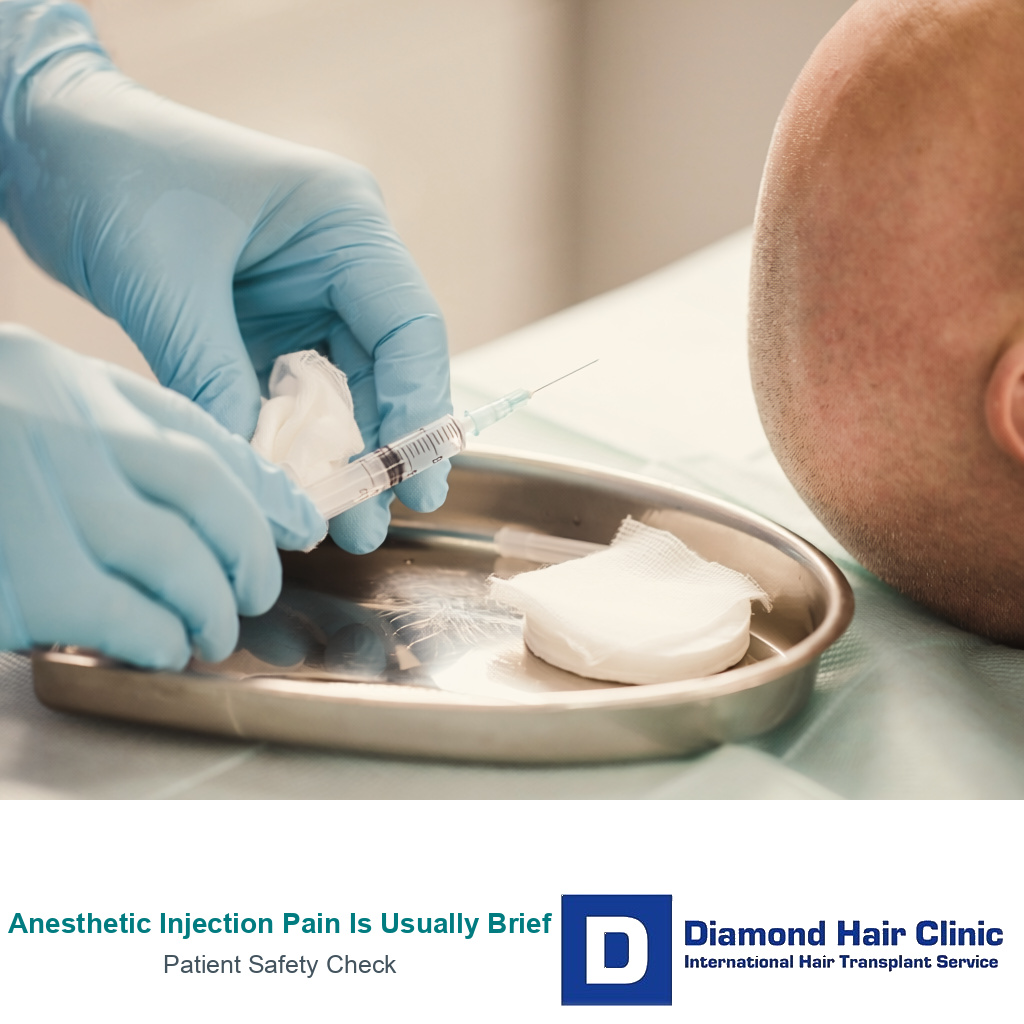
Anesthetic Injection Pain Is Usually Brief
Anesthetic injections during a hair transplant can sting or burn, and for some people they are the hardest part of the day. The important detail is that this stage should be brief. Once the scalp is properly numb, you should feel pressure, movement, vibration, and time passing, not sharp surgical pain.
I do not describe a hair transplant as painless. That would give you the wrong expectation. But the whole operation should not feel like the first injections for hours. The uncomfortable part is mainly at the start of numbing the donor area, and again when the recipient area needs anesthesia before incisions and placement.
When people ask about pain during a hair transplant, I first separate injection pain from surgical pain. Injection pain is the sting of getting the scalp numb. Surgical pain means sharp pain during extraction, incisions, or placement, and that should be reported immediately.
What do anesthetic injections feel like?
The feeling is often a sharp sting, a burning sensation, pressure, or tight spreading under the skin as the anesthetic enters the scalp. One injection point is short, but several points are needed because the donor area and recipient area both need enough numbness for surgery.
The scalp is sensitive, especially around the hairline and upper forehead. Some people compare the feeling with dental anesthesia. Others feel it more strongly because the scalp is tight, the skin is thick, or anxiety is high. Those reactions can still be within the expected range. If your dental history involved hives, swelling, breathing symptoms, or emergency care, local anesthetic allergy before hair transplant needs a separate medical review.
The key sign is direction. Pain should reduce as the anesthetic starts working. If sharp pain continues, returns, or appears later during the procedure, tell the team early. Staying silent does not help you and it does not help the surgeon.
Agree on a simple signal before the first injections. A raised hand or one clear word is safer than waiting until sharp pain makes the patient move. If needles trigger panic, tell the clinic before numbing starts so the pace can be adjusted early.
Pressure is different. During surgery, pressure can feel strange even when the area is numb. By itself, pressure does not mean the anesthesia has failed. Sharp pain is different from pressure, and it should be reported immediately instead of endured silently.
The beginning is usually the hardest part
The first injections are felt before the area is fully numb. Once the first zone begins to lose sensation, later work in that area usually becomes easier. Many patients remember the beginning as intense, then find the rest of the day more manageable than they expected.
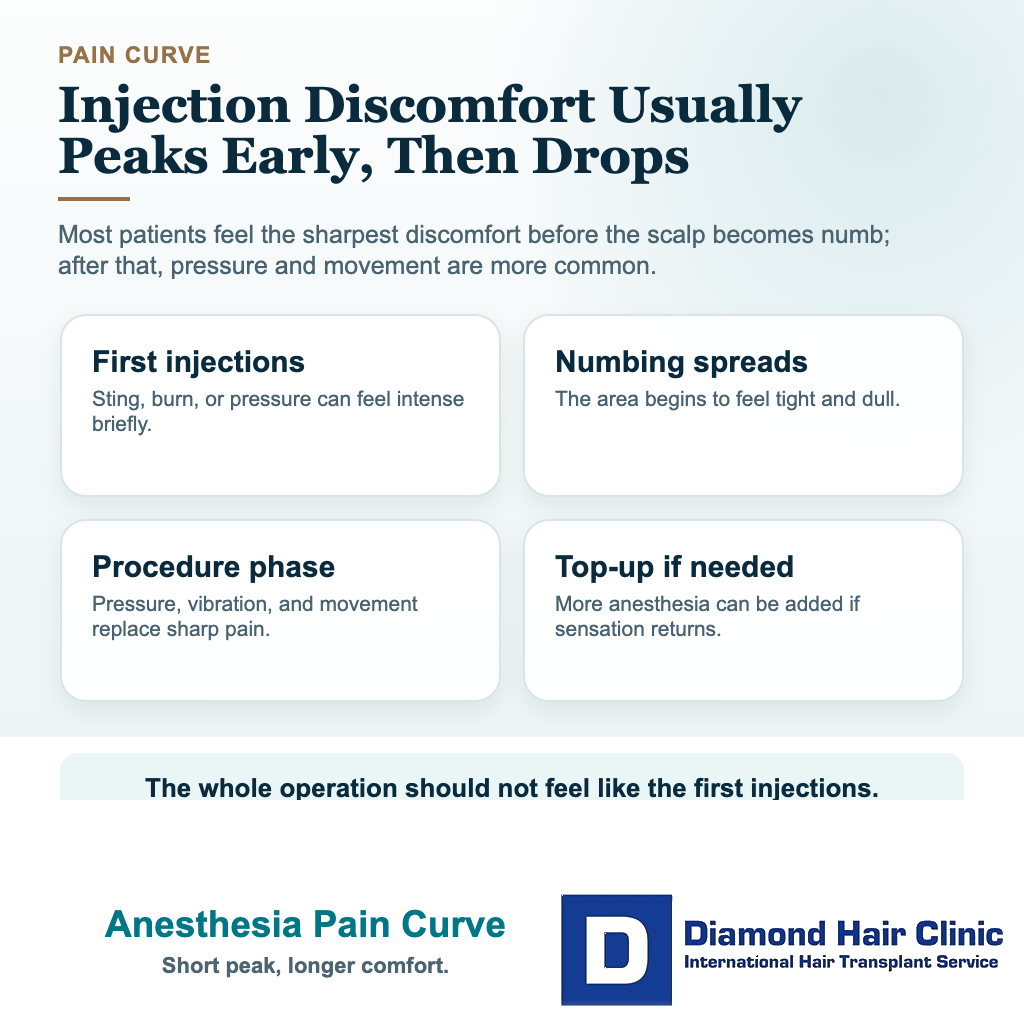
Fear can make those first minutes feel larger. If you arrive exhausted, tense, and expecting severe pain, every sensation gets more attention. If you know the sequence, the discomfort has a clear beginning and a clear purpose.
Focus on breathing, keep your body still, and say clearly if the sensation becomes too strong. The plan is not to prove toughness. The plan is to keep the day controlled.
Local anesthesia is what allows extraction and recipient area work to be performed without sharp surgical pain. You are not being asked to tolerate pain for the whole day. You are being guided through a short uncomfortable stage so the rest of the surgery can be handled safely.
Anxiety changes pain perception
When the body is tense, the heart rate rises, muscles tighten, and attention narrows onto every sensation. The same injection can feel more painful when you are frightened than when you understand what is happening.
Some people tremble, sweat, grip the bed, or feel embarrassed that they are reacting strongly. I do not judge this. It is a human reaction to needles, uncertainty, and surgery. For needle fear, preparation and careful local anesthesia come before treating sedation during a hair transplant as the answer.
The team should explain the sequence, pause when needed, and avoid rushing the first uncomfortable minutes. This is not only kindness. A patient who understands what is happening usually stays still, breathes better, and tells the team sooner if sharp pain appears. When body position matters more than needle sting, positioning comfort during FUE needs its own plan.
Clinics that treat anxiety as weakness make pain control harder. If fear is dismissed, the body becomes more tense and pain can feel stronger. If the team gives clear instructions and watches the patient properly, control usually returns more quickly.
Technique changes injection discomfort
The same local anesthetic can feel very different depending on how it is given. Injection speed, pressure, sequence, tissue handling, and waiting long enough for the first area to numb all matter. A rushed injection usually feels harsher than a controlled one.
For patients who fear the first numbing minutes, the important details are how the team handles pauses, top ups, and communication before the procedure starts.
Clinic model matters too. In a high volume setting, pressure to move quickly can make this stage feel mechanical. A slower approach gives the team more room to pause, check your response, and continue only when the first numbing has started to work.
This does not mean every person will feel only mild pain. Some scalps are more sensitive, and some people process pain more intensely. Good technique cannot promise zero discomfort, but it can reduce avoidable suffering.

Read this review excerpt
Overall, I underestimated how unpleasant the transplant would feel. But I am so grateful I chose Diamond and Dr. Mehmet and his team to guide me through the process.
These details are not glamorous, but they matter on the operating table. A few minutes of patience at the start can change how the rest of the day feels.
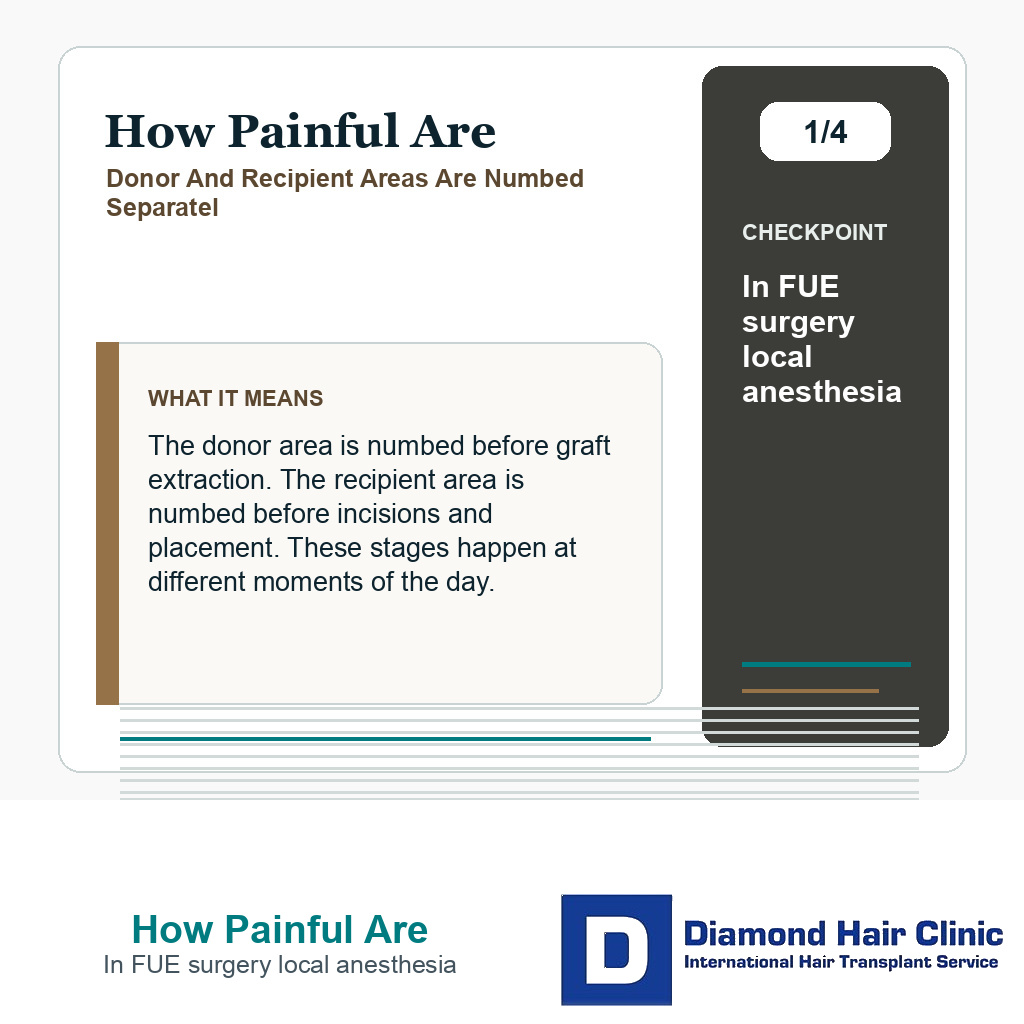
Donor and recipient areas are numbed separately
In FUE surgery, local anesthesia is usually needed in two main areas. The donor area is numbed before graft extraction. The recipient area is numbed before incisions and placement. These stages happen at different moments of the day.
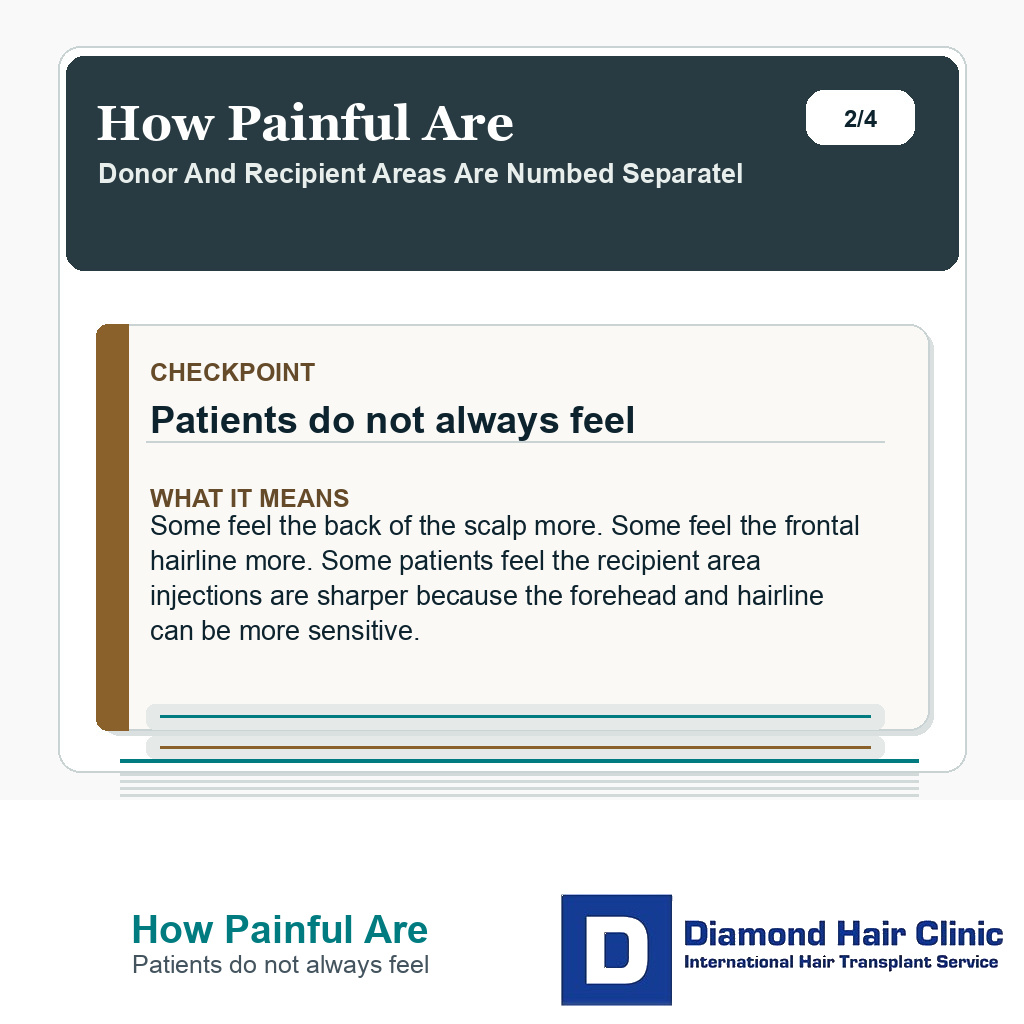
The two areas do not always feel the same. Some people feel the back of the scalp more. Some feel the frontal hairline more. Recipient area injections can feel sharper because the forehead and hairline are sensitive areas.
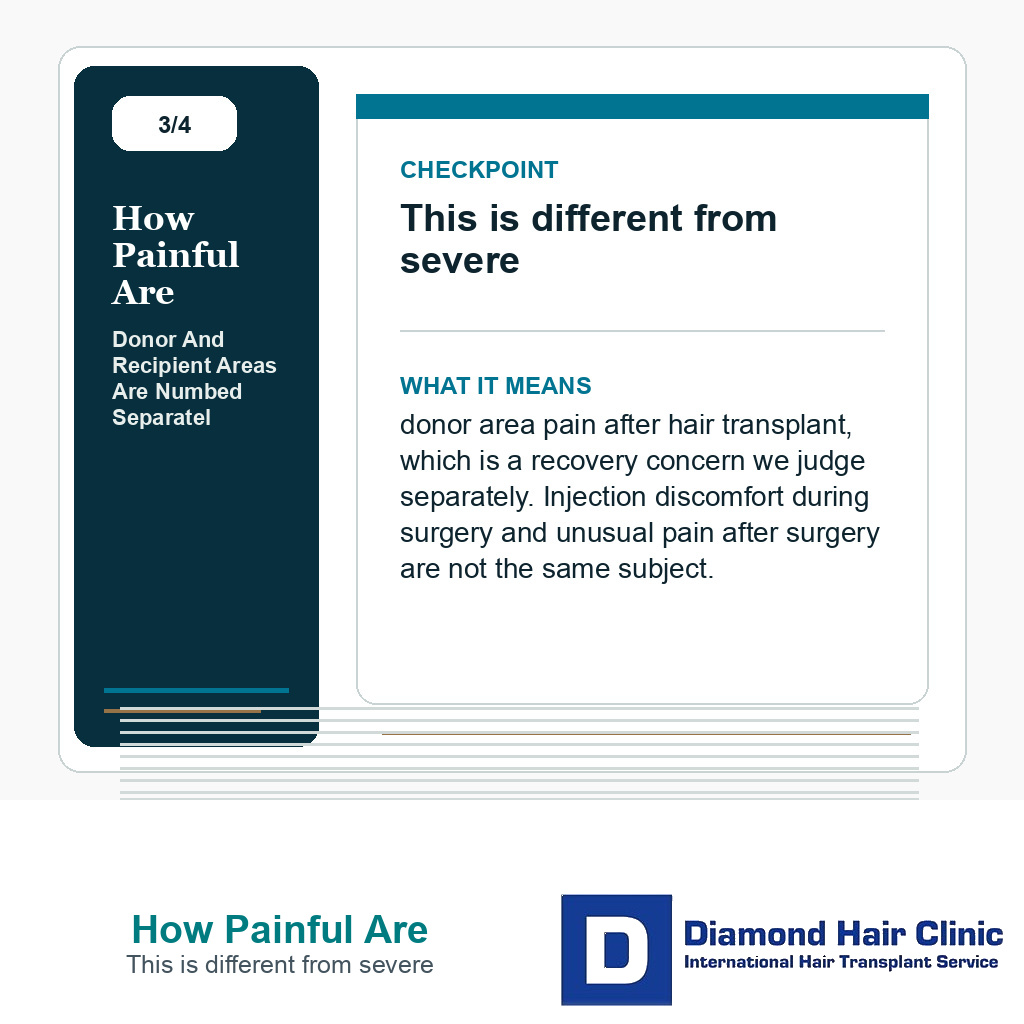
This is different from severe donor area pain after hair transplant, which is a recovery concern I judge separately. Injection discomfort during surgery and unusual pain after surgery are not the same problem.
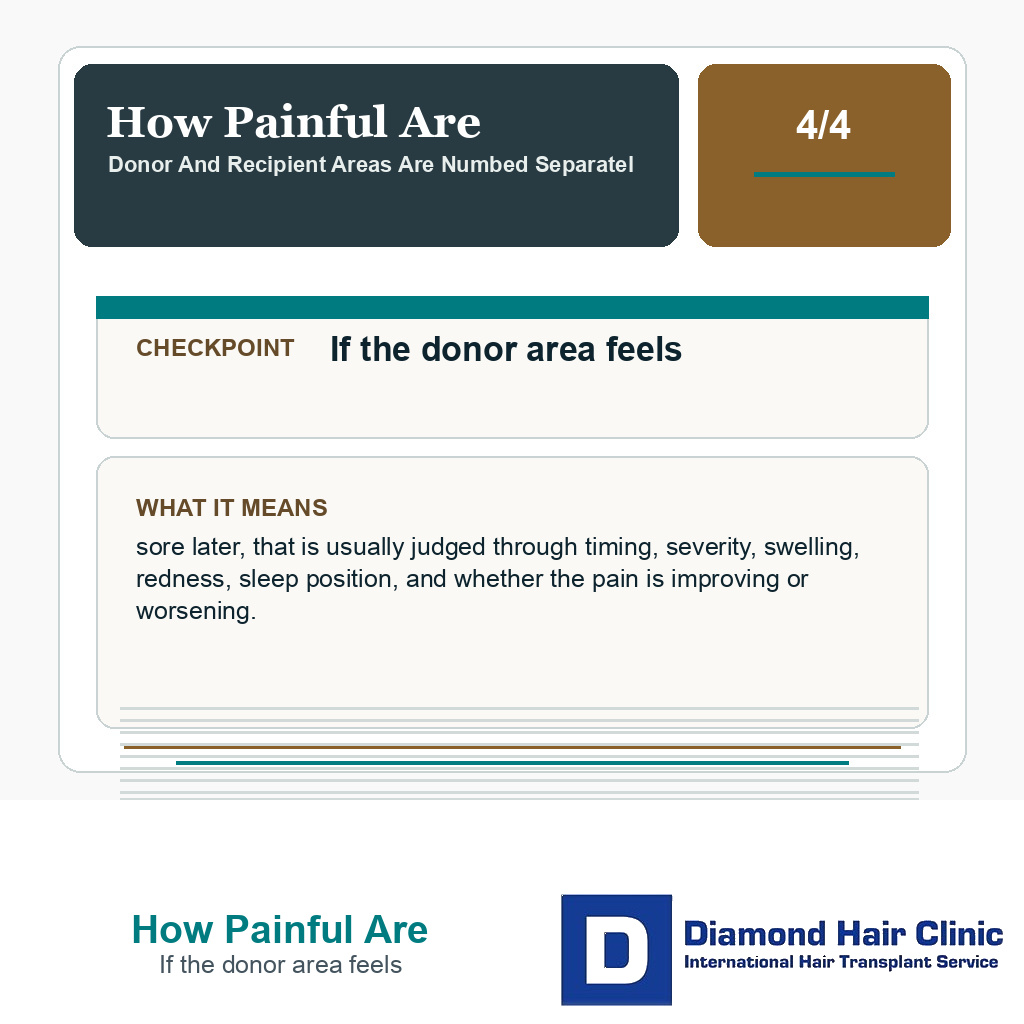
If the donor area feels sore later, I look at timing, severity, swelling, redness, sleep position, and whether the pain is improving or worsening. That should not be confused with the temporary sting of anesthesia at the start of surgery.
These 4 slides separate anesthesia timing from recovery pain. Swipe sideways, use the arrows, or choose a number below the image.
How does Diamond Hair Clinic reduce injection discomfort?
At Diamond Hair Clinic, we use a two stage anesthesia approach. Before the main local anesthesia injections, we first use a needle free device called Dermojet in the donor area and recipient area. This gives the scalp an initial numbing effect before the regular anesthesia needles are used.
I still do not promise that the patient will feel nothing. The purpose is practical. It can make the first needle sensation less shocking and the main injections easier to tolerate.
After the donor area is numb, graft extraction becomes much easier. Later, before the recipient area stage, local anesthesia is reinforced so incisions and placement can be performed comfortably.
The expectation is realistic comfort, not a magical absence of sensation. You may still be aware of touch, sound, movement, and time passing. That awareness is normal. The plan is to prevent sharp pain while the surgical work is being done.
More anesthesia can be added during surgery
During a long hair transplant, sensation can return in one area. Additional anesthesia may be needed. This is not a failure and it does not mean something is going wrong.
Tell the clinic early if you begin feeling sharp pain rather than pressure or touch. It is much easier to reinforce numbness at the right moment than to let pain build until you become tense.
Pain control needs cooperation. The surgeon and team must pay attention, and you need a simple way to say that the sensation has changed.
Reporting sharp sensation early is useful information, not a complaint. When you speak at the right moment, the day usually becomes easier for everyone.
Surgeon involvement still matters after numbing
Once the scalp is numb, the quality of the operation still depends on surgical decisions. Numbness makes you comfortable. It does not design the hairline, protect the donor area, or decide the angle and direction of the recipient area incisions.
At Diamond Hair Clinic, I personally perform the recipient area incisions because this step affects angle, direction, density, distribution, and the naturalness of the final hair transplant result. It is not a minor technical detail.
Comfort matters, but comfort alone is not the result. A good experience should include patient support and careful surgical judgment.
Needle fear needs a plan before surgery day
If you are very afraid of needles, say it before surgery day. Do not be embarrassed. Needle fear before a hair transplant is common, and it is better for the clinic to know early than to discover it when you are already on the table.
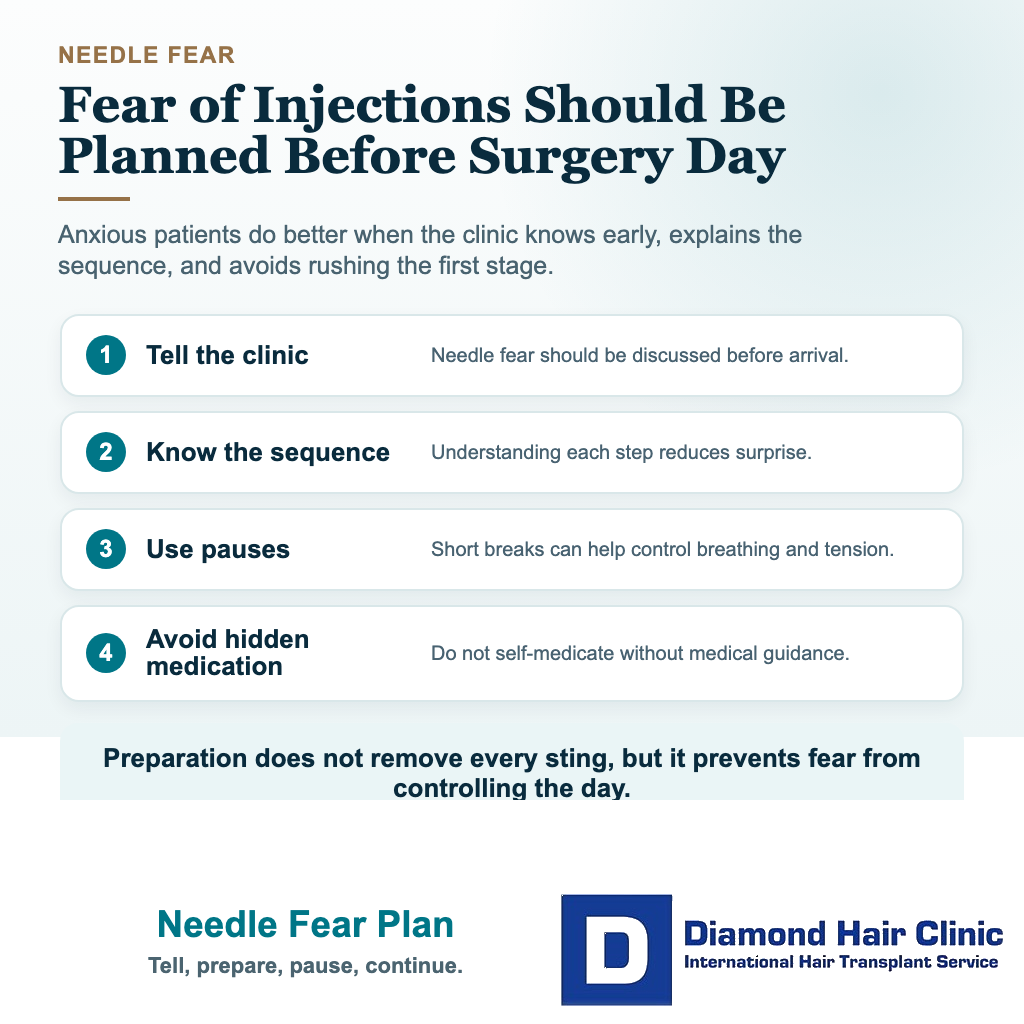
Preparation can help. Sleep well before surgery, avoid too much online panic reading, ask what the sequence will be, and remember that the hardest part is usually temporary. You do not need to imagine a completely painless day, and you also do not need to expect hours of sharp pain.
Other patients’ pain reports should not become your medicine plan. If you already take anxiety medication, antidepressants, sleep tablets, or anything to calm yourself, disclose it before surgery. A planned pause signal and careful numbing matter more than adding medicine on your own because you are worried about the injections.
Do not take sedatives, alcohol, or extra pain medicine on your own before surgery. If you need medication or special support for anxiety, that discussion must happen with the treating medical team before surgery. This includes sedatives before a hair transplant.
Needle fear can grow when you read only the most extreme stories before surgery. Ask the clinic for the actual anesthesia sequence, how long the first uncomfortable phase usually lasts, and what you should say if sensation returns. Clear information is more useful than collecting frightening stories.
What should you expect after the injections?
After local anesthesia takes effect, you may feel touch, pressure, vibration, and movement. You should not feel sharp pain in the treated area. If sharp pain appears, tell the team.
Later, after surgery, mild soreness, tightness, or tenderness can occur. That is managed through normal instructions and, when appropriate, painkillers after a hair transplant. Recovery pain should be separated from the injection pain at the start of surgery.
Follow hair transplant aftercare carefully. Good anesthesia makes surgery tolerable, but good healing still depends on how the scalp is handled after the procedure.
After surgery, do not keep pressing the scalp to test whether sensation has returned. Numbness, tightness, tenderness, and unusual surface sensations can change during the first days. If pain is severe, worsening, or associated with worrying skin changes, contact the clinic.
Choosing a clinic when pain worries you
Choose a clinic that speaks clearly about discomfort. I do not trust clinics that promise a completely painless experience, and I do not trust clinics that use fear to make surgery sound heroic. A responsible answer is balanced.
Ask how anesthesia is given, who monitors comfort, whether the team can pause, whether extra anesthesia can be added, and whether the clinic treats one patient or many patients at the same time. These questions are part of how to choose a hair transplant clinic in Turkey.
The first injections may be uncomfortable. They may even be painful for a short period. With preparation, careful technique, and clear communication, most people find the rest of the operation much easier than they expected.
The answer is not to frighten you and not to minimize your concern. I want you prepared for the uncomfortable first minutes, with careful anesthesia staging and a clear way to signal if you need a pause during the day.