


Severe Donor Area Pain Should Be Checked Promptly
Some soreness, tightness, burning, numbness, and pressure sensitivity in the donor area can be normal after FUE hair transplant. Severe donor area pain should not be ignored, especially if it is getting worse, becoming constant, disturbing sleep, or appearing with heat, spreading redness, swelling, discharge, bad smell, fever, or skin changes.
Patients should not panic over every sharp sensation after surgery. The donor area has gone through many small extractions, so early discomfort can feel stronger than the word mild suggests. But I also do not like the answer that everything is normal. A clean donor area with touch sensitivity is one situation. A hot, swollen, worsening, or draining donor area is another. Visible puffiness without severe pain still deserves a separate donor area swelling after FUE check, because swelling, heat, drainage, and photo change can shift the decision.
The safer way to answer is to judge the pain together with timing, appearance, pressure, medication response, and general symptoms. Pain after surgery needs context, not guesswork from one online comparison.
If pain worsens when you lie on the donor area, change the pressure and report the pattern. Pain that spreads, wakes you repeatedly, or comes with heat, drainage, fever, or a new bad smell should not wait for a routine photo reply.
Normal Donor Area Pain Levels
In the first days after FUE, the donor area can feel bruised, tight, tender, itchy, numb, or unusually sensitive. Some patients feel a dull ache. Others feel burning or a sharp sting when the back of the head touches a pillow. If the concern is mostly pressure or pulling, it helps to judge scalp tightness after FUE separately from severe donor pain.
This can happen even when the donor looks acceptable from the outside. Skin appearance and pain intensity do not always match perfectly in the first week. The surface may look clean while the small extraction wounds and surrounding sensory nerves are still irritated.
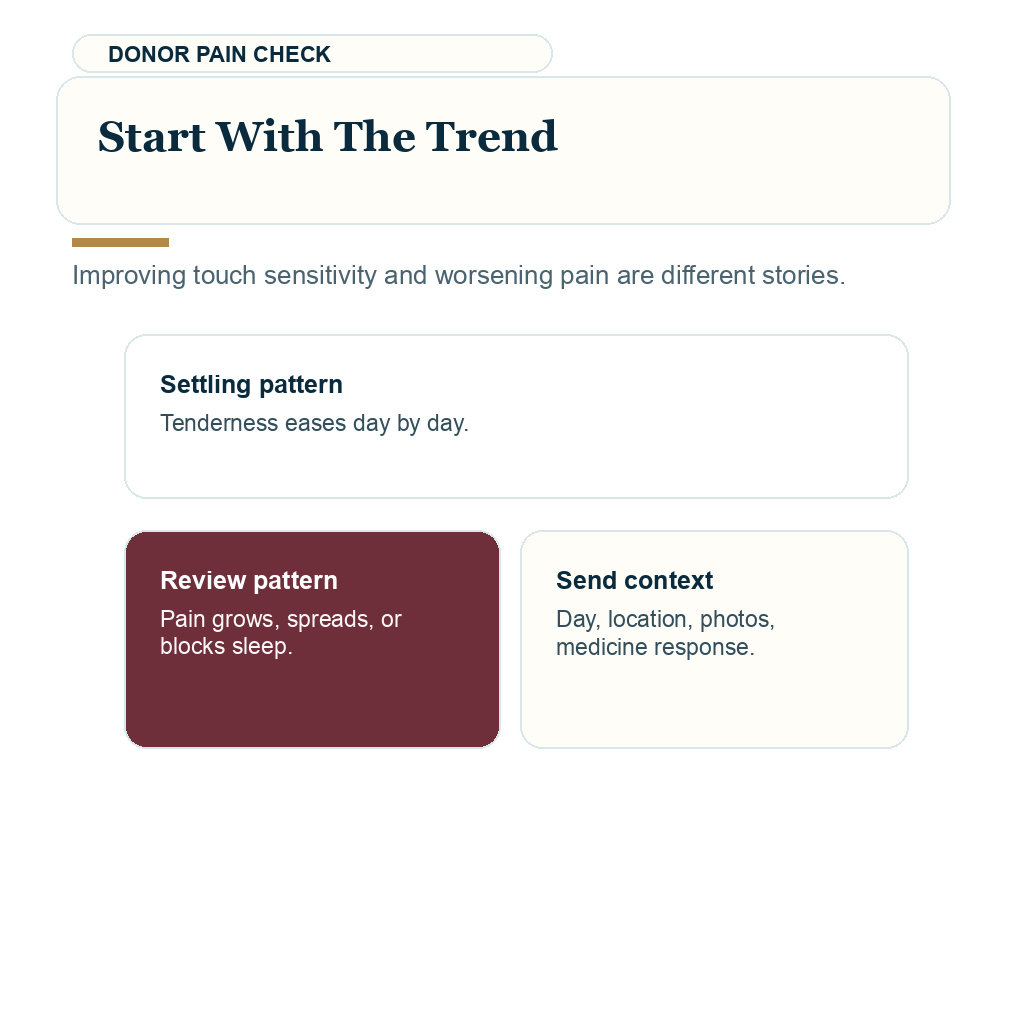
What matters is the trend. Pain that is gradually settling is more reassuring. Pain that is increasing each day, spreading, or becoming severe without contact needs closer review.
Pillow Pressure and Donor Discomfort
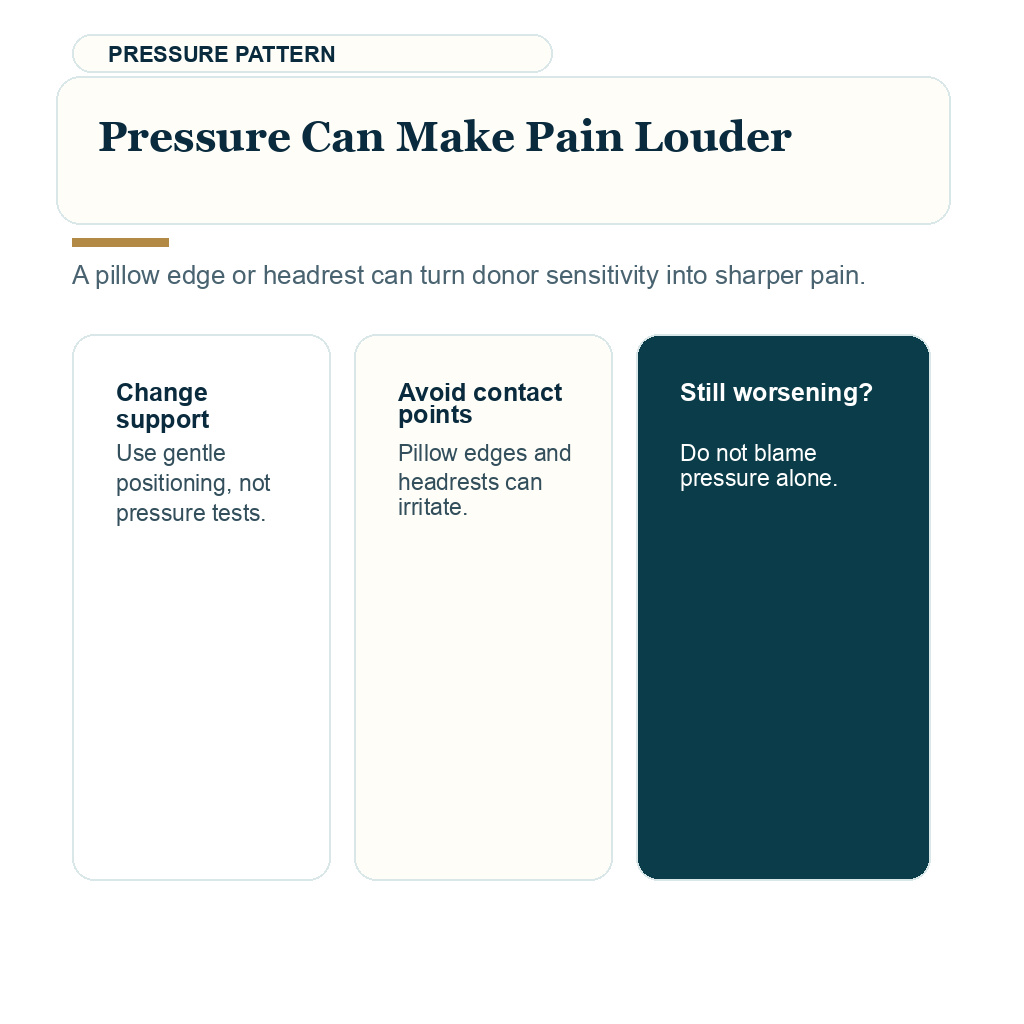
Pressure can amplify donor discomfort. A healing donor area may tolerate walking or sitting, then become sharply painful when the scalp touches a pillow edge, car headrest, sofa back, or hard cushion. The patient may feel as if the pain starts from a small point and then lingers for several minutes.
This does not by itself mean infection. It can be pressure sensitivity from healing tissue, swelling, or temporary nerve irritation. The back of the scalp is not one flat painless surface after FUE. It is a surgical field with many small extraction points.
Sleep position can therefore become a real problem. How to sleep after a hair transplant explains why elevation and avoiding pressure are important during early recovery.
Temporary Nerve Sensitivity
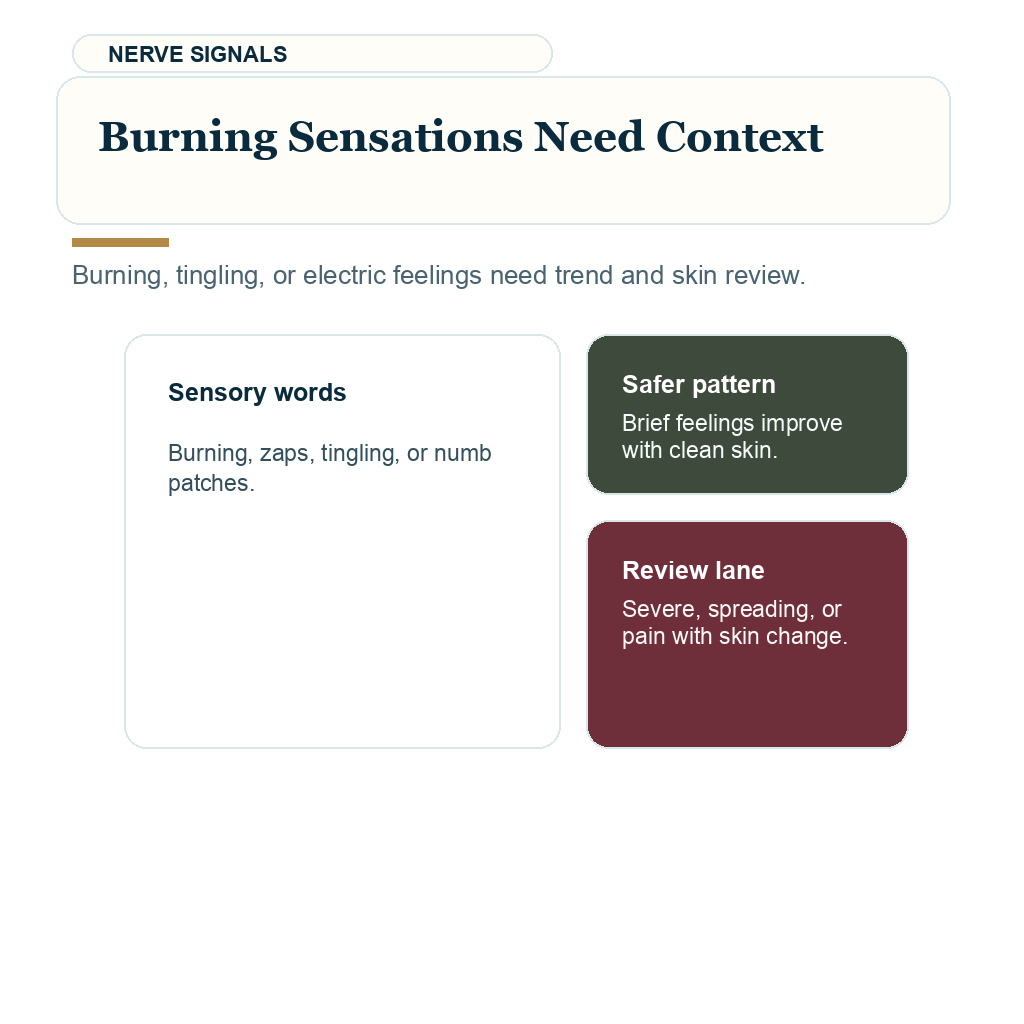
Temporary sensory irritation can feel different from ordinary soreness. Patients may describe burning, tingling, electric shocks, stinging, pinching, crawling sensations, numb patches, or discomfort that feels stronger when the area is lightly touched. When the same complaint is described as electric or shooting, electric shock sensations after FUE helps separate a brief improving zap from a worsening pain pattern.
This happens because small superficial sensory nerve branches can be irritated during the extraction and healing process. In most patients, these symptoms settle gradually. In some patients, they are strong enough to make sleep difficult for several nights.
Numbness after a hair transplant and increased sensitivity can appear together. One area may feel numb while another area feels overly sensitive. That combination can be strange, but it is not simply dangerous.
Still, do not diagnose nerve sensitivity alone if the pain is severe. The clinic needs to review the donor appearance, symptoms, and timing.
Pain That Feels Worse After a Few Days
Some patients expect the first night to be the only difficult night. Then day four, day five, or the end of the first week feels unexpectedly uncomfortable. This can happen because swelling, surface tightness, crusts, itching, and repeated pressure during sleep can build irritation over several days.
Another reason is that patients become more active. They sit against chair backs, travel, return to work, wash the scalp, or move more during sleep. The donor may then receive more contact than the patient realizes.
A short increase in sensitivity can still settle. But pain that continues to worsen or becomes associated with visible inflammation should not be brushed aside as normal recovery.
Recovery timing: Ordinary surgical soreness should move in the right direction during the first days, even if pillow pressure still causes brief stinging. Burning, tingling, or numbness can take several weeks to settle because sensory nerves recover more slowly. Published clinical reviews describe minor sensory symptoms resolving over roughly six to eight weeks, but that is not a deadline for waiting through severe pain.
At three weeks, a clean donor area with mild, improving sensitivity is different from constant pain, new swelling, drainage, redness, fever, or pain that prevents sleep. Persistent or worsening pain needs assessment rather than reassurance based only on the calendar.
Warning Signs Around Donor Area Pain
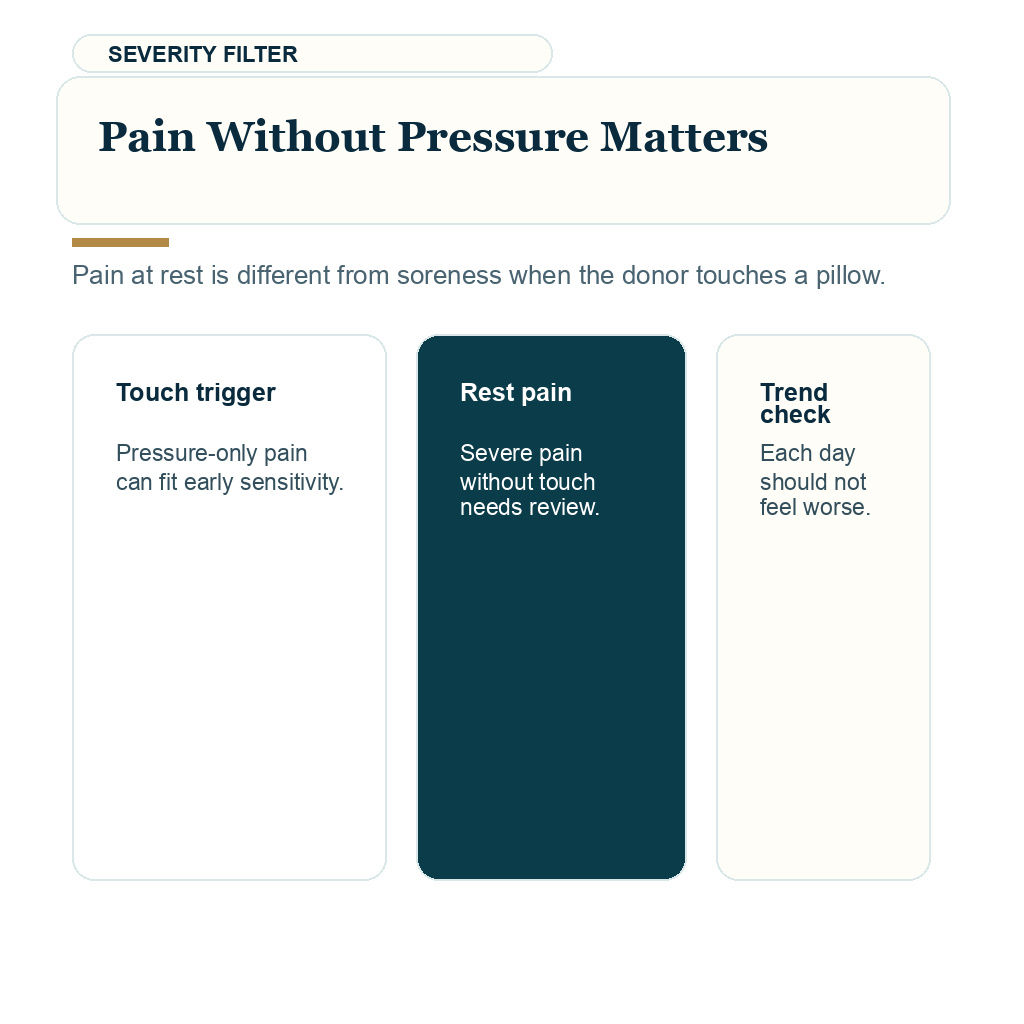
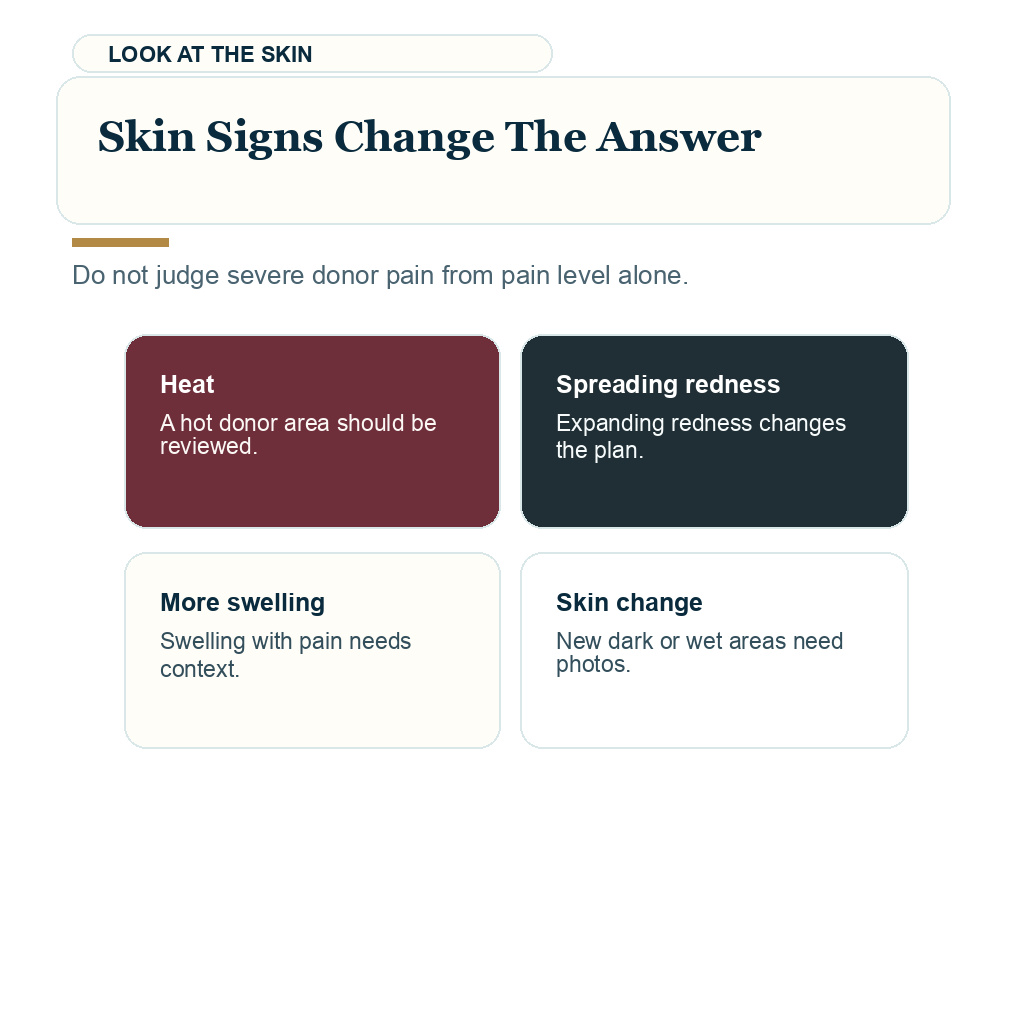
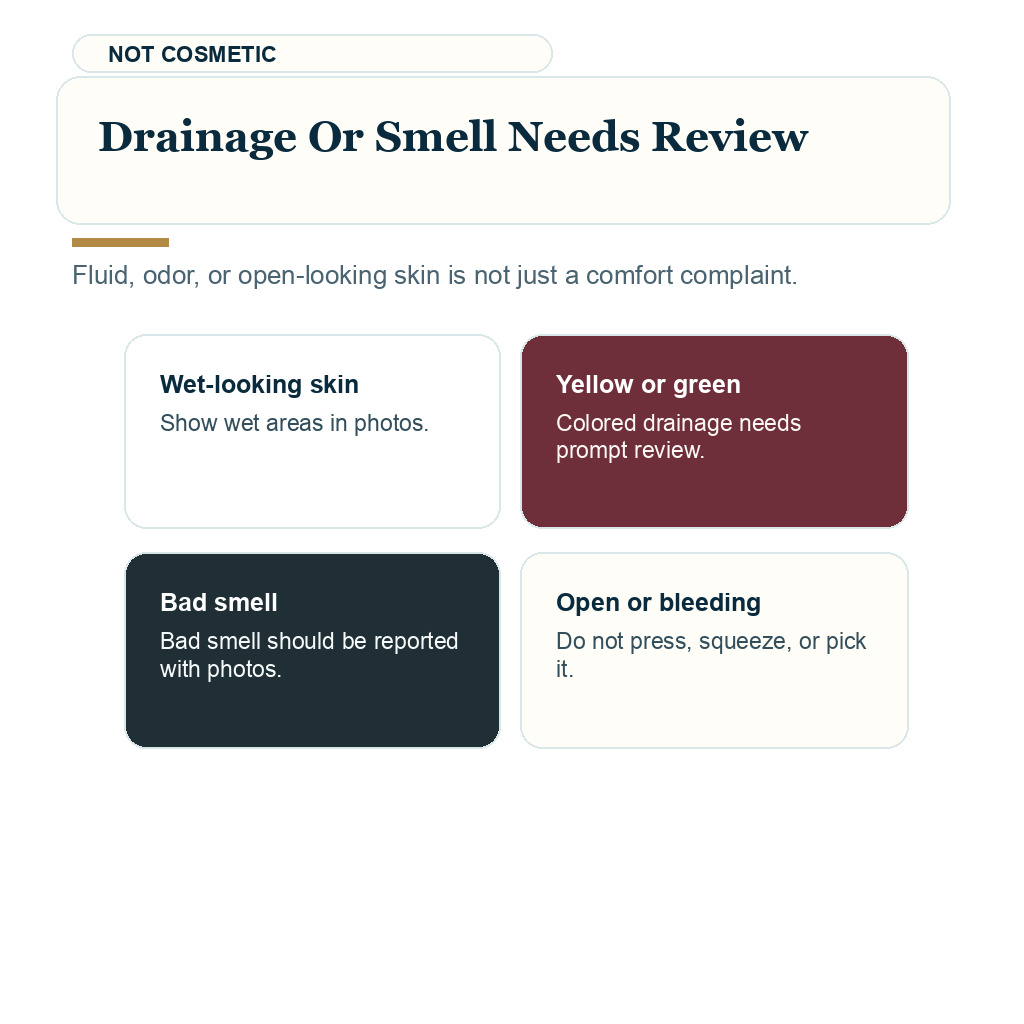
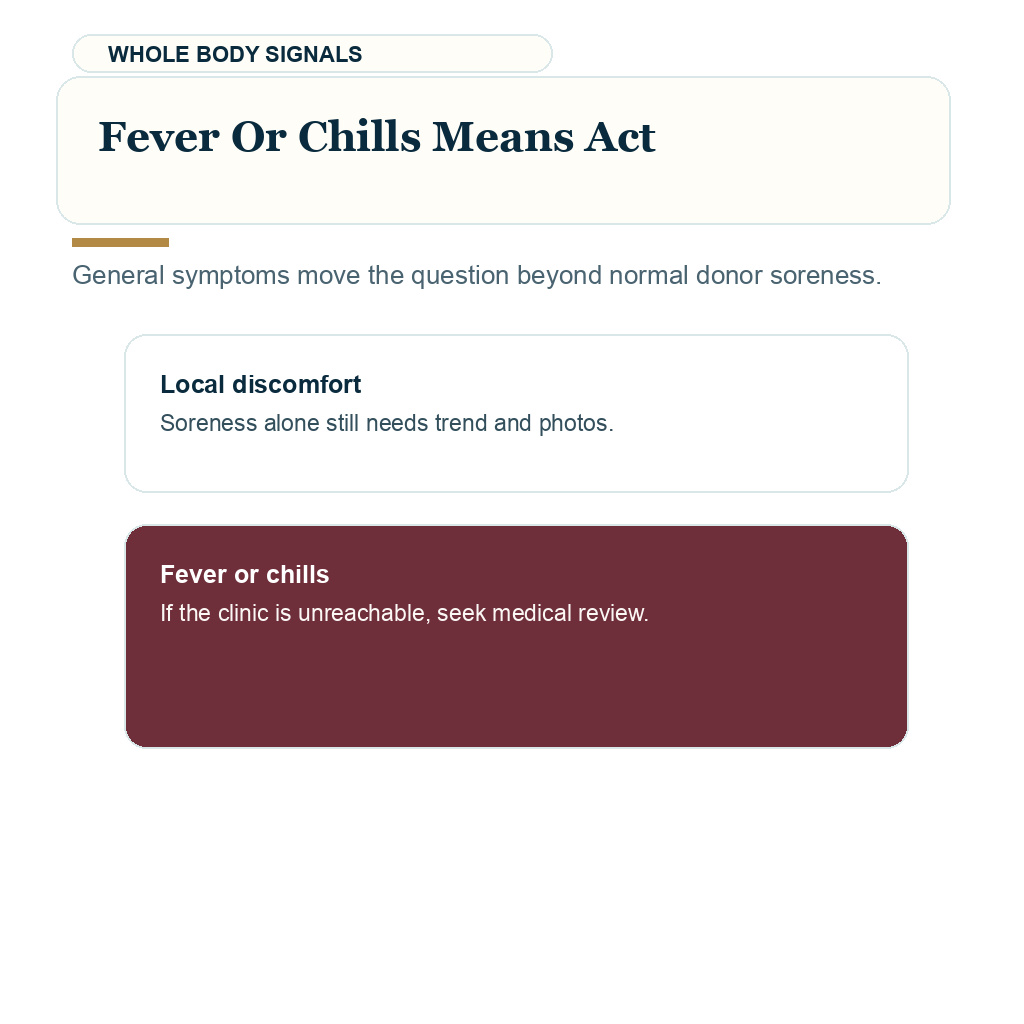
I become more concerned when pain is increasing instead of easing, when the skin is hot, when redness is spreading, when swelling is getting worse, when there is yellow or green discharge, when there is a bad smell, when the wound looks wet or open, when the patient has fever or chills, or when the pain is severe even without pressure.

These are not cosmetic worries. They can point to infection, hematoma, strong inflammation, wound irritation, or another problem that should be reviewed. The page about redness, scabs, and pimples after a hair transplant goes deeper into those healing warning signs.
Contact the clinic if pain medicine is not helping at all, if sleep becomes impossible for more than a short period, or if the donor area looks worse each day in standardized photos.
These 8 donor pain triage slides separate expected touch sensitivity from donor area pain that should be checked promptly. Swipe sideways, use an arrow one slide at a time, or choose a number below the image.
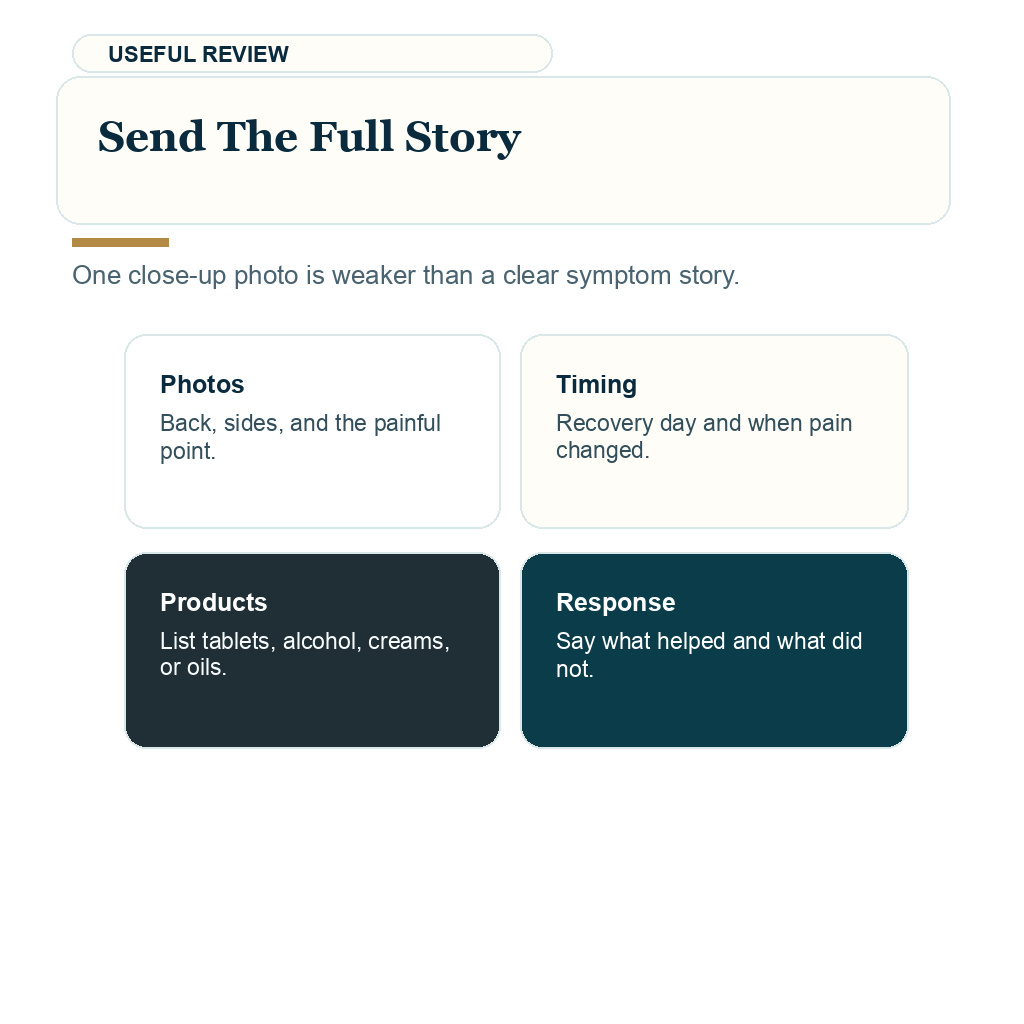
Information to Send to Your Clinic
Send clear photos from the back, both sides, and slightly angled views. Use normal light, dry hair, and enough distance to show the whole donor region. A close photo of one painful spot can help, but it should not be the only photo.
Tell the clinic which day after surgery you are on, how many grafts were extracted if you know, where the pain is strongest, whether it is constant or only triggered by touch, whether pain medicine helps, and whether there is heat, redness, swelling, discharge, bad smell, fever, or bleeding.
Good information changes the quality of the answer. A surgeon can judge a clean tender donor very differently from a donor that is worsening and inflamed.
Reducing Pressure While Sleeping
Check whether the donor area is resting directly on a hard edge. A travel pillow can help, but it can also press into the donor if it is positioned badly. Check whether the donor is touching the pillow, mattress, sofa, or headboard during the night.
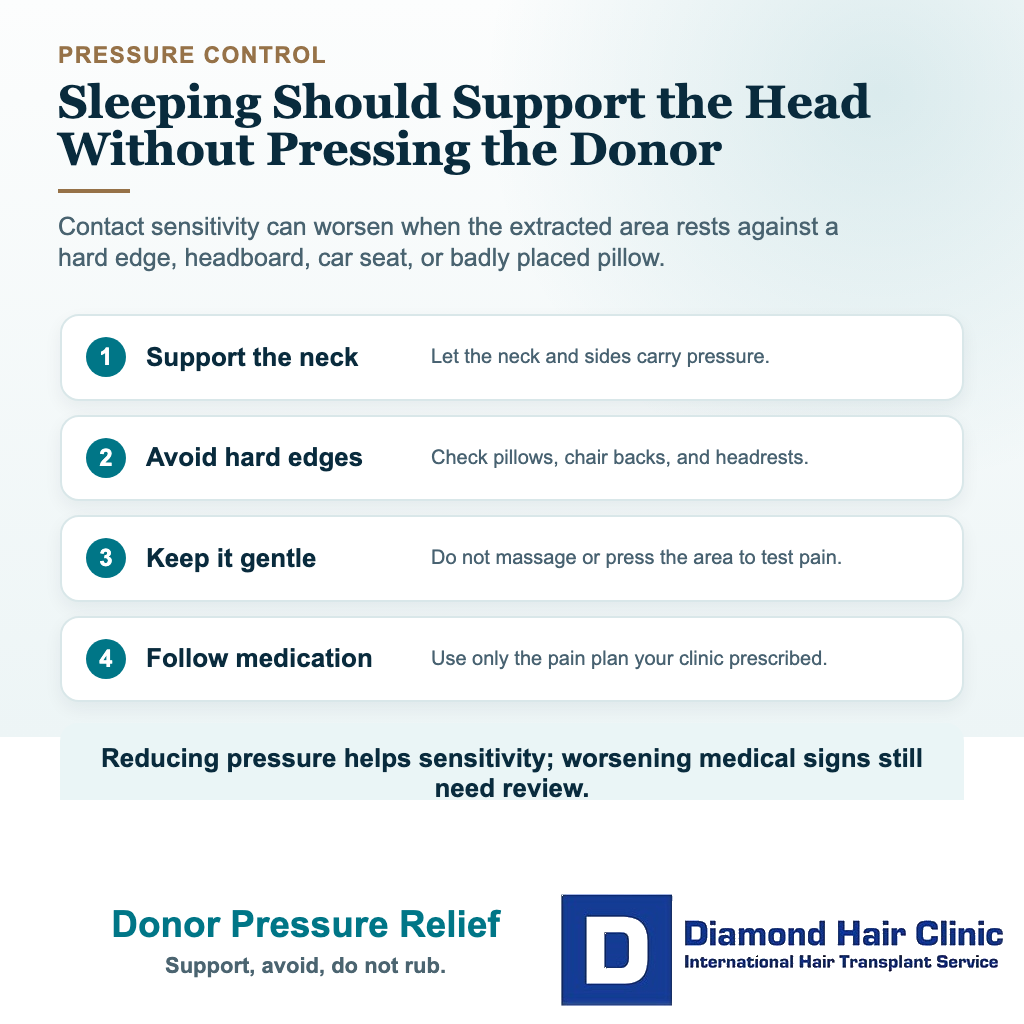
Keep the head supported without forcing the back of the scalp into pressure. Avoid hard chair backs and car headrests when possible. If you need to rest upright, make sure the support is under the neck and sides rather than directly against the extracted zone.
Do not massage, rub, or press the donor area aggressively to test whether it hurts. Testing the pain repeatedly can irritate the area and increase anxiety. The aim is to protect the scalp while it settles.
Medication and Product Changes After Surgery
If your clinic prescribed pain medicine, antibiotics, steroid tablets, or other medications after hair transplant, take them exactly as instructed unless your treating doctor changes the plan.
Do not add extra tablets, alcohol, sedatives, strong creams, oils, numbing products, or random scalp treatments on your own. These can create irritation, hide symptoms, interact with medication, or make the donor area harder to assess.
If the pain is stronger than expected, the correct step is communication with the clinic, not improvising. When pain control is inadequate, the treating medical team should decide whether the medication plan needs adjustment.
Donor Pain Versus Donor Patchiness
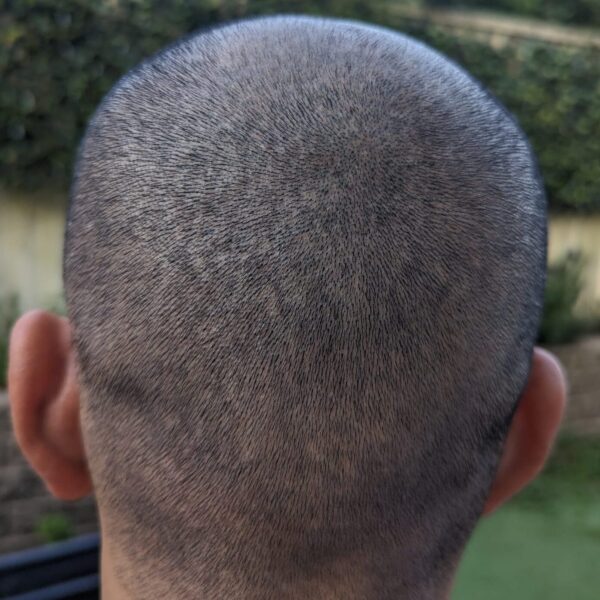
Donor pain and donor appearance are related, but they are not the same problem. A patient can have a donor area that looks patchy but is not painful. Another patient can have a clean looking donor that is very sensitive to touch.
Whether the donor area looks normal after FUE explains the cosmetic side more fully. Pain adds another layer because it can reflect inflammation, pressure, sensitivity, or a complication that may not be obvious in one photograph.
I ask about both the image and the symptom. A photo without the pain story is incomplete. A pain story without photos is also incomplete.
Large Graft Numbers and Donor Pain
A larger extraction can mean more total donor trauma, especially if the grafts were taken aggressively or from a concentrated area. That point does not mean every large case will have severe pain. It means the donor plan matters.
When a clinic pushes a very high number, ask how the donor area was measured and how extraction was distributed. The question of pain and graft count after a hair transplant is not only about the number itself. It is also about technique, punch handling, surgical pacing, and donor protection.
If pain is severe after a high graft number, I pay attention to the extraction pattern, swelling, bruising, and whether there are signs of overharvesting or skin irritation.
Warning Signs Need Prompt Medical Review
Seek prompt medical review if the donor area pain is rapidly worsening, severe without touch, associated with spreading hot redness, increasing swelling, pus, bad smell, wound opening, fever, chills, bleeding that does not settle, dark skin changes, or a general feeling of being unwell.
If your own clinic is not responding and the symptoms sound medically concerning, do not wait only because the surgery was cosmetic. A hair transplant is still surgery. Wound symptoms deserve medical attention.
If the issue is mainly contact sensitivity with a clean donor and no systemic symptoms, it may be reasonable to share an update, adjust pressure, use prescribed medication correctly, and monitor the trend. But severe worsening symptoms need faster review than routine follow up.
Clinic Response When Donor Pain Is Dismissed
The clinic should not frighten the patient, but it should also not dismiss severe donor pain with a short message. The answer should ask about timing, photos, pressure, medication response, redness, swelling, discharge, fever, and whether the pain is improving.
If a clinic cannot tell you who performed the extraction, how the donor was planned, how many grafts were taken, or what to do if symptoms worsen, that is a wider quality concern. It is one reason patients need to be careful when they choose a hair transplant clinic in Turkey.
High volume clinic models often fail patients after surgery because the operation is treated as a transaction rather than an ongoing medical responsibility. Donor pain is exactly the kind of symptom that needs direct communication, not generic reassurance.
Severe donor pain deserves a low threshold
If you have severe donor area pain after FUE, first separate touch sensitivity from worsening medical symptoms. Avoid direct pressure, follow your prescribed medication plan, continue gentle washing instructions, and share clear views with a precise description of the pain.
A clean donor area with improving pain may be temporary sensitivity. Pain that wakes you up, keeps getting stronger, or appears with heat, swelling, drainage, bad smell, fever, or feeling unwell needs prompt clinic contact with clear photos. Online comparison is not enough when the symptom is moving in the wrong direction. Online comparison is weaker than the symptom trend. Worsening donor pain belongs in a symptom review with timing, photos, and warning signs.
The donor area is not only the place grafts were taken from. It is your future hair reserve. It should be protected during surgery and taken seriously during recovery.
Read this review excerpt
He was very thorough in every little detail and I never felt pressure to do anything I wasn’t sure of.