


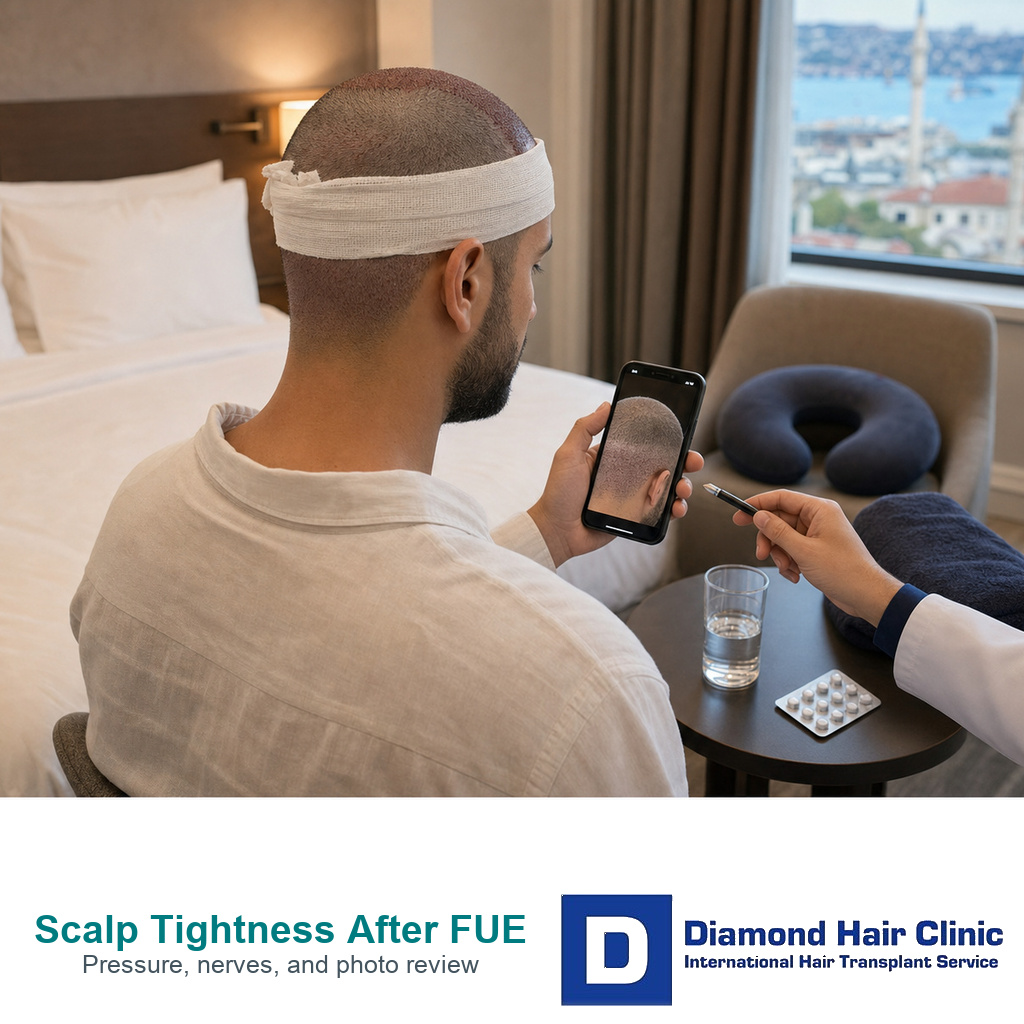
Scalp Tightness Should Be Checked When It Worsens
If your scalp feels tight, stretched, heavy, or pulled after FUE, that feeling by itself does not mean you damaged the grafts. A feeling of pressure is also not the same as real pressure on the grafts. Tightness in the donor area or back of the head does not pull grafts out of the recipient area from underneath.
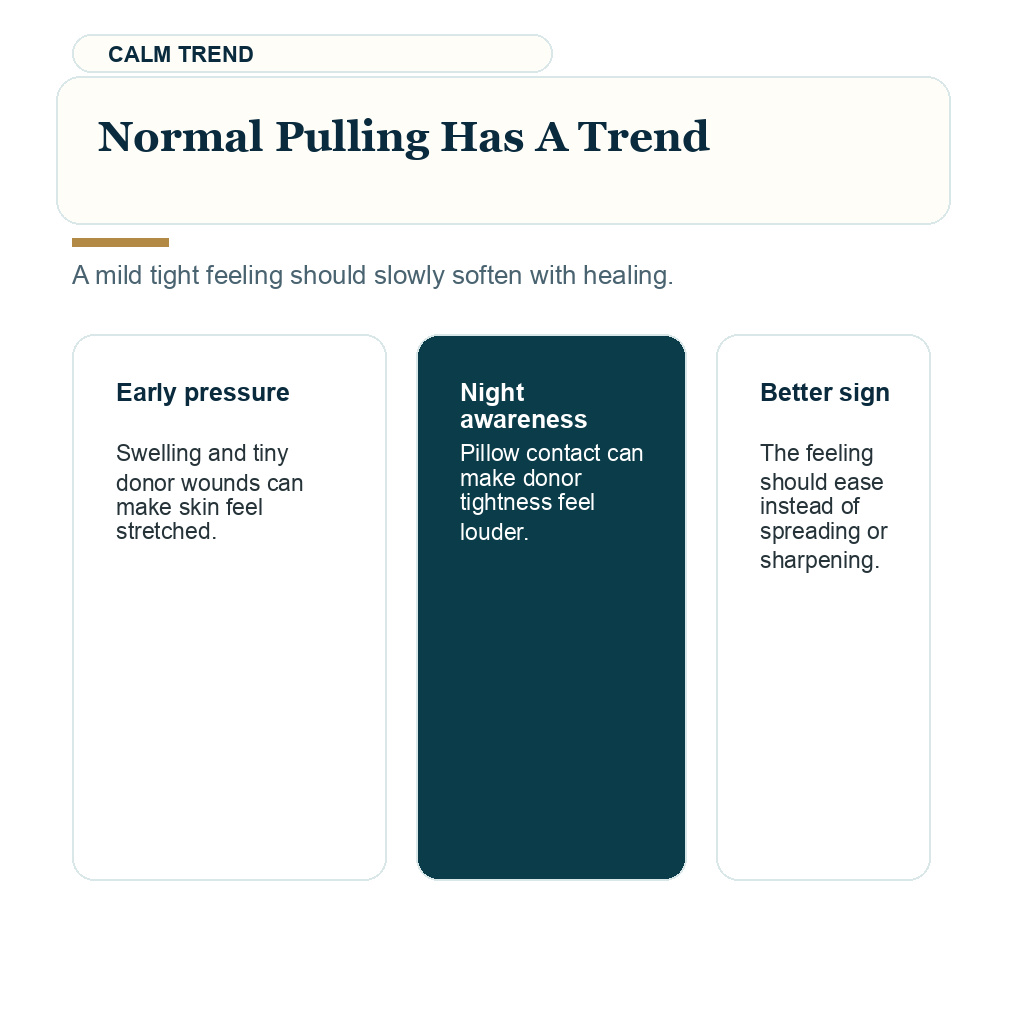
In the first days and weeks, tightness can come from swelling, local anesthetic fluid, thousands of tiny donor punctures, skin healing, and irritated small sensory nerves. It may feel stronger at night, especially when the donor area touches a pillow.
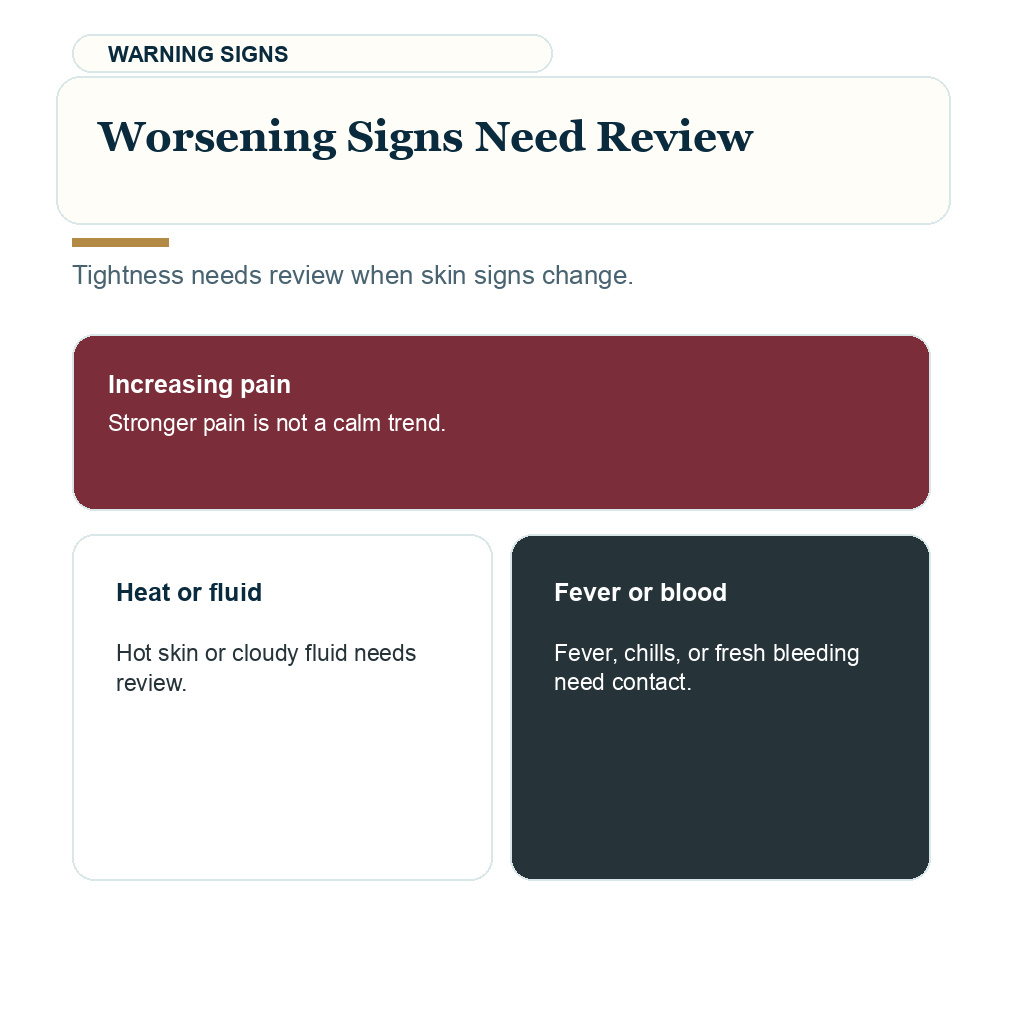
The question is what comes with it. Tightness with clean, improving skin is different from tightness with worsening pain, heat, discharge, fever, fresh bleeding, or a new open area. If the feeling is strong, limited to one side, getting worse, or connected with visible skin change, take clear photos and ask the clinic to review it.
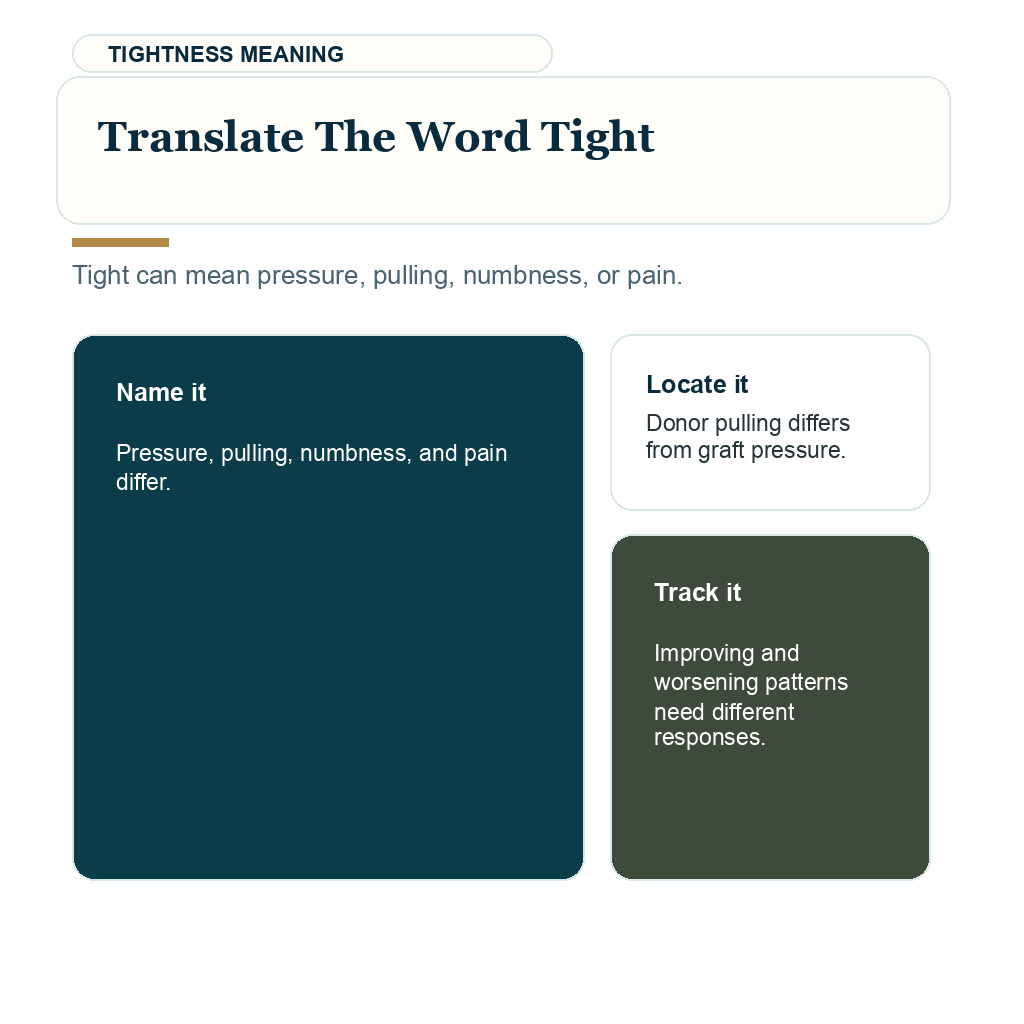
Describe the tightness by location, not only intensity. A pulling feeling across the donor, pressure at the neck, and tenderness near one spot lead to different questions when the clinic reviews photos. Mention whether it began after sleep position or pressure before treating it as graft failure. Also say whether it eases after washing and rest or keeps building during the day.
Follow tightness by change over time, without pressing the sore spot for reassurance.
Scalp tightness after FUE is not always urgent
Not by itself. A tight or pulling feeling can fit the early healing period after FUE, especially when the procedure involved a large donor area, a high graft count, or a long surgery day. The scalp has been numbed, expanded, punctured, washed, and dressed. Even when the surface looks clean, the tissue underneath may still feel heavy or stretched.
That does not mean the symptom should be ignored. I separate a healing sensation from a warning pattern. I treat a stable tight feeling that slowly improves differently from tightness that is becoming painful, hot, swollen, wet, or redder day by day.
Many people worry that tightness means the grafts are being pulled out from inside. That is not how FUE recovery works. The grafts are in the recipient area. Donor area tightness, neck pressure, or a stretched feeling at the back of the head tells me more about tissue irritation and healing than about graft survival.
The first task is to protect both areas. Follow the recovery instructions after a hair transplant, avoid rubbing, avoid pressure on the grafted area, and document the scalp when the pattern changes rather than every time the sensation returns. A short note about the exact location, the time of day, pillow contact, medication, and whether the feeling is easing gives more useful information than repeated checking with fingers.
The scalp can feel tight after swelling moves
During FUE, local anesthesia and tumescent fluid are used to make the scalp numb and easier to work on. Some of that fluid and swelling can move through the scalp and forehead during the first days. You may feel fullness, pressure, or skin stretching before the swelling visibly settles.
Extraction also creates many tiny wounds in the donor area. They are small, but there can be thousands of them. The skin has to close, the surface crusts have to lift, and the small nerve endings in the area can feel irritated while healing. A scalp may therefore look better on the outside while the feeling becomes more noticeable around days 4 to 10.
Anxiety can also amplify the symptom. If you keep pressing the donor area, checking the scalp with your fingers, or changing sleep position every few minutes, the brain keeps receiving signals from the same irritated area. The feeling can become louder even when the skin is not getting worse. One careful inspection and one useful photo are better than touching the same sore strip all evening.
The usual duration of tightness and pulling
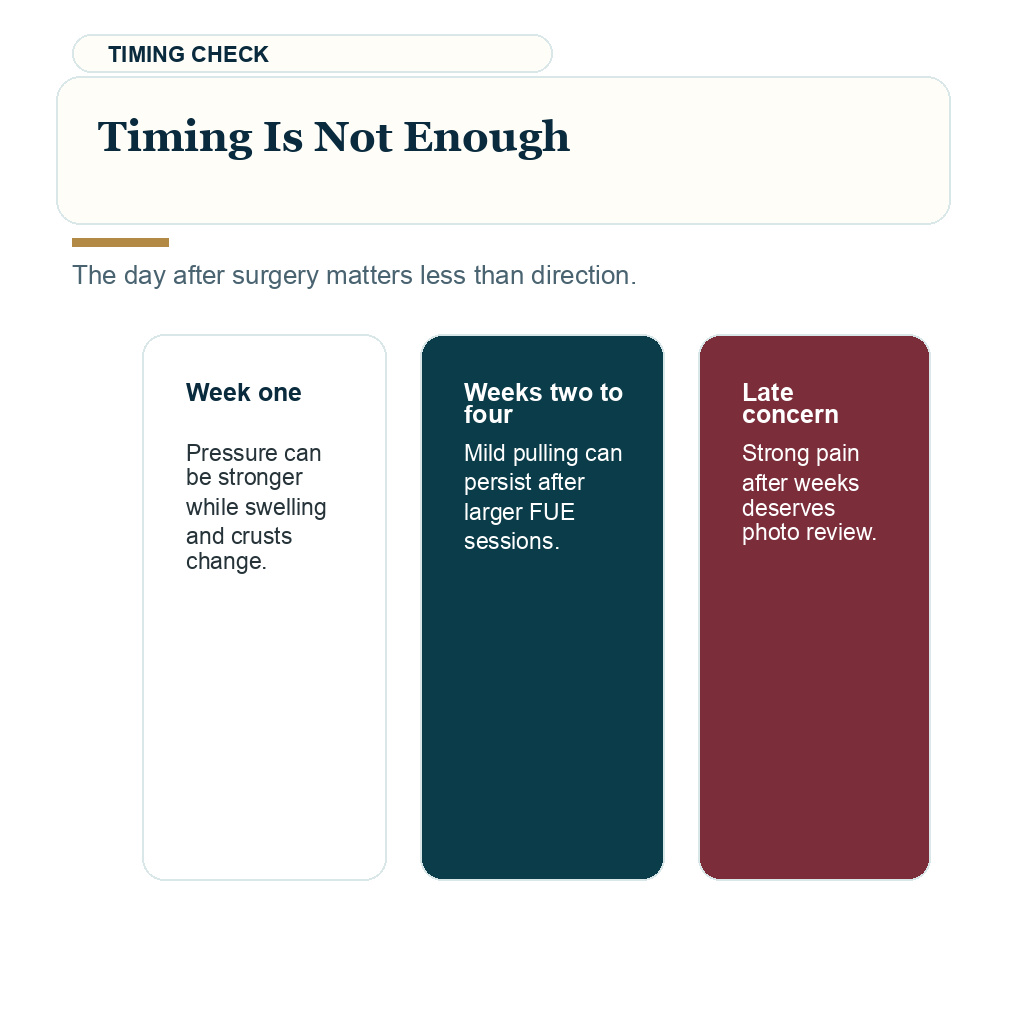
The worst tightness often appears during the first one to two weeks. Some people feel a pulling or heavy sensation for three or four weeks, especially after larger FUE sessions. Mild numbness, tingling, or altered sensation can take longer to settle because small sensory nerves recover slowly.
The direction matters more than the exact day. A tight feeling that gradually softens is less concerning than a tight feeling that becomes sharper, hotter, more swollen, or stronger on one side. I also ask whether the symptom changes after sleep, washing, medicine, or pillow adjustment. Day 12 with slow improvement is not the same situation as day 12 with new swelling, fever, discharge, or increasing pain.
If the tightness is still strong after several weeks, or if it is combined with burning, electric shocks, severe tenderness, or pain that disrupts sleep, the clinic should review the area. The answer may still be conservative recovery guidance, but the review needs to separate expected sensory recovery from infection, folliculitis, pressure irritation, or a donor area complication. When tightness comes with sharp zaps, sharp zaps after FUE should be recorded with timing, location, and skin signs.

Donor area tightness can feel worse at night
At night, the donor area touches the pillow, the neck position changes, and there are fewer distractions. A sensation that felt minor during the day can feel bigger when the head rests against fabric or a neck pillow. Some people also notice more itching after a hair transplant or prickling as scabs loosen.
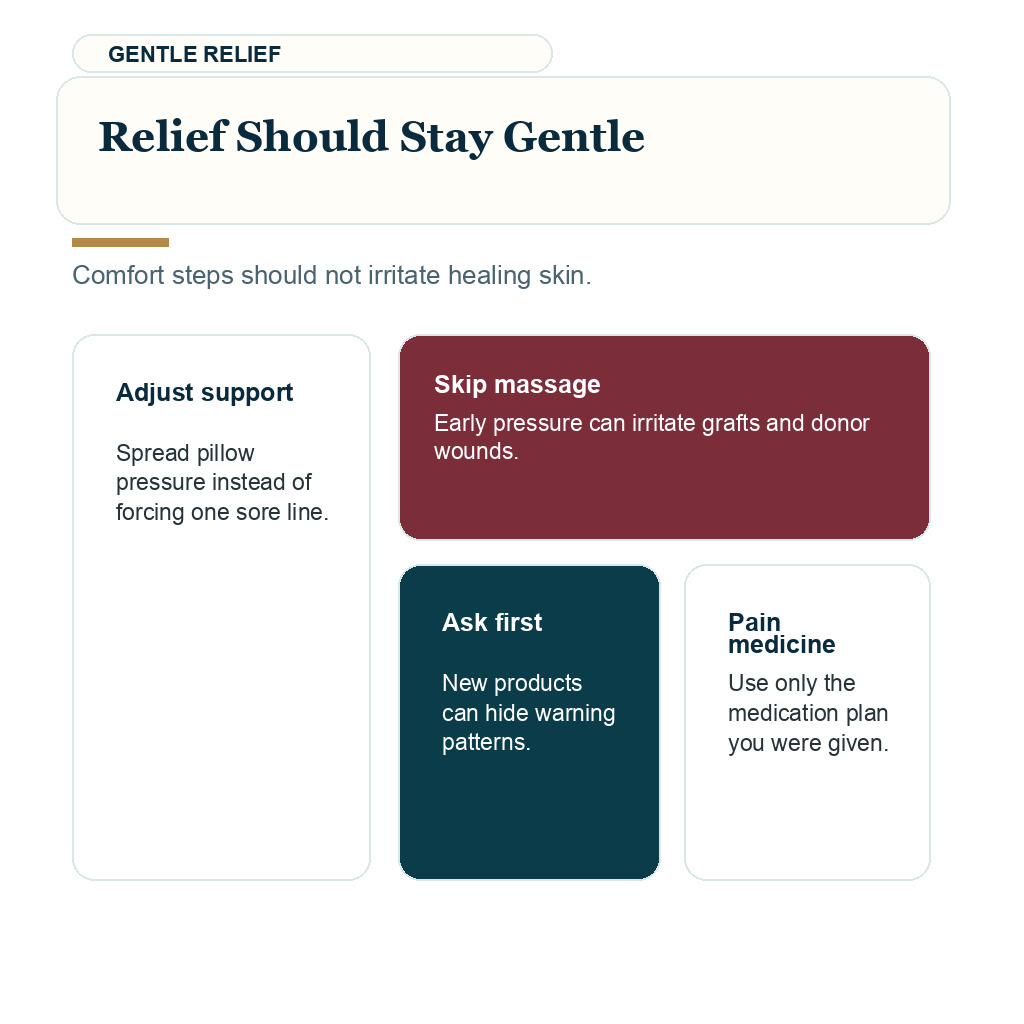
Sleep setup matters here. You are not trying to create a perfect position. You are trying to avoid direct pressure on the grafted area and to keep the donor area as comfortable as possible without rubbing it. If the neck pillow pushes directly into sore donor skin, adjust the support instead of forcing the same position for hours.
That is when sleeping after a hair transplant and when to stop using the neck pillow become practical, not just comfort questions. Pillow contact can amplify sensation without proving damage.
Does tightness mean the donor area was overharvested?
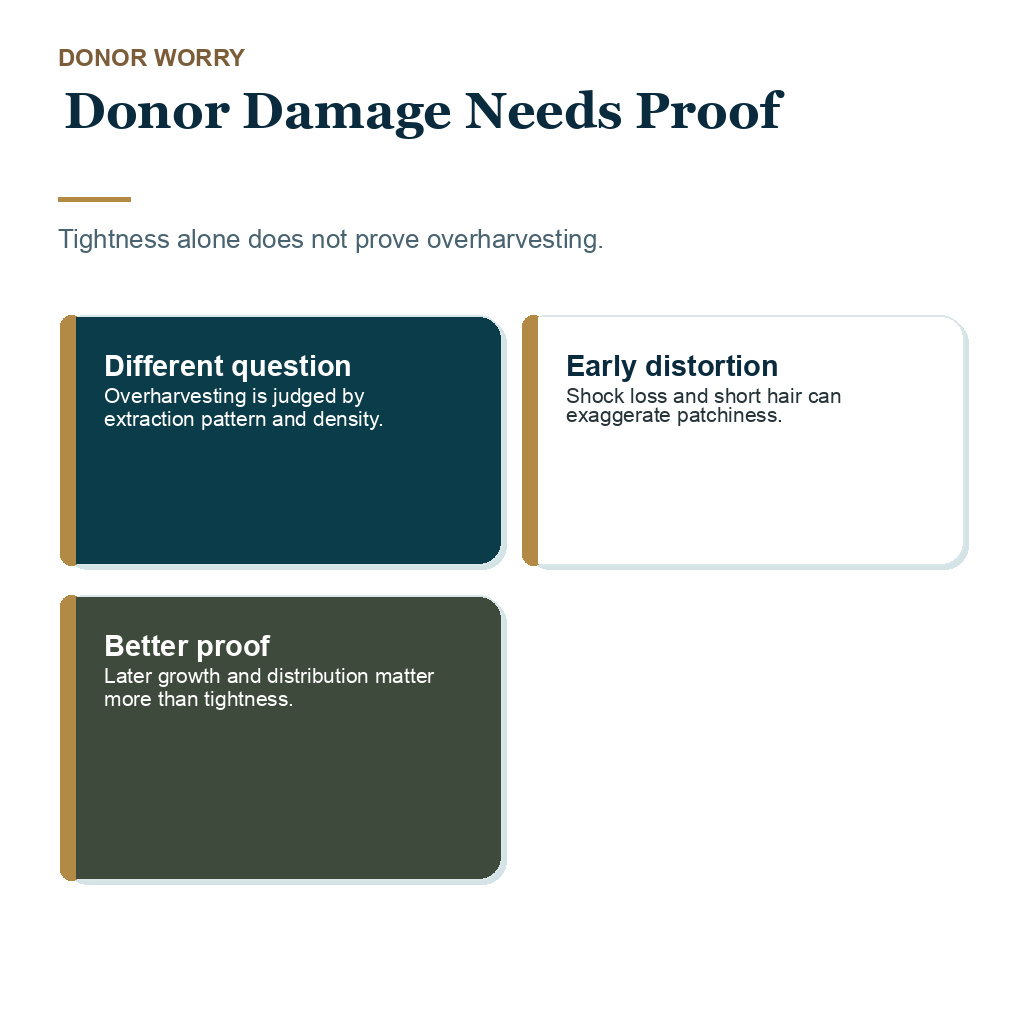
No, tightness alone does not prove overharvesting. Overharvesting is judged by extraction pattern, donor density, hair caliber, healing, visible patchiness after the early shock period, and how the donor area looks as hair grows through. A tight feeling in the first weeks is too early and too nonspecific to diagnose that problem by itself.
Still, the concern is understandable. After a very large session, a tight donor area can make you look at the back of the head under harsh light. Uneven hair length, shock loss, redness, and different clipping directions can make the donor area look patchy before it is ready to be judged.
When I review the donor area, I look at distribution. Was extraction spread evenly inside a safe zone? Was too much taken from a small visible band? Is there delayed healing, strong contrast, or a patchy pattern that persists after the early recovery period? Those details matter more than the word tight.
If your main worry is donor damage, compare this page with the articles on donor area overharvesting warning signs, patchy donor area after hair transplant, and FUE punch size and donor scarring. Tightness is a symptom. Overharvesting is a planning and extraction pattern problem.
Photo review is needed when tightness changes or worsens
Request review if tightness is worsening instead of easing, if one area is much more swollen than the rest, if the skin looks hot or shiny, if there is cloudy drainage, bad smell, fresh bleeding, fever, chills, a rapidly expanding red area, severe headache, or an open point in the donor or recipient area. Clear photos are also useful if the feeling is severe enough to stop sleep for several nights.
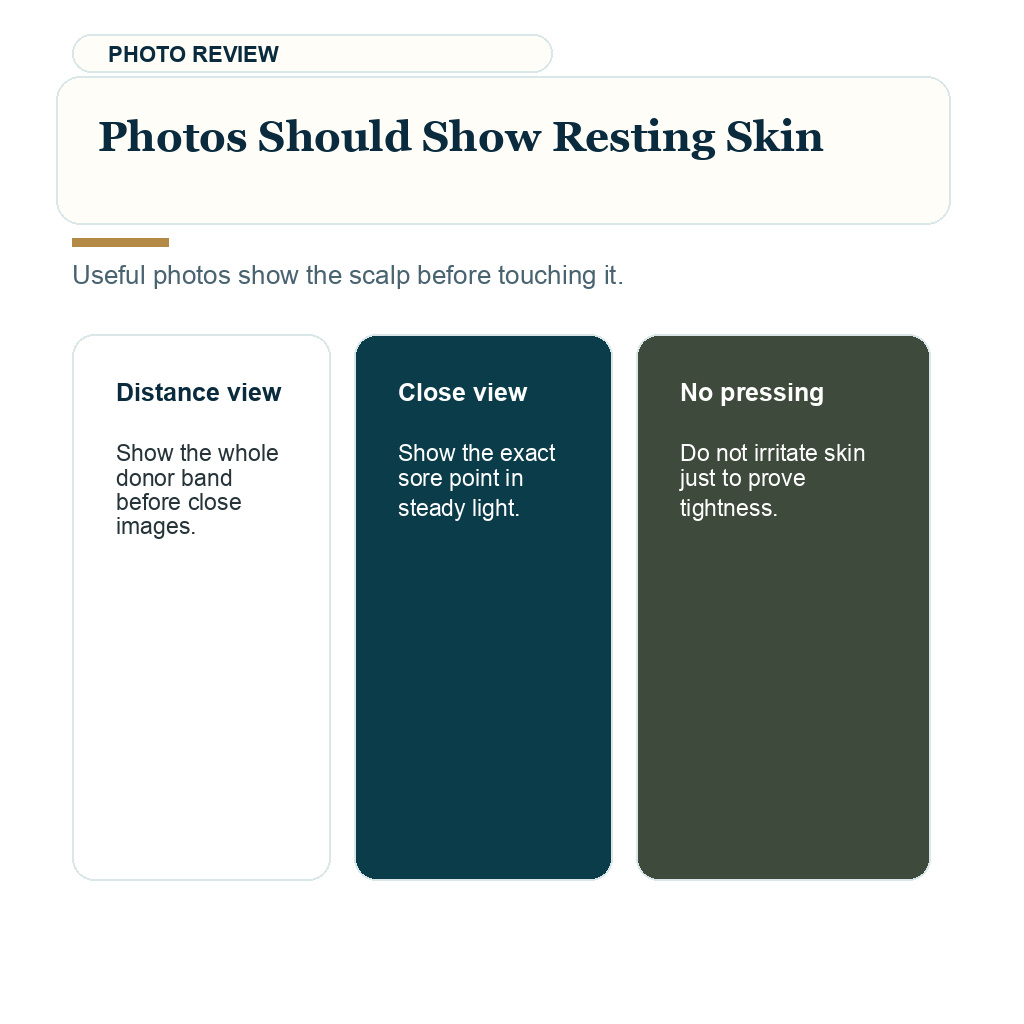
Good photos matter. Take one clear distance photo and two or three close photos in steady light, from the same angle when possible. Include the whole donor band, then the exact sore point, so the clinic can see whether the tightness is local, stronger on one side, or spread across the normal extraction zone. Do not press the area to prove the sensation. Do not scrape scabs away for the camera. The clinic needs to see the real resting skin, not a skin surface irritated by repeated checking.
The most useful message includes the surgery date, current day after surgery, graft count if known, exact location of tightness, medication taken, temperature if you feel feverish, and whether the symptom is improving or worsening. If pain wakes you from sleep, say how many nights it has happened and whether the same spot is involved each time. That gives the doctor context without turning the exchange into guesswork.

These 10 scalp tightness slides separate healing pressure, timing, donor area pull, warning signs, photos, relief steps, and the details a clinic needs. Swipe sideways, use the arrows one slide at a time, or choose a number below the image.

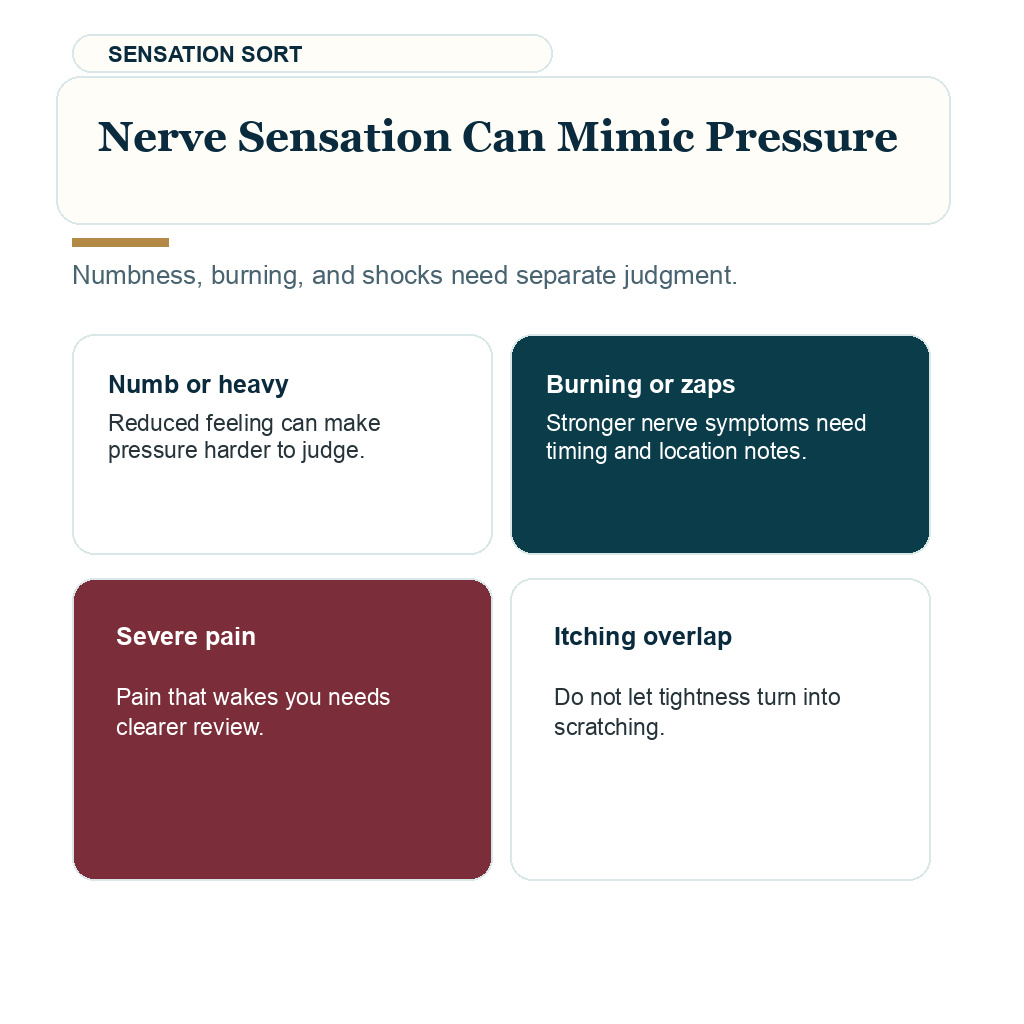

Symptoms that can feel similar to tightness
People often use several words for the same area. Tight, numb, heavy, burning, itchy, sore, prickly, or painful do not all mean the same thing. I try to separate them because each word points to a slightly different question.
Tightness often feels like pressure or stretching. Numbness means reduced feeling or altered touch. Burning or electric pain can suggest stronger nerve irritation. Severe pain, especially if it is worsening, on one side, or linked with swelling or discharge, needs more attention than a mild tight sensation.
A tight sensation is not the same problem as every other recovery symptom. Numbness after hair transplant, burning scalp during recovery, and severe donor area pain after FUE answer different clinical questions. Tightness sits between common pressure sensation and warning sign review.
Relief should not irritate the grafts
Keep the scalp clean according to the clinic protocol, sleep with sensible support, avoid direct pressure on the grafted area, and avoid repeated touching or pressing to test tenderness. If the donor area is uncomfortable, adjust the pillow setup so pressure is spread rather than focused on one sore line, and use only the products or medication your clinic has allowed.
Do not scratch the donor area with nails. Do not test the recipient area to see whether grafts are fixed. Do not use a strong massage just because the skin feels tight. Early recovery rewards gentle consistency more than improvisation.
If pain relief is needed, use the medication plan you were given or ask before adding something new. Painkillers after hair transplant can affect bleeding risk or interact with your medical history, so the medicine choice matters.
Massage, stretching, and products need clearance first
Be conservative in the first days. A tight scalp can make you want to massage, stretch the skin, apply oils, or use cooling products. Some of those steps may be allowed later, but early graft protection comes first.
Gentle washing is different from massage. A moisturizer approved by the clinic on the donor area is different from oil on the recipient area. Cooling the forehead is different from pressing ice directly onto grafts or sore donor skin. The area, timing, and pressure change the answer.
If the tightness is mild, the best response may be patience, clean washing, and better sleeping support. If the tightness is strong or linked with visible inflammation, products can hide the pattern and delay review. Oils, numbing creams, strong cooling, and unapproved products for inflammation can change what the clinic is trying to assess. Ask before adding anything that was not part of your written instructions.
Pressure questions need timing discipline. Scalp massage after hair transplant may be discussed later, but early pressure can feel relieving in one area and still irritate healing skin or threaten grafts in another.
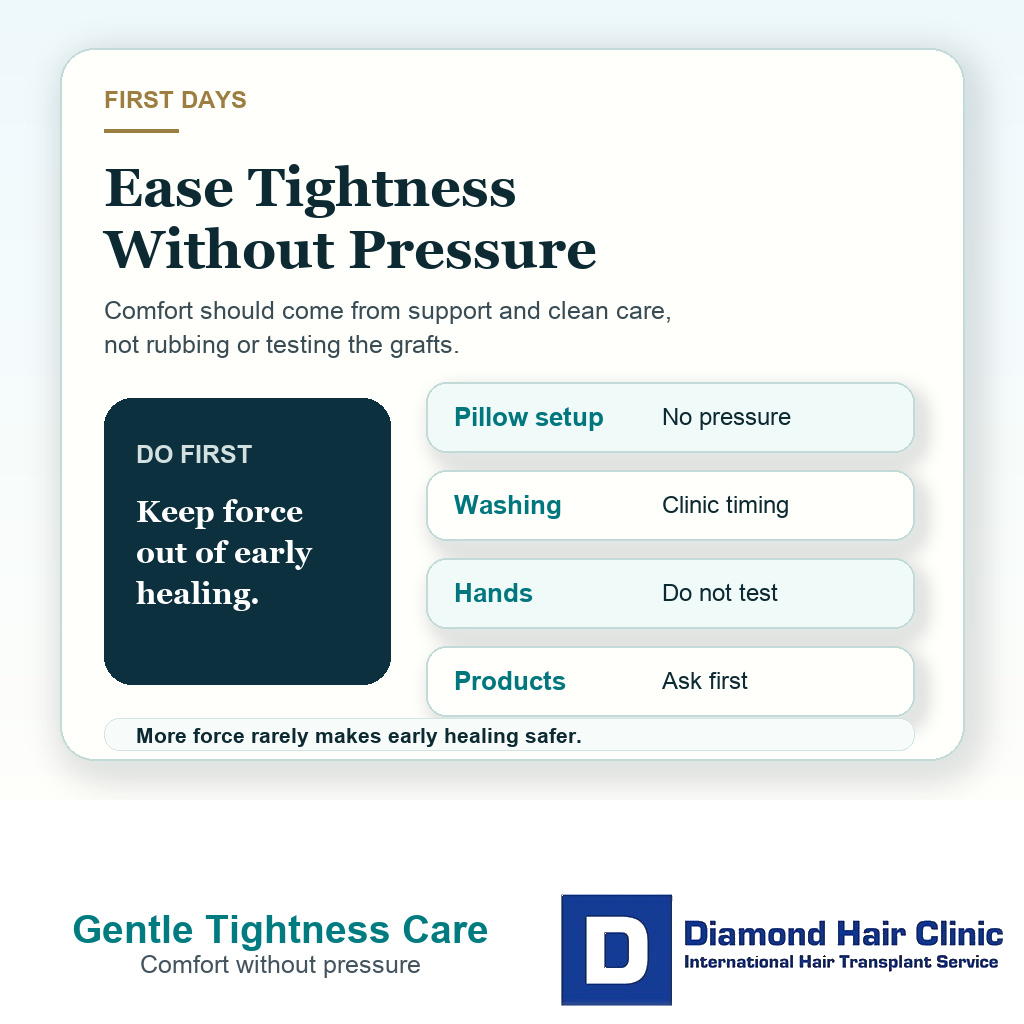
Mild tightness should be managed gently. Pressure, massage, or new products should wait for clinic guidance.
Graft numbers and punch pattern can change the feeling
A larger FUE session creates more extraction points and a wider healing field. That can mean more donor area tightness, more sensitivity, and a longer period before the back of the head feels quiet again. This does not make every large session unsafe, but it does mean donor planning matters.
High graft numbers should never be treated as a trophy. The donor area has limits. A measured extraction plan spreads the work, respects safe donor boundaries, protects future sessions, and avoids taking hair just because it can be removed that day.
Some people connect tightness with the number of grafts and ask whether pain increases with graft count. There is a real relationship between procedure size and tissue demand, but the feeling also depends on punch size, spacing, anesthesia, individual healing, skin sensitivity, sleep position, and anxiety. That same distinction sits behind hair transplant pain and graft count.
Details that matter in scalp tightness photos
The word tightness needs translation. I ask where the feeling is, when it started, whether it is improving, what the skin looks like, what medication has been used, and whether there is fever, chills, cloudy drainage, fresh bleeding, severe headache, swelling on one side, or spreading redness. I also ask whether the word tight really means pressure, numbness, burning, electric pain, itching, or pain from pillow contact, because those answers lead to different advice.
Then I compare the symptom with the operation. A small FUE session with severe new donor pain is different from a large session with mild pulling that is slowly improving. A tight forehead with swelling moving downward is different from a hot donor patch with discharge. A numb heavy scalp is different from sharp pain that wakes you every night.
My job is not to dismiss recovery anxiety, and it is also not to turn every sensation into an emergency. I separate expected healing pressure from sensory nerve irritation and visible warning signs, because each one needs a different response. After that, the advice can match the actual problem.
Document the area when the pattern changes. Do not keep pressing it for reassurance. If the skin looks clean and the feeling is easing, protect the area and give the tissue time. If the feeling is escalating or the skin looks wrong, especially with heat, drainage, fever, or expanding redness, review it promptly.
Read this review excerpt
He was very thorough in every little detail and I never felt pressure to do anything I wasn’t sure of.