Pain and Graft Count in Hair Transplant Planning
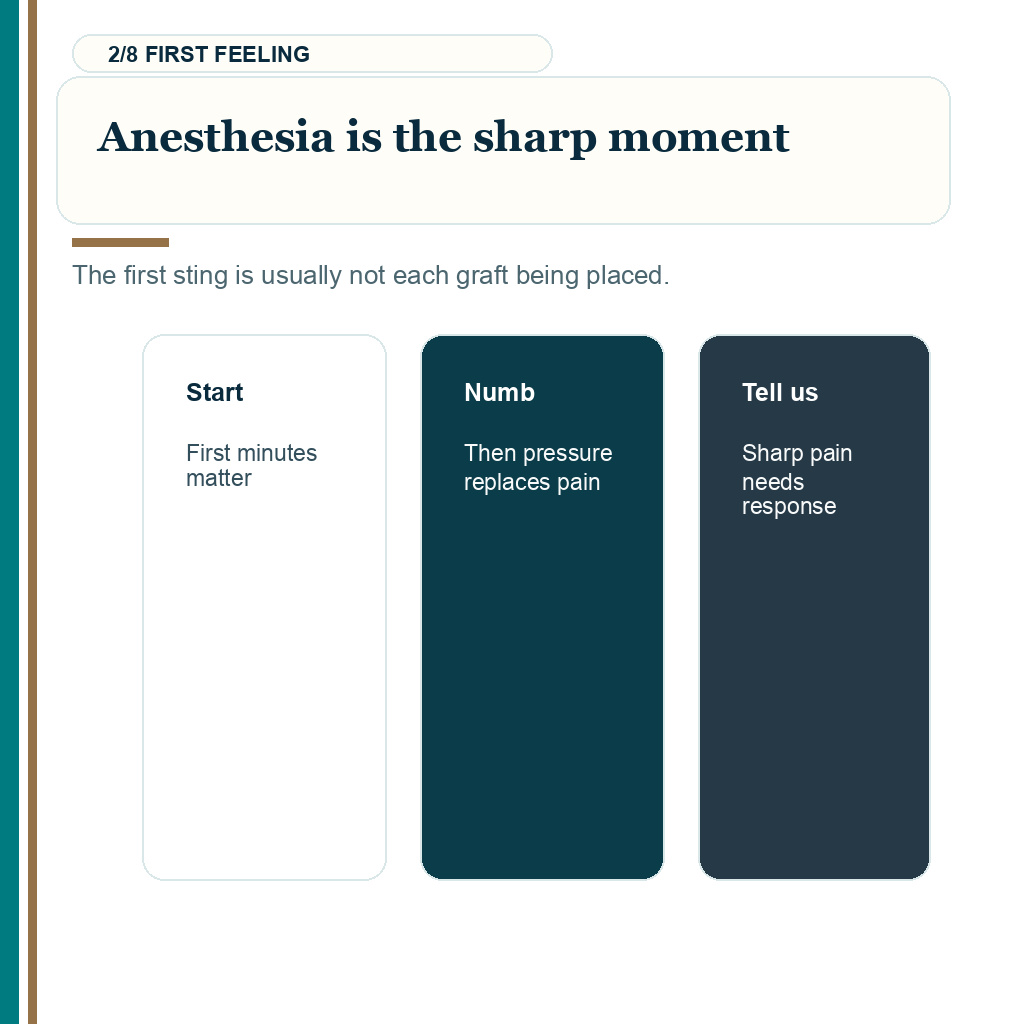
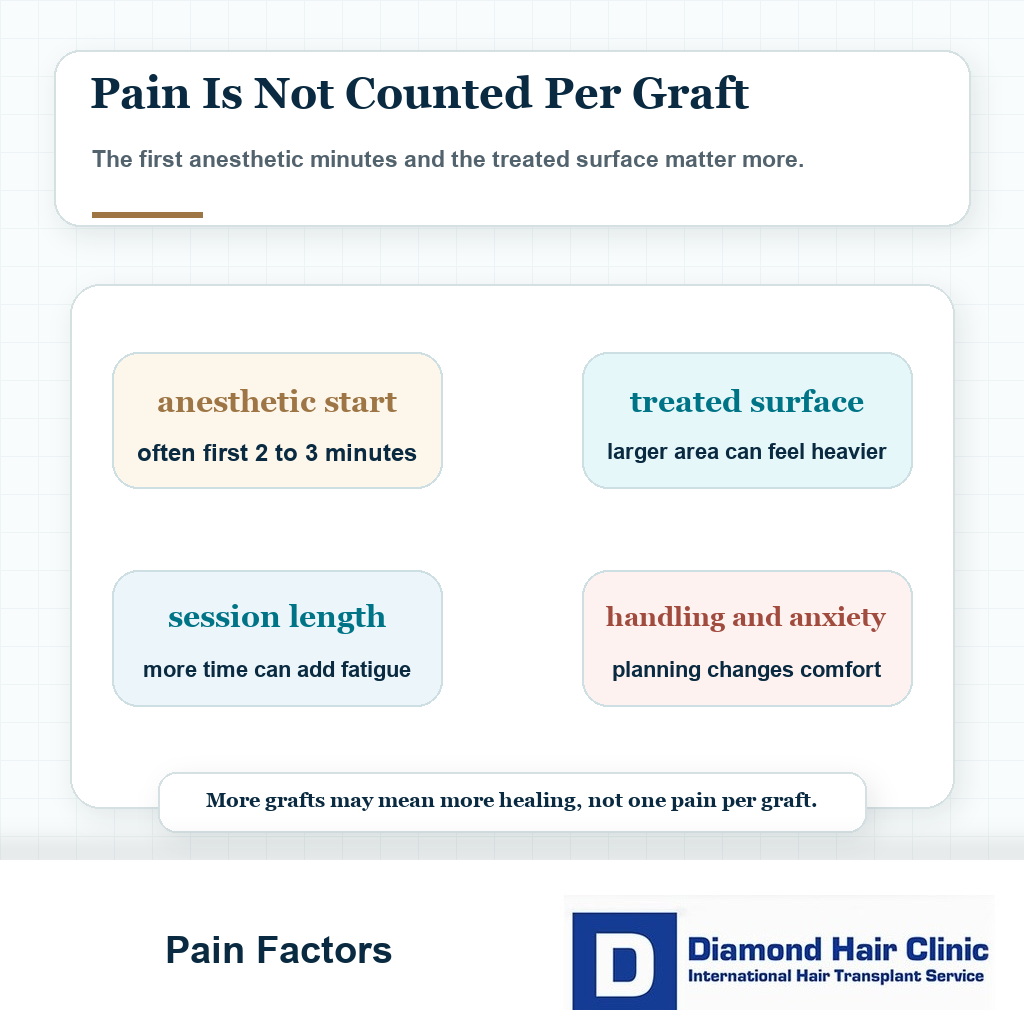
Pain is not a simple direct calculation with graft count. A 500 to 600 graft touch up usually treats a smaller area than a 3,000 graft procedure, so it may need fewer anesthesia points and may leave less soreness afterward. But the sharpest discomfort is usually the local anesthesia, often concentrated in the first 2 to 3 minutes, not every graft being placed.
Graft count can make the operation longer and the recovery heavier, but it does not mean each graft is felt as a separate pain point. Comfort depends on the treated surface area, how carefully anesthesia is given, how gently the donor area is handled, session length, anxiety, and whether the plan is medically reasonable for your donor capacity.
Small graft counts and discomfort
Often, yes, but not in a perfectly mathematical way. Compared with a larger 3,000 graft procedure, a small hairline refinement of 500 to 600 grafts normally means a smaller recipient area, a shorter extraction phase, and less total tissue activity. That can make the day easier for many patients.
A small session is not simply a small fraction of the discomfort. The scalp still needs local anesthesia, the first minutes can feel sharp, and anxiety or needle sensitivity can matter more than the number of grafts.
Pain control matters, but surgery still cannot be planned by graft numbers alone. The consultation has to consider the surface area, donor density, hair caliber, hair loss pattern, age, medication history, and future risk. That is also why how surgeons calculate graft numbers must never be reduced to a sales figure.
A small correction needs to stay small when that is the right plan. It must not become a large operation just because the patient is afraid the smaller surgery will not be worth it. If a patient needs broad coverage, the recovery cannot be described like a tiny touch up.
Smaller procedures are often easier, but comfort depends on the whole surgical plan, not only the number written on the clinic quote.
The first pain usually comes from anesthesia
The first discomfort is usually the local anesthesia. This is the part many patients fear most before surgery, and that fear is understandable. The scalp is sensitive, and the first injections can create burning, stinging, pressure, or a sharp pinching sensation for a short time. Later scalp tightness after FUE is a different recovery question from the injection moment itself.
This early discomfort is often the hardest part of the day. That also matters for anesthetic injections during hair transplant. That remains true whether the case is small or large. The difference is that a larger treated area can require a broader field of numbness.
That point does not mean you feel each graft being removed or implanted as pain. When anesthesia is working properly, most patients feel pressure, movement, touch, vibration, or a strange awareness that something is happening. Those sensations are different from sharp pain.
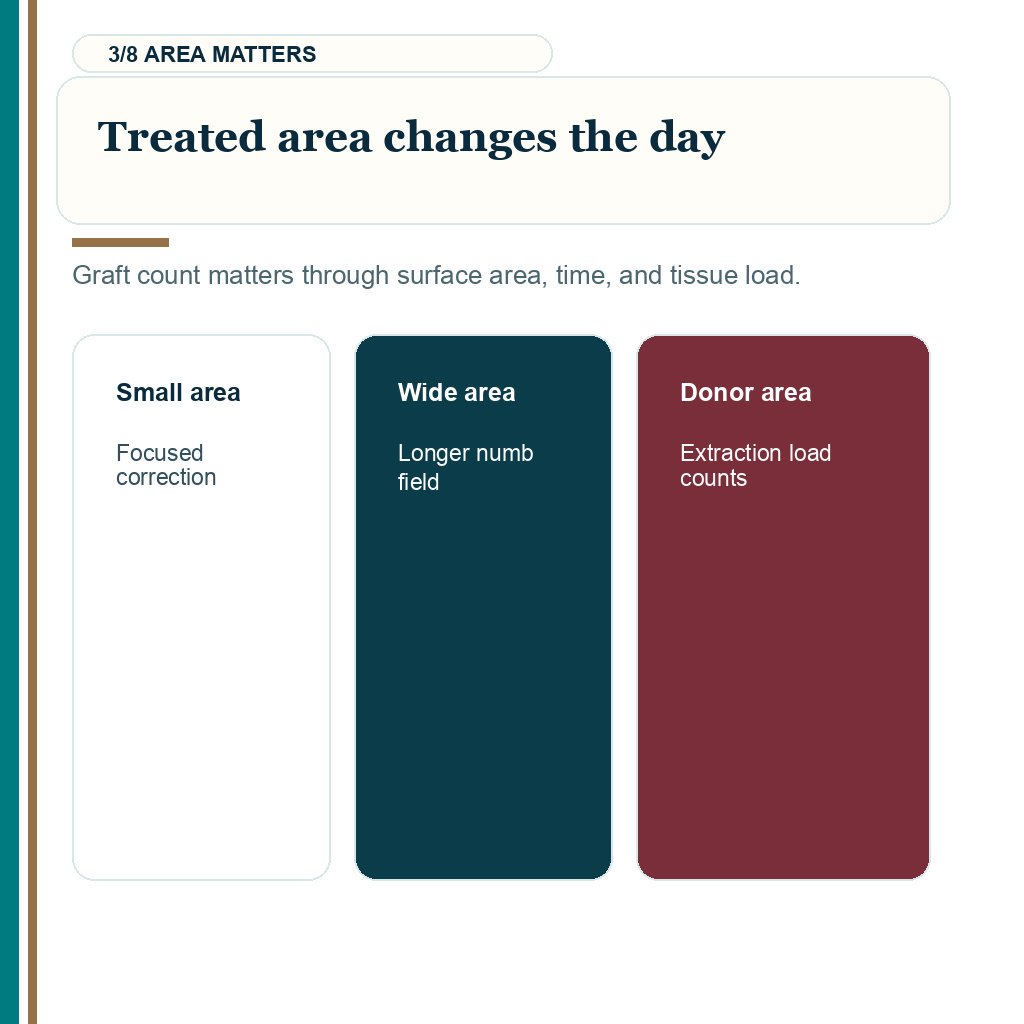
The local anesthesia stage may happen in more than one area. The donor area needs to be numb before graft extraction, and the recipient area needs to be numb before incisions and placement. A small temple correction and a large frontal plus mid scalp case are not the same treated surface.
At Diamond Hair Clinic, I also use a needle free anesthesia device before the main local anesthesia. It does not make surgery completely sensation free, but it can reduce the first sharp feeling and make the beginning more tolerable.
So if you ask whether more grafts means more pain during the operation, separate two things. More grafts may mean a larger area to numb, but once that area is properly numb, you are not supposed to feel sharp pain with each graft.
Sharp pain during the operation needs a response
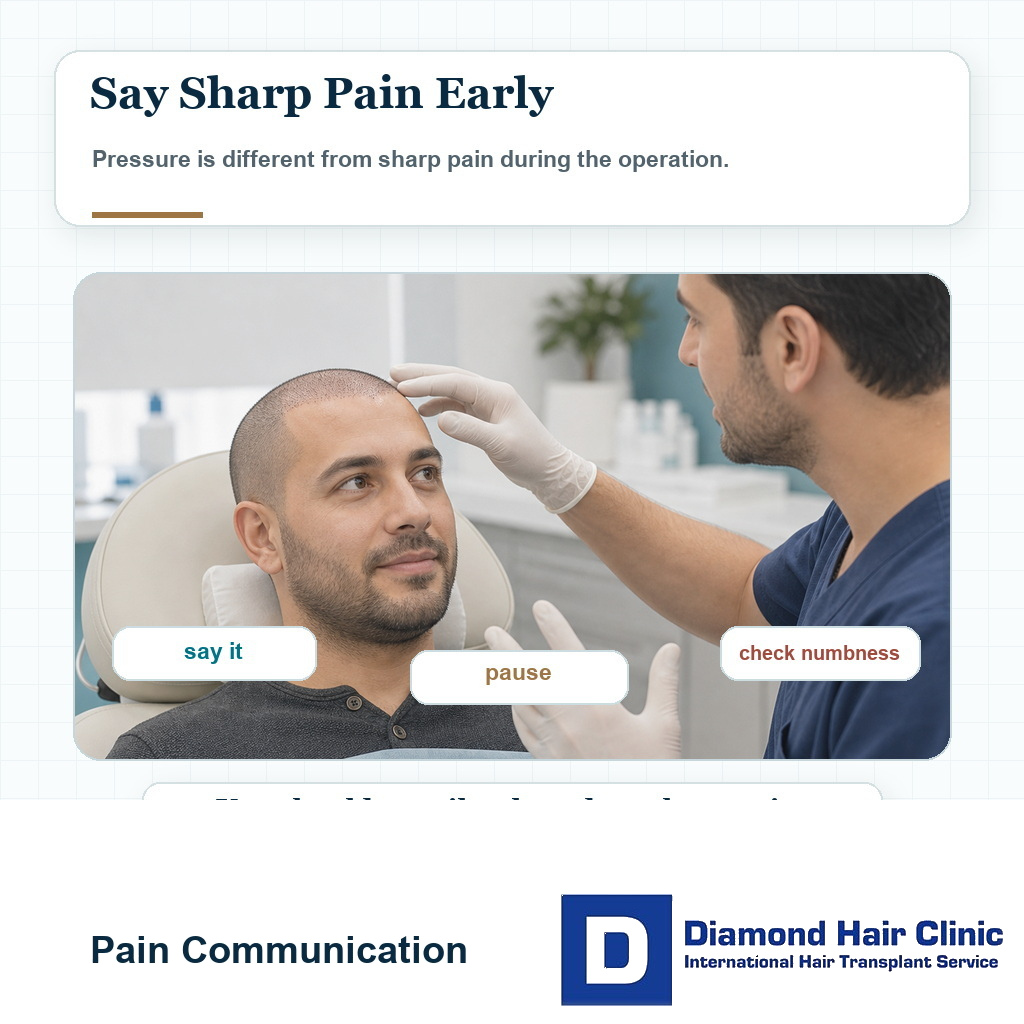
If sharp pain appears during the operation, tell the team immediately. Feeling pressure or movement is one thing. Sharp pain is different. If sensation returns, the answer is not to stay silent and suffer through the procedure.
In a properly supervised hair transplant, pain control is part of the medical responsibility of the day. The team needs to pause, check the area, and reinforce anesthesia when needed. In longer cases, a large operation can outlast the first period of numbness in some areas, so communication matters. In long cases, session planning is part of pain control, not only graft math.
Communication is allowed during surgery. A patient who speaks up early is not being difficult. They are helping the team keep the procedure controlled and safe.
Larger graft counts can feel harder after surgery
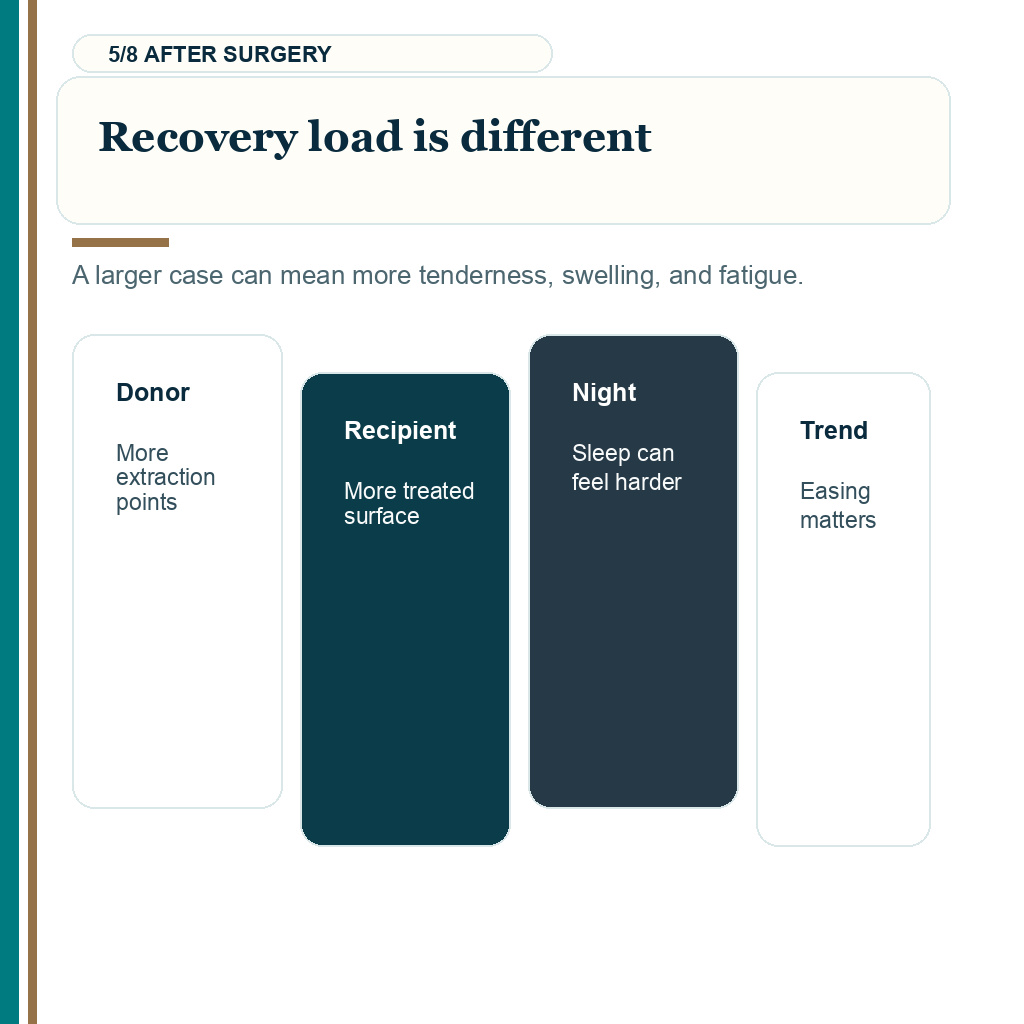
A larger graft count can feel harder after surgery because there is more treated tissue to heal. In a FUE hair transplant, the donor area has many tiny extraction points. Each one is small, but the total treated surface can be significant when the graft number is high.
The recipient area also matters. A dense frontal reconstruction, a mid scalp extension, and crown coverage do not create the same healing experience. The scalp may feel tight, tender, swollen, numb, itchy, or sensitive depending on where and how much tissue was treated.
Patients sometimes focus only on the recipient area because that is where they want to see the result. In planning, the donor area cannot be an afterthought. The donor area is limited, and it has to look acceptable after extraction. Pain, sensitivity, and visible healing are all affected by how respectfully this area is managed.
This becomes very practical when graft numbers rise. A clinic can promise a high number, but the scalp and donor reserve still have biological limits. If extraction is too aggressive, the patient may not only experience more discomfort. They may also face visible donor thinning or limited options for the future.
A larger session can also mean more time lying still, more swelling, more difficulty sleeping the first nights, and more mental fatigue. Strictly speaking, these are not all pain, but they can make the recovery feel harder. Patients need the full recovery picture, not only the pain scale.
When the operation is planned well, a larger session can still be manageable. But if a clinic treats a high graft count as proof of value, the patient may pay the price with donor stress, longer healing, and an unnatural result.
Splitting a large case can help some patients
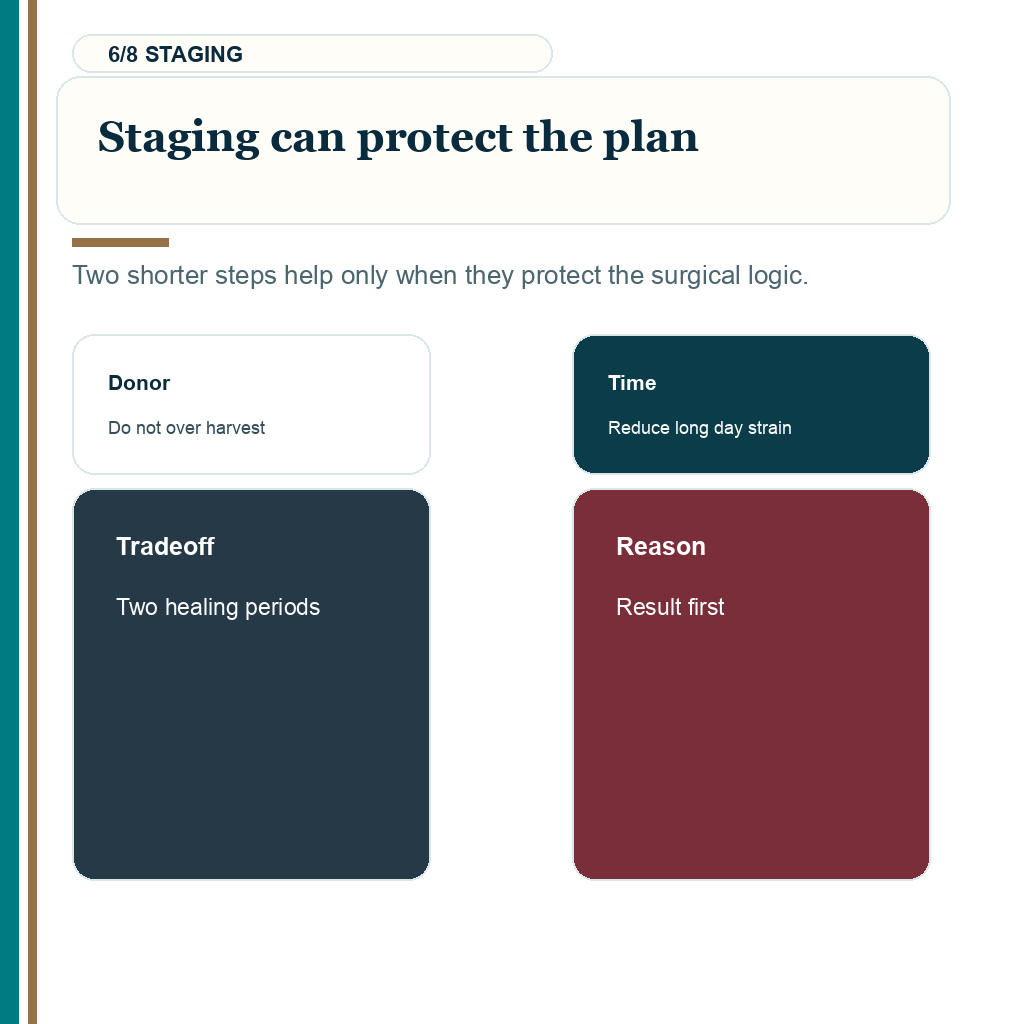
Sometimes splitting a large case can make the experience easier, but it is not always better. Two shorter surgical days can reduce fatigue in some patients, while two anesthesia sessions and two recovery periods may feel harder for others.
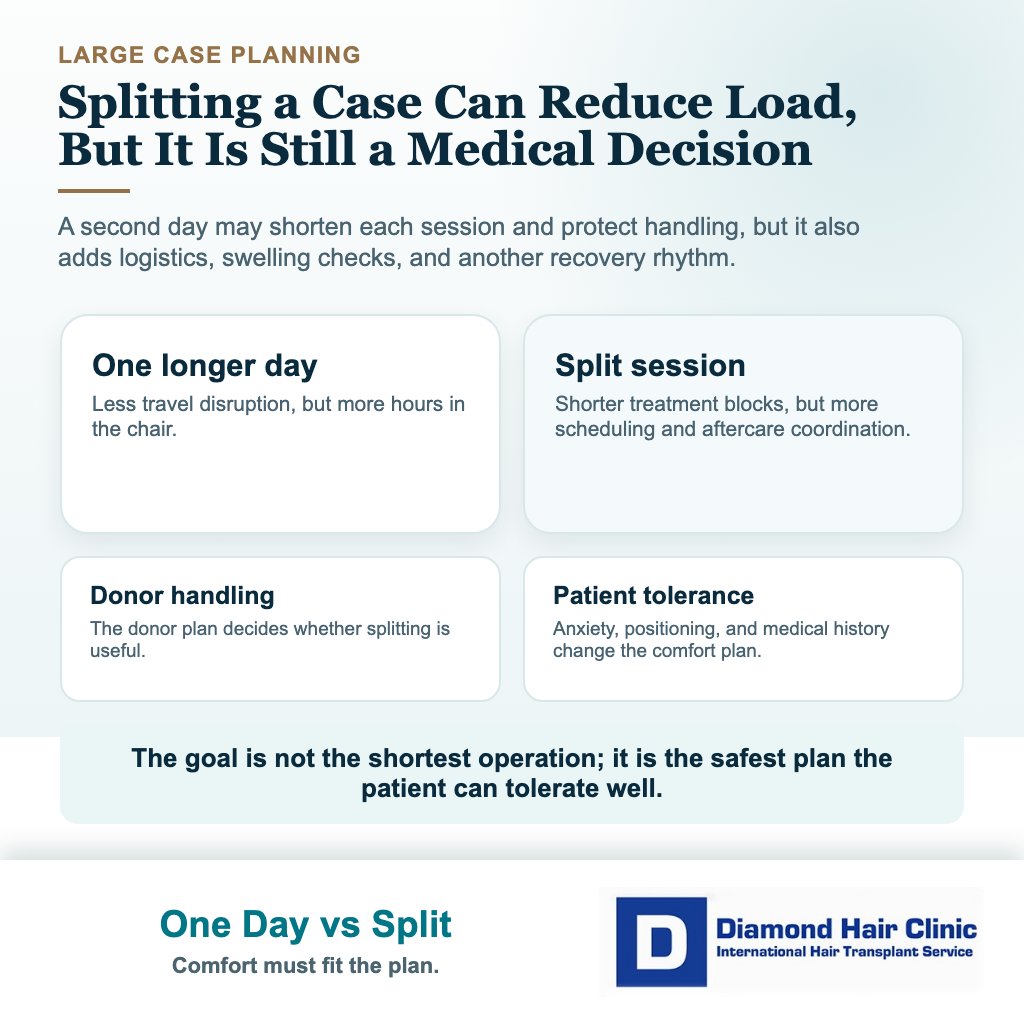
The decision needs to be based on donor safety, treated area, graft handling, patient health, and the quality of the work, not only comfort. If the graft number is high because the plan is too aggressive, splitting the case does not solve the real problem.
Staging makes sense when it protects the donor area or produces a more thoughtful result. It must not be used as a way to justify an unsafe number.
Comparing 600 grafts with 3,000 grafts
A 600 graft procedure is usually a limited correction. It may be used for a small hairline refinement, a temple detail, a minor gap, or a focused density adjustment. A 3,000 graft procedure is usually a much larger surgical plan, often involving a wider frontal zone, mid scalp coverage, or more visible reconstruction.
That difference matters. The 600 graft case may still include the uncomfortable start of anesthesia, but the total treated area is smaller. The 3,000 graft case may not be unbearable during surgery, but the recovery can feel heavier because the donor and recipient areas have been treated more extensively.
Still, fear of pain should not decide the graft number. The graft number should be chosen because it matches the patient’s anatomy and future plan. If the hairline needs 1,600 grafts for a natural transition, doing only 600 because the patient is afraid of discomfort may create a weak result. If the patient needs only 600, doing 2,500 because the clinic wants to sell density is not better.
Comfort and design should be separated. Comfort should be managed carefully. But design, donor safety, angle, direction, density, and future hair loss risk are what decide whether the operation was a good idea.
Some patients also assume a small operation is not serious and a large operation is automatically more valuable. That is not the right way to judge it. A small operation done with excellent judgment can be more valuable than a large operation done without the same judgment.
So compare 600 and 3,000 grafts by treated area, donor impact, surgical purpose, expected recovery, and future value. Do not compare them only by fear.
Technique and comfort during the day
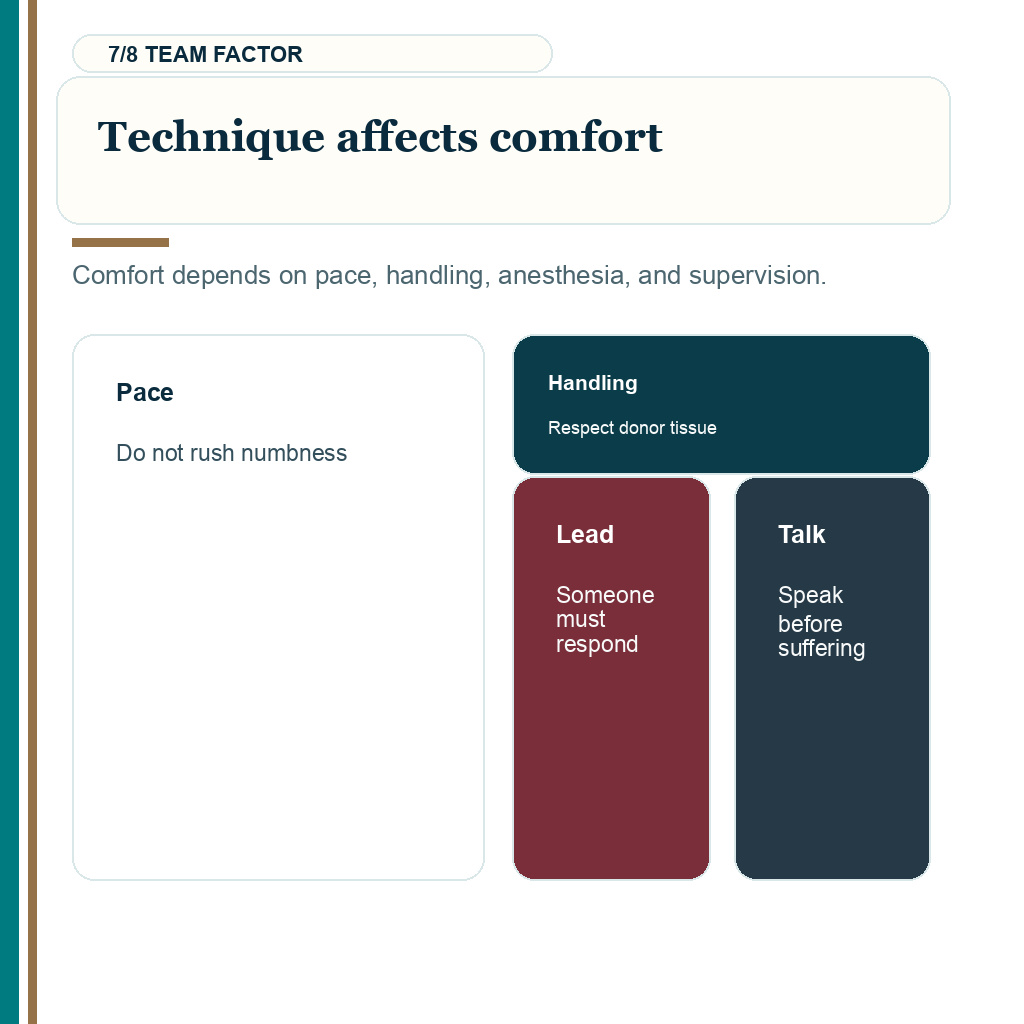
Technique matters, but not in the way many advertisements suggest. A tool does not magically make a hair transplant painless. The surgeon’s judgment, tissue handling, anesthesia technique, incision control, and overall pace matter more than the name of the method.
Read this review excerpt
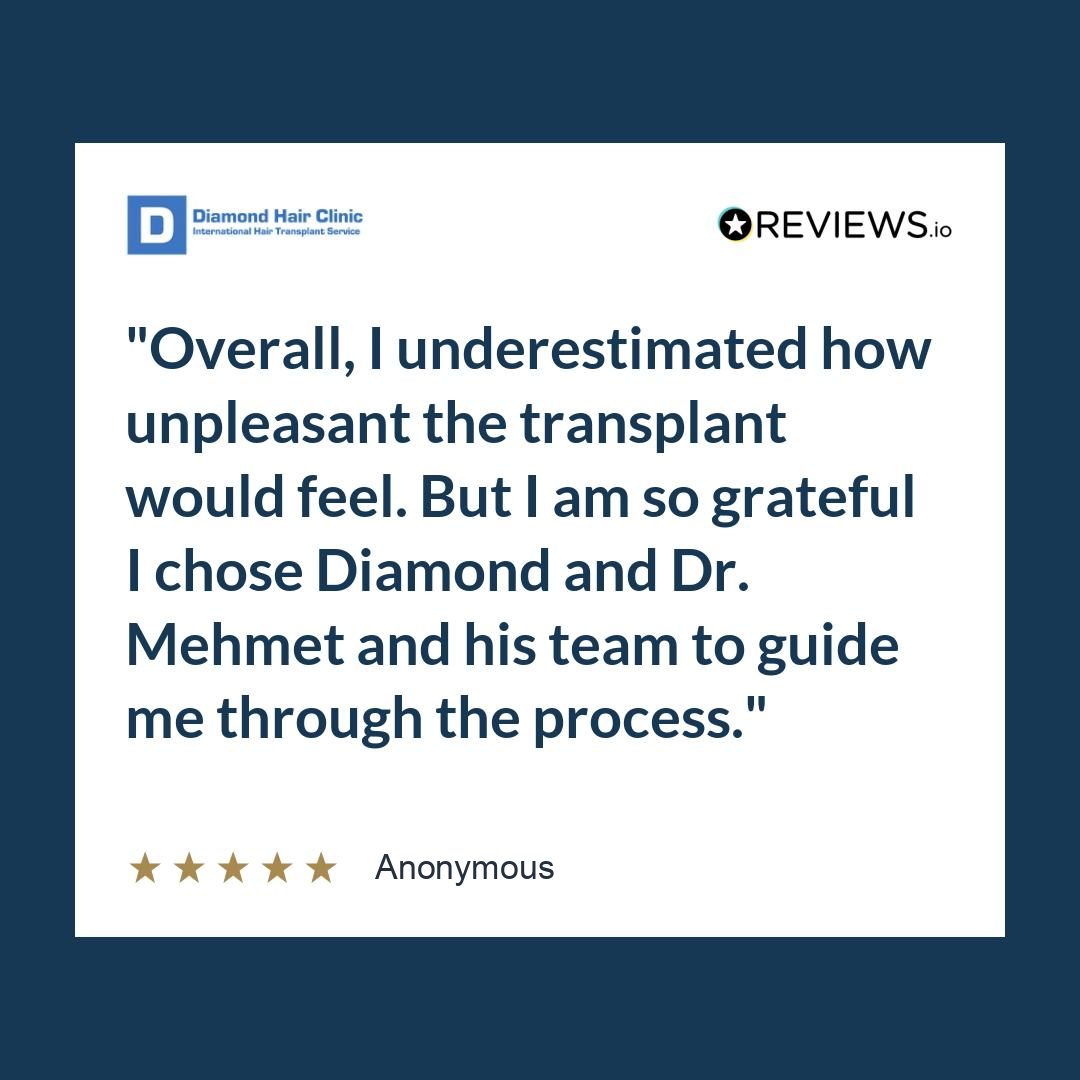
Overall, I underestimated how unpleasant the transplant would feel. But I am so grateful I chose Diamond and Dr. Mehmet and his team to guide me through the process.
For example, patients often ask whether Sapphire FUE is less painful. The answer is that the technique can support careful incision making and refined tissue handling, but it is not a shortcut around medical planning. A poorly planned procedure does not become good just because a certain instrument is used.
From a comfort point of view, the patient feels the benefit of a steady, well paced process. Anesthesia must not be rushed. The donor area must not be handled aggressively. Incisions need planning with respect for skin quality, vascularity, graft angle, and density needs.
For a long surgery day, comfort also depends on ordinary details that patients forget to mention. Neck position, bathroom breaks, food timing, room temperature, and when the first sharp feeling is reported can change the experience more than the graft number alone.
Clarify how long you will stay in each position and when breaks are usually possible. For many patients, comfort is affected by stillness and neck position as much as by the graft number.
If the team is hurried, the patient often feels it. They may not know the technical reason, but they feel the pressure, the rough handling, the lack of communication, or the sense that the day is being pushed forward too quickly. That can make discomfort feel stronger.
In a surgeon guided setting, the operation is not only about placing hair. The whole experience has to be controlled. Patients need to understand what is happening, when the difficult part is likely to come, and when to tell us if sensation is returning.
Longer sessions need proper pacing. A long day does not have to be chaotic. But if a patient is treated like a number in a production line, pain control and communication can become secondary, and that is not acceptable.
Strong pain can signal a problem
Sometimes strong pain is still part of the normal range, especially in the donor area after FUE. Some patients feel burning, pressure sensitivity, tightness, tenderness, numbness, or sharp contact pain during the first days. This can happen because the donor area has many small extraction wounds and temporary sensory nerve irritation.
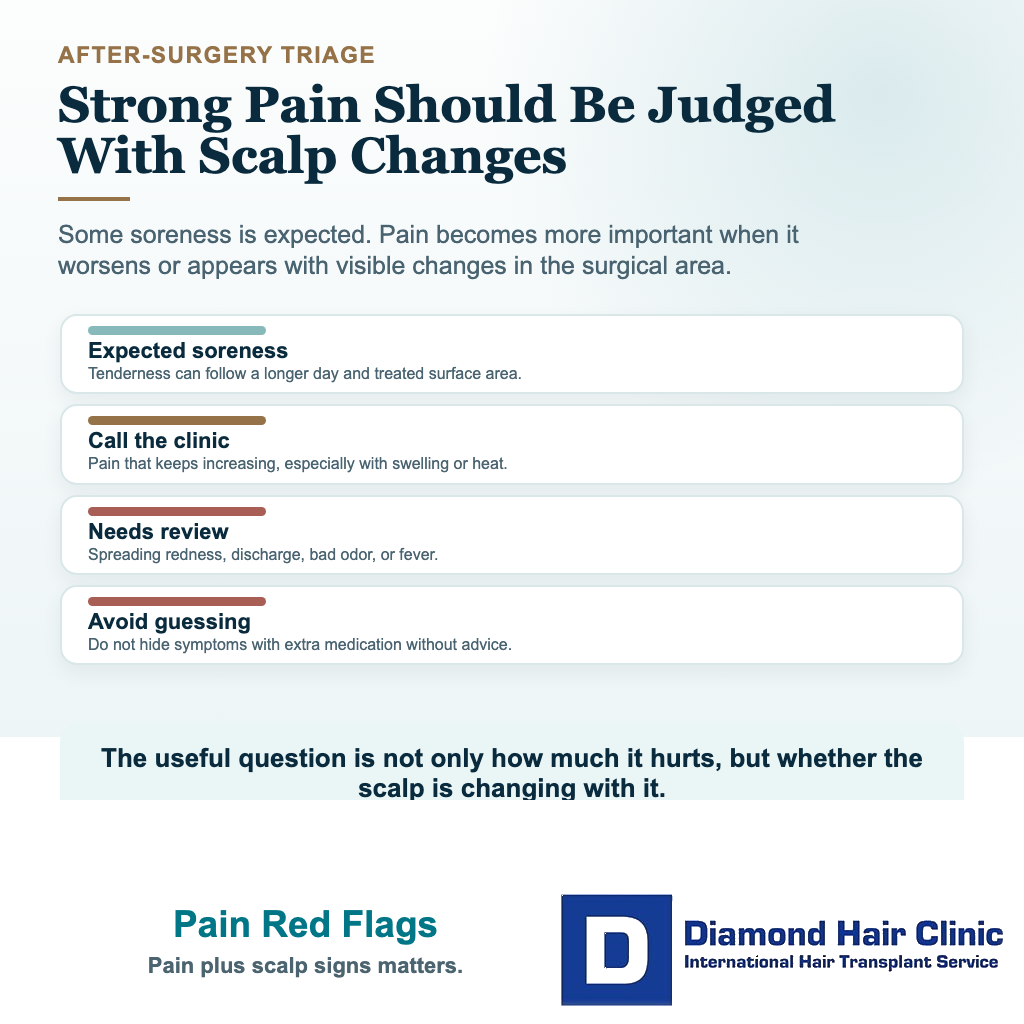
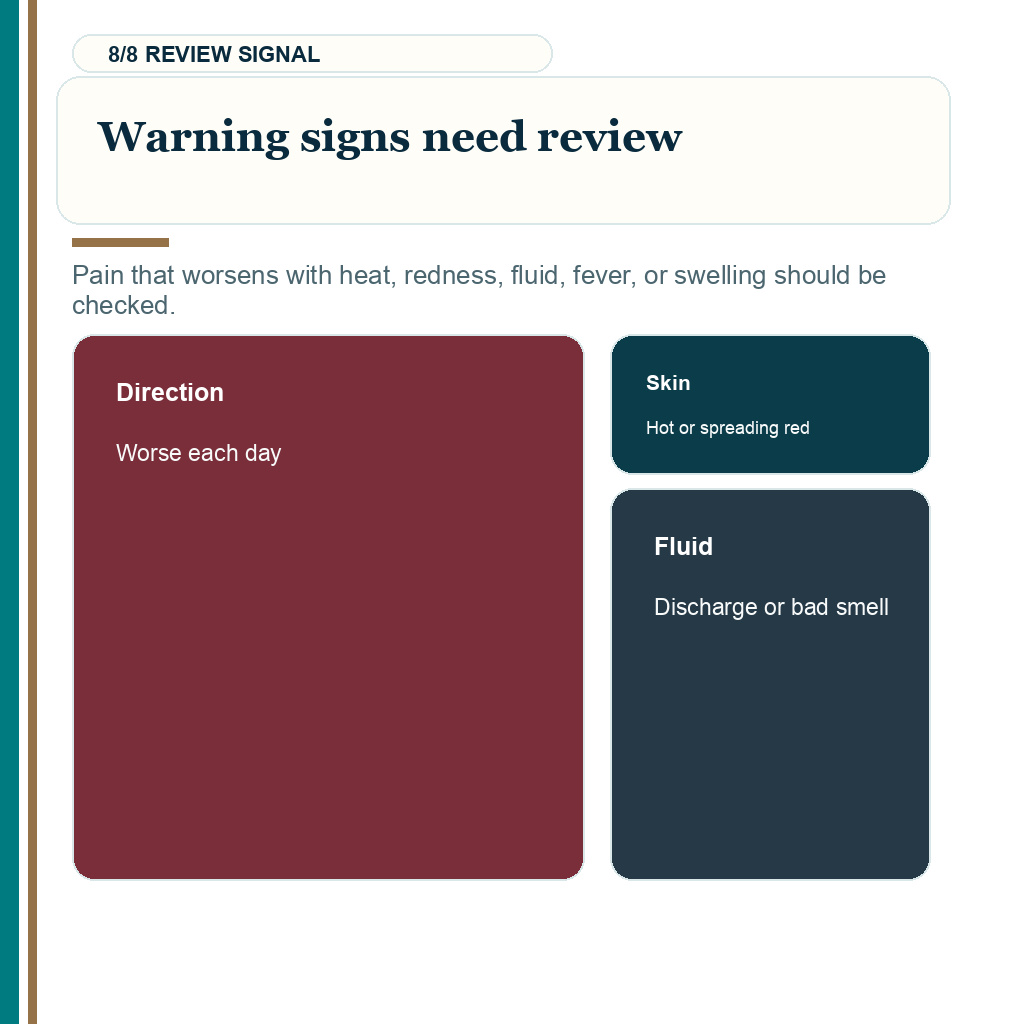
But there is a difference between expected discomfort and a warning sign. Pain that is worsening day by day, severe without touch, one sided, associated with heat, spreading redness, discharge, bad smell, fever, or increasing swelling needs medical review. Do not ignore that pattern.
This point is part of severe donor area pain after hair transplant. Patients need to understand that not every pain means danger, but persistent or worsening pain cannot be dismissed either.
Painkillers after a hair transplant need to be used according to the clinic’s instructions. Taking extra medication or combining medicines without guidance can create a different safety problem.
After surgery, the direction matters. Gradually easing discomfort is more reassuring than pain that suddenly becomes stronger after being mild. If the scalp looks more inflamed each day, the clinic needs to review photos and symptoms.
For the recipient area, direction and severity matter. Mild tenderness, tightness, and sensitivity can be normal. Severe throbbing pain, increasing redness, hot skin, pus, fever, or blackening that does not look like ordinary scabbing requires proper medical review.
Patients sometimes ask online whether their pain is normal because they are afraid of bothering the clinic. If something feels outside the expected range, contact the clinic. A careful clinic will want to know.
Surgeon guided planning affects comfort
It affects comfort more than many patients realize. Surgeon guided planning does not mean the patient feels nothing. That would not be accurate. But the way the day is planned and supervised can change both physical comfort and emotional control.
One of the first questions is who actually performs your hair transplant. If a clinic cannot clearly answer that, be careful. Pain control is not just a medication issue. It is also a responsibility issue.
When a surgeon evaluates the patient properly, the graft number is not chosen casually. The donor area is not treated as an unlimited supply. The hairline is not drawn only to impress the patient in the mirror. The operation is planned with the future in mind.
This matters for comfort because bad planning often creates a harder recovery. Too many grafts in one area, excessive extraction, poor spacing, rushed work, and poor aftercare instructions can all make the experience more stressful.
It also matters emotionally. A patient who trusts the plan usually handles discomfort better than a patient who feels abandoned or confused. When patients do not know who is responsible, every normal symptom can become frightening.
Choose a clinic where the conversation before surgery feels serious. If the clinic only talks about maximum grafts, discount packages, and quick transformations, that is not enough. The plan also needs to explain limits, recovery, risks, and what will happen if the patient feels pain during the day.
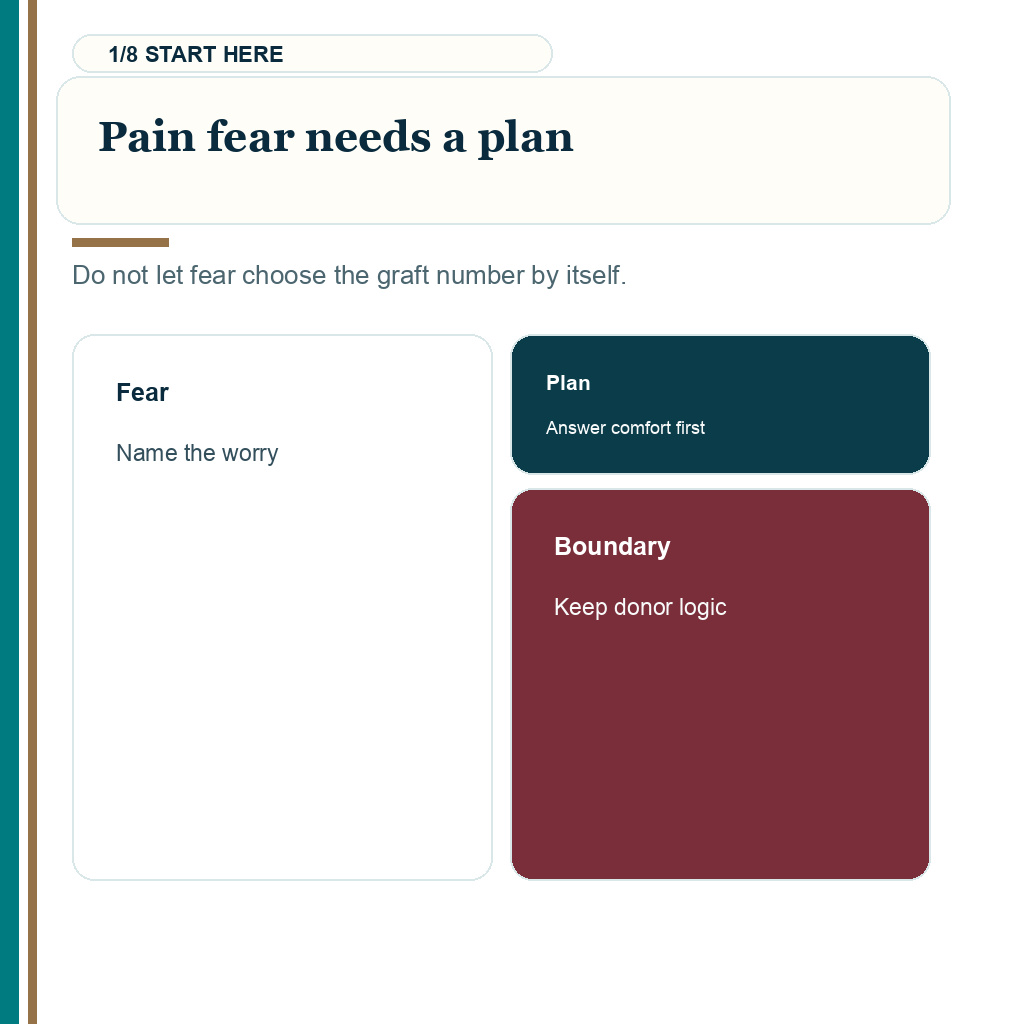
Fear of pain should not control the graft plan
Fear of pain deserves review, but it should not decide the graft plan by itself. When a patient is very anxious, that needs to be discussed before surgery so the day can be explained clearly and the comfort plan can be realistic. Grafts should not be reduced or increased only because fear feels loud on the booking day.
The graft plan needs to answer a surgical question. The treatment area, realistic density, donor strength, future hair loss risk, and future appearance all matter more than fear alone.
A strong hair transplant result is not simply the result with the highest graft count. It has to look natural, use the donor area wisely, match the patient’s face, and respect the future.
There are times when a smaller session is better. A young patient with unstable hair loss may need medical treatment and observation before a large surgery. A patient with a weak donor area may need conservative planning. A patient who wants only a small hairline detail should not be pushed into an unnecessarily large case.
There are also times when splitting the plan into stages is wiser. If the patient has advanced hair loss, poor donor capacity, or both frontal and crown concerns, trying to solve everything in one session may create compromises. Staging can reduce surgical stress and protect future options.
Patients need to be direct with themselves about pain anxiety. If someone is extremely needle sensitive, that is not weakness. The sequence needs explanation, the sharp moments need to be identified, and the patient needs to understand that they can speak during the procedure if sensation returns.
So yes, anxiety matters. Pain tolerance matters. But the graft plan must remain medically logical. Do not choose a clinic that uses fear, urgency, or unrealistic promises to push a bigger operation.
These 8 pain and graft planning slides separate pain fear, the first anesthesia moment, treated surface area, sharp pain response, recovery load, staging, technique, and warning signs. Swipe sideways, use the arrows one slide at a time, or choose a number below the image.