


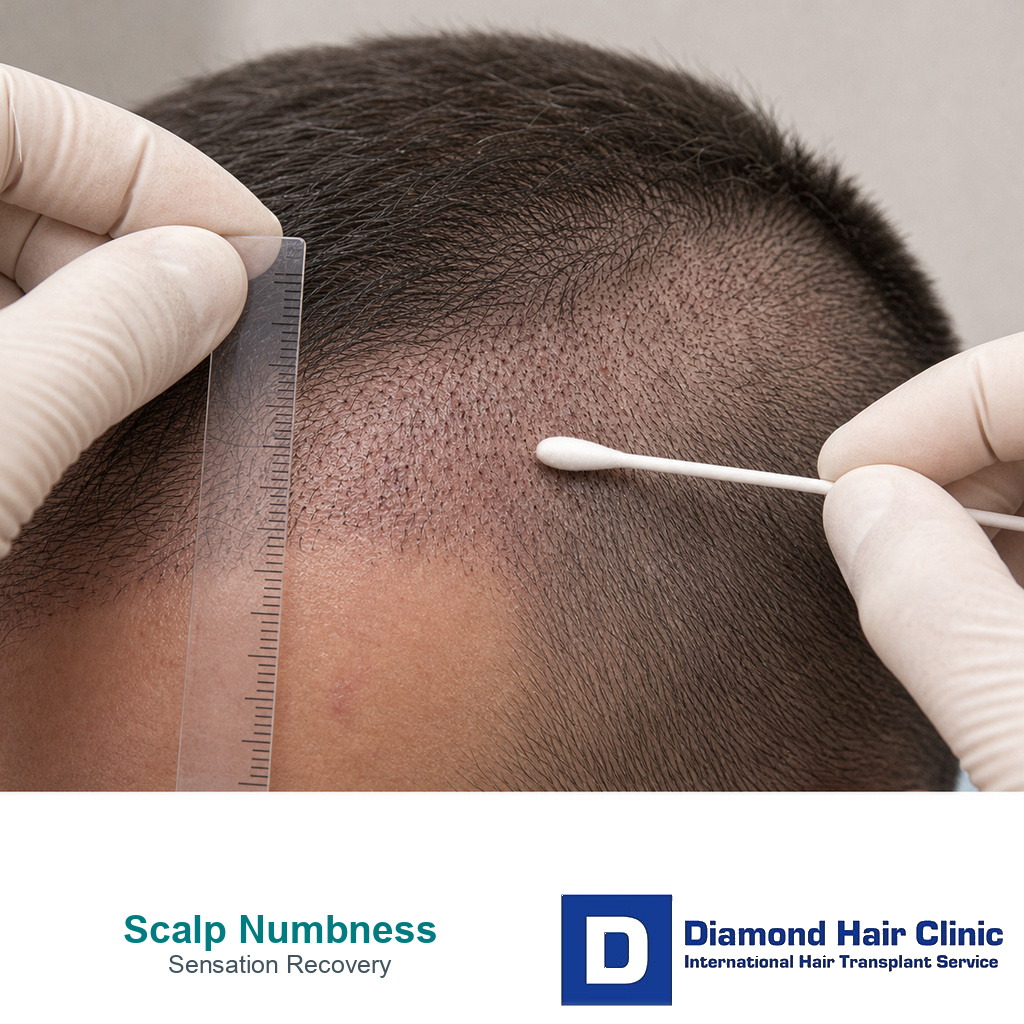
Scalp Numbness and Tingling Recovery Timeline
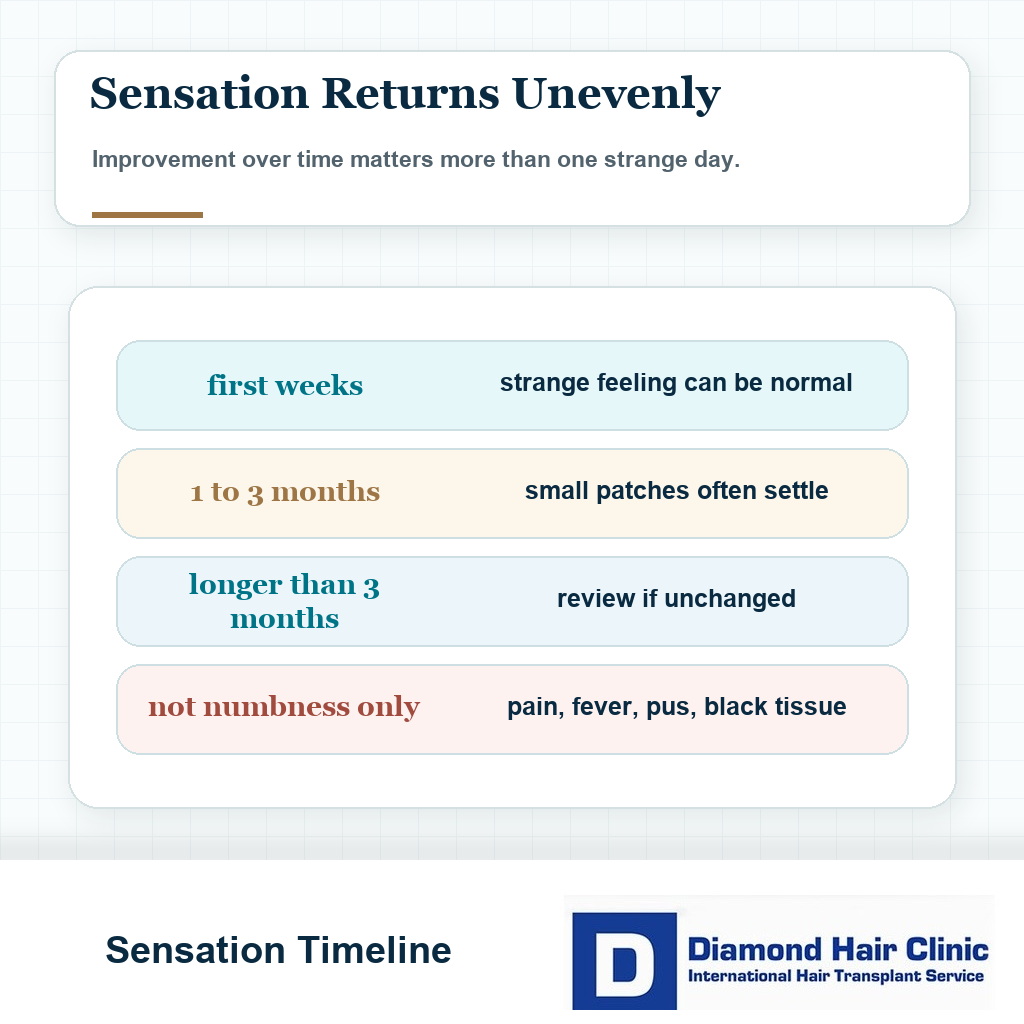
Temporary numbness, tingling, tightness, or reduced sensation after a hair transplant often improves over weeks. Small areas can take 1 to 3 months to feel fully normal again, and some patients feel unusual sensitivity for longer, especially in the donor area or along the hairline.
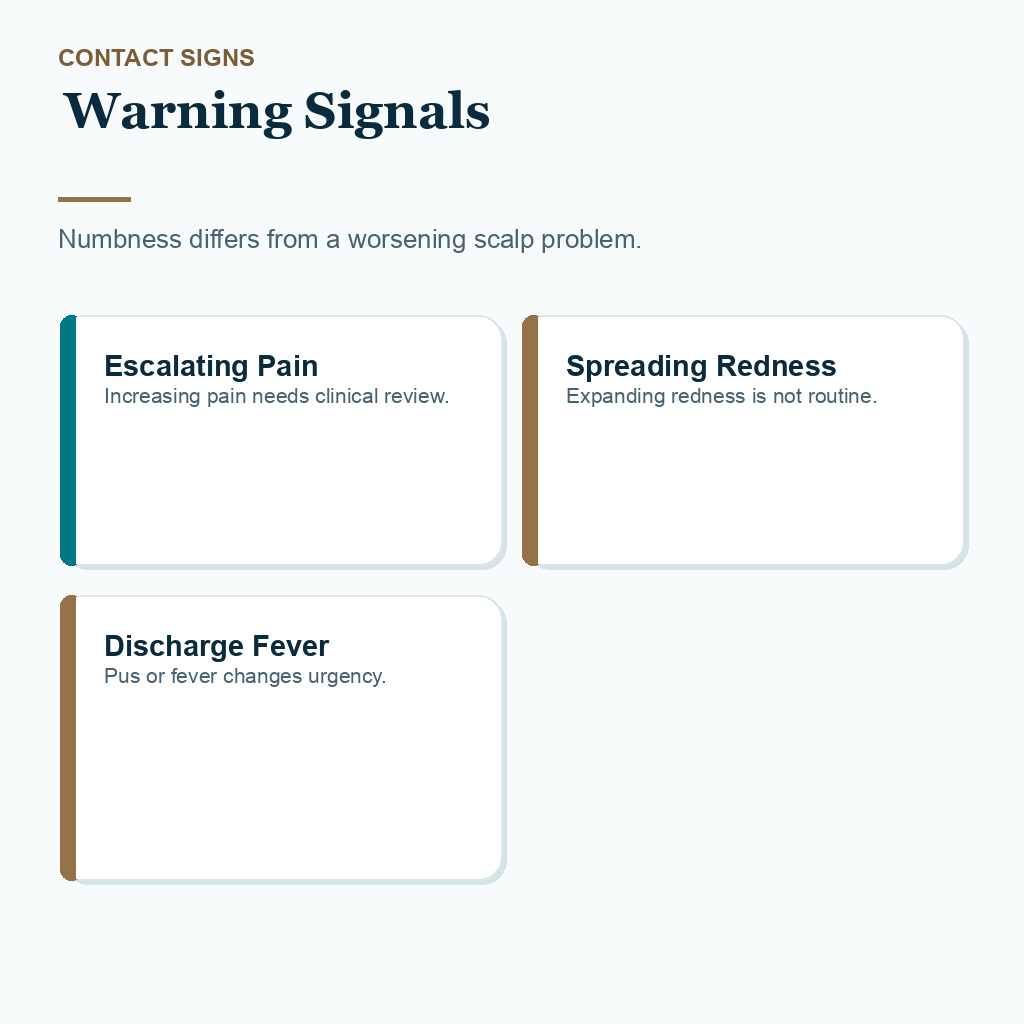
This is usually part of nerve and skin recovery, not a sign that grafts have failed. A different pattern needs more attention. Worsening pain, spreading redness, pus, fever, black tissue, strong swelling, or severe one sided symptoms should be reviewed promptly.
Numbness feels strange. Pain is easier for many patients to understand because pain sounds like an injury. Numbness is different. It can make the scalp feel disconnected, thick, tight, helmet like, or strange even when the skin looks calm. If that feeling appears together with a visible scalp indentation after hair transplant, timing, photos, symptoms, and pressure history matter more than repeated touching.
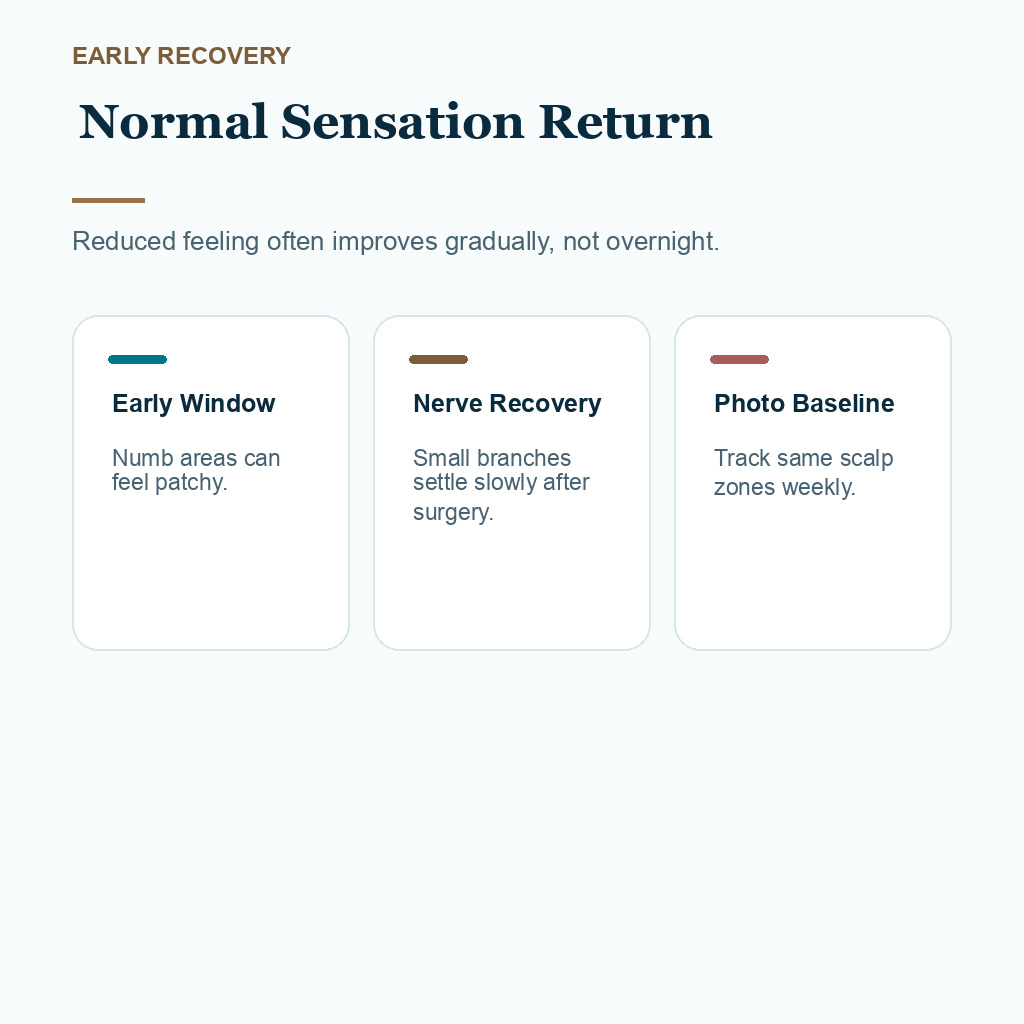
Sensation returns in stages. The skin can look healed before the small nerve endings feel normal again. That gap between appearance and sensation is where many patients become anxious.
Does numbness happen after a hair transplant?
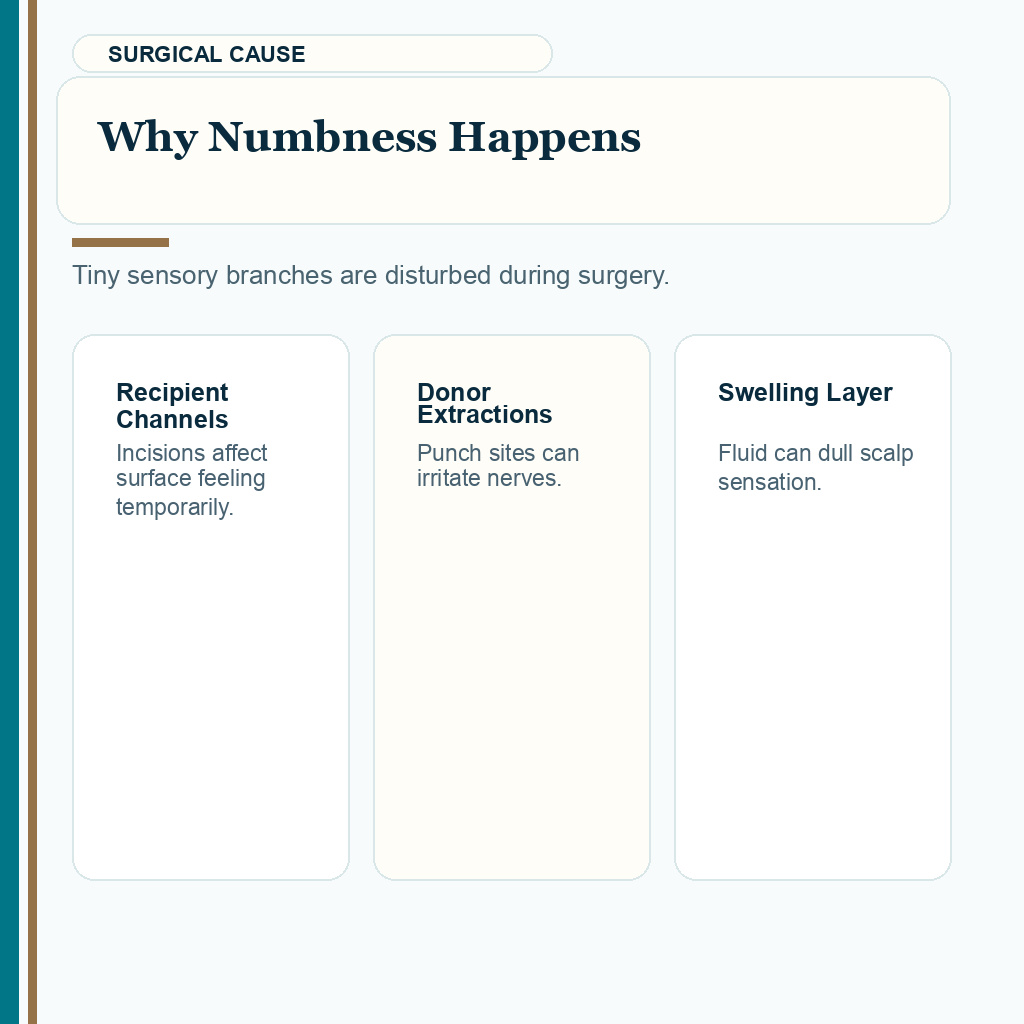
Numbness happens because the scalp has been surgically handled. In FUE, grafts are removed from the donor area and placed into small openings in the recipient area. During that process, the skin and tiny sensory nerve branches are disturbed.
In most cases, this is not dramatic nerve damage. It is more often irritation, stretching, pressure from swelling, or temporary nerve stunning from the procedure. The scalp then needs time to settle. If pulling or pressure is the main symptom, I judge scalp tightness after FUE by trend, skin changes, and photo review.
For that reason, numbness can exist even when the transplant looks clean. You may see no dramatic redness and still feel a dull, thick, or rubbery sensation when the scalp is touched. Scalp massage after a hair transplant also needs slower pressure when sensation is reduced.
During the first 10 to 14 days, graft protection and controlled washing still come first, as explained in hair transplant aftercare. Numbness does not make the graft area safe for rough contact.
Reduced feeling can make pressure harder to notice. Be careful with hats, pillows, headphones, or leaning against the area because the scalp may not warn you as clearly as usual. When numbness and soreness appear together, describe them separately so the clinic knows what feels dull, what is painful, and what is getting worse.
Set a reminder to check pressure points instead of checking sensation. Numb skin can miss a tight hat, headphone band, or pillow fold until irritation has already started.
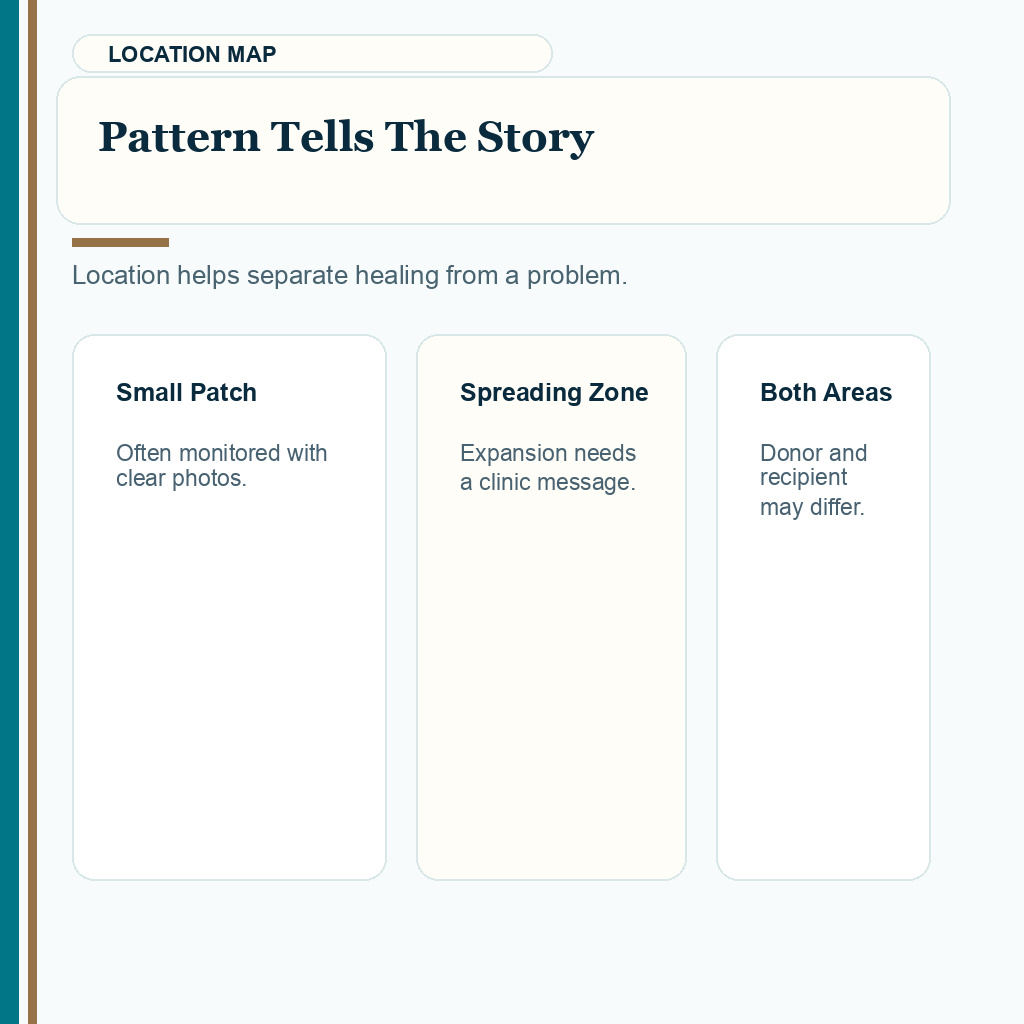
Uneven sensation is common enough that one strange area is not the whole story. Track whether the numb area is shrinking, spreading, turning painful, or appearing with skin changes. Repeated testing with fingernails, rubbing, or pressure can make the scalp sore and confuse the review.
Sensation recovery is not the same as graft growth. A numb scalp can still have healthy grafts. The hair may shed and grow on one timeline, while the small nerve endings settle on another.
A numb feeling alone is not enough to judge the transplant. I look at the skin pattern, the direction of sensation change, and whether warning signs are present.
The scalp also becomes an area you monitor much more closely after surgery. Before the operation, you may not think about scalp sensation at all. After the operation, every tight point and every small change can feel meaningful because your attention has moved completely to the transplant.
That attention can make normal sensations feel more serious than they are. The better response is not to test the scalp all day, but to understand the healing logic and watch the direction of change.
A numb area is not necessarily a dangerous area. It is an area that needs time, observation, and protection from unnecessary pressure.
Recipient area numbness is usually part of early healing
Yes, numbness in the recipient area can be normal after surgery. The recipient area has received many tiny incisions or channels, and the skin needs time to settle.
You may describe the area as numb, tight, thick, heavy, tingling, or oddly sensitive. Some patients say it feels like wearing a thin layer over the scalp. Others say touch feels delayed or muted.
Numbness is not loose grafts. It does not mean the hairline is failing. It does not mean the result should already be judged.
Many patients become most aware of numbness when they start washing, sleeping, or checking the scalp in the mirror. That is also when they are most tempted to touch too much.
When redness, scabbing, tenderness, or bumps are hard to judge, compare those details with redness, scabs, and pimples after a hair transplant before assuming numbness means failure or infection.
Protect the recipient area instead of testing it. Do not keep pressing the scalp to see if feeling has returned. That habit only creates more irritation and worry. Because numb skin may not warn you about heat quickly, using a hair dryer after a hair transplant also needs more caution.
If numbness turns into itching, itching after a hair transplant is better than scratching. This transition can happen as sensation returns. The scalp may feel dull one week and itchy the next, and both can belong to recovery.
Strong itching needs guidance before scratching becomes the response. Do not decide that scratching is safe because the area feels numb. A numb scalp can still be healing and still deserves careful behavior.
Treat the recipient area as a recovering surgical zone, even when it feels disconnected or strange. Rubbing does not prove recovery. It can only irritate healing skin.
Donor area numbness after FUE can last longer
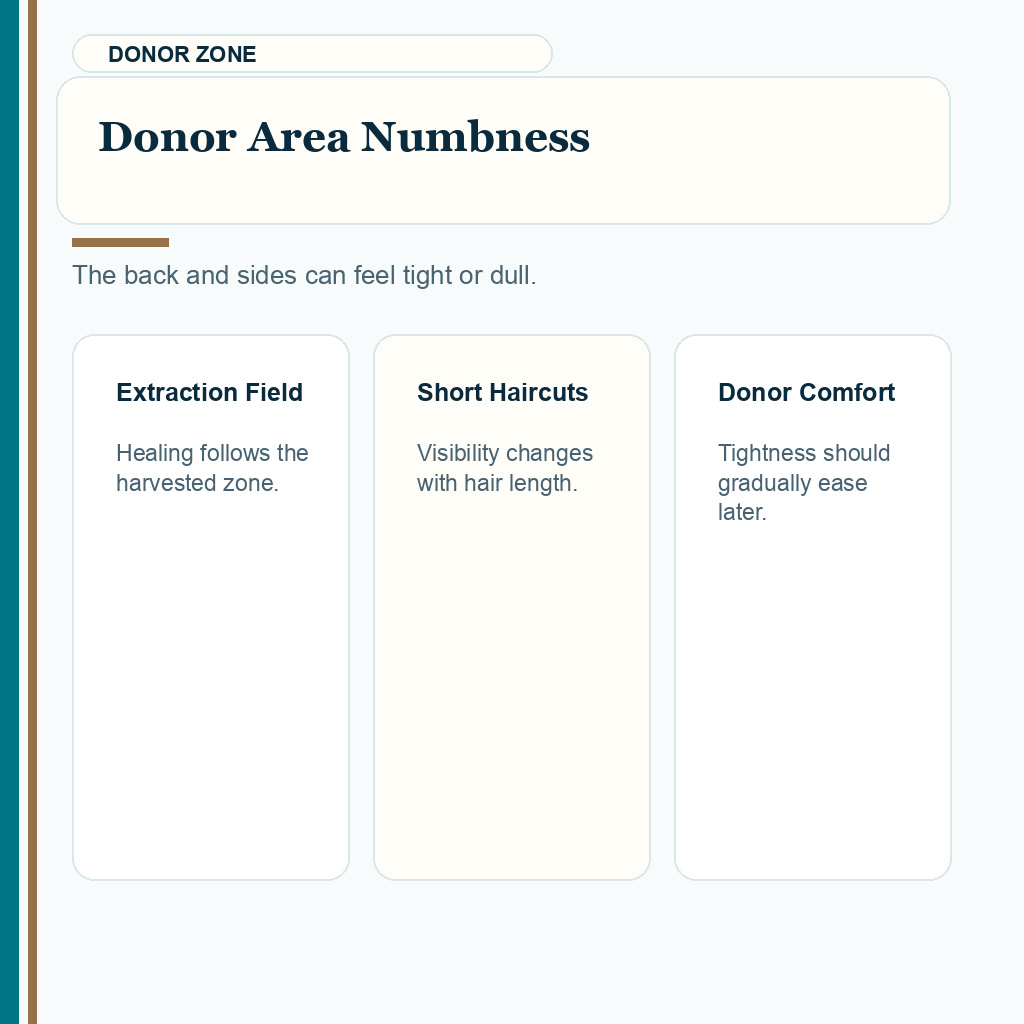
Yes, donor area numbness can also be normal after FUE. The donor area has many small extraction points, and the skin may feel sore, numb, itchy, or sensitive while it heals.
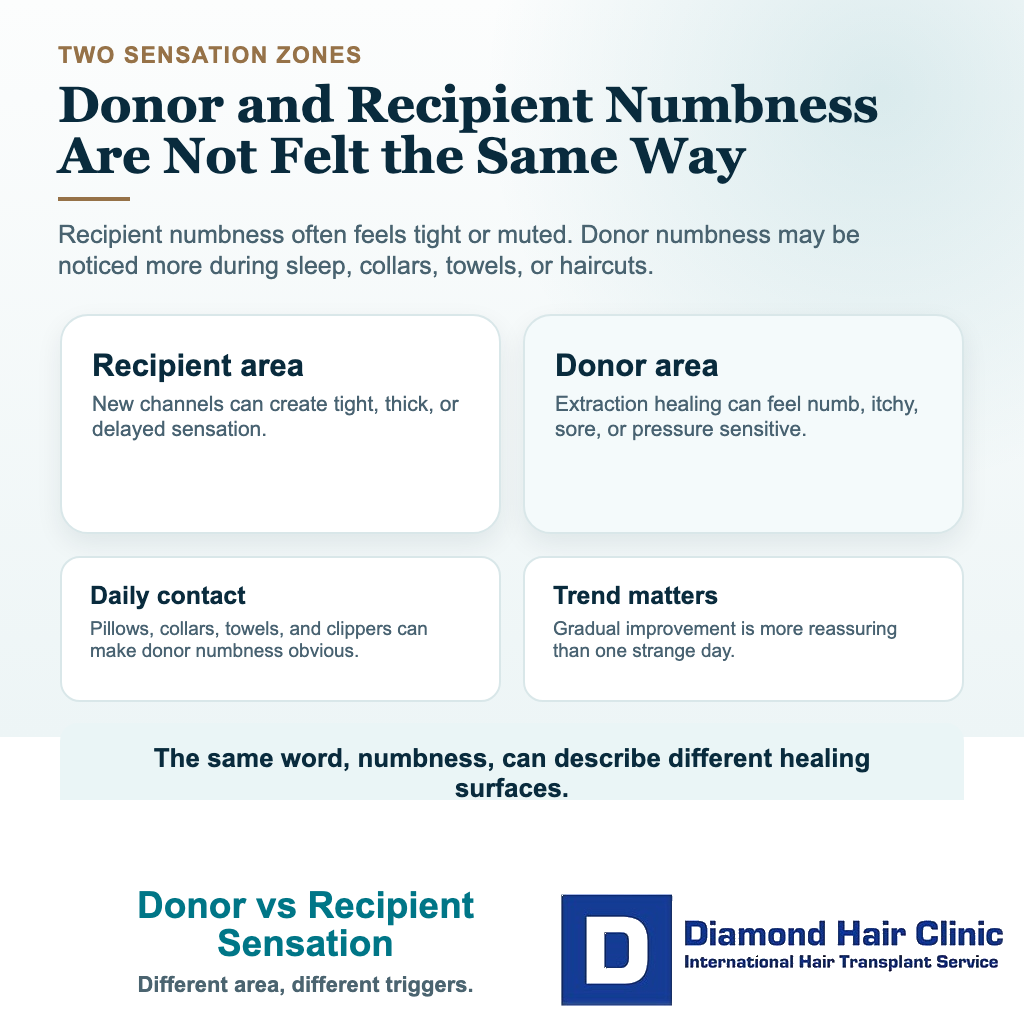
Donor numbness can feel more noticeable than recipient numbness because the back of the scalp touches pillows, collars, towels, and clipper areas during haircuts. Daily contact keeps reminding you that the area is still healing.
The donor area is not only a place where hair was taken. It is a limited resource that must heal well and still look natural. A careful look at the hair transplant donor area shows why donor healing and donor preservation belong in the same discussion.
If donor numbness is mild and gradually improving, that is usually part of recovery. If it comes with worsening severe pain, discharge, spreading redness, or fever, that is different and should be reviewed.
Numbness and donor damage are not the same. A numb feeling does not by itself mean the donor area was over harvested.
However, poor extraction planning can make donor healing more stressful. Donor management, spacing, and surgeon judgment matter from the beginning.
In donor area numbness, haircut length can also change perception. When the hair is very short, you see more skin and become more aware of every feeling. When the hair grows a little longer, the same donor area may feel less worrying because the visual contrast softens.
One harsh photograph or one strange feeling is not enough to judge donor recovery. The direction of change, skin condition, extraction pattern, pain level, and symptom trend all matter.
If the donor area feels numb but looks settled and improves gradually, that is very different from a donor area that becomes more painful, red, swollen, or wet.

Tingling or burning can appear as sensation returns
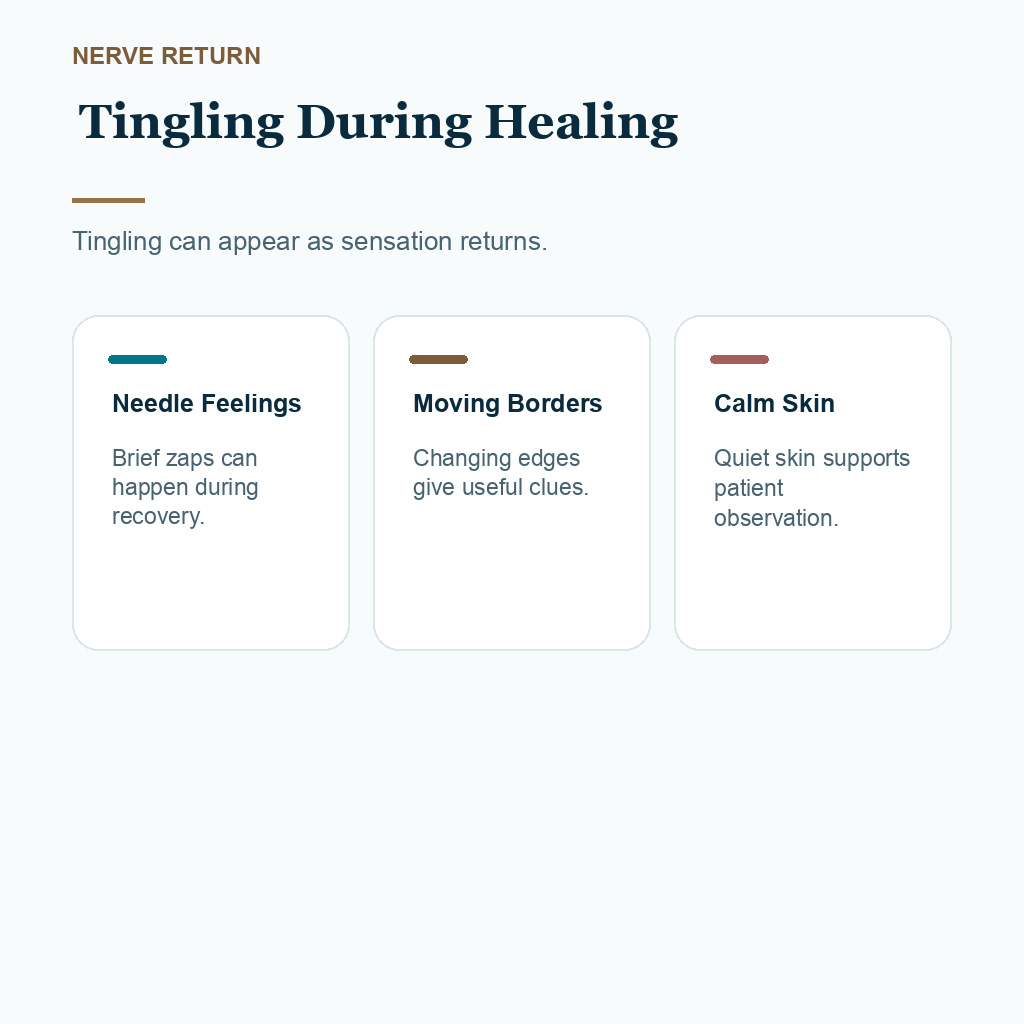
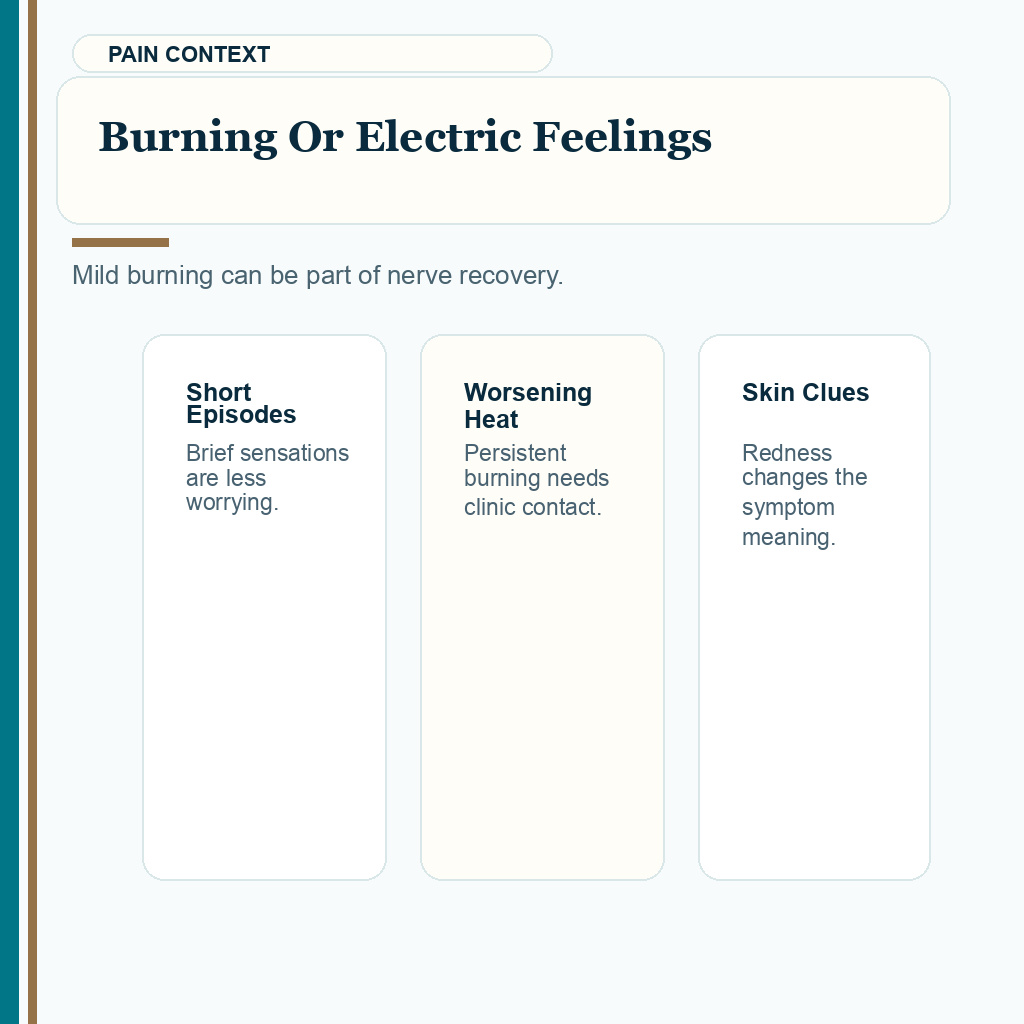
Tingling, pins and needles, mild burning, or sudden little stings can appear as the scalp nerves recover. This can feel alarming, but it often means sensation is returning.

The pattern matters. Mild tingling that is brief and improving belongs in a different category from symptoms that are worsening, spreading, or accompanied by redness, heat, discharge, or fever.
Those are different situations. Mild intermittent tingling is not the same as severe persistent burning with inflammation.
Itching can also appear during this stage. The difficulty is not the itch alone, but the urge to scratch. Scratching the recipient area too early is more dangerous than the itch itself.
If sensation changes disturb sleep, review the sleeping setup. Pressure and friction can make the scalp feel stranger. The method in sleep after a hair transplant is designed to reduce contact during the early period.
Do not apply random creams, oils, or numbing products without guidance. A product that seems harmless can irritate healing skin.
Some patients describe little electric feelings. Others describe warmth, crawling, or sudden sensitivity when the wind touches the scalp. These descriptions can sound alarming, but they often reflect nerves waking up rather than something failing. If the feeling is sharper or arrives as zaps, I use electric shock sensations after FUE to keep timing, location, skin signs, and medicine in one record.
Still, intensity matters. Mild scattered tingling is one thing. Severe burning that prevents sleep and keeps worsening is another. Your surgeon needs to know the difference.
When you describe the sensation, avoid dramatic conclusions and focus on practical detail. The location, strength, direction of change, and anything that makes it worse are more helpful than a frightened guess.
How long should I wait before worrying?
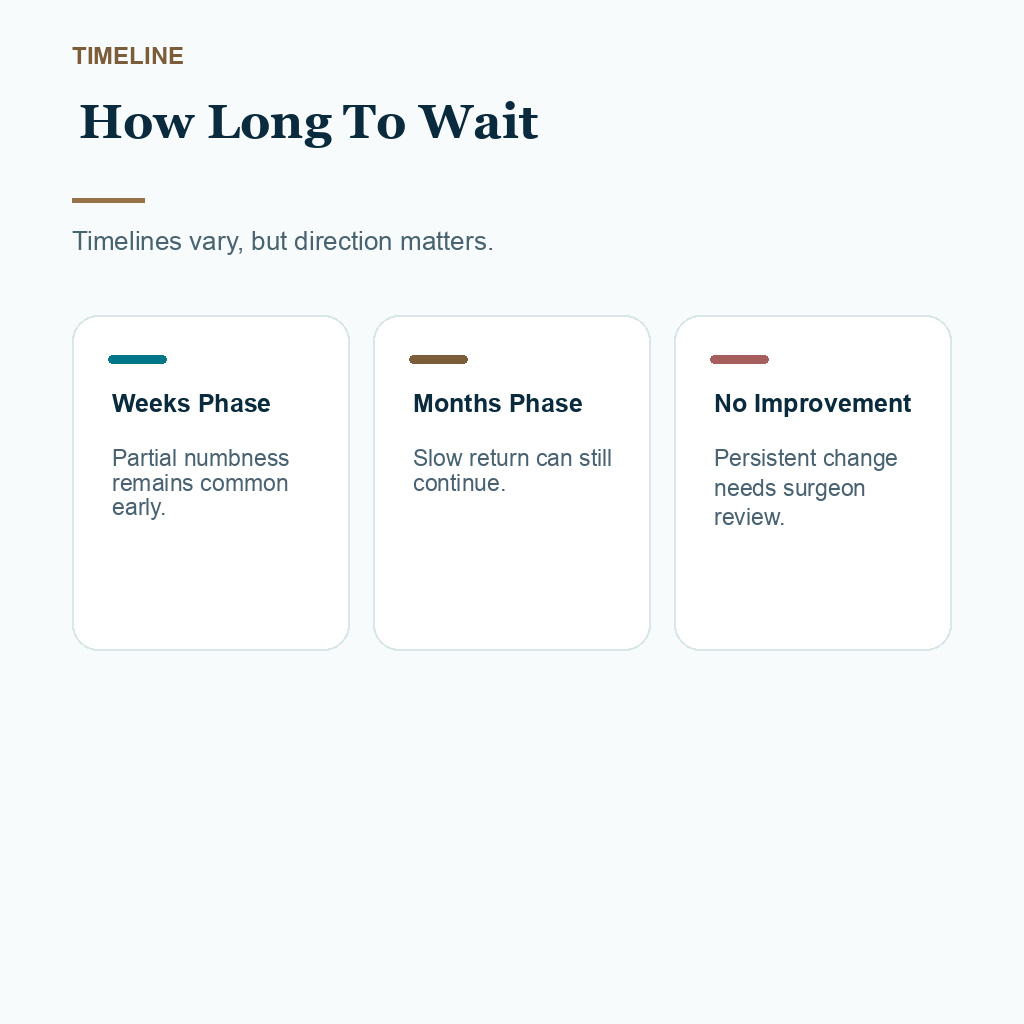
If numbness is gradually improving over weeks, I am usually reassured. If small areas still feel altered at 1 to 3 months, that can still be within a normal recovery range.
The trend matters more than one day. You may feel more sensation one day and less the next, especially after poor sleep, swelling, heat, sweating, or too much checking.
Symptoms become more concerning when they worsen instead of improving. Severe pain, fever, pus, spreading redness, bad smell, black tissue, or increasing swelling are not symptoms to ignore.
Numbness needs clinic review when it is paired with strong tenderness in one specific spot, repeated painful bumps, or a donor area that is becoming more uncomfortable rather than easier.
If you are judging growth, be careful. Numbness and growth are separate timelines. Early growth anxiety is very common, and low density at 4 months after a hair transplant is one example of why early judgment needs patience.
The scalp can be numb and still be healing normally. The result can be immature and still be on track.
Use a trend based view. If the numb area is smaller, softer, less tight, or less noticeable over time, that is reassuring. If the symptom is static but not painful, it may still need patience. If it is getting worse, then it deserves review.
The body rarely heals in a perfectly straight line. You may have a good week, then feel more tightness after poor sleep, heat, or too much activity. That does not always reset the recovery.
The detail that matters is the overall direction and the presence or absence of warning signs.
Numbness can last longer than 3 months in some cases
Numbness can sometimes last longer than 3 months in small areas, especially after larger procedures, sensitive skin, or strong donor area irritation. This is not necessarily a sign of failure.
The reassuring pattern is either gradual improvement or at least no worsening. A small patch that is slowly becoming less noticeable is very different from an area that becomes more painful, swollen, hot, or abnormal in appearance.
If numbness is unchanged for several months, or if it affects daily life, it deserves review rather than leaving you guessing. A proper review can separate slow nerve recovery from a symptom that needs closer attention.
Does numbness mean the hair transplant failed?
No, numbness by itself does not mean the hair transplant failed. It is a sensation issue, not a direct measurement of graft survival.
Emotional investment can make every sensation feel like failure. A tight scalp becomes fear. A numb patch becomes fear. A tingling area becomes fear. That reaction is understandable, but it is not a reliable way to judge the result.
Hair growth has its own timeline. Transplanted hairs may shed, rest, and then grow gradually. Sensation may improve on a different schedule.
In practice, I avoid judging the transplant from one symptom. A transplant needs judgment with photos, examination, timing, donor appearance, and the clinical pattern, not only by what the scalp feels like on a particular day.
Early judgment can be misleading when you are trying to decide whether a hair transplant failed or it is too early.
Worry is easier to review when the message is specific. Send photos and describe the sensation clearly. Is it numb, burning, sharp, itchy, or painful? The exact description helps the surgeon decide what matters.
Comparison is another trap. One person may feel normal after a few weeks. Another may have numb patches for 1 to 3 months. Both can still be healing within a reasonable range.
The operation size, donor extraction pattern, skin sensitivity, swelling, anxiety level, and aftercare habits all influence how recovery feels.
Comparison can help when it gives perspective, but it becomes harmful when every normal variation starts to feel like personal failure.
Pain can mean something different from numbness
Pain and numbness can overlap, but they are not the same. Numbness is reduced or altered feeling. Pain is discomfort. A mild sore donor area can be normal early, but severe or worsening pain deserves more attention.
Donor pain deserves more caution when it is sharp, increasing, one sided, associated with swelling, or accompanied by redness, discharge, bad smell, fever, or a feeling that the area is getting worse rather than better.
Do not dismiss strong donor pain as numbness. I discuss severe pain in the donor area after a hair transplant separately because it needs a different level of attention.
The same is true in the recipient area. A strange numb or tight sensation may be part of healing. Severe pain with visible skin changes should be reviewed.
The practical distinction matters. Numbness that slowly improves is usually watched. Pain that worsens, spreads, or comes with infection signs should be checked.
The point is not to frighten patients. It is to avoid placing every symptom into the same category.
Some habits can make numbness feel worse
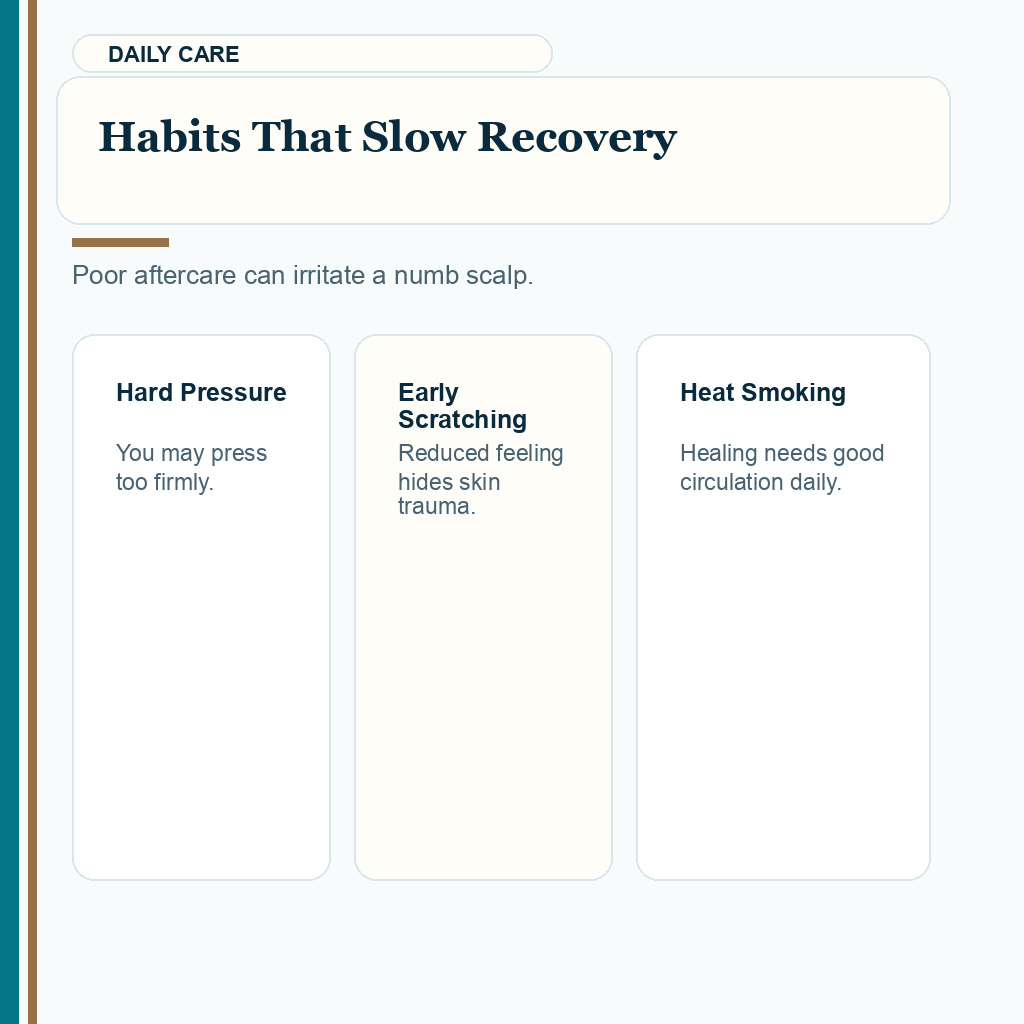
Pressure, heat, swelling, poor sleep, aggressive washing, early exercise, tight hats, helmets, and anxious touching can all make altered sensation feel worse.
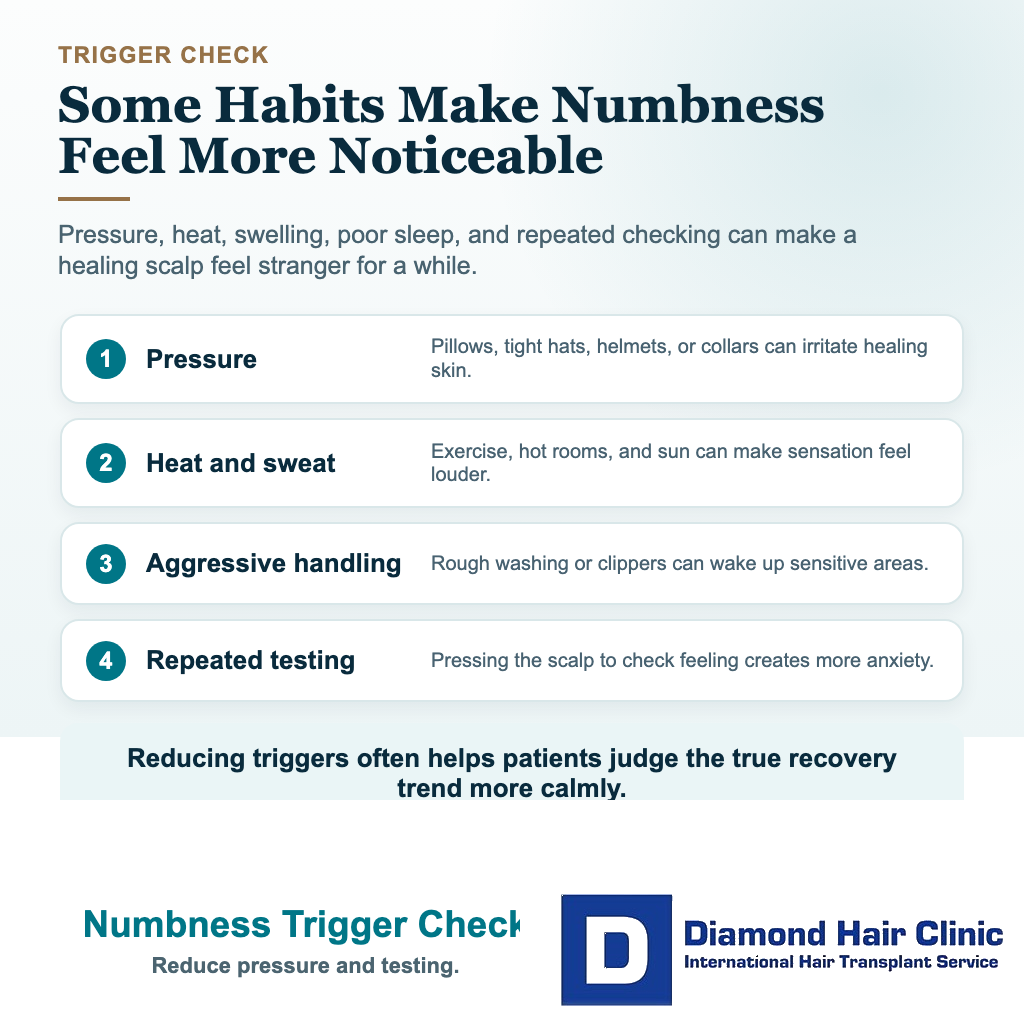
The scalp may also feel stranger after a haircut if clippers vibrate near numb or sensitive donor skin. This alone does not mean that the donor was damaged, but it can make you more aware of the healing area.
Treat haircut timing with the same staged caution described in haircut after a hair transplant. Do not rush clipper contact on healing donor or recipient skin.
Exercise can also increase heat, swelling, sweating, and pressure. My guidance on exercise after a hair transplant stays conservative for that reason and matches the wider aftercare approach.
Repeatedly tapping or pinching the scalp to test sensation is not helpful. It turns recovery into a habit of provocation.
Less provocation gives the scalp a better chance to recover. It also gives your mind less material to worry about.
Sun exposure can also make the scalp feel more reactive. Heat can increase awareness of tightness and itching, especially in patients whose redness is still settling. The timing guidance in sun after a hair transplant matters here because numb or irritated skin may not warn you early enough. Avoid heat before the scalp can accurately feel it.
Alcohol and poor sleep can do the same thing indirectly. You may sleep in worse positions, touch the scalp more often, or become less careful with the routine. Recovery symptoms are not always caused by the transplant alone. Sometimes behavior makes them louder.
The core idea is to keep the scalp settled and avoid provoking it while it is healing.
Tell your surgeon when numbness changes or worries you
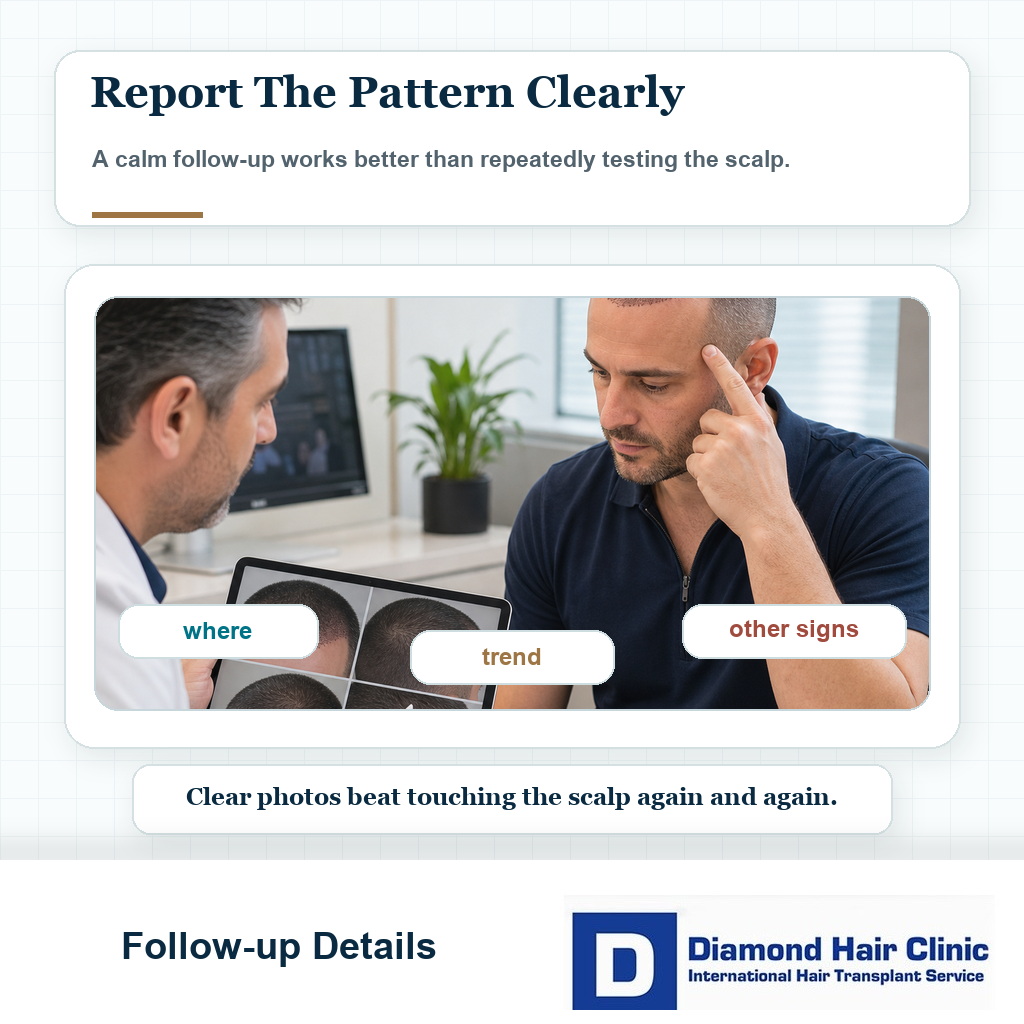
Tell your surgeon where the numbness is, when it started, whether it is improving, and whether there are other symptoms. Clear photos help if there is redness, swelling, pimples, or donor irritation.
Use direct descriptions. Numb, tingling, burning, sharp, itchy, tender, spreading, or improving. These words are clearer than saying the scalp feels strange.
Also mention anything that makes it worse. Sleeping on one side, exercise, hats, clippers, hot showers, sun, or washing can all change how the scalp feels.
An ethical clinic does not dismiss every concern and does not create panic where watchful observation is enough. That balance depends on surgeon led aftercare and communication.
For that reason, surgeon led responsibility matters during recovery. These questions need medical judgment, not automatic replies.
Severe or worsening symptoms should not wait for a routine follow up. Prompt review is safer than waiting for the next scheduled message.
Altered feeling that extends beyond the scalp into the eyelid, cheek, or another part of the face should not be assumed to be routine scalp recovery. Tell the surgeon where it starts and ends and arrange medical assessment. Sudden facial drooping or numbness with arm weakness or a speech change needs emergency care.
Describe how much the numbness affects daily life. A small area noticed only when touching the scalp is different from numbness that disturbs sleep, comes with headaches, changes after washing, or keeps expanding. These details guide the conversation.
Clear communication prevents two opposite mistakes. One mistake is panic over normal healing. The other is ignoring a symptom that deserves attention.
The right response is usually somewhere between those extremes.
How should numbness be handled after surgery?
Protect the scalp, follow aftercare, avoid testing the area repeatedly, and watch the trend. Numbness that slowly improves over weeks is usually different from numbness with worsening pain or infection signs.
Do not scratch because the skin feels strange. Do not press the recipient area to check feeling. Do not use harsh products because you want to wake the skin up.
Concern is easier to judge when the sensation is documented clearly. A message with photos is better than touching the scalp ten times a day.
Careful surgery includes recovery guidance. The operation is one day, but you live with the healing process for weeks and the result for years.
The practical timeline for numbness after a hair transplant is often weeks, sometimes 1 to 3 months, occasionally longer, and always interpreted with the full clinical picture. No fixed date can be promised for every patch of sensation, but persistent numbness should become softer, smaller, or easier to live with over time.
If the scalp is slowly improving and there are no warning signs, patience is usually the right medicine. If the symptoms worsen or look abnormal, review is the right decision.
Hold a practical balance. Do not fear every strange sensation, but do not hide symptoms that are clearly worsening. Clear attention is much better than either panic or denial.
Recovery can feel more noticeable when life becomes normal again. In the first week, you expect the scalp to feel strange. At week four or week six, you may expect everything to feel completely normal, so the same numbness feels more concerning.
This expectation gap creates many unnecessary fears. The skin may look healed, you may be back at work, and the donor hair may be growing, but the small nerves may still be catching up.
A numb patch may make a bump less noticeable. Take extra care around low doorways, shelves, car doors, and work equipment while sensation is reduced.
Improving sensation can be left to settle. No improvement after several months, or numbness paired with other symptoms, deserves review. Bringing that pattern to the clinic is responsible aftercare, not failure.
The aim is to give you enough information to stay observant without becoming obsessed. That balance is a real part of recovery.
When you understand this, you usually stop touching the scalp every hour. You wash with less fear, sleep more carefully, and give the nerves time to settle. That recovery is often easier than the recovery of someone who keeps testing the area.
Numbness is not pleasant, but the common pattern is temporary, explainable, and manageable. The best response is measured patience, clear communication, and careful respect for the healing scalp while the small nerves recover.
Read this review excerpt
First wash completed and visual instructions given to my daughter.