


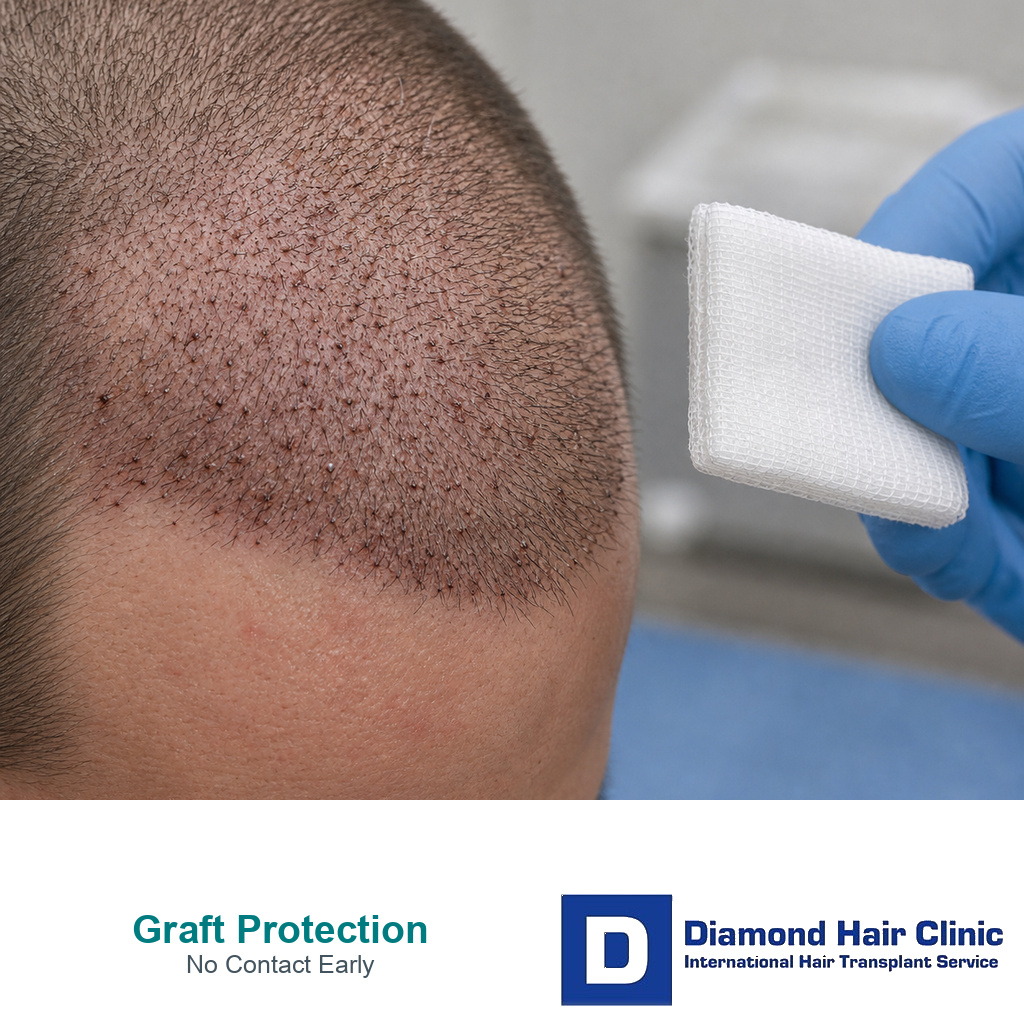
Touching Grafts During Early FUE Recovery
During the first 10 to 14 days after a hair transplant, keep hands, fabric, towels, caps, and bedding away from the recipient area unless your aftercare instructions specifically tell you otherwise. The first 3 days are the most delicate. After that, the grafts become more secure, but rubbing and pressure can still irritate healing skin until the crusts are gone and the skin has settled. This matters during soft headwear use, prayer, and wudu after hair transplant surgery, where a hand, towel, cap, or forehead can reach the graft line without the patient noticing. For drying, use a drying method that protects grafts from rubbing and keep fabric off the grafts.
A light accidental brush without bleeding usually does not mean the grafts are ruined. Look for details that change urgency, including a forceful scratch, a direct impact after surgery, a bleeding point, an open spot, a barber or clipper nick after FUE, or a piece of tissue coming out. Pet contact near fresh grafts needs calm documentation rather than repeated checking. Photograph the area once, note what touched the scalp, and stop checking it again by touch.
A hair system after surgery needs graft contact planning because glue, tape, clips, and repeated removal can all press or pull on healing grafts.
This question creates real anxiety for many patients. After surgery, the new grafts are visible, the scalp looks fragile, and every small contact can feel like a disaster. But panic can become its own problem if it makes you test the grafts again and again.
Separate a brief accidental brush from trauma that leaves bleeding, a gap, or increasing pain. Repeated checking usually creates more irritation than the original light touch. If you slept on your grafts, judge the event by pressure, bleeding, and visible change rather than by anxiety alone.
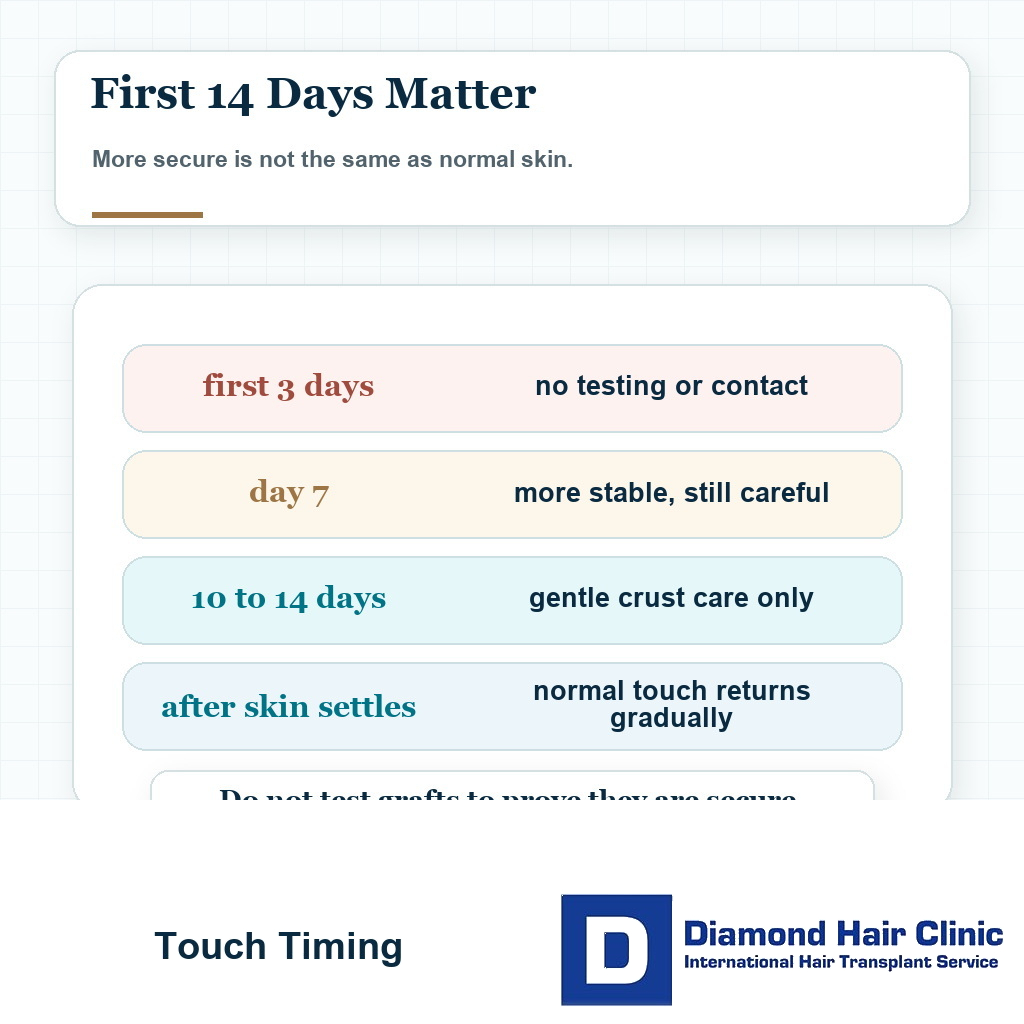
The first 10 to 14 days matter most
The 10 to 14 day window matters because the grafts are settling and the skin is closing around them. In the first days, the grafts are more vulnerable to direct trauma, rubbing, scratching, and pressure. Sneezing or coughing after a hair transplant usually creates anxiety because the scalp feels vulnerable, but the practical check is bleeding, contact, and timing rather than the sound itself. Glasses or sunglasses need attention if the frame arms cross temple grafts, and headphones need attention if a band crosses the recipient area. Careful behavior during this period supports early healing.
At Diamond Hair Clinic, early recovery is explained through practical rules rather than fear. The first wash is performed 2 days after surgery, and the 10th wash falls on day 12. This timing matters because crusts should soften gradually, not be forced off by impatience.
The broader guide to hair transplant aftercare explains the full recovery sequence. The key point is direct. The recipient area is not normal skin during the first 2 weeks.
The grafts do become more stable as days pass. By the end of the first week, they are usually much more secure than they were on day 1. Still, this is not the moment to act as if nothing happened.
Healing strength is not the same as normal strength. The skin can look better before it is ready for careless handling. Keep the same careful mindset through the first 10 to 14 days, even if the scalp already looks calmer in the mirror.
You may feel physically well much earlier than the recipient area is ready to be treated normally. This belongs among the traps of modern FUE recovery. Because there is no large open wound in the way many patients imagine surgery, it is easy to underestimate how carefully the recipient area still needs to be handled. Rubbing or testing can also make a small surface issue look worse, especially if you are already worried about bumps or ridges after a hair transplant.
Testing the grafts will not tell you whether they are secure. Pressing, rubbing, or pulling only creates another event to worry about. Scalp massage after a hair transplant should not become a way to check graft strength. With saline spray after a hair transplant, keep the boundary clear. A soft mist is different from wiping, rubbing, or testing the grafts.
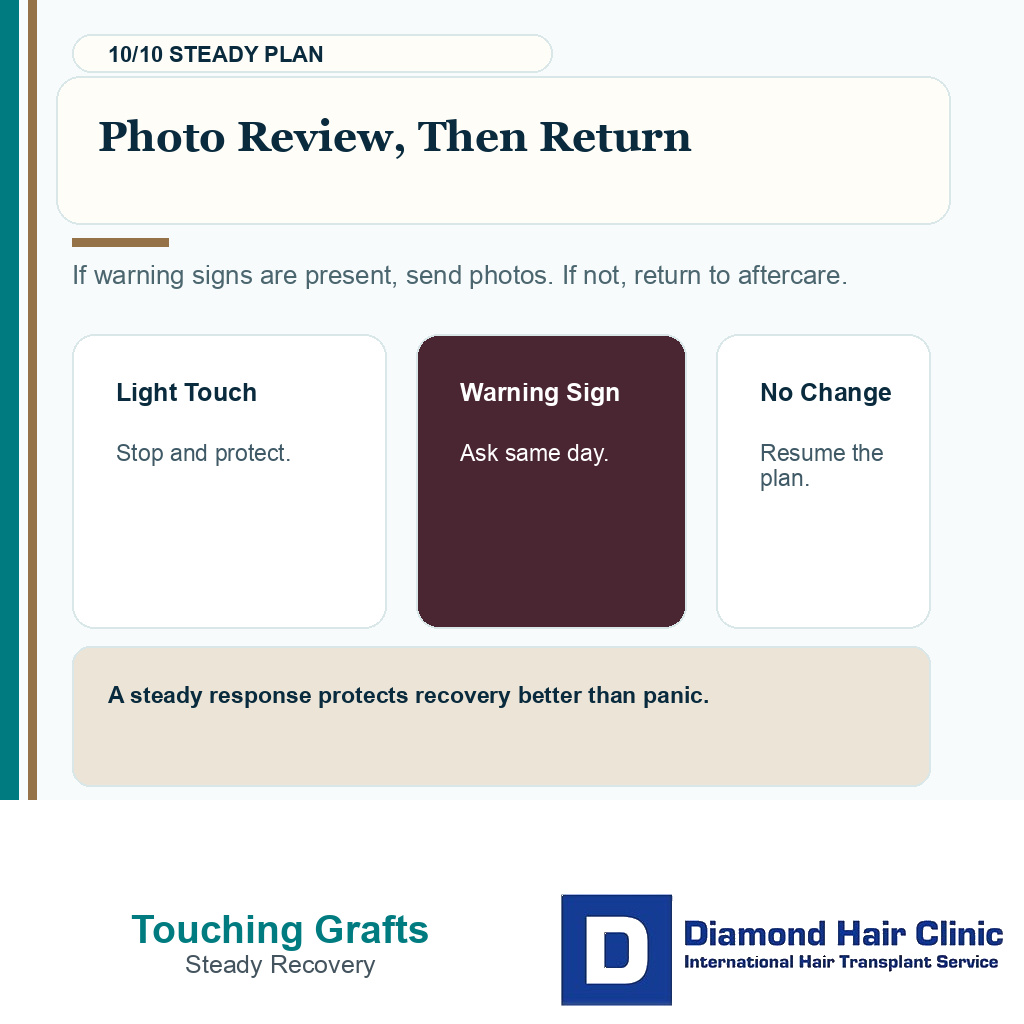
Use the 10 graft contact slides below to separate a light touch from a warning sign. Swipe the carousel, use the arrows for one step at a time, or choose a number below the image to jump to that point.



Day 3, day 7, and day 14
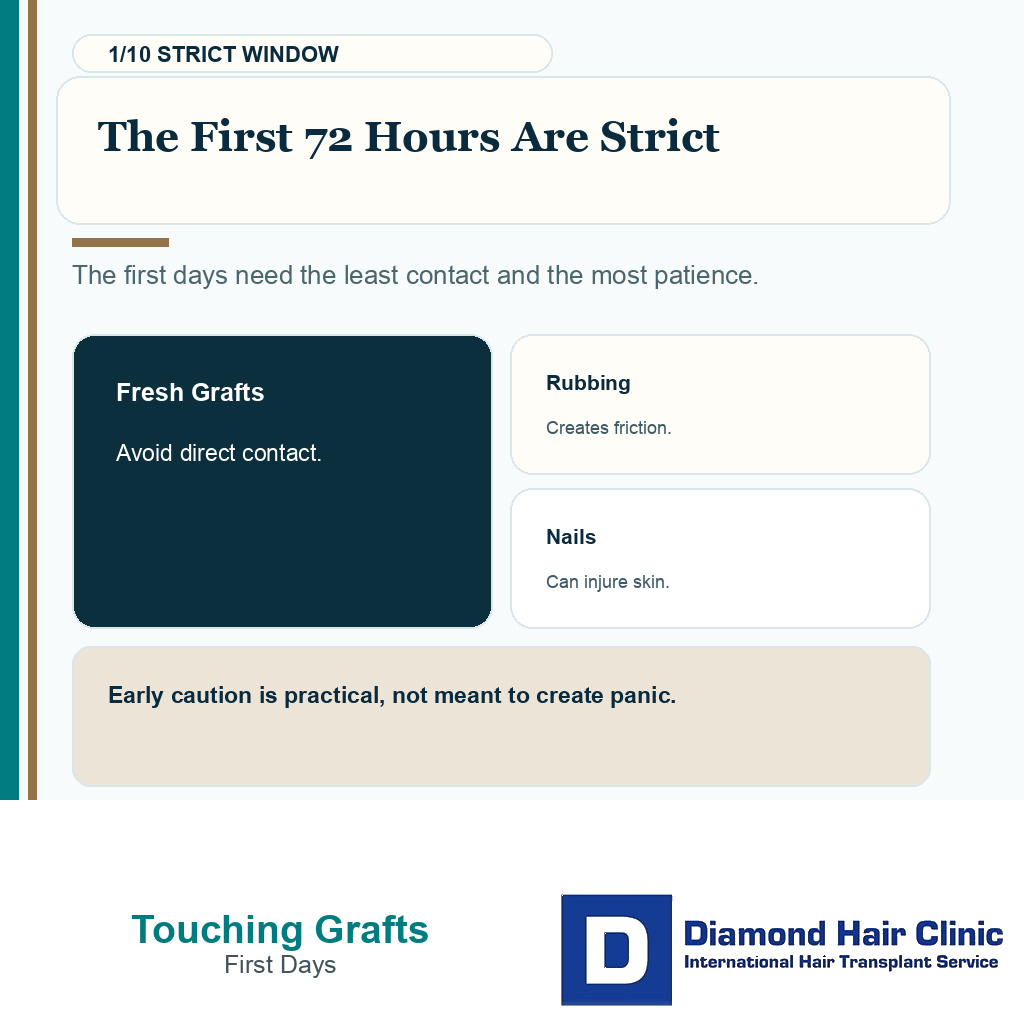
The first 3 days are the strictest period for avoiding contact. The grafts are newly placed, the scalp is sensitive, and a direct scratch or hard impact deserves attention.
After day 7, grafts are usually much more stable than they were on day 1, but rubbing, picking, or testing the recipient area is still a bad idea. More secure does not mean the scalp is normal again.
Around the second week, the risk of physically pulling out a graft falls sharply, especially once crusts have softened and started to clear. That does not make picking safe. A loose flake is different from an attached crust that is being forced off.
By day 10 to day 14, crusts are usually being cleared or have already cleared under proper washing guidance. At that point, gentle normal contact becomes less concerning if the skin has settled, but aggressive rubbing and scratching are still bad habits.
This timeline gives practical guidance without encouraging risky behavior too early. A graft can be more anchored while the surface skin is still healing, and those are not the same thing.
Touching compared with trauma
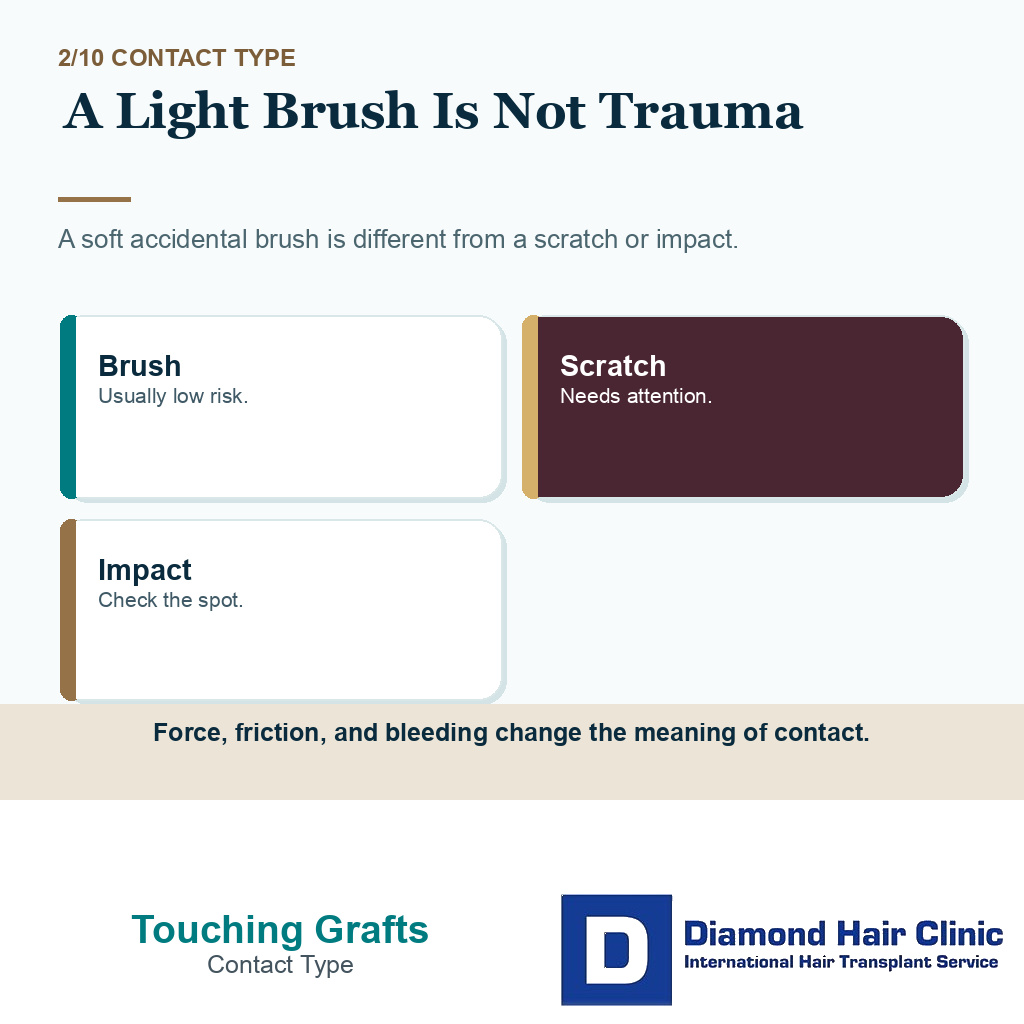
Not every contact is the same. A sleeve lightly brushing the forehead is different from a fingernail scratching the grafts. A gentle wash performed correctly is different from rubbing with a towel.
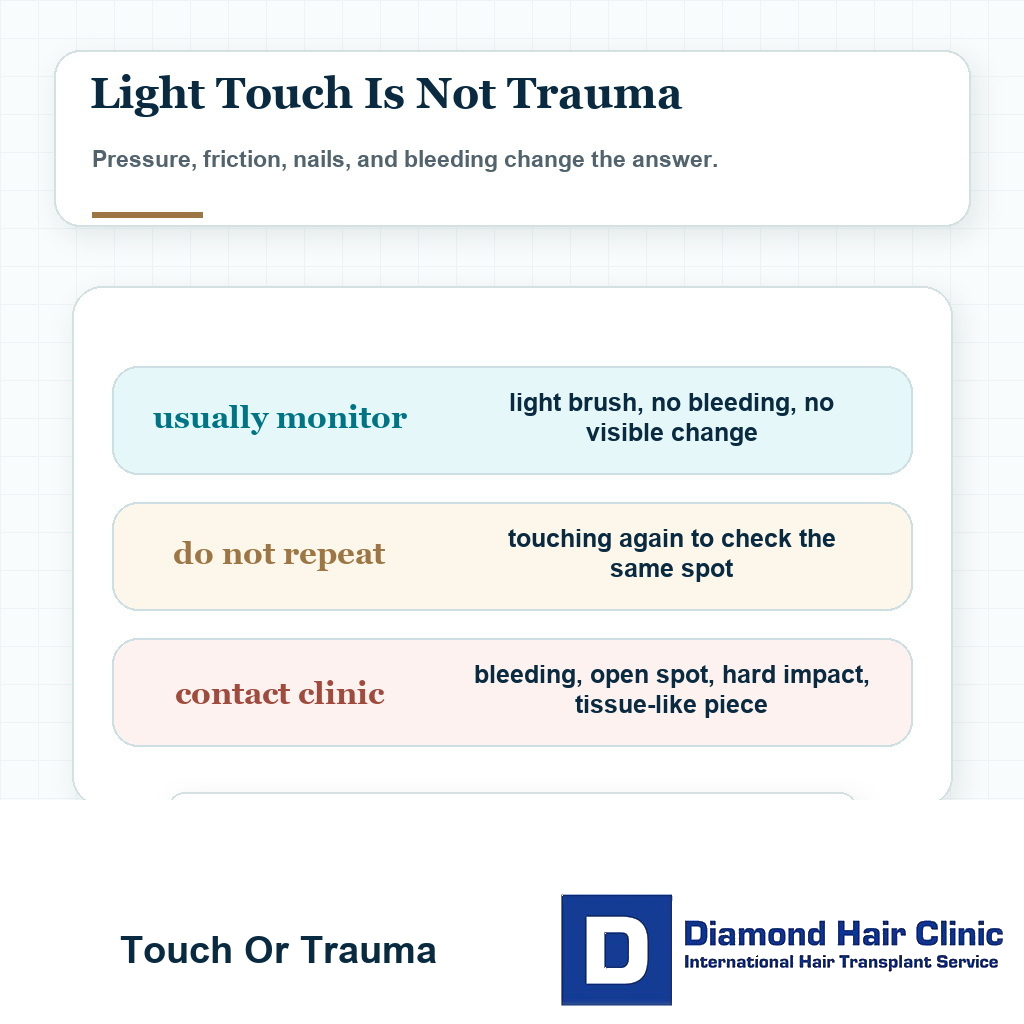
When this kind of contact is reviewed, pressure, friction, scratching, and bleeding matter most. The more of these are present, the more seriously the event needs to be taken.
A light accidental touch without pain, bleeding, or visible change is usually not a disaster. The right response is to stop touching and protect the area, not to spiral into panic.
Give the clinic the sequence, not only the fear. Say what touched the grafts, how hard it was, whether bleeding followed, and what you did next, because repeated checking can become a second irritation.
Forceful rubbing is different. Scratching with the nail is different. Pulling scabs by force is different. A direct bump against a hard object is different.
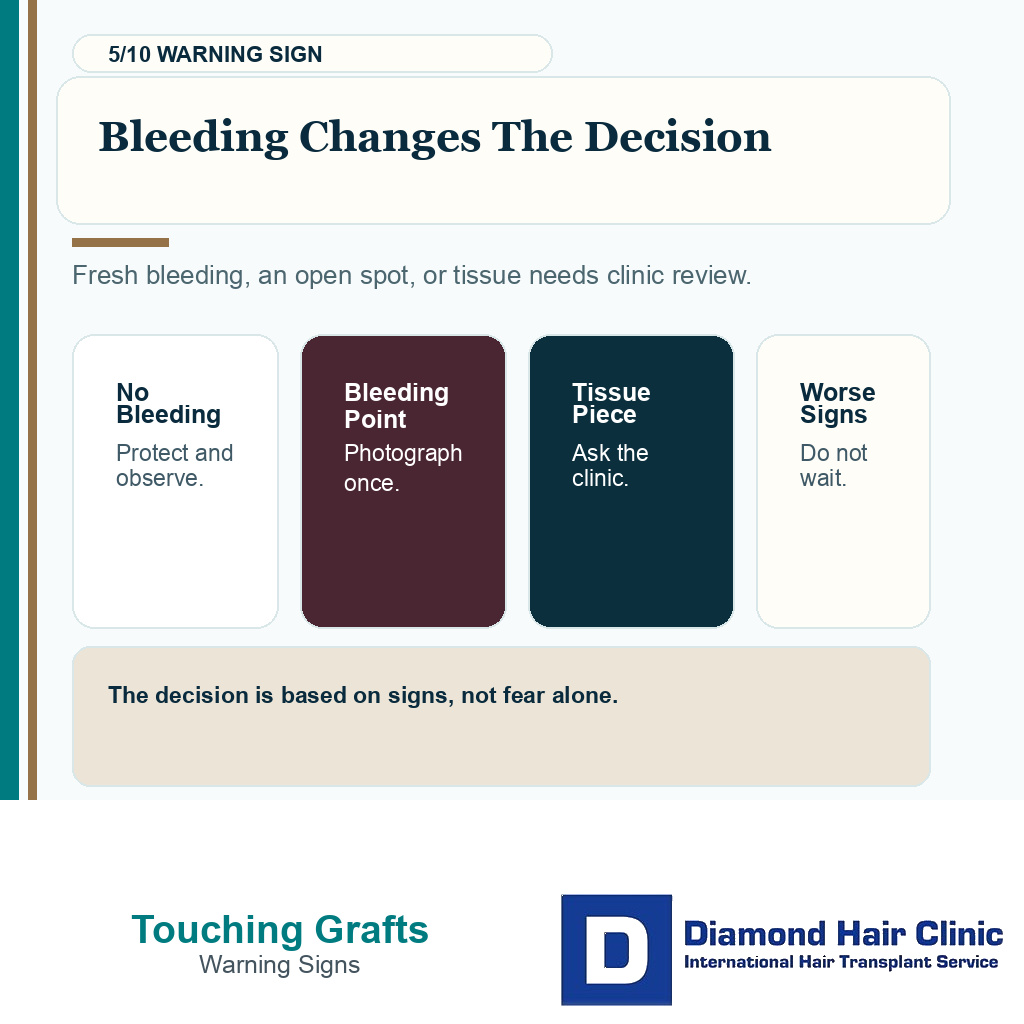
If the scalp bleeds from the exact spot of contact, that deserves attention. If a small piece of tissue comes out with a fresh bleeding point, that deserves clinic review. Do not try to diagnose it with your fingers.
Many patients confuse contact with pressure. A hat, pillow, car headrest, hoodie, helmet, or towel may not feel like active touching, but it can still create friction or pressure, especially during car travel after a hair transplant. What matters is not whether you meant to touch the grafts. It is how much pressure, rubbing, or scraping reached the recipient area.
Clothing is another common source of contact. A tight neck opening can drag across the grafts. A hoodie can catch the front hairline. A towel can create more friction than the patient realizes if they dry the scalp as they used to before surgery.
Durags, hats, pillowcases, shirts, and towels should wait if putting them on or removing them drags fabric across the recipient area.
Think about behavior, not only accidents. Repeated small contact can matter more than one harmless brush.
After accidental graft contact
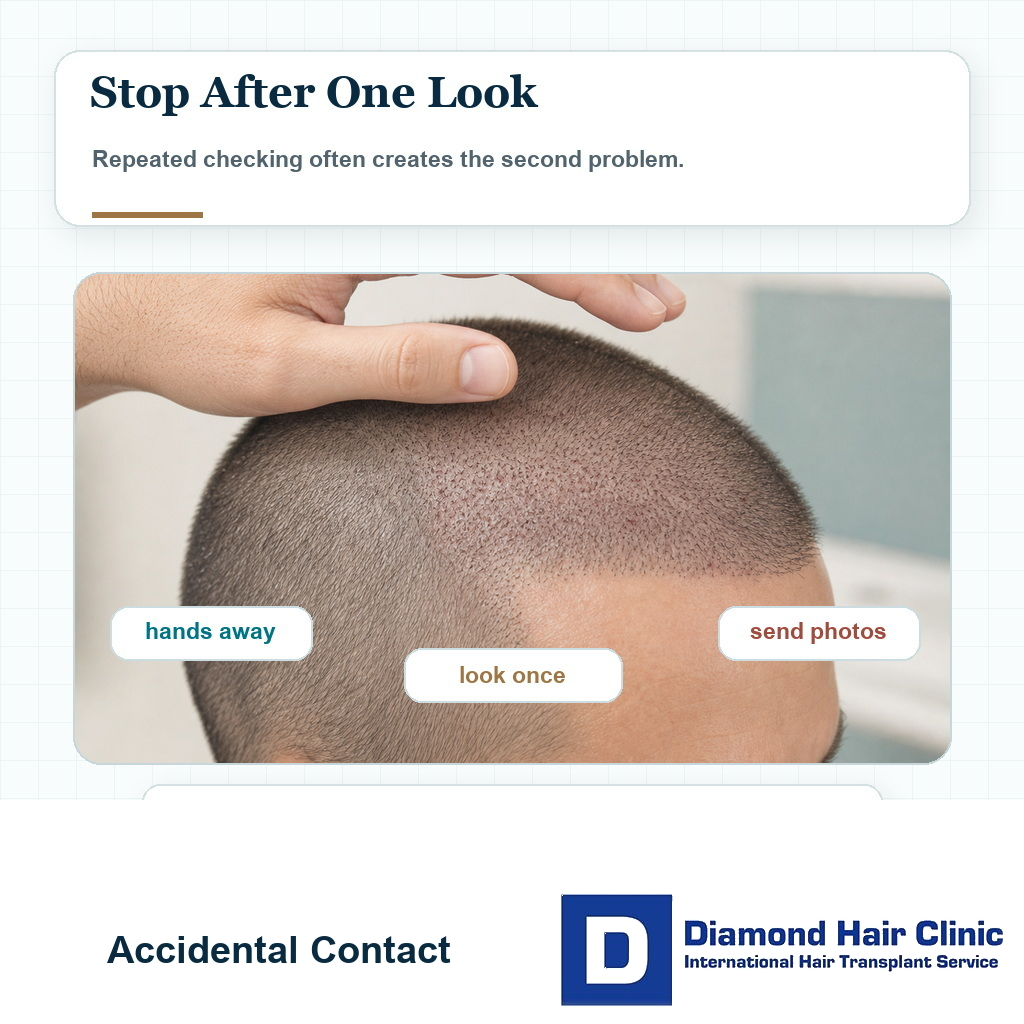
Start by stopping the contact. Do not check the same spot again and again. Many patients create the second problem while trying to understand the first one.
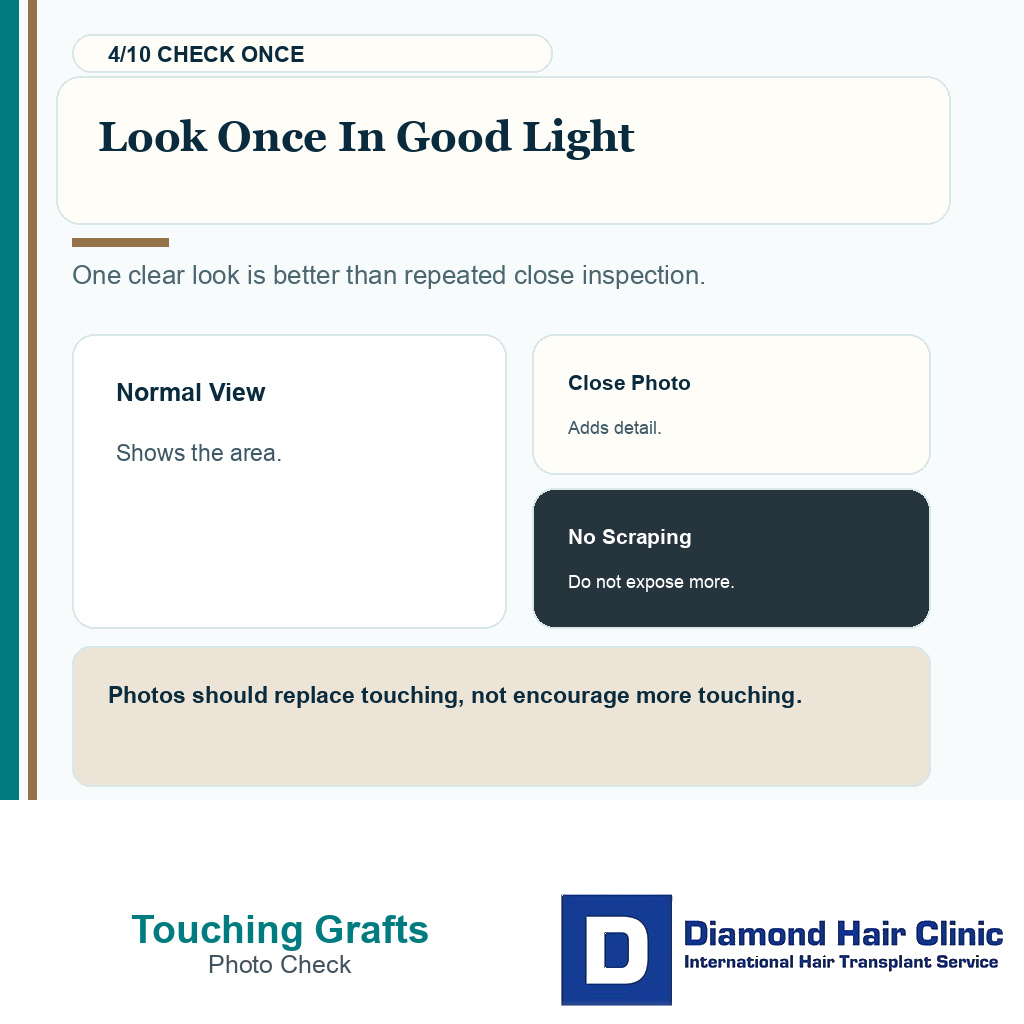
Look once in good light. You are looking for bleeding, a visible gap, an open spot, increasing swelling, or a piece that looks like tissue rather than a dry flake. Do not scrape the area to see more clearly.
Take clear photos. Use one photo from a normal distance and one closer photo. A very close photo alone can make normal healing look dramatic and can confuse both the patient and the clinic.
With no bleeding, no pain, no open spot, and no visible change, returning to careful aftercare is usually enough. If there is bleeding or a clear piece of tissue, document it once and follow the clinic’s instructions.
The wrong response is repeated inspection. Pressing, parting hairs, picking at crusts, or touching the same area to see whether it hurts can create irritation. The scalp needs quiet aftercare, not repeated investigation.
If the contact happened while sleeping, improve the sleep setup. If it happened while dressing, change how you put on clothes. If it happened in a car, move more slowly and protect the head when entering or leaving. If it happened while caring for a young child after a hair transplant, arrange more help for the physical routines for a few days instead of testing the scalp again.
One small accident should not become a week of fear. But it should teach you where your recovery routine needs more caution.
Leave alcohol, strong antiseptic, oil, cream, and random healing gel off the spot unless your clinic instructs you. The useful first response is usually simple. Stop touching, take one clear photo, and ask the clinic.
Washing and crust removal
Washing is not the enemy. Incorrect washing is the problem. A proper washing routine softens crusts, keeps the scalp clean, and helps healing become more comfortable.

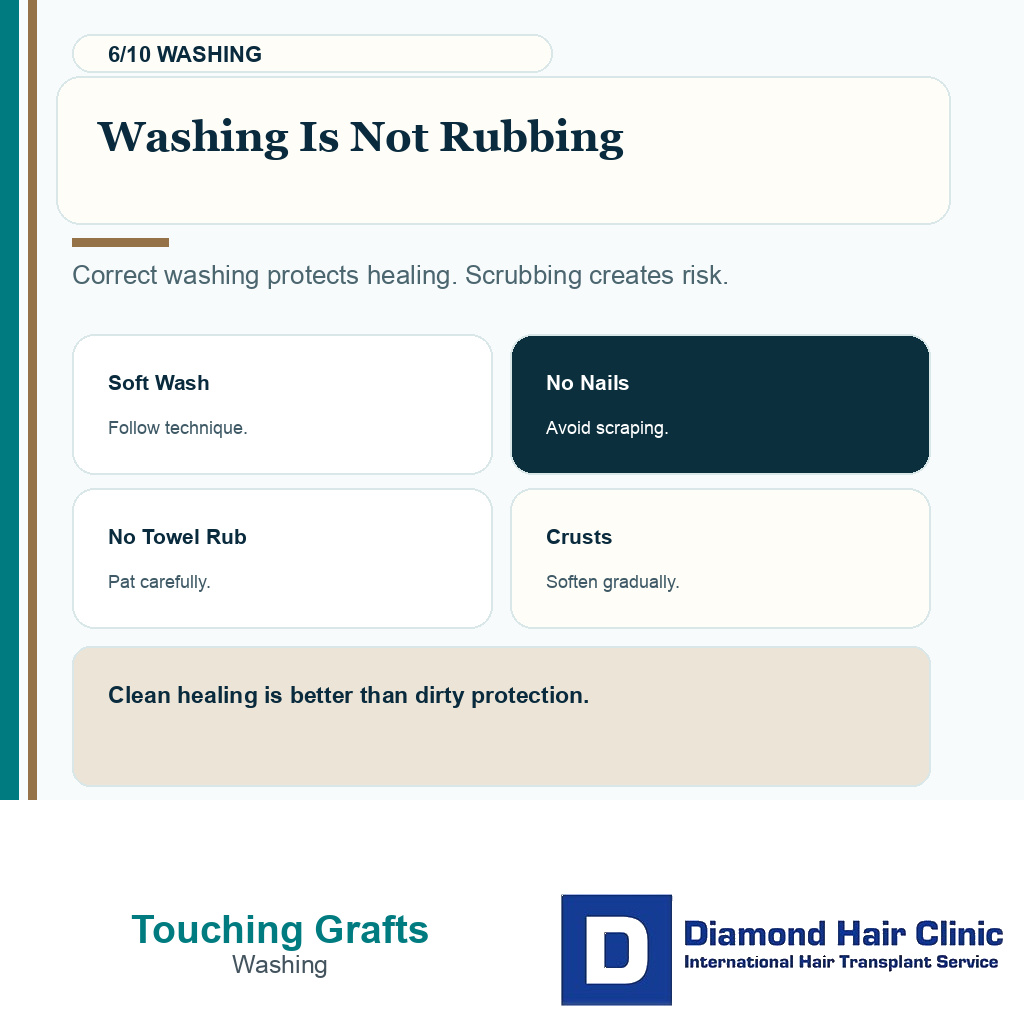
During the first days, washing needs to be gentle and guided by the clinic. Do not rub the recipient area with nails. Do not use strong water pressure. Do not use a towel to scrub the grafts.
Around day 10 to day 14, crusts may begin to come away more actively, depending on the clinic instructions and how the scalp looks. At Diamond Hair Clinic, patients are commonly guided toward gentle crust removal around day 12, which is the 10th washing day when the first wash was day 2.
Seeing short hairs inside dry scabs can be frightening. Commonly, this is not the follicle coming out. It is often crust material and the hair shaft shedding while the follicle remains under the skin.
After surgery, scabs with short hairs inside them can cause unnecessary panic.
A true graft loss event is more concerning when a small piece of tissue comes out with fresh bleeding from the spot. Even then, one possible lost graft is not the same as losing the transplant. Use photo review rather than panic.
Avoiding washing is not the goal. The plan is to wash correctly. Clean healing is better than dirty protection.
Crusts do not all leave at exactly the same moment. One area may clear earlier while another remains dry and rough. Uneven crust release does not always mean uneven graft survival.
If crusts remain beyond the expected period, do not attack them with force. Slow the washing down, soften the crusts carefully, and let the technique be adjusted if needed. Controlled softening is very different from picking.
Scratching, itching, and graft safety
Itching itself does not destroy grafts. Scratching can. Itching after surgery deserves practical guidance, not just reassurance.
The recipient area can itch as crusts dry, the skin tightens, and healing progresses. The donor area can itch because of extraction healing, short hair regrowth, dryness, or nerve sensitivity. Both can feel intense at certain moments.
Itching after a hair transplant can last longer than patients expect, but fingernails do not belong on new grafts.
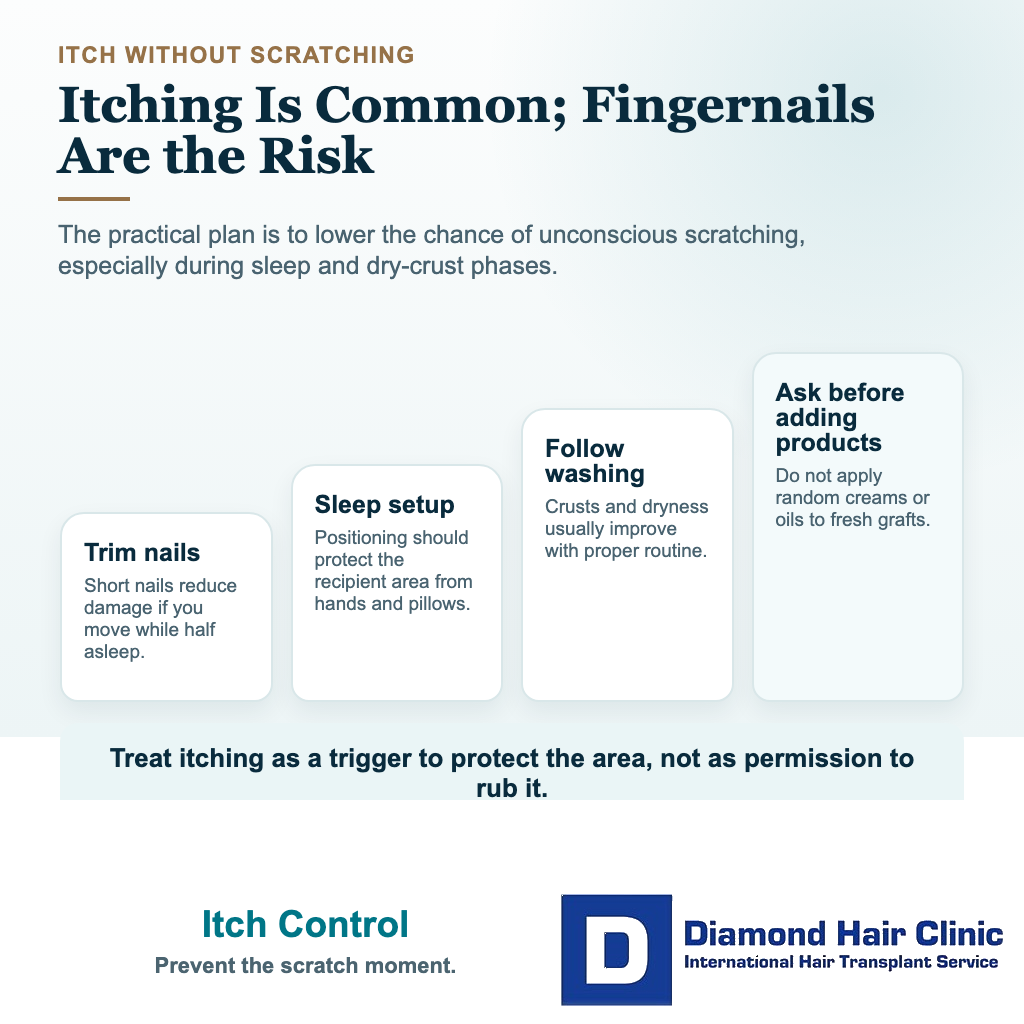
If you scratched lightly while half asleep and there is no bleeding or visible damage, do not assume the worst. But take it seriously as a warning. Improve your sleep setup, trim nails short, and avoid situations that make unconscious scratching more likely.
If scratching caused bleeding, document it once. If scratching removed a wet scab or a piece of tissue, document that too. If the area becomes more red, painful, swollen, or warm afterward, treat it as a warning sign and get clinical guidance.
Itching is a sensation. Scratching is an action. You may not be able to control the sensation completely, but you can reduce the action with preparation, short nails, better sleep positioning, and fewer situations where your hands reach the scalp automatically.
Patients who are very anxious often touch the scalp more. They think they are checking for safety, but they are actually adding irritation. Sometimes the best protection is to stop looking so closely for a while.
Take itching seriously even when the scalp looks normal. The symptom may be harmless, but the behavior it triggers can be harmful. A patient who scratches ten times a day is creating a different risk from a patient who feels itching and leaves the scalp alone.
Sleep, hats, and daily contact
Normal contact returns gradually. There is no one magic day when everything becomes safe. It is better to divide daily contact into separate situations.
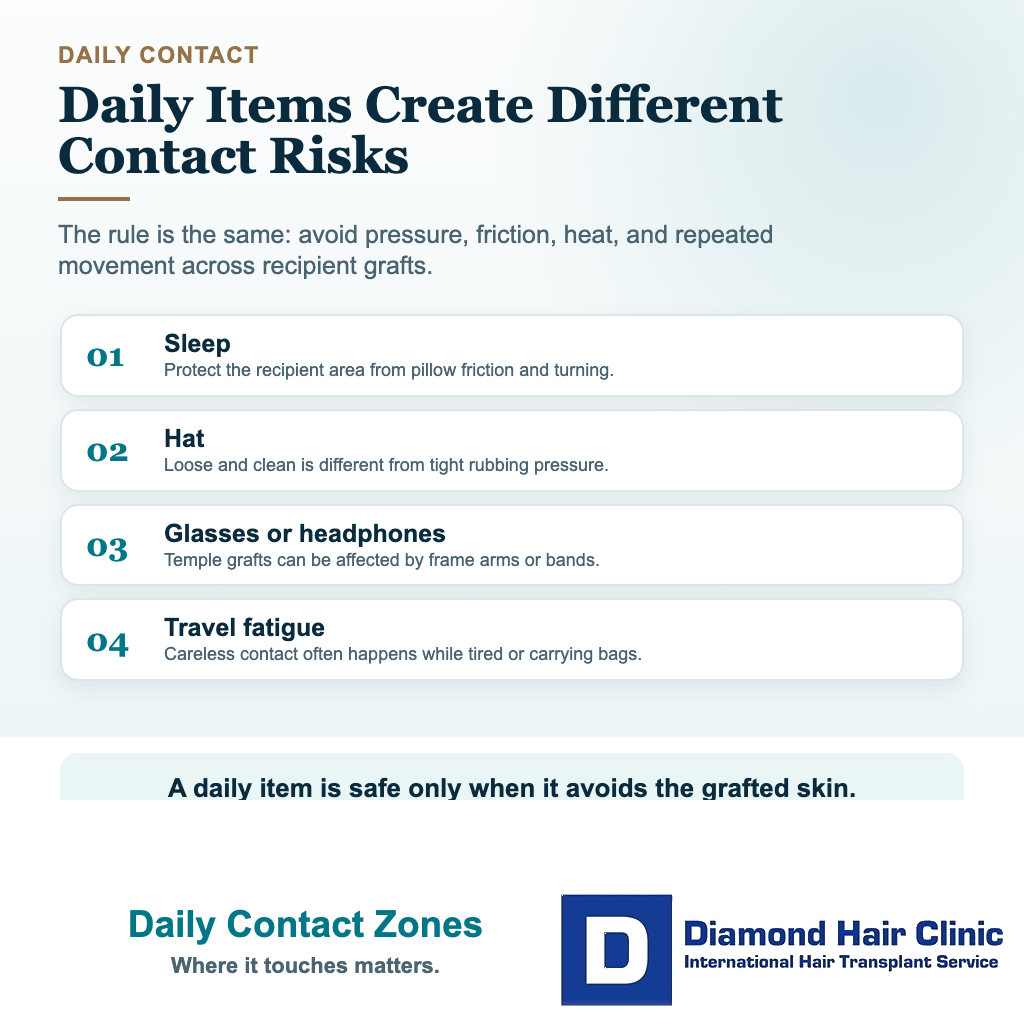
For sleep, protect the recipient area from friction and pressure during the early days. Sleeping on the back with the head elevated about 45 degrees is a common early instruction. A stable sleep setup helps reduce accidental turning and rubbing.
For hats, timing depends on the type of hat and the condition of the scalp. A loose clean hat used carefully is different from a tight cap that rubs the grafts. Wearing a hat after hair transplant depends on friction, heat, and graft safety.
For travel, the weaker point is often not the airplane itself. The weaker point is careless behavior while tired, carrying luggage, sleeping in a seat, removing clothing, or moving through crowded spaces. These moments can create accidental pressure or impact when the patient is distracted.
For haircuts, do not rush clippers over the transplanted area. The donor area may be trimmed earlier if it has healed well, but the recipient area needs more caution. Haircut after hair transplant gives the safer timing logic.
For normal touching, moderation still matters after the first 2 weeks. Once crusts are gone and the skin has settled, gentle contact becomes less concerning. But aggressive rubbing, scratching, and harsh products are still poor habits.
Daily life should return in stages. The scalp may look normal in a mirror before it is ready for careless pressure.
Normal hand contact depends on healing. If the crusts are gone, the skin has settled, and the clinic is satisfied, brief gentle contact becomes less concerning after the early protection phase. Rough rubbing, nail contact, and repeated checking are still poor habits.
Recognizing possible graft loss
Patients often think any hair falling out means a graft was lost. That is not correct. Transplanted hairs can shed while the follicle remains in place under the skin.
A dry scab with a small hair inside often looks alarming, but it does not always mean a follicle has been pulled out. The hair shaft can come away with crust material. This is part of why the early recovery period creates so much fear.
A more concerning event is a small piece of tissue coming out with fresh bleeding from the exact spot. Even then, document it once and ask for guidance rather than trying to inspect the wound repeatedly.
If a tiny blood spot appears weeks later around a pimple or ingrown hair, irritation or folliculitis is more likely than early graft dislodgement. That still deserves photos if it repeats, spreads, hurts, or leaks, but it is a different situation from a fresh traumatic pull in the first days.
If there is increasing redness, wet scabbing, pus, bad smell, fever, dark tissue, or worsening pain, the concern is no longer only graft loss. The concern becomes healing quality and possible complication. redness, scabs, and pimples after hair transplant explains these warning signs more fully.
Hairs on a tissue should not decide the result for you. A flake, short hair, or strange looking scab needs context, not a comparison with online photos or a conclusion about the whole transplant.
Hair transplant recovery is visually confusing in the beginning. The eye sees crusts, short hairs, redness, and shedding. The mind turns these into stories. A surgeon needs photos, timing, symptoms, and context.
The important question is whether the area was actually touched or whether shedding was only noticed during washing. These are different situations. Shedding can happen without trauma, while trauma usually has an event, a force, and sometimes a visible mark.
Use clear photos rather than more touching when you are unsure. The clinic can usually settle the question quickly when the image shows the area in steady light.
Repeated checking can become the problem
Patients keep checking because the result matters to them. They paid money, took time off, went through surgery, and now the outcome is sitting visibly on the scalp. That emotional pressure is real.
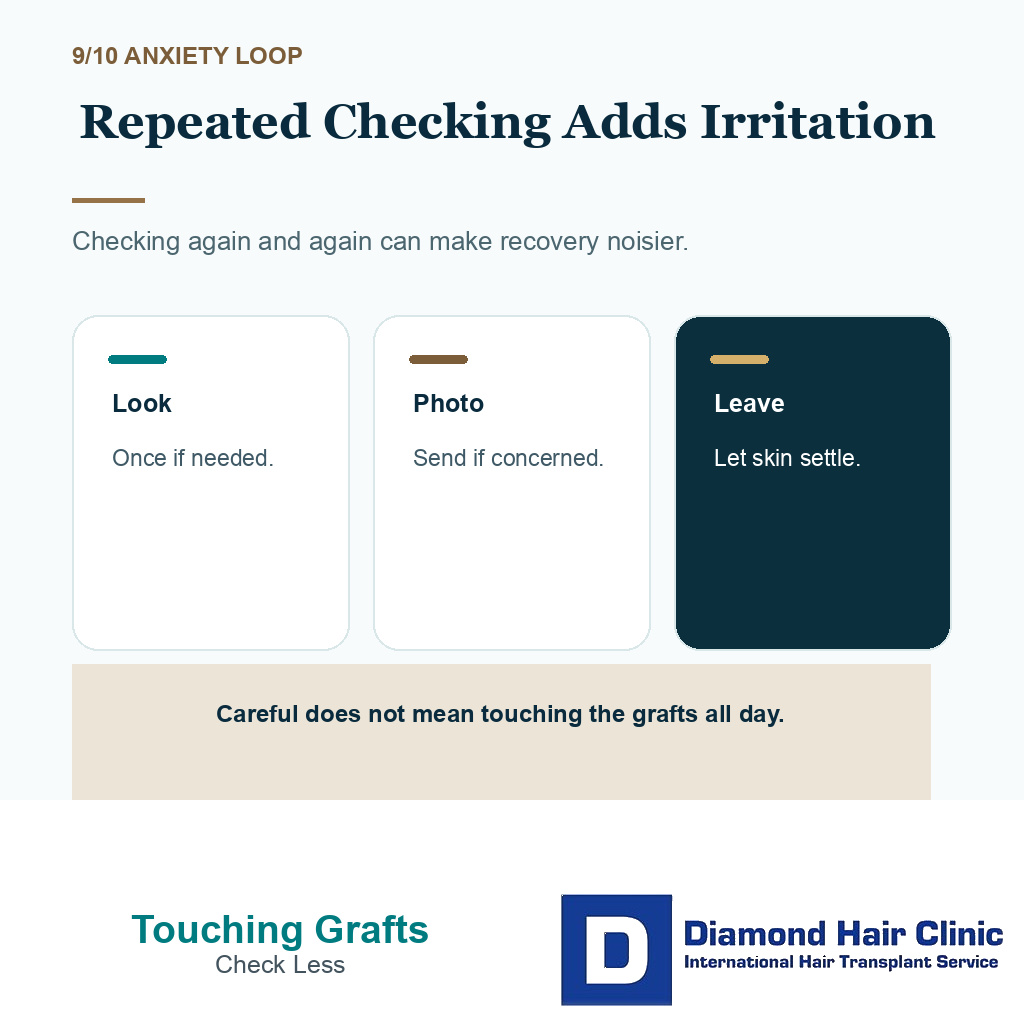
But repeated checking can become a habit that damages recovery comfort. You look once, become unsure, look again, touch the area, take a close photo, zoom in, feel anxious, and then repeat the cycle. This does not create safety.
Sometimes numbness makes this worse. You may press the scalp to see if feeling has returned, but that is not useful. Numbness after hair transplant can last for weeks and sometimes longer in small areas.
After surgery, fewer unnecessary touches and better quality observations help more than constant checking. Look with clean hands nearby, not on the scalp. Use good light. Take photos only when needed. Then leave the area alone.
A better routine is to check at planned moments, not every time anxiety appears. For example, check during the washing routine or when the clinic asks for photos. Random checking throughout the day rarely adds reliable information.
There is another psychological trap here. Patients often think that if they monitor every minute, they can prevent every problem. In reality, overmonitoring can make them more likely to scratch, pick, rub, or panic.
Careful does not mean obsessive. A well protected patient is not the one who touches the grafts the most. It is the one who follows instructions consistently and asks for help when something truly changes.
Protecting the donor area during graft recovery
Patients often focus so much on the recipient area that they forget the donor area also needs attention. The donor area does not contain newly placed grafts, but in larger sessions it has gone through many small extractions.
It can feel tender, tight, itchy, numb, or pressure sensitive. It may look red or patchy for a while. This does not always mean damage, but it does need proper management.
The donor area is central to future planning. You only have one donor supply, so early recovery discipline and surgical planning both matter.
Treat the donor area gently too, even though it feels safer than the recipient area. Aggressive rubbing can irritate the skin and make sleep more difficult. If donor pain becomes severe or worsening, that needs a separate donor area review rather than more rubbing.
Protecting the donor area also helps protect the grafts indirectly. If the back of the scalp hurts, you may sleep badly. Poor sleep can lead to more turning, and more turning can disturb the recipient area.
Recovery is connected. The recipient area, donor area, sleep, washing, clothing, and activity all influence each other.
Surgical technique and aftercare cannot be separated. A carefully performed transplant still needs careful recovery. The surgeon can place grafts well, but the patient must protect those grafts during the period when small careless habits can create unnecessary irritation.
One touch needs context, not constant testing
Accidental contact after FUE should be taken seriously, but panic can create more trouble than the touch itself. The important details are force, bleeding, tissue, repetition, and whether symptoms are getting worse.
If nothing changed after a light brush, return to the written aftercare. If there was impact, fresh bleeding, a loose piece that looks like a graft, or worsening pain, take one clear photo and contact the clinic.
The hardest part is leaving the grafts alone afterward. Extra creams, repeated checking, skipped washing, or forceful cleaning can turn a small incident into a noisy recovery. Careful recovery is steady, not obsessive.
Read this review excerpt
First wash completed and visual instructions given to my daughter.