


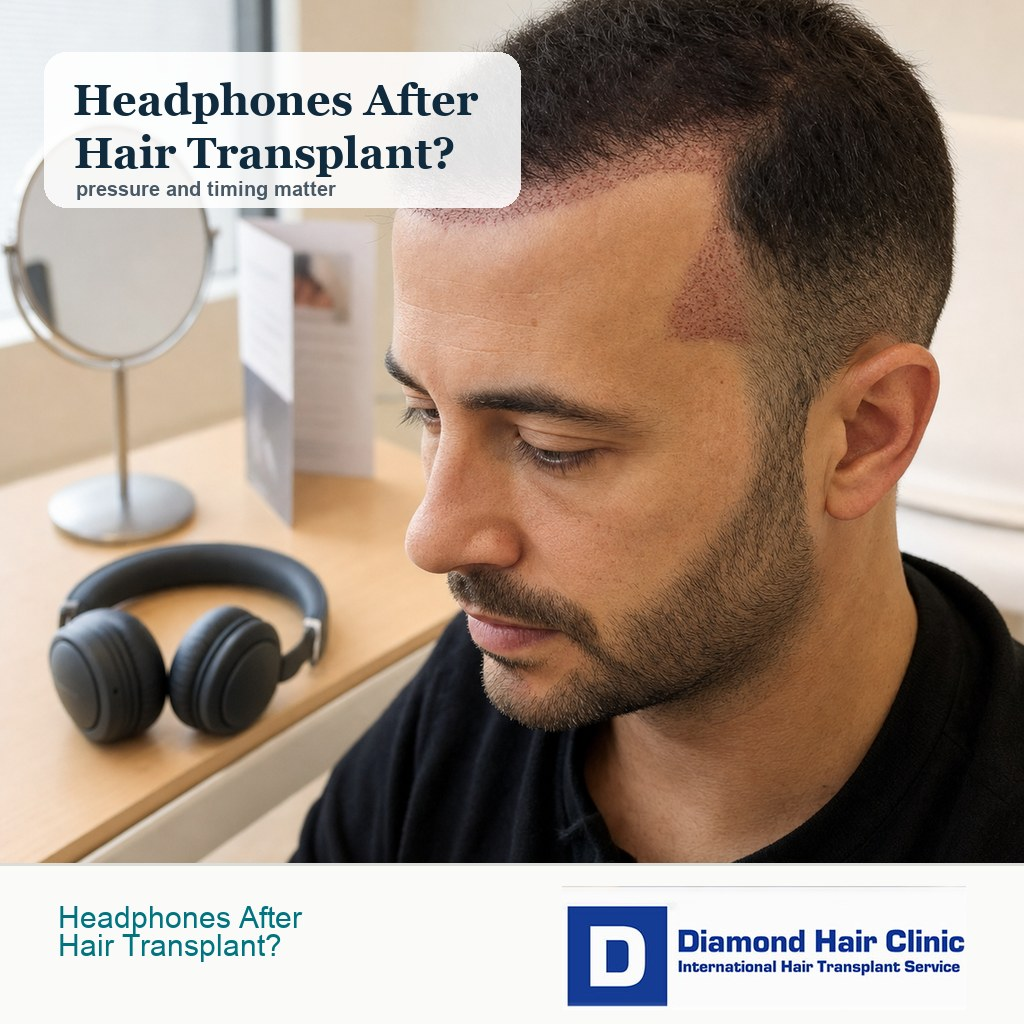
Headphones Need Timing Without Scalp Pressure
The type of headphones and the timing matter more than the brand. Earbuds are usually the safest early option because they avoid the grafted scalp. Over ear headphones or any headband that crosses the transplanted hairline, temples, or crown should usually wait until the grafts are stable, commonly around day 10 to day 14. If the band rubs scabs, presses on fresh grafts, causes pain, or touches an area that is still bleeding or swollen, do not wear it yet and ask the clinic to review your recovery.
Headphone weight is only one part of the decision. It depends on where they sit, how long they stay there, whether they slide when you move, and whether the scalp is still in the early healing phase. A loose headset used for a short call is different from tight noise cancelling headphones worn for four hours while studying, gaming, travelling, or working. A VR headset after FUE adds a different pressure and heat problem because the visor sits on the forehead and traps warmth. Long use matters because heat or redness can appear after a headset felt comfortable at first.
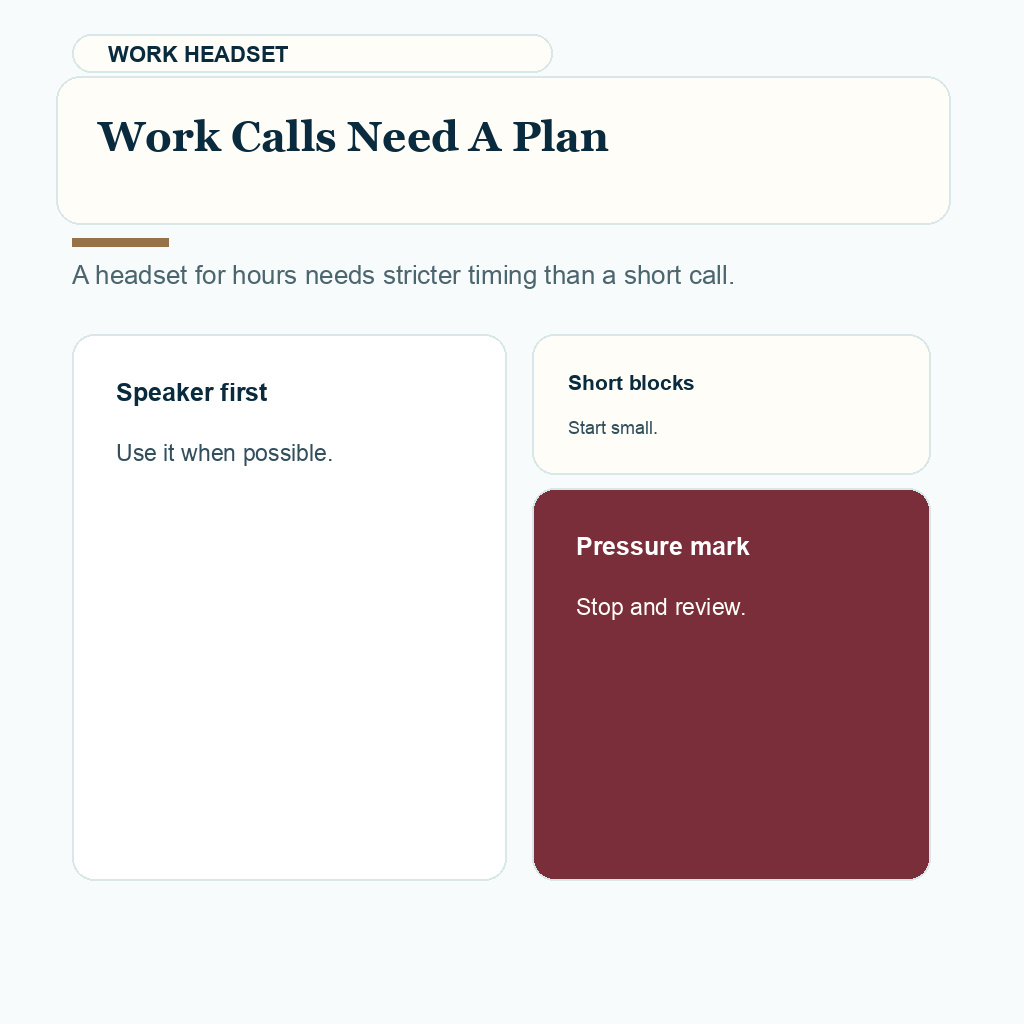
For work headsets, test the contact point before the full shift. Red marks, sliding, heat, or soreness mean the headset is still part of the recovery plan, not just office equipment. A short test is not enough for a work headset, because heat and pressure marks can build during a full shift. If calls are part of your job, arrange earbuds, speaker calls, or another setup that avoids pressure before you return to a full shift.
Judge headphones by where they touch and how long they stay on
Headphones become a recovery issue when the band, pads, cable, or headset edge touches the transplanted area or presses on a healing donor area. A short fit check can miss the problem because heat, red marks, and soreness often build during a full work shift or long flight.
The shape of the device matters more than the word headphones. Earbuds may avoid scalp pressure, while an over head band can cross the crown or hairline depending on the transplant area. A VR headset adds forehead pressure and trapped warmth, so it deserves a slower return than light listening.
Before wearing a headset for hours, test the contact points while sitting the way you actually work or travel. If the device slides, leaves a mark, warms the scalp, or makes you adjust it repeatedly, delay that style and choose an option that keeps the grafted skin untouched.
Safer headphone timing after a hair transplant
For most uncomplicated recoveries, the first 10 to 14 days deserve the most protection. During this time, grafts are settling into the recipient area, scabs may still be attached, and even small rubbing can create anxiety or irritation. I would treat headphones like any object that touches the grafted scalp. If it crosses the transplanted area, it should wait until the grafts are secure and the surface is cleaner.
After the first wash period and once scabs have cleared without bleeding, light headphones become easier to judge. The timing also depends on the area transplanted. A frontal hairline patient may have no contact from a headband placed high on the crown, while a crown transplant patient may have direct contact exactly where the band sits. The safest personal answer comes from matching the headphone shape to the actual graft location.
For graft timing, the explanation of when hair transplant grafts are secure gives the broader timing logic. Here, the same idea is applied to headphones, pressure, and friction.
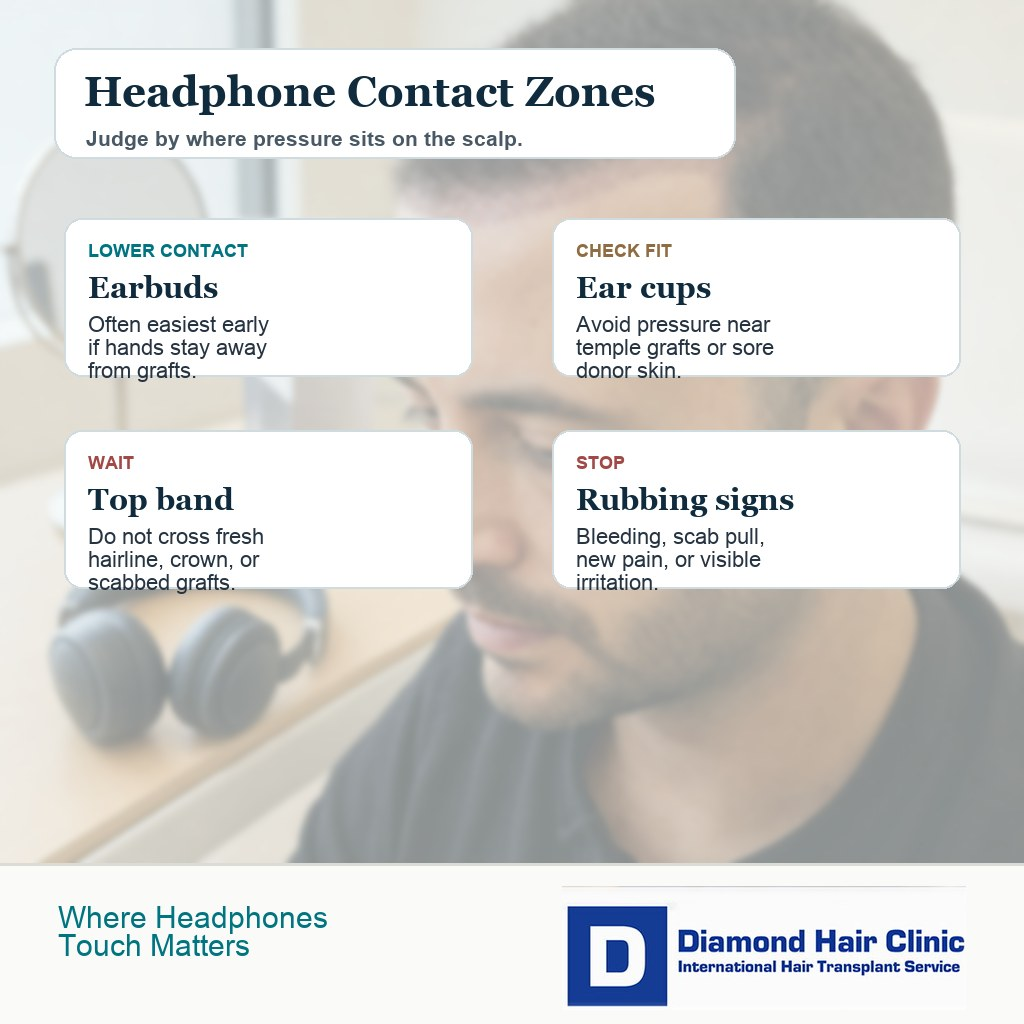
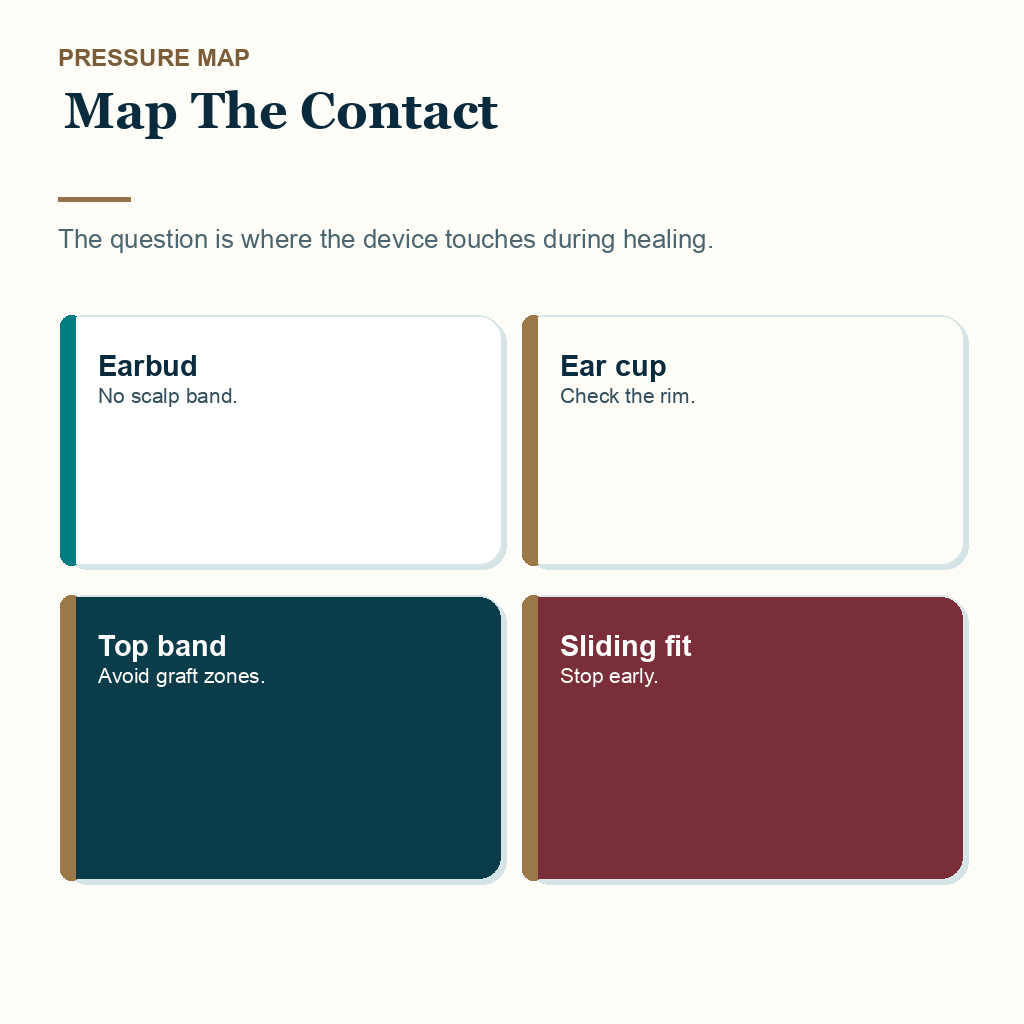
Headphones are judged by where the band and ear cups touch, not only by whether they feel light in the hand.
Headphones can irritate early healing skin
Headphones can create three different issues in early recovery. The first is direct rubbing across grafts. The second is pressure from a band or ear cup that stays in one position for a long time. The third is repeated movement, especially when a headset slides while you walk, study, work, or train.
Fresh grafts are not protected by mature skin in the first days. Scabs can act like small anchors attached to the surface. If a tight band catches them, the harm comes from the pulling movement rather than the headphone name. The same contact principle applies to touching grafts after a hair transplant. Brief accidental contact is very different from repeated rubbing or picking.
Pain is also useful information. Mild tenderness around the donor area can be expected, but a headset that creates a sharp pressure point should be removed. If you see fresh bleeding, an open wound, discharge, increasing swelling, spreading redness, or pain that gets worse after headphone use, stop using the headset and ask for clinic review.
Earbuds versus over ear headphones
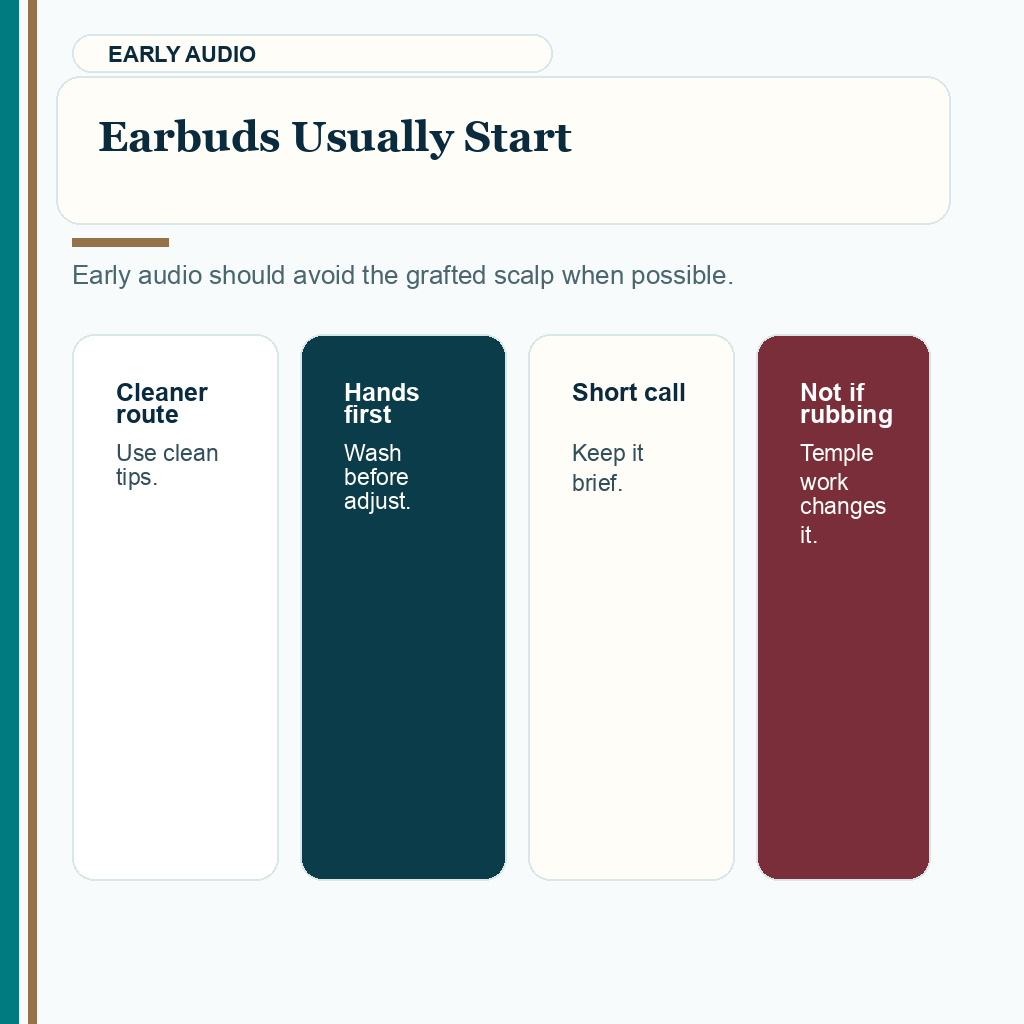
Earbuds are usually easier in the early period because they do not cross the scalp. They still need to be clean, used gently, and removed without brushing the grafts. If the transplant includes the temple points or sideburn region, even earbuds should be placed carefully so your fingers do not scrape the nearby grafts.
Over ear headphones need more caution because the cups can press near the temples and the band may rest on the crown. On ear headphones can be worse than larger over ear designs if the cup edge presses tightly against the side of the head. A loose over ear model that avoids the grafts may be acceptable earlier than a small tight model that sits directly on a transplanted temple.
Bone conduction and sports ear hook models are only useful if their frame avoids temple grafts, sideburn grafts, and the donor area. Test where the hook, cable, or rear band actually sits before trusting the device name.
The same contact logic appears with wearing glasses or sunglasses after a hair transplant. The issue is not the object name. It is whether the frame, cup, arm, band, or strap touches the healing recipient area. Medical hearing devices should be separated from entertainment headphones, which is why I use a dedicated FUE hearing device communication plan before and after the procedure.
Headphones during a flight or long journey
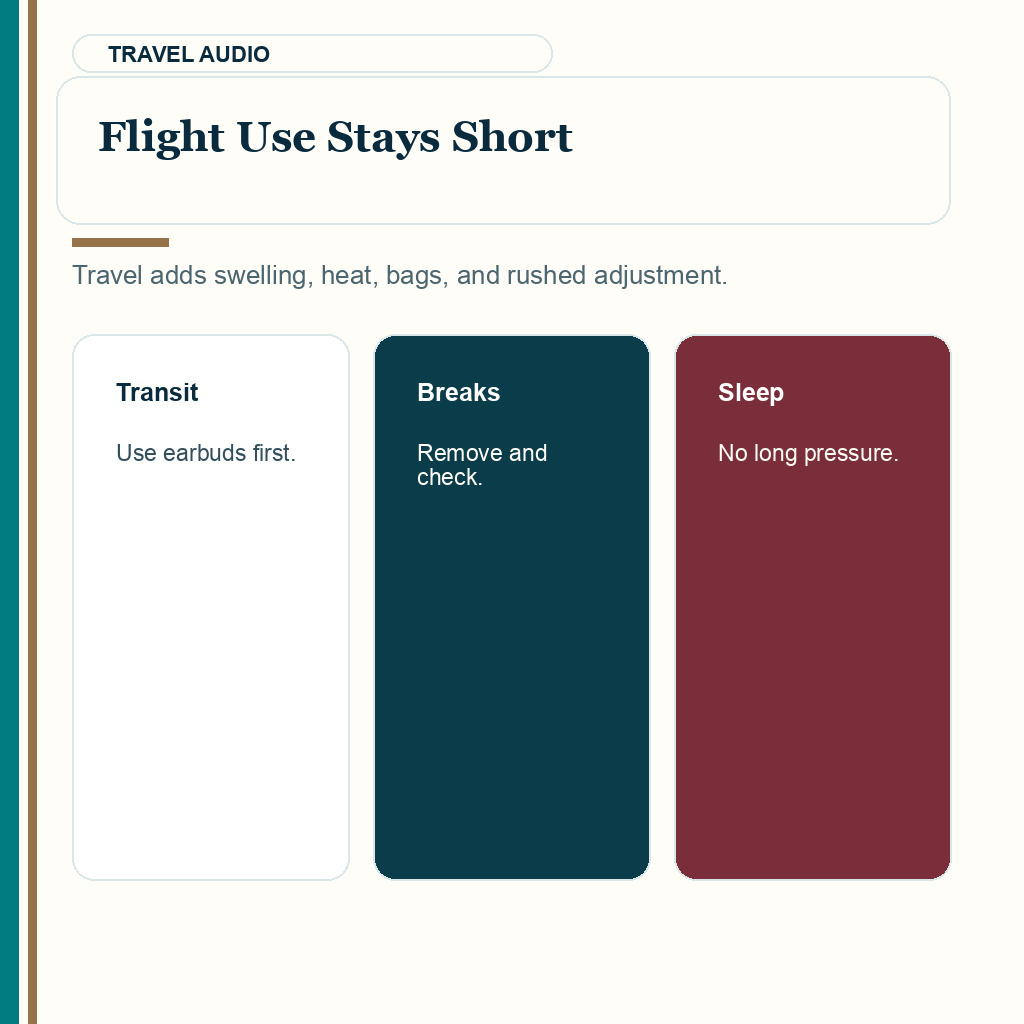
For early travel, earbuds or no headphones are safer than a tight band across the transplanted scalp. A flight, bus ride, or long car journey often means several hours of pressure, heat, sleep, and repeated adjustment, so a headset that feels harmless for 10 minutes can become irritating over time.
If you need audio during travel, keep the volume reasonable, choose earbuds, avoid sleeping with anything pressing across the grafted area, and remove the device if it creates redness, tenderness, sliding, or a clear pressure mark near the hairline, temples, crown, or donor area. A device that feels fine for a short trial can still be too much for a whole flight, call, or work shift.
Watch the combination of headphones and travel accessories. A neck pillow, hood, eye mask strap, face mask strap, cap edge, or airplane headrest can push a headset into a spot that did not touch when you were sitting upright. If you might sleep during the journey, remove the headset before sleeping rather than trusting it to stay in the same position.
Using a headset for work calls
When work resumes soon after surgery, use speaker mode or earbuds first. A work headset can seem light, but it often moves repeatedly while you talk, bend, type, or remove it quickly between calls. That repeated sliding is the part I watch carefully near fresh hairline, temple, or crown grafts.
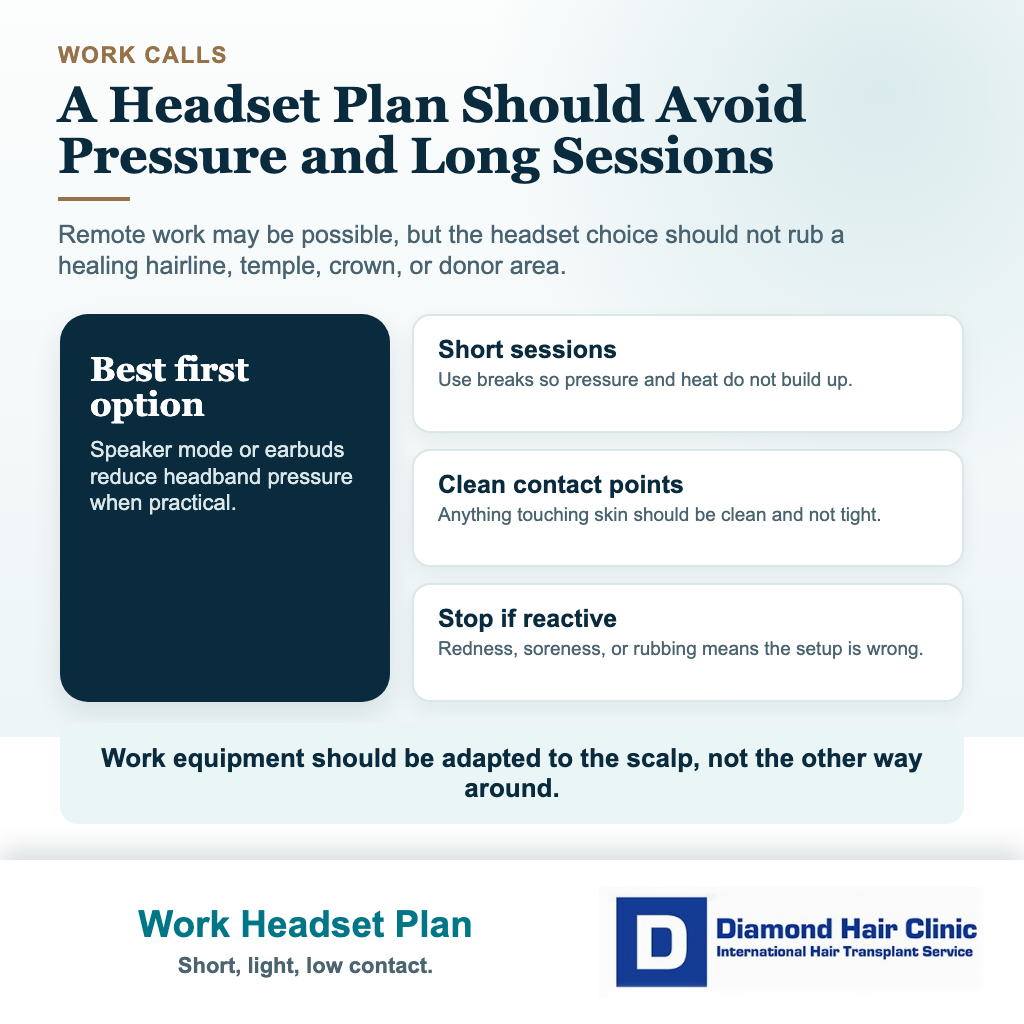
If a headset is unavoidable, keep the session short, choose the loosest design that avoids the recipient area, and stop if you feel rubbing, heat, pressure, or pain. A headset that feels acceptable for five minutes can still irritate the scalp after an hour. This becomes part of the same practical planning as time off work after a hair transplant. It is not only about whether you feel ready to work. The working setup also has to protect the scalp.
Headband contact on the hairline, temples, or crown
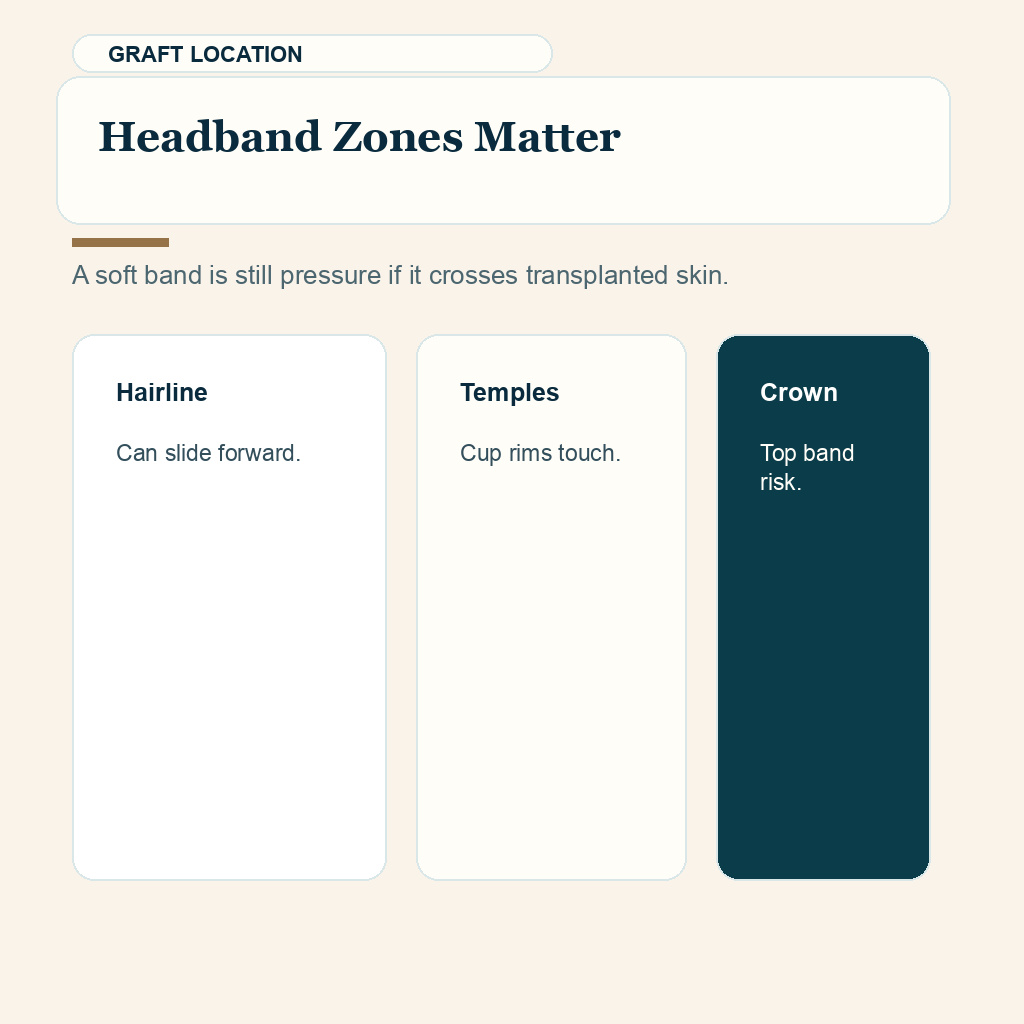
If the headband touches fresh grafts, do not use that headset in the first days. A band crossing a frontal hairline, temple point transplant, or crown transplant can move slightly every time you adjust your posture. Even a soft band can become irritating if it stays there for hours.
Some patients try to place a bandana, cloth, or surgical cap between the band and the scalp. That may reduce direct friction after the grafts are stable, but it is not a good solution for the earliest period if the cloth itself rubs the scabs. It can also create heat and sweating if worn for a long session.
A loose hat follows a different timing decision from tight headphone pressure, so do not copy hat advice blindly. Wearing a hat after a hair transplant is judged by looseness, cleanliness, and movement. Headphones add a different concern because the band and cups can hold pressure in one place.
Headphones can irritate the donor area
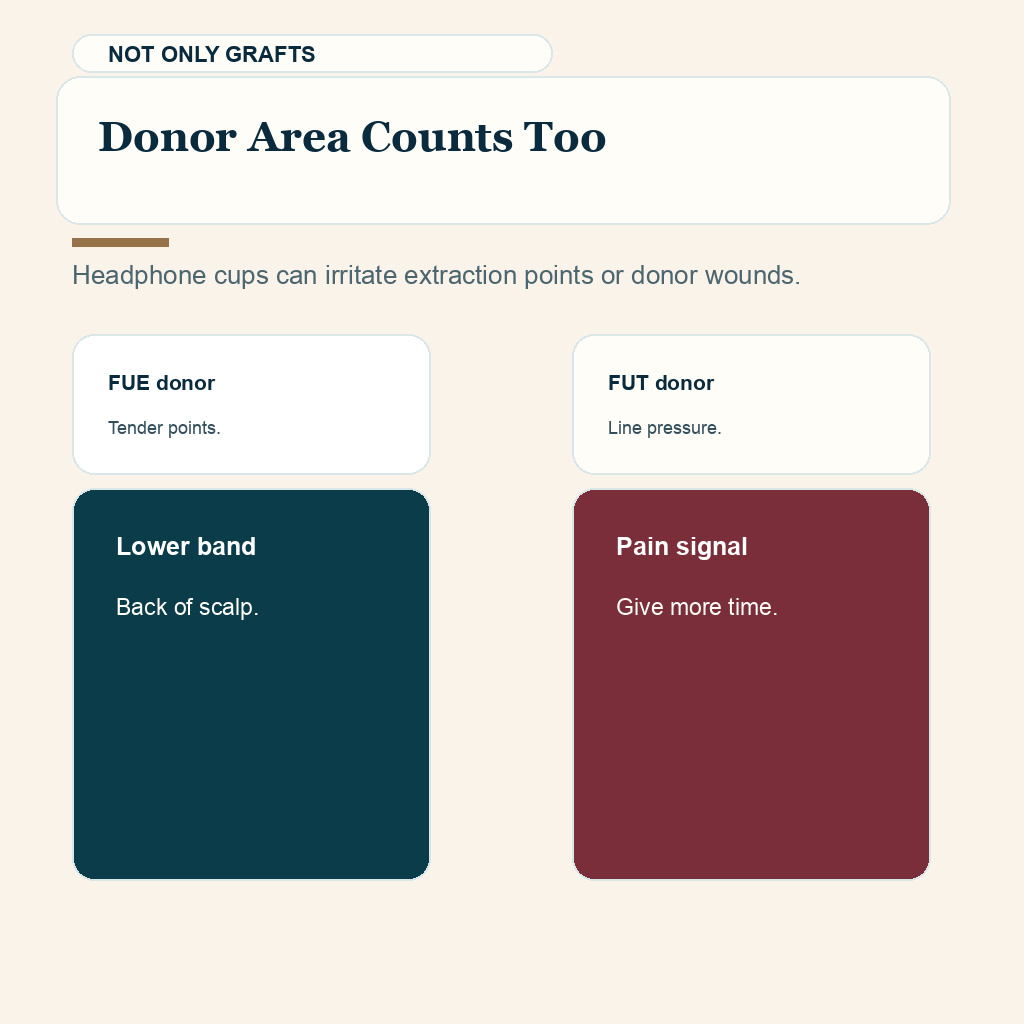
Headphones are more often discussed because of grafts, but the donor area can also be tender. If the cups or lower band press on the back or sides of the scalp, they may not damage transplanted grafts, but they can make the donor area more painful or irritated during early healing.
After FUE, the donor area has many small extraction points. After FUT, there is a linear donor wound. A headset that presses the back of the head can be uncomfortable, especially during long work or study sessions. If the donor area feels sore, numb, tight, or irritated, give it more time and choose earbuds or speakers.
Later in recovery, soreness from a headset is usually judged differently from graft survival. A healed scalp can still react to pressure, numbness, or donor tenderness, so shorter sessions, earbuds, or a looser device are better than repeating the same pressure point.
Rigid headgear deserves more caution than headphones. For patients asking about stronger compression, wearing a helmet after a hair transplant is the better comparison because helmets can compress a wider area and may move against both the recipient and donor zones.
Restarting long headphone sessions
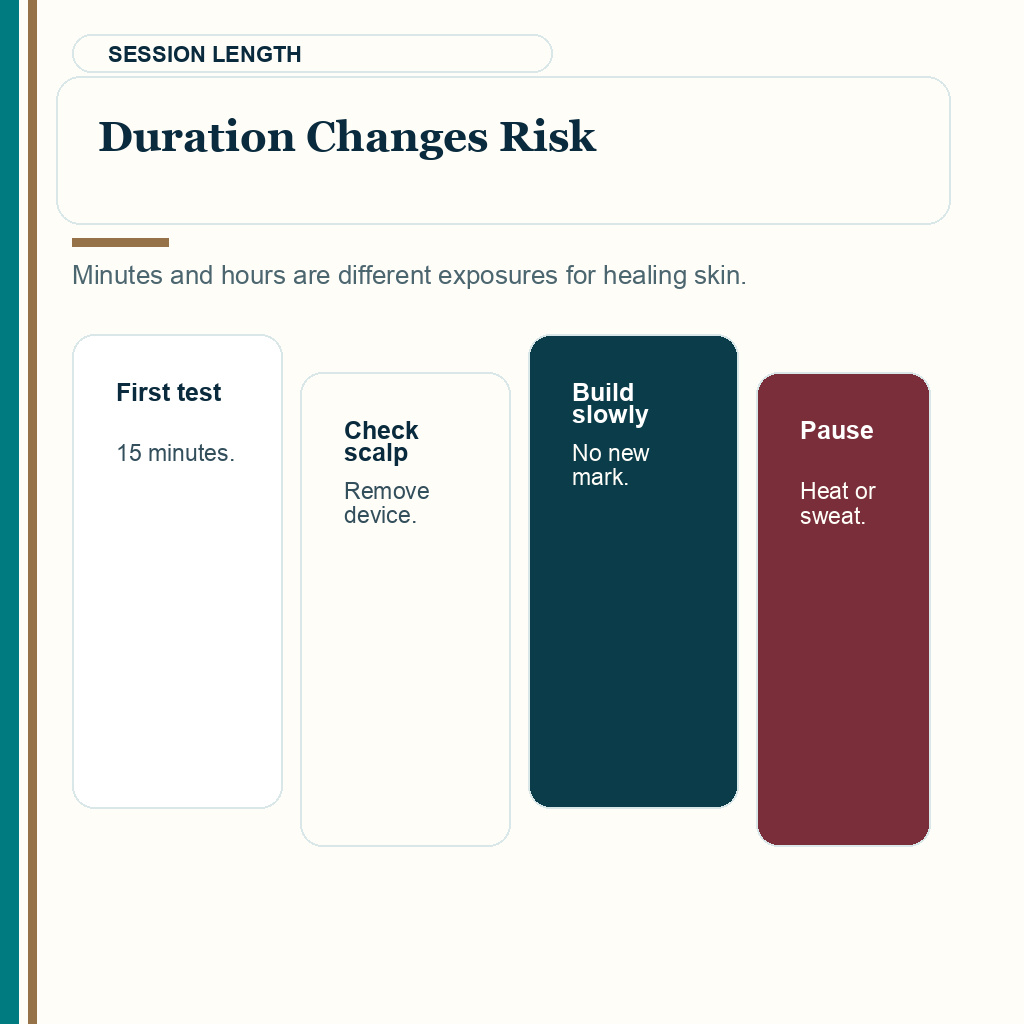
Duration changes the answer. A short phone call with earbuds is different from a full afternoon with tight headphones. Long sessions increase heat, sweat, pressure, and repeated adjustment, and those are exactly the conditions that make healing skin more easily irritated. If you need audio for work or study in the first week, earbuds or speakers are usually the cleaner solution.
After the early graft protection period, start with short sessions. Wear the headphones for 15 to 30 minutes, remove them, then check the scalp. There should be no new bleeding, no scab pulling, no increased pain, and no visible indentation over grafted skin. If the skin looks calm, you can increase duration gradually.
Students, remote workers, gamers, editors, and call center staff often need longer audio sessions than they expected. For long audio days, plan the first few days around earbuds, external speakers, or shorter calls. If over ear headphones are unavoidable after the first healing phase, take breaks before the scalp becomes warm or damp. A small pressure point may feel harmless at the start and become obvious only after one or two hours. Checking the scalp after the first short session is more useful than trusting comfort alone.
Sleep is a separate issue. Do not fall asleep with headphones if they can shift across grafts, press the donor area, or leave marks for hours. Long, uncontrolled pressure during sleep after a hair transplant is judged differently from brief awake use.
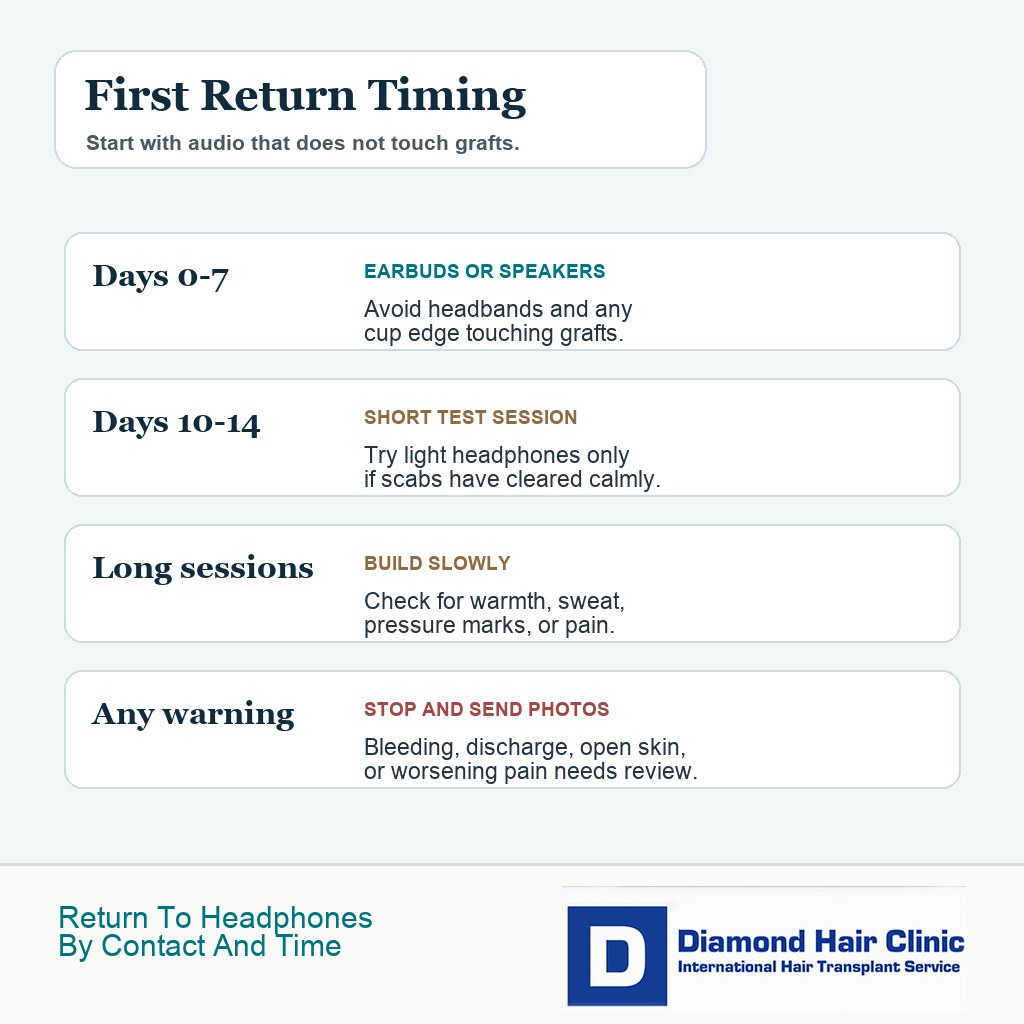
The first return should be short, clean, and based on scalp contact rather than the headphone brand.
Using headphones at the gym after surgery
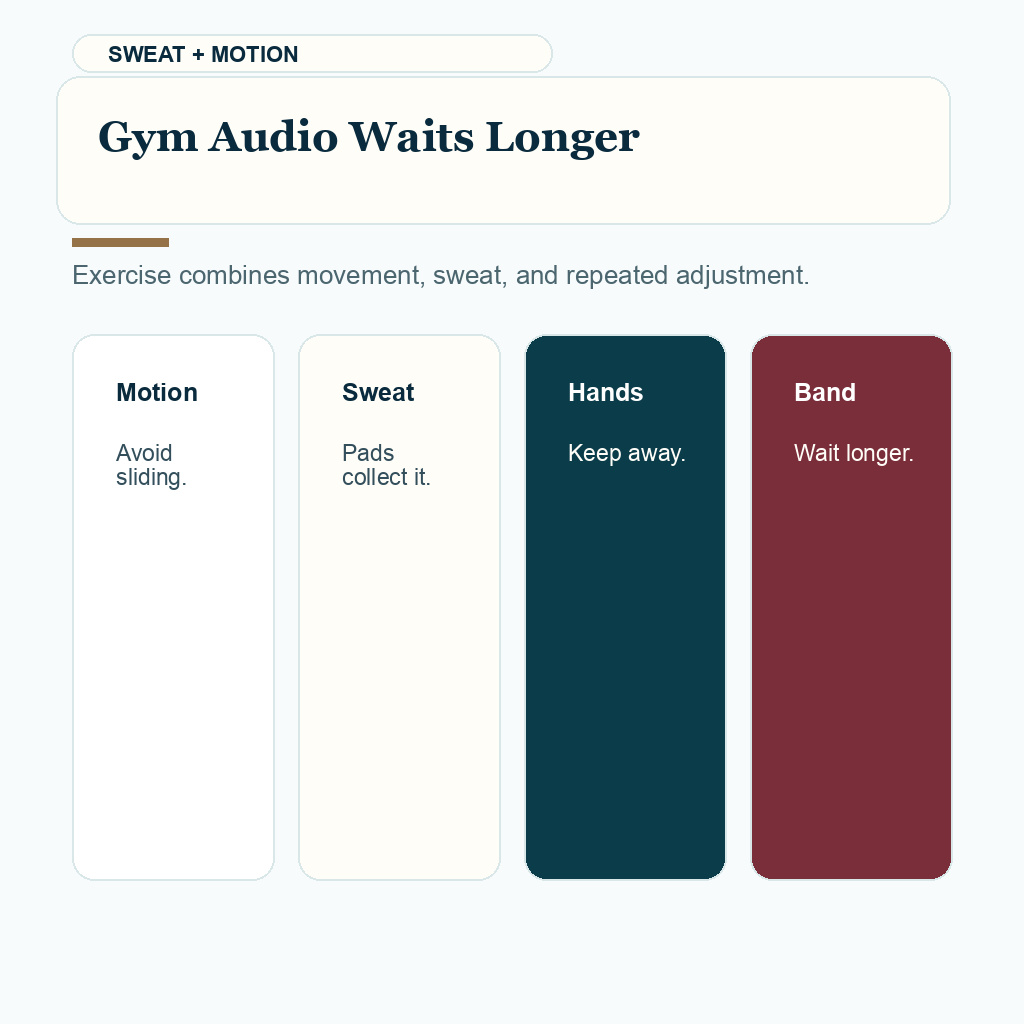
Gym use adds sweat, movement, and repeated adjustment. In the first days, avoid gym headphones because they can slide, trap heat, or make you touch the scalp repeatedly. Even earbuds can become a problem if you keep reaching around the grafted temples with sweaty hands.
Once exercise is allowed, headphones can return in a more controlled way. Choose a clean device, keep the session short, and avoid a headband that crosses the recipient area. If the workout involves heavy sweating, bouncing movement, or a tight headset, wait longer.
The broader timing is covered in exercise after a hair transplant. If sweat is the main concern, sweating after a hair transplant is the more relevant issue. Headphones at the gym combine both problems, so the return should be slower than normal desk use.
Steps to take if headphones rubbed the grafts
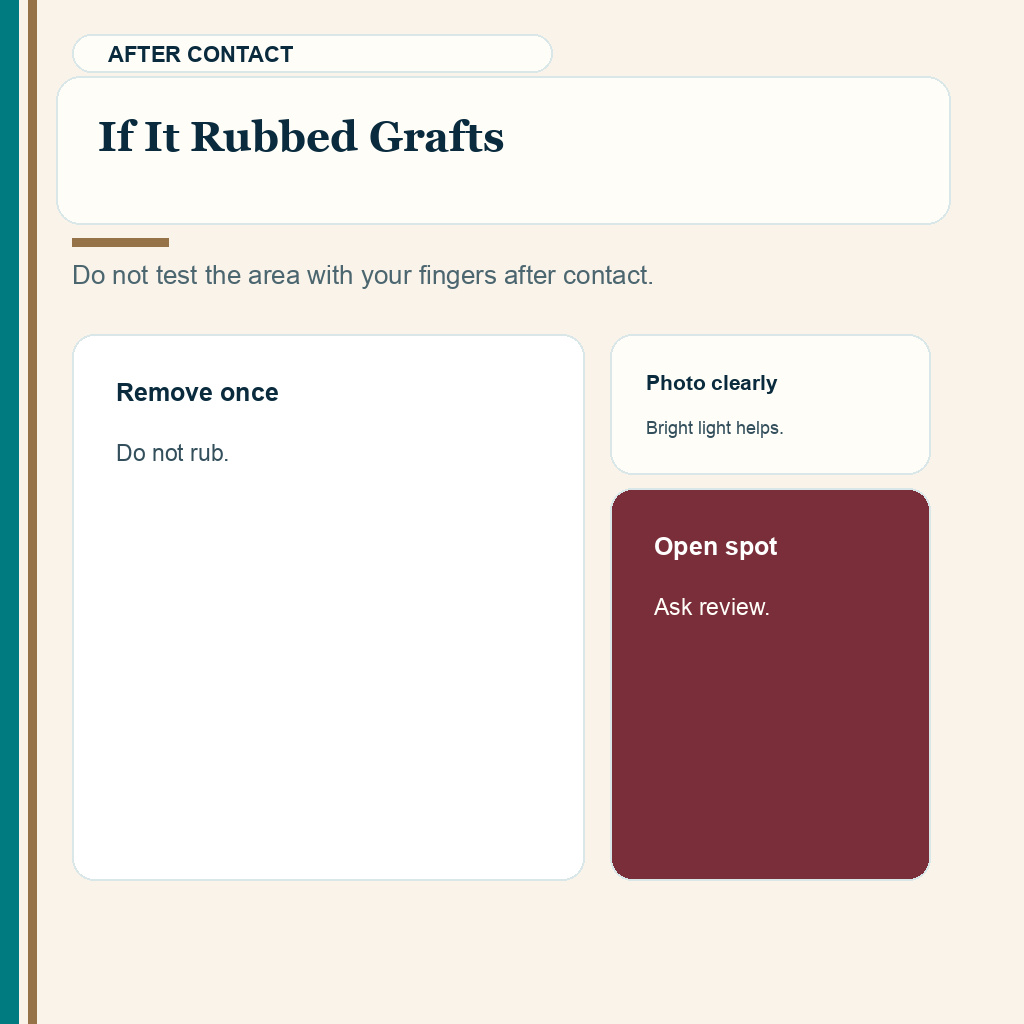
First, remove the headphones and look at the area without rubbing it. A brief touch without bleeding is usually less concerning than a sliding band that pulled scabs or caused fresh bleeding. Do not rub the area to check it, and do not try to remove scabs manually. If there is a visible graft, active bleeding, open skin, worsening pain, discharge, or spreading redness, stop headset use and send photos in steady lighting for medical review.
If the grafted area only feels mildly irritated, protect it and stop using that headset until the skin settles. Continue the washing and aftercare instructions already given by the clinic. Do not add creams, antiseptics, oils, or alcohol based products unless the clinic has told you to use them.
If the contact was more like a knock or scrape, the article about what to do if you bumped your head after a hair transplant may help you judge urgency. The same warning signs matter more than the story of how the contact happened.
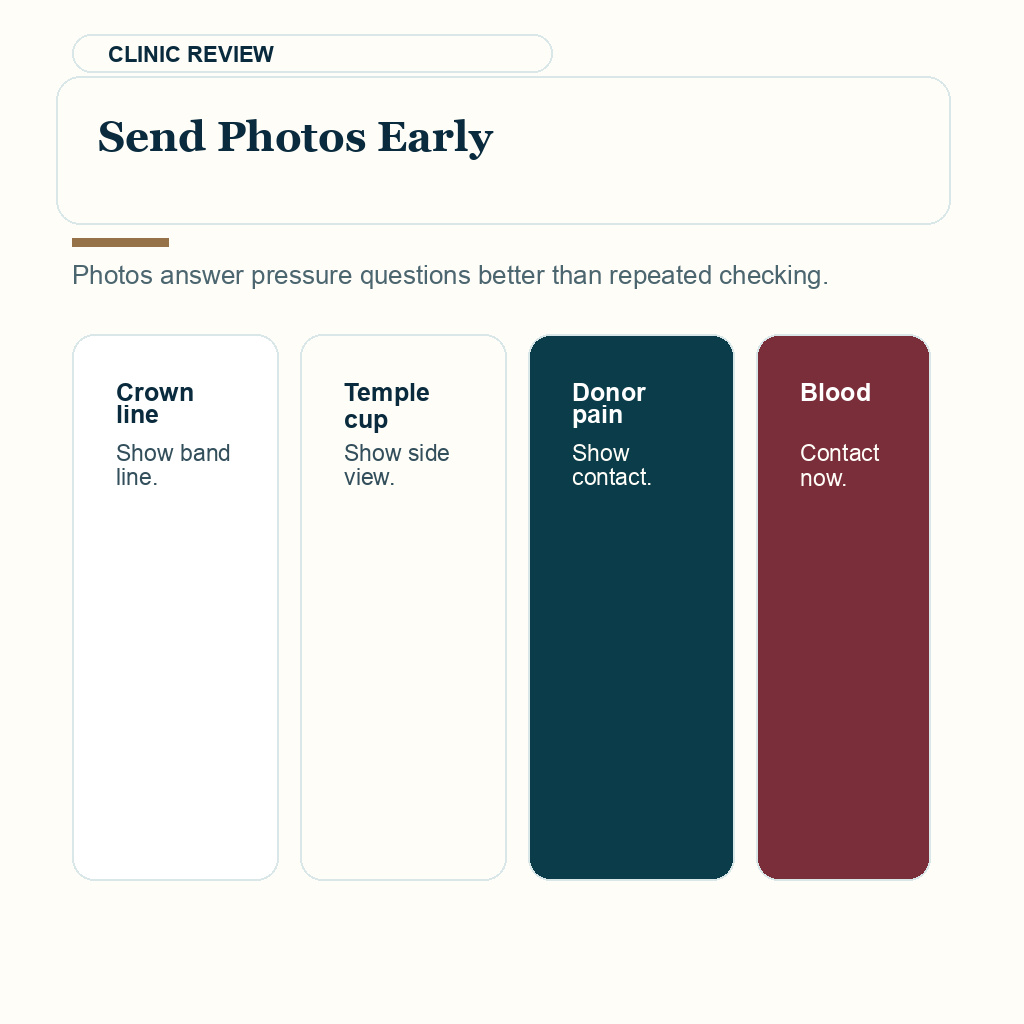
These 10 headphone pressure slides separate earbuds, headband contact zones, flight use, work calls, donor area pressure, session length, gym sweat, what to do if grafts were rubbed, and clinic review triggers. Swipe sideways or use the arrows one slide at a time.
First headphones to choose
Choose the device that creates the least scalp contact. In the early period, that often means clean earbuds. When you return to over ear headphones, choose a light model with soft cups, low clamping force, and a band that does not cross transplanted skin. Avoid tight sports headsets, heavy gaming headsets, and anything that needs frequent repositioning.
The graft location should guide the choice. After a crown transplant, a top headband may sit directly over the work area, so earbuds may stay the better option for longer. After temple point work, some ear hooks or tight cups can touch the side grafts. After a frontal hairline transplant, a band placed behind the hairline may still be acceptable later, but only if it does not slide forward when you move.
Cleanliness matters. Earbuds and headphone pads collect oil, sweat, and skin debris. Wipe the pads before use, wash your hands before adjusting them, and avoid sharing headphones during recovery. The realistic concern is not the headphone alone. It is dirty pads, unwashed hands, sweat, and repeated touching around healing skin.
Keep the rest of the recovery routine consistent. Hair transplant aftercare is not only about one object. It includes washing, sleeping, medication use, avoiding trauma, and sending photos when something looks wrong.
Clinic advice before using headphones
Ask before using headphones if your grafts are on the crown where the band sits, if your temple points were transplanted, if you still have thick scabs, if you had bleeding after contact, or if the donor area is painful. Ask as well when headphones are required for many hours because of work, study, gaming, or travel.
A short audio need can often be solved with earbuds or speakers. A long headset requirement may need a more specific plan based on your graft location and healing. Photos help because the question is visual. The clinic can see whether the band crosses grafts, whether scabs remain, and whether there is irritation in the donor area.
The rule I use is direct. Keep anything that rubs or presses away from fresh grafts, use earbuds when you need audio early, return to over ear headphones gradually after the grafts are stable, and stop immediately if the headset causes bleeding, pain, scab pulling, or visible irritation. The safest first headset is the one you barely need to adjust.

Read this review excerpt
Every single one of my questions was answered and they made sure I had all the details I needed to make an informed decision.