


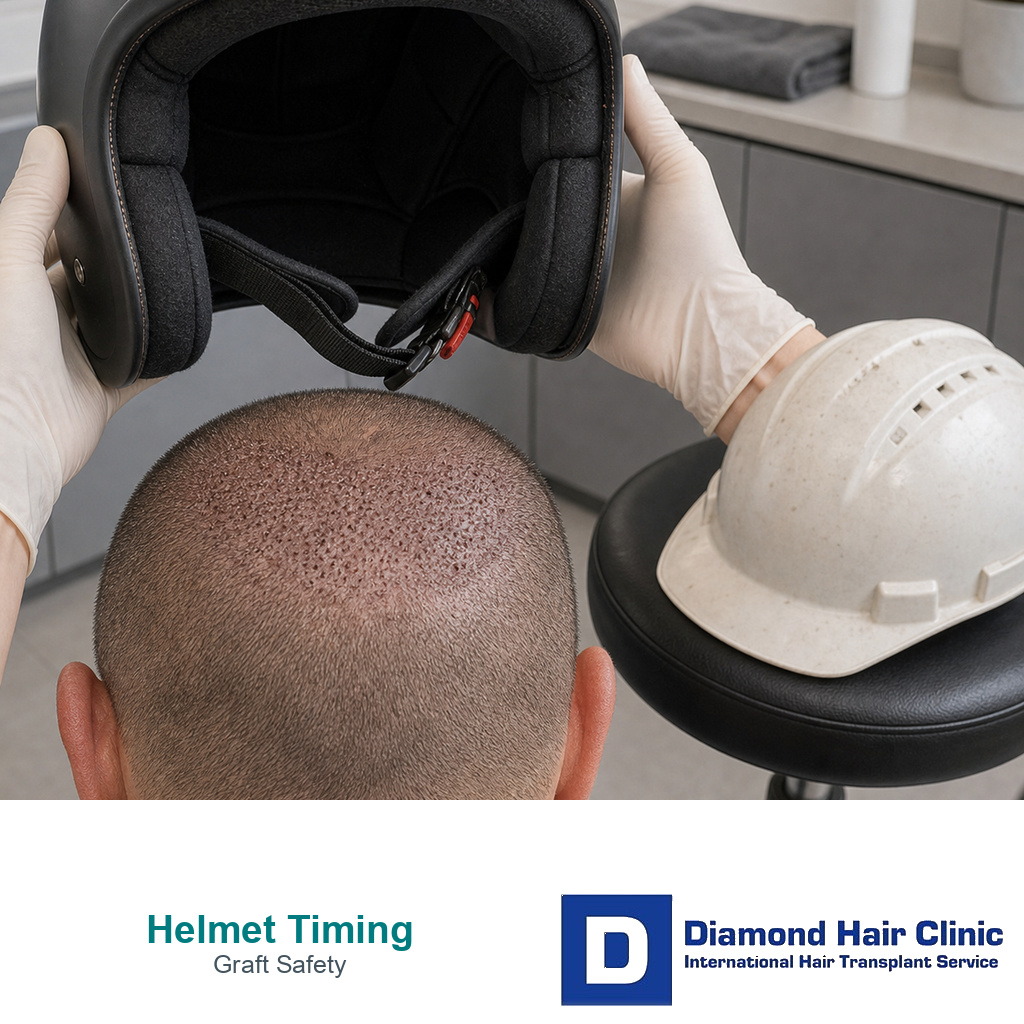
Helmet Pressure and Graft Safety Timing
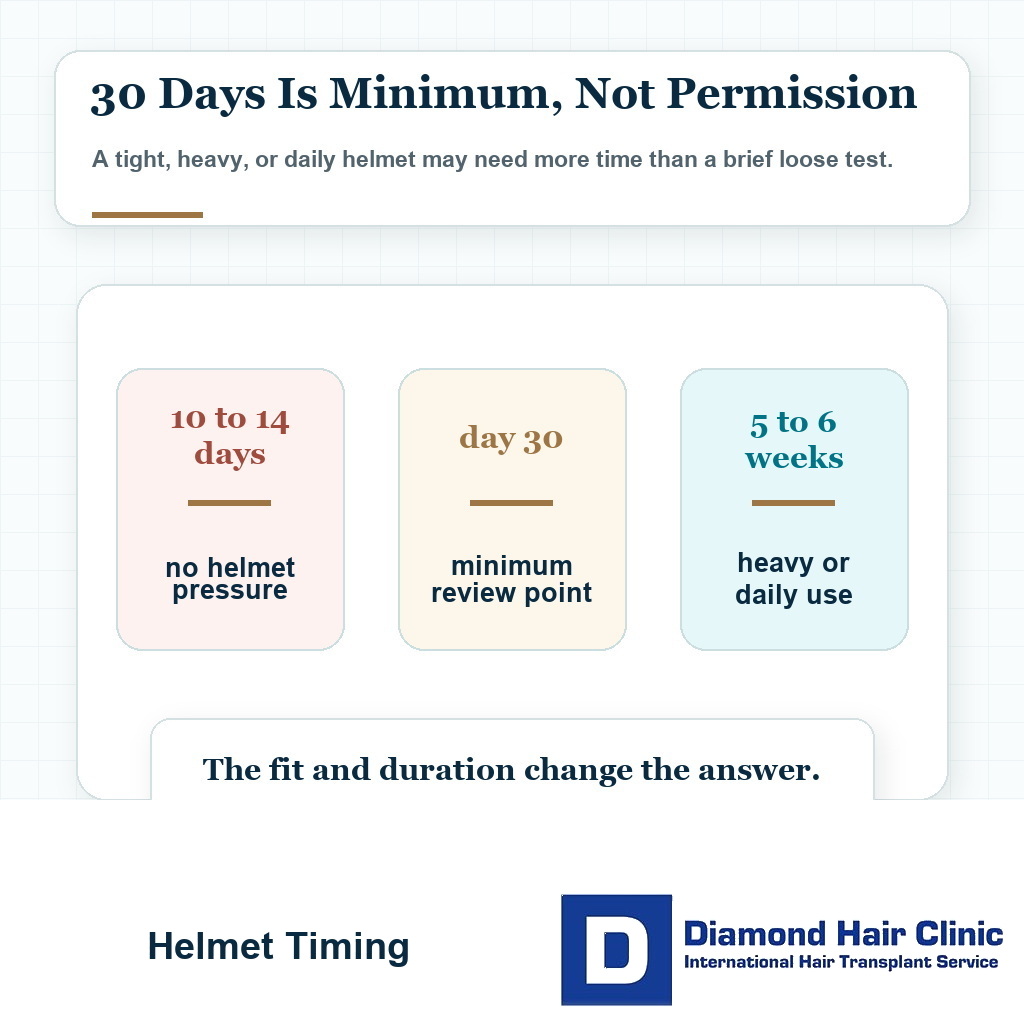
I advise avoiding a motorcycle helmet, bicycle helmet, construction hard hat, or tight safety helmet during the first 30 days after a hair transplant. Practically, 4 to 5 weeks is safer for many people, and 5 to 6 weeks is better if the helmet is tight, heavy, or worn for long periods. A helmet creates pressure, friction, heat, sweat, and repeated rubbing over a scalp that is still healing.
Read this point narrowly. One gentle helmet touch does not always ruin grafts, but a work shift in tight headgear is a different level of friction and heat. Helmet use adds avoidable pressure during a period when the grafts, the skin surface, and the donor area still need protection. If a helmet or hard hat leaves a visible scalp dent after FUE, take photos in good light and contact your clinic instead of pressing the area to test it.
The answer depends on the type of helmet, how tight it is, how long it must be worn, whether it touches the recipient area, whether the donor area is still tender, and whether sweating or repeated removal can be avoided. The same pressure logic also applies to clothing after a hair transplant, tight safety eyewear, goggles, glasses or sunglasses after a hair transplant, and headphones after a hair transplant when the band, frame, hood, or collar crosses the grafted area. A VR headset pressure after FUE needs its own check because the forehead pad, rear band, heat, and removal path behave differently from a helmet liner.
The reason for the helmet matters. Riding for pleasure is different from a job that legally requires a safety helmet. The medical principle may be similar, but the planning conversation is not the same. I explain that job specific planning in physical work after hair transplant.
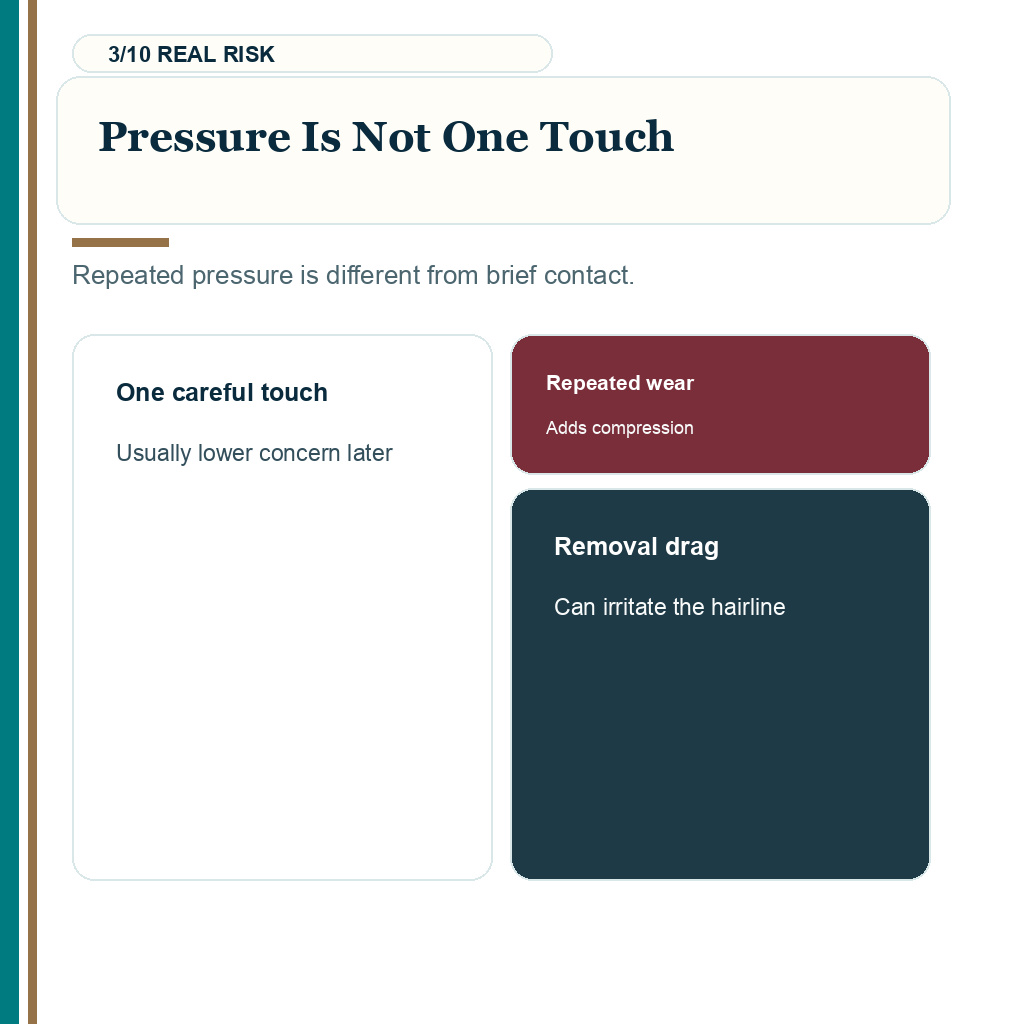
Brief accidental contact and repeated fitted helmet use carry different risks. A quick touch is one event. A helmet worn for commuting, sport, or work creates repeated pressure, heat, sweat, and removal friction. For football or other contact sports after a hair transplant, I judge helmet or headgear pressure separately from a loose hat. If the helmet is mainly for a bicycle or road commute, cycling after hair transplant needs its own timing because sweat, outdoor exposure, fall risk, and helmet removal happen together.
Do not make the commute the first helmet test. Try the fit at home, remove it slowly, and check whether any padding line crosses the transplanted area or catches on irritated skin. If itching, pimples, or tenderness are still active, the helmet decision should be reviewed before it becomes a real ride or shift.
If your transport or work depends on a helmet, bring this into the consultation before the operation. Surgery is easier to plan when recovery is matched to your real daily life, not only to the clinic calendar.
For jobs that require a helmet, settle duty changes before surgery dates are chosen. A short period of remote work, site reassignment, or transport help may be safer than testing a tight helmet over healing skin.
Helmet pressure versus a loose hat
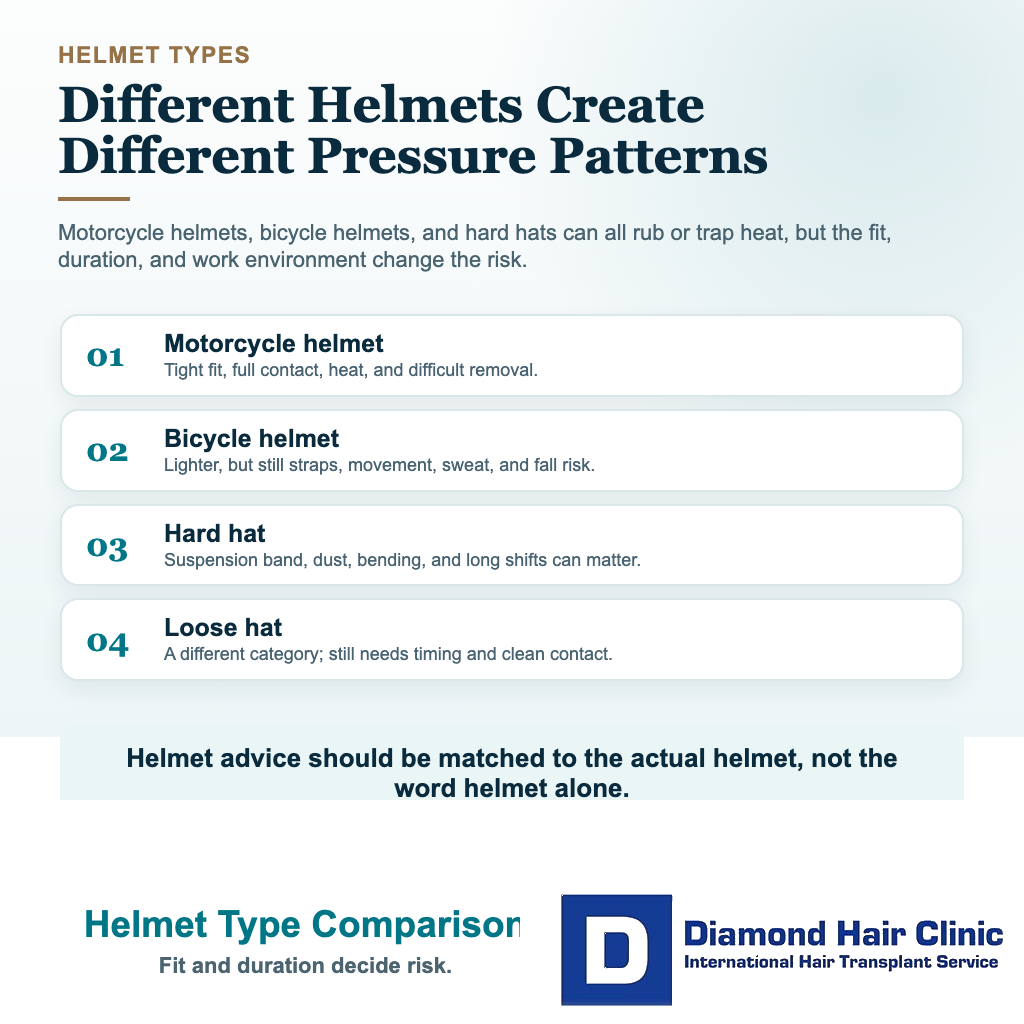
A helmet is not the same as a loose clean hat. A loose hat can sometimes sit lightly after the early protection period, depending on timing and fit. A helmet is designed to grip the head and protect it from impact, so it naturally creates more pressure. If the question is a bandana, durag, or bucket hat rather than a helmet, the softer decision belongs with soft headwear after transplant.
The padding inside a helmet can press on the recipient area, donor area, or both. When you move, the padding can rub the scalp. When you remove the helmet, it can drag across grafted hair and healing skin.
Helmet advice has to be separate from ordinary headwear advice. A hat after a hair transplant has a broader timeline, but helmets need a more cautious answer.
Helmets also trap heat. Heat leads to sweating. Sweating can irritate healing skin and make you want to wipe, scratch, or adjust the helmet more often.
In the first month, these small repeated actions can matter. The usual problem is not one careful movement. It is repeated pressure, rubbing, sweating, and adjustment on the same healing skin.
Another difference is hygiene. A hat can be washed or replaced easily. A helmet liner may carry sweat, dust, oil, and old skin debris. I avoid that environment pressed against healing skin too early.
Even if the recipient area seems fine, the donor area can still be sensitive. Some helmets press or rub the back and sides of the scalp, and those areas also deserve time to settle.
The problem with helmets is not only impact. It is pressure plus friction plus sweat over a scalp that still needs stable healing.
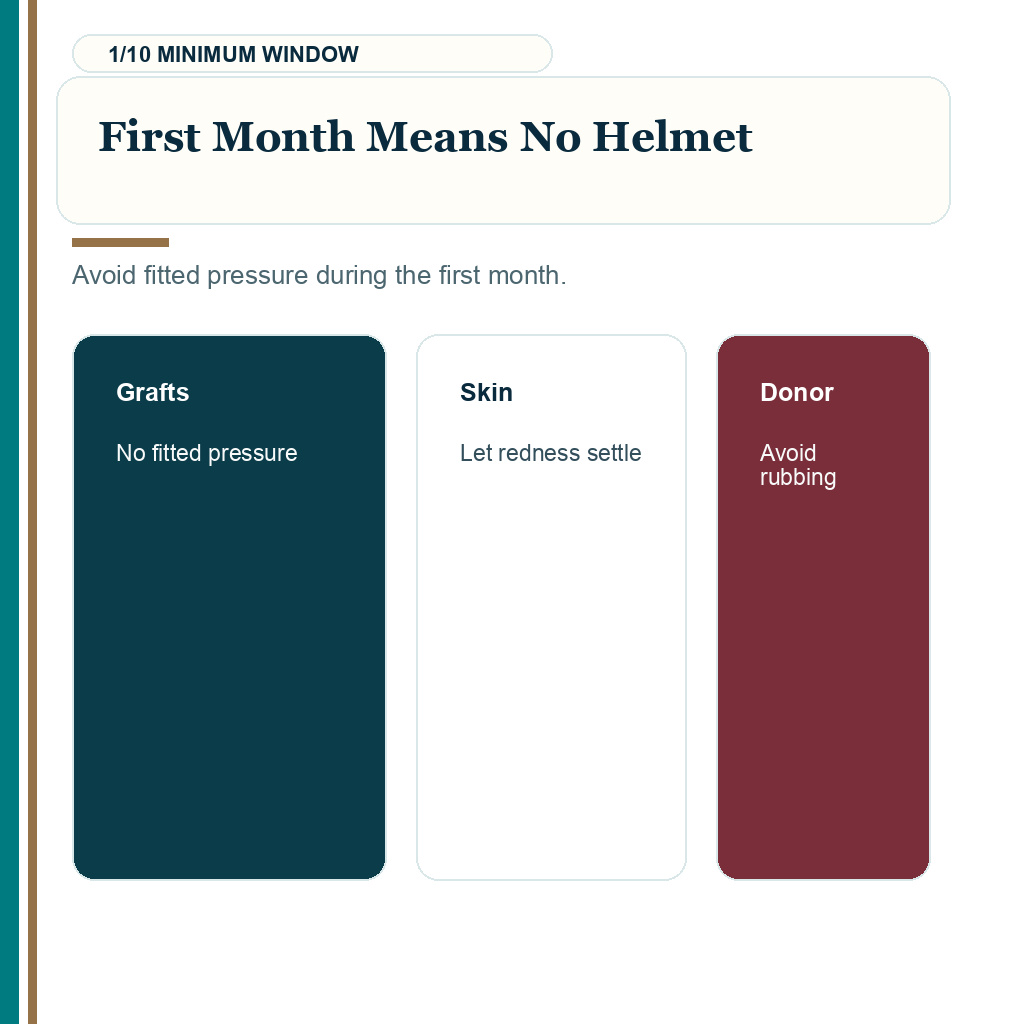
30 days matters for helmet pressure
In the 10 to 14 day protection window, the priority is avoiding direct trauma while the scalp surface settles. After that, I am less worried about a graft simply falling out from a light touch, but tight helmet pressure still needs a separate staged return. The first 3 to 4 weeks are still a controlled healing period. By day 30, many people are more stable, but every helmet is not always safe.
I use 30 days as a minimum because helmets create a stronger mechanical challenge than most daily activities. A helmet can compress the scalp, trap sweat, and rub the recipient area in a way that ordinary light clothing does not.
This timing is consistent with my general hair transplant aftercare approach. Early recovery does not end when grafts are attached. Skin condition, donor comfort, and preventable irritation still matter.
For a loose helmet worn briefly after 4 to 5 weeks, the concern is different from a tight motorcycle helmet worn every day for commuting. The type of helmet matters.
If the helmet must be tight for legal safety or work safety, the timeline becomes more cautious. In those cases, 5 to 6 weeks is often a more responsible target.
Temporary transportation or work adjustment is better than creating irritation during the first month because you felt forced to return too soon.
Some people ask whether they can wear a helmet for only a few minutes. The shorter the exposure, the lower the concern, but the first 30 days are still not the time to test this casually. If it is not medically or legally necessary, avoid it.
Waiting also helps the mind. People who rush into helmet use often spend the next days checking the scalp repeatedly. That anxiety can become its own recovery problem.
Motorcycle helmet pressure on the recipient area
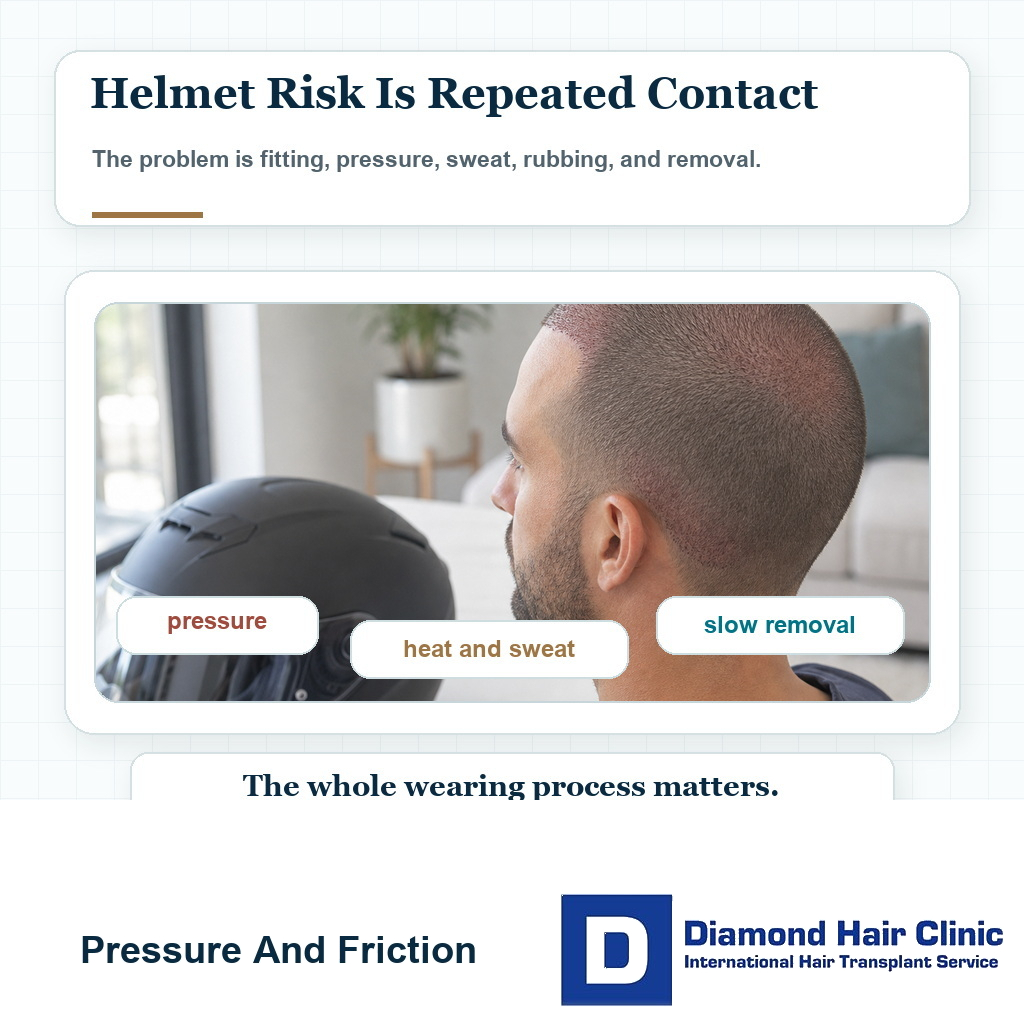
A motorcycle helmet can damage or irritate the recipient area if it is used too early. The risk is not limited to the moment it goes on. The whole process matters, including how you put it on, how long you wear it, whether you sweat inside it, how you move with it, and how you remove it.
A motorcycle helmet often touches the frontal scalp, temples, and sides. These are exactly the areas often treated in a hair transplant. If the padding drags across the new hairline, it can create unnecessary friction.
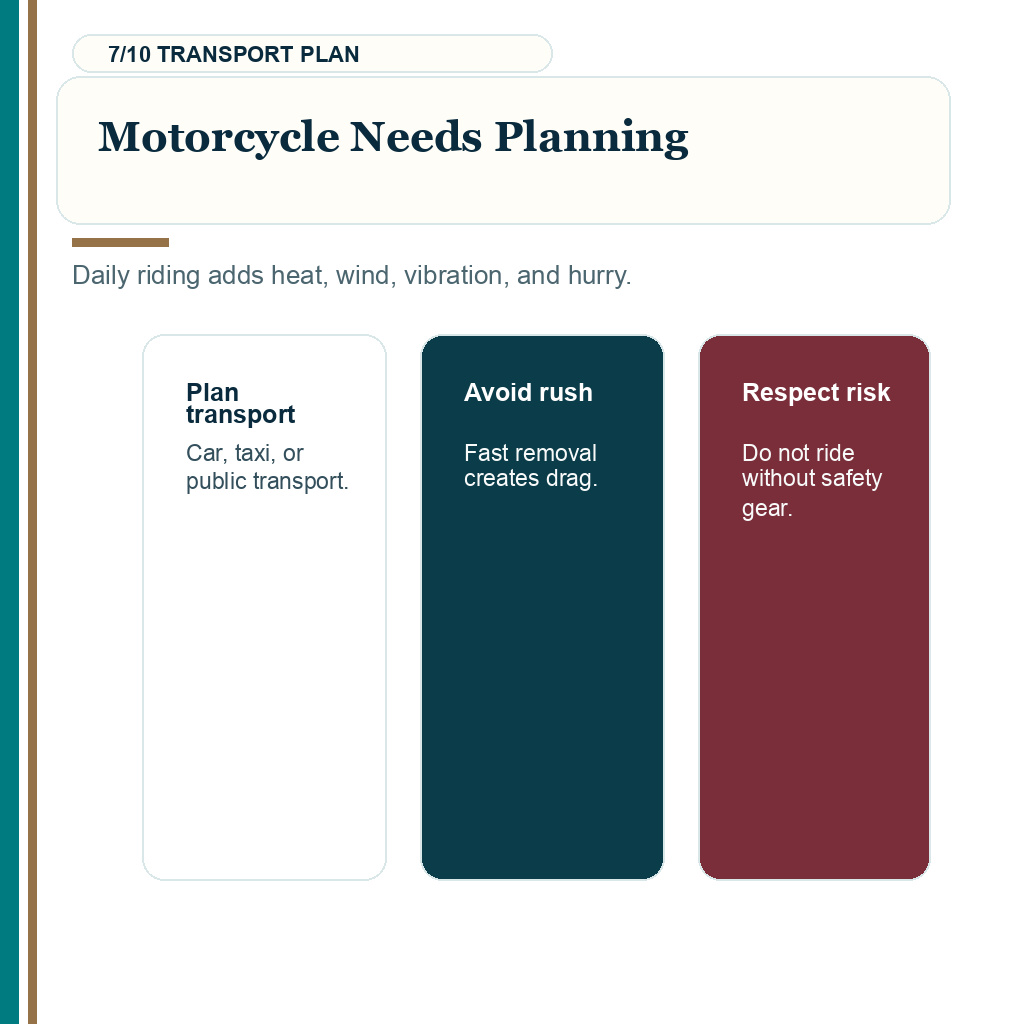
You may feel you can place the helmet very carefully. I respect that intention, but real life is not always careful. Traffic, heat, hurry, and fatigue make people move faster than they planned.
If you ride a motorcycle, plan surgery around a period when you can avoid helmet use. This may mean arranging a car, taxi, public transport, or time away from riding.
Motorcycle riding also adds wind, vibration, road dust, and sweating. The helmet is not the only factor. The entire riding environment is more aggressive than a quiet walk or a short car ride.
Do not focus only on whether the grafts are attached. Comfort, skin condition, donor tenderness, and the chance of accidentally hitting or scraping the head all matter.
Returning to a motorcycle too early also brings accident risk. Even a small bump or sudden movement can be more stressful during early recovery. Travel planning has a similar protection problem, especially with tiredness, luggage, and crowded movement, which is why flying after a hair transplant needs its own recovery plan.
Do not make the helmet softer in your imagination. If it is tight enough to protect your head on a motorcycle, it is tight enough to challenge a healing scalp.
Bicycle helmet versus motorcycle helmet
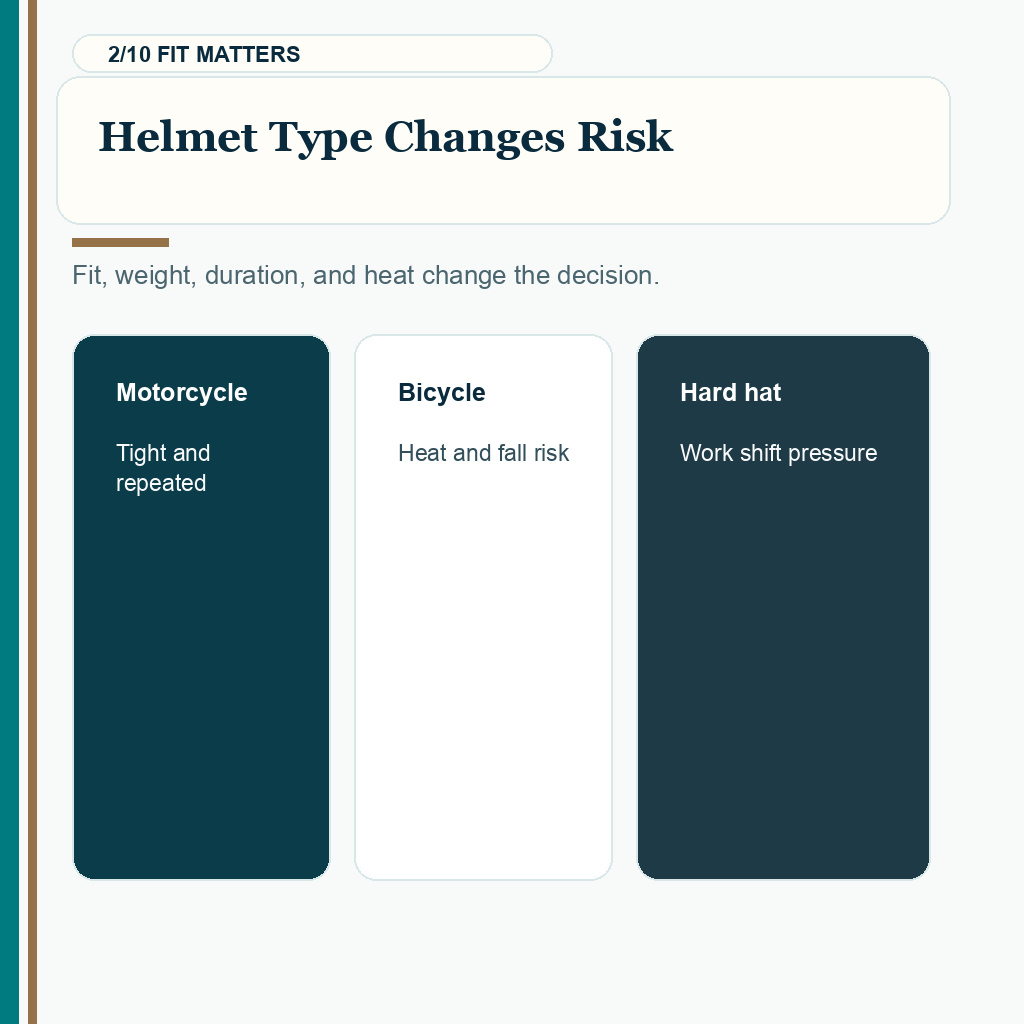
A bicycle helmet may feel lighter than a motorcycle helmet, but I still treat it as a helmet. It can press on the frontal scalp, move during riding, trap heat, and rub when you put it on or take it off.
The risk also depends on why the helmet is being worn. A short gentle ride in cool weather after the safer window is different from cycling hard, sweating heavily, or wearing the helmet every day for commuting.
A stationary bike at home after the exercise window is not the same as road cycling with a helmet, sun, wind, traffic, and fall risk. If fitness is the goal, there may be safer ways to restart training before outdoor cycling returns.
I do not advise riding without a required helmet just to protect the transplant. That is not safe. If riding requires a helmet, the better answer is usually to delay riding until helmet use is reasonable.
If you cycle for fitness, I keep in mind effort, sweat, sun, and the risk of falling. The helmet is only one part of the return to activity.
Construction hard hats and work safety
A construction hard hat is also a concern, but the pressure pattern can be different from a motorcycle helmet. Some hard hats sit on an internal suspension band. Others sit closer to the scalp. Some move around during work and create rubbing.
The work environment matters. Dust, heat, sweat, bending, lifting, and accidental contact can all make the hard hat question more serious. The hard hat may be only one part of the risk.
If you work on a construction site, you need more careful planning than someone with desk work. Returning too early may expose the scalp to dust, sweat, sun, helmet pressure, and physical effort all at once. I treat that as a separate construction work after hair transplant return decision, not just a helmet question.
If you must wear a hard hat for legal safety, do not simply skip it. Safety at work matters. It may be better to delay that work or modify duties until helmet wear is safer.
Do not add a baseball cap, beanie, or thick cloth under a hard hat to hide the transplant before the scalp is ready for helmet contact. Extra layers can shift the pressure line, increase heat, and make the hard hat less predictable during a long shift.
Trying to protect the transplant by avoiding a required hard hat in a dangerous workplace is not good judgment. The correct solution is better timing, not unsafe work.
If you cannot avoid work, speak with your employer before surgery. A few weeks of modified duty, indoor work, supervision tasks, or responsibilities that do not require a helmet can protect both your safety and the surgical investment.
I have seen people underestimate this because the operation itself is only one day. But recovery has to fit your real job, not only the clinic calendar.
Padding does not make early helmet use safe
Improvising with extra padding too early needs caution. Extra padding can change pressure points and make the helmet tighter. It may also trap more heat and create more sweating. For a hard hat or motorcycle helmet, the first padding test is how the edge moves during removal. Soft fabric is still wrong if it pulls across the new hairline.
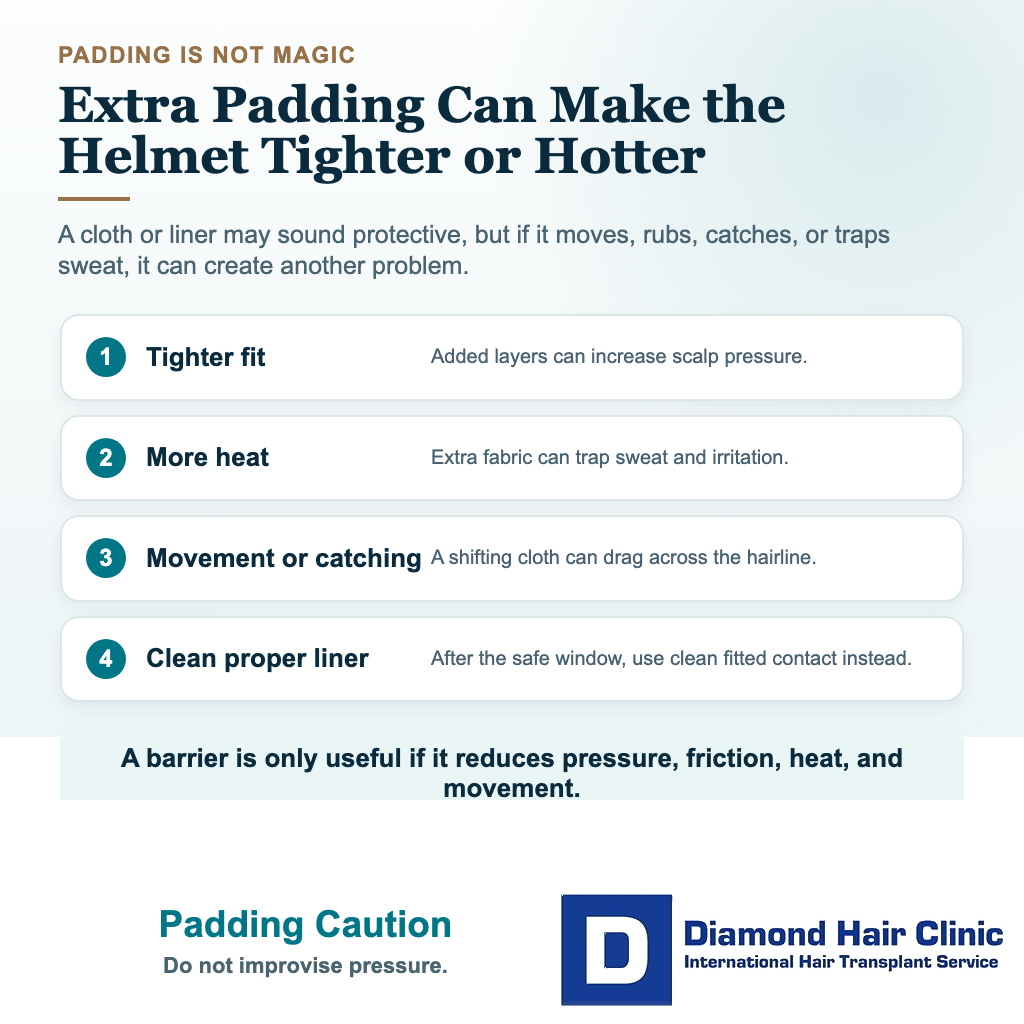
A soft cloth may sound protective, but if it moves, rubs, catches, or becomes damp, it can create its own problem. A poorly chosen barrier is not always safer.
If a helmet must be used after the safer window, keep it clean, properly fitted, and limited to the shortest necessary time at first. Check the scalp afterward for redness, discomfort, or rubbing marks.
Do not use dirty liners, rough fabric, or tight caps under the helmet. Do not force the helmet over the scalp if it drags across the hairline. Do not keep adjusting it repeatedly during the day.
The same pressure and friction logic applies to sleep after a hair transplant. The aim is to reduce friction and pressure, not create a clever workaround that causes more contact.
If you need special padding for a work helmet, discuss it with your surgeon and your workplace safety officer. Padding is not a permission slip. Medical healing and legal safety both need to be respected.
Do not cut or alter a safety helmet in a way that weakens protection. A helmet is there for a reason. If it cannot be worn safely after surgery, the answer is usually timing or duty modification, not damaging the helmet.
After the safer window, the best padding is usually the clean, proper liner designed for that helmet. Improvised cloth layers can slip, bunch up, and create uneven pressure.
Jobs that require a helmet every day
Daily helmet use needs review before surgery. It can determine when surgery is scheduled and how much time away from full duties is realistic.
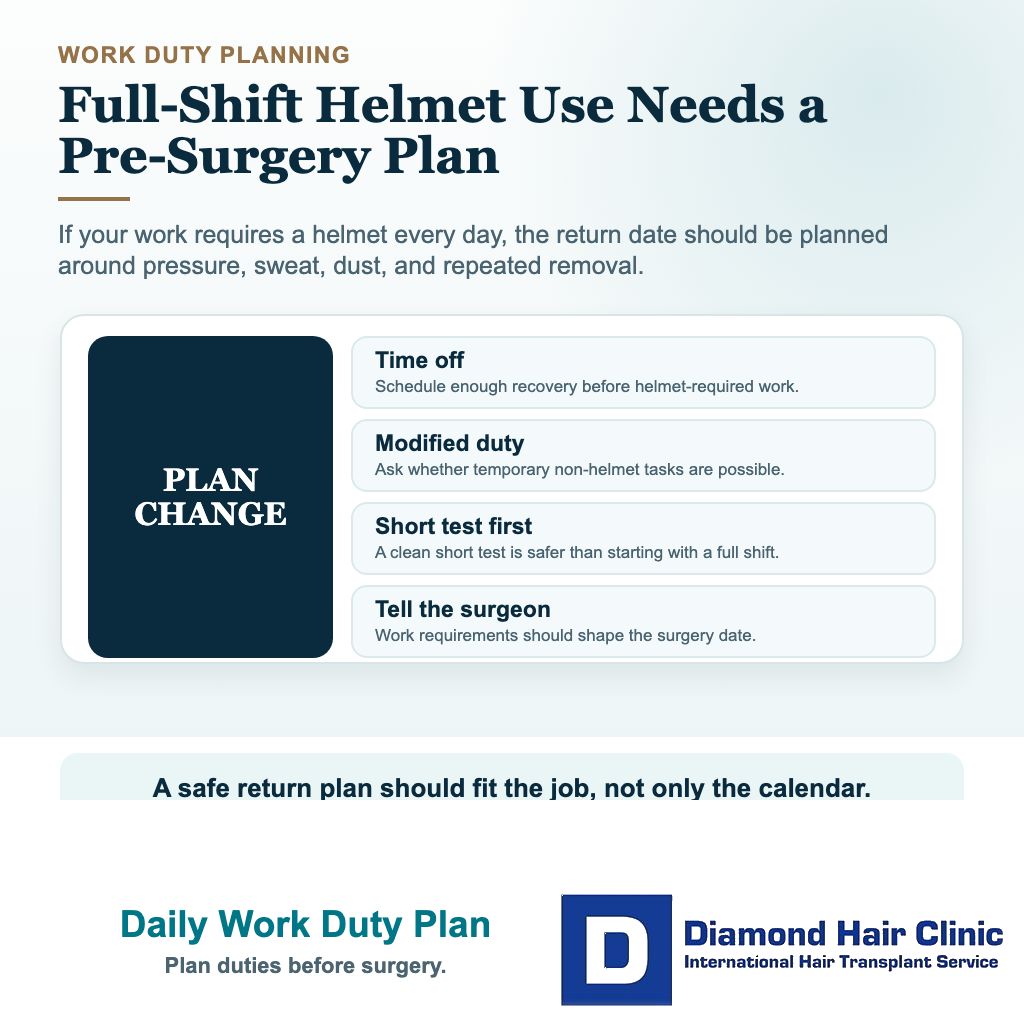
Wearing a hard hat for 8 hours a day is not the same situation as wearing a bicycle helmet for 20 minutes. Duration changes the risk.
Daily helmet use means repeated pressure, repeated sweating, repeated removal, and repeated scalp contact. Even after 30 days, a gradual return is safer when it is possible.
Discuss job demands before committing to a hair transplant. Surgery needs planning around real life, not an ideal version of recovery where helmets disappear.
If daily helmet use affects how soon you can work normally, it also belongs in the discussion about time off work after a hair transplant.
If temporary modified duties are possible, that is often the best solution. You can return to work without forcing the scalp under a helmet too early.
For firefighters and emergency responders, a quiet season is not the same as being off call. Have your supervisor confirm that any temporary desk assignment excludes callouts requiring a helmet while your helmet restriction applies.
If modified duties are impossible, choose the timing of the operation very carefully. A surgeon led plan needs to account for work, transport, and safety requirements before grafts are ever placed.
If you are traveling from another country, this needs planning before surgery. You may think only about the surgery date and the return flight, but real recovery begins when you go back to daily obligations. If helmet use starts too soon at home, the problem did not disappear because you left the clinic.
These details belong in the consultation before the operation. Adjusting the surgery date is better than pretending a strict work requirement does not exist.
Sweat inside a helmet during recovery
Sweating inside a helmet can irritate the scalp, especially during the first weeks. Sweat itself does not simply destroy grafts, but sweat plus heat plus friction is not a good combination around healing skin.
When the scalp sweats, you often want to wipe, scratch, or adjust the helmet. Those reactions create the real risk. It is rarely one drop of sweat. It is what you do because of discomfort.
Summer surgery, sports, and hot work environments need more planning. This broader issue appears in hair transplant in summer or winter, because heat changes recovery behavior.
Water activities need separate timing. If you are thinking about swimming, saunas, or steam rooms, the timing matters. The guidance on swimming after a hair transplant explains why heat and water exposure should wait.
If you must wear a helmet after the safer period, begin in cooler conditions when possible. Avoid long rides or long work shifts as the first test. A short, cool test after the safer window is not the same as a full shift in heat and dust or a long motorcycle ride in traffic.
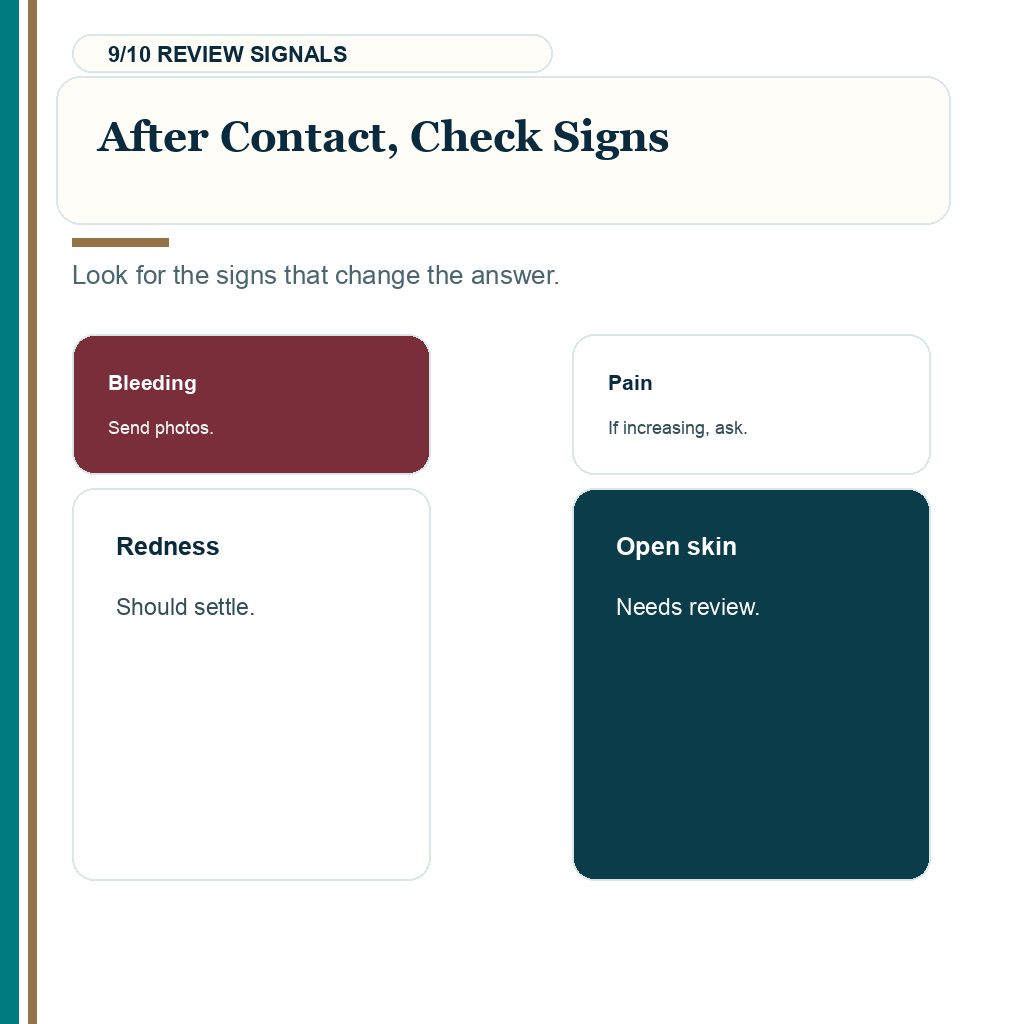
After helmet use, check the scalp gently. Redness that settles quickly may be different from persistent soreness, itching, swelling, or follicle irritation.
Do not check by scratching or rubbing. Use clean hands and good light, then leave the area alone. A clear photograph gives the clinic more useful information than repeatedly touching an irritated spot.
If the helmet liner becomes damp from sweat, clean it properly before using it again. Reusing a dirty damp liner against healing skin is exactly the kind of small preventable problem you should avoid.
Use the carousel below to judge helmet timing through graft pressure, sweating, and donor area comfort. Swipe sideways, use an arrow, or choose a number below the image.



Returning to helmet use safely
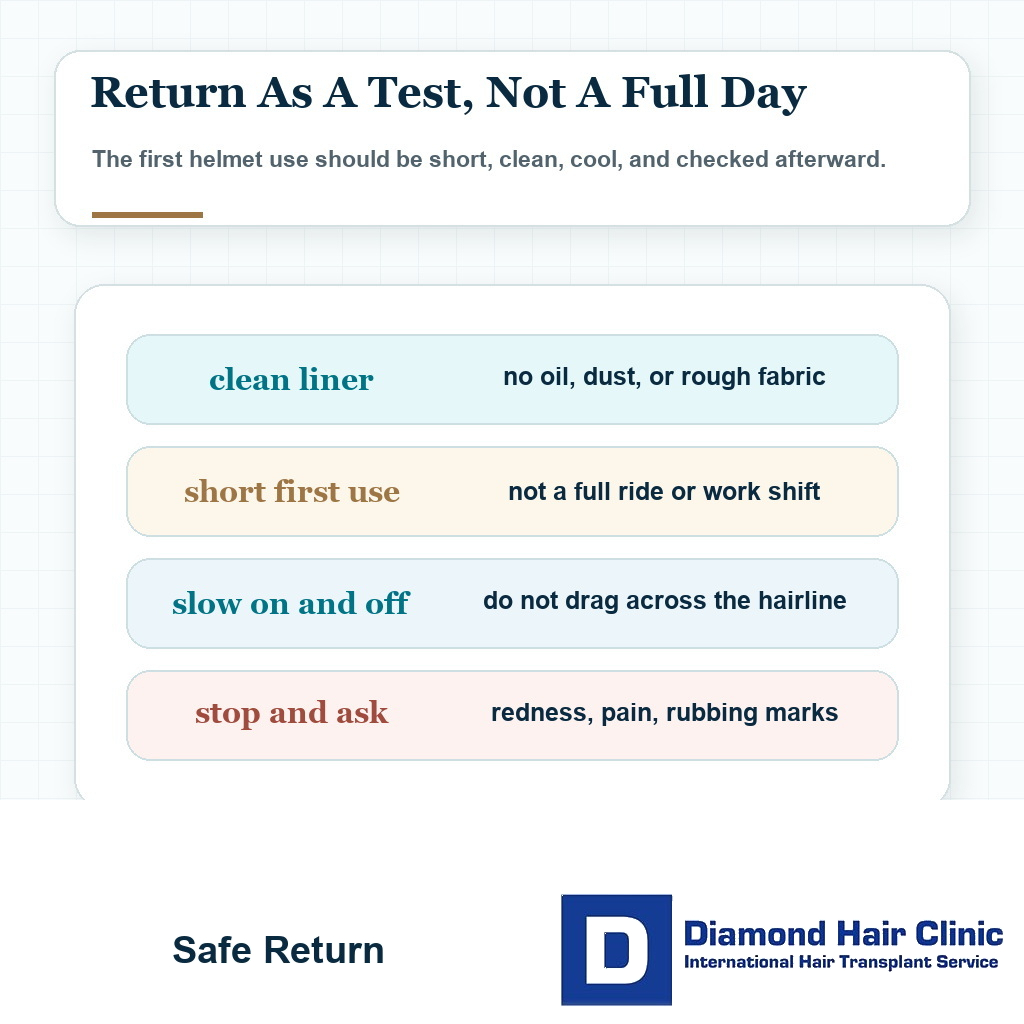
After the safer waiting period, return gradually. Do not make the first helmet use a long ride, a hot workday, or a full shift in a dusty environment. Start short and observe the scalp.
The helmet should be clean. The liner should not be oily, dusty, or rough. If the helmet has been used heavily before surgery, consider cleaning or replacing the liner before returning to it.
Check more than the top shell. Chin straps, tight side padding, rough seams, and the way the helmet slides on and off can irritate the hairline, temples, donor area, or grafted zone even when the helmet feels acceptable once it is already on.
Put the helmet on slowly. Remove it slowly. Avoid dragging it across the frontal hairline. If it catches or pulls, stop and adjust the way you are placing it.
Redness, pain, itching, swelling, pimples, or rubbing marks mean the helmet should come off. Let the scalp settle and report persistent or worsening irritation rather than repeating the same exposure each day.
A gradual return may mean wearing the helmet for a short necessary trip first, not a long ride. For work, it may mean a short trial under controlled conditions before returning to a full day in heat or dust.
If the scalp tolerates short use without redness or discomfort, you can increase slowly. If the scalp becomes sore, red, itchy, or tender, stop and give it more time. Healing skin gives feedback.
Activity limits matter here as well. Early intense activity, heavy sweating, and friction can all overlap with helmet concerns. The exertion side is explained separately on the page about exercise after a hair transplant.
A safe return means short use, clean contact, slow movement, and a settled scalp afterward.
If you wore a helmet too early
First, do not panic. Wearing a helmet too early does not by itself mean the transplant is ruined. Start by assessing what actually happened.
A brief loose contact at week 4 is different from forcing a tight helmet over fresh grafts during the first week or wearing it for hours with pain, heat, or bleeding.
After a helmet contact, the important details are whether there was bleeding, pain, dragging across the recipient area, visible graft displacement, open skin, or increasing redness. These details tell me whether you need reassurance or urgent review.
With no bleeding, no visible injury, and a scalp that looks settled, the event may not cause harm. Avoid repeating it, and share photos for review if you are worried.
If there is bleeding, swelling, increasing redness, pus, severe pain, or a clear scrape, seek immediate clinic review. Do not scrub the area. Do not apply random products. Do not try to diagnose it from mirror checks alone.
Medical accountability matters here. You should know who performs the hair transplant surgery and who is responsible for follow up when a practical recovery problem happens.
Good aftercare is more than a list of rules. It depends on a clinic that can interpret real events properly.
If the clinic simply says everything is fine without asking what happened, that is not a proper assessment. Timing, helmet type, duration, symptoms, and photographs all matter. The details decide whether reassurance is enough.
Most early mistakes can be handled better when you report them early. Hiding the problem because of embarrassment only delays proper advice.
Practical helmet advice for patients
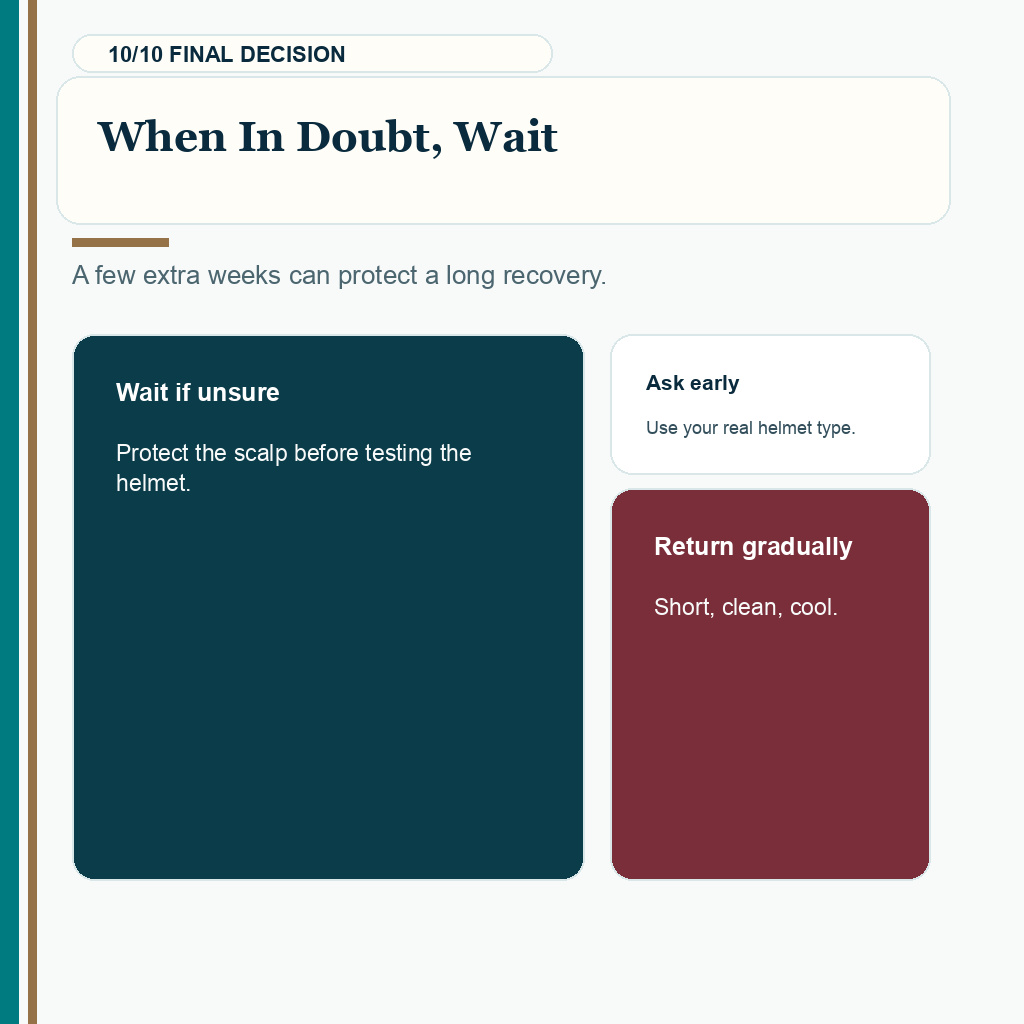
Do not wear a helmet in the first 30 days. Around weeks 4 to 5 may be suitable for brief, gentle use in an uncomplicated recovery, while tight, heavy, or prolonged wear is better delayed until weeks 5 to 6. Ongoing redness, soreness, itching, or irritation means waiting longer and having the scalp reviewed.
Plan transportation and work duties before surgery. If you ride a motorcycle every day or wear a hard hat for work, do not treat that as an afterthought. Make it part of the surgical plan.
When you return to helmet use, keep it clean, avoid heat, start briefly, remove it slowly, and check the scalp afterward. If it causes repeated discomfort, treat that as a reason to stop using it for the day.
This is a real life decision, not a theoretical rule. The grafts need time, but the scalp also needs respect. A helmet protects your head, but it is not gentle on fresh surgical skin.
If wearing a helmet is unavoidable, talk to your surgeon before making assumptions. A careful answer based on your case is much safer than guessing from someone else’s recovery.
The cosmetic result is judged over months, not days. Avoiding helmet pressure for a few extra weeks may feel inconvenient, but it is a small sacrifice compared with the time and donor hair invested in surgery.
Recovery should not feel complicated. The purpose is to remove avoidable risks while the scalp is still healing and the result is still forming.
Good healing is easier when the helmet problem is planned early. The best decision protects both your head in daily life and your transplant during the months it needs to mature.
Read this review excerpt
Diamond Hair was the only clinic asking for medications, treatments I've done before, and other type of questions that make me feel confident on the professionalism that they practice with their clients.