


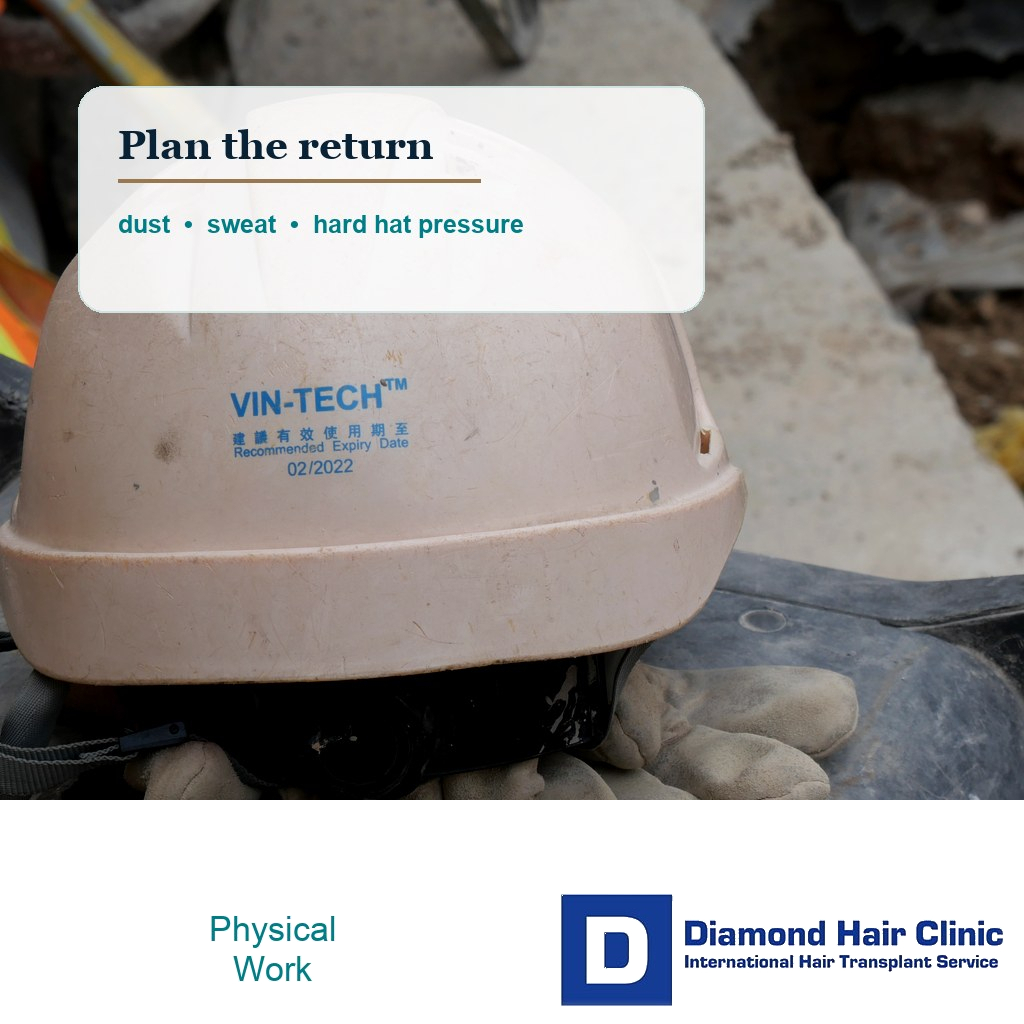
Physical Work Needs a Staged Return Plan After Surgery
If your job is clean desk work, you may be able to work from home after 2 to 3 days and return in person after about 10 to 14 days. Recovery risk changes with sweat, dust, pressure, and shift length. For many manual, dusty, hot, outdoor, or hard hat jobs, full duty needs at least 2 weeks away or modified duties, and tight headgear or heavy sweating can push the practical return closer to 4 to 6 weeks.
Feeling energetic enough to work is only one part of the return plan. I judge physical work by friction, sweat, dust, sun, rain, helmet pressure, hairnet or work cap fit after FUE, shift length, bending, lifting, travel, and whether you can stop if the scalp bleeds, swells, or becomes irritated. If the job cannot be modified, the operation date should be planned around the job, not forced into a schedule that makes recovery unsafe.
When protective headgear is part of the job, ask about a clean spare liner, a short fit trial, or lighter duty before surgery day. This turns helmet risk into a plan instead of a surprise on the first shift back.
If modified duty is possible, arrange it before surgery. A written light duty plan is better than hoping a busy shift will stay quiet once the scalp is already healing.
Light duty and full physical work are different questions
Graft security is not the same as full skin recovery. After the early days, grafts become harder to dislodge, but the scalp surface may still be healing. Scabs may not be gone, the donor area may be tender, and the recipient area can react badly to sweat, heat, friction, or dirt.
I separate a laptop day from a construction day, a short indoor meeting from a 12 hour shift, and night shift work after a hair transplant from ordinary daytime desk work. I also separate a loose cap from a hard safety helmet. Answering emails from home after 48 hours is not the same as bending, lifting, sweating, wearing PPE, and working outdoors. The general page on time off work after a hair transplant gives the broader recovery window. The harder decision is demanding work environments.
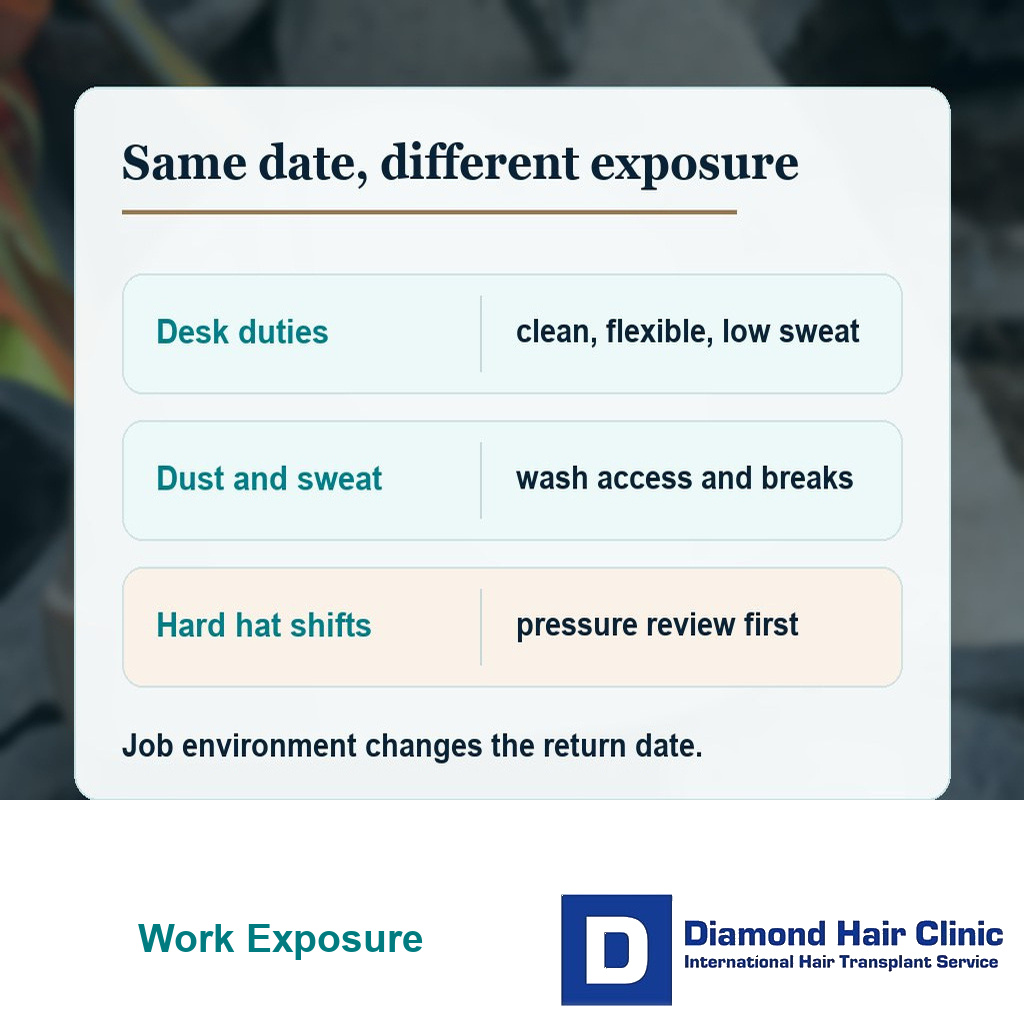
Light duty and full duty are not the same decision. A return can be safe when the work is clean, short, cool, and controllable. The same day can be too early if the shift adds heat, dust, pressure, heavy lifting, and no chance to wash correctly.
Do not ask only by job title. A chef, nurse, builder, barber, and warehouse worker can have very different sweat, bending, headwear, hygiene, and break conditions on the same length shift.
Certain job demands make return harder
The return date changes when the job involves heavy lifting, repeated bending, dust, sweat, rain, heat, direct sun, tight headwear, protective goggles, a hard hat, long commuting, or close public contact. The risk is not only one dramatic accident. Small exposures can accumulate through a shift and irritate the healing scalp.
A clean office job with flexible hours can often restart earlier. A warehouse, factory, kitchen, construction site, delivery route, hospital shift, gym floor, outdoor service job, or job that requires a helmet needs more caution. If the concern is specifically a dusty building site with hard hat use, I use a separate construction work after hair transplant return plan. The timing principles for exercise after a hair transplant still matter, but work can be harder to control because you may not be able to stop, shower, cool down, or remove pressure when the scalp needs it. If the workday includes bike commuting, delivery riding, or outdoor cycling, cycling after hair transplant needs to be part of the job plan, not treated as ordinary transport.
Dust, sweat, and dirty environments matter
Surface hygiene is most sensitive during the 10 to 14 day early healing window. Scabs are drying and loosening, the recipient area is easy to irritate, and the donor area can be itchy or sore. Light sweating after a short walk is different from heavy sweat trapped under headwear for hours.
Sweat and dust alone rarely destroy grafts. The more realistic risk is that the scalp becomes warmer, dirtier, itchier, and more inflamed. Then you may rub, scratch, overwash, or cover the area tightly because it feels uncomfortable. That behavior is often the problem. If sweating is unavoidable, do not judge the return only by your energy level. Keep the scalp cool, clean, and untouched, and review sweating after a hair transplant before increasing physical work.
For dusty, dirty, or sweaty work, it is better for the scabs to be gone, the skin to be more settled, and the washing plan after the shift to be realistic. A clean scalp matters more when the job exposes healing skin to dust, shared equipment, or long hours under fabric or plastic. If a helmet liner, towel, or sweatband is shared at work, it should not touch the scalp.
Warning signs matter. Fresh bleeding, spreading hot redness, pus, fever, or worsening pain should not be hidden under a hat or treated as a normal work inconvenience. Send photos in steady lighting to the clinic and explain what happened at work, including heat, dust, headwear, trauma, or heavy sweating. The pages on folliculitis and hair transplant surgery and redness, scabs, and pimples after transplant explain these warning patterns in more detail.
Hard hats and helmets need separate planning
A hard hat is not the same as a loose clean cap worn briefly. It can create pressure points, friction, heat, sweat, and repeated rubbing when it is put on and removed. A hard hat is a medical pressure decision, not only a workplace rule. If the job legally requires one, plan this before the operation date.
For tight helmets, motorcycle helmets, bicycle helmets, and hard hats, I use the same cautious principle. Avoid early pressure while the scalp surface is healing. The dedicated article on helmet after hair transplant gives the timing for helmet use. For many people, at least 30 days is a more responsible starting point, and 4 to 6 weeks can be more realistic if the helmet is tight, heavy, hot, or worn for long periods.
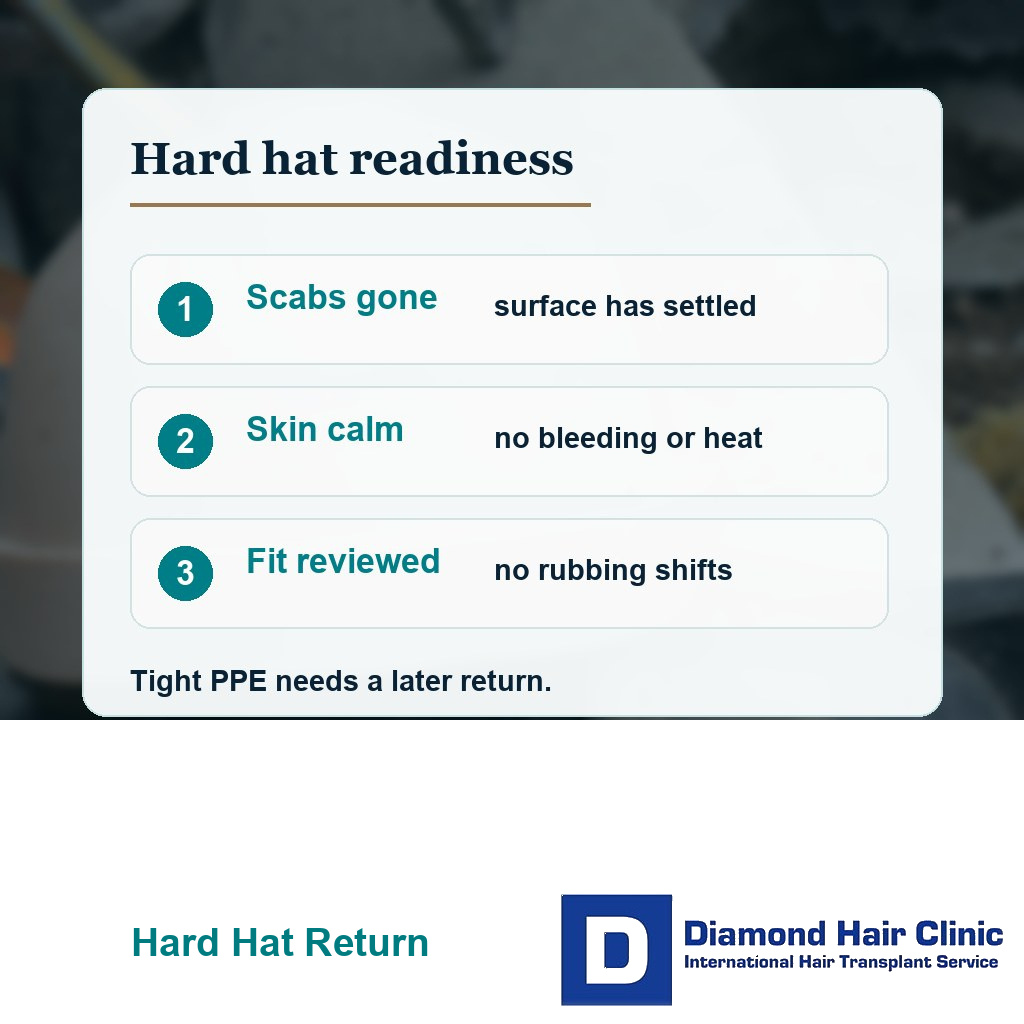
Do not skip required PPE to protect grafts. If the site requires head protection because of falling objects, electrical hazards, or impact risk, workplace safety comes first. Use modified duty, a shorter site visit, a written restriction, or delayed return until the required protection can be worn correctly.
Adding a bandana, gauze, or thick barrier under a helmet can make things worse by adding heat, pressure, slippage, or poor helmet fit. Any extra layer must stay thin and clean, and it must not interfere with the suspension system. A loose clean cap for short social coverage is a different question from a safety helmet worn through a shift. Clothing and collar friction need careful review used when choosing what to wear after a hair transplant.
Heat, rain, and outdoor shifts can change the plan
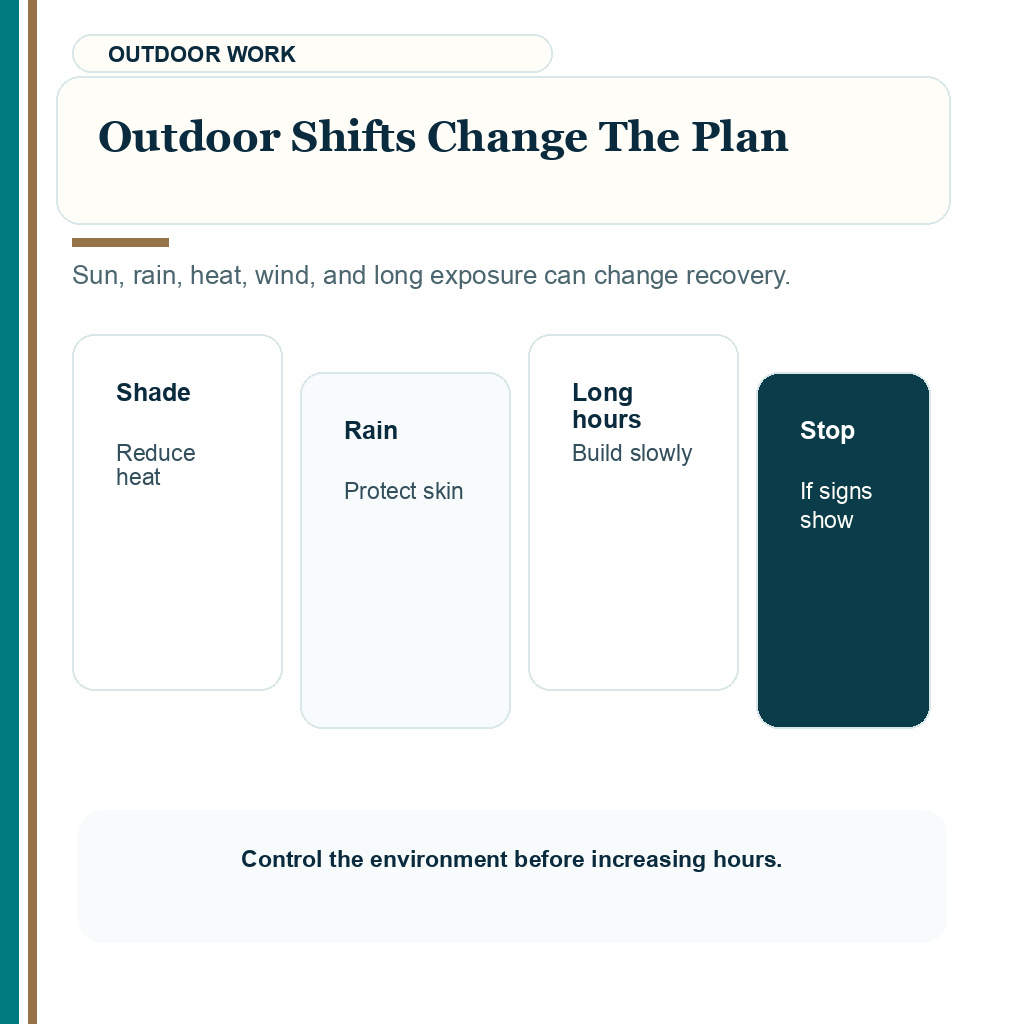
Outdoor work adds variables that are easy to underestimate. Heat increases sweating. Sun can irritate the scalp. Rain can make clothing, hats, and helmets rub more. Wind can dry crusts and make the scalp itch. None of these proves the transplant is ruined, but they make early recovery harder to control.
If the job is outdoors, protect the first two weeks from direct sun, dirty rainwater, heavy sweat, and repeated headwear friction as much as possible. Prolonged sun exposure after hair transplant is a separate work safety problem. Rain after hair transplant also needs practical judgment about harmless moisture versus risky soaking.
For outdoor shifts, I do not separate sun, sweat, headwear, and product timing. Shade and cooler hours come first, a loose cover has to be safe for the grafts, and sunscreen timing only belongs in the plan after the skin is closed and your clinic has cleared product use.

The return date depends on whether you can keep the scalp clean, cool, and untouched. If the answer is no, the return date is too early for that job, even if someone with an office job returned sooner.
Work travel can change the risk
A short work trip a few days after surgery is a poor idea if it includes long flights, crowded transport, poor sleep, heavy bags, dust, sun, sweat, or no chance to wash correctly. Travel itself is not the only issue. Travel removes control at the exact time when control matters most.
During the first days, swelling can increase, the donor area can feel sore, and poor sleep can make you careless. Carrying luggage, rushing through airports, and worrying about how the scalp looks can make the experience harder. If travel is unavoidable, the clinic should know before surgery so the operation date, graft placement, aftercare, washing schedule, and return flight can be planned together. The articles on flying after hair transplant and airport security after transplant cover the travel concerns.
Public facing work is a separate issue
Public facing work has two separate questions. The first is medical. Can the scalp safely handle the environment? The second is social. Will you feel comfortable being seen? These are not the same decision.
You may be medically safe for a clean indoor shift but still uncomfortable because of redness, scabs, shaving, swelling, or shedding. You may also feel emotionally ready to appear in public but work in a hot, dusty setting with helmet use that is physically too demanding. If your concern is mainly concealment, public facing work return, keeping a hair transplant secret, and hair fibers after transplant are more relevant. If the concern is physical exposure, work modification comes first.
Work should sometimes wait
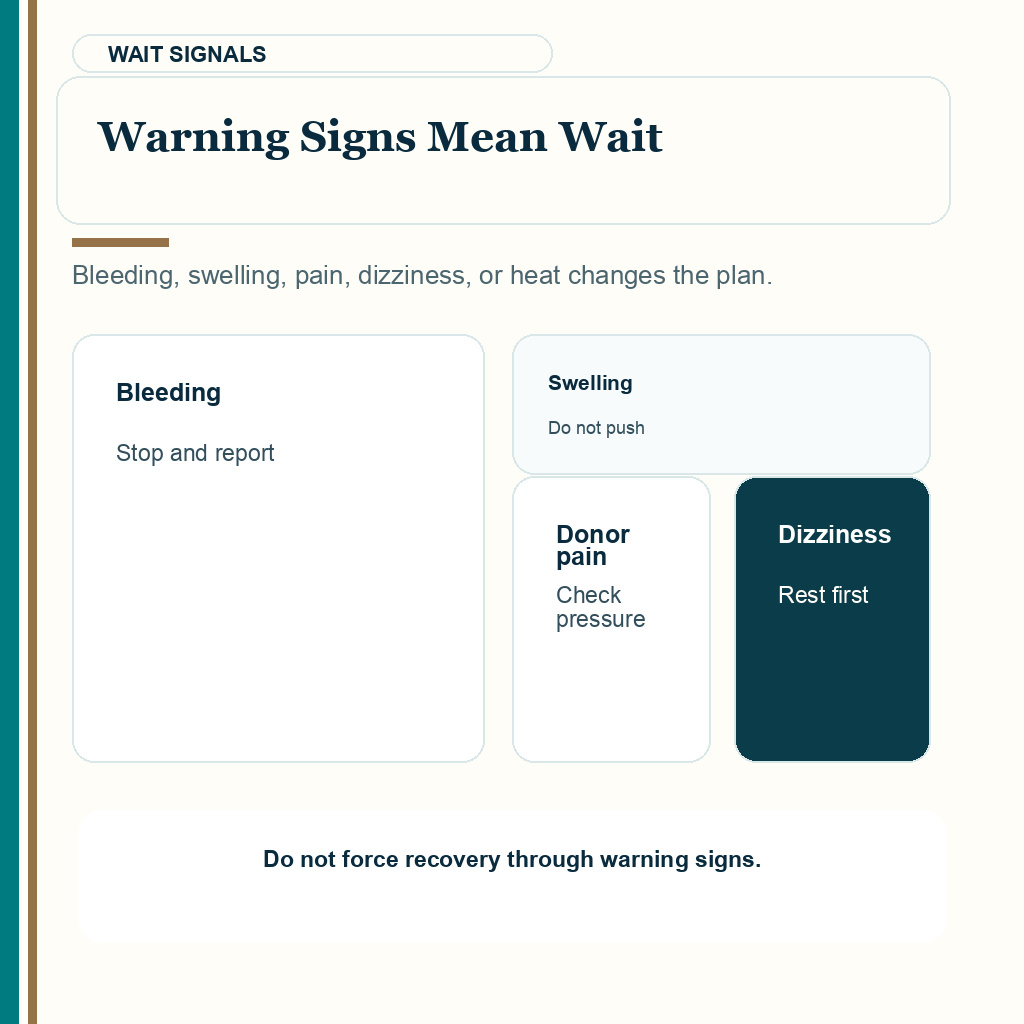
Postpone or modify work if you still have attached scabs, active bleeding, worsening swelling, strong donor pain, spreading redness, drainage, fever, black or grey tissue, or a wound that looks open. Also be careful if your job requires a tight helmet, heavy sweating, dirty conditions, or long shifts before the scalp has settled.
Another reason to postpone is lack of control. If you cannot wash correctly, avoid a hard hat, avoid dust, take breaks, stay out of sun or rain, or ask for clinic review easily, the work environment does not fit early recovery. A hair transplant is elective. It should not be squeezed between obligations in a way that makes the first two weeks chaotic.
Workplace safety still comes first. If protective equipment is mandatory, do not choose graft protection by creating a different injury risk. Use modified duties or delay full duty until the required equipment can be worn safely.
Swelling deserves separate judgment. Mild forehead swelling often follows a normal pattern, but painful swelling, hot swelling, swelling on one side, worsening swelling, or swelling with fever needs review. Swelling after hair transplant depends on direction, pain, heat, fever, and whether the pattern is settling or getting worse.
These 10 physical work slides show the job demands that change return timing after FUE. Swipe sideways, use the arrows one slide at a time, or choose a number below the image.





A staged return should be practical
Before surgery, I ask what you actually do at work, not only the job title. A manager who walks through a dusty site twice a day is different from a worker who wears a hard hat for 10 hours. A chef, delivery driver, warehouse worker, nurse, mechanic, gym trainer, airport worker, construction worker, or outdoor security worker may each need a different plan.
For many physical workers, a staged return is safer. The first stage is rest and controlled washing. The second is light indoor work without sweating, rubbing, bending, or headwear. The third is shorter shifts or modified duties. Before a full hard hat shift, a short fit trial can show whether pressure marks, rubbing, heat, or donor pain appear. Only after that do I consider full physical work, long outdoor exposure, and heavy sweating. The timing depends on healing, procedure size, donor tenderness, recipient area condition, and whether you can follow aftercare during the shift.
This plan should be made before travel and payment, not after the transplant is finished. Dusty, sweaty, or helmet work should be planned before surgery because the clinic may advise a different date, a longer stay, modified duties, or a clearer employer note.
Employer questions matter before surgery
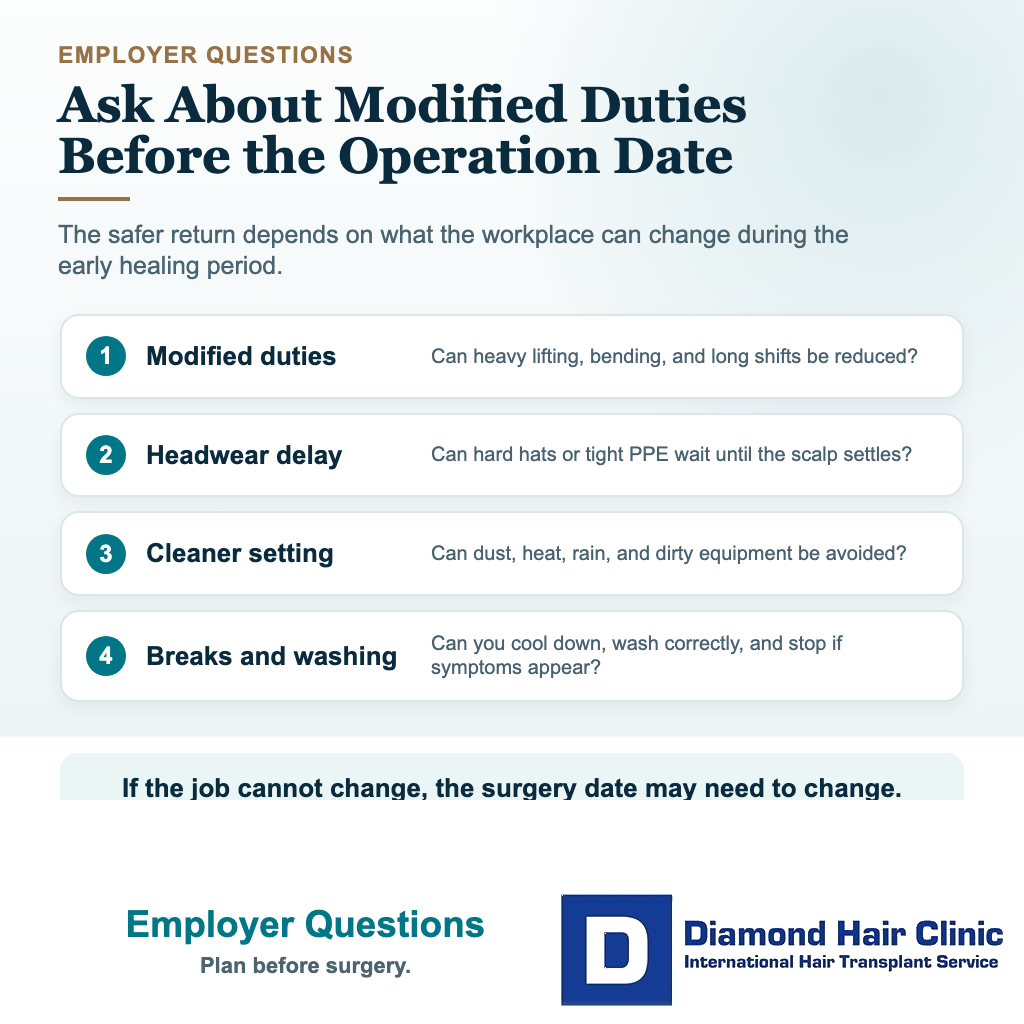
Before choosing the operation date, modified duties need to be realistic. Hard hat timing, indoor work, dust, heat, heavy lifting, bending, long sweaty shifts, cooling breaks, and safe washing after work all affect recovery. If head protection is mandatory all day, a temporary role may be safer until the helmet fits without disturbing the scalp.
If the answer is no, the safer solution may be a later surgery date rather than a rushed return. If you cannot change duties, you may need more time away than someone who can move temporarily to light indoor tasks. Planning this before surgery protects the grafts, the donor area, and you from pressure to ignore recovery instructions after the operation.
Physical work should be planned before FUE
The best recovery plan matches your real life. If your work is flexible, clean, and low pressure, returning earlier may be possible. If your work is physical, dusty, hot, outdoor, based around a helmet, or public facing, the plan needs more time and clearer restrictions.
Adjusting the surgery date is sometimes the better decision when the first two weeks would otherwise be spent in a job that rubs, overheats, contaminates, or hides the scalp. Tell the clinic exactly what your work involves. Bring the hard hat, cap, or photos of the headwear if needed. Explain your shift length, travel, dust exposure, sweat level, and whether modified duties are possible.
A hair transplant should be planned around the work you really return to. The better plan is not the fastest calendar answer. It is the plan that lets the grafts, donor area, and healing skin recover without asking you to ignore the realities of your job.
Dusty, hot, or outdoor work also creates a specific environmental exposure question. The dust and wind after FUE guide separates normal city air from dusty shifts, sweat, pressure, and repeated wiping.

Read this review excerpt
Every single one of my questions was answered and they made sure I had all the details I needed to make an informed decision.