



Can Rain Damage Hair Transplant Grafts?
You should avoid direct rain on the recipient area during the first 10 to 14 days after a hair transplant. A few drops of light rain are unlikely to destroy grafts by themselves, especially if you do not rub, scratch, press, or keep touching the area afterward. The bigger risk is usually what you do after rain touches the scalp. Wiping the area, pulling on scabs, wearing a tight wet hat, or staying outside while the skin is still healing can create the real problem.
During the first few days, use an umbrella, keep the scalp dry when possible, and treat rain as an avoidable irritation rather than a disaster. If you get caught in light rain, move indoors, let the area dry without rubbing, and follow your clinic’s washing routine. Heavy rain, dirty water, pressure from wet fabric, a tight hood, and repeated touching matter much more than one brief moment outside. The same practical logic applies when you are going out after a hair transplant for food, errands, or a short walk.
If you used a hood or cap in the rain, remove it slowly from the back instead of pulling the wet edge across the hairline. The rain may be less important than the fabric movement that follows it.
Light rain usually does not ruin grafts
Light rain alone is usually not the reason grafts are lost. Newly placed grafts are delicate, but they are not floating on the skin. They are placed into small incisions and begin to settle during the first days. That does not make the first two weeks casual. The grafts still need protection from rubbing, pressure, picking, and dirty exposure.
The part I take seriously is the early wound environment. The scalp has thousands of tiny healing points. Rainwater is not controlled like the water used during a clinic wash, and outdoor rain may carry dust, pollution, or other irritants. Every drop is not dangerous. The first two weeks still need protection because the skin is open, sensitive, and easy to irritate. For outdoor jobs, judge rain together with physical work after hair transplant, because wet fabric, helmets, dust, and sweat often appear together.
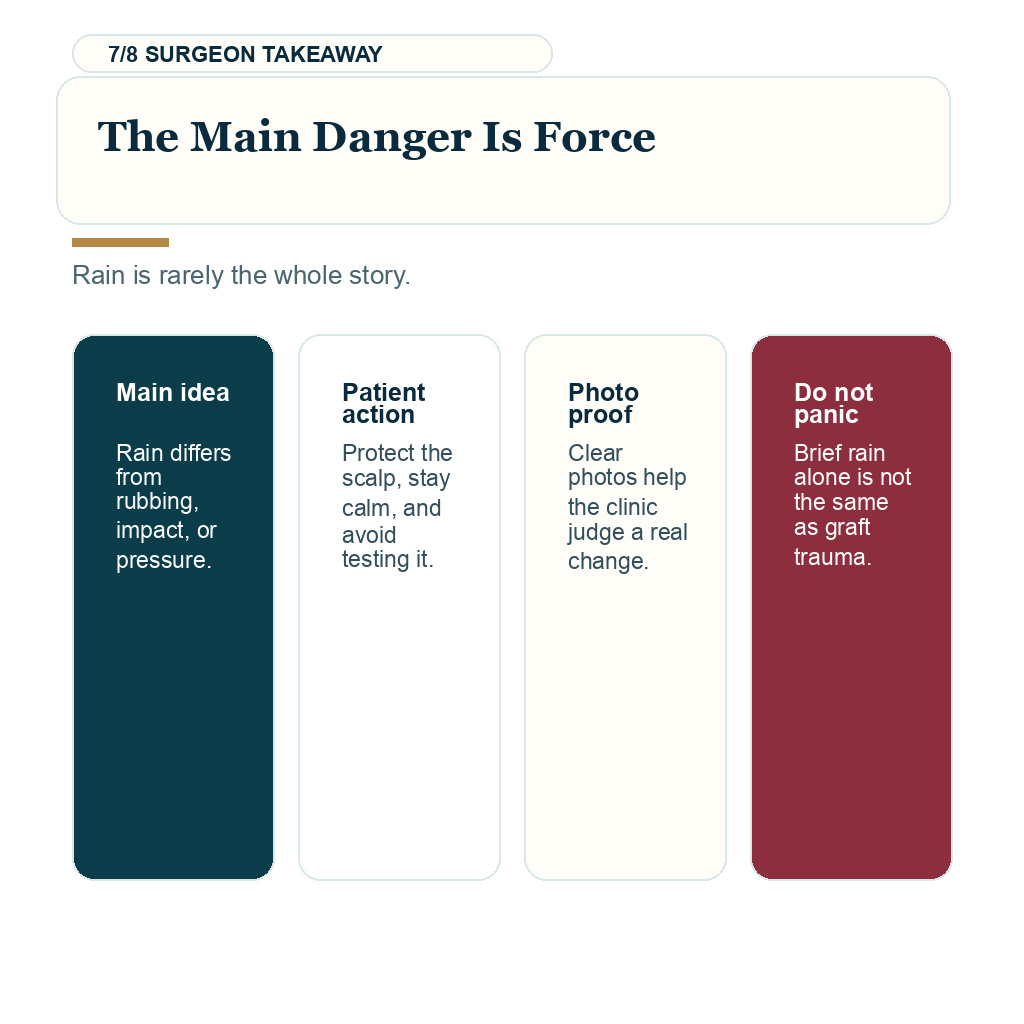
Do not turn one light exposure into a crisis. An anxious response can create more risk than the rain itself. Rubbing the recipient area with a towel, scratching wet scabs, or checking the grafts with fingers can create mechanical trauma. I think about rain together with touching newly transplanted grafts, not only as a weather question.
If the rain was brief and there was no bleeding, no visible graft displacement, no increasing pain, and no direct rubbing, the situation is usually observed rather than treated as an emergency. Handle the scalp gently and ask for review if anything looks unusual.
Contact, pressure, and contamination matter more than rain itself
Rain exposure depends on more than water touching the scalp. Timing, pressure, cleanliness, and what happened afterward matter. The beach after a hair transplant adds overlapping issues such as water, friction, sweat, towels, and sun exposure.
Timing matters because the first days are more fragile than the second week. A few drops on day 12 are very different from standing in heavy rain on day 1. Pressure matters because wet fabric, a tight hood, or a hat pushed down onto the recipient area can create rubbing. Cleanliness matters because outdoor water is less controlled than a planned wash.
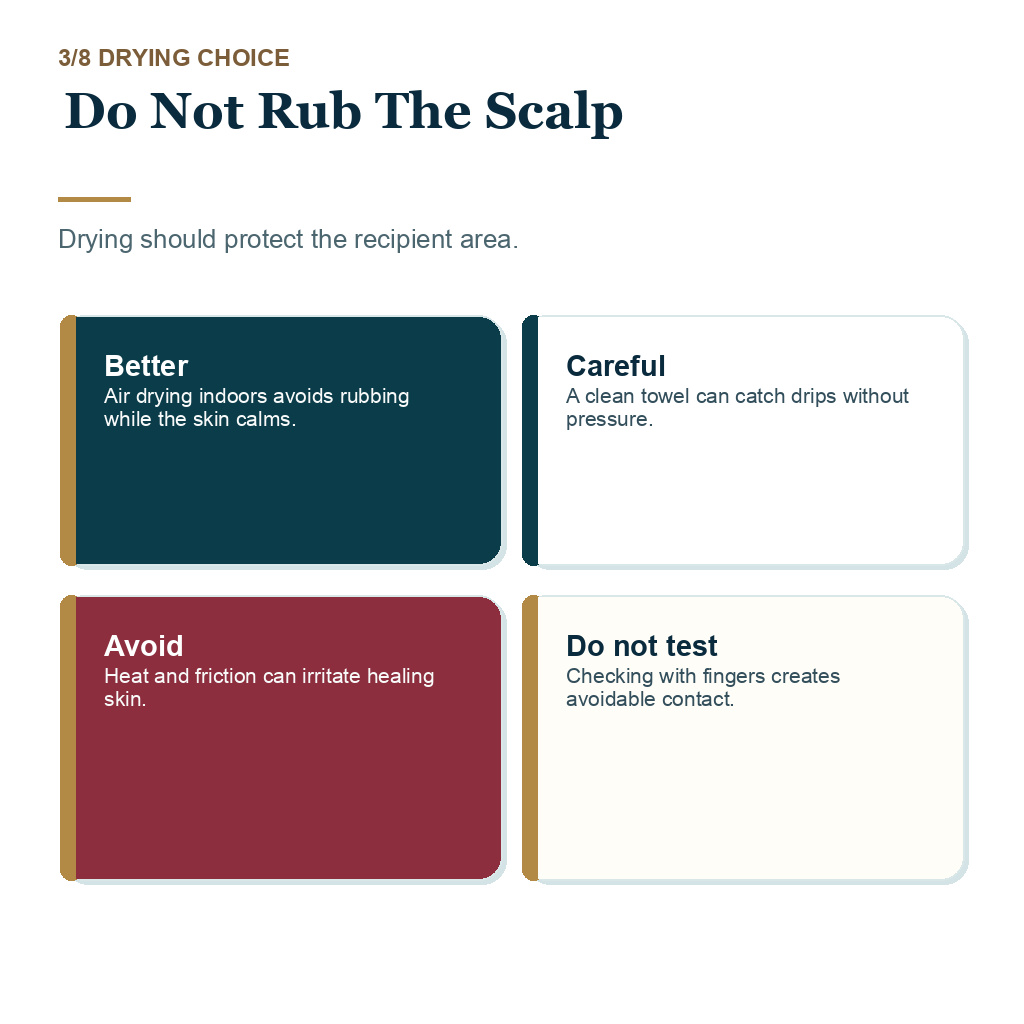
If rain touches the scalp, keep the response simple. Move indoors, avoid scrubbing, avoid rough towel drying, and do not inspect every scab with your fingers. Do not try to clean harder to compensate. A gentle return to the planned washing routine after surgery is usually safer than improvising.
I also separate wetness from impact. Rain is not the same as hitting the head on a car door, suitcase shelf, or low ceiling. If there was a real impact, I judge it closer to the situation of someone who has bumped the head after a hair transplant, especially if bleeding or graft movement followed.
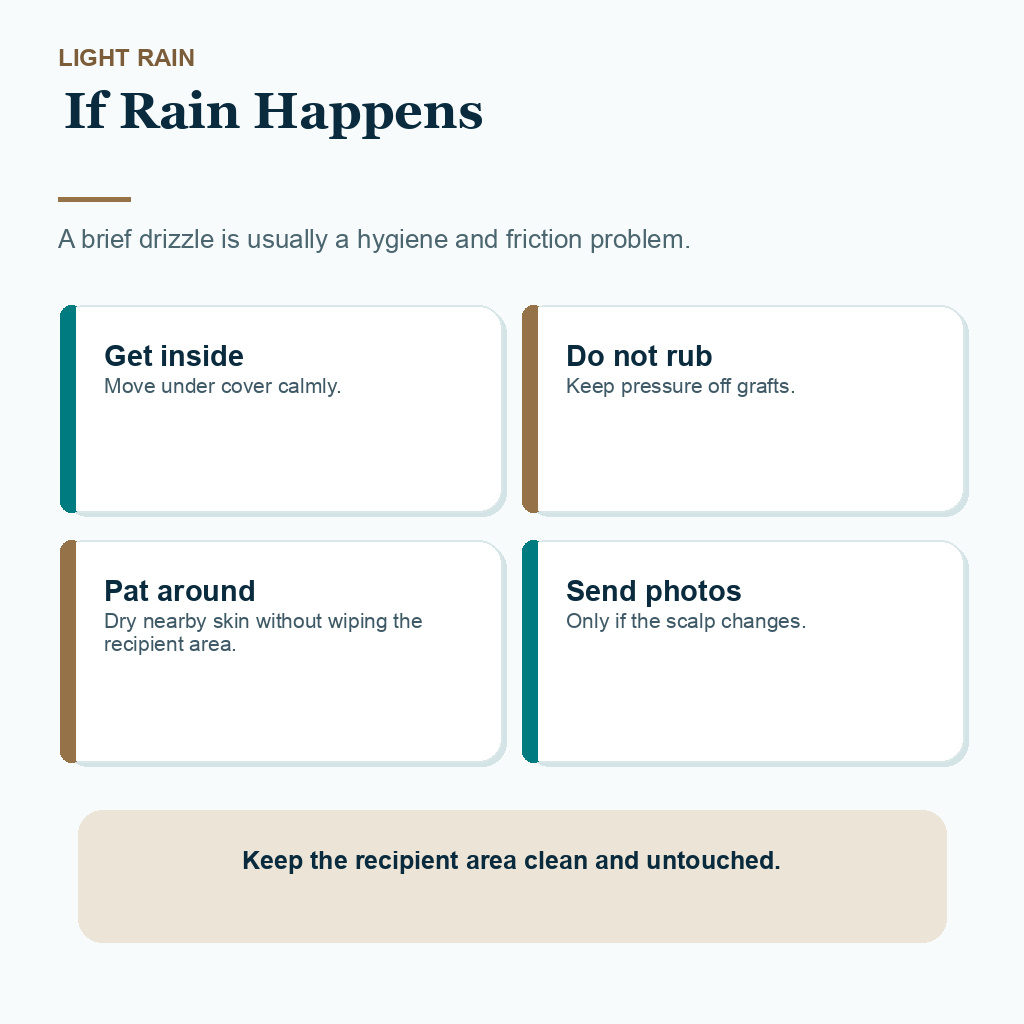
After rain touches the scalp
If rain touches the scalp in the first days, go indoors first and keep your hands away from the recipient area. If there is water sitting on the forehead or around the scalp, you can let it drain naturally or gently pat nearby skin that is not grafted. I avoid pressure, rubbing, or wiping over the grafts.
If the clinic has already started your washing plan, stay with that plan. If washing has not started yet, do not start early just because rain touched the scalp. Do not add a strong shampoo, antiseptic, alcohol wipe, hot hair dryer, or aggressive cleaning step because of rain. The healing skin usually needs less interference, not more.
A clean soft towel can be used around the face, neck, or donor area if needed, but pat only and treat the recipient area differently. If the grafted zone is wet, air drying in a clean indoor environment is usually gentler than rubbing. If you have specific instructions from your clinic, those instructions control the detail.
Rain is not a replacement for washing. A planned wash uses the method, timing, products, and pressure your clinic has chosen. Rain is uncontrolled water exposure, so the response is protection, not extra cleaning.
Do not judge the situation by loose hairs alone. Small hairs, crusts, or scabs can move during the early period and look alarming in the mirror. The difference between normal shedding, scab movement, and what a lost graft really looks like is not always obvious without context.
Rain risk is higher early after surgery
Rain becomes more concerning when it is heavy, prolonged, dirty, combined with sweat, or followed by rubbing. A short walk from a car to a doorway is not the same as standing outside in a downpour while the scalp is wet for a long time.
Be more cautious in the first few days, or if there is active bleeding, swelling that is increasing quickly, pustules, or worsening pain. With those signs, the rain may not be the main cause, but it can add confusion to an already irritated scalp.
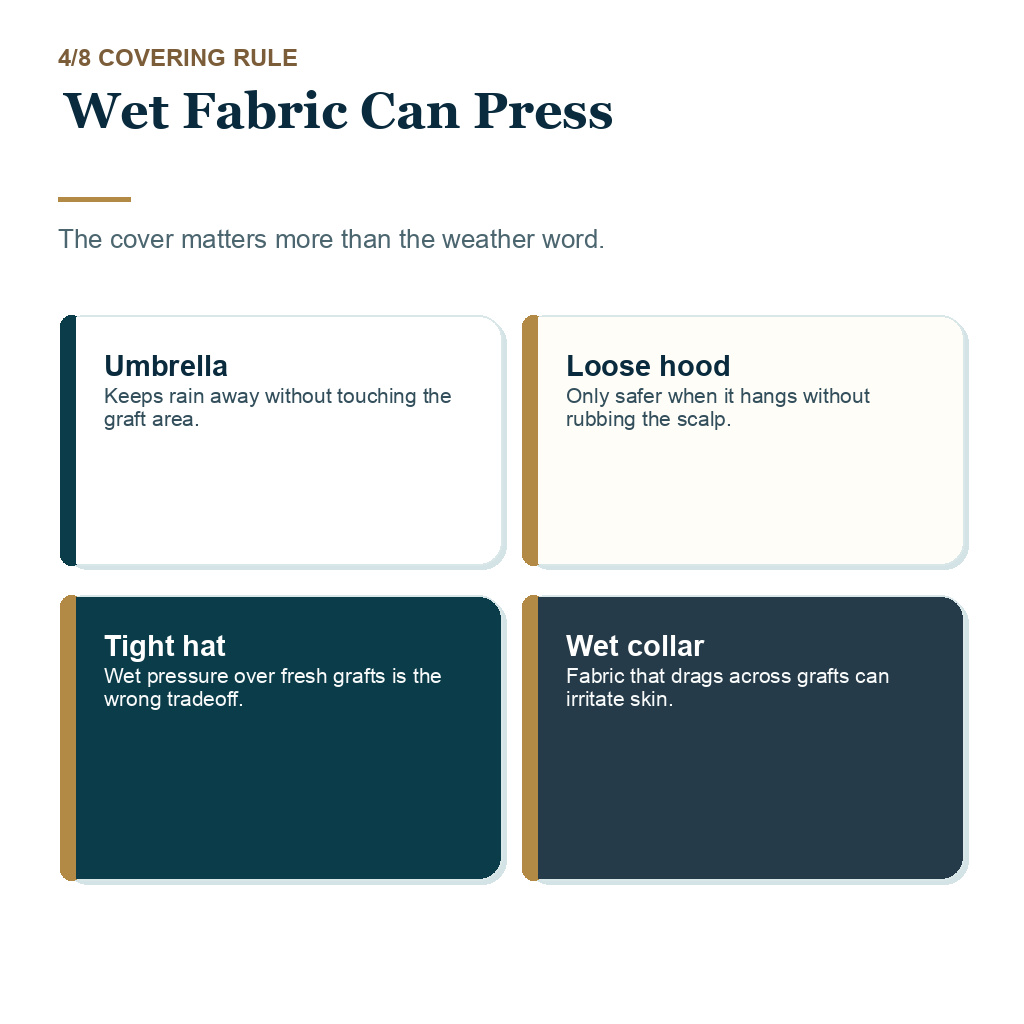
Another risk is a wet hat or hood. Fabric that becomes damp can drag across the recipient area, especially when it is put on, removed, or adjusted repeatedly. If a covering gets wet, lift it off without dragging it across the hairline. A loose covering may be useful, but only if it does not rub the grafts. That is the same reason I explain wearing a hat after a hair transplant separately from general outdoor advice.
If the weather is rainy and windy, use an umbrella or stay under cover rather than putting pressure directly on the scalp. The aim is not to hide the scalp at all costs. The aim is to avoid friction, contamination, and unnecessary contact during the protected healing window.
Rushing through rain often creates the real mistake. Slow down, use the umbrella, and protect the scalp from bumping doors, luggage shelves, or the hood you keep pulling forward.
Rain becomes less concerning as the grafts settle
Once the recipient area has passed the early protected phase, the scabs have cleared, and the clinic confirms that healing is stable, brief ordinary rain is much less concerning. For many people, this means after the first 10 to 14 days, but the exact timing depends on the skin, grafted area, washing progress, and any irritation.
Even after that point, I do not advise intentionally soaking the scalp in rain. Ordinary brief exposure is different from standing outside in heavy rain, wearing wet fabric over the transplant, or scratching the scalp while it is wet.
Think about timing in stages. Early rain should be avoided. Brief accidental rain needs gentle handling, not repeated checking. Later rain is usually less important once the scalp is closed, clean, and no longer crusted.
An umbrella is usually safer than a hood or hat
An umbrella is usually the best option because it protects the scalp without touching it. It also avoids the common problem of a hat rubbing the grafts. If you are staying in Istanbul or walking between the hotel and clinic, carrying an umbrella is a practical way to reduce anxiety without adding pressure to the recipient area.
A hood can be acceptable only if it is loose and does not slide over the grafts. A tight hood, a hood shaped like a helmet, or fabric that rests on the newly transplanted hairline can create the exact problem we are trying to avoid. The same is true for caps, beanies, and rain jackets with stiff seams.
A loose surgical bandana or a covering your clinic has approved may be used when your clinic specifically allows it. Without that instruction, do not assume any covering is safe just because it blocks rain. The fabric must be clean, light, and positioned without rubbing.
Rain protection should also be balanced with heat. A heavy hood or waterproof hat can trap warmth, create sweat, and make you adjust the covering repeatedly. If the scalp becomes sweaty, the issue begins to overlap with sweating after a hair transplant, especially in the first two weeks.

Weather planning for travel or work
Rain should make you plan more carefully, not stay locked indoors for two weeks. Short necessary walks are usually manageable with an umbrella and unhurried movement. Long outdoor plans, crowded events, heavy luggage, or public transport during a storm are less sensible in the earliest days.
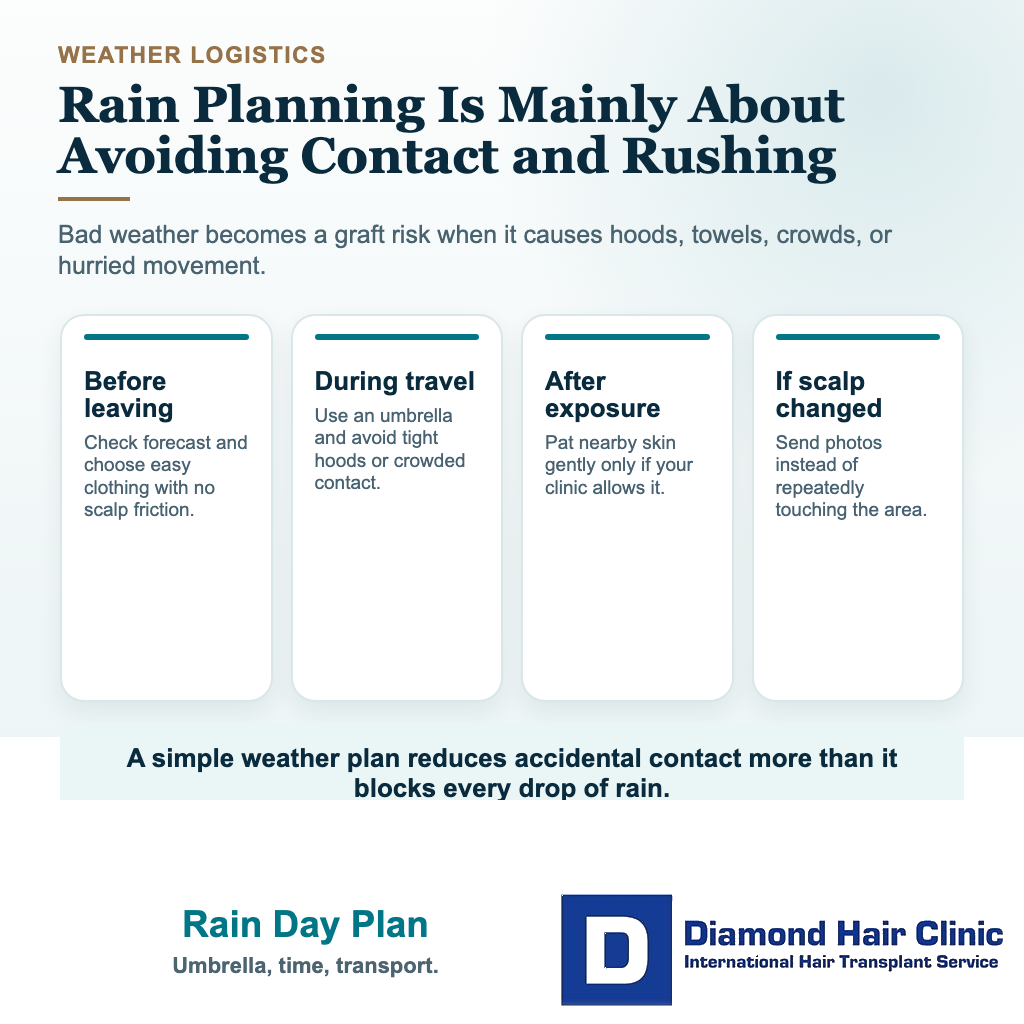
If you have travelled for surgery, plan the route before you leave the hotel. Keep an umbrella close, arrange transport where possible, avoid rushing through rain, and do not carry bags in a way that makes you sweat or bend your head down. If you are planning flights, hotel transfers, sightseeing, or return to work, think about contact risk as much as weather.
Some people ask about going outside because they also worry about being seen. That is a different concern. Looking swollen, shaved, or scabbed in public can be emotionally uncomfortable, but appearance anxiety should not push you into tight hats, dark crowded spaces, or rushed decisions. If privacy is the real issue, plan time off work after a hair transplant around healing and visibility instead of hiding the scalp in a way that rubs the grafts.
Weather also changes sun exposure. Rainy days can still turn bright, and it is easy to remove protection because the sky looks cloudy. The recipient area should still be protected from strong ultraviolet exposure. I treat sun exposure after a hair transplant as its own issue because heat and ultraviolet exposure create different risks from rain.
Warning signs that need clinic review
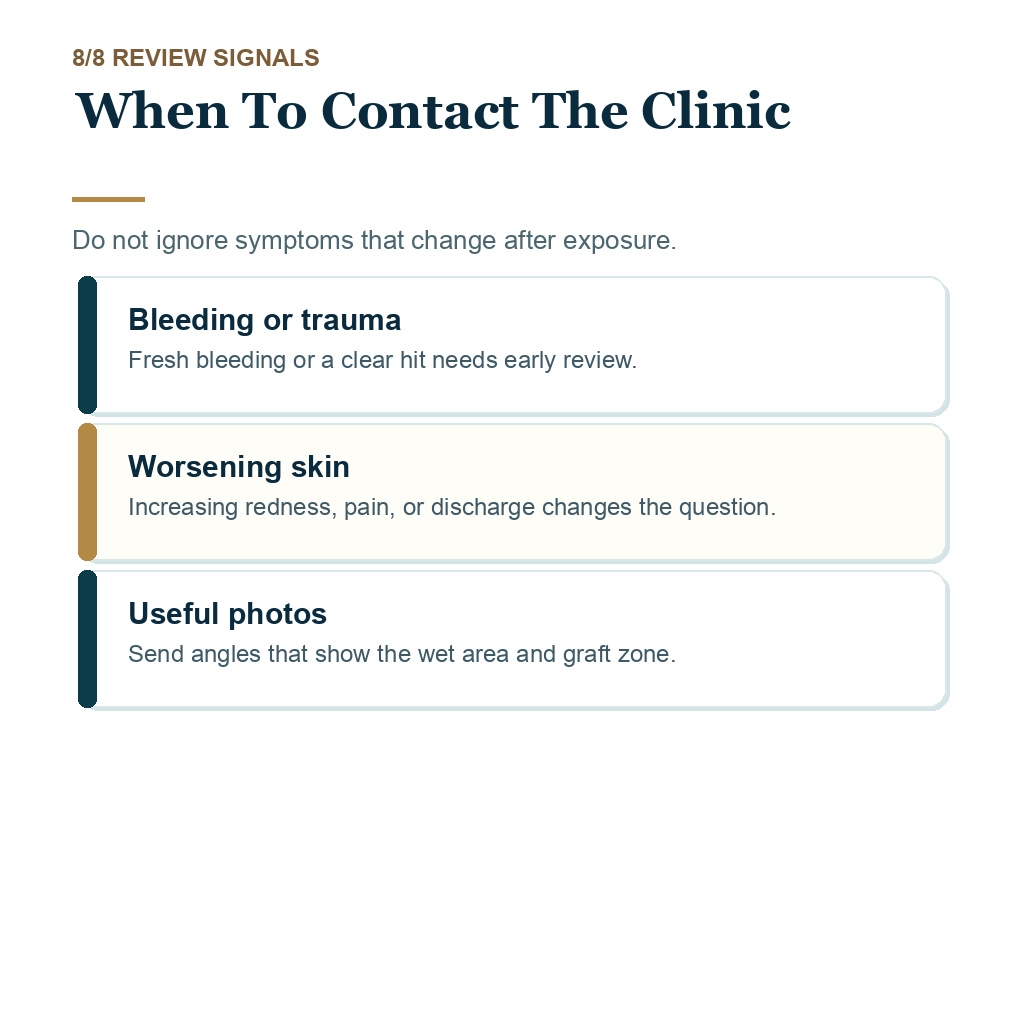
Rain exposure followed by bleeding, a clearly displaced graft, increasing pain, spreading redness, warmth, pus, fever, or swelling that feels worse rather than settling needs review. Those signs matter more than the fact that rain happened.
A small amount of worry is normal. A scalp that looks pink, tight, crusted, or uneven in the first days can make every weather event feel dangerous. Do not diagnose infection from anxiety alone, and do not ignore a real change.
Photos can help if they are clear, well lit, and sent to the clinic without touching the grafts. Take one or two clear photos rather than checking every few minutes. Repeated checking usually increases touching and stress.
If the main change is facial puffiness or forehead swelling, rain is rarely the true cause. Early swelling can happen from surgery, sleeping position, movement, and normal fluid shift. The more relevant topic is swelling after a hair transplant, especially when the swelling moves from the forehead toward the eyes.
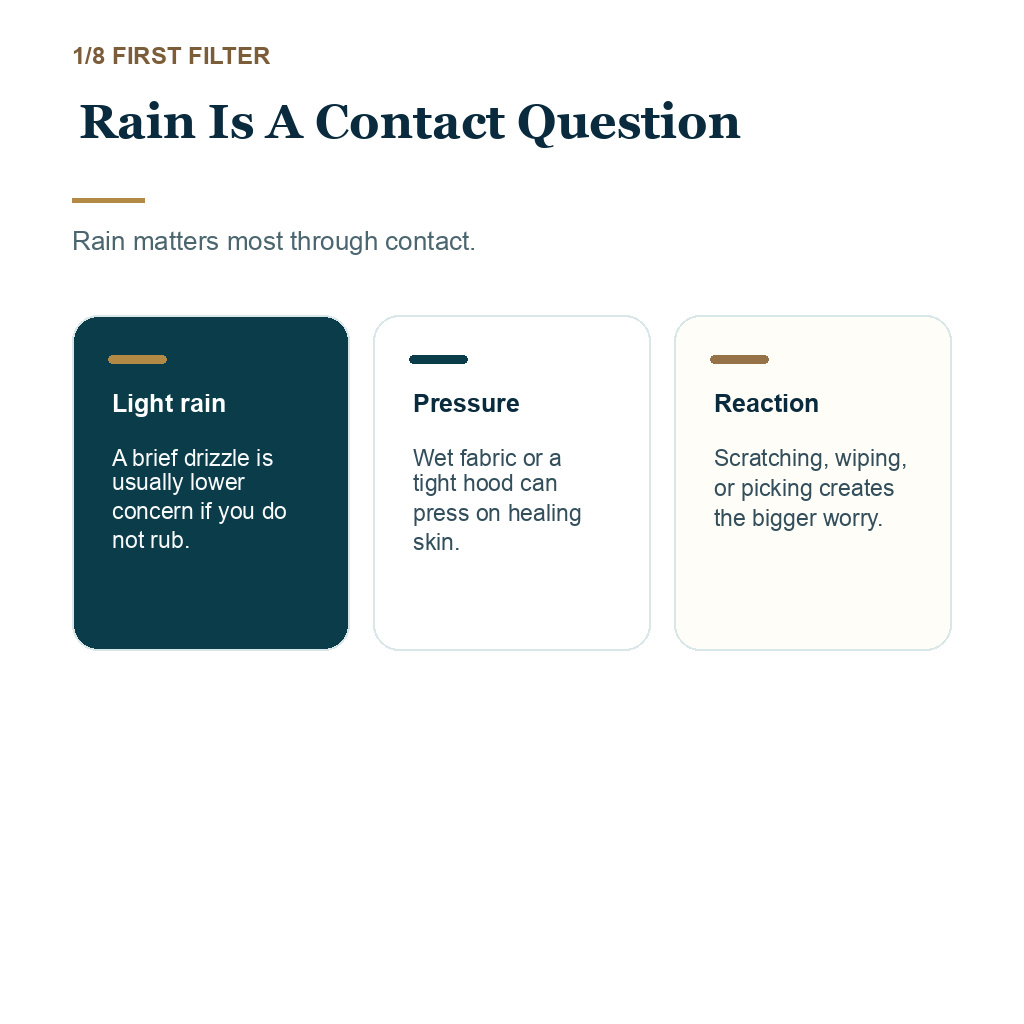
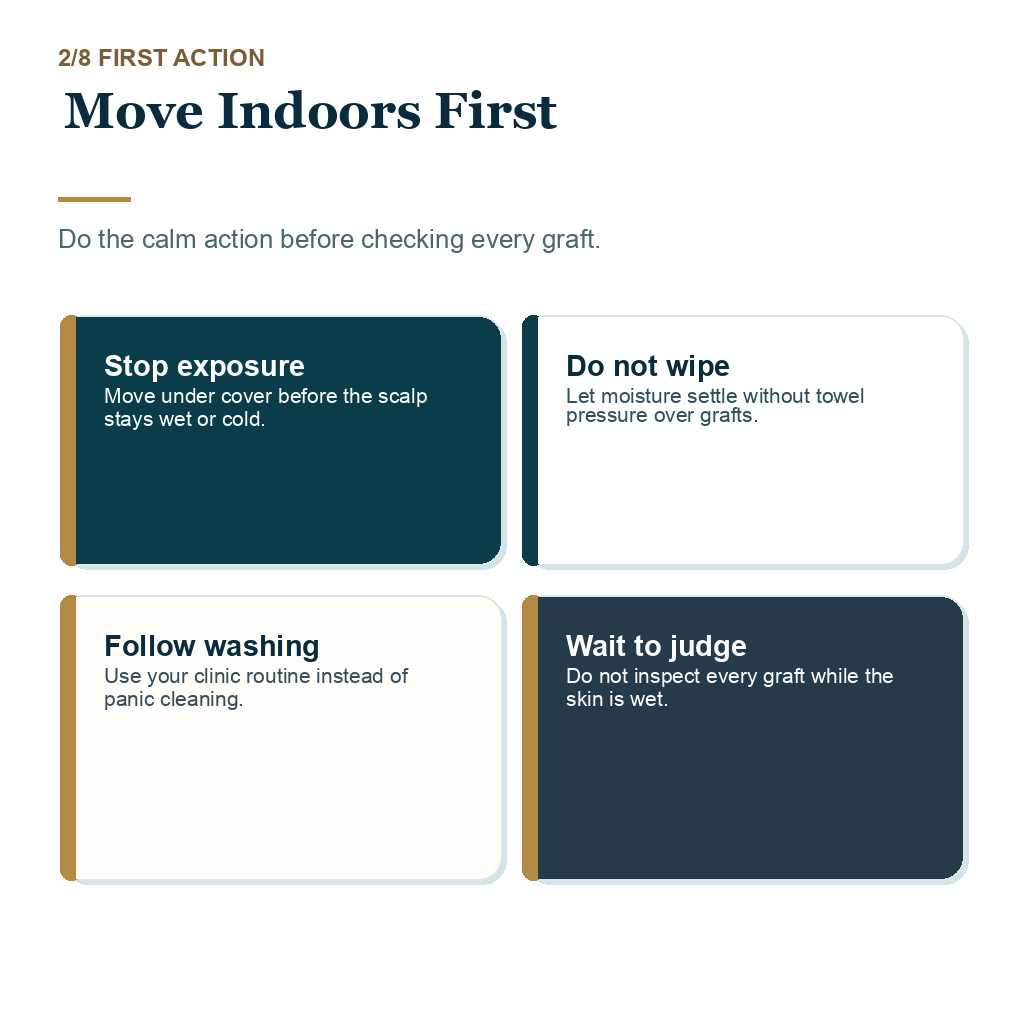
Use the 8 rain exposure slides below to separate light drizzle, rubbing, wet fabric pressure, dirty water, timing, warning signs, useful photos, and when to contact the clinic. Swipe the carousel, use the arrows one step at a time, or choose a number below the image to jump to that point.


Use clinic advice to judge rain risk
Different clinics give different outdoor rules. Some say avoid rain for one week, some say two weeks, and some focus more on direct contact than weather. The exact instruction can vary because washing timing, graft handling, crust management, and follow up protocol are not identical in every clinic.
Advice that creates anxiety without explaining the mechanism is not useful. Rain does not magically ruin a transplant. The concerns are early wound protection, cleanliness, friction, pressure, and what you do afterward.
Advice that makes everything sound harmless from day one is also not useful. A few drops of rain are one thing. Heavy rain, rubbing, a dirty wet hat, sweating under waterproof fabric, or ignoring infection signs are different. Good aftercare guidance should make those distinctions clear.
If you had surgery at Diamond Hair Clinic, the best reference is the personal plan you received after surgery. The general reasoning helps, but your own graft count, skin reaction, travel plan, swelling, washing stage, and follow-up findings can change the detail of your aftercare after a hair transplant.
Rain is usually about rubbing and scalp care
For the first 10 to 14 days, keep rain off the recipient area as much as possible. Use an umbrella, stay under cover, and avoid outdoor plans that make you sweat, rush, bend, or adjust headwear. If rain touches the scalp briefly, do not rub and do not turn the moment into repeated checking.
After the scabs have cleared and the clinic confirms the scalp is healing well, ordinary light rain becomes much less concerning. Even then, keep sensible habits. Do not soak the scalp unnecessarily, do not wear wet tight headwear, and do not ignore redness, pain, or discharge.
Keep the first two weeks conservative without making rain a disaster. Protect the scalp from direct rain, avoid friction and wet fabric, follow the washing plan, and ask for review if the exposure was heavy or the scalp changes afterward. In most brief light rain situations, that is enough.
What matters is not panic. It is preventing the avoidable problems that disturb early healing, especially rubbing, pressure, dirty water, sweating under wet fabric, and ignored warning signs.
Read this review excerpt
We also had a levelled conversation about my hairline and results I could expect based on my donor density area.