



Grafts become more secure after the early healing period
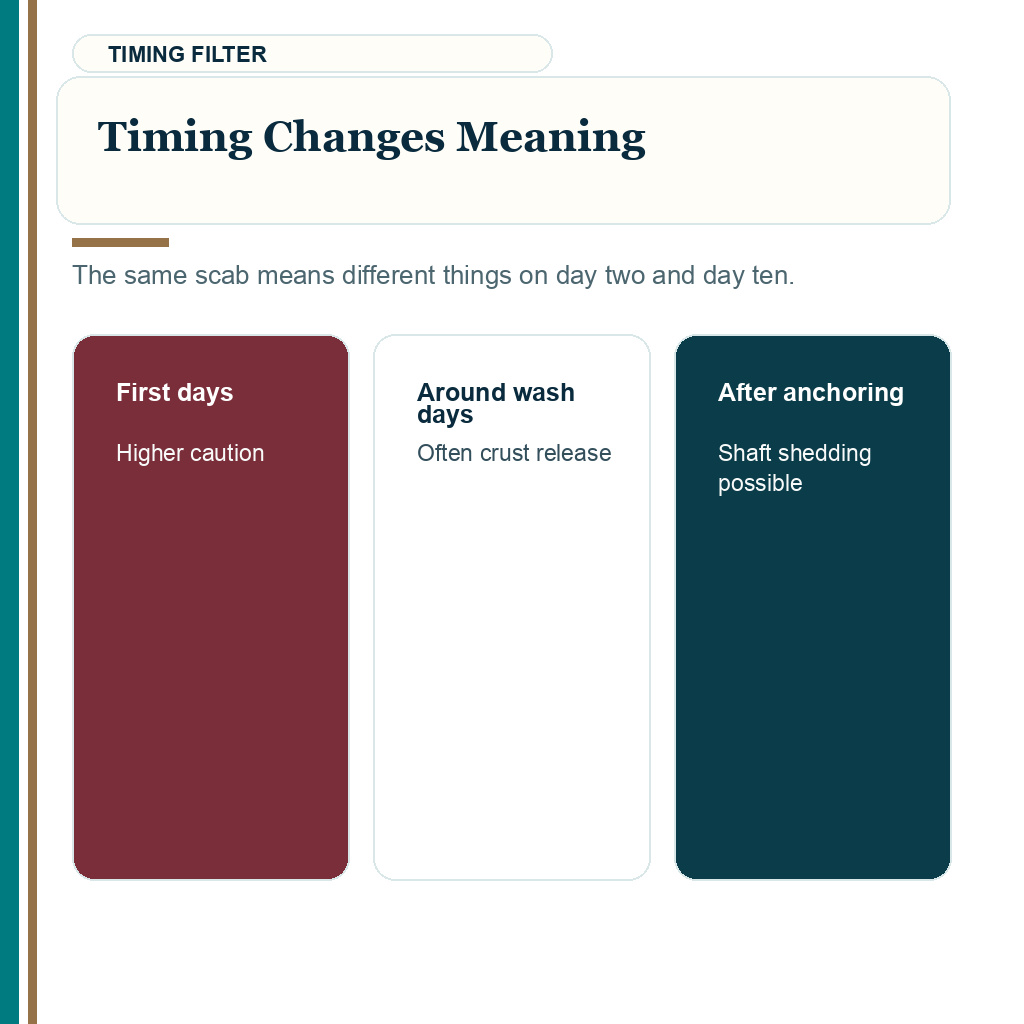
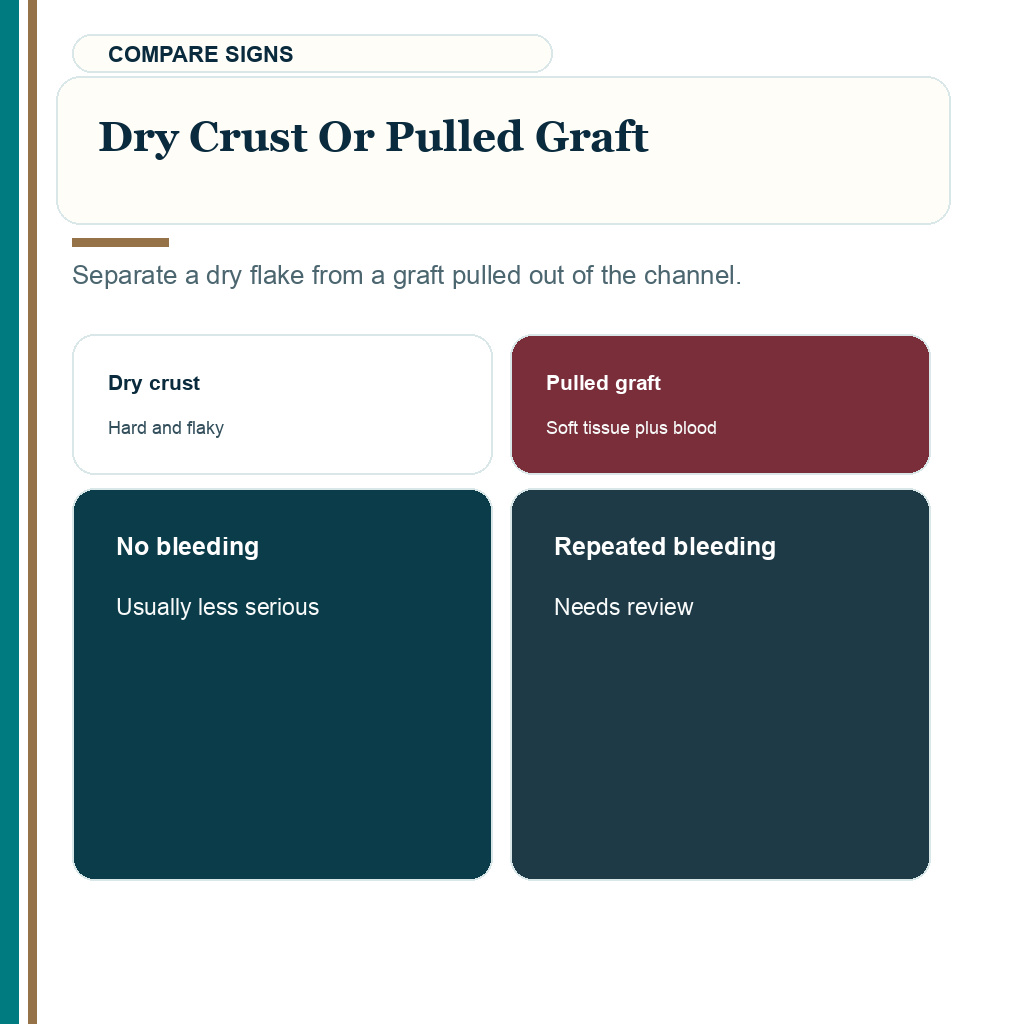
The first few days are the most delicate. During that period, grafts need protection from rubbing, scratching, pressure, and accidental trauma. A pulled adherent scab early in recovery is more concerning than a loose crust later.
By around day 7 to day 10, uncomplicated grafts are usually much more stable, but this does not mean the scalp is ready for rough handling. Secure means harder to dislodge. It does not mean you can scratch, pick, scrub, or test the area.
The detailed timing belongs with your own clinic instructions, because skin healing, crust thickness, bleeding, and washing routine all matter. The broader explanation of when hair transplant grafts become secure is useful, but your own scalp still decides how cautious to be.
Hard scab rubbing needs calm photo review
Stop immediately and avoid turning the moment into another test. Washing again, pulling another scab for comparison, or inspecting the same area under harsh light for half an hour only adds more irritation and confusion.
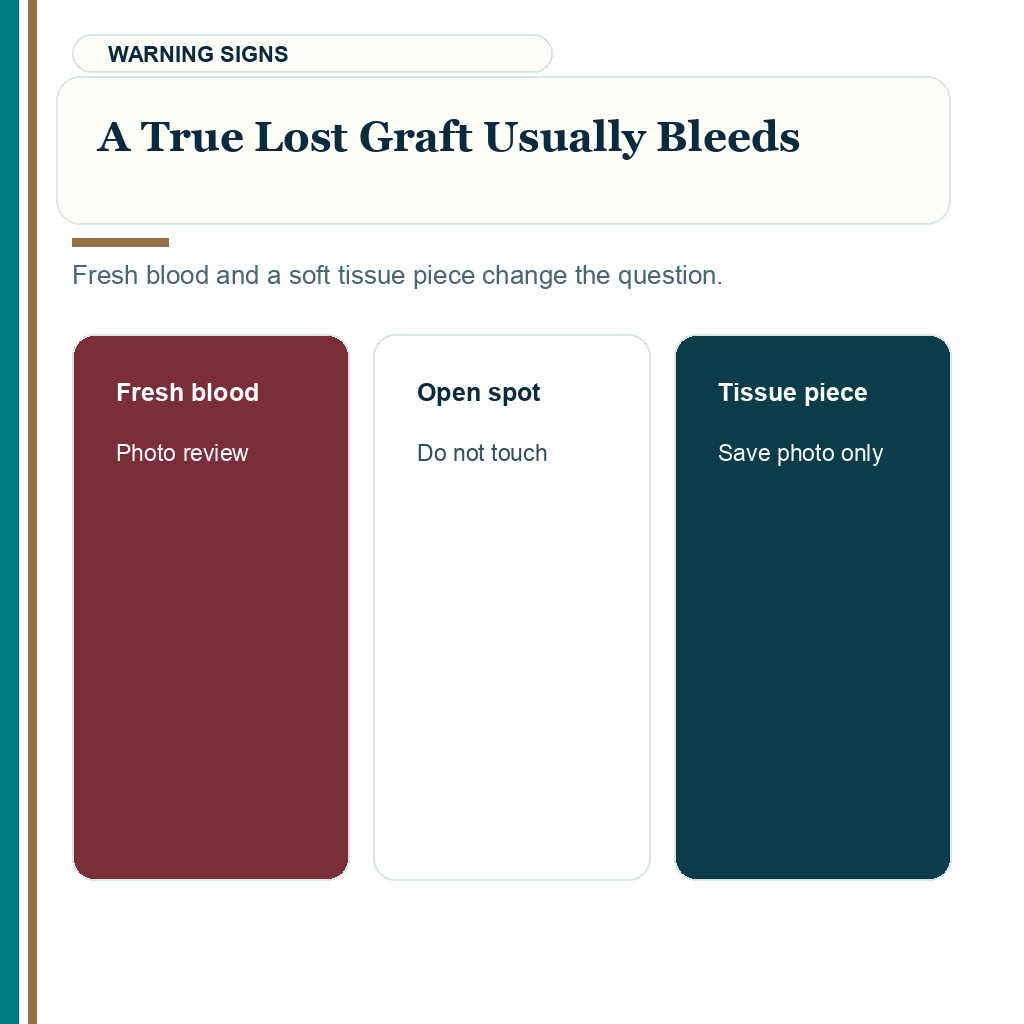
The details that change the decision are fresh bleeding, open skin, increasing pain, discharge, smell, spreading redness, a dark wet crust, and timing. A scab rubbed loose in the first few days carries a different risk from a crust that was already lifting later in recovery.
The same review applies if the crust was found inside a cap, bonnet, or hairnet. Photograph the area once, and if you still have the crust, photograph it separately. Tell the clinic whether there was bleeding, a new gap, pain, or tissue attached to the crust. Do not use the hat again that day just to see if it happens twice.
With no bleeding, no open wound, and skin that looks settled, document it once and continue gentle aftercare. If you did create bleeding or an open area, contact the clinic with a clear photo and a plain explanation of what happened. Touching or testing grafts again is not a useful way to calm the worry. This also matters when someone keeps touching grafts after a hair transplant.
Safe scab removal needs gentle timing
Scabs should soften before they come away. Safe washing is not dry picking. It is controlled washing, softening, and gentle fingertip movement when your clinic says the time is right.
Nails and scraping are the wrong way to remove one stubborn crust just because the surrounding crusts have already fallen. A crust that is ready usually loosens without force. A crust that stays attached may need more softening and another wash, not more pressure.
Diamond Hair Clinic gives the first wash and early washing guidance directly, because pressure is easier to understand when it is shown. The wider washing after a hair transplant guidance explains how early washing protects grafts and how cleaning can become more active when crusts are ready.
Remaining scabs after day 10 or day 14 can matter
A few small dry crusts can remain after the usual period, especially if the skin is dry or the washing has been very cautious. That does not mean disaster.
The wrong response is to suddenly scrub aggressively because the calendar says the scabs should be gone. Thick crusts that remain too long can irritate the scalp, but forcing them off can also reopen the skin.
Thick, hard, painful, wet, smelly, or increasingly red scabs need direct review instead of sudden scrubbing. Management may involve more soaking, a different washing rhythm, or an examination. If dryness is making crusts tight, something as simple as saline spray after a hair transplant may be part of the plan, but it should not become permission to pick.
Hairs in scabs can be normal shedding
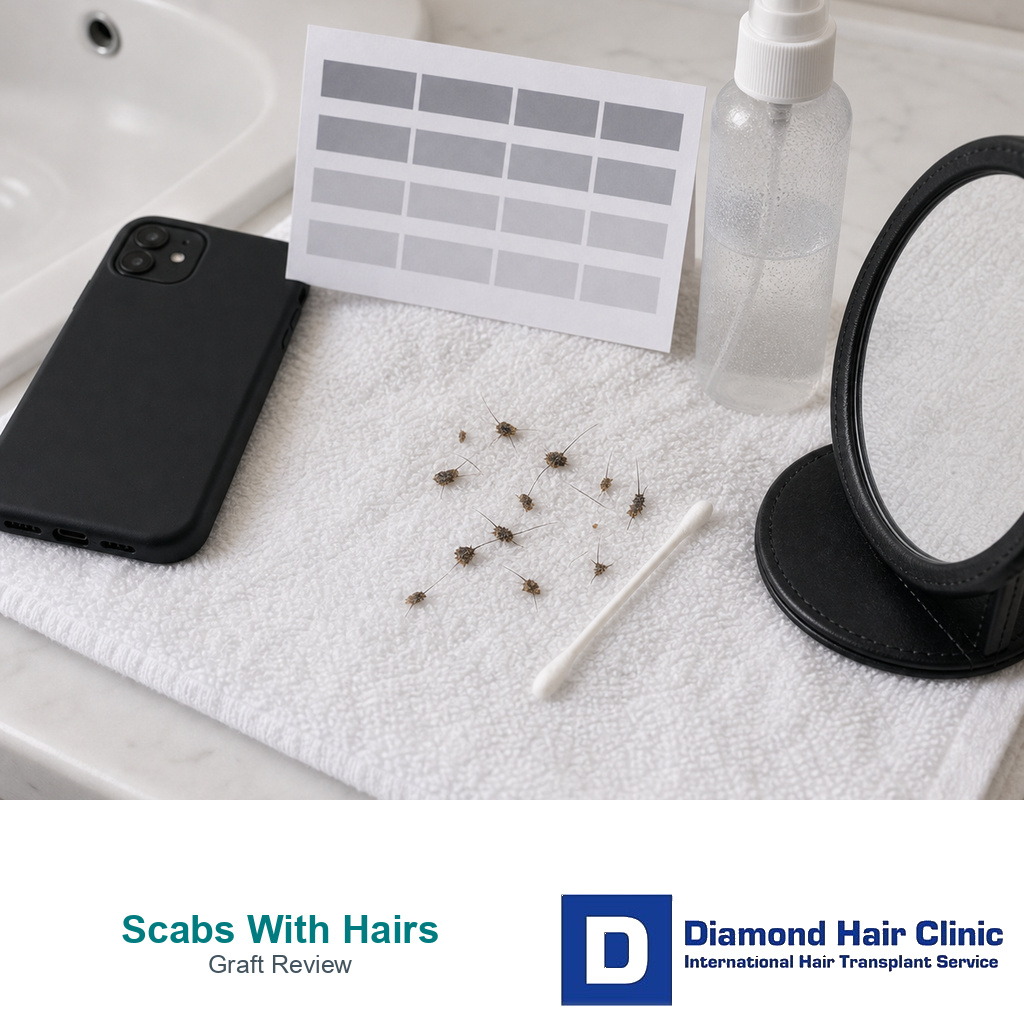
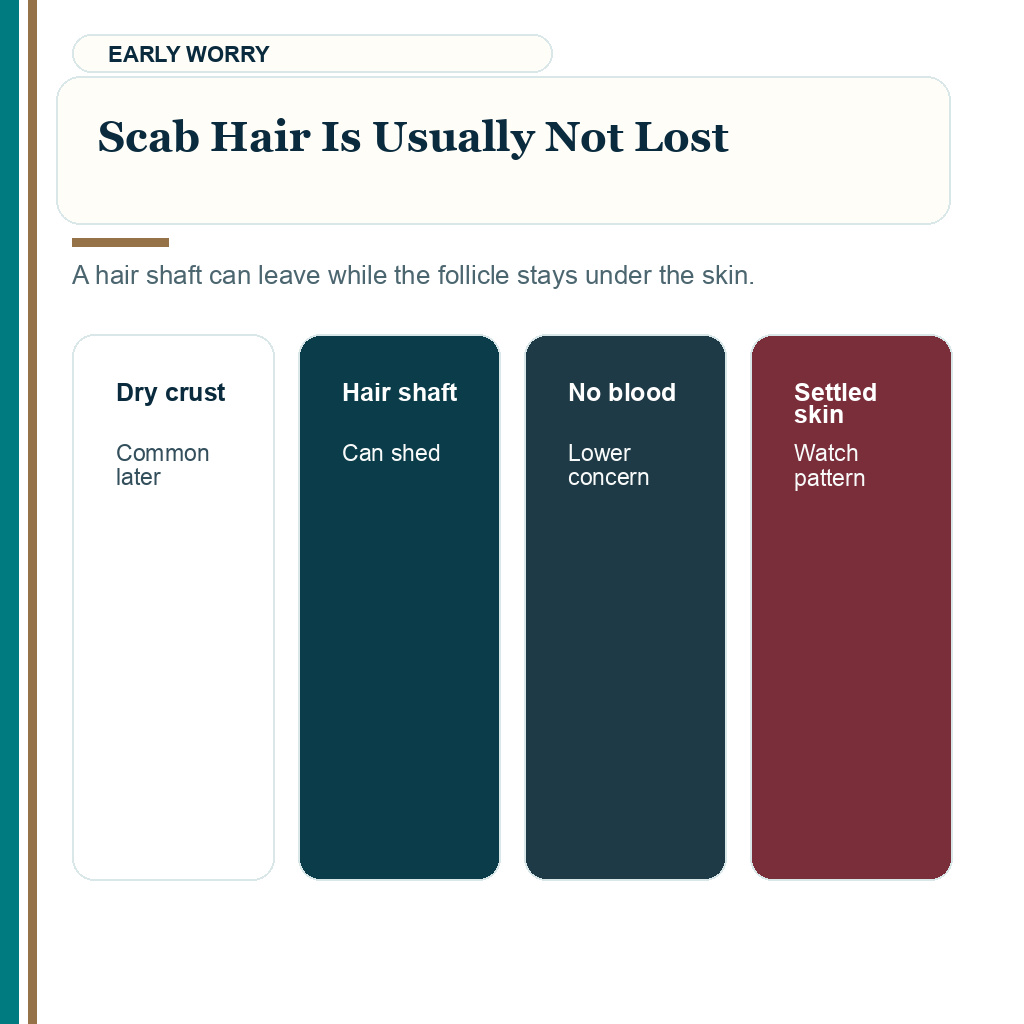
Yes. Early shedding can happen while scabs are coming away. A short hair attached to a crust does not prove the follicle has failed.
Many people imagine the transplanted hair as one solid object. In reality, the visible shaft and the living follicle are not the same thing. The shaft can detach and fall while the deeper part remains in the scalp.
Some people shed early. Some keep more shafts for longer. Some see short hairs in scabs during washing. None of those patterns alone proves failure. The stronger clues are bleeding, pain, unhealthy skin, or a clear traumatic event.
Warning signs need medical review
Mild redness, tightness, small dry crusts, and some sensitivity can be part of early healing. The pattern should gradually settle.
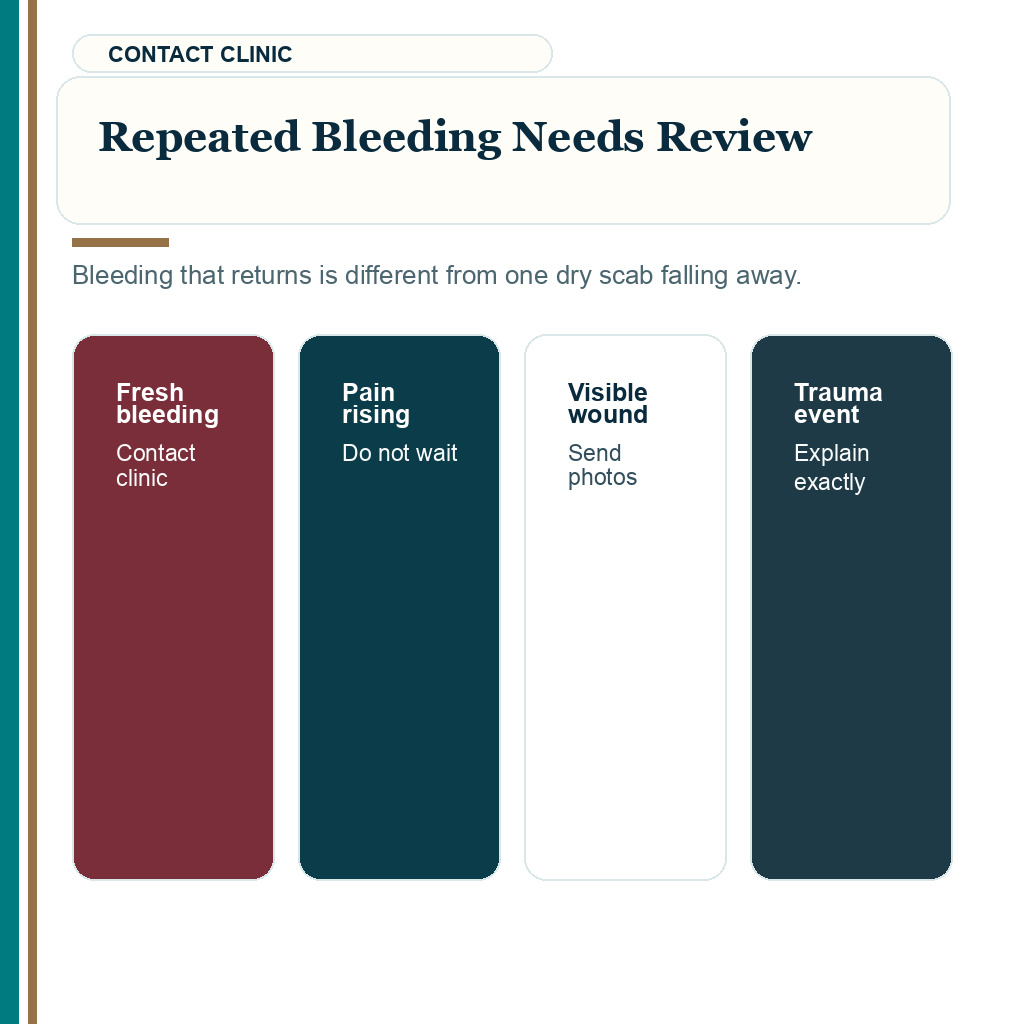
I become more concerned when the area is getting worse instead of better. Increasing pain, spreading hot redness, yellow or green discharge, bad smell, fever, a wet open spot, repeated bleeding, or skin that looks grey, black, or unhealthy all need proper attention.
Internet reassurance is the wrong filter for those signs. They overlap with the warning patterns discussed in infected hair transplant and black scabbing after a hair transplant. Skin that looks unhealthy needs proper medical review promptly.
Helpful photos let the clinic judge graft safety
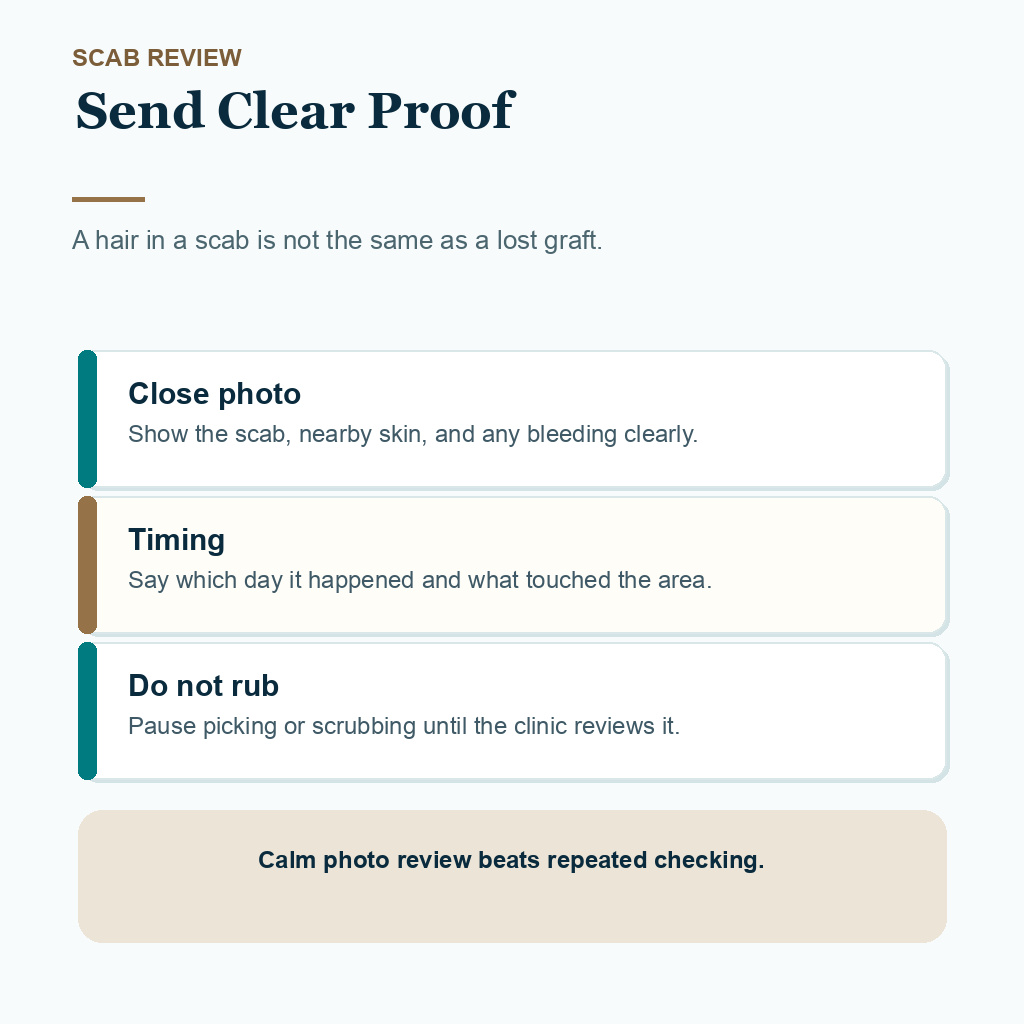
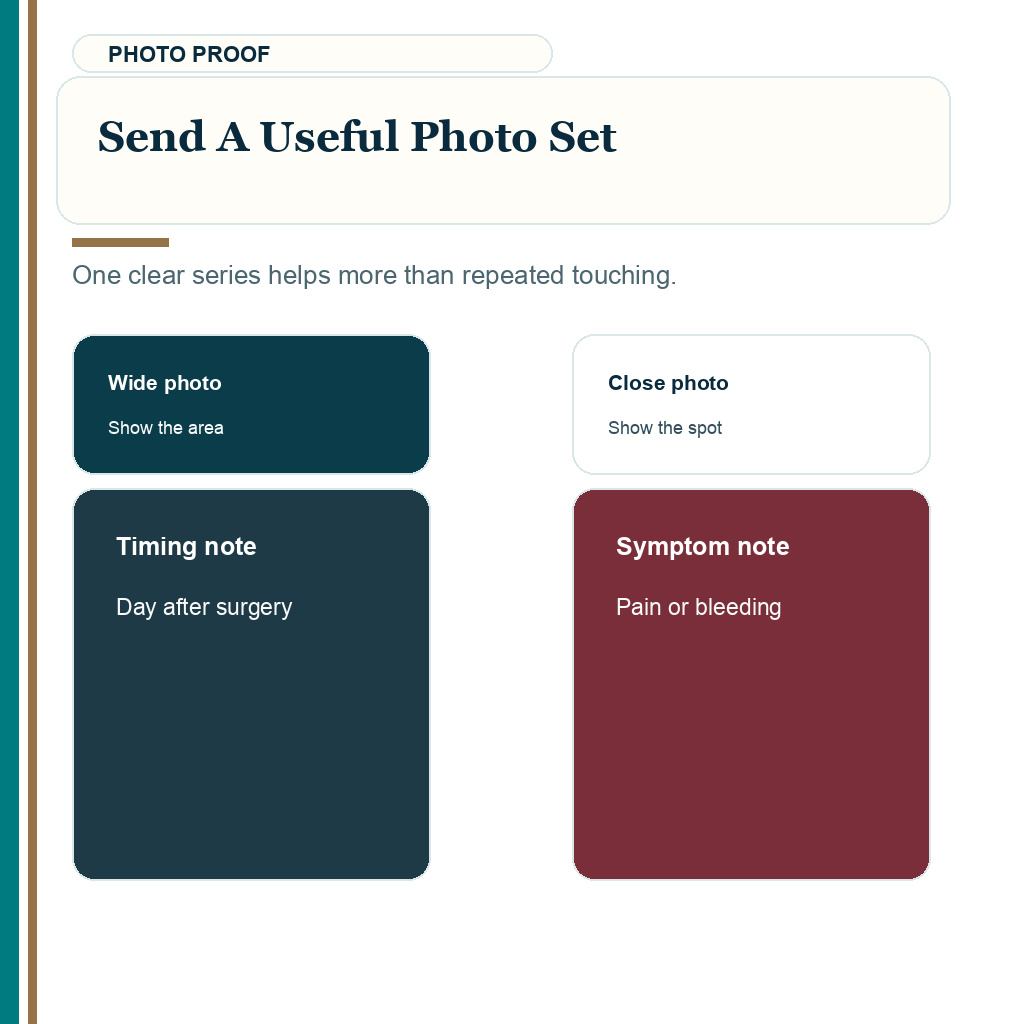
Send useful photos, not only the most frightening close-up. One extreme close photo can make every crust look dramatic and hide the overall pattern, especially when AI or outside advice reacts to the crop without timing or symptom context.
Send a clear front photo, both oblique angles, the top if it was treated, and one close photo of the exact area. Use steady light, a dry scalp if possible, and no filters.
Also write the surgery date, the current day after surgery, what wash you performed, whether there was bleeding, whether there is pain, whether you used nails or strong rubbing, and whether the area is improving or worsening. That context helps the clinic separate ordinary scab shedding from a real problem.
Graft protection should not turn into constant checking
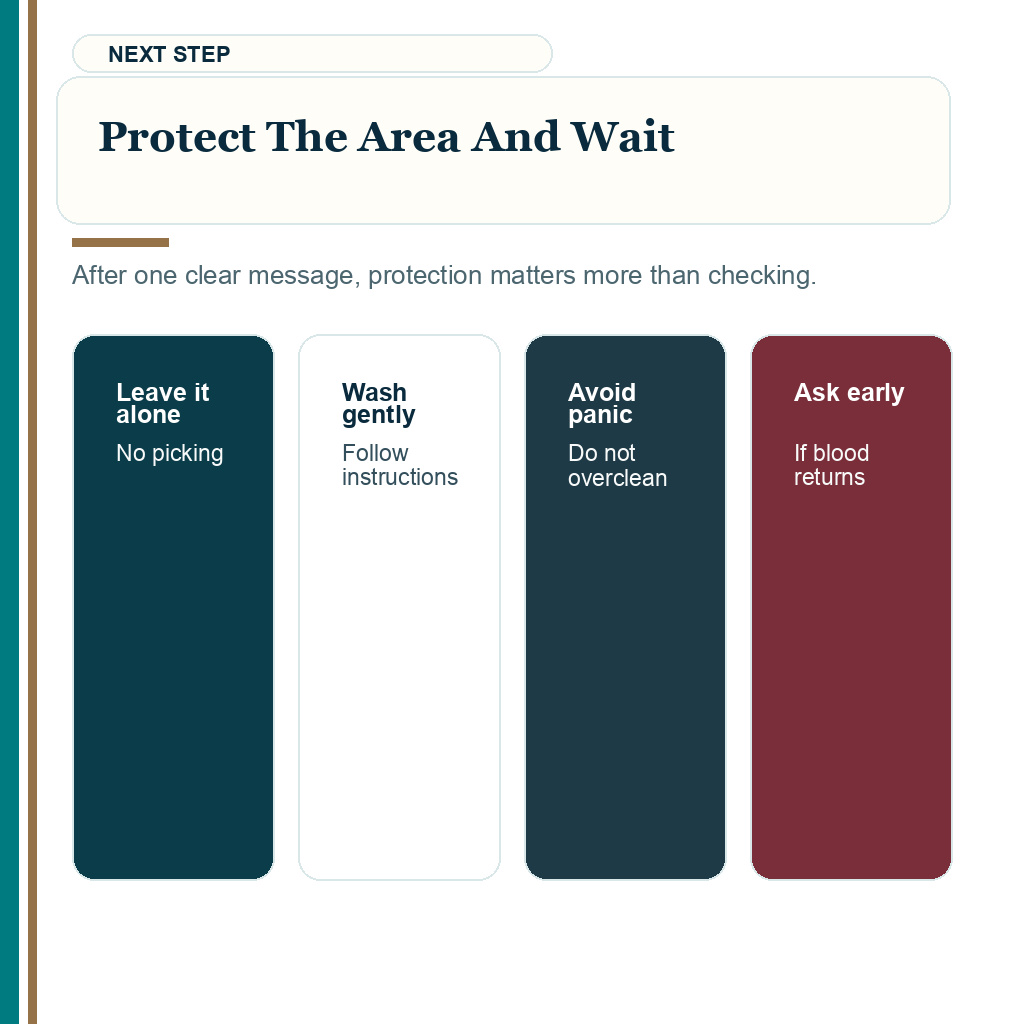
Follow the washing, sleeping, sun, exercise, and touching instructions closely. Good aftercare does not mean constant inspection. It means controlled handling.
Scab removal is not the final result, and early shedding is not failure. Recovery has several visual stages. The difference between hair shedding or permanent graft loss matters because a falling shaft and a failed graft are not the same decision.
If scabs came off with hairs but there was no fresh bleeding and the skin underneath looks settled, take a breath. In most cases, you have not ruined your transplant. If there is bleeding, worsening pain, pus, deep wounds, or dark unhealthy skin, stop handling the area and have the scalp reviewed before you keep washing, touching, or trying to remove more scabs.
Protect the grafts carefully, but do not let every fallen hair become a crisis. A stable recovery comes from the right amount of care, not from testing the scalp again and again.

Read this review excerpt
Upon arriving home, I sent 4 photos (of each side of head) after every washing process to doctor for checking where I was given personal advice for how to take care of my healing head.