


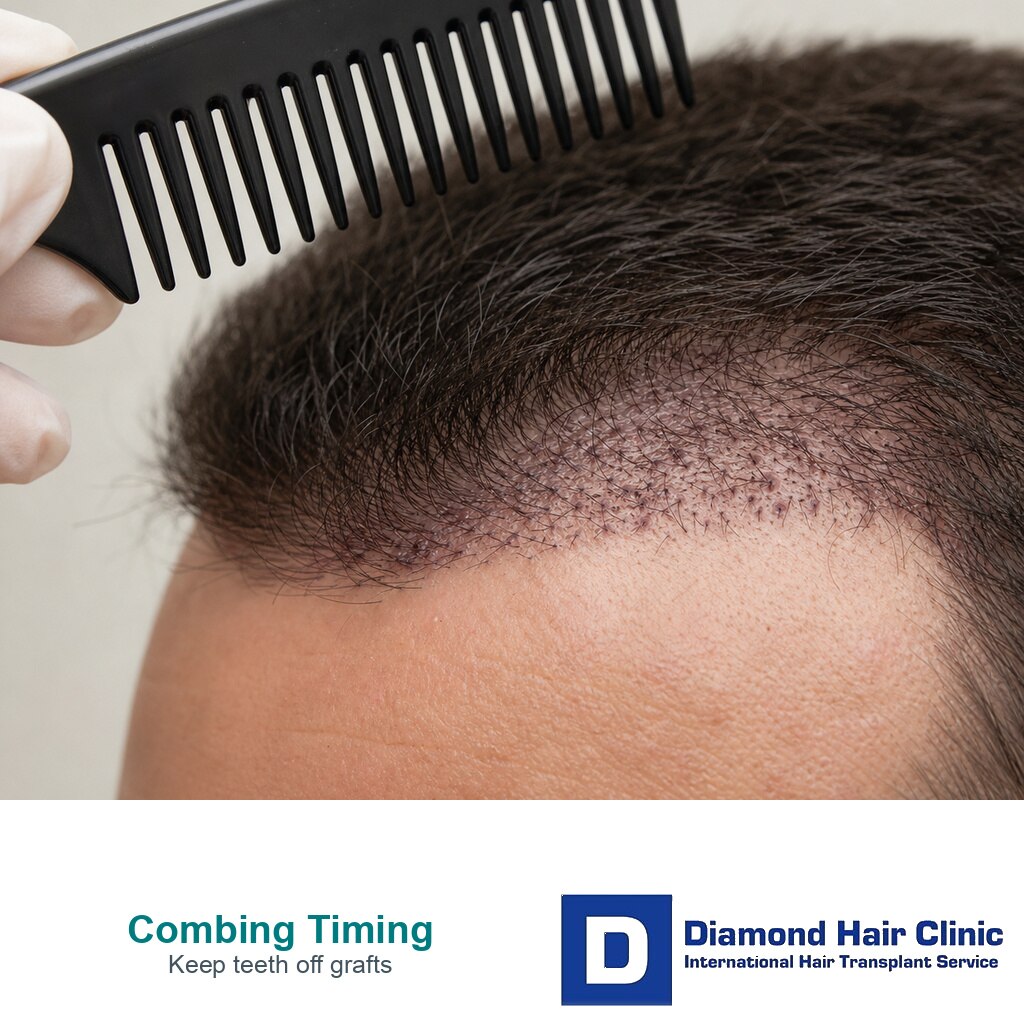
Safe Combing Needs Careful Early Timing
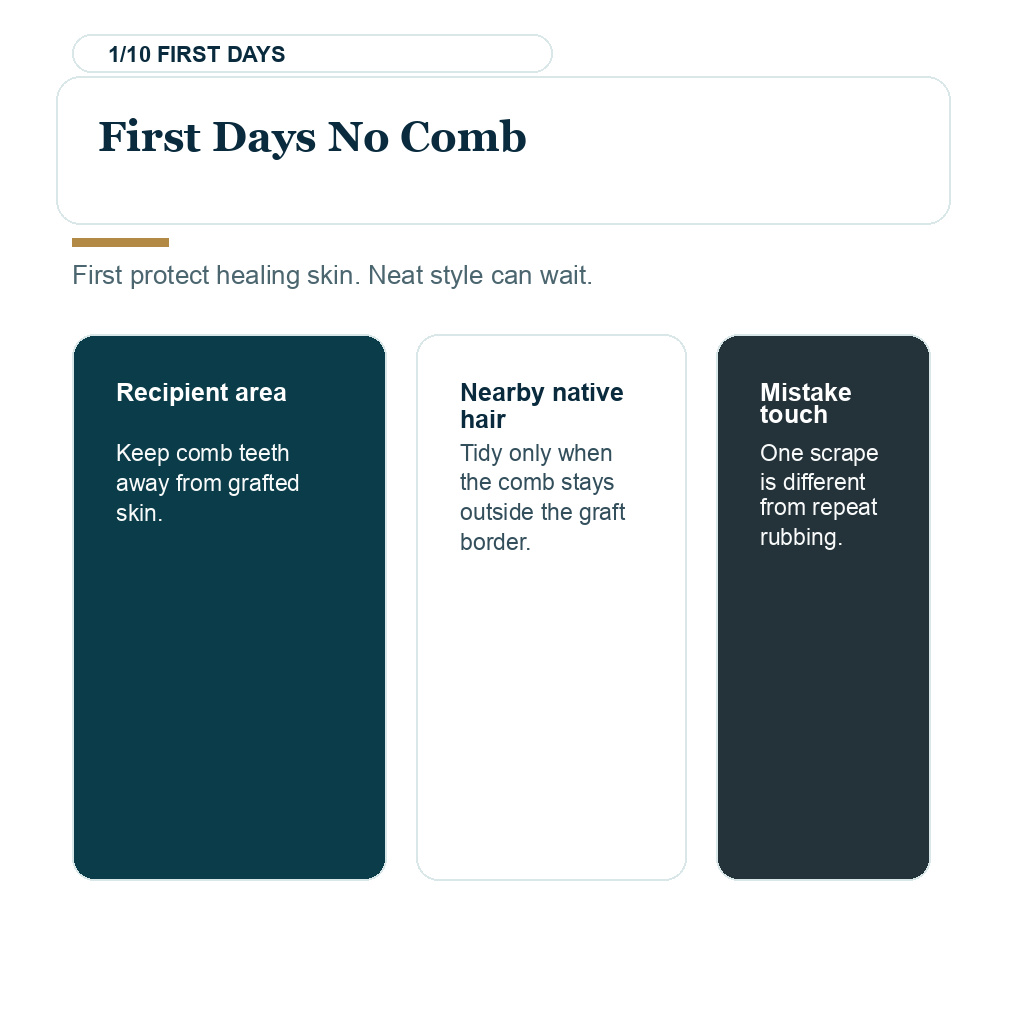
You should not comb the transplanted recipient area in the first days after a hair transplant. In most cases, I wait until the scabs are clearing and the grafts have settled, usually around 10 to 14 days, before letting a comb pass directly over the recipient area. You may tidy nearby native hair earlier if the comb does not touch, scrape, or pull across the grafts.
The risk is not the word combing itself. The risk is dragging teeth over healing grafts, catching scabs, rubbing the scalp, or creating pressure while the skin is still fragile. Once that distinction is clear, the question becomes easier to judge.
Start with the hair around the recipient area, not through it. If a comb catches a scab or pulls at the skin, stop there instead of testing the same spot again.
Use the first passes to tidy nearby native hair only. If the teeth touch crusts or make you slow down from fear, stop before the comb becomes a test of the grafts.
Combing in the first 10 days needs patience
In the first 10 days, I treat the recipient area as a healing surface, not as normal hair that can be styled. The grafts need quiet protection from rubbing, scratching, pressure, and repeated contact. A comb can easily do all of those things if it is used too early or used in a hurry.
During this period, focus on clean healing, careful washing, safe sleeping, and avoiding accidental trauma. The broader rules of hair transplant aftercare matter more than styling. The grafts do not need to look neat in the first week of healing. They need to be left alone enough to heal.
If a comb lightly touches the area once by mistake, that does not by itself mean the grafts are lost. I look at the actual contact. A light accidental touch is different from scraping through scabs, pulling dried crusts, or combing repeatedly over the recipient area while it is tender.
Can you comb the native hair around the transplant?
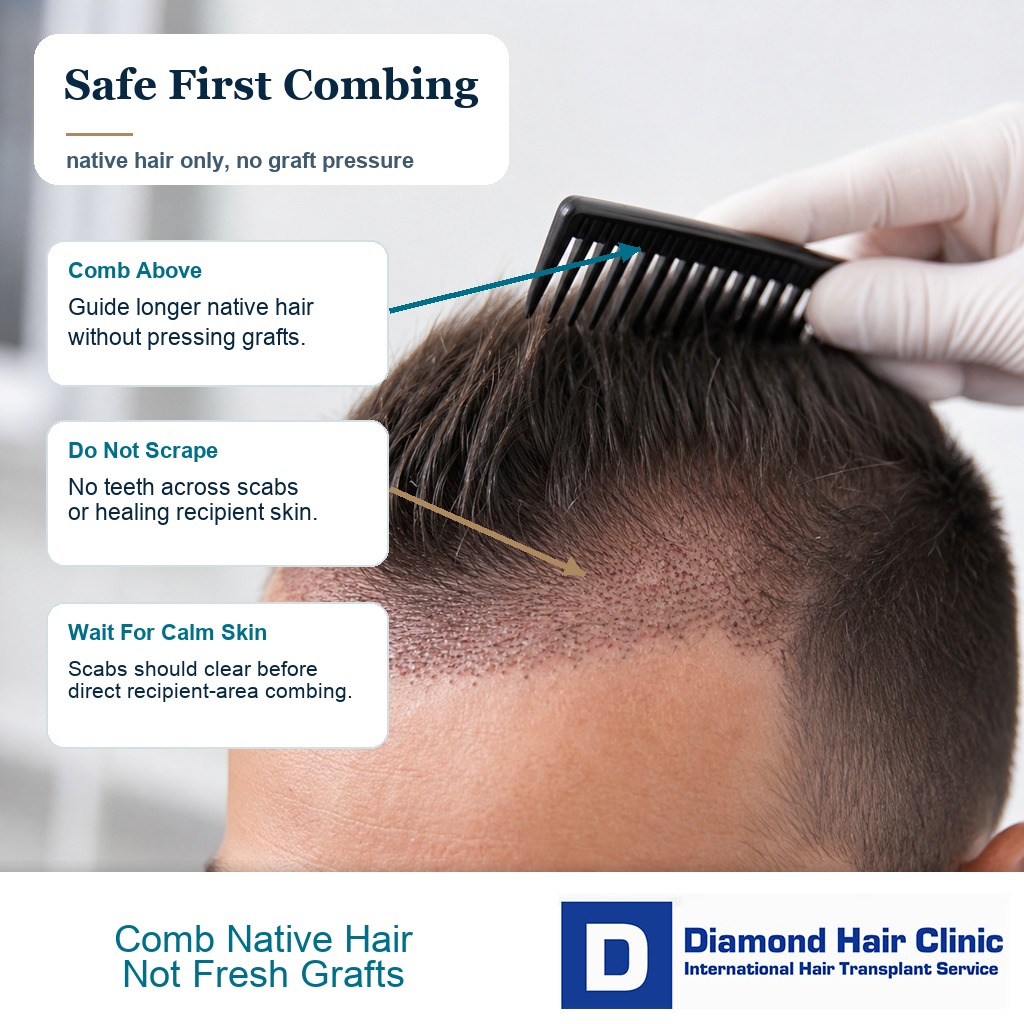
Yes, but only with control. You may still have native hair behind the transplanted hairline or around the crown. That hair can look messy after washing or sleeping, and it is natural to want to tidy it. In the mirror, draw the boundary first. The comb can touch the native hair, but it should not travel into the transplanted recipient area.
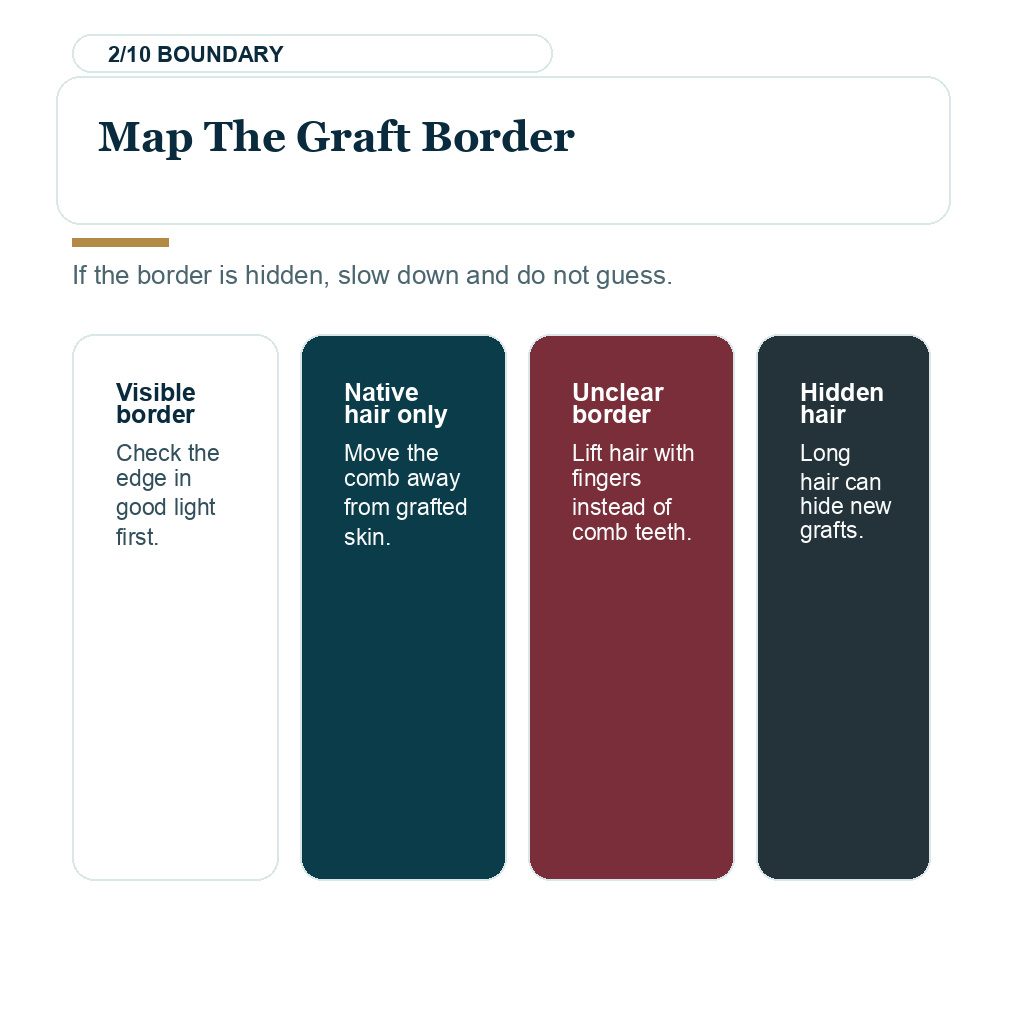
This matters especially after a partial or unshaven transplant, because the older hair can hide the new grafts. If you cannot clearly see where the grafted area begins, do not guess. Lift the older hair gently from the shafts, not by rubbing the scalp, look carefully under good light, and keep the comb away from the healing border.
Use a slow, wide movement away from the grafted zone rather than a fast styling motion toward the hairline. If the hair is tangled, wet, or stuck to scabs, forcing it is the wrong move. Looking normal too early is less important than avoiding a few extra days of unnecessary friction.
Long hair or tangles make combing harder
Long hair should be managed with patience, not force. If a tangle forms near the transplanted area, do not pull through it from the root. Hold the hair above the tangle, work from the ends upward, and keep the comb away from scabs and healing skin until the recipient area is ready.
If the hair is very tangled, a little inconvenience is safer than scraping the scalp too early. Wait for the proper washing stage, soften the lengths only if your clinic allows it, and separate the native hair without dragging over the grafts. This is especially relevant if you are also thinking about conditioner, styling products, or a haircut in the same early recovery window.
After scabs clear, combing changes
Once scabs are gone and the skin looks settled, the discussion changes. Around 10 to 14 days, many people can begin very gentle combing if their own clinic has confirmed that healing is on track. The comb should move lightly, without digging into the scalp or trying to remove anything that is still attached.
Scab clearance should happen through proper washing and time, not through combing. If scabs remain stuck, do not use a comb as a shortcut. Follow the washing rhythm carefully and allow the scalp to loosen naturally. If you are unsure about this stage, review the guidance on when to wash hair normally after a hair transplant, because washing and combing are closely connected but not the same action.
When the scalp is ready, the first combing should feel almost boring. No scratching, no hard lines, no pressure, no attempt to polish the result. If the comb catches, stop. A healing scalp is not the place to win a styling argument.
Hair shedding while combing is not always graft loss
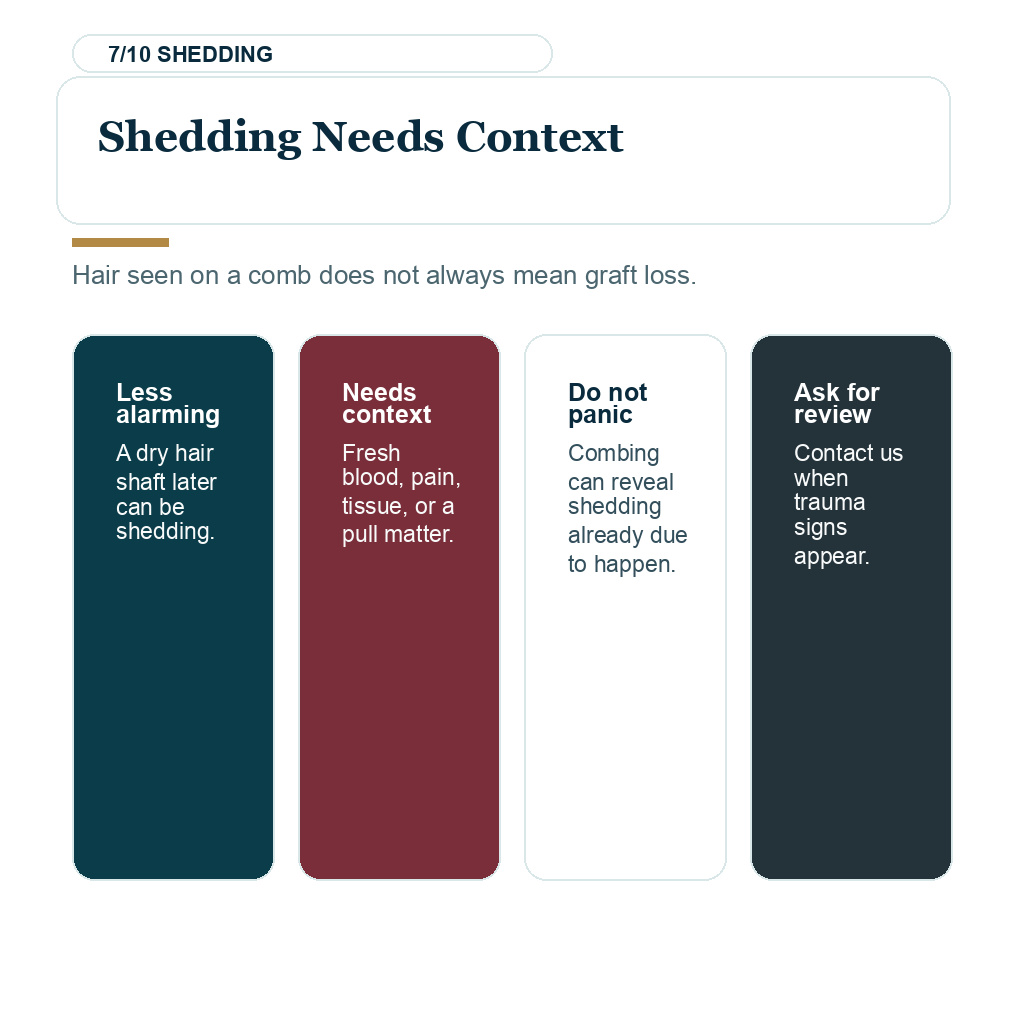
Hair shedding can be frightening because every fallen hair can look like a lost graft. That is usually not the right interpretation after the early protected period. Many transplanted hair shafts shed while the follicle remains under the skin. Native hairs can also shed for other reasons, including shock loss, ongoing genetic hair loss, or normal daily shedding.
The picture changes when there is fresh bleeding, tissue attached to the end, pain, trauma, or a clear story of scratching and pulling in the first days. A dry hair shaft coming out later is different. The question of whether you have lost grafts when scabs came off needs context.
Combing can reveal shedding that was already going to happen. It does not always cause it. Do not count every hair in the sink as a surgical failure, and do not use that reassurance as permission to comb aggressively.
Is a wide tooth comb safer than a brush?
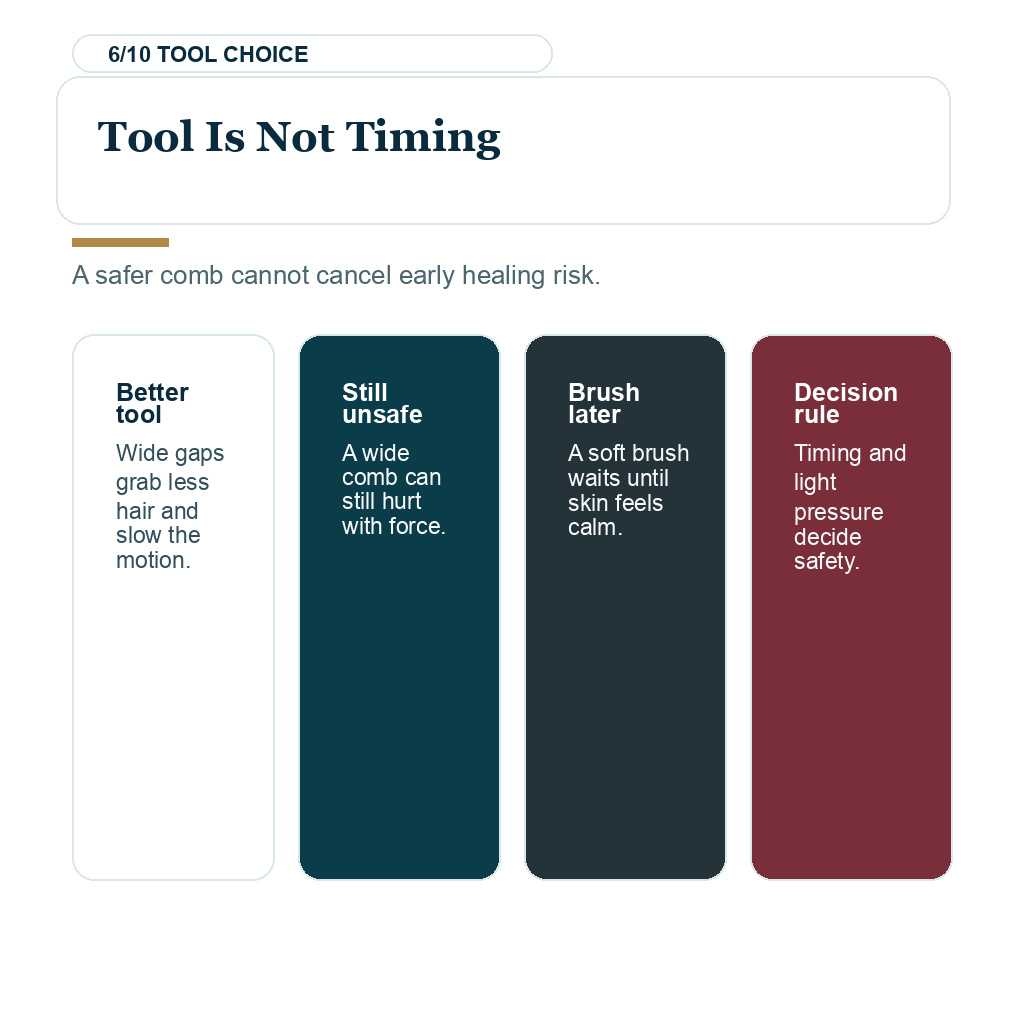
A wide tooth comb is usually safer than a tight brush in the early return to styling because it creates less friction and is less likely to grab small hairs. It also lets you move more slowly and see what is happening. A dense brush can press too broadly on the scalp and catch hair without giving much warning.
Still, the tool does not make the action safe by itself. A wide tooth comb used too early, with pressure, can still irritate the recipient area. A soft brush used very gently later may be fine in some cases. Timing, pressure, direction, and the condition of the skin matter more than the label on the tool.
Start with dry or slightly damp hair that is not stuck to scabs. Avoid pulling through tangles. For long hair, curly hair, or unshaven surgery, the safest first step is often to separate the hair with fingers and then use the comb only where the grafted skin is not being touched.
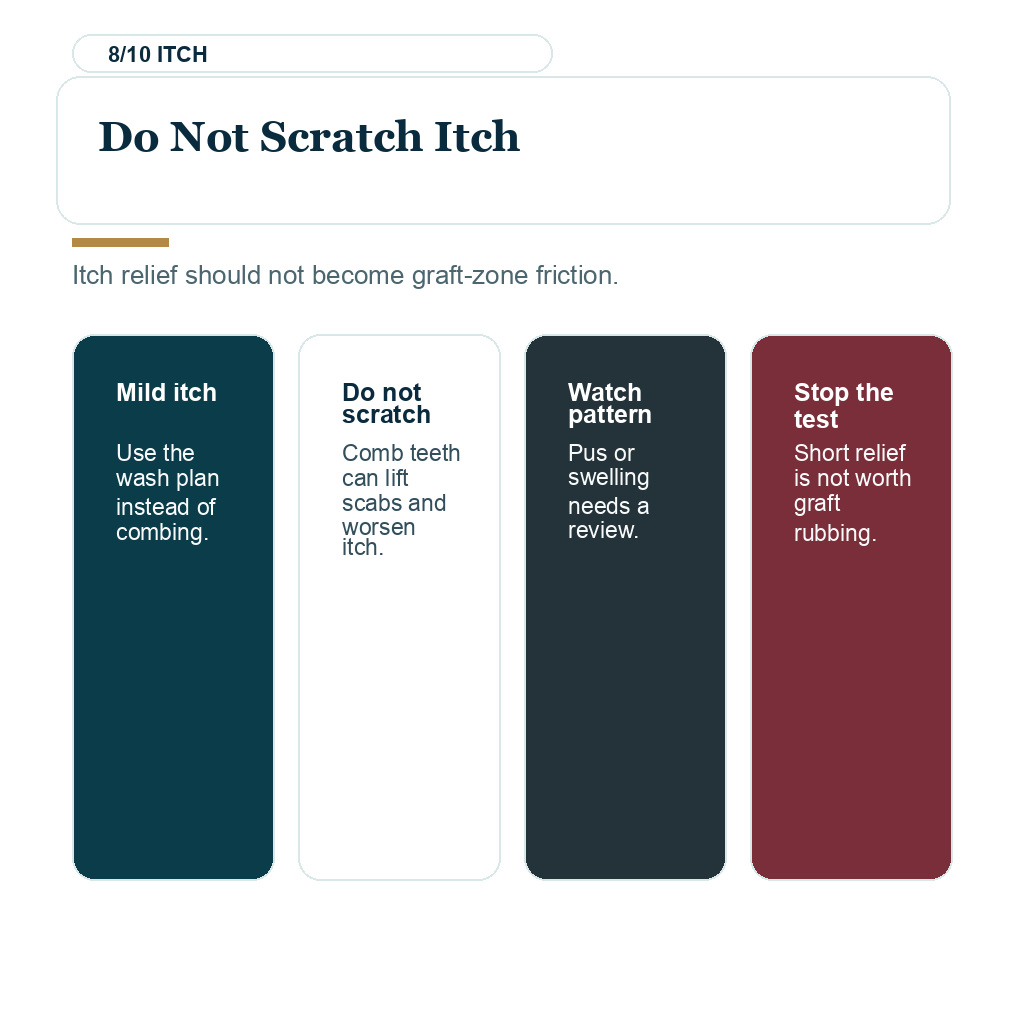
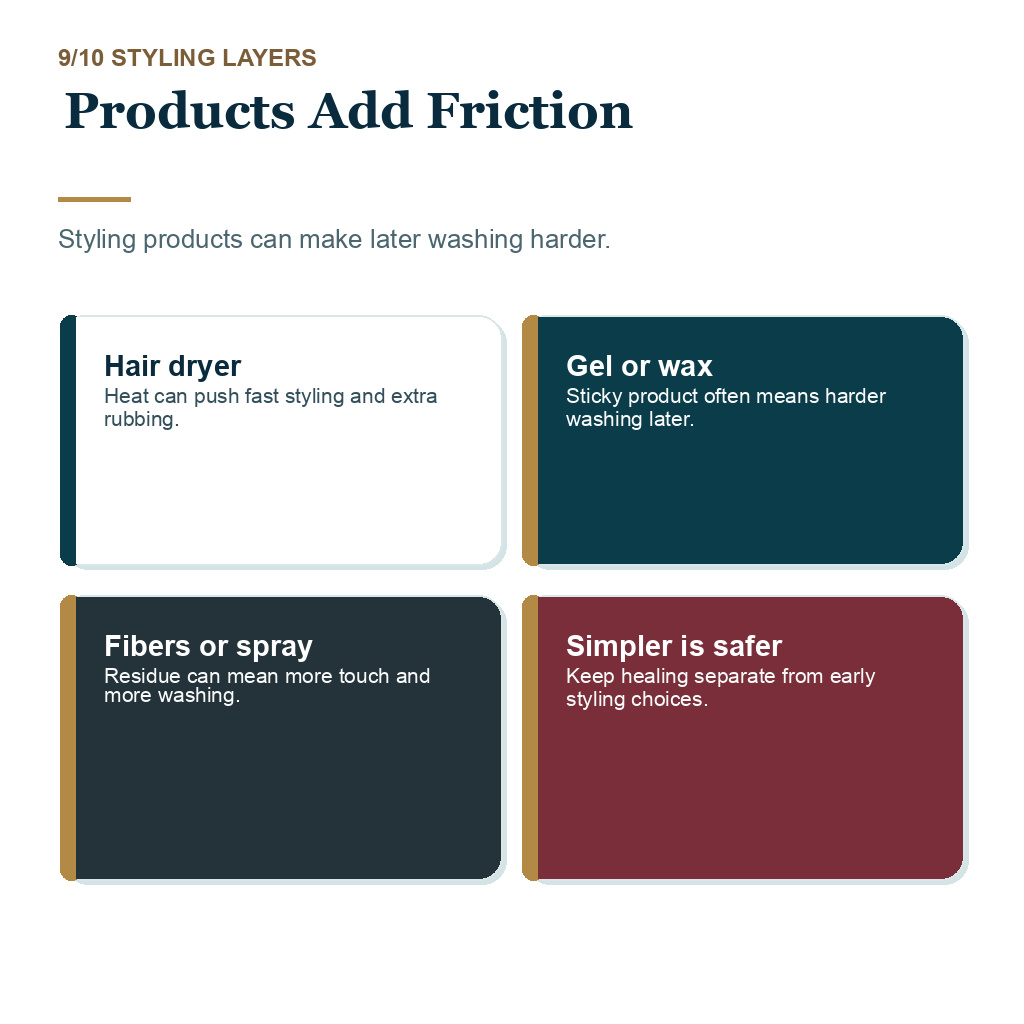
Use the 10 combing safety slides below to separate first day protection, the native hair boundary, tangles, scabs, return around day 10 to day 14, wide tooth comb limits, shedding, itching, styling products, and staged return. Swipe the carousel, use the arrows one step at a time, or choose a number below the image to jump to that point.



Can you use a hair dryer, gel, wax, or hairspray with combing?
Heat, products, and combing can become a problem when they are combined too early. A hair dryer may encourage rubbing, lifting, directing, and styling before the scalp is ready. High heat can also dry or irritate healing skin. If you are asking about drying and styling together, I separate the steps and stay more conservative.
Hair dryer use after a hair transplant deserves separate care. Drying the scalp and combing the scalp are not identical, but both can become unsafe when heat, pressure, or speed are used to make the hair look normal faster.
Gel, wax, hairspray, and similar products create another layer. They can make hair sticky, harder to wash, and more likely to require rubbing later. If a product makes you comb harder to distribute it, the timing is probably too early. The safer return to hair gel, wax, or hairspray after a hair transplant should happen after the scalp is clean, settled, and no longer vulnerable to product buildup or rough washing.
When is it safe to get a haircut or use hair fibers?
A haircut is not the same as combing at home. A barber may use clippers, scissors, brushes, capes, neck strips, spray, strong combing, or pressure without understanding where the grafts are. Fresh recipient skin should not be treated casually just because the hair looks messy.
The donor area and the recipient area also heal differently. Some trimming around the donor area may be possible earlier than work near the transplanted hairline, but the exact timing depends on healing, scabs, redness, and the method used. I treat the first proper haircut after a hair transplant as a clinic specific decision, not a styling appointment taken on impulse.
Hair fibers create a different issue. They may help camouflage thinness later, but they can also stick to scalp, require washing, and make you handle the recipient area more than necessary. If the routine needs combing, fibers, fixing spray, repeated correction, and stronger washing to remove everything, it is not gentle anymore. With hair fibers after a hair transplant, timing matters.
Itching can make combing risky
Itching is one of the moments when avoidable mistakes happen. A comb can feel like an easy way to relieve irritation, but using it as a scratching tool is unsafe. The teeth can lift scabs, irritate the skin, and create more inflammation.
If itching is mild, gentle washing, patience, and the clinic’s approved routine are safer than mechanical scratching. If itching is severe, painful, associated with spreading redness, discharge, pustules, or worsening swelling, ask for review instead of treating it with a comb. Itching after a hair transplant separates common healing itch from signs that need attention.
A comb is still contact. It may feel cleaner than fingers, but the recipient area still experiences contact. If the question is really about when contact becomes safer, touching grafts after a hair transplant gives the foundation.

Early combing does not prove final hair direction
Early combing does not show the final result. In the first weeks and months, the hair can look stiff, uneven, sparse, or difficult to direct. Some of that is normal healing and shedding. Some of it is simply the short length of the hair. Do not judge the final style from the first awkward combing attempts.

Hair direction becomes a real issue when the transplanted hair grows with an unnatural angle, fights the surrounding native hair, or forces you into one hairstyle to hide the direction. That is not solved by combing harder. It is a surgical planning and implantation issue. I explain when wrong hair direction after a hair transplant can be improved and when repair is more limited.
Natural hairline design matters. A good result should not depend on wet styling, heavy product, or one exact angle in the mirror. The transplanted hair still needs time to mature, but the original direction, spacing, and hairline plan affect how easily the hair will style later.
Which clinic promises about styling should make you careful?
A clinic is oversimplifying the plan when it makes styling sound too easy before it has examined the donor area, hair caliber, curl pattern, hair loss pattern, and future risk. Some people are told they can have a dense hairline, perfect coverage, and any hairstyle they want. That is not how careful planning works.
A hair transplant can improve the frame of the face and make styling easier in the right case, but it cannot ignore biology. Fine hair, limited donor capacity, crown thinning, unstable native hair, previous surgery, scarring, or a very low planned hairline all affect what you can realistically style later.
The consultation should leave you clearer about limits. If it only shows dramatic photos and avoids donor management, hair direction, future hair loss, and what the result may look like under normal light, you may be buying an image rather than receiving a surgical plan.
Returning to normal combing without scalp risk
Return in stages. In the first days, do not comb the recipient area. Around 10 to 14 days, if scabs have cleared and the clinic has no concern, use a wide tooth comb very gently and only for light direction. After the scalp is settled, clean, and no longer tender, normal combing can gradually return.
Do not use the comb to remove scabs, scratch itching, force tangles, hide redness, or make the transplant look socially ready before it is ready. The result will pass through awkward phases. That is normal. Good recovery is not measured by how quickly the hair can be styled.
Protect the grafts first and style second. A few messy days are easier to accept than unnecessary trauma in the first healing period. Once the skin has settled, neatness, product, haircut timing, and styling can return in stages. In the beginning, the recipient area mainly needs enough peace to heal.
Read this review excerpt
Upon arriving home, I sent 4 photos (of each side of head) after every washing process to doctor for checking where I was given personal advice for how to take care of my healing head.