


Pre-Op Instructions Protect Surgery Day
Before hair transplant surgery, please tell us about your medical history, regular medication, supplements, allergies, smoking, alcohol use, and any recent illness. Small details can change how we prepare for the day.
Occasional pills and supplements belong in the surgery preparation list too. Sleep aids, painkillers, vitamins, gym supplements, and herbal products can still matter even if you do not take them every day. Include what you stopped recently as well, because the clinic needs the full pattern rather than only what is in your bag today. When two instruction sheets disagree, follow the plan from the team doing your surgery rather than blending rules from several clinics.
If you have a chronic disease, heart disease, blood pressure problems, diabetes, a bleeding disorder, or another medical condition, speak with your own doctor before the planned hair transplant operation and tell our clinic before you travel.
Tell the clinic about medication before surgery
Prescribed medication needs medical review. Aspirin, anticoagulants, some pain or arthritis medicines, and some supplements can increase bleeding risk, but stopping them without the prescribing doctor can also be unsafe.
Keep this medication paragraph separate from the preparation card. Do not improvise medication changes. Tell the clinic what you take, let the medical team decide what needs review, and use the card to organize the week before surgery.
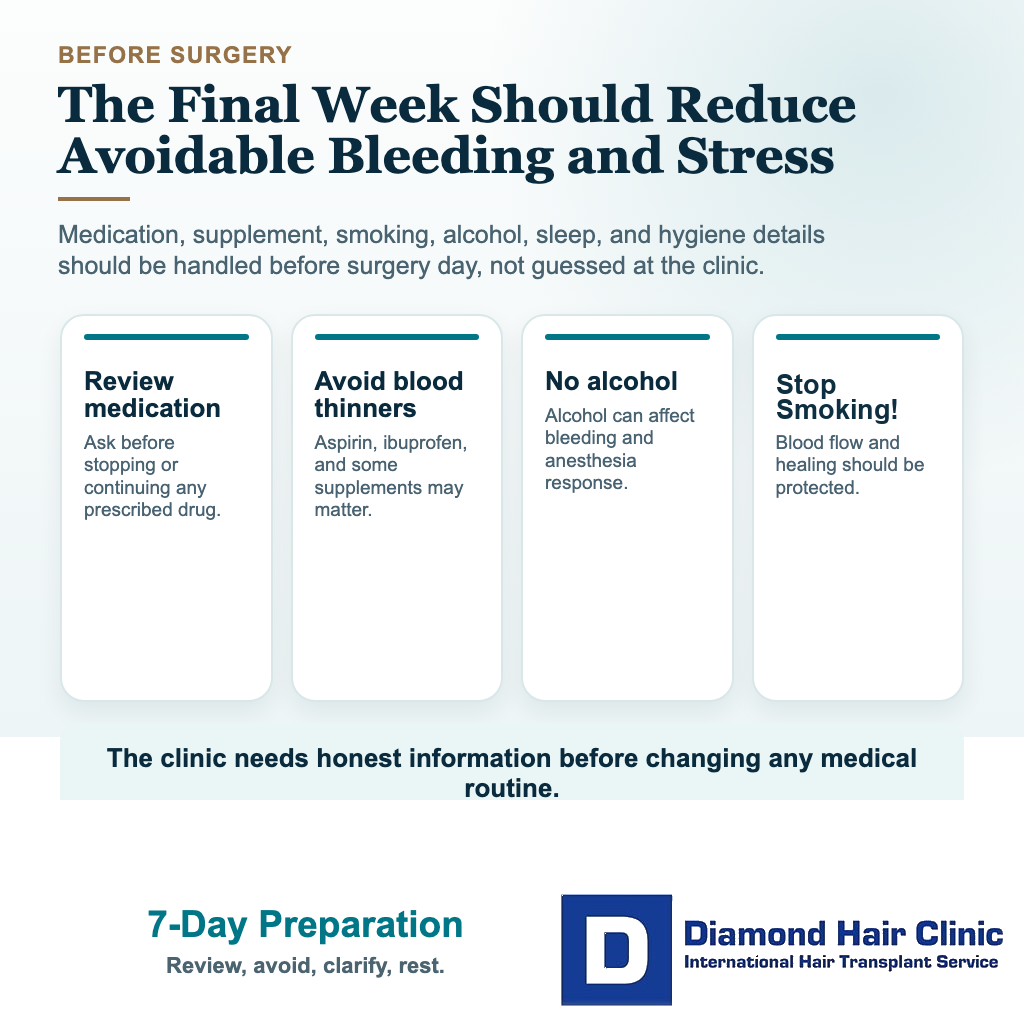
Some medicines or supplements may need to be paused around seven days before hair transplantation. This decision depends on why you take them. Tell us about ibuprofen, arthritis medication, aspirin, blood thinners, vitamins, and supplements such as ginkgo biloba, vitamin E, ginger, garlic, and echinacea.
These medicines and supplements can affect bleeding, swelling, anesthesia planning, or recovery. If you are unsure about a particular medication, contact the clinic before changing anything. Patients who are anxious about the procedure itself can also review what anesthetic injections usually feel like.
Medication after the procedure
After the hair transplant, Dr. Mehmet Demircioglu will explain the medication plan before you leave the clinic.
The needed medications after a hair transplant may include an antibiotic, a painkiller, and Prednol tablets.
You will also receive a neck pillow and written instructions for recovery.
Use these 8 pre-op instruction slides to review medical history, medication review, bleeding variables, scalp cleanliness, documents, final evening planning, arrival, and when to ask the clinic. Swipe sideways, use the arrows one slide at a time, or choose a number below the image.





Alcohol, smoking, caffeine, and sleep
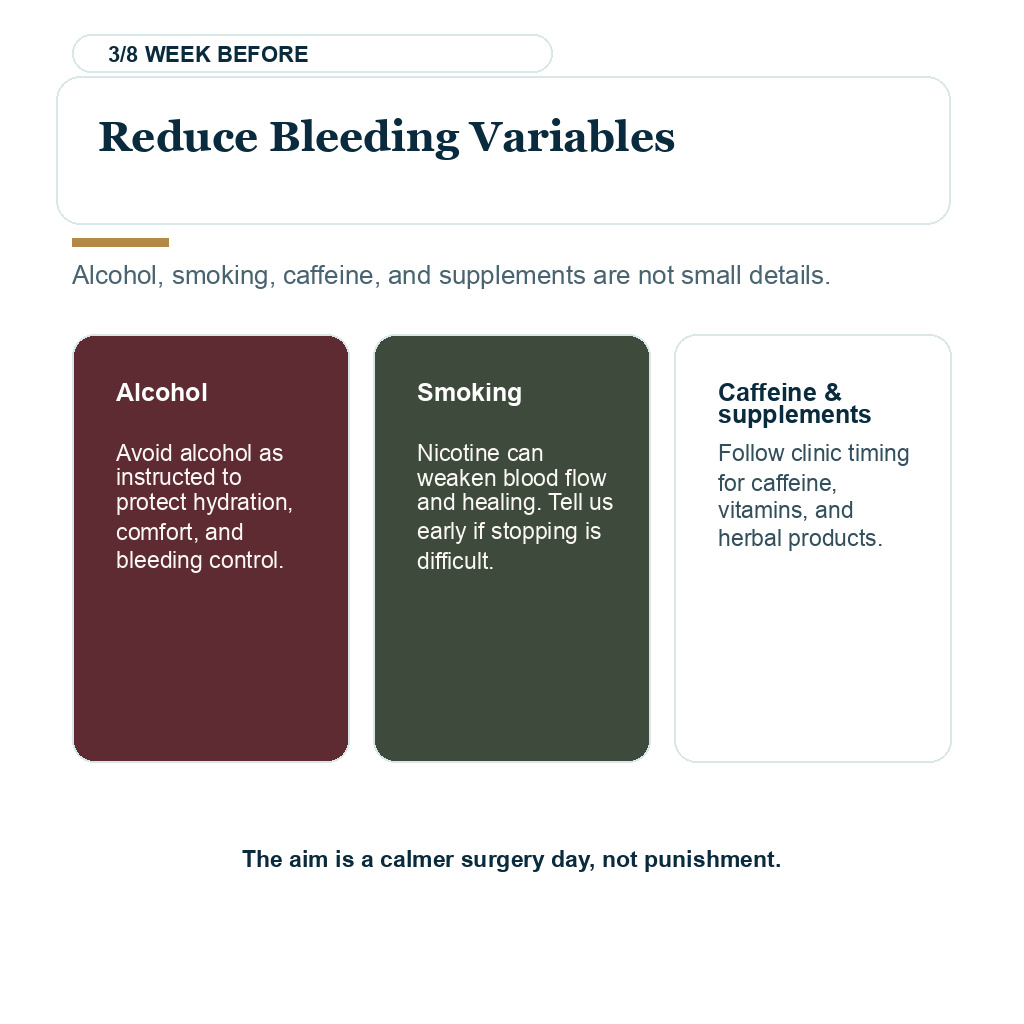
Avoid alcohol for about one week before surgery and during early recovery. Alcohol can affect comfort, hydration, bleeding, swelling, and the way the body responds during the operation.
Stop smoking at least 7 days before and at least 7 days after surgery. Smoking decreases blood flow to the scalp and can weaken healing. If stopping is difficult, tell us early so the risk is not hidden until the surgery day.
Please avoid caffeine from 7 days before surgery until 7 days after your procedure, unless the clinic gives you a different instruction for your case. Rest well the night before treatment because a tired patient is usually more anxious during a long surgical day.
Loose Clothing Makes Surgery Morning Easier
Clothing that protects grafts
Wear clothing that does not need to be pulled over the head. A buttoned shirt or a very wide collar shirt is safer because it helps avoid contact with the grafts after the operation.
The procedure may take 7 to 9 hours depending on the number of grafts. Choose comfortable clothing and avoid tight collars, hoodies, hats, or anything that may rub the scalp after surgery.
Eating before surgery
Eat a normal healthy breakfast on the morning of your hair restoration procedure, unless the clinic gives you a different instruction. An empty stomach can cause nausea, faintness, or poor comfort during a long procedure.
Arrive Prepared on Procedure Day
Take a shower and arrive with clean hair and clean skin. Do not apply styling products, fibers, oils, concealers, or cosmetic cover on the scalp. The U.S. label for 4% Hibiclens says not to use it to prepare the head or face for surgery and to keep it out of the eyes, ears, and mouth.
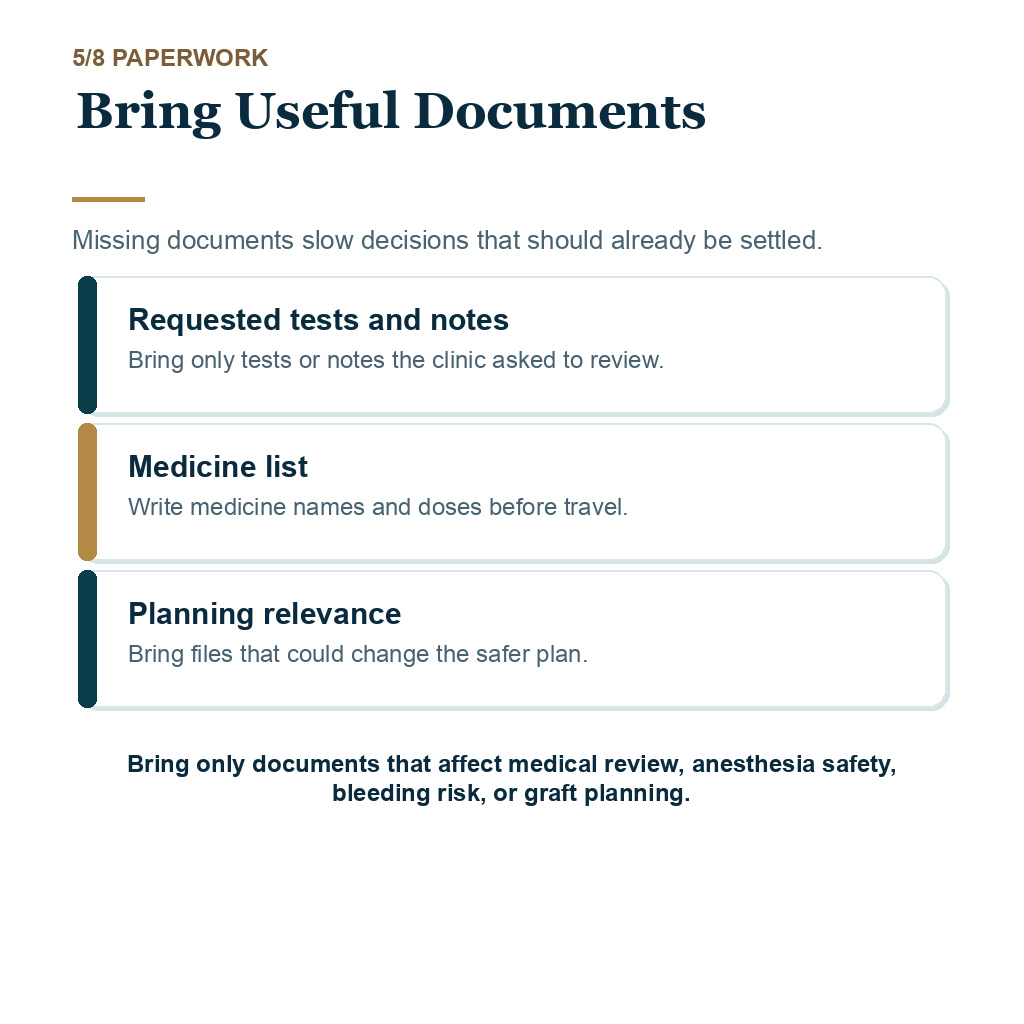
Personal items need the same early decision. Jewelry, piercings, and nails before FUE should be removed, disclosed, or simplified before arrival. Bring required medical documents and follow the meal and medication instructions given by the clinic. For comfort items, a small packing plan for a long FUE surgery day is safer than bringing a full travel bag, because the phone, charger, medicine list, and clothing should support the procedure instead of crowding the room.
During surgery
No companion is allowed inside the clinic during the procedure. Please do not chew gum, avoid unnecessary talking, and avoid using your phone during the operation unless the team allows it.
These Instructions Protect the Surgery
Before surgery instructions are not written to make the day difficult. They reduce bleeding, swelling, avoidable irritation, and surprises during the procedure. A calm surgery day begins before the patient enters the clinic.
When a patient follows instructions well, I can focus on design, extraction, graft handling, and placement. Preparation protects both comfort and graft quality.
The Clinic Needs Key Details Before Arrival
The clinic should know about blood pressure problems, heart conditions, diabetes, allergies, previous reactions to anesthesia, regular medication, supplements, smoking, alcohol use, and any recent illness. Small details can change the preoperative choice.
Tell the clinic about medication even if you worry the surgery will be cancelled. It is much better to adjust safely than to discover a risk on the morning of surgery.
Travel patients should keep the final evening quiet
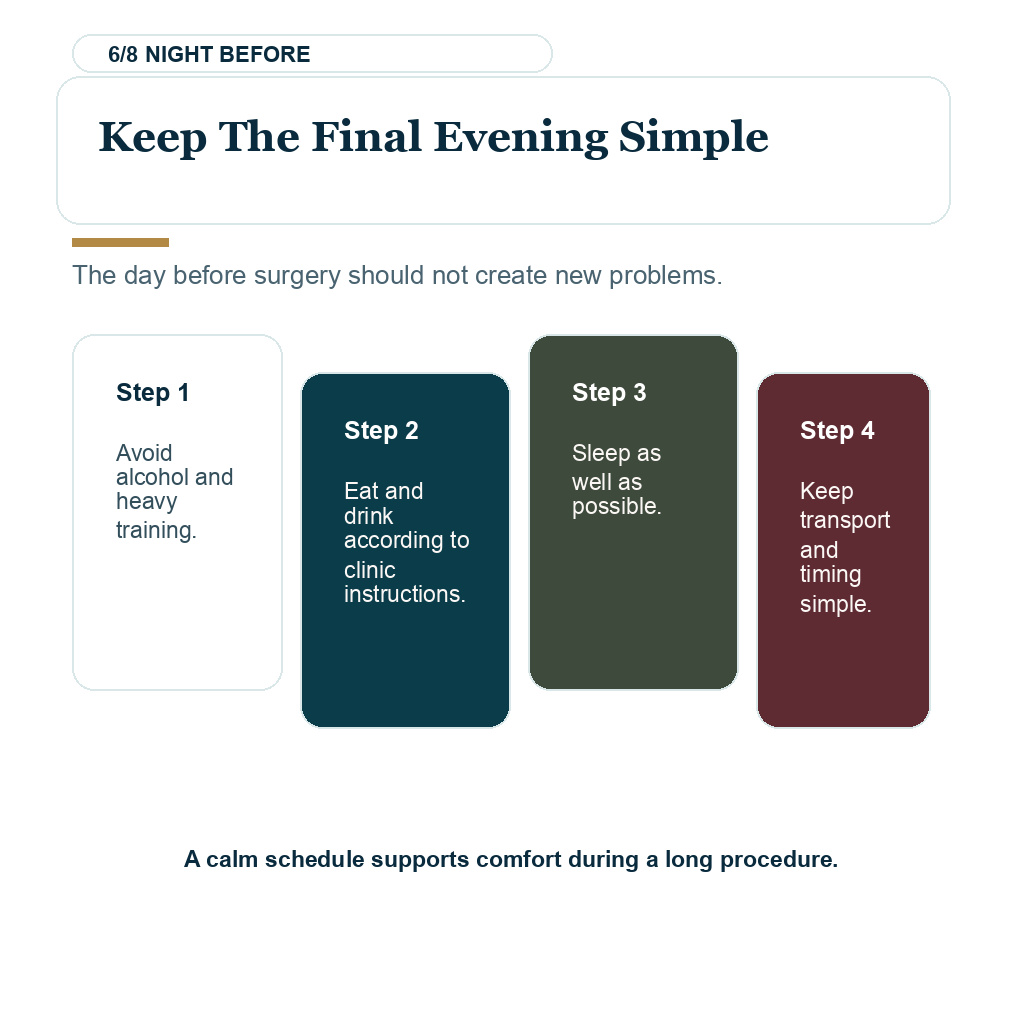
For patients traveling to Istanbul, the final evening should stay simple. Avoid alcohol, avoid heavy training, sleep as well as possible, and keep the schedule calm. A tired patient is more anxious and less comfortable during a long surgical day.
I also recommend loose clothing that does not need to be pulled over the head. This small detail prevents unnecessary contact with the grafts after surgery.
Arriving at the clinic clean, calm, and informed
Arrive clean, calm, and informed. Eat the meal advised by the clinic, follow the medication instructions, and bring any required medical documents. Do not arrive with styling products, fibers, oils, or cosmetic cover on the scalp.
The plan does not need perfection. It needs a smooth day where every medical and practical detail is already clear.
Avoid Hiding Smoking, Alcohol, Supplements, or Medication
Some patients worry that mentioning smoking, alcohol, supplements, or medication will create judgment. I see it differently. The more I understand the patient, the safer I can plan the procedure.
Even common supplements can matter if they affect bleeding, blood pressure, anxiety, sleep, or heart rhythm. A complete history is not bureaucracy. It is part of surgical safety.
The morning routine reduces stress
The morning of surgery should feel organized. Do not rush, search for documents, apply hair products, or guess whether to eat. Every unclear detail adds stress.
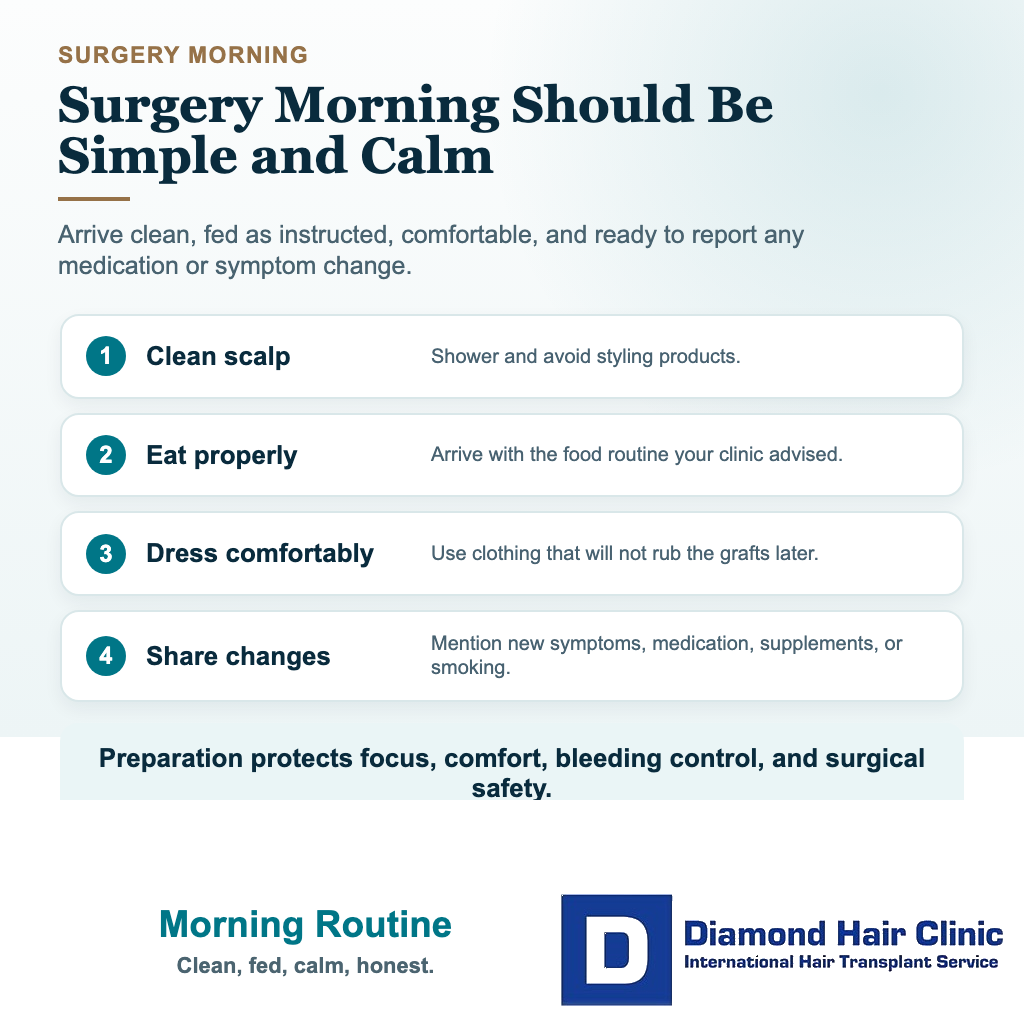
A prepared patient usually tolerates the day better. Hair transplantation can be long, so comfort, hydration, clothing, and calm communication all matter.
Preparation depends on medical history
A healthy young patient and a patient with blood pressure medication, previous surgery, or anxiety do not need the same level of preparation. The instructions are the base, and the medical history adds the personal details.
Communication before surgery is important. The more complete the information, the more precisely the day can be planned.
Preparation is useful only when it protects grafts
The surgery day should start without avoidable surprises. Tell us your medical background, make sure you understand the instructions, and keep the scalp clean and ready.
When these basics are done well, the surgical day becomes more focused. That is when I can give my full attention to the work that matters most.

Read this review excerpt
Every single one of my questions was answered and they made sure I had all the details I needed to make an informed decision.