Hair Transplant in Turkey
A hair transplant in Turkey can be a good decision, but only when the clinic is medically serious, the surgeon is meaningfully involved, and the plan protects the donor area for the future. It is not a good decision just because the price is lower, the package looks convenient, or the graft number sounds impressive.
Turkey has experienced surgeons and strong clinics. It also has high-volume commercial clinics where the medical responsibility can be unclear. This is the distinction patients need to understand before they book flights, pay a deposit, or trust a result photo.
Before choosing how soon to fly home, separate medical follow up from sightseeing. Rest, first washing, swelling, and a quiet route through the airport matter more than fitting Istanbul into every open hour. A travel plan that leaves no quiet recovery margin can turn a medically reasonable trip into a stressful one.
The first question should not be, How cheap is Turkey? The practical issue is, who is actually planning and performing the surgery, and will this plan still make sense years later?
Before you compare offers, it also helps to understand why Turkey’s hair transplant reputation grew and why that reputation should never replace clinic standards.
Key points before choosing Turkey
Hair transplantation is elective surgery and creates permanent changes, so the plan should be based on diagnosis, donor capacity, hairline design, and long term hair loss risk. Turkey is not one single standard. A surgeon led clinic and a high volume hair mill may both advertise “hair transplant in Turkey,” but they are not the same medical experience.
Low cost can be attractive, but a cheap operation can become expensive if it leaves an unnatural hairline, poor growth, infection, scarring, or an overused donor area. The consultation should explain who evaluates the donor area, who designs the hairline, who creates the recipient area incisions, how many patients are treated in one day, and what follow up is provided after you return home.
Before and after photos, reviews, and social media posts can help, but they should not replace medical judgment. Photos can be controlled by lighting, hair length, styling, angle, and patient selection. The more cautious plan is not always the plan with the most grafts, because donor hair is a limited lifetime resource.
Hair transplant cost in Turkey
A realistic hair transplant cost in Turkey is often around $5,000 to $10,000 for a serious all inclusive package, depending on the clinic model, the surgeon’s involvement, the number of grafts, the technique, hotel and transfer arrangements, aftercare, and the complexity of the case.
Prices below that range exist, but the patient needs to ask what is being removed from the medical process to make the price possible. Lower overhead is one reason Turkey can be more affordable than the United States or Western Europe. But a very low price may also mean high patient volume, limited surgeon involvement, rushed planning, weaker follow-up, or aggressive graft promises.
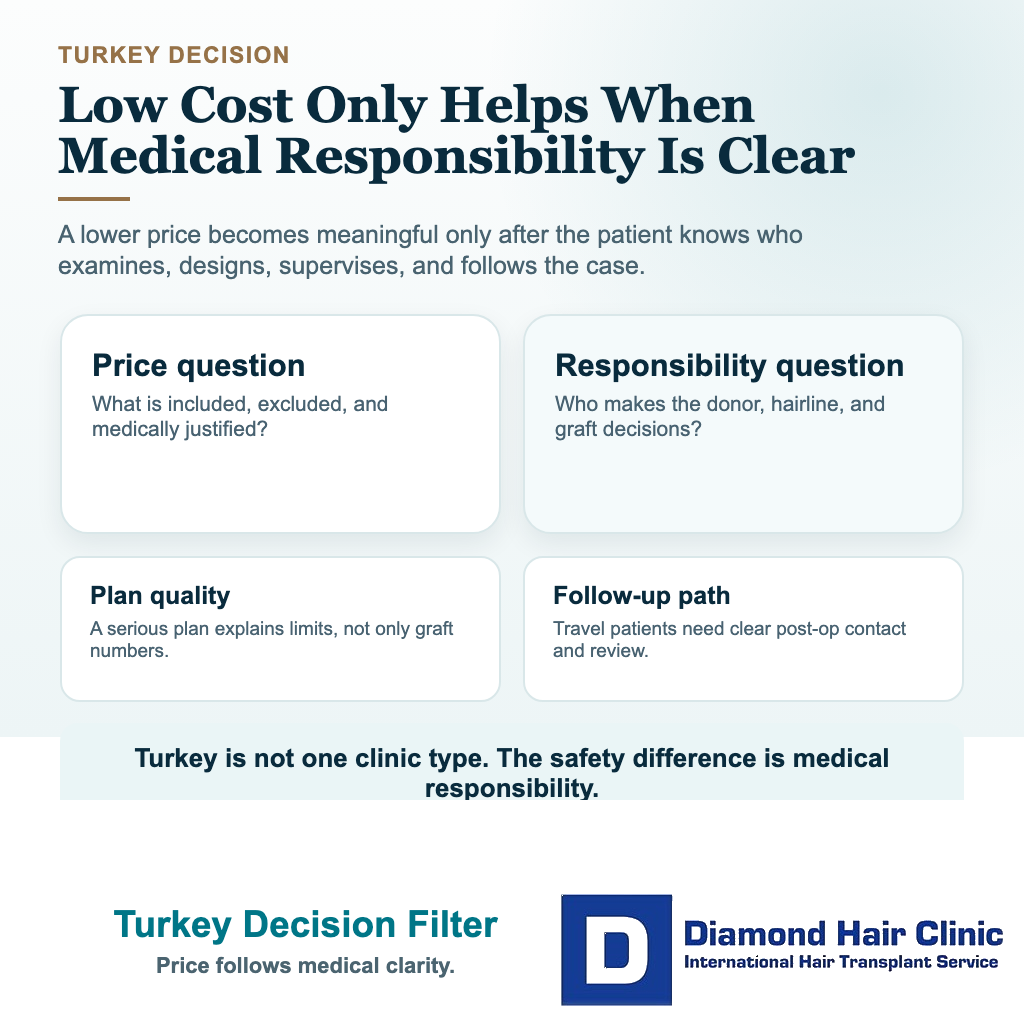
The price should not be judged alone. Patients need to ask what the fee includes, who makes the surgical decisions, whether donor strength is measured carefully, whether the graft number is realistic, and whether the plan can be changed if the in person examination shows that surgery should be smaller, delayed, or avoided.
Lower prices in Turkey
Turkey can offer lower prices because operating costs, staff costs, and travel related costs are usually lower than in many Western countries. Istanbul also has a large medical tourism market, so clinics compete heavily on price and package convenience.
That point does not mean every low price is safe. A lower national cost base is different from a clinic cutting medical corners. The patient needs to separate normal cost advantage from unsafe discount pressure.
A fair price should still allow time for assessment, sterile operating conditions, trained staff, careful graft handling, proper aftercare, and direct responsibility from the medical team.
Cheaper technician led clinic decisions
This needs caution. The difficulty is not the word technician by itself. Skilled assistants have a role in hair transplantation. The difficulty is when the surgeon’s responsibility becomes unclear and the clinic is mainly built around speed, volume, and sales.
If someone who is not a surgeon designs the plan, decides the graft number, draws the hairline, creates the recipient area incisions, or gives medical promises without proper surgeon assessment, the patient is taking a risk. In this part of the decision, many bad results begin.
A cheap operation can feel like a saving before surgery. It may not feel like a saving if the patient later needs repair surgery, has a visible donor problem, or cannot contact the person who was responsible for the operation.
Surgeon led one patient per day clinic value
They can be, when the higher price reflects real medical involvement rather than branding. The value is not simply that the clinic is smaller. The value is time, attention, and accountability.
In a one patient per day model, the surgical team can focus on one donor area, one hairline, one recipient area, and one recovery plan. There is more room to slow down if donor strength is weaker than expected or if the graft number should be changed for safety.
It matters because hair transplantation is not a race. A patient is not buying only graft movement. He is buying judgment.
The 4 cost and safety slides below split the price checks into one image each. Swipe sideways, use the arrows to move one slide at a time, or use the numbered indicators under the image to jump to a specific slide.
Read this review excerpt
the key deciding factor for me was the knowledge that I would be given my own day at the clinic and receive the doctor's full attention that day.
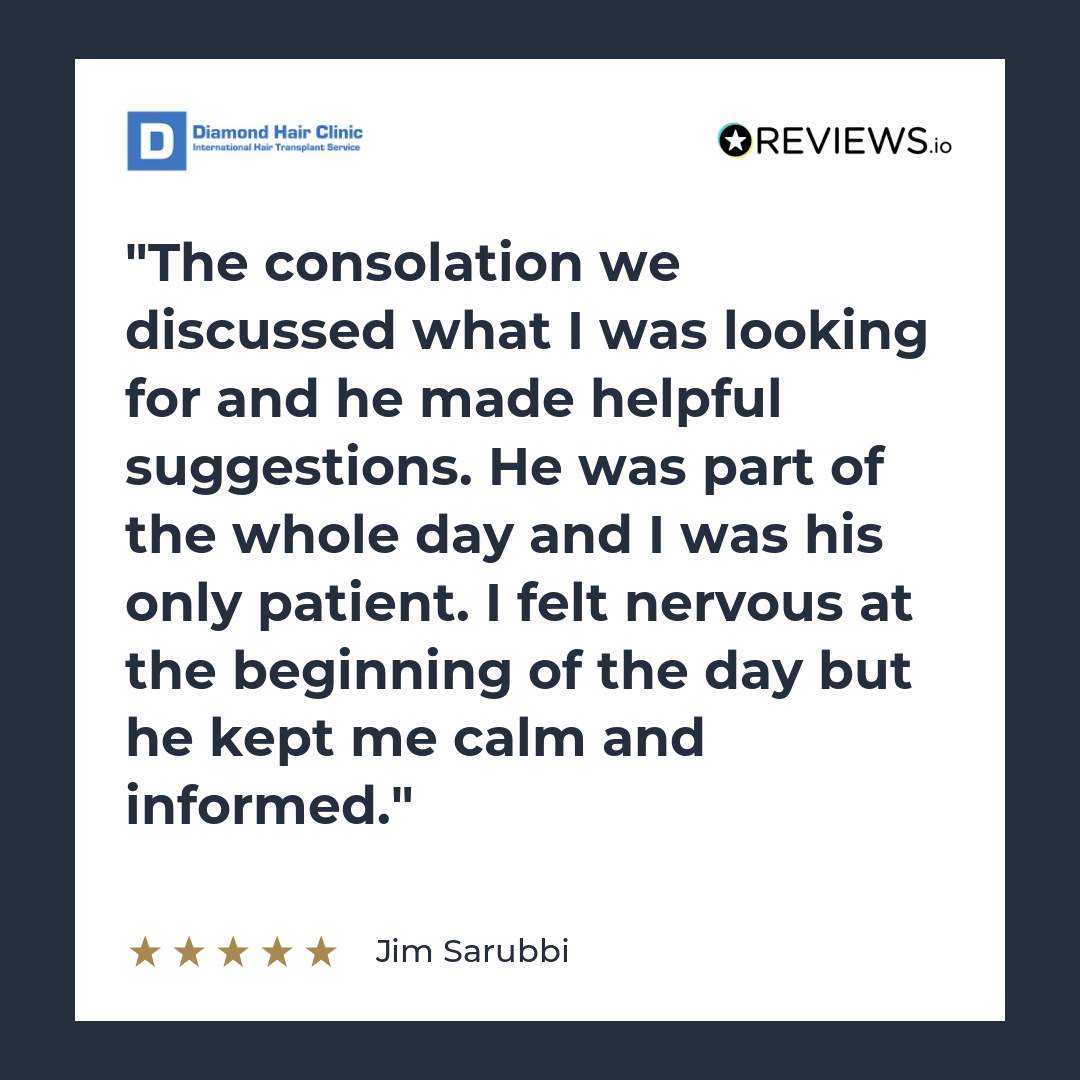
Read this review excerpt
The consolation we discussed what I was looking for and he made helpful suggestions. He was part of the whole day and I was his only patient. I felt nervous at the beginning of the day but he kept me calm and informed.
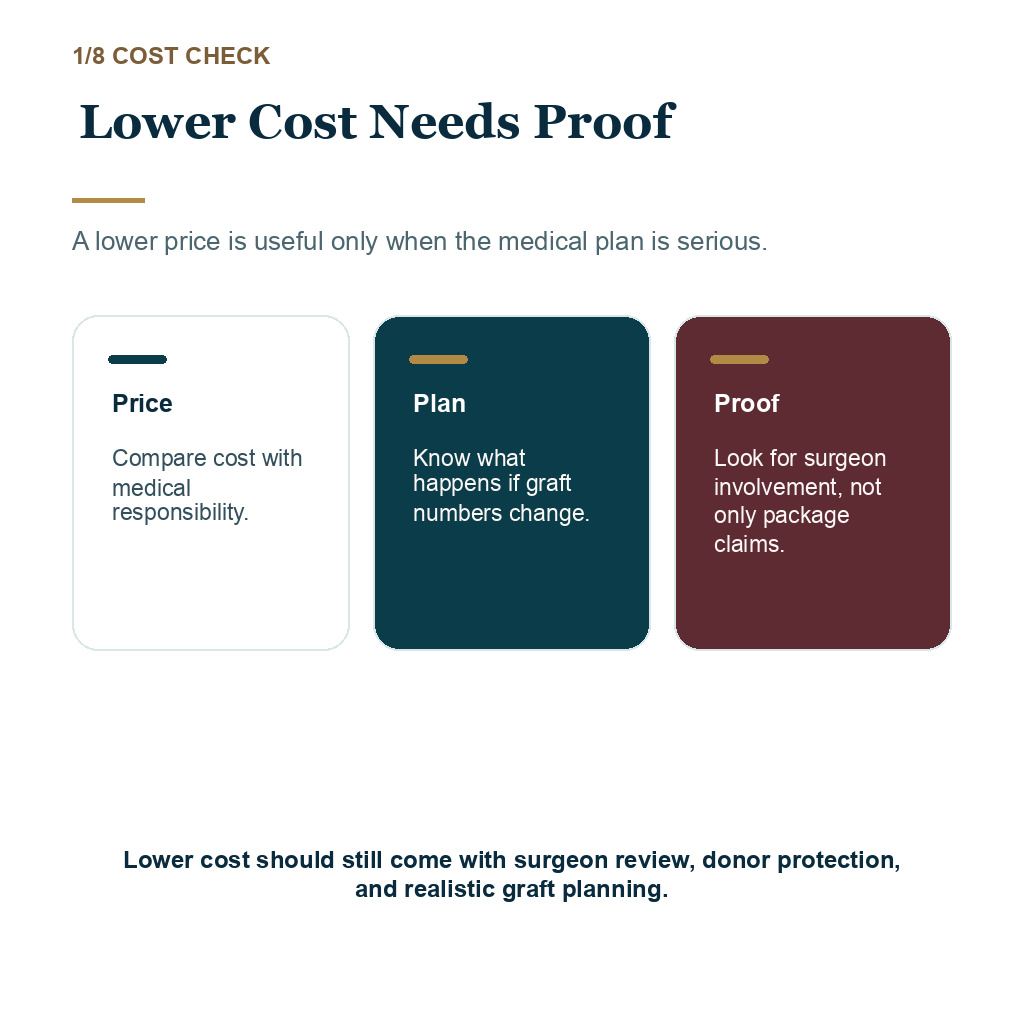
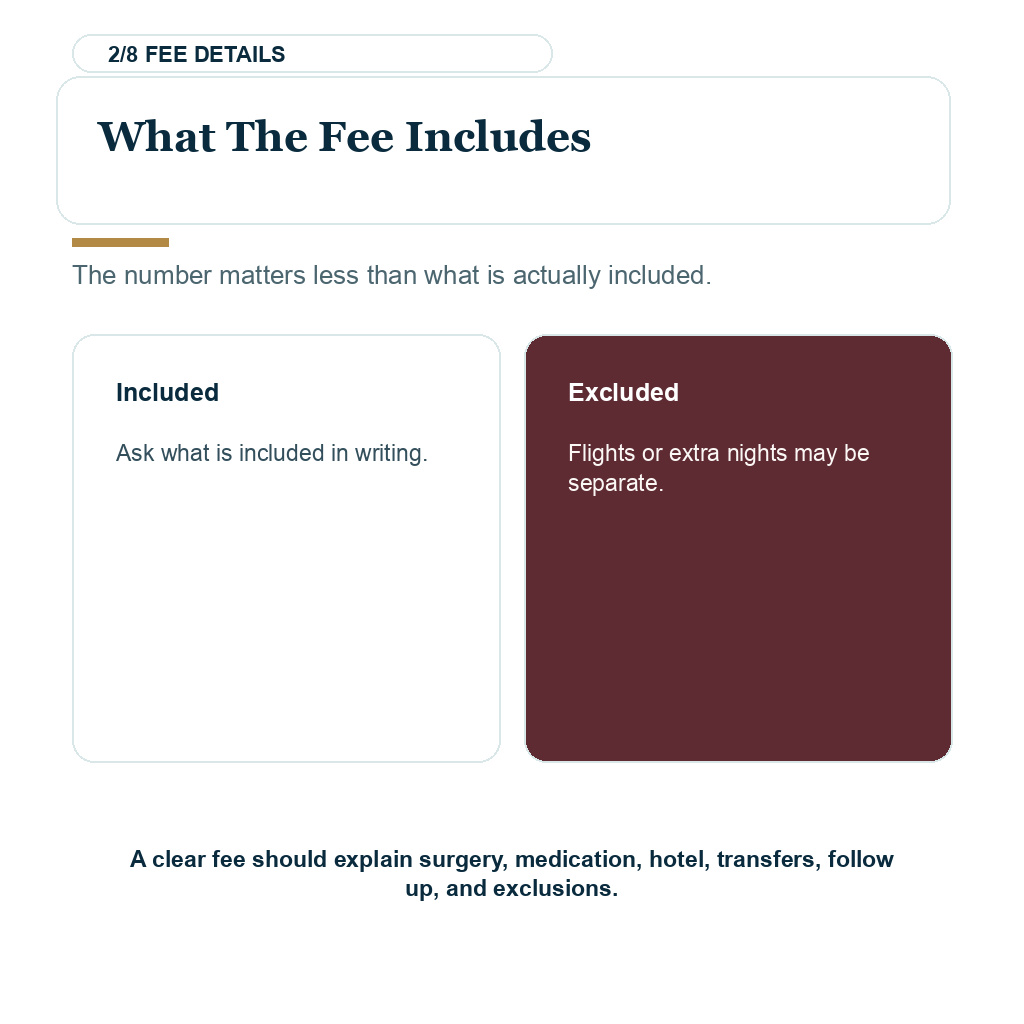
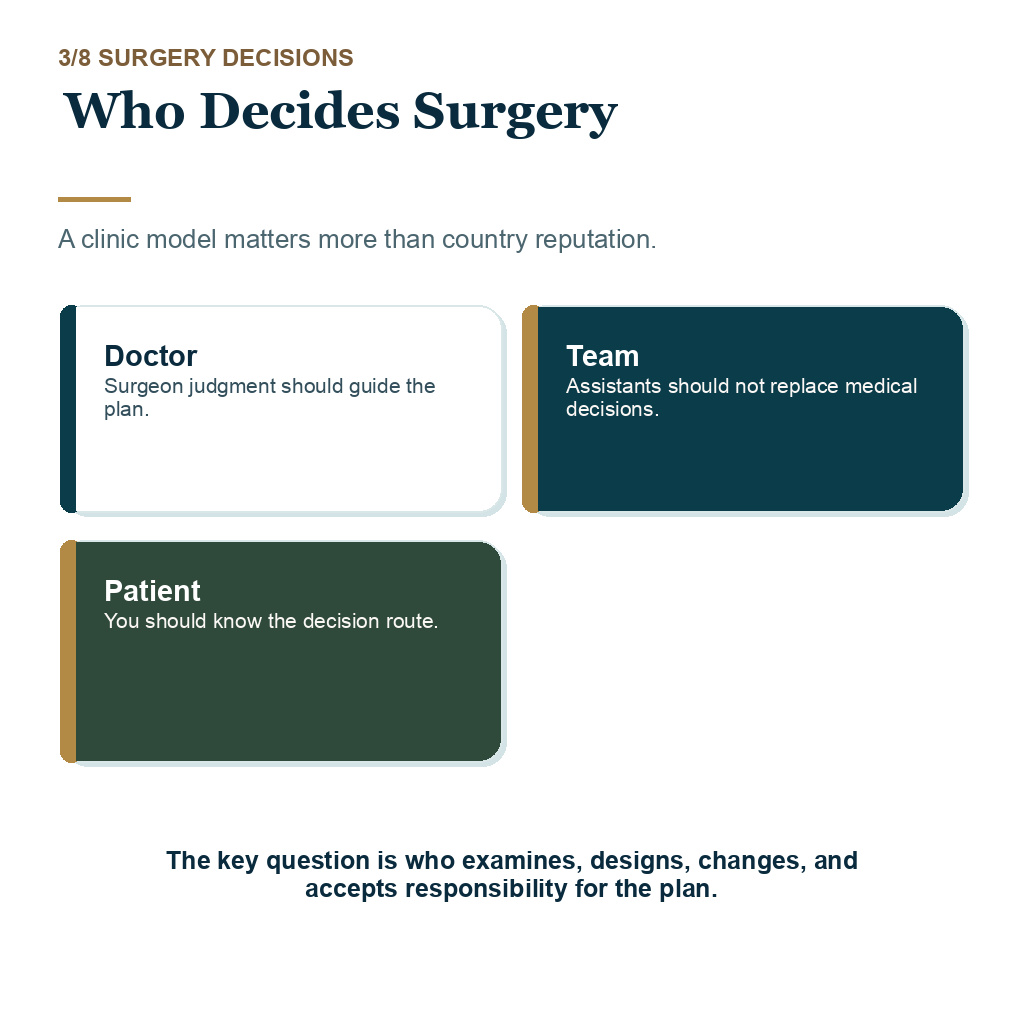
Real pros and cons of hair transplants in Turkey
The detailed pros and cons of hair transplant in Turkey come down to clinic model, not country reputation. The main advantage of Turkey is that a patient may access experienced hair transplant teams at a lower overall cost than in many Western countries. Istanbul is easy to reach from many regions, and many clinics are used to caring for international patients.
The main disadvantage is the wide variation in clinic quality. Strong clinics and weak clinics can look similar online. A polished website, hotel transfer, social media result, or high graft number does not prove that the surgical plan is safe.
Language can also matter. Patients need to be able to discuss the hairline, donor limits, crown priority, medication, recovery, and risks clearly with the person responsible for the plan. A translator can help with ordinary logistics, but important medical details should not become vague. When this is uncertain, language barriers during a hair transplant abroad are a safety issue before the patient books travel.
Turkey can be a good option when the clinic is transparent. It becomes risky when the patient is choosing mainly from price, pressure, influencer content, or package convenience.
Good and bad candidates for surgery in Turkey
It can be either. The country does not decide the result. The clinic model, surgeon involvement, donor planning, graft handling, hairline design, aftercare, and patient selection decide the result.
A hair transplant in Turkey is a good idea when the clinic explains the limits of your case, gives a realistic graft estimate, protects the donor area, and does not pressure you into a plan before proper assessment.
It is a bad idea when the offer is built around maximum grafts, next day surgery, vague surgeon identity, copied before and after photos, unrealistic density promises, or a price that only makes sense if the operation is rushed.
Whether hair transplant in Turkey is a good or bad idea depends less on the country name and more on the clinic model, surgeon responsibility, donor planning, and follow up route.
Safety of hair transplant surgery in Istanbul
Istanbul is a major international city with a large medical tourism sector. For most patients, the ordinary travel side can be managed safely with normal planning, clinic transfers, suitable accommodation, and common sense.
The more important question is surgical safety. A safe city does not by itself mean a safe operation. The patient needs to still verify the clinic, surgeon involvement, sterilization standards, aftercare, emergency communication, and whether the operation is suitable in the first place.
Medical tourism adds a practical responsibility. You must know who to contact after you fly home, what warning signs need urgent attention, how washing should be done, when normal activities can restart, and how progress will be reviewed over the following months.
Considerations before choosing Turkey
Start with the medical plan, not the travel package. Candidacy, hair loss stability, donor strength, medication role, area priority, and realistic density should be clear before the trip feels organized.
A patient with a small frontal recession and strong donor area is not the same as a patient with advanced baldness, diffuse thinning, crown loss, or a previous failed operation. The same package cannot fit everyone safely.
It is also important to separate ordinary convenience from medical value. Hotel, transfer, translation, and flight timing are useful. They do not replace diagnosis, design, incision planning, donor management, and follow-up.
Getting a hair transplant in Turkey
If you are considering a hair transplant in Turkey, begin with medical clarity rather than a package. The clinic should review your photos, hair loss pattern, medical history, donor area, expectations, medication use, and travel timing before it talks confidently about surgery.
Before the operation day, the patient needs to speak directly with the surgeon or the medical team responsible for the plan. The hairline, graft distribution, donor limits, crown priority, aftercare, and recovery time should be clear before any payment or travel decision feels final.
A good trip is not only a hotel, transfer, and surgery date. It is a plan that still makes sense after the patient returns home, when healing, washing, shedding, and long-term growth begin.
Booking process
The booking process should be simple, but it should still leave room for proper medical judgment before the travel date.
Usually the patient sends photos, medical information, and goals first. The clinic then reviews candidacy, estimates a graft range, explains the surgical plan, and confirms whether the requested date is realistic. Only after that should travel arrangements feel settled.
Many clinics ask for a deposit before the medical discussion is complete. I do not ask for a deposit or prepayment just to reserve an operation. The medical plan is confirmed first. Only then do the flight ticket details help us finalize the booking, hotel, and transfer organization.
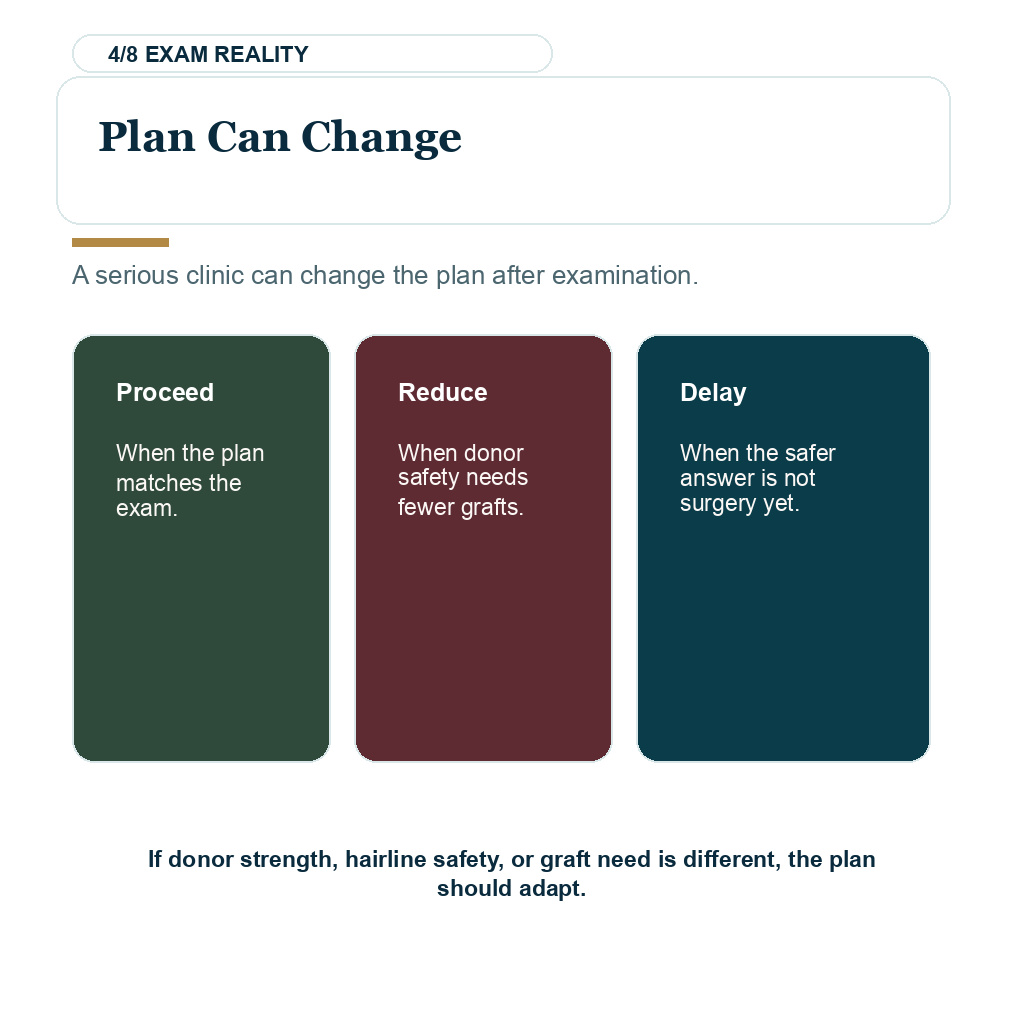
A booking date is not a promise that every requested graft will be used. If the in person examination shows a weaker donor area, the plan must be able to become smaller, slower, or no surgery.
Online consultation process
An online consultation is useful for international patients, but it must not become a sales shortcut. Photos can show a lot, but they cannot replace medical judgment.
A serious online consultation should ask for clear photos from the front, both sides, top, crown, and donor area. The hair should be dry and shown in normal light. If possible, photos showing the history of hair loss are helpful.
The assessment should include donor capacity, likely hair loss pattern, age, medical history, medication use, previous procedures, expectations, and whether the patient may be better served by waiting or using medical treatment first.
Reasons to slow down before committing
Slow down if the clinic gives a high graft number from a few unclear photos, avoids naming the surgeon, pressures you to book quickly, sends only template messages, or says the final plan will be decided on surgery day without explaining why.
Be careful if the clinic cannot explain who creates the recipient area incisions, how the donor will be protected, or what happens if the in person examination does not match the online estimate.
Free online consultation
Some clinics charge a small consultation fee. Some provide it free. The fee itself is not the main issue. The quality of the assessment is the issue.
The online consultation is free because it helps us understand whether surgery is suitable before the patient feels financially committed.
Details to send for serious assessment
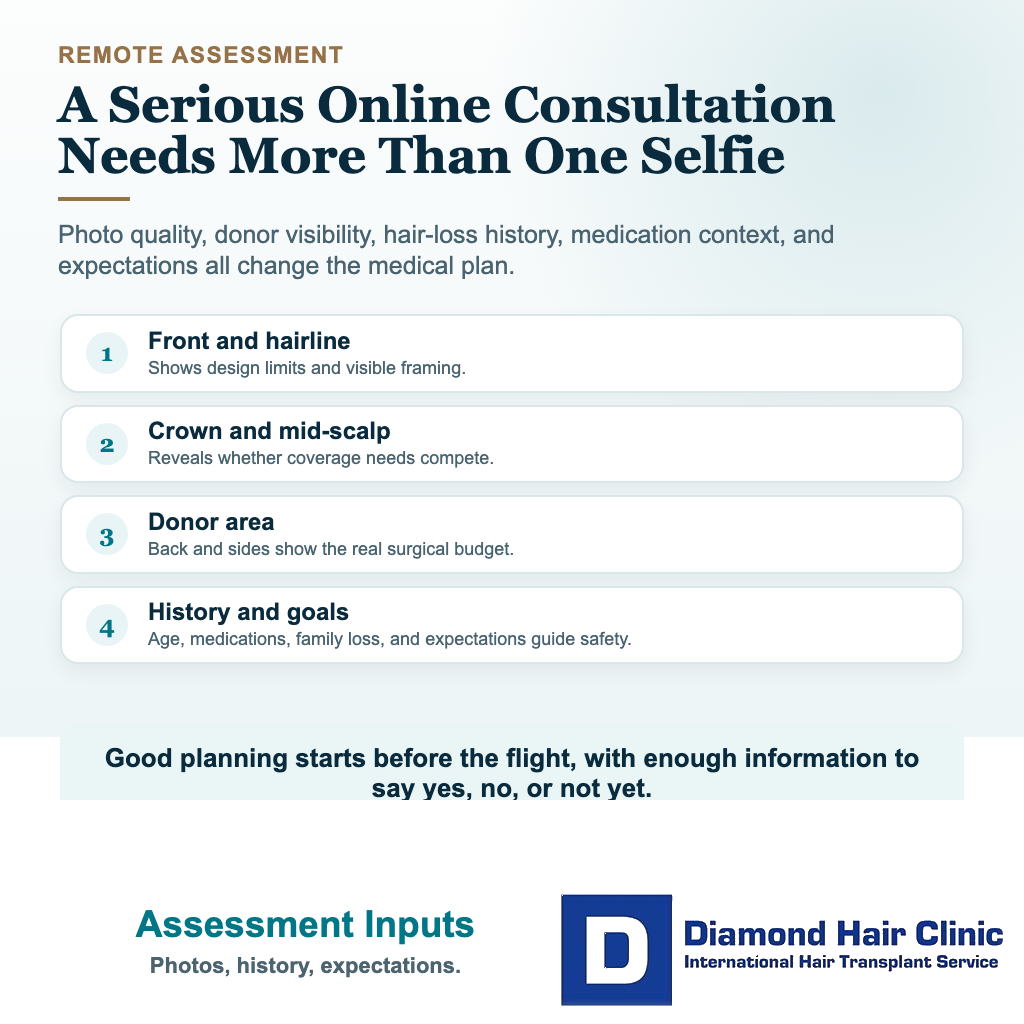
For a serious assessment, share photos taken in good light of the hairline, mid scalp, crown, donor area, and both side profiles. Add a short history of your hair loss, including when it started and whether it is still changing. Include medication history, previous hair transplant, scalp micropigmentation, scars, skin disease, or any donor area concern if present. Also tell the clinic your real priority, such as frontal framing, crown coverage, repair, density, hairline lowering, or hiding a previous result.
Online consultation matters
You need it because a hair transplant should not start with travel arrangements. It should start with whether the operation is medically reasonable.
The consultation should help you understand your hair loss pattern, donor limits, possible graft range, expected density, risks, aftercare, and whether you are choosing the right hair transplant surgeon for your situation.
Choosing a hair transplant clinic in Turkey
Turkey has skilled surgeons and clinics with strong medical standards, but it also has high-volume commercial models. Patients should not compare only price, photos, or social media visibility. Patients should look at who evaluates the donor area, who designs the hairline, who creates the recipient area incisions, how many patients are treated in one day, and whether the clinic explains limits without pressure.
Reviews and before and after photos can help, but they should not replace medical judgment. A natural result depends on diagnosis, donor management, graft handling, hairline design, and aftercare. If a clinic speaks mostly about discounts, packages, or a very high graft number, the patient needs to slow the decision down.
The separate clinic selection guide gives more detail on how to choose a hair transplant clinic in Turkey.
Medical proof versus travel convenience
A Turkey package can make travel easier, but travel support is not proof of surgical quality. Before paying, I separate the medical decision from the hotel, transfer, and coordinator experience.
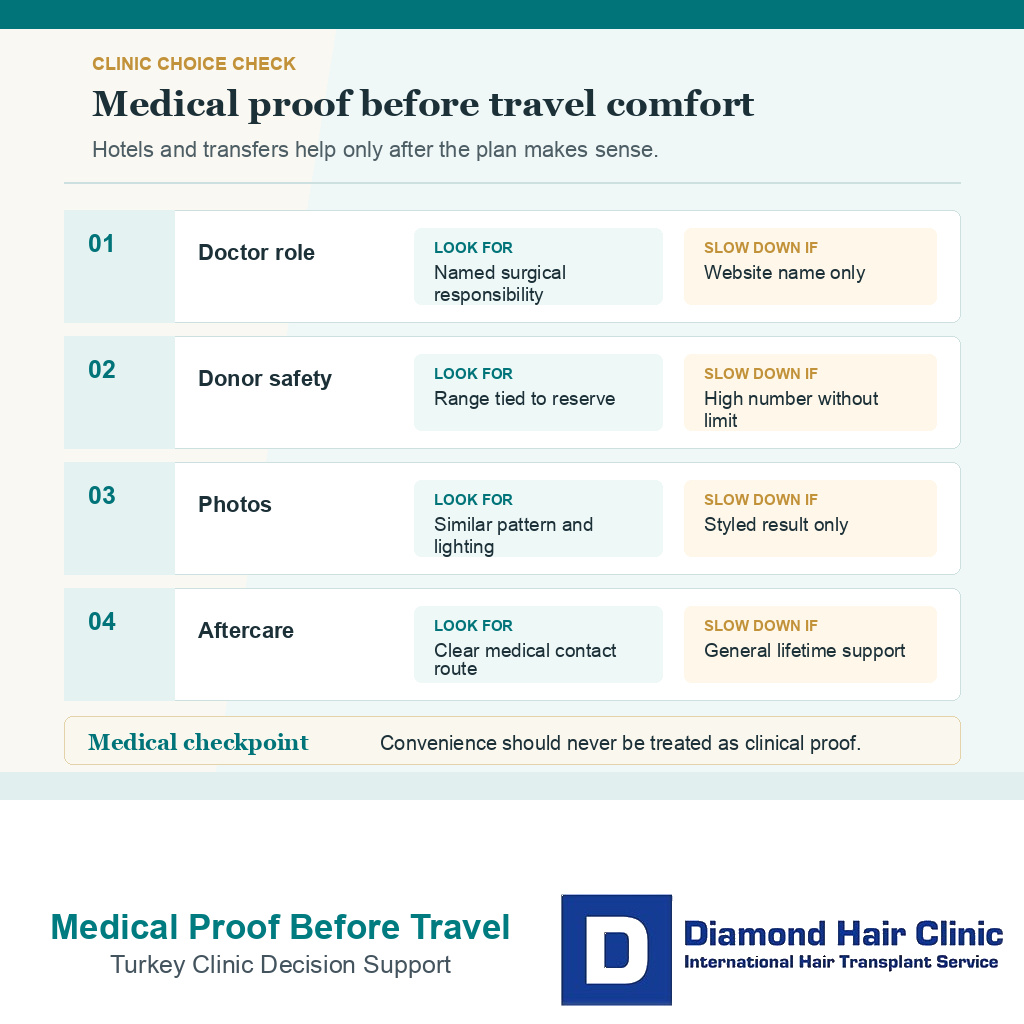
A comfortable trip has value only when the operation itself is accountable, realistic, and safe for the donor area.
Red flags that matter most
A red flag is not always one dramatic detail. Often it is a pattern. The clinic may be fast to sell, vague about responsibility, confident about a high graft number, and quiet about donor limits.
Take caution if the clinic promises surgery tomorrow without a serious assessment, quotes a price far below the realistic range for a surgeon led clinic, bases the plan mainly on maximum grafts, or keeps the surgeon role unclear. Be careful when awards, celebrity posts, or influencer content replace medical explanation. Promises of stem cell cures, guaranteed growth, scarless surgery, unlimited grafts, vague aftercare, or no clear medical contact after you return home are warning signs.
Red flags of Turkish hair mills should be checked before any deposit is paid, especially when the offer depends on speed, a fixed graft number, or unclear doctor involvement.
Cheap surgery can become expensive later
A very cheap operation can become expensive if it creates a problem that is difficult to repair. The common issues are an unnatural low hairline, low density, wrong direction, poor growth, visible scarring, infection, or donor area overharvesting.
Repair surgery is not simply another normal hair transplant. It uses the same limited donor reserve. A patient who spends too many grafts in the first operation may not have enough safe donor hair left for a clean correction later.
The cheapest offer is not necessarily the best value. A safe first plan is usually less expensive than a difficult repair.
Reading hair transplant reviews
Reading hair transplant reviews in Turkey can help when they show detailed, consistent patient experiences. They are less useful when they are very short, emotionally extreme, copied across platforms, or focused only on hotel service and transfer comfort.
A useful review usually says what was planned, who was involved, how many grafts were used, how the donor area healed, how the result looked at 12 months or later, and whether the clinic stayed reachable after surgery.
I would not ignore negative reviews, but I would read them carefully. A single emotional post is not the same as a repeated pattern. The same is true for positive reviews. A large number of vague five star comments does not prove surgical quality.
Judging whether a review is useful
Useful reviews contain specific details rather than slogans. Look for time points after surgery, not only operation day impressions, and compare several platforms and long term patient discussions instead of trusting one source. Be careful with reviews that sound like advertising or revenge. Give more weight to cases that show consistent photos, donor area visibility, follow up over time, and a clear explanation of who handled the medical decisions.
Online patient worries
Patients comparing Turkish clinics often worry about cost, different graft quotes, clinic selection in Istanbul, doctor involvement, Afro textured hair, female hair transplant planning, early asymmetry, and whether a result at five months is still maturing or already concerning.
These concerns are real, but they need calm medical interpretation. Patients should not make a surgical decision from scattered opinions, emotional stories, or isolated photos. The clinic should be able to explain the diagnosis, donor capacity, hairline design, surgeon involvement, aftercare, and limits of the case clearly.
Negative experiences often come from unrealistic expectations, poor communication, weak surgeon involvement, and low cost systems where responsibility is difficult to identify. When a patient understands these risks before committing, he is less likely to be impressed by a cheap package that does not protect him.
Treating online recommendations carefully
Online recommendations can be helpful, but they should be filtered. Some people speak from real experience. Some repeat what they heard. Some may have financial relationships that are not obvious. Some are simply overconfident because their own result happened to be good.
Patients need to be careful when someone insists that only one doctor, one clinic, or one country can be trusted. Hair transplantation is more complex than that. Good and bad decisions can happen in the same city.
Use online discussions to collect questions, not to outsource the decision. Then ask the clinic directly who will plan the surgery, who will create the recipient area incisions, how the donor will be protected, and what follow-up exists.
Reasons Turkey became popular for hair transplantation
Turkey became popular because it combines experienced hair transplant teams, lower operating costs, strong flight access, and a medical tourism system built around international patients. Istanbul is especially convenient because many patients can reach it directly.
Popularity is not the same as safety. A high demand market can produce excellent specialists, but it can also attract clinics that treat hair transplantation like a volume business.
This is the practical distinction. Medical tourism can make travel easier. It should not make the surgery feel casual.
Medical tourism agency bookings
An agency can make communication easier, but it can also separate the patient from the medical team. If an agency cannot clearly identify the surgeon, clinic license, operation model, and follow-up process, the convenience is not enough.
I want patients to communicate directly with the clinic that is responsible for the surgery. The patient needs to know who is giving the medical opinion, not only who is arranging the trip.
Regulations in Turkey
Turkey has healthcare regulations, licensing requirements, and medical facilities that perform legitimate surgery. Still, a Turkish address or a clinic advertisement does not tell you how much surgeon involvement, donor planning, or long-term follow-up the patient will actually receive.
The surgical location, named medical responsibility, surgeon controlled steps, sterile practice, and complication plan after returning home should be clear before travel.
Hair transplant results in Turkey
Some results in Turkey are excellent. Some are poor. The same is true in many countries. The result depends on the clinic, surgeon, patient selection, donor management, graft handling, and long-term plan.
Do not choose a country because someone promises unmatched results. Choose the surgeon and clinic model that can explain the plan clearly and show results that look natural under normal conditions.
Analyzing before and after photos
Before and after photos can be useful only when they are realistic. A careful review looks at shooting angle, lighting, hair length, donor area visibility, wet hair, combing direction, and whether the style hides an unnatural hairline. A result can look much denser in controlled photos than it does in ordinary daily light.
Do not look only at the front. Look at the temples, crown if treated, donor area, hair direction, hairline softness, and whether the result still looks natural as the person ages.
Patients can read the dedicated guide on whether they can trust hair transplant before and after photos.
Read this review excerpt
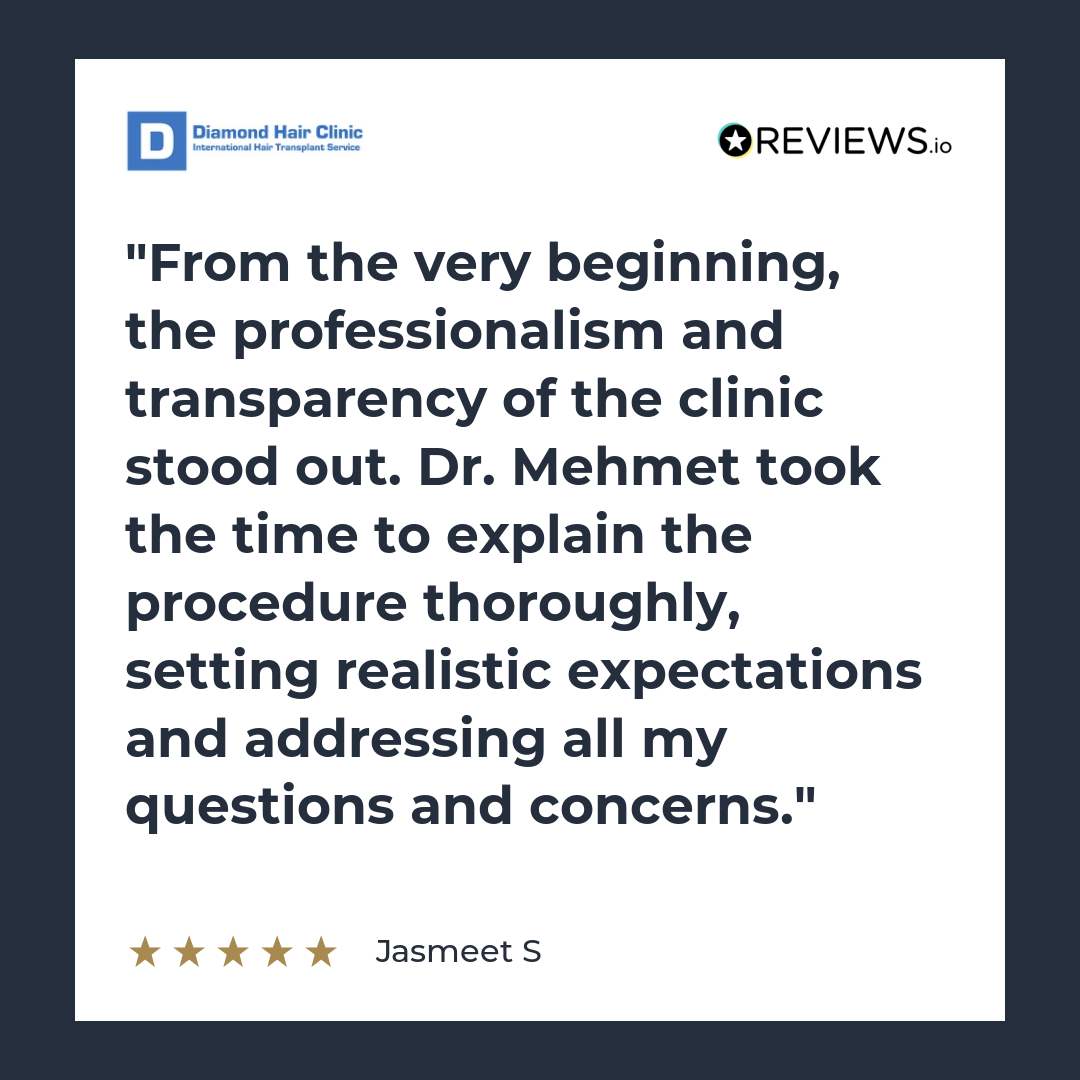
From the very beginning, the professionalism and transparency of the clinic stood out. Dr. Mehmet took the time to explain the procedure thoroughly, setting realistic expectations and addressing all my questions and concerns.
Read this review excerpt
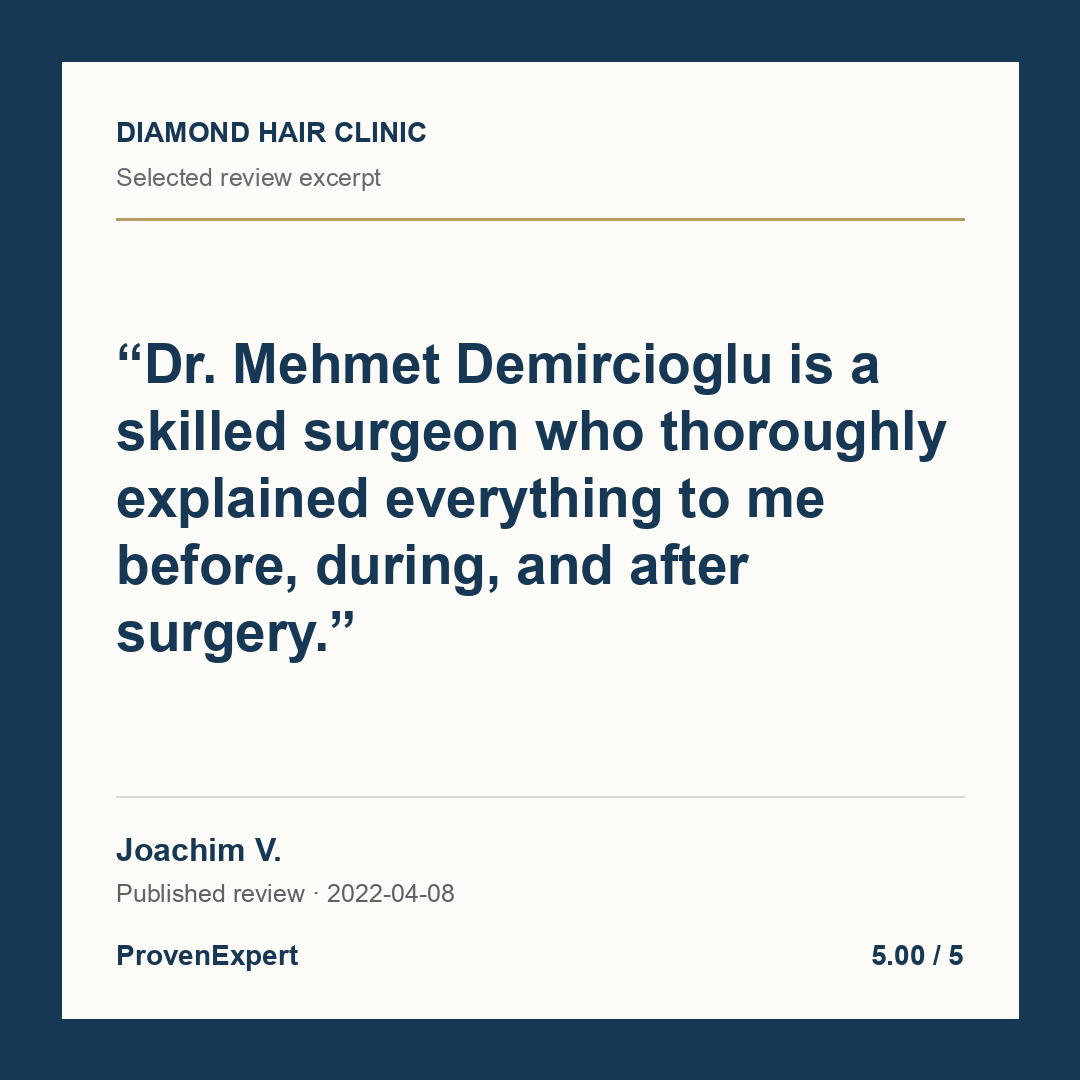
Dr. Mehmet Demircioglu is a skilled surgeon who thoroughly explained everything to me before, during, and after surgery.
Which questions should you ask when looking at photos?
When you study before and after photos, compare angle, lighting, hair length, styling, donor visibility, and whether the result is shown at 12 months or later. A useful photo set should make it possible to judge whether the hairline looks natural in normal light and whether scalp micropigmentation, hair fibers, medication, or another treatment influenced the appearance.
What tricks can make photos misleading?
Lighting, contrast, camera angle, wet versus dry hair, longer hair length, fibers, styling products, and selected “best case” examples can all change perception. A clinic that hides poor results while showing only dramatic cases is not giving the patient a fair view.
Common hair transplant techniques in Turkey
Clinics in Turkey commonly discuss FUE, Sapphire FUE, DHI, and FUT. These names are often presented like competing products, but they do not all describe the same part of the operation.
FUE describes individual graft harvesting from the donor area. FUT describes strip harvesting and leaves a linear scar. DHI usually refers to implantation with an implanter pen. Sapphire FUE refers to using sapphire blades for recipient area incisions within an FUE based plan.
Sapphire FUE is not always the right method
I use Sapphire FUE because I value the control it gives me when creating the recipient area incisions. In suitable patients, it can support refined angle, direction, density distribution, and tissue handling.
But I do not present any technique as magic. The blade does not design the hairline. It does not protect the donor area. It does not decide whether the patient is a candidate. The surgeon’s judgment still controls the result.
Comparing FUE, DHI, Sapphire FUE, and FUT
Each method should be explained in that clinic’s hands, including who performs each step and whether the method fits the case or is simply easier to sell.
Patients often think DHI and FUE are direct opposites. They are not. FUE is usually the harvesting method. DHI usually describes implantation. A clinic can use FUE harvesting and different implantation approaches.
Technique matters, but it should never hide the real questions about donor management, hairline design, graft handling, incision direction, and aftercare.
Recovery after a hair transplant in Turkey
After surgery, the first priority is protecting the grafts and following the clinic’s washing and sleeping instructions. The early period is not about testing the result. The purpose is healing.
Swelling, redness, scabs, itching, shedding, and uneven early appearance can happen. Many of these signs are normal, but some symptoms need attention, especially worsening pain, spreading redness, pus, fever, bad odor, increasing swelling with illness, or dark tissue changes.
The consultation should give clear hair transplant aftercare instructions and remain reachable after you return home. During follow up, patients send regular photos so healing and growth can be reviewed over time.
Growth timeline
The first weeks can be emotionally difficult because the scalp looks visible and the transplanted hairs may shed. Shedding does not by itself mean graft loss. For many patients, it is part of the normal growth cycle after transplantation.
Early growth usually begins gradually after the shedding phase. The result becomes easier to judge over months, not days. A patient who checks the mirror or phone photos every few hours can create unnecessary anxiety.
The important difference is temporary shedding versus true failure. Temporary shedding is expected in many patients. True failure is judged much later and requires proper medical review, not panic during the early months.
Staying in Turkey after surgery
Many international patients stay in Istanbul for at least three nights and four days. A common plan is arrival before surgery, operation day, rest day, and post-operative check with first washing before flying home.
The exact timing can change depending on flight availability, medical history, travel distance, and how the clinic organizes post-operative instructions. What matters here is that the patient needs to not rush straight from the operating room to a long flight without proper instructions.
Example travel plan
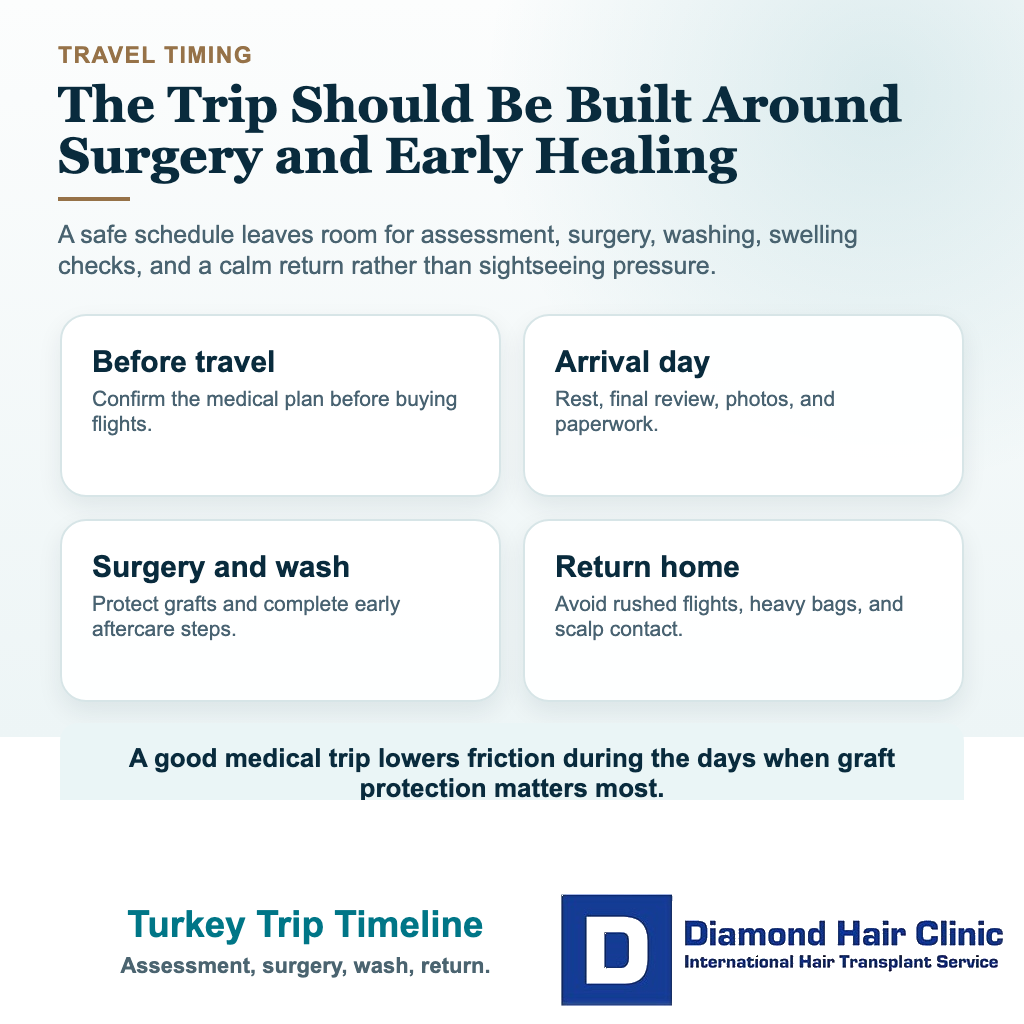
A simple travel rhythm is to arrive in Istanbul on day 1, rest, and avoid alcohol or unnecessary stress. Day 2 is usually surgery day. Day 3 is for hotel rest and graft protection. Day 4 can include a post operative check, first washing if planned, donor bandage review, and a return flight if the clinic clears travel.
Packing for the trip
Pack for comfort and graft protection. The first days are not the time for tight clothing, heavy sightseeing, or anything that rubs the recipient area.
Items for your bag
Pack buttoned or zip front shirts for the first 10 days so clothing does not rub the grafts. Bring comfortable trousers, shorts, or sweatpants for the season, comfortable shoes or slippers for surgery day, passport and identity documents, any medical documents requested by the clinic, a phone charger, travel adapter, essential medication in original packaging, and a small checked suitcase if the clinic provides liquids that cannot be carried in hand luggage.
Bringing a hat
You can bring one for later travel, but do not wear a hat over fresh grafts unless your clinic specifically allows it. A loose hat at the wrong time is different from pressure, friction, sweating, or repeated adjustment. The early grafts mainly need protection from rubbing and trauma.
Patients who want a separate timing guide can read about wearing a hat after hair transplant.
Hand luggage limits
Hand luggage may be enough for some patients, but a checked bag is often more practical if the clinic provides shampoos, lotions, or liquids larger than airline cabin limits. Ask the clinic before you fly.
Combining a hair transplant with a holiday
You can visit Turkey before surgery if you want to enjoy the city, but the days after surgery are recovery time. The recipient area is still vulnerable, and the patient needs to avoid heat, crowds, sweating, alcohol, swimming, sun exposure, and anything that makes aftercare harder.
Light walking is different from tourism that keeps you outside all day. A short gentle walk near the hotel may be fine. Long sightseeing days, gym training, swimming, sauna, and sweating are different categories and should be delayed according to the clinic’s instructions.
Sightseeing timing
If sightseeing matters to you, plan it before surgery, not immediately after. After surgery, the goal is simple healing, washing, sleeping safely, and protecting the grafts.
Practical travel details
Turkey uses the +90 telephone code and GMT+3 time zone. The official currency is the Turkish Lira, although many medical tourism services quote in Euro or US Dollars. Most patients should notify their bank before travel, carry a card and some cash, check whether their phone plan works abroad, and understand how payment for a hair transplant in Turkey will be handled.
Turkey uses 220 V electricity and European style round prong plugs. Patients from countries using different plugs or voltage should bring the correct adapter.
All inclusive package contents
An all inclusive hair transplant package in Turkey usually includes the surgery, essential post-operative medication, airport hotel clinic transfers, and hotel accommodation. Some clinics include aftercare products or hair product sets. Flights are usually not included.
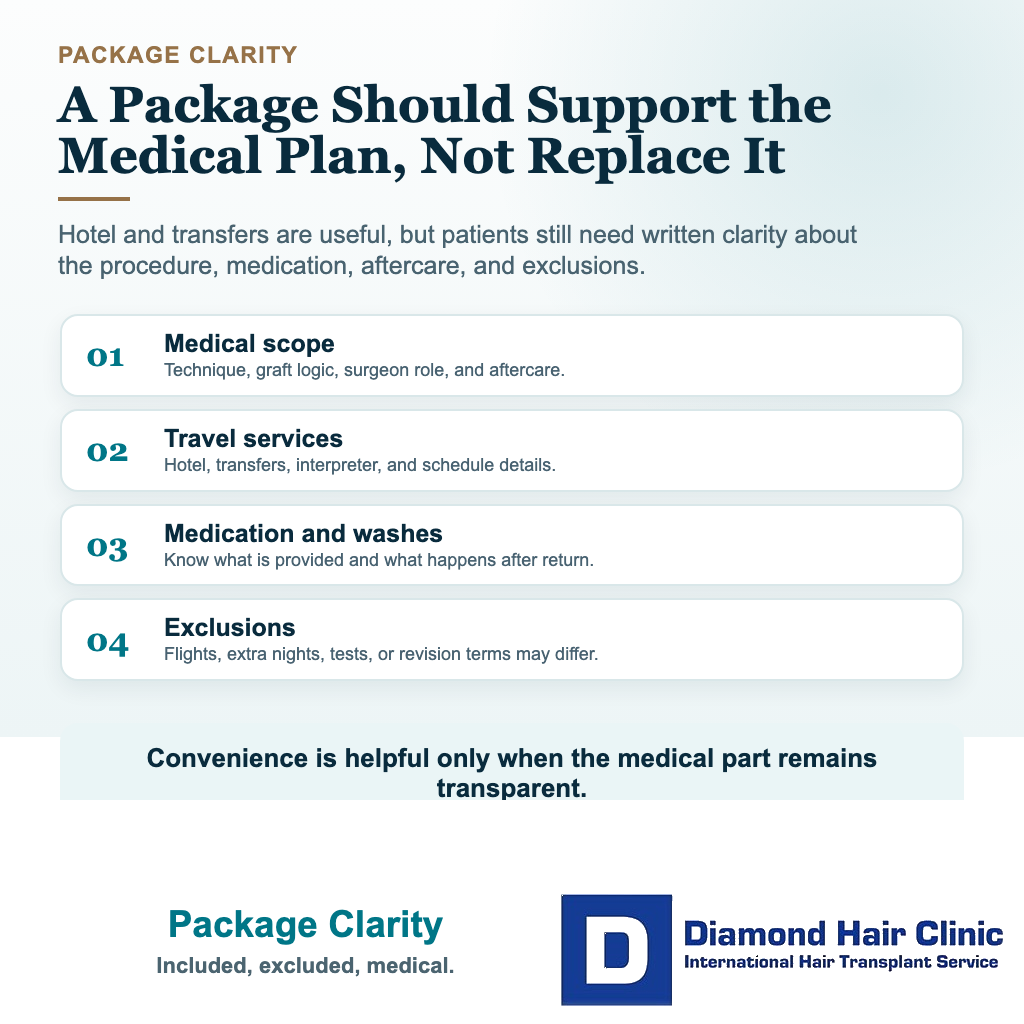
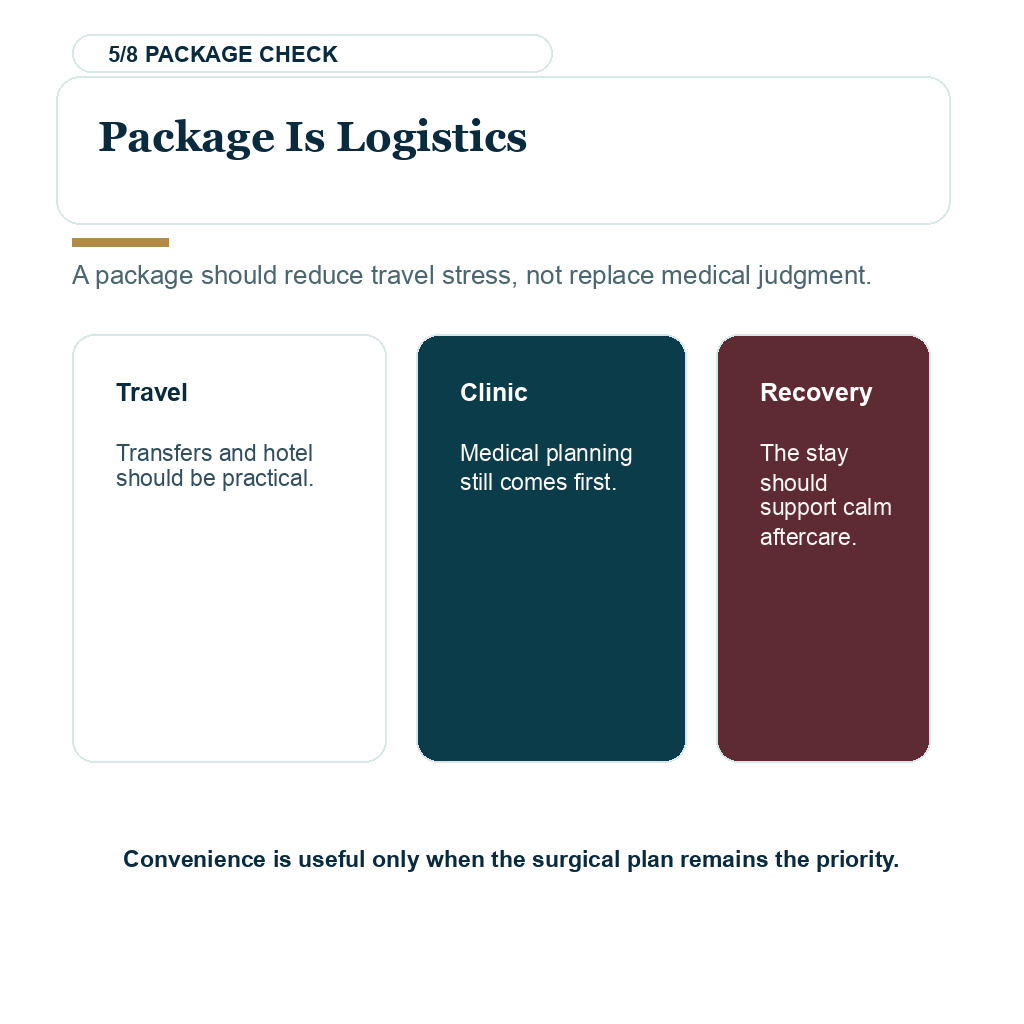
The package should reduce travel stress, not replace medical judgment. A good package should still allow the plan to change if the donor area, medical history, or expectations make a smaller operation safer.
Patients who want more detail can read about hair transplant packages in Turkey.
Reasons to choose an all inclusive package
It can make the trip easier because transfers and accommodation are arranged by a team used to post-operative patients. This is useful when the patient is tired, has a visible scalp, and needs to avoid unnecessary friction or confusion after surgery.
Without an all inclusive package
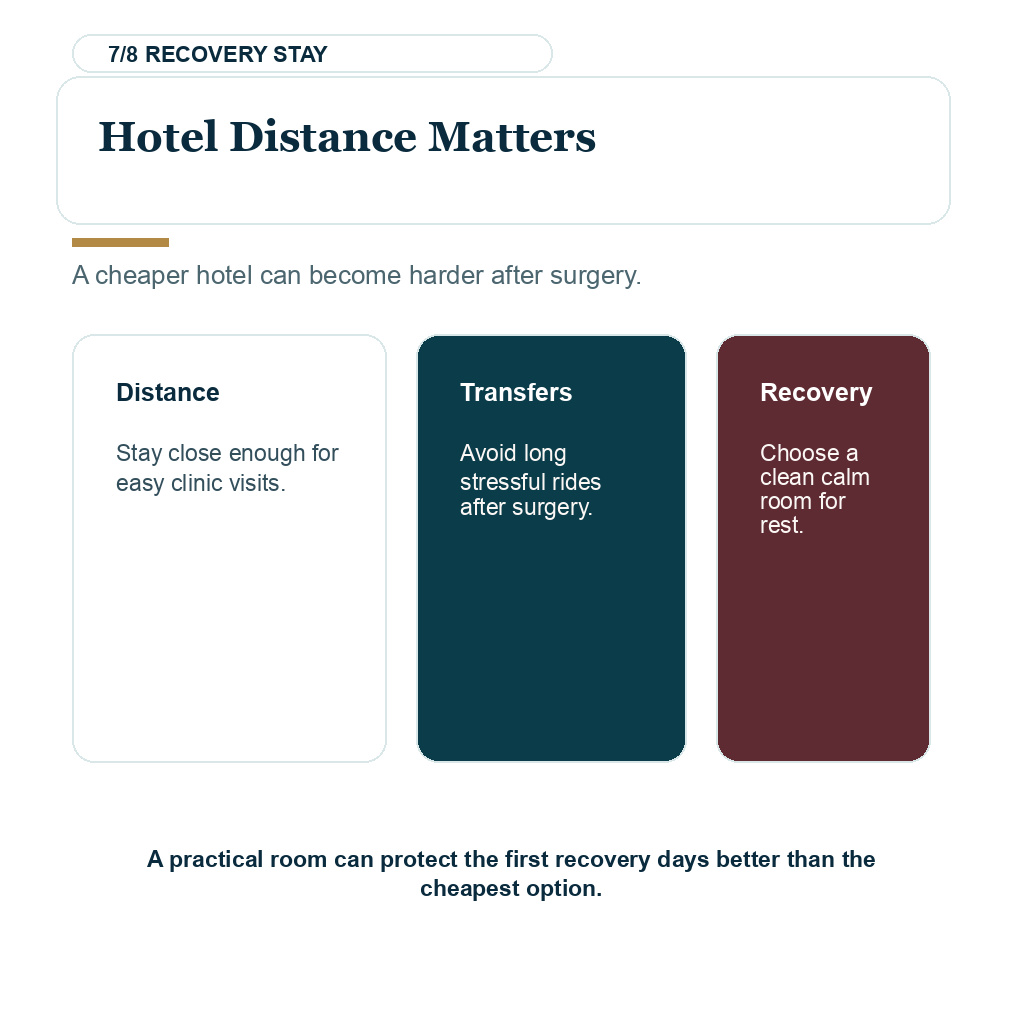
You can arrange your own hotel and transfers, but choose carefully. The hotel should be close enough to the clinic, clean, calm, and practical after surgery. A cheaper room far from the clinic may create more stress than it saves.
Flights and all inclusive packages
Flights depend on the patient’s departure city, airline, travel dates, baggage, and route. Patients normally buy flights separately after the clinic confirms medical suitability and date availability.
The 4 package content slides below split the travel and care checks into one image each. Swipe sideways, use the arrows to move one slide at a time, or use the numbered indicators under the image to jump to a specific slide.