



Waiting for the Right Surgeon Can Keep the Plan Medically Sound
You should wait for the right hair transplant surgeon if the faster option gives you a weaker plan, unclear surgeon involvement, an aggressive hairline, or poor donor protection. A few months of waiting is usually easier than years of living with an unnatural hairline, depleted donor area, or repair surgery.
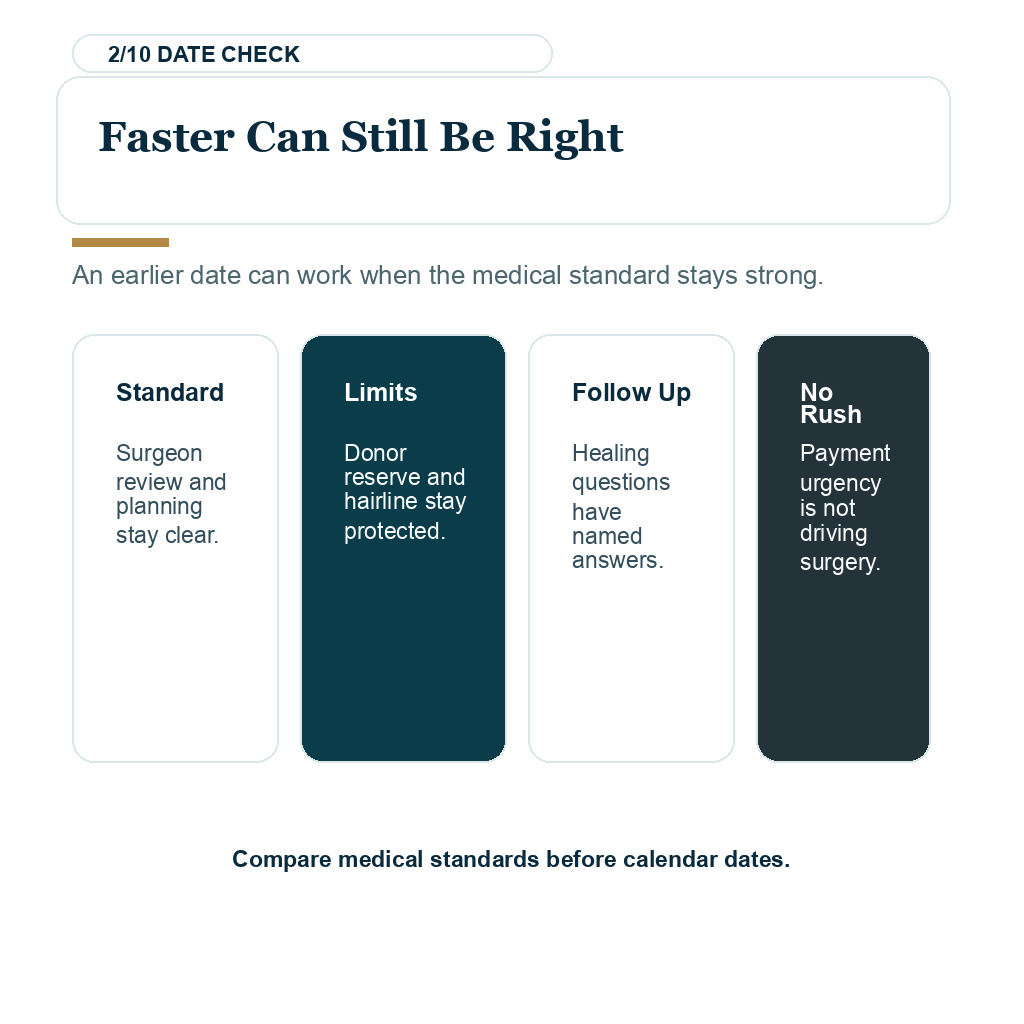
That does not mean waiting forever is always the answer. If another clinic can offer the same medical standard, clear surgeon responsibility, realistic planning, and proper aftercare, an earlier date may be reasonable. I mainly look at whether the earlier date still protects your donor area, hairline, and future hair loss pattern.
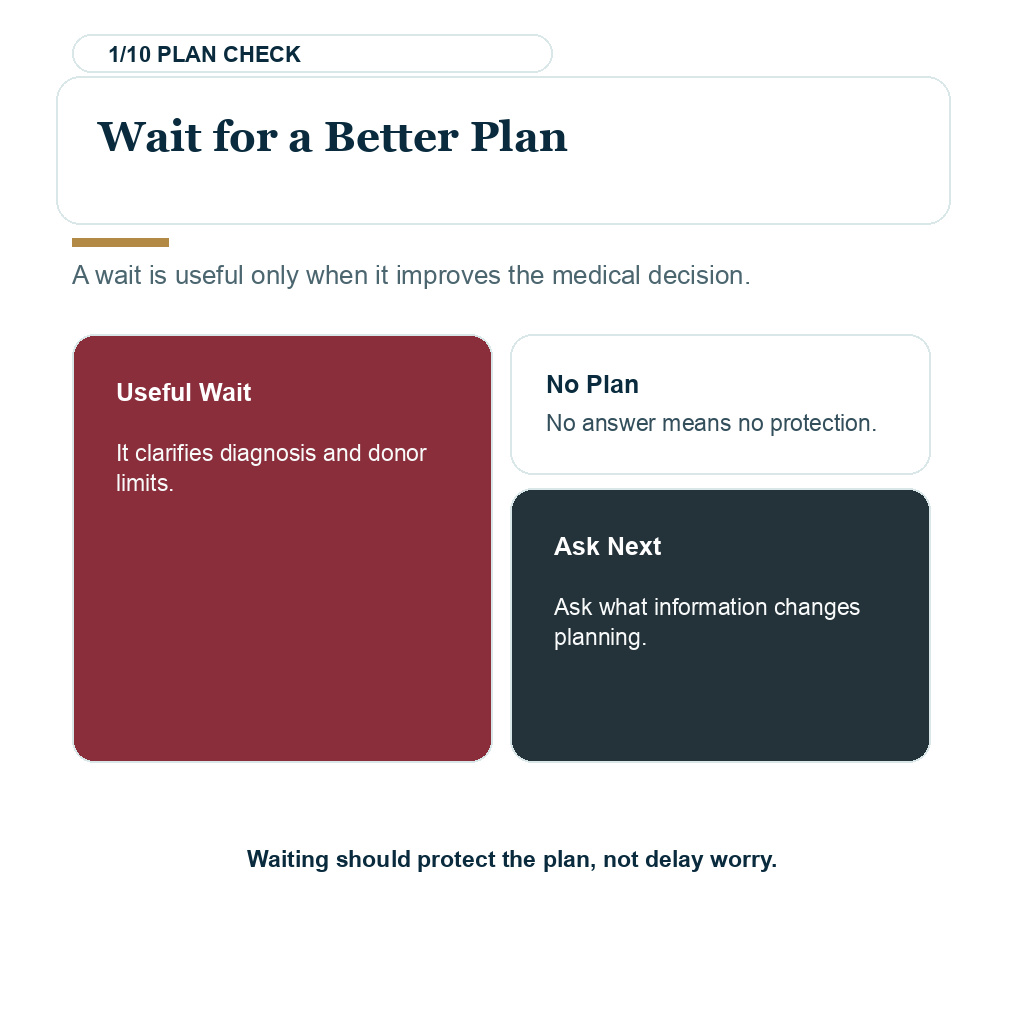
Waiting only helps when it improves the decision. It should give time for better diagnosis, medical stabilization, direct surgeon review, donor measurement, or clearer planning. Waiting without a plan is just anxiety stretched over more months.
A good consultation should make the waiting period more useful, not simply longer. If you leave with a clearer reason for the graft range, a safer hairline option, a donor limit, and written roles for the surgery day, waiting has improved the decision. If you only receive another date and another price, the uncertainty has not really been reduced.
When your shortlist is already narrow but you still feel pushed to decide, do not let the closest date choose for you. Put the plans side by side and look for the one that explains the donor limit, hairline design, and aftercare responsibility most clearly.
Waiting for a surgeon can feel difficult
Most people do not become impatient because they are careless. They become impatient because they are tired of thinking about their hair every morning. By the time surgery feels possible, a quick date can feel like relief.
That is the risky moment. A fast surgery date, confident coordinator, simple graft number, and attractive package can make the decision feel easier than it really is. But relief is not the same as a surgical plan. If payment pressure is building before the medical questions are clear, hair transplant booking pressure should be separated from real readiness.
I slow this moment down before surgery. Age, hair loss pattern, donor capacity, family history, hair caliber, medication history, expectations, and the long-term hairline goal must make sense together. Hair transplant candidacy is not paperwork. It is where many future regrets are prevented.
Waiting is safer than taking the earliest date when planning is unclear
Waiting is safer when the surgeon you trust understands your case better than the clinic that can operate tomorrow. A shorter wait has little value when the overall plan is weaker.
Compare the whole route to the result, not only the first operation date. An earlier clinic can still be the slower choice if its plan needs staged surgery but does not explain what each stage is meant to achieve, which area waits, or when the first result will be reviewed before another operation. Put the waiting period, expected number of sessions, recovery and review between them, and the endpoint for each stage on one line. A later first date can still be the clearer route when the full sequence is medically defensible.
This matters more when hair loss is active, age is young, the crown is involved, donor supply is limited, or there has already been one surgery. In these cases, the first plan must protect future options, not only improve the next photo.
If someone is young and losing hair quickly, lowering the hairline just because it looks attractive today can create problems later. I need to know whether hair loss is stable, whether medication is appropriate, and whether the donor area can support future needs. That concern also appears when age makes hair transplant timing uncertain.
Waiting should still include active preparation
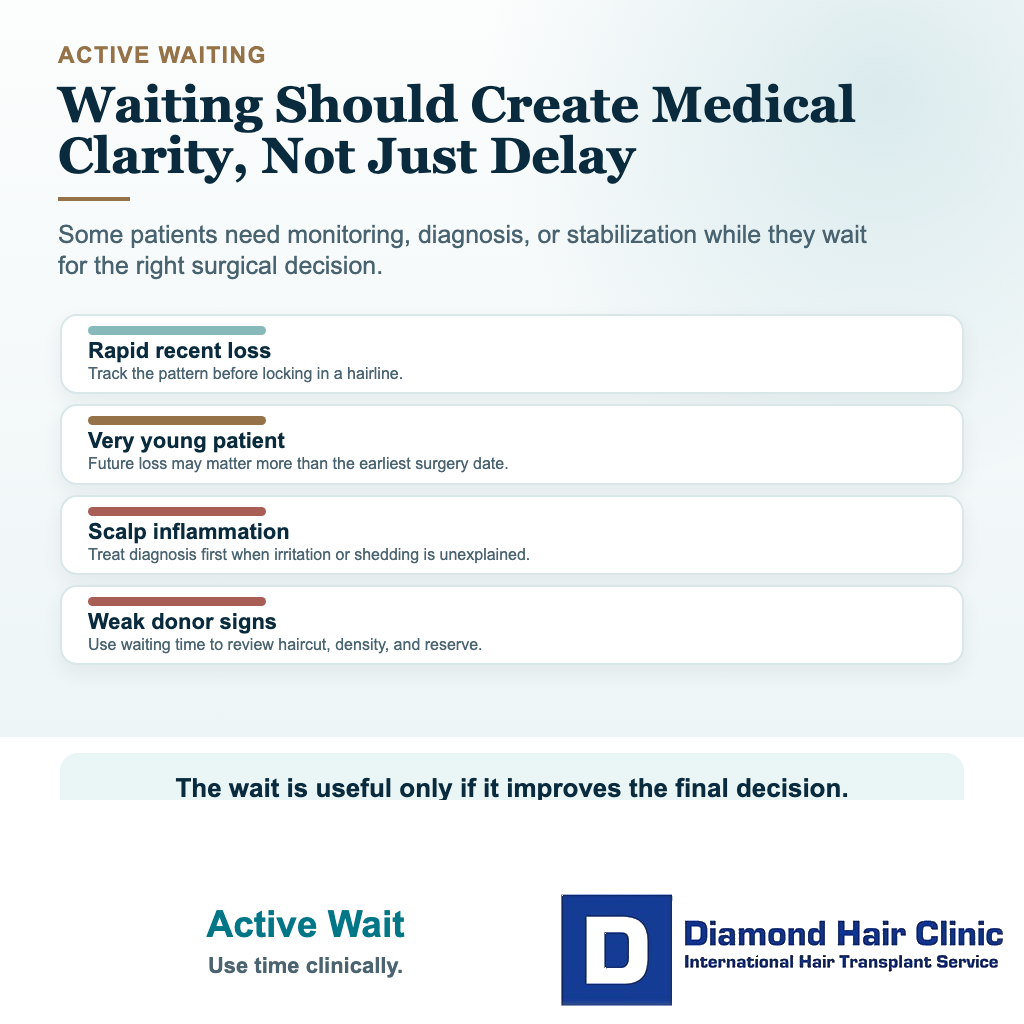
No. Waiting should be active. When hair loss is changing quickly, the crown is thinning, the donor looks weak, or the diagnosis is not clear, use the waiting period to improve the plan.
During that waiting period, build a consultation file that changes the next review. Use photos from the same angles, medication history, family pattern, donor questions, and result examples that show what you want to avoid.
Sometimes that means dermatologist review, medication discussion, standardized monthly photos, or monitoring whether the pattern is stable. Sometimes it means refusing surgery until inflammation, unexplained shedding, alopecia areata suspicion, or scarring alopecia concern has been checked.
Cancellation openings can shorten the wait, but they should not rush the consultation. Before joining a cancellation list, find out how much notice the clinic gives and whether you can arrange travel, time off, and aftercare within that window. Accept an earlier date only when the surgeon has reviewed your case, the plan is clear, and the written booking terms still suit you. If preparation would be rushed, keeping the later date may be the better choice.
A useful waiting period has a purpose. A vague delay with no diagnosis, no surgeon review, and no follow-up plan does not protect you. A careful clinic should be able to explain what information is needed before the final surgery date makes sense.
A faster clinic date needs careful judgment
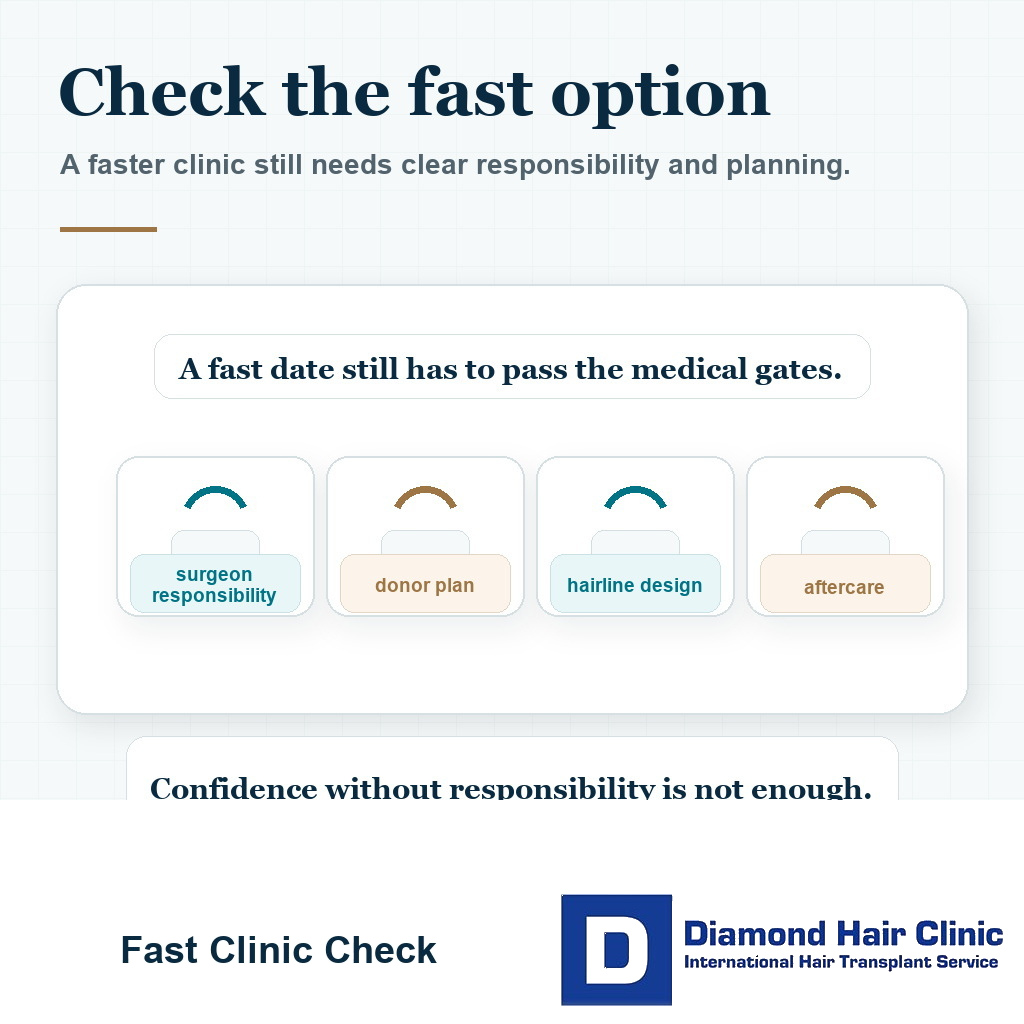
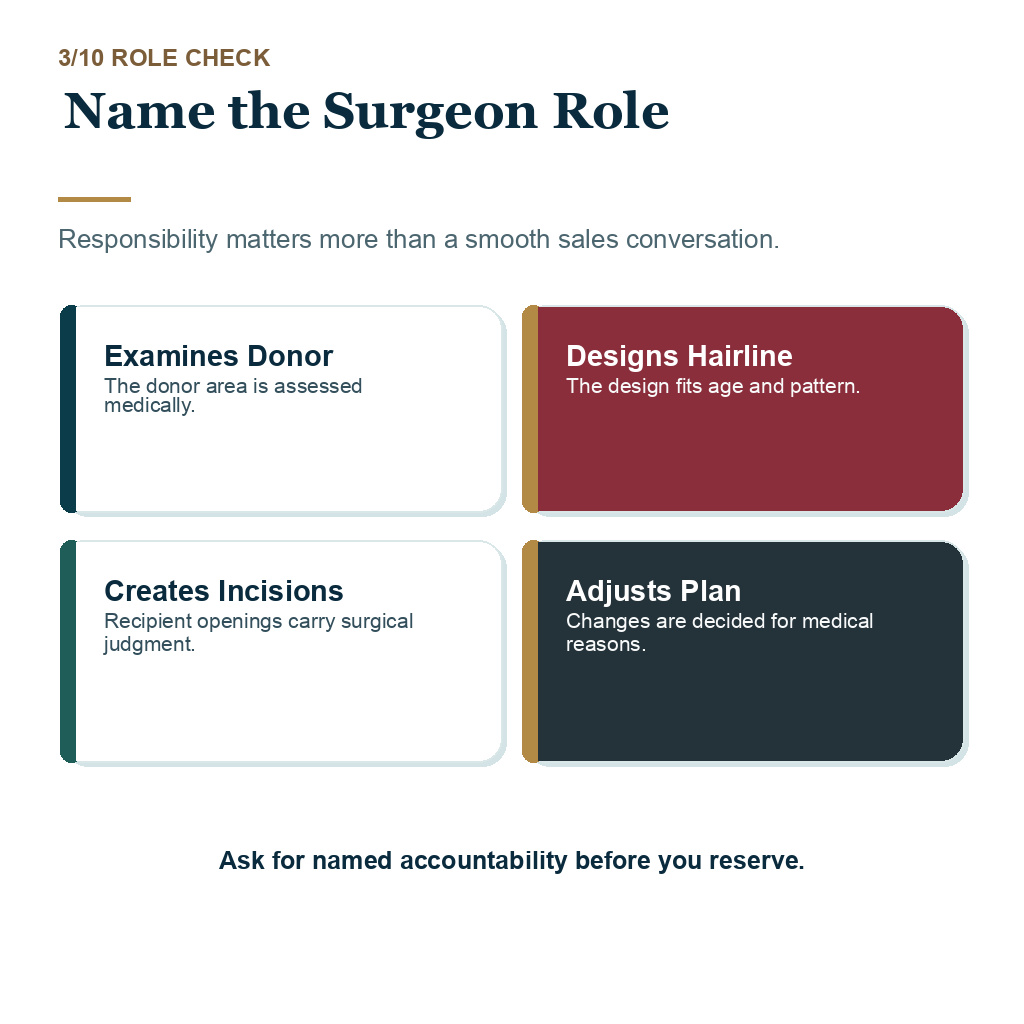
Start with responsibility. Who examines the donor area? Who designs the hairline? Who creates the recipient area incisions? Who decides whether the graft number should change? Who answers if healing or planning becomes complicated?
A fast date means very little if these answers are unclear. Many clinics advertise a doctor’s name, but the important work may be divided between changing teams. Before comparing dates, understand who performs the hair transplant surgery and who carries medical responsibility.
Technique names do not solve this. FUE, DHI, Sapphire FUE, and methods that do not require full shaving are tools. The value comes from how they are used and whether the surgeon understands your case. If you are comparing Turkey clinics from a distance, choosing a hair transplant clinic in Turkey should start with responsibility, not only availability.
Donor planning should guide the decision
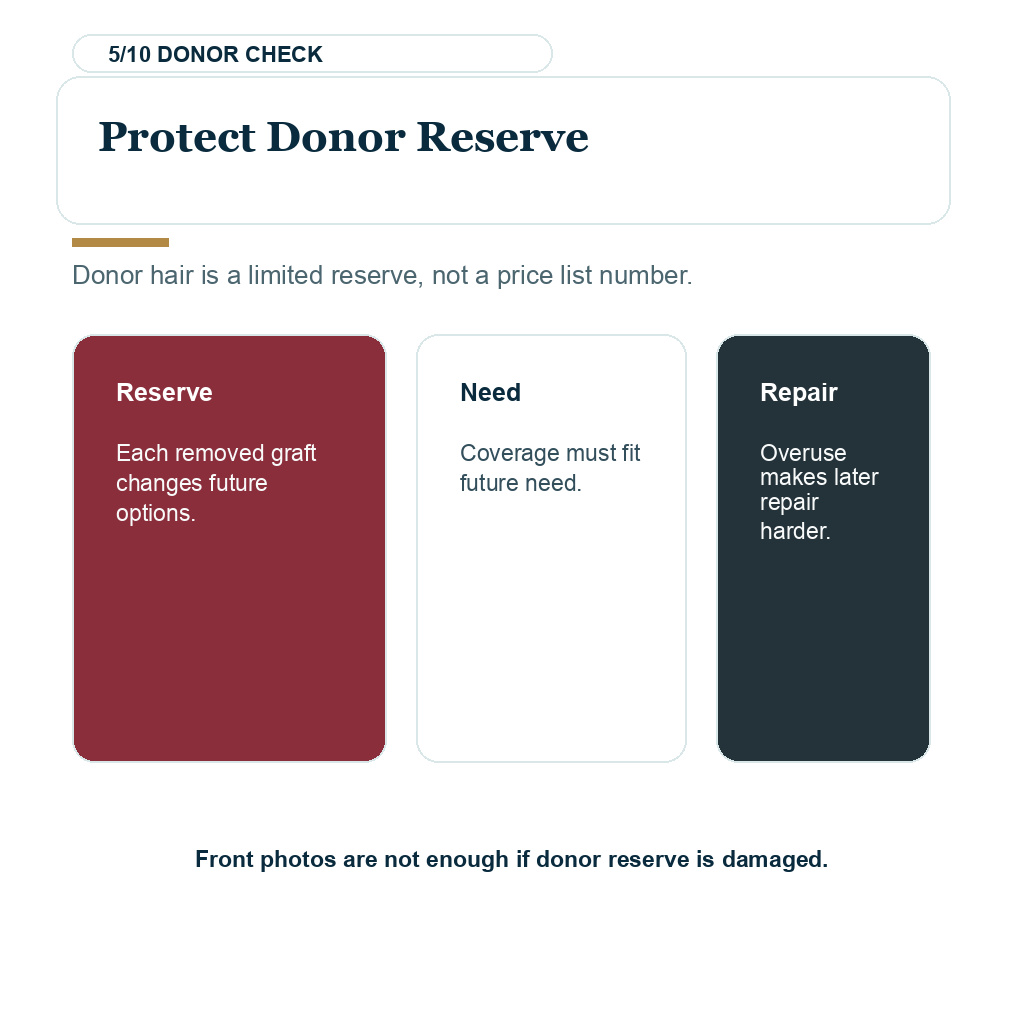
Donor hair is limited. Once grafts are removed, they cannot simply be replaced in that donor zone. A faster date is not helpful if it spends donor hair without a long-term plan.
Grafts are not price list units. They are a limited reserve. A case needing 1500 grafts is different from a case that may need several areas treated over time. A person who already had surgery has a different risk again.
Good donor planning connects the recipient area with what must remain for the future. A beautiful front photo is not a beautiful result if donor reserve has been overused. If a faster clinic talks only about a large number and not donor limits, donor overharvesting risk becomes part of the decision.
Read this review excerpt
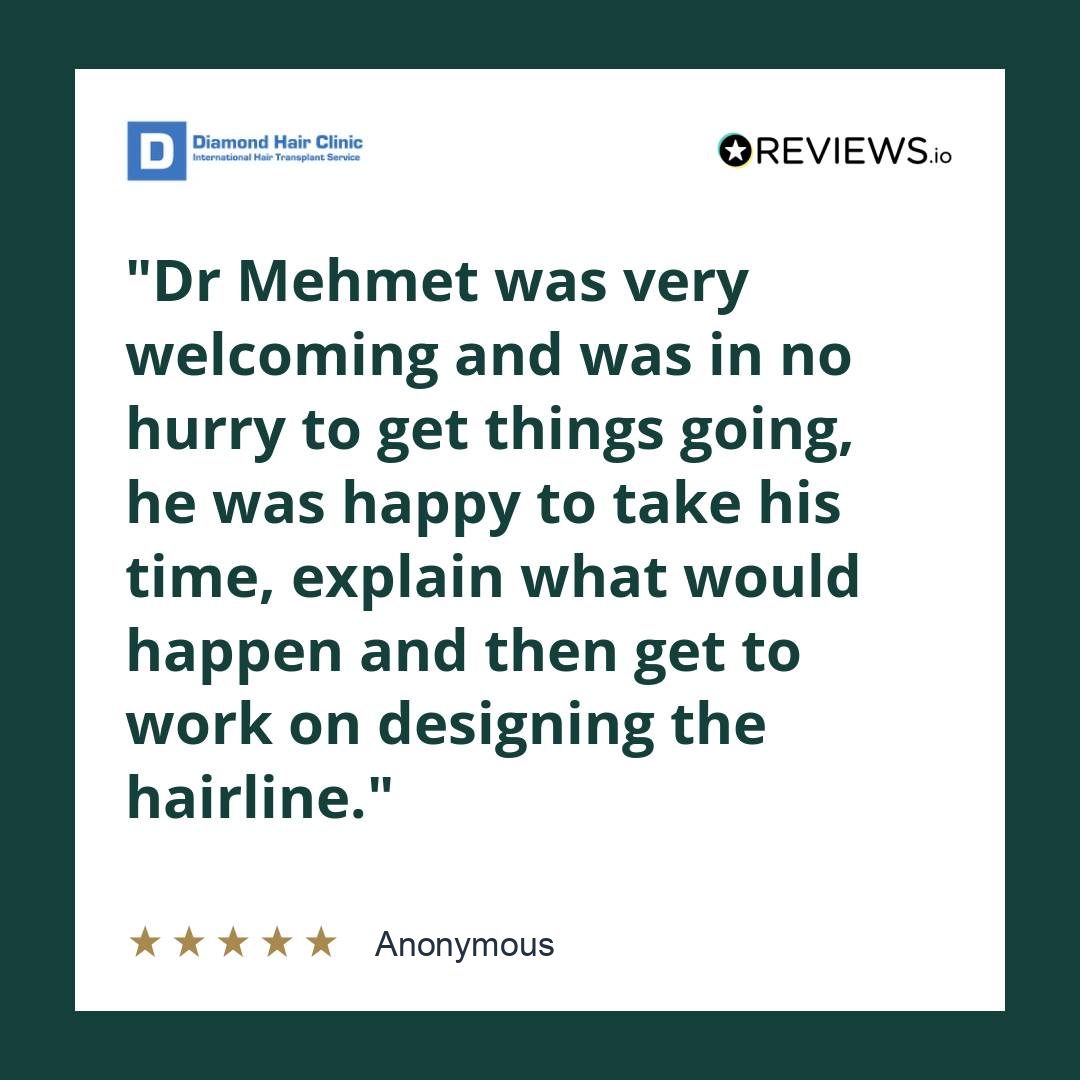
Dr Mehmet was very welcoming and was in no hurry to get things going, he was happy to take his time, explain what would happen and then get to work on designing the hairline.

Read this review excerpt
He answered my questions with attention to detail and I felt respected and taken seriously.
The lowest price should not decide the clinic
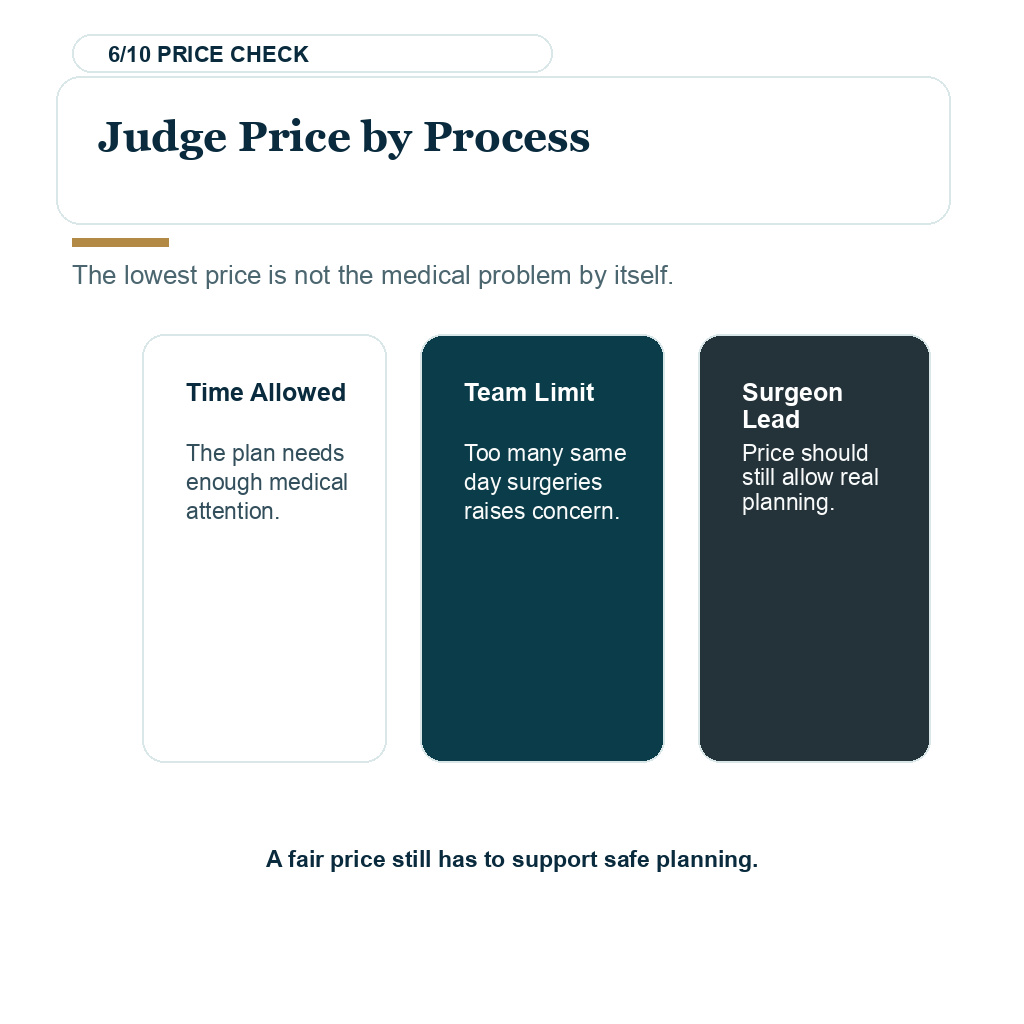
Price matters. Flights, hotels, time away from work, and surgery cost are real. But the lowest price can become expensive if the result is unnatural, the donor is damaged, the hairline is too low, or repair becomes necessary later.
Low price is not the medical problem by itself. I look at what process sits behind the price. Too many surgeries in one day, unclear doctor involvement, rushed planning, and graft promises made for sales can turn a cheap date into a costly decision.
When I review hair transplant cost in Turkey, I connect the price to medical responsibility. A fair price is not always the highest price, but it must allow enough time, trained staff, proper tools, follow-up, and surgeon-led planning.
Travel surgery needs a follow-up plan
Traveling for surgery can be reasonable when the clinic is serious, the surgeon is involved, and communication is clear before and after surgery. Many people travel because the best option for their case is not in their own city.
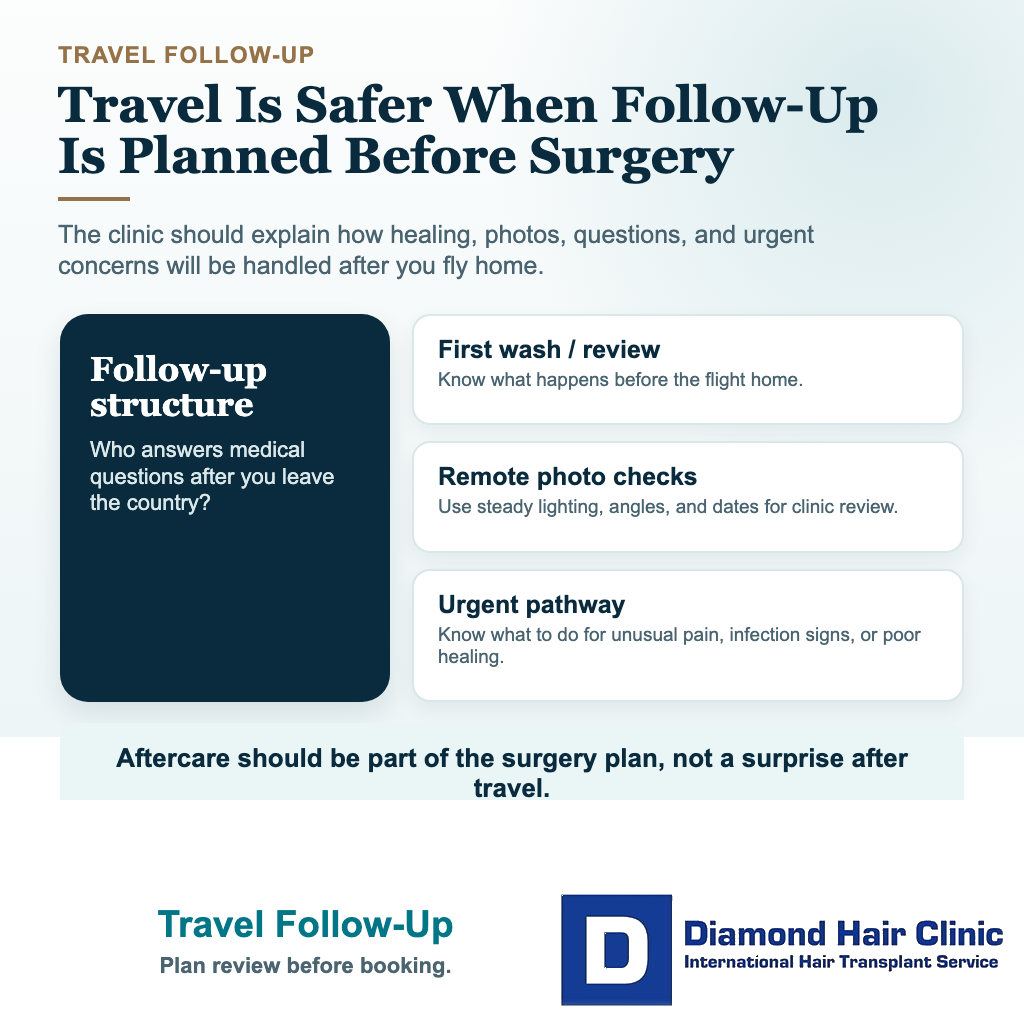
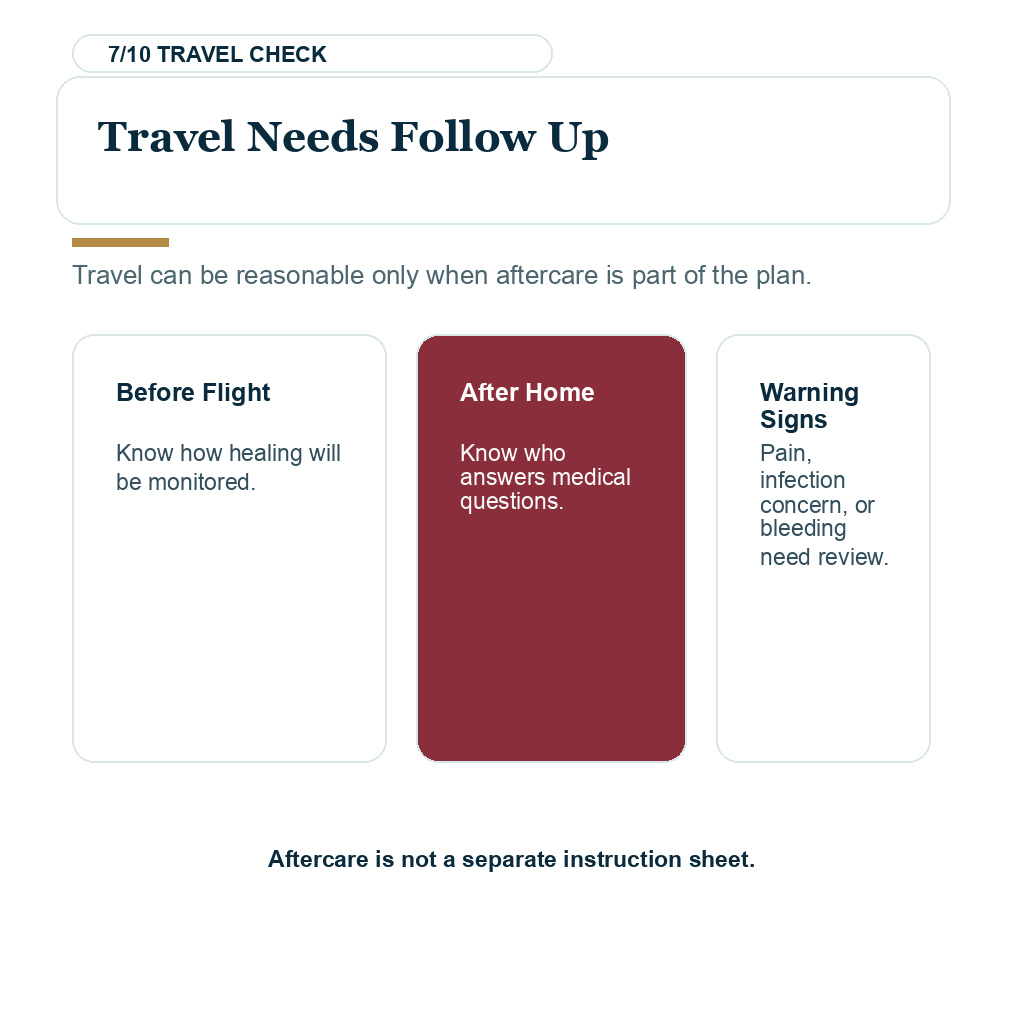
Travel must not remove follow-up. Before reserving a date, know how healing will be monitored, who answers medical questions, and what happens if there is unusual pain, infection concern, swelling, bleeding, or poor healing after you return home.
Aftercare should be reviewed before surgery, not after the flight home. Hair transplant aftercare is part of the surgical plan, not a separate instruction sheet.
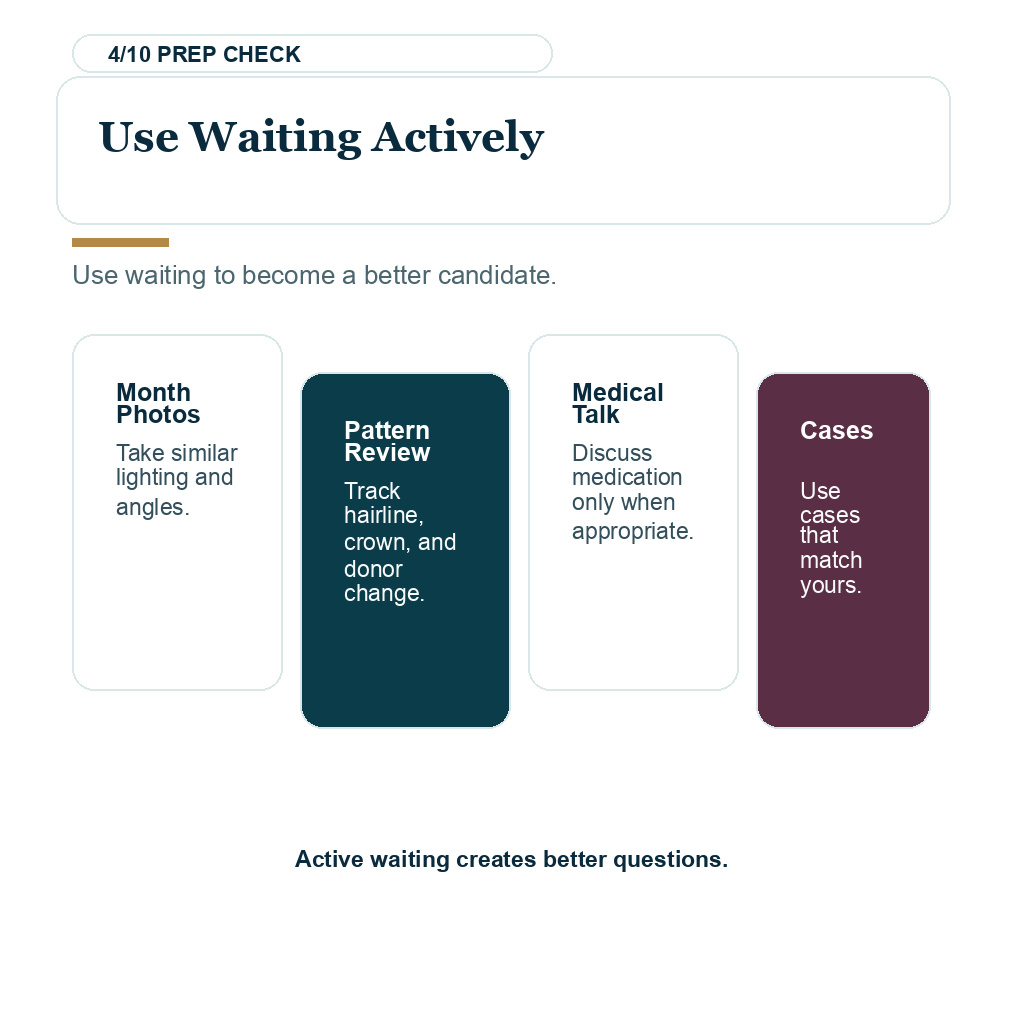
Use the 10 surgeon wait planning slides below to decide whether waiting protects the plan, whether a faster date still has proper responsibility, which proof to collect, how donor reserve changes the decision, which payment details matter, and when impatience is becoming pressure. Swipe the carousel, use the arrows one step at a time, or choose a number below the image to jump to that point.
Preparation while waiting for the right surgeon
Use the waiting time to become a better surgical candidate, not a more anxious shopper. Take consistent photos every month in similar lighting. Track whether the hairline, midscalp, crown, and donor area look stable or changing. If medication may be appropriate, discuss it instead of deciding from fear.
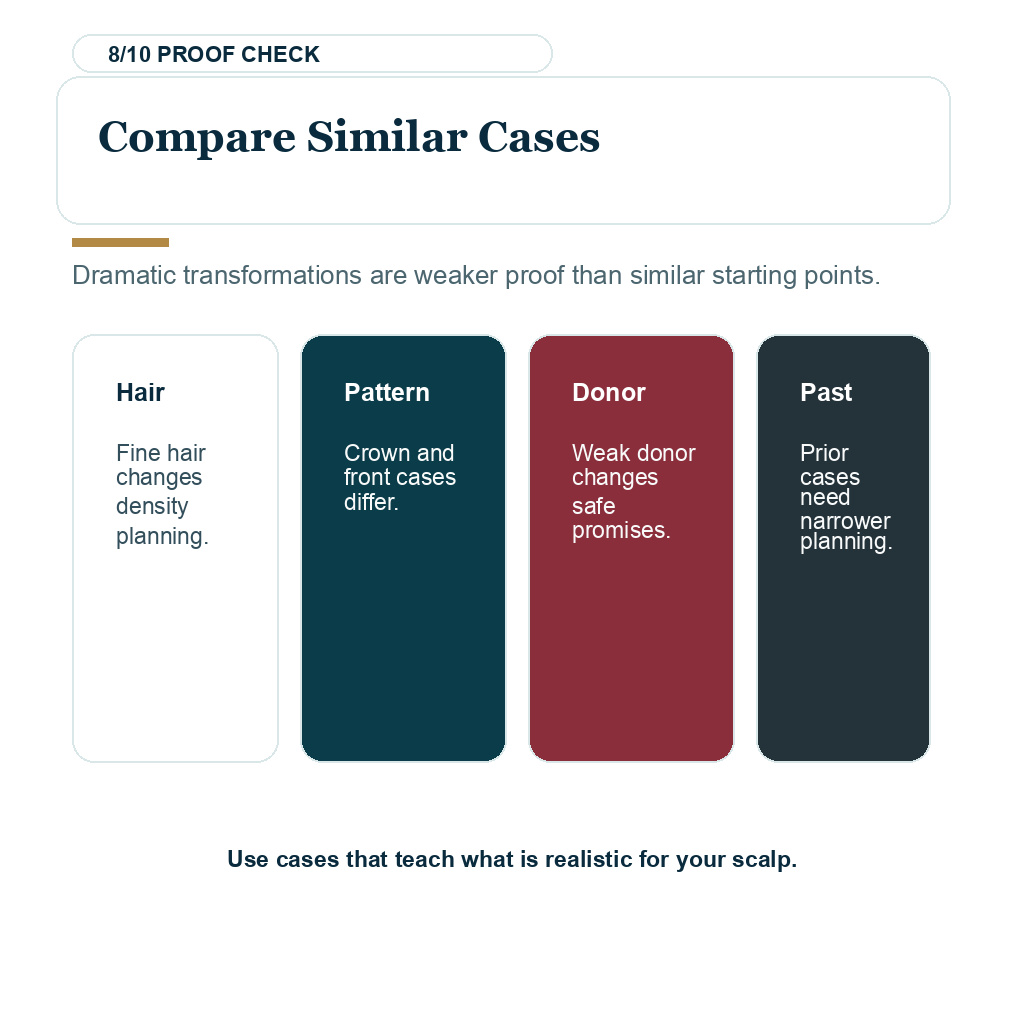
Study cases that resemble your pattern, not only dramatic transformations. Fine hair, diffuse thinning, weak donor supply, crown loss, and previous surgery all need different expectations. The best comparison is the case that teaches you what is realistic for your scalp.
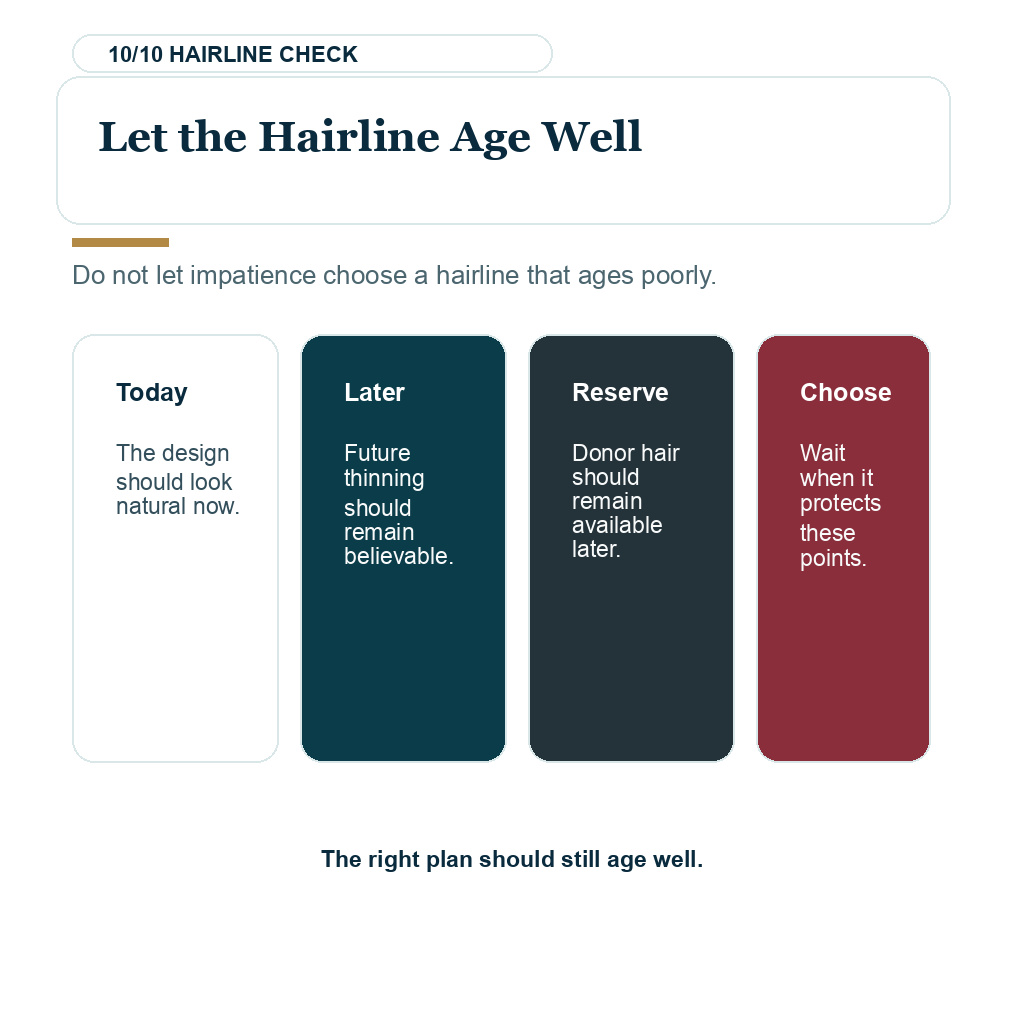
Think about what will still look natural as you age. A hairline that feels slightly careful today may protect you from looking artificial later. Hairline design should respect the face now and the likely pattern later.

Key questions before reserving a date
Before reserving, the consultation role, final plan responsibility, surgeon donor and hairline review, daily surgery volume, recipient opening responsibility, and authority to adjust the plan should be clear.
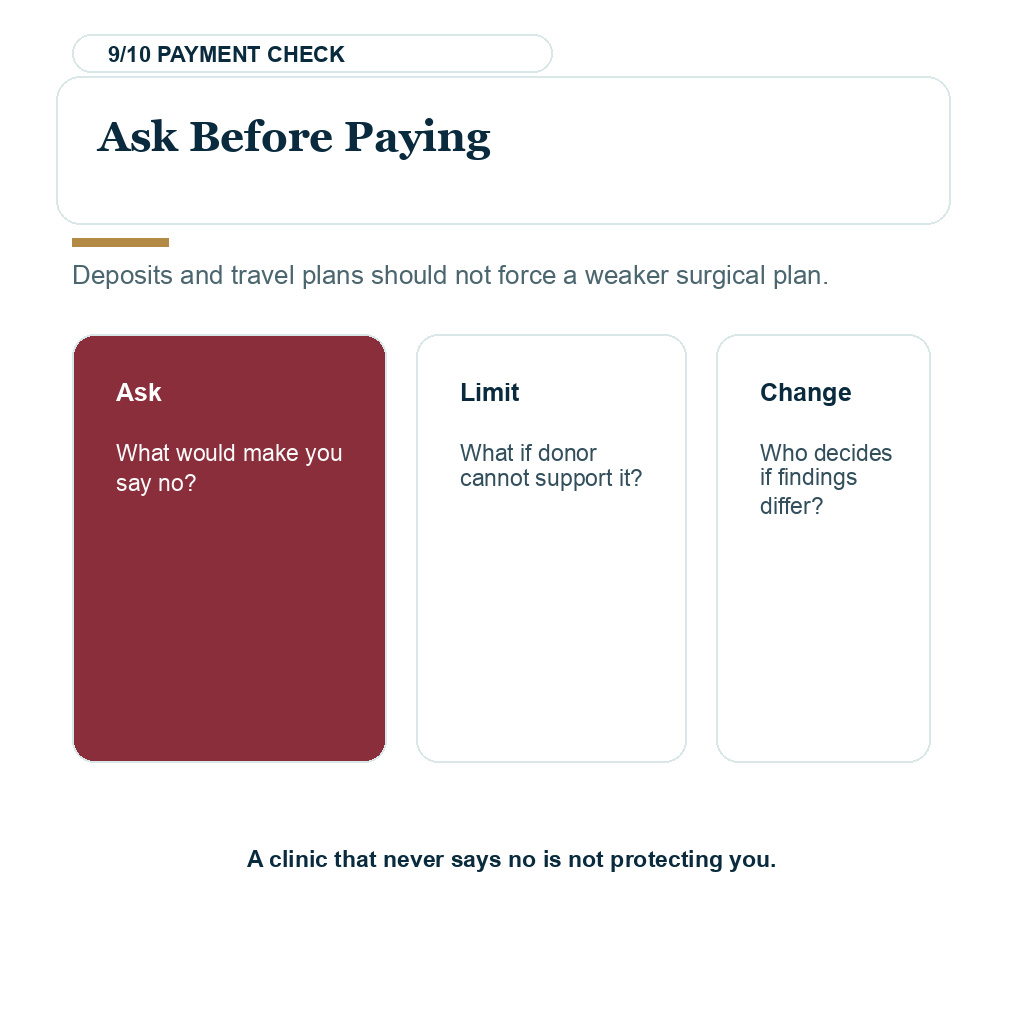
Ask what happens if the donor area cannot safely support the requested graft number. A plan should be reduced rather than forced. Ask what would make the clinic say no. A clinic that never says no is not protecting you.
If the answer comes mainly from a coordinator and not from surgical judgment, be careful. A coordinator can help organize care, but coordinator communication is not the same as a surgical plan.
Waiting is easier than correcting a rushed hairline
A few months can feel long when the mirror is bothering you, but a poor hairline can stay with you for years. When the surgeon you trust has a wait, use that time to stabilize hair loss, collect better photos, compare relevant cases, and clarify who is actually responsible for the surgery.
For a repair case, waiting can protect the donor supply that remains. A rushed second operation may spend grafts before the old direction, hairline position, skin texture, and crown priority are understood. A slower plan usually gives the repair decision more room than a fast date that only adds another layer to the problem.
Walk away when the surgeon role is vague, the design changes after arrival without a medical reason, or the clinic uses flights and deposits to pressure the choice. Impatience should not choose the hairline for you.
Read this review excerpt
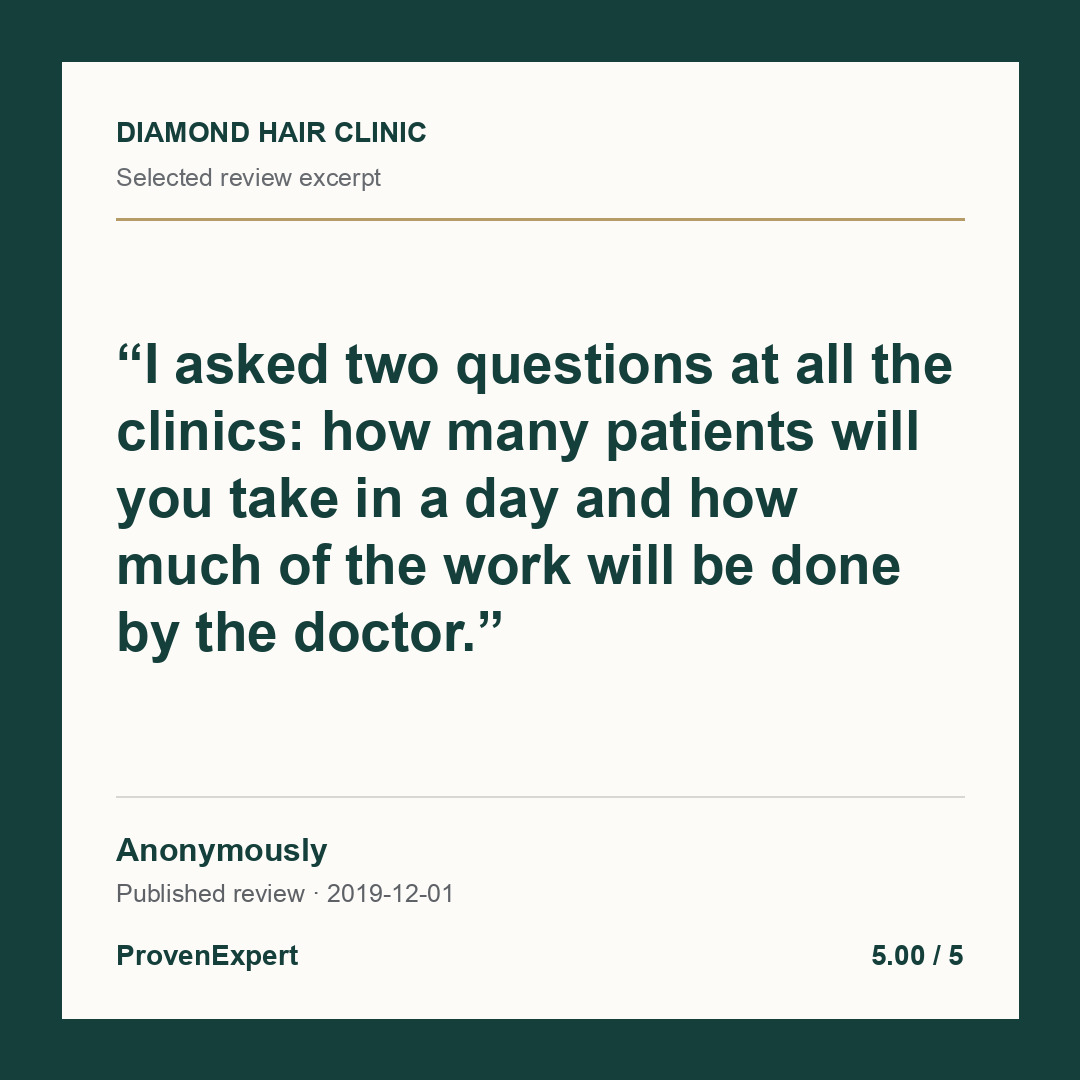
I asked two questions at all the clinics: how many patients will you take in a day and how much of the work will be done by the doctor.

Read this review excerpt
Dr Mehmet is really professional and really takes his time to try and perfect your hairline before actually starting the process.