



Surgery Anxiety, Normal Nerves, and Red Flags
It is normal to feel anxious before a hair transplant. A serious decision can make even a well prepared patient nervous. But the meaning of that anxiety matters, because nerves and warning signs lead to different decisions. If you feel nervous because surgery is close, recovery feels unfamiliar, or you are worried about the final appearance, that is usually understandable. If you feel anxious because the plan is unclear, the clinic is rushing you, the graft number keeps changing, or you do not know who is medically responsible for the operation, pause before hair transplant surgery and ask more questions before going ahead. That is the moment when second thoughts before hair transplant surgery need plan review, not reassurance alone.
Anxiety that settles after the plan is explained is different from anxiety that grows after every answer or turns into fear of losing control during surgery. If each reassurance creates a new fear, I slow the decision down before surgery day.
You should not cancel surgery only because emotion appears before the date. You also should not ignore anxiety when it points to an unclear or unsafe plan. A prepared patient understands why the operation is being done, what it can improve, what it cannot solve, and why the plan protects the future.
Patients feel anxious before surgery
Most patients do not become anxious because they are careless. They become anxious because a hair transplant feels permanent. The donor area is limited, the hairline will be visible every day, and the result will take months to judge. A patient may be excited in the morning and doubtful at night. I see this pattern often.
The emotional pressure is also stronger because many men have already spent years trying to hide hair loss. By the time they book surgery, they may hope the operation will give them peace immediately. That expectation is human, but it can become heavy. Surgery can improve the frame of the face and restore coverage, but it should not be treated as a rescue from every insecurity.
When I speak with a patient who feels anxious, I first try to understand the source of the feeling. Fear of the procedure itself is different from fear of an unnatural result, donor damage, or a clinic that has not really examined the case. These are different forms of anxiety, and they need different answers.
Ordinary nervousness can often be reduced with clear explanation. Anxiety caused by uncertainty needs a better consultation. Anxiety caused by pressure from a clinic needs distance. No one should be pushed into surgery while basic questions remain unanswered. Reassurance is not useful when it does not make the plan clearer. Before payment or travel, the answer should be written clearly enough that the hairline, graft number, surgeon role, and risk limits can be checked later.
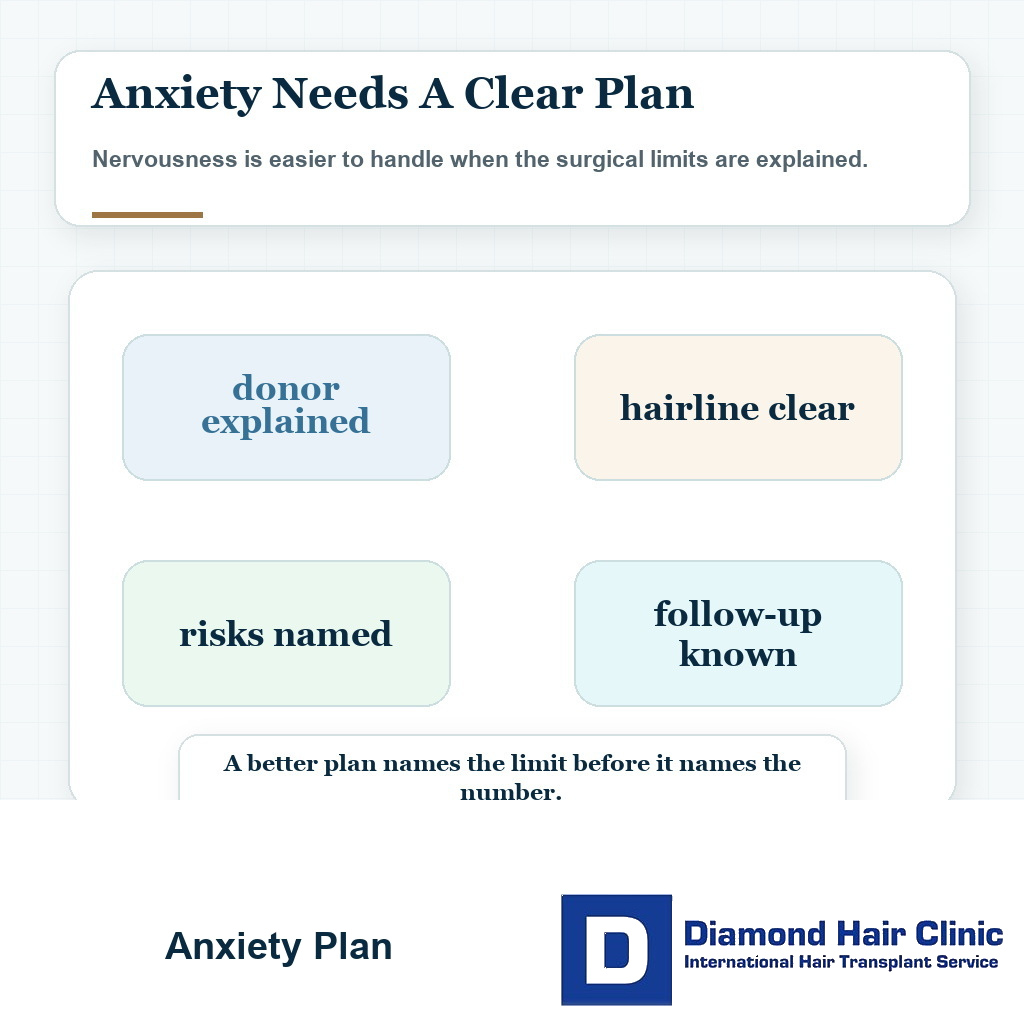
Normal nerves before surgery
Anxiety is usually normal when the plan is clear but you are reacting to the reality of surgery. You may know the surgeon, understand the design, accept the recovery period, and still feel nervous the week before the operation. I do not see that as a failure of preparation. I see it as the mind recognizing that the decision matters.
Normal anxiety often sounds like this in practice. The patient worries about sleeping the night before, wonders how the first days will look, or thinks about the long wait before growth begins. These worries are common because growth after a hair transplant is not instant. It requires patience, healing, shedding, and gradual change.
Anxiety can also make it harder to remember details during a consultation. If a patient is very nervous, writing down the questions before the final discussion and reviewing the answers again later is safer. A serious decision should not depend on what the patient can remember while stressed.
When the medical plan is sound, I slow the discussion down and walk through the parts that usually create fear. That means the hairline, recipient area, donor management, graft number, recovery instructions, and follow up. Anxiety often becomes easier to handle when the patient can see why each part of the plan is there.
Clear education is more useful than empty reassurance. Telling a patient not to worry is not enough. The patient needs to know what the surgery involves and what is being agreed to. When the details are clear, anxiety can remain present without controlling the decision.

Read this review excerpt
“On the day of the surgery, I was quite nervous, but Dr. Demircioğlu was present most of the time and helped to reassure me. We spent an hour discussing the hairline design, and together we finalized the best approach.”
Anxiety medication before the operation
If the anxiety is mainly about panic during a long procedure, share that with the clinic before the operation, not when you are already lying on the surgical bed. Hair transplantation is usually done with local anesthesia, and the day can be long. If the fear is specifically about injections, needle fear and hair transplant anesthesia planning explains why fainting history, movement risk, and sedation requests need review before surgery. For chair time anxiety, agree on a simple pause signal before the day starts. The plan should give the patient a way to speak up without sudden head movement. When anxiety makes speaking difficult, write one sentence that names the issue that would stop you proceeding, such as an unwanted hairline change or an unclear surgeon role. Keep it visible for the final review before premedication so nerves do not turn silence into consent.
Some patients need more pauses, clearer explanation before injections, or carefully planned calming medication before a hair transplant. This should be decided by the medical team, not improvised by the patient.
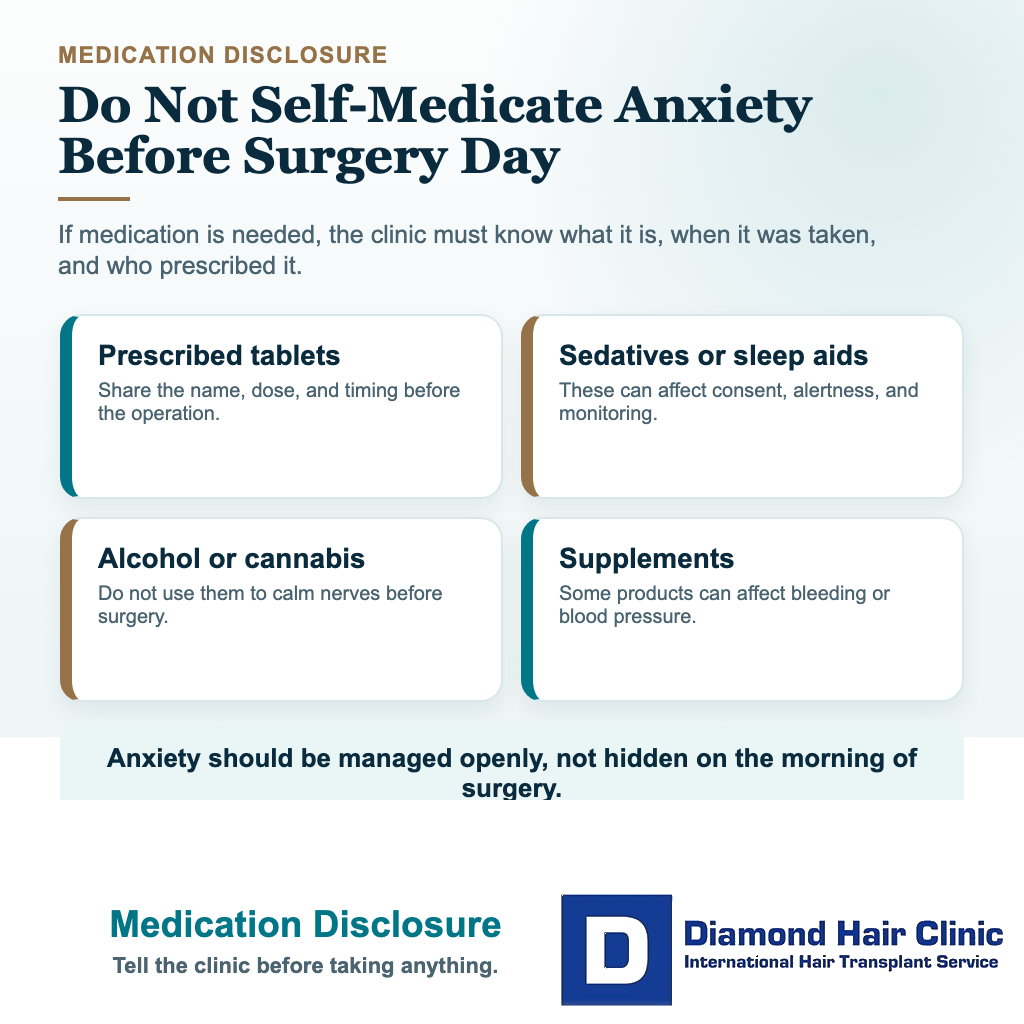
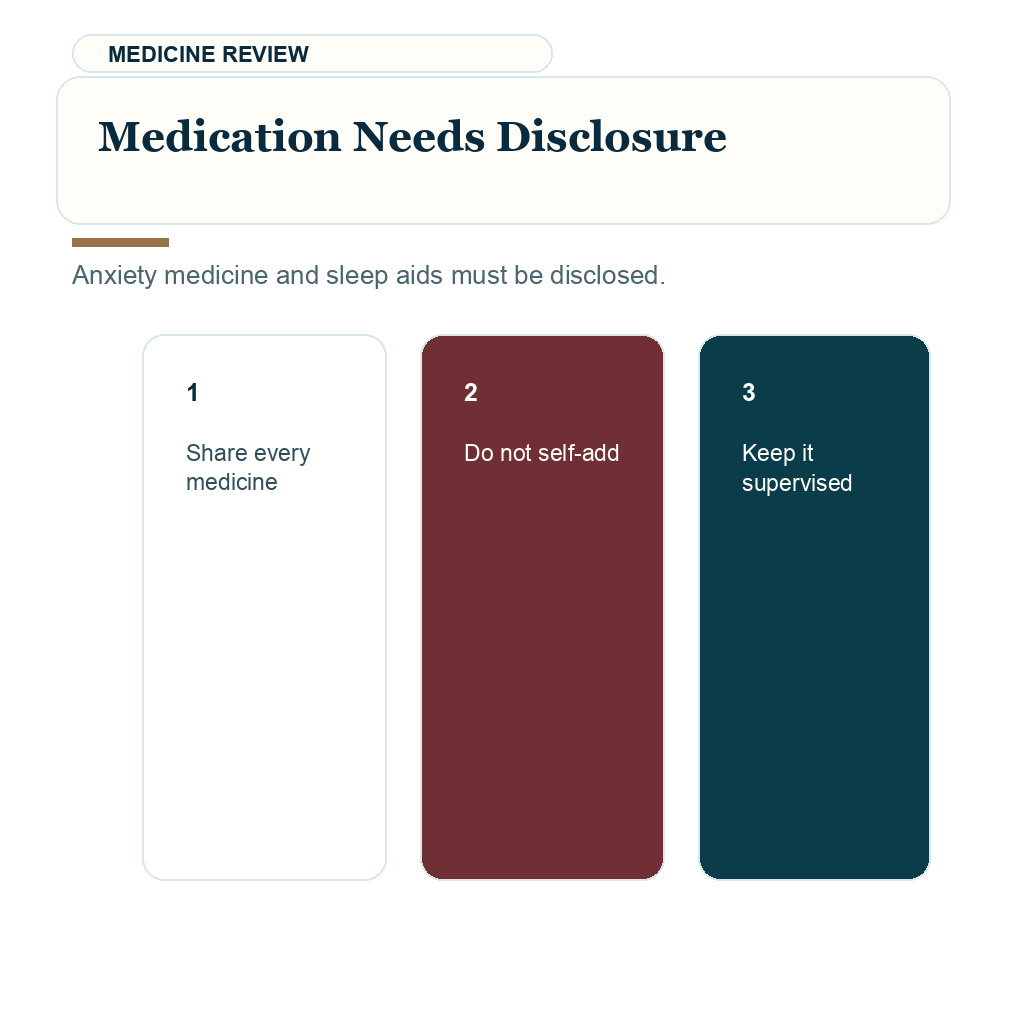
Do not take a sedative or sleeping tablet, alcohol, cannabis, a calming supplement, or extra medication on your own to force the surgery to feel manageable. A medicine planned with the medical team is different from taking an extra tablet or mixing substances because panic is rising. That can change breathing, blood pressure, alertness, and the way we interpret symptoms during the operation. It can matter even more in patients with sleep apnea, heart disease, antidepressant use, or blood pressure medication.
If anxiety makes the blood pressure repeatedly high before surgery, I do not treat that as weakness. I treat it as medical information. The plan may need more review, especially when a patient already has high blood pressure, heart history, or medication that affects circulation.
The safer approach is to tell me exactly what you take, what made you panic before, and what you fear most about the day. Then the medical plan can include the right timing, instructions, and monitoring. I take before surgery instructions seriously. Anxiety can be managed, but it should be managed openly.
Anxiety that should pause the operation
Anxiety needs more attention when it is connected to unclear medical information. If a patient is about to travel and still does not know who will design the hairline, who will create the recipient area, how the donor area was assessed, or why a certain graft number was chosen, the anxiety is not just emotional. It is a warning sign.
You should also pause if discounts, limited dates, repeated messages, or package language are pushing the decision forward too quickly. The consultation should leave you clearer, not more dependent on urgency. If the main reason to continue is fear of losing a price or a date, the decision is already under pressure.

Read this review excerpt
He was very thorough in every little detail and I never felt pressure to do anything I wasn’t sure of.
The timing should also slow down if anxiety is so strong that the patient cannot sleep, cannot absorb instructions, cannot describe the plan clearly, or feels pushed into surgery mainly to escape panic. That point does not mean the patient can never have surgery. It means the timing and support around the decision need more caution.
Anxiety can be useful when it sends you back to what should be clear before committing. Before surgery, you need to understand the goal, the limits, the recovery, the surgeon’s role, and the plan for future hair loss. If these are missing, waiting is not weakness. It is surgical judgment.
Delaying surgery is safer than entering the operation with a plan the patient does not understand. Delay can be frustrating, but it usually protects more than it costs. A rushed hair transplant can use donor grafts that cannot be put back.
Clarity before trusting the plan
A patient needs to know whether surgery is appropriate now, not only whether it is technically possible. These are not the same thing. Surgery may be possible in the narrow sense, but still unwise if the hair loss is unstable, the donor area is limited, expectations are unrealistic, or the patient is asking for a hairline that will not age naturally. I first ask whether the patient is a good candidate for a hair transplant.
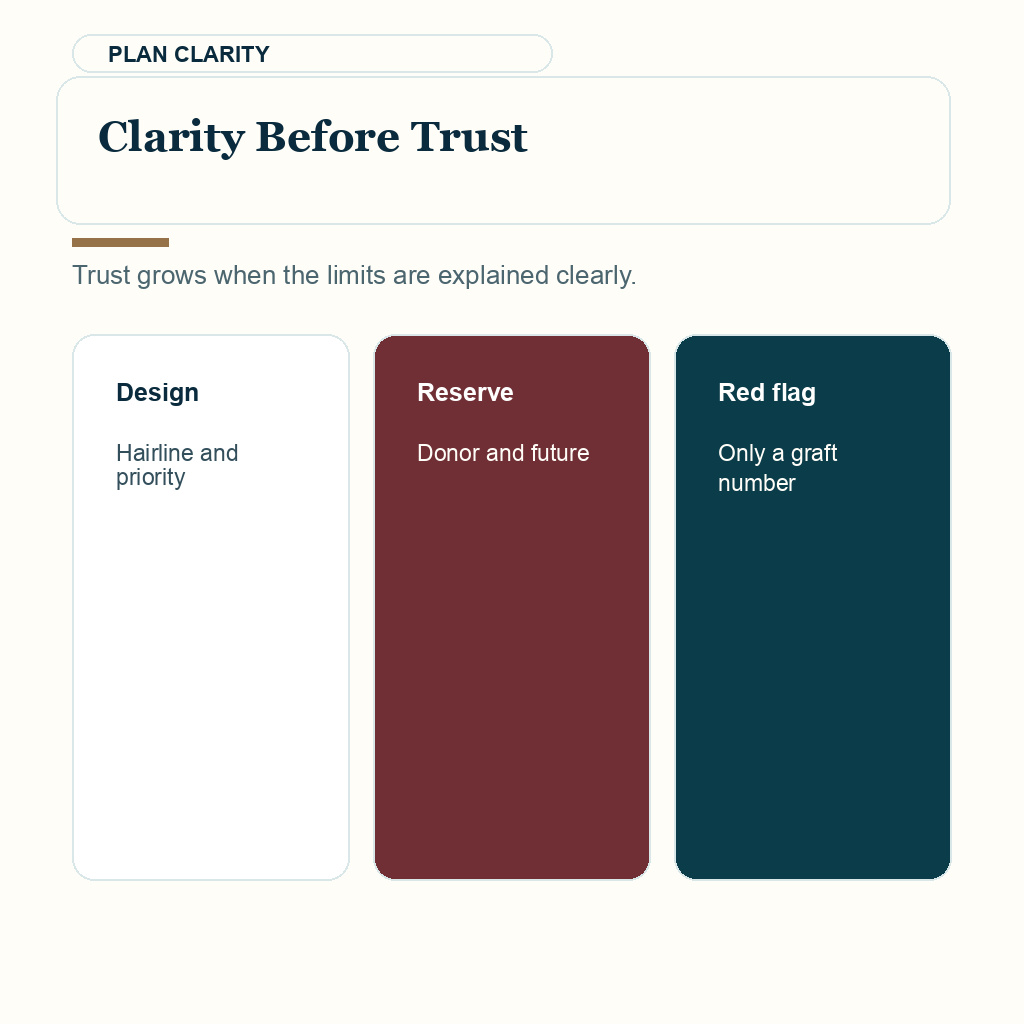
I treat the donor area like a lifetime budget. I do not use that phrase to make patients afraid. I use it because every graft removed today changes what can be done later. A patient who feels anxious because the clinic promises a very large session without explaining future needs has a valid concern.
The hairline plan should also be understandable. A low and dense design can look tempting in a photo, but it has to remain natural as the face matures and native hair changes. Natural hairline design is not only an artistic detail. It is a long term safety decision.
You should understand why some areas are left untreated in the first session. This can feel disappointing, especially when complete coverage is the wish. But if the crown, middle scalp, and frontal hairline all compete for the same limited donor supply, using every graft too early can make the future harder, not easier.
I explain the order of the recipient areas before asking a patient to accept the plan. The front, middle scalp, and crown do not always deserve equal priority in the first operation. Maximum coverage may sound attractive, but my duty is to protect a result that still makes sense years later.
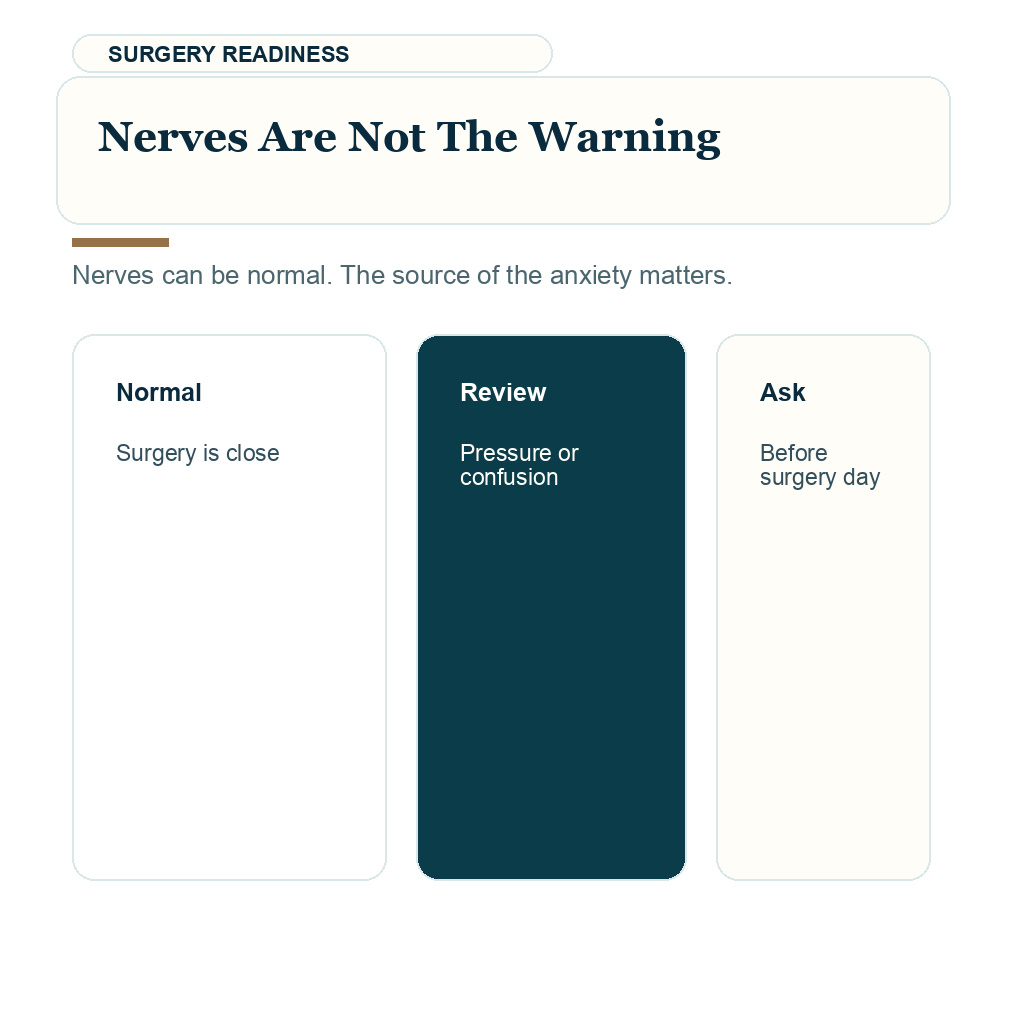
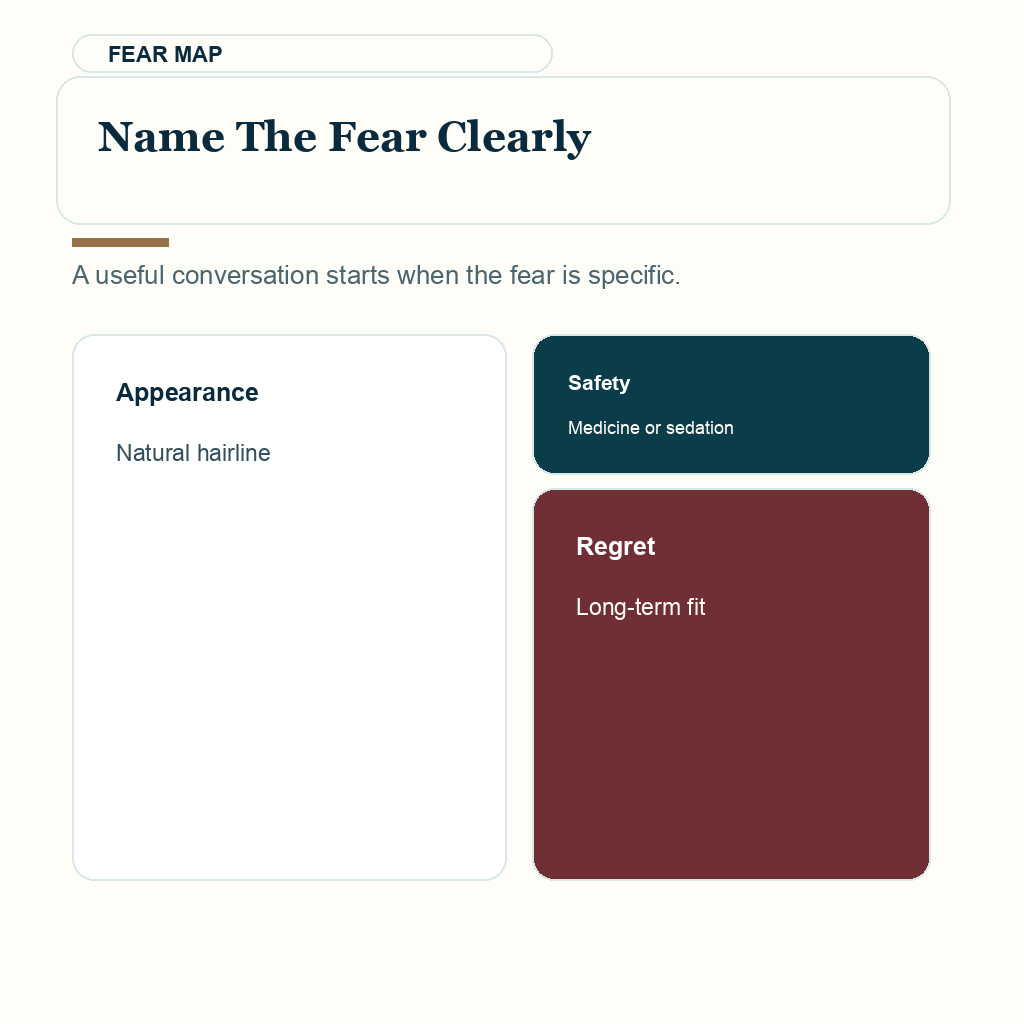
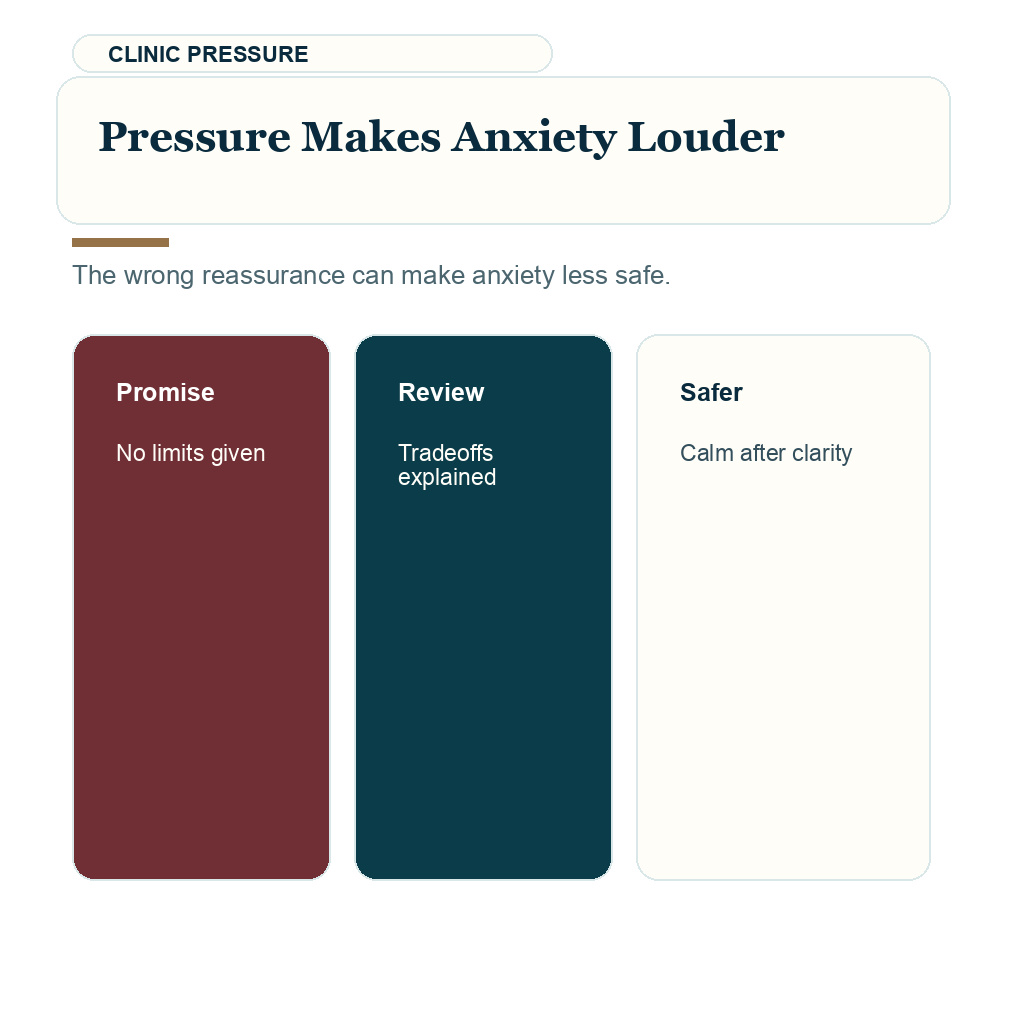
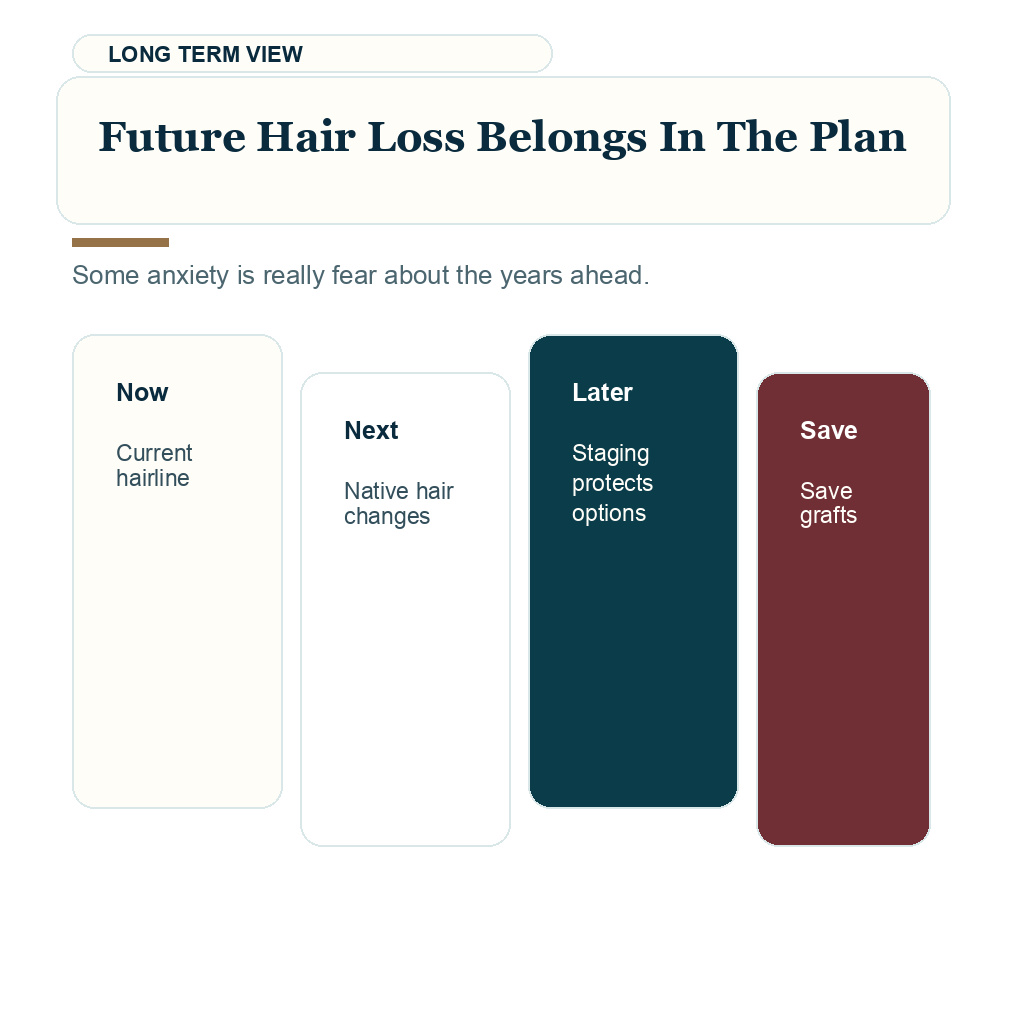
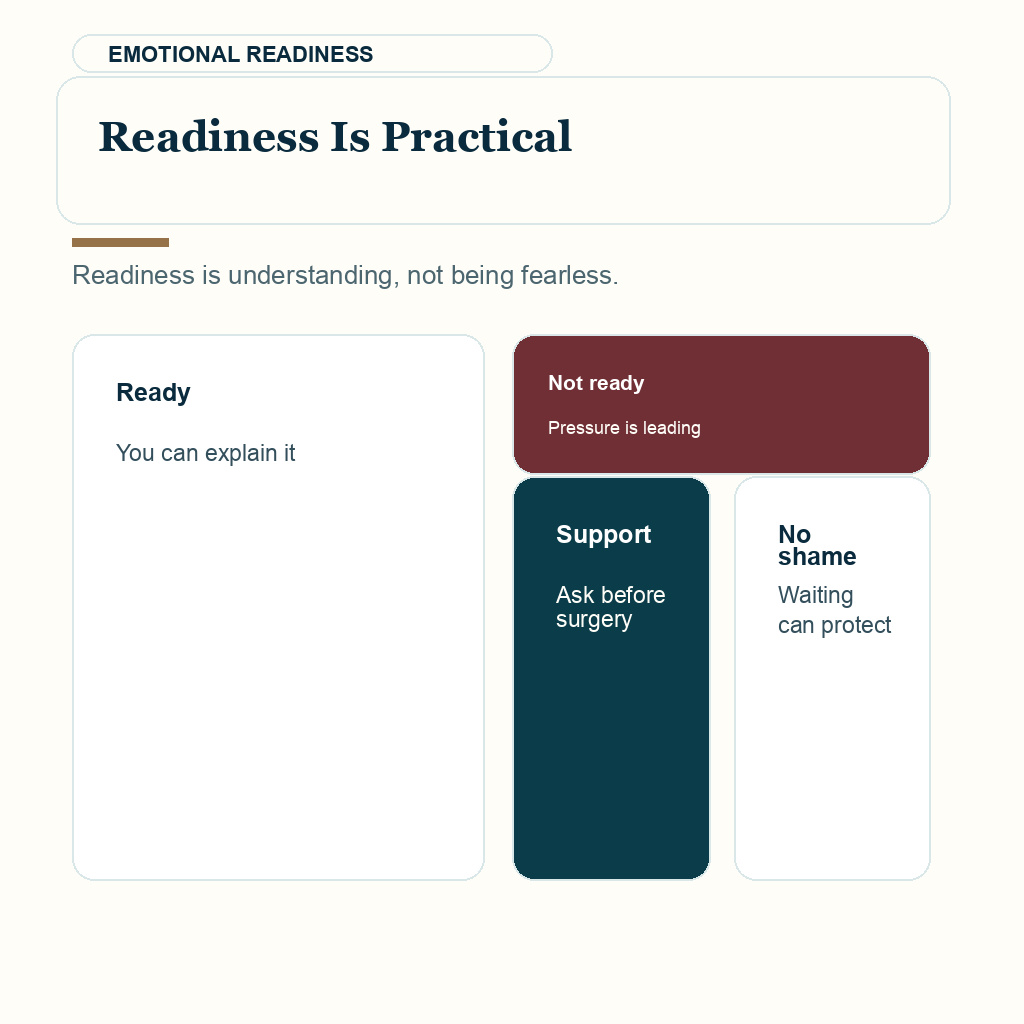
These 10 surgery anxiety slides separate normal nerves, medication disclosure, clinic pressure signs, planning clarity, future hair loss worries, emotional readiness, checks for the day before surgery, and reasons to pause. Swipe sideways, use the arrows one slide at a time, or choose a number below the image.



Clinic promises that make anxiety worse
Some clinics reduce anxiety in the wrong way. They do it by making everything sound guaranteed, fast, and easy. They promise a fixed number of grafts, full coverage, no visible signs, and perfection without explaining the limits. This can feel comforting for a short moment, but it often creates deeper anxiety later.
A useful answer includes limits. It explains why one area is treated first, why the crown may need a different strategy, why future hair loss matters, and why donor management cannot be ignored. If limits are avoided, the patient is not being protected from fear. He is being kept away from the truth.
When the plan comes mainly from a sales conversation, I slow the decision down. A coordinator should not give the surgical plan as if the medical part has already been solved. Coordinators can help with organization, but the surgical judgment belongs to the surgeon.
Be cautious when a clinic gives a final plan from a few photos. A plan made from photos alone can begin the assessment, but it should not finish it. Photos cannot fully show miniaturization, donor quality, hair caliber, scalp condition, or the real feel of the donor area.
If a promise sounds too certain, it is worth slowing down. I slow down around hair transplant guarantee claims. A proper consultation should reduce fear by making the plan clearer, not by making the outcome sound risk free.

Anxiety and emotional readiness
Sometimes, yes, and this deserves careful review. Hair loss can affect self image deeply, and many patients arrive with years of frustration behind them. But surgery should not be performed as an emergency response to shame, panic, or a bad week in the mirror.
Separate desire from desperation before making the decision. Desire means the patient wants improvement and understands the process. Desperation means the patient feels that life cannot continue unless surgery changes everything quickly. The second state can make the waiting period after surgery much harder.
If a patient has severe panic, unstable depression, uncontrolled anxiety, or is already struggling to cope with daily life, that needs review before surgery. That does not simply exclude surgery. It means the operation should be planned when the patient is stable enough to handle healing, shedding, waiting, and uncertainty.
For patients already using mood related medication, it is safer to say this clearly than to hide it. The safer discussion is explained in more detail on the page about having a hair transplant while taking antidepressants. The point is not shame. My aim is to make sure the plan accounts for the medication and why it was prescribed.
Anxiety about future hair loss
Fear about future hair loss is reasonable. A hair transplant moves hair. It does not stop the biological process that caused the hair loss in the first place. If the native hair is still thinning, the plan must account for that.
If a patient is young, losing hair quickly, avoiding medication because of fear, or showing diffuse thinning, the plan usually becomes more conservative. The right answer may be to stabilize first, treat the medical side when appropriate, or choose a design that does not consume too many grafts too early. In some cases, the wise decision is to wait.
Anxiety about timing should not be brushed aside. Surgery while hair loss is still active changes the plan even when it does not make surgery impossible.
In a stable patient, anxiety about future loss can be handled with planning. In an unstable patient, the same anxiety may be telling us that the timing is wrong. The difference is not the feeling itself. The difference is what the scalp, donor area, family pattern, and medical history show when they are assessed properly.
When a patient is afraid of needing another surgery later, I do not dismiss that fear. Many patients may need more than one plan across life, especially if hair loss progresses. My role is to use the donor area with discipline so the patient is not left without options.
Reviewing anxiety before the surgery date
If surgery is close and anxiety is rising, do not make a sudden decision based only on emotion. First slow the situation down and look at whether the essentials are clear. The deciding detail is whether the anxiety is normal before a serious operation, or whether it is pointing to an unfinished surgical plan.
You need to understand who is medically responsible, why the chosen area is being treated first, how the donor limit was judged, and why the graft number makes sense. Growth takes time, the early months can look uneven, and the realistic result may be different from the ideal result imagined before surgery.
If those points are clear, nervousness alone may not be a reason to stop. If several of them are still vague, delaying the operation and asking for a proper explanation is usually wiser than hoping the missing details will become clear on the day of surgery.
In some cases, waiting for the right hair transplant surgeon matters. Waiting can feel emotionally difficult, but it can protect the donor area, the hairline, and the future result. The right plan should make the patient steadier because it is medically coherent, not because someone said everything will be perfect.
Avoiding regret later
The strongest way to reduce regret is to make the decision before surgery with clear eyes. Regret often appears when the patient expected a complete transformation, accepted a rushed plan, chose an aggressive hairline, ignored future hair loss, or did not understand the limits of donor hair.
Some regret is actually early panic. The patient sees shedding, redness, unevenness, or a strange temporary look and thinks the surgery has failed. Recovery education matters here. But some regret is different. It comes from a plan that should have been questioned before surgery.
My page on hair transplant regret after surgery explains the subject after the operation. Before the operation, prevention starts with refusing a plan that depends on unlimited grafts, guaranteed perfection, or a hairline designed only for a photo.
Before surgery, the plan should still feel acceptable if growth takes patience, the first months look awkward, the crown cannot be fully covered, or future hair loss requires more planning. A decision that stays steady under those conditions is stronger.
Raise anxiety before surgery day
If you feel anxious today, do not treat the feeling as proof that surgery is wrong. Use it as a reason to review the plan carefully. If the surgeon is involved, the donor area has been examined, the design is natural, and the expectations are realistic, the anxiety may simply be part of making a serious decision.
If the plan is vague, rushed, or built mainly on reassurance, pause and ask for a clearer medical explanation. The patient needs to understand who performs the critical steps, why the graft number is appropriate, what happens if native hair continues to thin, and whether waiting would protect the future result better.
Forum replies can make a clear plan feel uncertain again. Bring the question back to who is responsible for the design, why the graft number fits, how donor reserve was judged, and what finding would make postponement wiser.
Anxiety before a hair transplant is normal. Confusion before a hair transplant is not acceptable. Nervousness can exist even with a good plan, but unanswered questions should not be carried into the operating room.
Clear consent matters more than speed, even when that means waiting. A good result is not only about the number of grafts. It is also about the decision, the plan, and the future we are protecting.