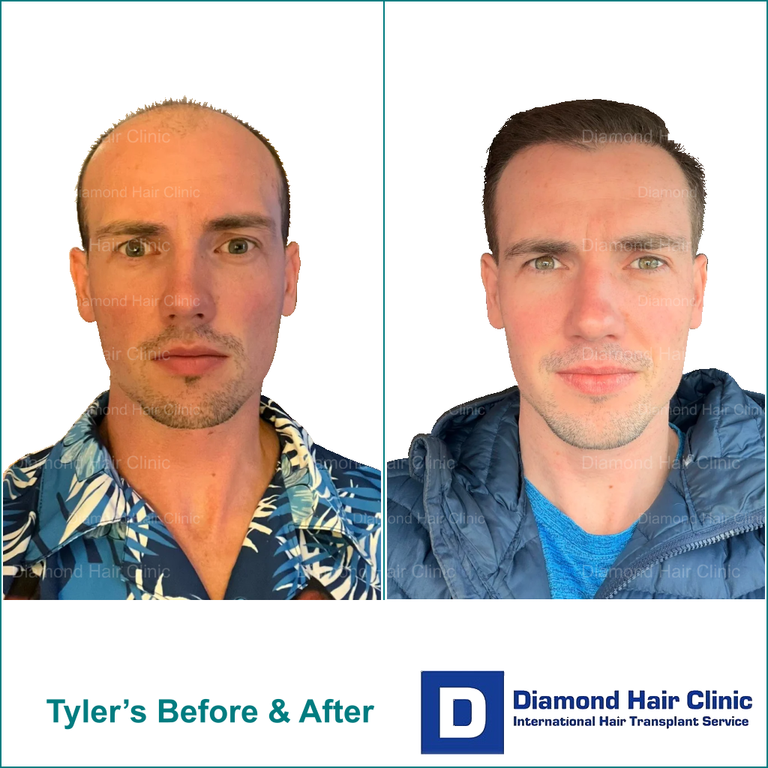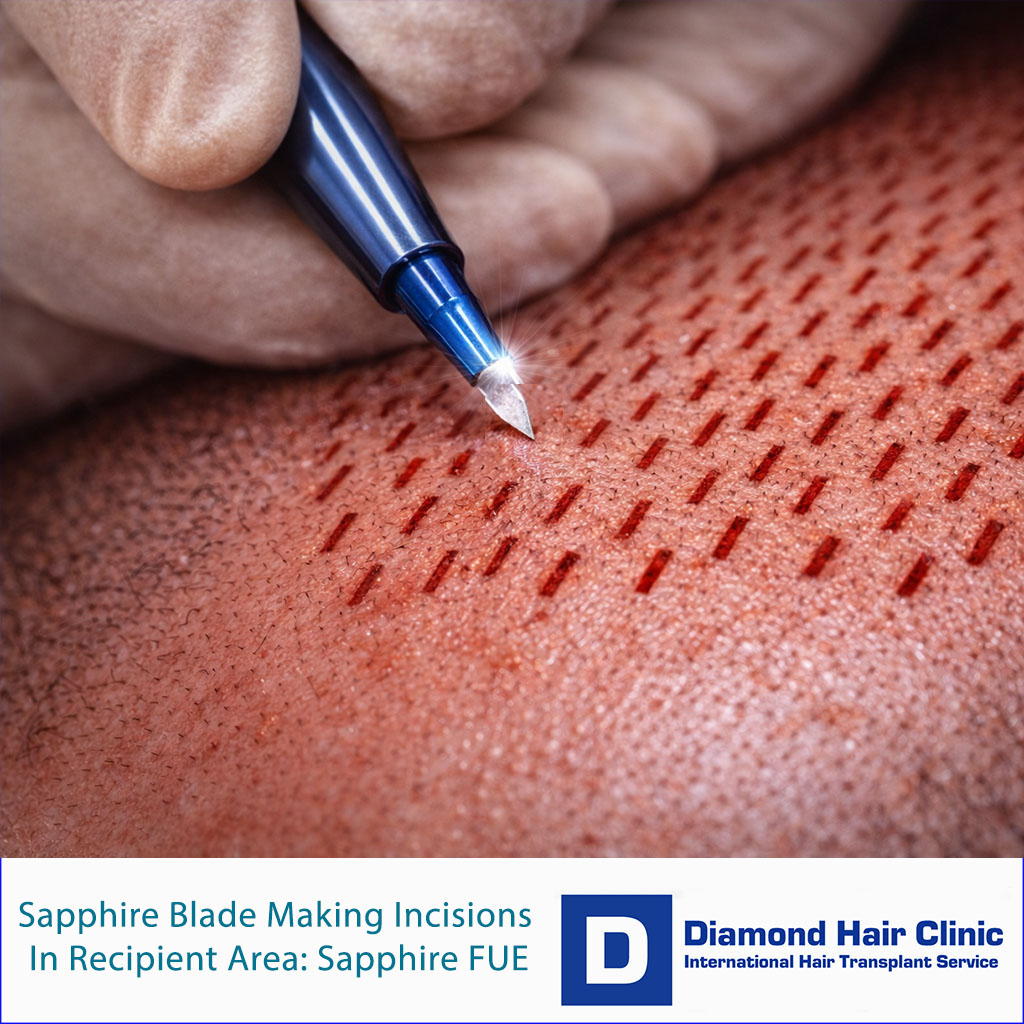

Sapphire blades can help recipient area control
In my experience, sapphire blades help me create narrower, cleaner, and more refined incisions in the recipient area than traditional steel blades. One practical reason is that sapphire tends to keep its sharpness well during use. When an instrument becomes less sharp, tissue handling can become rougher and the precision of the incision may decrease.
Cleaner work matters because the recipient area is living tissue. Every incision has to respect blood supply, skin quality, graft size, density, and the angle of native hair. If the work is rough or too aggressive, the scalp may respond with more bleeding, more swelling, more scabbing, or a harder early recovery.
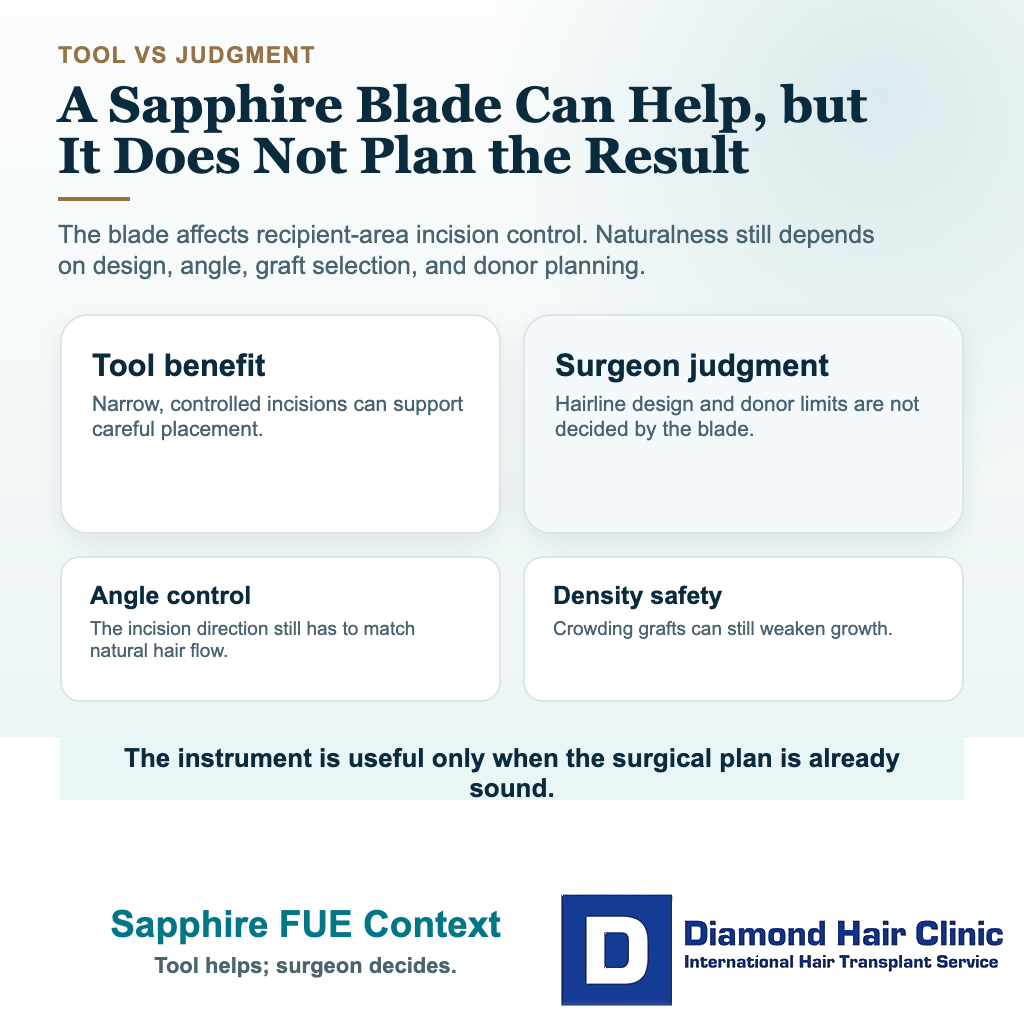
This needs careful wording because sapphire alone does not create a good result. No blade replaces planning, graft handling, hairline design, or aftercare. But a useful instrument can help a surgeon express those decisions more precisely. That is how I see sapphire.
Clinical Observations From My Own Practice
Over the years, I have observed that carefully prepared sapphire incisions often allow the tissue to tolerate the procedure well. Commonly, I see cleaner preparation of the recipient area, more controlled angle and direction, more delicate tissue handling, and grafts that sit more securely within the tissue.
I watch the early healing period. When the work is narrow, clean, and not aggressive, patients often have a smoother postoperative course, with less roughness in the recipient area and often less scab formation than I expect from cruder work.
That needs careful wording. No serious surgeon should claim that any single instrument prevents complications. Tissue behavior depends on vascularity, smoking, scalp quality, density planning, previous surgery, aftercare, and how aggressively the operation is performed. Severe problems such as necrosis are rare, but they are not prevented by a blade name. They are prevented by careful case selection, safe density planning, healthy tissue handling, and responsible aftercare.
I speak about sapphire as a practical surgical advantage, not a guarantee. A better instrument can support better work. It cannot make unsafe planning safe.
Sapphire FUE matters more in selected cases
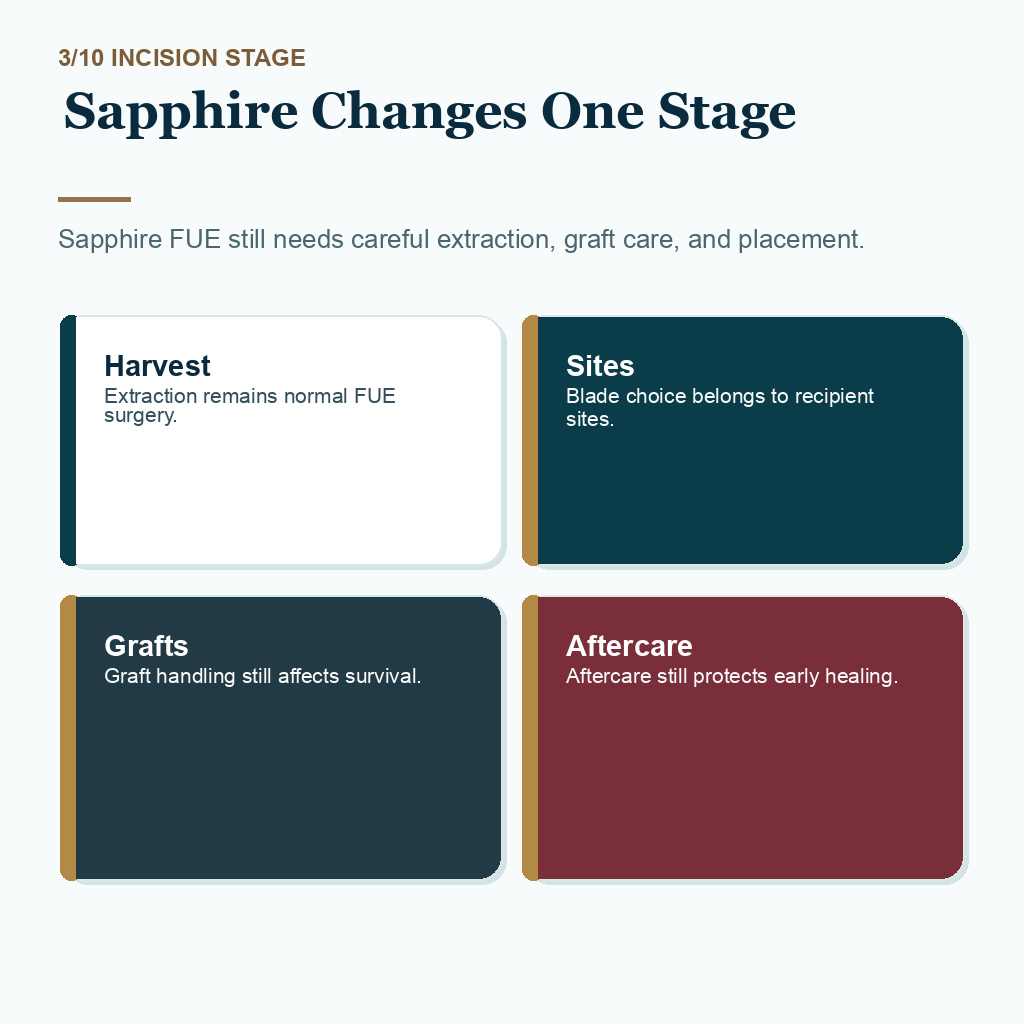
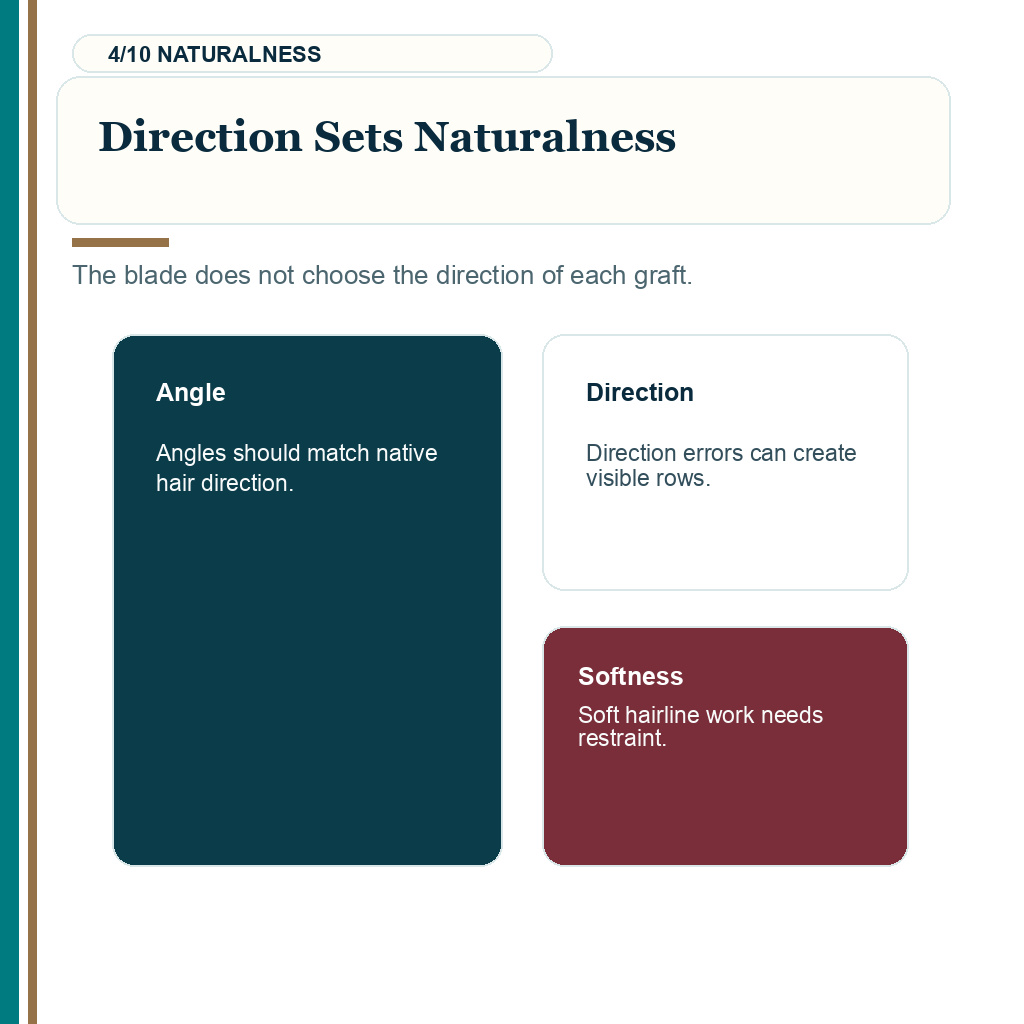
Sapphire does not carry the same weight in every patient. It matters more when I want especially refined work in the frontal zone, soft transitions in the hairline, delicate angle control, or careful handling of a cosmetically sensitive recipient area.
This can be especially relevant for patients with finer hair, patients seeking detailed hairline design, and cases where subtlety matters more than raw graft numbers. In these situations, small changes in angle, direction, and spacing can change how natural the result looks in daylight.
In other patients, broader surgical judgment matters far more than the blade. If donor capacity is limited, hair loss is unstable, the crown expectation is unrealistic, or surgery is not well indicated, sapphire will not solve the main problem. The instrument is useful only when the case itself is planned responsibly.
Sapphire FUE is often misused in marketing
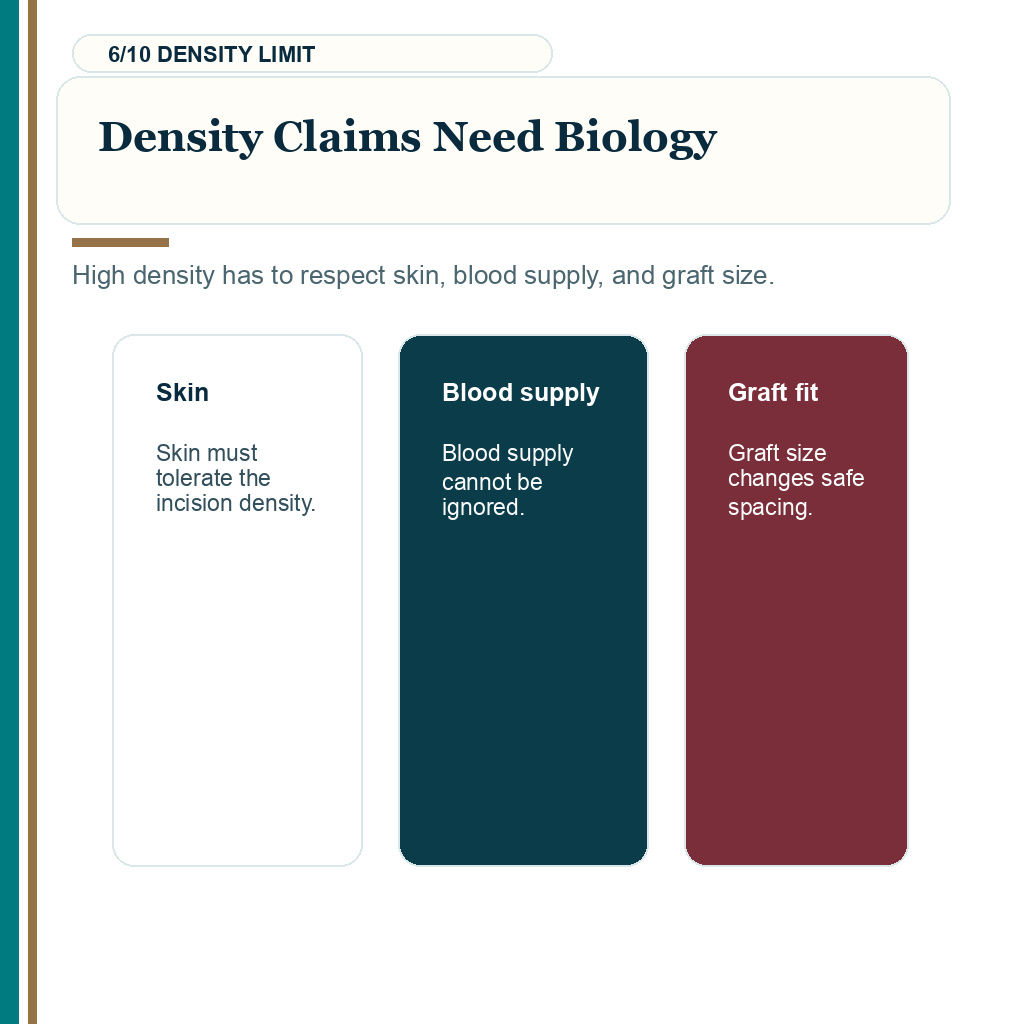
The most common misuse is density marketing. Patients naturally want strong density, but some clinics present Sapphire FUE as if it allows extreme density in every scalp, sometimes using numbers such as 70 or 80 follicular units per square centimeter as if biology no longer matters.

I do not consider that serious. Neither sapphire nor steel changes the limits of blood supply, tissue condition, graft size, donor capacity, or future hair loss. If density is pushed too aggressively, the result can look harsh, pluggy, or unnatural, and the tissue may be placed under unnecessary stress.
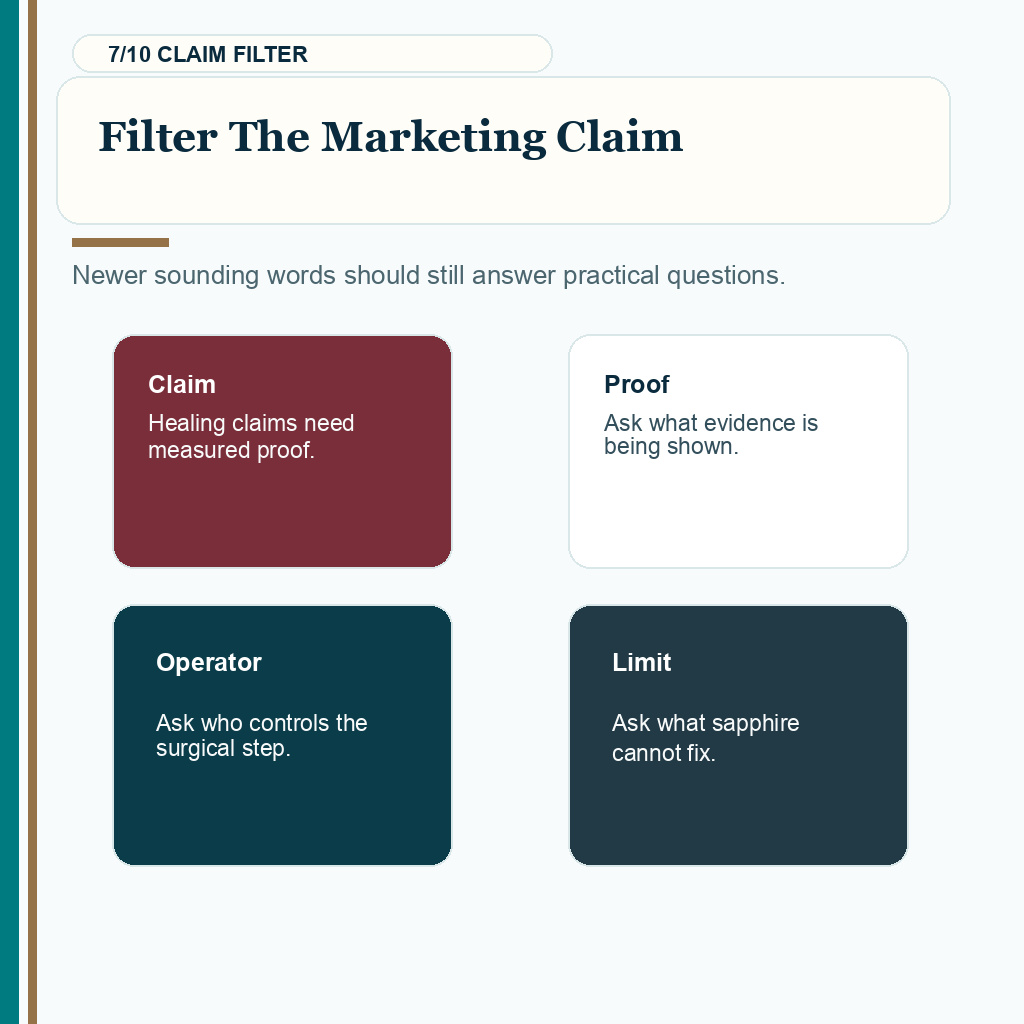
Patients are right to be skeptical when sapphire is sold as the whole answer. What becomes a gimmick is not the blade itself. It is the claim that the blade creates the artistry, the healing, the density, and the naturalness by itself.
A good blade can still fail in poor surgery
The word Sapphire FUE is not enough reason to choose a clinic. A clinic can use sapphire and still overharvest the donor area. It can still design a hairline too low. It can still place grafts at the wrong angle. It can still push density too aggressively. It can still run a high-volume model driven by technicians.
The instrument can support quality, but it cannot create quality by itself. I do not build surgery around a blade. I build it around diagnosis, donor management, control of the recipient area, naturalness, careful density planning, and long-term thinking.
If those decisions are weak, sapphire will not save the case.
Sapphire FUE and DHI are not the same step
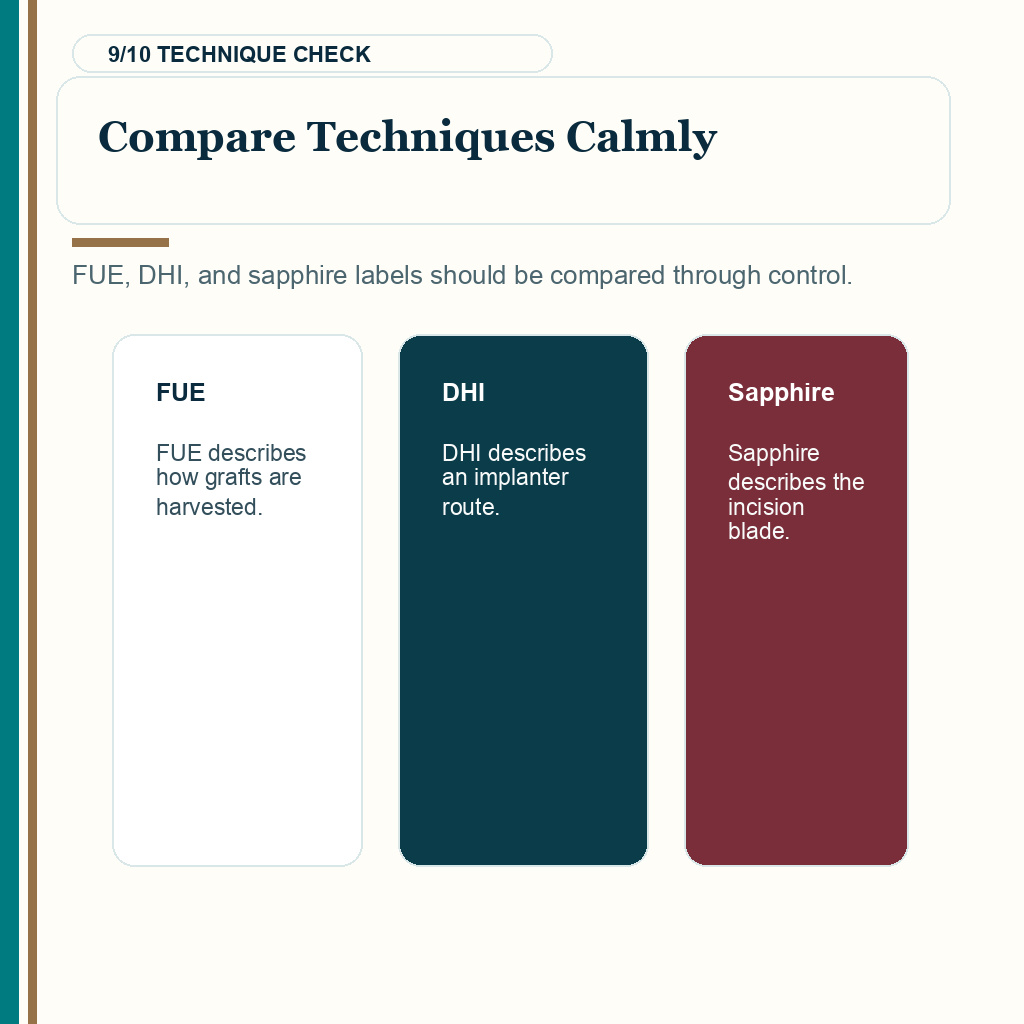
Sapphire FUE and DHI are often compared as if they are competing brand names, but they describe different parts of the operation. Sapphire FUE mainly refers to the incision stage in the recipient area. DHI usually refers to implantation with an implanter pen.
A patient can become confused when clinics compare them too loosely. A careful DHI and FUE comparison should explain which surgical step is changing, who controls that step, and how that affects that patient.
The more useful question is not which label sounds better. The practical question is how the grafts will be harvested, how the recipient area will be created, how the grafts will be implanted, and which parts the surgeon personally controls.
What sapphire must not be allowed to hide?
Sapphire can help the incision step, but it must not hide the questions that decide the result. Who designs the hairline? Who creates the recipient sites? How is density planned? What donor reserve is being protected? What will be left untreated on purpose?
The blade name becomes a warning sign when it is used to make density sound unlimited or to avoid explaining who controls the artistic and surgical decisions. A blade can refine the work. It cannot replace diagnosis, donor planning, graft handling, or aftercare.
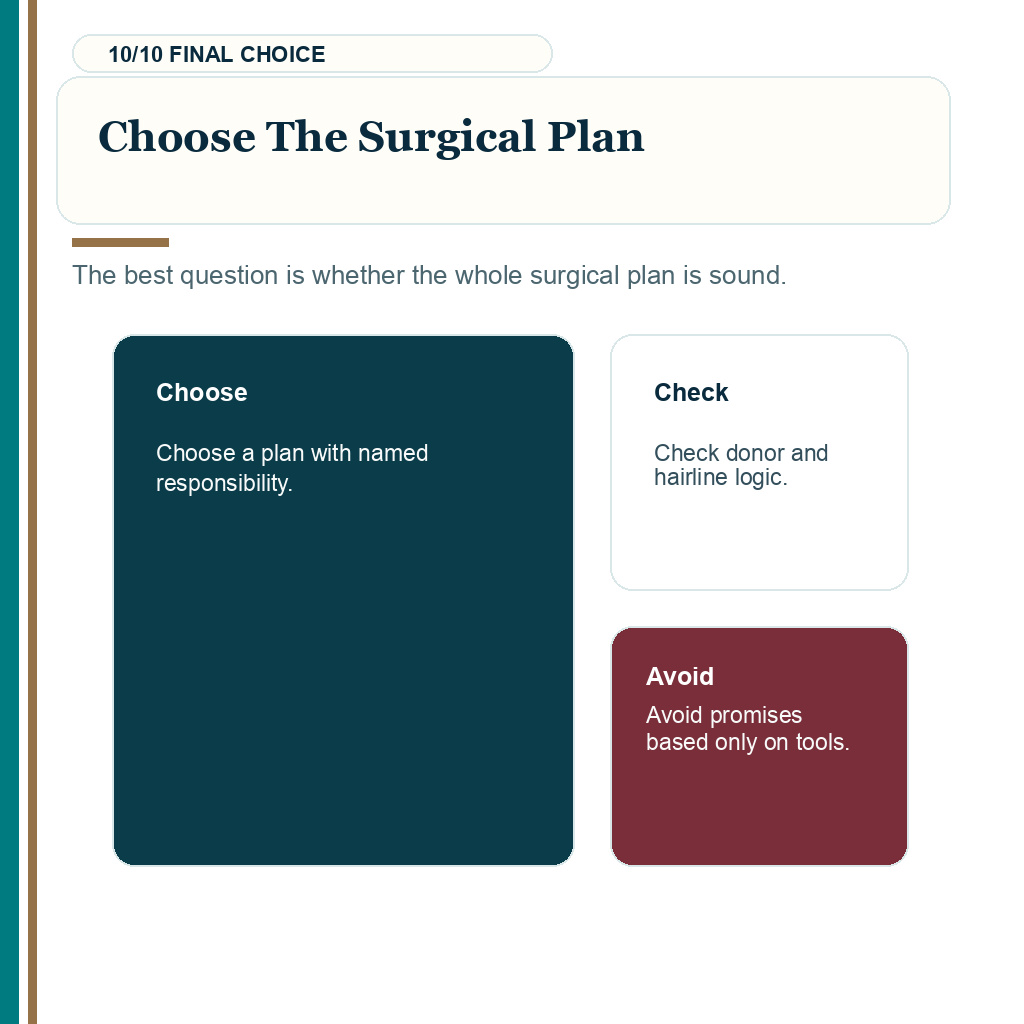
For a patient comparing clinics, the stronger question is not whether sapphire is offered. The stronger question is whether the surgeon can explain why sapphire fits this case and what the plan would still need if a different blade were used.
When Sapphire FUE is not the right answer?
I would not make surgery safer by naming the blade if the patient is not a good candidate. Weak donor reserve, unstable hair loss, an unrealistic low hairline request, poor scalp condition, or a plan that needs too many grafts can all make the technique name secondary.
In those cases the medical answer may be to delay, reduce the design, treat the medical problem first, or refuse surgery instead of using Sapphire FUE as a marketing answer. The tool helps only after candidacy, donor safety, hairline logic, graft distribution, and surgical supervision make sense.
Decision points before choosing Sapphire FUE
If a patient is researching Sapphire FUE, I look past the word sapphire and ask how the surgery is actually planned. Who designs the hairline? Who creates the recipient area incisions? How is the donor protected? How is density planned? How many patients are treated in one day? What happens if donor reserve cannot support the advertised graft number?
These questions matter more than the name of the blade. Patients who focus too much on equipment often need to step back and ask whether tools and techniques matter more than the surgeon. In hair transplantation, the instrument is only as good as the planning behind it.
The clinic needs to explain sapphire in a measured way. It should not dismiss the tool as meaningless, but it should not turn it into mythology either.
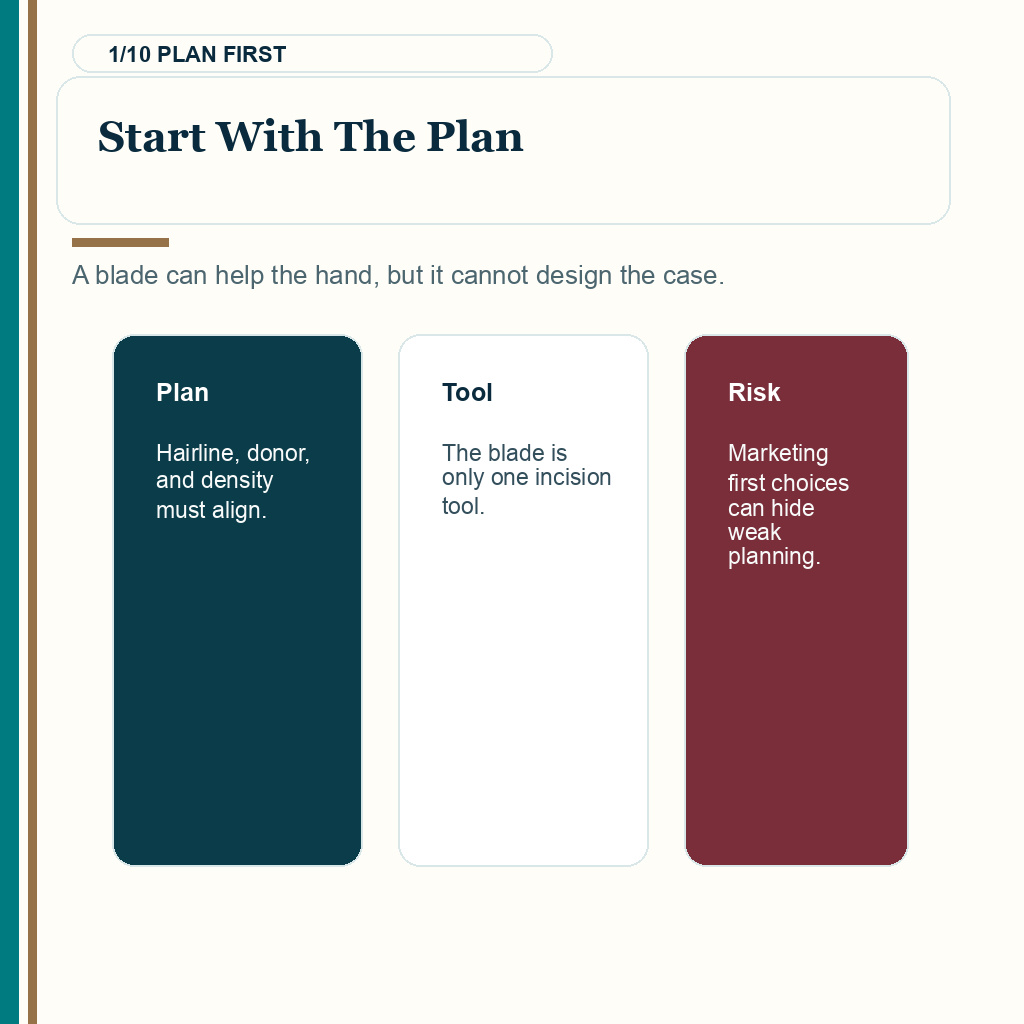
Use the 10 Sapphire FUE planning slides below to separate the surgical plan, surgeon control, incision stage, hairline direction, donor limits, density claims, marketing filters, skin context, technique comparison, and final treatment choice. Swipe the carousel, use the arrows one step at a time, or choose a number below the image to jump to that point.



My practical view on Sapphire FUE
My practical view is simple. Sapphire FUE can matter when it is part of a surgeon-led plan, but it should never be treated as the reason to trust a clinic.
In my own hands, sapphire blades help me work in a controlled and refined way in the recipient area. I value that. But the whole plan still needs to be judged. Donor capacity, hairline design, graft distribution, density, future hair loss, surgeon involvement, and aftercare remain more important than the name of the blade.
Sapphire is one useful part of the operation. It is not the operation itself.
Read this review excerpt
He was very thorough in every little detail and I never felt pressure to do anything I wasn’t sure of.