


Low and Flat Hairlines as a Hair Mill Warning Sign
A low and flat hairline can be suitable in some patients, but it becomes a warning sign when the same shape is offered to almost every patient. If your concern is a sharper personal outline rather than a repeated clinic template, start with low straight hairline planning before deciding. My concern here is the sales version of the design, where a low, flat offer looks dramatic before surgery but is not supported by individual donor planning, temple design, and future hair loss review. In many hair mill style clinics, the line is drawn low because it looks dramatic in the mirror before surgery. That drawing does not prove it will look natural in five, ten, or twenty years.
This matters even more when the requested plan is to erase a widow’s peak. Removing every small central variation can make the front look flat, manufactured, and less natural.
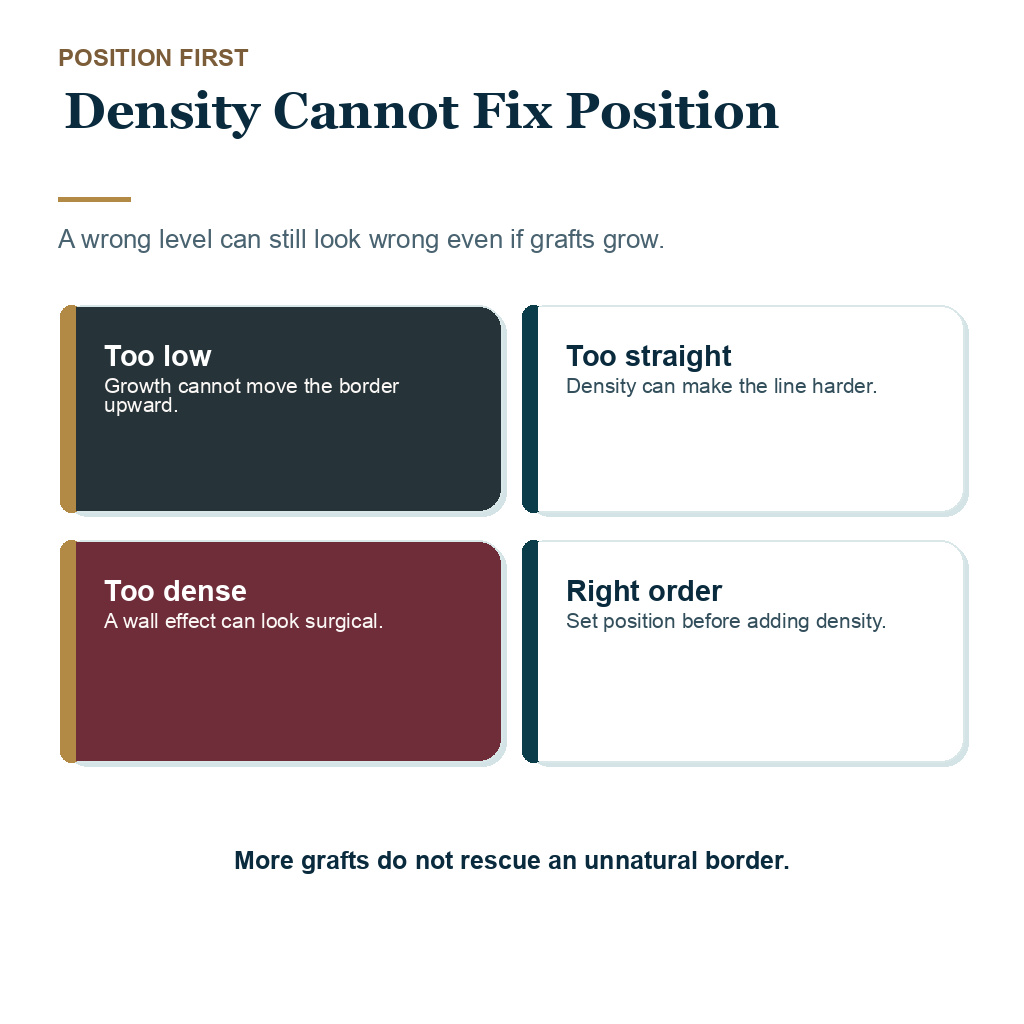
The safer decision is not the lowest line that can be drawn. It is the lowest line that can still age naturally while protecting the donor area. A transplanted hairline is a permanent surgical border. If it is placed too low, too straight, or too dense at the edge, raising it later is difficult and sometimes impossible without compromise.
View the proposed line with your eyebrows relaxed and raised, and with wet and dry hair if possible. A line that only looks good in one posed photo may be too flat for real life.
Check the design from the side and with a normal facial expression, not only from a straight front photo. A low line can look sharp in one picture and still look flat if the temple transition and forehead movement are ignored.
In my planning, hairline design is a surgical decision, not a sales drawing. A patient can request a lower hairline, but I still need to decide whether that line suits the face, age, loss pattern, hair characteristics, and donor reserve. A low line that looks exciting on day zero can become a pluggy hairline later if the design is too rigid or if hair loss continues behind it.
The sales appeal of a repeated low line
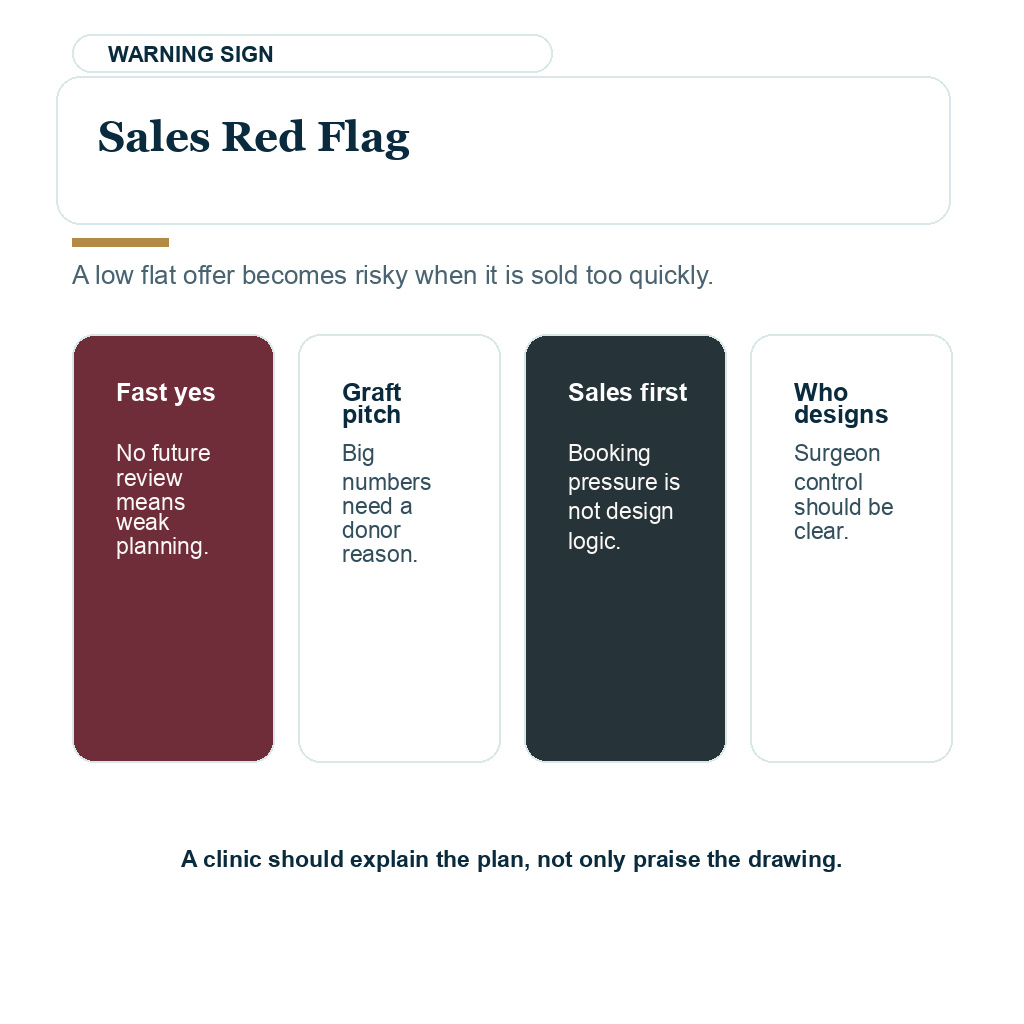
Low and flat hairlines are easy to sell because they create an immediate emotional reaction. The patient sees the marker line, imagines a teenage frame, and feels that the clinic is offering more value. In a high-volume setting, that reaction can become part of the sales process.
A hairline is not a temporary haircut. It is a permanent surgical border on the most visible part of the face. A technician led clinic may follow the patient’s request without enough medical challenge, especially when the consultation is focused on booking the operation rather than protecting the future result.
This is not only a Turkey problem, but it is commonly seen in the market for hair transplant in Turkey because many patients travel after comparing prices, graft counts, and social media photos. Red flags of Turkish hair mills matter because surgeon responsibility is more important than a dramatic drawn line.
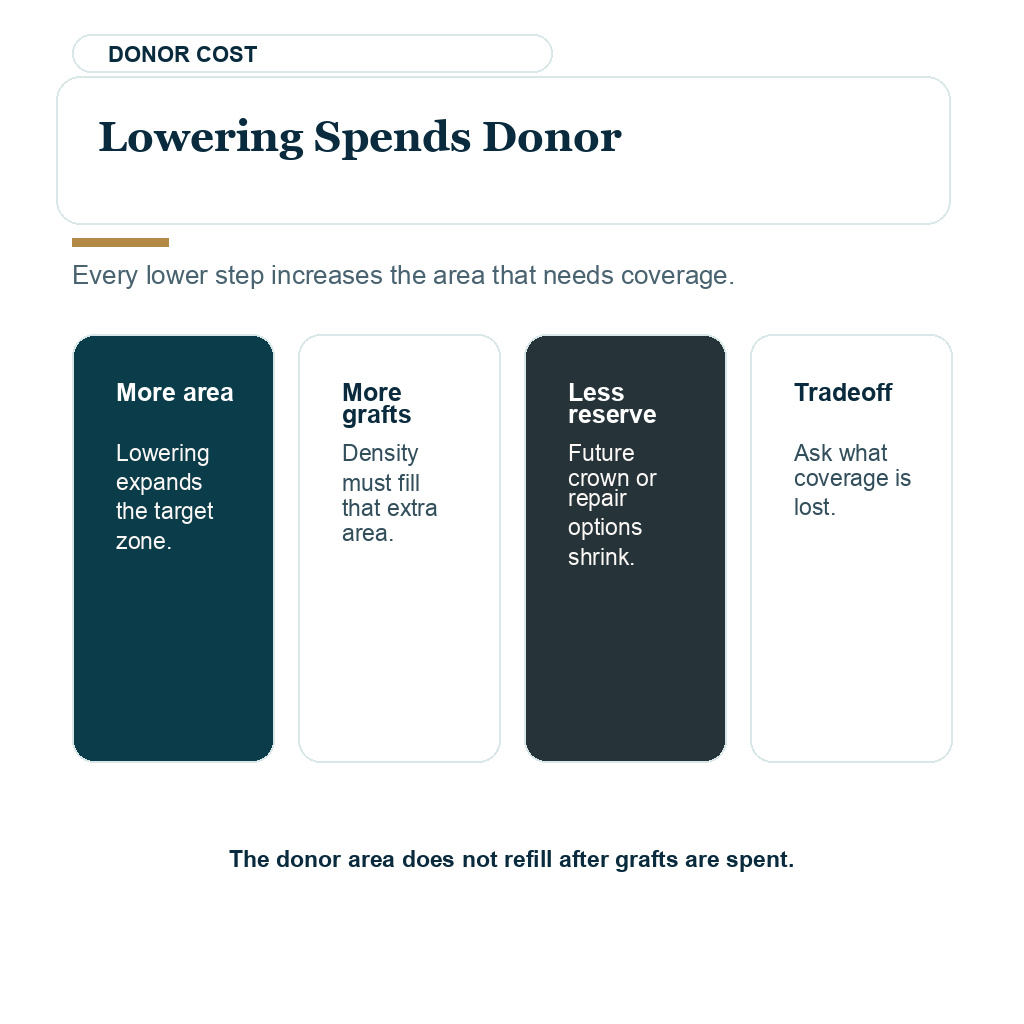
A low design may look generous at first. In reality, every millimeter of lowering increases the surface area that must be filled with enough density, correct graft selection, and natural direction. If the clinic lowers the line without the donor budget or surgical discipline to support it, the patient may receive a result that looks low and thin at the same time.
A low flat hairline can age poorly
This kind of low hairline can age poorly because the face matures, native hair may continue thinning, and the transplanted border does not move upward with time. A design that imitates a teenage hairline may not suit the same patient in his forties or fifties.
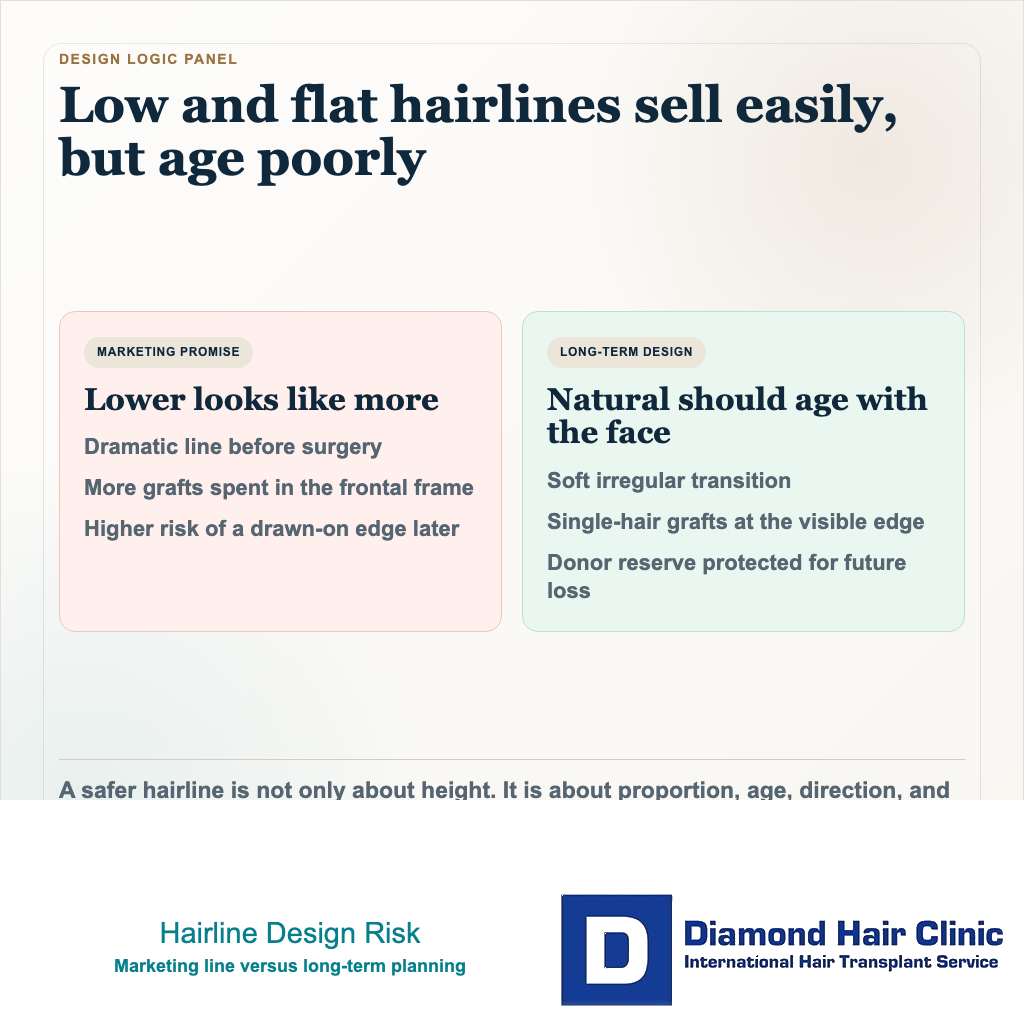
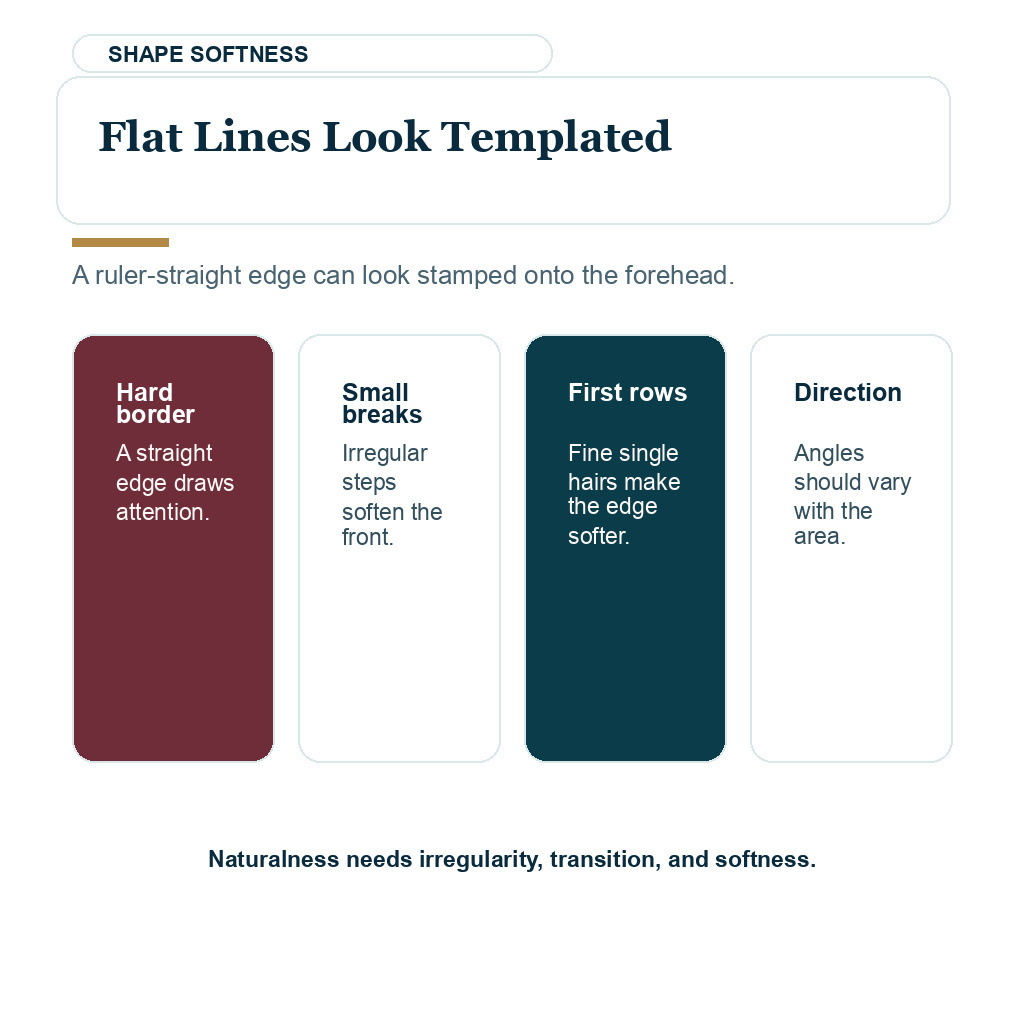
Natural male hairlines usually have softness, slight recession at the corners, small irregularities, and a shape that fits the forehead and temples. A perfectly straight line across the forehead can look drawn on, especially when the density behind it is weaker than the front edge.
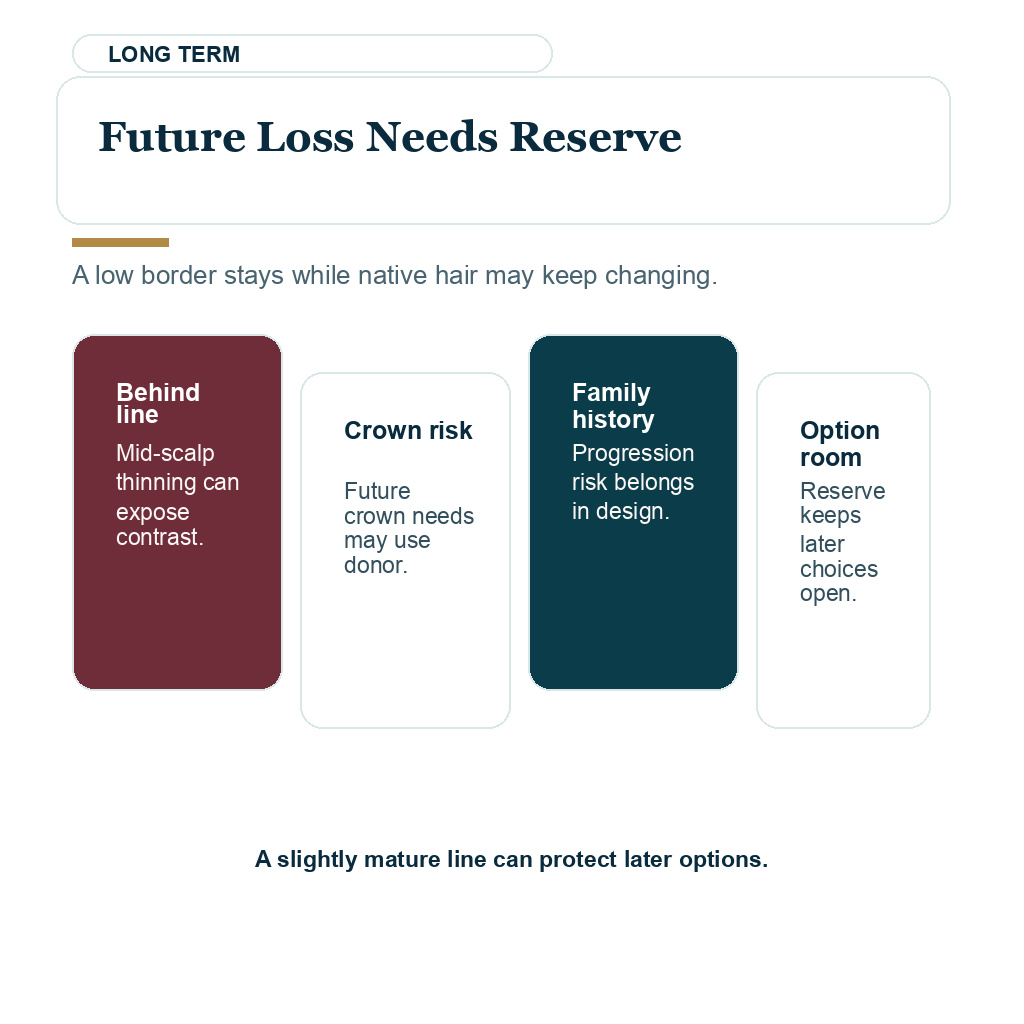
The problem becomes more visible if the mid scalp or crown thins later. The patient may be left with a dense low front and weaker hair behind it. That contrast can expose the transplant even when the grafts survived. My article on whether a hair transplant will still look natural as you get older explains this ageing problem in more detail.
Some patients can carry a naturally lower hairline because their face, forehead, family pattern, and hair characteristics support it. Creating that same line in the wrong patient does not make the result youthful. It makes the result look artificial.
Natural hairline details that a flat line misses
A natural hairline has proportion, softness, direction, graft selection, and gradual transition. The first visible rows should not look like a wall. The edge needs fine single hair grafts, small irregular steps, and a shape that belongs to the patient’s face rather than a template.
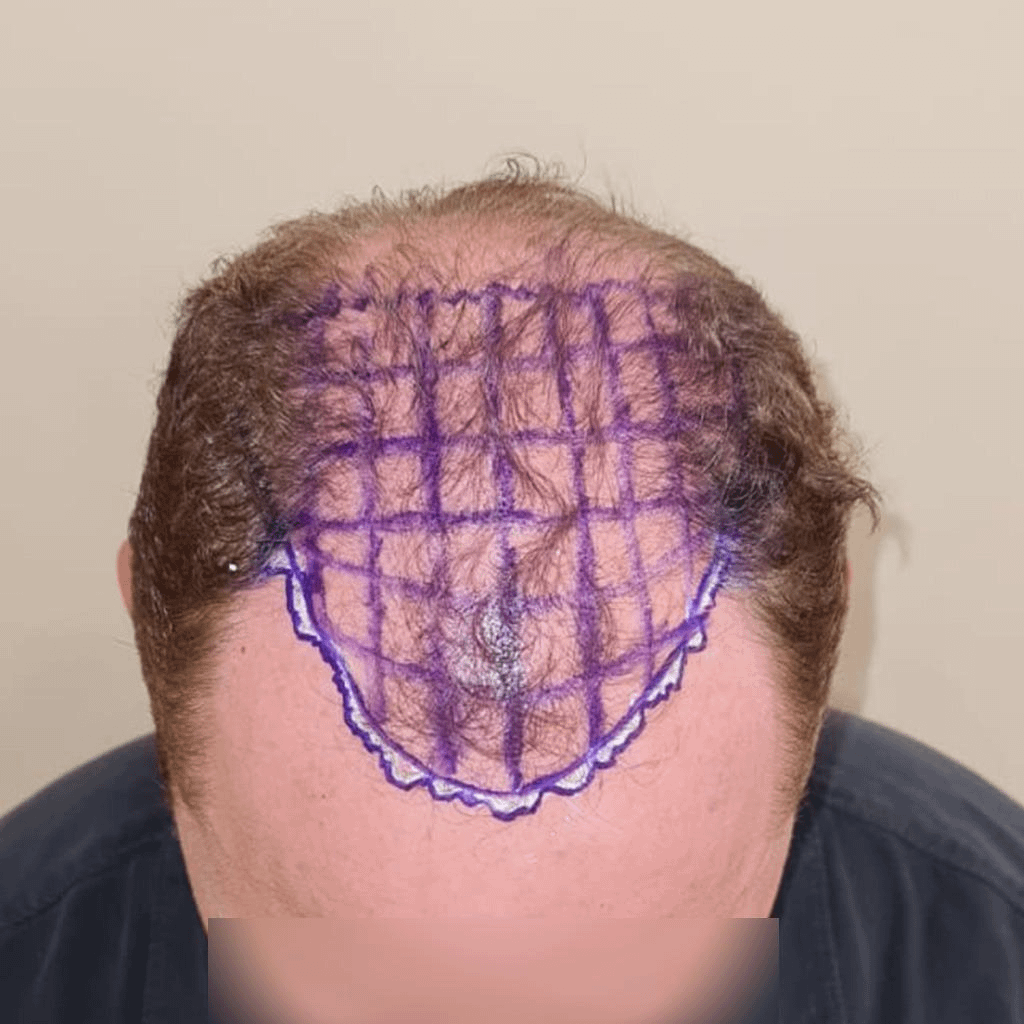
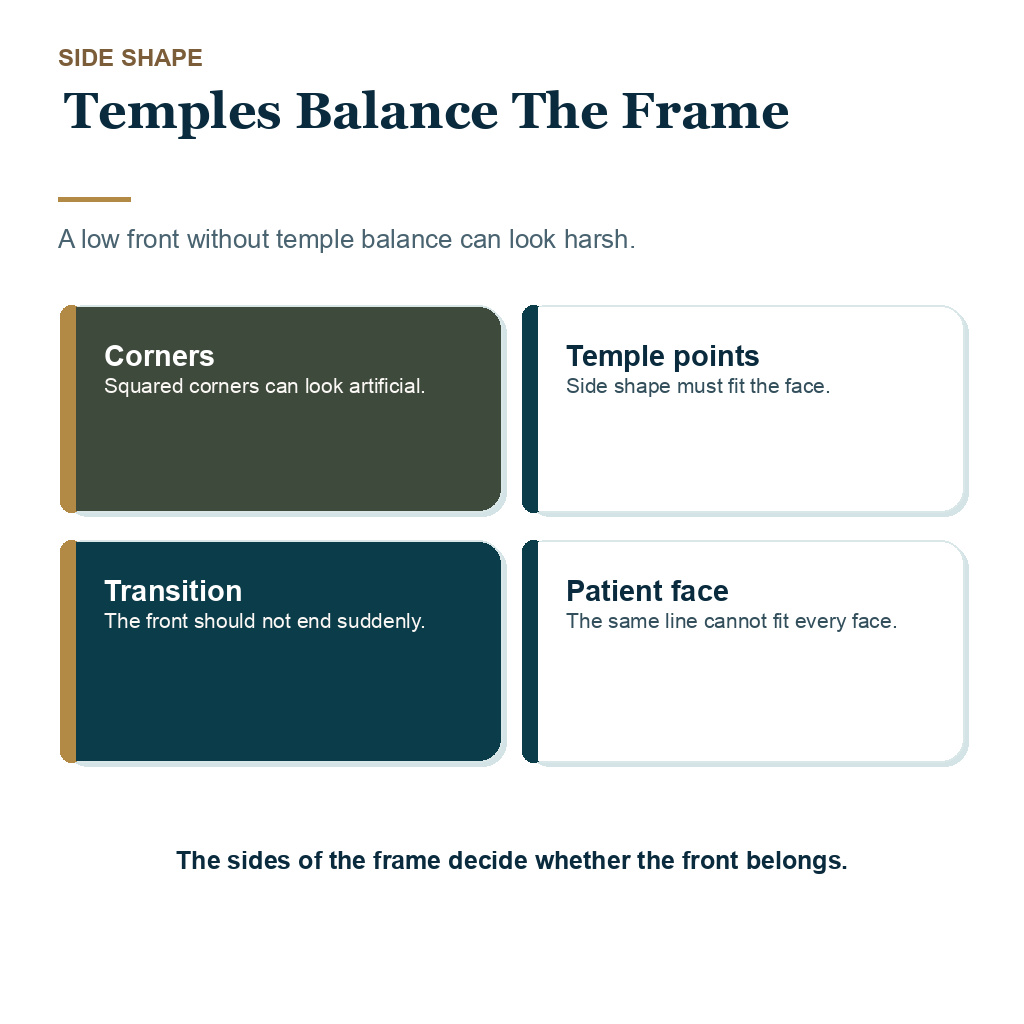
Hairline design in hair transplant surgery is also connected to the temples. If the front is lowered but the temple points are ignored, the face can look unbalanced. If the corners are squared too aggressively, the result can look harsh. Temple point hair transplant planning shows why the sides of the frame matter.
Direction is just as important as height. Hair at the front should lie at a natural angle. Temple hairs need a different direction than the central hairline. If the grafts stand too upright or all point the same way, even a reasonable height can look surgical.
A natural hairline is built in layers, not as a dense ruler line at the front. The front edge needs softness. Behind that, density can increase. If a clinic tries to make the first row heavy and perfectly straight, the result may look like a pluggy border instead of a natural transition.
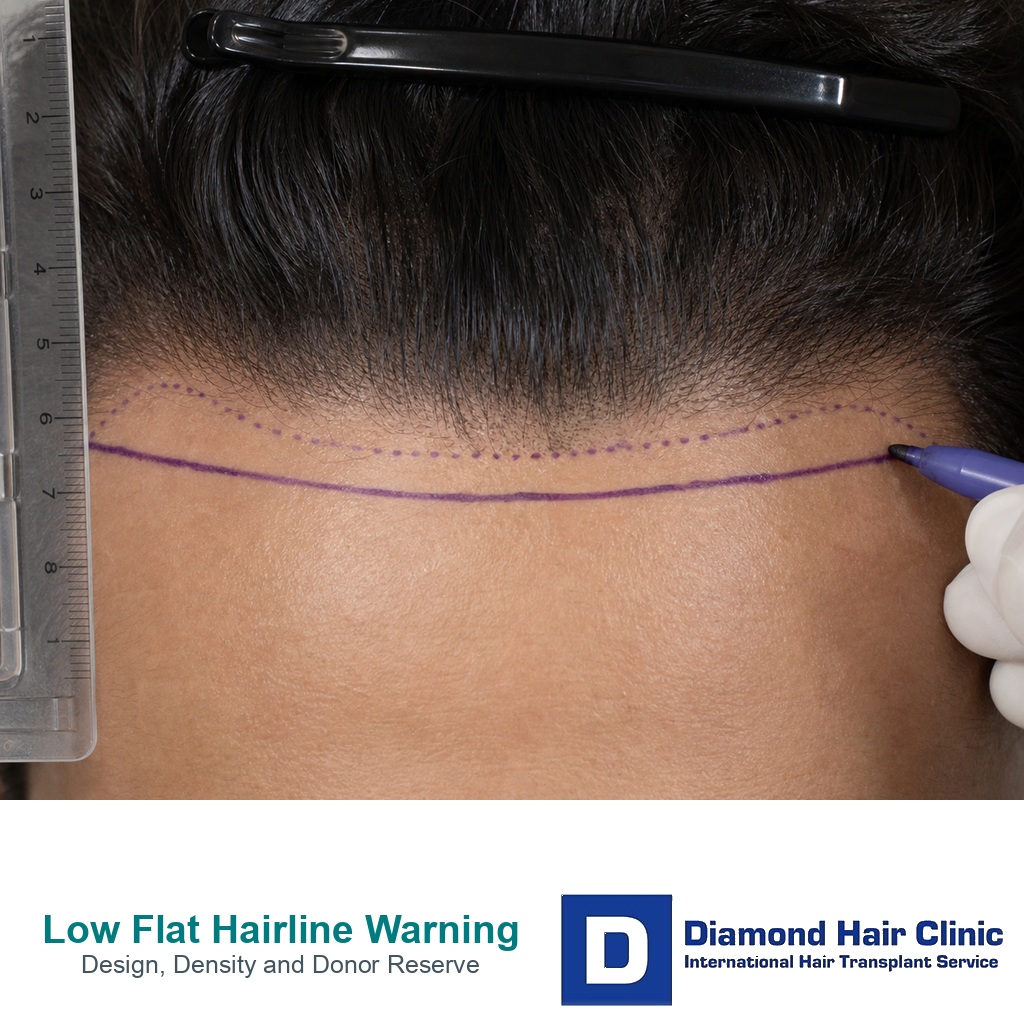
Donor cost behind every millimeter
Every lower hairline uses more grafts. The extra surface area has to be filled with enough density, or it will look sparse. Those grafts come from the donor area, and the donor area does not refill.
Donor hair is a lifetime reserve. If too many grafts are spent lowering the front, fewer grafts remain for future thinning in the mid scalp, crown, temples, or repair. I avoid treating the frontal line as a separate cosmetic wish because grafts used there cannot be reused somewhere else.
Too many grafts in the front can also create recipient area problems. If the clinic tries to force density into a limited zone, the plan may become biologically and visually risky. Too many grafts in one area can damage a hair transplant when density is forced without respecting tissue limits.
A patient may hear that 3,000 or 4,000 grafts will create a better hairline and assume the larger number is safer. The number only has meaning when the surgeon explains the area, density target, graft selection, donor reserve, and future plan. How surgeons calculate graft numbers gives the broader framework.
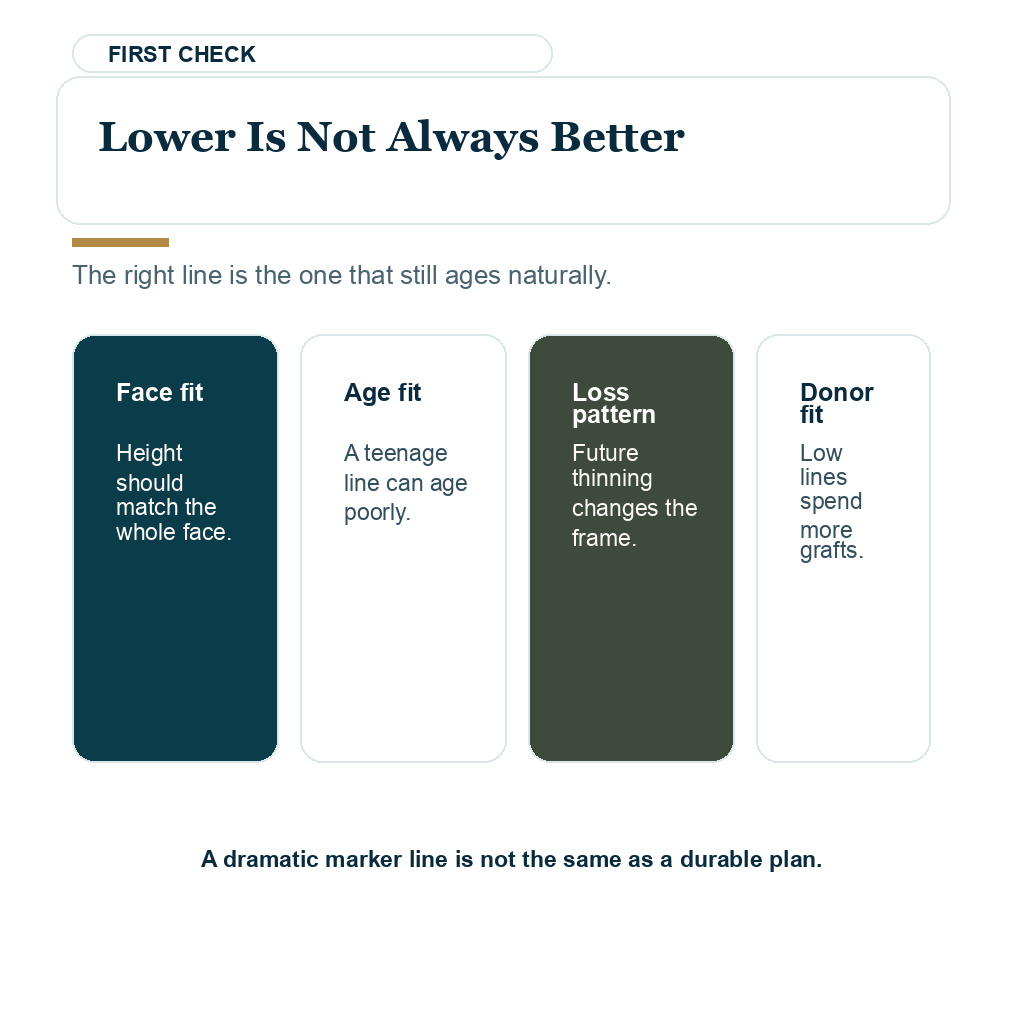
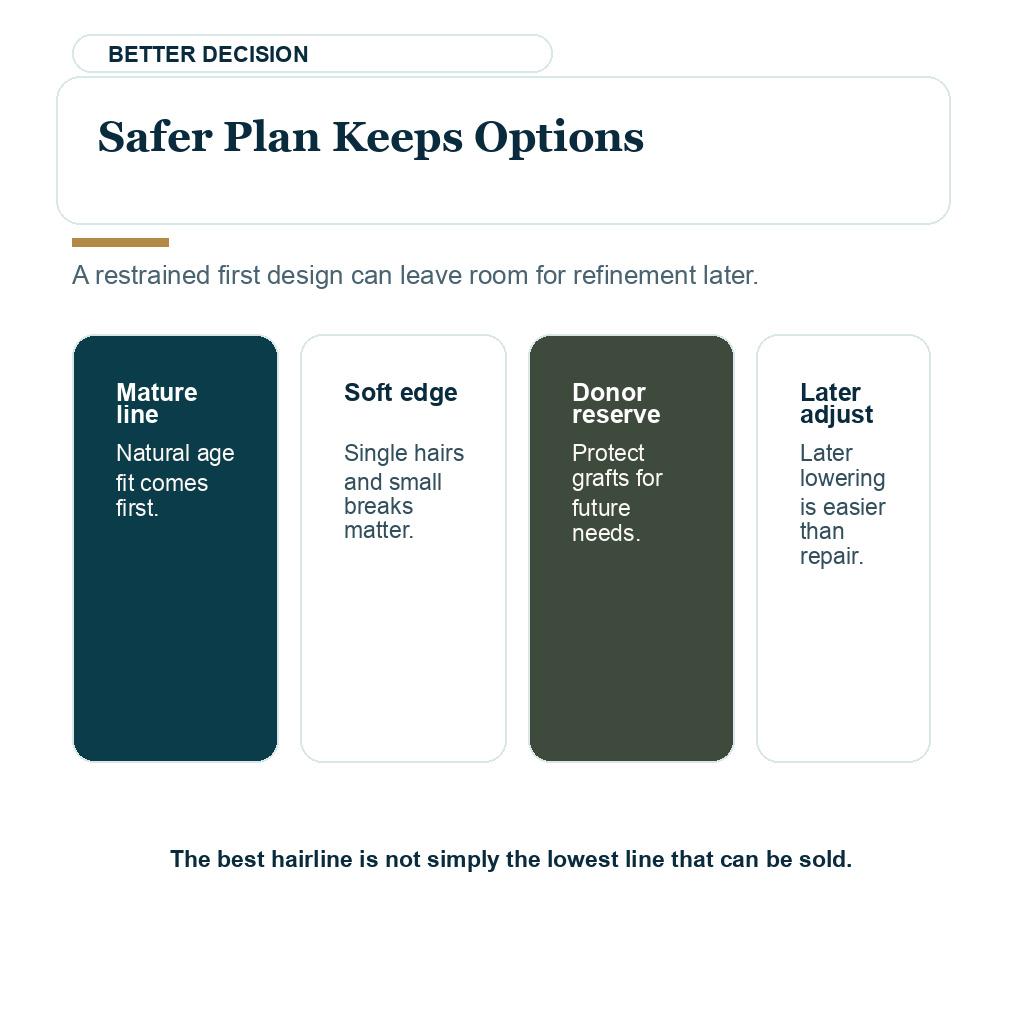
Use these 8 low flat hairline slides to check face fit, shape softness, donor cost, temple balance, future reserve, density limits, sales pressure, and the safer planning route. Swipe sideways, use the arrows one slide at a time, or choose a number below the image.
A lower hairline can be reasonable in selected patients
A lower hairline can be reasonable in selected patients. The better examples are patients with stable minimal hair loss, a naturally lower family hairline, strong donor capacity, favorable hair caliber, and facial proportions that genuinely accept a lower frame.
It can also be reasonable in some women, because female hairline design follows different aesthetic rules than male pattern recession. Female hairline transplant planning may allow a lower or softer design in selected female cases.
Some patients have a naturally high forehead rather than male pattern recession. In those cases, a transplant may lower the frame modestly if the donor area, density plan, and future risk allow it. A hair transplant to lower a naturally high forehead is a different decision from repairing aggressive genetic hair loss.
Even when lowering is reasonable, it still needs restrained planning. A lower hairline still needs maturity, softness, donor protection, and a clear forehead muscle boundary. It should not look like a ruler line placed on the forehead.
Patients who should avoid aggressive lowering
A low, flat design should usually be avoided in young men with active hair loss, patients with strong family history of advanced baldness, patients with crown or mid scalp thinning, patients with weak donor reserves, and patients who never naturally had a low hairline.
A young patient can win the mirror moment and still lose the long-term plan. He may say he only cares about the front today, but the surgeon still has to think about the rest of the scalp. If the patient later develops a large crown or mid scalp problem, the donor grafts spent on an overly low front may be badly missed.
Patients who are not yet sure whether they are a good candidate for a hair transplant should not start with an aggressive hairline. Candidacy includes age, diagnosis, donor quality, medication tolerance, expectations, and the likely future pattern.
I also become cautious when the patient brings edited photos, celebrity hairlines, or social media examples as the main reference. Inspiration can help communication, but it cannot replace surgical judgment.
Age and future hair loss in the design
Age matters because a transplanted hairline stays while the patient continues to age. A line that looks exciting in the twenties may look too heavy later if the face matures and the surrounding native hair thins.
Future hair loss matters because male pattern hair loss can progress behind the transplanted area. A very low hairline may force the patient into more surgeries to maintain balance. If donor reserve is strong and the pattern stabilizes, lowering can still be considered later. Raising a hairline that was placed too low is much harder.
This is also why a slightly higher design is not always a weak result. A hairline that feels too high after a hair transplant can be a sign of protective mature placement rather than disappointment.
Conservative planning does not mean doing less for the patient. It means creating a result the patient can live with after the first excitement passes, when the hair is grown, styled, photographed, and seen next to an ageing face.
Restrained placement keeps future options open
In selected patients, a restrained hairline can be lowered later if the first result matures well, the donor area remains strong, and the future pattern becomes clearer. That option is one reason I do not rush to the lowest possible line in uncertain cases.
Lowering later is usually easier than trying to reverse a line that was placed too low. A second operation can add a modest amount in front of a mature hairline when the patient’s hair loss has declared itself more clearly. By contrast, a very low front that looks wrong may require camouflage, graft removal, laser reduction, redesign, or repair. None of those options is as simple as planning correctly the first time.
Patients sometimes mistake restrained design for a lack of ambition. I see it differently. A mature first design can protect naturalness, then leave room for refinement if the case proves stable.
Technique names do not rescue poor design
No technique name fixes a poor design. FUE, Sapphire FUE, and DHI can all be used well or poorly depending on who plans the surgery and how the recipient area is created.
DHI is sometimes advertised as if the tool itself makes the result more natural. That is misleading. Naturalness comes from hairline position, graft selection, angle, direction, density transition, donor planning, and surgical control. A Choi pen, sapphire blade, or FUE punch does not decide the correct hairline by itself.
Technique supports judgment. It does not replace it. If the line is too low, too flat, or too dense at the edge, even technically healthy graft growth can still look unnatural.
The important roles are hairline design, recipient area creation, direction control, and graft quality checks. Those answers matter more than the marketing label.
Judging hairline offers in Turkey
Judge the offer by the explanation, not by the drawing alone. A clinic should explain why the proposed hairline fits your face, why it is safe for your age, how many grafts it needs, what donor reserve remains, and what happens if hair loss progresses.
If the clinic draws the lowest line quickly and praises it without discussing the future, be careful. If the consultation is mostly handled by sales staff, be careful. If the graft number sounds impressive but the donor analysis is vague, be careful. Choosing a hair transplant clinic in Turkey should involve responsibility beyond price.
Who performs your hair transplant matters here. Hairline design should not be a technician routine or a sales compromise. It is a medical and aesthetic decision that needs surgeon responsibility.
A clinic that refuses an unsafe low line may actually be protecting the patient. The clinic that agrees to every request may feel easier in the moment, but that agreement can leave the patient with a permanent design problem.
What I Want Written Before You Accept the Design
A low hairline offer should not stay as a drawing on a photo. I want the plan to explain the proposed level, temple transition, graft range, donor cost, age fit, and what area will be left untreated if the donor reserve has to be protected. When a line is changed late in the process, it belongs in a surgery morning plan review, not in a rushed signature.
If the clinic cannot explain why the design fits this patient and not only the advertisement, that line is not yet a medical plan. A written design note makes the decision slower, but it also makes the risk easier to see before travel or payment.
Questions before accepting the design
This exact hairline height needs a reason. The graft cost of lowering the line, the risk of thinning behind it, and the remaining donor reserve should all be clear.
Temple corners, fine single-hair grafts in the first rows, natural irregularity, recipient site control, and direction control decide whether a low line looks surgical or natural.
Ask to see mature results, not only immediate surgery photos. Day zero density can look impressive before shedding. The useful test is the grown result after styling, ageing, and normal light. The result worth aiming for depends on naturalness, donor health, and durability, not only a low first day line.
If the clinic cannot answer these questions clearly, do not accept the design just because the line looks lower.
A lower line has to age with the face
In my own planning, I look at the whole patient, not only the forehead. I consider age, donor area, hair caliber, loss pattern, temple shape, crown risk, medication history, facial proportions, and what the patient may need later.
The plan should improve the frame of the face without creating a design that becomes a burden. Sometimes that means lowering the hairline. Sometimes it means keeping the line slightly higher and building stronger density. Sometimes it means delaying surgery until the diagnosis is clearer.
The right hairline is the one the patient can keep looking natural with, not simply the lowest line that can be sold in a consultation. A lower straight line may suit a small group of patients. It must never become the default answer.
Read this review excerpt
We also had a levelled conversation about my hairline and results I could expect based on my donor density area.