


Sex Timing Needs Graft Protection
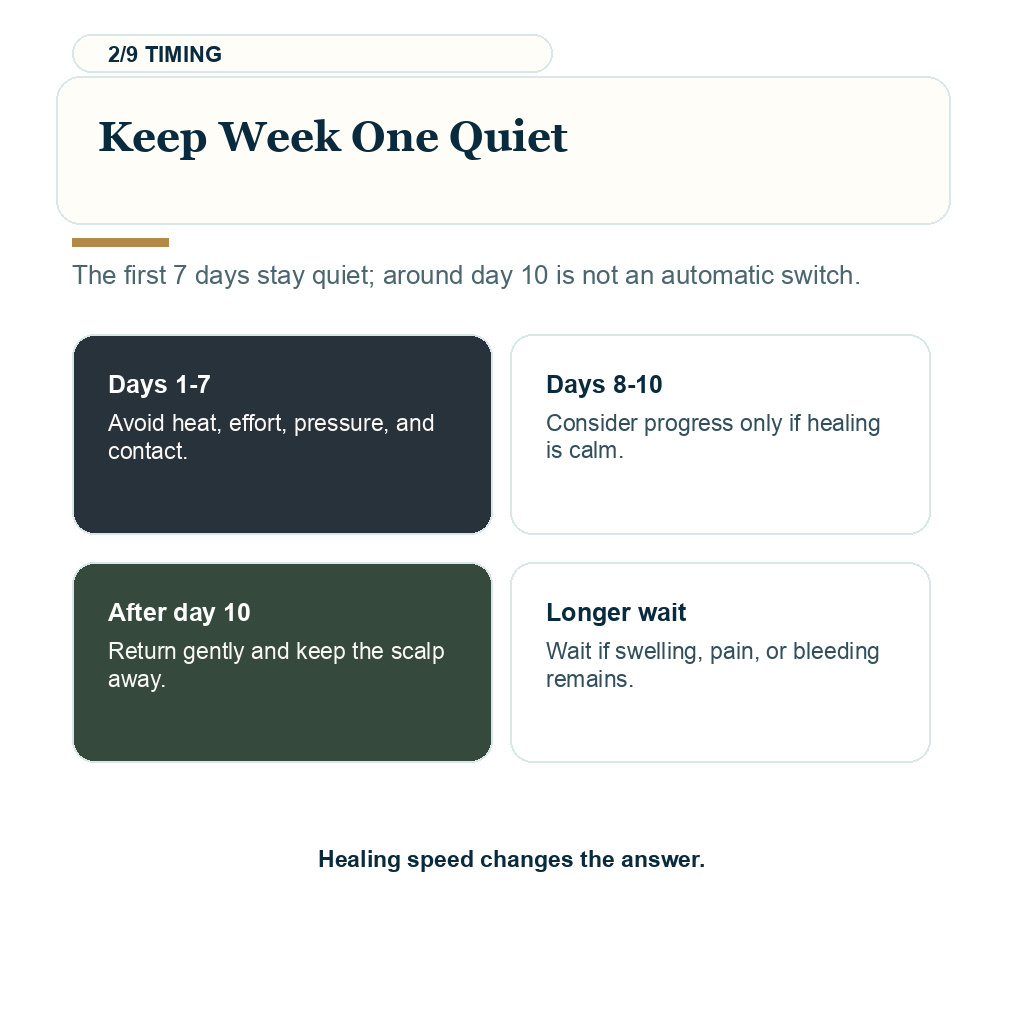
For most patients, I advise no sex for about 10 days after a hair transplant, with the first 7 days kept especially quiet. After that, a gentle return is usually reasonable only if the scalp is settling, crusts are lifting normally, there is no bleeding, and the donor area feels comfortable.
That does not mean rough sex, heavy sweating, scalp pressure, bending into pillows, or a partner’s hands near the grafts. The first return should be controlled. If healing is slower, the session was large, swelling is still active, the donor area is sore, or you have high blood pressure, nicotine use, or a bleeding tendency, waiting longer is the better decision.
The reason is not moral. It is practical. Sexual activity can bring sweating, heat, increased effort, rubbing against pillows or bedding, accidental scalp contact, and a short period of reduced caution. Those are exactly the things I try to keep away from a fresh recipient area and donor area.
Return when sweat, pressure, and scalp contact are easy to control
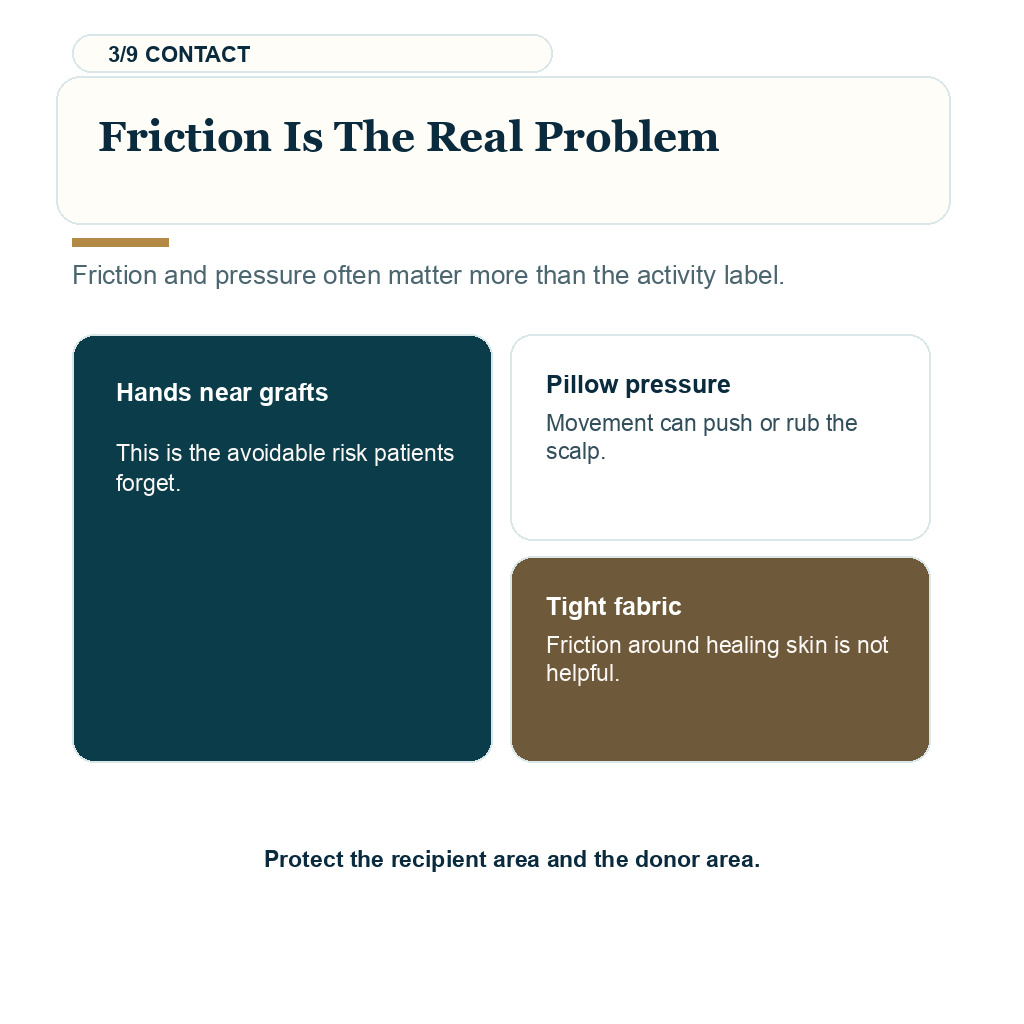
Sexual activity is not restricted for moral reasons. It is restricted because early recovery needs low heat, low effort, and no accidental rubbing against pillows, bedding, hands, or a partner. The donor area can also become sore or irritated when effort and friction return too soon.
Orgasm alone is not the test I use for graft safety. I care about the whole setting around it, including effort, sweating, scalp pressure, rubbing, restarted bleeding, alcohol, medication, and whether the patient can keep hands and bedding away from the grafts.
Waiting longer is sensible when swelling is still active, the session was large, blood pressure runs high, nicotine is involved, or the scalp still feels tender enough that you keep checking it. A quiet moment can become risky if sweat starts and the instinct is to wipe the hairline or scratch around crusts.
When you restart, keep the setting controlled and avoid positions that put the scalp against bedding or another person. Stop if there is bleeding, throbbing, new swelling, or contact with the recipient area. A few extra days of restraint is a small tradeoff compared with adding avoidable stress to fresh grafts.
Why should sex wait in the first days?
Sex is not uniquely dangerous by itself. The risk comes from the combination that often comes with it, including exertion, heat, sweating, friction from bedding, a hand near the scalp, and a few minutes where the person forgets they had surgery.
That is how small mistakes happen. The head rubs against a pillow. The donor area becomes irritated. Sweat starts and the instinct is to wipe. A partner touches the scalp without thinking. None of these events has to be dramatic, but early healing does not need extra stress.
The first night deserves extra restraint because the whole setting is harder to control. Tiredness, excitement, partner contact, bedding friction, and the urge to check the scalp can matter even when no single movement feels forceful.
Sex belongs in the same recovery category as heavy exercise, smoking, alcohol, saunas, and anything else that makes the first days harder to control.
If you read my broader guide on hair transplant aftercare, you will see the same idea there too. I am trying to protect a short healing window that matters.
The early risk is the whole situation, not one single movement
Many explanations of this topic are too narrow. They make it sound as if the whole issue is only blood pressure, or only the timing of Viagra and Cialis after surgery.
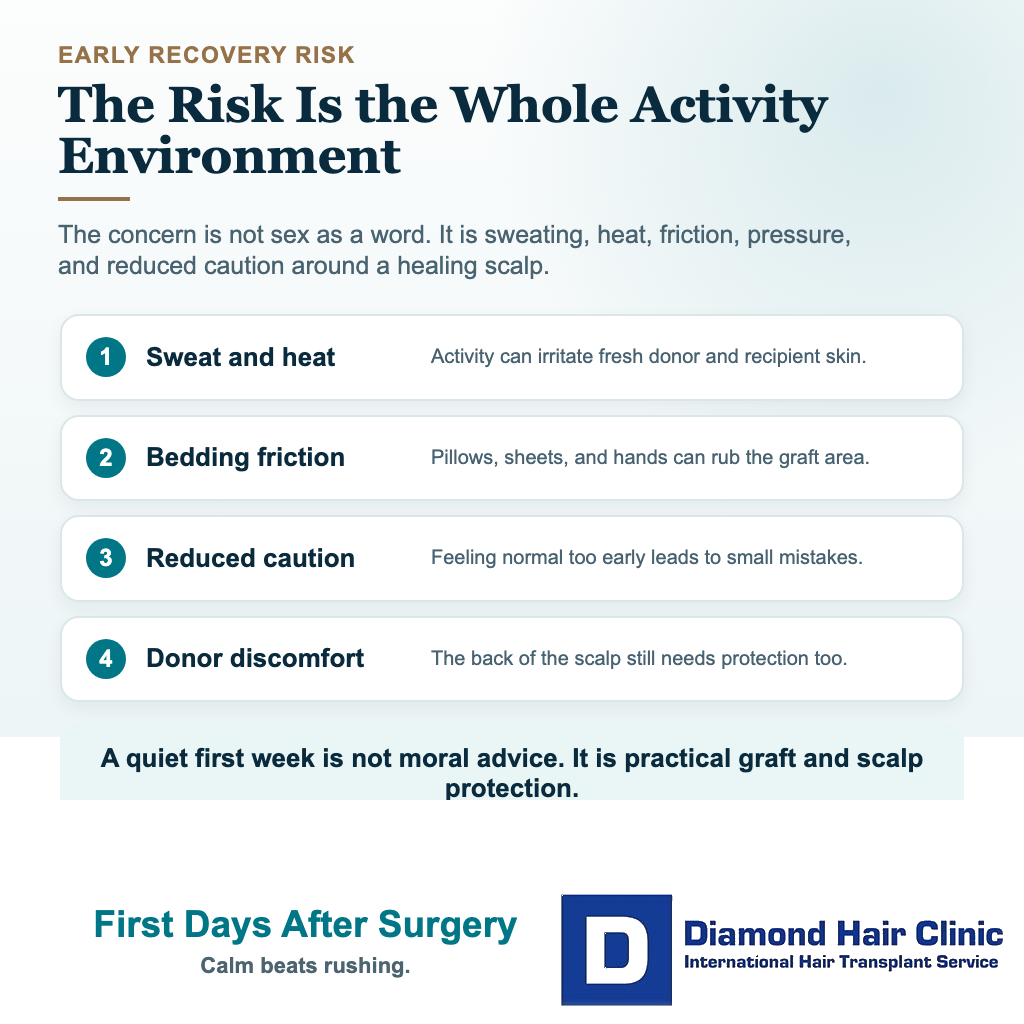
Yes, exertion can make bleeding more likely in the first days after surgery. But in real life I am usually thinking about the total setting. Warmth, movement, friction, sweat, partner contact, alcohol, medication, and whether the person can still protect the scalp all matter.
Think about the setting, not only the activity. Heat, sweat, alcohol, bedding friction, partner contact, and awkward sleep afterward can make the same decision riskier than it sounds.
Good early recovery is often uneventful. That may feel boring, but boring is useful after a hair transplant. Problems usually start when someone feels normal too soon and behaves normally before the scalp is ready.
Sweat alone is not the whole problem
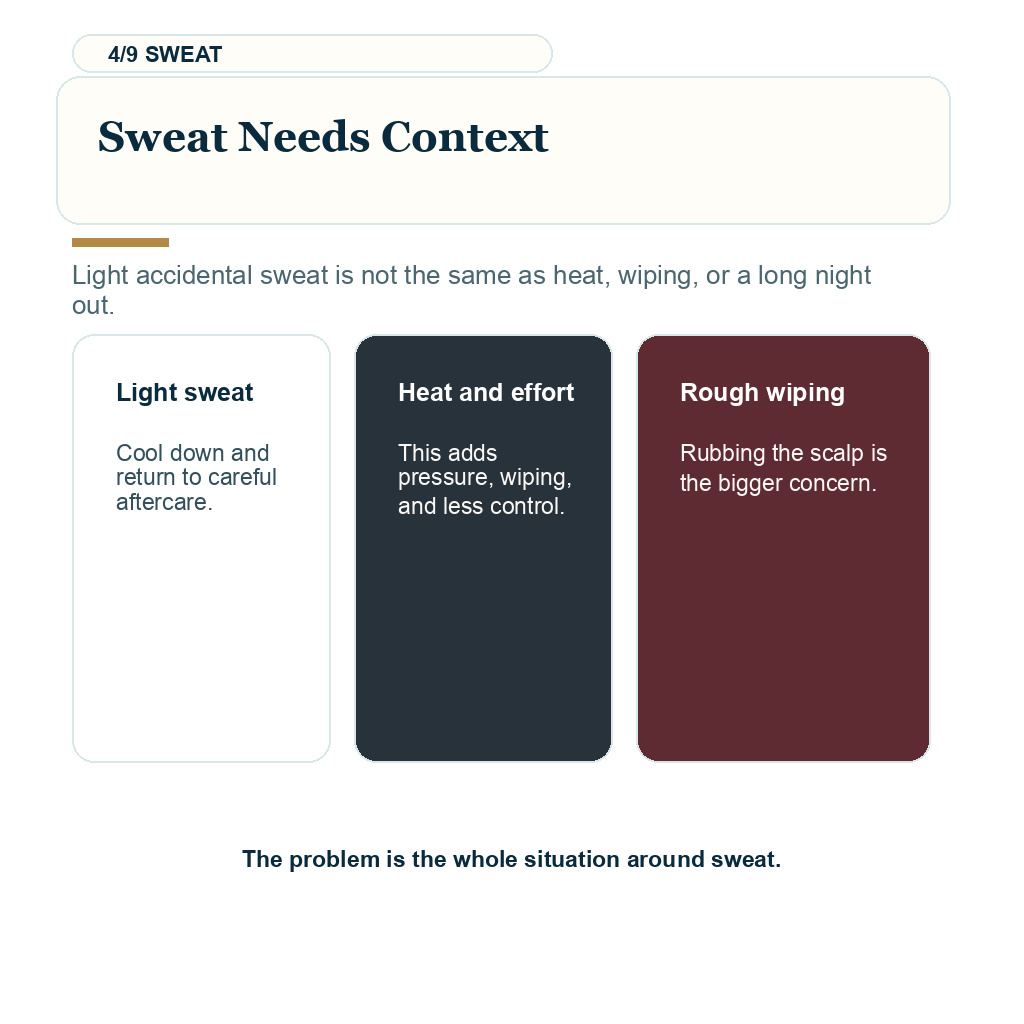
Sweat does not destroy grafts just by touching the scalp. I do not want patients afraid of every small drop of sweat.
The concern is what usually comes with sweating. Heat, activity, skin irritation, trapped moisture, wiping, rubbing, and sometimes a faster shower or rough towel afterward can all make early healing less controlled. A fresh recipient area has many small healing points, and the donor area is also recovering.
Light accidental sweating while walking slowly is different from planned heavy sweating during sex, gym training, a hot room, or a long night out. If you sweat lightly by accident, handle the scalp gently and return to the washing instructions. Do not scrub because you are anxious.
Hot weather can make the same issue harder to control, which is why my article on hair transplant in summer or winter matters here too.
Most patients should plan around about 10 days
For most patients, I keep the first 7 days very protected and advise avoiding sex for about 10 days when possible.
That 10 day advice is not a magic switch. It is a practical minimum for uncomplicated healing, and it fits with the way graft stability usually improves around day 9 to day 10. It does not mean the scalp is ready for anything.
I still want the first return to be gentle. Vigorous sex, heavy sweating, scalp rubbing, contact sports, and a long night with alcohol follow a slower logic. A person with a smaller session, minimal swelling, and clean healing is not the same as someone with heavier crusting, donor tenderness, high blood pressure, nicotine use, or slower recovery.
If your surgeon gave stricter instructions after seeing your scalp and surgery, follow that plan. The safest timeline is the one that fits the actual healing, not the shortest number found online.
Alcohol, nicotine, and erection medicines can change the decision
Many people become too casual once they feel physically well. They think they can have a drink, smoke or vape, sleep late, and return to normal life because the scalp looks acceptable. That combination works against recovery.
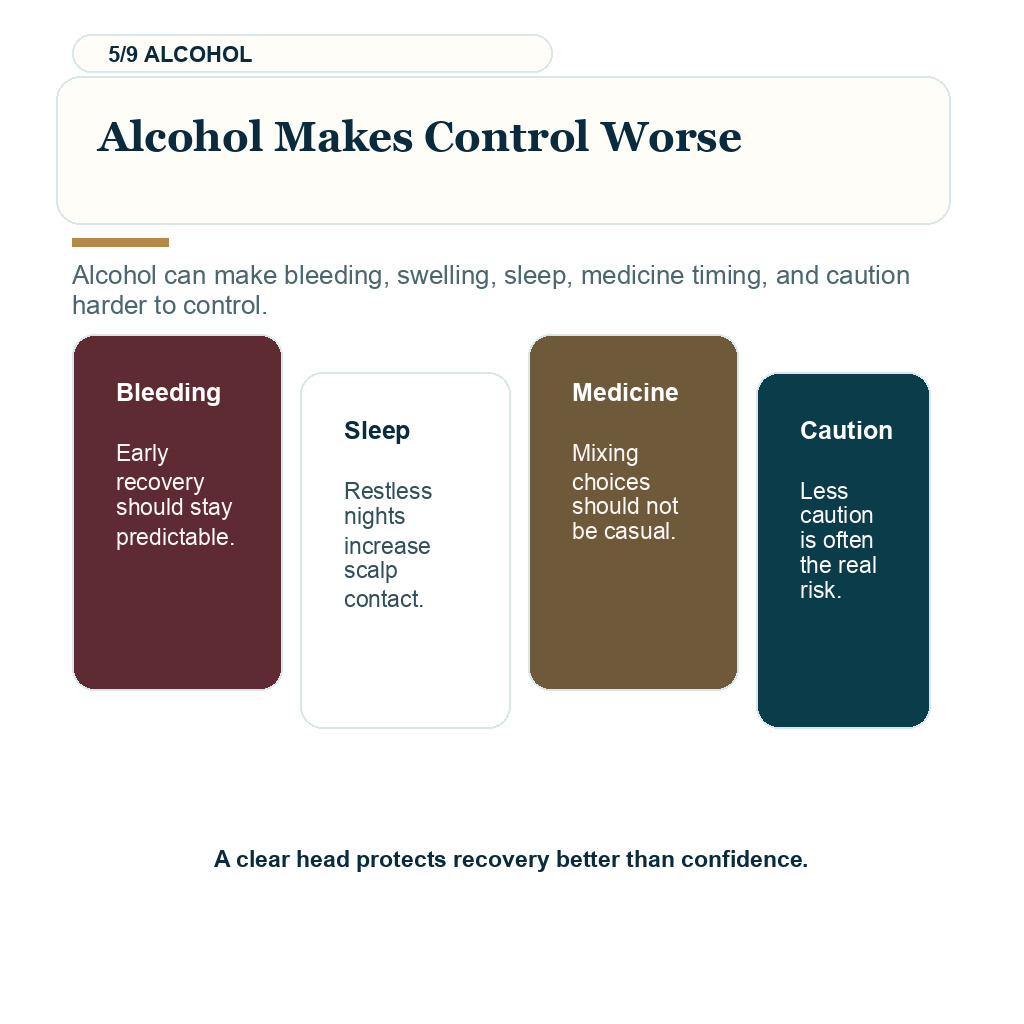
Alcohol can make bleeding, swelling, sleep, and medication judgment harder to control. Smoking, vaping, and other nicotine use can also work against wound healing. Around a fresh transplant, I do not separate sex from the wider recovery environment.
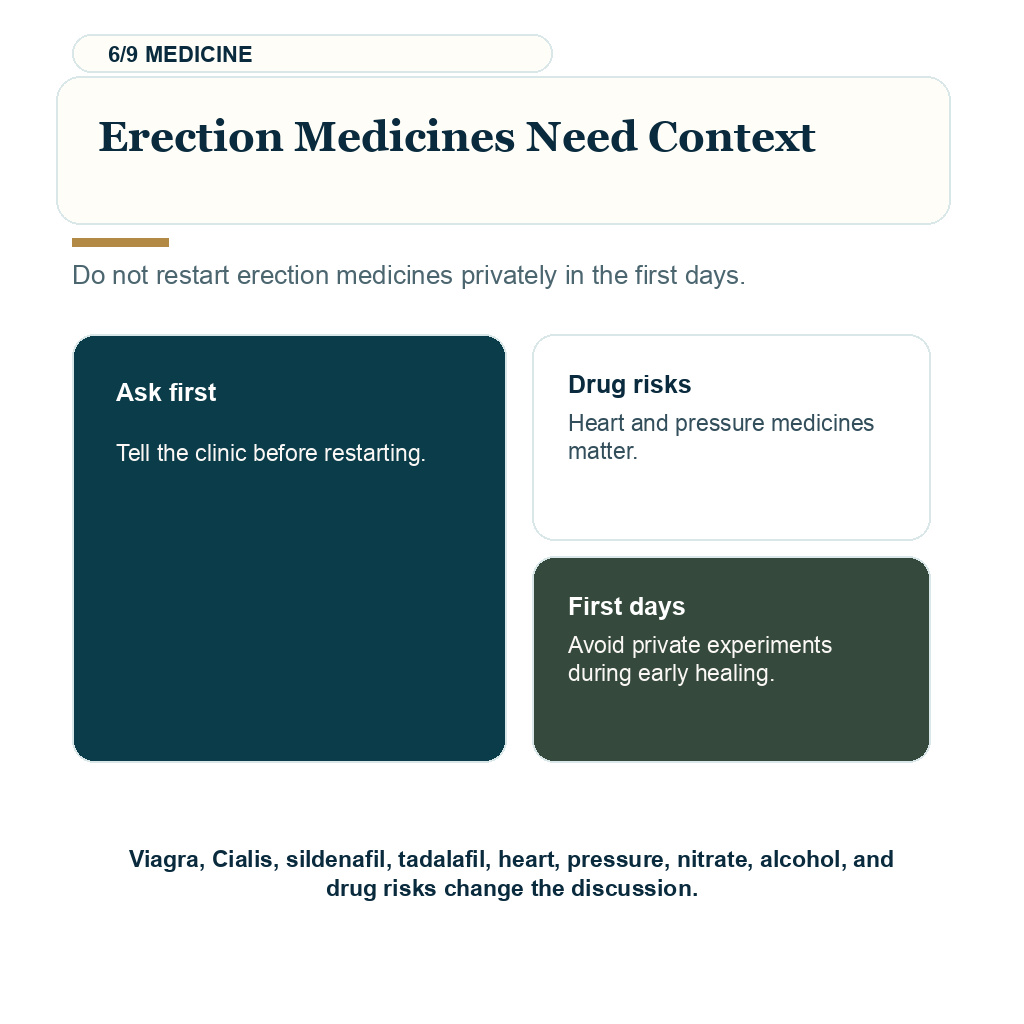
Erection medicines need medical caution too. Do not restart sildenafil, tadalafil, Viagra, Cialis, or an online sexual performance tablet privately in the first days. If you use nitrates, chest pain medicine, riociguat, blood pressure medicine, prescribed pain medicine, antibiotics, alcohol, or recreational drugs, the decision is medical, not only personal.
At this stage, sleep, washing, medication instructions, scalp protection, and avoiding avoidable mistakes matter more than proving life has already returned to normal.
Masturbation, cuddling, and intercourse are not the same
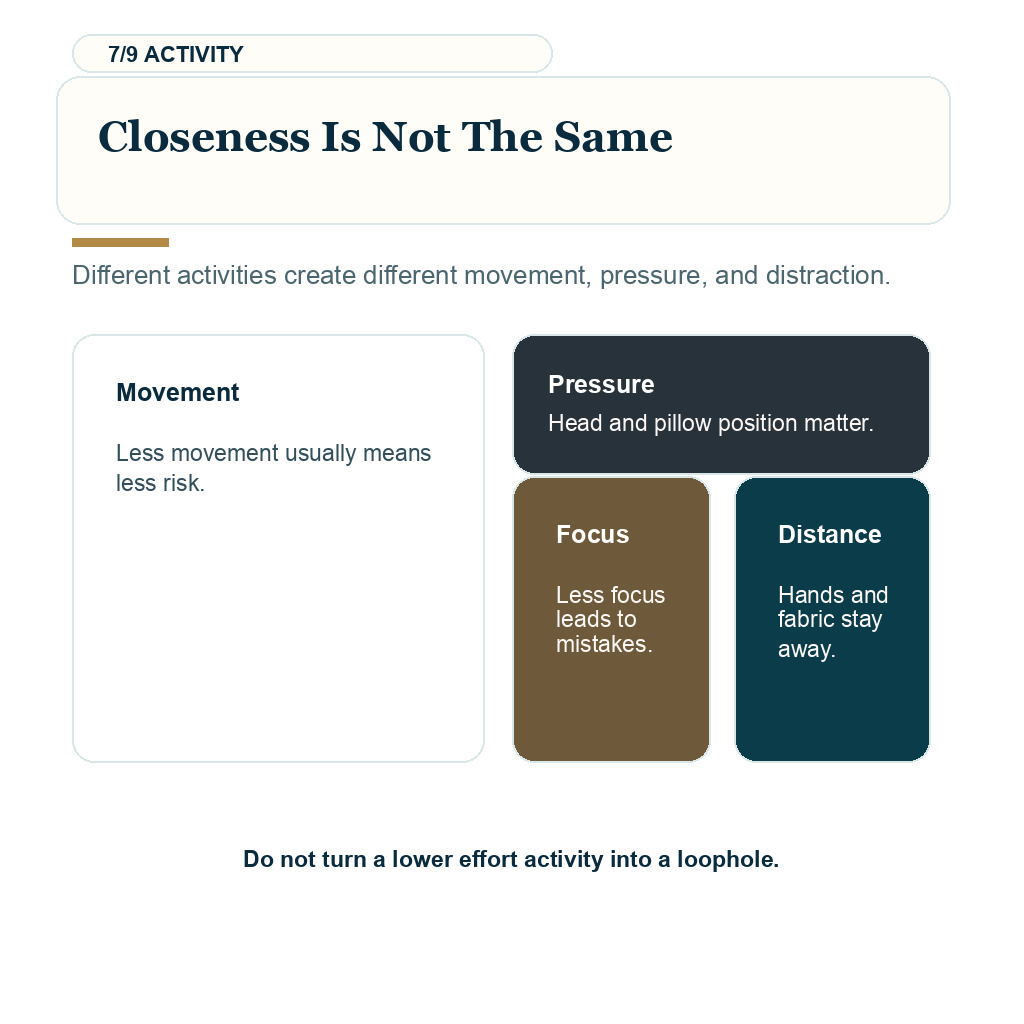
Masturbation may involve less full body movement than intercourse. Quiet closeness or kissing without scalp contact is also different from vigorous sex where the head is pressed into a pillow or a partner may touch the grafts.
Still, I do not treat masturbation as a loophole in the earliest days. If it causes straining, facial flushing, sweating, fast heart rate, pressure on the head, or distraction from protecting the scalp, it belongs in the early recovery caution period.
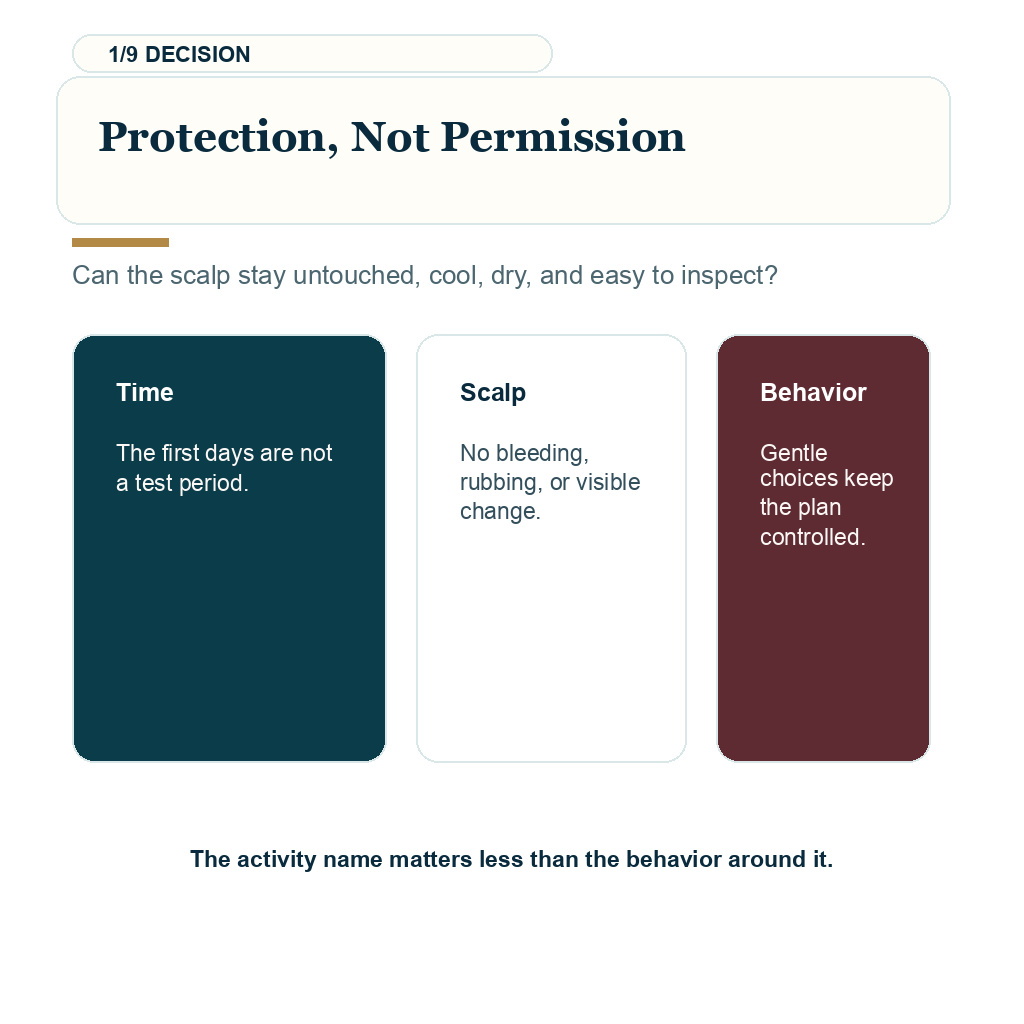
Can you keep the scalp free from rubbing, pressure, scratching, sweat wiping, and accidental partner contact? If the answer is no, wait.
Mistakes happen when normal movement returns too fast
The real mistakes are rarely dramatic. Someone starts feeling better, assumes the danger has passed, and relaxes too early.
He stops being careful when getting into bed, lies flatter than advised, touches the scalp too much, drinks earlier than planned, sweats more than expected, or ignores donor discomfort. Then he becomes anxious because the area feels more irritated, or he sees spotting, redness, or extra tenderness.
Another point is easy to miss. Many people think only about the implanted area and forget the donor area. The donor region can still feel tight, sore, sensitive, or irritated in the early days.
A poor sleeping position, sudden movement, friction, or general restlessness can make the back of the scalp more uncomfortable even if the grafts at the front were not directly touched.
Understanding the donor area properly matters because temporary healing changes can make people worry too early about permanent damage.
Early anxiety about overharvesting can be misleading. I discuss that separately in the donor area looks normal during healing guide.
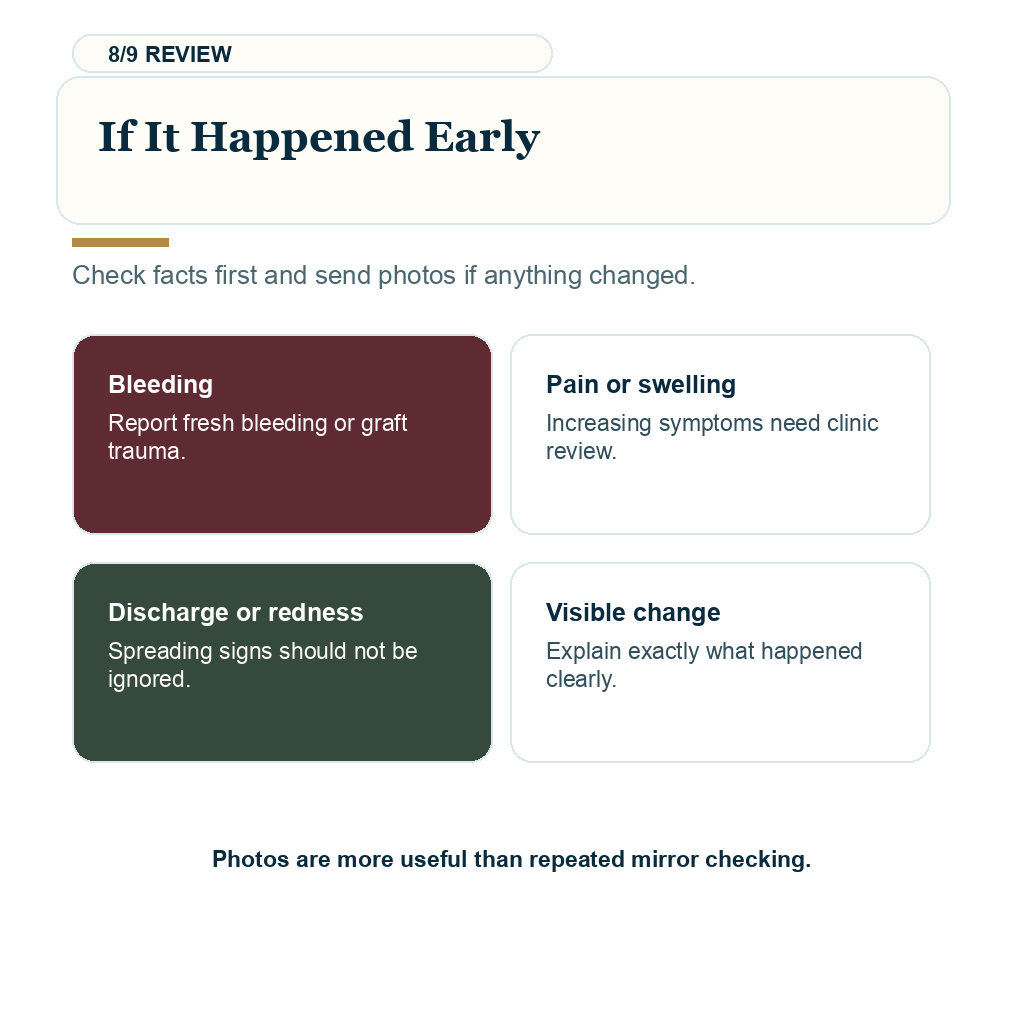
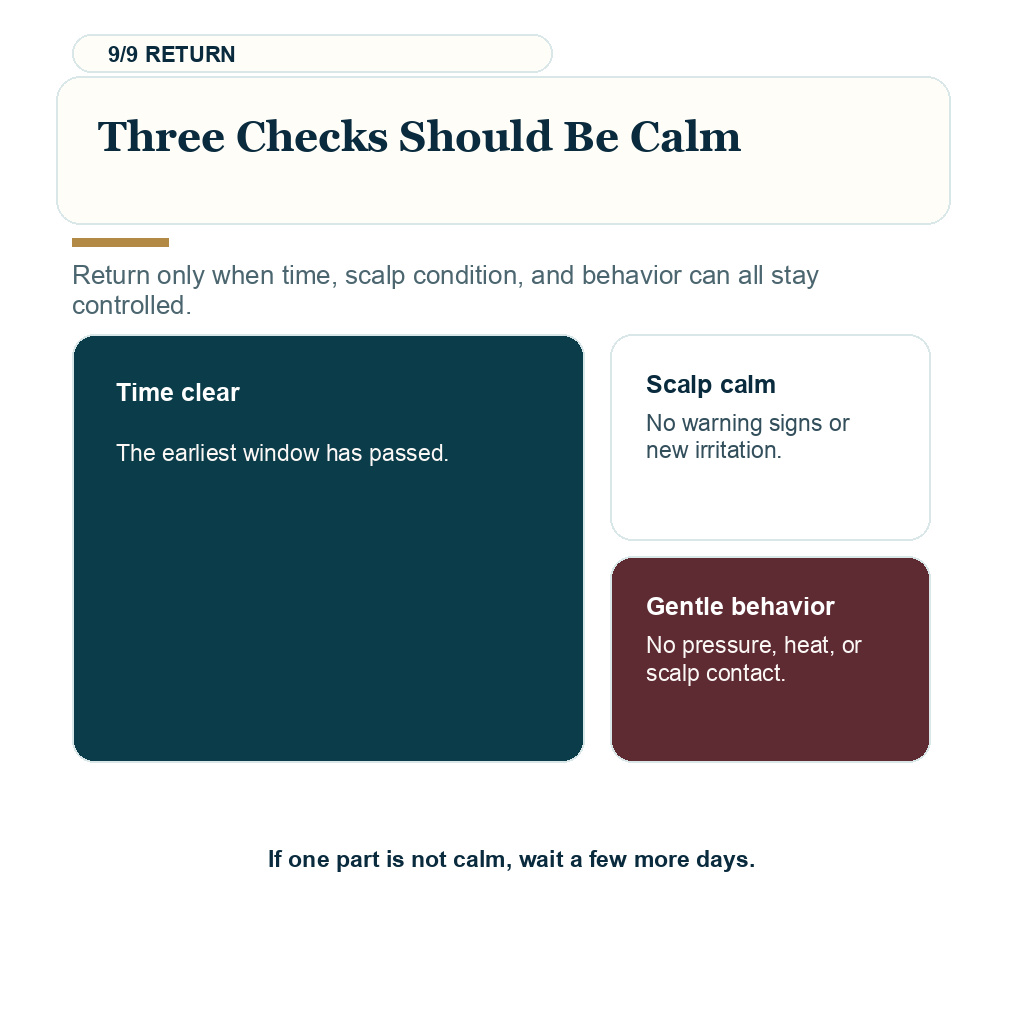
These 9 slides explain how to return gently after a hair transplant. Swipe sideways, use the arrows, or choose a number below the image.
If sex happened earlier, judge what actually happened to the scalp
Do not panic automatically. One early event does not mean the transplant has failed. What matters is what happened around it.
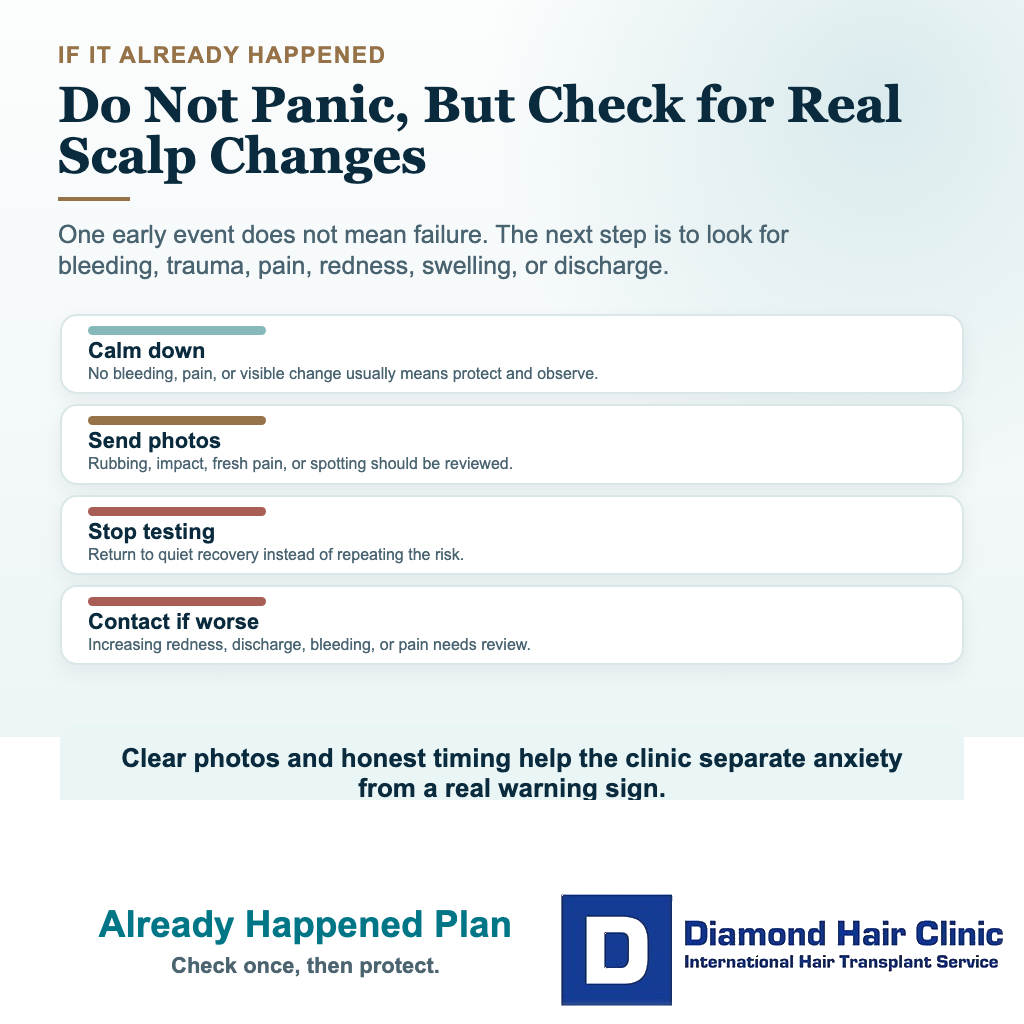
If there was no bleeding, no clear trauma, no grafts pulled out, no strong pain, no increasing swelling, and no unusual redness afterward, the practical step is usually to stop testing the timeline and protect the scalp carefully again.
Accidental light sweating is different from rubbing, impact, bleeding, fresh pain, fluid, or a visible change in the recipient area. If any of those happened, send photos taken in steady lighting and explain exactly what happened. Guessing in the mirror is much less useful than a proper photo review.
After a scare, avoid alcohol, avoid heavy sweating, keep washing gentle, and let the scalp settle.
Returning after day 10 still needs gentle judgment
Once you are past the first 10 days, things are usually more forgiving if healing has been normal.
At that stage, crusts are usually gone or nearly gone, the scalp is less vulnerable, and casual daily movements are much less concerning. If there is no bleeding, no abnormal redness, no discharge, no significant tenderness, and the donor area feels comfortable, a gentle return is usually reasonable.
Even then, keep the first return controlled. Avoid alcohol too early. Avoid heavy sweating. Keep the scalp away from pillow friction, partner hands, scratching, and rough contact. If a position puts pressure on the recipient area or donor area, change it.
There is a difference between more secure and ready for anything. That difference matters.
Warning signs that need clinic review
If physical activity of any kind is followed by bleeding, increasing pain, heat, spreading redness, discharge, or worsening swelling, or if the area feels more inflamed instead of settling, stop and contact the clinic.
Request medical review if there is persistent fresh bleeding, pus or yellow discharge, a bad smell, fever, feeling generally unwell, a wound that opens, clear graft trauma, or a visible gap or change in the recipient area.
Many patients later become frightened by normal shedding and confuse it with graft loss. That is a different issue. If that concern appears in the coming weeks, separate normal shedding from true graft loss. Those issues are often misunderstood, especially when judging shedding of transplanted hair or the permanent loss of grafts.
Return only when the scalp stays calm
Sex after FUE is not only about the calendar. The setting matters. Heat, sweat, alcohol, bedding, partner contact, and hands near the grafts can all change the risk.
After the protected early window, usually around ten days in uncomplicated healing, a gentle return is more reasonable when there is no bleeding, discharge, unusual redness, open area, strong tenderness, or active swelling.
If something happened early, judge the scalp rather than assuming failure. New bleeding, impact, graft movement, fresh pain, or a visible change in the recipient area should be reported. When none of those happened, the better response is to stop testing the timeline and protect the scalp again.
Read this review excerpt
We also had a levelled conversation about my hairline and results I could expect based on my donor density area.