





Fast doctor contact signs after surgery
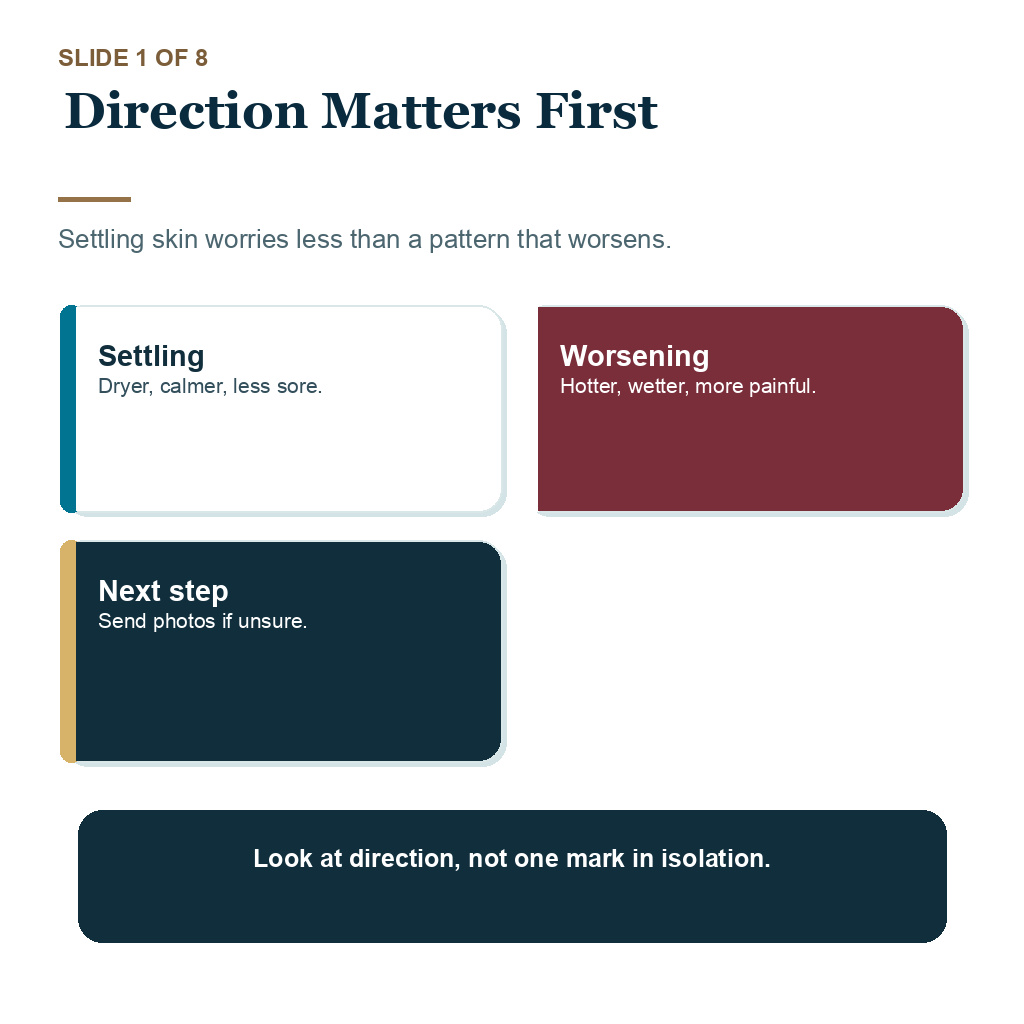
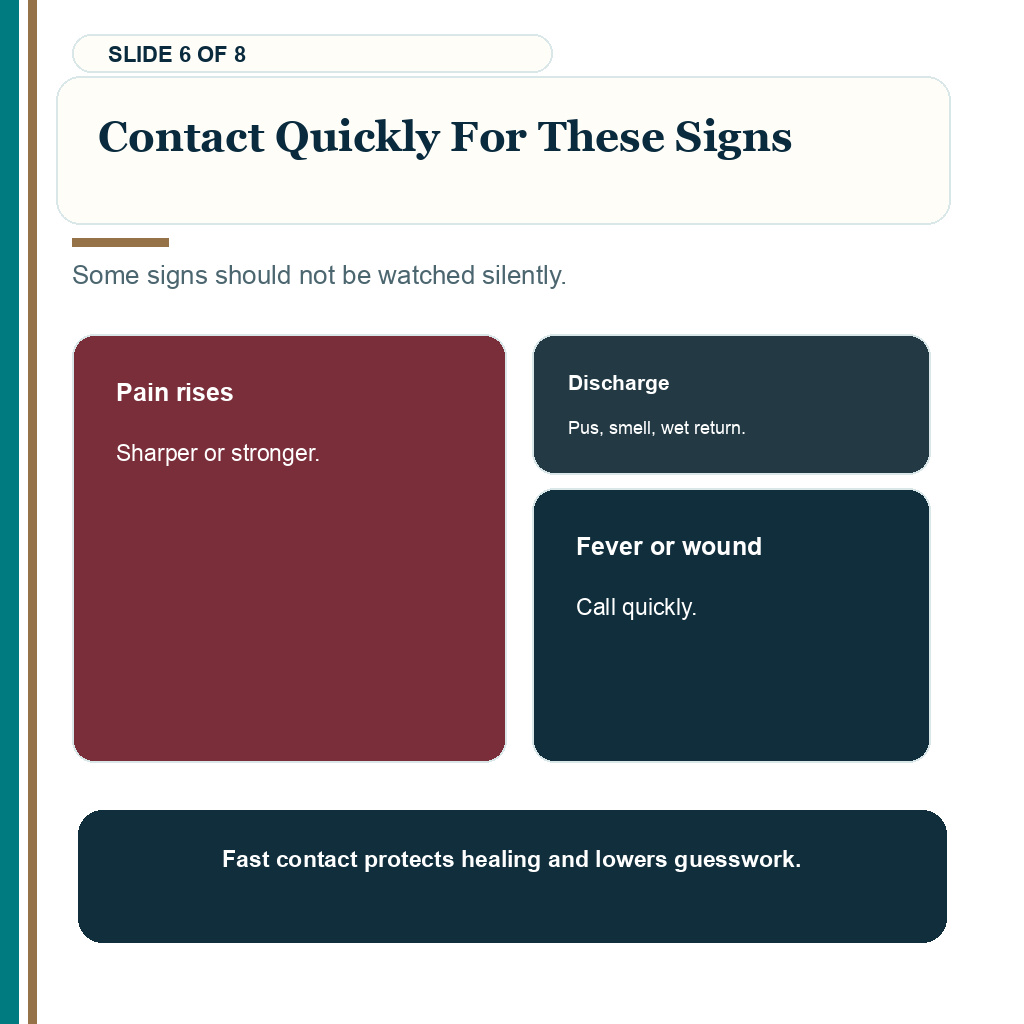
Every mark does not need to become an emergency, but a clearly worsening pattern should not be watched silently. Some signs should lead to quick contact with the doctor or clinic.
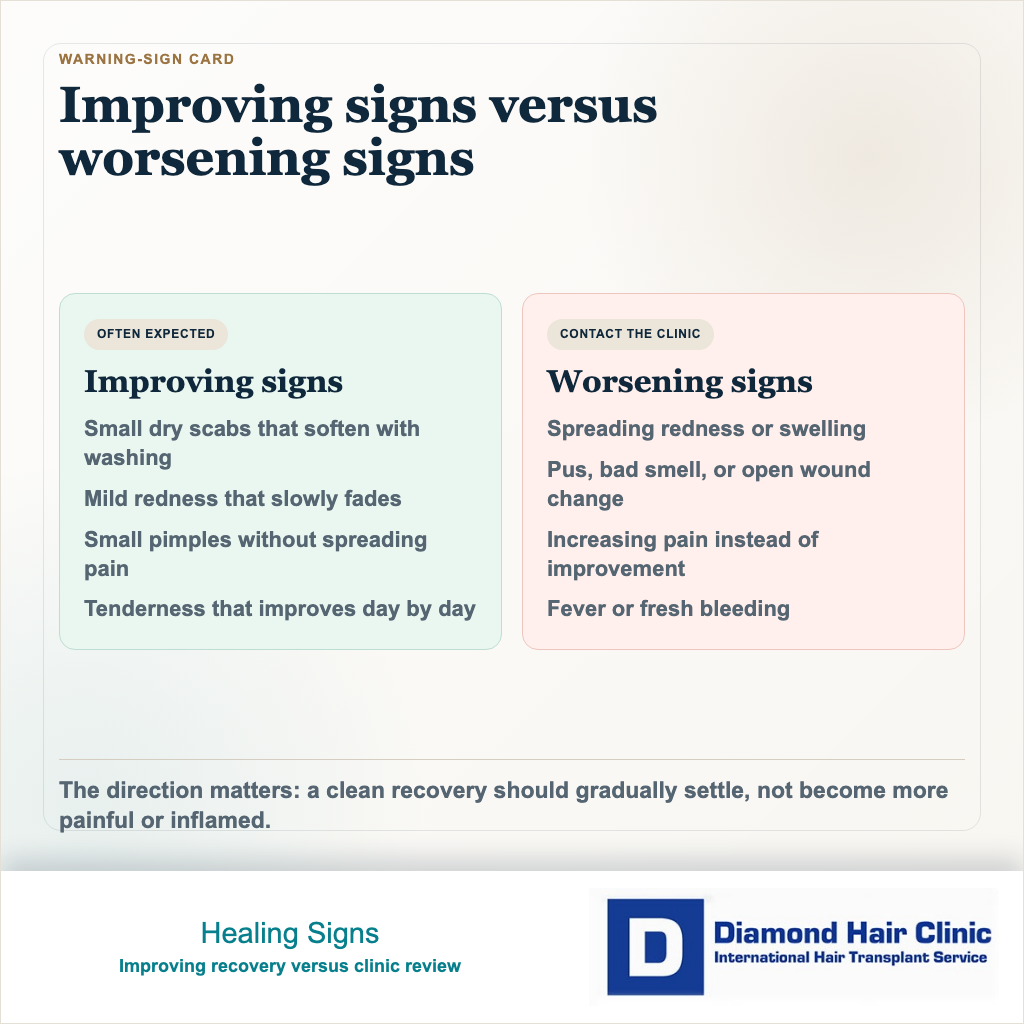
Increasing pain is one of the clearest warning signs. Mild soreness can be normal, but pain that becomes stronger, sharper, or more localized after the first days needs review.
Spreading redness is another sign. A little pinkness can be normal, but redness that expands outward, becomes hot, or looks angry is different.
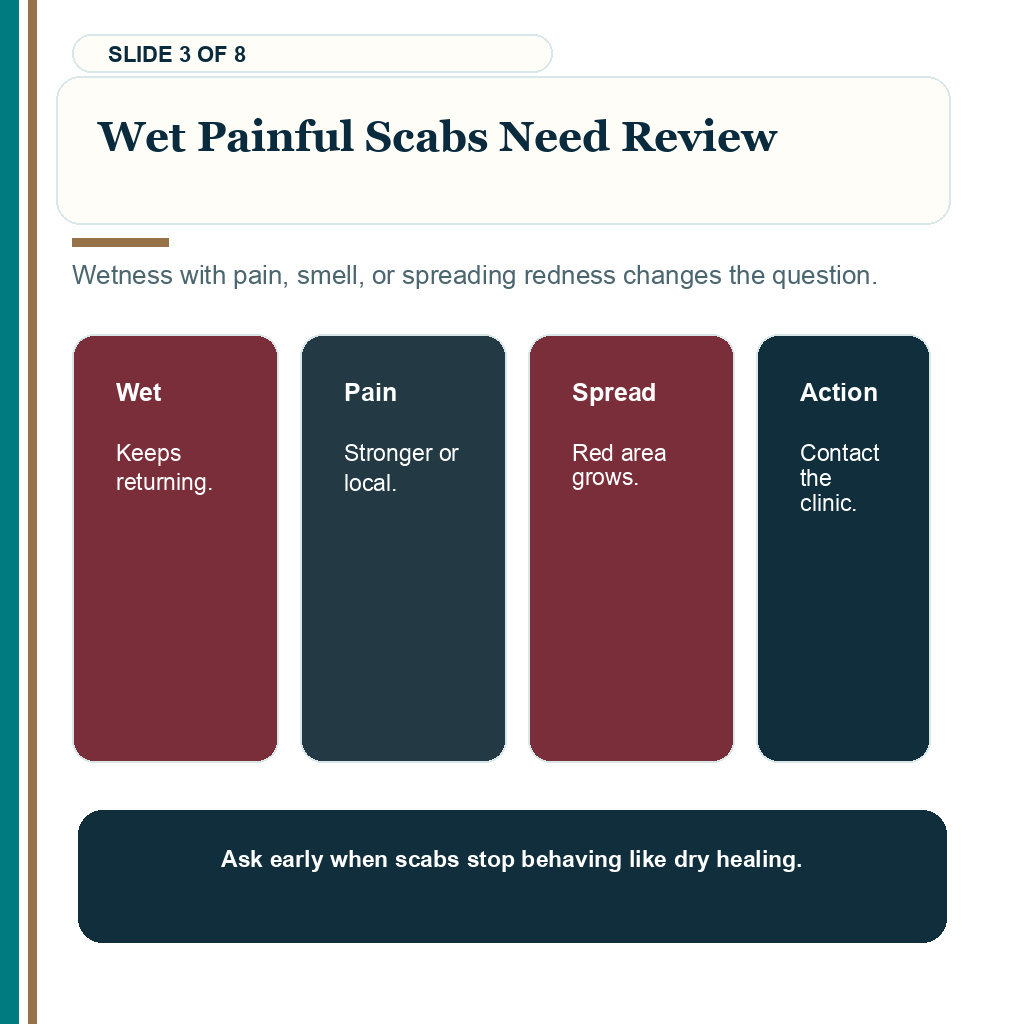
Discharge matters too. Clear or slightly bloody moisture can happen early. Thick pus, bad smell, yellow fluid that keeps returning, or persistent wetness changes the situation and should not be ignored.
Fever, chills, severe swelling, deep wounds, black looking tissue, and skin that appears to be breaking down are not signs to watch silently. These are reasons to seek medical assessment quickly.
If the concern is mainly the donor area looking patchy, red, or uneven, that may still improve with time. I explain this separately in my article on whether the donor area looks normal after FUE.
But if the donor area has worsening pain, discharge, a foul smell, or increasing inflammation, that is no longer only a cosmetic concern. That is a healing concern.
The recipient area needs a different discussion. If hairs shed after surgery, that can be normal. The difference between hair shedding or permanent graft loss is a separate question from wound healing.
But shedding is not the same as tissue damage. A hair falling from a graft is one thing. A wound becoming painful, dark, wet, or infected is another.
Clear contact after surgery matters even more for patients who traveled and returned home. If you traveled for surgery and then returned home, you still need a clear medical contact route with your clinic.
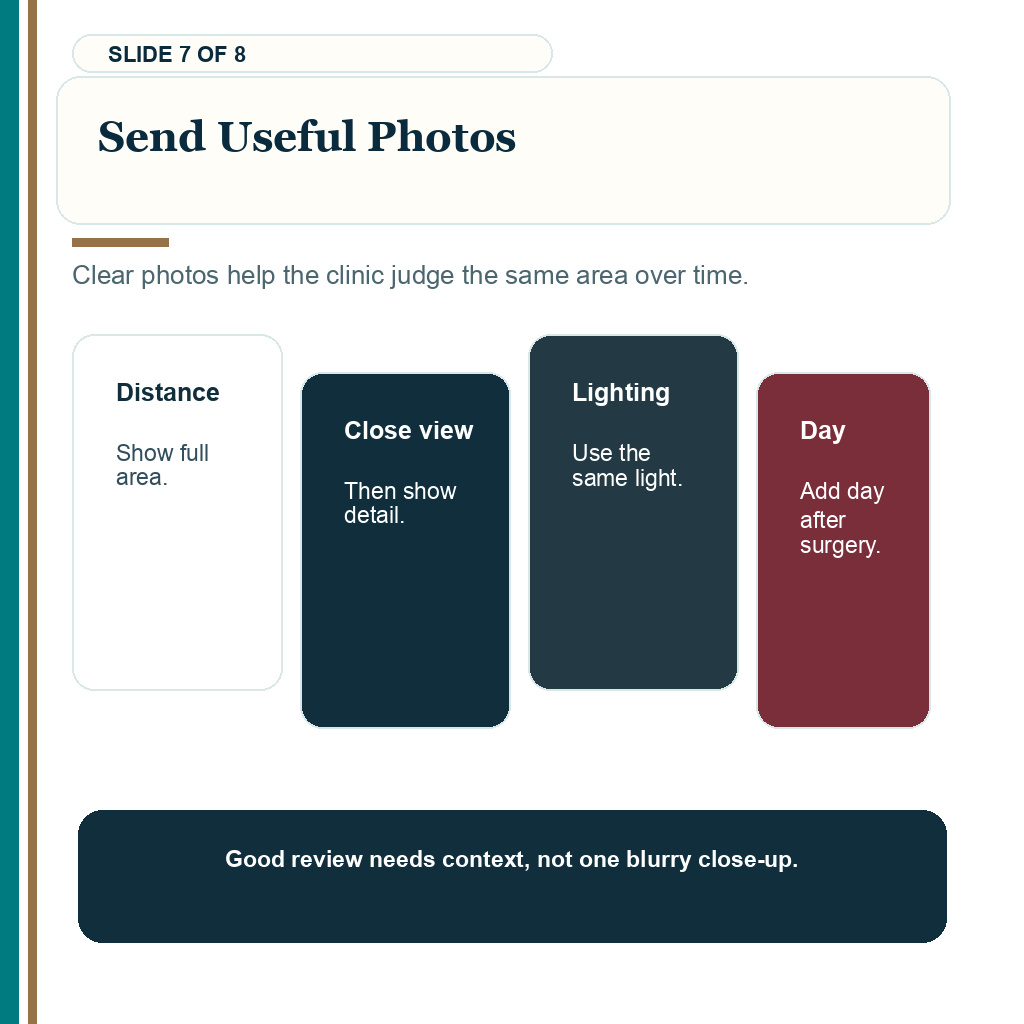
Photos are useful, but they must be clear, recent, and taken in normal light. If the situation looks serious, an examination in person with a local doctor may also be needed.
If you are specifically worried that dark scabbing may point to necrosis or that scabs came off with grafts, I explain those concerns separately.
If the main concern is a flat darker recipient area color rather than a scab or pimple, use the guide to dark scalp color after FUE.

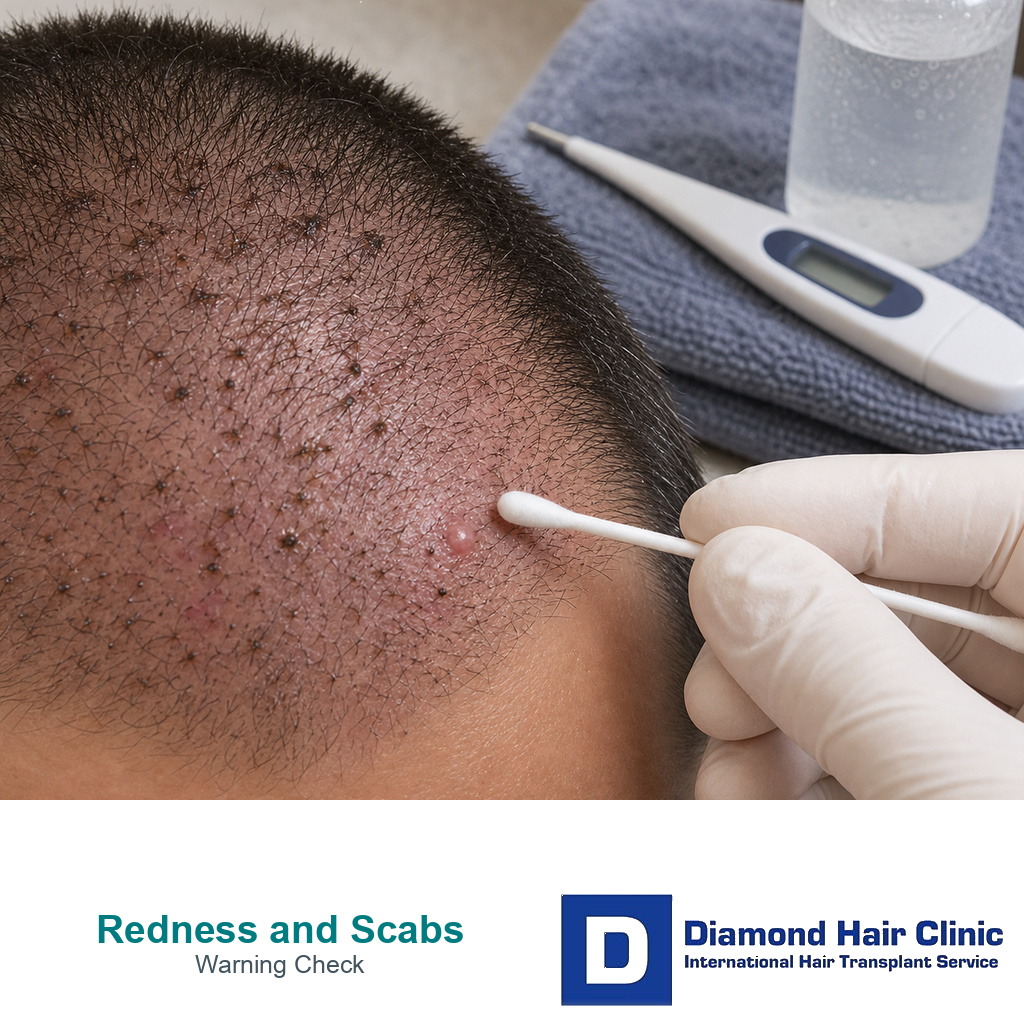
Redness, scabs, and pimples are easier to judge when photos show the same area under similar light over time.
Useful photos help the clinic judge the problem
For a concern after surgery, the photos matter. A useful photo is clear, recent, and taken in normal light. It should show the whole concerned area first, then a closer view if needed. An extreme close photo can make every pore look alarming and may hide the real pattern.
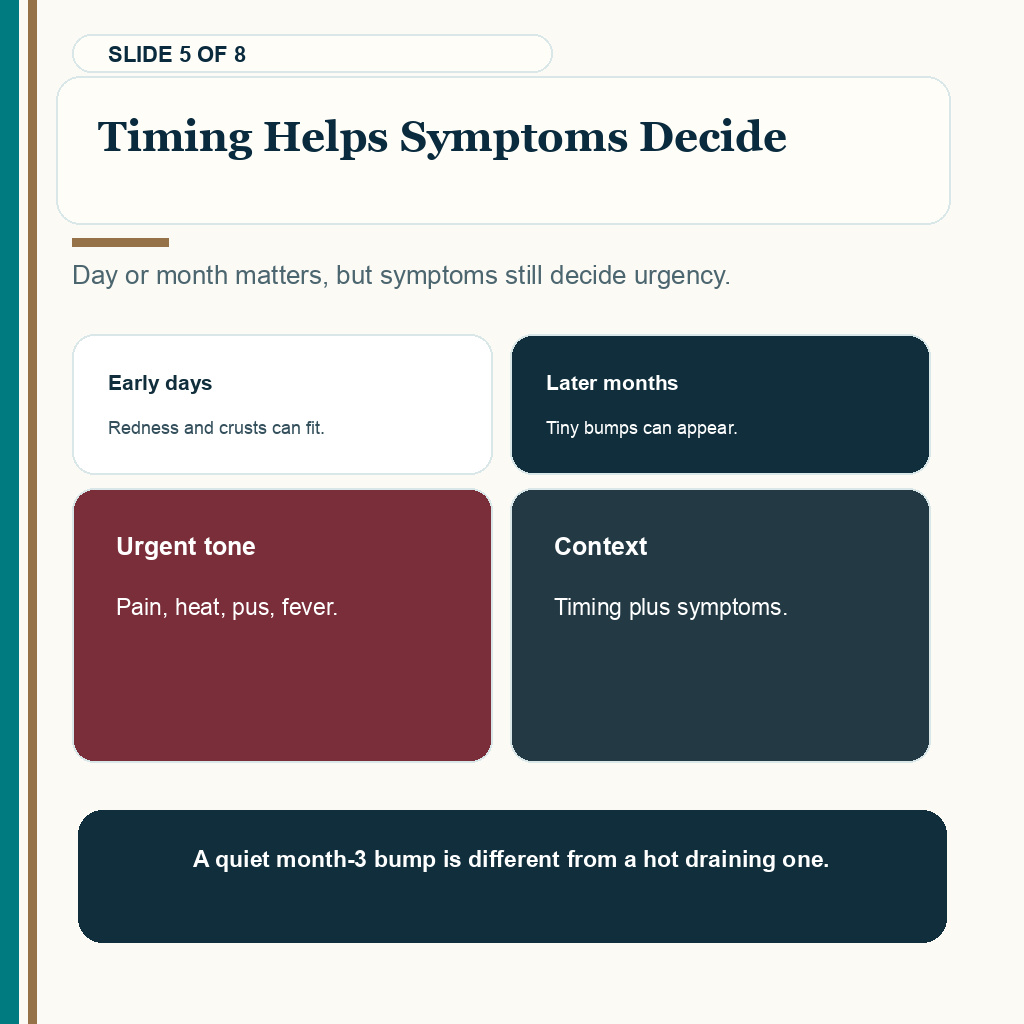
I need to know the surgery day, the day after surgery when the photo was taken, whether pain is increasing, whether there is fever, whether there is fluid or smell, and whether the area is spreading or slowly improving. The trend often tells me more than one dramatic image.
If there is active bleeding, pus, black or grey tissue, a wound opening, fever, or rapidly increasing pain, do not rely only on messages. Contact the clinic quickly and seek local medical assessment if the situation looks urgent.
Good photo follow-up should not create more fear. It should give the surgeon enough information to separate normal healing from a real warning sign.
Result protection needs calm monitoring, not daily panic
Follow the instructions from your own surgeon before using outside advice. After a hair transplant, random advice can become unsafe because each clinic may use a slightly different washing schedule, medication plan, and recovery protocol. If the outside advice came from an AI reading of a close photo, review AI recovery photo advice before changing products or washing pressure.
In general, be gentle with the grafted area, avoid scratching, avoid unnecessary touching, sleep carefully in the early days, and keep the scalp clean according to the plan given by the clinic.
Good healing is not created by checking the mirror every 20 minutes. It is supported by steady, consistent aftercare and by reporting the signs that genuinely change the decision.
Take photos in normal lighting every few days rather than frightening yourself with extreme close-ups. Very close phone photos can make every pore, red dot, and scab look dramatic.
If you are comparing your day 7 scalp to someone else’s perfect photo, you are probably not comparing fairly. Different skin types, graft numbers, hair color, scalp contrast, washing routines, and surgery techniques can create different early appearances.
Later growth concerns need the same patience. Growth takes time, and I explain how I judge a mature hair transplant result once the result has had enough time to develop.
Protecting the scalp is not the same as being afraid of the scalp. Wash as instructed, take the prescribed medication correctly, and then allow the body to heal.
Too much touching usually comes from anxiety, not from need. The grafts do not become stronger because you check them all day.
Still, patience should never be used as an excuse to ignore a true medical warning. There is a balance.
Avoid panicking over every scab, squeezing every bump, scratching an itchy area, starting random creams, or changing antibiotics after a hair transplant without medical guidance.
But also do not ignore worsening pain, spreading redness, pus, bad smell, fever, black tissue, or a wound that looks deeper each day. When healing is moving in the wrong direction, contact your doctor.
That is the balance. Do not live in fear of every scab, but do not explain away a wound that is becoming more painful, wet, hot, or unhealthy.
A hair transplant does not end with placing grafts. The scalp still needs protection, careful handling, and contact with the surgeon during the healing process.
If the scalp has been recently irritated by treatments such as microneedling before a hair transplant, the skin should settle before redness is judged after surgery. If redness began after needling was restarted too early after surgery, stop and reassess rather than assuming the transplant has failed.
Careful planning at Diamond Hair Clinic does not end when surgery is finished. It continues through clear follow-up, useful photo updates, and direct review when a healing sign does not behave normally.
So if you are looking at your scalp today and wondering whether something is normal, start with the direction of change. A healing scalp should gradually settle. A worsening scalp deserves direct medical attention.
If the scabs are long gone but the color remains visible, compare the timing, triggers, bumps, and warning signs in the pink recipient area months after FUE guide before judging the grafts by color alone.

Read this review excerpt
Upon arriving home, I sent 4 photos (of each side of head) after every washing process to doctor for checking where I was given personal advice for how to take care of my healing head.