


Burning Scalp Symptoms Need Trend Review
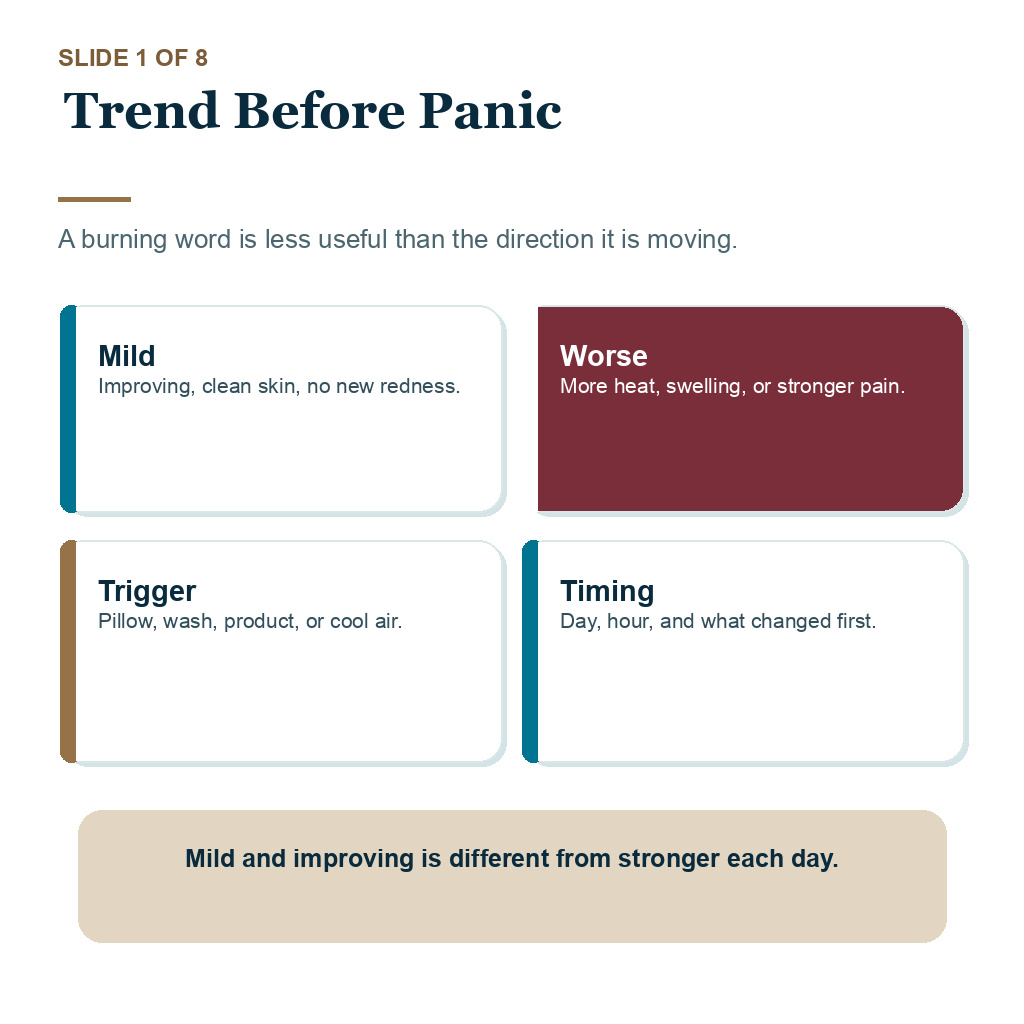
A burning scalp after a hair transplant can be part of early healing when it is mild, improving, and not linked with visible skin changes. It can come from healing nerves, tight scabs, dryness, donor area extraction trauma, product irritation, or inflammation. Burning becomes more concerning when it gets stronger each day, feels hot to the touch, appears with spreading redness, pus, fever, bad smell, strong swelling, black or grey skin change, or pain that prevents sleep.
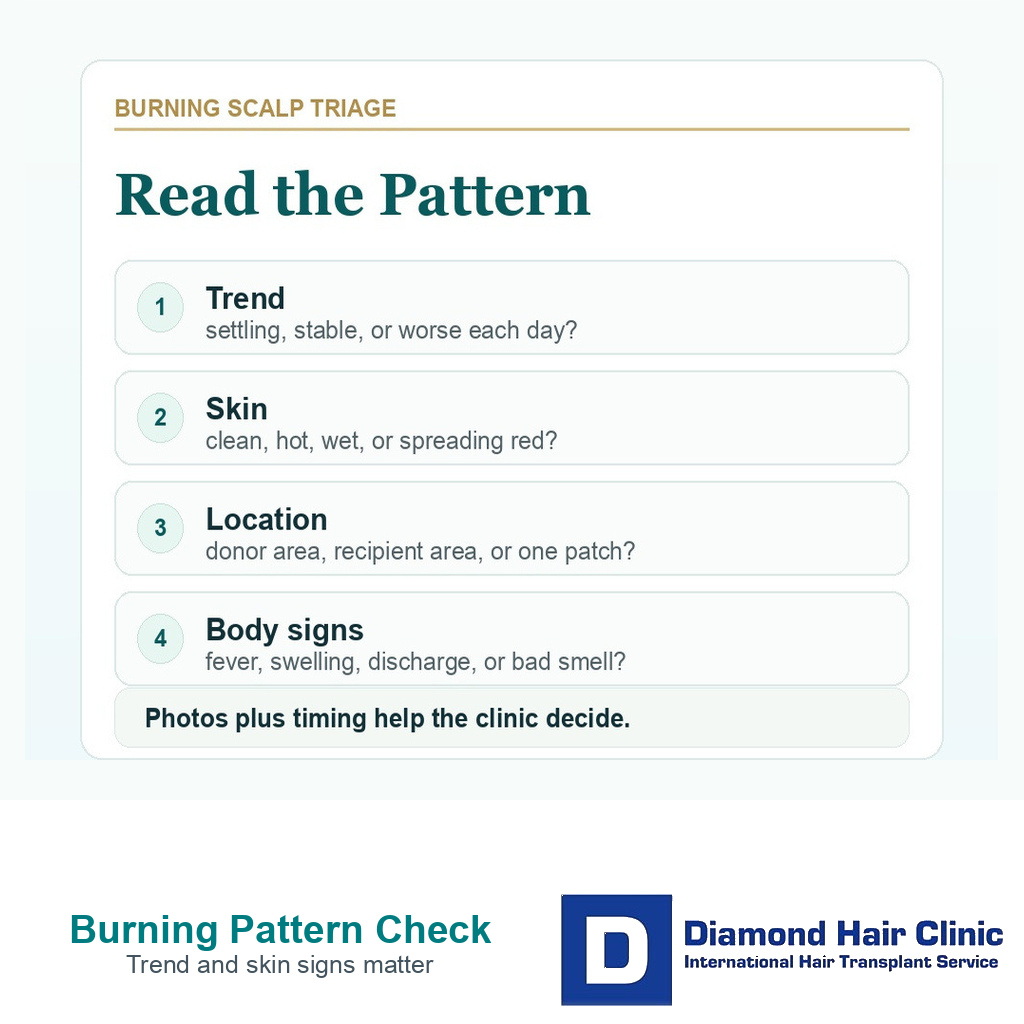
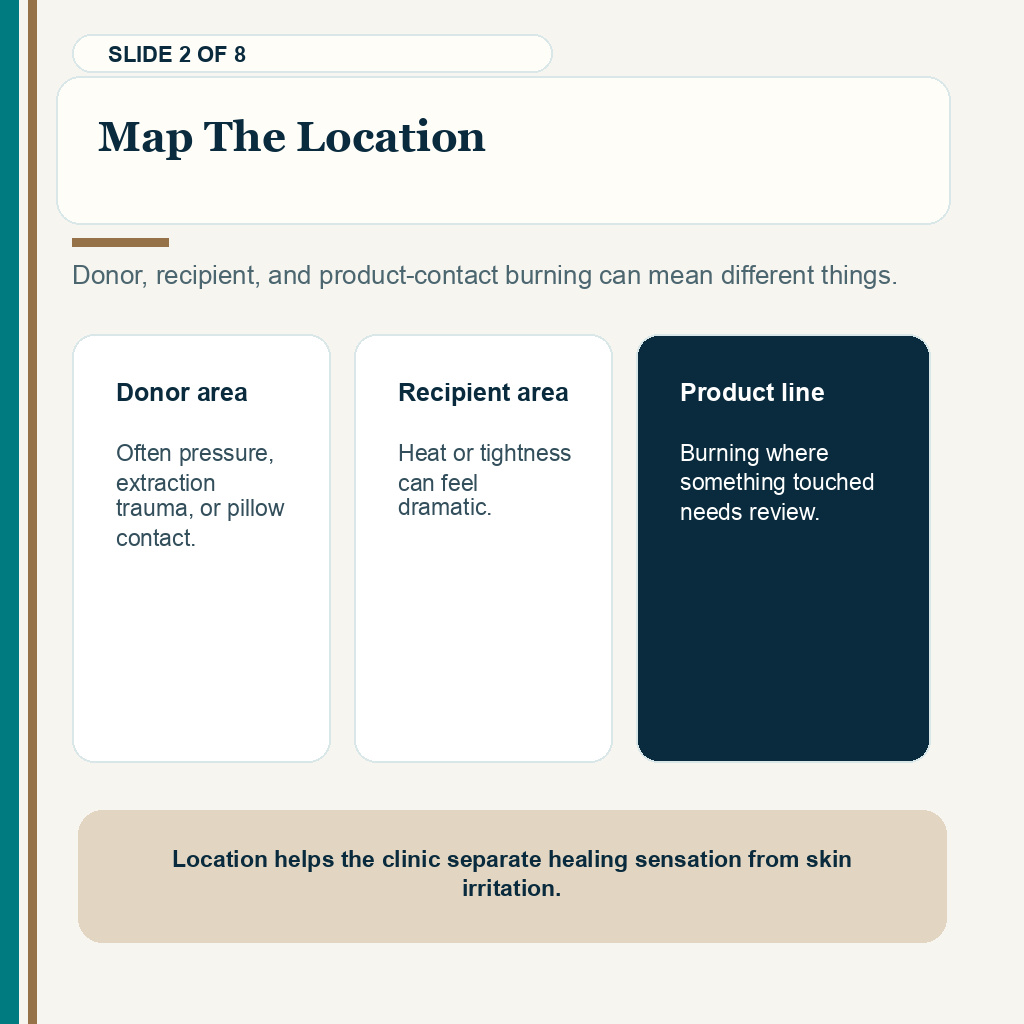
Location matters. Donor burning, recipient area burning, and burning only where a product touched the skin can point to different causes. The trend matters more than one word such as burning, stinging, or tightness.
Write down what touched the area before the burning started. Sweat, a new shampoo, a tight hat, or extra cream can change what the symptom means.
If burning starts after a product, wash, hat, or sweaty walk, record that trigger before adding something new. The trigger often matters more than the name of the sensation, because product contact, pillow pressure, sweat, and infection signs lead to different decisions.
Strange sensations do not need panic, but a worsening pattern should not be hidden under creams, oils, medicated shampoo, or extra pain tablets. If the scalp feels on fire, send clear photos, describe the timing, and explain exactly where the feeling is strongest. The clinic can judge far more from that pattern than from the word burning alone.
Burning can have several causes after surgery
Burning is not one single diagnosis. It is a sensation. In the first recovery days, the donor area may burn because thousands of tiny extraction points are healing. The recipient area may feel hot, tight, prickly, or electric because the skin has been opened many times and the small nerve endings are irritated.
That can be part of recovery, especially when the scalp looks clean and the sensation is slowly settling. The same person may also feel numbness, tightness, itching, and pressure at different times. If pulling and pressure are stronger than burning, I review scalp tightness after FUE as its own recovery pattern. If reduced sensation is the main issue, I separate it from numbness after a hair transplant.
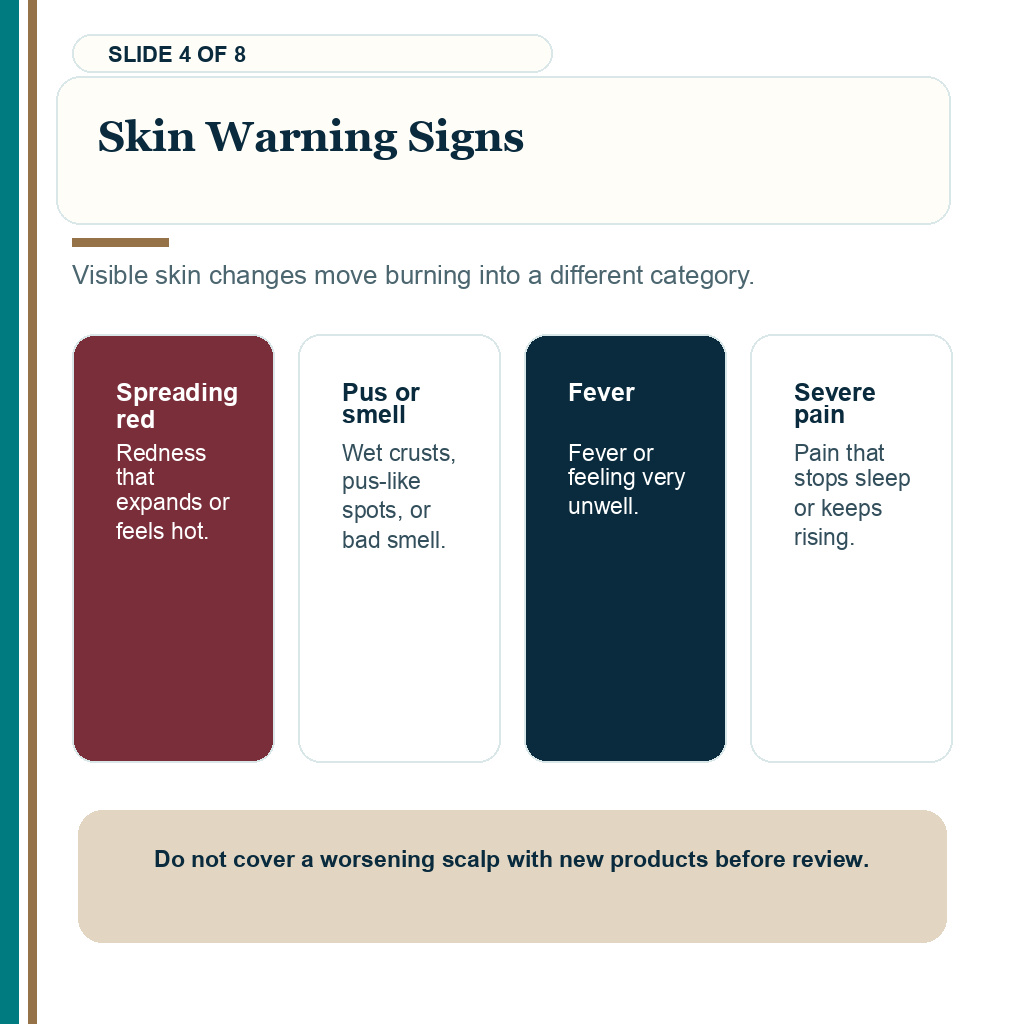
The situation changes when the burning is increasing instead of decreasing. Worsening burning plus visible skin change needs clinic review. I pay more attention when the scalp becomes hotter, redder, wetter, swollen, or more painful, or when you feel unwell.
Donor area burning a few days later
The worst discomfort is not always immediate. Day 4, day 5, or day 7 can arrive and the donor area may suddenly feel sharp, hot, or raw. That delay is frightening because it feels like something new must have gone wrong.
There are several possible reasons. The local anesthesia has fully worn off. The tiny extraction sites are drying and tightening. Short shaved hair can irritate the skin as it grows. The back of the head may be pressed against a pillow for many hours. If sleep is poor, every sensation feels stronger.
Some donor soreness, burning, and pressure sensitivity can fit normal FUE recovery, but the intensity still matters. A donor area that burns only when it touches the pillow is different from one painful hot patch that keeps worsening. If the pain is severe, stronger on one side, disturbing sleep, or appearing with heat, swelling, discharge, or fever, I treat it closer to severe donor area pain after FUE and ask for clinic review rather than waiting quietly.
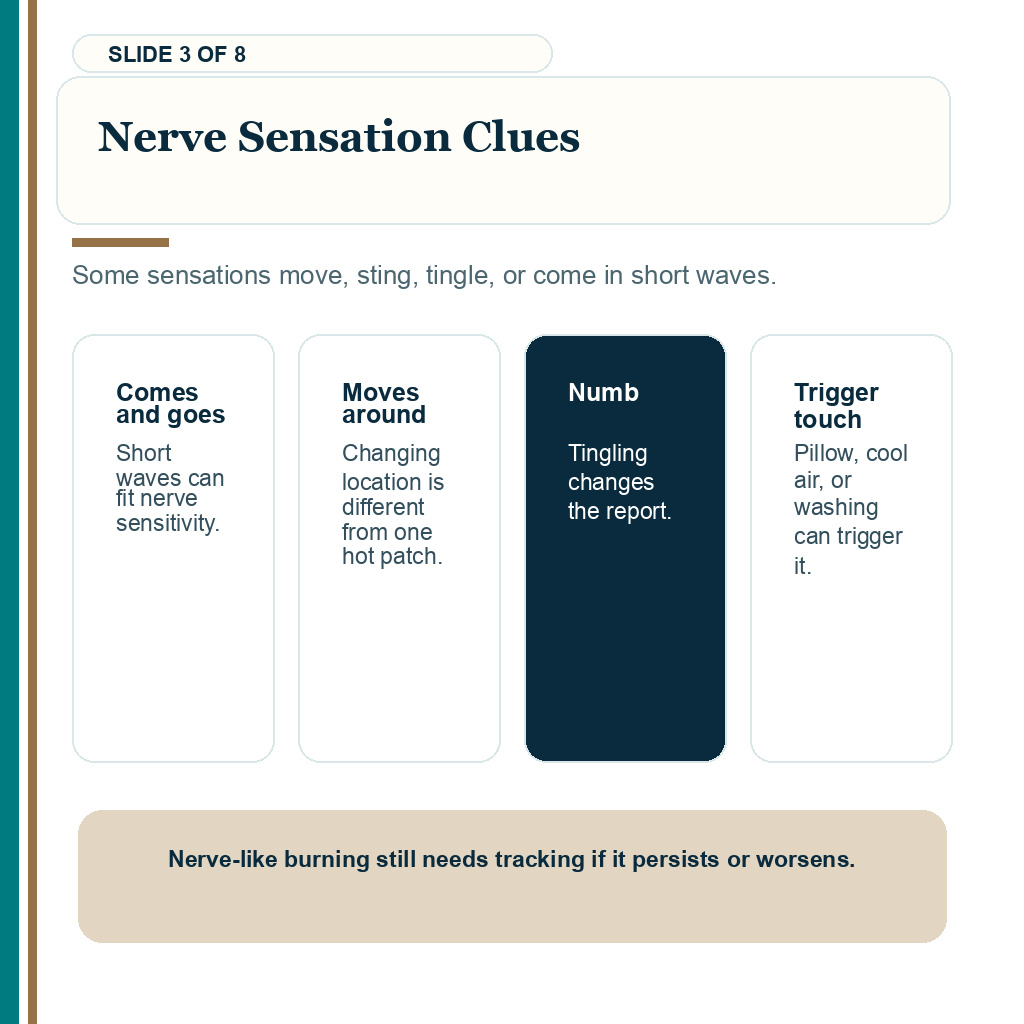
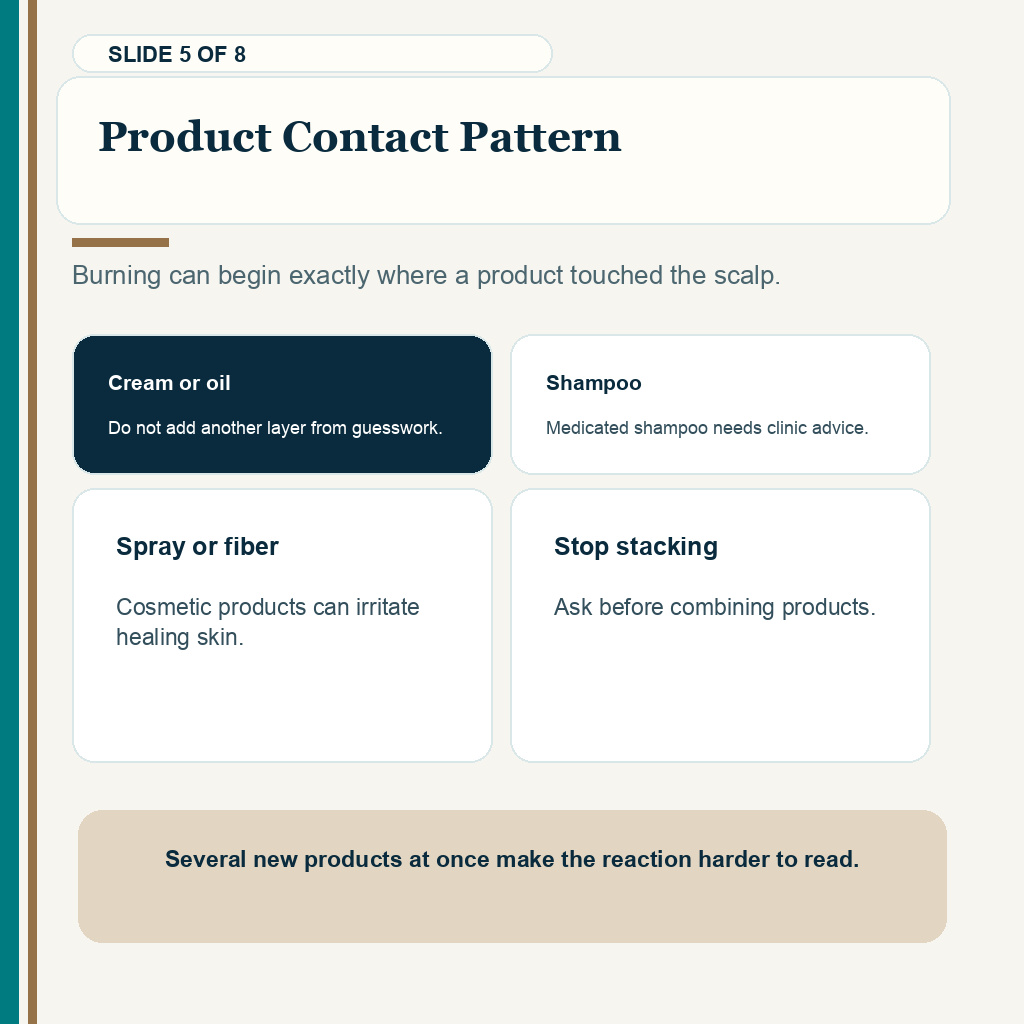
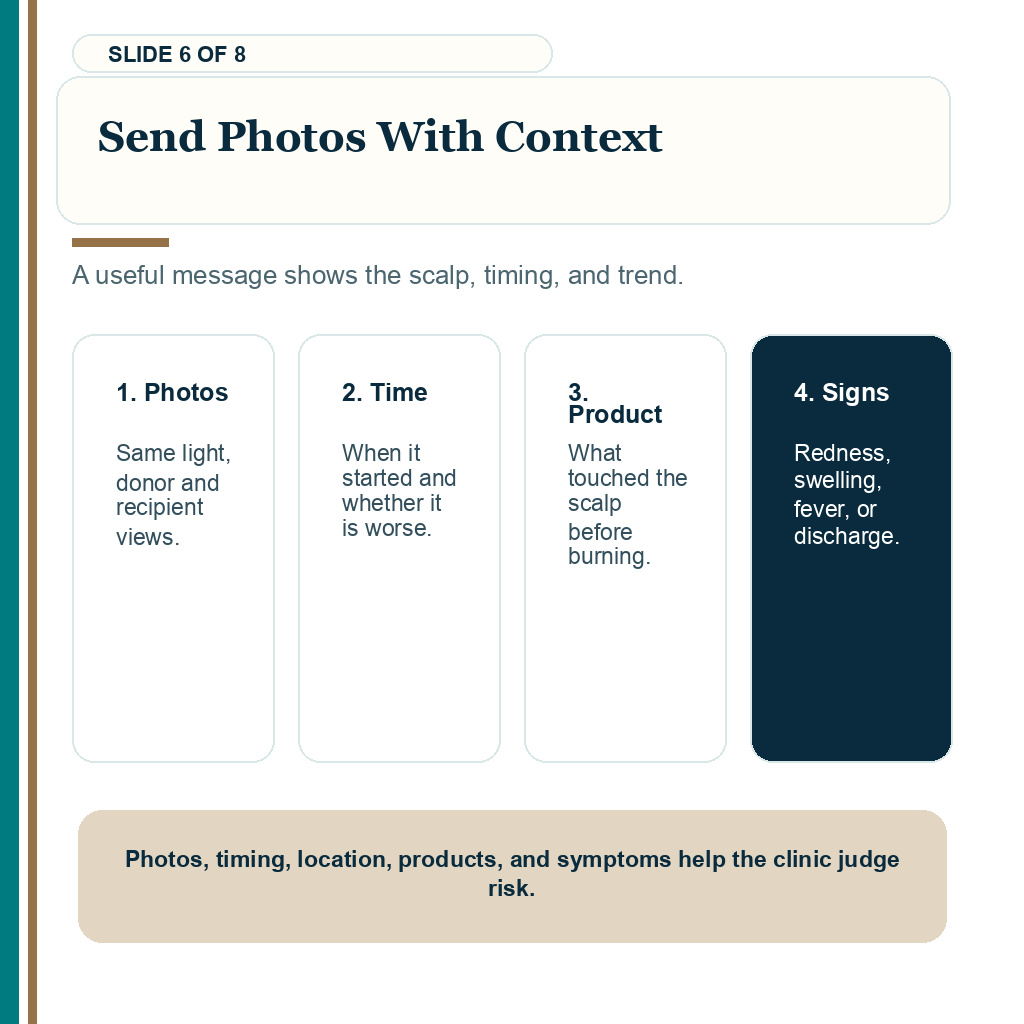
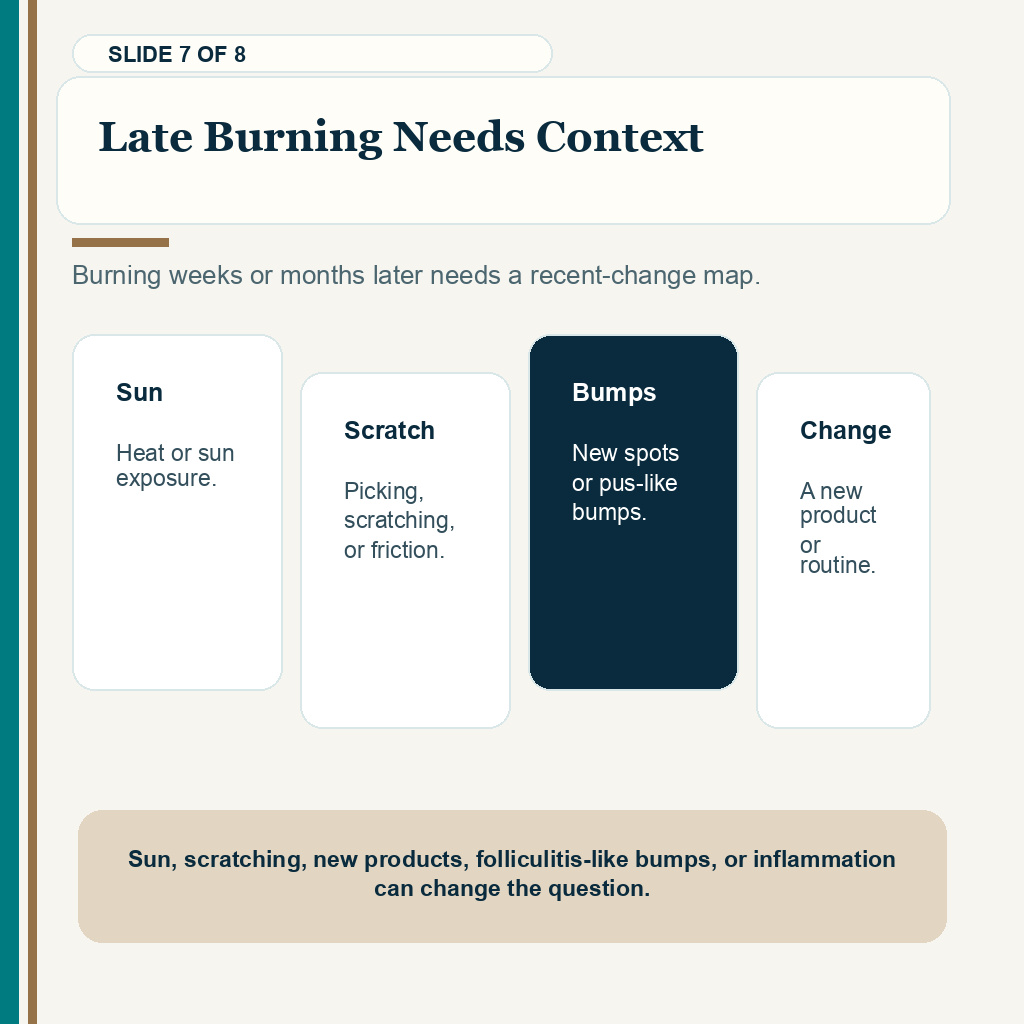
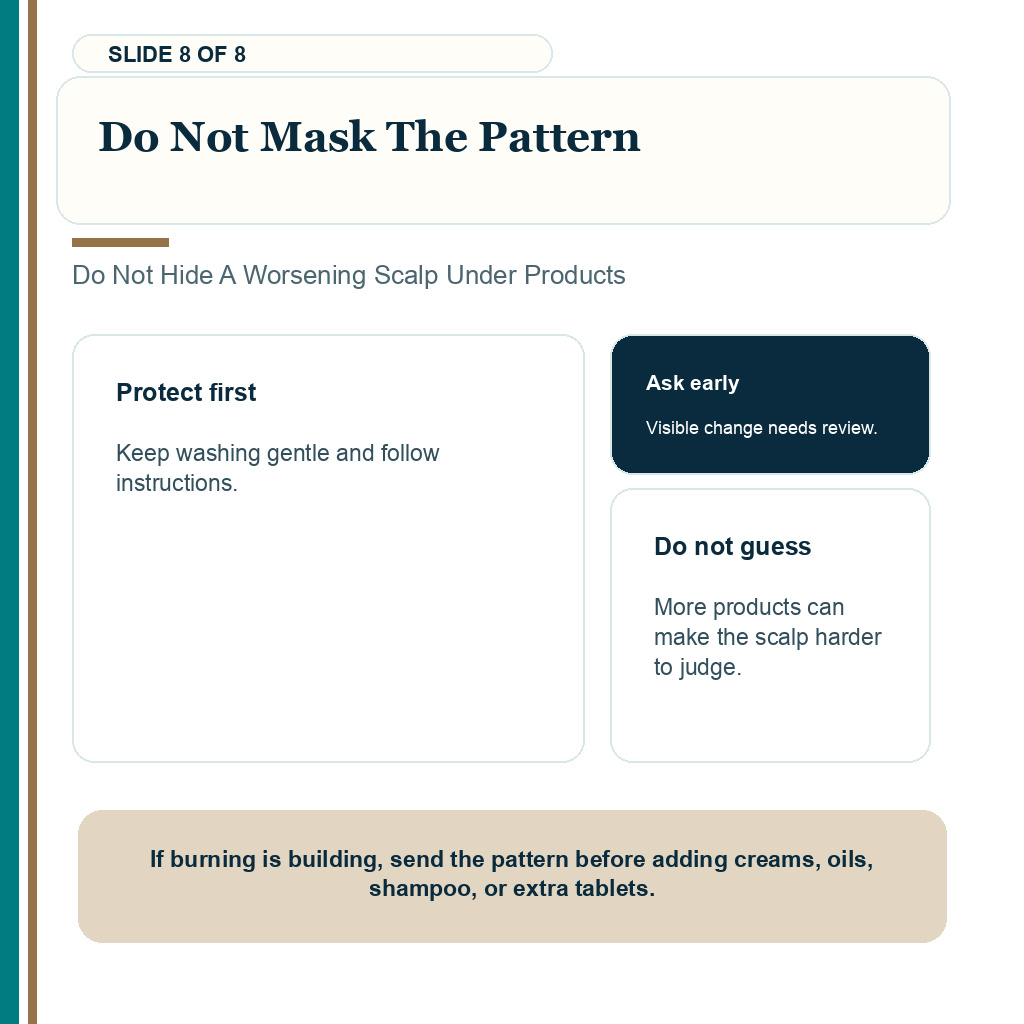
These 8 burning scalp review slides separate trend, location, nerve sensations, skin warning signs, product contact, useful photo context, late changes, and what not to mask. Swipe sideways, use the arrows one slide at a time, or choose a number below the image.
Recipient area heat tightness or electric sensations
The recipient area is not just a surface wound. It is skin that has been opened repeatedly for graft placement. During healing, small nerve endings can produce unusual sensations such as heat, pins and needles, stinging, crawling, pressure, or short electric feelings. If the patient describes sharper zaps rather than heat, electric shock sensations after FUE gives the pattern tracking route.
That sensation alone is not evidence that the grafts are being rejected. Hair transplant grafts do not fail because you feel a hot or electric sensation. They are more vulnerable to rubbing, picking, strong pressure, trauma, infection, and poor healing conditions. The timing of when hair transplant grafts become more secure matters more than the burning sensation itself.
Still, I separate nerve based sensation from inflammatory sensation. Nerve based burning often comes and goes, moves around, or appears with numbness and tingling. Inflammatory burning is more suspicious when the skin looks angrier, feels hotter, has wet crusts, spots that look like pus, or the pain is building.
A nerve based sensation may also be triggered by light touch, pillow fabric, cool air, washing, or a loose hat brushing the scalp. That trigger can feel dramatic even when the skin looks normal. I still need to know about it, but I judge it differently from a fixed hot patch with redness, swelling, discharge, or fever.

Scabs and dryness can make burning worse
Scabs can make the scalp feel tight, like a second layer sitting on top of the skin. Dryness can make that tightness feel like burning. Itching can sit beside burning because both come from irritated healing skin.
This is the stage when many people want to scratch, rub, pour cold water, apply aloe, or test the grafts with their fingertips. I understand the impulse, but the recipient area needs discipline. If the urge is mainly itch, itching after a hair transplant needs a separate plan. If the urge is to touch or test the grafts, touching grafts after a hair transplant needs strict timing.
Burning should not become a rubbing problem. A clean healing scalp can become irritated when it is checked too often. The first response is usually observation, photos, and the clinic instructions for your case, not more contact.
Burning with infection or folliculitis signs
Burning becomes more concerning when it joins visible signs. I want to know whether redness is spreading, whether the area feels hot compared with surrounding skin, whether there is yellow or green discharge, whether there is a bad smell, whether pain is increasing, and whether there is fever, chills, or a general feeling of being unwell.
Small bumps can appear during recovery, especially when new hairs begin to come through. But tender bumps, pustules, crusting, drainage, or repeated painful spots need a different level of attention. When inflammation is part of the picture, I think about folliculitis after a hair transplant.
If the visible concern is redness, scabs, pimples, wet crusting, or possible infection, the most relevant companion topic is redness, scabs, or pimples after a hair transplant. Burning should be read together with those signs, not separately.
Creams oils or medicated shampoo need clinic advice
A burning scalp becomes harder to judge after extra products are added. You may feel tempted to apply aloe, oil, moisturizer, antibiotic cream, steroid cream, dandruff shampoo, or a stronger medicated shampoo because you want relief. Each new product can irritate healing skin, hide the original pattern, or make photos less useful.
Product irritation often follows the contact area. Burning, itching, rash, small blisters, or redness that appears where a cream, oil, spray, dye, fiber, or shampoo touched the scalp should be reported before adding another product. Do not cover a possible reaction with steroid cream or antibiotic ointment unless the clinic has specifically approved it.
Keep the decision clean. If the clinic gave a product, use it exactly as instructed. If the clinic did not give it, ask before applying it to the recipient area. A product that is harmless on ordinary skin may be too strong for a newly transplanted scalp.
For dryness, some clinics use saline spray early, but the details depend on the protocol. If saline is part of your instructions, follow your clinic’s protocol for saline spray after a hair transplant. If dandruff or seborrheic dermatitis is part of the story, timing matters before returning to ketoconazole shampoo after a hair transplant.

Details that help the clinic judge burning
A message saying only “my scalp burns” is not enough. Send sharp photos in normal light, not only a zoomed photo under harsh bathroom lighting. Include the day after surgery, the exact location, whether the donor or recipient area is worse, and whether the sensation is improving, stable, or worsening.
Describe the trigger as well. Does it burn at rest, only when fabric touches it, after washing, after a product, after sweating, or at night on the pillow? If you feel feverish, measure the temperature instead of guessing. Trigger, timing, and photos make the difference between nerve sensitivity, irritation, and possible infection.
Also mention swelling, headache, dizziness, fever, discharge, bad smell, bleeding, dark skin change, new products, pain tablets, antibiotics, antihistamines, alcohol, smoking or nicotine, and whether you scratched or bumped the area. If travel or time zone makes replies slower, hair transplant follow up after surgery becomes part of the safety plan.
Photos with timing details are more useful than repeated mirror checks. A clean scalp with settling symptoms may simply be monitored. A worsening pattern gives the clinic clearer evidence to act sooner.
Burning pain does not always mean graft damage
Burning pain by itself does not prove graft damage. Graft damage is more closely linked to direct trauma, rubbing, scratching, picking, bleeding, infection, or a healing problem that changes the skin environment.
You can feel burning and still heal well. Another person may feel little pain but have a visible problem that deserves review. Pain level alone is not enough. I judge the whole picture by timing, skin appearance, trend, medication response, and whether you can sleep and function.
Burning after a direct scratch, impact, bleeding point, or a piece that looks like tissue coming away needs documentation rather than repeated testing. Take photos and send them. Swelling, bleeding, or a knock to the scalp should be recorded clearly before more touching.
Late burning needs recent change context
Late burning can have a different meaning from day 5 burning. Weeks or months later, the skin may still be sensitive, nerves may still be waking up, and new hairs may be pushing through. Dry scalp, dandruff, folliculitis, product irritation, sun exposure, harsh shampoo, or aggressive brushing can also create stinging or heat. The review should ask what changed recently before assuming the transplant itself has failed.
At that stage, bumps, scale, spots that look like pus, tenderness, or persistent redness matter. Product changes matter as well, including hair fibers, dye, oil, gel, wax, hair spray, microneedling, laser cap use, and heavy sweating. All of these can irritate a scalp that already looks healed enough for normal life.
Late burning deserves context, not panic. A short, mild, moving sensation is different from a fixed painful patch with bumps, discharge, or worsening redness.
Headache swelling or fever changes triage
Burning with a mild pressure headache can happen because recovery affects sleep, posture, swelling, and medication routines. Burning with a sudden, severe, worst ever headache, fever, confusion, vision change, fainting, uncontrolled blood pressure, or a headache that feels completely different from your usual pattern needs urgent medical review. If headache is part of the story, I judge it with headache after a hair transplant.
Swelling also changes the decision. Soft forehead swelling that moves downward and improves is one pattern. Burning with hot, painful swelling on one side that keeps worsening is another. I compare that pattern with swelling after a hair transplant.
If medicine is the immediate question, do not guess between paracetamol, ibuprofen, aspirin, migraine tablets, antibiotics, or stronger medication. I separate painkillers after a hair transplant from diagnosis, because taking extra tablets is not the same as understanding why the scalp feels hot.
Handling burning without making recovery worse
First, protect the scalp from extra variables. Do not scratch. Do not pick scabs. Do not massage the recipient area. Do not add a new cream, oil, medicated shampoo, heat, ice, alcohol product, tight hat, or strong spray pressure unless your clinic gave that instruction.
Numbing spray, lidocaine gel, essential oils, cooling gels, or ice packs should not be used directly on grafted skin to silence the sensation. These can irritate healing skin, hide a warning pattern, or create a new contact reaction.
Second, document the pattern. Take photos from the same distance each day if the symptom continues. Record the day after surgery, the location, pain level, skin change, temperature feeling, medicines taken, products used, and whether the sensation is better or worse than yesterday.
Third, escalate when the pattern asks for it. Burning that worsens, spreads, wakes you from sleep, or appears with pus, fever, bad smell, dark skin change, or increasing swelling should not be watched casually. Ask for clinic review, and if you feel medically unwell or cannot get timely remote advice, seek local medical assessment.
My judgment on trend and skin changes
Burning does not always mean panic, but it should not be dismissed as nothing either. A hair transplant creates thousands of small healing points. Strange sensations can happen, and the skin still has to be read carefully.
My approach is to separate a clean, improving healing sensation from a worsening inflammatory pattern. If the scalp looks clean and the burning is fading, the priority is protection, gentle washing when instructed, and patience. If the scalp is getting hotter, wetter, more painful, more swollen, or more red, the priority is review.
Healthy recovery does not require zero sensation. It requires graft protection, no random self treatment, useful photos when the pattern changes, and medical judgment when warning signs appear.

Read this review excerpt
Every single one of my questions was answered and they made sure I had all the details I needed to make an informed decision.