



Forehead Swelling Warning Signs During Recovery
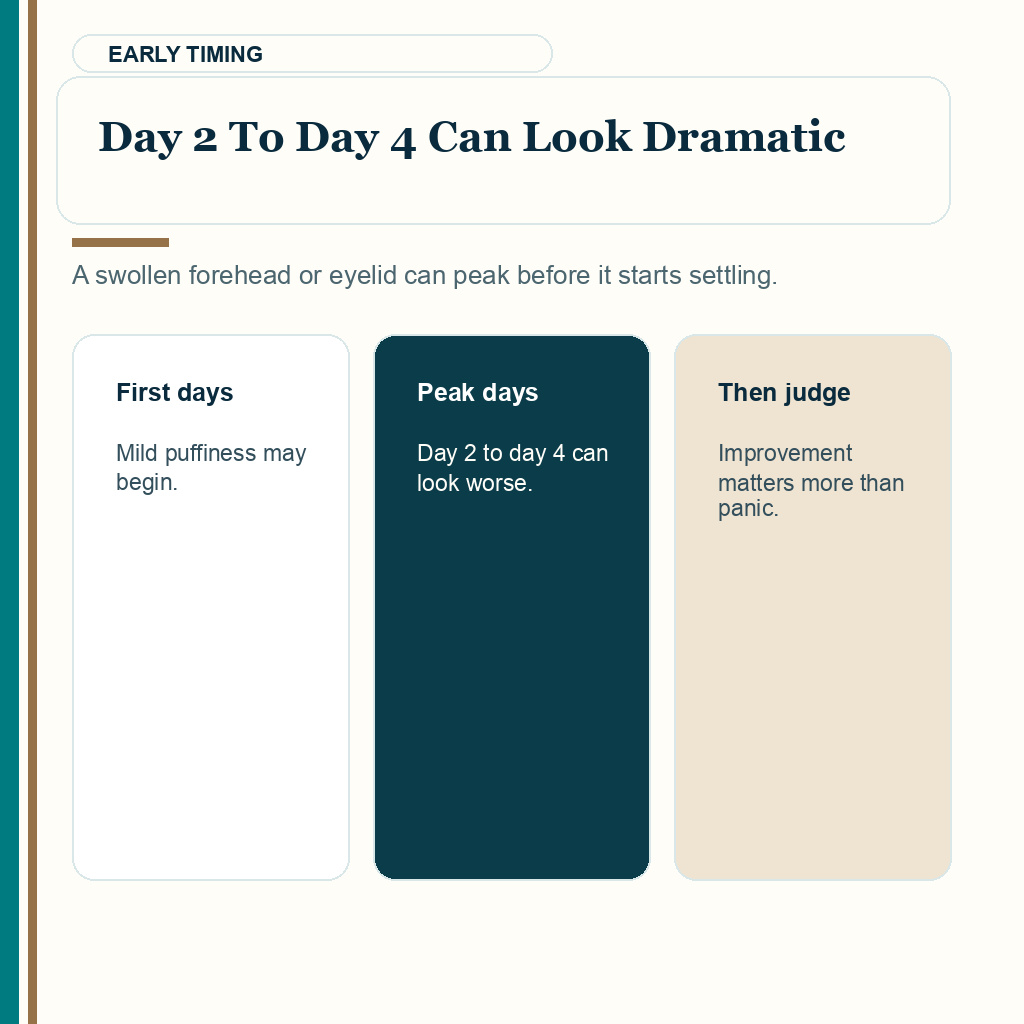
Forehead or eyelid swelling can be part of recovery when it follows the expected pattern and keeps improving. In many patients it appears around day 2 to day 4, improves over the next few days, and settles within 5 to 7 days. Mild swelling can sometimes take closer to 10 to 14 days to fully disappear.
If swelling seems to collect near the eyes while you are wearing a forehead band, use the headband after hair transplant for eye swelling guide to judge fit, tightness, and timing.
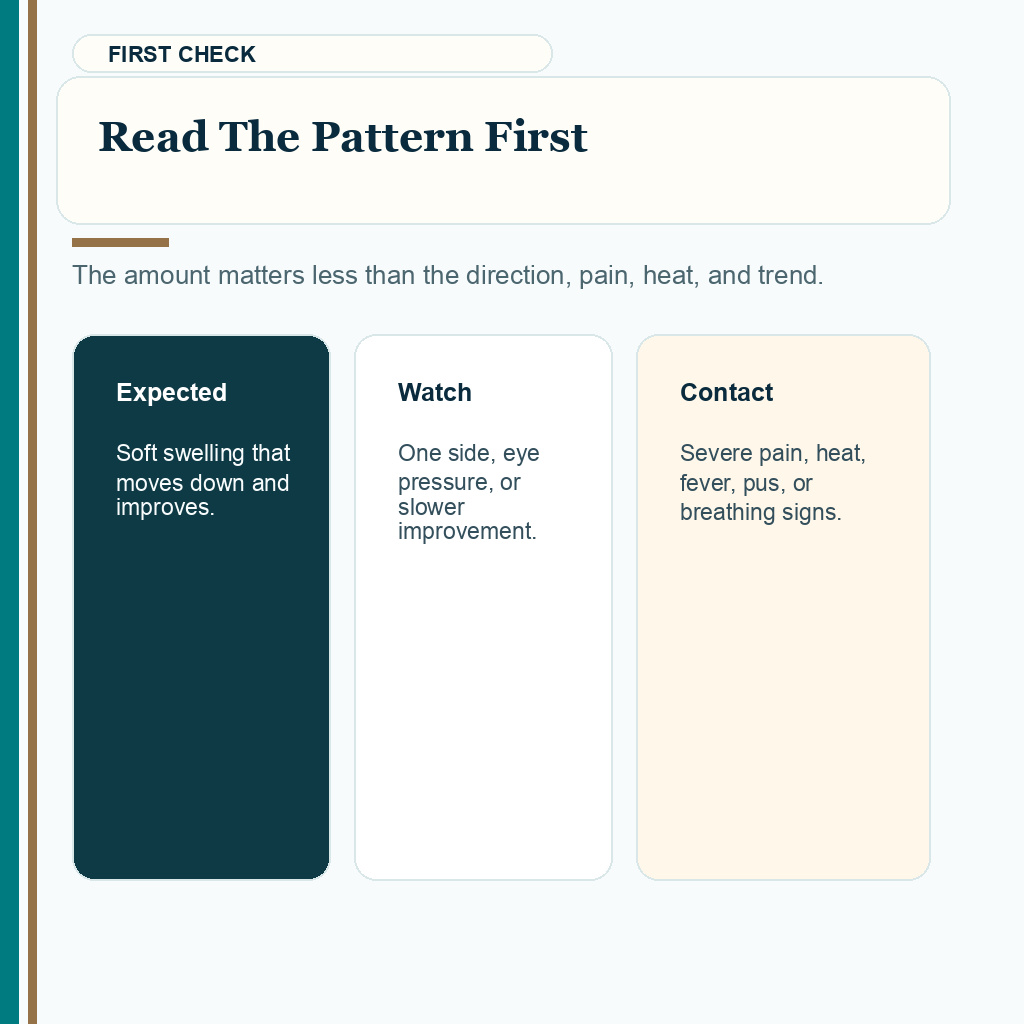
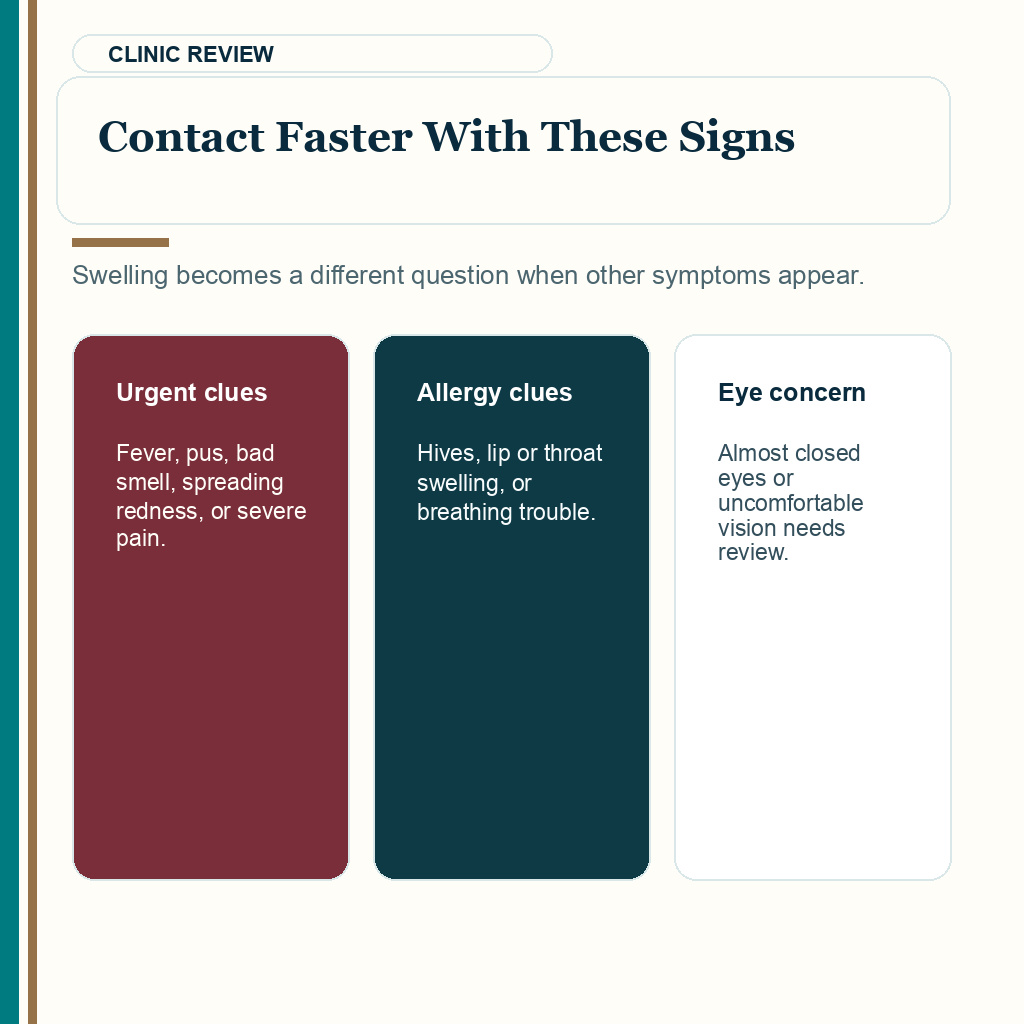
I judge swelling by the pattern, not only the amount, and a clear photo in the same lighting can help show whether it is moving down or getting worse. Soft swelling that moves downward with gravity and slowly improves is very different from swelling that is painful, hot, one sided, worsening, associated with fever, pus, severe redness, breathing difficulty, or a feeling that something is medically wrong. If swelling appears with hives, lip or throat swelling, or breathing symptoms, possible allergy signs during recovery need a different response from ordinary forehead swelling. If the color change includes yellow scalp fluid, the source, texture, smell, pain, heat, fever, and trend should be checked separately. That same pattern based thinking applies to a small tender neck lump after FUE near the donor area. When those warning signs make a doctor consider imaging, MRI and CT scans after hair transplant should not be avoided because of graft anxiety.
When you message the clinic, describe whether swelling is moving downward, staying soft, getting tighter, becoming one sided, or appearing with fever, vision symptoms, or stronger pain. The pattern changes the urgency.
Take the swelling question out of the mirror for a moment. A short note on pain, heat, fever, vision change, and whether swelling is spreading tells more than the size of one eyelid.
Do not judge the final hairline height while the forehead is still swollen. Tumescence and early fluid movement can change the forehead contour and distort how the line sits against the brows and face. Keep the preoperative design and immediate placement photos, then repeat the front and side views after ordinary swelling has settled. Compare those records with the operating surgeon before making a redesign or revision decision.
The first puffy forehead can be unsettling, but it does not mean something is wrong. Warning signs still matter. The useful approach is to understand the normal pattern, protect the grafts, and ask for early clinic review if swelling does not behave like ordinary healing. If you are considering Botox or fillers after a hair transplant, do not add cosmetic injection swelling while the transplant swelling is still being judged. Short pressure moments from coughing or sneezing should still be judged by swelling behavior, bleeding, and scalp contact. A new pressure mark or scalp dent should be reviewed with the same pattern based thinking.
Swelling duration during recovery
Most swelling starts to become noticeable after the first day rather than immediately after surgery. For many patients, the peak is around day 2, day 3, or day 4. After that, the swelling should gradually move down and reduce.
In a straightforward recovery, the forehead looks much better within 5 to 7 days. Some patients need closer to 10 to 14 days before the face feels completely normal, especially after a longer procedure, a larger recipient area, or a more sensitive swelling response.
This timing should fit into the wider hair transplant aftercare plan. The first 10 days are not only about swelling. They are also about graft protection, scab management, washing routine, sleeping position, and avoiding friction on the recipient area. If swelling is being judged during the first night, the first night after a hair transplant plan keeps the focus on position, symptoms, and when to message the clinic.
If a patient is swollen on day 3, I ask about severity, pain, redness, fever, eye closure, medication, sleep position, and whether it is improving. New or worsening swelling after two weeks needs a more careful review. Clear photo review after hair transplant matters more than guessing from one mirror check. When color moves around the eyes, I separate ordinary swelling from black eye bruising in hair transplant recovery by timing, pain, vision, fever, and whether the swelling is improving. If swollen eyelids make vision correction difficult, contact lenses after hair transplant need a separate hygiene and eye comfort decision. When the swelling is at the back of the scalp rather than the face, I review donor area swelling after FUE with the same timing and warning sign pattern instead of judging one close photo alone.
Swelling moving to the forehead or eyes
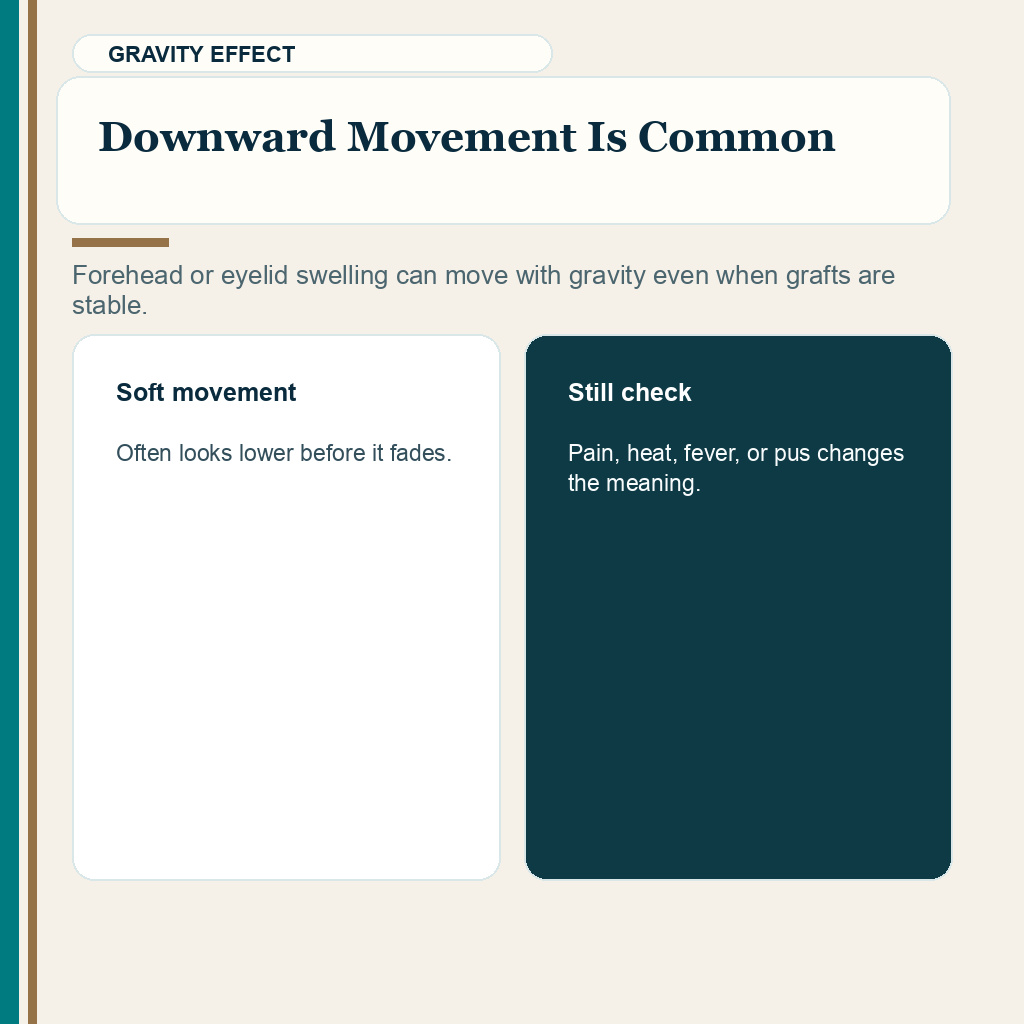
Swelling often moves because fluid follows gravity. During a hair transplant, local anesthesia and fluid are used in the scalp. The body then absorbs that fluid gradually. Some of it can move downward toward the forehead, eyelids, nose, cheeks, or even the upper face before it clears. When nose surgery is close to FUE, rhinoplasty and hair transplant timing also affects how face swelling is interpreted.
This movement can look dramatic. A patient may wake up with a forehead that feels heavy, head pressure after a hair transplant, or eyelids that look puffy. That appearance can be emotionally uncomfortable, especially if travel or work is planned quickly. If the return booking changes because swelling feels hard to judge, use flight home changes after FUE before treating the delay as only a logistics problem.
In surgical terms, I separate appearance from danger. Puffy eyelids can look alarming while still being part of a normal recovery. I look at whether there is pain, heat, increasing redness, discharge, fever, or a pattern that is not improving.
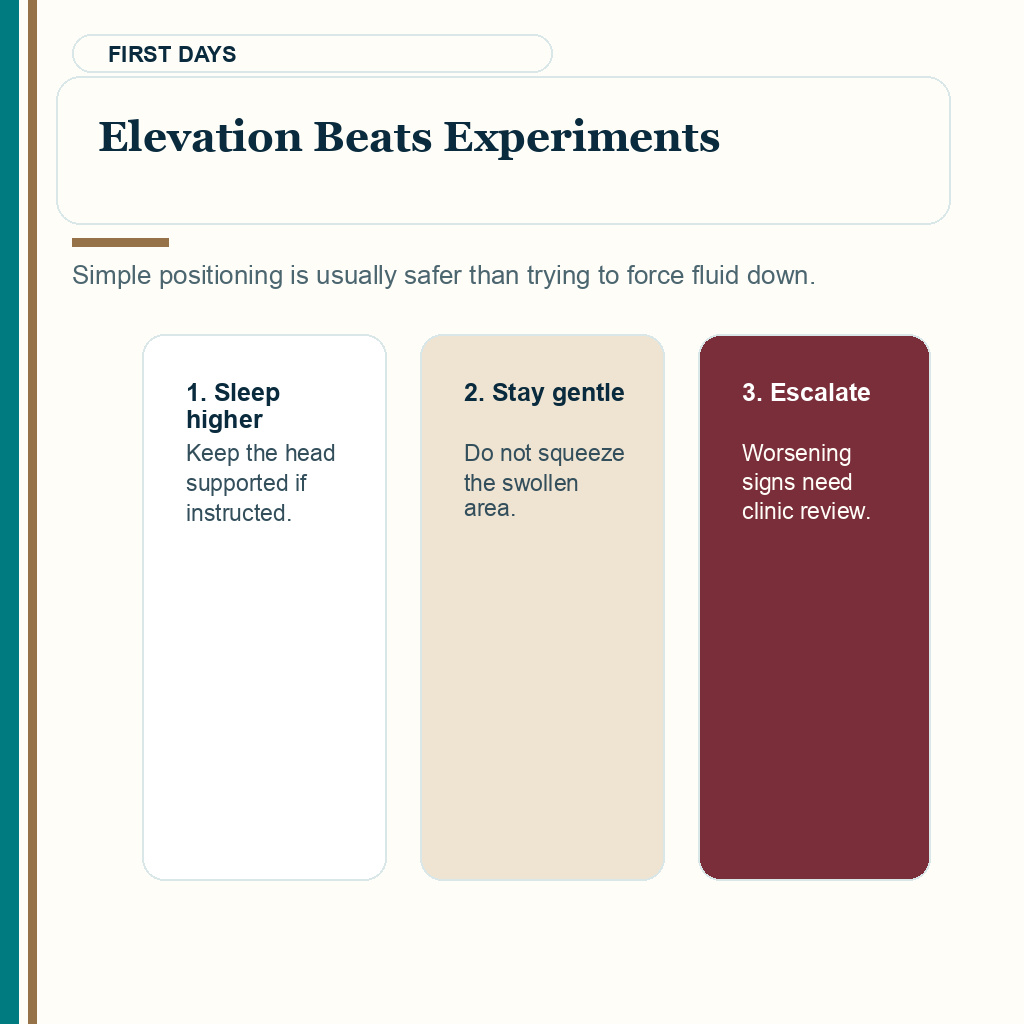
Sleeping position matters here. During the first nights, the head should usually stay elevated, often around 45 degrees, because this reduces pressure and helps fluid move in a more controlled way. I use that elevation point when I explain sleeping after a hair transplant during the first 7 to 10 nights.
Swelling and graft safety
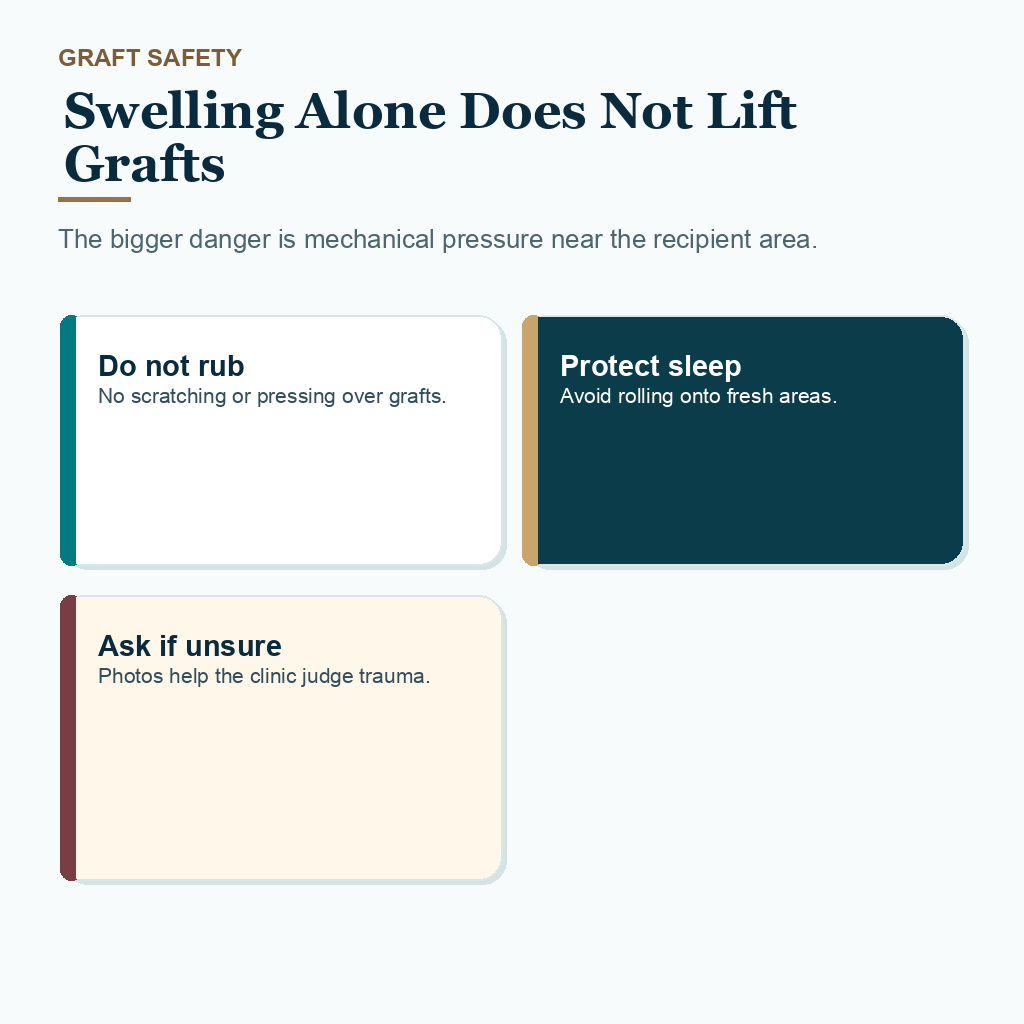
Ordinary swelling by itself usually does not damage the grafts. The grafts are placed in the recipient area, and mild to moderate swelling around the forehead or eyes is usually a reaction of the tissue and fluid movement, not a sign that grafts have been lost.
The bigger risk is what the patient does because of the swelling. Pressing the grafts, rubbing the recipient area, applying ice directly over the grafts, scratching, bending forward repeatedly, or testing the skin too much can create avoidable problems.
So I want the recipient area protected during the first 10 to 14 days. It is safer not to touch, rub, pick, or press the grafts. If the patient is unsure, the principles in when to touch grafts after a hair transplant are safer than trying to solve swelling by handling the scalp.
A swollen face can make the operation feel wrong even when the more useful question is whether the swelling is settling safely. In most cases, the grafts are not the issue. The important distinction is ordinary puffiness versus mechanical trauma from rubbing, pressing, icing, or inspecting the grafts too often.
First few days with forehead swelling
Start with the instructions from the clinic that performed the surgery. If a headband was provided, use it exactly as instructed. If medication was prescribed, take it only as directed. Do not add random creams, gels, tablets, or massage techniques because someone online said it helped. If the extra product is pineapple juice, bromelain, or arnica, I treat that as a separate decision from the swelling pattern. Use the pineapple juice after FUE page for that food and supplement distinction, not as a swelling diagnosis.
A headband is not a tool to force swelling down. It should sit where your clinic instructed, without pressing across the grafted area. If it rolls, slips, or feels too tight, ask the clinic before repeatedly adjusting it near the recipient area.
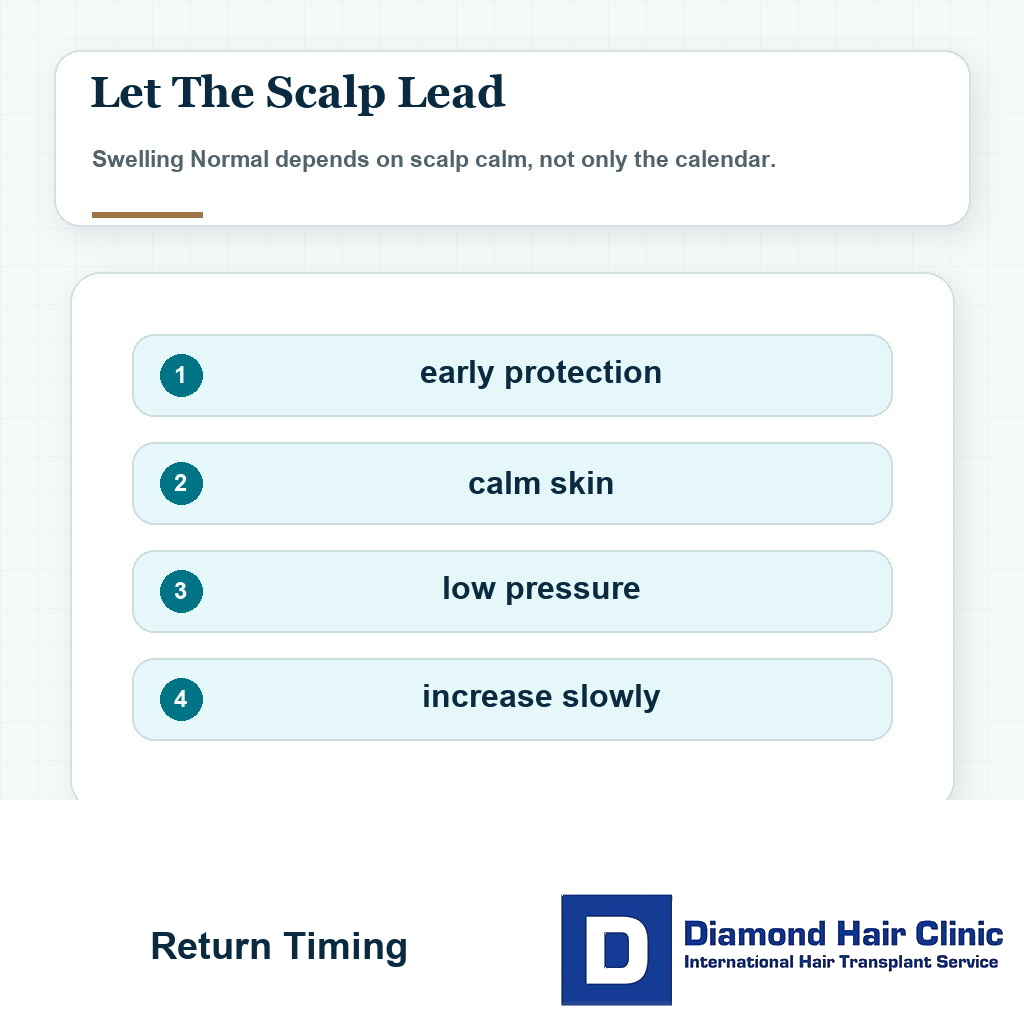
Keep the head elevated when resting, and avoid holding the head down for long periods during the first few days. Many patients make swelling worse by looking down at a phone for hours, sleeping flat, or leaning forward repeatedly.
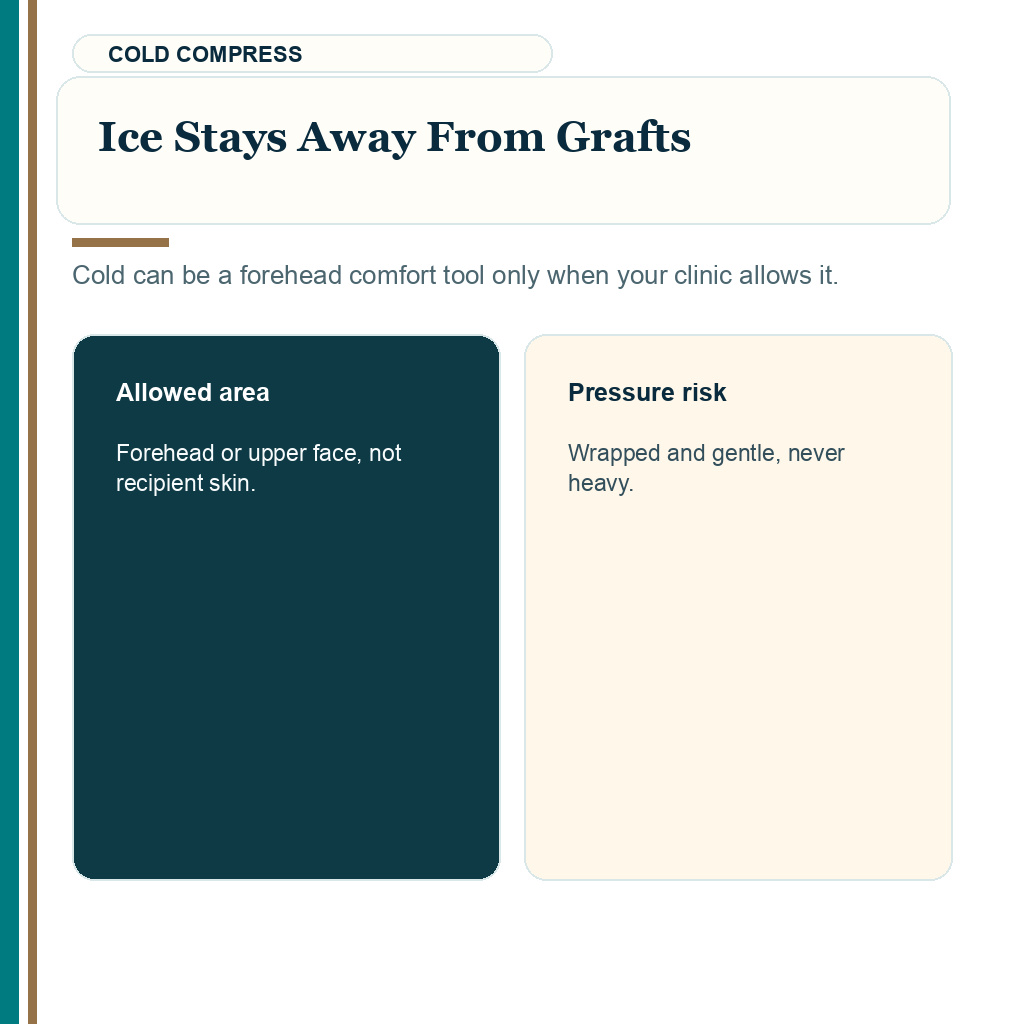
Cold compresses need caution. If your own clinic allows them, they should be used on the forehead or around the upper face, not directly on the grafts. The goal is comfort and controlled swelling, not pressure on the transplanted area.
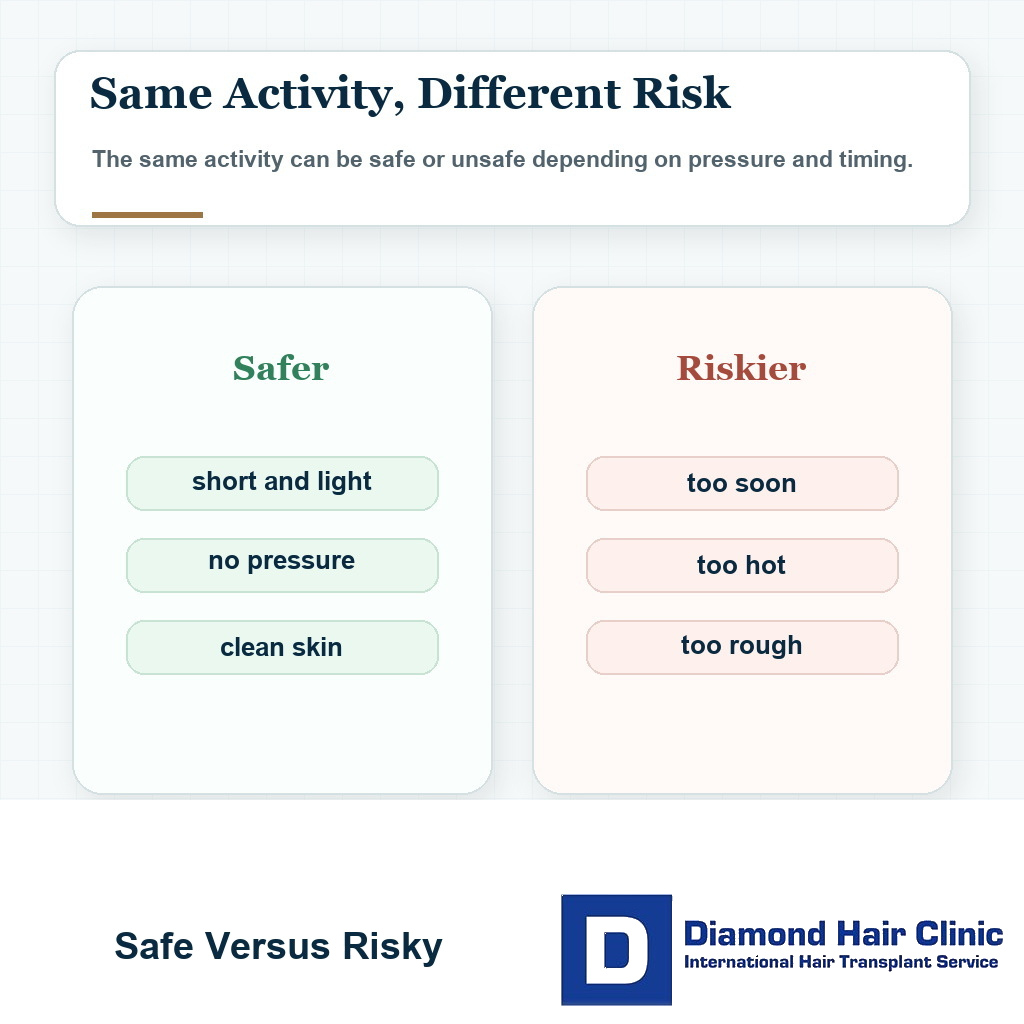
Light walking can be helpful if the patient feels well, but intense activity is different. Sweat, pressure, heat, and increased blood flow can disturb early healing. Exercise after a hair transplant needs that calm early window too, even when the patient feels impatient.
The 10 swelling slides below separate expected timing, downward movement, graft safety, elevation, ice, massage, warning signs, anesthesia and graft number context, individual tendency, and travel or work timing. Swipe sideways, use the arrows one slide at a time, or choose a number below the image.
Ice or massage for swelling
If your clinic allows cold compresses, use them on the forehead or upper face, never over the grafts. The compress should be gentle, wrapped, and used for comfort rather than pressure. The recipient area should not be cooled, squeezed, or rubbed.
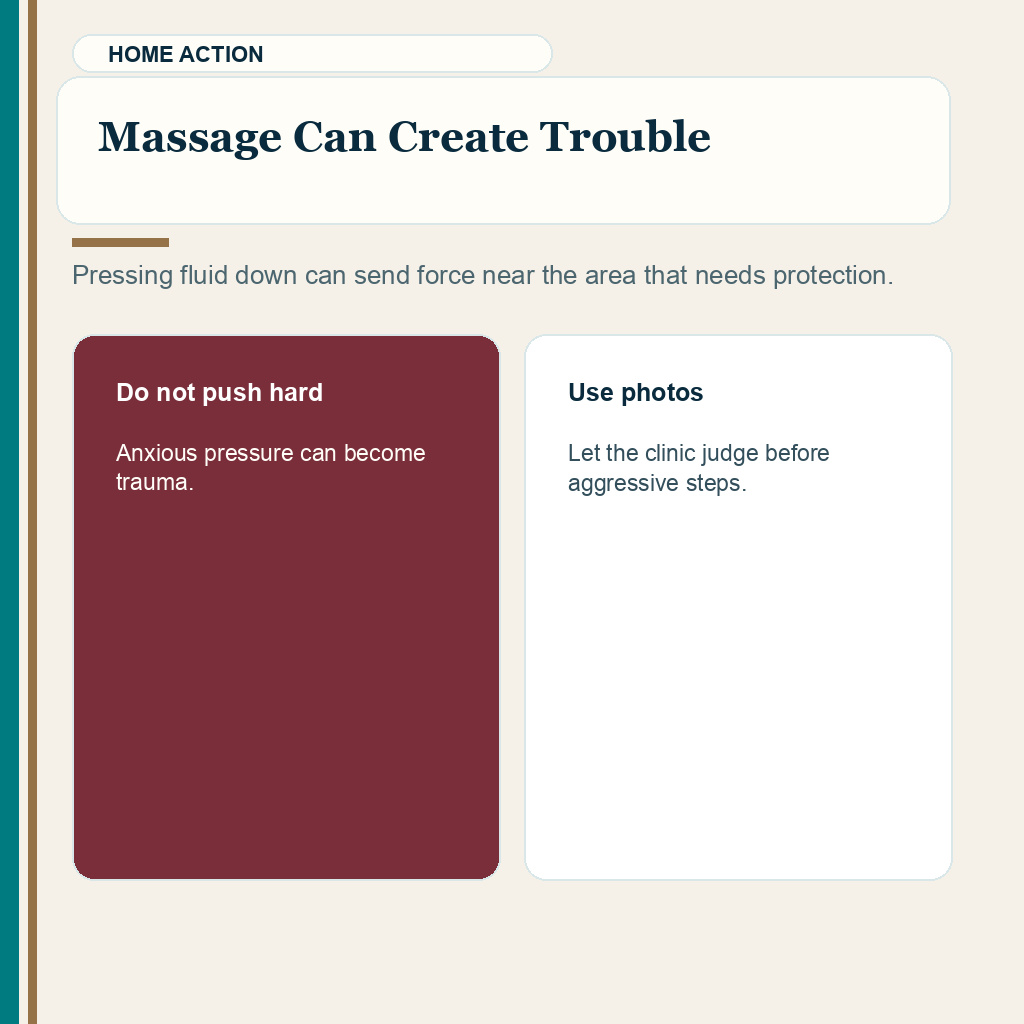
Massage needs caution in the first days. Pressing fluid downward may sound logical, but an anxious patient can easily press too hard or move too close to the grafts. A few days of swelling is safer than mechanical trauma in the area that matters most.
If one eye looks more swollen than the other, or if swelling makes vision uncomfortable, share clear photos with the clinic before trying aggressive home methods. In the first days, better aftercare usually means fewer experiments, not more interventions. Patients who recently had LASIK or are trying to schedule it should treat LASIK and hair transplant timing as a separate decision, because eye symptoms and forehead swelling are easier to judge when recoveries are not stacked.
Swelling that needs clinic review
Swelling needs prompt review if it is severe, worsening, painful, or appears with fever, pus, bad smell, or spreading redness. This is especially important if the eyes are almost closed, chills appear, or tenderness keeps increasing.
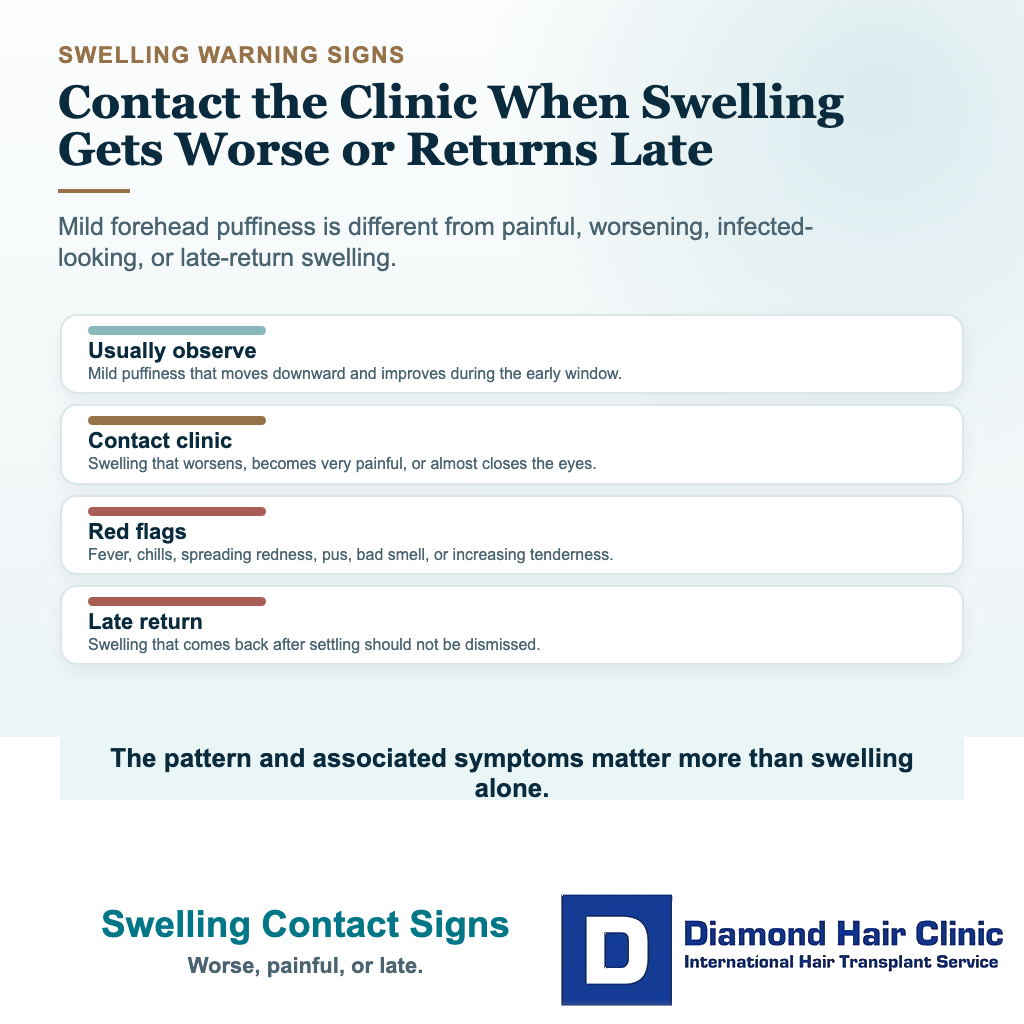
Get clinic review as well if swelling returns after it had clearly resolved, or if it remains obvious after the usual early recovery window. A little puffiness is one thing. Persistent swelling at several weeks or months should not be dismissed without examination.
Some patients are also unsure whether they are looking at swelling, infection, folliculitis, irritation, a swollen neck lymph node after FUE, or a more serious skin problem. When the skin looks angry, wet, black, painful, or open, do not wait quietly at home. The safer habit is to ask for medical review.
The broader guide on when to worry after a hair transplant matters here. Swelling is only one sign. The pattern around it tells us whether it is likely normal healing or something that deserves prompt attention.
If black scabbing, severe pain, spreading dark tissue, or open wounds appear, that is no longer a simple swelling question. When that happens, I think about urgent warning signs, including the concerns I explain in black scabbing after a hair transplant.
Anesthesia, graft numbers, and swelling
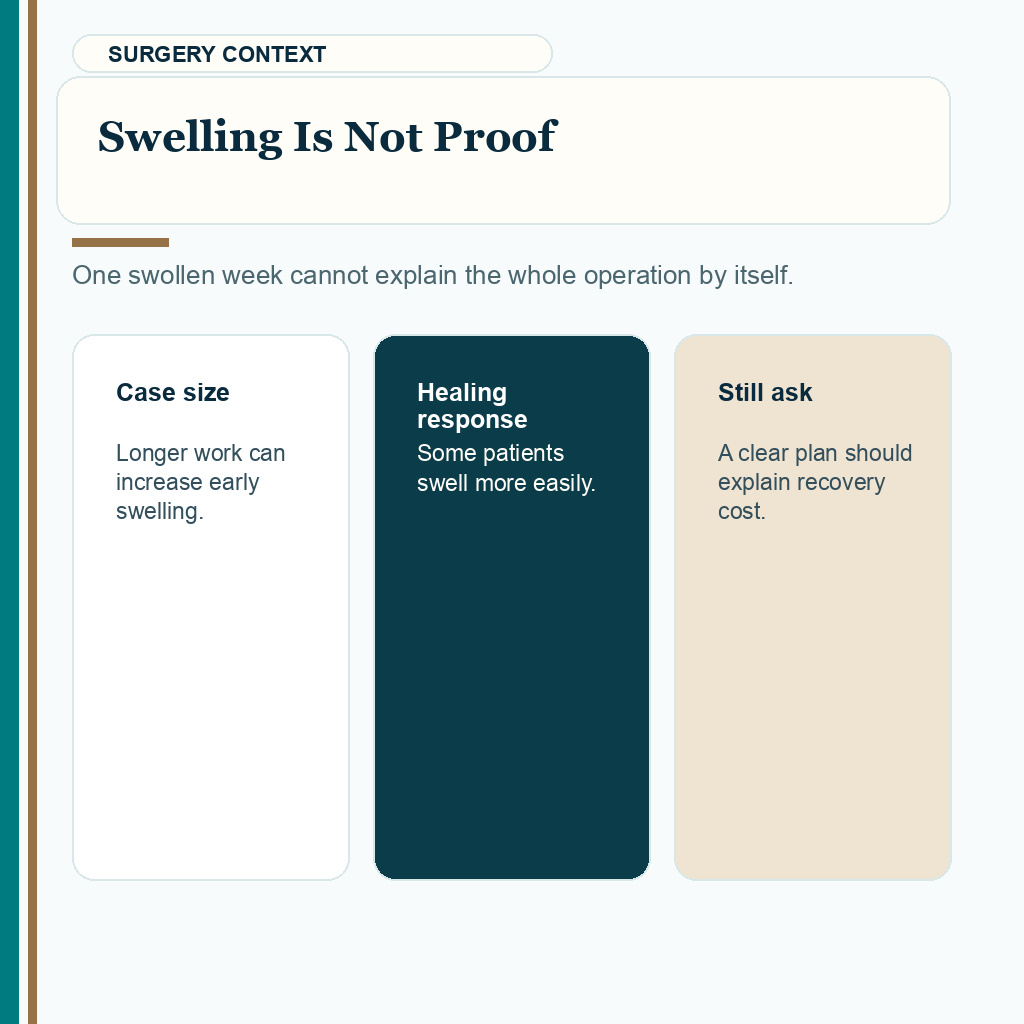
Not by itself. Some patients swell more than others even after a careful operation. A longer surgery, a larger recipient area, more tissue handling, and individual healing response can all affect swelling. It does not prove that the transplant was poorly done.
But swelling can still tell me something about the surgical plan. If the operation was very large, very long, and the patient was not prepared for the recovery, I question whether the plan was explained clearly enough. The true burden of a procedure needs to be clear before the face is swollen and a flight is already close.
Surgical judgment matters here. A FUE hair transplant can be performed with careful tissue handling, but the name of the method does not remove the need for sensible graft numbers, proper anesthesia, and a recovery plan that matches the case.
If a clinic sells a very large operation as if it has no recovery cost, I slow down. The patient needs to know what swelling may look like, when it usually peaks, how to travel, and when to call the medical team.
Flying or returning to work while swollen
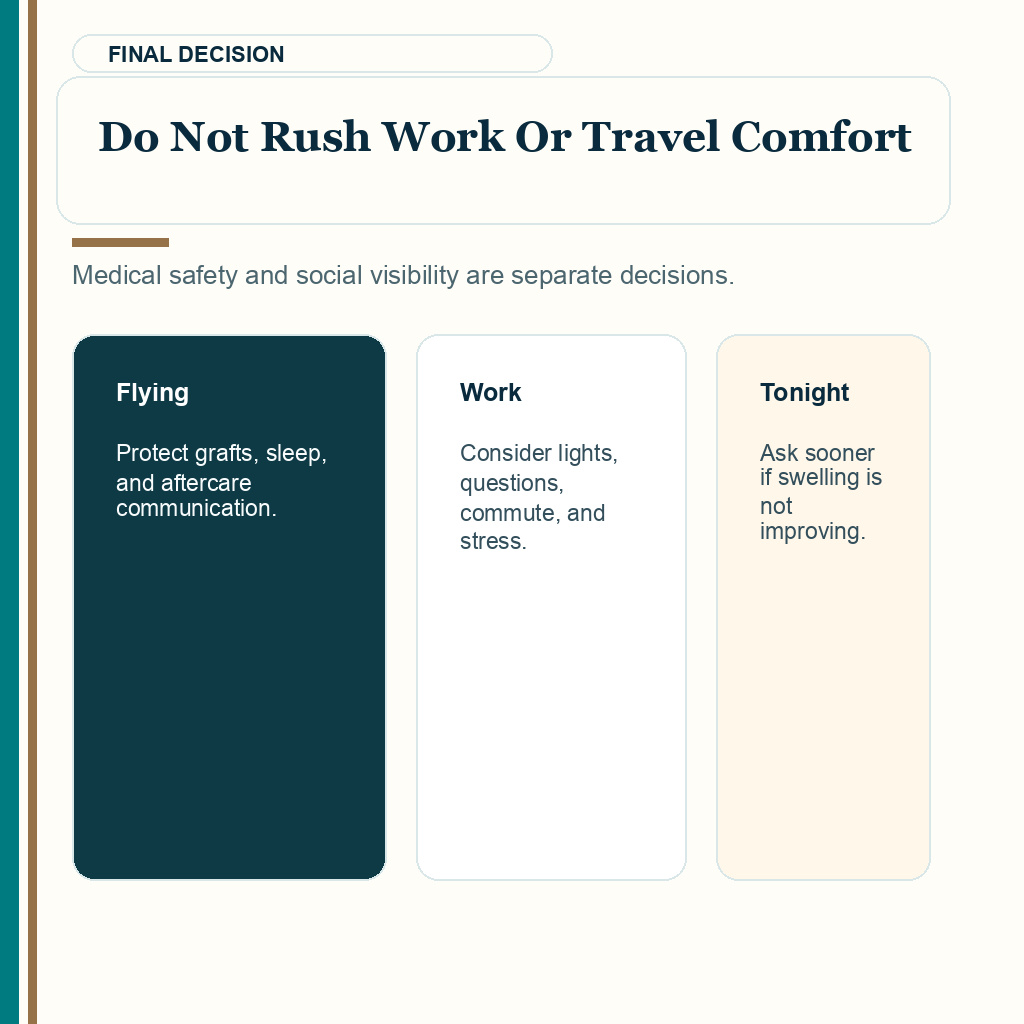
Many medically stable patients can fly after a hair transplant, but swelling can make travel less comfortable. In my planning, I often prefer 24 to 48 hours before short travel, and 48 to 72 hours for longer flights or anxious patients, if the case allows that timing.
The flight itself is usually not the main danger. The practical risks are bumping the head, carrying luggage, sleeping poorly, dehydration, and being far from the clinic if swelling becomes more than expected. Guidance about flying after a hair transplant should be based on the whole recovery situation, not only the airplane.
Returning to work is similar. If the job is remote or quiet office work, the decision is often about appearance and comfort. If the work involves heat, dust, helmets, heavy lifting, bending, or public exposure, the decision changes.
Most patients look more socially comfortable after the first 10 to 14 days, but swelling may not be the only visible sign. Scabs, redness, uneven hair length, and shedding can still affect appearance. The question of when you look normal in public after a hair transplant is different from whether swelling alone has settled.
Time off needs planning around both graft safety and emotional comfort. The plan in time off work after a hair transplant should be realistic enough that the patient does not feel forced to hide swelling under pressure.
Some patients swell more than others
Some patients simply retain more fluid. Some have looser forehead or eyelid tissue. Some had a longer operation, a larger recipient area, or more local anesthetic fluid. Sleep position, bending forward, heat, activity, hydration, and whether instructions were followed can also change the visible amount of swelling.
Comparing your day 3 face with another patient’s day 3 photo can be misleading. One person may have almost no swelling. Another may look very puffy and still heal normally. The comparison often creates fear without giving useful medical information.
When I assess swelling, I look at direction and trend. The reassuring pattern is swelling that moves downward as expected, reduces gradually, and does not come with increasing heat, redness, or pain. The patient also needs to feel otherwise well, and the recipient area needs to stay protected. These details matter more than whether the face looks exactly like someone else’s recovery photo.
I also remind patients that embarrassment is not the same as danger. Swelling can make a patient feel exposed, especially when they wanted to keep surgery private. That emotional discomfort is real, but it should not push them into rubbing, hiding, compressing, or treating the area in unsafe ways.
Judging clinic advice about swelling
An ethical clinic should prepare the patient before surgery. Before surgery, you should know that swelling can happen, when it usually appears, how to sleep, whether a headband is part of the clinic protocol, what medication is prescribed, how to travel, and what warning signs require contact.
If a clinic says swelling is impossible, that is not credible. If a clinic says every type of swelling is normal without asking questions, that is not credible either. Good advice is balanced. It calms the patient without dismissing risk.
Swelling deserves extra attention when it is discussed only after a very large surgery has already been sold. Recovery needs to be clear before the patient commits. If the procedure is going to be long, if many grafts are planned, or if the patient is flying soon, the recovery conversation should be part of the medical plan.
Good clinic advice leaves the patient calmer and more capable. The patient needs to know what to do, what not to touch, when to rest, when to travel, and when to call. That is very different from being told not to worry about anything.
Before panicking about swelling
Remember that swelling is usually temporary. It can look strange, and it can make the first week feel more dramatic than expected, but in many patients it passes without harming the grafts or changing the final result.
Also remember that the first week is not the time to judge the success of the transplant. Your job is practical. Protect the recipient area, follow the washing and medication instructions, sleep carefully, avoid pressure, and send updates to your clinic when the plan changes.
Stay observant, but do not become careless. If the swelling follows the normal timing and improves, give the body time. Do not wait if swelling becomes painful, hot, severe, persistent, one sided, or linked with fever, discharge, or dark skin changes. Contact the medical team that knows your case.
Swelling should be understood, not ignored and not treated with panic. When patients know that difference, the first week becomes easier to handle, and decisions become safer.

Read this review excerpt
Upon arriving home, I sent 4 photos (of each side of head) after every washing process to doctor for checking where I was given personal advice for how to take care of my healing head.