


Botox and Fillers Around a New Hairline
Botox or dermal fillers can be planned after a hair transplant, but not while the scalp is still in the first healing days. If the injections are near the forehead, temples, or new hairline, I look for the scabs to be gone, the swelling to be settling, and the grafts to be stable before another procedure is added. Once recovery is uncomplicated, Botox can often be discussed from about 2 weeks onward. Filler near the transplanted area often needs 3 to 4 weeks or longer. A lip or chin treatment farther from the scalp may be less connected to graft safety, but both the surgeon and injector still need to know what was done.
Location and timing change the decision. A small Botox treatment away from irritated skin is not the same as filler in the forehead or temples while transplant swelling is still moving. I am not worried that one careful injection will stop transplanted hair from growing. I am more concerned about adding needles, pressure, swelling, bruising, skin products, or handling after injection while the clinic still needs a clear view of recovery.
Do not use Botox or filler to hide swelling or asymmetry while the transplant is still changing. First decide whether the area needs recovery photos, a surgeon review, or a separate cosmetic appointment later.
Tell the injector exactly where the transplant was placed, not only that you had one. Forehead, temple, and hairline work leave different margins for needles and swelling.
Safer timing for Botox
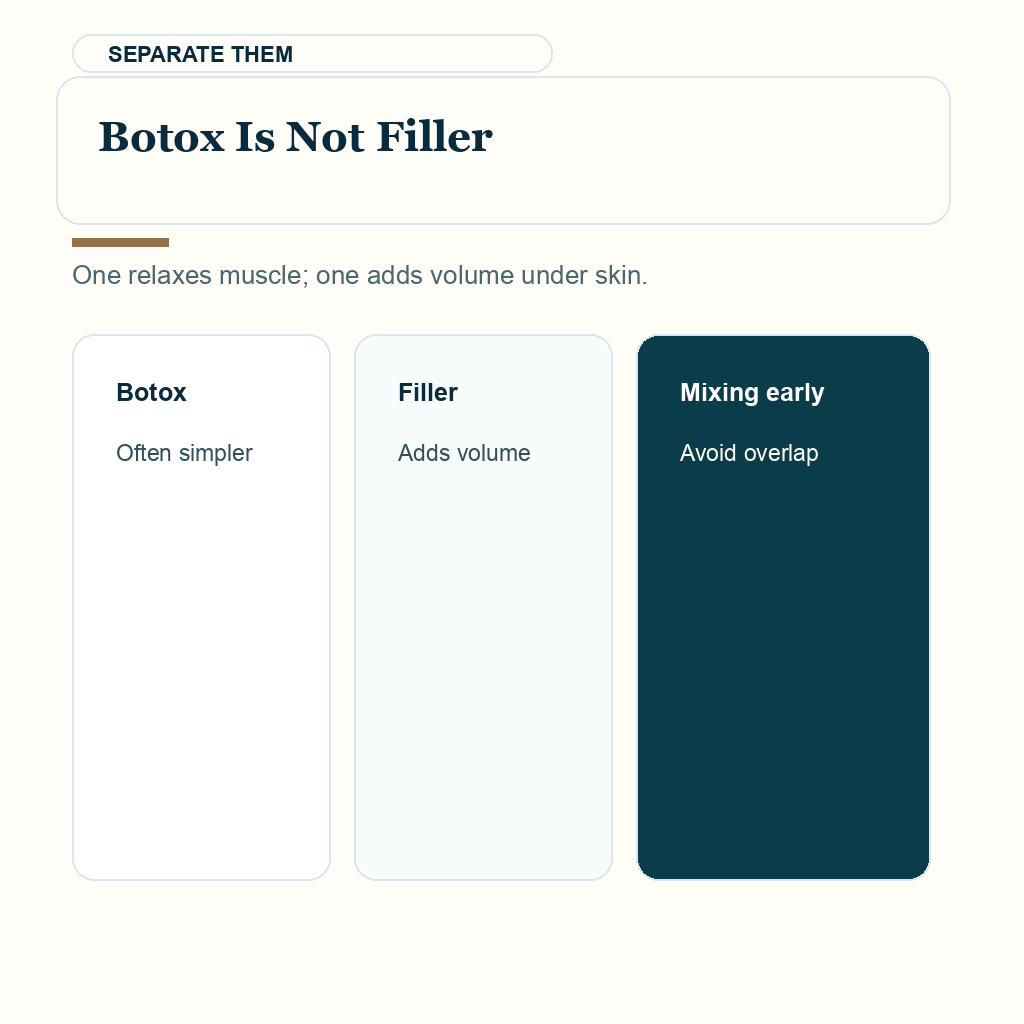
Botox is often the easier decision compared with filler because the amounts are small and the aim is muscle relaxation, not adding volume under the skin. Even so, forehead Botox should not be treated like a routine appointment in the first week. That week is for protecting grafts, keeping the skin easy to inspect, and avoiding avoidable bruising, swelling, pressure, or irritation.
If the grafted area is healing cleanly, scabs have cleared without bleeding, and the needle will not pass through irritated skin, Botox around the second week or later may be reasonable to discuss. The exact answer changes when the injector is working close to a new hairline, temple points, or frontal scalp. Crown grafts with forehead Botox are different from a lowered frontal hairline where the injector may be working near the new border.
The broader graft timeline matters here. If you are unsure where your recovery sits, when hair transplant grafts are secure gives the timing frame. Botox timing should fit that healing window rather than compete with it.
Medical Botox is different from cosmetic timing
Some patients receive Botox for migraine, jaw clenching, neck muscle spasm, sweating, or another medical reason. I judge that differently from a purely cosmetic forehead appointment. If the treatment is medically scheduled, do not cancel or move it without the doctor who manages that condition.
The transplant clinic still needs the details. Tell us why Botox is used, where it will be injected, when the appointment is planned, and whether you normally get bruising, headache, weakness, or swelling after injections. Medical Botox may still be possible after a transplant, but the timing should respect both the scalp recovery and the condition being treated.
Botox warning signs are different from ordinary forehead heaviness. If you develop difficulty swallowing, breathing, or speaking, spreading muscle weakness, unexpected drooping, double vision, or symptoms that feel systemic after a botulinum toxin injection, contact the treating doctor or seek urgent medical help. These problems are uncommon with correctly used licensed products, but the transplant clinic should not be the only clinician told about them.
Safer timing for dermal fillers
Dermal fillers need more caution than Botox, especially when they are placed in the forehead, temples, nose, cheeks, or areas close to the hairline. Fillers add volume under the skin. They can create swelling, bruising, tenderness, and in rare cases more serious vascular or infection problems. Those risks are not the same as hair transplant risks, but they can confuse the recovery picture if they happen too early.
Filler warning signs need a different response from ordinary swelling. If filler enters or compresses a blood vessel, rare but urgent problems can include sudden severe pain, skin blanching, grey or dusky color, a net like discoloration pattern, vision changes, severe headache, or weakness on one side. That is not a hair transplant question to wait out at home. Contact the injector and seek urgent medical help immediately.
For filler near the forehead, temples, or upper face, I separate it from a hair transplant by at least 3 to 4 weeks when possible. If swelling, crusting, pimples, redness, wound irritation, or tenderness remain around the grafted area, the timing moves later. If the filler is far from the transplanted scalp, such as a small lip or chin treatment, the decision may be less connected to graft safety, but the injector still needs to know that you recently had surgery.
If swelling is still part of your recovery, compare your situation with swelling after a hair transplant. Cosmetic filler swelling and hair transplant swelling should not be allowed to blur into one another when the clinic is trying to judge healing.

Cosmetic injection timing should protect the grafted skin while it is still healing and easy to irritate.
These 10 injection timing slides separate Botox from filler, healing status, injection location, early swelling, warning signs, bruising medicines, makeup or aftercare conflicts, clinician coordination, and when the plan can be discussed. Swipe sideways, use the arrows one slide at a time, or choose a number below the image.



Fillers often need more caution than Botox
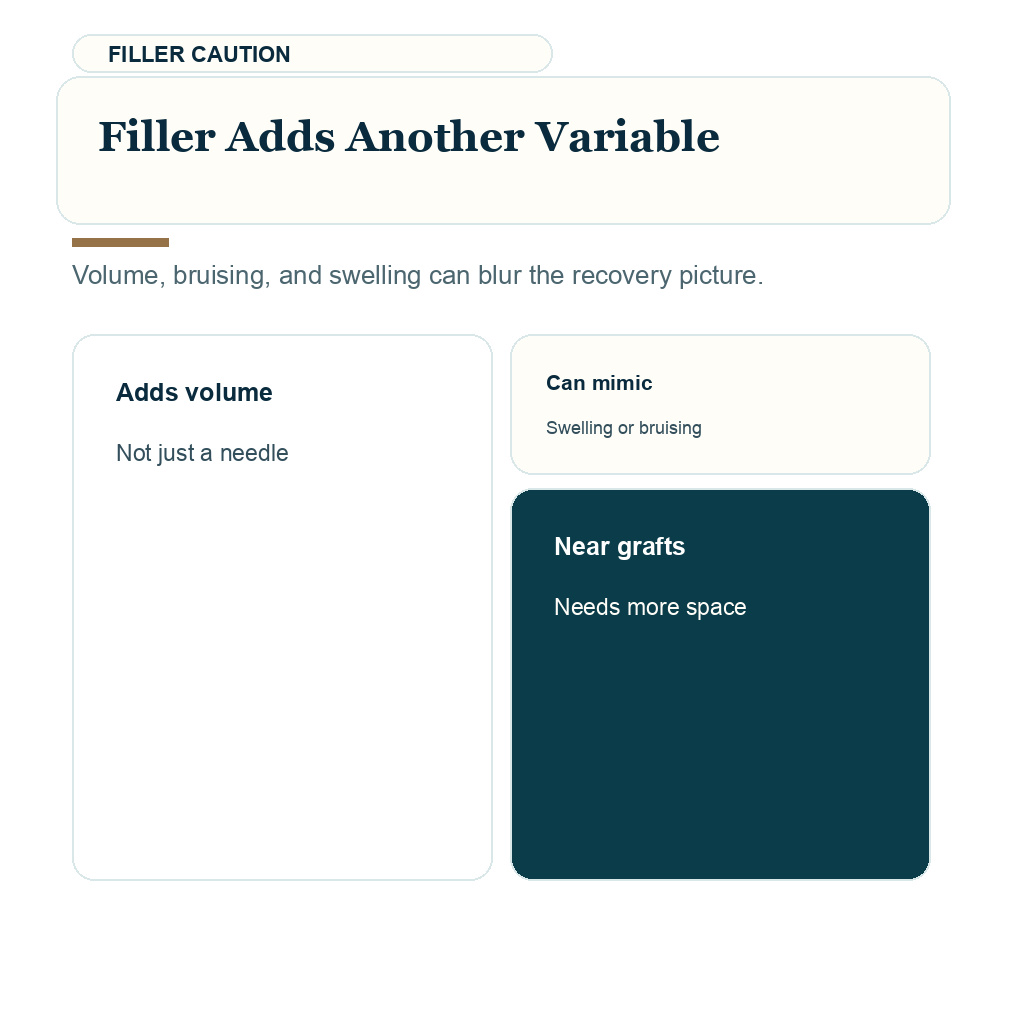
Filler needs more caution near a recent hair transplant because it adds volume, not only a needle puncture. Some filler treatments also involve shaping, pressure, or instructions after treatment that matter when the forehead, temples, or hairline are still recovering. Around these areas, even ordinary swelling can blur the picture when the clinic is checking transplant swelling, irritation, or infection signs.
Filler also depends heavily on anatomy and injection depth. After temple point work, a lowered hairline, eyebrow work, or swelling that is still moving downward, I let the transplant settle before adding another variable. The aim is not to avoid aesthetic treatments forever. It is to avoid mixing two recoveries so closely that neither clinician can judge the healing clearly.
Injections should wait during the first days
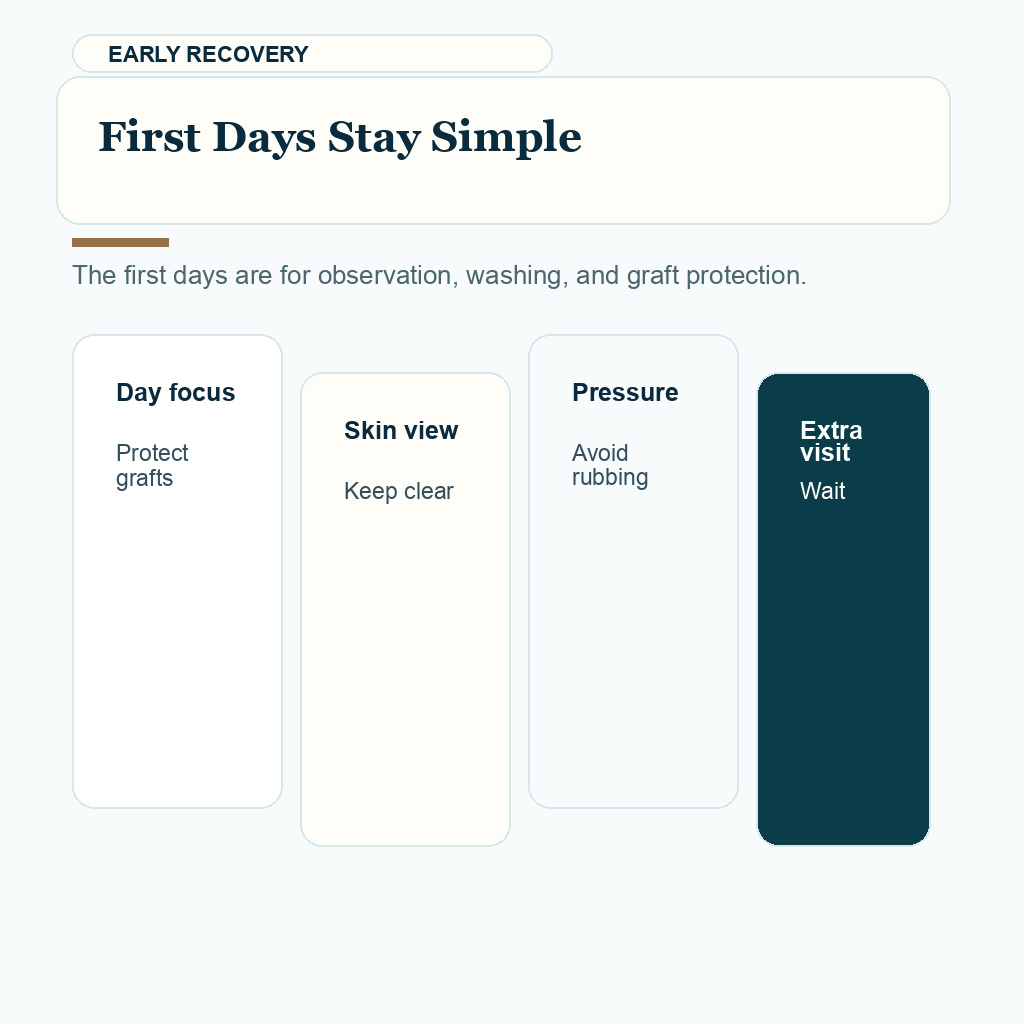
In the first days, the priority is uncomplicated healing. The recipient area may have scabs. The donor area may be tender. The forehead may be swollen. You may already be taking prescribed medication, avoiding certain drugs, and learning how to wash without rubbing. Adding another injectable procedure creates more variables at the wrong time.
A planned injectable appointment is different from an accidental light touch. Even when the needle is far from the grafts, the appointment may involve lying flat, turning the head, cleaning the skin with products, applying pressure, or following instructions about massage or makeup. Those treatments can be harmless later, but early they add variables the scalp does not need.
Filler massage instructions should not override graft protection. Some filler aftercare may involve pressure, massage, facial devices, tight headbands, or product use. If those instructions would touch the new hairline, temples, donor area, or scabbed skin, pause and ask the transplant clinic before doing them.
Touching grafts after a hair transplant needs a separate level of caution. A brief accidental touch is very different from a planned procedure that brings cleaning, pressure, positioning, swelling, and repeated contact around the upper face.
Botox, fillers, and transplanted hair growth
Botox and dermal fillers are not hair growth treatments, and they should not be used to protect grafts. They also should not be blamed for every shed hair after surgery. Most transplanted hairs can shed as part of the normal hair cycle after transplant, while the follicle remains under the skin. Native hair can also continue thinning for reasons unrelated to injections.
The more realistic concern is indirect harm. If an injection appointment leads to rubbing the hairline, pressing on scabs, irritating inflamed skin, causing an infection, or hiding a true recovery problem, then it can interfere with a clean recovery. If the treatment is done later, through healthy skin, by a qualified medical injector, and away from fragile grafts, the graft risk is low in most uncomplicated cases.
A common worry is whether Botox can improve a hair transplant by relaxing the forehead. Botox should not be used as a substitute for correct hairline planning. Hairline design should be based on age, donor capacity, forehead anatomy, future hair loss risk, and surgical judgment, not on temporarily changing muscle activity.
Injection location changes the decision
Location changes the decision. Injections through or very close to the transplanted hairline, temple points, sideburn grafts, crown grafts, or irritated donor skin deserve more caution. Injections far from the scalp may be easier to schedule, but they still need clean technique and proper medical judgment.
Forehead Botox is special because forehead movement can affect hairline assessment. If you had Botox recently before surgery, the surgeon should know. If the forehead muscles are temporarily relaxed, the resting brow position and wrinkle pattern may not show the full dynamic movement used during hairline planning. This does not always stop surgery, but it can affect how the hairline is evaluated.
Temple fillers also need caution. The temple region sits near areas where some hairline and temple point grafts may be placed. Filler swelling can change how the upper face looks, and bruising can make early recovery look more dramatic. If your surgery included temple points, do not schedule filler in that region until the transplant surgeon has reviewed the healing.
Botox or fillers before surgery
If you already had Botox or fillers before your hair transplant, tell the clinic before planning or on the day of surgery. Do not hide it because you think it is unrelated. The surgeon needs to understand any recent cosmetic procedure that changed forehead movement, facial swelling, bruising, skin sensitivity, or medication use.
Botox before surgery can be less of a problem if the surgeon knows and the hairline plan is still conservative and anatomically sensible. Filler before surgery can matter more when it was placed near the forehead, temples, nose, or upper face. If there is active swelling, bruising, skin irritation, or an infection concern, surgery may need to be delayed.
Timing also matters when you are arranging dental work before or after a hair transplant. Two separate procedures can both be safe, but poor timing can make the recovery picture less clear.
Warning signs that should delay cosmetic injections
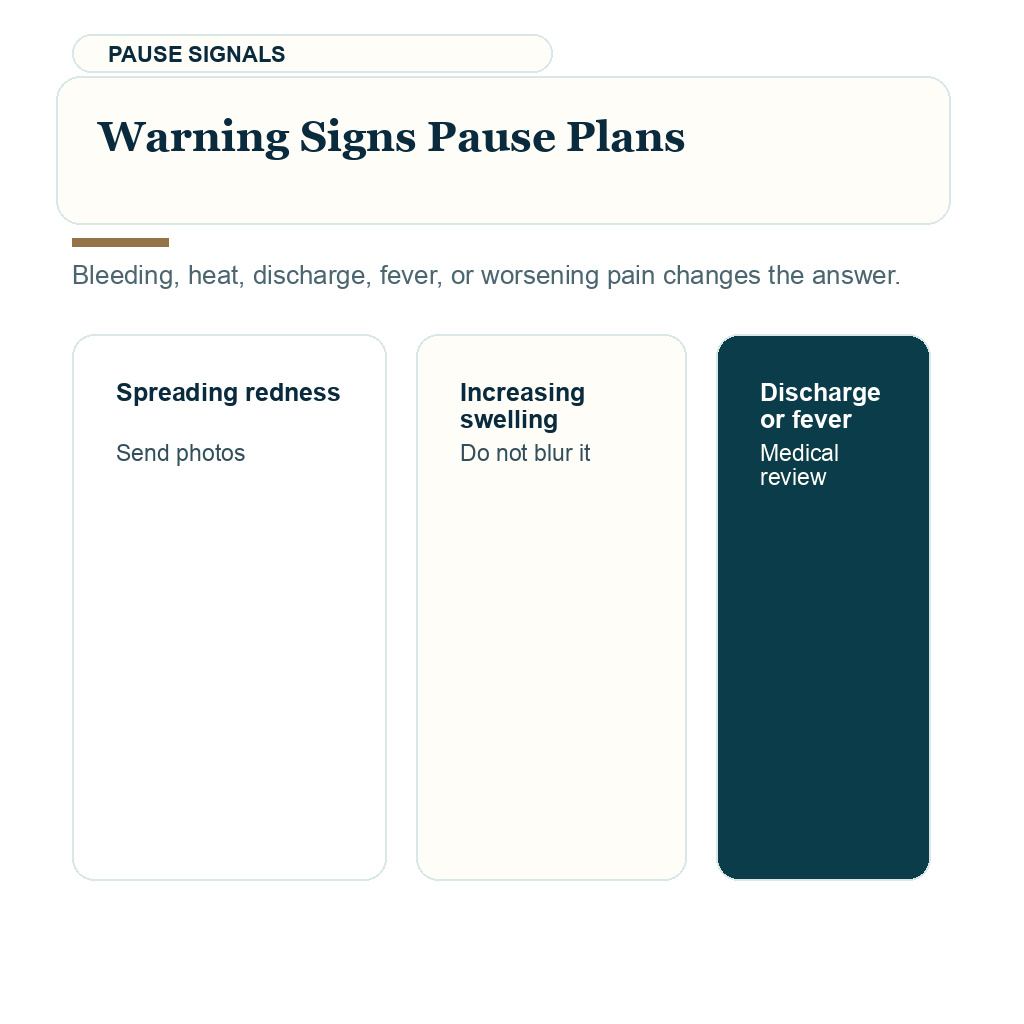
Delay Botox or fillers if the hair transplant area has fresh bleeding, open skin, discharge, worsening pain, spreading redness, heat, fever, painful pimples, or swelling that is increasing instead of settling. Delay them if scabs are still being pulled, if the skin is tender enough that you cannot wash gently, or if the clinic still needs photos before clearing another appointment.
Some mild redness, tightness, scabbing, and early swelling can happen after a hair transplant, but the pattern matters. A symptom that is improving is different from a symptom that is worsening. If you are unsure, redness, scabs, or pimples after a hair transplant gives a better framework for deciding when the clinic should review the area.
An injector should not work through irritated skin just because the appointment is already paid for. A good injector should also refuse treatment if the skin does not look ready. Postponing a cosmetic injection is usually much easier than dealing with an avoidable infection, bruising problem, or confusing recovery change.

Botox and dermal fillers are different procedures, so the safer timing depends on the product and injection site.
Blood thinners and painkillers before fillers
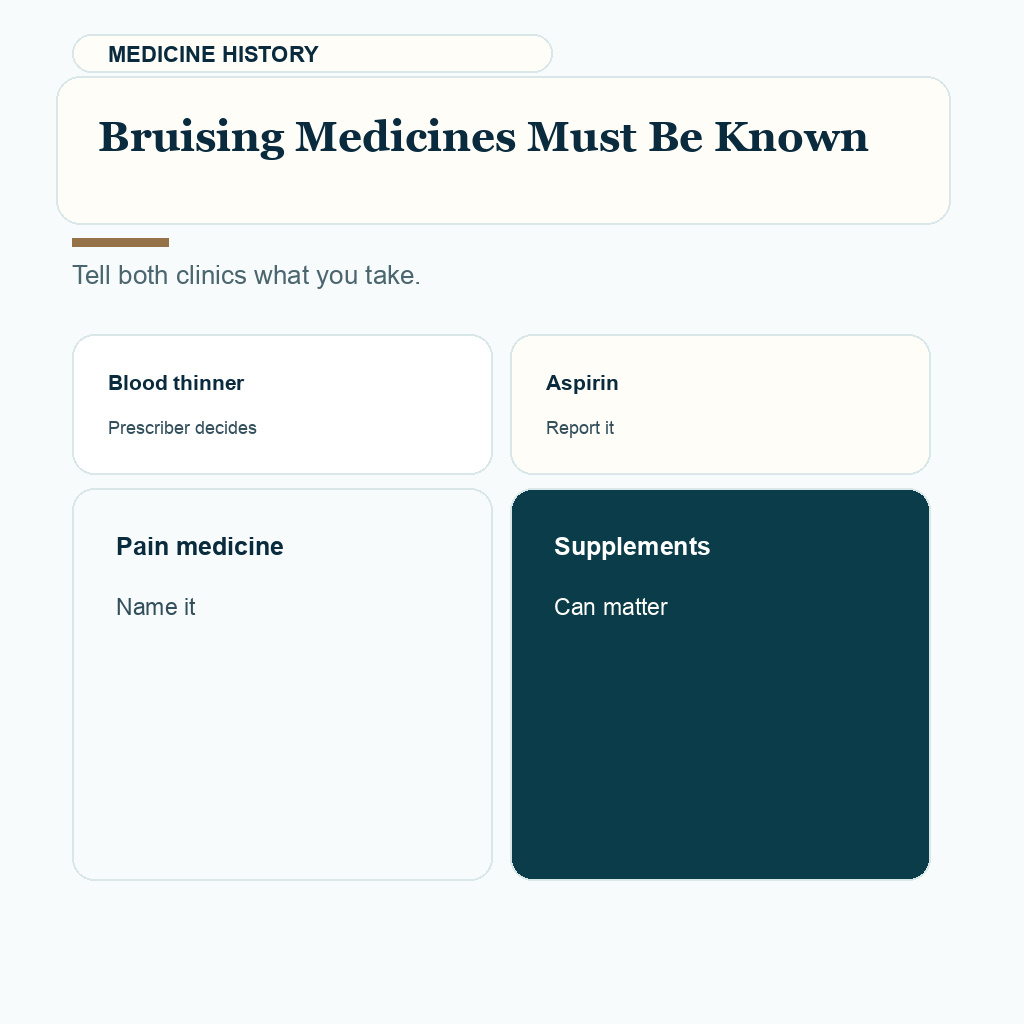
A blood thinner, aspirin, heart medication, or prescribed drug should not be stopped just to make a cosmetic injection easier unless the prescribing doctor and the treating clinicians agree. Bruising is a real consideration with fillers and cosmetic injections, but medication safety is more important than cosmetic convenience.
Many patients are already thinking about medication timing after hair transplant surgery. If you take aspirin, anticoagulants, or another bleeding risk medication, the more relevant issue is hair transplant surgery while taking blood thinners. If your question is about common pain medicine after the transplant, read painkillers after a hair transplant.
Tell both clinics what you take, including supplements. Some supplements and medicines bought without a prescription can increase bruising even if patients do not think of them as medication. A clean medical history protects both the hair transplant recovery and the cosmetic injection result.
Makeup after Botox or filler near a transplant
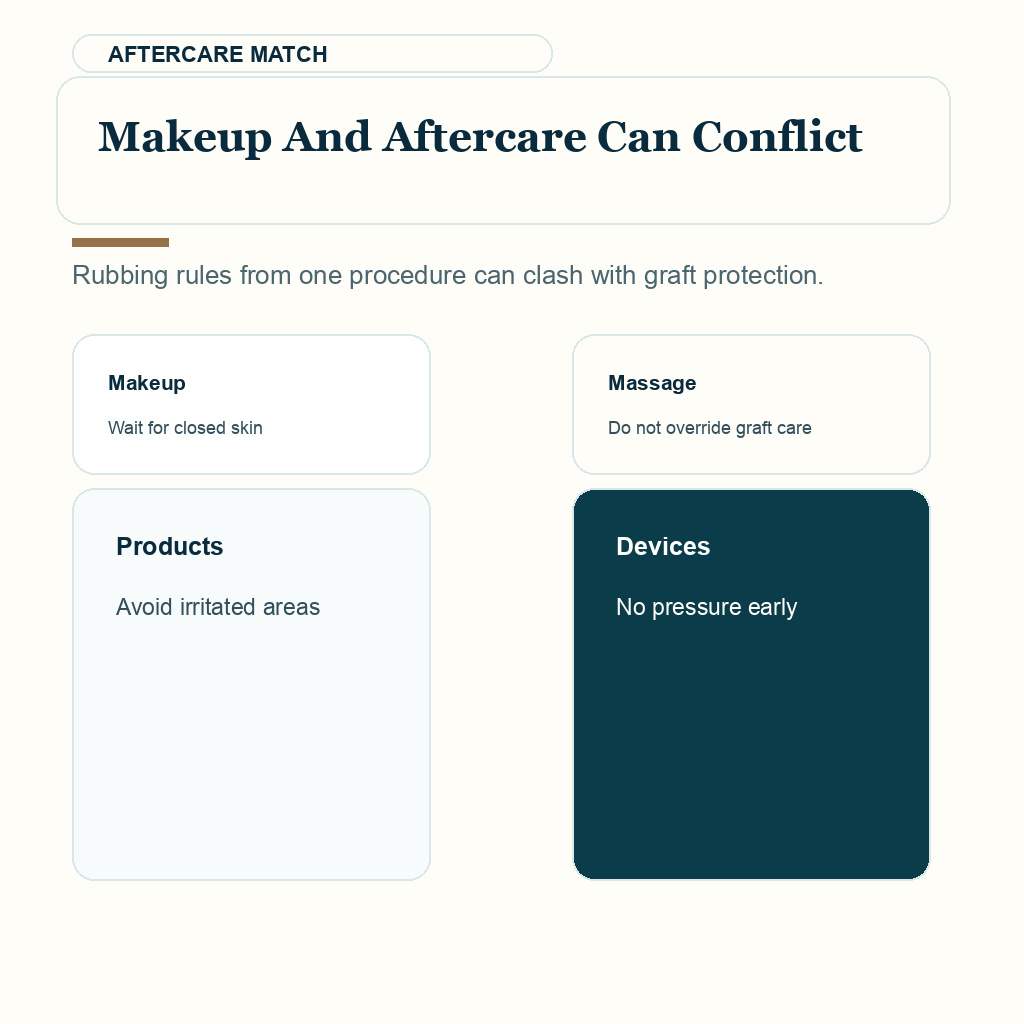
Makeup timing should follow the stricter of the two procedures. After a hair transplant, makeup around the forehead or hairline may need to wait until the skin is closed, clean, and no longer easy to irritate. After Botox or filler, many injectors also limit rubbing, pressure, and certain skin products for a short period.
If you combine both procedures too closely, the instructions can conflict. One clinic may tell you to avoid rubbing after injections, while the transplant clinic may still be monitoring scabs or redness. It is better to keep the recovery instructions clean. Heal first, then add cosmetic steps one by one.
If your question is about foundation, concealer, eyebrow products, or covering redness, use the specific guidance on makeup after a hair transplant. Cosmetic injectables should not become a reason to cover a scalp that still needs medical inspection.
Coordinating the transplant surgeon and injector
Make both clinicians work from the same facts. Tell the hair transplant clinic exactly what cosmetic injections you had, where they were placed, when they were done, and whether you had swelling, bruising, or complications. Tell the injector that you recently had a hair transplant, where the grafts were placed, and whether the donor area is still healing.

Photos help. If the injector plans forehead, temple, or upper face work, show a clear photo of the grafted area and the donor area. If the hair transplant clinic has asked you not to rub, massage, wear pressure, or use certain products yet, tell the injector before treatment begins. A careful injector can then avoid unnecessary pressure near the grafts.
Be specific with dates and zones. The injector should know the exact transplant date, whether grafts were placed in the frontal hairline, temples, sideburns, crown, or donor area, and whether any redness, pimples, crusting, numbness, or tenderness remains. The hair transplant clinic should know the injection date, product type if known, injection area, and any swelling or bruising afterward.
For the basic recovery rules, keep hair transplant aftercare as the reference point. If medication timing is part of the decision, compare prescribed drugs, optional treatments, and timing decisions with medications after a hair transplant.
Acceptable timing depends on healing and location
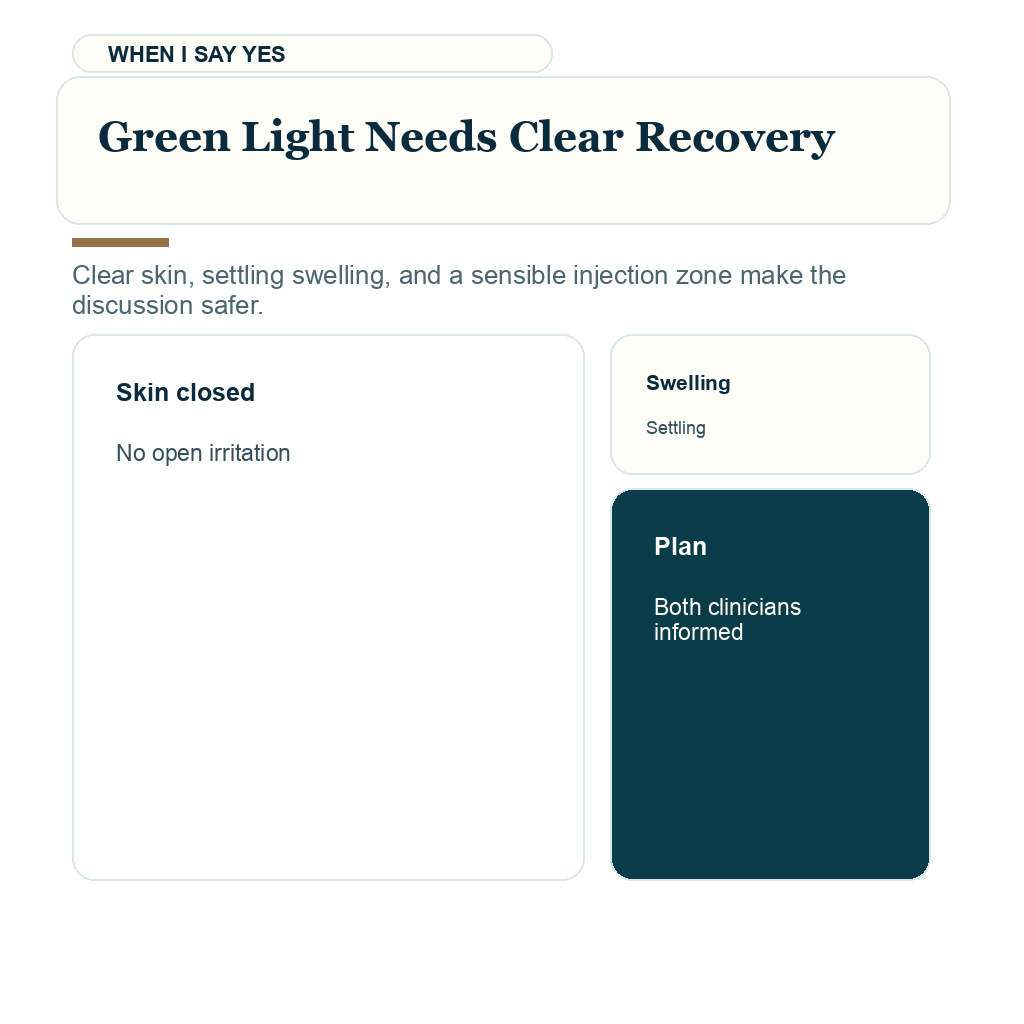
I am more comfortable when the grafted skin is closed, scabs have cleared without bleeding, swelling is settling, there is no sign of infection, and the planned injection points do not pass through irritated or newly transplanted skin. You also need to understand that Botox and fillers are aesthetic decisions. They do not protect grafts, improve graft survival, or replace careful hairline planning.
Requests for filler near the temples soon after a temple point transplant, Botox before the hairline design has been judged, or injections while the forehead is still swollen from surgery need a slower decision. I also pause if there is medication that increases bruising and it has not been discussed with the correct doctor.
Waiting a little longer rarely creates a medical problem. Treating too early can create bruising, swelling, infection concern, or a confusing recovery photo. If the choice is between a slightly delayed Botox or filler appointment and a clean, easy to monitor transplant recovery, I protect the transplant recovery first.
Injection timing starts with visible skin
A safe decision starts with the injection type, exact location, clinician, and timing. Forehead Botox, temple filler, lip filler, chin filler, and injections far from the scalp do not create the same question.
If swelling, redness, bruising, or scabs are still visible, separate the safety check from the cosmetic plan. The guide to when you will look normal in public after a hair transplant may answer the practical concern better than another cosmetic procedure.
Once the transplant skin is settled and both clinicians understand the plan, Botox or fillers can usually be discussed more calmly. Until then, predictable healing is the priority.
Read this review excerpt
We also had a levelled conversation about my hairline and results I could expect based on my donor density area.