


Makeup Timing During Early FUE Recovery
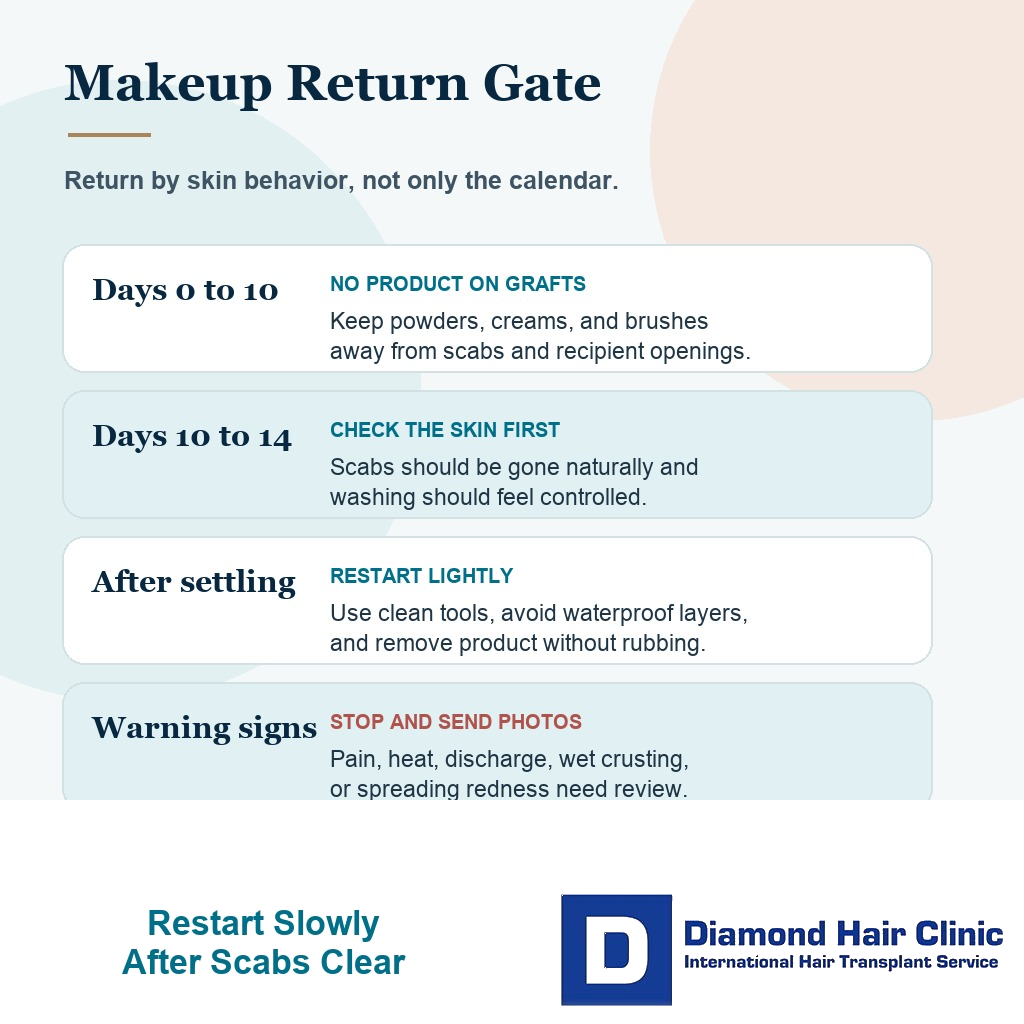
In most scalp hair transplant cases, keep makeup, foundation, concealer, setting powder, camouflage cream, and similar products off the recipient area for the first 10 to 14 days. Makeup on the lower face may be possible earlier if it stays well away from the hairline, temples, forehead grafts, donor wounds, scabs, and irritated skin. A product dabbed on the forehead is different from concealer worked into healing recipient skin, and that difference should guide the timing.
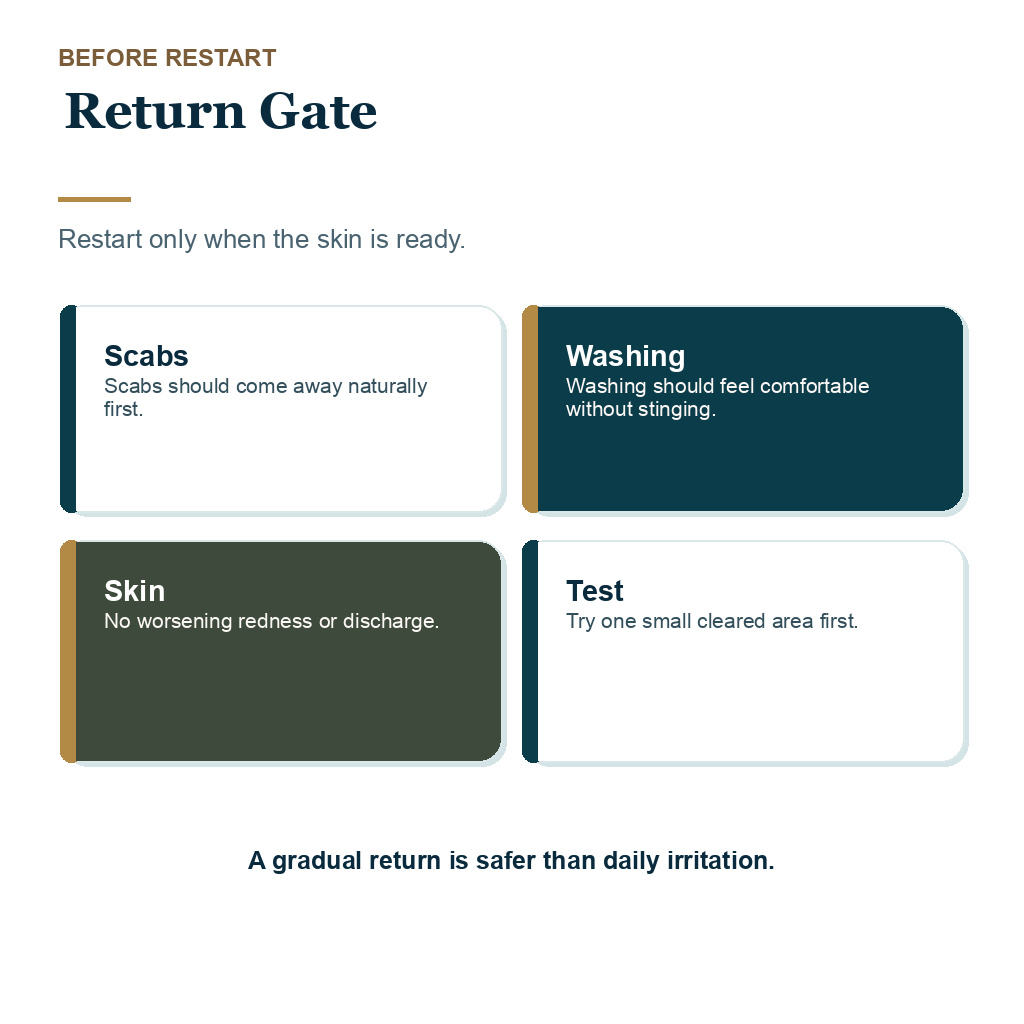
Once the scabs have come away naturally, the skin is closed, washing is comfortable, and there is no worsening redness, warmth, pain, or discharge, makeup can return gradually with clean tools and very gentle removal.
When makeup is allowed again, the first use should be a small test away from grafts and irritated skin. If the product stings, clogs, needs scrubbing, or hides a worsening red area, it is not the right camouflage for recovery.
Tinted sunscreen, BB cream, CC cream, primer, and makeup with SPF are still contact products. If they touch grafts, scabs, irritated skin, or the transplanted border, I treat them like makeup rather than safer skin care.
The exact answer depends on where the grafts were placed. A hairline, temple, eyebrow, or beard case is different from makeup that stays on the cheeks. Botox or fillers after a hair transplant need a separate decision because they involve needles, swelling, and bruising. Makeup is only surface coverage, but it can still create trouble if it touches healing skin, hides warning signs, or needs rubbing to remove.
If the skin is wet, painful, increasingly red, warm, swollen, draining, bleeding, still crusted, or producing new bumps, do not cover it. Send clear photos to the clinic first.
Makeup timing matters after FUE
Early recipient skin is not normal skin yet. It has tiny openings, crusts, redness, short transplanted shafts, and healing tissue that can react badly to residue, pressure, and repeated cleaning. The first decision is not whether makeup looks light in the mirror. The decision is whether the skin can tolerate application and removal without being disturbed.
A single cosmetic product does not magically destroy a transplant. The risk comes from the whole routine. A little powder brushed on the lower cheek is not the same as full event makeup across the forehead with setting spray, sweat, and scrubbing it off late at night. A sponge presses near the hairline. Powder collects around crusts. A brush touches the grafts. At night, wipes, cleansing oil, towels, or fingernails can remove the product too aggressively. That chain is more relevant than the product name.
Graft anchoring and skin recovery are related, but they are not the same. When hair transplant grafts become secure is only one part of the decision. Even when the grafts are less easy to dislodge, the surface can still be irritated by makeup, sweat, residue, and rubbing.
Forehead makeup needs caution after hairline transplantation
If the frontal hairline or temples were transplanted, keep forehead makeup away from the recipient border during the first 10 to 14 days. Many people think of the forehead as separate from the grafts, but foundation and powder move. They can collect at the hairline, mix with scabs, and then require wiping to remove.
Makeup on the lower face is a different decision from makeup brushed across the forehead near new grafts. Even with lower face makeup, avoid resting a sponge, brush, hand, headband, or mirror edge against the transplanted border. The first two weeks are not the time to test how close you can go.
After the scabs are gone and the skin looks closed, a light product around the forehead can return carefully. I still avoid thick cream concealer, heavy contour, glitter, waterproof makeup, long wear foundation, or anything that needs strong cleansing at the hairline. Gentle application is only half of the decision. Gentle removal matters just as much.
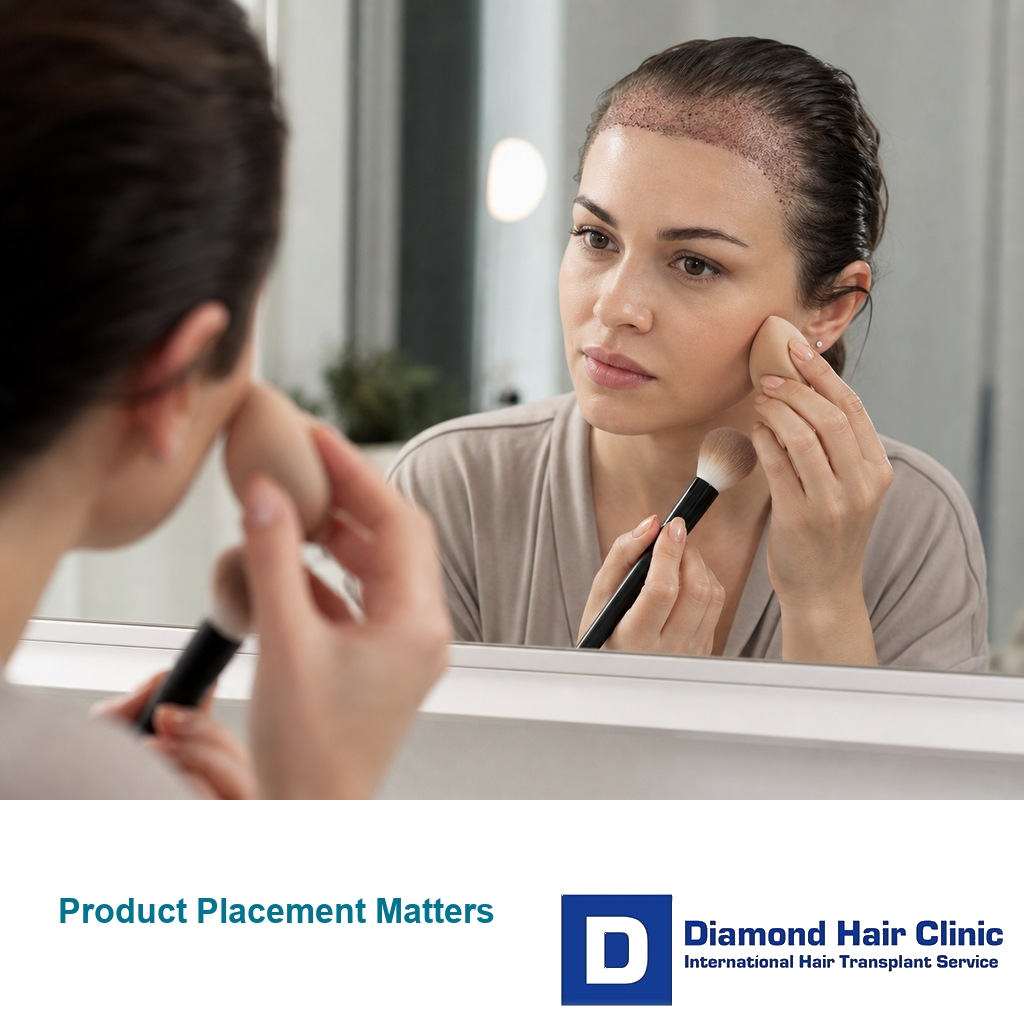
Concealer, powder, and hair fibers are not the same risk
Concealer, powder, and hair fibers behave differently. A light powder away from the grafts is not the same as thick concealer pushed into crusts, and hair fibers are not the same as face makeup.
Concealer can feel harmless because it sits on top of the skin, but cream products can trap residue and feel sticky on healing tissue. Powder can collect between short shafts and dry crusts. Both can lead to harder cleaning later.
Hair fibers deserve separate caution because they are designed to cling to hair and scalp. They often need locking spray or stronger washing to remove. If the goal is scalp coverage, read when hair fibers are safe after a hair transplant before treating fibers like ordinary face makeup.
The skin needs to be ready before makeup returns
Makeup is safer after the scabs have come away naturally, but the calendar alone is not enough. The skin needs to be closed, dry in a healthy way, not increasingly red, not tender, and able to tolerate gentle washing without rubbing.
The washing routine matters because every cosmetic product has to come off. If you still cannot wash without fear, rubbing, or discomfort, makeup adds a second problem. The timing for washing hair normally after a hair transplant should depend on whether water, softening, and friction are easy to control.
Some redness can remain after scabs are gone. That alone is not always alarming. The important question is direction. Stable or improving redness is different from redness that is hotter, wetter, more painful, or spreading. Makeup must not be used to hide redness, irritation, or a scalp that needs review.
Products that need strong removal should wait longer
Heavy foundation, waterproof makeup, thick concealer, strong setting sprays, products with alcohol, fragranced products, glitter, peel off products, adhesives, harsh toners, exfoliating pads, retinoids, benzoyl peroxide, salicylic acid, glycolic acid, brightening creams, and aggressive cleansers need more caution than a light product used away from the grafts. The issue is not only the ingredient list. It is how the product sits on the skin and how much force is needed to remove it.
When makeup returns near healing skin, choose the boring product first. A light, fragrance free product that is easy to remove is usually safer than a heavy cosmetic layer. Avoid testing a new foundation, primer, adhesive, setting spray, or glitter product on the forehead or hairline while the clinic is still judging redness and crusting.
If you have sensitive skin, facial acne after FUE, folliculitis, eczema tendency, or previous cosmetic reactions, I move more slowly. A product tolerated before surgery can sting or irritate after surgery because the skin is healing. The same timing and contact caution applies to ingredients to avoid in hair products after a transplant. If a rash, swelling, widespread irritation, or a reaction after a new product appears, compare it with product or medication reaction patterns and ask for review.
Hair styling products need their own timing. Gel, wax, and hairspray can migrate toward the hairline and require firm washing. If you are still deciding when to use hair gel, wax, or hairspray after a hair transplant, do not add makeup on the recipient border at the same time.
Returning to work can be planned without irritating the scalp
Makeup may help someone feel more comfortable in public, but it should not become the recovery plan. The first 10 to 14 days can be visible because of redness, scabs, shaving, swelling, and donor area changes. Trying to erase all of that with product often creates more risk than benefit. For work with clients, skin protection comes before hiding every visible sign.
Plan the calendar before planning the product. A video call, wedding, meeting, or photo day can create real pressure, but makeup should not be the way to hide skin that is still crusted, wet, hot, or more painful. Remote work, softer lighting, a loose approved cover, or a private recovery window can protect the scalp better. How much time to take off work after a hair transplant gives a wider recovery frame for this decision.
Privacy is still a real concern. Many people do not want to explain surgery to colleagues or friends. The method matters. A plan that avoids touching the grafts is very different from heavy concealer over unsettled skin. I discuss keeping a hair transplant private as a wider planning question.
Women, temple cases, and eyebrow grafts may need different advice
Yes. Women, temple cases, frontal hairline cases, eyebrow grafts, and beard grafts often need more exact cosmetic planning because the normal makeup routine may sit close to the treated area. Foundation around the forehead, concealer near the temples, brow pencil, brow gel, powder, and setting spray can all touch the surgical zone.
A natural female hairline transplantation plan also needs careful diagnosis and soft design, not only cosmetic camouflage. If makeup is part of the daily routine, tell the clinic before surgery so the recovery calendar is realistic.
Eye makeup is usually a different decision from eyebrow makeup. Mascara or eyeliner away from the grafts may matter less in a scalp hairline case, but lash glue, strong remover, brow pencil, brow gel, or rubbing around eyebrow grafts needs stricter timing. Eyebrow and beard grafts are stricter because the cosmetic product often sits directly on the transplanted area. Brow pencil, brow gel, concealer, beard filler, and foundation can all contact new grafts. These cases should follow the clinic’s specific timing because the product is not merely near the surgical site. It is on it.
Some warning signs mean makeup should wait
Do not use makeup on or near the treated area if there is increasing pain, spreading redness, heat, pus, bad smell, fever, fresh bleeding, wet crusting, open skin, new swelling, or bumps that are getting worse. Makeup can hide the pattern, delay review, and make the area harder to clean.
Dry scabs, mild itch, and controlled redness can still fit early healing. Worsening signs are different. If the pattern is confusing, compare it with redness, scabs, and pimples after a hair transplant before covering it with makeup.
In darker skin tones, irritation may look brown, grey, purple, or darker rather than bright red. Do not scrub, bleach, exfoliate, or cover the color aggressively. Send photos in the same light and describe whether the area is flat, hot, painful, wet, raised, spreading, or improving.
If makeup touched the grafts once, do not panic and do not scrub. Use only the washing method your clinic has allowed, take clear photos in good light, and ask whether the area needs review. Bleeding, a pulled crust, pain, heat, discharge, or worsening redness matters more than the fact that a cosmetic product touched the skin.
Remaining product near the graft border should not be chased with wipes, oil, or repeated passes unless that cleaning method has already been allowed.
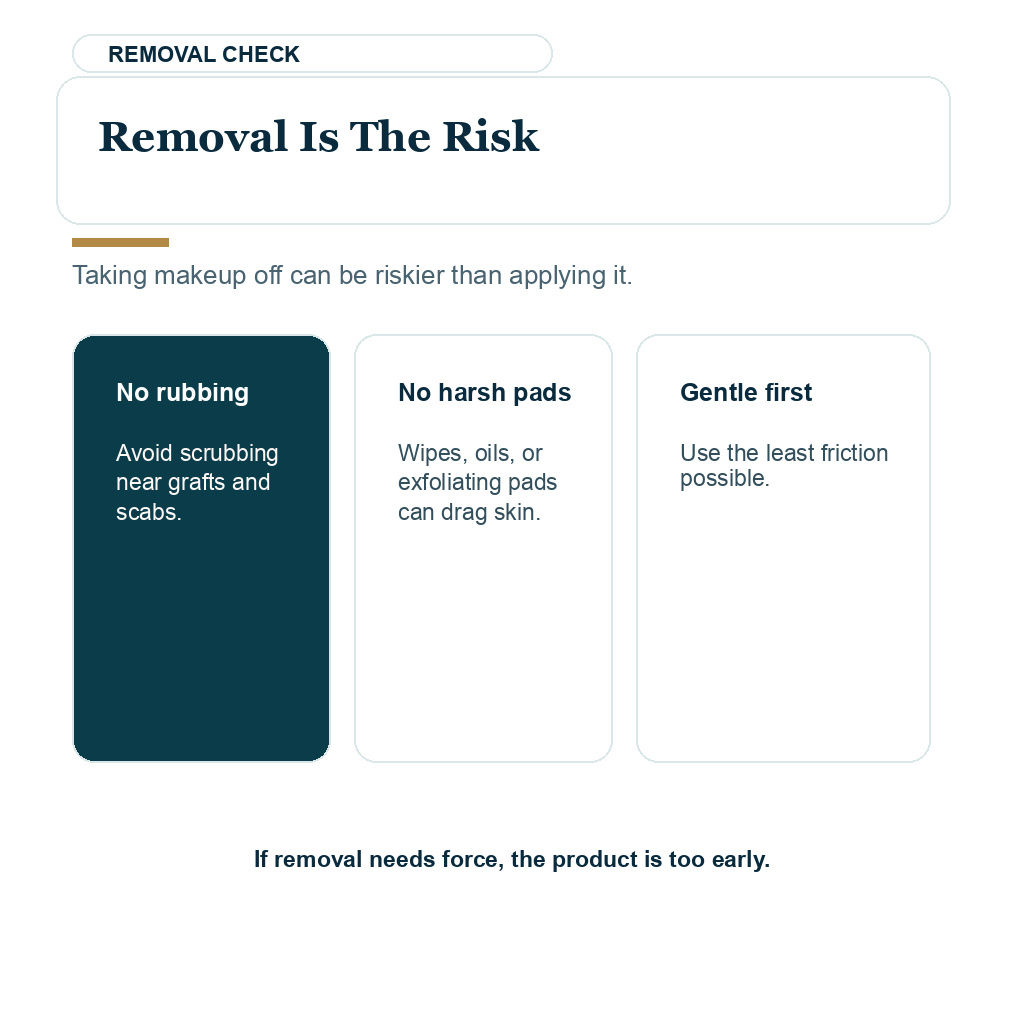
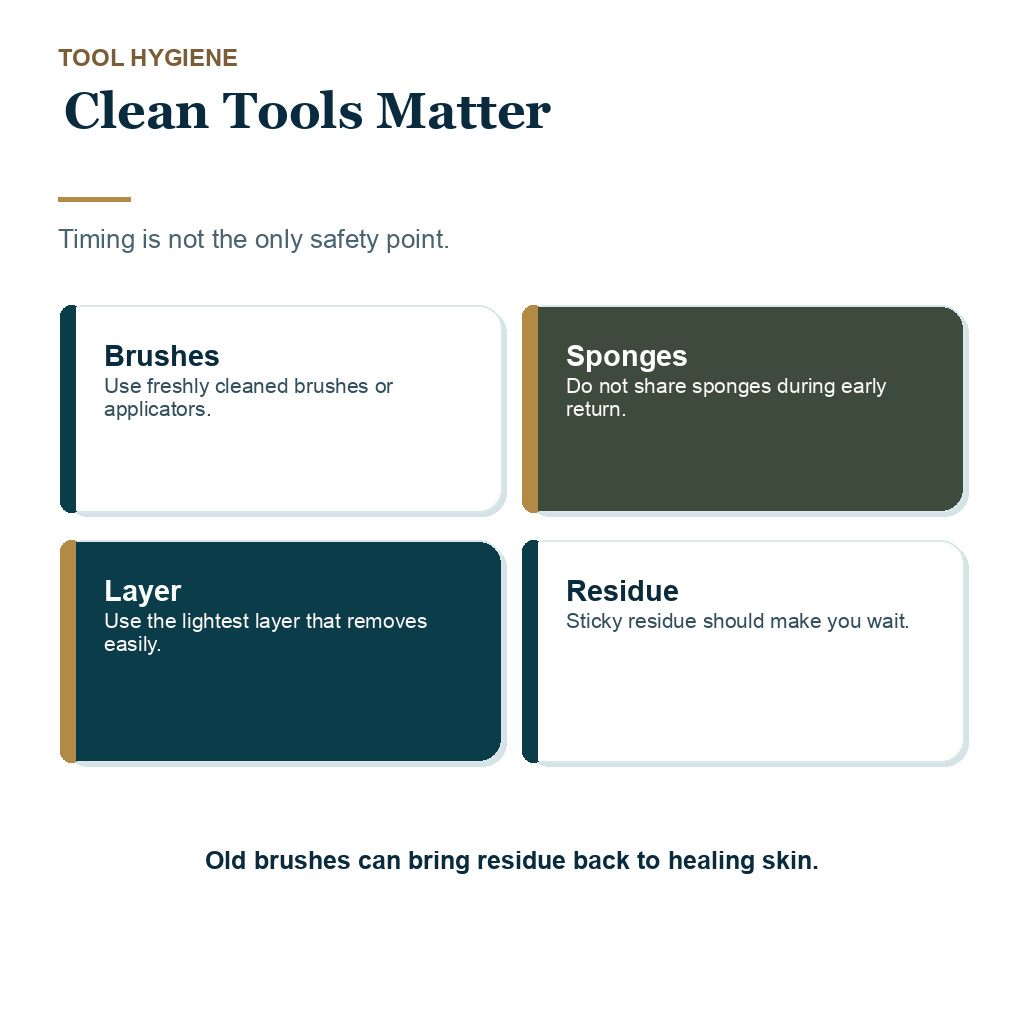
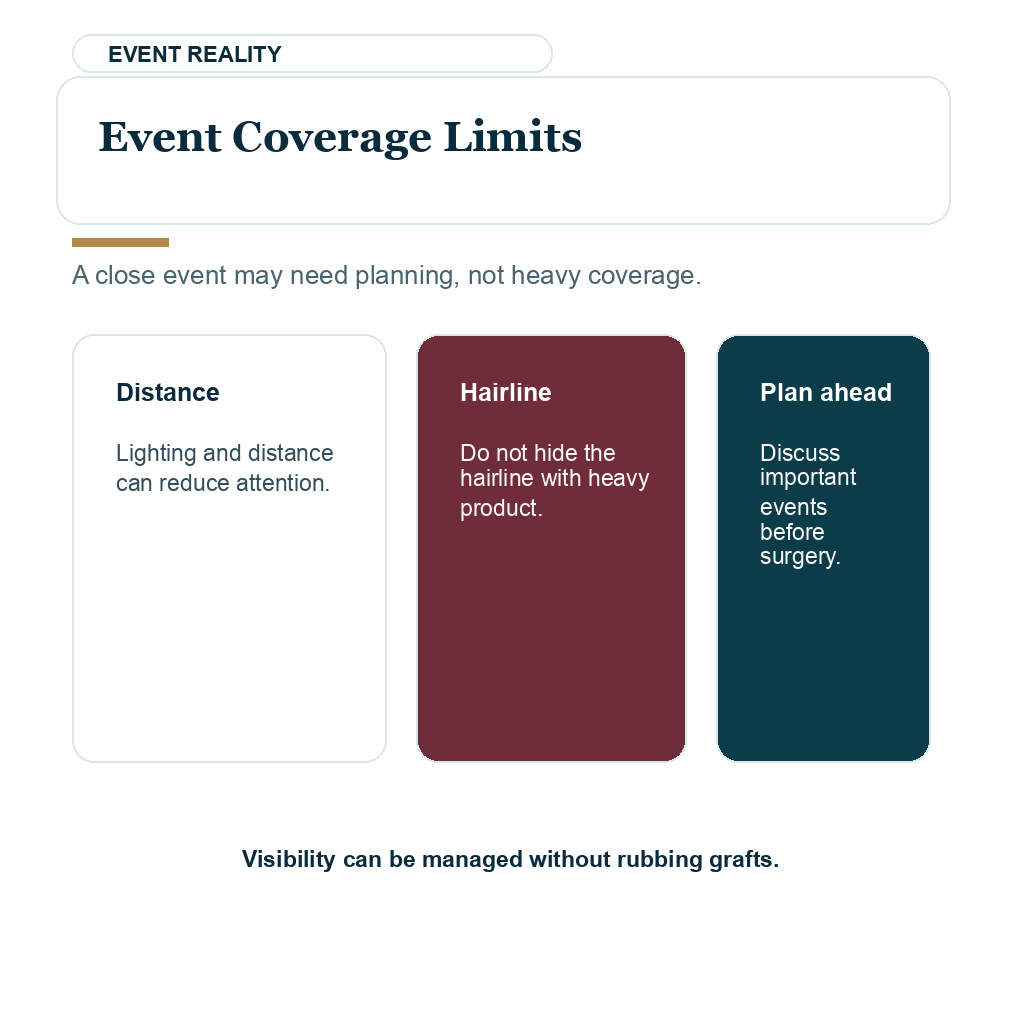
Use these slides as a recovery map, not as permission to cover unsettled skin. They separate product location, skin reaction, removal force, clean tools, event pressure, and gradual return so the decision is based on healing rather than urgency.
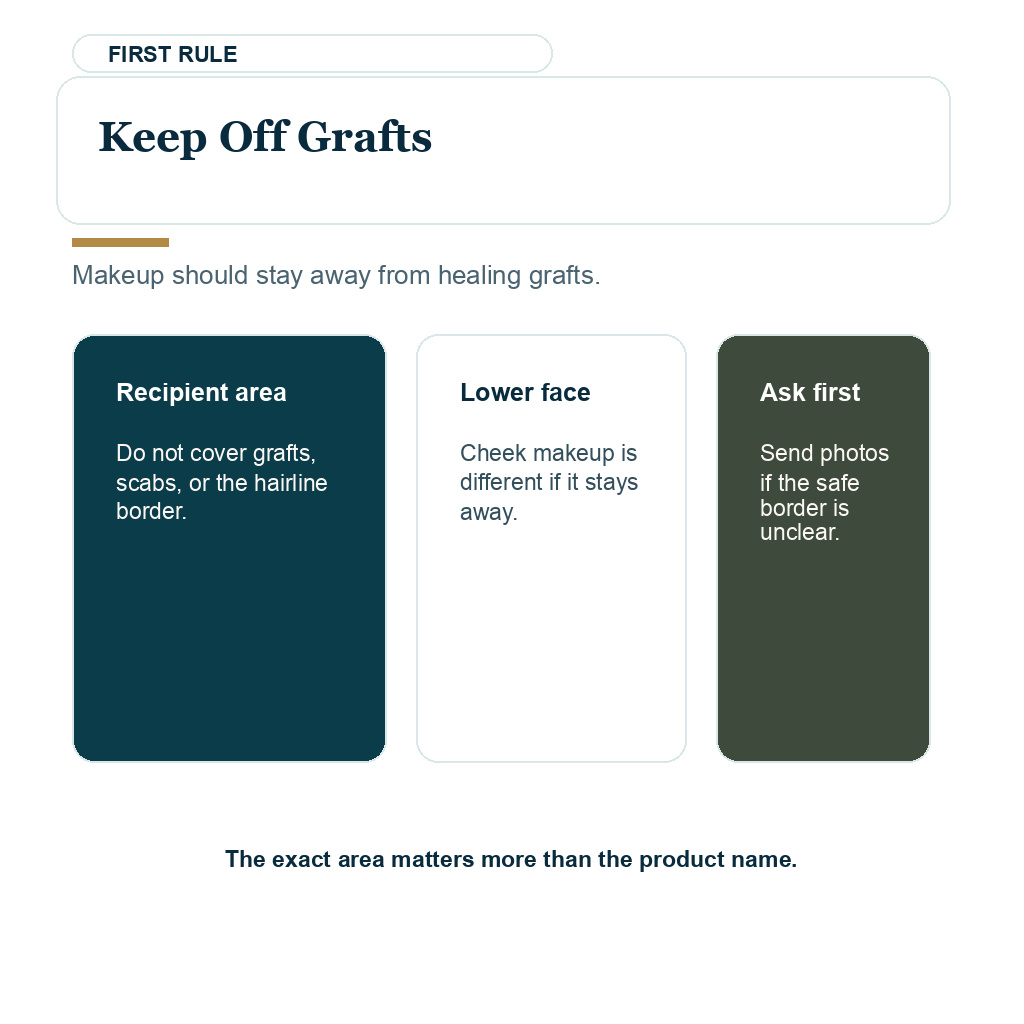
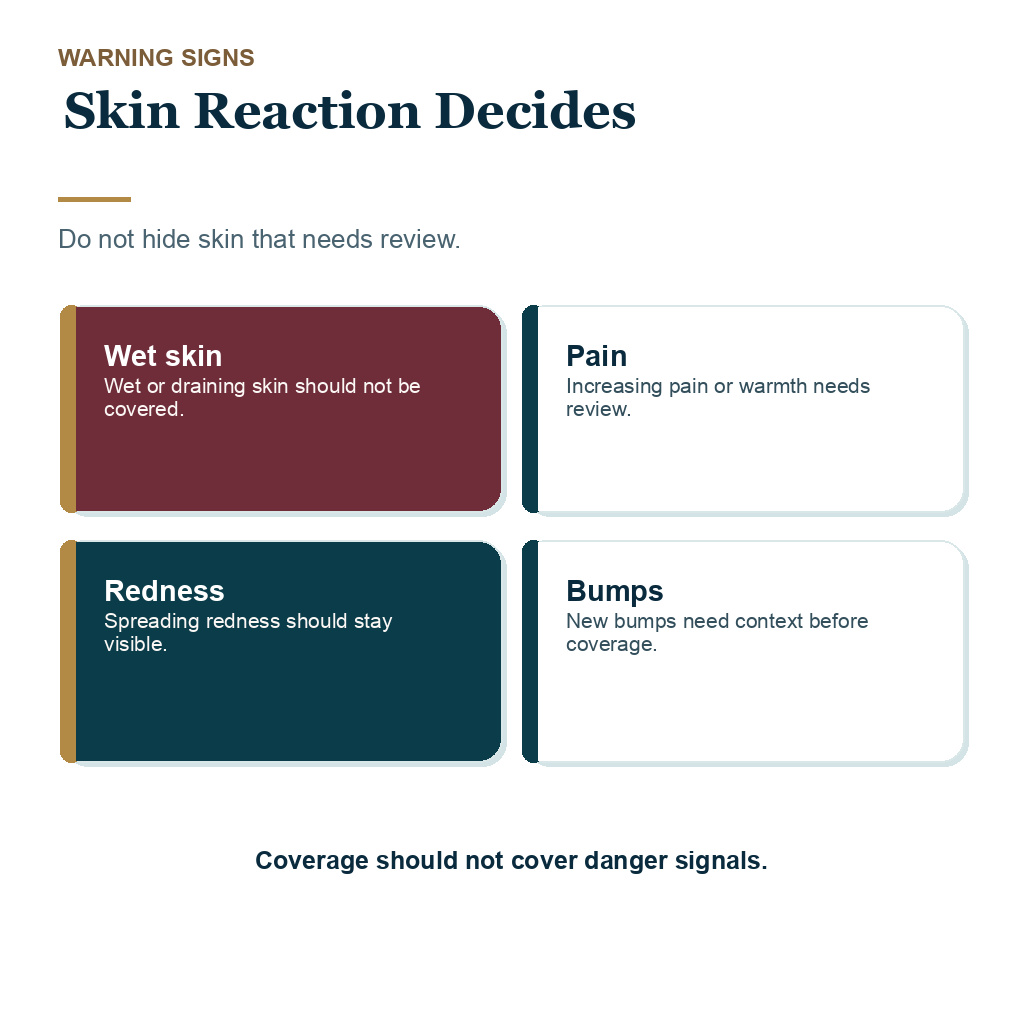
Early makeup use depends on the skin reaction
Judge what happened, not only the mistake. A light brush of powder on dry skin is different from thick concealer rubbed into crusts and scrubbed off later. Fresh bleeding, a pulled crust, increasing pain, heat, discharge, or a clear gap where grafts were disturbed should be shown to the clinic.
If there was no bleeding, no pain, no pulled scab, and the skin looks the same after gentle cleaning, the situation is usually less urgent. Still, pause makeup for a few more days and return only after the skin has settled. Repeating the same irritation every day matters more than one small accidental exposure.
Do not try to compensate with antiseptic creams, acne products, alcohol toner, strong cleanser, or extra ointment unless your clinic instructed it. Extra product stacking can make the skin more irritated and make the next photo harder to interpret.
Makeup should restart gently
Restart with the simplest product, the smallest area, and the lightest touch. Use clean brushes or a clean sponge. Do not share applicators. Keep product away from crusts, new pimples, irritated areas, and the exact transplanted border until the skin has clearly settled.
Product testing should happen away from the grafts first, such as on the lower cheek or another area your clinic has cleared. Leave the grafted border out of the experiment. If removal needs wipes, oil massage, exfoliating pads, or repeated passes, the product is still too demanding for early recovery.
A gradual return is safer. Try makeup for a short period first, remove it gently, and check the skin the next morning. If the scalp or forehead stings, becomes more red, breaks out, or feels sticky with residue, stop and wait.
Keep product categories separate. A mild conditioner after a hair transplant on hair lengths is different from foundation rubbed into the hairline. Stronger chemical changes need a longer timeline, which is why hair dye after a hair transplant is a separate decision.
Clean brushes and applicators matter
When makeup restarts near the forehead or hairline, clean tools matter as much as timing. Old brushes, shared sponges, used powder puffs, shared testers, salon brushes, expired products, and product left open can bring oil, bacteria, fragrance, and residue back onto skin that is still recovering. The morning of surgery is stricter. FUE morning starts with clean skin, so makeup, sunscreen, and fragrance should stay off before prep unless the clinic says otherwise.
Use clean hands, freshly washed brushes, disposable applicators when possible, and a light layer that can be removed without rubbing. Do not share tools during the early return. If the product needs scrubbing, peeling, strong cleanser, or repeated wiping to come off, it is too aggressive for that stage.
Makeup removal can risk rubbing the grafts
Removal is often the bigger risk. A product that goes on gently can still become a problem if it needs scrubbing, oil massage, exfoliating pads, wipes, or repeated friction near the hairline, temples, forehead grafts, eyebrow grafts, or beard grafts.
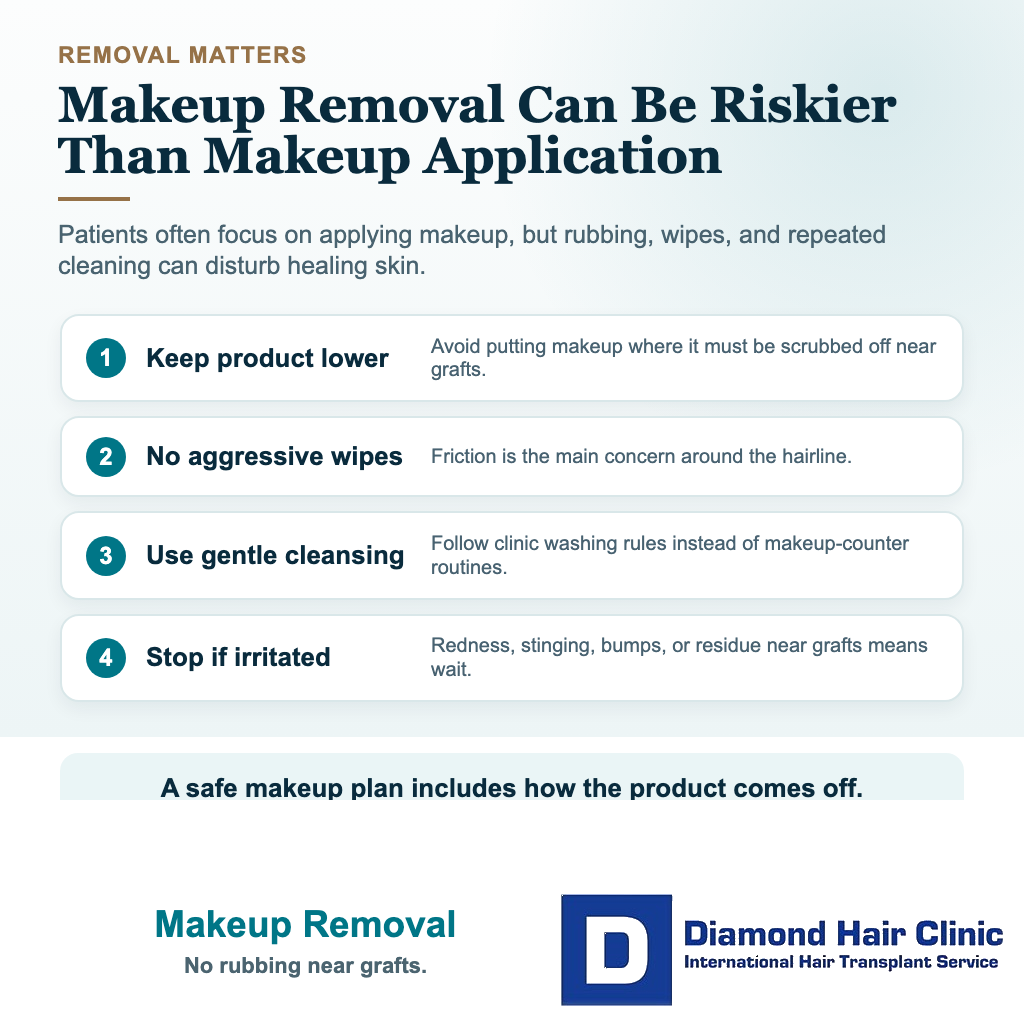
When makeup returns, keep it away from the recipient area unless your clinic has cleared that exact area. Remove it slowly with the least friction possible. If makeup cannot be removed without dragging the skin, it is too early for that product. For an event, adjust the hairstyle, lighting, schedule, or clothing instead of using heavy coverage over healing skin.
Event makeup may be unrealistic during early recovery
If an event is coming in the first two weeks, plan around visibility instead of trying to cover the surgery completely. Lighting, schedule, distance, hairstyle when allowed, clothing, and a few private days are often safer than a heavy cosmetic layer. If a makeup artist is involved, explain where product cannot go before the appointment. Avoid shared brushes, testers, airbrush spray near the hairline, setting spray drift, and anything that would need scrubbing later. If the event is important and close to surgery, discuss it before the operation date is chosen.
For makeup, keep it off the recipient area during the first 10 to 14 days. After scabs are gone and the skin is closed, restart lightly, keep tools clean, remove product gently, and stop if the skin reacts.
Makeup should support recovery, not fight it. If you have to rub, hide warning signs, or cover unsettled skin to feel ready, it is too early. If the skin has settled, the product is light, and the application stays away from the grafts, makeup can usually return without making the transplant the center of attention.

Read this review excerpt
Upon arriving home, I sent 4 photos (of each side of head) after every washing process to doctor for checking where I was given personal advice for how to take care of my healing head.