



Conditioner Timing Depends on Scalp Healing
Most patients should keep conditioner away from the recipient area during the first 10 to 14 days after a hair transplant. After the scabs have come away, washing feels comfortable, and the skin is calm, a mild rinse out conditioner can usually return gradually, mainly on the hair lengths and ends rather than rubbed into the grafted scalp. Leave in conditioner, masks, oils, and heavy smoothing products should wait longer, often closer to 3 to 4 weeks, unless your own clinic gives a different instruction after seeing your scalp.
For long native hair, keep conditioner on the lengths and ends first. You are trying to soften the hair without soaking scabs or leaving product on grafted skin.
Conditioner is not dangerous forever. The timing is the issue. Early after surgery, the recipient area is healing surgical skin, not ordinary dry hair. A product that helps hair feel softer can still create residue, stinging, rubbing, or confusion before the grafted skin is ready to inspect. Stronger texture changes, such as keratin or perm treatment after FUE, need an even more conservative decision.
Conditioner is different from shampoo after surgery
Shampoo and conditioner have different jobs. Shampoo is mainly for cleaning the scalp and hair. Conditioner is mainly for coating the hair shaft so the hair feels smoother, easier to comb, and less dry. That difference matters after surgery because the scalp and the hair shaft are not the same target.
When conditioner returns, think about where the rinse water flows as much as where you apply it. If your hands keep sliding back toward the grafted area, the product is too early or too close to the scalp.
During the first recovery days, washing after a hair transplant is controlled and medical. The aim is clean healing skin, softened crusts, and less irritation. Conditioner adds another layer to the routine. If it reaches the grafted area too early, it can make the scalp sticky, hard to rinse, or tempting to touch again. If residue or loose white scale appears after products return, the guide to white flakes after hair transplant explains why the scalp may need less product, not more.
A rinse out conditioner on longer native hair is less concerning than conditioner pressed into the recipient area. Still, even a hair length product can run onto the scalp during rinsing. I separate early washing, the normal shampoo return, and the wider hair product routine. You do not need to solve every dry hair problem during the graft protection stage.
Conditioner should stay off the recipient area early
During the first 10 to 14 days, conditioner should not be rubbed onto the recipient area. The grafted skin may have crusts, tiny healing openings, redness, and sensitivity. Rubbing conditioner into that area can disturb crusts before they are ready, leave residue around short hairs, or make you handle the scalp more than needed.
The timing should also respect when hair transplant grafts are secure. More secure does not mean the scalp is ready for cosmetic products, repeated rubbing, or thick residue. Graft anchoring and comfortable skin are related, but they are not identical.
If you have long hair around the transplanted area, apply conditioner lower on the hair shaft and rinse gently so the product does not sit on the grafted skin. Tilt the head or guide the rinse so conditioner runs away from the recipient area instead of pooling around the short transplanted hairs. If the transplanted area itself is short or shaved, there is usually no reason to condition that skin in the early period.
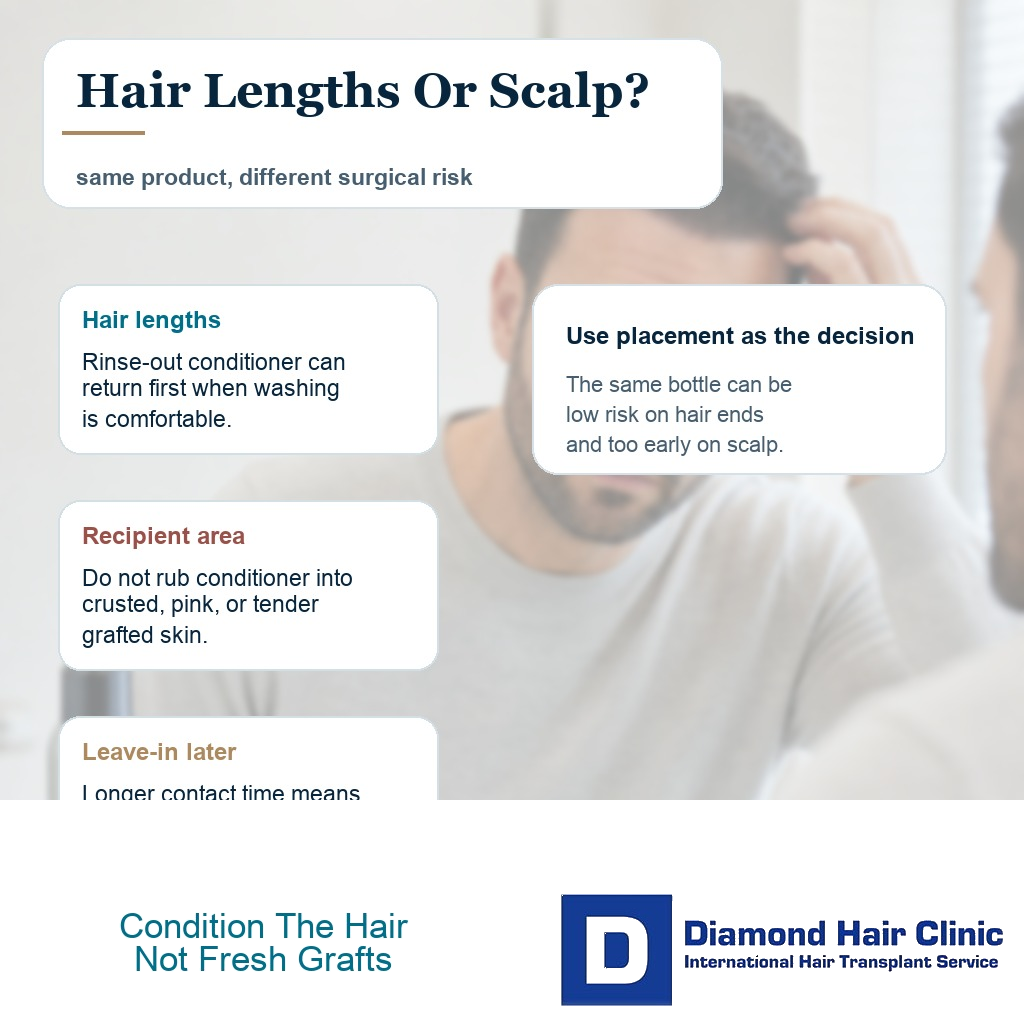
Conditioner timing depends on whether the product stays on hair lengths or reaches the healing recipient area.
If conditioner accidentally reaches the recipient area
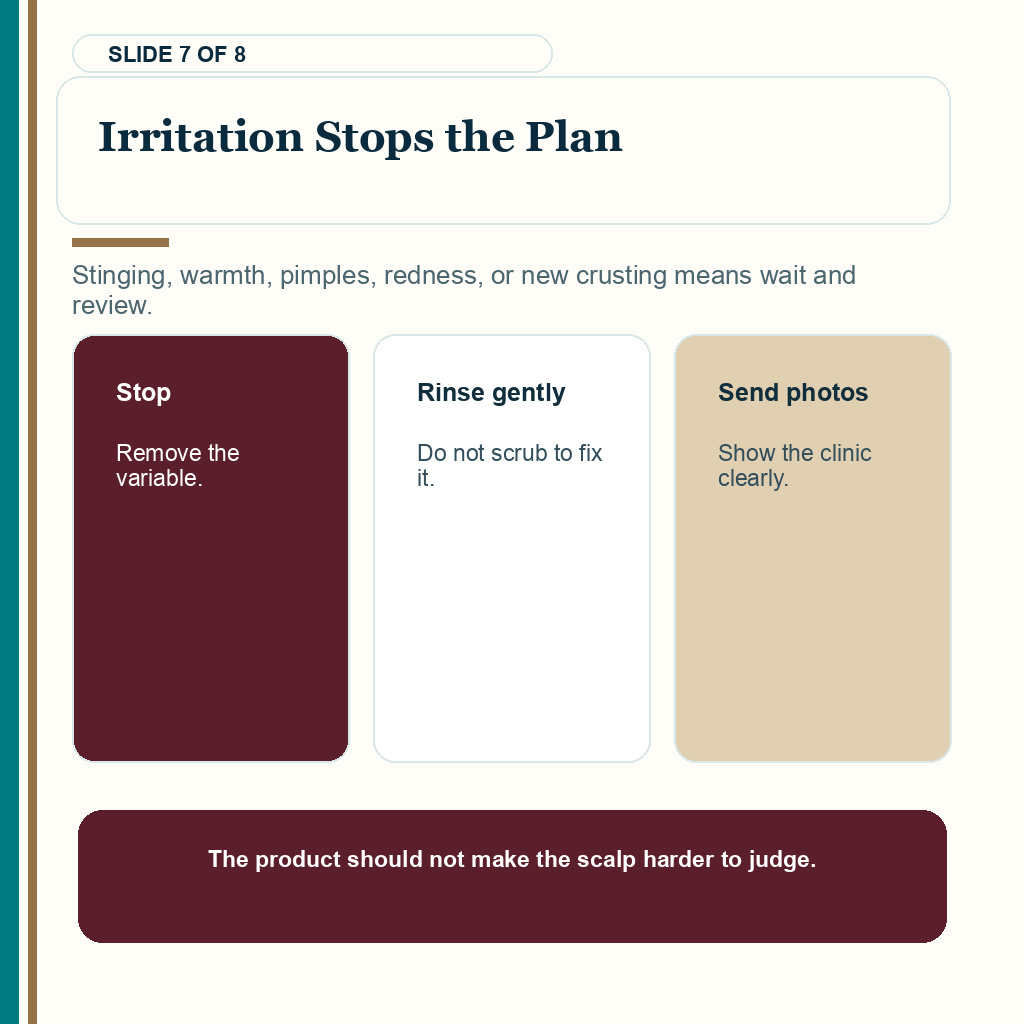
Do not scrub it out aggressively. Rinse gently with the method your clinic has already allowed, avoid picking at scabs, and ask for review if there is burning, fresh bleeding, swelling, pus, increasing redness, or new pain. One accidental contact does not mean the grafts are lost.
The bigger risk is usually the reaction afterward. Repeated washing, rubbing with a towel, using a stronger cleanser, or trying to inspect every graft can irritate the recipient area more than the conditioner itself. Stop the product, keep the routine simple, and restart only after the scalp looks calm.
Conditioner may touch the donor area earlier
The donor area often tolerates gentle routine changes earlier than the recipient area because it is not holding newly placed grafts. It is still healing, though. FUE extraction points can be dry, prickly, sensitive, or itchy, especially as short hair grows back.
If the donor area is closed, dry, and gradually improving, your clinic may allow a simple conditioner near that area sooner than they would allow product on the recipient area. If the skin is wet, painful, hot, swollen, bleeding, or spreading red, do not cover it with conditioner. Use clear photos for review instead.
Some patients confuse donor area comfort products with recipient area products. These are different decisions. The donor area may need comfort. The recipient area needs protection first. A calmer donor area should not lead to experimenting on the grafted skin.
First conditioner to try
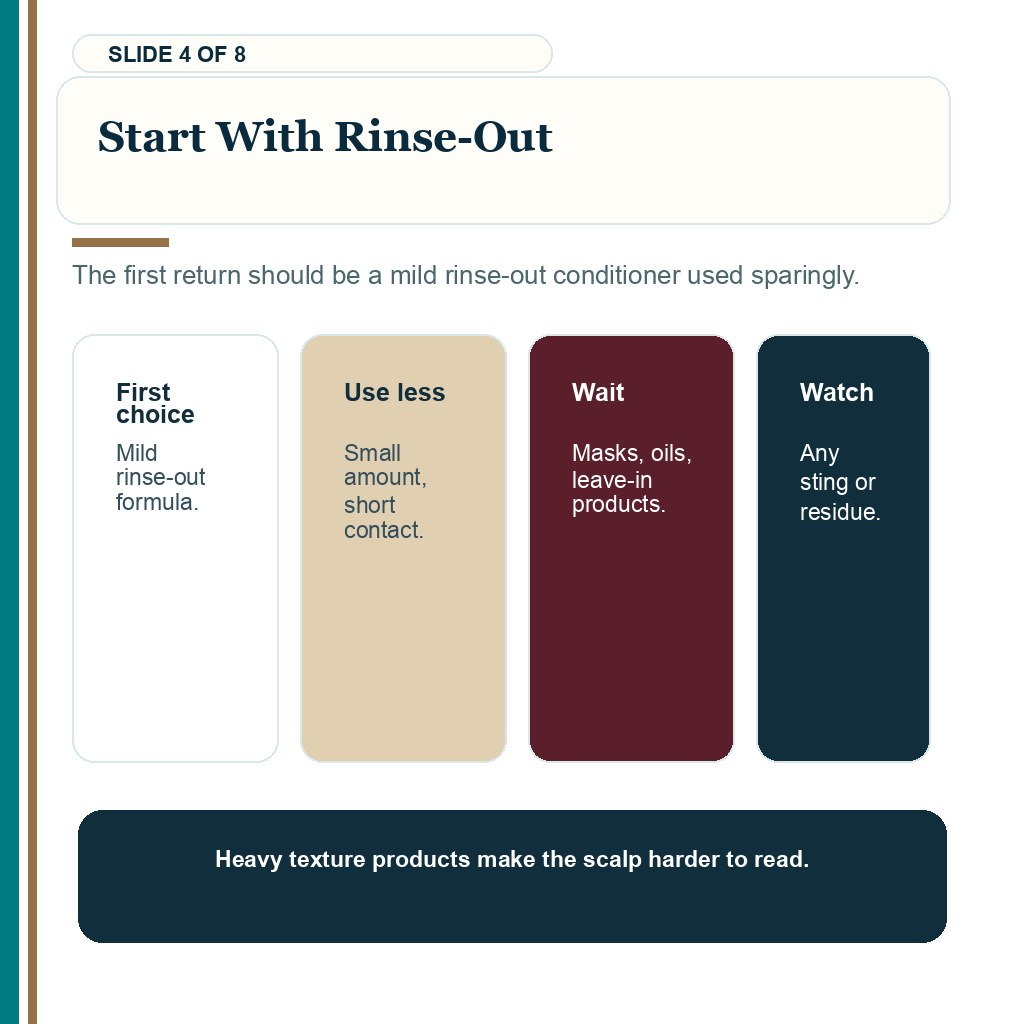
When conditioner returns, choose a simple rinse out product before a leave in product. Fragrance free or low fragrance products are usually easier to judge. A product that rinses cleanly is usually easier than a thick mask, oil rich treatment, perfumed leave in cream, or styling conditioner. Do not test a new conditioner first on the recipient area. Test the routine on hair lengths away from grafted skin.
Avoid conditioner with strong fragrance, alcohol heavy formulas, essential oil blends, exfoliating acids, retinoids, acne ingredients, antiseptic ingredients, or steroid medication unless your clinic specifically told you to use it. Healing skin can react to ingredients that felt harmless before surgery.
Medicated shampoos need the same kind of timing judgment. Ketoconazole shampoo after a hair transplant can be useful for the right scalp, but it can also add dryness or burning when used too early or too aggressively. Conditioner should not be used to cover irritation caused by a product that was introduced before the scalp was ready.
When you try conditioner again, use a small amount first and rinse longer than you normally would. Do not add a new shampoo, mask, oil, styling cream, and heat routine on the same day. If the scalp becomes itchy, warm, or stingy later, a simple routine makes it easier to identify the product that caused the reaction. Stop the product instead of adding another product to cover the irritation.
Dry or frizzy hair after surgery
Dry or frizzy hair after surgery can be frustrating, especially for longer hair, curly hair, or Afro textured hair. The hair may feel rough because washing is limited, crusts are present, sleep position is awkward, and you are afraid to handle the scalp normally. Conditioner may help later, but the first step is to protect the recipient area while the skin is still healing.
Do not pull through tangles near the grafted area. Do not use conditioner as an excuse to comb aggressively. If you are already thinking about touching grafts after a hair transplant, treat that as a timing question, not a styling question.
A wide tooth comb can be useful later for longer hair, but it should not scrape the recipient area. If the hair is very dry, ask the clinic whether conditioner can be applied only from mid length to ends. The scalp does not need to be coated for the hair shaft to feel softer.
Curly or Afro textured hair often needs more moisture and less friction to avoid breakage. That does not change the early protection rule for the recipient area. It changes how carefully the routine should be planned. In the first two weeks, the safer goal is gentle separation of hair strands away from the grafted skin, not full detangling near healing grafts. Later, conditioner can help reduce traction when it is kept on the shaft and rinsed away cleanly.
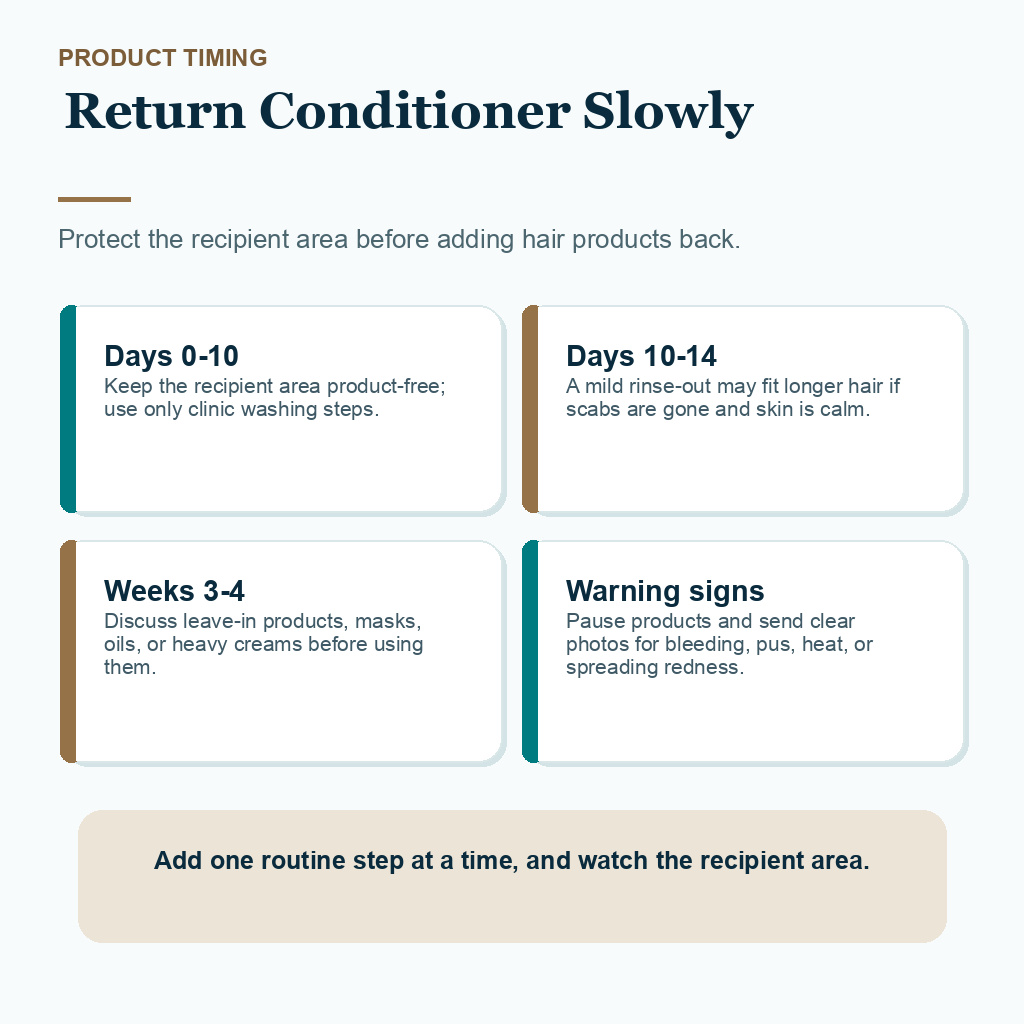
A gradual return is safer than adding shampoo, conditioner, oils, heat, and styling products on the same day.
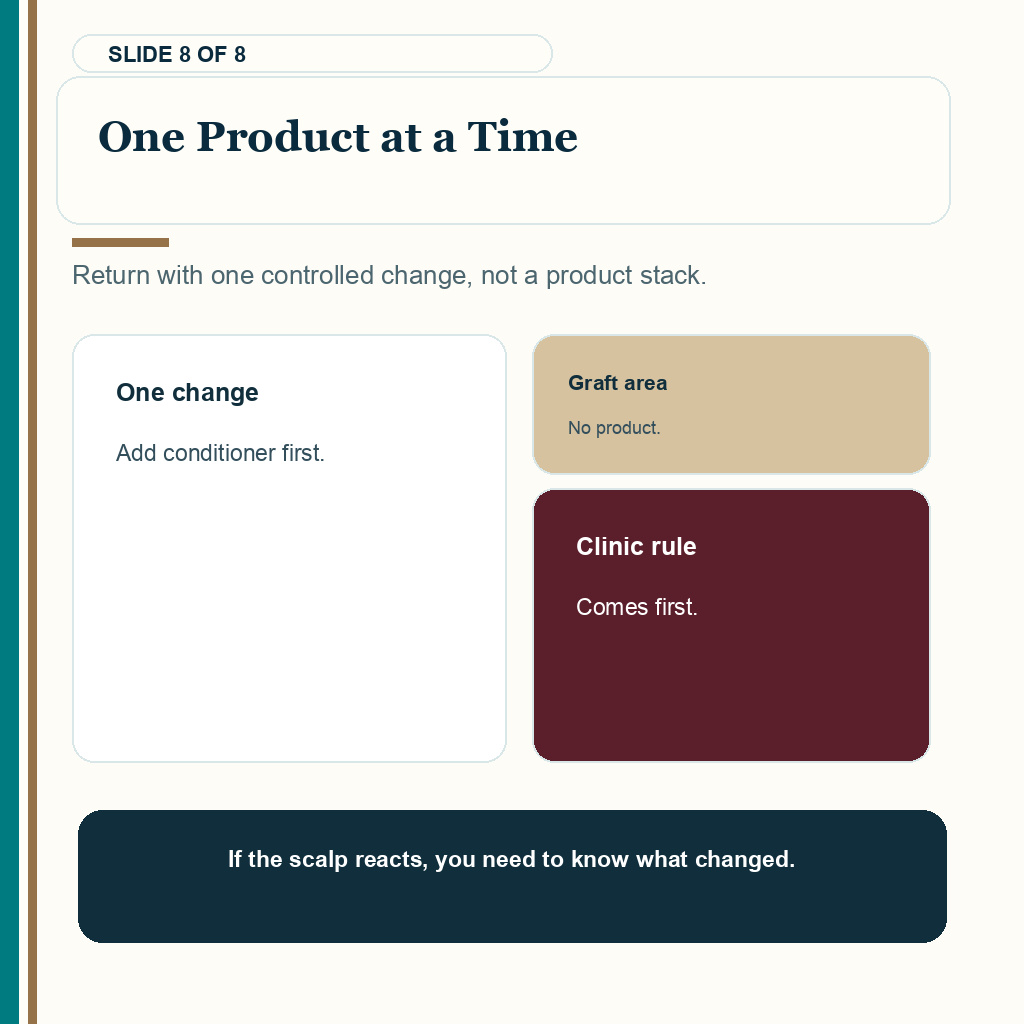
These 8 conditioner timing slides separate scalp readiness, keeping product off grafts, donor area differences, first product choice, long hair handling, products left in the hair, irritation signs, and the returning one product at a time. Swipe sideways, use the arrows one slide at a time, or choose a number below the image.
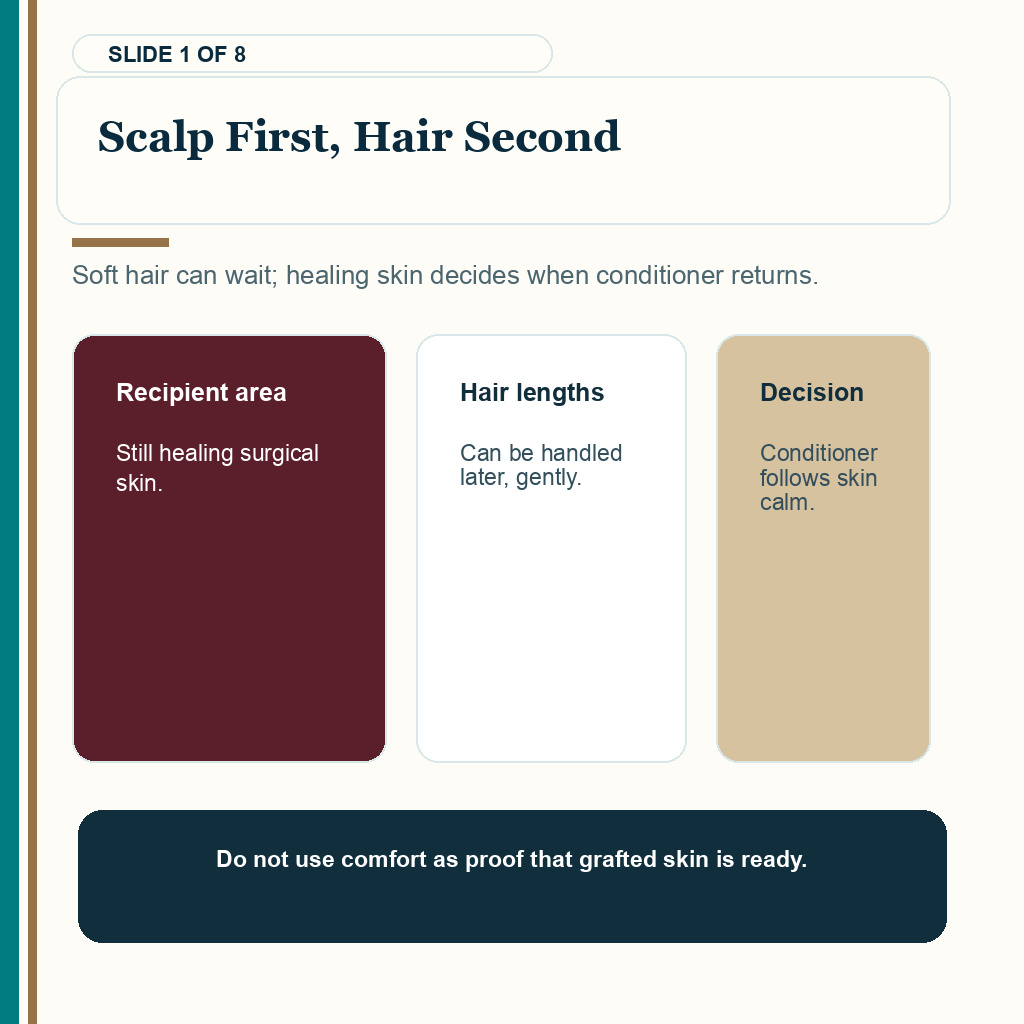
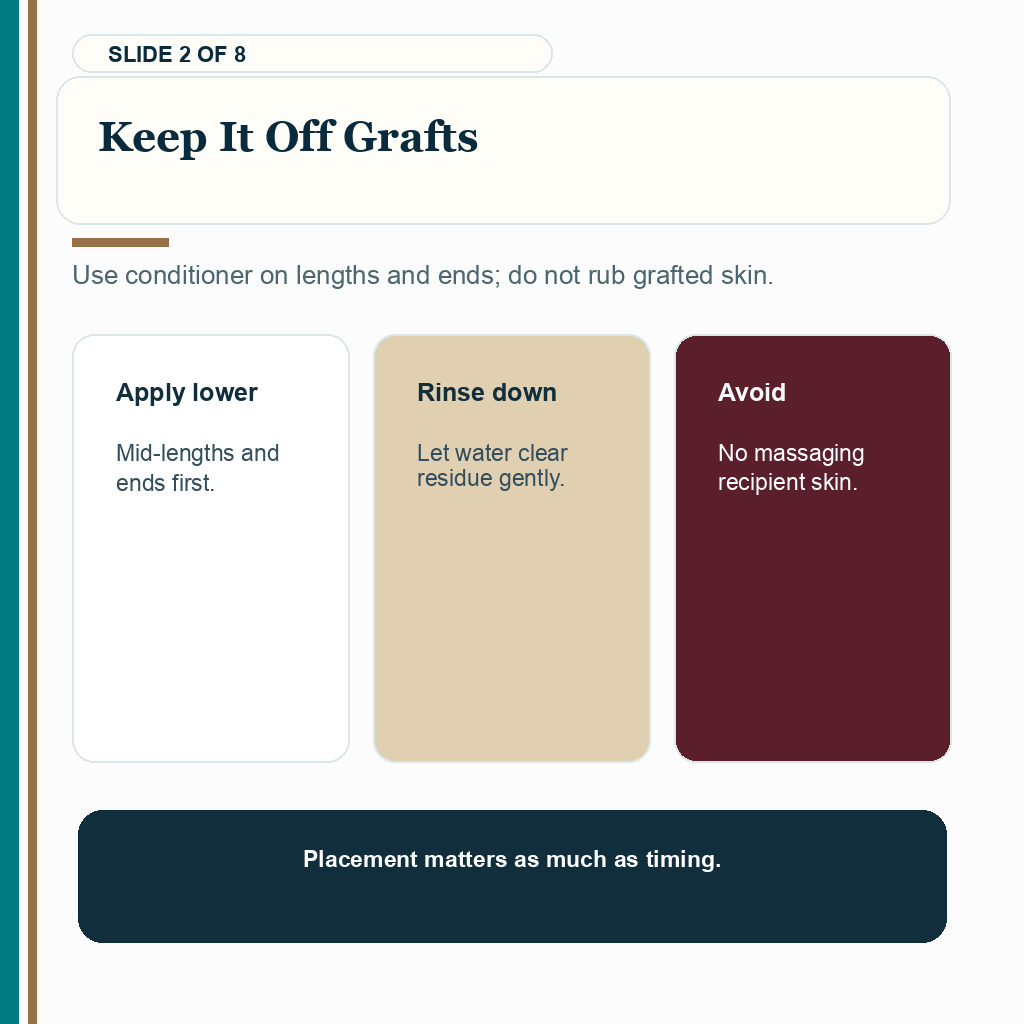



Long hair can be managed without coating grafts
Longer hair can usually be managed without treating the grafted scalp like normal hair. If conditioner is allowed later, keep it on the mid lengths and ends, keep it away from the recipient area, rinse gently so product does not sit on the grafts, and do not use it as an excuse to start rubbing the scalp.
If the hair tangles easily, slow down rather than adding stronger products. After the scabs have cleared, a wide tooth comb can help the non transplanted lengths, but pulling through a knot is not worth the risk. Hold the hair above the tangle, work from the ends upward, and stop if the movement starts tugging on healing skin. This is also where advice about combing after a hair transplant becomes more useful than trying another product too early.
For long hair, solve tangles from the ends first, not from the scalp. Conditioner should make the hair shaft easier to handle later. It should not become a reason to pull near healing skin.
Leave in conditioner, masks, and oils
Leave in conditioner, deep masks, oils, copper peptide serums, and heavy smoothing products should usually wait longer than a simple rinse out conditioner. The reason is contact time. A rinse out conditioner is removed quickly. A leave in product sits on the hair and can migrate to the scalp through sweat, pillow contact, hats, or normal movement.
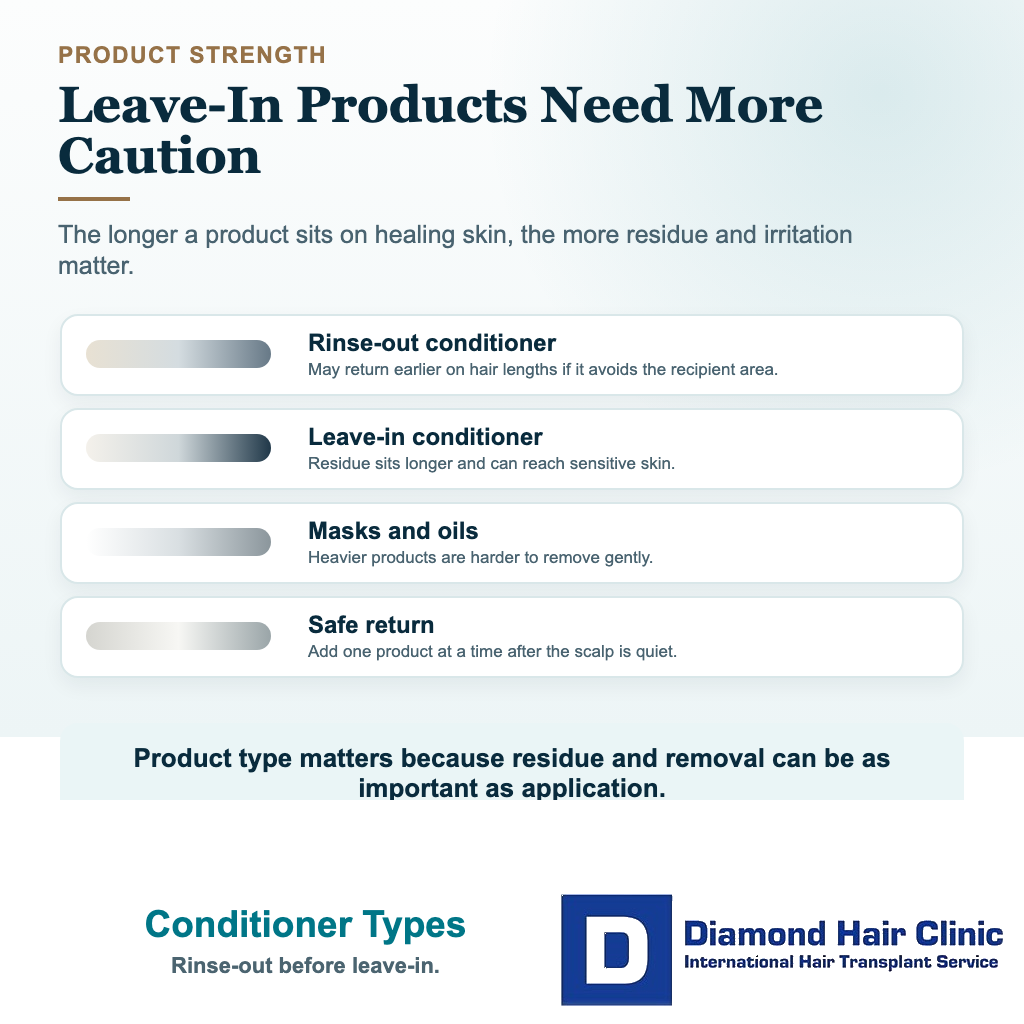
Hair masks and oils can also make the scalp harder to clean. You may then rub more during the next wash to remove residue. That extra rubbing can become a bigger issue than the product itself.
If the dryness is mainly scalp tightness, saline spray after a hair transplant or another clinic approved comfort step may be more appropriate in the early period than conditioner. If the question is about skin moisturizer rather than hair conditioner, the timing is closer to the decision around aloe vera or moisturizer after a hair transplant.
Hair oil after a hair transplant needs a slower restart in the early phase because oil can trap residue and make the scalp feel dirtier. Oils may help some hair types later, but early graft protection comes before shine or softness.
Conditioner does not make transplanted hair grow faster
Used at the right stage, conditioner can soften the visible hair shaft and make later styling easier. It cannot speed graft growth or stop ongoing native hair loss. Continued thinning outside the transplanted area needs a separate diagnosis and treatment plan.
Conditioner can still affect recovery indirectly. If it irritates the scalp, leaves residue, or makes you rub and scratch more, it can create unnecessary inflammation or anxiety. If it is used later and rinsed gently, it may simply make existing hair easier to manage.
Early shedding should not be judged from conditioner use alone. Transplanted hair shafts can shed as part of the normal recovery cycle. Conditioner cannot prevent that phase, and rough handling during washing can make normal shedding look more dramatic.
Scalp irritation means conditioner should wait
Conditioner should wait if the scalp has fresh bleeding, open skin, wet crusts, pus, spreading redness, increasing pain, heat, a bad smell, fever, or swelling that is getting worse. These signs need clinical attention before cosmetic routine changes.
Mild dryness and mild itch can happen during healing. A worsening pattern is different. The guide to redness, scabs, or pimples after a hair transplant explains when a healing sign deserves more caution. Do not hide a scalp problem under a product that makes the skin harder to inspect.
Burning after conditioner is also a reason to stop. Some patients think a tingling product is working. On healing skin, tingling can simply mean irritation. Rinse gently if your clinic has cleared washing, stop the product, and ask for review if the skin remains uncomfortable.
Bring conditioner back safely
Bring products back one at a time. If you reintroduce conditioner, dry shampoo, hair oil, heat, and styling products in the same week, you will not know which product caused irritation if the scalp reacts.
Dry shampoo after a hair transplant is a separate decision because powder and residue can sit on the scalp. Hair gel, wax, or hairspray after a hair transplant should wait until the scalp can tolerate normal styling without stinging, scratching, or heavy product removal.
Conditioner can return earlier than some styling products when it is mild, rinsed out, and kept mostly on the hair shaft. Heat, strong styling hold, and residue heavy products should wait until the scalp is clearly settled.
Sensible conditioner timeline after FUE
During days 0 to 10, keep the routine limited to the washing method given by your clinic. Conditioner should stay away from the recipient area. If longer hair needs help, ask whether the product can be kept far from the grafted skin.
Around days 10 to 14, many patients begin moving toward more normal washing when scabs have cleared and the skin looks calm. A mild rinse out conditioner may be reasonable for hair lengths and ends, but the scalp should still be treated gently. Do not massage conditioner into pink, crusted, sore, or burning skin.
Between weeks 3 and 4, many uncomplicated scalps can begin discussing a more normal routine. A conditioner that is rinsed from the hair lengths creates a different exposure from a product, mask, oil, or curl cream left near the scalp. Restart the lighter product first and rinse it away easily. Add only one product at a time while the skin remains calm.
If you use a hair dryer after a hair transplant, keep the same gradual thinking. Conditioner may reduce dryness, but heat can still irritate the scalp if used too soon or too close. A predictable routine protects the skin better than adding several comforts at once.
Clinic specific advice comes first
Follow the clinic that performed the surgery when their instruction is specific and based on your scalp. Surgical technique, graft density, recipient area size, crusting, skin sensitivity, and hair type can change the timing.
The advice becomes weaker when it is vague. If you were told to return to normal products but you still have crusts, burning, open skin, or spreading redness, ask again with clear photos. A normal routine should fit the scalp in front of you, not only the calendar.
My own recommendation is conservative in the first stage. Keep conditioner away from the recipient area during the graft protection period. Reintroduce a mild rinse out conditioner gradually after the scabs are gone and washing is comfortable. Wait longer for leave in products, masks, oils, and heavy styling routines. If the scalp reacts, stop the product, rinse gently if washing has been cleared, and let the clinic judge the skin before you try again.

Read this review excerpt
Upon arriving home, I sent 4 photos (of each side of head) after every washing process to doctor for checking where I was given personal advice for how to take care of my healing head.