


Aloe Vera and Moisturizer Need Timing Review
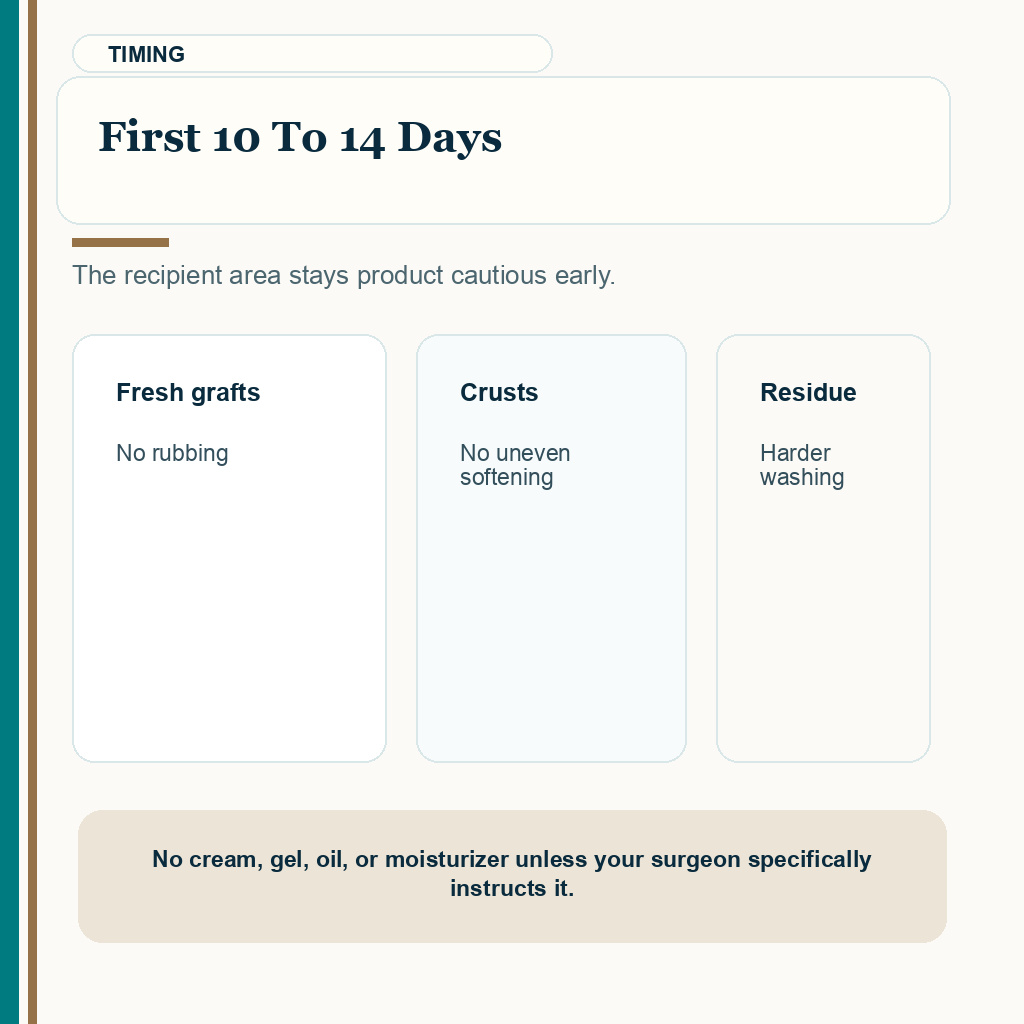
Do not apply aloe vera, moisturizer, oils, creams, sunscreen, or soothing gels directly on the recipient area during the first 10 to 14 days. Unless your surgeon has specifically instructed you to do so, keep the grafted area clean and untouched. The donor area may sometimes tolerate a simple moisturizer approved by the clinic earlier, but the grafted area is different. It has tiny healing openings, crusts, and newly placed grafts that should not be rubbed, coated, softened unevenly, or exposed to random products.
This question usually comes from real discomfort. The scalp can feel dry, tight, itchy, or uncomfortable while crusts are forming and loosening. Discomfort on the forehead or donor edge may need a different plan from dryness on the grafted skin. Dryness and itching matter, but aloe vera, moisturizer, oils, or gels should still be cleared by the clinic before they touch the recipient area. In the first stage, controlled washing, careful drying, and support approved by the clinic such as saline spray after a hair transplant are safer than experimenting with products meant for ordinary skin.
A product that stings, burns, or makes the scalp look wetter instead of calmer should be stopped and reviewed with photos. Layering aloe, lotion, oil, and spray together can make the skin harder to judge. Aloe belongs in the routine only after the product and timing match your graft healing stage.
Start with the exact dry or tight area
When the scalp feels dry after surgery, do not start by reaching for a cream. Start by asking which area feels dry. The donor area, recipient area, forehead skin, and surrounding native hair do not all have the same risk.
The recipient area needs the most protection. During the early days, grafts should be protected from rubbing, pressure, scratching, and product buildup from creams or ointments. A gel that feels cooling on normal skin can become a problem if it makes crusts sticky, encourages touching, or leaves residue that is hard to wash away.
The donor area is usually more tolerant because it is not holding newly implanted grafts. Even there, random products should not be applied over irritated, wet, painful, or broken skin. If the donor area feels dry or tight, ask which product fits that healing stage, not which product feels soothing in the moment.
Dryness can also be part of normal itching after a hair transplant. The aim is to reduce the urge to scratch without turning a simple healing sensation into a mechanical injury.
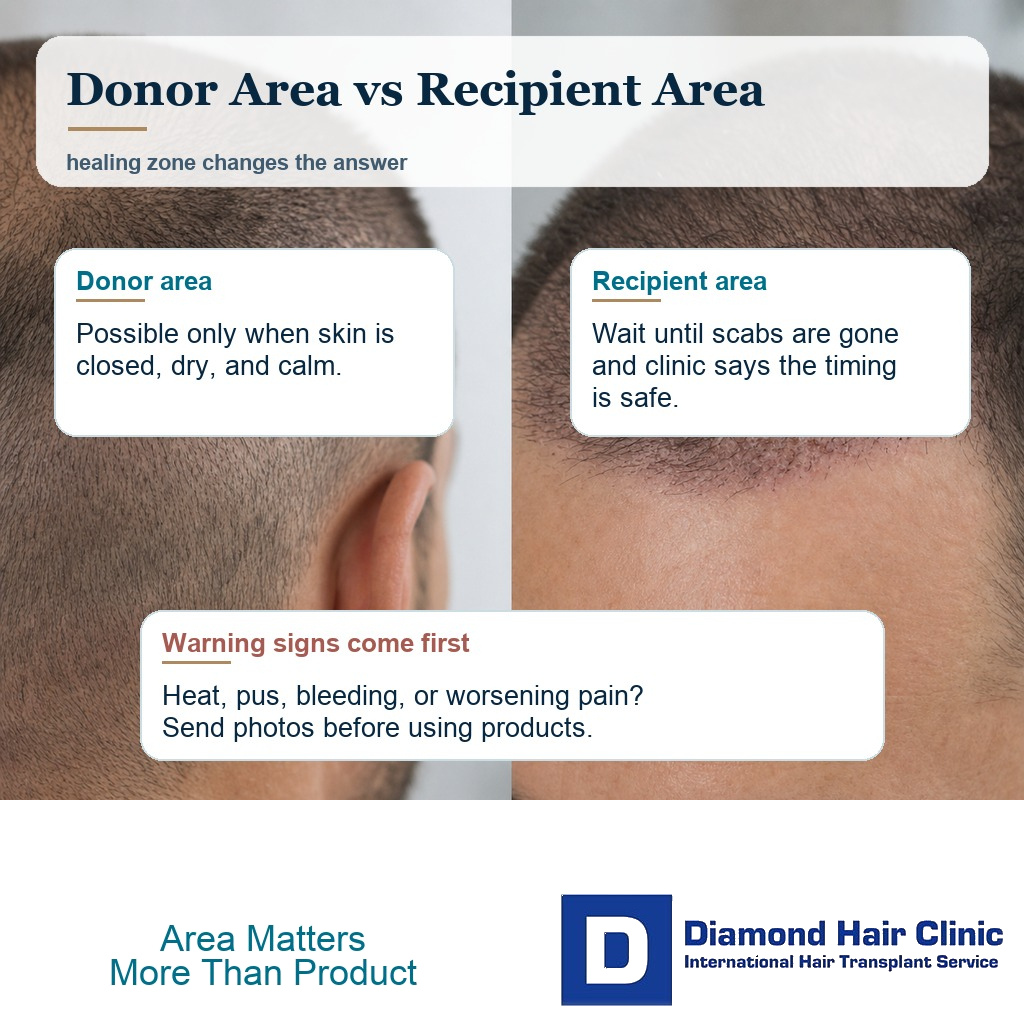
Topical products are judged differently on the donor area and the recipient area because the grafted skin needs more protection.
Clinic supplied products follow the clinic protocol
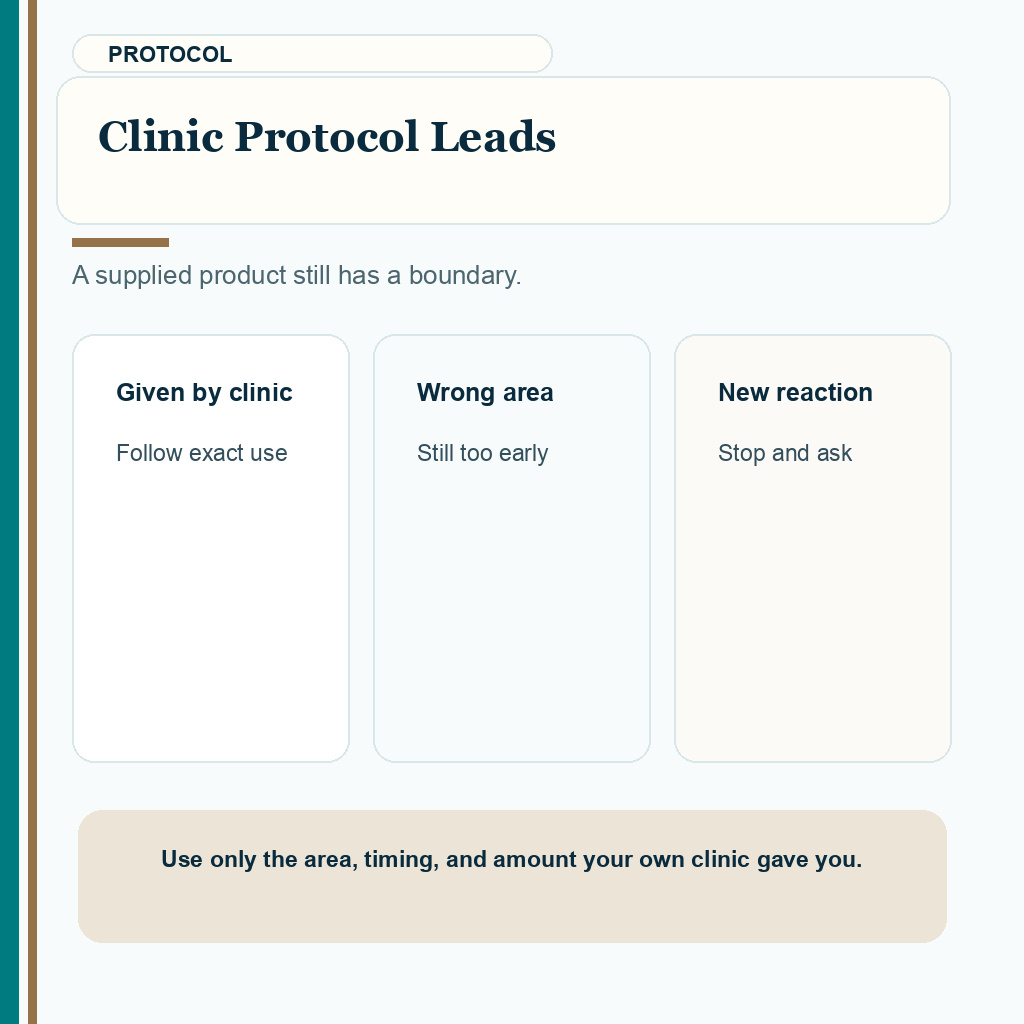
A product supplied by the clinic is still not a free pass to apply it everywhere. Use it only on the area, timing, and amount you were instructed to use. A product that is suitable for the donor area may still be too early for the recipient area, and a product that is useful after the scabs are gone may be wrong while crusts are still attached.
Read this review excerpt
When I was there he showed me the different shampoos/creams etc and explained how I should be using them and for how long.
If a product burns, increases redness, creates stickiness, softens crusts unevenly, or makes you want to rub the scalp, stop before applying more. In the first days, simplicity usually protects the grafts better than trying to make the skin feel normal too quickly.
Moisturizer timing on the donor area
The donor area can sometimes accept a simple moisturizer earlier than the recipient area, especially when the skin is closed, dry, and tight rather than wet, painful, or actively irritated. The exact timing should come from the clinic that performed the surgery. In many uncomplicated cases, the donor area becomes easier to manage after the first several days as washing becomes more comfortable.
The product matters. A plain moisturizer without fragrance is very different from a perfumed lotion, aftershave balm, acne cream, steroid cream, antiseptic, essential oil mix, or heavy ointment. The same product logic applies to conditioner after a hair transplant, because hair softness should not hide a healing skin reaction. Healing skin often reacts to ingredients that felt harmless before surgery.
If the donor area is burning, spreading red, swollen, wet, or painful, do not hide the skin under more product. That skin needs clinical review rather than another layer of moisturizer.
If you are also thinking about hair oil after a hair transplant, be even more careful. Oil can trap residue and make washing more difficult. Comfort is useful only when it keeps the scalp clean and easy to review.
Aloe vera timing on the recipient area
For the recipient area, aloe vera is usually too early during the first 10 to 14 days unless it is part of the surgeon’s own written protocol. After that, it only makes sense if the scabs are gone, the skin is closed, washing is easy, and there is no open spot, bleeding, increasing redness, discharge, or burning.
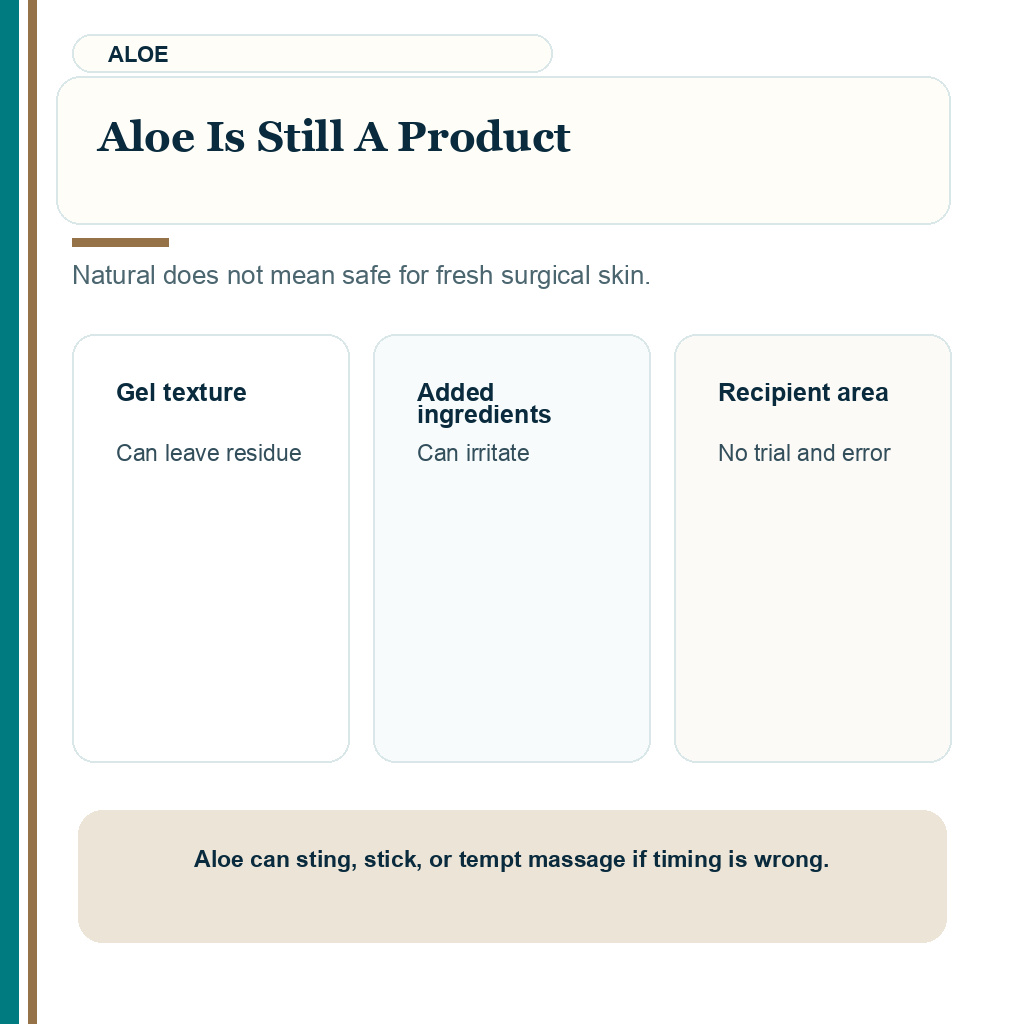
Aloe vera sounds natural, so it is easy to assume it is safe. Natural does not mean suitable for fresh surgical skin. Some gels contain alcohol, fragrance, preservatives, color, thickening agents, or added ingredients that can irritate the scalp. Even pure aloe can be sticky and can tempt you to massage the area too soon.
Approval applies to the exact product, not to every tube labelled aloe vera. A cooling gel, a moisturizer and a gel with added perfume can have quite different formulations. Keep the same product once it is approved rather than switching formulas because the name on the front looks familiar.
The recipient area is not the right place for trial and error. If a product causes stinging, itching, extra redness, or a sticky surface that makes washing harder, stop using it and send an update before applying more.
The timing should also match when the grafts are more settled. Even when hair transplant grafts are secure, that does not mean the recipient area is ready for aggressive rubbing or cosmetic experimentation.
Recipient area skin is different from normal dry skin
Normal dry skin is mainly a surface comfort problem. The recipient area after a hair transplant is healing surgical skin. Thousands of tiny recipient openings have been made, grafts have been placed, and crusts form as part of surface healing.
That changes the decision. A moisturizer may soften normal dry skin, but on the recipient area it may soften crusts unevenly, make flakes stick, increase the urge to rub, or hide signs that should be checked. The first question is not whether the product feels pleasant. The first question is whether the scalp can be cleaned and protected without disturbing the grafts.
Washing is the safer foundation because it follows a controlled sequence. If you are unsure how the first days should be handled, review washing after a hair transplant before adding any topical product.
The recipient area also changes quickly. One day it can feel tight and dry. A few days later, crusts loosen and the scalp looks more open. That can make a person panic and start applying products to fix what is actually a normal visual change. The better response is usually to slow down and check the timing, symptoms, and photos.
Safer products after the skin has settled
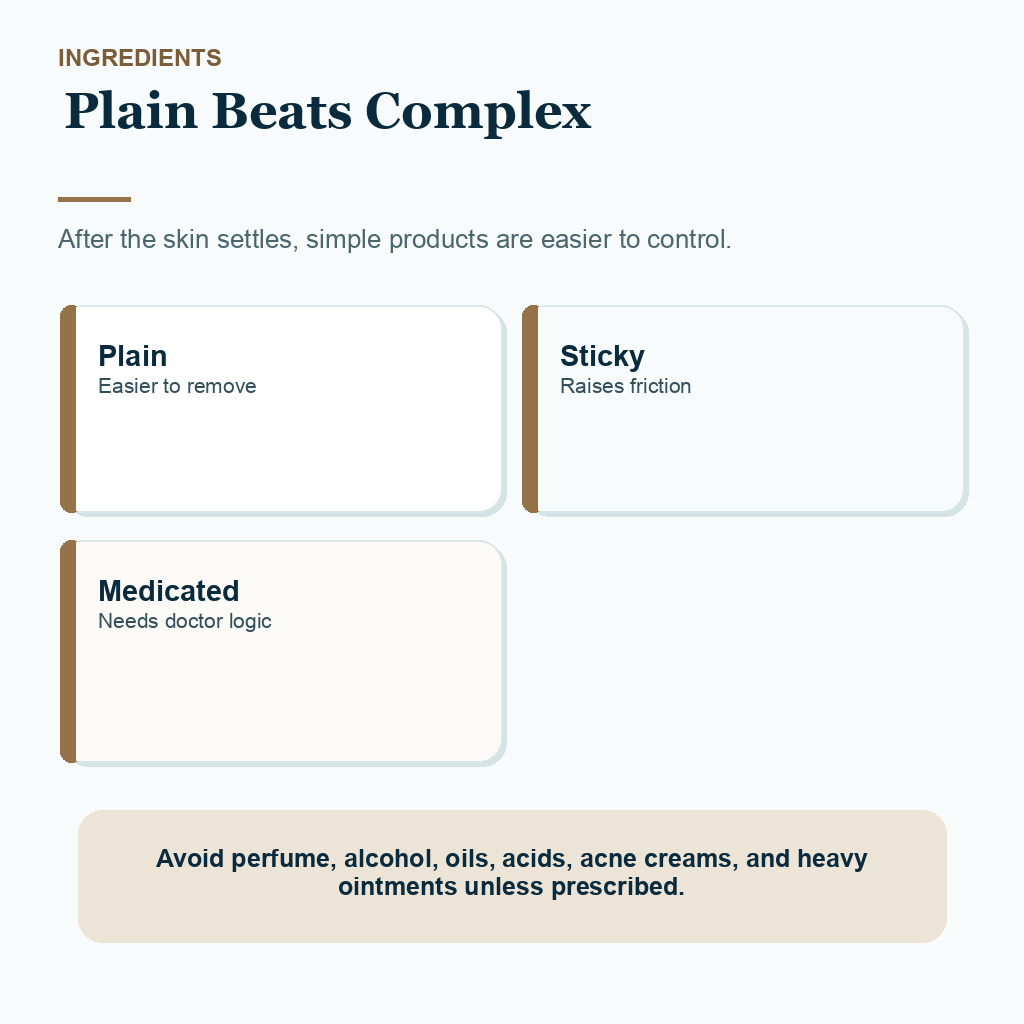
After the skin has settled, a simple product is safer than a complicated product. Look for something without fragrance, low in irritation, easy to remove with gentle washing, and recommended by the clinic. A product with a long ingredient list is not better because the scalp is healing. When a first trial is allowed, test a tiny amount away from the recipient area before putting any product near grafted skin.
Avoid products with alcohol, perfume, strong essential oils, exfoliating acids, retinoids, acne medication, steroid medication, or antiseptic ingredients unless your surgeon specifically told you to use them. Medicated shampoos also need timing and ingredient review. Ketoconazole shampoo after a hair transplant can be useful in the right patient, but too early or too aggressively it can add dryness, burning, and confusion.
Dry cosmetic products can also mislead patients. Dry shampoo after a hair transplant is not the same as a gentle wash because powder and residue remain on the scalp. If the aim is to make the hair look less oily, it is usually better to wait until the grafted area is no longer in the fragile early healing stage.
Whether the product can be stopped easily matters too. A light, plain moisturizer on closed donor skin can be removed gently if the scalp dislikes it. A sticky gel worked into the recipient area is harder to remove without friction. That difference matters more than the product name.
If aloe or any moisturizer makes the donor area feel tighter, sticky, warmer, or more irritated, do not keep applying it because it sounds gentle. Stop, return to the basic clinic approved washing or spray routine, and ask before layering another product. A healing scalp can react badly even to products that are harmless on normal skin.

The safest timing for moisturizer depends on the area treated, the condition of the skin, and whether the product can be removed without rubbing.
These 10 aloe vera and moisturizer timing slides separate treated area, early recipient area caution, clinic protocol, donor skin, aloe vera assumptions, ingredient simplicity, warning signs, gentle use after approval, itching logic, and photo review. Swipe sideways, use the arrows one slide at a time, or choose a number below the image.



Warning signs mean products should wait
Do not apply aloe vera or moisturizer to the recipient area if there is fresh bleeding, an open spot, wet crusting, pus, spreading redness, increasing pain, heat, bad smell, or swelling that is getting worse. A product can blur the picture and delay the right decision.
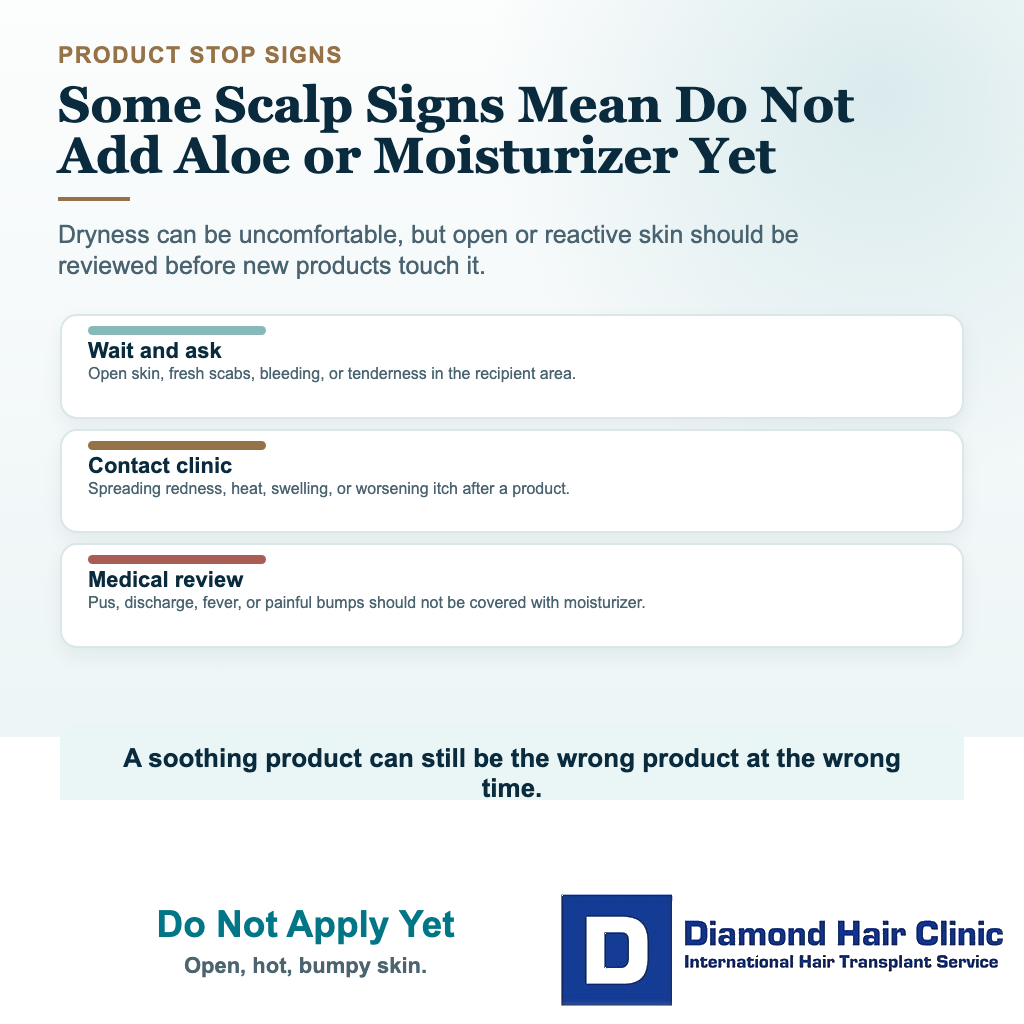
Dry crusts and mild itching can be normal. Wet, painful, spreading, or hot skin deserves review. The same distinction matters with redness, scabs, or pimples after a hair transplant, because common healing signs and warning signs should not be treated the same way.
If infection is a concern, do not cover the area with creams from home. A possible hair transplant infection needs proper assessment, not random soothing products. Photos under clear light are more useful than guessing in front of the mirror.
Soothing products can make itching worse
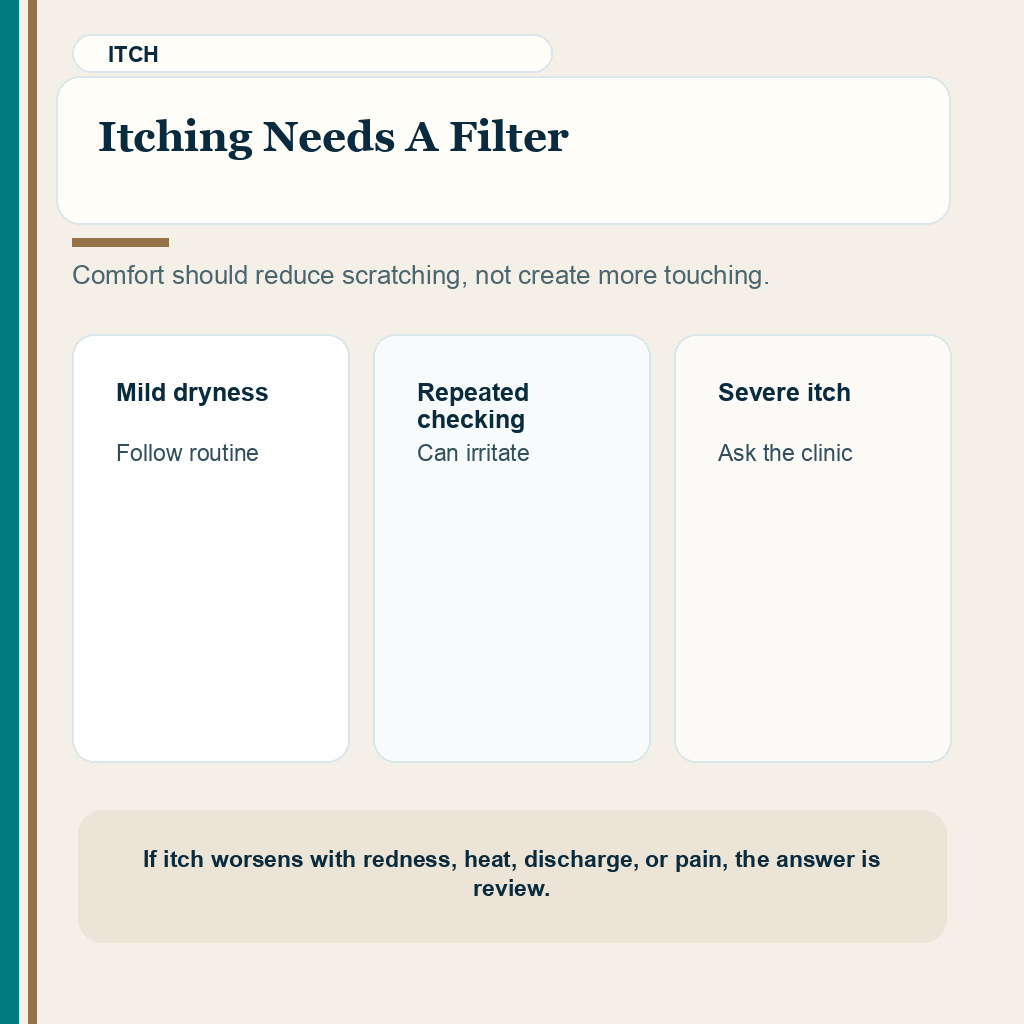
Yes. A product can make itching worse if it irritates the skin, leaves residue, disrupts washing, or makes you keep touching the area. Sometimes the repeated checking and rubbing around the product becomes the bigger risk.
Itching after surgery creates a strong urge to act. You may want to press, scratch, dab, wipe, cool, spray, or apply something. I separate comfort from interference. A gentle measure approved by the clinic can help. Repeated product use can keep the scalp active when the surface needs to settle.
If the itch is mild and the skin is dry, follow the clinic’s washing and comfort routine. If the itch is severe, worsening, or mixed with redness, heat, discharge, or pain, the answer is clinical review rather than more product.
Applying moisturizer after clinic approval
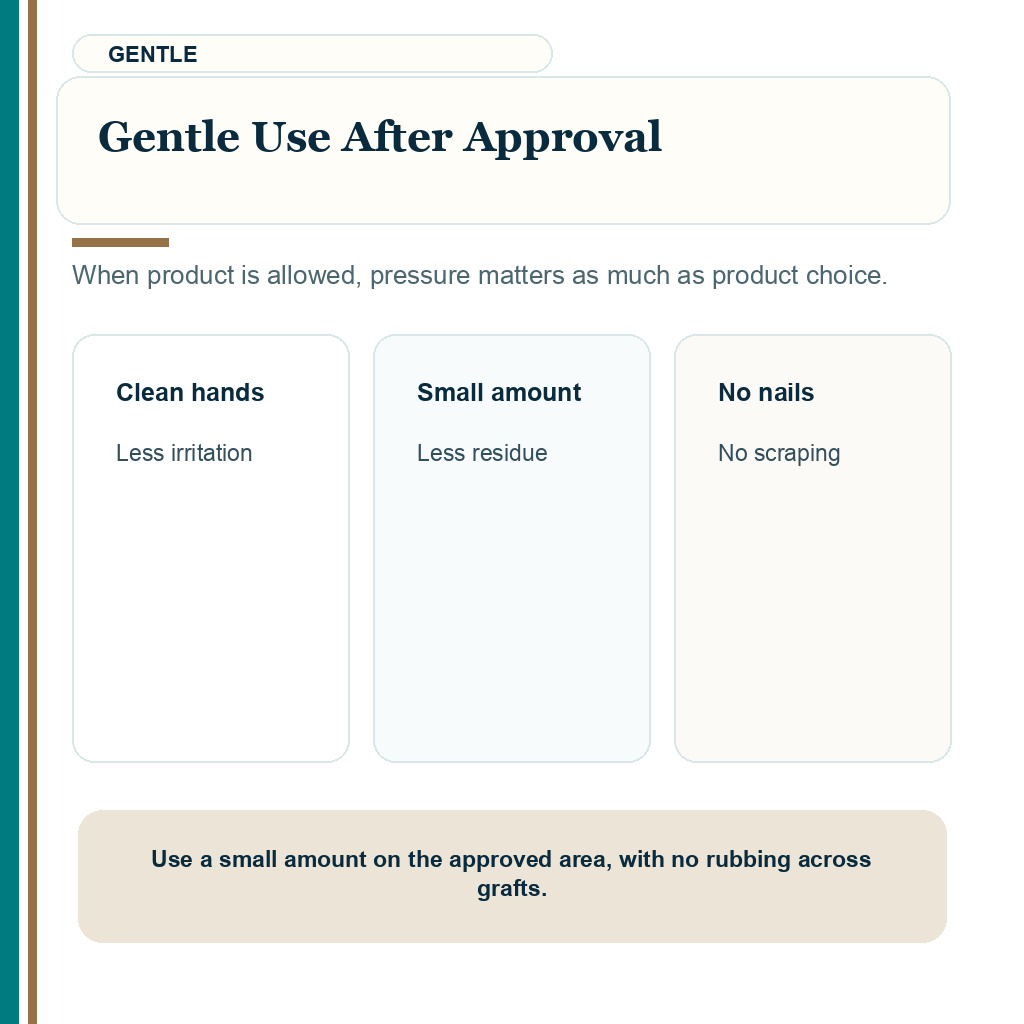
If your clinic allows moisturizer, use a very small amount and apply it only to the area they approved. Clean hands matter. So does pressure. The product should be placed gently, not rubbed into the grafts like normal skincare.
Do not use fingernails. Do not massage the recipient area early. Do not apply a thick layer and leave it because it feels safer. Heavy product can attract lint, dust, sweat, and pillow contact. It can also make the next wash harder.
After the first 10 to 14 days, the conversation changes, but it still depends on the scalp. If crusts are gone and the skin looks settled, a small amount may be reasonable. If scabs are still attached, the skin burns, or washing still feels difficult, waiting is safer than trying to force comfort.
Product advice must fit your own protocol
Product advice often sounds confident because someone used something and felt better. That does not make it safe for every scalp, every surgery, or every healing stage. The product that helped one donor area may irritate another recipient area.
I judge product advice by timing, skin condition, ingredients, and how much touching it requires. A clinic that simply says to put anything soothing on the scalp without looking at the healing stage is oversimplifying the problem. A more careful answer separates donor comfort from recipient protection.
Diamond Hair Clinic’s general hair transplant aftercare logic is built around protecting the grafts first, then gradually returning to normal habits. Aloe vera, moisturizer, hair products, and medicated shampoos all need that timing and area check.
Product advice also needs caution when the surgery details are different. A small hairline case, a large crown case, a dense frontal session, and a repair case do not heal in exactly the same way. Product timing should follow the condition of the skin, not only the calendar.
Product timing depends on grafted skin
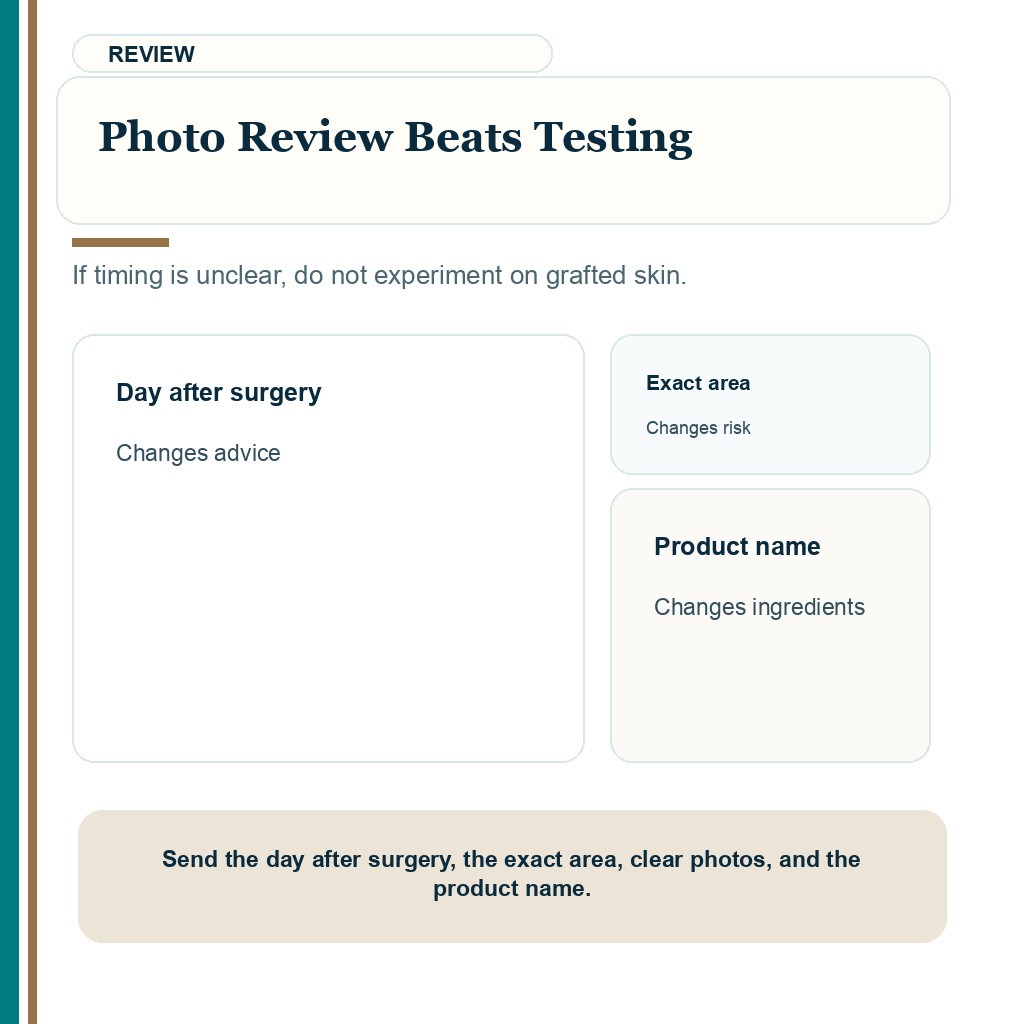
Do not test the product on the grafted area first. Write down the day after surgery, the product name, the ingredient list, the area you want to treat, and what you feel. Ask the clinic what is safe for that exact area before putting anything on healing skin. A product review is only useful when the product name, ingredient list, and application area are visible. A moisturizer that is safe on intact donor skin may still be wrong for a dry, irritated, or recently grafted recipient area.
The decision can stay practical, even when the details vary from person to person. Protect the recipient area during the first 10 to 14 days. Treat the donor area more flexibly only when the skin is closed and settled. Keep products plain. Stop anything that burns, itches more, or makes the scalp sticky. Ask before using medicated or perfumed products.
Aloe vera and moisturizer are not forbidden forever. They are timing decisions. Used at the wrong moment, they can create more touching, residue, irritation, and anxiety. Used later, in the right place, with the right product, they may help comfort. The right decision is the one that keeps the grafts protected and keeps the skin easy to clean, see, and review.