


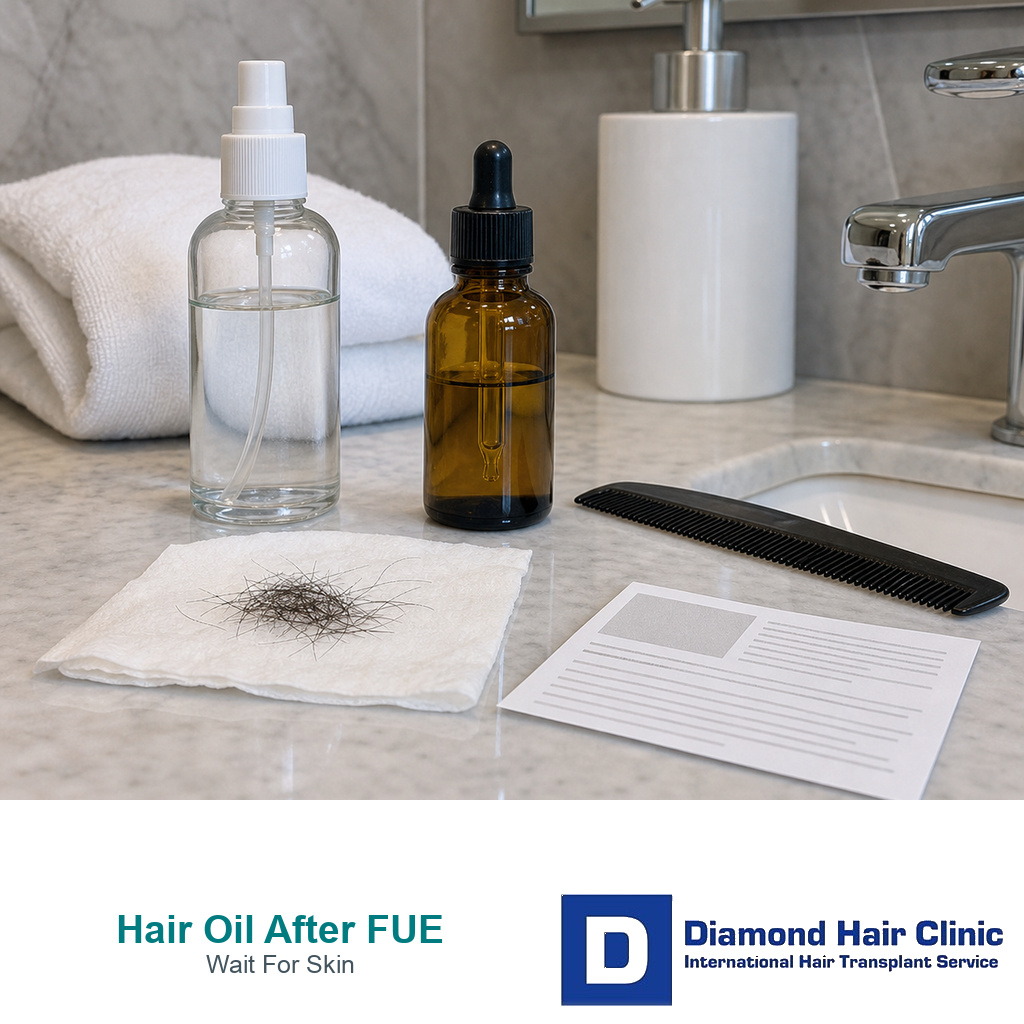
Hair Oil During Scalp Recovery
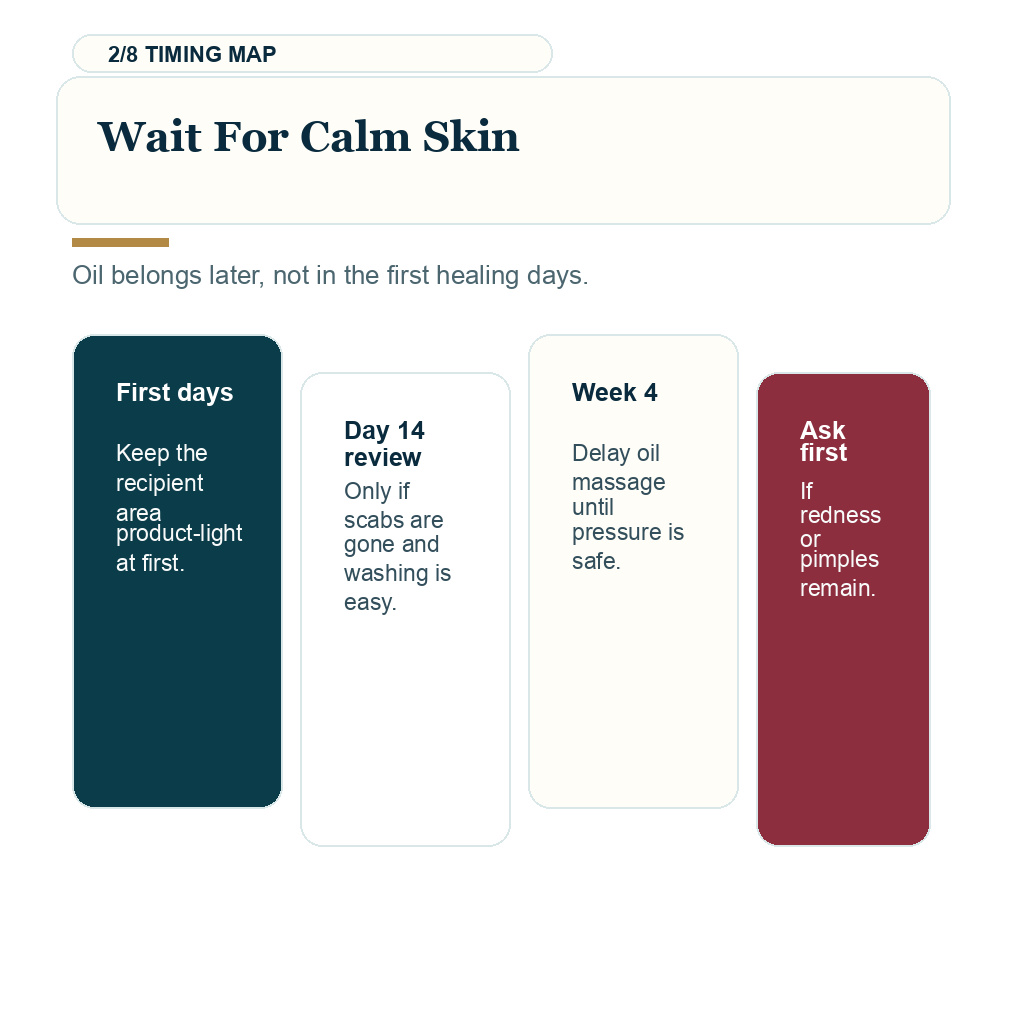
In my routine, I avoid hair oil on the recipient area during the first 14 days after a hair transplant. The earliest I would discuss a very small amount is after day 14, and only if the scabs are gone, washing is comfortable, and the skin is settled. Oil used with scalp massage after a hair transplant should wait at least 4 weeks, because massage adds pressure and friction.
Not every oil is dangerous. The early recipient area is healing surgical skin, not ordinary styling hair. Oil can trap residue, soften crusts unevenly, attract dust, make washing harder, and tempt the patient to touch or rub the grafted area more than necessary.
Patients usually ask about oil because the scalp feels dry, tight, itchy, or flaky, which is the same reason many ask about aloe vera or moisturizer after surgery. I understand that discomfort. But the answer is not to coat the transplant with products before the skin is ready. The first priority is clean healing.
Start with the reason for the oil. Dryness, itching, dandruff, styling, and a promised growth effect are different problems, and each may need a different answer from the clinic. For crust comfort, the washing method matters more than the oil name.
Oil is not a shortcut for stubborn crusts. If the goal is to loosen scabs, follow the washing plan first so the scalp stays easy to inspect.
If oil was already used and a crust came away with a hair inside it, do not repeat the oil to prove the grafts are safe. Clean only within the wash routine you were given, then judge the spot by bleeding, open skin, increasing pain, or a wet painful crust rather than by the hair shaft alone.
Use the washing plan before adding oil to a healing scalp
Hair oil can feel tempting when the scalp is dry, itchy, or crusted, but early recovery is easier to monitor when the skin stays clean. Oil can trap residue, make normal healing look dirty or wet, and encourage extra rubbing during washing.
The reason for the oil changes the answer. Dryness, dandruff, styling, scalp comfort, and a promised growth effect are not the same problem. If the aim is to loosen crusts, the washing routine should do that job first. Oil is not a shortcut for scabs that still need gentle scheduled washing.
Once the skin is calm and washing has become more normal, a product can be discussed by name, ingredients, and where it will be applied. Keep heavy oils away from the recipient area until crusts, redness, tenderness, and pimples are no longer driving the request.
Hair oil should wait at first
The first 14 days are mainly about protecting the grafts, allowing the small openings in the skin to close, and removing crusts gently without trauma. During this period, the routine should be simple and easy to monitor.
Oil can make that harder. It can mix with crusts, sweat, shampoo residue, and dust. It can make the scalp look shiny or dirty when it is actually healing normally. It can also make the patient rub more during washing, which is exactly what I am trying to avoid.
At Diamond Hair Clinic, I perform the first wash 2 days after surgery, and the washing routine becomes more normal gradually. The transition to wash hair normally after a hair transplant usually happens around day 10 to day 14, but only if scabs are clearing and the skin looks settled.
Timeline I usually recommend
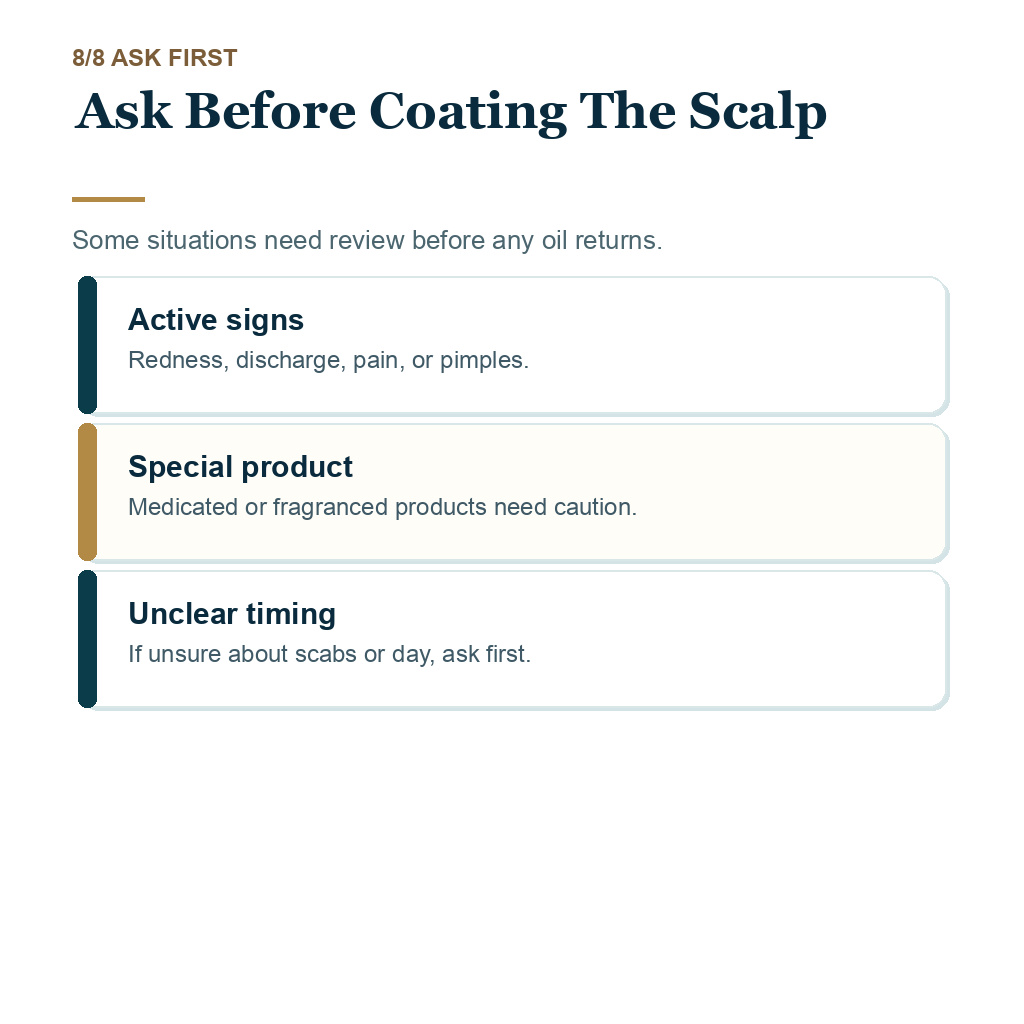
For the recipient area, the rule is clear. No hair oil during the first 14 days. After day 14, oil can be discussed only if the scabs are gone, there is no bleeding, no tenderness, no active pimples, and normal washing feels comfortable.
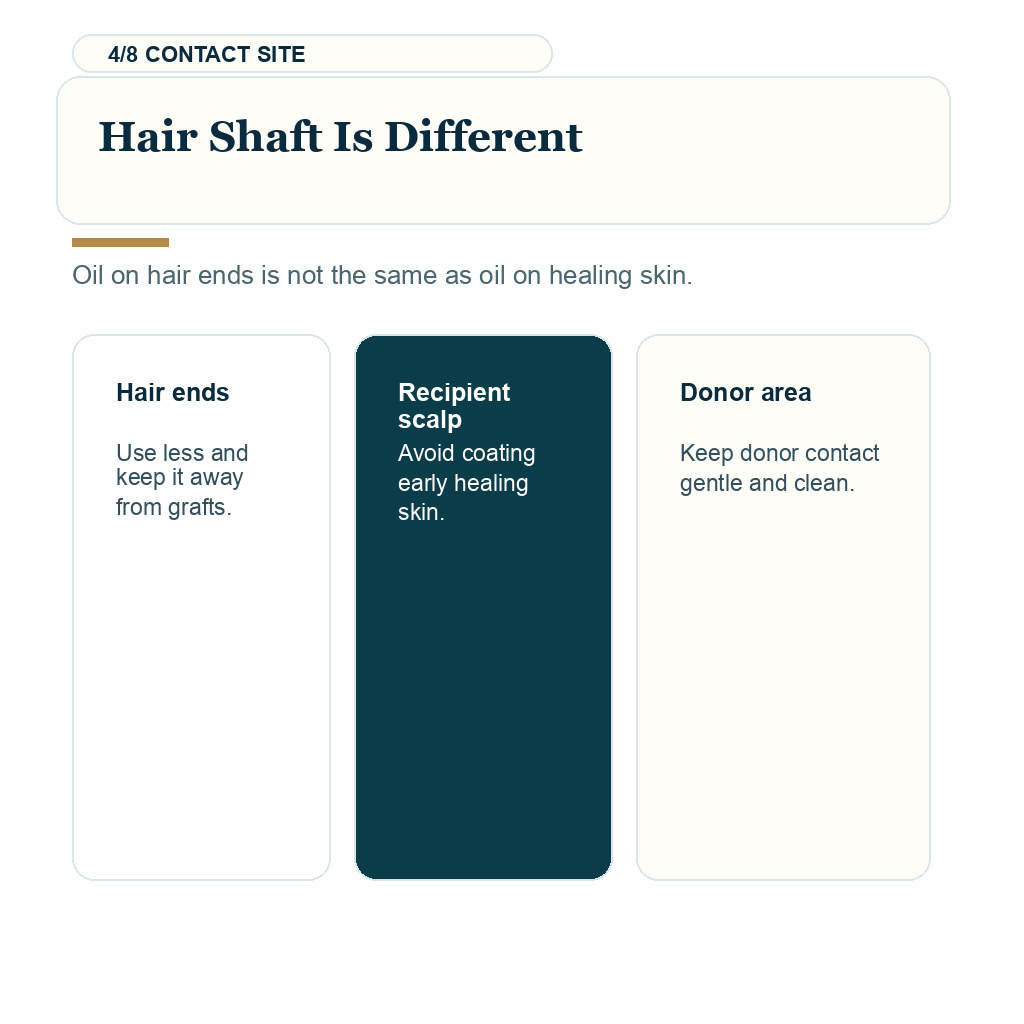
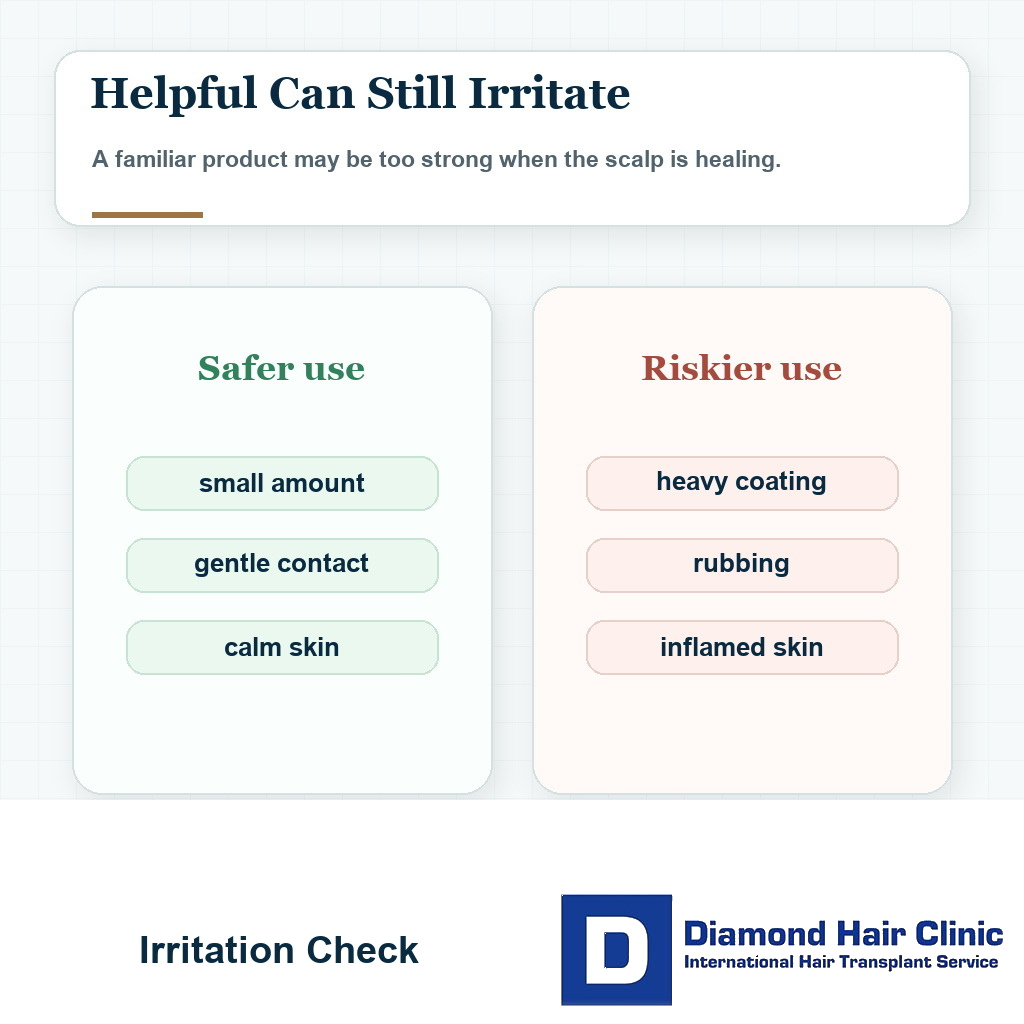
Even then, I avoid covering the scalp with heavy oil. A small amount on hair shafts is different from oil rubbed into the recipient area. If oil is needed, use a very small amount mainly on hair shafts rather than rubbed into the recipient area. The scalp should not feel coated.
For scalp massage with oil, wait at least 4 weeks. Massage creates pressure and friction. Even when grafts are secure, the skin may still be pink, sensitive, or reactive. There is no benefit in rushing massage before the skin is ready.
Oil on hair shaft versus scalp
And this difference matters. A small amount of oil placed later on longer hair shafts is not the same as oil massaged directly into a recently transplanted scalp. Conditioner after a hair transplant follows the same hair shaft versus scalp distinction. Hair grooming and scalp treatment are different decisions after surgery.
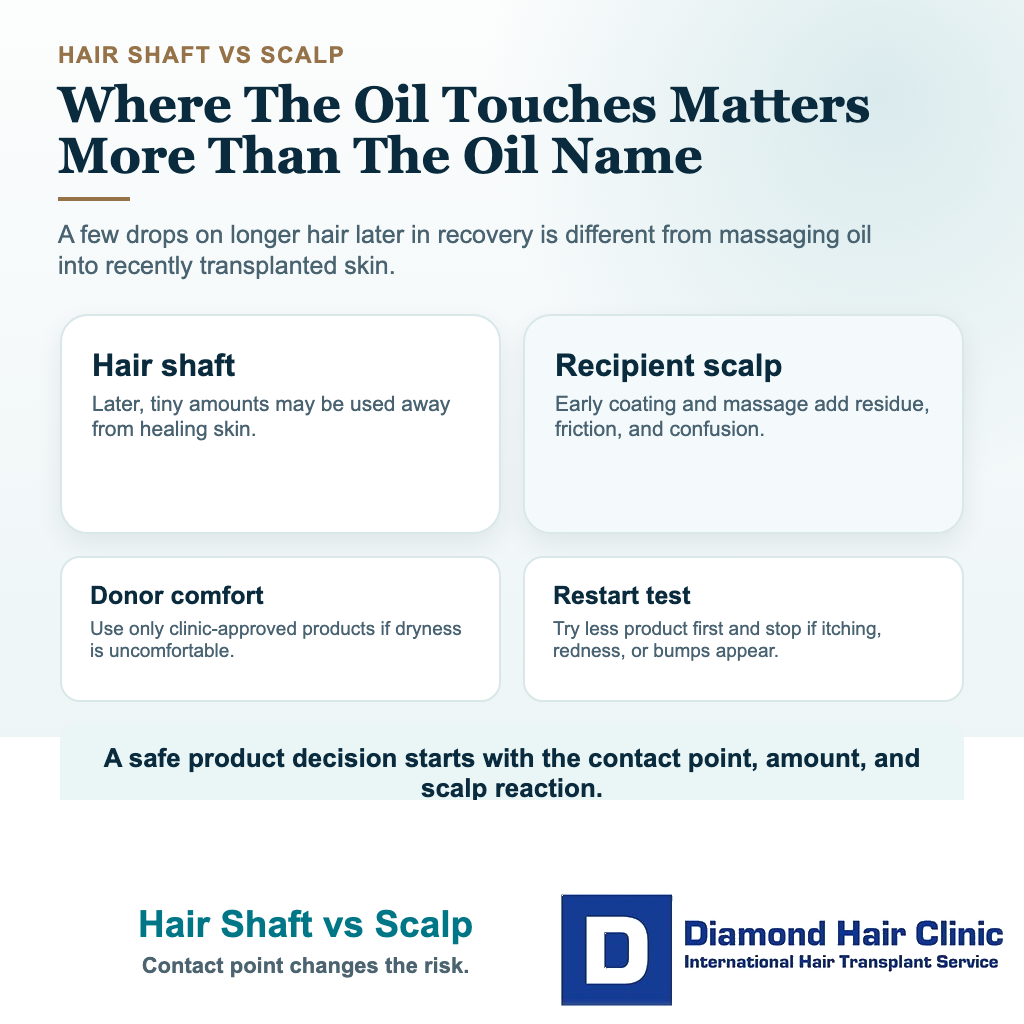
The recipient area should not be treated like ordinary styling hair too soon. The transplanted skin needs time to settle. If oil touches only existing hair length later in recovery and the scalp stays clean, the concern is usually lower than when oil is rubbed into the grafted skin.
I explain this distinction because many patients say they only want to use oil for dryness, but the product still ends up on the scalp. In early recovery, I focus on where the oil touches, how much is used, and whether it creates rubbing.
A few drops on longer hair shafts later in recovery is one decision. A tablespoon of coconut, castor, or rosemary mixture rubbed into the recipient area is a different decision. The second one adds pressure, residue, and a higher chance of irritation, so I judge it more strictly.
Using oil on the donor area
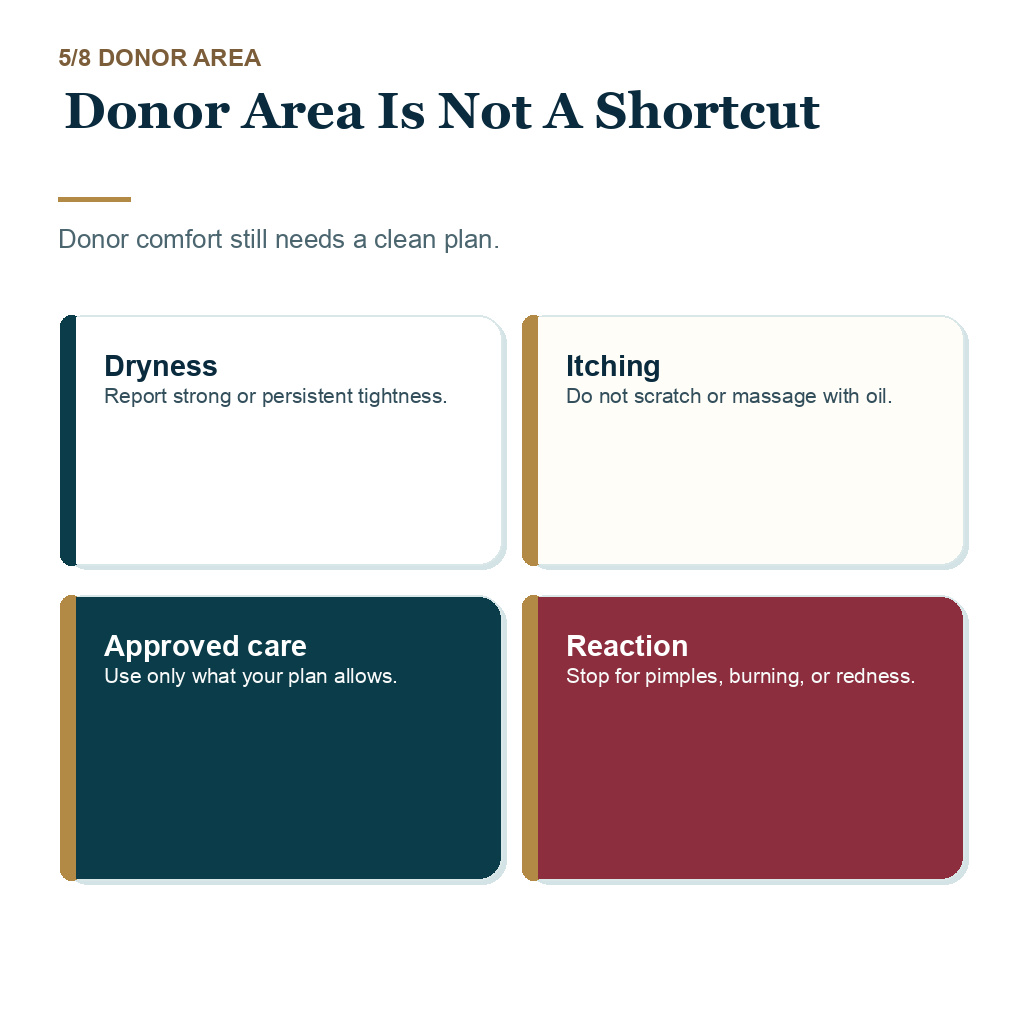
The donor area and recipient area do not heal in exactly the same way. The donor area may feel dry, itchy, or tight after extraction, and some clinics may recommend a simple moisturizer or approved product at a certain stage.
Still, patients should not improvise. If the donor area has open points, crusting, tenderness, bumps, or irritation, oil can make the situation harder to read. If a product is needed, it should be simple and approved by the surgical team.
I separate comfort from experimentation. If the donor area feels dry, ask what is appropriate at that stage. Do not create a home product routine because the scalp feels uncomfortable for a few days.
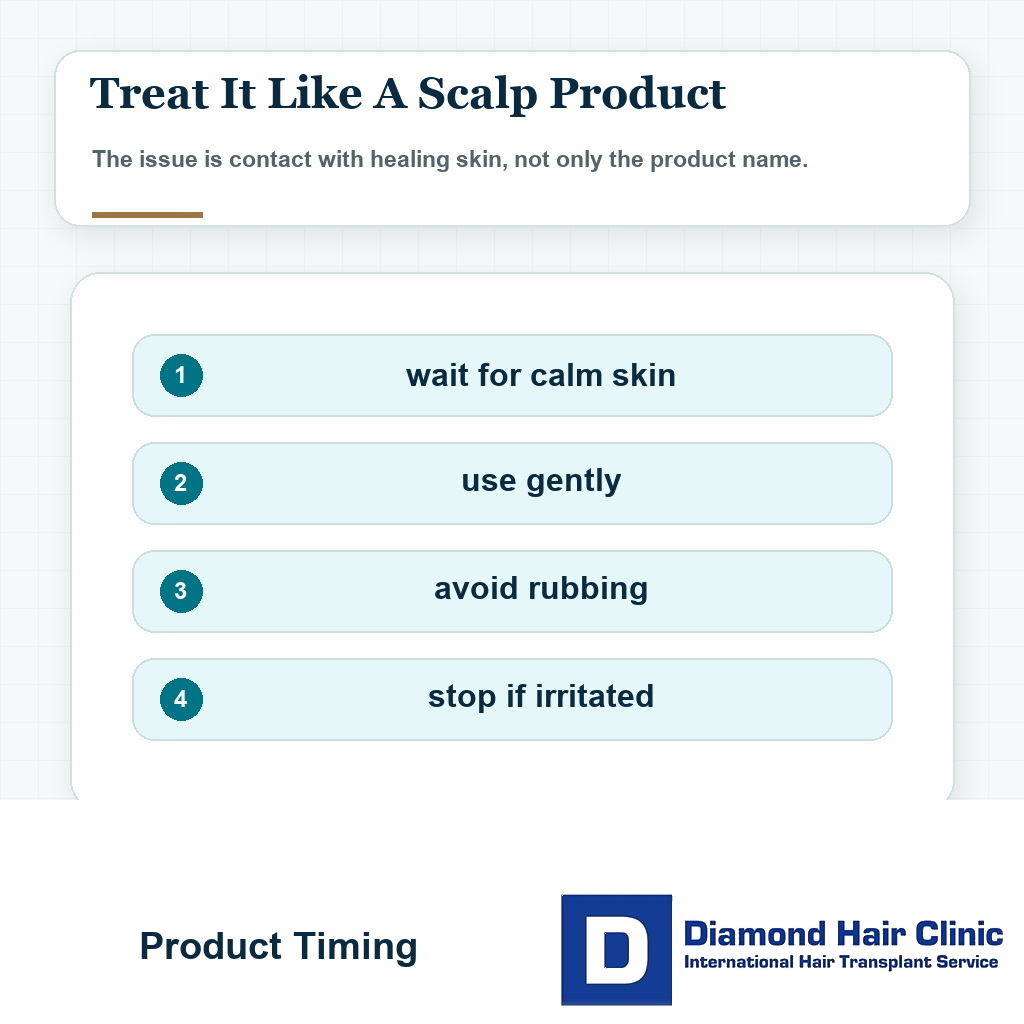
Dry or tight scalp should be managed without early oil
Dryness and tightness can be normal after a hair transplant. The skin has been through many tiny surgical openings, washing changes, swelling changes, and crust formation. A dry feeling does not by itself mean the scalp needs oil.
The first response should be the clinic’s washing and moisturizing instructions, not random products. Sometimes the answer is gentler washing, lukewarm water, a clinic approved spray or lotion, or simply patience while the crusts separate naturally.
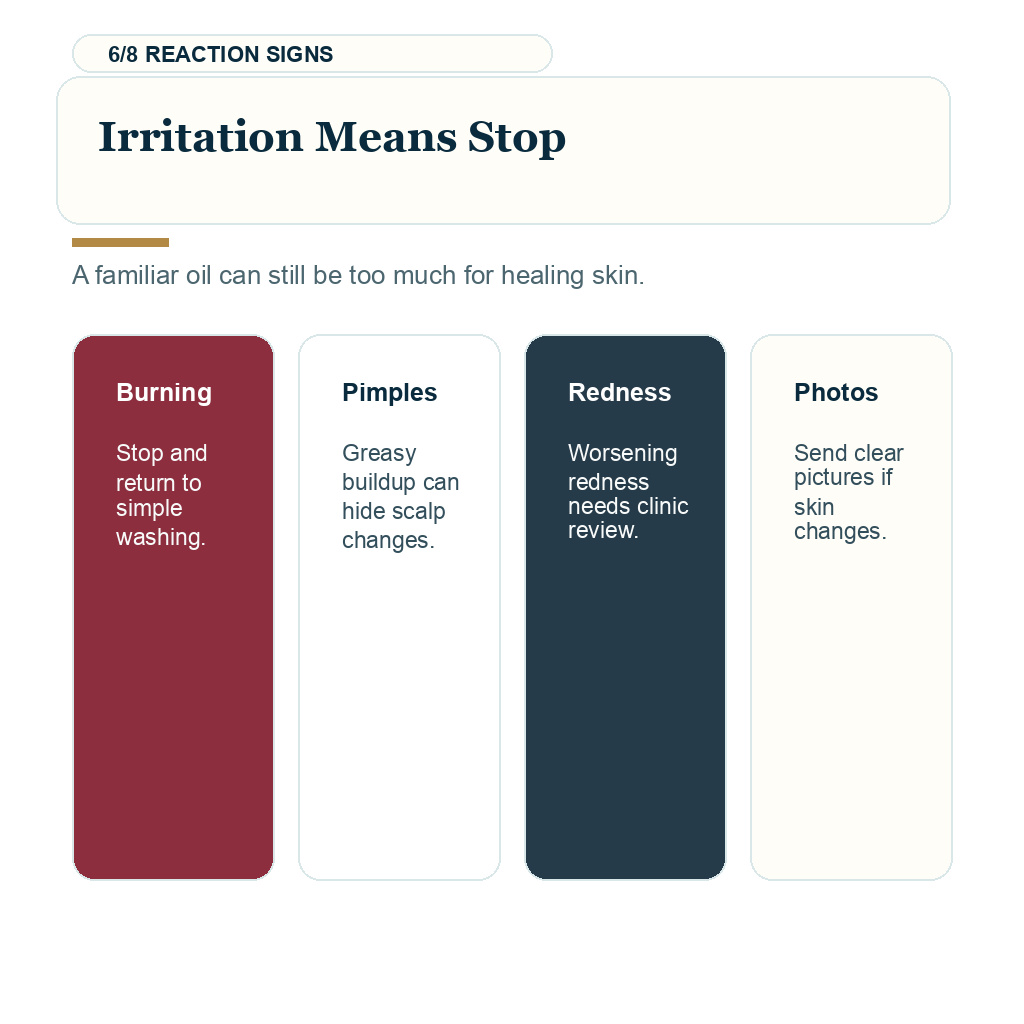
If dryness comes with strong itching, redness, scaling, burning, or greasy flakes, the cause needs to be understood. It may be normal healing, seborrheic dermatitis, product irritation, overwashing, or folliculitis. The treatment changes depending on the reason.
Oil does not speed scab removal
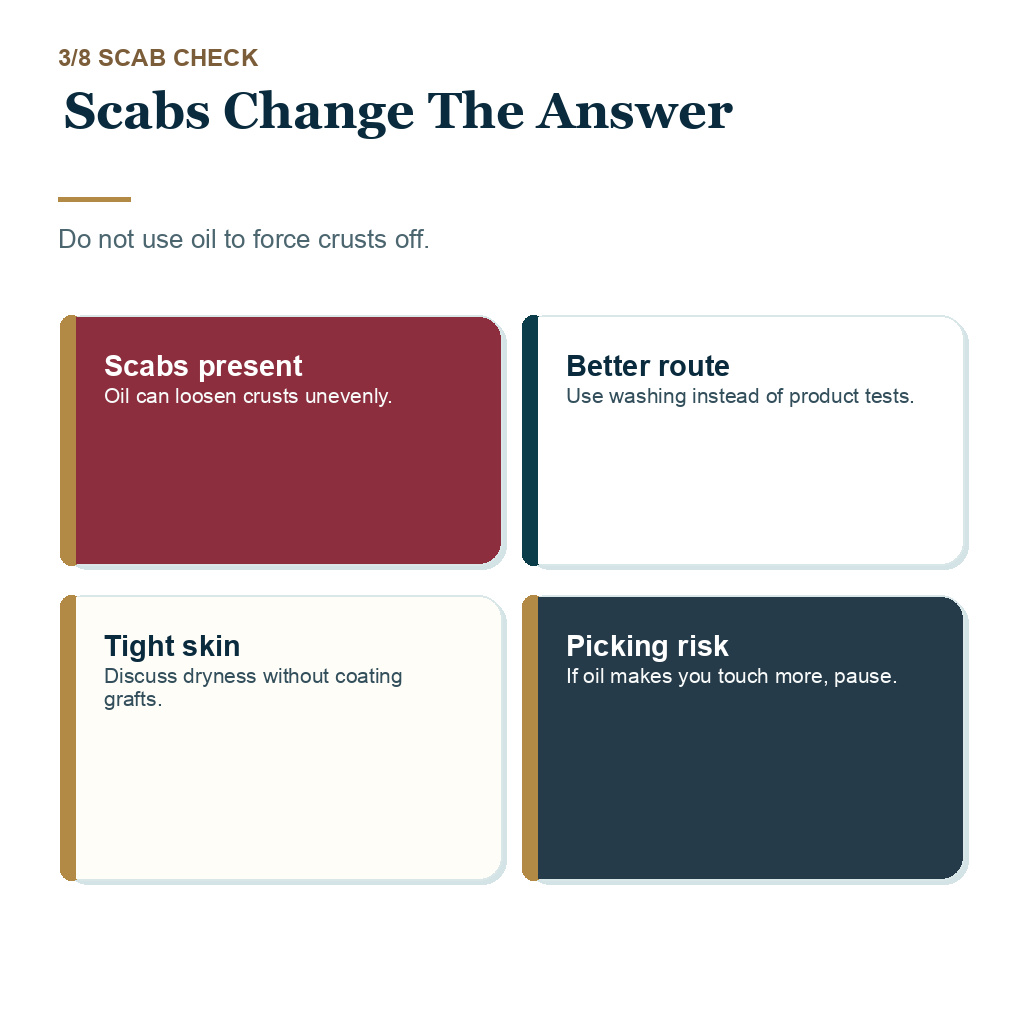
Oil should not be used to force scabs off earlier. Crusts should soften and separate gradually with the washing routine. Pulling, scraping, heavy rubbing, or trying to dissolve scabs with oil too early can create unnecessary traction on the recipient area.
Some clinics use specific softening routines. If your own surgical team gave you a clear instruction, follow that instruction. But do not add coconut oil, rosemary oil, castor oil, baby oil, or any other product because someone online said it helped their scabs.
A crust that comes away naturally is very different from a crust that is rubbed away because the patient is anxious. The first 14 days are not the time to experiment with faster healing.
Natural oils can still irritate the scalp
Natural does not by itself mean gentle after surgery. Some oils are heavy. Some contain fragrance or plant extracts. Some are difficult to wash out. Some patients react with itching, pimples, burning, or more scaling.
A hair oil is still a cosmetic product, not a sterile postoperative treatment. Rosemary, tea tree, castor, coconut, and mixed oils can all behave differently on healing skin. The label is less important than how the scalp reacts.
Essential oils or strong mixtures need extra caution. A healing recipient area is less forgiving than normal skin. If a product irritates the scalp after surgery, it can create unnecessary redness and confusion during a period when the patient is already watching every small change.
The transplant area should not become a testing ground for products. If you want to return to a familiar oil later, do it slowly and only after the scalp has clearly settled.
Patients who should wait longer
Some patients should wait longer. This includes patients with folliculitis, oily scalp, acne prone skin, seborrheic dermatitis, strong itching, active pimples, heavy crusting, sensitivity to products, or a history of reacting badly to oils.
If a patient is already worried about bumps, adding oil blindly is not useful. First, I need to decide whether the issue is dryness, irritation, folliculitis, or normal healing, because folliculitis and hair transplant planning changes when inflammation is active.
Patients with dandruff or seborrheic dermatitis may also need a different plan. Sometimes the correct answer is not oil. It may be a medicated shampoo later, once the scalp is ready. The timing for ketoconazole shampoo after a hair transplant is a separate decision, especially if the scalp is still sensitive.
Oil can hide scalp problems
Oil can hide scale, create shine, trap residue, and mix with sweat. If oily buildup after FUE appears with redness or bumps afterward, it may be difficult to know whether the cause is irritation, folliculitis, seborrheic dermatitis, overwashing, or simply too much product on a healing scalp. When oils are only one part of a larger routine, too many treatments after FUE can blur the cause of redness or bumps.
It matters because early recovery is emotional. Patients inspect the scalp closely and often worry that every change means graft loss. The scalp should be easy to inspect. A clean, visible scalp is easier to protect.
The distinction between redness, scabs, and pimples after a hair transplant and true warning signs becomes harder when oil hides scale, shine, or residue.
Use the washing plan and gentle moisture support instead of early oil
Most patients do not need a replacement product in the early period. Gentle washing, the clinic approved lotion or spray if prescribed, and patience are usually enough. Adding more products can create more residue and more worry.
If dryness is strong, get guidance before applying anything. A small adjustment in washing frequency, water temperature, or softening routine may be enough. In other cases the scalp needs review because the dryness is actually dermatitis or irritation.
The early hair transplant aftercare plan is designed to keep healing predictable. A simple routine is usually safer than adding products too quickly.
Use the 8 hair oil timing slides below to separate recipient scalp contact, scabs, donor area comfort, irritation signs, restart testing, and product timing before oil returns. Swipe the carousel, use the arrows one step at a time, or choose a number below the image to jump to that point.
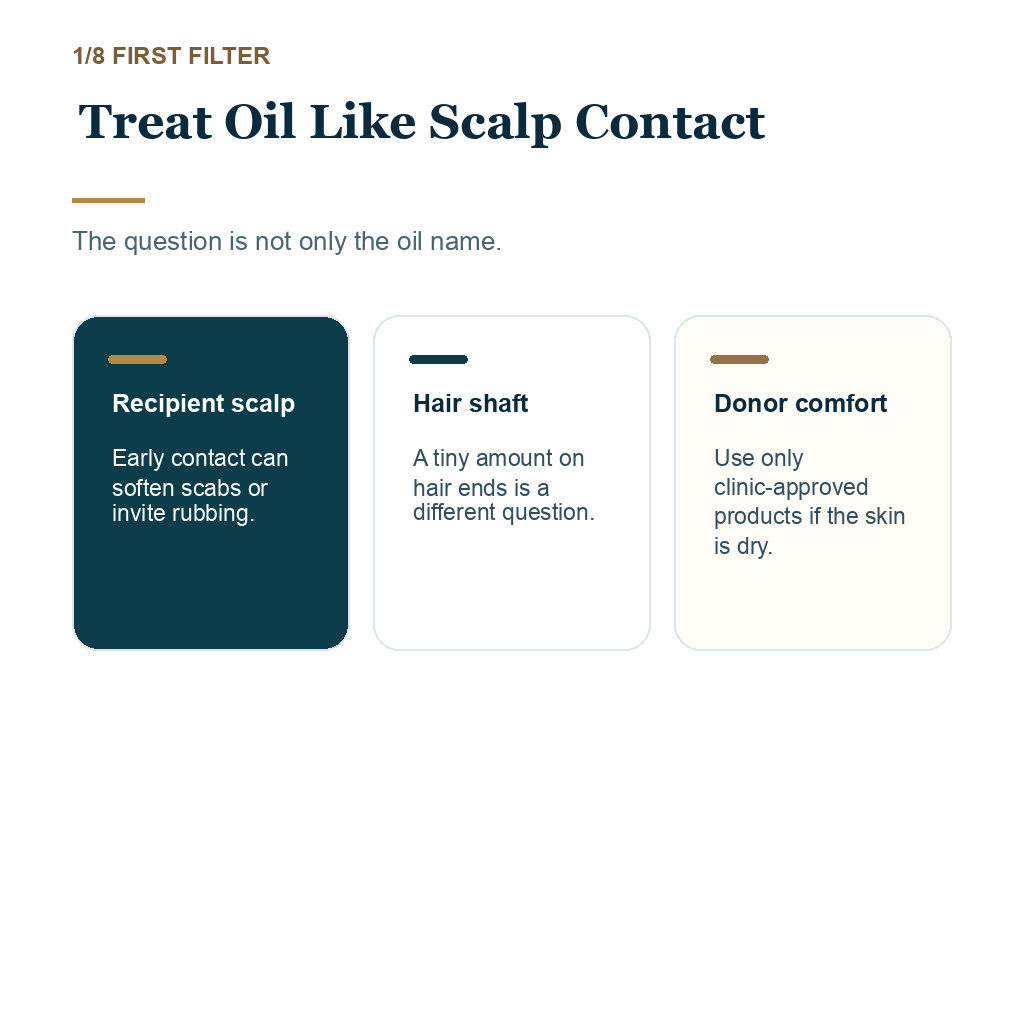
Restarting hair oil after the scalp settles
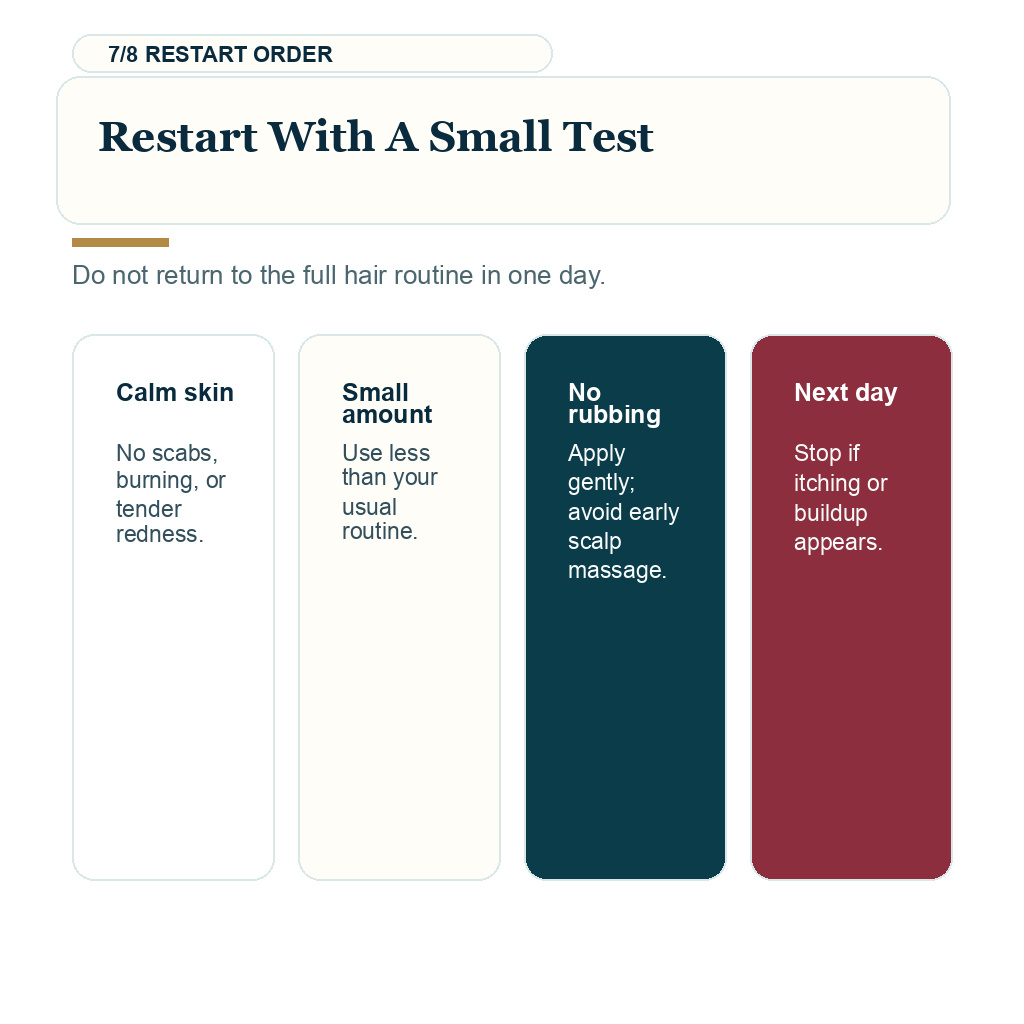
When the scabs are gone, the skin is closed, ordinary washing is comfortable, and at least 14 days have passed, oil can return gradually if the patient truly needs it for hair texture or dryness. Restart with the smallest useful amount, not a coated scalp.
Start away from the recipient area when possible. Use less than you normally would. Do not leave the scalp coated. Watch the next day for itching, pimples, burning, greasy buildup, or redness. If the scalp reacts, stop and return to simple washing.
If everything stays settled, the routine can slowly become more normal. Still, avoid scalp massage with oil until at least 4 weeks after surgery, and only if the skin is quiet.
Hair oil does not make transplanted hair grow faster
Hair oil does not make transplanted grafts grow faster. It may improve hair shaft feel later, and it may make some hair look smoother or less dry, but it does not replace surgical technique, graft survival, blood supply, or the normal growth cycle.
Patients sometimes reach for oils because they feel they must actively do something to help growth. In the early phase, doing less is often safer. The grafts need protection, clean healing, and time.
Growth usually becomes visible months later, not because oil was added early, but because transplanted follicles follow their own biological cycle. Styling comfort and graft growth are not the same thing.
Avoid irritating products when returning to hair care
Avoid heavy layers, fragrance rich products, essential oil mixtures, harsh scrubs, alcohol based products, and anything that makes the scalp burn. Avoid using oil to loosen crusts, hide redness, or calm anxiety. Avoid applying product with rubbing pressure.
Avoid switching between many products at once. If the scalp reacts, we need to know what caused the reaction. A simple routine makes that easier.
When you restart products, keep it simple. Use one product, a small amount, and wait to see whether the scalp stays quiet before adding anything else. If irritation appears, stop the product and go back to simple washing before introducing anything else.
Hair oil fits later in recovery, not in the first days
Do not use hair oil on the recipient area during the first 14 days. After day 14, consider it only if scabs are gone, the scalp is settled, and washing is normal. If you want to massage oil into the scalp, wait at least 4 weeks.
If the scalp feels dry earlier than that, do not treat anxiety with oil. Follow the aftercare plan and confirm what is safe at that stage. A healing transplant should stay clean, visible, and easy to monitor.
When oil returns later, use less than you think you need. The aim is comfort and hair quality, not a coated scalp. Healing comes first, styling later.
Read this review excerpt
First wash completed and visual instructions given to my daughter.