


Scalp Massage Needs Safe Timing and Gentle Pressure
In the recipient area, do not massage the scalp during the first 10 days after a hair transplant. Gentle washing pressure may be introduced only when your clinic has told you that crusts can be softened and removed, often around day 10 to 14. Deeper scalp massage, spa massage, massage devices, nails, oils, or strong circular rubbing should wait until the skin is closed, crusts are gone, and the scalp feels calm.
The timing changes if there is bleeding, pain, thick crusting, pimples, spreading redness, numbness, or strong itching. Massage is not a growth treatment in the early period. The safer goal is to protect grafts, loosen crusts gradually, and avoid irritation that makes you touch the scalp more. If the hairline looks raised or pitted, check raised hairline texture after transplant surgery before adding pressure.
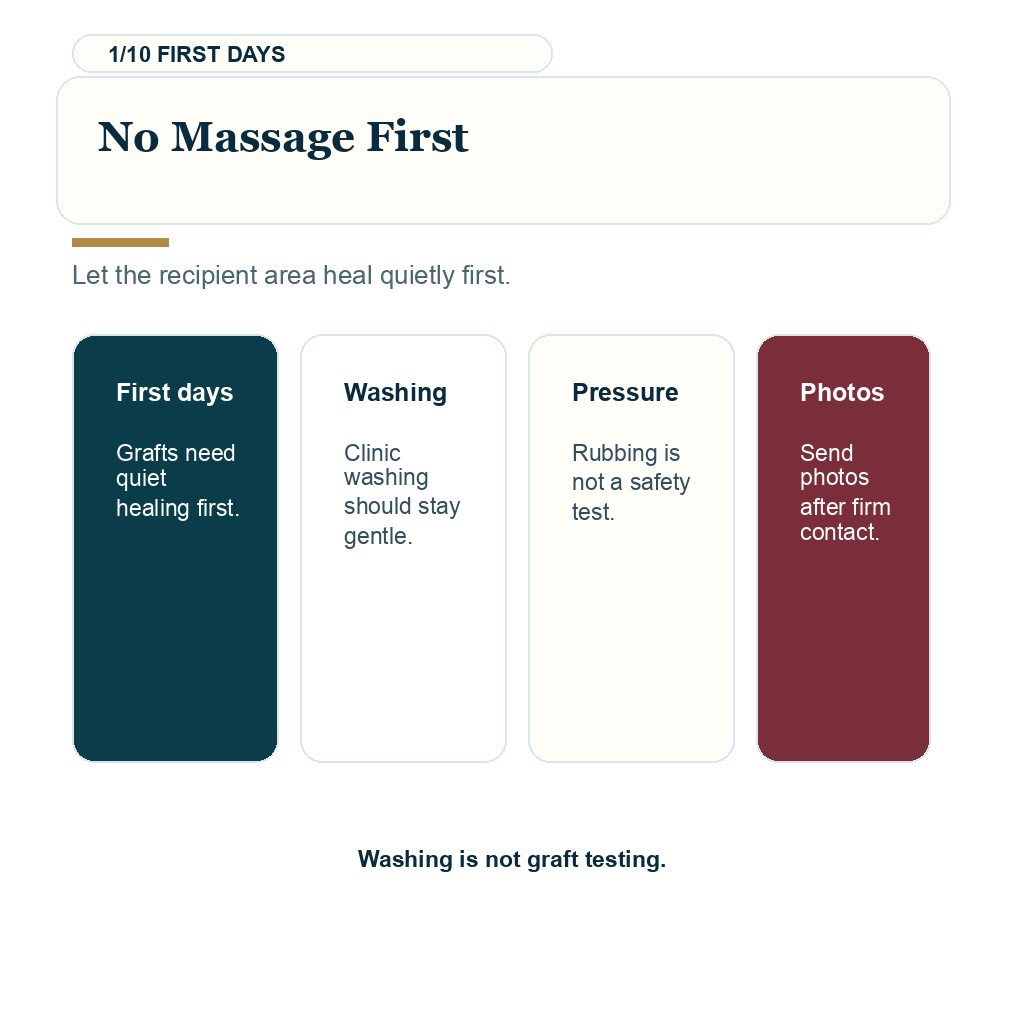
Massage should wait during the first days
The first days after surgery are about protection. Small crusts form around the grafts, the skin is closing, and the recipient area should not be treated like normal scalp skin. Even if you feel well, the surface is still recovering from many tiny surgical openings.
I separate normal healing from avoidable handling. Light washing under the clinic protocol is controlled. Massage is different because it adds pressure, movement, and often the temptation to test whether crusts or hairs are loose.
During early hair transplant aftercare, the grafted area needs calm handling. Rubbing, scratching, strong towel pressure, and aggressive circular movement can disturb crusts before they are ready to release.
The concern is often not one movement. You rub once, see a hair in a crust, become anxious, rub again to inspect the area, then wash again. That cycle can create more irritation than the original concern. A tight scalp is not a reason to test the grafted area with massage. Keep the wash gentle and stop when pressure starts to build.
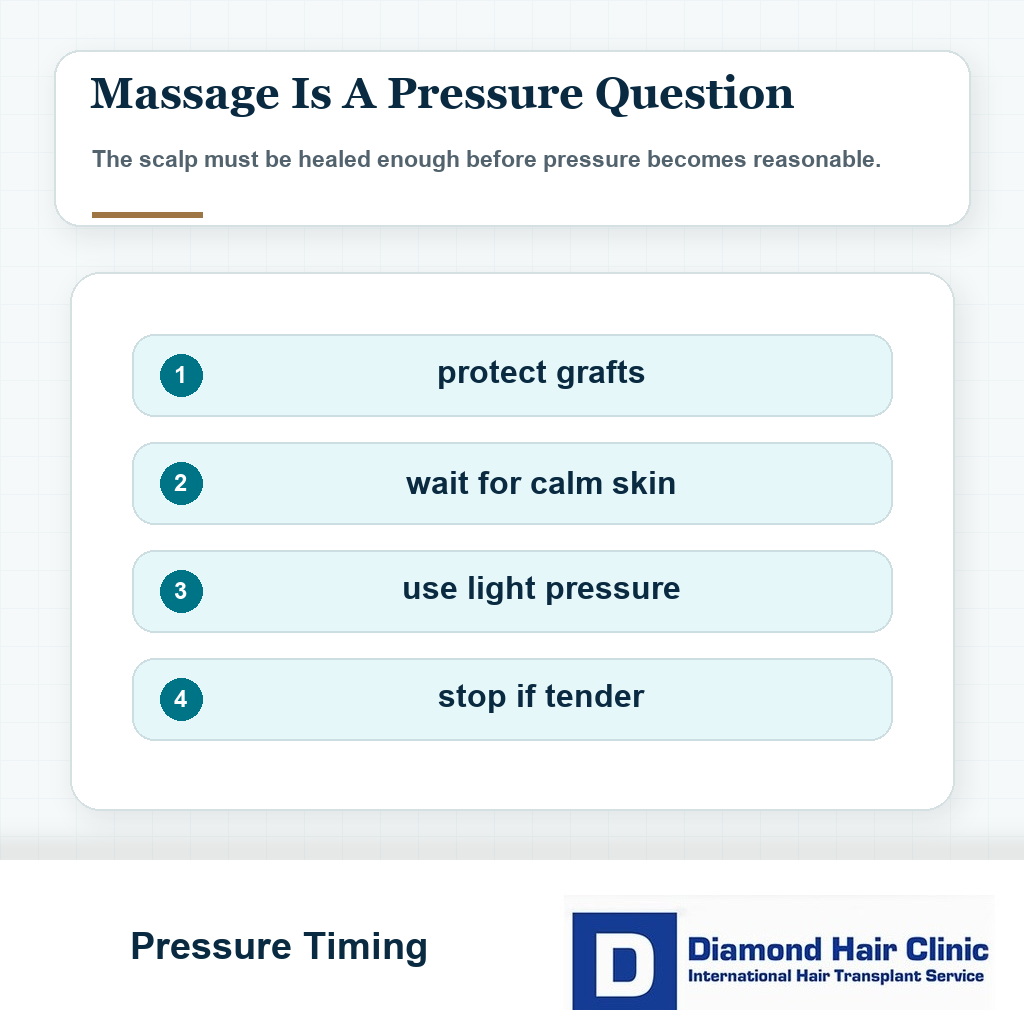
Gentle washing is not full scalp massage
Gentle washing and scalp massage are not the same action. Washing is done to keep the area clean and soften crusts under a planned routine. Massage adds pressure for comfort, circulation, stiffness, oil application, or styling. If the stiffness is really scalp tightness after FUE, timing and skin appearance decide whether pressure is sensible.
For washing, I expect controlled contact with clean fingertips or the method your clinic gives you. Washing after a hair transplant has its own timing for water pressure, shampoo contact, towel drying, and scab removal.
Do not bring massage tools into early washing. Use the washing method the clinic gave you, and ask before using a brush, scrubber, massage device, or firm pressure on healing skin.
Scalp massage usually means more repeated movement. The fingers stay longer on the skin. You may press to loosen tightness or move crusts. Firm pressure is exactly what should be avoided before the scalp is ready.
After the crusts have softened and the clinic has moved you into the scab clearing phase, gentle fingertip movement may become part of washing. I do not treat that as a full scalp massage. It is careful cleaning with limited pressure.
Forehead massage is different from recipient area pressure
Forehead massage, when a clinic specifically instructs it for swelling, is not the same as massaging the implanted scalp. Swelling can move toward the forehead and eyes after frontal work, and some protocols use very gentle forehead movement away from the grafts. That instruction should not be copied onto the hairline, temples, mid scalp, or crown.
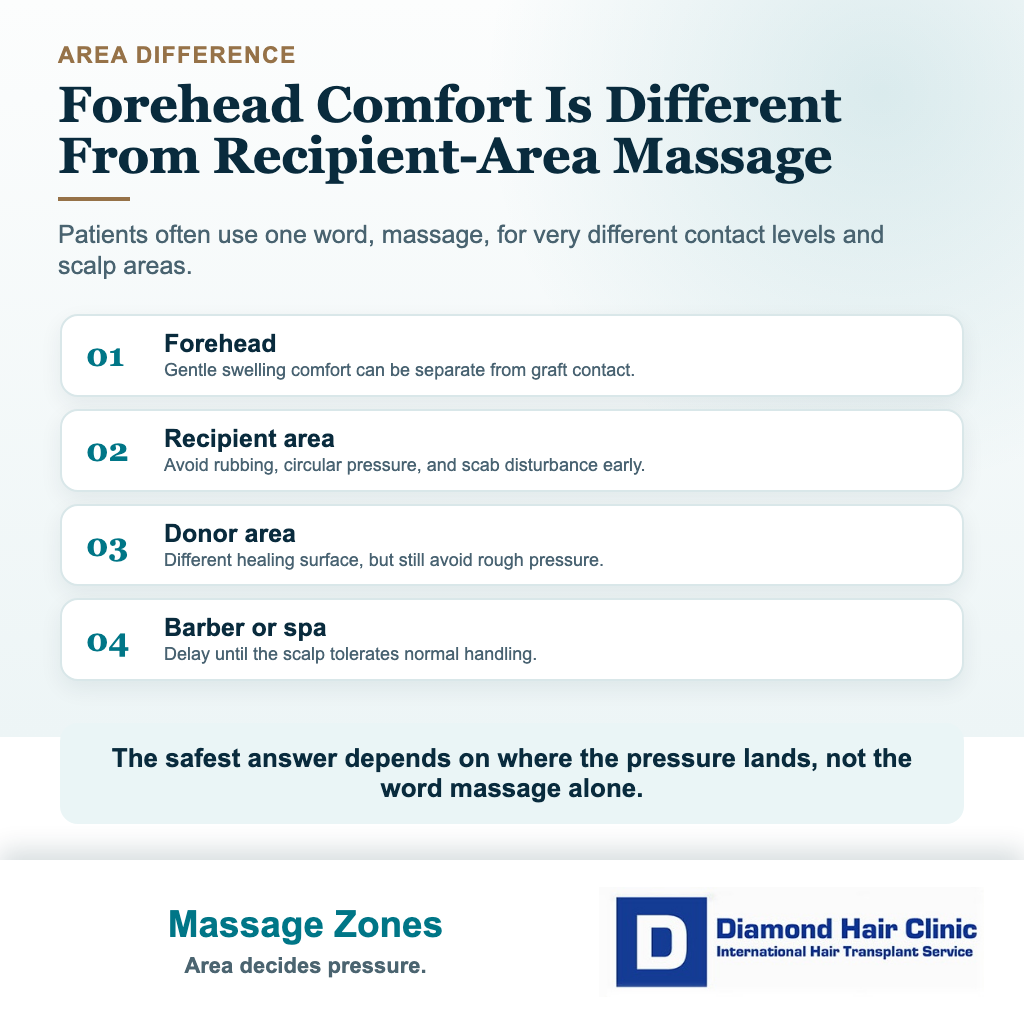
If swelling is the reason you want to massage, first read the guidance on swelling after a hair transplant. Do not try to push swelling out by rubbing the recipient area. Elevation, calm recovery, and the medication plan given by the clinic usually matter more than manual pressure.
Keep any forehead contact away from scabs, implanted hairs, and tender donor points. If swelling is one sided, painful, increasing, hot, or paired with redness or fever, the scalp needs direct review instead of massage.
If the forehead contact is part of a cosmetic appointment rather than transplant swelling management, treat it separately. Botox and filler timing around a new hairline can involve needles, swelling, pressure, and after treatment instructions that do not belong in the first healing days.
Gentle fingertip pressure starts only after the scalp is ready
For many uncomplicated cases, gentle fingertip pressure starts around day 10 to 14, when the clinic wants the crusts to soften and release. The exact day depends on how the scalp looks, how dense the recipient area is, whether there is bleeding, and whether surgery was done over one day or several days.
Pressure should be light at first. The aim is not to scrub. The aim is to let softened crusts come away without tearing the skin or forcing attached scabs.
If a crust does not move after soaking and gentle washing, leave it. A scab that needs force is not ready. Trying to finish everything in one wash often creates more risk than waiting another day.
Clean fingertips are safer than nails. Short circular movement can be reasonable when the crusts are already loose. A hard palm rub, towel scrub, brush, comb, silicone scalp scrubber, or massage device is too much in the early period.
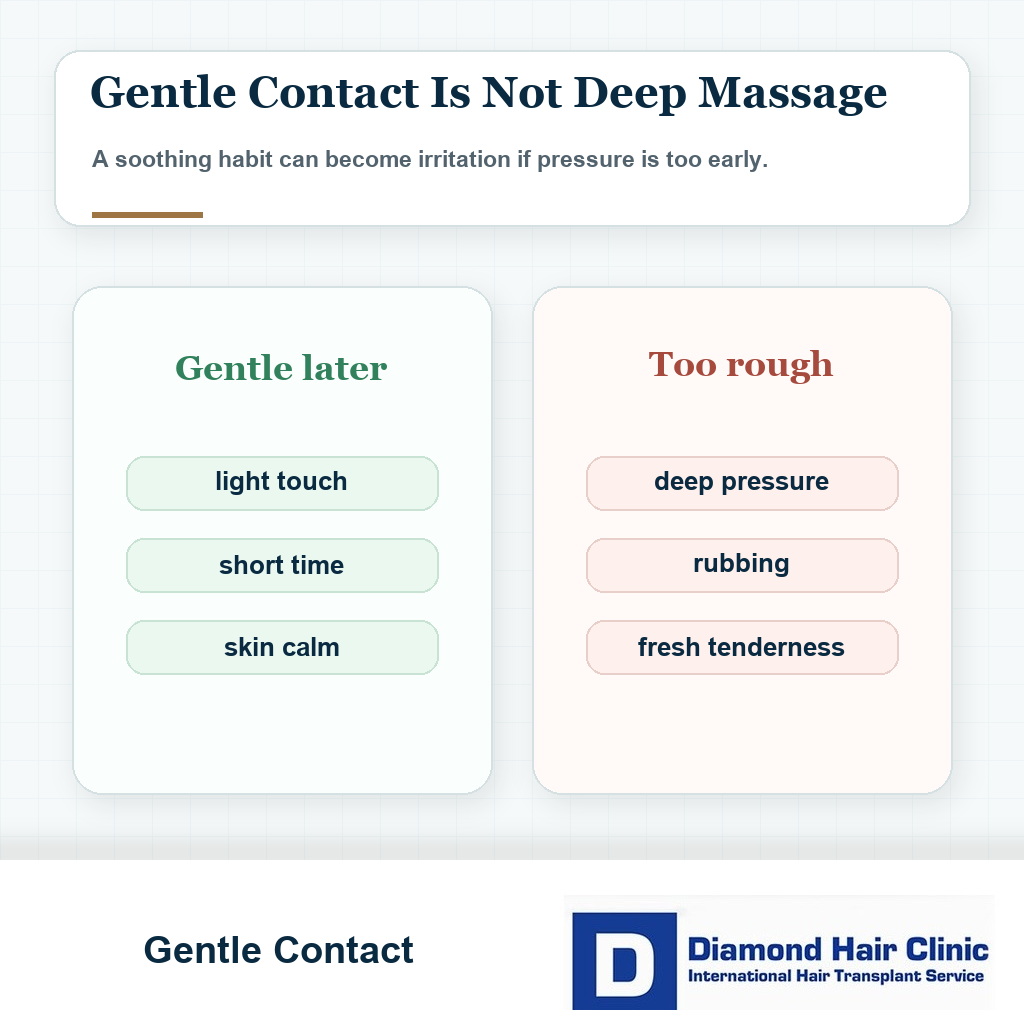
Early massage can still disturb grafts
Massage can dislodge grafts early if it creates enough pressure, pulling, bleeding, or scab trauma. Later, once grafts are anchored and the crusts have cleared, the risk becomes much lower. The practical detail is that graft security, skin comfort, and readiness for pressure are not the same thing.
A graft may be more secure under the skin while the surface still looks crusted, dry, red, or sensitive. I judge massage timing by the actual scalp, not only by the calendar.
If you are worried about touching the grafts, massage should not be used as a test. Do not press the recipient area to see whether it feels fixed. Do not rub a crust to check whether a hair inside it is only a shed hair or something more serious.
Fresh bleeding, a painful open point, or a soft, fleshy looking piece after rubbing deserves clinic review. A dry crust with a short hair in it is often less alarming. That distinction is part of grafts and scabs after a hair transplant.
If you already massaged too hard
Stop first. Do not repeat the massage to test what happened. Look once in bright light and check for fresh bleeding, a new open point, increasing pain, new swelling, or a wet piece of tissue. If none of these happened, one brief mistake after the first days is less likely to ruin the transplant, but it should still make the rest of the routine calmer.
Loose hairs after rubbing can look dramatic, but the loose hair alone is not the whole story. The important part is whether skin opened, crusts were forced off, bleeding appeared, or pain and swelling increased. If the area looks unchanged, stop the massage and let the clinic judge photos rather than trying to recreate the event.
If the rubbing happened during the first 10 days, send photos to the clinic, especially if a crust came off with bleeding or the area looks newly raw. A strong bump, scrape, or careless towel rub needs its own photo review check, and I discuss those events separately in the article about bumping the head after a hair transplant.
If it happened later, after crusts were gone and the skin was closed, the risk is usually lower. Still, do not turn one mistake into a day of repeated inspection. Panic touching can create more irritation than the original contact.
Attached scabs need softening, not force
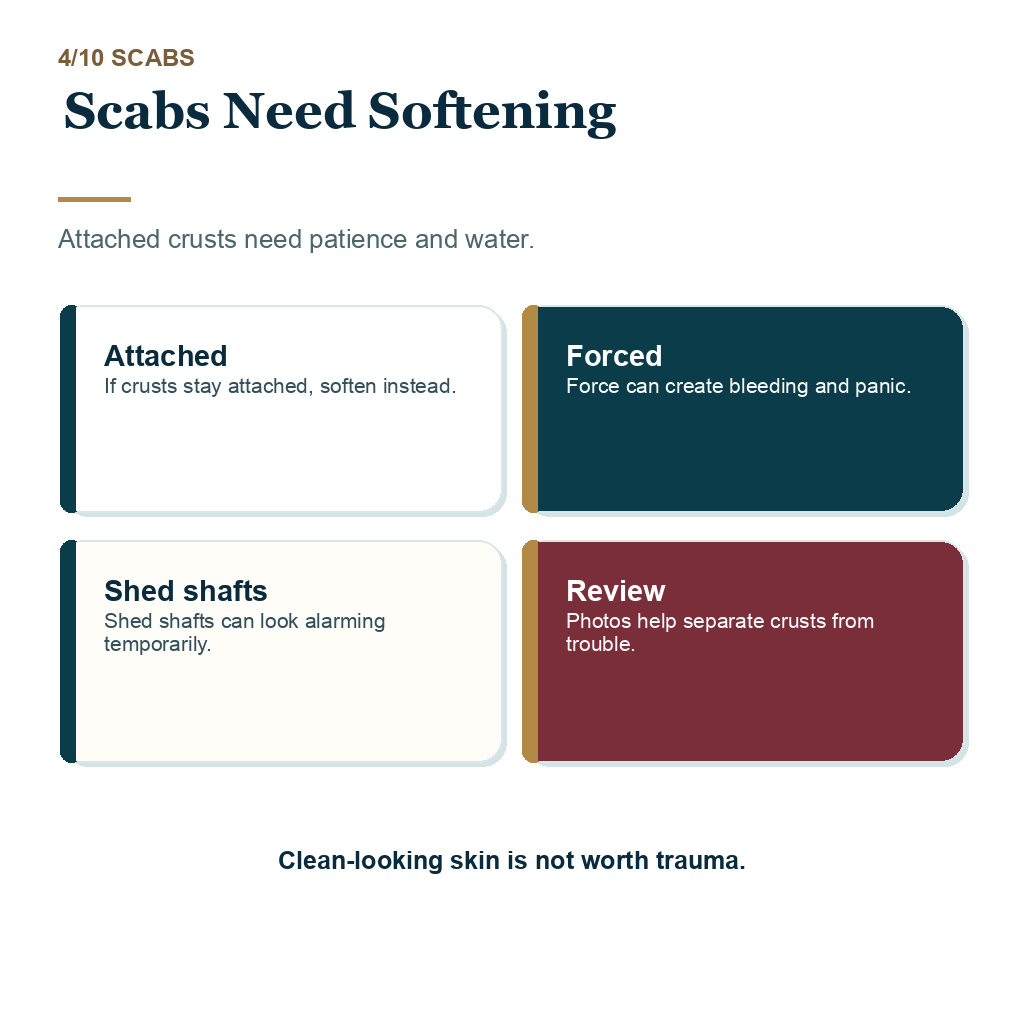
Attached scabs should be softened, not picked. Trouble usually starts when impatience replaces the washing plan. Pulling one stubborn crust can open a small point of skin, create bleeding, and restart anxiety.
Scabs usually need moisture, time, and repeated gentle washing. Some come away easily. Some areas around existing hair or dense implantation may hold crusts longer. That is not a reason to scratch or scrape.
If crusts remain thick after the normal scab clearing window, do not solve it by increasing pressure on your own. The problem may be inadequate softening, fear of washing, dry skin, product buildup, or irritation. Each cause needs a different response.
Visible redness, scabs, or pimples after a hair transplant should be interpreted together. A calm dry crust is not the same as wet crusting, pus, spreading redness, or painful bumps.
Massage does not improve early graft growth
Early recipient area massage is not useful just because someone said it improves blood flow. A well performed hair transplant does not depend on you rubbing the grafts for growth. In the first weeks, the better contribution is gentle protection, clean healing, and avoiding unnecessary trauma.
Later, once the scalp has healed, gentle massage may help some patients with tightness or awareness of the scalp. That is a comfort and mobility issue. It should not be sold as a guarantee of better density.
Clinic marketing can make small aftercare details sound more powerful than they are. If a message suggests that daily massage is required for graft survival, question it. Surgical planning, graft handling, donor management, implantation quality, and careful recovery matter much more than rubbing the scalp.
Devices need extra caution. Brushes, vibrating tools, derma rollers, silicone scrubbers, and strong scalp massagers can create concentrated pressure. They have no role on a fresh recipient area.
Numbness, tightness, and itching need gentle handling
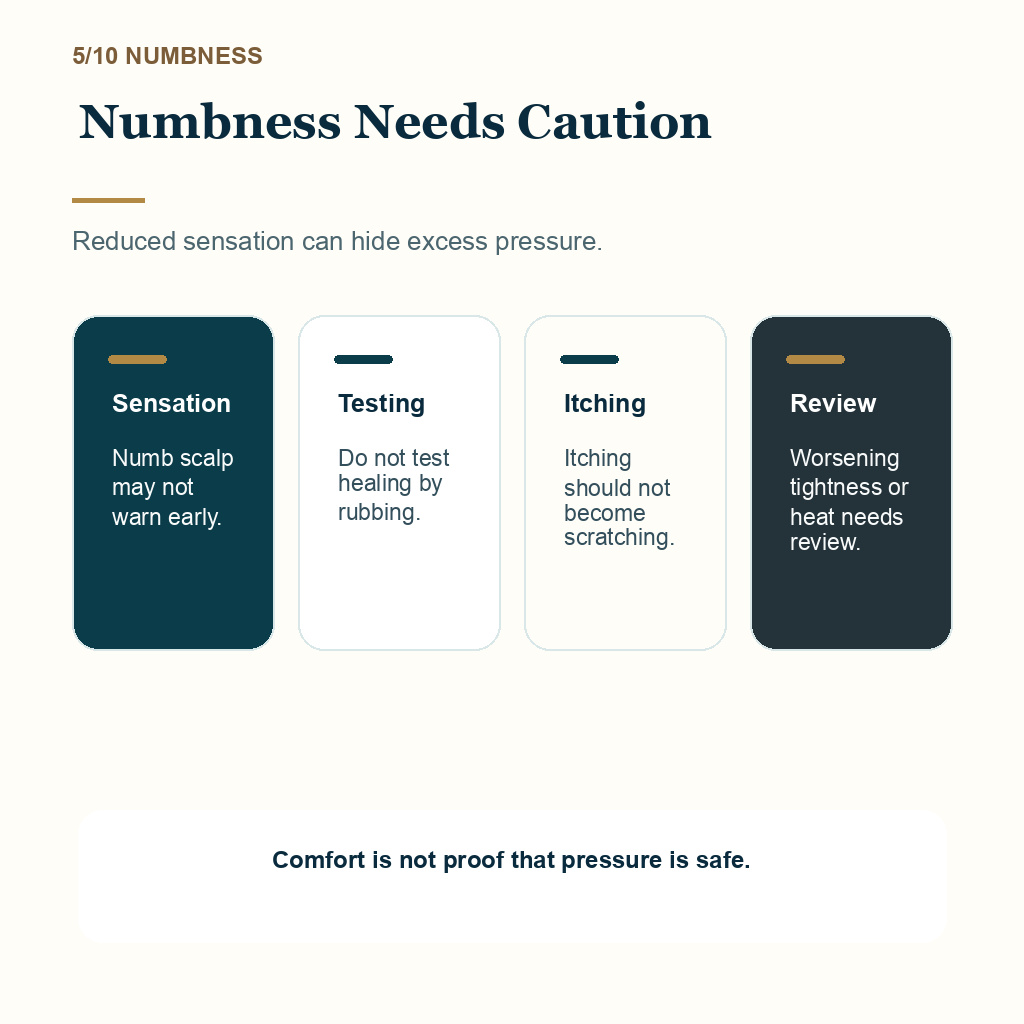
Numbness, tightness, and itching are common reasons to want massage. They are also reasons to be more measured. If the scalp sensation is reduced, you may not judge pressure accurately.
With numbness after a hair transplant, reduced sensation can make you press harder than intended. The hand thinks the pressure is mild, but the skin may be receiving more force than you realize.
Itching creates another risk. A gentle massage can quickly become scratching when the itch is strong. If you are already fighting the urge to scratch, read the guidance on itching after a hair transplant and keep the routine simple until the scalp settles.
Tightness can improve gradually without aggressive rubbing. Soft washing, time, and normal healing usually help. If tightness is painful, worsening, or paired with swelling, heat, or spreading redness, the scalp needs review in good light.
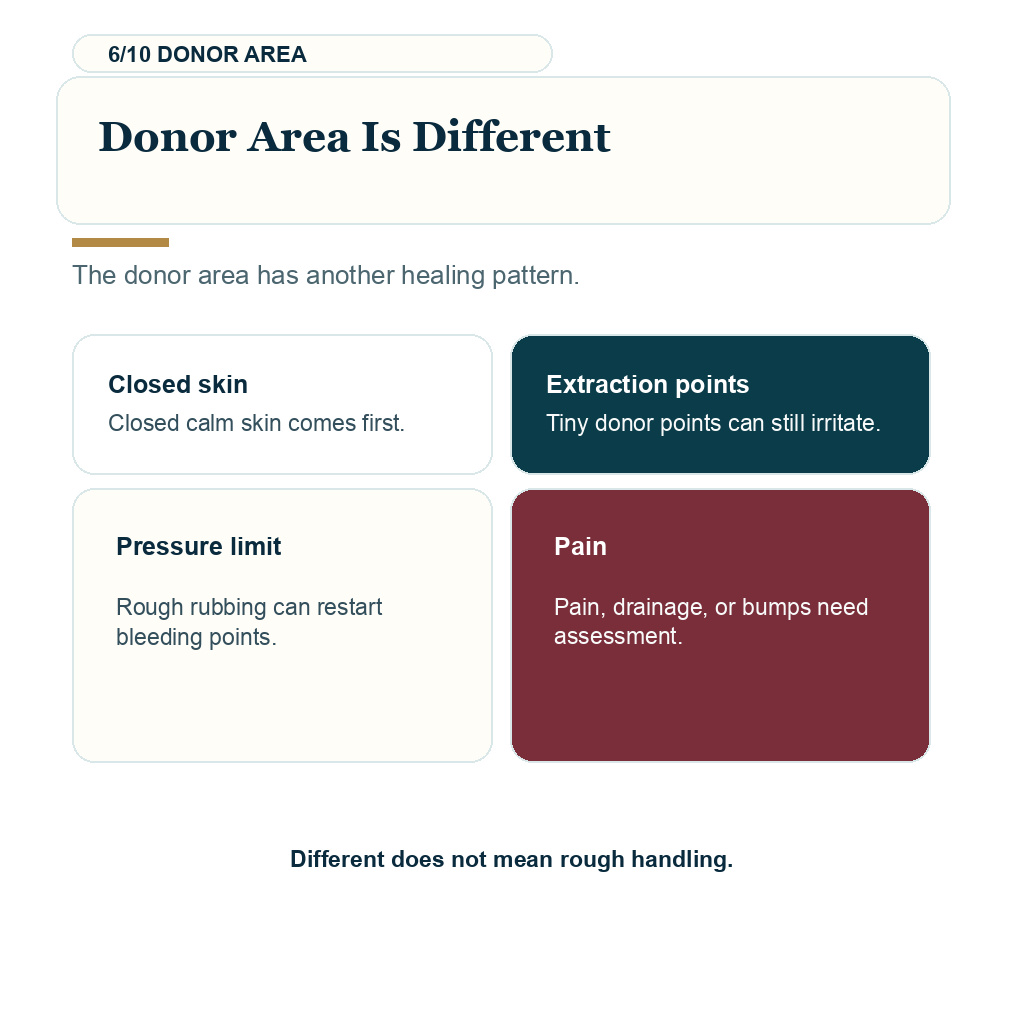
Donor area massage is different from recipient area pressure
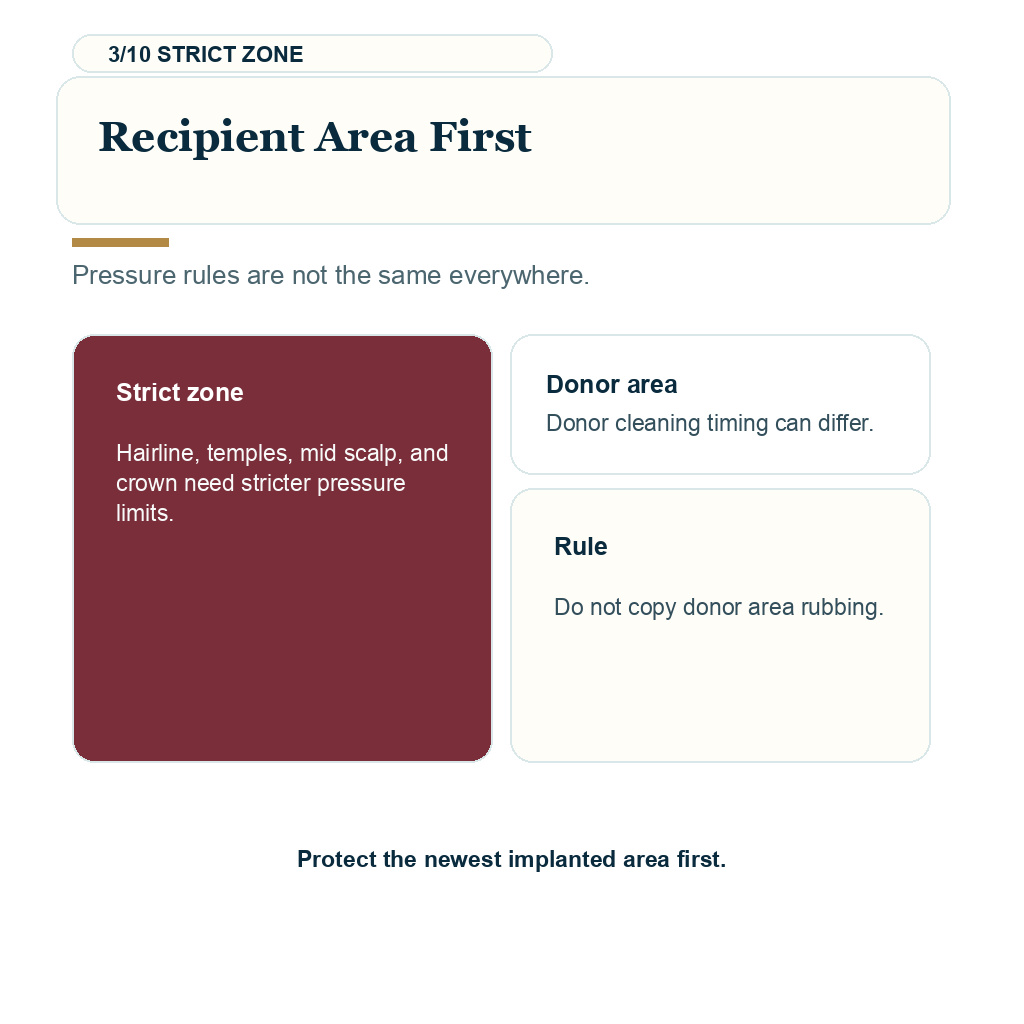
The donor area and recipient area do not heal in exactly the same way. The donor area has extraction points. The recipient area has implanted grafts. The pressure rules should respect that difference.
The donor area may tolerate gentle cleaning earlier than the recipient area, depending on the protocol and how the skin looks. Even there, rough rubbing can irritate extraction points, worsen itching, or make tiny scabs bleed.
For the recipient area, I am stricter because pressure can act directly over grafts and crusts. Do not copy donor area pressure onto the hairline, temples, mid scalp, or crown.
If the donor area feels stiff weeks later, gentle massage may be reasonable when the skin is closed and not painful. If there is persistent pain, drainage, marked redness, or firm bumps, that is not a massage problem. It needs assessment.
Spa or barber massage needs a longer wait
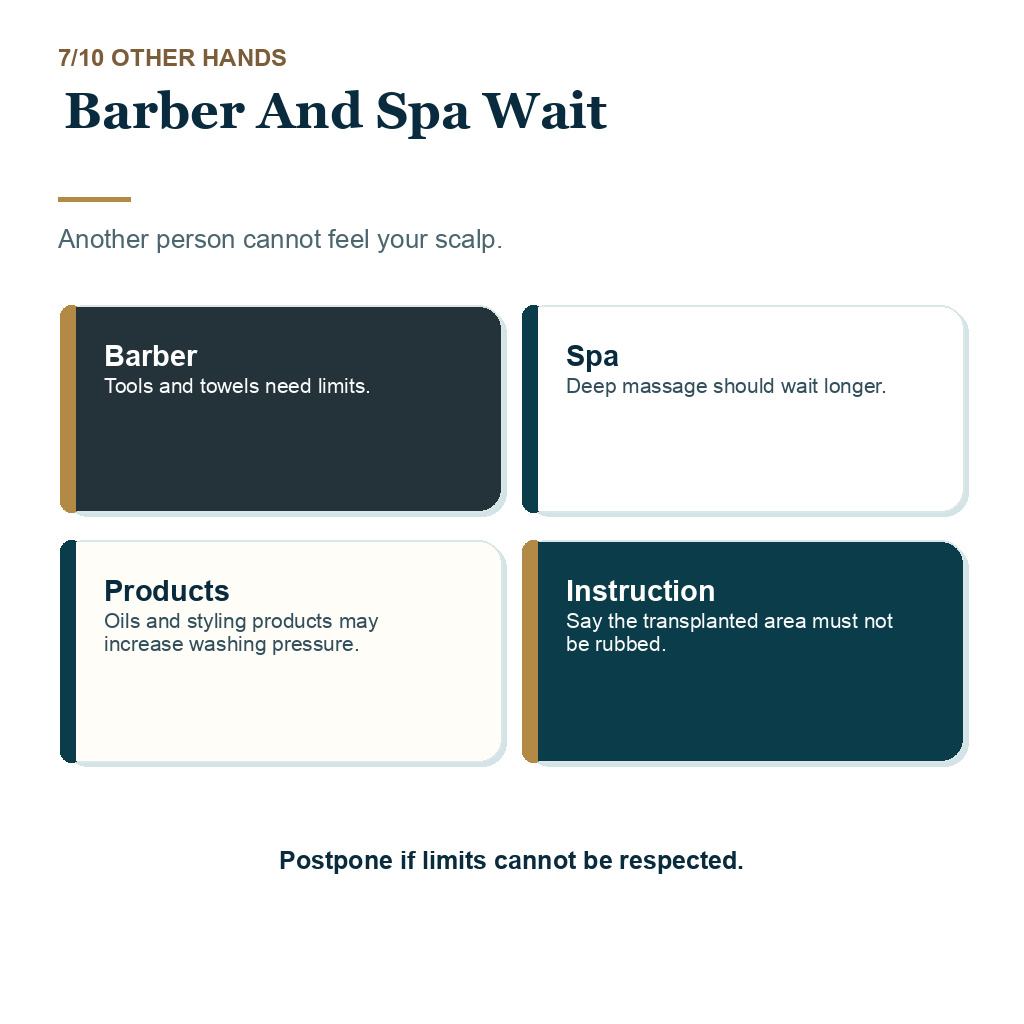
A spa or barber scalp massage should wait longer than gentle self massage. Another person may not feel your scalp sensitivity, may use stronger pressure, and may combine massage with shampoo, towel friction, hot water, oils, styling products, or a hair dryer.
I do not allow a spa style scalp massage in the early weeks. A careful haircut can be planned earlier than a deep scalp massage, but even the first haircut after a hair transplant needs limits on clippers, combing, towel pressure, and styling.
Tell the barber or therapist plainly that the transplanted area must not be rubbed, scratched, heated closely, or worked with nails. If they cannot respect a very light approach, postpone the appointment.
Oil massage needs extra caution. Heavy oils can trap debris, increase washing pressure, or irritate the scalp if used too early. Hair oil after a hair transplant is about scalp healing first, not only hair shaft comfort.
Gentle massage should start with light pressure
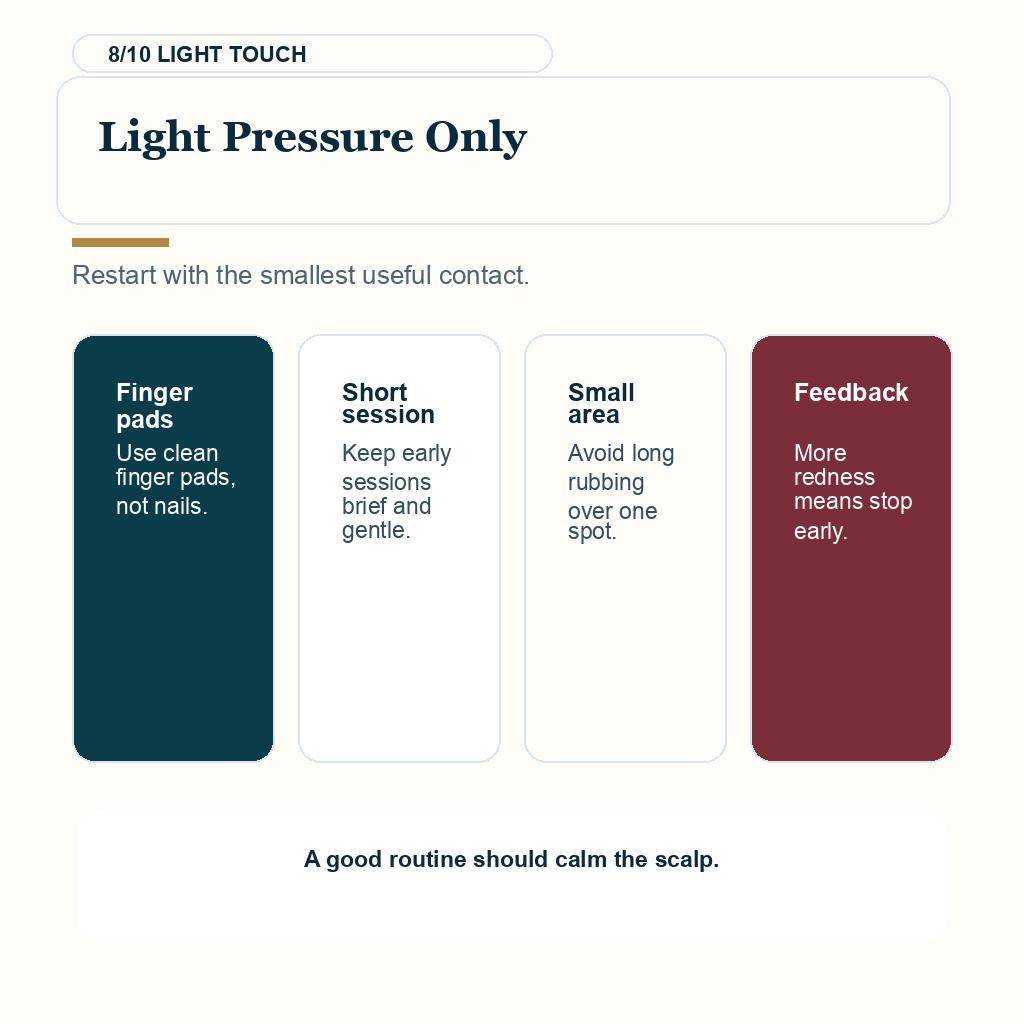
Once the skin is closed, crusts are gone, and washing is normal, start with very light fingertip contact. Use the pads of clean fingers, not nails. Keep movements slow and short. Stop before the skin becomes red, sore, hot, or itchy.
Massage should not be used to remove stuck material. If anything is still attached, soften it during washing and let it release. It should not become a way to force the scalp into looking clean faster.
Keep the first sessions brief. A few moments of light contact is enough to test comfort. Long sessions, strong circular rubbing, devices, or pressure over one small area are unnecessary.
If you notice more redness or flakes after massage, reduce pressure or stop. The scalp is giving feedback. A good recovery routine should make the area calmer, not more inflamed.
Warning signs that mean stop
Stop massaging and contact the clinic if there is fresh bleeding, increasing pain, spreading redness, heat, pus, wet crusting, a bad smell, or painful bumps. Stop if massage makes itching stronger or if you start scratching without meaning to.
Pimples or bumps need photos and clinic advice, not pressure. Pressing them can worsen inflammation and may spread irritation across the scalp. If you notice bumps, share focused photos with the clinic and follow the advice you receive.
Stop as well if the area looks patchier immediately after forceful scab removal. Sometimes you are only seeing temporary shedding or crusts with hair shafts, but forceful rubbing is not the way to find out. Let the clinic judge from photos.
Use extra caution if you had surgery over more than one day. The oldest grafts and newest grafts may not be at the same stage. Follow the timing for the freshest implanted area unless your clinic gives a different instruction.
For scalp massage, these 10 slides connect timing, graft security, gentle pressure, warning signs, and when photos should guide the plan. Swipe sideways, use the arrows, or choose a number below the image.


Massage starts after the scalp has settled
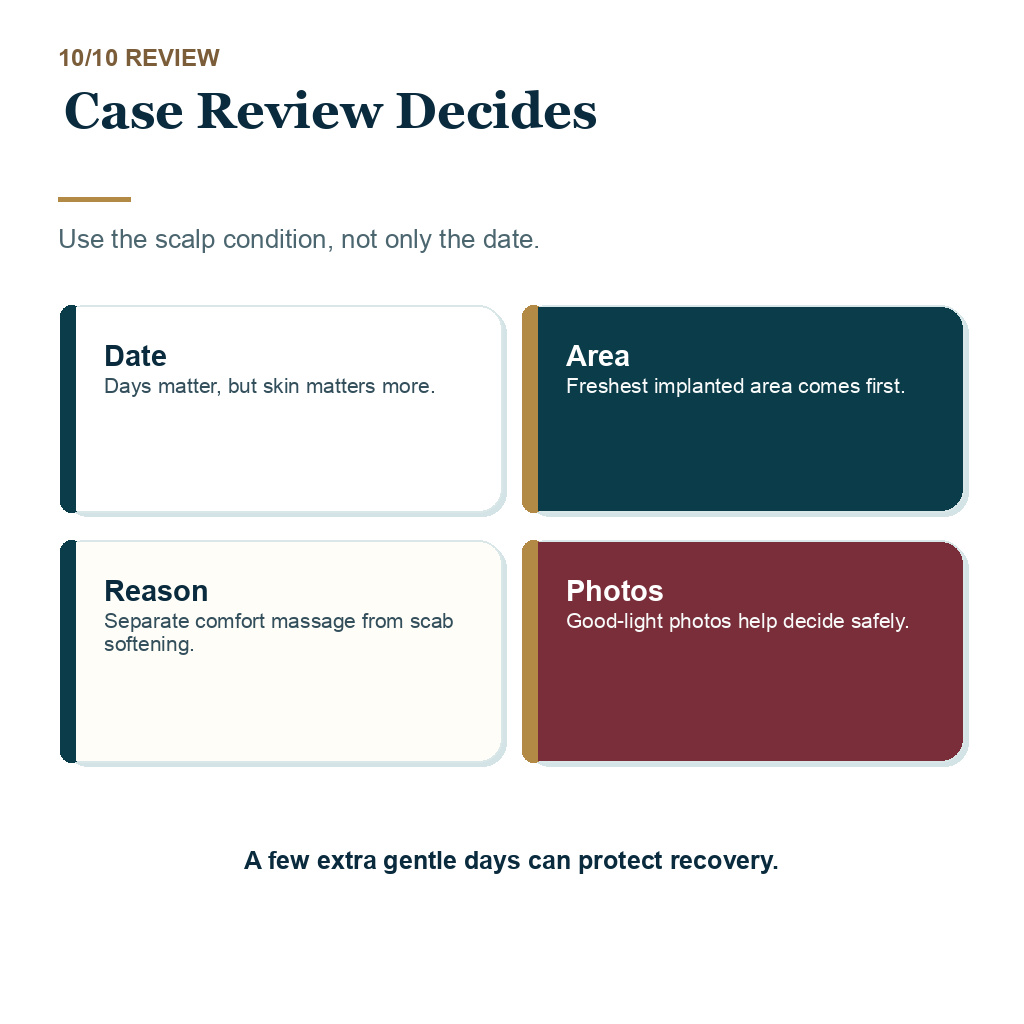
Use the condition of the scalp, not only the date. The recipient area should be closed. Crusts should be gone or loosening under the clinic washing plan. There should be no fresh bleeding, no painful open points, no spreading redness, and no wet crusting.
Then judge the reason for massage. Gentle fingertip movement to help softened crusts release around day 10 to 14 is different from deep massage for relaxation, oil application, barber styling, or a device. The first may be part of washing. The others should wait until the scalp is clearly calmer.
My approach is conservative because the early healing period is short, but the grafts and donor supply are valuable. A few extra days of gentle handling is a small sacrifice compared with creating avoidable bleeding, irritation, or panic.
Take photos in good light and wait for clinic guidance before adding pressure. Massage should return only when it makes recovery easier, not when it becomes another way to test, scratch, or rush the result.
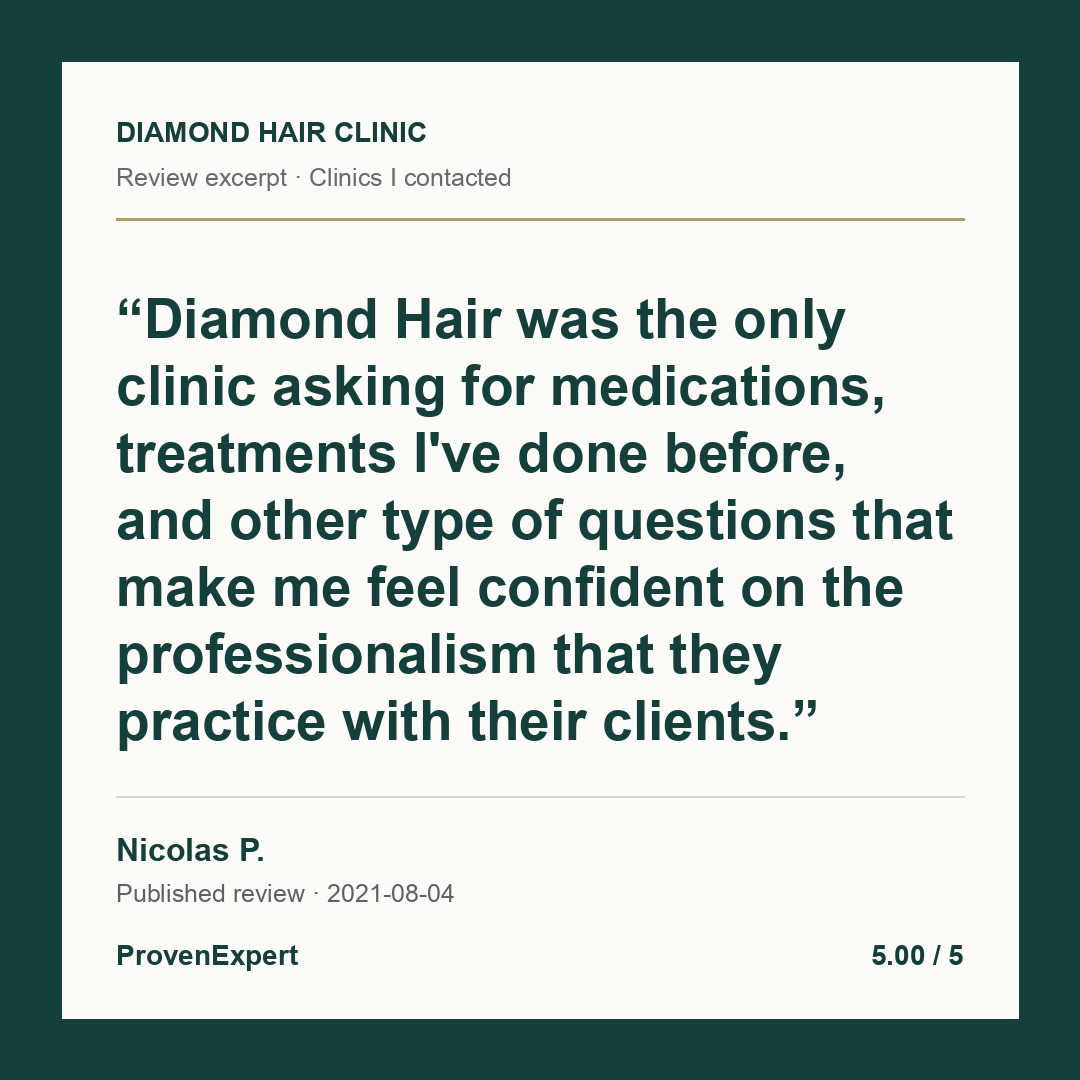
Read this review excerpt
Diamond Hair was the only clinic asking for medications, treatments I've done before, and other type of questions that make me feel confident on the professionalism that they practice with their clients.