Why do I work with fewer patients?
Diamond Hair Clinic was established in 2012 as a small, focused clinic for patients seeking a meticulous hair transplant procedure in Istanbul.
I built the clinic around a very clear principle. A hair transplant should never be treated like a race.
Every patient has different hair quality, a different pattern of hair loss, and different expectations.
I prefer a slower process where the decision fits the patient rather than the patient fitting a package.
I accept one patient per day and a maximum of ten patients per month.
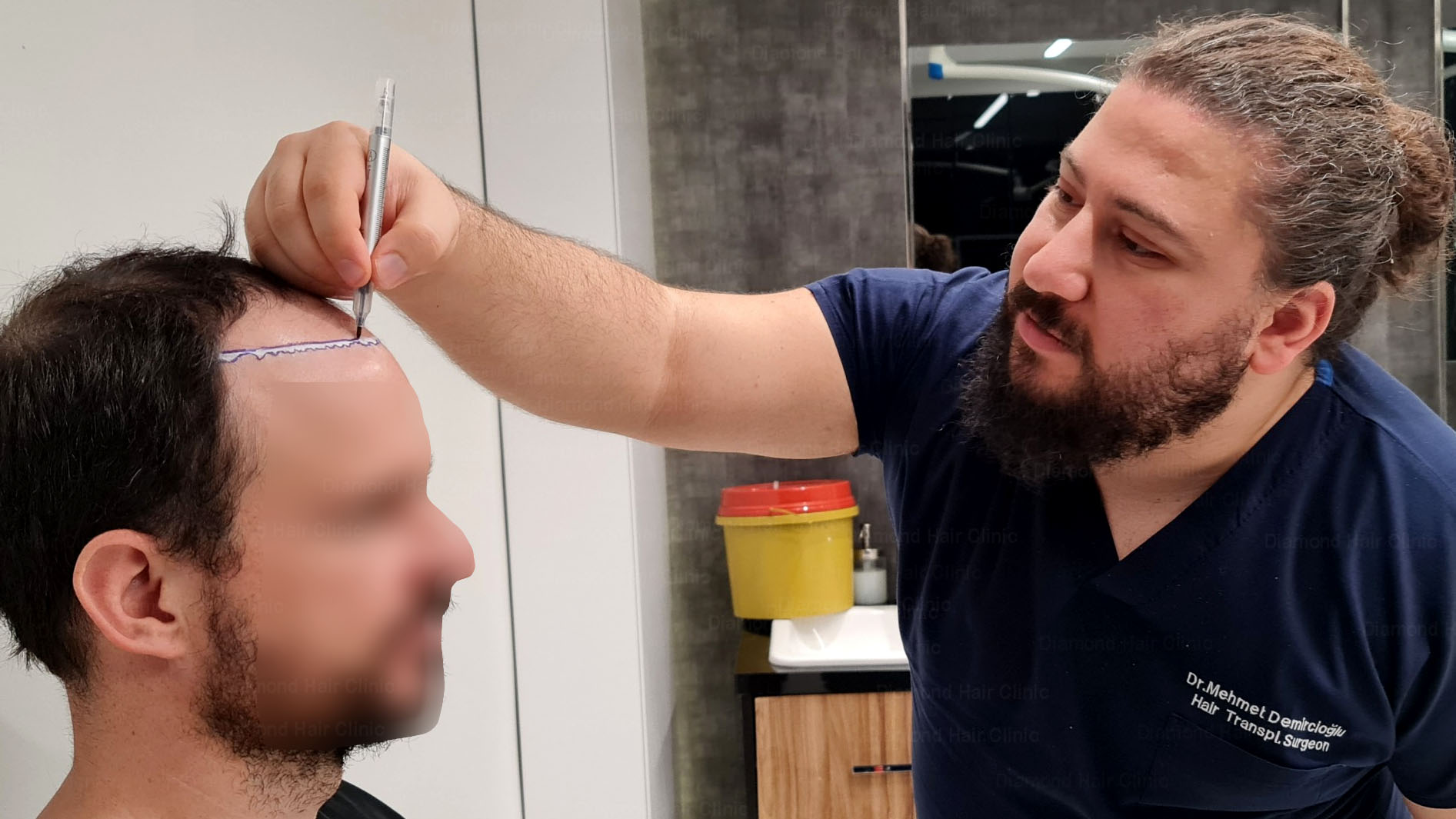
This gives me time to examine each case thoroughly, make the recipient area incisions with attention to detail, and remain closely involved in the key aspects of the operation.
Who is Dr. Mehmet Demircioglu?
I founded Diamond Hair Clinic in Istanbul and work here as the surgeon responsible for evaluating, planning, and following each accepted case.
My responsibility starts before the operation.
I review the photos, decide whether the case is suitable, design the hairline, make the recipient area incisions, and monitor the results as they develop.
Since 2012, I have kept my practice focused by operating with fewer patients, making careful decisions, and taking on long-term responsibility.
How do I operate on each patient?
Why one patient a day?
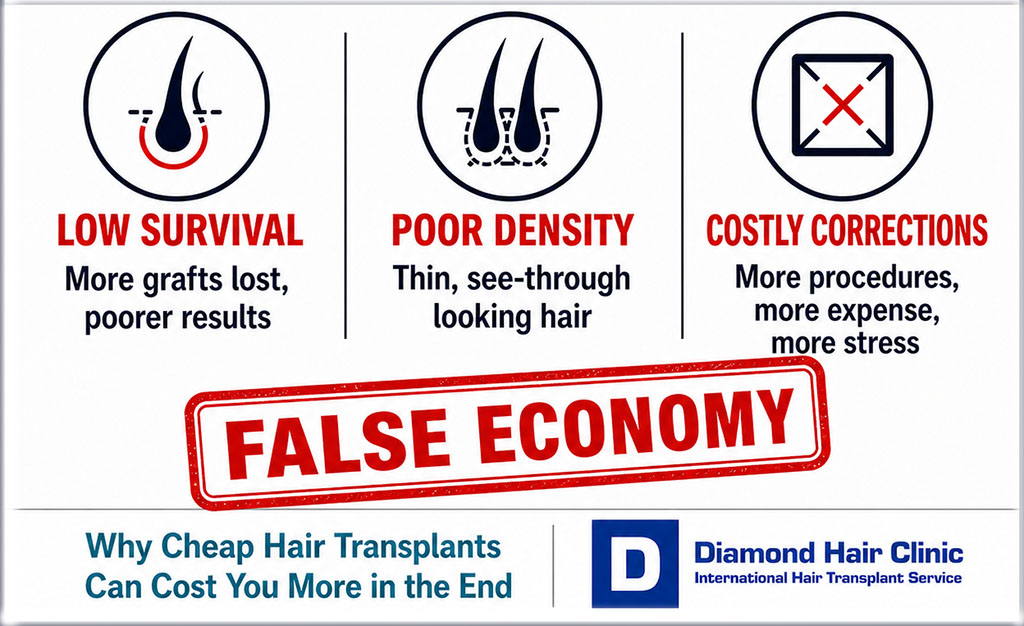
Many patients come to Turkey because they see attractive prices and large graft promises.
I understand why this is tempting.
But in hair transplantation, the cheapest option or the highest number of grafts is not always the safest choice.
The number of grafts has to be limited to what can be safely moved.
If surgery is pushed only to create an impressive number, the patient may pay for that decision later.
I prefer a conservative plan rather than trying to impress every patient with a high number.
How involved am I during the operation?
I personally focus on the aspects of surgery that most directly determine the final result, especially hairline design, surgical planning, and recipient area incisions. These are not small details.
They are the parts of the operation that decide whether the result will look natural, soft, and appropriate for the patient’s face once the hair grows out.
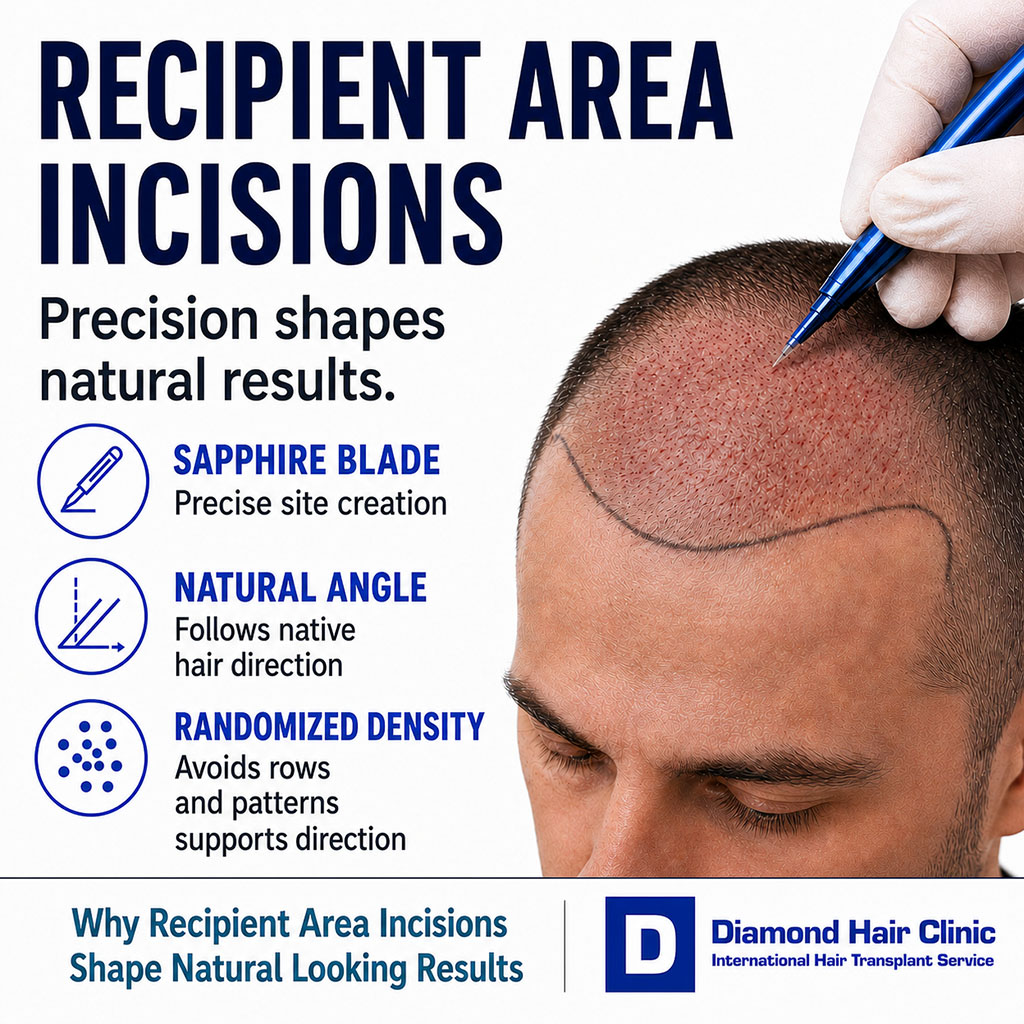
Creating the recipient area incisions is the most critical stage of a hair transplant.
The angle, direction, depth, distribution, and density of each incision must be planned carefully. If these decisions are rushed or delegated without proper surgical judgment, the transplanted hair may grow, but it may not look natural.
A hair transplant is not only about moving grafts from one place to another.
It is about understanding the donor area as a limited resource, designing a hairline that will still look right years later, and making every surgical decision with long-term thinking.
This is why I do not run a high-volume clinic (hair mill) model.
I prefer to stay directly involved where my judgment matters most, because the difference between a technically completed transplant and a truly natural-looking result is usually hidden in these details.

What makes a hairline belong to the face?
I do not believe in very low, flat, or aggressive hairlines just because they may look attractive before surgery.
A good hairline should fit the face today and still make sense as the patient ages.
I talk openly with my patients about what is possible, what is risky, and what should be avoided.
A result can only be satisfying when it is also sustainable.
What makes a natural result?
A natural hair transplant is not created by density alone.
I consider the height of the hairline, the balance of the temples, the angle and direction of each graft, and how the result will appear as the patient ages.
The donor area also has to be protected.
If too many grafts are used in the front just to create an impressive first photo, the patient may have fewer options later if the mid scalp or crown becomes thinner.
A natural result is one that does not ask for attention.
The hairline should frame the face, the temples should not look forced, and the plan should still make sense if future hair loss continues.
Selected patient reviews
Planning conversations in patients’ own words
These reviews describe the consultation and hairline planning experience. They are personal accounts, not medical proof or a promise of results.
 Read the full review on REVIEWS.io
Read this review excerpt
“This process was really interactive and iterative. Dr Mehmet Demircioglu continuously asked for my feedback with every alteration he made to the hairline.”
 Read the full review on REVIEWS.io
Read this review excerpt
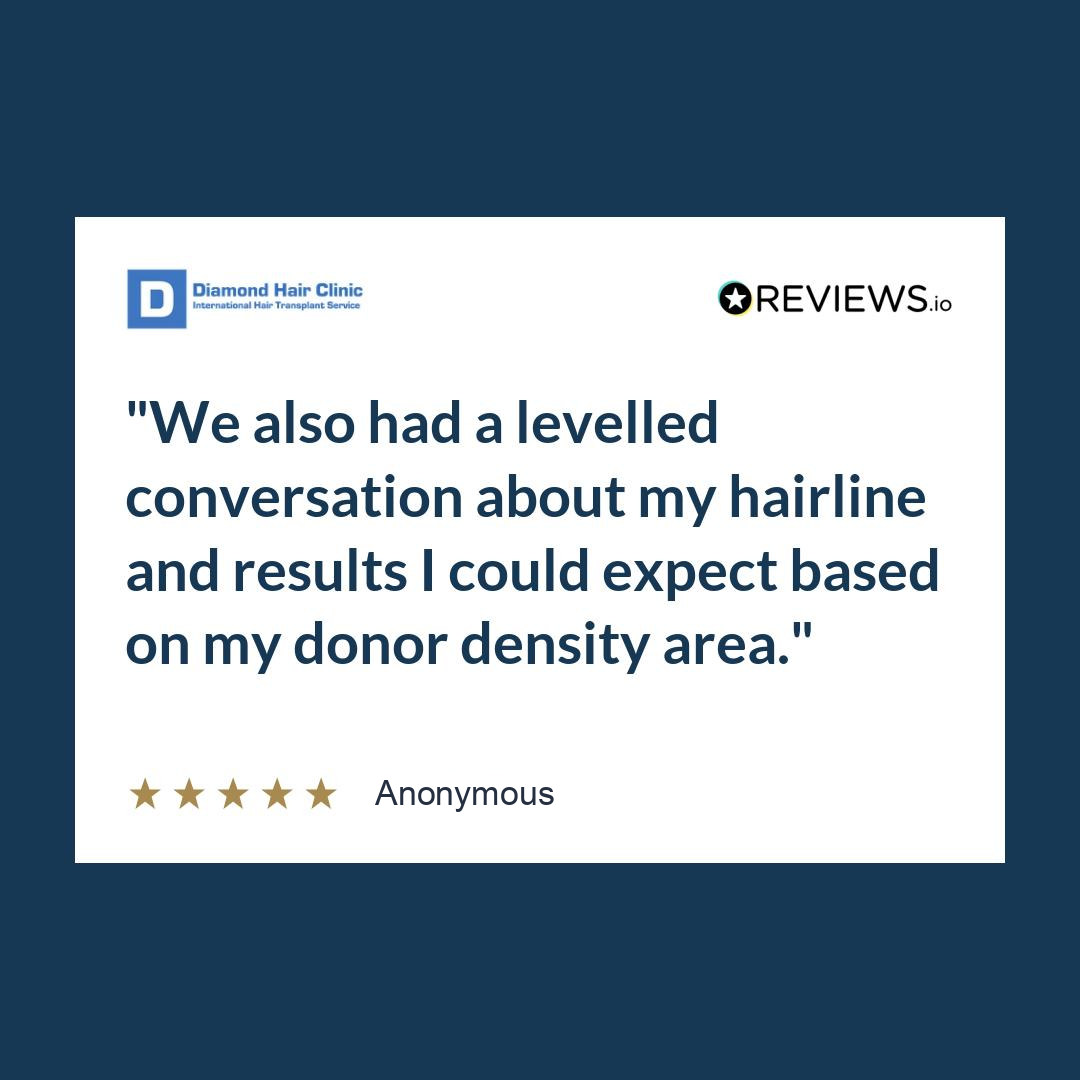
“We also had a levelled conversation about my hairline and results I could expect based on my donor density area.”
Before you say “it’s just hair”
Not rocket science. Still surgery.
The casual advice sounds convincing. Test ten claims before you book.
10 quick questions · About 3 minutes
Fair. But that makes a hair transplant…
Before I call that a bargain, I need to confirm…
Before I accept the VIP label, I need…
A hairline drawing establishes enough surgeon involvement.
The best reason to accept a larger session is…
A natural hairline depends on…
For future planning, I should assume…
The plan should account for…
Before accepting that promise, I would…
For concerning symptoms after surgery, I should…
This is an educational check, not medical clearance or a rating of any clinic.
Three points to discuss, selected from your answers.
Open a question to revisit your answer and its explanation. Original answers stay unchanged.
What should patients know before choosing Turkey?
Turkey offers real advantages for hair transplantation, but patients should still be careful.
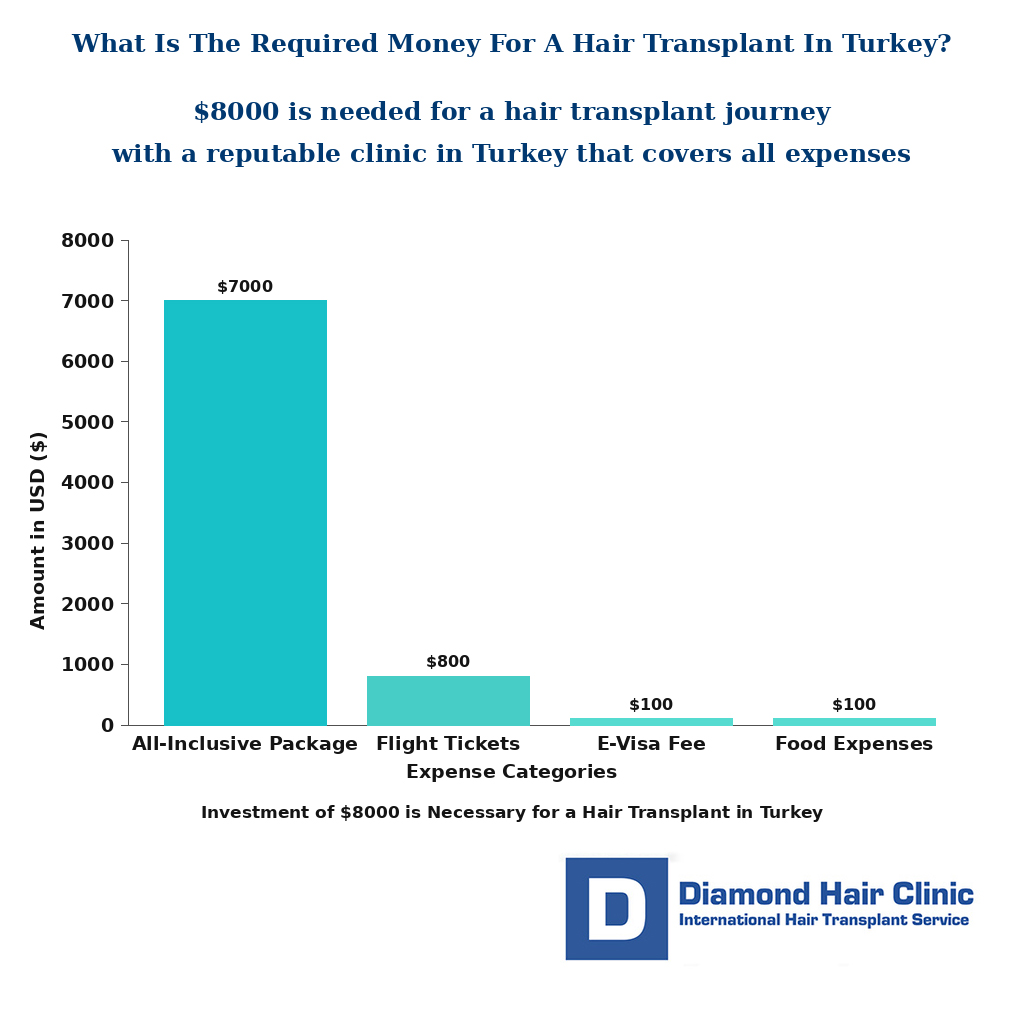
A professional surgery cannot be judged only by the package price, the hotel, or the number of grafts promised in a message.
Before choosing any clinic, the medical roles should be visible. The plan should make clear who designs the hairline, who makes the incisions, how many patients are treated in one day, and what follow-up exists after the patient returns home.
If an offer sounds too cheap to be realistic, or if the surgical plan is based only on maximum graft numbers, I would pause.
Hair transplantation creates permanent changes.
It deserves surgical judgment, clean operating conditions, and a decision that respects the years ahead.
Who may I not operate on?
I do not recommend surgery for every patient.
Sometimes the donor area is weak, the hair loss is too unstable, or the expectations are unrealistic.
When I see these signs, I prefer to slow down and explain the limits clearly.
In some cases, I may advise the patient to wait, strengthen the medical plan first, or avoid surgery completely.
This is part of responsible surgery.
A careful clinic will not only know how to operate. It should also know when not to operate.

How do I approach Sapphire FUE?
At Diamond Hair Clinic, I mainly perform Sapphire FUE hair transplantation.
I use this technique because it allows precise incisions in the recipient area when the patient is a suitable candidate.
Still, I do not present any technique as magic.
The technique is only one part of the result.
The real difference comes from surgical discipline and the way the operation is carried out.
A result that looks dense has to stay believable after the hair grows, not only look full on surgery day.
I plan for a result that still feels natural when the patient looks back years later.
How do I follow my patients after surgery?
I know that patients can feel nervous after surgery.
The first weeks can bring questions about redness, shedding, scabs, donor healing, and whether everything is progressing normally.
I follow my patients for 18 months after the operation.
Patients send monthly head photos, and I review their progress as the transplanted hair goes through the normal stages of recovery and growth.
This follow-up matters to me because hair transplantation does not end when the patient leaves Istanbul.
The result develops slowly, and patients should feel that their surgeon is still reachable after the operation.

Patient reviews
Follow-up in their own words
 Read the full review on REVIEWS.io
Read this review excerpt
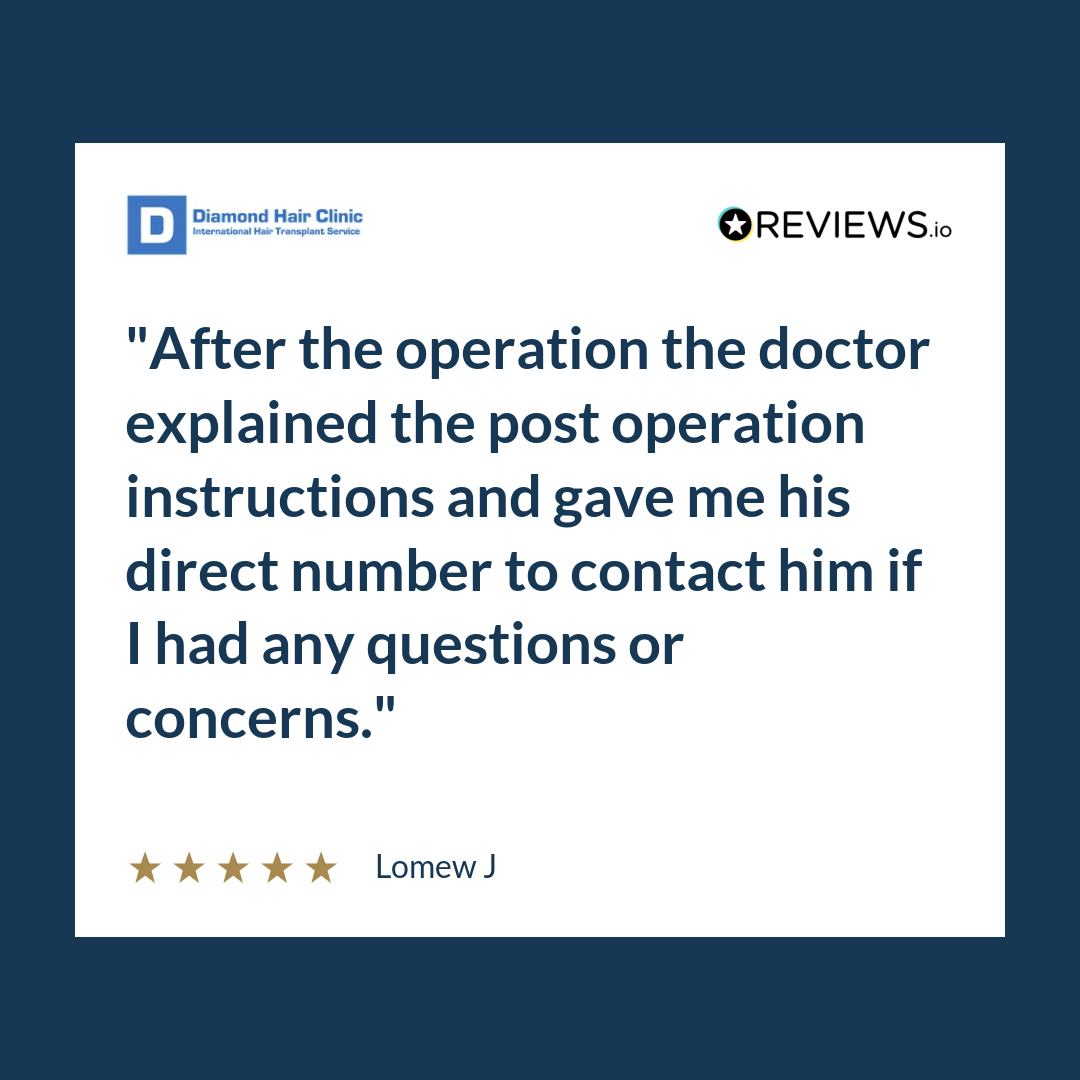
“After the operation the doctor explained the post operation instructions and gave me his direct number to contact him if I had any questions or concerns.”
 Read the full review on REVIEWS.io
Read this review excerpt
“Dr. Demircioglu stayed in close contact with me via WhatsApp, providing daily check-ins and quick responses to any questions, which made the healing process much less stressful.”
 Read the full review on REVIEWS.io
Read this review excerpt
“When I eventually returned to my home country, I kept in continual contact with the surgeon, who attentively answered all questions that I had.”
 Read the full review on REVIEWS.io
Read this review excerpt
“Post-procedure, he spent nearly two hours explaining aftercare: when to use what products, what I can and cannot do, and a general framework for recovery.”
Swipe or scroll to see more reviews
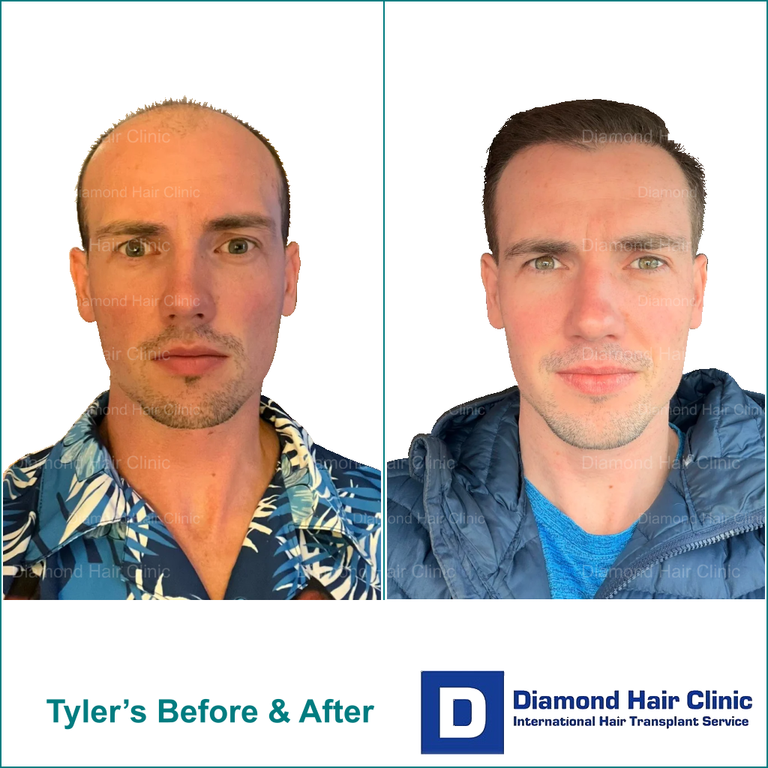
How should you read before and after photos?
Before and after photos can be useful, but I prefer that patients look beyond the most dramatic change. A good result should look calm and natural, not only dense under strong lighting.
When you compare photos, look at the softness of the hairline, the temple balance, the growth direction, and whether the donor area still looks healthy.
Lighting, angle, hair length, and wet or dry hair can all change how a result appears.
I also want you to ask a more important question.
Does the result still look natural as the person ages, and if native hair continues to thin? I judge photos together with donor preservation, future hair loss, and realistic density.
What do I look for in a successful result?
When I look at before and after photos, I judge the result by more than how full the front looks.
I look for a soft hairline, balanced temples, natural growth direction, and density that looks natural in normal light.
I also look carefully at the donor area.
A successful result should improve the front or crown without making the back of the scalp look overused.
Good proof is quiet.
The result should belong to the face, the grafts should follow the natural flow of the hair, and the plan should still make sense if hair loss continues over time.

What does the package include?
For international patients, I try to make the travel part as simple as possible while keeping the medical planning personal.
- Sapphire Fue hair transplantation procedure
- Needleless local anesthesia injection
- Required medications after surgery
- Greft Plus Six-Month Hair Care Set
- Airport, hotel, and clinic transfers
- Three nights of hotel accommodation
The package is meant to reduce stress around travel and logistics.
The medical decision itself is still based on the patient, the hair loss pattern, and whether surgery is truly the right choice.
Selected patient reviews
Travel support in patients’ own words
These reviews describe communication and transfers around the Istanbul stay. They are historical personal accounts, so current arrangements are confirmed individually before booking.
 View the retained review profile on ProvenExpert
Read this review excerpt
“Absolutely everything regarding logistics was conveyed in a clear and timely manner via WhatsApp by Dr. Mehmet’s office.”
 Read the full review on REVIEWS.io
Read this review excerpt
“The transfers from Airport to Hotel and Hotel to Hospital were always on time, polite and efficient, with drivers even taking me to the consultation room to meet Dr. Mehmet Demircioglu when arriving at hospital.”
How can you begin your hair transplant journey?
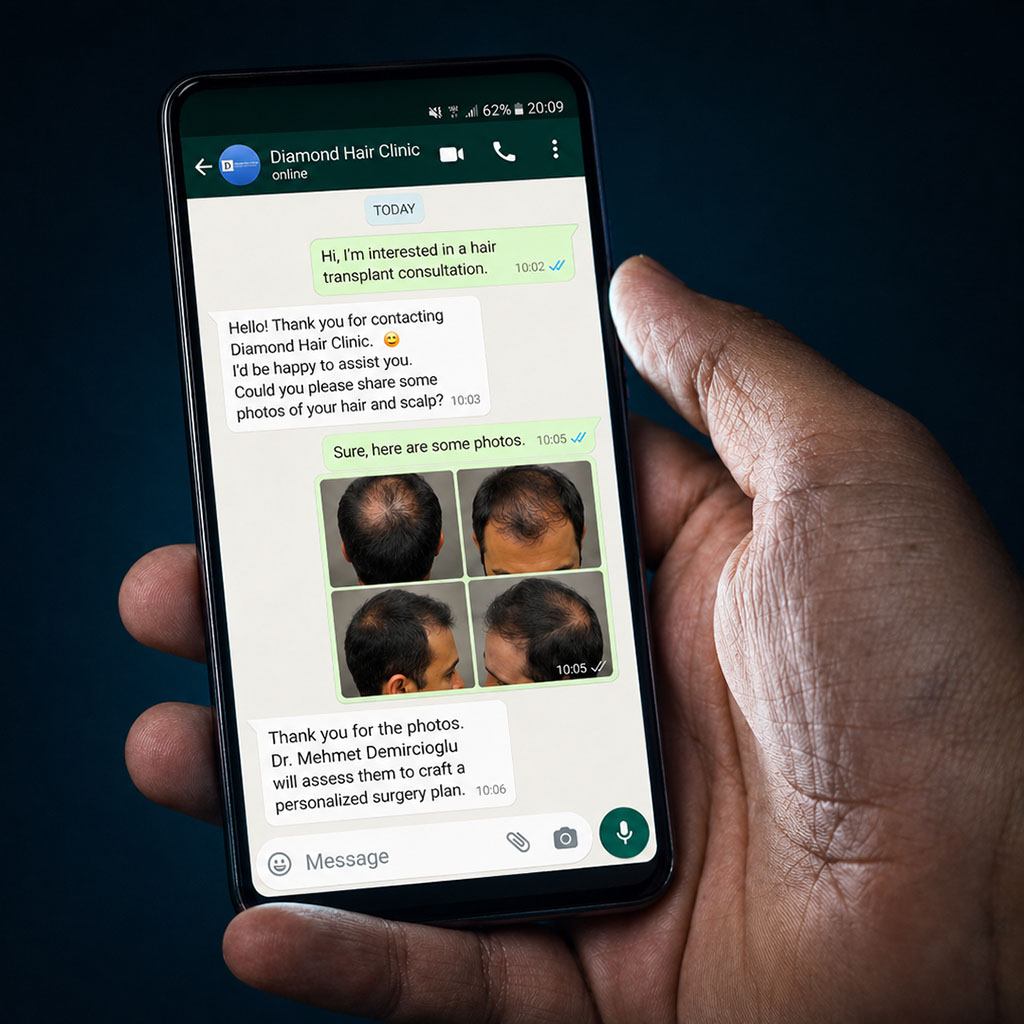
The first step is a photo assessment.
You can send clear photos of your hairline, crown, donor area, and overall scalp through WhatsApp or the contact form.
Surgeon photo review before booking
Send the right photos before you choose a hair transplant clinic
A serious consultation should not be only a price message. With clear photos, I can tell you whether the goal looks realistic, what may be risky, and what the safer next step is before you book travel.
You avoid guesswork
The decision starts from your real donor area, hair loss pattern, and expectations.
You get surgeon judgment
I personally review the photos before a medical report or booking plan is prepared.
You know the next step
The answer may be surgery, waiting, medical treatment first, or avoiding surgery.
Send these views so the assessment is useful
If surgery may help
I explain the realistic graft estimate, the priority areas, the hairline logic, and the travel plan.
If it is not time yet
I may advise waiting, medical stabilization, a more conservative hairline, or a staged plan.
If I would not advise surgery
I explain the limitation clearly before the patient pays, travels, or spends donor grafts.
Want me to review your photos?
I personally review the photos.
Send these exact photos.
I will tell you if the goal looks realistic.
Send these photos on WhatsAppWhat happens after I receive your photos?
First, I review the photos myself.
I assess the hairline, crown, donor area, hair quality, age, hair loss pattern, and whether the case appears stable enough for surgery.
Then I decide whether surgery is suitable. Sometimes the answer is yes. Sometimes the answer is no, or not yet. If the donor area is weak, the loss is still moving too quickly, or the expectation is unrealistic, I prefer to explain this clearly before any travel plans are made.
If I believe surgery can help, I prepare a medical report that includes a realistic graft estimate, the surgical plan, pricing, hotel, and transfer details. My aim is that you understand the medical logic before you decide anything.
If the plan feels right for you, you can choose a surgery date and arrange your flight. My team then helps with the clinic, hotel, and transfer organization, so your attention can stay on the medical decision and your recovery.
If you are considering a hair transplant in Istanbul, you can send your photos for a medical assessment.
I will tell you what is natural, what may be risky, and whether surgery is truly the right decision for you.